Vimeo collected detailed facial scans without consent, lawsuit alleges

Promotional screenshot of video-editing service in action.

Vimeo is collecting and storing thousands of people’s facial biometrics without their permission or knowledge, a recently filed lawsuit alleges.

The “highly detailed geometric” facial maps, according to a complaint, are being collected and stored in violation of the Illinois Biometric Information Privacy ACT, or BIPA, according to a complaint filed last week in Illinois state court. The law bars companies from obtaining or possessing an individuals’ biometric identifiers or information unless the company (1) informs the person in writing of its plans to do so, (2) states in writing the purpose and length of term for the collection and storage, (3) receives written permission from the user, and (4) publishes retention schedules and guidelines for destroying the biometric identifiers and information.

The complaint alleges Vimeo is violating the law by collecting, storing, and using the facial biometrics of thousands of unwitting individuals throughout the United States whose faces appear in photos or videos uploaded to the Magisto video-editor application. Vimeo acquired Magisto in April and claimed the editor had more than 100 million users.

“Vimeo has created, collected, and stored, in conjunction with its cloud-based Magisto service, thousands of ‘face templates’ (or ‘face prints’)—highly detailed geometric maps of the face—from thousands of Magisto users,” the complaint alleged.

The complaint adds:

Vimeo creates these templates using sophisticated facial-recognition technology that extracts and analyzes data from the points and contours of faces that appear in photos and videos taken on mobile devices and uploaded to the Magisto app. Each face template that Vimeo extracts is unique to a particular individual, in the same way that a fingerprint or voiceprint uniquely identifies one and only one person.

The complaint referred to this page that says that Magisto uses “artificial intelligence engines” to analyze videos users upload. The analysis includes “face detection.”

The complaint continued:

Unbeknownst to the average consumer, and in direct violation of § 15(b)(1) of the BIPA, plaintiff is informed and believes that Magisto’s facial recognition technology scans each and every video and photo uploaded to Magisto for faces, extracts geometric data relating to the unique points and contours (i.e., biometric identifiers) of each face, and then uses that data to create and store a template of each face—all without ever informing anyone of this practice.

The Magisto service uses these face templates to organize and group together videos based upon the particular individuals appearing in the videos. This technology works by comparing the face templates of individuals who appear in newly-uploaded videos or photos with the facial templates already saved in Magisto’s face database. Specifically, when a Magisto user uploads a new video or photo, Magisto’s sophisticated facial recognition technology creates a template for each face depicted therein, and then compares each template against Magisto’s face template database. If there is a match, then the Magisto service groups the video from which the newly-uploaded face template was derived with the previously uploaded videos depicting that individual.

Besides using face templates to identify individuals, the service also uses the biometrics to determine the individuals’ gender, age, and location.

The complaint was filed on behalf of Illinois resident Bradley Acaley, who subscribed to Magisto for one year, starting in December 2017, at a cost of $120. He regularly uploaded videos of himself and his family, including his minor children. He would then edit the uploaded videos or create videos from uploaded photos or videos.

Vimeo analyzed Acaley’s videos and photos “by automatically locating and scanning plaintiff’s face and by extracting geometric data relating to the contours of his face and the distances between his eyes, nose, and ears—data which Vimeo then used to create a unique template of plaintiff’s face,” the complaint alleged. Vimeo also used the data to recognize Acaley’s gender, age, race, and location.

The complaint said that Acaley never received notice of this collection or storage of his biometrics and that he never provided his consent.

Attempts to reach Vimeo representatives for comment were unsuccessful. The company didn’t own Magisto at the time Acaley used it, but Vimeo possibly assumed all legal liabilities when it acquired the video-editing service. If that question ever gets sorted out, it will be interesting to see how the court treats the issue of cloud services using facial-recognition analysis to analyze images and videos users willingly uploaded.

https://arstechnica.com/?p=1575655


DOJ reportedly launches its own Facebook probe at AG Barr’s urging

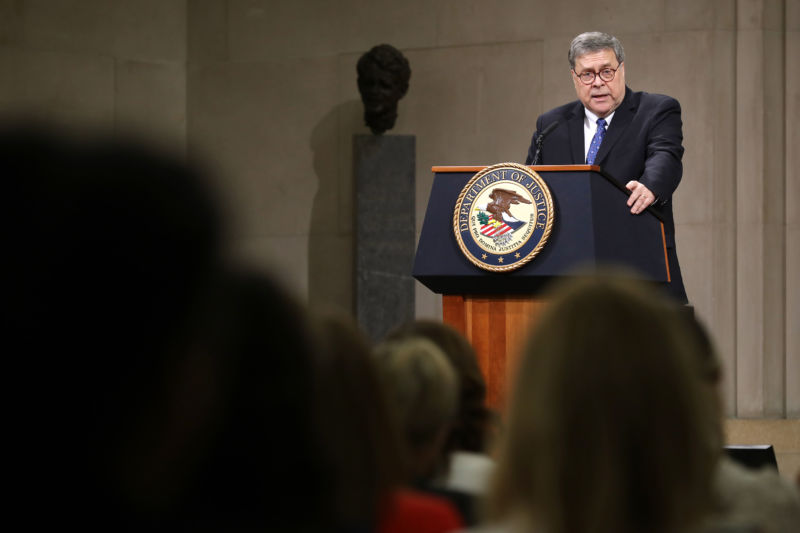
U.S. Attorney General William Barr speaks at an event at the Robert F. Kennedy Main Justice Building in Washington, DC, in May 2019.
Enlarge / U.S. Attorney General William Barr speaks at an event at the Robert F. Kennedy Main Justice Building in Washington, DC, in May 2019.

Facebook, it seems, is continuing to shatter records of all sorts. Usually, regulators at the Federal Trade Commission and Department of Justice agree to conduct antitrust probes against a company one at a time, deciding in advance who should take the lead and run with it. According to a new report, though, the US attorney general has decided that one federal investigation just isn’t enough.

“Prodding” from US Attorney General William Barr has led the DOJ to launch its own antitrust investigation of Facebook, sources tell Bloomberg News. The DOJ will reportedly focus on conduct that is not included in the FTC’s current investigation.

The FTC’s Bureau of Competition and the DOJ’s Antitrust Division share authority for antitrust enforcement in the United States. When a specific case arises, such as a high-stakes proposed merger or a complaint against a single company such as Facebook, the two agencies generally work out an agreement between them that will put that particular ball in one court or the other—not both.

Facebook confirmed in July that it is the target of an antitrust investigation by the FTC. The commission is reportedly looking into anticompetitive actions Facebook allegedly took to quash, intimidate, or outright acquire potential competition in the market.

Competition among regulators

Facebook might be unfairly stifling competition, but competition among regulators to investigate Facebook—and some of its digital brethren—certainly seems robust.

Media reports surfaced in June indicating that the FTC and DOJ had settled on a kind of divide-and-conquer approach to Big Tech antitrust probes: The FTC would take on Amazon and Facebook, and the DOJ would delve into Google and Apple.

Bloomberg’s sources said that something of a territorial dispute has now emerged between the two agencies, the heads of which have been exchanging letters on the topic. Senators pressed FTC Chairman Joseph Simons and Antitrust Division head Makan Delrahim about the turf war in a hearing earlier this month, wondering aloud if the agencies were simply wasting resources by doubling up their efforts.

The DOJ confirmed in July that its antitrust division was actively investigating widespread concerns that “consumers, businesses, and entrepreneurs have expressed” about “market-leading online platforms.” The agency didn’t name names, but that list of “market-leading” platforms is generally considered to include Amazon, Apple, Facebook, and Google. “Social media” was, however, mentioned as a target.

The federal regulators, however they resolve the issue between them, have a whole lot of company.

Attorneys general for several states launched their own antitrust probe into Facebook earlier this month. New York Attorney General Letitia James, leading the coalition, said the probe would determine “whether their actions endangered consumer data, reduced the quality of consumers’ choices, or increased the price of advertising.”

Congress, too, has jumped into the fray. The House Antitrust Subcommittee launched an investigation in June probing “abusive conduct by platform gatekeepers” including Apple, Amazon, Facebook, and Google. The committee recently sent a massive data request to all four firms seeking a decade’s worth of records. The letter to Facebook (PDF) seeks records relating to several of Facebook’s prior acquisitions, including of Onavo, WhatsApp, and Instagram, as well as other analyses, communications, and legal filings.

International regulators are also hard at work. Media reports indicate the EU’s competition regulator has its own antitrust probe of Facebook in progress, and member states such as Germany are also taking action.

https://arstechnica.com/?p=1575185


Microsoft: Customers are entitled to know about federal data requests

Microsoft: Customers are entitled to know about federal data requests
David Ryder/Bloomberg via Getty Images

Microsoft revealed on Wednesday that it is fighting in court for the right to tell one of its large enterprise customers about a federal request for data hosted on Microsoft’s cloud services. The data request came with an order prohibiting Microsoft from notifying its customer about the request, and Microsoft views the gag order as inappropriate.

“On Sept. 5, 2018, Microsoft challenged a secrecy order issued by a federal magistrate judge in Brooklyn, New York in connection with a federal national security investigation,” wrote Microsoft general counsel Dev Stahlkopf. “Based on the limited information available to us in this case, we feel the secrecy order was too broadly drawn and is inconsistent with the U.S. government’s policy that secrecy orders be narrowly tailored.”

The Microsoft customer in question has thousands of employees. Microsoft argues that the feds should be able to identify someone at the company who can be notified without jeopardizing the investigation. However, a judge rejected Microsoft’s request and left the secrecy requirement in place.

“We have challenged that order in the lower court, and we will pursue an appeal in the appellate court if necessary.”

This appears to be the case Microsoft is referring to. While the case’s docket is available through the court’s PACER system, most of the substantive filings are sealed.

Microsoft has waged a long-and-determined battle against over-broad government secrecy orders. Microsoft successfully fended off an FBI secrecy order in 2014 relating to a customer of Office 365. In 2016, Microsoft sued the Department of Justice over its repeated use of over-broad secrecy orders. In October 2017, the government settled the case by agreeing to limit its use of gag orders.

“As a cloud services provider, Microsoft has an important role in forcing governments to go before impartial judges to justify their conduct,” Stahlkopf wrote in his Wednesday post. “Our thorough review of law enforcement demands helps ensure that governments are respecting the rights of internet users around the world.”

https://arstechnica.com/?p=1575337


Facebook confirms its “standards” don’t apply to politicians

President Donald Trump discusses Twitter, Facebook, and Google during a Social Media Summit at the White House in July 2019.
Enlarge / President Donald Trump discusses Twitter, Facebook, and Google during a Social Media Summit at the White House in July 2019.

Facebook this week finally put into writing what users—especially politically powerful users—have known for years: its community “standards” do not, in fact, apply across the whole community. Speech from politicians is officially exempt from the platform’s fact checking and decency standards, the company has clarified, with a few exceptions.

Facebook communications VP Nick Clegg, himself a former member of the UK Parliament, outlined the policy in a speech and company blog post Tuesday.

Facebook has had a “newsworthiness exemption” to its content guidelines since 2016. That policy was formalized in late October of that year amid a contentious and chaotic US political season and three weeks before the presidential election that would land Donald Trump the White House.

Facebook at the time was uncertain how to handle posts from the Trump campaign, The Wall Street Journal reported. Sources told the paper that Facebook employees were sharply divided over the candidate’s rhetoric about Muslim immigrants and his stated desire for a Muslim travel ban, which several felt were in violation of the service’s hate speech standards. Eventually, the sources said, CEO Mark Zuckerberg weighed in directly and said it would be inappropriate to intervene. Months later, Facebook finally issued its policy.

“We’re going to begin allowing more items that people find newsworthy, significant, or important to the public interest—even if they might otherwise violate our standards,” Facebook wrote at the time.

Clegg’s update says that Facebook by default “will treat speech from politicians as newsworthy content that should, as a general rule, be seen and heard.” Nor will it be subject to fact-checking, as the company does not believe that it is appropriate for it to “referee political debates” or prevent a polician’s speech from both reaching its intended audience and “being subject to public debate and scrutiny.”

Newsworthiness, he added, will be determined by weighing the “public interest value of the piece of speech” against the risk of harm. As for what scale the company uses to quantify this delicate balance, Clegg added:

When balancing these interests, we take a number of factors into consideration, including country-specific circumstances, like whether there is an election underway or the country is at war; the nature of the speech, including whether it relates to governance or politics; and the political structure of the country, including whether the country has a free press. In evaluating the risk of harm, we will consider the severity of the harm. Content that has the potential to incite violence, for example, may pose a safety risk that outweighs the public interest value. Each of these evaluations will be holistic and comprehensive in nature, and will account for international human rights standards.

The exception to all of this is advertising, Clegg added. Standards are different for content for which the company receives payment, so if someone—even a politician or political candidate—posts ads to Facebook, those ads in theory must still meet both the community standards and Facebook’s advertising policies.

Real consequences

Facebook does have a daunting and perhaps insurmountable task in front of it in trying to uphold global community standards across 2.4 billion users in 24 time zones and using more than 100 languages. But its attempts in the past to walk that thin and dotted line, particularly when it comes to hate speech, have had significant and occasionally fatal consequences in recent years.

The company’s guidelines say that hate speech is not allowed on the platform “because it creates an environment of intimidation and exclusion and in some cases may promote real-world violence,” which experts generally agree is true.

Internationally, rampant, unchecked hate speech on Facebook has had devastating consequences. Facebook has been heavily implicated in the systematic persecution of hundreds of thousands of Rohingya Muslims in Myanmar, who are still under threat of genocide, according to the UN.

The company issued a report in November 2018 acknowledging its role in the crisis. “Prior to this year, we weren’t doing enough to help prevent our platform from being used to foment division and incite offline violence,” the company admitted. “We agree that we can and should do more.”

The line from hate speech to dire consequence, however, may not always be as transparent as the company’s review of content shared in Myanmar found, and “content that has the potential to incite violence,” when shared by a prominent individual, is a big bucket.

In the US, President Trump, for example, routinely uses language that explicitly dehumanizes immigrants and speaks of an “invasion” at the southern US border. In August, a gunman who killed 22 and wounded dozens more at a Walmart in El Paso, Texas shared a so-called manifesto online describing his motivations for killing Mexicans, immigrants, and Latinx people. That document strongly echoed rhetoric used by Trump on multiple occasions, both online and in person.

Human rights experts at the UN recently condemned the kind of hate speech used by the president and other right-wing leaders worldwide, writing that “leaders, senior government officials, politicians and other prominent figures [are] spreading fear among the public against migrants or those seen as ‘the others’ for their own political gain” and has led to increased violence.

https://arstechnica.com/?p=1574341


Per “transcript,” Trump seems to think DNC-hired security firm is from Ukraine

Blessed are the note takers.
Enlarge / Blessed are the note takers.

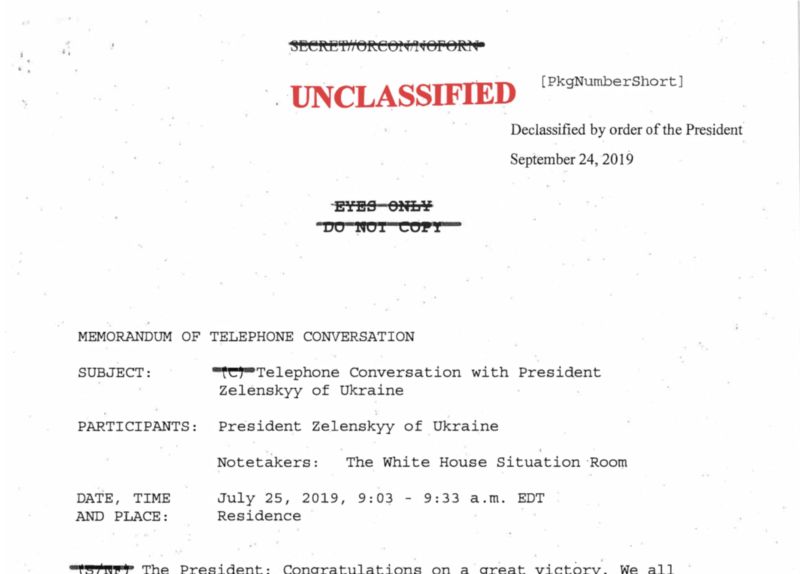
The White House has released what a spokesperson called a “memorandum of a telephone conversation” between US President Donald Trump and President Volodymyr Zelensky of Ukraine in response to accusations that Trump attempted to coerce Zelensky into investigating a company associated with Hunter Biden, the son of former Vice President Joseph Biden. In that reconstruction—which is, as per the memorandum, “not a verbatim transcript of a discussion,” Trump asked Zelensky to “do us a favor” in what appears to be a reference to the investigation of the hacking of the Democratic National Committee:

The President: I would like you to do us a favor though because our country has been through a lot and Ukraine knows a lot about it. I would like you to find out what happened with this whole situation with Ukraine, they say Crowdstrike… I guess you have one of your wealthy people… The server, they say Ukraine has it. There are a lot of things that went on, the whole situation. I think you’re surrounding yourself with some of the same people. I would like to have the Attorney General call you or your people and I would like you to get to the bottom of it. As you saw yesterday, that whole nonsense ended with a very poor performance by a man named Robert Mueller, an incompetent performance, but they say a lot of it started with Ukraine. Whatever you can do, it’s very important that you do it if that’s possible.

Trump has previously referred to CrowdStrike as a Ukrainian company. The reference to the server appears to be related to a conspiracy theory that one of the DNC’s servers had been hidden from the FBI. But CrowdStrike’s co-founder, Dmitri Alperovitch, is a US citizen of Russian heritage, and the company is based in the United States and is publicly traded on the NASDAQ exchange.

In a statement to Ars, a CrowdStrike spokesperson said, “With regards to our investigation of the DNC hack in 2016, we provided all forensic evidence and analysis to the FBI. As we’ve stated before, we stand by our findings and conclusions that have been fully supported by the US Intelligence community.”

https://arstechnica.com/?p=1574457


Google wins case as court rules “right to be forgotten” is EU-only

Photographed of glass-walled skyscrapers.
Enlarge / The European Court of Justice, Luxembourg, in June 2019.

The Internet is forever, we tell social media users: be careful what you put online, because you can’t ever take it back off. And while that’s gospel for US users, there’s some nuance to that dictum across the Atlantic. In Europe, individuals have a right to be forgotten and can request that information about themselves be taken down—but only, a court has now ruled, within Europe.

The Court of Justice of the European Union, the EU’s highest court, issued a ruling today finding that there is no obligation under EU law for a search service to carry out a valid European de-listing request globally.

“EU law requires a search engine operator to carry out such a de-referencing on the versions of its search engine corresponding to all the Member States,” the Court wrote in a statement (PDF), “and to take sufficiently effective measures to ensure the effective protection of the data subject’s fundamental rights.”

“Since 2014, we’ve worked hard to implement the right to be forgotten in Europe, and to strike a sensible balance between people’s rights of access to information and privacy,” Google said in a statement. “It’s good to see that the court agreed with our arguments.”

The right to be forgotten

The right to be forgotten—to request that information about you be de-listed and made unsearchable—has been a point of contention between Google and the EU since the idea was first proposed back in 2010. In 2014, the Court of Justice ruled that search engines have an obligation to remove links that are old, out of date, irrelevant, not in the public interest, and could harm individuals.

Google was inundated with requests to remove links after it made an online request form available to European consumers, and it began to comply. The company has continued to review all takedown requests, cumulatively honoring 45% of requests to delist results, or about 846,000 links, through September 7 of this year.

The company, however, uses geofencing practices to limit where in the world links are scrubbed from. Users in the EU cannot see links blocked by takedown requests under EU law, but users in other regions, including Asia and North and South America, can.

In 2015, French regulator CNIL (Commission Nationale de l’Informatique et des Libertés) ordered Google to apply takedown requests globally. The commission argued that users in the country could use VPNs or other similar tools as a workaround to access links they would otherwise be blocked by law from seeing. In 2016, the CNIL imposed a €100,000 fine on Google (about $113,000 at the time) for failing to comply.

Google appealed the CNIL ruling, and the Court of Justice in 2017 agreed to hear the case.

While the court today held that search engines such as Google are not required to honor de-listing requests worldwide, it did add a reminder that companies are expected to have measures in place “discouraging Internet users from gaining access, from one of the Member States, to the links in question which appear on versions of that search engine outside the EU.”

https://arstechnica.com/?p=1573819


Sprint took FCC cash for “serving” 885,000 people it wasn’t actually serving

A sign with the word
Enlarge / A Sprint sign in Branford, Connecticut, in 2014.

Sprint has been caught taking millions of dollars in government subsidies for “serving” 885,000 low-income Americans who weren’t using Sprint service, the Federal Communications Commission said today. Sprint violated the Lifeline program’s “non-usage rule” that requires providers of free, subsidized plans to de-enroll subscribers who haven’t used their phones recently, the FCC said.

“It’s outrageous that a company would claim millions of taxpayer dollars for doing nothing. This shows a careless disregard for program rules and American taxpayers,” FCC Chairman Ajit Pai said. “I have asked our Enforcement Bureau to investigate this matter to determine the full extent of the problem and to propose an appropriate remedy.”

Sprint has admitted the mistake and said it will pay the money back. Like the FCC’s other universal service programs, Lifeline is paid for by Americans through fees imposed on phone bills.

The FCC said Sprint’s violation “initially came to light as a result of an investigation by the Oregon Public Utility Commission.” Because of that investigation, the FCC said it “has learned that Sprint Corp. claimed monthly subsidies for serving approximately 885,000 Lifeline subscribers, even though those subscribers were not using the service.” The 885,000 subscribers that Sprint wasn’t actually serving “represent nearly 30% of Sprint’s Lifeline subscriber base and nearly 10% of the entire Lifeline program’s subscriber base,” the FCC said.

Sprint failed to de-enroll inactive users

Providers in the low-income program receive a $9.25 monthly subsidy for most Lifeline subscribers and must pass the savings along to consumers. “For most consumers served by the mobile Lifeline product marketed by Sprint and many other providers, the subsidy makes the service free to the consumer,” the FCC said.

The FCC said that, under its non-usage rule, “providers of free service may only be reimbursed for a Lifeline subscriber if that subscriber has used the service at least once in the past 30 days.” The commission added that providers “must de-enroll inactive subscribers after giving them 15 days’ notice.”

The FCC didn’t say exactly how much money Sprint received through its violation of the non-usage rule. One month’s worth of $9.25 payments for 885,000 subscribers would amount to $8.2 million. FCC Commissioner Geoffrey Starks issued a statement saying that “Sprint appears to have unlawfully obtained at least tens of millions of dollars that should have gone to our lowest-income communities.”

The non-usage rule is “meant to protect Lifeline from wasting payments on service not provided,” the FCC said. Previous investigations “showed that companies hawked free Lifeline service aggressively and indiscriminately, knowing that they would get paid each month even if consumers didn’t use their phones. And because the consumer paid nothing, he or she had no incentive to relinquish the subscription,” the FCC said.

The 30-day limit and 15-day notice requirement were imposed by the FCC in 2016 under then-Chairman Tom Wheeler. Previously, the non-usage period was 60 days, and the notice requirement was 30 days.

When contacted by Ars, Sprint said that “an error occurred” in July 2017 when it implemented the FCC-mandated changes to the method for calculating usage and eligibility of Lifeline subscribers. Sprint said it reported the mistake on its own and that it will send the money back to the government:

When the error was discovered, we immediately investigated and proactively raised this issue with the FCC and appropriate state regulators. We also engaged an independent third party to review the results of our review and the effectiveness of our operational changes.

While immaterial to Sprint’s financial results, we are committed to reimbursing federal and state governments for any subsidy payments that were collected as a result of the error.

The investigation into Sprint will begin while FCC commissioners are still considering whether to approve the acquisition of Sprint by T-Mobile. Pai announced his support for the merger in May, and last month he asked fellow commissioners to approve the merger. Attorneys general from 17 states and the District of Columbia are challenging the merger in court, however.

Commissioner Starks, who is part of the FCC’s Democratic minority, said the FCC should halt the merger proceeding. He said:

The draft order (to approve the merger) relies heavily on information submitted by Sprint, a company alleged to have over-collected Lifeline support, and inaccurately accounted for nearly 1 million inactive Lifeline accounts… How the merging parties were going to handle Lifeline was a prominent part of their merger pitch, so I am alarmed and concerned about such a massive inaccuracy in a core part of the transaction.

“There is no credible way that the merger before us can proceed until this Lifeline investigation is resolved and responsible parties are held accountable,” Starks also said.

We asked Pai’s office if the Sprint news will have any impact on the merger proceeding, and we will update this story if we get a response.

https://arstechnica.com/?p=1573951


SolarCity was insolvent when Tesla paid $2.6 billion to buy it, lawsuit says

A man in construction gear assembles a solar panel on a residential roof.
Enlarge / A SolarCity employee checks solar panels on the roof during installation at a home in New Jersey on July 28, 2015.

Back in 2016, Tesla acquired solar panel manufacturer SolarCity, billing the $2.6 billion deal as an opportunity to create “the world’s only vertically integrated sustainable energy company.” From a SolarCity solar panel to a Tesla battery, the company promised, the in-house supply chain would scale up clean energy for all and provide cost synergies to the businesses and shareholders.

But SolarCity, of which Tesla CEO Elon Musk was chairman, was deeply in debt at the time. Now, newly unsealed documents in an investor lawsuit say the situation was far worse than that. They allege that SolarCity wasn’t just carrying a heavy debt load: it was completely insolvent.

The upshot of reams of law surrounding mergers and acquisitions is that C-suite executives and company boards of directors are supposed to make sure shareholders get the most money possible out of their investment. If they’re going to sell the company, they have to make sure they’re accepting the most valuable reasonable offer. Companies doing the acquiring, meanwhile, are supposed to do their homework to make sure they’re not wasting their resources on a bad deal—and Tesla shareholders say the SolarCity acquisition was exactly that.

“Almost immediately after the acquisition closed, SolarCity’s auditors [Ernst & Young] confirmed that SolarCity was, in fact, insolvent,” attorneys for the investors argue in their latest filing (PDF). E&Y’s year-end audit, conducted in January 2017, determined that SolarCity did not have sufficient cash to meet its obligations and could not operate on its own as a going concern.

SolarCity only continued to function because of SpaceX money, the suit alleges:

As SpaceX’s chairman, CEO, CTO, and majority stockholder, Musk caused SpaceX to purchase $90 million in SolarCity bonds in March 2015, $75 million in June 2015, and another $90 million in March 2016. These bond purchases violated SpaceX’s own internal policy, and SolarCity was the only public company in which SpaceX made any investments.

Hands in three pockets

SolarCity was founded in 2006 by brothers Lyndon and Peter Rive. The Rive brothers are cousins of Elon Musk, who became chairman of their company. Both Rives left the company less than a year after the Tesla acquisition closed.

At the time of the acquisition, Musk was Tesla’s largest shareholder, owning about 22% of its stock, as well as the company’s chairman and CEO. He was also SolarCity’s largest shareholder at the time, holding approximately 22% of that company’s shares. Musk’s personal SolarCity investments were converted to about $500 million in Tesla stock as a result of the transaction.

Tesla shareholders filed suit in the Delaware Court of Chancery, where most complex corporate merger-related litigation happens, in 2017. The investor suit (PDF) argues that Musk basically used his influence as director and controlling stockholder to push the Tesla board to pursue the transaction using faulty data and without doing sufficient due diligence, in violation of his fiduciary duty to shareholders and the firm.

Musk moved to have the suit dismissed, but the judge in the case refused to do so. The case was then granted class-action status, and Musk was deposed in the matter earlier this month.

https://arstechnica.com/?p=1573257


Walrus attacks Russian Navy, sinking inflatable boat

The Russian rescue tug <em>Altai</em> launches a boat like the one sunk by a walrus off Franz Jozef Land.
Enlarge / The Russian rescue tug Altai launches a boat like the one sunk by a walrus off Franz Jozef Land.
Russian Northern Fleet

Last week, a Russian Navy rescue tug—the Altai from the Northern Fleet—dispatched a rigid inflatable boat to Wilczek Island in the Franz Josef Land archipelago, which is an Arctic island chain occupied only by wildlife and Russian military personnel. Aboard the boat were sailors and scientists from the Russian Geographic Society, and as they attempted a landing at Cape Geller, their boat was attacked and sunk by a female walrus, “[which] she probably did fearing for her cubs,” an RGO news release noted.

While the boat sank, the crew leader managed to get the boat close enough to land for everyone to get ashore safely, according to the RGO’s spokesperson. The Northern Fleet reports the story slightly differently: “A group of researchers had to flee from a female walrus, which, protecting its cubs, attacked an expedition boat. Serious troubles were avoided thanks to the clear and well-coordinated actions of the Northern Fleet servicemen.”

The RGO/Northern Fleet expedition was exploring the routes of previous Arctic expeditions in the archipelago and conducting glacial and biological surveys of the islands. The researchers also recovered artifacts from the Austro-Hungarian expedition of 1874 that first mapped the archipelago and an 1898-1899 expedition by American journalist Walter Wellman (who would later attempt to fly to the North Pole by airship. They also searched for the grave of Russian polar explorer Georgy Sedov, who died en route to the Pole in 1914.

No walruses were harmed, according to the Northern Fleet.

https://arstechnica.com/?p=1573437


Apple says it will make the new Mac Pro in Texas

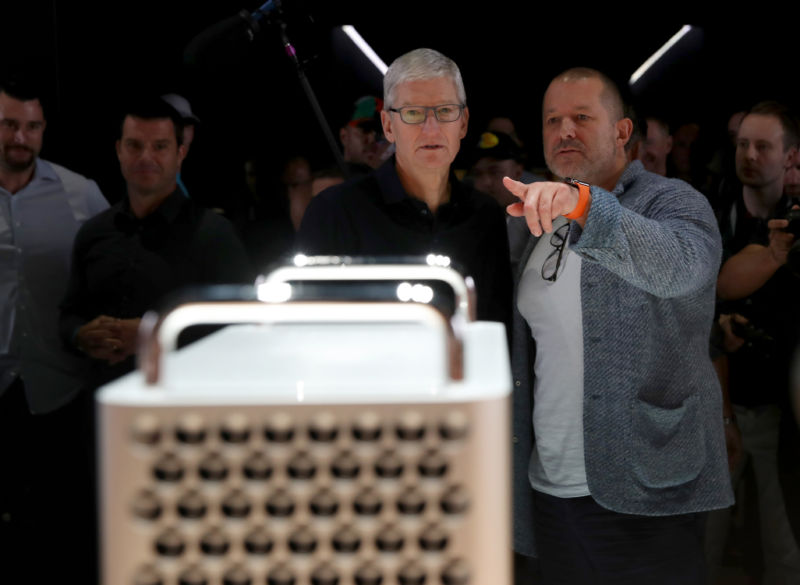
Two men in business casual examine a device that looks like a cheese grater.
Enlarge / Apple CEO Tim Cook and chief design officer Jony Ive look at the new Mac Pro on June 03, 2019.

Apple will continue manufacturing the Mac Pro in Austin, Texas, the company announced on Monday. Media reports had suggested that the new Mac Pro, which was announced in June, might be manufactured in China. The Mac Pro has been assembled in Austin since 2013, while most other Apple products are made in China.

Apple credited the federal government with helping make the announcement possible. “The US manufacturing of Mac Pro is made possible following a federal product exclusion Apple is receiving for certain necessary components,” Apple said in its announcement.

Apple doesn’t say so specifically, but other news outlets are reporting that this refers to Apple getting a break on tariffs on Chinese-made components. In recent months, the Trump administration has been slapping hefty across-the-board tariffs on Chinese-made goods as part of President Trump’s ongoing trade war with China.

In a tweet last month, Donald Trump vowed not to give Apple a tariff break on Chinese-made components. “Apple will not be given Tariff waiver, or relief, for Mac Pro parts that are made in China,” he wrote. “Make them in the USA.”

But Apple apparently convinced the Trump administration to change its tune. “We thank the administration for their support enabling this opportunity,” CEO Tim Cook said in a Monday press release.

Apple’s statement also included this puzzling sentence: “The new Mac Pro will include components designed, developed, and manufactured by more than a dozen American companies for distribution to US customers.”

That last phrase—”for distribution to US customers”—suggests that Apple might only be making some Mac Pros in the United States, with Mac Pros for overseas customers assembled elsewhere. But it’s possible that this is just a confusing sentence. We’ve asked Apple for details and will update if the company responds.

https://arstechnica.com/?p=1573233