Texas sues biggest TV makers, alleging smart TVs spy on users without consent

When consumers first start up a Samsung smart TV, they “must click through a multipage onboarding flow before landing on a consent screen, titled Smart Hub Terms & Conditions,” the lawsuit said. “Upon finally reaching the consent screen, consumers are presented with four notices: Terms & Conditions: Dispute Resolution Agreement, Smart Hub U.S. Policy Notice, Viewing Information Services, and Interest-Based Advertisements Service U.S. Privacy Notice, with only one button prominently displayed: I Agree to all.”

Deceptive trade practices alleged

It would be unreasonable to expect consumers to understand that Samsung TVs come equipped with surveillance capabilities, the lawsuit said. “Most consumers do not know, nor have any reason to suspect, that Samsung Smart TVs are capturing in real-time the audio and visuals displayed on the screen and using the information to profile them for advertisers,” it said.

Paxton alleges that TV companies violated the state’s Deceptive Trade Practices Act with misrepresentations regarding the collection of personal information and failure to disclose the use of ACR technology. The lawsuit against Hisense additionally alleges a failure to disclose that it may provide the Chinese government with consumers’ personal data.

Hisense “fails to disclose to Texas Consumers that under Chinese law, Hisense is required to transfer its collections of Texas consumers’ personal data to the People’s Republic of China when requested by the PRC,” the lawsuit said.

The TCL lawsuit doesn’t include that specific charge. But both the Hisense and TCL complaints say the Chinese Communist Party may use ACR data from the companies’ smart TVs “to influence or compromise public figures in Texas, including judges, elected officials, and law enforcement, and for corporate espionage by surveilling those employed in critical infrastructure, as part of the CCP’s long-term plan to destabilize and undermine American democracy.”

The TVs “are effectively Chinese-sponsored surveillance devices, recording the viewing habits of Texans at every turn without their knowledge or consent,” the lawsuits said.

https://arstechnica.com/tech-policy/2025/12/texas-sues-biggest-tv-makers-alleging-smart-tvs-spy-on-users-without-consent/


Senators count the shady ways data centers pass energy costs on to Americans

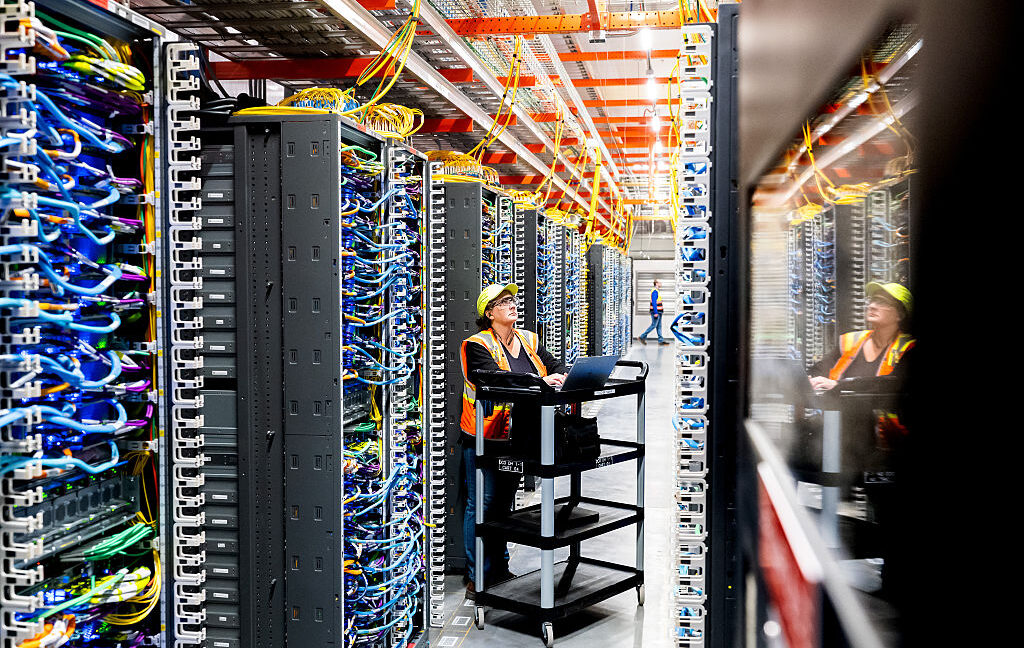
“If data centers end up providing less business to the utility companies than anticipated, consumers could be left with massive electricity bills as utility companies recoup billions in new infrastructure costs, with nothing to show for it,” senators wrote.

Already, Utah, Oregon, and Ohio have passed laws “creating a separate class of utility customer for data centers which includes basic financial safeguards such as upfront payments and longer contract length,” senators noted, and Virginia is notably weighing a similar law.

At least one study, The New York Times noted, suggested that data centers may have recently helped reduce electricity costs by spreading the costs of upgrades over more customers, but those outcomes varied by state and could not account for future AI demand.

“It remains unclear whether broader, sustained load growth will increase long-run average costs and prices,” Lawrence Berkeley National Laboratory researchers concluded. “In some cases, spikes in load growth can result in significant, near-term retail price increase.”

Until companies prove they’re paying their fair share, senators expect electricity bills to keep climbing, particularly in vulnerable areas. That will likely only increase pressure for regulators to intervene, the director of the Electricity Law Initiative at the Harvard Law School Environmental and Energy Law Program, Ari Peskoe, suggested in September.

“The utility business model is all about spreading costs of system expansion to everyone, because we all benefit from a reliable, robust electricity system,” Peskoe said. “But when it’s a single consumer that is using so much energy—basically that of an entire city—and when that new city happens to be owned by the wealthiest corporations in the world, I think it’s time to look at the fundamental assumptions of utility regulation and make sure that these facilities are really paying for all of the infrastructure costs to connect them to the system and to power them.”

https://arstechnica.com/tech-policy/2025/12/shady-data-center-deals-doom-americans-to-higher-energy-bills-senators-say/


Utah leaders hinder efforts to develop solar energy supply

Other ranchers told ProPublica they’ve been able to stay on their land and preserve their way of life by leasing to solar. Landon Kesler’s family, which raises cattle for team roping competitions, has leased land to solar for more than a decade. The revenue has allowed the family to almost double its land holdings, providing more room to ranch, Kesler said.

“I’m going to be quite honest, it’s absurd,” Kesler said of efforts to limit solar on agricultural land. “Solar very directly helped us tie up other property to be used for cattle and ranching. It didn’t run us out; it actually helped our agricultural business thrive.”

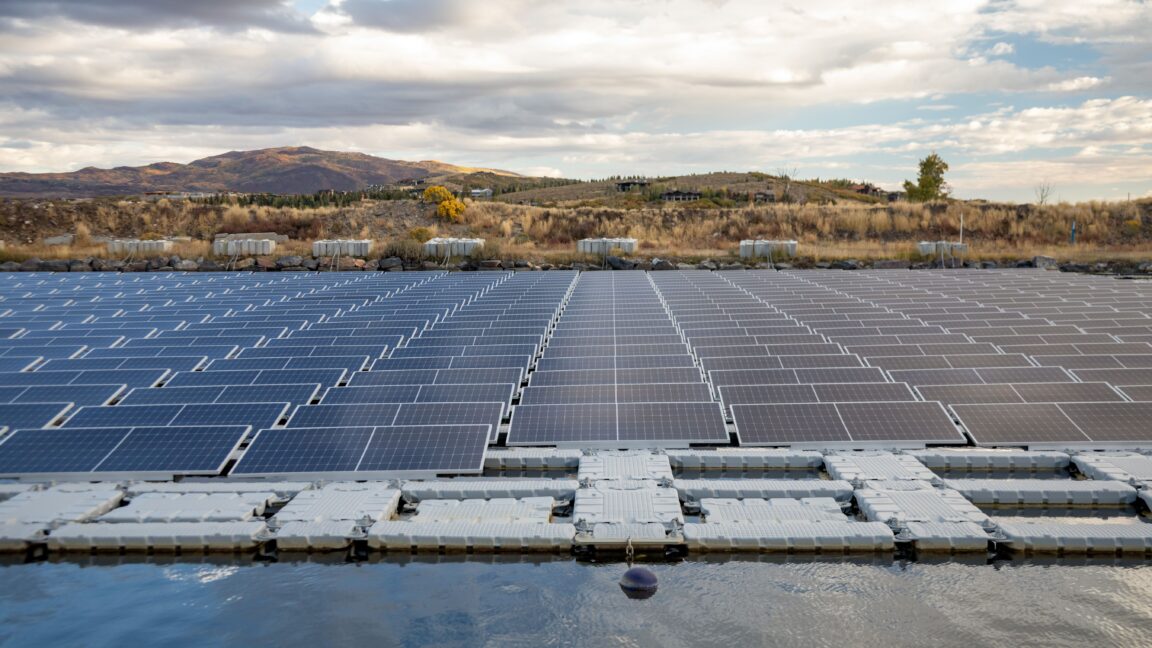
Solar lobbyists and executives have been working to bolster the industry’s image with lawmakers ahead of the next legislative session. They’re arguing solar is a good neighbor.

“We don’t use water, we don’t need sidewalks, we don’t create noise, and we don’t create light,” said Amanda Smith, vice president of external affairs for AES, which has one solar project operating in Utah and a second in development. “So we just sort of sit out there and produce energy.”

Solar pays private landowners in Utah $17 million a year to lease their land. And, more important, solar developers argue, it’s critical to powering data centers the state is working to attract.

“We are eager to be part of a diversified electricity portfolio, and we think we bring a lot of values that will benefit communities, keep rates low and stable, and help keep the lights on,” Rikki Seguin, executive director of Interwest Energy Alliance, a western trade organization that advocates for utility-scale renewable energy projects, told an interim committee of lawmakers this summer.

The message didn’t get a positive reception from some lawmakers on the committee. Rep. Carl Albrecht, R-Richfield, who represents three rural Utah counties and was among solar’s critics last session, said the biggest complaint he hears from constituents is about “that ugly solar facility” in his district.

“Why, Rep. Albrecht, did you allow that solar field to be built? It’s black. It looks like the Dead Sea when you drive by it,” Albrecht said.

This story was originally published by ProPublica.

https://arstechnica.com/science/2025/12/utah-leaders-hinder-efforts-to-develop-solar-energy-supply/


Murder-suicide case shows OpenAI selectively hides data after users die

But while social media posts allegedly showed that ChatGPT put a target on Adams’ back about a month before her murder—after Soelberg became paranoid about a blinking light on a Wi-Fi printer—the family still has no access to chats in the days before the mother and son’s tragic deaths.

Allegedly, although OpenAI recently argued that the “full picture” of chat histories was necessary context in a teen suicide case, the ChatGPT maker has chosen to hide “damaging evidence” in the Adams’ family’s case.

“OpenAI won’t produce the complete chat logs,” the lawsuit alleged, while claiming that “OpenAI is hiding something specific: the full record of how ChatGPT turned Stein-Erik against Suzanne.” Allegedly, “OpenAI knows what ChatGPT said to Stein-Erik about his mother in the days and hours before and after he killed her but won’t share that critical information with the Court or the public.”

In a press release, Erik Soelberg, Stein-Erik’s son and Adams’ grandson, accused OpenAI and investor Microsoft of putting his grandmother “at the heart” of his father’s “darkest delusions,” while ChatGPT allegedly “isolated” his father “completely from the real world.”

Erik Soelberg, Stein-Erik Soelberg’s son and Suzanne Adams’ grandson.

via Estate of Suzanne Adams

Erik Soelberg and his grandmother, Suzanne Adams.

via Estate of Suzanne Adams

“These companies have to answer for their decisions that have changed my family forever,” Erik said.

His family’s lawsuit seeks punitive damages, as well as an injunction requiring OpenAI to “implement safeguards to prevent ChatGPT from validating users’ paranoid delusions about identified individuals.” The family also wants OpenAI to post clear warnings in marketing of known safety hazards of ChatGPT—particularly the “sycophantic” version 4o that Soelberg used—so that people who don’t use ChatGPT, like Adams, can be aware of possible dangers.

Asked for comment, an OpenAI spokesperson told Ars that “this is an incredibly heartbreaking situation, and we will review the filings to understand the details. We continue improving ChatGPT’s training to recognize and respond to signs of mental or emotional distress, de-escalate conversations, and guide people toward real-world support. We also continue to strengthen ChatGPT’s responses in sensitive moments, working closely with mental health clinicians.”

https://arstechnica.com/tech-policy/2025/12/openai-refuses-to-say-where-chatgpt-logs-go-when-users-die/


UK to “encourage” Apple and Google to put nudity-blocking systems on phones

The push for device-level blocking comes after the UK implemented the Online Safety Act, a law requiring porn platforms and social media firms to verify users’ ages before letting them view adult content. The law can’t fully prevent minors from viewing porn, as many people use VPN services to get around the UK age checks. Government officials may view device-level detection of nudity as a solution to that problem, but such systems would raise concerns about user rights and the accuracy of the nudity detection.

Age-verification battles in multiple countries

Apple and Google both provide optional tools that let parents control what content their children can access. The companies could object to mandates on privacy grounds, as they have in other venues.

When Texas enacted an age-verification law for app stores, Apple and Google said they would comply but warned of risks to user privacy. A lobby group that represents Apple, Google, and other tech firms then sued Texas in an attempt to prevent the law from taking effect, saying it “imposes a broad censorship regime on the entire universe of mobile apps.”

There’s another age-verification battle in Australia, where the government decided to ban social media for users under 16. Companies said they would comply, although Reddit sued Australia on Friday in a bid to overturn the law.

Apple this year also fought a UK demand that it create a backdoor for government security officials to access encrypted data. The Trump administration claimed it convinced the UK to drop its demand, but the UK is reportedly still seeking an Apple backdoor.

In another case, the image-sharing website Imgur blocked access for UK users starting in September while facing an investigation over its age-verification practices.

Apple faced a backlash in 2021 over potential privacy violations when it announced a plan to have iPhones scan photos for child sexual abuse material (CSAM). Apple ultimately dropped the plan.

https://arstechnica.com/tech-policy/2025/12/uk-to-encourage-apple-and-google-to-put-nudity-blocking-systems-on-phones/


Verizon refused to unlock man’s iPhone, so he sued the carrier and won

Verizon’s “argument was pretty weak”

Roach said he did not consult with a lawyer on his small claims case, instead opting to do it all himself. “The first time I showed up to court for the original date, they asked for proof of the returned mail summons, and I did not have that,” he said.

The court hearing was rescheduled. When it was eventually held, the carrier sent a representative to argue against Roach.

“Their argument was pretty weak, I guess,” Roach said. “It was basically like, ‘Well, he didn’t pay the two months of service, so we didn’t unlock his phone. We offered him a settlement but he rejected it.’… My argument was, yeah, the terms had changed in kind of a consumer-unfriendly way. But beyond that, it was the fact that the terms had changed from something that was legal to something that was not legal with the federal regs. So regardless of the fact that the terms had changed, the current terms were illegal, which I thought was my strongest argument. And then I also put in that it was probably a violation of Kansas consumer protection law, which I’m glad I did.”

Roach said that toward the end of the hearing, the judge indicated that she couldn’t make a judgment based on FCC regulations and would need to rule on what the Kansas court has jurisdiction over. She issued the ruling that Verizon violated the state’s consumer protection law about five or six weeks later, he said.

Given that the FCC hasn’t acted on Verizon’s petition to change the unlocking rules, the federal regulations “haven’t changed at all in regards to Verizon’s obligation to unlock devices,” Roach said. He believes it would be relatively easy for consumers who were similarly harmed to beat Verizon in court or even to pursue a class action.

“I would think this would be a slam dunk for any further cases,” Roach said. “I don’t think I have any grounds anymore since my damages have been resolved, but it seems like it’d be a very easy class action for somebody.”

https://arstechnica.com/tech-policy/2025/12/verizon-refused-to-unlock-mans-iphone-so-he-sued-the-carrier-and-won/


Ukrainians sue US chip firms for powering Russian drones, missiles

Dozens of Ukrainian civilians filed a series of lawsuits in Texas this week, accusing some of the biggest US chip firms of negligently failing to track chips that evaded export curbs. Those chips were ultimately used to power Russian and Iranian weapon systems, causing wrongful deaths last year.

Their complaints alleged that for years, Texas Instruments (TI), AMD, and Intel have ignored public reporting, government warnings, and shareholder pressure to do more to track final destinations of chips and shut down shady distribution channels diverting chips to sanctioned actors in Russia and Iran.

Putting profits over human lives, tech firms continued using “high-risk” channels, Ukrainian civilians’ legal team alleged in a press statement, without ever strengthening controls.

All that intermediaries who placed bulk online orders had to do to satisfy chip firms was check a box confirming that the shipment wouldn’t be sent to sanctioned countries, lead attorney Mikal Watts told reporters at a press conference on Wednesday, according to the Kyiv Independent.

“There are export lists,” Watts said. “We know exactly what requires a license and what doesn’t. And companies know who they’re selling to. But instead, they rely on a checkbox that says, ‘I’m not shipping to Putin.’ That’s it. No enforcement. No accountability.”

As chip firms allegedly looked the other way, innocent civilians faced five attacks, detailed in the lawsuits, that used weapons containing their chips. That includes one of the deadliest attacks in Kyiv, where Ukraine’s largest children’s hospital was targeted in July 2024. Some civilians suing were survivors seriously injured in attacks, while others lost loved ones and experienced emotional trauma.

Russia would not be able to hit their targets without chips supplied by US firms, the lawsuits alleged. Considered the brain of weapon systems, including drones, cruise missiles, and ballistic missiles, the chips help enable Russia’s war against Ukrainian civilians, they alleged.

https://arstechnica.com/tech-policy/2025/12/ukrainians-sue-us-chip-firms-for-powering-russian-drones-missiles/


Trump tries to block state AI laws himself after Congress decided not to

Section 2 of Trump’s order is written vaguely to give the administration leeway to challenge many types of AI laws. “It is the policy of the United States to sustain and enhance the United States’ global AI dominance through a minimally burdensome national policy framework for AI,” the section says.

Colorado law irks Trump

The executive order specifically names a Colorado law that requires AI developers to protect consumers against “algorithmic discrimination.” It defines this type of discrimination as “any condition in which the use of an artificial intelligence system results in an unlawful differential treatment or impact that disfavors an individual or group of individuals on the basis” of age, race, sex, and other protected characteristics.

The Colorado law compels developers of “high-risk systems” to make various disclosures, implement a risk management policy and program, give consumers the right to “correct any incorrect personal data that a high-risk system processed in making a consequential decision,” and let consumers appeal any “adverse consequential decision concerning the consumer arising from the deployment of a high-risk system.”

Trump’s order alleges that the Colorado law “may even force AI models to produce false results in order to avoid a ‘differential treatment or impact’ on protected groups.” Trump’s order also says that “state laws sometimes impermissibly regulate beyond State borders, impinging on interstate commerce.”

Trump ordered the Commerce Department to evaluate existing state AI laws and identify “onerous” ones that conflict with the policy. “That evaluation of State AI laws shall, at a minimum, identify laws that require AI models to alter their truthful outputs, or that may compel AI developers or deployers to disclose or report information in a manner that would violate the First Amendment or any other provision of the Constitution,” the order said.

https://arstechnica.com/tech-policy/2025/12/trump-tries-to-block-state-ai-laws-himself-after-congress-decided-not-to/


Apple loses its appeal of a scathing contempt ruling in iOS payments case

Back in April, District Court Judge Yvonne Gonzalez Rogers delivered a scathing judgment finding that Apple was in “willful violation” of her 2021 injunction intended to open up iOS App Store payments. That contempt of court finding has now been almost entirely upheld by the Ninth Circuit Court of Appeals, a development that Epic Games’ Tim Sweeney tells Ars he hopes will “do a lot of good for developers and start to really change the App Store situation worldwide, I think.”

The ruling, signed by a panel of three appellate court judges, affirmed that Apple’s initial attempts to charge a 27 percent fee to iOS developers using outside payment options “had a prohibitive effect, in violation of the injunction.” Similarly, Apple’s restrictions on how those outside links had to be designed were overly broad; the appeals court suggests that Apple can only ensure that internal and external payment options are presented in a similar fashion.

The appeals court also agreed that Apple acted in “bad faith” by refusing to comply with the injunction, rejecting viable, compliant alternatives in internal discussions. And the appeals court was also not convinced by Apple’s process-focused arguments, saying the district court properly evaluated materials Apple argued were protected by attorney-client privilege.

While the district court barred Apple from charging any fees for payments made outside of its App Store, the appeals court now suggests that Apple should still be able to charge a “reasonable fee” based on its “actual costs to ensure user security and privacy.” It will be up to Apple and the district court to determine what that kind of “reasonable fee” should look like going forward.

Speaking to reporters Thursday night, though, Epic founder and CEO Tim Sweeney said he believes those should be “super super minor fees,” on the order of “tens or hundreds of dollars” every time an iOS app update goes through Apple for review. That should be more than enough to compensate the employees reviewing the apps to make sure outside payment links are not scams and lead to a system of “normal fees for normal businesses that sell normal things to normal customers,” Sweeney said.

https://arstechnica.com/tech-policy/2025/12/epic-celebrates-the-end-of-the-apple-tax-after-appeals-court-win-in-ios-payments-case/


Supreme Court appears likely to approve Trump’s firing of FTC Democrat

Justice Samuel Alito suggested that a ruling for Slaughter could open the way for Congress to convert various executive branch agencies into “multi-member commissions with members protected from plenary presidential removal authority.”

“I could go down the list… How about Veterans Affairs? How about Interior? Labor? EPA? Commerce? Education? What am I missing?” Alito said.

“Agriculture,” Justice Neil Gorsuch responded. The official transcript notes that Gorsuch’s response was met with laughter.

Justice Brett Kavanaugh expressed skepticism about the power of independent agencies, saying, “I think broad delegations to unaccountable independent agencies raise enormous constitutional and real-world problems for individual liberty.” He said the court’s approach with “the major questions doctrine over the last several years” has been to “make sure that we are not just being casual about assuming that Congress has delegated major questions of political or economic significance to independent agencies, or to any agencies for that matter.”

Kagan: President would have “uncontrolled, unchecked power”

Unlike the unanimous Humphrey’s Executor, the Slaughter case appears headed for a split ruling between the court’s conservative and liberal justices. Justice Ketanji Brown Jackson said there are “dangers and real-world consequences” of the Trump administration’s position.

“My understanding was that independent agencies exist because Congress has decided that some issues, some matters, some areas should be handled in this way by nonpartisan experts, that Congress is saying that expertise matters with respect to aspects of the economy and transportation and the various independent agencies that we have,” Jackson said. “So having a president come in and fire all the scientists and the doctors and the economists and the Ph.D.s and replacing them with loyalists and people who don’t know anything is actually not in the best interest of the citizens of the United States. This is what I think Congress’s policy decision is when it says that these certain agencies we’re not going to make directly accountable to the president.”

Justice Elena Kagan said there has historically been a “bargain” in which “Congress has given these agencies a lot of work to do that is not traditionally executive work… and they’ve given all of that power to these agencies largely with it in mind that the agencies are not under the control of a single person, of the president, but that, indeed, Congress has a great deal of influence over them too. And if you take away a half of this bargain, you end up with just massive, uncontrolled, unchecked power in the hands of the president.”

https://arstechnica.com/tech-policy/2025/12/supreme-court-appears-likely-to-approve-trumps-firing-of-ftc-democrat/