EU accuses Meta of violating content rules in move that could anger Trump

FTC Chairman Andrew Ferguson recently warned Meta and a dozen social media and technology companies that “censoring Americans to comply with a foreign power’s laws, demands, or expected demands” may violate US law. Ferguson’s letters said the EU’s Digital Services Act and other laws “incentivize tech companies to censor worldwide speech.”

Meta told media outlets that “we disagree with any suggestion that we have breached the DSA, and we continue to negotiate with the European Commission on these matters.” Meta also said it made changes to comply with the DSA.

“In the European Union, we have introduced changes to our content reporting options, appeals process, and data access tools since the DSA came into force and are confident that these solutions match what is required under the law in the EU,” Meta said.

TikTok, Meta accused of restricting data access

The EC also said it preliminarily found that both Meta and TikTok violated their DSA obligation to grant researchers adequate access to public data.

“The Commission’s preliminary findings show that Facebook, Instagram and TikTok may have put in place burdensome procedures and tools for researchers to request access to public data. This often leaves them with partial or unreliable data, impacting their ability to conduct research, such as whether users, including minors, are exposed to illegal or harmful content,” the announcement said.

The data-access requirement “is an essential transparency obligation under the DSA, as it provides public scrutiny into the potential impact of platforms on our physical and mental health,” the EC said.

In a statement provided to Ars, TikTok said it is committed to transparency and has made data available to nearly 1,000 research teams. TikTok said it may be impossible to comply with both the DSA and the General Data Protection Regulation (GDPR).

“We are reviewing the European Commission’s findings, but requirements to ease data safeguards place the DSA and GDPR in direct tension. If it is not possible to fully comply with both, we urge regulators to provide clarity on how these obligations should be reconciled,” TikTok said.

https://arstechnica.com/tech-policy/2025/10/trump-tariff-threats-havent-stopped-eu-from-cracking-down-on-meta/




Trump eyes government control of quantum computing firms with Intel-like deals

Donald Trump is eyeing taking equity stakes in quantum computing firms in exchange for federal funding, The Wall Street Journal reported.

At least five companies are weighing whether allowing the government to become a shareholder would be worth it to snag funding that the Trump administration has “earmarked for promising technology companies,” sources familiar with the potential deals told the WSJ.

IonQ, Rigetti Computing, and D-Wave Quantum are currently in talks with the government over potential funding agreements, with minimum awards of $10 million each, some sources said. Quantum Computing Inc. and Atom Computing are reportedly “considering similar arrangements,” as are other companies in the sector, which is viewed as critical for scientific advancements and next-generation technologies.

No deals have been completed yet, sources said, and terms could change as quantum-computing firms weigh the potential risks of government influence over their operations.

Quantum-computing exec called deals “exciting”

In August, Intel agreed to give the US a 10 percent stake in the company, then admitted to shareholders that “it is difficult to foresee all the potential consequences” of the unusual arrangement. If the deal goes through, the US would become Intel’s largest shareholder, the WSJ noted, potentially influencing major decisions that could prompt layoffs or restrict business in certain foreign markets.

“Among other things, there could be adverse reactions, immediately or over time, from investors, employees, customers, suppliers, other business or commercial partners, foreign governments, or competitors,” Intel wrote in a securities filing. “There may also be litigation related to the transaction or otherwise and increased public or political scrutiny with respect to the Company.”

But quantum computing companies that are closest to entering deals appear optimistic about possible government involvement.

Quantum Computing Inc. chief executive Yuping Huang told the WSJ that “the government’s potential equity stakes in companies in the industry are exciting.” The funding could be one of “the first significant signs of support for the sector from Washington,” the WSJ noted, potentially paving the way for breakthroughs such as Google’s recent demonstration of a quantum algorithm running 13,000 times faster than a supercomputer.

https://arstechnica.com/tech-policy/2025/10/trumps-industry-meddling-may-give-us-a-stake-in-quantum-computing-firms/


Apple and Google reluctantly comply with Texas age verification law

Apple yesterday announced a plan to comply with a Texas age verification law and warned that changes required by the law will reduce privacy for app users.

“Beginning January 1, 2026, a new state law in Texas—SB2420—introduces age assurance requirements for app marketplaces and developers,” Apple said yesterday in a post for developers. “While we share the goal of strengthening kids’ online safety, we are concerned that SB2420 impacts the privacy of users by requiring the collection of sensitive, personally identifiable information to download any app, even if a user simply wants to check the weather or sports scores.”

The Texas App Store Accountability Act requires app stores to verify users’ ages and imposes restrictions on those under 18. Apple said that developers will have “to adopt new capabilities and modify behavior within their apps to meet their obligations under the law.”

Apple’s post noted that similar laws will take effect later in 2026 in Utah and Louisiana. Google also recently announced plans for complying with the three state laws and said the new requirements reduce user privacy.

“While we have user privacy and trust concerns with these new verification laws, Google Play is designing APIs, systems, and tools to help you meet your obligations,” Google told developers in an undated post.

The Utah law is scheduled to take effect May 7, 2026, while the Louisiana law will take effect July 1, 2026. The Texas, Utah, and Louisiana “laws impose significant new requirements on many apps that may need to provide age appropriate experiences to users in these states,” Google said. “These requirements include ingesting users’ age ranges and parental approval status for significant changes from app stores and notifying app stores of significant changes.”

New features for Texas

Apple and Google both announced new features to help developers comply.

“Once this law goes into effect, users located in Texas who create a new Apple Account will be required to confirm whether they are 18 years or older,” Apple said. “All new Apple Accounts for users under the age of 18 will be required to join a Family Sharing group, and parents or guardians will need to provide consent for all App Store downloads, app purchases, and transactions using Apple’s In-App Purchase system by the minor.”

https://arstechnica.com/tech-policy/2025/10/apple-and-google-reluctantly-comply-with-texas-age-verification-law/


Ted Cruz doesn’t seem to understand Wikipedia, lawyer for Wikimedia says

The letter from Sen. Ted Cruz (R-Texas) accusing Wikipedia of left-wing bias seems to be based on fundamental misunderstandings of how the platform works, according to a lawyer for the nonprofit foundation that operates the online encyclopedia.

“The foundation is very much taking the approach that Wikipedia is actually pretty great and a lot of what’s in this letter is actually misunderstandings,” Jacob Rogers, associate general counsel at the Wikimedia Foundation, told Ars in an interview. “And so we are more than happy, despite the pressure that comes from these things, to help people better understand how Wikipedia works.”

Cruz’s letter to Wikimedia Foundation CEO Maryana Iskander expressed concern “about ideological bias on the Wikipedia platform and at the Wikimedia Foundation.” Cruz alleged that Wikipedia articles “often reflect a left-wing bias.” He asked the foundation for “documents sufficient to show what supervision, oversight, or influence, if any, the Wikimedia Foundation has over the editing community,” and “documents sufficient to show how the Wikimedia Foundation addresses political or ideological bias.”

As many people know, Wikipedia is edited by volunteers through a collaborative process.

“We’re not deciding what the editorial policies are for what is on Wikipedia,” Rogers said, describing the Wikimedia Foundation’s hands-off approach. “All of that, both the writing of the content and the determining of the editorial policies, is done through the volunteer editors” through “public conversation and discussion and trying to come to a consensus. They make all of that visible in various ways to the reader. So you go and you read a Wikipedia article, you can see what the sources are, what someone has written, you can follow the links yourselves.”

“They’re worried about something that is just not present at all”

Cruz’s letter raised concerns about “the influence of large donors on Wikipedia’s content creation or editing practices.” But Rogers said that “people who donate to Wikipedia don’t have any influence over content and we don’t even have that many large donors to begin with. It is primarily funded by people donating through the website fundraisers, so I think they’re worried about something that is just not present at all.”

https://arstechnica.com/tech-policy/2025/10/wikipedia-rebuts-ted-cruz-attack-says-cruz-just-doesnt-understand-the-site/


OpenAI mocks Musk’s math in suit over iPhone/ChatGPT integration

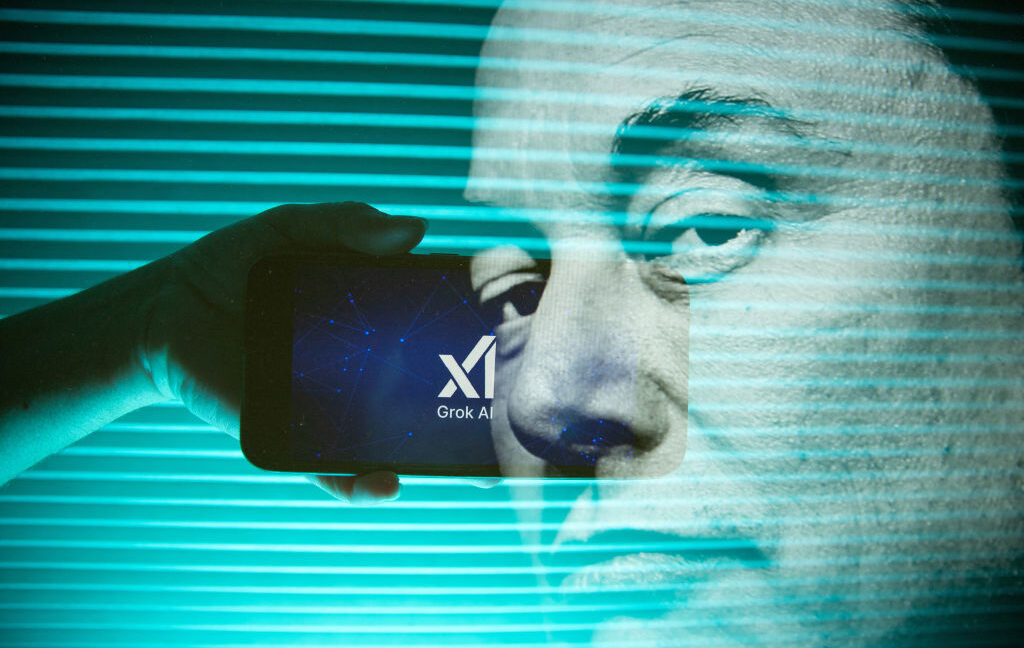
And most glaringly, Apple noted that xAI is not a rival or consumer in the smartphone industry, where it alleges competition is being harmed. Apple urged the court to reject Musk’s theory that Apple is incentivized to boost OpenAI to prevent xAI’s ascent in building a “super app” that would render smartphones obsolete. If Musk’s super app dream is even possible, Apple argued, it’s at least a decade off, insisting that as-yet-undeveloped apps should not serve as the basis for blocking Apple’s measured plan to better serve customers with sophisticated chatbot integration.

“Antitrust laws do not require that, and for good reason: imposing such a rule on businesses would slow innovation, reduce quality, and increase costs, all ultimately harming the very consumers the antitrust laws are meant to protect,” Apple argued.

Musk’s weird smartphone market claim, explained

Apple alleged that Musk’s “grievance” can be “reduced to displeasure that Apple has not yet ‘integrated with any other generative AI chatbots’ beyond ChatGPT, such as those created by xAI, Google, and Anthropic.”

In a footnote, the smartphone giant noted that by xAI’s logic, Musk’s social media platform X “may be required to integrate all other chatbots—including ChatGPT—on its own social media platform.”

But antitrust law doesn’t work that way, Apple argued, urging the court to reject xAI’s claims of alleged market harms that “rely on a multi-step chain of speculation on top of speculation.” As Apple summarized, xAI contends that “if Apple never integrated ChatGPT,” xAI could win in both chatbot and smartphone markets, but only if:

1. Consumers would choose to send additional prompts to Grok (rather than other generative AI chatbots).
2. The additional prompts would result in Grok achieving scale and quality it could not otherwise achieve.
3. As a result, the X app would grow in popularity because it is integrated with Grok.
4. X and xAI would therefore be better positioned to build so-called “super apps” in the future, which the complaint defines as “multi-functional” apps that offer “social connectivity and messaging, financial services, e-commerce, and entertainment.”
5. Once developed, consumers might choose to use X’s “super app” for various functions.
6. “Super apps” would replace much of the functionality of smartphones and consumers would care less about the quality of their physical phones and rely instead on these hypothetical “super apps.”
7. Smartphone manufacturers would respond by offering more basic models of smartphones with less functionality.
8. iPhone users would decide to replace their iPhones with more “basic smartphones” with “super apps.”

Apple insisted that nothing in its OpenAI deal prevents Musk from building his super apps, while noting that from integrating Grok into X, Musk understands that integration of a single chatbot is a “major undertaking” that requires “substantial investment.” That “concession” alone “underscores the massive resources Apple would need to devote to integrating every AI chatbot into Apple Intelligence,” while navigating potential user safety risks.

https://arstechnica.com/tech-policy/2025/10/openai-mocks-musks-math-in-suit-over-iphone-chatgpt-integration/


FCC chairman leads “cruel” vote to take Wi-Fi access away from school kids

The FCC votes were criticized by advocacy groups. “Students who rely on long bus rides to complete assignments and library patrons who depend on hotspots for work, education, or telehealth will suddenly lose access to essential tools. This decision is a step backward,” said Joseph Wender, executive director of the Schools, Health & Libraries Broadband Coalition.

“Chairman Carr’s cruel move to delete our kids’ Internet connections won’t make America smarter,” said Revati Prasad, executive director of the Benton Institute for Broadband & Society. The FCC “openly voted to snatch back the opportunity to offer more Americans, especially in rural areas, the high-speed Internet access to do the business of life online—pay bills, make telehealth appointments, fill out school applications—after the library closes,” American Library Association President Sam Helmick said.

The advocacy groups said that in New Mexico, “Farmington Municipal Schools equipped its 90 buses with Wi-Fi, serving over 6,500 students daily. Parents reported that children returned home with homework already completed.” In Ohio, “the Brown County Public Library’s hotspot program allowed homeschool families to join virtual classes, entrepreneurs to run mobile businesses, and veterans to participate in telehealth appointments and certification testing.”

Helmick said the library association is also “discouraged by the lack of due process, which left no opportunity for staff, patrons and library advocates to give input on the draft order.” Gomez similarly criticized the process, saying the FCC didn’t release the draft order until after the deadline for interested parties to meet with commissioners’ offices.

Gomez: Programs weren’t illegal

Gomez disputed Carr’s legal argument, saying that “Congress gave the FCC permission to expand the applications of E-Rate funding as the technologies used to educate children evolve.” She pointed out that the Universal Service law says the FCC may designate additional services for support. Gomez continued:

When the E-Rate program was implemented, dial-up Internet was the standard, and today, September 30th, 2025, AOL is discontinuing dial-up service. It is safe to say the landscape of communications technology has changed dramatically throughout the life of the E-Rate program. As underscored during my visit to the High School for Environmental Studies in New York a couple of weeks ago, students are now using Chromebooks in classrooms on a regular basis, and they are expected to submit homework assignments online using platforms like Google classroom. These changes are made possible with support from E-Rate funding.

Gomez said that in 2003, under President George W. Bush, the FCC “expanded E-Rate support to cover Internet access for bookmobiles. It also clarified that E-Rate funding could cover a school bus driver’s use of wireless services while transporting students, a librarian’s use of wireless services on a library’s mobile library unit van, and teachers’ use of wireless services while accompanying students on a field trip. Expanding E-Rate support to cover hotspots and Wi-Fi on school buses was consistent with that precedent.”

https://arstechnica.com/tech-policy/2025/10/fcc-chairman-leads-cruel-vote-to-take-wi-fi-access-away-from-school-kids/


Critics slam OpenAI’s parental controls while users rage, “Treat us like adults”

“Treat us like adults,” users rage

On the X post where OpenAI announced parental controls, some parents slammed the update.

In the X thread, one self-described parent of a 12-year-old suggested OpenAI was only offering “essentially just a set of useless settings,” requesting that the company consider allowing parents to review topics teens discuss as one way to preserve privacy while protecting kids.

But most of the loudest ChatGPT users on the thread weren’t complaining about the parental controls. They are still reacting to the changes that OpenAI made at the beginning of September, routing sensitive chats of all users of all ages to a different reasoning without alerting the user that the model has switched.

Backlash over that change forced ChatGPT vice president Nick Turley to “explain what is happening” in another X thread posted a few days before parental controls were announced.

Turley confirmed that “ChatGPT will tell you which model is active when asked,” but the update got “strong reactions” from many users who pay to access a certain model and were unhappy the setting could not be disabled. “For a lot of users venting their anger online though, it’s like being forced to watch TV with the parental controls locked in place, even if there are no kids around,” Yahoo Tech summarized.

Top comments on OpenAI’s thread announcing parental controls showed the backlash is still brewing, particularly since some users were already frustrated that OpenAI is taking the invasive step of age-verifying users by checking their IDs. Some users complained that OpenAI was censoring adults, while offering customization and choice to teens.

“Since we already distinguish between underage and adult users, could you please give adult users the right to freely discuss topics?” one X user commented. “Why can’t we, as paying users, choose our own model, and even have our discussions controlled? Please treat adults like adults.”

If you or someone you know is feeling suicidal or in distress, please call the Suicide Prevention Lifeline number, 1-800-273-TALK (8255), which will put you in touch with a local crisis center.

https://arstechnica.com/tech-policy/2025/09/critics-slam-openais-parental-controls-while-users-rage-treat-us-like-adults/


After threatening ABC over Kimmel, FCC chair may eliminate TV ownership caps

Anna Gomez, the only Democrat on the Republican-majority commission, criticized Carr’s fight against ABC in her comments at today’s FCC meeting. Carr’s FCC “seiz[ed] on a late-night comedian’s comments as a pretext to punish speech it disliked” in “an act of clear government intimidation,” she said.

Gomez said that “corporate behemoths who own large swaths of local stations across the country” continued blocking Kimmel for several days after the show returned “because these billion-dollar media companies have business before the FCC. They will need regulatory approval of their transactions and are pushing to reduce regulatory guardrails so they can grow even bigger.”

Local stations are “trapped in the middle as these massive companies impose their will and their values upon local communities,” Gomez continued. “This precise example neatly encapsulates the danger of allowing vast and unfettered media consolidation. This could drastically alter the media ecosystem and the number of voices that are a part of it.”

National ownership cap

Gomez didn’t vote against today’s action. She said the NPRM “is required by statute” and that she supports “seeking comment on these very important issues.” But Gomez said she’s concerned about consolidation limiting the variety of news and viewpoints on local TV stations.

Congress set the national ownership cap at 39 percent in 2004 and exempted the cap from the FCC’s required quadrennial review of media ownership rules. There is debate over whether the FCC has the authority to eliminate the national limit, and Gomez argued that “given the prior Congressional action, I believe that only Congress can raise the cap.”

The FCC’s “regulatory structure is in large part based on a balance of power between national networks with incentives to serve national interests and local broadcasters with incentives to serve their local communities,” Gomez said. That balance could be disrupted by a single company owning enough broadcast stations to reach the majority of US households, she said.

“In the past two weeks, the public has raised serious concerns that large station groups made programming decisions to serve their national corporate interests, not their communities of license,” Gomez said. “What is the impact of letting them get even bigger?”

https://arstechnica.com/tech-policy/2025/09/after-threatening-abc-over-kimmel-fcc-chair-may-eliminate-tv-ownership-caps/


50+ scientific societies sign letter objecting to Trump executive order

Last month, the Trump administration issued an executive order asserting political control over grant funding, including all federally supported research. In general, the executive order inserts a layer of political control over both the announcement of new funding opportunities and the approval of individual grants. Now, a coalition of more than 50 scientific and medical organizations is firing back, issuing a letter to the US Congress expressing grave concerns over the order’s provisions and urging Congress to protect the integrity of what has long been an independent, merit-based, peer-review system for awarding federal grants.

As we previously reported, the order requires that any announcement of funding opportunities be reviewed by the head of the agency or someone they designate, which means a political appointee will have the ultimate say over what areas of science the US funds. Individual grants will also require clearance from a political appointee and “must, where applicable, demonstrably advance the President’s policy priorities.”

The order also instructs agencies to formalize the ability to cancel previously awarded grants at any time if they’re considered “no longer advance agency priorities.” Until a system is in place to enforce the new rules, agencies are forbidden from starting new funding programs.

In short, the new rules would mean that all federal science research would need to be approved by a political appointee who may have no expertise in the relevant areas, and the research can be canceled at any time if the political winds change. It would mark the end of a system that has enabled US scientific leadership for roughly 70 years.

https://arstechnica.com/science/2025/09/50-scientific-societies-sign-letter-objecting-to-trump-executive-order/


Court rejects Verizon claim that selling location data without consent is legal

Instead of providing notice to customers and obtaining or verifying customer consent itself, Verizon “largely delegated those functions via contract,” the court said. This system and its shortcomings were revealed in 2018 when “the New York Times published an article reporting security breaches involving Verizon’s (and other major carriers’) location-based services program,” the court said.

Securus Technologies, a provider of communications services to correctional facilities, “was misusing the program to enable law enforcement officers to access location data without customers’ knowledge or consent, so long as the officers uploaded a warrant or some other legal authorization,” the ruling said. A Missouri sheriff “was able to access customer data with no legal process at all” because Securus did not review the documents that law enforcement uploaded.

Verizon claimed that Section 222 of the Communications Act covers only call-location data, as opposed to device location data. The court disagreed, pointing to the law’s text stating that customer proprietary network information includes data that is related to the location of a telecommunications service, and which is made available to the carrier “solely by virtue of the carrier-customer relationship.”

“Device-location data comfortably satisfies both conditions,” the court said.

Verizon chose to pay fine, giving up right to jury trial

As for Verizon’s claim that the FCC violated its right to a jury trial, the court said that “Verizon could have gotten such a trial” if it had “declined to pay the forfeiture and preserved its opportunity for a de novo jury trial if the government sought to collect.” Instead, Verizon chose to pay the fine “and seek immediate review in our Court.”

By contrast, the 5th Circuit decision in AT&T’s favor said the FCC “acted as prosecutor, jury, and judge,” violating the right to a jury trial. The 5th Circuit said it was guided by the Supreme Court’s June 2024 ruling in Securities and Exchange Commission v. Jarkesy, which held that “when the SEC seeks civil penalties against a defendant for securities fraud, the Seventh Amendment entitles the defendant to a jury trial.”

The 2nd Circuit ruling said there are key differences between US telecom law and the securities laws considered in Jarkesy. It’s because of those differences that Verizon had the option of declining to pay the penalty and preserving its right to a jury trial, the court said.

In the Jarkesy case, the problem “was that the SEC could ‘siphon’ its securities fraud claims away from Article III courts and compel payment without a jury trial,” the 2nd Circuit panel said. “The FCC’s forfeiture order, however, does not, by itself, compel payment. The government needs to initiate a collection action to do that. Against this backdrop, the agency’s proceedings before a § 504(a) trial create no Seventh Amendment injury.”

https://arstechnica.com/tech-policy/2025/09/court-rejects-verizon-claim-that-selling-location-data-without-consent-is-legal/