“First of its kind” AI settlement: Anthropic to pay authors $1.5 billion

Authors revealed today that Anthropic agreed to pay $1.5 billion and destroy all copies of the books the AI company pirated to train its artificial intelligence models.

In a press release provided to Ars, the authors confirmed that the settlement is “believed to be the largest publicly reported recovery in the history of US copyright litigation.” Covering 500,000 works that Anthropic pirated for AI training, if a court approves the settlement, each author will receive $3,000 per work that Anthropic stole. “Depending on the number of claims submitted, the final figure per work could be higher,” the press release noted.

Anthropic has already agreed to the settlement terms, but a court must approve them before the settlement is finalized. Preliminary approval may be granted this week, while the ultimate decision may be delayed until 2026, the press release noted.

Justin Nelson, a lawyer representing the three authors who initially sued to spark the class action—Andrea Bartz, Kirk Wallace Johnson, and Charles Graeber—confirmed that if the “first of its kind” settlement “in the AI era” is approved, the payouts will “far” surpass “any other known copyright recovery.”

“It will provide meaningful compensation for each class work and sets a precedent requiring AI companies to pay copyright owners,” Nelson said. “This settlement sends a powerful message to AI companies and creators alike that taking copyrighted works from these pirate websites is wrong.”

Groups representing authors celebrated the settlement on Friday. The CEO of the Authors’ Guild, Mary Rasenberger, said it was “an excellent result for authors, publishers, and rightsholders generally.” Perhaps most critically, the settlement shows “there are serious consequences when” companies “pirate authors’ works to train their AI, robbing those least able to afford it,” Rasenberger said.

https://arstechnica.com/tech-policy/2025/09/first-of-its-kind-ai-settlement-anthropic-to-pay-authors-1-5-billion/


Warner Bros. sues Midjourney to stop AI knockoffs of Batman, Scooby-Doo

Midjourney could slow down the cycle and “minimize” these allegedly infringing outputs, if it cannot automatically block them all, WB suggested. But instead, “Midjourney has made a calculated and profit-driven decision to offer zero protection for copyright owners even though Midjourney knows about the breathtaking scope of its piracy and copyright infringement,” WB alleged.

Fearing a supposed scheme to replace WB in the market by stealing its best-known characters, WB accused Midjourney of willfully allowing WB characters to be generated in order to “generate more money for Midjourney” to potentially compete in streaming markets.

Midjourney will remove protections “on a whim”

As Midjourney’s efforts to expand its features escalate, WB claimed that trust is lost. Even if Midjourney takes steps to address rightsholders’ concerns, WB argued, studios must remain watchful of every upgrade, since apparently, “Midjourney can and will remove copyright protection measures on a whim.”

The complaint noted that Midjourney just this week announced “plans to continue deploying new versions” of its image generator, promising to make it easier to search for and save popular artists’ styles—updating a feature that many artists loathe.

Without an injunction, Midjourney’s alleged infringement could interfere with WB’s licensing opportunities for its content, while “illegally and unfairly” diverting customers who buy WB products like posters, wall art, prints, and coloring books, the complaint said.

Perhaps Midjourney’s strongest defense could be efforts to prove that WB benefits from its image generator. In the Disney/Universal lawsuit, Midjourney pointed out that studios “benefit from generative AI models,” claiming that “many dozens of Midjourney subscribers are associated with” Disney and Universal corporate email addresses. If WB corporate email addresses are found among subscribers, Midjourney could claim that WB is trying to “have it both ways” by “seeking to profit” from AI tools while preventing Midjourney and its subscribers from doing the same.

McCarthy suggested it’s too soon to say how the WB battle will play out, but Midjourney’s response will reveal how it intends to shift tactics to avoid courts potentially picking apart its defense of its training data, while keeping any blame for copyright-infringing outputs squarely on users.

“As with the Disney/Universal lawsuit, we need to wait to see how Midjourney answers these latest allegations,” McCarthy said. “It is definitely an interesting development that will have widespread implications for many sectors of our society.”

https://arstechnica.com/tech-policy/2025/09/warner-bros-sues-midjourney-to-stop-ai-knockoffs-of-batman-scooby-doo/


Harvard beats Trump as judge orders US to restore $2.6 billion in funding

Burroughs’ footnote said that district courts try to follow Supreme Court rulings, but “the Supreme Court’s recent emergency docket rulings regarding grant terminations have not been models of clarity, and have left many issues unresolved.”

“This Court understands, of course, that the Supreme Court, like the district courts, is trying to resolve these issues quickly, often on an emergency basis, and that the issues are complex and evolving,” Burroughs wrote. “Given this, however, the Court respectfully submits that it is unhelpful and unnecessary to criticize district courts for ‘defy[ing]’ the Supreme Court when they are working to find the right answer in a rapidly evolving doctrinal landscape, where they must grapple with both existing precedent and interim guidance from the Supreme Court that appears to set that precedent aside without much explanation or consensus.”

White House blasts “activist Obama-appointed judge”

White House spokesperson Liz Huston issued a statement saying the government will immediately appeal the “egregious” ruling. “Just as President Trump correctly predicted on the day of the hearing, this activist Obama-appointed judge was always going to rule in Harvard’s favor, regardless of the facts,” Huston said, according to the Harvard Crimson.

Huston also said that “Harvard does not have a constitutional right to taxpayer dollars and remains ineligible for grants in the future” in a statement quoted by various media outlets. “To any fair-minded observer, it is clear that Harvard University failed to protect their students from harassment and allowed discrimination to plague their campus for years,” she said.

Harvard President Alan Garber wrote in a message on the university’s website that the “ruling affirms Harvard’s First Amendment and procedural rights, and validates our arguments in defense of the University’s academic freedom, critical scientific research, and the core principles of American higher education.”

Garber noted that the case is not over. “We will continue to assess the implications of the opinion, monitor further legal developments, and be mindful of the changing landscape in which we seek to fulfill our mission,” he wrote.

https://arstechnica.com/science/2025/09/harvard-beats-trump-as-judge-orders-us-to-restore-2-6-billion-in-funding/


FCC chair teams up with Ted Cruz to block Wi-Fi hotspots for schoolkids

Federal Communications Commission Chairman Brendan Carr is teaming up with Senator Ted Cruz (R-Texas) to block funding for Wi-Fi hotspots for schoolchildren.

Cruz convinced the Senate to kill the FCC’s hotspot program in May. While Cruz’s proposal didn’t make it through the House of Representatives, Carr is now taking action to stop the program’s implementation.

“Today, FCC Chairman Brendan Carr asked his commission colleagues to vote on two items that would reverse the agency’s unlawful, Biden-era decisions to expand COVID spending programs,” Carr’s announcement said. “Those FCC decisions spent scarce taxpayer dollars on funding unsupervised screen time for kids without accounting for the significant attendant risks.”

Carr coordinated with Cruz ahead of the announcement. The press release included a statement from Cruz, in which the senator alleged that “the Biden FCC hotspot program endangered kids, duplicated existing federal funding, and violated the law.”

Cruz’s Senate proposal was a resolution of disapproval, which would have forbidden the FCC from adopting a similar rule in the future. By contrast, Carr’s action to end the program wouldn’t prevent a future FCC chair from reviving it. Cruz still wants the House to vote on the resolution to ensure that the Wi-Fi hotspot program can never be revived.

“Kudos to Chairman Carr for moving to undo the Biden hotspot program and protect children, but now it’s time for Congress to step up and codify this change,” Cruz said in the FCC press release. “In May, the Senate passed my Congressional Review Act (CRA) resolution overturning the illegal Biden hotspot rule. I urge the House to act on the resolution and prevent this or similar harmful rules in the future.”

https://arstechnica.com/tech-policy/2025/09/fcc-chair-teams-up-with-ted-cruz-to-block-wi-fi-hotspots-for-schoolkids/


Court reinstates fired FTC Democrat, says Trump ignored Supreme Court precedent

A Democrat who was fired from the Federal Trade Commission by President Trump was reinstated to her position yesterday in an appeals court ruling.

Trump’s firing of Commissioner Rebecca Kelly Slaughter violated Supreme Court precedent, said yesterday’s ruling from the US Court of Appeals for the District of Columbia Circuit. A District Court judge ruled the same way in July, but Slaughter couldn’t get back to work because of an administrative stay that delayed the lower-court ruling from taking effect.

The administrative stay was dissolved in yesterday’s appeals court ruling, in which a three-judge panel also ruled 2–1 to deny the US government’s motion for a longer-term stay pending appeal. “The government has no likelihood of success on appeal given controlling and directly on point Supreme Court precedent,” the panel majority said.

The panel pointed to a 1935 case, Humphrey’s Executor v. United States, in which the Supreme Court held that the president can only remove FTC commissioners for inefficiency, neglect of duty, or malfeasance in office. Trump’s termination notices sent to Slaughter and Democrat Alvaro Bedoya said, “Your continued service on the FTC is inconsistent with my Administration’s priorities. Accordingly, I am removing you from office pursuant to my authority under Article II of the Constitution.”

In yesterday’s ruling, the panel said:

Specifically, ninety years ago, a unanimous Supreme Court upheld the constitutionality of the Federal Trade Commission Act’s for-cause removal protection for Federal Trade Commissioners. Over the ensuing decades—and fully informed of the substantial executive power exercised by the Commission—the Supreme Court has repeatedly and expressly left Humphrey’s Executor in place, and so precluded Presidents from removing Commissioners at will. Then just four months ago, the Supreme Court stated that adherence to extant precedent like Humphrey’s Executor controls in resolving stay motions. To grant a stay would be to defy the Supreme Court’s decisions that bind our judgments. That we will not do.

Back to work, FTC Democrat says

The Slaughter case could end up at the Supreme Court. For now, Slaughter wrote that she would be getting back to work this morning.

https://arstechnica.com/tech-policy/2025/09/trump-cant-fire-ftc-commissioners-just-because-he-wants-to-judges-rule/


Revolving door: Ex-senator becomes cable industry’s top lobbyist

Rule-cutting and mergers on cable agenda

As the NCTA’s new head, Gardner will be representing the interests of Comcast, Charter, and other cable companies. He can be expected to continue the group’s long-term fight against government regulations applied to cable TV and broadband providers. He won’t have much trouble convincing the current FCC chairman, Brendan Carr, who has embarked on a project to “delete” as many telecom regulations as possible.

The NCTA’s announcement said that during Gardner’s time in Congress, he “held committee assignments in both chambers that oversaw technology and telecommunications policy.” NCTA Board Chair Mark Greatrex, who is also president of cable company Cox, said that Gardner’s “bipartisan approach, strategic relationships, and deep understanding of the policy landscape will continue to strengthen NCTA’s advocacy in Washington and support our commitment to delivering compelling services for consumers, businesses and communities.”

The NCTA and CTIA sometimes have conflicting interests. As we’ve written, the wireless and cable industries are fighting each other over access to spectrum. A new US law allows the FCC to auction off spectrum currently allocated to Wi-Fi and the the Citizens Broadband Radio Service (CBRS), setting up a potential battle involving the industry lobbies and various advocacy groups.

Getting mergers approved is another regulatory priority for cable companies. Charter is seeking the government’s permission to buy Cox for $34.5 billion in a merger that would make it the largest home Internet provider in the US, passing Comcast. (Disclosure: The Advance/Newhouse Partnership, which owns 12 percent of Charter, is part of Advance Publications, which owns Ars Technica parent Condé Nast.)

https://arstechnica.com/tech-policy/2025/09/cable-industrys-new-chief-lobbyist-is-a-republican-fundraiser-and-ex-senator/


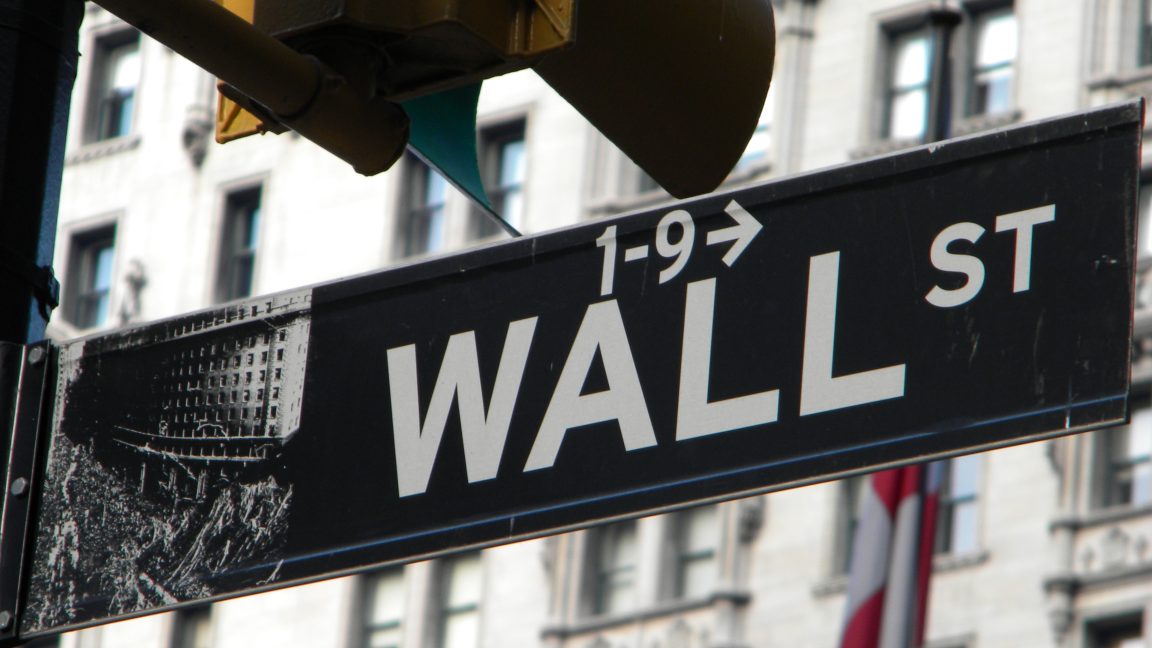
Texas suit alleging anti-coal “cartel” of top Wall Street firms could reshape ESG

This article originally appeared on Inside Climate News, a nonprofit, non-partisan news organization that covers climate, energy, and the environment. Sign up for their newsletter here.

Since 2022, Republican lawmakers in Congress and state attorneys general have sent letters to major banks, pension funds, asset managers, accounting firms, companies, nonprofits, and business alliances, putting them on notice for potential antitrust violations and seeking information as part of the Republican pushback against “environmental, social and governance” efforts such as corporate climate commitments.

“This caused a lot of turmoil and stress obviously across the whole ecosystem,” said Denise Hearn, a senior fellow at the Columbia Center on Sustainable Investment. “But everyone wondered, ‘OK, when are they actually going to drop a lawsuit?’”

That came in November, filed by Texas Attorney General Ken Paxton and 10 other Republican AGs, accusing three of the biggest asset managers on Wall Street—BlackRock, Vanguard and State Street—of running “an investment cartel” to depress the output of coal and boosting their revenues while pushing up energy costs for Americans. The Trump administration’s Department of Justice and Federal Trade Commission filed a supporting brief in May.

The overall pressure campaign aimed at what’s known as “ESG” is having an impact.

“Over the past several months, through this [lawsuit] and other things, letters from elected officials, state and federal, there has been a chilling effect of what investors are saying,” said Steven Maze Rothstein, chief program officer of Ceres, a nonprofit that advocates for more sustainable business practices and was among the earliest letter recipients. Still, “investors understand that Mother Nature doesn’t know who’s elected governor, attorney general, president.”

Earlier this month, a US District Court judge in Tyler, Texas, declined to dismiss the lawsuit against the three asset managers, though he did dismiss three of the 21 counts. The judge was not making a final decision in the case, only that there was enough evidence to go to trial.

https://arstechnica.com/science/2025/08/texas-suit-alleging-anti-coal-cartel-of-top-wall-street-firms-could-reshape-esg/


FTC claims Gmail filtering Republican emails threatens “American freedoms”

Federal Trade Commission Chairman Andrew Ferguson accused Google of using “partisan” spam filtering in Gmail that sends Republican fundraising emails to the spam folder while delivering Democratic emails to inboxes.

Ferguson sent a letter yesterday to Alphabet CEO Sundar Pichai, accusing the company of “potential FTC Act violations related to partisan administration of Gmail.” Ferguson’s letter revives longstanding Republican complaints that were previously rejected by a federal judge and the Federal Election Commission.

“My understanding from recent reporting is that Gmail’s spam filters routinely block messages from reaching consumers when those messages come from Republican senders but fail to block similar messages sent by Democrats,” Ferguson wrote. The FTC chair cited a recent New York Post report on the alleged practice.

The letter told Pichai that if “Gmail’s filters keep Americans from receiving speech they expect, or donating as they see fit, the filters may harm American consumers and may violate the FTC Act’s prohibition of unfair or deceptive trade practices.” Ferguson added that any “act or practice inconsistent with” Google’s obligations under the FTC Act “could lead to an FTC investigation and potential enforcement action.”

“While outside my purview, I believe such conduct may also violate applicable state consumer protection laws,” Ferguson’s letter said in a footnote.

Google beat RNC in court

Google provided Ars with a statement today. “Gmail’s spam filters look at a variety of objective user signals—like whether a user marks an email as spam or if a particular ad agency is sending a high volume of emails on behalf of their clients that are often marked by users as spam. This applies equally to all senders, regardless of political ideology. We will review this letter and look forward to engaging constructively,” Google said.

https://arstechnica.com/tech-policy/2025/08/ftc-claims-gmail-filtering-republican-emails-threatens-american-freedoms/


Judge unhappy with FCC’s “vague and uninformative” response to DOGE lawsuit

We contacted the FCC and will update this article if it provides a response.

The plaintiffs’ motion for a preliminary injunction said the FCC, led by Chairman Brendan Carr, “acted favorably on several Starlink initiatives” while Musk and DOGE exerted influence within the agency. That includes “open[ing] an investigation against SpaceX competitor EchoStar,” which holds licenses for spectrum that SpaceX wants, and “approv[ing] a waiver for SpaceX to provide satellite service directly from orbit to smartphones, over the objection of cell network providers who say this move will worsen mobile network service for many.”

The motion said:

The Plaintiffs seek information concerning DOGE’s activities within the FCC and especially documents concerning FCC contacts with Elon Musk, SpaceX, Starlink or other entities associated with Musk and his various enterprises. DOGE’s operations within the FCC are at the heart of a debate concerning potential conflicts of interest between, Elon Musk and DOGE as regulators of the FCC, and Elon Musk’s SpaceX, including Starlink, as a regulated entity seeking licenses and other accommodations from the agency.

The FCC granted a request for expedited processing on March 4, but then “failed to timely process the Plaintiffs’ request” for documents, the filing said.

DOGE employee with Musk ties

The filing raised concerns about Tarak Makecha, a former Tesla employee who has worked for DOGE and is still listed in the FCC directory. “On a form letter, Makecha is listed as a ‘Software Engineer,'” but “his background is in finance, not software engineering… no resume, curriculum vitae, or any similar background information was provided by the Commission for Makecha even though that is required as part of the onboarding and clearance process,” the filing said.

According to the filing, Makecha owned between $50,000 and $100,000 in Tesla stock as of March 20 and now works as a vice president at Valor Equity Partners, which “has a close relationship with Elon Musk and his companies.” Valor “sells shares to investors in Musk’s private companies—particularly SpaceX, xAI, Neuralink, and The Boring Company,” the filing said.

https://arstechnica.com/tech-policy/2025/08/judge-unhappy-with-fccs-vague-and-uninformative-response-to-doge-lawsuit/


Intel details everything that could go wrong with US taking a 10% stake

However, the US can vote “as it wishes,” Intel reported, and experts suggested to Reuters that regulations may be needed to “limit government opportunities for abuses such as insider trading.” That could reassure investors somewhat, Rich Weiss, a senior vice president and chief investment officer of multi-asset strategies for American Century Investments, told Reuters. Without such laws, Weiss noted that “in an unchecked scenario of government direct investing, trading in those companies could be much riskier for investors.”

It also seems possible that the US could influence Intel’s decisions without the government explicitly taking voting control, experts suggested. “Several investors and representatives” told Reuters that the US could impact major decisions regarding things like layoffs or business shifts into foreign markets. At a certain point, Intel may be stuck choosing between corporate and national interests, Robert McCormick, executive director of the Council of Institutional Investors, told Reuters.

“A government stake in an otherwise private entity potentially creates a conflict between what’s right for the company and what’s right for the country,” McCormick suggested.

Further, Intel becoming partly state-controlled risks disrupting Intel’s non-US business, subjecting the company to “additional regulations, obligations or restrictions, such as foreign subsidy laws or otherwise, in other countries,” Intel’s filing said.

In the filing, Intel confirmed directly to investors that they have good cause to be spooked by the US stake. Offering a bulleted list, the company outlined “a number of risks and uncertainties” that could “adversely impact” shareholders due to “the US Government’s ownership of significant equity interests in the company.”

Perhaps most alarming in the short term, Intel admitted that the deal will dilute investors’ stock due to the discounted shares issued to Trump. And their shares could suffer additional dilutions if certain terms of the deal are “triggered” or “exercised,” Intel noted.

https://arstechnica.com/tech-policy/2025/08/intel-details-everything-that-could-go-wrong-with-us-taking-a-10-stake/