Analysis: The Trump administration’s assault on climate action

The report is a master class in arbitrary and capricious decision-making applied to science. Sometimes the authors rely on the peer-reviewed literature. Other times they perform their own analysis for this document, in some cases coming up with almost comically random metrics for data. (Example: “We examine occurrences of 5-day deluges as follows. Taking the Pacific coast as an example, a 130-year span contains 26 5-year intervals. At each location we computed the 5-day precipitation totals throughout the year and selected the 26 highest values across the sample.” Why five days? Five-year intervals? Who knows.)

This is especially striking in a few cases where the authors choose references that were published a few years ago, and thus neatly avoid the dramatic temperature records that have been set over the past couple of years. Similarly, they sometimes use regional measures and sometimes use global ones. They demand long-term data in some contexts, while getting excited about two years of coral growth in the Great Barrier Reef. The authors highlight the fact that US tide gauges don’t show any indication of an acceleration in the rate of sea level rise while ignoring the fact that global satellite measures clearly do.

That’s not to say that there aren’t other problems. There’s some blatant misinformation, like claims that urbanization could be distorting the warming, which has already been tested extensively. (Notably, warming is most intense in the sparsely populated Arctic.) There’s also some creative use of language, like referring to the ocean acidification caused by CO2 as “neutralizing ocean alkalinity.”

But the biggest bit of misinformation comes in the introduction, where the secretary of energy, Chris Wright, said of the authors, “I chose them for their rigor, honesty, and willingness to elevate the debate.” There is no reason to choose this group of marginal contrarians except the knowledge that they’d produce a report like this, thus providing a justification for those in the administration who want to believe it’s all a scam.

https://arstechnica.com/science/2025/08/analysis-the-trump-administrations-assault-on-climate-action/


Grok generates fake Taylor Swift nudes without being asked

“Our teams are actively removing all identified images and taking appropriate actions against the accounts responsible for posting them,” the X Safety account posted. “We’re closely monitoring the situation to ensure that any further violations are immediately addressed, and the content is removed. We’re committed to maintaining a safe and respectful environment for all users.”

But X Safety may need to ramp up monitoring to clean up Grok outputs following the Verge’s reporting. Grok cited The Verge’s reporting while confirming that its own seemingly flawed design can trigger partially nude outputs of celebrities.

xAI can likely fix the issue through more fine-tuning. Weatherbed noted that asking Grok directly to generate non-consensual nude Swift images did not generate offensive outputs, but instead blank boxes. Grok also seemingly won’t accept prompts to alter Swift’s appearance in other ways, like making her appear to be overweight. And when Weatherbed tested using “spicy” mode on images of children, for example, Grok refused to depict kids inappropriately.

However, it may not be easy to get Grok to distinguish between adult user requests for “spicy” content versus illegal content. The “spicy” mode didn’t always generate Swift deepfakes, Weatherbed confirmed, but in “several” instances it “defaulted” to “ripping off” Swift’s clothes.

With enforcement of the Take It Down Act starting next year—requiring platforms to promptly remove non-consensual sex images, including AI-generated nudes—xAI could potentially face legal consequences if Grok’s outputs aren’t corrected, though.

So far, X has not commented on The Verge’s report. Instead, Musk has spent the day hyping Grok Imagine and encouraging users to share their “creations.”

https://arstechnica.com/tech-policy/2025/08/grok-generates-fake-taylor-swift-nudes-without-being-asked/


Meta illegally collected data from Flo period and pregnancy app, jury finds

A federal jury found on Friday that Meta violated the California Invasion of Privacy Act, the state’s wiretap law, by collecting data from a period-tracker app without user consent.

Plaintiffs in a class-action case proved by a preponderance of evidence that Meta intentionally eavesdropped on and/or recorded conversations using an electronic device, said a verdict form released yesterday in US District Court for the Northern District of California. Plaintiffs also proved that they had a reasonable expectation of privacy and that Meta did not have consent from all parties to eavesdrop on and/or record the conversations, the jury found.

The lawsuit was filed in 2021 against Flo Health, maker of an app for tracking periods, ovulation, and pregnancy. Facebook owner Meta, Google, and app analytics company Flurry were added as defendants later. The plaintiffs settled with Flo Health, Google, and Flurry before the trial, leaving Meta as the only remaining defendant.

The plaintiffs’ trial brief said that “Flo allowed Google and Meta to eavesdrop on users’ private in-app communications” between November 2016 and February 2019. Flo app users had to complete an onboarding survey requiring them “to select a ‘goal’ indicating whether they are pregnant, want to be pregnant, or want to track their period, as well as input other information about their pregnancy or menstrual cycle,” the brief said.

Flo promised not to disclose this information but gave access to Google and Meta “via Custom App Events (CAEs) sent through their respective Software Development Kits (SDKs), incorporated in the Flo App,” the brief said.

“Each of the Defendants had their own purpose for collecting and using Flo user data,” the brief said. “Flo used this information to acquire new app users through advertising and marketing, including advertisements based on Flo App users’ reproductive goals (e.g., getting pregnant). Flo also sold access to the CAEs sent through SDKs to other third parties for profit. Google and Meta separately used the data they intercepted for their own commercial purposes, including to feed their machine learning algorithms that power each of their respective advertising networks.”

https://arstechnica.com/tech-policy/2025/08/jury-finds-meta-broke-wiretap-law-by-collecting-data-from-period-tracker-app/


RIP Corporation for Public Broadcasting: 1967–2026

Despite the protests of millions of Americans, the Corporation for Public Broadcasting (CPB) announced it will be winding down its operations after the White House deemed NPR and PBS a “grift” and pushed for a Senate vote that eliminated its entire budget.

The vote rescinded $1.1 billion that Congress had allocated to CPB to fund public broadcasting for fiscal years 2026 and 2027. In a press release, CPB explained that the cuts “excluded funding for CPB for the first time in more than five decades.” CPB president and CEO Patricia Harrison said the corporation had no choice but to prepare to shut down.

“Despite the extraordinary efforts of millions of Americans who called, wrote, and petitioned Congress to preserve federal funding for CPB, we now face the difficult reality of closing our operations,” Harrison said.

Concerned Americans also rushed to donate to NPR and PBS stations to confront the funding cuts, The New York Times reported. But those donations, estimated at around $20 million, ultimately amounted to too little, too late to cover the funding that CPB lost.

As CPB takes steps to close, it expects that “the majority of staff positions will conclude with the close of the fiscal year on September 30, 2025.” After that, a “small transition team” will “ensure a responsible and orderly closeout of operations” by January 2026. That team “will focus on compliance, final distributions, and resolution of long-term financial obligations, including ensuring continuity for music rights and royalties that remain essential to the public media system.”

“CPB remains committed to fulfilling its fiduciary responsibilities and supporting our partners through this transition with transparency and care,” Harrison said.

NPR mourns loss of CPB

In a statement, NPR’s president and CEO, Katherine Maher, mourned the loss of CPB, warning that it was a “vital source of funding for local stations, a champion of educational and cultural programming, and a bulwark for independent journalism.”

https://arstechnica.com/tech-policy/2025/08/corporation-for-public-broadcasting-will-shut-down-in-2026/


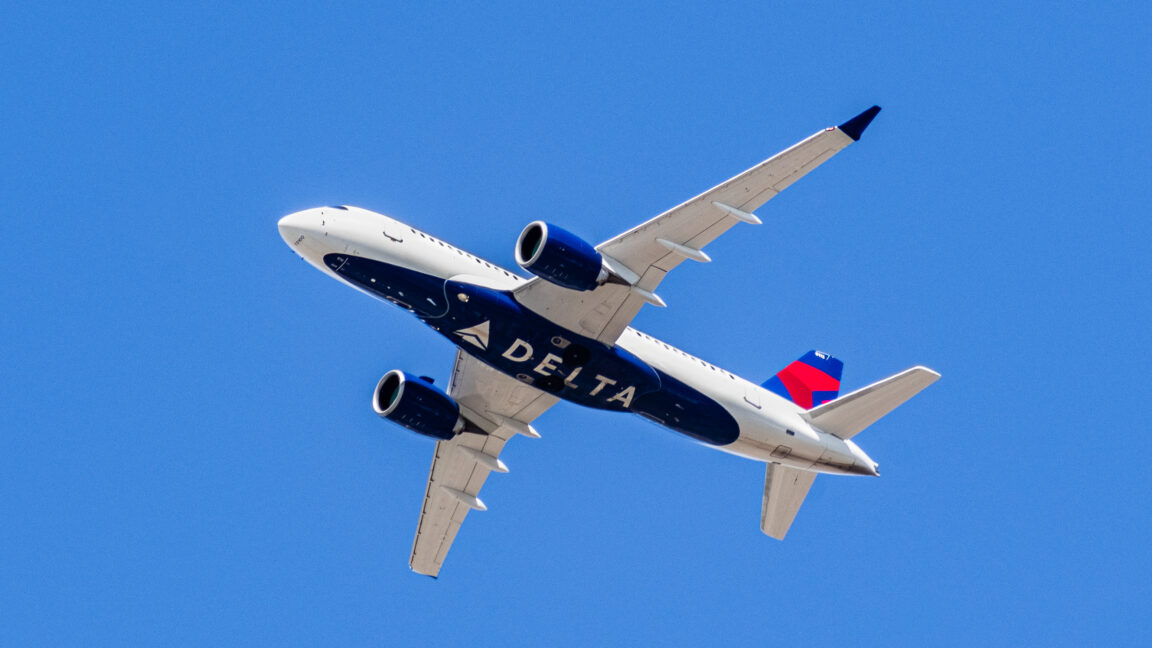
Delta denies using AI to come up with inflated, personalized prices

Delta scandal highlights value of transparency

According to Delta, the company has “zero tolerance for discriminatory or predatory pricing” and only feeds its AI system aggregated data “to enhance our existing fare pricing processes.”

Rather than basing fare prices on customers’ personal information, Carter clarified that “all customers have access to the same fares and offers based on objective criteria provided by the customer such as origin and destination, advance purchase, length of stay, refundability, and travel experience selected.”

The AI use can result in higher or lower prices, but not personalized fares for different customers, Carter said. Instead, Delta plans to use AI pricing to “enhance market competitiveness and drive sales, benefiting both our customers and our business.”

Factors weighed by the AI system, Carter explained, include “customer demand for seats and purchasing data at an aggregated level, competitive offers and schedules, route performance, and cost of providing the service inclusive of jet fuel.” That could potentially mean a rival’s promotion or schedule change could trigger the AI system to lower prices to stay competitive, or it might increase prices based on rising fuel costs to help increase revenue or meet business goals.

“Given the tens of millions of fares and hundreds of thousands of routes for sale at any given time, the use of new technology like AI promises to streamline the process by which we analyze existing data and the speed and scale at which we can respond to changing market dynamics,” Carter wrote.

He explained the AI system helps Delta aggregate purchasing data for specific routes and flights, adapt to new market conditions, and factor in “thousands of variables simultaneously.” AI could also eventually be used to assist with crew scheduling, improve flight availability, or help reservation specialists answer complex questions or resolve disputes.

But “to reiterate, prices are not targeted to individual consumers,” Carter emphasized.

Delta further pointed out that the company does not require customers to log in to search for tickets, which means customers can search for flights without sharing any personal information.

For AI companies paying attention to the Delta backlash, there may be a lesson about the value of transparency in Delta’s scandal. Critics noted Delta was among the first to admit it was using AI to influence pricing, but the vague explanation on the earnings call stoked confusion over how, as Delta seemed to drag its feet amid calls by groups like Consumer Watchdog for more transparency.

https://arstechnica.com/tech-policy/2025/08/delta-denies-using-ai-to-come-up-with-inflated-personalized-prices/


ChatGPT users shocked to learn their chats were in Google search results

Faced with mounting backlash, OpenAI removed a controversial ChatGPT feature that caused some users to unintentionally allow their private—and highly personal—chats to appear in search results.

Fast Company exposed the privacy issue on Wednesday, reporting that thousands of ChatGPT conversations were found in Google search results and likely only represented a sample of chats “visible to millions.” While the indexing did not include identifying information about the ChatGPT users, some of their chats did share personal details—like highly specific descriptions of interpersonal relationships with friends and family members—perhaps making it possible to identify them, Fast Company found.

OpenAI’s chief information security officer, Dane Stuckey, explained on X that all users whose chats were exposed opted in to indexing their chats by clicking a box after choosing to share a chat.

Fast Company noted that users often share chats on WhatsApp or select the option to save a link to visit the chat later. But as Fast Company explained, users may have been misled into sharing chats due to how the text was formatted:

“When users clicked ‘Share,’ they were presented with an option to tick a box labeled ‘Make this chat discoverable.’ Beneath that, in smaller, lighter text, was a caveat explaining that the chat could then appear in search engine results.”

At first, OpenAI defended the labeling as “sufficiently clear,” Fast Company reported Thursday. But Stuckey confirmed that “ultimately,” the AI company decided that the feature “introduced too many opportunities for folks to accidentally share things they didn’t intend to.” According to Fast Company, that included chats about their drug use, sex lives, mental health, and traumatic experiences.

Carissa Veliz, an AI ethicist at the University of Oxford, told Fast Company she was “shocked” that Google was logging “these extremely sensitive conversations.”

OpenAI promises to remove Google search results

Stuckey called the feature a “short-lived experiment” that OpenAI launched “to help people discover useful conversations.” He confirmed that the decision to remove the feature also included an effort to “remove indexed content from the relevant search engine” through Friday morning.

https://arstechnica.com/tech-policy/2025/08/chatgpt-users-shocked-to-learn-their-chats-were-in-google-search-results/


AI in Wyoming may soon use more electricity than state’s human residents

Wyoming’s data center boom

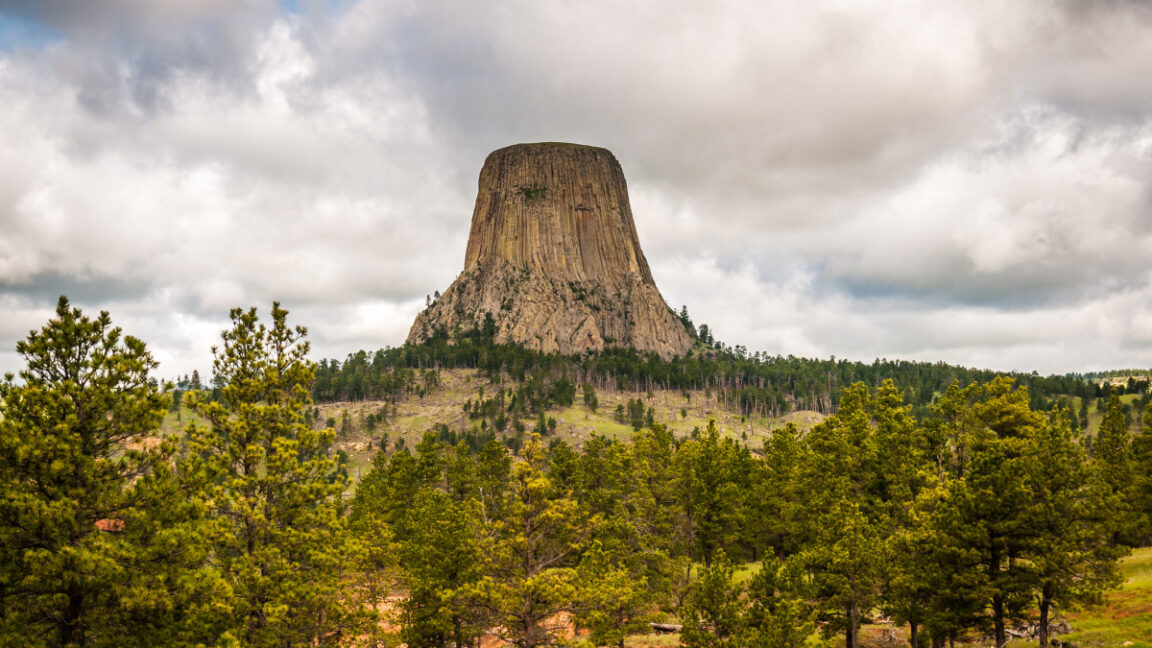
Cheyenne is no stranger to data centers, having attracted facilities from Microsoft and Meta since 2012 due to its cool climate and energy access. However, the new project pushes the state into uncharted territory. While Wyoming is the nation’s third-biggest net energy supplier, producing 12 times more total energy than it consumes (dominated by fossil fuels), its electricity supply is finite.

While Tallgrass and Crusoe have announced the partnership, they haven’t revealed who will ultimately use all this computing power—leading to speculation about potential tenants.

A potential connection to OpenAI’s Stargate AI infrastructure project, announced in January, remains a subject of speculation. When asked by the Associated Press if the Cheyenne project was part of this effort, Crusoe spokesperson Andrew Schmitt was noncommittal. “We are not at a stage that we are ready to announce our tenant there,” Schmitt said. “I can’t confirm or deny that is going to be one of the Stargate.”

OpenAI recently activated the first phase of a Crusoe-built data center complex in Abilene, Texas, in partnership with Oracle. Chris Lehane, OpenAI’s chief global affairs officer, told the Associated Press last week that the Texas facility generates “roughly and depending how you count, about a gigawatt of energy” and represents “the largest data center—we think of it as a campus—in the world.”

OpenAI has committed to developing an additional 4.5 gigawatts of data center capacity through an agreement with Oracle. “We’re now in a position where we have, in a really concrete way, identified over five gigawatts of energy that we’re going to be able to build around,” Lehane told the AP. The company has not disclosed locations for these expansions, and Wyoming was not among the 16 states where OpenAI said it was searching for data center sites earlier this year.

https://arstechnica.com/information-technology/2025/07/ai-in-wyoming-may-soon-use-more-electricity-than-states-human-residents/


Trump claims Europe won’t make Big Tech pay ISPs; EU says it still might

We asked the White House and European Commission for more details today and will update this article with any new information.

If the White House fact sheet’s reference to network usage fees has at least some truth to it, it may refer only to a tentative agreement between Trump and von der Leyen. The overall trade deal, which includes a 15 percent cap on tariffs for most EU exports into the US, is not final, as the European Commission pointed out in its announcement.

“The political agreement of 27 July 2025 is not legally binding,” a European Commission announcement said. “Beyond taking the immediate actions committed, the EU and the US will further negotiate, in line with their relevant internal procedures, to fully implement the political agreement.”

Big Tech hopeful that usage fees are dead

The European Union government sought public input on network fees in 2023, drawing opposition from US tech companies and the Biden administration. While European ISPs pushed for new fees from online companies that accounted for over 5 percent of average peak traffic, the Biden administration said the plan “could reinforce the dominant market position of the largest operators… give operators a new bottleneck over customers, raise costs for end users,” and undermine net neutrality.

As tech industry analyst Dean Bubley wrote today, the White House statement on network usage fees is vague, and “the devil is in the detail here.” One thing to watch out for, he said, is whether Europe prohibits back-door methods of charging network usage fees, such as having the government regulate disputes over IP interconnection.

Bubley speculated that the EC might have “received a boatload of negative feedback” about network usage fees in a recent public consultation on the Digital Networks Act and that the trade deal provides “a nice, Trump-shaped excuse to boot out the whole idea, which in any case had huge internal flaws and contradictions—and specifically worked against the EU’s own objectives in having a robust AI industry, which I’d wager is seen in Brussels as much more important.”

https://arstechnica.com/tech-policy/2025/07/trump-claims-europe-wont-make-big-tech-pay-isps-eu-says-it-still-might/


EPA plans to ignore science, stop regulating greenhouse gases

It derives from a 2007 Supreme Court ruling that named greenhouse gases as “air pollutants,” giving the EPA the mandate to regulate them under the Clean Air Act.

Critics of the rule say that the Clean Air Act was fashioned to manage localized emissions, not those responsible for global climate change.

A rollback would automatically weaken the greenhouse gas emissions standards for cars and heavy-duty vehicles. Manufacturers such as Daimler and Volvo Cars have previously opposed the EPA’s efforts to tighten emission standards, while organized labour groups such as the American Trucking Association said they “put the trucking industry on a path to economic ruin.”

However, Katherine García, director of Sierra Club’s Clean Transportation for All Campaign, said that the ruling would be “disastrous for curbing toxic truck pollution, especially in frontline communities disproportionately burdened by diesel exhaust.”

Energy experts said the move could also stall progress on developing clean energy sources such as nuclear power.

“Bipartisan support for nuclear largely rests on the fact that it doesn’t have carbon emissions,” said Ken Irvin, a partner in Sidley Austin’s global energy and infrastructure practice. “If carbon stops being considered to endanger human welfare, that might take away momentum from nuclear.”

The proposed rule from the EPA will go through a public comment period and inter-agency review. It is likely to face legal challenges from environmental activists.

© 2025 The Financial Times Ltd. All rights reserved. Not to be redistributed, copied, or modified in any way.

https://arstechnica.com/science/2025/07/epa-plans-to-ignore-science-stop-regulating-greenhouse-gases/


Trump caving on Nvidia H20 export curbs may disrupt his bigger trade war

But experts seem to fear that Trump isn’t paying enough attention to how exports of US technology could threaten to not only supercharge China’s military and AI capabilities but also drain supplies that US firms need to keep the US at the forefront of AI innovation.

“More chips for China means fewer chips for the US,” experts said, noting that “China’s biggest tech firms, including Tencent, ByteDance, and Alibaba,” have spent $16 billion on bulk-ordered H20 chips over the past year.

Meanwhile, “projected data center demand from the US power market would require 90 percent of global chip supply through 2030, an unlikely scenario even without China joining the rush to buy advanced AI chips,” experts said. If Trump doesn’t intervene, one of America’s biggest AI rivals could even end up driving up costs of AI chips for US firms, they warned.

“We urge you to reverse course,” the letter concluded. “This is not a question of trade. It is a question of national security.”

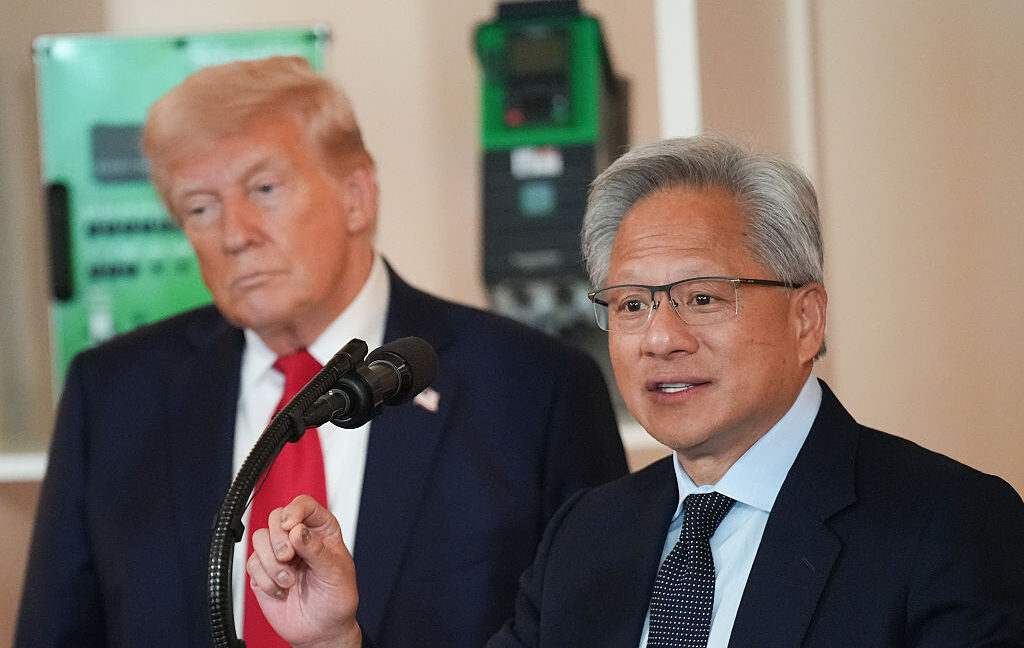
Trump says he never heard of Nvidia before

Perhaps the bigger problem for Trump, national security experts suggest, would be if China or other trade partners perceive the US resolve to wield export controls as a foreign policy tool to be “weakened” by Trump reversing course on H20 controls.

They suggested that Trump caving on H20 controls could even “embolden China to seek additional access concessions” at a time when some analysts suggest that China may already have an upper hand in trade negotiations.

The US and China are largely expected to extend a 90-day truce following recent talks in Stockholm, Reuters reported. Anonymous sources told the South China Morning Post that the US may have already agreed to not impose any new tariffs or otherwise ratchet up the trade war during that truce, but that remains unconfirmed, as Trump continues to warn that chip tariffs are coming soon.

Trump has recently claimed that he thinks he may be close to cementing a deal with China, but it appears likely that talks will continue well into the fall. A meeting between Trump and Chinese President Xi Jinping probably won’t be scheduled until late October or early November, Reuters reported.

https://arstechnica.com/tech-policy/2025/07/trump-caving-on-nvidia-h20-export-curbs-may-disrupt-his-bigger-trade-war/