How the Trump FCC justified requiring a “bias monitor” at CBS
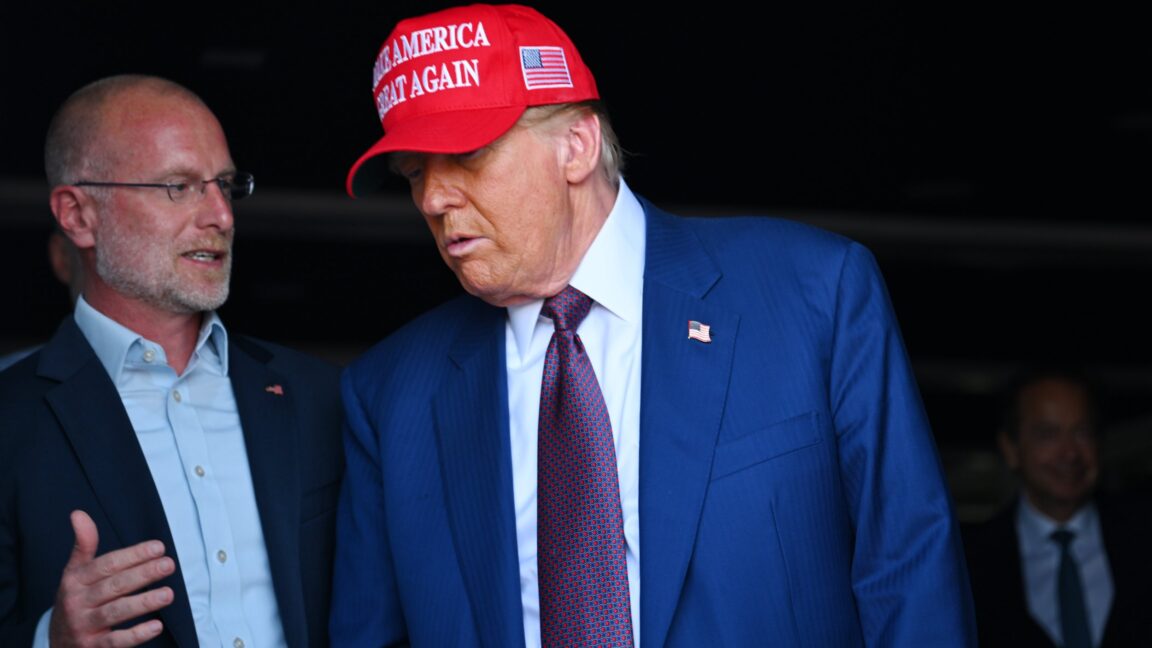
The Federal Communications Commission’s approval of CBS owner Paramount’s $8 billion merger with Skydance came with a condition to install an ombudsman, which FCC Chairman Brendan Carr has described as a “bias monitor.” It appears that the bias monitor will make sure the news company’s reporting meets standards demanded by President Donald Trump.

“One of the things they’re going to have to do is put an ombudsman in place for two years, so basically a bias monitor that will report directly to the president [of Paramount],” Carr told Newsmax on Thursday, right after the FCC announced its approval of the merger.

The Carr FCC claims there is precedent for such a bias monitor. But the precedent cited in last week’s merger approval points to a very different case involving NBC and GE, one in which an ombudsman was used to protect NBC’s editorial independence from interference by its new owner.

By contrast, it looks like Paramount is hiring a monitor to make sure that CBS reporting doesn’t anger President Trump. Paramount obtained the FCC’s merger approval only after reaching a $16 million settlement with Trump, who sued the company because he didn’t like how CBS edited a pre-election interview with Kamala Harris. Trump claimed last week that Paramount is providing another $20 million worth of “advertising, PSAs, or similar programming,” and called the deal “another in a long line of VICTORIES over the Fake News Media.”

NBC/GE precedent was “viewpoint-neutral”

The FCC merger approval says that “to promote transparency and increased accountability, Skydance will have in place, for a period of at least two years, an ombudsman who reports to the President of New Paramount, and who will receive and evaluate any complaints of bias or other concerns involving CBS.”

The Carr FCC apparently couldn’t find a precedent that would closely match the ombudsman condition being imposed on Paramount. The above sentence has a footnote citing the FCC’s January 2011 approval of Comcast’s purchase of NBCUniversal, saying the Obama-era order found “such a mechanism effective in preventing editorial bias in the operation of the NBC broadcast network.”

https://arstechnica.com/tech-policy/2025/07/how-the-trump-fcc-justified-requiring-a-bias-monitor-at-cbs/



Nude women streamed to office TV derail Oklahoma Board of Education meeting

With Walters blowing off their concerns about what had just happened and why it had happened in the middle of a state education meeting, the two board members took their story to media outlets the next day. NonDoc and The Oklahoman both ran long pieces on it. Walters’ office sent sarcastic statements calling the outlets “NonsenseDoc” and “The Woklahoman,” respectively.

Oklahoma’s legislative branch then got involved, opening an investigation into the incident through the state’s Office of Management and Enterprise Services (OMES). According to Senate President Pro Tem Lonnie Paxton (R), “The accounts made public by board members paint a strange, unsettling scene that demands clarity and transparency.”

By Monday, OMES had turned the matter over to the Oklahoma County Sheriff’s Office, according to local TV station News 9.

So how does a television apparently meant for displaying charts and presentations start, midway through a meeting, showing nude women around a table? Who knows. I was once on a family trip to Europe with my relatives, and as a cousin flipped through channels on the lobby television set, hardcore pornography popped into view before a shocked group of parents, aunts, and uncles. A state office building in Oklahoma, however, seems unlikely to subscribe to these kinds of channels.

Judging by Walters’ press release, the suspicion appears to be that someone in the room had a phone, tablet, or laptop connected to or previously paired with the television, and that the images were coming from that machine. But Walters specifically denies—if this is indeed what happened—that he was responsible.

With the Sheriff’s Office on the case, though, we may soon find out exactly what’s been going down at closed sessions of the Oklahoma Board of Education. And it promises to be far more interesting than a sentence like that would normally suggest.

https://arstechnica.com/tech-policy/2025/07/oklahomas-new-scandal-nude-women-streamed-to-tv-during-state-board-meeting/


Delta’s AI spying to “jack up” prices must be banned, lawmakers say

“There is no fare product Delta has ever used, is testing or plans to use that targets customers with individualized offers based on personal information or otherwise,” Delta said. “A variety of market forces drive the dynamic pricing model that’s been used in the global industry for decades, with new tech simply streamlining this process. Delta always complies with regulations around pricing and disclosures.”

Other companies “engaging in surveillance-based price setting” include giants like Amazon and Kroger, as well as a ride-sharing app that has been “charging a customer more when their phone battery is low.”

Public Citizen, a progressive consumer rights group that endorsed the bill, condemned the practice in the press release, urging Congress to pass the law and draw “a clear line in the sand: companies can offer discounts and fair wages—but not by spying on people.”

“Surveillance-based price gouging and wage setting are exploitative practices that deepen inequality and strip consumers and workers of dignity,” Public Citizen said.

AI pricing will cause “full-blown crisis”

In January, the Federal Trade Commission requested information from eight companies—including MasterCard, Revionics, Bloomreach, JPMorgan Chase, Task Software, PROS, Accenture, and McKinsey & Co—joining a “shadowy market” that provides AI pricing services. Those companies confirmed they’ve provided services to at least 250 companies “that sell goods or services ranging from grocery stores to apparel retailers,” lawmakers noted.

That inquiry led the FTC to conclude that “widespread adoption of this practice may fundamentally upend how consumers buy products and how companies compete.”

In the press release, the anti-monopoly watchdog, the American Economic Liberties Project, was counted among advocacy groups endorsing the Democrats’ bill. Their senior legal counsel, Lee Hepner, pointed out that “grocery prices have risen 26 percent since the pandemic-era explosion of online shopping,” and that’s “dovetailing with new technology designed to squeeze every last penny from consumers.”

https://arstechnica.com/tech-policy/2025/07/deltas-ai-spying-to-jack-up-prices-must-be-banned-lawmakers-say/


Skydance deal allows Trump’s FCC to “censor speech” and “silence dissent” on CBS

Warning that the “Paramount payout” and “reckless” acquisition approval together mark a “dark chapter” for US press freedom, Gomez suggested the FCC’s approval will embolden “those who believe the government can—and should—abuse its power to extract financial and ideological concessions, demand favored treatment, and secure positive media coverage.”

FCC terms also govern Skydance hiring decisions

Gomez further criticized the FCC for overstepping its authority in “intervening in employment matters reserved for other government entities with proper jurisdiction on these issues” by requiring Skydance commitments to not establish any DEI programs, which Carr derided as “invidious.” But Gomez countered that “this agency is undermining legitimate efforts to combat discrimination and expand opportunity” by meddling in private companies’ employment decisions.

Ultimately, commissioner Olivia Trusty joined Carr in voting to stamp the agency’s approval, celebrating the deal as “lawful” and a “win” for American “jobs” and “storytelling.” Carr suggested the approval would bolster Paramount’s programming by injecting $1.5 billion into operations, which Trusty said would help Paramount “compete with dominant tech platforms.”

Gomez conceded that she was pleased that at least—unlike the Verizon/T-Mobile merger—Carr granted her request to hold a vote, rather than burying “the outcome of backroom negotiations” and “granting approval behind closed doors, under the cover of bureaucratic process.”

“The public has a right to know how Paramount’s capitulation evidences an erosion of our First Amendment protections,” Gomez said.

Outvoted 2–1, Gomez urged “companies, journalists, and citizens” to take up the fight and push back on the Trump administration, emphasizing that “unchecked and unquestioned power has no rightful place in America.”

https://arstechnica.com/tech-policy/2025/07/skydance-deal-allows-trumps-fcc-to-censor-speech-and-silence-dissent-on-cbs/


Trump, who promised to save TikTok, threatens to shut down TikTok

Donald Trump vowed to save TikTok before taking office, claiming only he could make a deal to keep the app operational in the US despite national security concerns.

But then, he put Vice President JD Vance in charge of the deal, and after months of negotiations, the US still doesn’t seem to have found terms for a sale that the Chinese government is willing to approve. Now, Trump Commerce Secretary Howard Lutnick has confirmed that if China won’t approve the latest version of the deal—which could result in a buggy version of TikTok made just for the US—the administration is willing to shut down TikTok. And soon.

On Thursday, Lutnick told CNBC that TikTok would stop operating in the US if China and TikTok owner ByteDance won’t sell the app to buyers that Trump lined up, along with control over TikTok’s algorithm.

Under the deal Trump is now pushing, “China can have a little piece or ByteDance, the current owner, can keep a little piece,” Lutnick said. “But basically, Americans will have control. Americans will own the technology, and Americans will control the algorithm.”

However, ByteDance’s board has long maintained that the US can alleviate its national security fears—that China may be using the popular app to manipulate and spy on Americans—without forcing a sale. In January, a ByteDance board member, Bill Ford, told World Economic Forum attendees that a non-sale option “could involve a change of control locally to ensure” TikTok “complies with US legislation” without selling off the app or its algorithm.

At this point, Lutnick suggested that the US is unwilling to bend on the requirement that the US control the recommendation algorithm, which is viewed as the secret sauce that makes the app so popular globally. ByteDance may be unwilling to sell the algorithm partly because then it would be sharing its core intellectual property with competitors in the US.

https://arstechnica.com/tech-policy/2025/07/tiktok-will-shut-down-soon-if-china-wont-agree-to-trumps-deal-official-says/


Trump’s order to make chatbots anti-woke is unconstitutional, senator says

Earlier this summer, Grok shocked the world after Musk announced he would be updating the bot to eliminate a supposed liberal bias. The unhinged chatbot began spouting offensive outputs, including antisemitic posts that praised Hitler as well as proclaiming itself “MechaHitler.”

But those obvious biases did not conflict with the Pentagon’s decision to grant xAI a $200 million federal contract. In a statement, a Pentagon spokesperson insisted that “the antisemitism episode wasn’t enough to disqualify” xAI, NBC News reported, partly since “several frontier AI models have produced questionable outputs.”

The Pentagon’s statement suggested that the government expected to deal with such risks while seizing the opportunity of rapidly deploying emerging AI technology into government prototype processes. And perhaps notably, Trump provides a carveout for any agencies using AI models to safeguard national security, which could exclude the Pentagon from experiencing any “anti-woke” delays in accessing frontier models.

But that won’t help other agencies that must figure out how to assess models to meet anti-woke AI requirements over the next few months. And those assessments could cause delays that Trump may wish to avoid in pushing for widespread AI adoption across government.

Trump’s anti-woke AI agenda may be impossible

On the same day that Trump issued his anti-woke AI order, his AI Action Plan promised an AI “renaissance” fueling “intellectual achievements” by “unraveling ancient scrolls once thought unreadable, making breakthroughs in scientific and mathematical theory, and creating new kinds of digital and physical art.”

To achieve that, the US must “innovate faster and more comprehensively than our competitors” and eliminate regulatory barriers impeding innovation in order to “set the gold standard for AI worldwide.”

However, achieving the anti-woke ambitions of both orders raises a technical problem that even the president must accept currently has no solution. In his AI Action Plan, Trump acknowledged that “the inner workings of frontier AI systems are poorly understood,” with even “advanced technologists” unable to explain “why a model produced a specific output.”

Whether requiring AI companies to explain their AI outputs to win government contracts will mess with other parts of Trump’s action plan remains to be seen. But Samir Jain, vice president of policy at a civil liberties group called the Center for Democracy and Technology, told the NYT that he predicts the anti-woke AI agenda will set “a really vague standard that’s going to be impossible for providers to meet.”

https://arstechnica.com/tech-policy/2025/07/gop-ignores-groks-right-wing-bias-in-anti-woke-chatbot-fight-democrat-claims/


Toy company may regret coming for “Sylvanian Drama” TikToker, experts say

“The question becomes whether people are going to see these videos, even though they’re snarky, and even though they’re silly and think, ‘Oh, Calico Critters must have signed off on this,'” Roberts said. “So the argument about consumer confusion, I think, is a plausible argument.”

However, if Epoch fails to convince the court that its trademarks have been infringed, then its other claims alleging false endorsement and unfair competition would likely also collapse.

“You can still get sometimes to unfair competition or to kind of like a false endorsement, but it’s harder to win on those claims and certainly harder to get damages on those claims,” Roberts said. “You don’t get trademark infringement if you don’t have a trademark.”

Possible defenses to keep “Sylvanian Drama” alive

Winning on the trademark claims will seemingly not be easy for Von Engelbrechten, who may have weakened her First Amendment defense by creating the sponsored content. Regardless, she will likely try to convince the court to view the videos as parody, which is a slightly different analysis under trademark law than copyright’s more well-known fair use parody exceptions.

That could be a struggle, since trademark law requires that Von Engelbrechten’s parody videos directly satirize the “Sylvanian Families” brand, and “Sylvanian Drama” videos, even the ads, instead seem to be “making fun of elements of society and culture,” rather than the dolls themselves, Roberts said.

She pointed to winning cases involving the Barbie trademark as an instructive example. In a case disputing Mattel trademarks used in the lyrics for the one-hit wonder “Barbie Girl,” the song was cleared for trademark infringement as a “purely expressive work” that directly parodies Barbie in the lyrics. And in another case, where an artist, Tom Forsythe, captured photos of Barbie dolls in kitchen vessels like a blender or a margarita glass, more robust First Amendment protection was offered since his photos “had a lot to say about sexism and the dolls and what the dolls represent,” Roberts said.

https://arstechnica.com/tech-policy/2025/07/tiktok-parody-account-sylvanian-drama-may-survive-sponsored-content-lawsuit/


A power utility is reporting suspected pot growers to cops. EFF says that’s illegal.

In May 2020, Sacramento, California, resident Alfonso Nguyen was alarmed to find two Sacramento County Sheriff’s deputies at his door, accusing him of illegally growing cannabis and demanding entry into his home. When Nguyen refused the search and denied the allegation, one deputy allegedly called him a liar and threatened to arrest him.

That same year, deputies from the same department, with their guns drawn and bullhorns and sirens sounding, fanned out around the home of Brian Decker, another Sacramento resident. The officers forced Decker to walk backward out of his home in only his underwear around 7 am while his neighbors watched. The deputies said that he, too, was under suspicion of illegally growing cannabis.

Invasion of the privacy snatchers

According to a motion the Electronic Frontier Foundation filed in Sacramento Superior Court last week, Nguyen and Decker are only two of more than 33,000 Sacramento-area people who have been flagged to the Sheriff’s department by the Sacramento Municipal Utility District, the electricity provider for the region. SMUD called the customers out for using what it and department investigators said were suspiciously high amounts of electricity indicative of illegal cannabis farming.

The EFF, citing investigator and SMUD records, said the utility unilaterally analyzes customers’ electricity usage in “painstakingly” detailed increments of every 15 minutes. When analysts identify patterns they deem likely signs of illegal grows, they notify Sheriff’s investigators. The EFF said the practice violates privacy protections guaranteed by the federal and California governments and is seeking a court order barring the warrantless disclosures.

“SMUD’s disclosures invade the privacy of customers’ homes,” EFF attorneys wrote in a court document in support of last week’s motion. “The whole exercise is the digital equivalent of a door-to-door search of an entire city. The home lies at the ‘core’ of constitutional privacy protection.”

Contrary to SMUD and sheriff’s investigator claims that the likely illegal grows are accurate, the EFF cited multiple examples where they have been wrong. In Decker’s case, for instance, SMUD analysts allegedly told investigators his electricity usage indicated that “4 to 5 grow lights are being used [at his home] from 7pm to 7am.” In actuality, the EFF said, someone in the home was mining cryptocurrency. Nguyen’s electricity consumption was the result of a spinal injury that requires him to use an electric wheelchair and special HVAC equipment to maintain his body temperature.

https://arstechnica.com/tech-policy/2025/07/eff-moves-to-stop-power-utility-reporting-suspected-pot-growers-to-cops/


California backs down to Trump admin, won’t force ISPs to offer $15 broadband

Boerner said her goal with the bill “was always a basic broadband service” that would be affordable. “There are lots of packages out there in the world that people choose to get because they’re being price-conscious and they choose the service level that they need,” she said.

We asked Boerner about pressure from broadband industry lobbyists. She replied, “Most industries are against rate regulation. We were trying to find a balance between meeting a need, which I think all of the companies see that need, right? They see the need for low-income Californians to get online. They want to be part of the solution, and also almost every industry in California hates rate regulation. So how do you balance those interests?”

While Boerner’s bill won’t be moving forward this year, a different bill in the state Senate would encourage ISPs to offer cheap broadband by making them eligible for Lifeline subsidies if they sell 100/20Mbps service for $30 or less. Unlike Boerner’s bill, it wouldn’t force ISPs to offer low-cost plans.

Boerner criticized Congress for discontinuing a national program that made $30 discounts available to people with low incomes. Her attempt to impose a low-cost mandate in California began after the nationwide Affordable Connectivity Program (ACP) was eliminated.

“We all saw the photos of kids outside of Taco Bell or McDonald’s using their Wi-Fi to turn in homework during the pandemic, and none of us wanted to go back to that,” she said.

The ACP’s $30 discounts temporarily alleviated that problem. The ACP “was one of our most successful public benefit programs, and it wasn’t partisan,” Boerner said. “It was rural, it was urban, it was Democrat, it was Republican… every American who was low-income benefited from the ACP. And I’d really like to appeal to Congress to act in the interests of Americans and find a way to have federal subsidies for low-income access to broadband again. I wouldn’t need to do state regulations if Congress had done their job.”

It isn’t clear whether Boerner will revive her attempt to impose a low-cost mandate. When asked about her future plans for broadband affordability legislation, she did not provide any specifics. “We’re always looking for new and creative ideas,” Boerner said.

https://arstechnica.com/tech-policy/2025/07/california-backs-down-to-trump-admin-wont-force-isps-to-offer-15-broadband/


Ars Live: Consumer tech firms stuck scrambling ahead of looming chip tariffs

And while at least one analyst has suggested that the US and China may extend a 90-day truce ahead of an August deadline, perhaps the biggest confounding factor for businesses attempting to align supply chain choices with predictable tariff costs is looming chip tariffs. Trump has suggested those could come as soon as August 1.

As tech firms brace for chip tariffs, Brzytwa will share CTA’s forecast based on a survey of industry experts, revealing the unique sourcing challenges chip tariffs will likely pose. It’s a particular pain point that Trump seems likely to impose taxes not just on imports of semiconductors but of any downstream product that includes a chip.

Because different electronics parts are typically assembled in different countries, supply chains for popular products have suddenly become a winding path, with potential tariff obstacles cropping up at any turn.

To Trump, complicating supply chains seems to be the point, intending to divert entire supply chains into the country to make the US a tech manufacturing hub, supposedly at the expense of his prime trade war target, China—which today is considered a world manufacturing “superpower.”

However, The New York Times this week suggested that Trump’s bullying tactics aren’t working on China, and experts suggest that now his chip tariffs risk not just spiking prices but throttling AI innovation in the US—just as China’s open source AI models shake up markets globally.

Brzytwa will share CTA research showing how the trade war has rattled, and will likely continue to rattle, tech firms into the foreseeable future. He’ll explain why tech firms can’t quickly or cheaply divert chip supply chains—and why policy that neglects to understand tech firms’ positions could be a lose-lose, putting Americans in danger of losing affordable access to popular tech without achieving Trump’s goal of altering China’s trade behavior.

Add to Google Calendar | Add to calendar (.ics download)

https://arstechnica.com/tech-policy/2025/07/ars-live-consumer-tech-firms-stuck-scrambling-ahead-of-looming-chip-tariffs/