FCC to eliminate gigabit speed goal and scrap analysis of broadband prices

“As part of our return to following the plain language of section 706, we propose to abolish without replacement the long-term goal of 1,000/500Mbps established in the 2024 Report,” Carr’s plan said. “Not only is a long-term goal not mentioned in section 706, but maintaining such a goal risks skewing the market by unnecessarily potentially picking technological winners and losers.”

Fiber networks can already meet a 1,000/500Mbps standard, and the Biden administration generally prioritized fiber when it came to distributing grants to Internet providers. The Trump administration changed grant-giving procedures to distribute more funds to non-fiber providers such as Elon Musk’s Starlink satellite network.

Carr’s proposal alleged that the 1,000/500Mbps long-term goal would “appear to violate our obligation to conduct our analysis in a technologically neutral manner,” as it “may be unreasonably prejudicial to technologies such as satellite and fixed wireless that presently do not support such speeds.”

100/20Mbps standard appears to survive

When the 100/20Mbps standard was adopted last year, Carr alleged that “the 100/20Mbps requirement appears to be part and parcel of the Commission’s broader attempt to circumvent the statutory requirement of technological neutrality.” It appears the Carr FCC will nonetheless stick with 100/20Mbps for measuring availability of fixed broadband. But his plan would seek comment on that approach, suggesting a possibility that it could be changed.

“We propose to again focus our service availability discussion on fixed broadband at speeds of 100/20Mbps and seek comment on this proposal,” the plan said.

If any regulatory changes are spurred by Carr’s deployment inquiry, they would likely be to eliminate regulations instead of adding them. Carr has been pushing a “Delete, Delete, Delete” initiative to eliminate rules that he considers unnecessary, and his proposal asks for comment on broadband regulations that could be removed.

“Are there currently any regulatory barriers impeding broadband deployment, investment, expansion, competition, and technological innovation that the Commission should consider eliminating?” the call for comment asks.

https://arstechnica.com/tech-policy/2025/07/fcc-to-eliminate-gigabit-speed-goal-and-scrap-analysis-of-broadband-prices/
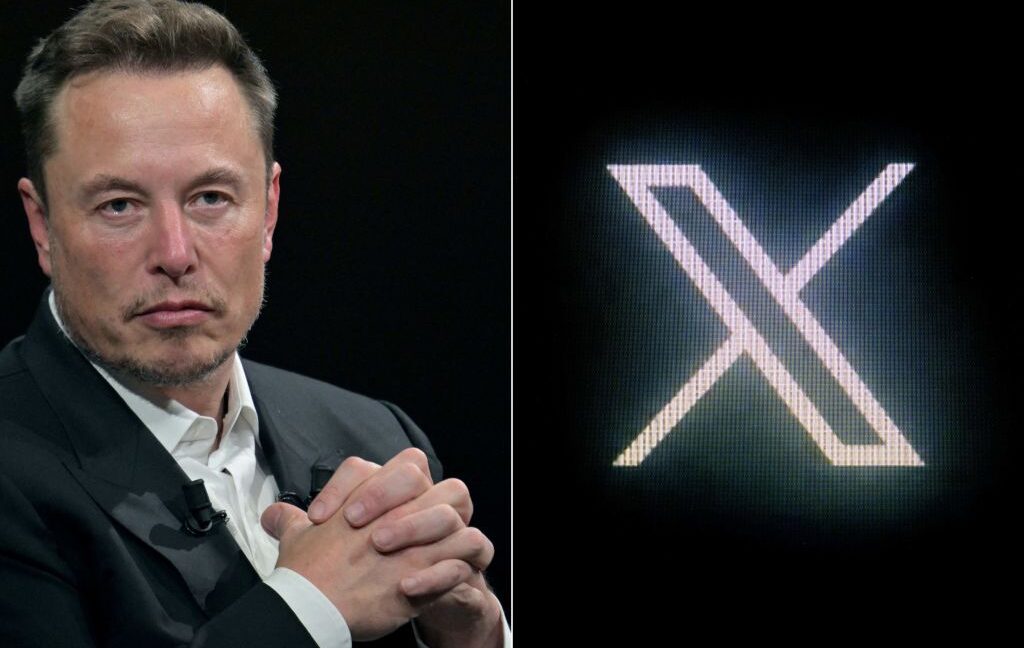



Researcher threatens X with lawsuit after falsely linking him to French probe

X claimed that David Chavalarias, “who spearheads the ‘Escape X’ campaign”—which is “dedicated to encouraging X users to leave the platform”—was chosen to assess the data with one of his prior research collaborators, Maziyar Panahi.

“The involvement of these individuals raises serious concerns about the impartiality, fairness, and political motivations of the investigation, to put it charitably,” X alleged. “A predetermined outcome is not a fair one.”

However, Panahi told Reuters that he believes X blamed him “by mistake,” based only on his prior association with Chavalarias. He further clarified that “none” of his projects with Chavalarias “ever had any hostile intent toward X” and threatened legal action to protect himself against defamation if he receives “any form of hate speech” due to X’s seeming error and mischaracterization of his research. An Ars review suggests his research on social media platforms predates Musk’s ownership of X and has probed whether certain recommendation systems potentially make platforms toxic or influence presidential campaigns.

“The fact my name has been mentioned in such an erroneous manner demonstrates how little regard they have for the lives of others,” Panahi told Reuters.

X denies being an “organized gang”

X suggests that it “remains in the dark as to the specific allegations made against the platform,” accusing French police of “distorting French law in order to serve a political agenda and, ultimately, restrict free speech.”

The press release is indeed vague on what exactly French police are seeking to uncover. All French authorities say is that they are probing X for alleged “tampering with the operation of an automated data processing system by an organized gang” and “fraudulent extraction of data from an automated data processing system by an organized gang.” But later, a French magistrate, Laure Beccuau, clarified in a statement that the probe was based on complaints that X is spreading “an enormous amount of hateful, racist, anti-LGBT+ and homophobic political content, which aims to skew the democratic debate in France,” Politico reported.

https://arstechnica.com/tech-policy/2025/07/researcher-threatens-x-with-lawsuit-after-falsely-linking-him-to-french-probe/


Cocky cop jailed for stealing bitcoins had log of his crypto theft in his office

A former cop in the United Kingdom was sentenced to five and a half years in prison Wednesday after pleading guilty to covering up his theft of 50 bitcoins seized during an investigation into the now-defunct illicit dark web marketplace Silk Road.

In 2014, the former UK National Crime Agency (NCA) officer, Paul Chowles, assisted in the arrest of Thomas White, a man “who had launched Silk Road 2.0 less than a month after the FBI had shut down the original site in 2013,” the Crown Prosecution Service (CPS) said in a press release.

Chowles was tapped to analyze and extract “relevant data and cryptocurrency” from White’s seized devices, specifically due to Chowles’ reputation for being “technically minded and very aware of the dark web and cryptocurrencies,” CPS said.

Like US cops busted for stealing bitcoins from Silk Road seizures, Chowles’ theft was brazen. In 2017, he transferred 50 of 97 seized bitcoins from one of White’s wallets to a public address, then used a cryptocurrency mixer called Bitcoin Fog to break up the bitcoins into smaller amounts “in an attempt to hide the trail of the money,” CPS said.

At the time, the bitcoins were worth about $80,000, but today, they’re valued at nearly $6 million.

Seized iPhone, “several notebooks” expose bitcoin theft

Chowles almost got away with the cover-up. Immediately after the theft, the NCA assumed that White had transferred the bitcoins, CPS said. Four years later, unable to find the bitcoins, cops deemed them “untraceable.” In that time, Chowles made hundreds of transactions with the bitcoins, estimated to have “benefited financially to the value” of more than $800,000 “through his criminality.”

White himself tipped off the local cops in charge of monitoring him in his local area that an NCA officer may have stolen the bitcoins. CPS reported that he “noticed that someone had removed 50 Bitcoin and stated that he knew that it had to be someone within the NCA because they had the private keys for his cryptocurrency wallet.”

https://arstechnica.com/tech-policy/2025/07/ex-cop-gets-5-years-for-stealing-bitcoins-he-helped-seize-from-silk-road/


Permit for xAI’s data center blatantly violates Clean Air Act, NAACP says

In an SELC press release, LaTricea Adams, CEO and President of Young, Gifted and Green, called the SCHD’s decisions on xAI’s permit “reckless.”

“As a Black woman born and raised in Memphis, I know firsthand how industry harms Black communities while those in power cower away from justice,” Adams said. “The Shelby County Health Department needs to do their job to protect the health of ALL Memphians, especially those in frontline communities… that are burdened with a history of environmental racism, legacy pollution, and redlining.”

Groups also suspect xAI is stockpiling dozens of gas turbines to potentially power a second facility nearby—which could lead to over 90 turbines in operation. To get that facility up and running, Musk claimed that he will be “copying and pasting” the process for launching the first data center, SELC’s press release said.

Groups appealing have asked the board to revoke xAI’s permits and declare that xAI’s turbines do not qualify for exemptions from the Clean Air Act or other laws and that all permits for gas turbines must meet strict EPA standards. If successful, groups could force xAI to redo the permitting process “pursuant to the major source requirements of the Clean Air Act” and local law. At the very least, they’ve asked the board to remand the permit to the health department to “reconsider its determinations.”

Unless the pollution control board intervenes, Memphians worry xAI’s “unlawful conduct risks being repeated and evading review,” with any turbines removed easily brought back with “no notice” to residents if xAI’s exemptions remain in place.

“Nothing is stopping xAI from installing additional unpermitted turbines at any time to meet its widely-publicized demand for additional power,” the appeal said.

NAACP’s director of environmental justice, Abre’ Conner, confirmed in the SELC’s press release that his group and community members “have repeatedly shared concerns that xAI is causing a significant increase in the pollution of the air Memphians breathe.”

“The health department should focus on people’s health—not on maximizing corporate gain,” Conner said.

https://arstechnica.com/tech-policy/2025/07/permit-for-xais-data-center-blatantly-violates-clean-air-act-naacp-says/


Trump sues Corporation for Public Broadcasting directors who refused to be fired

When contacted by Ars today, the CPB did not offer any comment on the Trump administration’s lawsuit but referred us to its June 8 statement on Moss’s ruling. “We are very pleased that the Court recognized CPB is an independent, nonprofit corporation, free from governmental control or influence,” CPB CEO Patricia Harrison said at the time.

Although Moss denied the request for an injunction, the CPB said the board members would continue in their offices. “Consistent with the Court’s decision and the authority provided under the governing statute, Harrison has today taken steps to affirm that the three individuals whom the President purported to remove, Laura G. Ross, Thomas E. Rothman, and Diane Kaplan, are, remain, and shall continue to be directors of the Board of the Corporation for Public Broadcasting,” the June 8 statement said.

Senate debates Trump budget cut

This week, the Senate is debating Trump’s rescission requests, including one to rescind $1.1 billion previously allocated to the CPB. The White House has claimed that NPR and PBS “spread radical, woke propaganda disguised as ‘news.'” The $1.1 billion is two years’ worth of funding.

“More than 70 percent of CPB’s annual appropriation goes directly to more than 1,500 public television and public radio stations… The annual appropriation also funds TV and radio programming, as well as projects that benefit the entire public media system,” the CPB said in a statement in May.

Sen. Maria Cantwell (D-Wash.), ranking member of the Senate Committee on Commerce, Science and Transportation, last week released a report detailing the potential effects that approving Trump’s funding cut could have on public safety.

“The operations of 79 public radio and 33 TV stations across 34 states and territories are considered vulnerable to federal funding cuts,” the report summary said. “Nearly 13 million Americans live in communities under threat of losing their local public broadcast stations. What’s worse, these stations serve large swaths of the Western, Midwestern, and Southeastern United States at risk of wildfires, tornadoes, hurricanes, and other public safety emergencies.”

https://arstechnica.com/tech-policy/2025/07/trump-sues-corporation-for-public-broadcasting-directors-who-refused-to-be-fired/


Reddit’s UK users must now prove they’re 18 to view adult content

“Society has long protected youngsters from products that aren’t suitable for them, from alcohol to smoking or gambling,” Ofcom said. “Now, children will be better protected from online material that’s not appropriate for them, while adults’ rights to access legal content are preserved. We expect other companies to follow suit, or face enforcement if they fail to act.”

Ofcom said online platforms that fall under the law “must use highly effective age assurance to identify which users are children, to protect them from harmful material, while preserving adults’ rights to access legal content. That may involve preventing children from accessing the entire site or app, or only some parts or kinds of content.”

Ofcom Group Director for Online Safety Oliver Griffiths recently told the Daily Star that “if you’re a dedicated teenager, you’re probably going to be able to find ways to get [around this] in the same way as people manage to find their way in the pub to buy alcohol at under 18.” But he indicated that the law should prevent many kids from “stumbling across porn,” and that “this is very much a first step.”

In the US, individual states have been imposing age laws on porn websites. The US Supreme Court recently upheld a Texas law that requires age verification on porn sites, finding that the state’s age-gating law doesn’t violate the First Amendment. A dissent written by Justice Elena Kagan described the law’s ID requirement as a deterrent to exercising one’s First Amendment rights, saying that “Texas’s law defines speech by content and tells people entitled to view that speech that they must incur a cost to do so.”

While the Texas law applies to websites in which more than one-third of the content is sexual material, the UK law’s age provisions apply more broadly to social media websites. Reddit’s announcement of its UK restrictions said the company expects it will have to verify user ages in other countries.

“As laws change, we may need to collect and/or verify age in places other than the UK,” Reddit said. “Accordingly, we are also introducing globally an option for you to provide your birthdate to optimize your Reddit experience, for example to help ensure that content and ads are age-appropriate. This is optional, and you won’t be required to provide it unless you live in a place (like the UK) where we are required to ask for it.” Reddit said the option will be available in a user’s account settings, but will not roll out to all users immediately.

Disclosure: Advance Publications, which owns Ars Technica parent Condé Nast, is the largest shareholder in Reddit.

https://arstechnica.com/tech-policy/2025/07/reddit-starts-verifying-ages-of-uk-users-to-comply-with-child-safety-law/


Why Gov. Greg Abbott won’t release his emails with Elon Musk

The language Abbott’s office used appears to be fairly boilerplate. Paxton’s office, in an explanation of the common-law privacy exception on its website, mentions that “personal financial information” that doesn’t deal with government transactions “is generally highly intimate or embarrassing and must be withheld.”

But Bill Aleshire, a Texas-based attorney specializing in public records law, was appalled that the governor is claiming that months of emails between his office and one of the world’s richest people are all private.

“Right now, it appears they’ve charged you $244 for records they have no intention of giving you,” Aleshire said. “That is shocking.”

Aleshire said it’s not unusual for government agencies to tap the common-law privacy exception in an attempt to withhold records from the public. But he’s used to it being cited in cases that involve children, medical data, or other highly personal information—not for emails between an elected official and a businessman.

“You’re boxing in the dark,” Aleshire said. “You can’t even see what the target is or what’s behind their claim.”

Aleshire added that due to a recent Texas Supreme Court ruling, there is effectively no way to enforce public records laws against Abbott and other top state officials. He called the decision an “ace card” for these politicians.

The case dealt with requests to release Abbott and Paxton’s communications in the wake of the January 6 attack on the US Capitol and the 2022 school shooting in Uvalde. The high court ruled that it is the only body that can review whether these officials are in compliance with public records laws.

Kevin Bagnall, a lawyer representing Musk’s rocket company SpaceX, also wrote a letter to Paxton’s office arguing the emails should be kept secret. He cited one main reason: They contain “commercial information whose disclosure would cause SpaceX substantial competitive harm.”

Most of the rest of Bagnall’s letter, which further explained SpaceX’s argument, was redacted.

Musk and representatives for his companies did not respond to requests for comment for this story.

Abbott’s spokesperson did not respond to specific questions about the records, including whether The Texas Newsroom would be refunded if Paxton withholds them.

In a statement, he said, “The Office of the Governor rigorously complies with the Texas Public Information Act and will release any responsive information that is determined to not be confidential or excepted from disclosure.”

The office of the attorney general has 45 business days to determine whether to release Abbott’s records.

Lauren McGaughy is a journalist with The Texas Newsroom, a collaboration among NPR and the public radio stations in Texas. She is based at KUT in Austin. Reach her at lmcgaughy@kut.org. Sign up for KUT newsletters. ProPublica is a Pulitzer Prize-winning investigative newsroom. Sign up for The Big Story newsletter to receive stories like this one in your inbox.

https://arstechnica.com/tech-policy/2025/07/why-gov-greg-abbott-wont-release-his-emails-with-elon-musk/


Trump’s DOJ seems annoyed about having to approve T-Mobile’s latest merger

DOJ approval “reads like a complaint”

The DOJ’s unusual statement about the wireless industry oligopoly shows that the Justice Department staff and antitrust chief “clearly did not want to approve this,” stated Harold Feld, senior VP of consumer advocacy group Public Knowledge. The press release “reads like a complaint,” not an announcement of a merger approval, he added.

Daniel Hanley, senior legal analyst at the Open Markets Institute, said that “Slater could easily make a public comment or resign in protest. If she isn’t allowed to do the job Congress entrusted her with, then she can leave with her principles intact.” The Trump administration is failing to enforce antitrust laws “even when encountering a blatantly unlawful action that could result in a gov win,” he wrote.

The cable industry, which has been competing for mobile customers, issued a statement in response to the DOJ’s approval of T-Mobile’s transaction. “While cable broadband providers are aggressively investing to deliver real mobile competition, cost savings, and other benefits to millions of wireless consumers, the Big 3 are continuing their desperate attempts to thwart this new competition through aggressive spectrum stockpiling strategies,” cable lobby group NCTA said while urging policymakers to promote competition and fight excessive concentration of spectrum licenses.

Despite approving the T-Mobile deal, Slater said in her statement that the DOJ investigation “raised concerns about competition in the relevant markets for mobile wireless services and the availability of wireless spectrum needed to fuel competition and entry.”

US Cellular competed against the big carriers “by building networks, pricing plans, and service offerings that its customers valued, and which for many years the Big 3 often did not offer,” Slater said. “To the chagrin of its Big 3 competitors, US Cellular maintained a sizable customer base within its network footprint by virtue of its strong emphasis on transparency, integrity, and localized customer service. Accordingly, as part of its investigation, the Department considered the impact of the potential disappearance of the services offered to those customers of US Cellular—soon to become T-Mobile customers following the merger—that chose US Cellular over T-Mobile or its national competitors.”

https://arstechnica.com/tech-policy/2025/07/trumps-doj-seems-annoyed-about-having-to-approve-t-mobiles-latest-merger/


Cops’ favorite AI tool automatically deletes evidence of when AI was used

The AI tool could also possibly be “overstepping in its interpretation of the audio,” possibly misinterpreting slang or adding context that never happened.

A “major concern,” the EFF said, is that the AI reports can give cops a “smokescreen,” perhaps even allowing them to dodge consequences for lying on the stand by blaming the AI tool for any “biased language, inaccuracies, misinterpretations, or lies” in their reports.

“There’s no record showing whether the culprit was the officer or the AI,” the EFF said. “This makes it extremely difficult if not impossible to assess how the system affects justice outcomes over time.”

According to the EFF, Draft One “seems deliberately designed to avoid audits that could provide any accountability to the public.” In one video from a roundtable discussion the EFF reviewed, an Axon senior principal product manager for generative AI touted Draft One’s disappearing drafts as a feature, explaining, “we don’t store the original draft and that’s by design and that’s really because the last thing we want to do is create more disclosure headaches for our customers and our attorney’s offices.”

The EFF interpreted this to mean that “the last thing” that Axon wants “is for cops to have to provide that data to anyone (say, a judge, defense attorney or civil liberties non-profit).”

“To serve and protect the public interest, the AI output must be continually and aggressively evaluated whenever and wherever it’s used,” the EFF said. “But Axon has intentionally made this difficult.”

The EFF is calling for a nationwide effort to monitor AI-generated police reports expected to be increasingly deployed in many cities over the next few years and published a guide to help journalists and others submit records requests to monitor police use in their area. But “unfortunately, obtaining these records isn’t easy,” the EFF’s investigation confirmed. “In many cases, it’s straight-up impossible.”

https://arstechnica.com/tech-policy/2025/07/cops-favorite-ai-tool-automatically-deletes-evidence-of-when-ai-was-used/


T-Mobile follows orders from Trump FCC, ends DEI to get two mergers approved

Update: Shortly after this article was published, the Department of Justice announced that it has closed its investigation into the T-Mobile/US Cellular deal and will not try to stop the merger. The FCC had not yet announced its own approval of the merger.

Firm reassigns employees, scrubs DEI from training

In March, T-Mobile obtained FCC approval for a joint venture to acquire fiber provider Lumos. That happened one day after T-Mobile sent Carr a letter saying it “is fully committed to identifying and rooting out any policies and practices that enable such discrimination, whether in fulfillment of DEI or any other purpose,” and was thus “conducting a comprehensive review of its DEI policies, programs, and activities.”

This week’s letter described the results of that internal review. “First, the handful of T-Mobile employees who focused on diversity and inclusion will be redirected within Human Resources to focus on employee culture and engagement,” Nelson wrote in the letter to Carr. “As a result, T-Mobile will no longer have any individual roles or teams focused on DEI. T-Mobile is also removing any references to DEI on its websites and will ensure that company websites and future communications do not have any references to DEI or ‘diversity, equity, and inclusion,’ and are consistent with T-Mobile’s commitment to promote nondiscrimination and equal employment opportunity.”

T-Mobile said it hires “the best person for the job” without favoring one demographic group over another and does not use “hiring quotas, goals, or percentages based on race, sex, sexual orientation, or other protected characteristics.” T-Mobile also said it removed all DEI references from employee training materials “and will ensure that all future training materials are focused on achieving the company’s core business objectives and anti-discrimination instruction, without reference to separate DEI objectives.”

https://arstechnica.com/tech-policy/2025/07/t-mobile-follows-orders-from-trump-fcc-ends-dei-to-get-two-mergers-approved/