Paramount accused of bribery as it settles Trump lawsuit for $16 million
Payout to future presidential library

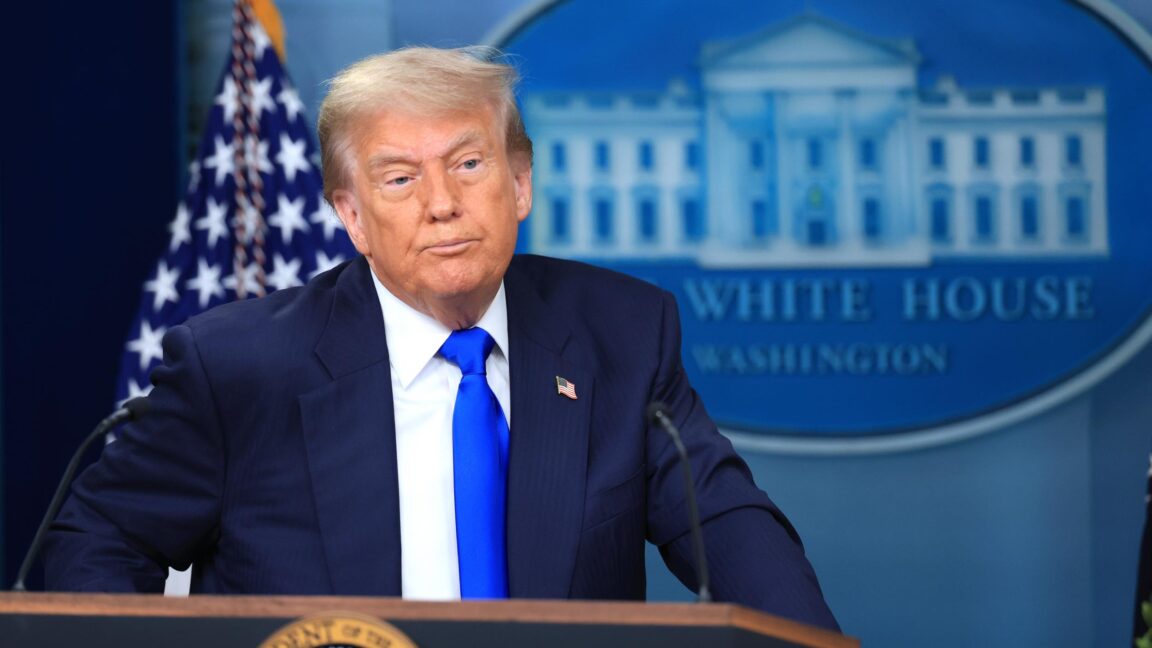
Paramount told us that the settlement terms were proposed by a mediator and that it will pay $16 million, including plaintiffs’ fees and costs. That amount, minus the fees and costs, will be allocated to Trump’s future presidential library, Paramount said. Trump’s complaint sought at least $20 billion in damages.

Paramount also said that “no amount will be paid directly or indirectly to President Trump or Rep. Jackson personally” and that the settlement will release Paramount from “all claims regarding any CBS reporting through the date of the settlement, including the Texas action and the threatened defamation action.”

Warren’s statement said the “settlement exposes a glaring need for rules to restrict donations to sitting presidents’ libraries,” and that she will “introduce new legislation to rein in corruption through presidential library donations. The Trump administration’s level of sheer corruption is appalling and Paramount should be ashamed of putting its profits over independent journalism.”

Trump previously obtained settlements from ABC, Meta, and X Corp.

Paramount said the settlement “does not include a statement of apology or regret.” It “agreed that in the future, 60 Minutes will release transcripts of interviews with eligible US presidential candidates after such interviews have aired, subject to redactions as required for legal or national security concerns.”

FCC’s news distortion investigation

Trump and Paramount previously told the court that they were in advanced settlement negotiations and are scheduled to file a joint status report on Thursday.

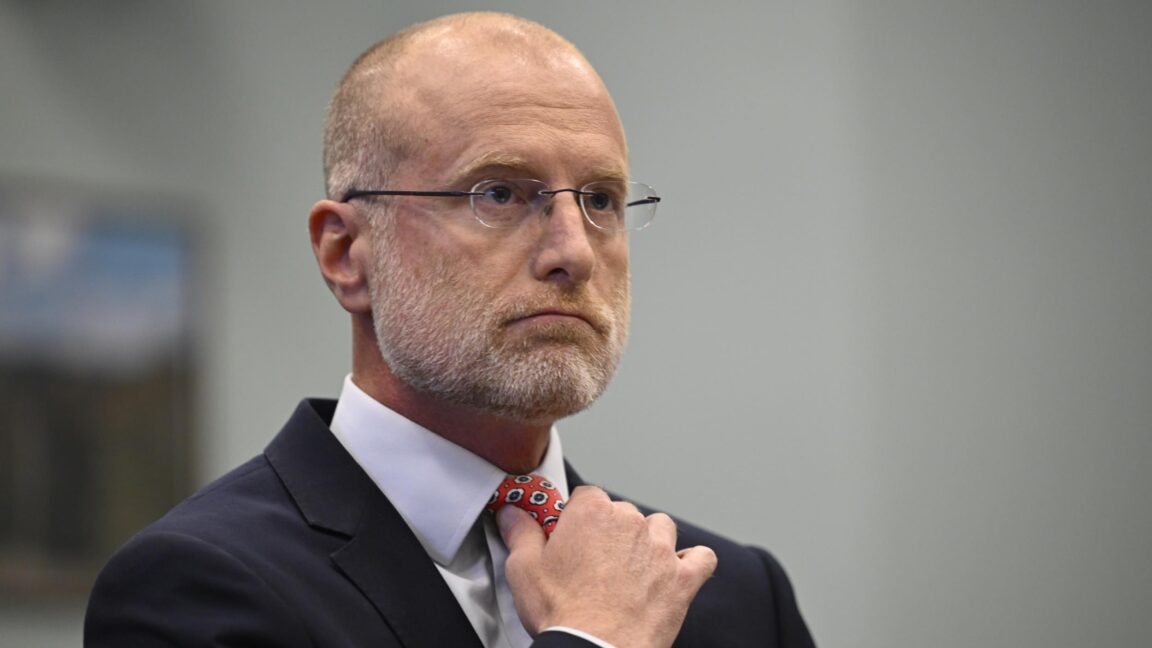
Federal Communications Commission Chairman Brendan Carr has been probing CBS over the Harris interview and holding up Paramount’s merger with Skydance. Carr revived a complaint that was previously dismissed by the FCC and which alleges that CBS intentionally distorted the news by airing two different answers given by Harris to the same question about Israeli Prime Minister Benjamin Netanyahu.

https://arstechnica.com/tech-policy/2025/07/paramount-accused-of-bribery-as-it-settles-trump-lawsuit-for-16-million/


FCC chair decides inmates and their families must keep paying high phone prices

Federal Communications Commission Chairman Brendan Carr has decided to let prisons and jails keep charging high prices for calling services until at least 2027, delaying implementation of rate caps approved last year when the FCC had a Democratic majority.

Carr’s office announced the change yesterday, saying it was needed because of “negative, unintended consequences stemming from the Commission’s 2024 decision on Incarcerated People’s Communications Services (IPCS)… As a result of this waiver decision, the FCC’s 2021 Order rate cap, site commission, and per-minute pricing rules will apply until April 1, 2027, unless the Commission sets an alternative date.”

Commissioner Anna Gomez, the FCC’s only Democrat, criticized the decision and pointed out that Congress mandated lower prices in the Martha Wright-Reed Act, which the FCC was tasked with implementing.

“Today, the FCC made the indefensible decision to ignore both the law and the will of Congress… rather than enforce the law, the Commission is now stalling, shielding a broken system that inflates costs and rewards kickbacks to correctional facilities at the expense of incarcerated individuals and their loved ones,” Gomez said. “Instead of taking targeted action to address specific concerns, the FCC issued a blanket two-year waiver that undercuts the law’s intent and postpones meaningful relief for millions of families. This is a blatant attempt to sidestep the law, and it will not go unchallenged in court.”

Price caps have angered prison phone providers and operators of prisons and jails that get financial benefits from contracts with the prison telcos. One Arkansas jail ended phone service instead of complying with the rate caps.

Win for prison telco Securus

Carr issued a statement saying that “a number of institutions are or soon will be limiting the availability of IPCS due to concerns with the FCC’s 2024 decision,” and that “there is concerning evidence that the 2024 decision does not allow providers and institutions to properly consider public safety and security interests when facilitating these services.” Carr’s office said the delay is needed to “support the continued availability of IPCS for incarcerated people.”

https://arstechnica.com/tech-policy/2025/07/fcc-lets-prisons-keep-charging-high-phone-rates-delaying-new-caps-by-two-years/


Nudify app’s plan to dominate deepfake porn hinges on Reddit, docs show

As Clothoff’s growth appears unstoppable, the user explained to Der Spiegel why he doesn’t feel that conflicted about using the app to generate fake nudes of a famous singer.

“There are enough pictures of her on the Internet as it is,” the user reasoned.

However, that user draws the line at generating fake nudes of private individuals, insisting, “If I ever learned of someone producing such photos of my daughter, I would be horrified.”

For young boys who appear flippant about creating fake nude images of their classmates, the consequences have ranged from suspensions to juvenile criminal charges, and for some, there could be other costs. In the lawsuit where the high schooler is attempting to sue a boy who used Clothoff to bully her, there’s currently resistance from boys who participated in group chats to share what evidence they have on their phones. If she wins her fight, she’s asking for $150,000 in damages per image shared, so sharing chat logs could potentially increase the price tag.

Since she and the San Francisco city attorney each filed their lawsuits, the Take It Down Act has passed. That law makes it easier to force platforms to remove AI-generated fake nudes. But experts expect the law will face legal challenges over censorship fears, so the very limited legal tool might not withstand scrutiny.

Either way, the Take It Down Act is a safeguard that came too late for the earliest victims of nudify apps in the US, only some of whom are turning to courts seeking justice due to largely opaque laws that made it unclear if generating a fake nude was illegal.

“Jane Doe is one of many girls and women who have been and will continue to be exploited, abused, and victimized by non-consensual pornography generated through artificial intelligence,” the high schooler’s complaint noted. “Despite already being victimized by Defendant’s actions, Jane Doe has been forced to bring this action to protect herself and her rights because the governmental institutions that are supposed to protect women and children from being violated and exploited by the use of AI to generate child pornography and nonconsensual nude images failed to do so.”

https://arstechnica.com/tech-policy/2025/07/nudify-apps-plan-to-dominate-deepfake-porn-hinges-on-reddit-docs-show/


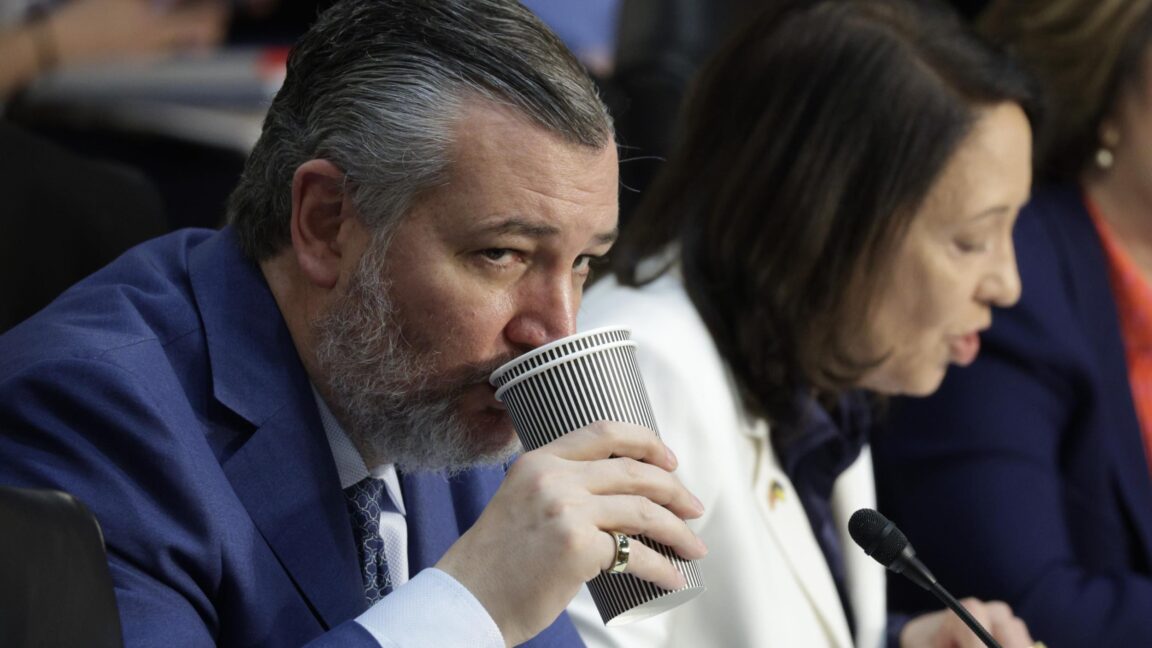
Ted Cruz plan to punish states that regulate AI shot down in 99-1 vote

Cruz blamed “outside interests”

After the compromise fell apart, the Senate voted 99-1 for Blackburn’s amendment to remove the AI provision from the budget bill. Sen. Thom Tillis (R-N.C.) cast the only vote against the amendment.

“Cruz ultimately got behind Blackburn’s amendment early Tuesday, acknowledging that ‘many of my colleagues would prefer not to vote on this matter,'” according to The Hill. Cruz said the five-year moratorium had support from President Trump and “protected kids and protected the rights of creative artists, but outside interests opposed that deal.”

However, Blackburn was quoted as saying that they “weren’t able to come to a compromise that would protect our governors, our state legislators, our attorney generals and, of course, House members who have expressed concern over this language… what we know is this—this body has proven that they cannot legislate on emerging technology.”

Cantwell pointed out that many state government officials from both major parties opposed the Cruz plan. “Despite several revisions by its author and misleading assurances about its true impact, state officials from across the country, including 17 Republican Governors and 40 state attorneys general, as well [as] conservative and liberal organizations—from the Heritage Foundation to the Center for American Progress—rallied against the harmful proposal,” Cantwell’s office said.

Cantwell and Sen. Ed Markey (D-Mass.) had also filed an amendment to strip the AI moratorium from the bill. Markey said yesterday that “the Blackburn-Cruz so-called compromise is a wolf in sheep’s clothing. Despite Republican efforts to hide the true impact of the AI moratorium, the language still allows the Trump administration to use federal broadband funding as a weapon against the states and still prevents states from protecting children online from Big Tech’s predatory behavior.”

Cantwell said at a recent press conference that 24 states last year started “regulating AI in some way, and they have adopted these laws that fill a gap while we are waiting for federal action.” Yesterday, she called the Blackburn/Cruz compromise “another giveaway to tech companies” that “gives AI and social media a brand-new shield against litigation and state regulation.”

https://arstechnica.com/tech-policy/2025/07/ted-cruz-gives-up-on-ai-law-moratorium-joins-99-1-vote-against-his-own-plan/


Senate GOP budget bill has little-noticed provision that could hurt your Wi-Fi

Michael Calabrese of New America’s Open Technology Institute told Ars that 6 GHz and CBRS “are the most vulnerable non-federal bands for reallocation and auction.” While the spectrum for auctions is to come from frequencies between 1.3 and 10.5 GHz, much of that spectrum will be off-limits either because it’s specifically excluded or because it would be more difficult to reallocate.

“About half the spectrum in that range is federal, and then the rest has already been auctioned for cellular mobile use or is assigned to other critical users such as aviation and satellites,” said Calabrese, who directs the Open Technology Institute’s Wireless Future Project.

Another factor cited by Calabrese is that the FCC, under Chairman Brendan Carr, is looking to make new spectrum available to low-Earth orbit satellites like those used by Elon Musk’s Starlink network. Carr is also “the leading champion of 5G in the mobile industry” and inclined to devote more frequencies to mobile carriers, Calabrese said.

Wi-Fi bottleneck

Feld said the 6 GHz Wi-Fi spectrum would be a likely target because deployments in the band are just starting. By contrast, the 2.4 GHz and 5 GHz bands have been allocated to Wi-Fi for a long time, are heavily used, and modifying existing devices to stop using parts of the bands would be impractical.

Arguing that 6 GHz is crucial for Wi-Fi’s future, Calabrese said that “the bottleneck limiting home and business broadband capacity is no longer the Internet connection, but the quality of the Wi-Fi. Most Wi-Fi still relies on a much smaller amount of unlicensed spectrum at 2.4 and 5 GHz, which limits throughput to about 400Mbps and connects fewer devices to the same access point.”

The Wi-Fi 6E standard adds support for 6 GHz spectrum, and the in-development Wi-Fi 7 will take full advantage of the band, Calabrese said. “By leveraging access to the entire 6 GHz band, Wi-Fi 7 can nearly double speeds, support hundreds of devices in a location, prioritize lag-sensitive applications like real-time video, and support emerging future apps such as virtual reality and telepresence that will be used almost entirely indoors,” he said.

https://arstechnica.com/tech-policy/2025/06/senate-gop-budget-bill-has-little-noticed-provision-that-could-hurt-your-wi-fi/


Meta, TikTok can’t toss wrongful death suit from mom of “subway surfing” teen

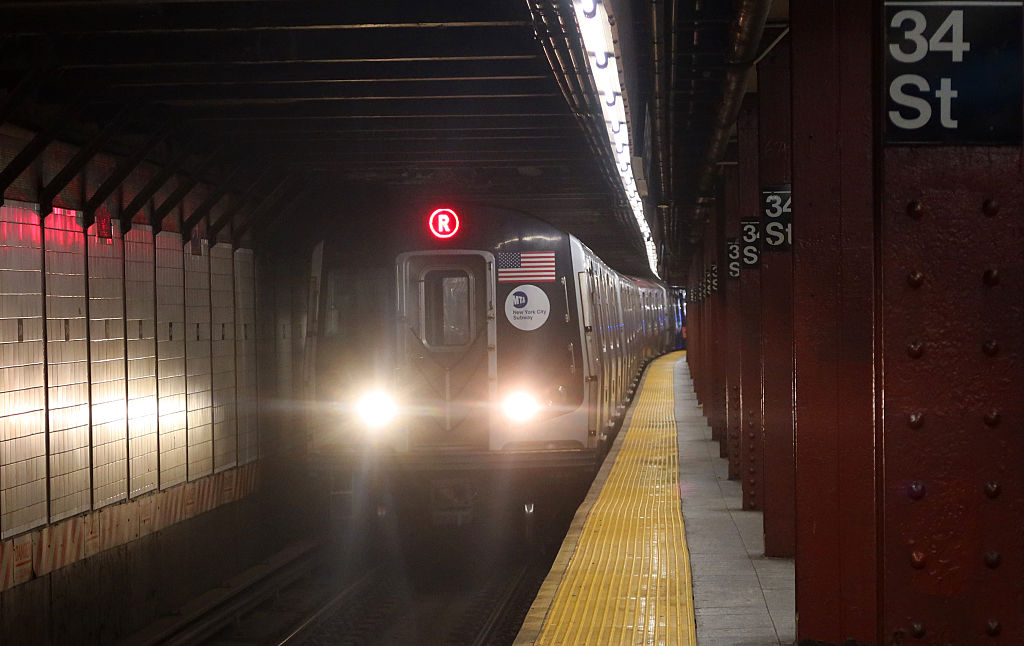
Section 230 has so far failed to shield Meta and TikTok owner ByteDance from a lawsuit raised by a mother who alleged that her son’s wrongful death followed a flood of “subway surfing” videos platforms intentionally targeted to teens in New York.

In a decision Monday, New York State Supreme Court Judge Paul Goetz largely denied social media companies’ motions to dismiss claims they argued should be barred under Section 230 and the First Amendment. Goetz said that the mother, Norma Nazario, had adequately alleged that subway surfing content “was purposefully fed” to her son Zackery “because of his age” and “not because of any user inputs that indicated he was interested in seeing such content.”

Unlike other Section 230 cases in which platforms’ algorithms were determined to be content-neutral, Goetz wrote that in this case, “it is plausible that the social media defendants’ role exceeded that of neutral assistance in promoting content and constituted active identification of users who would be most impacted by the content.”

Platforms may be forced to demystify algorithms

Moving forward, Nazario will have a chance to seek discovery that could show exactly how Zackery came to interact with the subway surfing content. In her complaint, she did not ask for the removal of all subway surfing content but rather wants to see platforms held accountable for allegedly dangerous design choices that supposedly target unwitting teens.

“Social media defendants should not be permitted to actively target young users of its applications with dangerous ‘challenges’ before the user gives any indication that they are specifically interested in such content and without warning,” Nazario has argued.

And if she’s proven right, that means platforms won’t be forced to censor any content but must instead update algorithms to stop sending “dangerous” challenges to keep teens engaged at a time when they’re more likely to make reckless decisions, Goetz suggested.

https://arstechnica.com/tech-policy/2025/06/meta-tiktok-cant-toss-wrongful-death-suit-from-mom-of-subway-surfing-teen/


Supreme Court overturns 5th Circuit ruling that upended Universal Service Fund

Finally, the Consumers’ Research position produces absurd results, divorced from any reasonable understanding of constitutional values. Under its view, a revenue-raising statute containing non-numeric, qualitative standards can never pass muster, no matter how tight the constraints they impose. But a revenue-raising statute with a numeric limit will always pass muster, even if it effectively leaves an agency with boundless power. In precluding the former and approving the latter, the Consumers’ Research approach does nothing to vindicate the nondelegation doctrine or the separation of powers.

The Gorsuch dissent said the “combination” question isn’t the deciding factor. He said the only question that needs to be answered is whether Congress violated the Constitution by delegating the power to tax to the FCC.

“As I see it, this case begins and ends with the first question. Section 254 [of the Communications Act] impermissibly delegates Congress’s taxing power to the FCC, and knowing that is enough to know the Fifth Circuit’s judgment should be affirmed,” Gorsuch said.

“Green light” for FCC to support Internet access

In the Gorsuch view, it doesn’t matter whether the FCC exceeded its authority by delegating Universal Service management to a private administrative company. “As far as I can tell, and as far as petitioners have informed us, this Court has never approved legislation allowing an executive agency to tax domestically unless Congress itself has prescribed the tax rate,” Gorsuch wrote.

The FCC and Department of Justice asked the Supreme Court to reverse the 5th Circuit decision. The court also received a challenge from broadband-focused advocacy groups and several lobby groups representing ISPs.

“Today is a great day,” said Andrew Jay Schwartzman, counsel for the Benton Institute for Broadband & Society; the National Digital Inclusion Alliance; and the Center for Media Justice. “We will need some time to sort through the details of today’s decision, but what matters most is that the Supreme Court has given the green light to the FCC to continue to support Internet access to the tens of millions of Americans and the thousands of schools, libraries and rural hospitals that rely on the Universal Service Fund.”

FCC Chairman Brendan Carr praised the ruling but said he plans to make changes to Universal Service. “I am glad to see the court’s decision today and welcome it as an opportunity to turn the FCC’s focus towards the types of reforms necessary to ensure that all Americans have a fair shot at next-generation connectivity,” Carr said.

https://arstechnica.com/tech-policy/2025/06/supreme-court-saves-universal-service-fund-rules-fcc-fee-is-not-illegal-tax/


Supreme Court upholds Texas porn law that caused Pornhub to leave the state

Justice Elena Kagan filed a dissenting opinion that was joined by Sonia Sotomayor and Ketanji Brown Jackson. Kagan said that in similar cases, the court applied strict scrutiny, “a highly rigorous but not fatal form of constitutional review, to laws regulating protected speech based on its content.”

“Texas’s law defines speech by content and tells people entitled to view that speech that they must incur a cost to do so,” Kagan wrote. “That is, under our First Amendment law, a direct (not incidental) regulation of speech based on its content—which demands strict scrutiny.”

The Texas law applies to websites in which more than one-third of the content “is sexual material harmful to minors.” Kagan described the law’s ID requirement as a deterrent to exercising one’s First Amendment rights.

“It is turning over information about yourself and your viewing habits—respecting speech many find repulsive—to a website operator, and then to… who knows? The operator might sell the information; the operator might be hacked or subpoenaed,” Kagan’s dissent said. The law requires website users to verify their ages by submitting “a ‘government-issued identification’ like a driver’s license or ‘transactional data’ associated with things like a job or mortgage,” Kagan wrote.

Limiting no more speech than necessary

Under strict scrutiny, the court must ask whether the law is “the least restrictive means of achieving a compelling state interest,” Kagan wrote. A state facing that standard must show it has limited no more adult speech than is necessary to achieve its goal.

“Texas can of course take measures to prevent minors from viewing obscene-for-children speech. But if a scheme other than H. B. 1181 can just as well accomplish that objective and better protect adults’ First Amendment freedoms, then Texas should have to adopt it (or at least demonstrate some good reason not to),” Kagan wrote.

The majority decision said that applying strict scrutiny “would call into question all age-verification requirements, even longstanding in-person requirements.” It also said the previous rulings cited in the dissent “all involved laws that banned both minors and adults from accessing speech that was at most obscene only to minors. The Court has never before considered whether the more modest burden of an age-verification requirement triggers strict scrutiny.”

https://arstechnica.com/tech-policy/2025/06/supreme-court-upholds-texas-porn-law-that-caused-pornhub-to-leave-the-state/


Stung by customer losses, Comcast says all its new plans have unlimited data

With Comcast trying to figure out how to stop losing broadband customers, the cable firm yesterday announced new plans that are available nationwide and do not have data caps.

Comcast said it is offering “four simple national Internet tiers that include unlimited data and the advanced Xfinity WiFi Gateway for one low monthly price.” Customers whose current plans have data caps won’t automatically get unlimited data and would have to switch to a new plan to remove that annoying limit from their accounts.

“Customers can repackage into one of our new plans that include unlimited data if they don’t have it already with their existing plan,” a Comcast spokesperson told Ars today.

Comcast’s press release said there is a five-year price guarantee in which the plan costs range from $55 to $115 a month, before taxes and fees, for download speeds ranging from 300Mbps to 2Gbps. There’s also a one-year guarantee in which the prices for the same plans range from $40 to $100.

The Comcast Xfinity website today indicated that the one- and five-year price guarantees are only available to new customers. However, the Comcast spokesperson indicated to us that existing customers can get the price guarantee when switching to an unlimited data plan. Getting promised deals can often be difficult, particularly while a cable company is changing its offerings, so we wouldn’t be surprised if customers have difficulty obtaining the unlimited plan at the lowest advertised prices.

https://arstechnica.com/tech-policy/2025/06/stung-by-customer-losses-comcast-says-all-its-new-plans-have-unlimited-data/


Judge: Pirate libraries may have profited from Meta torrenting 80TB of books

It could certainly look worse for Meta if authors manage to present evidence supporting the second way that torrenting could be relevant to the case, Chhabaria suggested.

“Meta downloading copyrighted material from shadow libraries” would also be relevant to the character of the use, “if it benefitted those who created the libraries and thus supported and perpetuated their unauthorized copying and distribution of copyrighted works,” Chhabria wrote.

Counting potential strikes against Meta, Chhabria pointed out that the “vast majority of cases” involving “this sort of peer-to-peer file-sharing” are found to “constitute copyright infringement.” And it likely doesn’t help Meta’s case that “some of the libraries Meta used have themselves been found liable for infringement.”

However, Meta may overcome this argument, too, since book authors “have not submitted any evidence” that potentially shows how Meta’s downloading may perhaps be “propping up” or financially benefiting pirate libraries.

Finally, Chhabria noted that the “last issue relating to the character of Meta’s use” of books in regards to its torrenting is “the relationship between Meta’s downloading of the plaintiffs’ books and Meta’s use of the books to train Llama.”

Authors had tried to argue that these elements were distinct. But Chhabria said there’s no separating the fact that Meta downloaded the books to serve the “highly transformative” purpose of training Llama.

“Because Meta’s ultimate use of the plaintiffs’ books was transformative, so too was Meta’s downloading of those books,” Chhabria wrote.

AI training rulings may get more authors paid

Authors only learned of Meta’s torrenting through discovery in the lawsuit, and because of that, Chhabria noted that “the record on Meta’s alleged distribution is incomplete.”

It’s possible that authors may be able to show evidence that Meta “contributed to the BitTorrent network” by providing significant computing power that could’ve meaningfully assisted shadow libraries, Chhabria said in a footnote.

https://arstechnica.com/tech-policy/2025/06/judge-rejects-metas-claim-that-torrenting-is-irrelevant-in-ai-copyright-case/