Book authors made the wrong arguments in Meta AI training case, judge says

An interesting wrinkle that may have stopped authors from invoking market dilution as a threat in the Meta case is that Chhabria noted that Meta had argued that “market dilution does not count under the fourth factor.”

But Chhabria clarified “that can’t be right.”

“Indirect substitution is still substitution,” Chhabria wrote. “If someone bought a romance novel written by [a large language model (LLM)] instead of a romance novel written by a human author, the LLM-generated novel is substituting for the human-written one.” Seemingly, the same would go for AI-generated non-fiction books, he suggested.

So while “it’s true that, in many copyright cases, this concept of market dilution or indirect substitution is not particularly important,” AI cases may change the copyright landscape because it “involves a technology that can generate literally millions of secondary works, with a miniscule [sic] fraction of the time and creativity used to create the original works it was trained on,” Chhabria wrote.

This is unprecedented, Chhabria suggested, as no other use “has anything near the potential to flood the market with competing works the way that LLM training does. And so the concept of market dilution becomes highly relevant… Courts can’t stick their heads in the sand to an obvious way that a new technology might severely harm the incentive to create, just because the issue has not come up before.”

In a way, Chhabria’s ruling provides a roadmap for rights holders looking to advance lawsuits against AI companies in the midst of precedent-setting rulings.

Unfortunately for book authors suing Meta who found a sympathetic judge in Chhabria—but only made a “fleeting reference” to indirect substitution in a single report in its filings ahead of yesterday’s ruling—”courts can’t decide cases based on what they think will or should happen in other cases.”

If their allegations were just a little stronger, Chhabria suggested they could have even won on summary judgment, instead of Meta.

“Indeed, it seems likely that market dilution will often cause plaintiffs to decisively win the fourth factor—and thus win the fair use question overall—in cases like this,” Chhabria wrote.

https://arstechnica.com/tech-policy/2025/06/book-authors-made-the-wrong-arguments-in-meta-ai-training-case-judge-says/


xAI faces legal threat over alleged Colossus data center pollution in Memphis

“For instance, if all the 35 turbines operated by xAI were using” add-on air pollution control technology “to achieve a NOx emission rate of 2 ppm”—as xAI’s consultant agreed it would—”they would emit about 177 tons of NOx per year, as opposed to the 1,200 to 2,100 tons per year they currently emit,” the letter said.

Allegedly, all of xAI’s active turbines “continue to operate without utilizing best available control technology” (BACT) and “there is no dispute” that since xAI has yet to obtain permitting, it’s not meeting BACT requirements today, the letter said.

“xAI’s failure to comply with the BACT requirement is not only a Clean Air Act violation on paper, but also a significant and ongoing violation that is resulting in substantial amounts of harmful excess emissions,” the letter said.

Additionally, xAI’s turbines are considered a major source of a hazardous air pollutant, formaldehyde, the letter said, with “the potential to emit more than 16 tons” since xAI operations began. “xAI was required to conduct initial emissions testing for formaldehyde within 180 days of becoming a major source,” the letter alleged, but it appears that a year after moving into Memphis, still “xAI has not conducted this testing.”

Terms of xAI’s permitting exemption remain vague

The NAACP and SELC suggested that the exemption that xAI is seemingly operating under could be a “nonroad engine exemption.” However, they alleged that xAI’s turbines don’t qualify for that yearlong exemption, and even if they did, any turbines still onsite after a year would surely not be covered and should have permitting by now.

“While some local leaders, including the Memphis Mayor and Shelby County Health Department, have claimed there is a ‘364-exemption’ for xAI’s gas turbines, they have never been able to point to a specific exemption that would apply to turbines as large as the ones at the xAI site,” SELC’s press release alleged.

https://arstechnica.com/tech-policy/2025/06/xai-faces-legal-threat-over-alleged-colossus-data-center-pollution-in-memphis/


Trump suggests he needs China to sign off on TikTok sale, delays deal again

For many Americans, losing TikTok would be disruptive. TikTok has warned that US businesses could lose $1 billion in one month if TikTok shuts down. As these businesses wait in limbo for a resolution to the situation, it’s getting harder to take the alleged national security threat seriously, as clinching the deal appears to lack urgency.

On Wednesday, the White House continued to warn that Americans are not safe using TikTok, though, despite leaving Americans vulnerable for an extended period that could now stretch to eight months.

In a statement, White House press secretary Karoline Leavitt only explained that “President Trump does not want TikTok to go dark” and would sign an executive order “to keep TikTok up and running” through mid-September. Leavitt confirmed that the Trump administration would focus on finishing the deal in this three-month period, “making sure the sale closes so that Americans can keep using TikTok with the assurance that their data is safe and secure,” Reuters reported.

US-China tensions continue, despite truce

Trump’s negotiations with China have been shaky, but a truce was reestablished last week that could potentially pave the way for a TikTok deal.

Initially, Trump had planned to use the TikTok deal as a bargaining chip, but the tit-for-tat retaliations between the US and China all spring reportedly left China hesitant to agree to any deal. Perhaps sensing the power shift in negotiations, Trump offered to reduce China’s highest tariffs to complete the deal in March. But by April, analysts opined that Trump was still “desperate” to close, while China saw no advantage in letting go of TikTok any time soon.

Despite the current truce, tensions between the US and China continue, as China has begun setting its own deadlines to maintain leverage in the trade war. According to The Wall Street Journal, China put a six-month limit “on the sales of rare earths to US carmakers and manufacturers, giving Beijing leverage if the trade conflict flares up again.”

https://arstechnica.com/tech-policy/2025/06/trump-suggests-he-needs-china-to-sign-off-on-tiktok-sale-delays-deal-again/


Toy-maker Mattel accused of planning “reckless” AI social experiment on kids

Most obviously, AI models are still prone to hallucination, Kaur noted. And while Mattel’s AI toys are “unlikely to cause physical harm,” toys giving “inappropriate or bizarre responses” could “be confusing or even unsettling for a child,” he said.

For parents, the emotional ties kids make with AI toys will also need to be monitored, especially since chatbot outputs can be unpredictable. Another LinkedIn user, Adam Dodge—founder of a digital safety company preventing cyber abuse, called EndTab—pointed to a lawsuit where a grieving mom alleged her son committed suicide after interacting with hyper-realistic chatbots.

Those bots encouraged self-harm and engaged her son in sexualized chats, and Dodge suggested that toy makers are similarly “wading into dangerous new waters with AI” that could possibly “communicate dangerous, sexualized, and harmful responses that put kids at risk.”

“This was inevitable—but wow does it make me cringe,” Dodge wrote, noting that Mattel’s plan to announce its first product this year seems “fast.”

Dodge said that right now, Mattel and OpenAI are “saying the right things” by emphasizing safety, privacy, and security, but more transparency is needed before parents can rest assured that AI toys are safe.

AI is “unpredictable, sycophantic, and addictive,” Dodge warned. “I don’t want to be posting a year from now about how a Hot Wheels car encouraged self-harm or that children are in committed romantic relationships with their AI Barbies.”

Kaur agreed that it’s in Mattel’s best interest to give parents more information, since “public trust will be vital for widespread adoption.” He recommended that the toy maker submit to independent audits and provide parental controls to reassure parents, as well as clearly outline how data is used, where it’s stored, who has access to it, and what will happen if their kids’ data is breached.

For Mattel, a bigger legal threat forcing responsible design and appropriate content filtering may come from any unintentional copyright issues arising from using OpenAI models trained on a wide range of intellectual property. Hollywood studios recently sued one AI company for allowing users to generate images of their most popular characters and would likely be just as litigious defending against AI toys emulating their characters.

https://arstechnica.com/tech-policy/2025/06/mattel-sparks-fear-that-planned-chatgpt-fueled-toys-will-warp-kids/


“Have we no shame?”: Trump’s NIH grant cuts appallingly illegal, judge rules

“Where’s the support for that?” Young asked. “I see no evidence of that.”

Meanwhile, a lawyer representing one of the plaintiffs suing to block the grants, Kenneth Parreno, seemingly successfully argued that canceling grants related to race or transgender health were part of “a slapdash, harried effort to rubber stamp an ideological purge.” At the trial, Young noted that much of the information about the grant cancellations was only available due to the independent efforts of academics behind a project called Grant Watch, which was launched to crowdsource the monumental task of tracking the cuts.

According to Young, he felt “hesitant to draw this conclusion” but ultimately had “an unflinching obligation to draw it.”

Rebuking the cuts and ordering hundreds of grants restored, Young said “it is palpably clear that these directives and the set of terminated grants here also are designed to frustrate, to stop, research that may bear on the health—we’re talking about health here, the health of Americans, of our LGBTQ community. That’s appalling.

“You are bearing down on people of color because of their color,” Young said. “The Constitution will not permit that… Have we fallen so low? Have we no shame?”

Young also signaled that he may restore even more grants, noting that the DOJ “made virtually no effort to push back on claims that the cuts were discriminatory,” Politico reported.

White House attacks judge

Andrew Nixon, a spokesperson for the Department of Health and Human Services, told NYT that in spite of the ruling, the agency “stands by its decision to end funding for research that prioritized ideological agendas.” He claimed HHS is exploring a potential appeal, which seems likely given the White House’s immediate attacks on Young’s ruling. Politico noted that Trump considers his executive orders to be “unreviewable by the courts” due to his supposedly “broad latitude to set priorities and pause funding for programs that no longer align.”

https://arstechnica.com/tech-policy/2025/06/judge-slams-nih-grant-cuts-as-racist-appalling-white-house-attacks-judge/


Trump’s FTC may impose merger condition that forbids advertising boycotts

FTC chair alleged “serious risk” from ad boycotts

After Musk’s purchase of Twitter, the social network lost advertisers for various reasons, including changes to content moderation and an incident in which Musk posted a favorable response to an antisemitic tweet and then told concerned advertisers to “go fuck yourself.”

FTC Chairman Andrew Ferguson said at a conference in April that “the risk of an advertiser boycott is a pretty serious risk to the free exchange of ideas.”

“If advertisers get into a back room and agree, ‘We aren’t going to put our stuff next to this guy or woman or his or her ideas,’ that is a form of concerted refusal to deal,” Ferguson said. “The antitrust laws condemn concerted refusals to deal. Now, of course, because of the First Amendment, we don’t have a categorical antitrust prohibition on boycotts. When a boycott ceases to be economic for purposes of the antitrust laws and becomes purely First Amendment activity, the courts have not been super clear—[it’s] sort of a ‘we know it when we see it’ type of thing.”

The FTC website says that any individual company acting on its own may “refuse to do business with another firm, but an agreement among competitors not to do business with targeted individuals or businesses may be an illegal boycott, especially if the group of competitors working together has market power.” The examples given on the FTC webpage are mostly about price competition and do not address the widespread practice of companies choosing where to place advertising based on concerns about their brands.

We contacted the FTC about the merger review today and will update this article if it provides any comment.

X’s ad lawsuit

X’s lawsuit targets a World Federation of Advertisers initiative called the Global Alliance for Responsible Media (GARM), a now-defunct program that Omnicom and Interpublic participated in. X itself was part of the GARM initiative, which shut down after X filed the lawsuit. X alleged that the defendants conspired “to collectively withhold billions of dollars in advertising revenue.”

The World Federation of Advertisers said in a court filing last month that GARM was founded “to bring clarity and transparency to disparate definitions and understandings in advertising and brand safety in the context of social media. For example, certain advertisers did not want platforms to advertise their brands alongside content that could negatively impact their brands.”

https://arstechnica.com/tech-policy/2025/06/trumps-ftc-targets-advertising-boycotts-in-potential-boost-for-elon-musks-x/


How to draft a will to avoid becoming an AI ghost—it’s not easy

“This could also invoke issues with contract, property and intellectual property rights, and right of publicity as well if AI replicas (image, voice, text, etc.) are being used without authorization,” Sheehan said.

And there are likely more protections for celebrities than for everyday people, Sheehan suggested.

“As far as I know, there is no law” preventing unauthorized non-commercial digital replicas, Sheehan said.

Widely adopted by states, the Revised Uniform Fiduciary Access to Digital Assets Act—which governs who gets access to online accounts of the deceased, like social media or email accounts—could be helpful but isn’t a perfect remedy.

That law doesn’t directly “cover someone’s AI ghost bot, though it may cover some of the digital material some may seek to use to create a ghost bot,” Sheehan said.

“Absent any law” blocking non-commercial digital replicas, Sheehan expects that people’s requests for “no AI resurrections” will likely “be dealt with in the courts and governed by the terms of one’s estate plan, if it is addressed within the estate plan.”

Those potential fights seemingly could get hairy, as “it may be some time before we get any kind of clarity or uniform law surrounding this,” Sheehan suggested.

In the future, Sheehan said, requests prohibiting digital replicas may eventually become “boilerplate language in almost every will, trust, and power of attorney,” just as instructions on digital assets are now.

As “all things AI become more and more a part of our lives,” Sheehan said, “some aspects of AI and its components may also be woven throughout the estate plan regularly.”

“But we definitely aren’t there yet,” she said. “I have had zero clients ask about this.”

Requests for “no AI resurrections” will likely be ignored

Whether loved ones would—or even should—respect requests blocking digital replicas appears to be debatable. But at least one person who built a grief bot wished he’d done more to get his dad’s permission before moving forward with his own creation.

https://arstechnica.com/tech-policy/2025/06/how-to-draft-a-will-to-avoid-becoming-an-ai-ghost-its-not-easy/


Trade war truce between US and China is back on

Donald Trump has said the US and China’s deal to restore their trade war truce is “done” after two days of marathon negotiations in London.

In a post on his Truth Social network on Wednesday the US president hailed a breakthrough reached in bilateral talks in London late the night before.

The deal revived a trade truce agreed in Geneva last month that subsequently faltered because of differences over Chinese rare earth exports and US export controls.

Read full article

Comments

https://arstechnica.com/tech-policy/2025/06/trade-war-truce-between-us-and-china-is-back-on/


DOGE wins at Supreme Court; conservative majority ends limits on data access

Jackson said the ruling “sends a troubling message” that the court will depart from its usual legal standards “for certain litigants.” While other litigants seeking a stay “must point to more than the annoyance of compliance with lower court orders they don’t like, the Government can approach the courtroom bar with nothing more than that and obtain relief from this Court nevertheless,” Jackson wrote.

Jackson: “Grave privacy risks for millions”

Jackson said the ruling puts at risk personal information like Social Security numbers, birth dates, addresses, bank account numbers, and medical records. “Every person who has received a Social Security number appears in the SSA’s data,” and the agency administers various programs that collect other personal information, Jackson wrote. The Supreme Court ruling creates “grave privacy risks for millions of Americans,” she wrote.

For example, Jackson wrote that Social Security Disability Insurance “collects detailed medical histories (describing, for example, prescriptions, mental-health treatments, and testing results for sensitive health conditions like HIV) from applicants and beneficiaries.” The Privacy Act protects this kind of data, prohibiting agencies “from disclosing covered data except in narrow circumstances, such as where agency employees ‘have a need for the record in the performance of their duties.'”

The SSA has long had a policy of restricting access, but its data-handling practices “changed dramatically” after President Trump’s executive order creating DOGE, Jackson wrote. “Record evidence reflects that DOGE received far broader data access than the SSA customarily affords for fraud, waste, and abuse reviews,” Jackson wrote.

Previously, investigations would “start with access to high-level, anonymized data based on the least amount of data the analyst or auditor would need to know,” Jackson wrote, referring to evidence given by a former SSA acting chief of staff. Analysts or auditors previously could only obtain “more granular, non-anonymized data” if they found suspicious entries, she wrote.

https://arstechnica.com/tech-policy/2025/06/supreme-court-gives-doge-unfettered-access-to-sensitive-social-security-data/


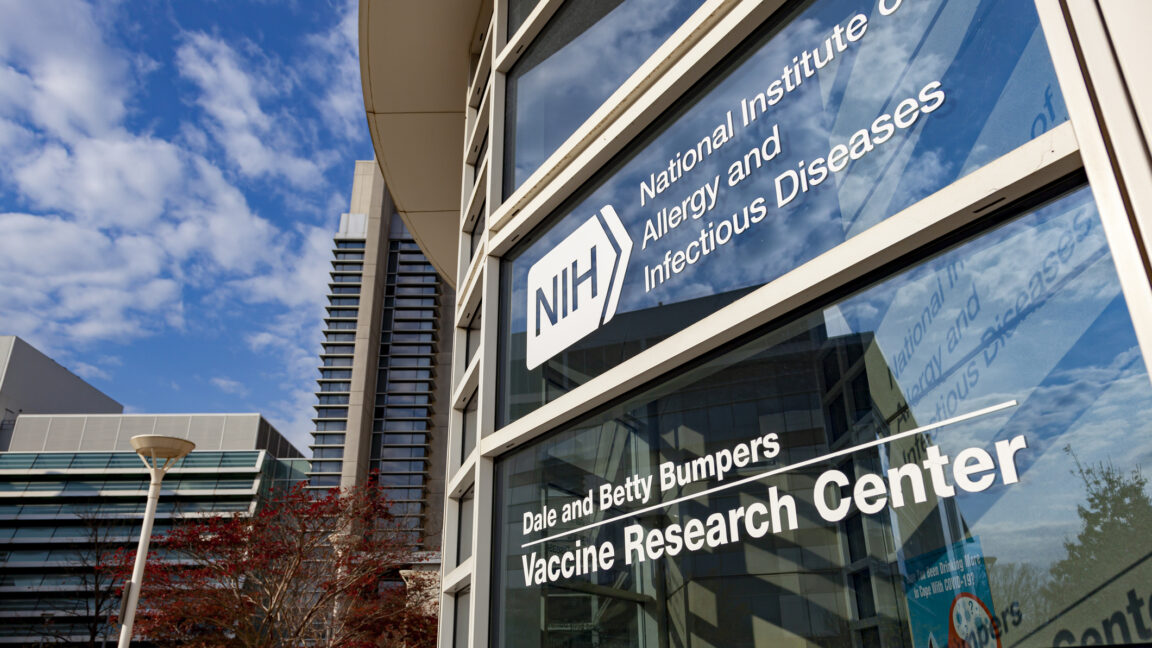
NIH scientists publish “Bethesda Declaration” rebuking Trump admin

Backlash to the idea was quick, with the World Health Organization Director-General Tedros Adhanom Ghebreyesus immediately calling it “unethical.”

“Allowing a dangerous virus that we don’t fully understand to run free is simply unethical. It’s not an option,” Tedros said in a news briefing at the time.

“A risk”

In the letter on Monday, NIH researchers speak directly to Bhattacharya, writing, “We hope you will welcome this dissent, which we modeled after your Great Barrington Declaration.” They titled the letter “The Bethesda Declaration,” named after the NIH’s location in Maryland.

“Standing up in this way is a risk, but I am much more worried about the risks of not speaking up,” Jenna Norton, a program officer at the NIH’s National Institute of Diabetes and Digestive and Kidney Diseases, said in a statement. “If we don’t speak up, we allow continued harm to research participants and public health in America and across the globe. If we don’t speak up, we allow our government to curtail free speech, a fundamental American value.”

The organization leading the NIH dissent, Stand Up For Science, published a second letter on Monday in support of the Bethesda Declaration. The support letter is signed by over a dozen Nobel laureates and former NIH directors Jeremy Berg and Joshua Gordon.

Tomorrow, Bhattacharya will testify before the Senate Appropriations Committee on the Trump administration’s 2026 budget proposal for the NIH, which proposes a cut of about 40 percent to the agency’s $48 billion budget.

https://arstechnica.com/health/2025/06/culture-of-fear-and-suppression-nih-staff-speak-out-against-trump-admin/