Trump to sign law forcing platforms to remove revenge porn in 48 hours
Likely wearisome for victims, the law won’t be widely enforced for about a year, while any revenge porn already online continues spreading. Perhaps most frustrating, once the law kicks in, victims will still need to police their own revenge porn online. And the 48-hour window leaves time for content to be downloaded and reposted, leaving them vulnerable on any unmonitored platforms.

Some victims are already tired of fighting this fight. Last July, when Google started downranking deepfake porn apps to make AI-generated NCII less discoverable, one deepfake victim, Sabrina Javellana, told The New York Times that she spent months reporting harmful content on various platforms online. And that didn’t stop the fake images from spreading. Joe Morelle, a Democratic US representative who has talked to victims of deepfake porn and sponsored laws to help them, agreed that “these images live forever.”

“It just never ends,” Javellana said. “I just have to accept it.”

Andrea Powell—director of Alecto AI, an app founded by a revenge porn survivor that helps victims remove NCII online—warned on a 2024 panel that Ars attended that requiring victims to track down “their own imagery [and submit] multiple claims across different platforms [increases] their sense of isolation, shame, and fear.”

While the Take It Down Act seems flawed, passing a federal law imposing penalties for allowing deepfake porn posts could serve as a deterrent for bad actors or possibly spark a culture shift by making it clear that posting AI-generated NCII is harmful.

Victims have long suggested that consistency is key to keeping revenge porn offline, and the Take It Down Act certainly offers that, creating a moderately delayed delete button on every major platform.

Although it seems clear that the Take It Down Act will surely make it easier than ever to report NCII, whether the law will effectively reduce the spread of NCII online is an unknown and will likely hinge on the 48-hour timeline overcoming criticisms.

https://arstechnica.com/tech-policy/2025/05/trump-to-sign-law-forcing-platforms-to-remove-revenge-porn-in-48-hours/
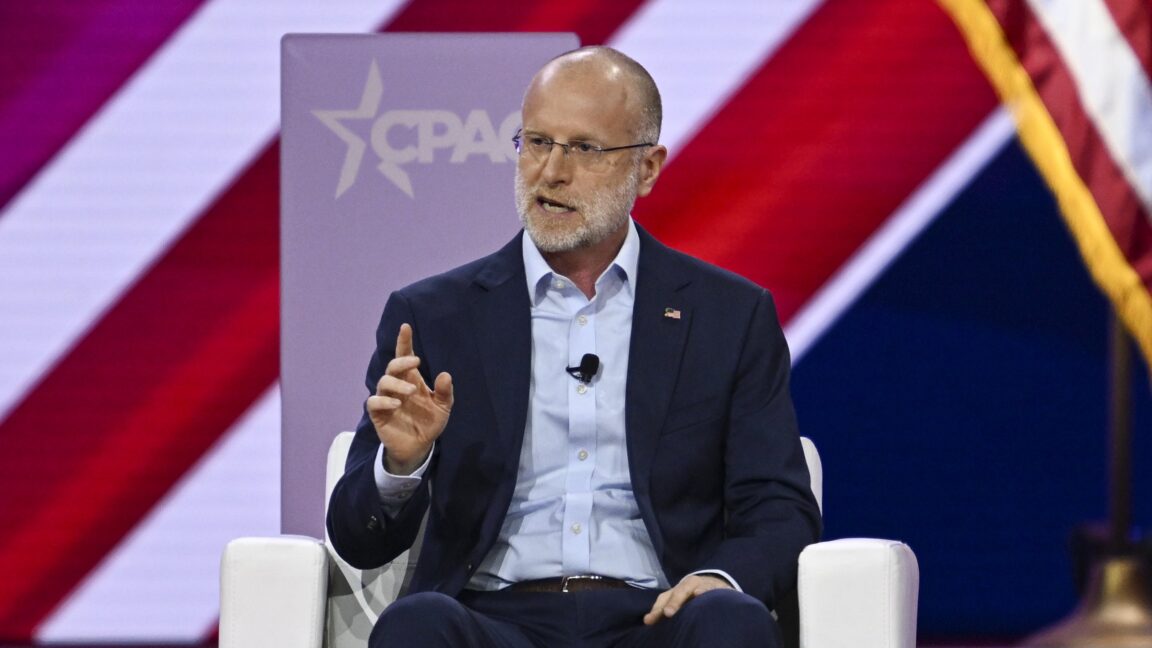



FCC Chair Brendan Carr is letting ISPs merge—as long as they end DEI programs

Verizon’s letter said that because of the “changing landscape,” the firm “has been evaluating its DEI-related programs, HR processes, supplier programs, training programs and materials, and other initiatives.” Among other changes, Verizon said it “will no longer have a team or any individual roles focused on DEI” and will reassign DEI-focused employees to “HR talent objectives.”

“Verizon recognizes that some DEI policies and practices could be associated with discrimination,” the letter said.

T-Mobile sent a similar letter to Carr on March 27, saying it “is fully committed to identifying and rooting out any policies and practices that enable such discrimination, whether in fulfillment of DEI or any other purpose,” and is thus “conducting a comprehensive review of its DEI policies, programs, and activities.” One day later, the FCC approved a T-Mobile joint venture to acquire fiber provider Lumos.

With the Verizon and T-Mobile deals approved, Carr has another opportunity to make demands on a major telecom company. On Friday, Charter announced a $34.5 billion merger with Cox that would make it the largest home Internet provider in the US, passing Comcast. Several Charter and Cox programs could be on the chopping block because of Carr’s animosity toward diversity initiatives.

Verizon criticized as “cowardly”

Media advocacy group Free Press criticized Verizon for agreeing to Carr’s demands.

“Verizon’s cowardly decision to modify or kill its diversity, equity and inclusion practices is the latest shameful episode in a litany of surrenders to appease our authoritarian president,” Free Press Vice President of Policy Matt Wood said. “The government alleges no specific instances of unlawful employment discrimination, and Verizon admits none. Yet to win a merger approval and the prospect of a few extra dollars, the company meekly suggests that some of its ‘DEI policies and practices could be associated with discrimination’—lawyer-speak for we’ve done nothing wrong, but we can see which way the political winds are blowing.”

Wood said that Carr “once defended his agency’s independence from the White House when a Democrat was in charge” but is “now gleefully carrying out the president’s orders to roll back civil-rights protections and equal-opportunity gains at all costs.”

https://arstechnica.com/tech-policy/2025/05/fcc-chair-brendan-carr-is-letting-isps-merge-as-long-as-they-end-dei-programs/


Spotify caught hosting hundreds of fake podcasts that advertise selling drugs

This week, Spotify rushed to remove hundreds of obviously fake podcasts found to be marketing prescription drugs in violation of Spotify’s policies and, likely, federal law.

On Thursday, Business Insider (BI) reported that Spotify removed 200 podcasts advertising the sale of opioids and other drugs, but that wasn’t the end of the scandal. Today, CNN revealed that it easily uncovered dozens more fake podcasts peddling drugs.

Some of the podcasts may have raised a red flag for a human moderator—with titles like “My Adderall Store” or “Xtrapharma.com” and episodes titled “Order Codeine Online Safe Pharmacy Louisiana” or “Order Xanax 2 mg Online Big Deal On Christmas Season,” CNN reported.

But Spotify’s auto-detection did not flag the fake podcasts for removal. Some of them remained up for months, CNN reported, which could create trouble for the music streamer at a time when the US government is cracking down on illegal drug sales online.

“Multiple teens have died of overdoses from pills bought online,” CNN noted, sparking backlash against tech companies. And Donald Trump’s aggressive tariffs were specifically raised to stop deadly drugs from bombarding the US, which the president declared a national emergency.

BI found that many podcast episodes featured a computerized voice and were under a minute long, while CNN noted some episodes were as short as 10 seconds. Some of them didn’t contain any audio at all, BI reported.

https://arstechnica.com/tech-policy/2025/05/spotify-plays-whack-a-mole-with-fake-podcasts-selling-drugs-scamming-users/


Meta argues enshittification isn’t real in bid to toss FTC monopoly case

Further, Meta argued that the FTC did not show evidence that users sharing friends-and-family content were shown more ads. Meta noted that it “does not profit by showing more ads to users who do not click on them,” so it only shows more ads to users who click ads.

Meta also insisted that there’s “nothing but speculation” showing that Instagram or WhatsApp would have been better off or grown into rivals had Meta not acquired them.

The company claimed that without Meta’s resources, Instagram may have died off. Meta noted that Instagram co-founder Kevin Systrom testified that his app was “pretty broken and duct-taped” together, making it “vulnerable to spam” before Meta bought it.

Rather than enshittification, what Meta did to Instagram could be considered “a consumer-welfare bonanza,” Meta argued, while dismissing “smoking gun” emails from Mark Zuckerberg discussing buying Instagram to bury it as “legally irrelevant.”

Dismissing these as “a few dated emails,” Meta argued that “efforts to litigate Mr. Zuckerberg’s state of mind before the acquisition in 2012 are pointless.”

“What matters is what Meta did,” Meta argued, which was pump Instagram with resources that allowed it “to ‘thrive’—adding many new features, attracting hundreds of millions and then billions of users, and monetizing with great success.”

In the case of WhatsApp, Meta argued that nobody thinks WhatsApp had any intention to pivot to social media when the founders testified that their goal was to never add social features, preferring to offer a simple, clean messaging app. And Meta disputed any claim that it feared Google might buy WhatsApp as the basis for creating a Facebook rival, arguing that “the sole Meta witness to (supposedly) learn of Google’s acquisition efforts testified that he did not have that worry.”

https://arstechnica.com/tech-policy/2025/05/meta-says-no-proof-of-monopoly-power-wants-ftc-case-dismissed-mid-trial/


Telegram bans $35B black markets used to sell stolen data, launder crypto

On Thursday, Telegram announced it had removed two huge black markets estimated to have generated more than $35 billion since 2021 by serving cybercriminals and scammers.

Blockchain research firm Elliptic told Reuters that the Chinese-language markets Xinbi Guarantee and Huione Guarantee together were far more lucrative than Silk Road, an illegal drug marketplace that the FBI notoriously seized in 2013, which was valued at about $3.4 billion.

Both markets were forced offline on Tuesday, Elliptic reported, and already, Huione Guarantee has confirmed that its market will cease to operate entirely due to the Telegram removal.

The disruption of both markets will be “a big blow for online fraudsters,” Elliptic confirmed, cutting them off from a dependable source for “stolen data, money laundering services, and telecoms infrastructure.”

Huione Guarantee is a subsidiary of Huione Group, which the US has alleged also owns Huione Pay and Huione Crypto. Telegram’s move comes after the US Treasury launched a plan to ban the Huione Group from the US financial system earlier this month, Reuters reported. Citing money laundering concerns, Treasury Secretary Scott Bessent accused the group of supporting “criminal syndicates who have stolen billions of dollars from Americans.”

https://arstechnica.com/tech-policy/2025/05/telegram-bans-35b-black-markets-used-to-sell-stolen-data-launder-crypto/


Report: Terrorists seem to be paying X to generate propaganda with Grok

Back in February, Elon Musk skewered the Treasury Department for lacking “basic controls” to stop payments to terrorist organizations, boasting at the Oval Office that “any company” has those controls.

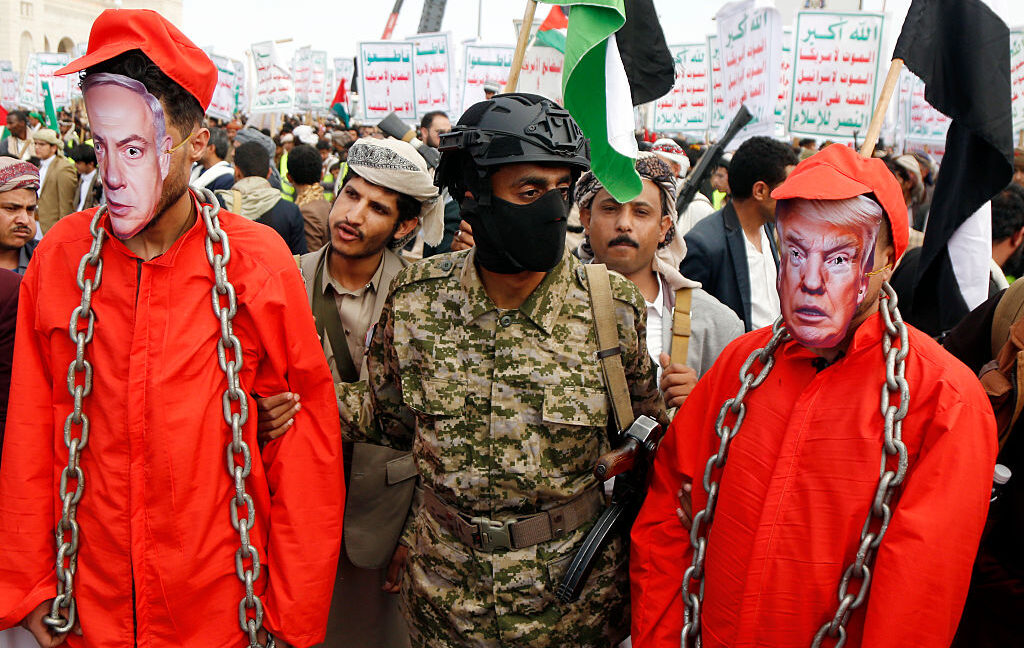
Fast-forward three months, and now Musk’s social media platform X is suspected of taking payments from sanctioned terrorists and providing premium features that make it easier to raise funds and spread propaganda—including through X’s chatbot, Grok. Groups seemingly benefiting from X include Houthi rebels, Hezbollah, and Hamas, as well as groups from Syria, Kuwait, and Iran. Some accounts have amassed hundreds of thousands of followers, paying to boost their reach while X apparently looks the other way.

In a report released Thursday, the Tech Transparency Project (TTP) flagged popular accounts likely linked to US-sanctioned terrorists. Some of the accounts bear “ID verified” badges, suggesting that X may be going against its own policies that ban sanctioned terrorists from benefiting from its platform.

Even more troubling, “several made use of revenue-generating features offered by X, including a button for tips,” the TTP reported.

On X, Premium subscribers pay $8 monthly or $84 annually, and Premium+ subscribers pay $40 monthly or $395 annually. Verified organizations pay X between $200 and $1,000 monthly, or up to $10,000 annually for access to Premium+. These subscriptions come with perks, allowing suspected terrorist accounts to share longer text and video posts, offer subscribers paid content, create communities, accept gifts, and amplify their propaganda.

Disturbingly, the TTP found that X’s chatbot, Grok, also appears to be helping to whitewash accounts linked to sanctioned terrorists.

In its report, the TTP noted that an account with the handle “hasmokaled”—which apparently belongs to “a key Hezbollah money exchanger,” Hassan Moukalled—at one point had a blue checkmark with 60,000 followers. While the Treasury Department has sanctioned Moukalled for propping up efforts “to continue to exploit and exacerbate Lebanon’s economic crisis,” clicking the Grok AI profile summary button seems to rely on Moukalled’s own posts and his followers’ impressions of his posts and therefore generated praise.

https://arstechnica.com/tech-policy/2025/05/report-terrorist-groups-seem-to-be-paying-x-to-raise-funds-collect-tips/


Trump has “a little problem” with Apple’s plan to ship iPhones from India

Analysts estimate it would cost tens of billions of dollars and take years for Apple to increase iPhone manufacturing in the US, where it at present makes only a very limited number of products.

US Commerce Secretary Howard Lutnick said last month that Cook had told him the US would need “robotic arms” to replicate the “scale and precision” of iPhone manufacturing in China.

“He’s going to build it here,” Lutnick told CNBC. “And Americans are going to be the technicians who drive those factories. They’re not going to be the ones screwing it in.”

Lutnick added that his previous comments that an “army of millions and millions of human beings screwing in little screws to make iPhones—that kind of thing is going to come to America” had been taken out of context.

“Americans are going to work in factories just like this on great, high-paying jobs,” he added.

For Narendra Modi’s government, the shift by some Apple suppliers into India is the highest-profile success of a drive to boost local manufacturing and attract companies seeking to diversify away from China.

Mobile phones are now one of India’s top exports, with the country selling more than $7 billion worth of them to the US in the 2024-25 financial year, up from $4.7 billion the previous year. The majority of these were iPhones, which Apple’s suppliers Foxconn and Tata Electronics make at plants in southern India’s Tamil Nadu and Karnataka states.

Modi and Trump are ideologically aligned and personally friendly, but India’s high tariffs are a point of friction and Washington has threatened to hit it with a 26 percent tariff.

India and the US—its biggest trading partner—are negotiating a bilateral trade agreement, the first tranche of which they say they will be agreed by autumn.

“India’s one of the highest-tariff nations in the world, it’s very hard to sell into India,” Trump also said in Qatar on Thursday. “They’ve offered us a deal where basically they’re willing to literally charge us no tariff… they’re the highest and now they’re saying no tariff.”

© 2025 The Financial Times Ltd. All rights reserved. Not to be redistributed, copied, or modified in any way.

https://arstechnica.com/tech-policy/2025/05/trump-has-a-little-problem-with-apples-plan-to-ship-iphones-from-india/


FCC threatens EchoStar licenses for spectrum that SpaceX wants to use

“If SpaceX had done a basic search of public filings, it would know that EchoStar extensively utilizes the 2 GHz band and that the Commission itself has confirmed the coverage, utilization, and methodology for assessing the quality of EchoStar’s 5G network based on independent drive-tests,” EchoStar told the FCC. “EchoStar’s deployment already reaches over 80 percent of the United States population with over 23,000 5G sites deployed.”

There is also a pending petition filed by Vermont-based VTel Wireless, which asked the FCC to reconsider a 2024 decision to extend EchoStar construction deadlines for several spectrum bands. VTel was outbid by Dish in auctions for licenses to use AWS H Block and AWS-3 bands.

“In this case, teetering on the verge of bankruptcy, EchoStar found itself unable to meet the commitments previously made to the Commission in connection with its approval of T-Mobile’s merger with Sprint—an approval predicated on EchoStar constructing a fourth nationwide 5G broadband network by June 14, 2025,” VTel wrote in its October 2024 petition. “But with no notice to or input from the public, WTB [the FCC’s Wireless Telecommunications Bureau] apparently cut a deal with EchoStar to give it yet more time to complete that network and finally put its wireless licenses to use.”

FCC seeks public input

Carr’s letter said he asked FCC staff to investigate EchoStar’s compliance with construction deadlines and “to issue a public notice seeking comment on the scope and scale of MSS [mobile satellite service] utilization in the 2 GHz band that is currently licensed to EchoStar or its affiliates.” The AWS-4 band (2000-2020 MHz and 2180-2200 MHz) was originally designated for satellite service. The FCC decided to also allow terrestrial use of the frequencies in 2012 to expand mobile broadband access.

The FCC Space Bureau announced yesterday that it is seeking comment on EchoStar’s use of the 2GHz spectrum, and the Wireless Telecommunications Bureau is seeking comment on VTel’s petition for reconsideration.

“In 2019, EchoStar’s predecessor, Dish, agreed to meet specific buildout obligations in connection with a number of spectrum licenses across several different bands,” Carr wrote. “In particular, the FCC agreed to relax some of EchoStar’s then-existing buildout obligations in exchange for EchoStar’s commitment to put its licensed spectrum to work deploying a nationwide 5G broadband network. EchoStar promised—among other things—that its network would cover, by June 14, 2025, at least 70 percent of the population within each of its licensed geographic areas for its AWS-4 and 700 MHz licenses, and at least 75 percent of the population within each of its licensed geographic areas for its H Block and 600 MHz licenses.”

https://arstechnica.com/tech-policy/2025/05/fcc-threatens-echostar-licenses-for-spectrum-that-spacex-wants-to-use/


A DOGE recruiter is staffing a project to deploy AI agents across the US government

“We want our government to be something that we can rely on, as opposed to something that is on the absolute bleeding edge,” says Etzioni. “We don’t need it to be bureaucratic and slow, but if corporations haven’t adopted this yet, is the government really where we want to be experimenting with the cutting edge AI?”

Etzioni says that AI agents are also not great 1-1 fits for job replacements. Rather, AI is able to do certain tasks or make others more efficient, but the idea that the technology could do the jobs of 70,000 employees would not be possible. “Unless you’re using funny math,” he says, “no way.”

Jancso, first identified by WIRED in February, was one of the earliest recruiters for DOGE in the months before Donald Trump was inaugurated. In December, Jancso, who sources told WIRED said he had been recruited by Steve Davis, president of the Musk-founded Boring Company and a current member of DOGE, used the Palantir alumni group to recruit DOGE members. On December 2nd, 2024, he wrote, “I’m helping Elon’s team find tech talent for the Department of Government Efficiency (DOGE) in the new admin. This is a historic opportunity to build an efficient government, and to cut the federal budget by 1/3. If you’re interested in playing a role in this mission, please reach out in the next few days.”

According to one source at SpaceX, who asked to remain anonymous as they are not authorized to speak to the press, Jancso appeared to be one of the DOGE members who worked out of the company’s DC office in the days before inauguration along with several other people who would constitute some of DOGE’s earliest members. SpaceX did not respond to a request for comment.

Palantir was cofounded by Peter Thiel, a billionaire and longtime Trump supporter with close ties to Musk. Palantir, which provides data analytics tools to several government agencies including the Department of Defense and the Department of Homeland Security, has received billions of dollars in government contracts. During the second Trump administration, the company has been involved in helping to build a “mega API” to connect data from the Internal Revenue Service to other government agencies, and is working with Immigration and Customs Enforcement to create a massive surveillance platform to identify immigrants to target for deportation.

This story originally appeared at WIRED.com.

https://arstechnica.com/tech-policy/2025/05/a-doge-recruiter-is-staffing-a-project-to-deploy-ai-agents-across-the-us-government/


DOJ confirms it wants to break up Google’s ad business

In the trial, Google will paint this demand as a severe overreach, claiming that few, if any, companies would have the resources to purchase and run the products. Last year, an ad consultant estimated Google’s ad empire could be worth up to $95 billion, quite possibly too big to sell. However, Google was similarly skeptical about Chrome, and representatives from other companies have said throughout the search remedy trial that they would love to buy Google’s browser.

An uphill battle

After losing three antitrust cases in just a couple of years, Google will have a hard time convincing the judge it is capable of turning over a new leaf with light remedies. A DOJ lawyer told the court Google is a “recidivist monopolist” that has a pattern of skirting its legal obligations. Still, Google is looking for mercy in the case. We expect to get more details on Google’s proposed remedies as the next trial nears, but it already offered a preview in today’s hearing.

Google suggests making a smaller subset of ad data available and ending the use of some pricing schemes, including unified pricing, that the court has found to be anticompetitive. Google also promised not to re-implement discontinued practices like “last look,” which gave the company a chance to outbid rivals at the last moment. This was featured prominently in the DOJ’s case, although Google ended the practice several years ago.

To ensure it adheres to the remedies, Google suggested a court-appointed monitor would audit the process. However, Brinkema seemed unimpressed with this proposal.

As in its other cases, Google says it plans to appeal the verdict, but before it can do that, the remedies phase has to be completed. Even if it can get the remedies paused for appeal, the decision could be a blow to investor confidence. So, Google will do whatever it can to avoid the worst-case scenario, leaning on the existence of competing advertisers like Meta and TikTok to show that the market is still competitive.

Like the search case, Google won’t be facing any big developments over the summer, but this fall could be rough. Judge Amit Mehta will most likely rule on the search remedies in August, and the ad tech remedies case will begin the following month. Google also has the Play Store case hanging over its head. It lost the first round, but the company hopes to prevail on appeal when the case gets underway again, probably in late 2025.

https://arstechnica.com/tech-policy/2025/05/doj-confirms-it-wants-to-break-up-googles-ad-business/