Judge on Meta’s AI training: “I just don’t understand how that can be fair use”
Determined to probe this key question, Chhabria pushed authors’ attorney, David Boies, to point to specific evidence of market harms that seemed noticeably missing from the record.

“It seems like you’re asking me to speculate that the market for Sarah Silverman’s memoir will be affected by the billions of things that Llama will ultimately be capable of producing,” Chhabria said. “And it’s just not obvious to me that that’s the case.”

But if authors can prove fears of market harms are real, Meta might struggle to win over Chhabria, and that could set a precedent impacting copyright cases challenging AI training on other kinds of content.

The judge repeatedly appeared to be sympathetic to authors, suggesting that Meta’s AI training may be a “highly unusual case” where even though “the copying is for a highly transformative purpose, the copying has the high likelihood of leading to the flooding of the markets for the copyrighted works.”

And when Shanmugam argued that copyright law doesn’t shield authors from “protection from competition in the marketplace of ideas,” Chhabria resisted the framing that authors weren’t potentially being robbed, Reuters reported.

“But if I’m going to steal things from the marketplace of ideas in order to develop my own ideas, that’s copyright infringement, right?” Chhabria responded.

Wired noted that he asked Meta’s lawyers, “What about the next Taylor Swift?” If AI made it easy to knock off a young singer’s sound, how could she ever compete if AI produced “a billion pop songs” in her style?

In a statement, Meta’s spokesperson reiterated the company’s defense that AI training is fair use.

“Meta has developed transformational open source AI models that are powering incredible innovation, productivity, and creativity for individuals and companies,” Meta’s spokesperson said. “Fair use of copyrighted materials is vital to this. We disagree with Plaintiffs’ assertions, and the full record tells a different story. We will continue to vigorously defend ourselves and to protect the development of GenAI for the benefit of all.”

https://arstechnica.com/tech-policy/2025/05/judge-on-metas-ai-training-i-just-dont-understand-how-that-can-be-fair-use/




Don’t watermark your legal PDFs with purple dragons in suits

Being a model citizen and a person of taste, you probably don’t need this reminder, but some others do: Federal judges do not like it when lawyers electronically watermark every page of their legal PDFs with a gigantic image—purchased for $20 online—of a purple dragon wearing a suit and tie. Not even if your firm’s name is “Dragon Lawyers.”

Federal Magistrate Judge Ray Kent of the Western District of Michigan was unamused by a recent complaint (PDF) that prominently featured the aubergine wyrm.

“Each page of plaintiff’s complaint appears on an e-filing which is dominated by a large multi-colored cartoon dragon dressed in a suit,” he wrote on April 28 (PDF). “Use of this dragon cartoon logo is not only distracting, it is juvenile and impertinent. The Court is not a cartoon.”

Kent then ordered “that plaintiff shall not file any other documents with the cartoon dragon or other inappropriate content.”

Screenshot of a page from the complaint.

Seriously, don’t do this.

The unusual order generated coverage across the legal blogging community, which was apparently ensorcelled by a spell requiring headline writers to use dragon-related puns, including:

https://arstechnica.com/tech-policy/2025/05/dont-watermark-your-legal-pdfs-with-purple-dragons-in-suits/


Fortnite will return to iOS as court slams Apple’s “interference“ and ”cover-up“

In a statement provided to Ars Technica, an Apple spokesperson said, “We strongly disagree with the decision. We will comply with the court’s order and we will appeal.”

An Epic return

With the new court order in place, Epic says it will once again submit a version of Fortnite to the iOS App Store in the US in the next week or so. That new version will offer players the option to use standard Apple App Store payments or its own, cheaper “Epic Direct Payment” system to purchase in-game currency and items.

That would mirror the system that was briefly in place for iOS players in August 2020, when Epic added alternate payment options to iOS Fortnite in intentional violation of what were then Apple’s store policies. Apple removed Fortnite from the iOS App Store hours later, setting off a legal battle that seems to finally be reaching its conclusion.

For those few hours when Epic Direct Payments were available on iOS Fortnite in 2020, Sweeney said that about 50 percent of customers “decided to give Epic a shot,” going through an additional step to register and pay through an Epic account on a web page outside the app itself (and saving 20 percent on their purchase in the process). The other roughly 50 percent of customers decided to pay a higher price in exchange for the convenience of paying directly in the app through the iOS account they already had set up, Sweeney said. “Consumers were making the choice… and it was a wonderful thing to see,” he said.

Speaking to the press Wednesday night, Sweeney said the new court order was a “huge victory for developers” looking to offer their own payment service alongside Apple’s on iOS devices. “This is what we’ve wanted all along,” he said. “We think that this achieves the goal that we’ve been aiming for in the US, while there are still some challenges elsewhere in the world.”

While Sweeney said the specific iOS developer account Epic used to publish Fortnite in 2020 is still banned, he added that the company has several other developer accounts that could be used for the new submission, including one it has used to support Unreal Engine on Apple devices. And while Sweeney allowed that Apple could still “arbitrarily reject Epic from the App Store despite Epic following all the rules,” he added that, in light of this latest court ruling, Apple would now “have to deal with various consequences of that if they did.”

https://arstechnica.com/tech-policy/2025/04/fortnite-will-return-to-ios-after-court-slams-apples-obvious-cover-up/


FCC urges courts to ignore 5th Circuit ruling that agency can’t issue fines

“The Fifth Circuit concluded that the FCC’s enforcement proceeding leading to a monetary forfeiture order violated AT&T’s Seventh Amendment rights. This Court shouldn’t follow that decision,” the FCC told the 2nd Circuit last week.

FCC loss has wide implications

Carr’s FCC argued that the agency’s “monetary forfeiture order proceedings pose no Seventh Amendment problem because Section 504(a) [of the Communications Act] affords carriers the opportunity to demand a de novo jury trial in federal district court before the government can recover any penalty. Verizon elected to forgo that opportunity and instead sought direct appellate review.” The FCC put forth the same argument in the T-Mobile case with a filing in the District of Columbia Circuit.

There would be a circuit split if either the 2nd Circuit or DC Circuit appeals court rules in the FCC’s favor, increasing the chances that the Supreme Court will take up the case and rule directly on the FCC’s enforcement authority.

Beyond punishing telecom carriers for privacy violations, an FCC loss could prevent the commission from fining robocallers. When Carr’s FCC proposed a $4.5 million fine for an allegedly illegal robocall scheme in February, Simington repeated his objection to the FCC issuing fines of any type.

“While the conduct described in this NAL [Notice of Apparent Liability for Forfeiture] is particularly egregious and certainly worth enforcement action, I continue to believe that the Supreme Court’s decision in Jarkesy prevents me from voting, at this time, to approve this or any item purporting to impose a fine,” Simington said at the time.

5th Circuit reasoning

The 5th Circuit ruling against the FCC was issued by a panel of three judges appointed by Republican presidents. “Our analysis is governed by SEC v. Jarkesy. In that case, the Supreme Court ruled that the Seventh Amendment prohibited the SEC from requiring respondents to defend themselves before an agency, rather than a jury, against civil penalties for alleged securities fraud,” the appeals court said.

https://arstechnica.com/tech-policy/2025/04/att-court-win-over-fcc-could-make-it-impossible-for-agency-to-fine-carriers/


Montana’s Republican legislators fight back after successful youth climate lawsuit

This article originally appeared on Inside Climate News, a nonprofit, non-partisan news organization that covers climate, energy, and the environment. Sign up for their newsletter here.

In the wake of a high-profile court decision that upended the state of Montana’s climate policy, Republican lawmakers in the state are pushing a suite of bills that could gut the state’s ability to reduce greenhouse gas emissions.

The full-court legislative press targets the state’s environmental analysis, air quality regulation, and judicial system. It stems from the Held v. Montana case in which 16 young people sued the state over its contributions to climate change, claiming its fossil fuel-centric approach to energy violated the state constitution’s guarantee of a “clean and healthful environment.” The plaintiffs won, and in December 2024, the Montana Supreme Court upheld their victory.

The case “didn’t just make headlines,” Montana Republican Representative Greg Oblander, a sponsor of one of the bills that could hobble climate action in the state, said in a press conference. “It sent shockwaves through the Montana economy.”

He said the case “was an open invitation for activists to weaponize our environmental laws against the very industries that keep Montana running and Montanans employed.”

The fallout of the Held decision animated the breadth of the state’s 90-day legislative session, poised to end by early May, and bills weakening the state’s bedrock environmental policy are almost certain to be signed into law by the state’s Republican governor. Nonetheless, the battle is likely to continue in the courts.

A clean and healthful environment

The Held decision hinged on Montana’s constitutional protections of the environment. Framers in the state’s 1972 Constitutional Convention took the state’s environmental woes seriously. Extractive industries like mining and logging had left a lasting environmental toll on the air, water, and land in the state, and for decades, the Anaconda Copper Mining Company wielded enormous power at the state legislature, resulting in large-scale mining, logging, and other extractive industry. Today, Montana is home to the largest complex of Superfund sites, or government toxic waste cleanups, in the country.

https://arstechnica.com/tech-policy/2025/04/montanas-republican-legislators-fight-back-after-successful-youth-climate-lawsuit/


Trump’s hasty Take It Down Act has “gaping flaws” that threaten encryption

While the tech law is expected to achieve the rare feat of getting through Congress at what experts told Ars was a record pace, both supporters and critics also expect that the law will just as promptly be challenged in courts.

Supporters have suggested that any litigation exposing flaws could result in amendments. They’re simultaneously bracing for that backlash, while preparing for the win ahead of the vote tonight and hoping that the law can survive any subsequent legal attacks mostly intact.

Experts disagree on encryption threats

In a press conference hosted by the nonprofit Americans for Responsible Innovation, Slade Bond—who serves as chair of public policy for the law firm Cuneo Gilbert & LaDuca, LLP—advocated for the law passing, warning, “we should not let caution be the enemy of progress.”

Bond joined other supporters in suggesting that apparent threats to encryption or online speech are “far-fetched.”

On his side was Encode’s vice president of public policy, Adam Billen, who pushed back on the claim that companies might break encryption due to the law’s vague text.

Billen predicted that “most encrypted content” wouldn’t be threatened with takedowns—supposedly including private or direct messages—because he argued that the law explicitly covers content that is published (and, importantly, not just distributed) on services that provide a “forum for specifically user generated content.”

“In our mind, encryption simply just is not a question under this bill, and we have explicitly opposed other legislation that would explicitly break encryption,” Billen said.

That may be one way of reading the law, but Daly told Ars that the EFF’s lawyers had a different take.

“We just don’t agree with that reading,” she said. “As drafted, what will likely pass the floor tonight is absolutely a threat to encryption. There are exemptions for email services, but direct messages, cloud storage, these are not exempted.”

https://arstechnica.com/tech-policy/2025/04/trumps-rush-to-stop-revenge-porn-and-ai-nudes-may-break-encryption/


DOGE could help Musk firms avoid $2.3B in government penalties, Democrats say

Elon Musk’s companies could avoid over $2.3 billion in potential fines and other liabilities thanks to Musk’s unusual government position as the head of DOGE, said a memo yesterday from the Democratic staff of the Senate Permanent Subcommittee on Investigations. The estimate is said to include potential liability from federal investigations, litigation, and other regulatory actions.

“Since his appointment, Mr. Musk has taken a chainsaw to the federal government with no apparent regard for the law or for the people who depend on the programs and agencies he so blithely destroys… Mr. Musk’s position may allow him to evade oversight, derail investigations, and make litigation disappear whenever he so chooses—on his terms and at his command,” the 44-page memo said.

The subcommittee’s investigation found that as of January 20, “Musk and his companies were subject to at least 65 actual or potential actions by 11 different federal agencies.” The memo said the subcommittee “was able to estimate potential financial liabilities for 40 of the 65 actions by eight federal agencies,” resulting in the $2.37 billion total.

The memo said the 40 quantifiable items include “$1.19 billion in potential liability as a result of Tesla’s allegedly false or misleading statements about its autopilot and full self-driving features; $633,009 in fines from SpaceX’s multiple failures to follow rocket launch requirements in 2023; a total of $713,114 in fines from 29 citations from the Occupational Safety and Health Administration (OSHA) against SpaceX, Tesla, and The Boring Company; $281 million in potential liability from Neuralink’s alleged false or misleading statements about its product risks, and many more.”

The $2.37 billion total does not include several National Labor Relations Board actions against SpaceX and Tesla, and doesn’t include several investigations by the National Highway Traffic Safety Administration into Tesla’s autonomous driving technology, the memo said.

According to the memo:

While the $2.37 billion figure represents a credible, conservative estimate, it drastically understates the true benefit Mr. Musk may gain from legal risk avoidance alone as a result of his position in government. In addition to the 25 pending matters the Subcommittee has not yet been able to quantify, Mr. Musk and his companies could gain millions or even billions more simply by avoiding the time, legal fees, and risk of being ordered to undertake remediation efforts or change labor practices. This figure also does not include the many billions of dollars that Mr. Musk and his companies could gain in other ways, including through new contracts they may secure or the competitive advantage they may gain by collecting intelligence on competitors.

Senator talks about Musk’s conflicts of interest

Sen. Richard Blumenthal (D-Conn.), the subcommittee’s ranking member, sent letters about the findings to Tesla, SpaceX, xAI (which includes X), Neuralink, and The Boring Company.

https://arstechnica.com/tech-policy/2025/04/doge-could-help-musk-firms-avoid-2-3b-in-government-penalties-democrats-say/


Mike Lindell’s lawyers used AI to write brief—judge finds nearly 30 mistakes

A lawyer representing MyPillow and its CEO Mike Lindell in a defamation case admitted using artificial intelligence in a brief that has nearly 30 defective citations, including misquotes and citations to fictional cases, a federal judge said.

“[T]he Court identified nearly thirty defective citations in the Opposition. These defects include but are not limited to misquotes of cited cases; misrepresentations of principles of law associated with cited cases, including discussions of legal principles that simply do not appear within such decisions; misstatements regarding whether case law originated from a binding authority such as the United States Court of Appeals for the Tenth Circuit; misattributions of case law to this District; and most egregiously, citation of cases that do not exist,” US District Judge Nina Wang wrote in an order to show cause Wednesday.

Wang ordered attorneys Christopher Kachouroff and Jennifer DeMaster to show cause as to why the court should not sanction the defendants, law firm, and individual attorneys. Kachouroff and DeMaster also have to explain why they should not be referred to disciplinary proceedings for violations of the rules of professional conduct.

Kachouroff and DeMaster, who are defending Lindell against a lawsuit filed by former Dominion Voting Systems employee Eric Coomer, both signed the February 25 brief with the defective citations. Kachouroff, representing defendants as lead counsel, admitted using AI to write the brief at an April 21 hearing, the judge wrote. The case is in the US District Court for the District of Colorado.

“Time and time again, when Mr. Kachouroff was asked for an explanation of why citations to legal authorities were inaccurate, he declined to offer any explanation, or suggested that it was a ‘draft pleading,'” Wang wrote. “Not until this Court asked Mr. Kachouroff directly whether the Opposition was the product of generative artificial intelligence did Mr. Kachouroff admit that he did, in fact, use generative artificial intelligence.”

https://arstechnica.com/tech-policy/2025/04/mypillow-ceos-lawyers-used-ai-in-brief-citing-fictional-cases-judge-says/


FBI offers $10 million for information about Salt Typhoon members

The FBI is offering $10 million for information about the China-state hacking group tracked as Salt Typhoon and its intrusion last year into sensitive networks belonging to multiple US telecommunications companies.

Salt Typhoon is one of a half-dozen or more hacking groups that work on behalf of the People’s Republic of China. Intelligence agencies and private security companies have concluded the group has been behind a string of espionage attacks designed to collect vital information, in part for use in any military conflicts that may arise in the future.

A broad and significant cyber campaign

The agency on Thursday published a statement offering up to $10 million, relocation assistance, and other compensation for information about Salt Typhoon. The announcement specifically sought information about the specific members of Salt Typhoon and the group’s compromise of multiple US telecommunications companies last year.

“Investigation into these actors and their activity revealed a broad and significant cyber campaign to leverage access into these networks to target victims on a global scale,” FBI officials wrote. “This activity resulted in the theft of call data logs, a limited number of private communications involving identified victims, and the copying of select information subject to court-ordered US law enforcement requests.”

Salt Typhoon is one of several names the government and private researchers use to track the group, which they say has been active since at least 2019. Other tracking names include RedMike, Ghost Emperor, FamousSparrow, Earth Estries, and UNC2286. Over the years, Salt Typhoon has been behind multiple compromises of telecommunications companies around the world, including many in the US. About a year ago, the group stepped up those activities.

https://arstechnica.com/security/2025/04/fbi-offers-10-million-for-information-about-salt-typhoon-members/


Thermal imaging shows xAI lied about supercomputer pollution, group says

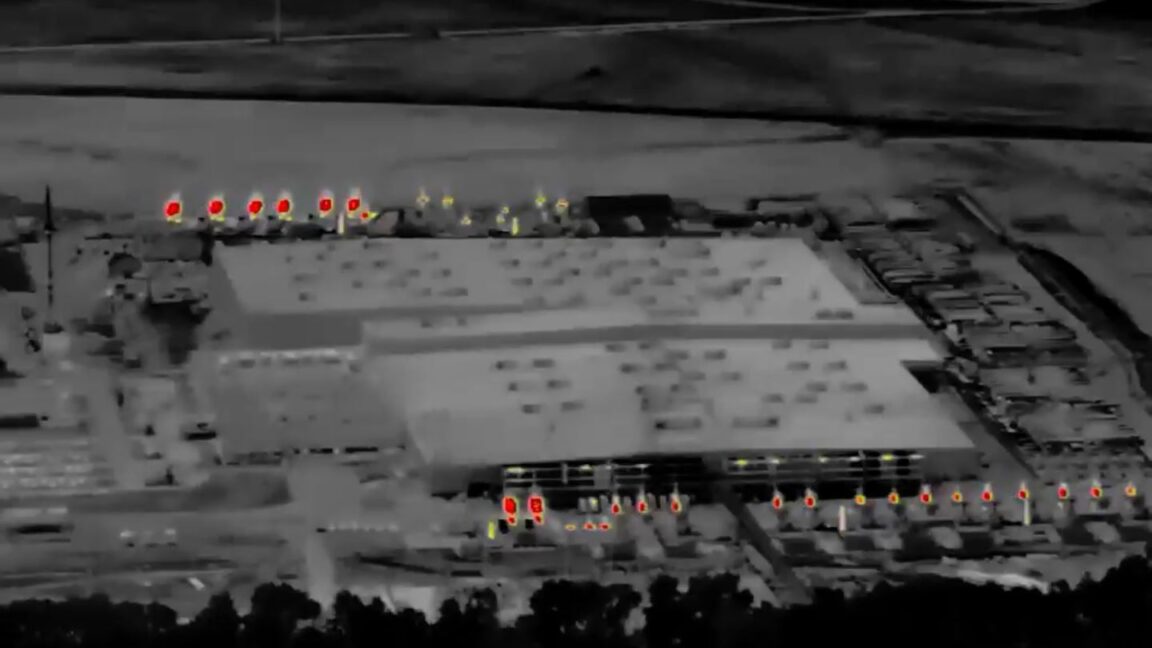
xAI’s submission claimed that each of the 15 turbines “is equipped with Solar’s Dry Low Emission (DLE)/SoLoNOx control technology” and other systems to reduce emissions of nitrogen oxides, carbon monoxide, and volatile organic compounds. For those reasons, xAI expects to be granted permits, the submission suggests.

However, even before xAI’s construction began, Shelby County was already in violation of the eight-hour ozone standard that protects public health, which means that xAI may need to implement additional controls.

The health department’s hearing will be the first time the public will have a chance to push for better accountability. Seemingly hoping to quell the backlash, the strange fliers seem like an attempt to push back by sowing discord.

“Those 15 xAI turbines?” the fliers distributed to thousands of Memphis residents said. “They’re specially designed to protect the air we all breathe.”

Nothing directly links xAI to the fliers. But xAI will have to play defense, as it has no plans to slow down its data center expansion, with its leading supercomputer facing immense competition to dominate the AI industry. Musk swore the rapid construction and subsequent work to double the size were “just the beginning,” while the xAI website boasts that “no one has come close to building at this magnitude and speed.”

The company has already invested $7 billion into the data center, and those costs will only grow. To keep pace, xAI has already earmarked recent funding to “further accelerate our advanced infrastructure,” a December blog noted. Further, researchers expect that “within six years, building the leading AI data center may cost $200 billion,” TechCrunch reported Friday, so those costs will likely keep growing, while likely deepening Musk’s entrenchment in Memphis and any feared pollution from that into the foreseeable future.

Additionally, products dependent on the data center will keep Musk’s facility humming in Memphis. The primary use of xAI’s supercomputer today is to fuel Grok, the chatbot running on posts from Musk’s social network X. In February, xAI unveiled a preview of its most advanced version of Grok yet, and other “groundbreaking” products are in the pipeline, X’s blog said.

https://arstechnica.com/tech-policy/2025/04/elon-musks-xai-accused-of-lying-to-black-communities-about-harmful-pollution/