Chris Krebs, who debunked 2020 election lies, vows full-time fight against Trump

SentinelOne updated that post yesterday with copies of the email sent by Krebs and an email from Weingarten to staff. Weingarten’s email praised Krebs’ work “in service of democratic institutions and critical infrastructure.”

“I know he’ll take on this next chapter with the same clarity, conviction, and humility that defined his time here, and he carries our full respect with him as his journey continues,” Weingarten wrote.

Krebs-led CISA debunked election fraud claims

After Trump lost the 2020 election to Joe Biden, Krebs and CISA drew Trump’s wrath by actively debunking claims of election fraud made by Trump and his supporters. On November 17, 2020, Trump called Krebs’ statements inaccurate and insisted that “there were massive improprieties and fraud,” including dead people voting and voting machines changing votes from Trump to Biden.

“Therefore, effective immediately, Chris Krebs has been terminated as Director of the Cybersecurity and Infrastructure Security Agency,” Trump wrote in a tweet.

In last week’s presidential memorandum, Trump ordered the government “to take all appropriate action to review Krebs’ activities as a Government employee, including his leadership of CISA.” Trump also ordered “a comprehensive evaluation of all of CISA’s activities over the last 6 years, focusing specifically on any instances where CISA’s conduct appears to have been contrary to the purposes and policies identified in Executive Order 14149.”

The referenced executive order issued in January 2025 claimed the Biden administration “trampled free speech rights by censoring Americans’ speech on online platforms,” by exerting pressure on social media companies. It ordered the government to “identify and take appropriate action to correct past misconduct by the Federal Government related to censorship of protected speech.”

Krebs started working for the Department of Homeland Security in 2017 and became the first director of CISA in November 2018. Last week’s Trump memo said that CISA under Krebs’ leadership “suppressed conservative viewpoints under the guise of combatting supposed disinformation” and “covertly worked to blind the American public to the controversy surrounding Hunter Biden’s laptop.” The forthcoming investigations of Krebs and CISA’s activities will result in “recommendations for appropriate remedial or preventative actions to be taken to fulfill the purposes and policies of Executive Order 14149,” the Trump memo said.

https://arstechnica.com/tech-policy/2025/04/chris-krebs-who-debunked-2020-election-lies-vows-full-time-fight-against-trump/


Google loses ad tech monopoly trial, faces additional breakups

Ultimately, Brinkema found that Google’s anticompetitive acts substantially harmed “Google’s publisher customers, the competitive process, and, ultimately, consumers of information on the open web.”

For Google, the ruling likely hits hard, despite a couple of notable wins. For one, Brinkema ruled that the DOJ did not prove Google has a monopoly in a third market “for open-web display advertiser ad networks.” Additionally, Google will not face sanctions for deleting chat histories that could have influenced her decision in the case.

“Chat deletions occurred when employees discussed substantive topics at issue in this litigation and continued after the federal government began an antitrust investigation into Google’s conduct,” Brinkema noted. And Google’s evasive tactics also included executives marking emails as “privileged” that “clearly did not involve privileged communications,” the judge said.

However, because the DOJ had enough evidence and testimony for Brinkema to find Google liable, the judge agreed with the outcome in the Google search trial and declined to sanction Google for the “adverse interference.”

“As in Google Search, the Court’s decision not to sanction ‘should not be understood as condoning Google’s failure to preserve chat evidence,'” Brinkema said.

While the DOJ largely claims the win, Google is apparently not considering this a loss yet. In a statement provided to Ars, Lee-Anne Mulholland, Google’s vice president of regulatory affairs, confirmed that Google plans to appeal.

“We won half of this case and we will appeal the other half,” Mulholland said. “The Court found that our advertiser tools and our acquisitions, such as DoubleClick, don’t harm competition. We disagree with the Court’s decision regarding our publisher tools. Publishers have many options, and they choose Google because our ad tech tools are simple, affordable, and effective.”

https://arstechnica.com/tech-policy/2025/04/google-loses-ad-tech-monopoly-trial-faces-additional-breakups/


AP: Trump admin to kill IRS free tax-filing service that Intuit lobbied against

Sen. Elizabeth Warren (D-Mass.) criticized Intuit’s lobbying against Direct File and told the AP that Trump and Musk “are going after Direct File because it stops giant tax prep companies from ripping taxpayers off for services that should be free. Americans want a free and easy way to file their taxes—Trump and Musk want to take that away.”

Intuit’s TurboTax offers free filing for simple returns, but has faced lawsuits alleging that its ads misled consumers who had to pay. In 2022, Intuit agreed to pay $141 million in restitution to millions of consumers and stop a specific ad campaign that promised free filing.

The Federal Trade Commission ruled last year that Intuit violated US law with deceptive advertising and ordered the company to stop telling consumers that TurboTax is free without more obvious disclaimers. Intuit responded by suing the FTC in a case that is still pending at the US Court of Appeals for the 5th Circuit.

The free IRS filing program is also limited to simple returns, but there was hope of expanding its usefulness. The program accepted returns from 140,803 taxpayers in the 12-state 2024 pilot, which was followed by a May 2024 announcement that Direct File would become “a permanent option for filing federal tax returns starting in the 2025 tax season.”

The IRS said in the 2024 announcement that it was looking for ways to cover more complicated tax returns. “Over the coming years, the agency’s goal is to expand Direct File to support most common tax situations, with a particular focus on those situations that impact working families,” the IRS said at the time. The Treasury Department estimated that over 30 million taxpayers were eligible for Direct File this year, but hasn’t said yet how many people used it.

House Republicans urged Trump to act even more quickly to kill the program, saying in a December 2024 letter that he should issue “a day-one executive order to end the Internal Revenue Service’s (IRS) unauthorized and wasteful Direct File pilot program.”

https://arstechnica.com/tech-policy/2025/04/ap-trump-admin-to-kill-irs-free-tax-filing-service-that-intuit-lobbied-against/


Disgruntled users roast X for killing Support account

After X (formerly Twitter) announced it would be killing its “Support” account, disgruntled users quickly roasted the social media platform for providing “essentially non-existent” support.

“We’ll soon be closing this account to streamline how users can contact us for help,” X’s Support account posted, explaining that now, paid “subscribers can get support via @Premium, and everyone can get help through our Help Center.”

On X, the Support account was one of the few paths that users had to publicly seek support for help requests the platform seemed to be ignoring. For suspended users, it was viewed as a lifeline. Replies to the account were commonly flooded with users trying to get X to fix reported issues, and several seemingly paying users cracked jokes in response to the news that the account would soon be removed.

“Lololol your support for Premium is essentially non-existent,” a subscriber with more than 200,000 followers wrote, while another quipped “Okay, so no more support? lol.”

On Reddit, X users recently suggested that contacting the Premium account is the only way to get human assistance after briefly interacting with a bot. But some self-described Premium users complained of waiting six months or longer for responses from X’s help center in the Support thread.

Some users who don’t pay for access to the platform similarly complained. But for paid subscribers or content creators, lack of Premium support is perhaps most frustrating, as one user claimed their account had been under review for years, allegedly depriving them of revenue. And another user claimed they’d had “no luck getting @Premium to look into” an account suspension while supposedly still getting charged. Several accused X of sending users into a never-ending loop, where the help center only serves to link users to the help center.

https://arstechnica.com/tech-policy/2025/04/disgruntled-users-roast-x-for-killing-support-account/


14 reasons why Trump’s tariffs won’t bring manufacturing back

The tariffs have frozen business activity because no one wants to take a big risk dependent on a policy that may change next week.

Even further, the tariffs are confusing, poorly communicated, and complex. Today, if you want to import something from China, you need to add the original import duty, plus a 20 percent “fentanyl tariff,” plus a 34 percent “reciprocal tariff,” and an additional 25 percent “Venezuelan oil” tariff, should it be determined that China is buying Venezuelan oil. The problem is, there is no list of countries that are importing Venezuelan oil provided by the White House, so you don’t know if you do or don’t need to add that 25 percent, and you also don’t know when any of these tariffs will go into effect because of unclear language.

As such, you can’t calculate your costs, either with certainty or accuracy; therefore, not only do you not build a factory in the United States, you cease all business activity, the type of thing that can cause a recession, if not worse.

For the past month, as someone who runs a business in this industry, I have spent a huge portion of my time just trying to keep up with the constant changes instead of running my business.

8. Most Americans are going to hate manufacturing

Americans want less crime, good schools for their kids, and inexpensive health care.

They don’t want to be sewing shirts.

The people most excited about this new tariff policy tend to be those who’ve never actually made anything, because if you have, you’d know how hard the work is.

When I first went to China as a naive 24-year-old, I told my supplier I was going to “work a day in his factory!” I lasted four hours. It was freezing cold, middle of winter; I had to crouch on a small stool, hunched over, assembling little parts with my fingers at one-quarter the speed of the women next to me. My back hurt, my fingers hurt. It was horrible. That’s a lot of manufacturing.

https://arstechnica.com/tech-policy/2025/04/14-reasons-why-trumps-tariffs-wont-bring-manufacturing-back/


Government IT whistleblower calls out DOGE, says he was threatened at home

Berulis described some shortcomings in the NLRB’s ability to detect attacks. “During one of these meetings, it was confirmed that our team did not have the technical capability to detect or respond in real time to internal threat actors, and that we likely did not have the ability to obtain more details about the past events,” he wrote.

The department subsequently “shifted budget to allow for better tooling going forward,” which “has vastly improved our detection and logging so we can provide more concrete evidence if covert exfiltration occurs by an insider threat again,” Berulis wrote. “We also shut down a public endpoint and corrected rogue policies that had been altered to allow much broader traffic in/out of our network.”

Berulis: “We were directed not to… create an official report”

On March 10, Berulis found that controls in Microsoft Purview to prevent insecure or unauthorized access from mobile devices had been disabled, he wrote. “In addition, outside of expected baselines and with no corresponding approvals or records I could find I noted the following: an interface exposed to the public Internet, a few internal alerting and monitoring systems in the off state, and multi-factor authentication changed,” he wrote.

The team observed more odd activity in the ensuing weeks, Berulis wrote. Data was sent to “an unknown external endpoint,” but the network team was unable to obtain connection logs or determine what data was removed, he wrote. There were also “spikes in billing in Mission Systems related to storage input/output” associated with projects that could no longer be found in the NLRB system, indicating that “resources may have been deleted or short-lived,” he wrote.

During the week of March 24, an assistant CIO for security at the NLRB “concluded that following a review of data, we should report it” to US-CERT, the US Computer Emergency Readiness Team at the Cybersecurity and Infrastructure Security Agency (CISA), according to Berulis.

“Accordingly, we launched a formal review and I provided all evidence of what we deemed to be a serious, ongoing security breach or potentially illegal removal of personally identifiable information,” he wrote.

But on April 3 or 4, the assistant CIO “and I were informed that instructions had come down to drop the US-CERT reporting and investigation and we were directed not to move forward or create an official report,” Berulis wrote.

https://arstechnica.com/tech-policy/2025/04/government-it-whistleblower-calls-out-doge-says-he-was-threatened-at-home/


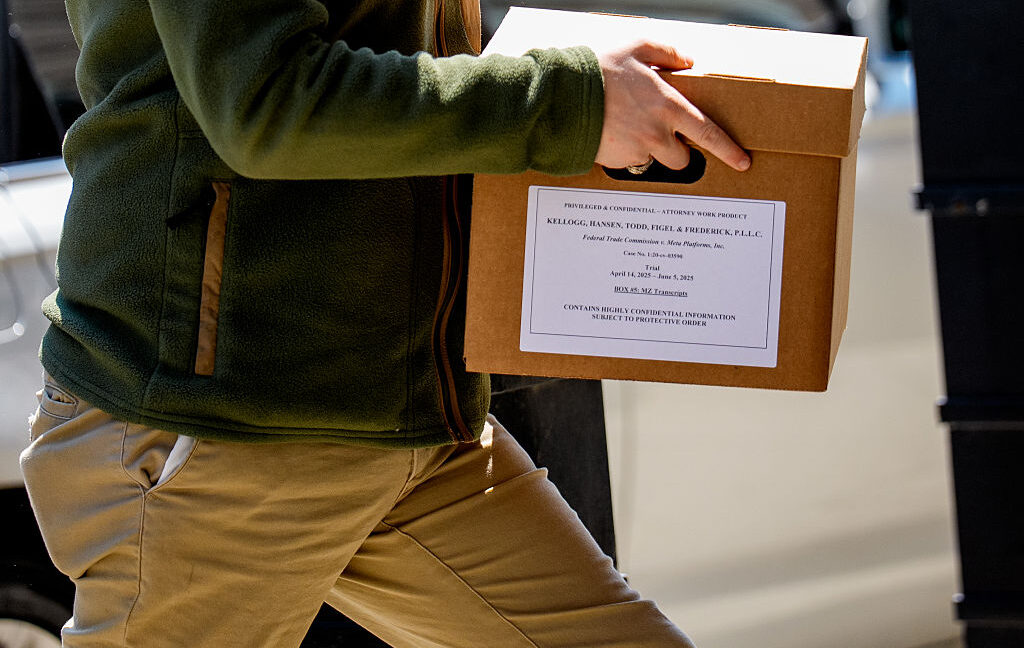
Zuckerberg’s 2012 email dubbed “smoking gun” at Meta monopoly trial

Still, for Meta, the stakes are high, as the FTC could pursue a breakup of the company, including requiring Meta to spin off WhatsApp and Instagram. Losing Instagram would hit Meta’s revenue hard, as Instagram is supposed to bring in more than half of its US ad revenue in 2025, eMarketer forecasted last December.

The trial is expected to last eight weeks, but much of the most-anticipated testimony will come early. Facebook’s former chief operating officer, Sheryl Sandberg, as well as Kevin Systrom, co-founder of Instagram, are expected to testify this week.

All unsealed emails and exhibits will eventually be posted on a website jointly managed by the FTC and Meta, but Ars was not yet provided a link or timeline for when the public evidence will be posted online.

Meta mocks FTC’s “ad load theory”

The FTC is arguing that Meta overpaid to acquire Instagram and WhatsApp to maintain an alleged monopoly in the personal social networking market that includes rivals like Snapchat and MeWe, a social networking platform that brands itself as a privacy-focused Facebook alternative.

In opening arguments, the FTC alleged that once competition was eliminated, Meta then degraded the quality of its platforms by limiting user privacy and inundating users with ads.

Meta has defended its acquisitions by arguing that it has improved Instagram and WhatsApp. At trial, Meta’s lawyer Hansen made light of the FTC’s “ad load theory,” stirring laughter in the reportedly packed courtroom, Benedict posted on X.

“If you don’t like an ad, you scroll past it. It takes about a second,” Hansen said.

Meanwhile, Newstead, who reportedly attended opening arguments, argued in her blog that “Instagram and WhatsApp provide a model for what successful acquisitions can achieve: Meta has made Instagram and WhatsApp better, more reliable and more secure through billions of dollars and millions of hours of investment.”

https://arstechnica.com/tech-policy/2025/04/ftcs-monopoly-case-hinges-on-zuckerbergs-damaging-texts-emails/


Amid Trump tariff chaos, Nvidia launches AI chip production on US soil

Nvidia announced plans today to manufacture AI chips and build complete supercomputers on US soil for the first time, commissioning over one million square feet of manufacturing space across Arizona and Texas. The politically timed move comes amid rising US-China tensions and the Trump administration’s push for domestic manufacturing.

Nvidia’s announcement comes less than two weeks after the Trump administration’s chaotic rollout of new tariffs and just two days after the administration’s contradictory messages on electronic component exemptions.

On Friday night, the US Customs and Border Protection posted a bulletin exempting electronics including smartphones, computers, and semiconductors from Trump’s steep reciprocal tariffs. But by Sunday, Trump and his commerce secretary Howard Lutnick contradicted this move, claiming the exemptions were only temporary and that electronics would face new “semiconductor tariffs” in the coming months.

Nvidia says it has already begun producing its Blackwell chips at Taiwan Semiconductor Manufacturing Co’s (TSMC) facilities in Phoenix. Until now, the company’s AI chips have been manufactured exclusively in Taiwan, presenting geopolitical risks to the supply chain.

The company is also setting up supercomputer manufacturing plants in Texas—partnering with Foxconn in Houston and Wistron in Dallas, with mass production expected to ramp up within 12 to 15 months.

“The engines of the world’s AI infrastructure are being built in the United States for the first time,” said Jensen Huang, Nvidia’s founder and CEO, in a news release. “Adding American manufacturing helps us better meet the incredible and growing demand for AI chips and supercomputers, strengthens our supply chain, and boosts our resiliency.”

The TSMC facility in Phoenix, Arizona.
The TSMC facility in Phoenix. Credit: The Washington Post via Getty Images

For chip packaging and testing operations, Nvidia is collaborating with Amkor and SPIL in Arizona. The supply chain for building the kinds of advanced GPUs that accelerate training and running AI models requires advanced manufacturing, packaging, and testing technologies that each partner works together to provide.

The development also comes days after Nvidia reportedly avoided export controls on its H20 chip by striking a domestic manufacturing deal with the Trump administration. The H20 is Nvidia’s most powerful AI chip that can still be legally exported to China under current US restrictions; it’s designed with reduced specifications to comply with export controls while maintaining compatibility with Nvidia’s CUDA platform. According to reporting from TechCrunch and NPR, the H20, which can still be exported to China, was spared after Huang promised to invest capital into components for US-based AI data centers.

https://arstechnica.com/ai/2025/04/amid-trump-tariff-chaos-nvidia-launches-ai-chip-production-on-us-soil/


After market tumult, Trump exempts smartphones from massive new tariffs

Shares in the US tech giant were one of Wall Street’s biggest casualties in the days immediately after Trump announced his reciprocal tariffs. About $700 billion was wiped off Apple’s market value in the space of a few days.

Earlier this week, Trump said he would consider excluding US companies from his tariffs, but added that such decisions would be made “instinctively.”

Chad Bown, a senior fellow at the Peterson Institute for International Economics, said the exemptions mirrored exceptions for smartphones and consumer electronics issued by Trump during his trade wars in 2018 and 2019.

“We’ll have to wait and see if the exemptions this time around also stick, or if the president once again reverses course sometime in the not-too-distant future,” said Bown.

US Customs and Border Protection referred inquiries about the order to the US International Trade Commission, which did not immediately reply to a request for comment.

The White House confirmed that the new exemptions would not apply to the 20 percent tariffs on all Chinese imports applied by Trump to respond to China’s role in fentanyl manufacturing.

White House spokesperson Karoline Leavitt said on Saturday that companies including Apple, TSMC, and Nvidia were “hustling to onshore their manufacturing in the United States as soon as possible” at “the direction of the President.”

“President Trump has made it clear America cannot rely on China to manufacture critical technologies such as semiconductors, chips, smartphones, and laptops,” said Leavitt.

Apple declined to comment.

Economists have warned that the sweeping nature of Trump’s tariffs—which apply to a broad range of common US consumer goods—threaten to fuel US inflation and hit economic growth.

New York Fed chief John Williams said US inflation could reach as high as 4 percent as a result of Trump’s tariffs.

Additional reporting by Michael Acton in San Francisco

© 2025 The Financial Times Ltd. All rights reserved. Not to be redistributed, copied, or modified in any way.

https://arstechnica.com/tech-policy/2025/04/after-market-tumult-trump-exempts-smartphones-from-massive-new-tariffs/


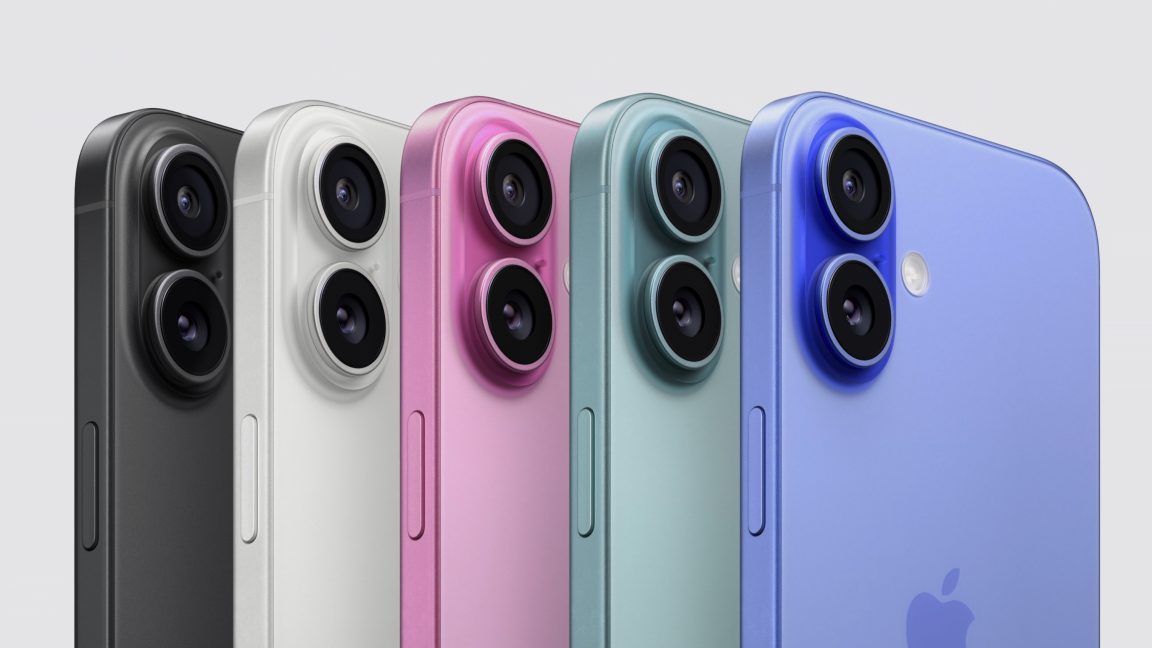
Apple silent as Trump promises “impossible” US-made iPhones

During Trump’s last term, Cook raised a successful “charm offensive” that secured tariff exemptions without caving to Trump’s demand to build iPhones in the US, CNBC reported, and he’s likely betting that Apple’s recent $500 billion commitment will lead to similar outcomes, even if Apple never delivers a US-made iPhone.

Back in 2017, Trump announced that Apple partner Foxconn would be building three “big beautiful plants” in the US and claimed that they would be Apple plants, CNBC reported. But the pandemic disrupted construction, and most of those plans were abandoned, with one facility only briefly serving to make face masks, not Apple products. In 2019, Apple committed to building a Texas factory that Trump toured. While Trump insisted that a US-made iPhone was on the horizon due to Apple moving some business into the US, that factory only committed to assembling the MacBook Pro, CNBC noted.

Morgan Stanley analyst Erik Woodring suggested that Apple may “commit to some small-volume production in the US (HomePod? AirTags?)” to secure an exemption in 2025, rather than committing to building iPhones, CNBC reported.

Although this perhaps sounds like a tried-and-true game plan, for Cook, Apple’s logistics have likely never been so complicated. However, analysts told Fortune that experienced logistics masterminds understand that flexibility is the priority, and Cook has already shown that he can anticipate Trump’s moves by stockpiling iPhones and redirecting US-bound iPhones through its factory in India.

While Trump negotiates with China, Apple hopes that an estimated 35 million iPhones it makes annually in India can “cover a large portion of its needs in the US,” Bloomberg reported. These moves, analysts said, prove that Cook may be the man for the job when it comes to steering Apple through the trade war chaos.

But to keep up with global demand—selling more than 220 million iPhones annually—Apple will struggle to quickly distance itself from China, where there’s abundant talent to scale production that Apple says just doesn’t exist in the US. For example, CNBC noted that Foxconn hired 50,000 additional workers last fall at its largest China plant just to build enough iPhones to meet demand during the latest September launches.

As Apple remains dependent on China, Cook will likely need to remain at the table, seeking friendlier terms on both sides to ensure its business isn’t upended for years.

“One can imagine, if there is some sort of grand bargain between US and China coming in the next year or two,” Friedman said, “Tim Cook might as soon as anybody play an intermediary role.”

https://arstechnica.com/tech-policy/2025/04/apple-silent-as-trump-promises-impossible-us-made-iphones/