NJ teen wins fight to put nudify app users in prison, impose fines up to $30K

On LinkedIn, her mother, Dorota Mani—who has been working with the governor’s office on a commission to protect kids from online harms—thanked lawmakers like Murphy and former New Jersey Assemblyman Herb Conaway, who sponsored the law, for “standing with us.”

“When used maliciously, deepfake technology can dismantle lives, distort reality, and exploit the most vulnerable among us,” Conaway said. “I’m proud to have sponsored this legislation when I was still in the Assembly, as it will help us keep pace with advancing technology. This is about drawing a clear line between innovation and harm. It’s time we take a firm stand to protect individuals from digital deception, ensuring that AI serves to empower our communities.”

Doing nothing is no longer an option for schools, teen says

Around the country, as cases like Mani’s continue to pop up, experts expect that shame prevents most victims from coming forward to flag abuses, suspecting that the problem is much more widespread than media reports suggest.

Encode Justice has a tracker monitoring reported cases involving minors, including allowing victims to anonymously report harms around the US. But the true extent of the harm currently remains unknown, as cops warn of a flood of AI child sex images obscuring investigations into real-world child abuse.

Confronting this shadowy threat to kids everywhere, Mani was named as one of TIME’s most influential people in AI last year due to her advocacy fighting deepfakes. She’s not only pressured lawmakers to take strong action to protect vulnerable people, but she’s also pushed for change at tech companies and in schools nationwide.

“When that happened to me and my classmates, we had zero protection whatsoever,” Mani told TIME, and neither did other girls around the world who had been targeted and reached out to thank her for fighting for them. “There were so many girls from different states, different countries. And we all had three things in common: the lack of AI school policies, the lack of laws, and the disregard of consent.”

https://arstechnica.com/tech-policy/2025/04/adults-told-her-to-move-on-instead-teen-won-fight-to-criminalize-deepfakes/


France fines Apple €150M for “excessive” pop-ups that let users reject tracking

A typical ATT  pop-up asks a user whether to allow an app “to track your activity across other companies’ apps and websites,” and says that “your data will be used to deliver personalized ads to you.”

Agency: “Double consent” too cumbersome

The agency said there is an “asymmetry” in which user consent for Apple’s own data collection is obtained with a single pop-up, but other publishers are “required to obtain double consent from users for tracking on third-party sites and applications.” The press release notes that “while advertising tracking only needs to be refused once, the user must always confirm their consent a second time.”

The system was said to be less harmful for big companies like Meta and Google and “particularly harmful for smaller publishers that do not enjoy alternative targeting possibilities, in particular in the absence of sufficient proprietary data.” Although France’s focus is on how ATT affects smaller companies, Apple’s privacy system has also been criticized by Facebook.

The €150 million fine won’t make much of a dent in Apple’s revenue, but Apple will apparently have to make some changes to comply with the French order. The agency’s press release said the problem “could be avoided by marginal modifications to the ATT framework.”

Benoit Coeure, the head of France’s competition authority, “told reporters the regulator had not spelled out how Apple should change its app, but that it was up to the company to make sure it now complied with the ruling,” according to Reuters. “The compliance process could take some time, he added, because Apple was waiting for rulings on regulators in Germany, Italy, Poland and Romania who are also investigating the ATT tool.”

Apple said in a statement that the ATT “prompt is consistent for all developers, including Apple, and we have received strong support for this feature from consumers, privacy advocates, and data protection authorities around the world. While we are disappointed with today’s decision, the French Competition Authority (FCA) has not required any specific changes to ATT.”

https://arstechnica.com/tech-policy/2025/03/france-fines-apple-e150m-for-excessive-pop-ups-that-let-users-reject-tracking/


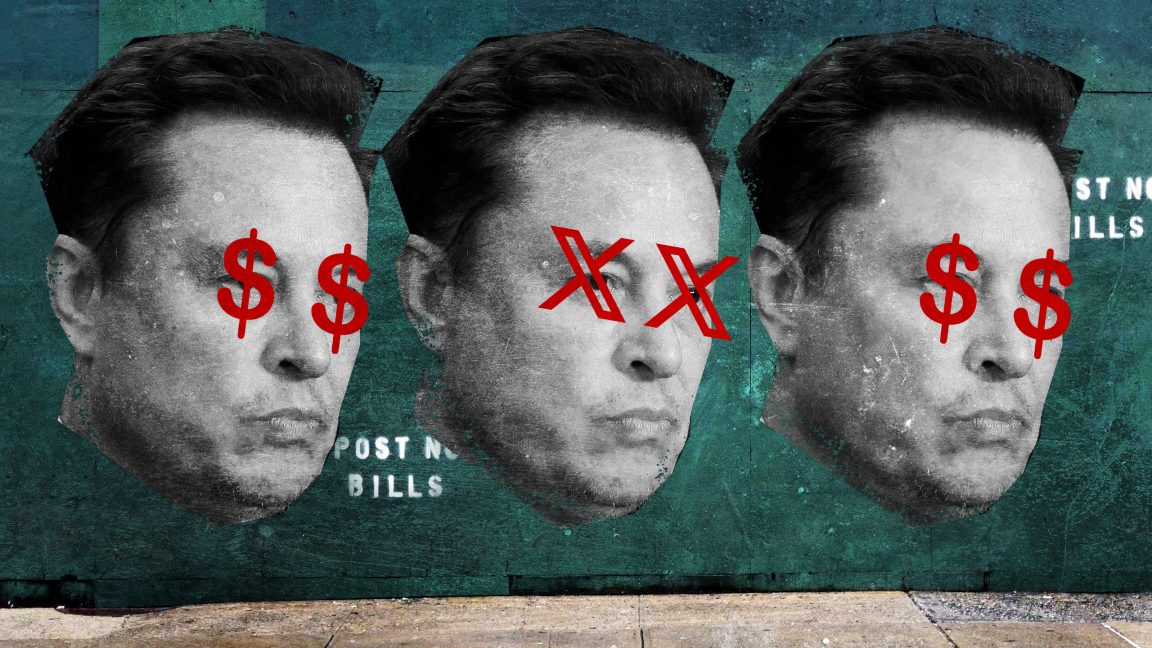
Big brands are spending small sums on X to stay out of Musk’s crosshairs

According to data from Emarketer, X’s revenue will increase to $2.3 billion this year compared with $1.9 billion a year ago. However, global sales in 2022, when the group was known as Twitter and taken over by Musk, were $4.1 billion.

Total US ad spend on X was down by 2 percent in the first two months of 2025 compared with a year ago, according to data from market intelligence group Sensor Tower, despite the recent return of groups such as Hulu and Unilever.

American Express also rejoined the platform this year but its ad spend is down by about 80 percent compared with the first quarter of 2022, Sensor Tower said.

However, four large ad agencies—WPP, Omnicom, Interpublic Group, and Publicis—have recently agreed on deals, or are in talks, to set annual spending targets with X in so-called “upfront deals,” where advertisers commit to purchasing slots in advance.

X, WPP, Omnicom, and Publicis declined to comment. Interpublic Group did not respond to a request for comment.

Fears have risen within the advertising industry after X filed a federal antitrust lawsuit last summer against Global Alliance for Responsible Media, a coalition of brands, ad agencies, and some companies including Unilever, accusing them of coordinating an “illegal boycott” under the guise of a brand safety initiative. The Republican-led House of Representatives Committee on the Judiciary has also leveled similar accusations.

Unilever was dropped from X’s lawsuit after it restarted advertising on the social media platform in October.

Following discussions with their legal team, some staff at WPP’s GroupM now feel concerned about what they put in writing about X or communicate over video conferencing given the lawsuit, according to one person familiar with the matter.

Another advertising executive noted that the planned $13 billion merger between Omnicom and Interpublic had been delayed by a further request for information from a US watchdog this month, holding the threat of regulatory intervention over the deal.

https://arstechnica.com/tech-policy/2025/03/big-brands-are-spending-small-sums-on-x-to-stay-out-of-musks-crosshairs/


FBI raids home of prominent computer scientist who has gone incommunicado

A prominent computer scientist who has spent 20 years publishing academic papers on cryptography, privacy, and cybersecurity has gone incommunicado, had his professor profile, email account, and phone number removed by his employer, Indiana University, and had his homes raided by the FBI. No one knows why.

Xiaofeng Wang has a long list of prestigious titles. He was the associate dean for research at Indiana University’s Luddy School of Informatics, Computing and Engineering, a fellow at the Institute of Electrical and Electronics Engineers and the American Association for the Advancement of Science, and a tenured professor at Indiana University at Bloomington. According to his employer, he has served as principal investigator on research projects totaling nearly $23 million over his 21 years there.

He has also co-authored scores of academic papers on a diverse range of research fields, including cryptography, systems security, and data privacy, including the protection of human genomic data. I have personally spoken to him on three occasions for articles here, here, and here.

“None of this is in any way normal”

In recent weeks, Wang’s email account, phone number, and profile page at the Luddy School were quietly erased by his employer. Over the same time, Indiana University also removed a profile for his wife, Nianli Ma, who was listed as a Lead Systems Analyst and Programmer at the university’s Library Technologies division.

As reported by the Bloomingtonian and later the Herald-Times in Bloomington, a small fleet of unmarked cars driven by government agents descended on the Bloomington home of Wang and Ma on Friday. They spent most of the day going in and out of the house and occasionally transferred boxes from their vehicles. TV station WTHR, meanwhile, reported that a second home owned by Wang and Ma and located in Carmel, Indiana, was also searched. The station said that both a resident and an attorney for the resident were on scene during at least part of the search.

https://arstechnica.com/security/2025/03/computer-scientist-goes-silent-after-fbi-raid-and-purging-from-university-website/


What could possibly go wrong? DOGE to rapidly rebuild Social Security codebase.

Like many legacy government IT systems, SSA systems contain code written in COBOL, a programming language created in part in the 1950s by computing pioneer Grace Hopper. The Defense Department essentially pressured private industry to use COBOL soon after its creation, spurring widespread adoption and making it one of the most widely used languages for mainframes, or computer systems that process and store large amounts of data quickly, by the 1970s. (At least one DOD-related website praising Hopper’s accomplishments is no longer active, likely following the Trump administration’s DEI purge of military acknowledgements.)

As recently as 2016, SSA’s infrastructure contained more than 60 million lines of code written in COBOL, with millions more written in other legacy coding languages, the agency’s Office of the Inspector General found. In fact, SSA’s core programmatic systems and architecture haven’t been “substantially” updated since the 1980s when the agency developed its own database system called MADAM, or the Master Data Access Method, which was written in COBOL and Assembler, according to SSA’s 2017 modernization plan.

SSA’s core “logic” is also written largely in COBOL. This is the code that issues social security numbers, manages payments, and even calculates the total amount beneficiaries should receive for different services, a former senior SSA technologist who worked in the office of the chief information officer says. Even minor changes could result in cascading failures across programs.

“If you weren’t worried about a whole bunch of people not getting benefits or getting the wrong benefits, or getting the wrong entitlements, or having to wait ages, then sure go ahead,” says Dan Hon, principal of Very Little Gravitas, a technology strategy consultancy that helps government modernize services, about completing such a migration in a short timeframe.

It’s unclear when exactly the code migration would start. A recent document circulated amongst SSA staff laying out the agency’s priorities through May does not mention it, instead naming other priorities like terminating “non-essential contracts” and adopting artificial intelligence to “augment” administrative and technical writing.

https://arstechnica.com/tech-policy/2025/03/what-could-possibly-go-wrong-doge-to-rapidly-rebuild-social-security-codebase/


Elon Musk’s X has a new owner—Elon Musk’s xAI

Elon Musk today said he has merged X and xAI in a deal that values the social network formerly known as Twitter at $33 billion. Musk purchased Twitter for $44 billion in 2022.

xAI acquired X “in an all-stock transaction. The combination values xAI at $80 billion and X at $33 billion ($45B less $12B debt),” Musk wrote on X today.

X and xAI were already collaborating, as xAI’s Grok is trained on X posts. Grok is made available to X users, with paying subscribers getting higher usage limits and more features.

“xAI and X’s futures are intertwined,” Musk wrote. “Today, we officially take the step to combine the data, models, compute, distribution and talent. This combination will unlock immense potential by blending xAI’s advanced AI capability and expertise with X’s massive reach.”

Musk said the combined company will “build a platform that doesn’t just reflect the world but actively accelerates human progress.”

xAI and X are privately held. “Some of the deal’s specifics were not yet clear, such as whether investors approved the transaction or how investors may be compensated,” Reuters wrote.

The reported value of the company formerly called Twitter plunged under Musk’s ownership. Fidelity, an X investor, valued X at less than $10 billion in September 2024. But X’s value rebounded at the same time that Musk gained major influence in the US government with the inauguration of President Donald Trump.

On the AI front, Musk has also been trying to buy OpenAI and prevent the company from completing its planned conversion from a nonprofit to for-profit entity.

https://arstechnica.com/tech-policy/2025/03/elon-musks-x-has-a-new-owner-elon-musks-xai/


Ex-FCC chairs from both parties say CBS news distortion investigation is bogus

The Federal Communications Commission’s news distortion investigation into CBS drew a public rebuke from a bipartisan group of five former FCC commissioners, including two former chairmen.

The group criticizing current Chairman Brendan Carr includes Republican Alfred Sikes, the FCC chair from 1989 to 1993, and Democrat Tom Wheeler, the FCC chair from 2013 to 2017. They were joined by Republican Rachelle Chong, Democrat Ervin Duggan, and Democrat Gloria Tristani, all former commissioners.

“These comments are submitted to emphasize the unprecedented nature of this news distortion proceeding, and to express our strong concern that the Federal Communications Commission may be seeking to censor the news media in a manner antithetical to the First Amendment,” the former chairs and commissioners told the FCC in a filing this week.

The Center for American Rights filed the news distortion complaint against flagship station WCBS over the editing of a CBS 60 Minutes interview with Kamala Harris. The complaint was dismissed in January by then-Chairwoman Jessica Rosenworcel. Carr, Trump’s pick to lead the FCC, revived the complaint shortly after taking over.

“Editorial judgment protected by First Amendment”

The Center for American Rights’ claim of news distortion is based on an allegation that CBS misled viewers by airing two different responses from Harris to the same question about Israeli Prime Minister Benjamin Netanyahu, one on 60 Minutes and the other on Face the Nation. But CBS provided the FCC with a transcript showing that the programs aired two different sentences from the same response.

“The transcript confirms that the editing choices at issue lie well within the editorial judgment protected by the First Amendment and that the Commission’s January 16 dismissal of the complaint was legally correct,” the former chairs and commissioners wrote. “Yet the Commission has reopened the complaint and taken the highly unusual step of inviting public comment, even though the proceeding is adjudicatory in nature. These developments have unjustifiably prolonged this investigation and raise questions about the actual purpose of the proceeding.”

The FCC has historically punished licensees only after dramatic violations, like “elaborate hoaxes, internal conspiracies, and reports conjured from whole cloth,” they wrote. There is “no credible argument” that the allegations against CBS “belong in the same category.”

https://arstechnica.com/tech-policy/2025/03/ex-fcc-chairs-from-both-parties-say-cbs-news-distortion-investigation-is-bogus/


EU will go easy with Apple, Facebook punishment to avoid Trump’s wrath

The EU is set to impose minimal fines on Apple and Facebook-owner Meta next week under its Digital Markets Act, as Brussels seeks to avoid escalating tensions with US President Donald Trump.

According to people familiar with the decisions, the iPhone maker is expected to be fined and ordered to revise its App Store rules, following an investigation into whether they prevent app developers from sending consumers to offers outside its platform.

Regulators will also close another investigation into Apple, which was focused on the company’s design of its web browser choice screen without any further sanctions.

Meta will also be fined and ordered to change its “pay or consent” model, which forces users to either consent to data tracking or pay a subscription fee for an ad-free experience of its products.

Under the DMA, companies can face penalties of up to 10 percent of their global turnover, which could result in billions of dollars for both companies.

But the European Commission is aiming for fines that fall far below that threshold, three officials said, as the bloc’s digital rule book is relatively new and the decisions could still be challenged in court.

The moves come as Brussels attempts to enforce the DMA, which was designed to curb tech giants’ dominance of the digital marketplace, while avoiding a direct clash with Washington.

The focus of the new commission, which took office in December, is also more on the compliance of Big Tech companies with the law than on potential high fines in the billions of Euros, officials said.

https://arstechnica.com/gadgets/2025/03/eu-will-go-easy-with-apple-facebook-punishment-to-avoid-trumps-wrath/


Trump can’t fire us, FTC Democrats tell court after being ejected from office

Two Democratic members of the Federal Trade Commission who were fired by President Trump sued him today, saying their removals are “in direct violation of a century of federal law and Supreme Court precedent.”

“Plaintiffs bring this action to vindicate their right to serve the remainder of their respective terms, to defend the integrity of the Commission, and to continue their work for the American people,” said the lawsuit filed by Rebecca Kelly Slaughter and Alvaro Bedoya in US District Court for the District of Columbia.

Trump last week sent Slaughter and Bedoya notices that said, “I am writing to inform you that you have been removed from the Federal Trade Commission, effective immediately.” They were then cut off from their FTC email addresses, asked to return electronic devices, and denied access to their offices.

There are legal restrictions on the president’s authority to remove FTC commissioners. US law says any FTC commissioner “may be removed by the President for inefficiency, neglect of duty, or malfeasance in office.”

The Supreme Court unanimously held in a 1935 case, Humphrey’s Executor v. United States, that “Congress intended to restrict the power of removal to one or more of those causes.” The case involved President Franklin Roosevelt’s firing of Commissioner William Humphrey.

Trump’s Department of Justice has argued the ruling was incorrect, but it is still in effect. “Congress has continually relied on Humphrey’s Executor, and the Supreme Court has repeatedly refused to upset this landmark precedent,” the Slaughter/Bedoya lawsuit said. “As Humphrey’s Executor recognized, providing some protection from removal at the President’s whim is essential to ensuring that agency officials can exercise their own judgment.”

The lawsuit continued:

In short, it is bedrock, binding precedent that a President cannot remove an FTC Commissioner without cause. And yet that is precisely what has happened here: President Trump has purported to terminate Plaintiffs as FTC Commissioners, not because they were inefficient, neglectful of their duties, or engaged in malfeasance, but simply because their “continued service on the FTC is” supposedly “inconsistent with [his] Administration’s priorities.”

“Indefensible under governing law”

In addition to Trump, the lawsuit’s defendants include FTC Chairman Andrew Ferguson, FTC Commissioner Melissa Holyoak, and FTC Executive Director David Robbins. The Democratic commissioners asked the court to “declare the President’s attempted removals unlawful and ineffective,” and “permanently enjoin the FTC Chairman, Commissioner Holyoak, and the FTC Executive Director from taking any action that would prevent Plaintiffs from fulfilling their duties as Commissioners and serving out the remainder of their terms.”

https://arstechnica.com/tech-policy/2025/03/ftc-democrats-sue-trump-say-firings-break-law-and-supreme-court-precedent/


TSMC’s $100 billion pledge won’t resurrect US chipmaking, says Intel’s ex-CEO

“I wasn’t done with the five-plus years when the board made a directional change,” he said.

TSMC has said that the only development work it plans to carry out it in the US will be on the process technology it already has in production, and that its core research and development will remain in Taiwan.

“Unless you’re designing the next-generation transistor technology in the US, you do not have leadership in the US,” said Gelsinger.

He was speaking in an interview this week after becoming a partner at Playground Global, a Silicon Valley venture capital firm that specializes in “deep tech” investments, including in fields like quantum computing and new chip making technologies.

Despite losing out in the cutting-edge process technology used in chip manufacturing, Gelsinger said the US still had a global edge in many advanced technologies that are likely to determine future leadership in artificial intelligence.

He also brushed off suggestions that Chinese AI company DeepSeek, which shocked US technology experts and investors with its low-cost technology earlier this year, had posed a serious challenge to American companies.

“DeepSeek was good engineering, it wasn’t core innovations. It wasn’t major breakthroughs,” he said.

Start-ups backed by Playground include xLight, whose advanced lasers could play a part in future generations of lithography needed to make chips. Other investments include PsiQuantum, the first quantum computing company that has embarked on building a large-scale quantum machine, and d-Matrix, one of a number of start-ups trying to leapfrog Nvidia in making the chips needed to run AI systems, a task known as inference.

While at Intel, Gelsinger failed to make up ground against Nvidia in AI chips, though he said this week that new technologies were needed to bring AI into the mainstream.

“AI, as exciting as it is, is much too expensive,” he said. “We have to have dramatic reductions in the cost of inference for it to be truly deployed in every aspect of humanity.”

© 2025 The Financial Times Ltd. All rights reserved. Not to be redistributed, copied, or modified in any way.

https://arstechnica.com/gadgets/2025/03/tsmcs-100-billion-pledge-wont-resurrect-us-chipmaking-says-intels-ex-ceo/