Developer convicted for “kill switch” code activated upon his termination

A 55-year-old software developer faces up to 10 years in prison for deploying malicious code that sabotaged his former employer’s network, allegedly costing hundreds of thousands of dollars in losses.

The US Department of Justice announced Friday that Davis Lu was convicted by a jury after “causing intentional damage to protected computers” reportedly owned by the Ohio- and Dublin-based power management company Eaton Corp.

Lu had worked at Eaton Corp. for about 11 years when he apparently became disgruntled by a corporate “realignment” in 2018 that “reduced his responsibilities,” the DOJ said.

His efforts to sabotage their network began that year, and by the next year, he had planted different forms of malicious code, creating “infinite loops” that deleted coworker profile files, preventing legitimate logins and causing system crashes, the DOJ explained. Aiming to slow down or ruin Eaton Corp.’s productivity, Lu named these codes using the Japanese word for destruction, “Hakai,” and the Chinese word for lethargy, “HunShui,” the DOJ said.

But perhaps nothing was as destructive as the “kill switch” Lu designed to shut down everything if he was ever terminated.

This kill switch, the DOJ said, appeared to have been created by Lu because it was named “IsDLEnabledinAD,” which is an apparent abbreviation of “Is Davis Lu enabled in Active Directory.” It also “automatically activated” on the day of Lu’s termination in 2019, the DOJ said, disrupting Eaton Corp. users globally.

https://arstechnica.com/tech-policy/2025/03/fired-coder-faces-10-years-for-revenge-kill-switch-he-named-after-himself/



Google tells Trump’s DOJ that forcing a Chrome sale would harm national security

Close-up of Google Chrome Web Browser web page on the web browser. Chrome is widely used web browser developed by Google.

Credit: Getty Images

The government’s 2024 request also sought to have Google’s investment in AI firms curtailed even though this isn’t directly related to search. If, like Google, you believe leadership in AI is important to the future of the world, limiting its investments could also affect national security. But in November, Mehta suggested he was open to considering AI remedies because “the recent emergence of AI products that are intended to mimic the functionality of search engines” is rapidly shifting the search market.

This perspective could be more likely to find supporters in the newly AI-obsessed US government with a rapidly changing Department of Justice. However, the DOJ has thus far opposed allowing AI firm Anthropic to participate in the case after it recently tried to intervene. Anthropic has received $3 billion worth of investments from Google, including $1 billion in January.

New year, new Justice Department

Google naturally opposed the government’s early remedy proposal, but this happened in November, months before the incoming Trump administration began remaking the DOJ. Since taking office, the new administration has routinely criticized the harsh treatment of US tech giants, taking aim at European Union laws like the Digital Markets Act, which tries to ensure user privacy and competition among so-called “gatekeeper” tech companies like Google.

We may get a better idea of how the DOJ wants to proceed later this week when both sides file their final proposals with Mehta. Google already announced its preferred remedy at the tail end of 2024. It’s unlikely Google’s final version will be any different, but everything is up in the air for the government.

Even if current political realities don’t affect the DOJ’s approach, the department’s staffing changes could. Many of the people handling Google’s case today are different than they were just a few months ago, so arguments that fell on deaf ears in 2024 could move the needle. Perhaps emphasizing the national security angle will resonate with the newly restaffed DOJ.

After both sides have had their say, it will be up to the judge to eventually rule on how Google must adapt its business. This remedy phase should get fully underway in April.

https://arstechnica.com/google/2025/03/google-cites-national-security-as-it-urges-doj-to-drop-demand-for-breakup/


China aims to recruit top US scientists as Trump tries to kill the CHIPS Act

On Tuesday, Donald Trump finally made it clear to Congress that he wants to kill the CHIPS and Science Act—a $280 billion bipartisan law Joe Biden signed in 2022 to bring more semiconductor manufacturing into the US and put the country at the forefront of research and innovation.

Trump has long expressed frustration with the high cost of the CHIPS Act, telling Congress on Tuesday that it’s a “horrible, horrible thing” to “give hundreds of billions of dollars” in subsidies to companies that he claimed “take our money” and “don’t spend it,” Reuters reported.

“You should get rid of the CHIPS Act, and whatever is left over, Mr. Speaker, you should use it to reduce debt,” Trump said.

Instead, Trump potentially plans to shift the US from incentivizing chips manufacturing to punishing firms dependent on imports, threatening a 25 percent tariff on all semiconductor imports that could kick in as soon as April 2, CNBC reported.

The CHIPS Act was supposed to be Biden’s legacy, and because he made it a priority, much of the $52.7 billion in subsidies that Trump is criticizing has already been finalized. In 2022, Biden approved $39 billion in subsidies for semiconductor firms, and in his last weeks in office, he finalized more than $33 billion in awards, Reuters noted.

Among the awardees are leading semiconductor firms, including the Taiwan Semiconductor Manufacturing Co. (TSMC), Micron, Intel, Nvidia, and Samsung Electronics. Although Trump claims the CHIPS Act is one-sided and only serves to benefit firms, according to the Semiconductor Industry Association, the law sparked $450 billion in private investments increasing semiconductor production across 28 states by mid-2024.

With the CHIPS Act officially in Trump’s crosshairs, innovation appears likely to stall the longer that lawmakers remain unsettled on whether the law stays or goes. Some officials worried that Trump might interfere with Biden’s binding agreements with leading firms already holding up their end of the bargain, Reuters reported. For example, Micron plans to invest $100 billion in New York, and TSMC just committed to spending the same over the next four years to expand construction of US chips fabs, which is already well underway.

https://arstechnica.com/tech-policy/2025/03/china-aims-to-recruit-top-us-scientists-as-trump-tries-to-kill-the-chips-act/


Elon Musk loses initial attempt to block OpenAI’s for-profit conversion

Rogers found that because “the threshold question of whether a charitable trust was created remains a toss-up, Musk has not demonstrated likelihood of success on the merits sufficient to obtain an injunction.”

Trial expedited to fall 2025

Musk’s lawsuit also names OpenAI investor and partner Microsoft as a defendant and alleges that the companies violated antitrust law “based on the alleged issuance of a so-called ‘fund no competitors’ edict issued by OpenAI and Microsoft allegedly commanding OpenAI investors to avoid investing in any competitor.” But Rogers’ ruling said the lawsuit “has not actually alleged, or provided evidence of, an actual agreement between Microsoft and OpenAI to collude. That Microsoft is a major investor in OpenAI does not, by itself, support such a finding.”

Musk further complained about “interlocking directorates on the Microsoft and OpenAI boards” and sought an order “barring either corporation from benefiting from improper information sharing.” The overall case could drag on for years, but Rogers said the question of OpenAI’s for-profit conversion can be addressed in 2025.

“[G]iven the public interest at stake and potential for harm if a conversion contrary to law occurred, the Court is prepared to expedite trial to the fall of 2025 solely on that claim and potentially the interrelated contract-based claims,” she wrote. “However, the Court would require all ancillary claims to be stayed. As discussed at the hearing, it is unlikely the full case will be ready for trial until 2027 or 2028.”

Musk and a consortium of investors recently made a $97.4 billion offer to buy OpenAI last week. OpenAI was founded as a nonprofit in 2015 and created an additional “capped profit” entity in 2019. That would change with OpenAI’s planned shift to a for-profit public benefit corporation, but a nonprofit arm would continue to exist. OpenAI has reportedly considered granting special voting powers to its nonprofit board so that it would retain control over the restructured company.

Separately, UK authorities today dropped an investigation into whether the Microsoft/OpenAI partnership violates competition law.

https://arstechnica.com/tech-policy/2025/03/musk-loses-bid-to-stop-openais-for-profit-shift-but-can-make-his-case-in-trial/


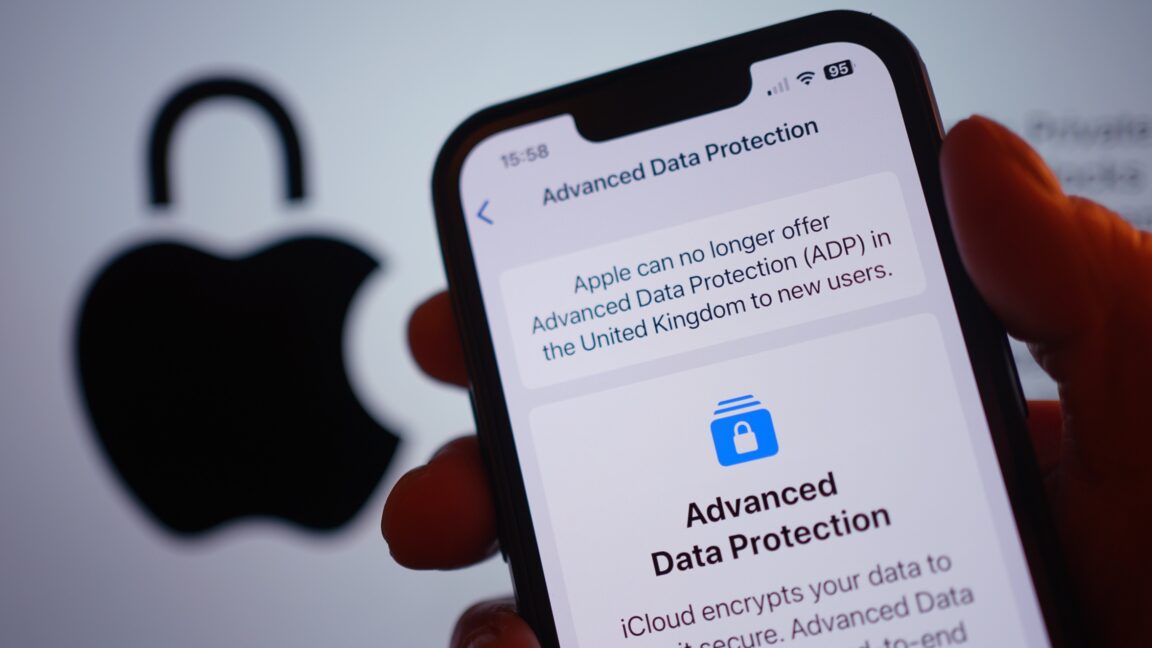
Apple refuses to break encryption, seeks reversal of UK demand for backdoor

Although it wasn’t previously reported, Apple’s appeal was filed last month at about the time it withdrew ADP from the UK, the Financial Times wrote today.

Snoopers’ Charter

Backdoors demanded by governments have alarmed security and privacy advocates, who say the special access would be exploited by criminal hackers and other governments. Bad actors typically need to rely on vulnerabilities that aren’t intentionally introduced and are patched when discovered. Creating backdoors for government access would necessarily involve tech firms making their products and services less secure.

The order being appealed by Apple is a Technical Capability Notice issued by the UK Home Office under the 2016 law, which is nicknamed the Snoopers’ Charter and forbids unauthorized disclosure of the existence or contents of a warrant issued under the act.

“The Home Office refused to confirm or deny that the notice issued in January exists,” the BBC wrote today. “Legally, this order cannot be made public.”

Apple formally opposed the UK government’s power to issue Technical Capability Notices in testimony submitted in March 2024. The Investigatory Powers Act “purports to apply extraterritorially, permitting the UKG [UK government] to assert that it may impose secret requirements on providers located in other countries and that apply to their users globally,” Apple’s testimony said.

We contacted Apple about its appeal today and will update this article if we get a response. The appeal process may be a secretive one, the FT article said.

“The case could be heard as soon as this month, although it is unclear whether there will be any public disclosure of the hearing,” the FT wrote. “The government is likely to argue the case should be restricted on national security grounds.”

Under the law, Investigatory Powers Tribunal decisions can be challenged in an appellate court.

https://arstechnica.com/tech-policy/2025/03/apple-appeals-uks-secret-demand-for-backdoor-access-to-encrypted-user-data/


Trump’s 25% tariffs take effect; Canadian PM calls it “a very dumb thing”

President Trump’s 25 percent tariffs on Canada and Mexico took effect today, and the White House increased a tariff on China from 10 to 20 percent in an executive order. Canada, Mexico, and China announced retaliatory moves, and stock markets sank globally.

Industry groups and companies have warned the Trump tariffs will raise prices for cars, groceries, consumer technology, and other products.

Canada was hit with a 10 percent tariff on energy exports to the US, while other Canadian exports are subject to the 25 percent tariff. Prime Minister Justin Trudeau said his country would impose 25 percent tariffs on over $100 billion worth of US goods.

China responded with new tariffs of 10 to 15 percent on US agricultural products starting March 10 and other retaliatory moves such as blacklisting 15 US companies. Mexican President Claudia Sheinbaum said she will announce retaliatory tariffs and other measures on Sunday.

“There’s no motive, reason or justification that supports this decision that will affect our people and nations,” Sheinbaum reportedly said at a news conference. “We will always seek a negotiated solution, in a framework of respect.” Sheinbaum said Mexico wants “dialogue, with reasoning and rationality.”

Trudeau: Trump tariffs “a very dumb thing to do”

Trudeau said that Trump imposing tariffs is “a very dumb thing to do” and that Canada “will not back down from a fight.” Addressing US residents, Trudeau said, “We don’t want this, but your government has chosen to do this to you.”

Trump’s executive orders have blamed Canada for “the flow of illicit drugs across our northern border,” Mexico for a “sustained influx of illegal aliens and illicit opioids and other drugs,” and China for a “sustained influx of synthetic opioids, including fentanyl.”

https://arstechnica.com/tech-policy/2025/03/trumps-25-tariffs-take-effect-canadian-pm-calls-it-a-very-dumb-thing/


TSMC to invest $100B as Trump demands more US-made chips, report says

Currently, TSMC only builds its most advanced chips in Taiwan. But when the most advanced US fabs are operational, they’ll be prepared to manufacture “tens of millions of leading-edge chips” to “power products like 5G/6G smartphones, autonomous vehicles, and AI datacenter servers,” the Commerce Department said in 2024.

TSMC has not confirmed the WSJ’s report but provided a statement: “We’re pleased to have an opportunity to meet with the President and look forward to discussing our shared vision for innovation and growth in the semiconductor industry, as well as exploring ways to bolster the technology sector along with our customers.”

Trump threat of semiconductor tariffs still looms

Advanced chips are regarded as critical for AI innovation, which Trump has prioritized, as well as for national security.

Without a steady supply, the US risks substantial technological and economic losses as well as potential weakening of its military.

To avert that, Trump campaigned on imposing tariffs that he claimed would drive more semiconductor manufacturing into the US, while criticizing the CHIPS Act for costing the US billions. Following through on that promise, in February, he threatened a “25 percent or more tariff” on all semiconductor imports, the WSJ reported. According to CNBC, Trump suggested those tariffs could be in effect by April 2.

“We have to have chips made in this country,” Trump said last month. “Right now, everything is made in Taiwan, practically, almost all of it, a little bit in South Korea, but everything—almost all of it is made in Taiwan. And we want it to be made—we want those companies to come to our country, in all due respect.”

While it’s unclear if Trump plans to overtly kill the CHIPS Act, his government funding cuts could trigger a future where the CHIPS Act dies with no workers left to certify that companies meet requirements for ongoing award disbursements, a semiconductor industry consultant group, Semiconductor Advisors, warned in a statement last month.

“If I were running a chip company, I would not count on CHIPS Act funding, even if I had a signed contract,” SA’s statement said.

https://arstechnica.com/tech-policy/2025/03/tsmc-will-reportedly-invest-100b-to-expand-us-chip-fab-buildouts/


Commercials are still too loud, say “thousands” of recent FCC complaints

Streaming ads could get muzzled, too

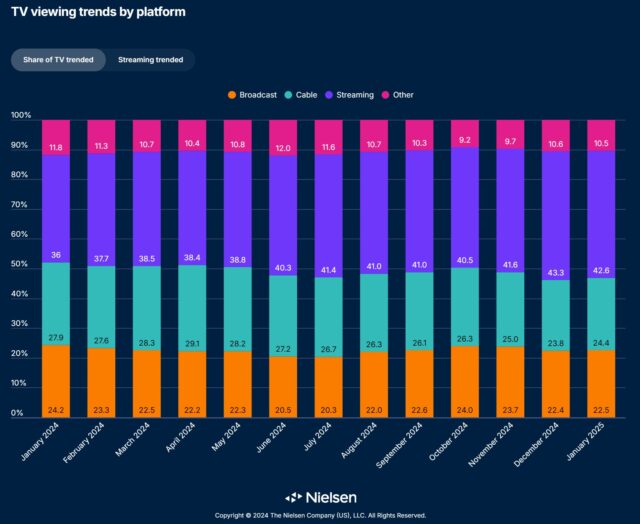
As you may have noticed—either through the text of this article or your own ears—The Calm Act doesn’t apply to streaming services. And because The Calm Act doesn’t affect commercials viewed on the Internet, online services providing access to broadcast channels, like YouTube TV and Sling, don’t have to follow the rules. This is despite such services distributing the same content as linear TV providers.

For years, this made sense. The majority of TV viewing occurred through broadcast, cable, or satellite access. Further, services like Netflix and Amazon Prime Video used to be considered safe havens from constant advertisements. But today, streaming services are more popular than ever and have grown to love ads, which have become critical to most platforms’ business models. Further, many streaming services are airing more live events. These events, like sports games, show commercials to all subscribers, even those with a so-called “ad-free” subscription.

Separate from the Calm Act violation complaints, the FCC noted this month that other recent complaints it has seen illustrate “growing concern with the loudness of commercials on streaming services and other online platforms.” If the FCC decides to apply Calm Act rules to the web, it would need to create new methods for ensuring compliance, it said.

TV viewing trends by platform bar graph by Nielsen.
Nielsen’s most recent data on how people watch TV. Credit: Nielsen

The FCC didn’t specify what’s behind the spike in consumers’ commercial complaints. Perhaps with declining audiences, traditional TV providers thought it would be less likely for anyone to notice and formally complain about Ozempic ads shouting at them. Twelve years have passed since the rules took effect, so it’s also possible that organizations are getting lackadaisical about ensuring compliance or have dwindling resources.

With Americans spending similar amounts of time—if not longer—watching TV online versus via broadcast, cable, and satellite, The Calm Act would have to take on the web in order to maximize effectiveness. The streaming industry is young, though, and operates differently than linear TV distribution, presenting new regulation challenges.

https://arstechnica.com/gadgets/2025/02/commercials-are-still-too-loud-say-thousands-of-recent-fcc-complaints/


Firefox deletes promise to never sell personal data, asks users not to panic

Update at 10:20 pm ET: Mozilla has since announced a change to the license language to address user complaints. It now says, “You give Mozilla the rights necessary to operate Firefox. This includes processing your data as we describe in the Firefox Privacy Notice. It also includes a nonexclusive, royalty-free, worldwide license for the purpose of doing as you request with the content you input in Firefox. This does not give Mozilla any ownership in that content.”

Mozilla also took heat from users after a Mozilla employee solicited feedback in a connect.mozilla.org discussion forum. “This isn’t a question of messaging or clarifying,” one person wrote. “You cannot ask your users to give you these broad rights to their data. This agreement, as currently written, is not acceptable.”

Mozilla announced the new terms of use and an updated privacy policy in a blog post on Wednesday. After seeing criticism, Mozilla added a clarification that said the company needs “a license to allow us to make some of the basic functionality of Firefox possible. Without it, we couldn’t use information typed into Firefox, for example. It does NOT give us ownership of your data or a right to use it for anything other than what is described in the Privacy Notice.”

One of the uses described in the privacy notice has to do with users’ location data. Mozilla says it takes steps to anonymize the data and that users can turn the functionality off entirely:

Mozilla may also receive location-related keywords from your search (such as when you search for “Boston”) and share this with our partners to provide recommended and sponsored content. Where this occurs, Mozilla cannot associate the keyword search with an individual user once the search suggestion has been served and partners are never able to associate search suggestions with an individual user. You can remove this functionality at any time by turning off Sponsored Suggestions—more information on how to do this is available in the relevant Firefox Support page.

Some users were not convinced by Mozilla’s statements about needing a license to use data to provide basic functionality. “That’s a load of crap and you know it. ‘Basic functionality’ is to download and render webpages,” one person wrote in response to Mozilla’s request for feedback.

https://arstechnica.com/tech-policy/2025/02/firefox-deletes-promise-to-never-sell-personal-data-asks-users-not-to-panic/


Europol arrests 25 users of online network accused of sharing AI CSAM

In South Korea, where AI-generated deepfake porn has been criminalized, an “emergency” was declared and hundreds were arrested, mostly teens. But most countries don’t yet have clear laws banning AI sex images of minors, and Europol cited this fact as a challenge for Operation Cumberland, which is a coordinated crackdown across 19 countries lacking clear guidelines.

“Operation Cumberland has been one of the first cases involving AI-generated child sexual abuse material (CSAM), making it exceptionally challenging for investigators, especially due to the lack of national legislation addressing these crimes,” Europol said.

European Union member states are currently mulling a rule proposed by the European Commission that could help law enforcement “tackle this new situation,” Europol suggested.

Catherine De Bolle, Europol’s executive director, said police also “need to develop new investigative methods and tools” to combat AI-generated CSAM and “the growing prevalence” of CSAM overall.

For Europol, deterrence is critical to support efforts in many EU member states to identify child sex abuse victims. The agency plans to continue to arrest anyone discovered producing, sharing, and/or distributing AI CSAM while also launching an online campaign to raise awareness that doing so is illegal in the EU.

That campaign will highlight the “consequences of using AI for illegal purposes,” Europol said, by using “online messages to reach buyers of illegal content” on social media and payment platforms. Additionally, the agency will apparently go door-to-door and issue warning letters to suspects identified through Operation Cumberland or any future probe.

It’s unclear how many more arrests could be on the horizon in the EU, but Europol disclosed that 273 users of the Danish suspect’s online network were identified, 33 houses were searched, and 173 electronic devices have been seized.

https://arstechnica.com/tech-policy/2025/02/25-arrested-so-far-for-sharing-ai-sex-images-of-minors-in-largest-eu-crackdown/