TikTok loses Supreme Court fight, prepares to shut down Sunday

TikTok has lost its Supreme Court appeal in a 9–0 decision and will likely shut down on January 19, a day before Donald Trump’s inauguration, unless the app can be sold before the deadline, which TikTok has said is impossible.

During the trial last Friday, TikTok lawyer Noel Francisco warned SCOTUS that upholding the Biden administration’s divest-or-sell law would likely cause TikTok to “go dark—essentially the platform shuts down” and “essentially… stop operating.” On Wednesday, TikTok reportedly began preparing to shut down the app for all US users, anticipating the loss.

But TikTok’s claims that the divest-or-sell law violated Americans’ free speech rights did not supersede the government’s compelling national security interest in blocking a foreign adversary like China from potentially using the app to spy on or influence Americans, SCOTUS ruled.

“We conclude that the challenged provisions do not violate petitioners’ First Amendment rights,” the SCOTUS opinion said, while acknowledging that “there is no doubt that, for more than 170 million Americans, TikTok offers a distinctive and expansive outlet for expression, means of engagement, and source of community.”

Late last year, TikTok and its owner, the Chinese-owned company ByteDance, urgently pushed SCOTUS to intervene before the law’s January 19 enforcement date. Ahead of SCOTUS’ decision, TikTok warned it would have no choice but to abruptly shut down a thriving platform where many Americans get their news, express their views, and make a living.

The US had argued the law was necessary to protect national security interests as the US-China trade war intensifies, alleging that China could use the app to track and influence TikTok’s 170 million American users. A lower court had agreed that the US had a compelling national security interest and rejected arguments that the law violated the First Amendment, triggering TikTok’s appeal to SCOTUS. Today, the Supreme Court upheld that ruling.

https://arstechnica.com/tech-policy/2025/01/supreme-court-rules-tiktok-can-be-banned/


European Union orders X to hand over algorithm documents

Earlier in the week, Germany’s defence ministry and foreign ministry said they were suspending their activity on X, with the defence ministry saying it had become increasingly “unhappy” with the platform.

When asked if the expanded probe was a response to a discussion Musk conducted last week with AfD co-leader Alice Weidel, in which she was given free rein to promote her party’s platform and make false claims about Adolf Hitler, a Commission spokesperson said the new request helped “us monitor systems around all these events taking place.”

However, he said it was “completely independent of any political considerations or any specific events.”

“We are committed to ensuring that every platform operating in the EU respects our legislation, which aims to make the online environment fair, safe, and democratic for all European citizens,” said Henna Virkkunen, the Commission’s digital chief.

X did not immediately respond to a request for comment.

The Commission had been under recent political pressure to be tough on Musk’s X ahead of the Weidel interview.

Last week Damian Boeselager, member of the European parliament, wrote to Virkkunnen to demand a probe into whether the social media platform’s use of algorithms met the EU’s transparency requirements.

“There are allegations that Musk is boosting his own tweets,” Boeselager told the Financial Times last week. “The guy can be crazy but it is unfair if he’s amplifying who must listen to him.”

This story was updated shortly after publication with additional details.

© 2025 The Financial Times Ltd. All rights reserved. Not to be redistributed, copied, or modified in any way.

https://arstechnica.com/tech-policy/2025/01/european-union-orders-x-to-hand-over-algorithm-documents/


Girl strangled by her own wheelchair as bus monitor texted, checked Instagram

Cell phones are magnets for our attention, but you can, of course, face significant legal jeopardy for giving them that attention. Just ask the “safety driver” of an Uber self-driving vehicle, which hit and killed a pedestrian in Arizona in 2018. According to authorities, the driver was watching The Voice on Hulu just before the crash—and was then charged with negligent homicide.

These kinds of cases are always tragic because they feel so easily avoidable, but they also happen with enough regularity that it’s easy to tune them out. According to the National Highway Traffic Safety Administration, 3,308 people were killed by distracted drivers in 2022 alone—and “texting is the most alarming distraction.”

That’s why states continue to crack down on cell phone use while driving. A Colorado law that went into effect on January 1, for instance, bans a driver from using any mobile electronic device unless it is hands-free. Thirty US states now have such bans in place.

But a trial that wrapped up in New Jersey this week caught my attention, because it is one of the sadder and stranger examples of cell phone-mediated distraction while in a vehicle. A young girl died, and a 28-year-old woman is probably going to jail, but this is not your typical tale of texting while driving. Texting was involved—34 times, in fact—but driving had nothing to do with what happened.

Child endangerment

The trial was about an incident in Franklin Township, New Jersey, on July 17, 2023, when a 6-year-old girl named Fajr Williams got on a bus to attend a summer program. Williams had disabilities and was confined to her wheelchair. The bus had a spot for anchoring wheelchairs to the ground, and it had a ride-along bus monitor named Amanda Davila, 28, who was supposed to watch and assist kids like Williams.

According to state prosecutors, Williams was properly strapped into her wheelchair and had been taken down to the bus by her older sister. Williams was then loaded onto the bus, but her chair was allegedly not attached to the floor correctly, nor were the proper seatbelts used. As a result, while the bus drove its route to school that morning, Williams began to slide down the seat of her wheelchair. (She could not control her trunk movements normally, and so she was unable to sit back up.) At some point in the ride, she slid low enough that her chair’s own four-point harness, which was meant to keep her upright, began to choke her. By the time the bus arrived at school, William had been strangled to death.

https://arstechnica.com/tech-policy/2025/01/girl-strangled-by-her-own-wheelchair-as-bus-monitor-sent-34-texts-checked-instagram/


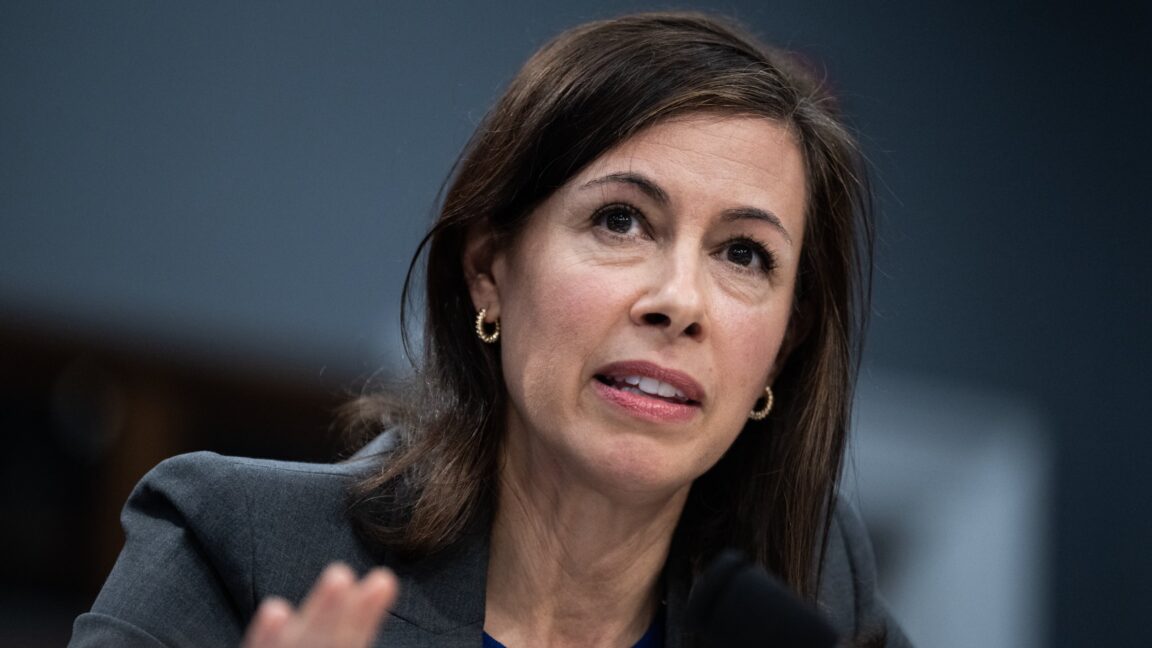
Departing FCC chair rejects complaints about TV news coverage of Trump

Rejecting all four, Rosenworcel said “the facts and legal circumstances in each of these cases are different. But what they share is that they seek to weaponize the licensing authority of the FCC in a way that is fundamentally at odds with the First Amendment. To do so would set a dangerous precedent. That is why we reject it here.”

Dismissing complaints isn’t likely to end the cases, said Jeffrey Westling, a lawyer at the conservative American Action Forum who has urged Congress to “limit or revoke the FCC’s authority to impose content-based restrictions on broadcast television.”

Westling said he agrees “substantively” with Rosenworcel, but added that “the DC Circuit Court has made clear that the FCC has to consider news distortion complaints (see Serafyn vs FCC) and not just dismiss them outright. If I am the complainants, I challenge these dismissals in court, win, and get more attention.”

When contacted by Ars today, the Center for American Rights provided a statement criticizing Rosenworcel’s decision as “political and self-serving.”

“We fundamentally believe that several actions taken by the three major networks were partisan, dishonest and designed to support Vice President Harris in her bid to become President,” the group said. “We will continue to pursue avenues to ensure the American public is protected from media manipulation of our Republic. The First Amendment does not protect intentional misrepresentation or fraud.”

The group previously touted the fact that Republican FCC Commissioner Nathan Simington urged FCC leadership to take its complaints seriously.

Fox ruling will be challenged

The Media and Democracy Project criticized Rosenworcel’s decision to dismiss its complaint against the Fox station in Philadelphia.

“We look forward to presenting on appeal the multiple court decisions that raise serious questions about the Murdochs’ and Fox’s character qualifications to remain broadcast licensees,” the Media and Democracy Project said in a statement provided to Ars. “As renowned First Amendment scholar Floyd Abrams stated in his filing with the Commission, the First Amendment is no bar to Commission action given the facts of this case. Our petition is clearly distinct from the other politically motivated complaints.”

https://arstechnica.com/tech-policy/2025/01/departing-fcc-chair-rejects-complaints-about-tv-news-coverage-of-trump/


RedNote may wall off “TikTok refugees” to prevent US influence on Chinese users

Just a few days after more than 700 million new users flooded RedNote—which Time noted is “the most apolitical social platform in China”—rumors began swirling that RedNote may soon start segregating American users and other foreign IPs from the app’s Chinese users.

In the “TikTokCringe” subreddit, a video from a RedNote user with red eyes, presumably swollen from tears, suggested that Americans had possibly ruined the app for Chinese Americans who rely on RedNote to stay current on Chinese news and culture.

“RedNote or Xiaohongshu released an update in the greater China region with the function to separate out foreign IPs, and there are now talks of moving all foreign IPs to a separate server and having a different IP for those who are in the greater China area,” the Reddit poster said. “I know through VPNs and other ways, people are still able to access the app, but essentially this is gonna kill the app for Chinese Americans who actually use the app to connect with Chinese content, Chinese language, Chinese culture.”

There has been no official announcement that such a change is coming, but Reddit commenters speculated that possibly the Chinese Communist Party (CCP) was requiring a change to stop American TikTokers from using the app to influence Chinese citizens.

“CCP don’t want American influence to spread to their citizens,” a top commenter wrote. That prompted another commenter to respond, “a bit of irony here,” seemingly suggesting China walling off American TikTokers seems a lot like what the US government plans to do through the TikTok ban. But others pointed out that China has long blocked Western social media apps like Reddit and X to prevent such feared influence. “If people couldn’t see this coming, then they have no idea what China’s politics are,” one Redditor suggested in the thread.

On social media platforms like X (formerly Twitter), others discussed the potential update that could fence off Chinese users, with one post with 1.2 million views suggesting the update could come next week.

Unlike other popular Chinese apps that require a Chinese phone number to register as a user, like WeChat, RedNote has never had such a requirement and always operated one single version of its app, Reuters reported. So, a shift to segregating users would be a big change and could possibly take more time.

https://arstechnica.com/tech-policy/2025/01/rednote-may-wall-off-tiktok-refugees-to-prevent-us-influence-on-chinese-users/


AT&T kills home Internet service in NY over law requiring $15 or $20 plans

AT&T has stopped offering its 5G home Internet service in New York instead of complying with a new state law that requires ISPs to offer $15 or $20 plans to people with low incomes.

The decision was reported yesterday by CNET and confirmed by AT&T in a statement provided to Ars today. “While we are committed to providing reliable and affordable Internet service to customers across the country, New York’s broadband law imposes harmful rate regulations that make it uneconomical for AT&T to invest in and expand our broadband infrastructure in the state,” AT&T said. “As a result, effective January 15, 2025, we will no longer be able to offer AT&T Internet Air, our fixed-wireless Internet service, to New York customers.”

New York started enforcing its Affordable Broadband Act yesterday after a legal battle of nearly four years. Broadband lobby groups convinced a federal judge to block the law in 2021, but a US appeals court reversed the ruling in April 2024, and the Supreme Court decided not to hear the case last month.

The law requires ISPs with over 20,000 customers in New York to offer $15 broadband plans with download speeds of at least 25Mbps, or $20-per-month service with 200Mbps speeds. The plans only have to be offered to households that meet income eligibility requirements, such as qualifying for the National School Lunch Program, Supplemental Nutrition Assistance Program, or Medicaid.

AT&T’s Internet Air was launched in some areas in 2023 and is now available in nearly every US state. The standard price for Internet Air is $60 a month plus taxes and fees, or $47 when bundled with an eligible mobile service. Nationwide, AT&T said it added 135,000 Internet Air customers in the most recent quarter.

https://arstechnica.com/tech-policy/2025/01/att-complies-with-law-requiring-cheap-internet-by-ending-a-service-in-ny/


With Bitcoin near $100,000, even pension funds are buying cryptocurrency

“There’s no doubt that the headwinds are disappearing… I think you’ll see more of this institutional adoption,” said Alex Pollak, head of UK and Israel at 21Shares, a Swiss cryptocurrency exchange traded product provider.

In the UK, pensions consultancy Cartwright said it had advised on its first bitcoin deal, with a small undisclosed £50 million pension scheme allocating about £1.5 million directly to bitcoin rather than through an ETF, in the hope that outsize returns might help plug its funding deficit.

Sam Roberts, director of investment consulting at Cartwright, said while the pensions industry was “slow moving” he expects this year to be “very interesting” in terms of schemes deciding to allocate more to crypto.

He said more than 50 individual savers had approached the consultancy saying they are not happy with their pensions provider and they would like their entire fund to be moved into crypto.

Cartwright has been speaking to two multiemployer pension funds about setting up a bitcoin fund for investors to opt into if they so choose, so that the funds would not lose members looking for crypto exposure.

“They could see a lot of members move to them… there would be a definite first-mover advantage,” said Roberts, who added that the discussions were still in early stages.

Australia’s AMP, which manages pension funds, has also used bitcoin to juice returns.

“This year AMP portfolios took the plunge and made a modest allocation to bitcoin futures,” said Steve Flegg, a senior portfolio manager at AMP. “We generally thought that even though crypto is risky, new and not yet fully proven, that it had become too big, and its potential was too great to continue to ignore.”

Still, funds allocating to bitcoin and other cryptocurrencies remain a minority in the pensions industry, with consultants mostly reluctant to recommend exposure to their clients.

In December, the US Government Accountability Office warned crypto assets have “uniquely high volatility” after it identified 69 crypto asset investment options available to investors in retirement plans.

“We don’t think pensions funds should allocate to crypto—it’s highly volatile and we don’t see any robust valuation framework that can justify the value,” said Daniel Peters, a partner in Aon’s global investment practice, who added that a better way for pension funds to get exposure was through hedge funds with expertise and skill in the asset class.

“We fundamentally don’t think this should be part of a pension fund strategy for those reasons unless they are allocated via a specialist manager,” he said.

© 2025 The Financial Times Ltd. All rights reserved. Not to be redistributed, copied, or modified in any way.

https://arstechnica.com/tech-policy/2025/01/with-bitcoin-over-100000-even-pension-funds-are-buying-cryptocurrency/


Texas defends requiring ID for porn to SCOTUS: “We’ve done this forever”

“You can use VPNs, the click of a button, to make it seem like you’re not in Texas,” Shaffer argued. “You can go through the search engines, you can go through social media, you can access the same content in the ways that kids are likeliest to do.”

Texas attorney Aaron Nielson argued that the problem of kids accessing porn online has only gotten “worse” in the decades since Texas has been attempting less restrictive and allegedly less effective means like content filtering. Now, age verification is Texas’ preferred solution, and strict scrutiny shouldn’t apply to a law that just asks someone to show ID to see adult content, Nielson argued.

“In our history we have always said kids can’t come and look at this stuff,” Nielson argued. “So it seems not correct to me as a historical matter to say, well actually it’s always been presumptively unconstitutional. … But we’ve done it forever. Strict scrutiny somehow has always been satisfied.”

Like groups suing, Texas also asked the Supreme Court to be very clear when writing guidance for the 5th Circuit should the court vacate and remand the case. But Texas wants justices to reiterate that just because the case was remanded, that doesn’t mean the 5th Circuit can’t reinstitute the stay on the preliminary injunction that was ordered following the 5th Circuit’s prior review.

On rebuttal, Shaffer told SCOTUS that out of “about 20 other laws that by some views may look a lot like Texas'” law, “this is the worst of them.” He described Texas Attorney General Ken Paxton as a “hostile regulator who’s saying to adults, you should not be here.”

“I strongly urge this court to stick with strict scrutiny as the applicable standard of review when we’re talking about content-based burdens on speakers,” Shaffer said.

In a press release, Vera Eidelman, a senior staff attorney with the ACLU Speech, Privacy, and Technology Project, said that “efforts to childproof the Internet not only hurt everyone’s ability to access information, but often give the government far too much leeway to go after speech it doesn’t like—all while failing to actually protect children.”

https://arstechnica.com/tech-policy/2025/01/texas-age-verification-law-masks-broader-anti-porn-agenda-lawyer-warns-scotus/


SEC sues Elon Musk, says he cheated Twitter investors out of $150 million

The lawsuit was filed in the waning days of the Biden administration, and the next administration is less likely to aggressively pursue a charge against Musk. President-elect Donald Trump picked Musk to lead a new Department of Government Efficiency, or “DOGE,” as part of a plan to eliminate regulations and restructure federal agencies.

New SEC leadership

SEC Chair Gary Gensler will be leaving the agency, and Trump’s pick to replace him, Paul Atkins, testified to Congress in 2019 that the SEC should reduce its disclosure requirements. With Gensler and one other Democrat leaving, Republicans will have a 2-1 majority on the SEC while the Senate considers Trump’s nominee, a Wall Street Journal article said.

This doesn’t necessarily mean that the lawsuit will be dismissed right away, according to the Journal. The disclosure rule is “routinely enforced,” the article said.

“The new claims against Musk might be hard for a friendlier administration to immediately dismiss,” the WSJ wrote. “That is because the measure Musk allegedly violated is what regulators call a strict-liability rule. Just as police officers don’t have to prove drivers intended to speed to issue a ticket, regulators don’t have to show an investor meant to violate [Rule] 13D to bring an enforcement action.”

The SEC has said it obtained thousands of documents as part of its investigation and that it was probing more than just the late disclosure. The SEC told a court in October 2023 that its investigation “pertains to considerably more than the timing and substance of a particular SEC filing; it also relates to all of Musk’s purchases of Twitter stock in 2022 and his 2022 statements and SEC filings.”

Musk’s lawyer said last month that the SEC threatened to bring “charges on numerous counts” if Musk didn’t agree to settle. But the lawsuit filed yesterday includes only the late-disclosure charge. Demanding a jury trial, the SEC seeks a civil penalty and disgorgement of Musk’s unjust enrichment, plus interest.

https://arstechnica.com/tech-policy/2025/01/sec-sues-elon-musk-says-he-cheated-twitter-investors-out-of-150-million/


Meta to cut 5% of employees deemed unfit for Zuckerberg’s AI-fueled future

Anticipating that 2025 will be an “intense year” requiring rapid innovation, Mark Zuckerberg reportedly announced that Meta would be cutting 5 percent of its workforce—targeting “lowest performers.”

Bloomberg reviewed the internal memo explaining the cuts, which was posted to Meta’s internal Workplace forum Tuesday. In it, Zuckerberg confirmed that Meta was shifting its strategy to “move out low performers faster” so that Meta can hire new talent to fill those vacancies this year.

“I’ve decided to raise the bar on performance management,” Zuckerberg said. “We typically manage out people who aren’t meeting expectations over the course of a year, but now we’re going to do more extensive performance-based cuts during this cycle.”

Cuts will likely impact more than 3,600 employees, as Meta’s most recent headcount in September totaled about 72,000 employees. It may not be as straightforward as letting go anyone with an unsatisfactory performance review, as Zuckerberg said that any employee not currently meeting expectations could be spared if Meta is “optimistic about their future performance,” The Wall Street Journal reported.

Any employees affected will be notified by February 10 and receive “generous severance,” Zuckerberg’s memo promised.

This is the biggest round of cuts at Meta since 2023, when Meta laid off 10,000 employees during what Zuckerberg dubbed the “year of efficiency.” Those layoffs followed a prior round where 11,000 lost their jobs and Zuckerberg realized that “leaner is better.” He told employees in 2023 that a “surprising result” from reducing the workforce was “that many things have gone faster.”

“A leaner org will execute its highest priorities faster,” Zuckerberg wrote in 2023. “People will be more productive, and their work will be more fun and fulfilling. We will become an even greater magnet for the most talented people. That’s why in our Year of Efficiency, we are focused on canceling projects that are duplicative or lower priority and making every organization as lean as possible.”

https://arstechnica.com/tech-policy/2025/01/meta-says-5-staff-cut-is-critical-to-further-ai-social-media/