US blocks China from foreign exports with even a single US-made chip

But while Commerce Secretary Gina Raimondo said that these new curbs would help prevent “China from advancing its domestic semiconductor manufacturing system” to modernize its military, analysts and “several US officials” told The Post that they pack “far less punch” than the prior two rounds of export controls.

Analysts told The Wall Street Journal that the US took too long to launch the controls, which were composed around June. As industry insiders weighed in on the restrictions, word got out about the US plans to expand controls. In the months since, analysts said, China had plenty of time to stockpile the now-restricted tech. Applied Materials, for example, saw an eye-popping 86 percent spike in net revenue from products shipped to China “in the nine months ending July 28,” the WSJ reported.

Because of this and other alleged flaws, it’s unclear how effectively Biden’s final attempts to block China from accessing the latest US technologies will work.

Beyond concerns that China had time to stockpile tech it anticipated would be restricted, Gregory Allen, the director at the Wadhwani AI Center at the Center for Strategic and International Studies, told the WSJ that these latest controls “left loopholes that Huawei and Chinese companies could exploit.”

Loopholes include failing to blacklist companies that Huawei regularly uses—with allies and American companies allegedly lobbying to exempt factories or fabs they like, such as ChangXin Memory Technologies Inc., “one of China’s largest memory chipmakers,” The Post noted. They also include failing to restrict older versions of the HBM chips and various chipmaking equipment that China may still be able to easily access, Allen said.

“These controls are weaker than what the United States should have done,” Allen told The Post. “You can make a halfway logical argument that says, ‘Sell everything to China.’ Then you can make a reasonable argument, ‘Sell very little to China.’ But the worst thing you can do is to dramatically signal your intention to cut off China’s access to tech but then have so many loopholes and such bungled implementation that you incur almost all of the costs of the policy with only a fraction of the benefits.”

https://arstechnica.com/tech-policy/2024/12/bidens-last-jab-at-china-curbs-on-memory-chips-chipmakers-investors/



FCC approves Starlink plan for cellular phone service, with some limits

Eliminating cellular dead zones

Starlink says it will offer texting service this year as well as voice and data services in 2025. Starlink does not yet have FCC approval to exceed certain emissions limits, which the company has said will be detrimental for real-time voice and video communications.

For the operations approved yesterday, Starlink is required to coordinate with other spectrum users and cease transmissions when any harmful interference is detected. “We hope to activate employee beta service in the US soon,” wrote Ben Longmier, SpaceX’s senior director of satellite engineering.

Longmier made a pitch to cellular carriers. “Any telco that signs up with Starlink Direct to Cell can completely eliminate cellular dead zones for their entire country for text and data services. This includes coastal waterways and the ocean areas in between land for island nations,” he wrote.

Starlink launched its first satellites with cellular capabilities in January 2024. “Of the more than 2,600 Gen2 Starlink satellites in low Earth orbit, around 320 are equipped with a direct-to-smartphone payload, enough to enable the texting services SpaceX has said it could launch this year,” SpaceNews wrote yesterday.

Yesterday’s FCC order also lets Starlink operate up to 7,500 second-generation satellites in altitudes between 340 km and 360 km, in addition to the previously approved altitudes between 525 km and 535 km. SpaceX is seeking approval for another 22,488 satellites but the FCC continued to defer action on that request. The FCC order said:

Authorization to permit SpaceX to operate up to 7,500 Gen2 satellites in lower altitude shells will enable SpaceX to begin providing lower-latency satellite service to support growing demand in rural and remote areas that lack terrestrial wireless service options. This partial grant also strikes the right balance between allowing SpaceX’s operations at lower altitudes to provide low-latency satellite service and permitting the Commission to continue to monitor SpaceX’s constellation and evaluate issues previously raised on the record.

Coordination with NASA

SpaceX is required to coordinate “with NASA to ensure protection of the International Space Station (ISS), ISS visiting vehicles, and launch windows for NASA science missions,” the FCC said. “SpaceX may only deploy and operate at altitudes below 400 km the total number of satellites for which it has completed physical coordination with NASA under the parties’ Space Act Agreement.”

https://arstechnica.com/tech-policy/2024/11/fcc-approves-starlink-plan-for-cellular-phone-service-with-some-limits/


Google’s plan to keep AI out of search trial remedies isn’t going very well

Additionally, the DOJ wants Mehta to stop Google from any potential self-preferencing, such as making an AI product mandatory on Android devices Google controls or preventing a rival from distribution on Android devices.

The government seems very concerned that Google may use its ownership of Android to play games in the emerging AI sector. They’ve further recommended an order preventing Google from discouraging partners from working with rivals, degrading the quality of rivals’ AI products on Android devices, or otherwise “coercing” manufacturers or other Android partners into giving Google’s AI products “better treatment.”

Importantly, if the court orders AI remedies linked to Google’s control of Android, Google could risk a forced sale of Android if Mehta grants the DOJ’s request for “contingent structural relief” requiring divestiture of Android if behavioral remedies don’t destroy the current monopolies.

Finally, the government wants Google to be required to allow publishers to opt out of AI training without impacting their search rankings. (Currently, opting out of AI scraping automatically opts sites out of Google search indexing.)

All of this, the DOJ alleged, is necessary to clear the way for a thriving search market as AI stands to shake up the competitive landscape.

“The promise of new technologies, including advances in artificial intelligence (AI), may present an opportunity for fresh competition,” the DOJ said in a court filing. “But only a comprehensive set of remedies can thaw the ecosystem and finally reverse years of anticompetitive effects.”

At the status conference Tuesday, DOJ attorney David Dahlquist reiterated to Mehta that these remedies are needed so that Google’s illegal conduct in search doesn’t extend to this “new frontier” of search, Law360 reported. Dahlquist also clarified that the DOJ views these kinds of AI products “as new access points for search, rather than a whole new market.”

https://arstechnica.com/tech-policy/2024/11/google-drags-ai-rivals-into-search-trial-as-judge-entertains-ai-remedies/


Biased AI in health care faces crackdown in sweeping Biden admin proposals

Prior authorization

Elsewhere in the over 700-page proposal, the administration lays out policy that would bar Medicare Advantage plan providers from reopening and reneging on paying claims for inpatient hospital admission if those claims had already been granted approval through prior authorization. The proposal also wants to make criteria for coverage clearer and help ensure that patients know they can appeal denied claims.

The Department of Health and Human Services notes that when patients appeal claim denials from Medicare Advantage plans, the appeals are successful 80 percent of the time. But, only 4 percent of claim denials are appealed—”meaning many more denials could potentially be overturned by the plan if they were appealed.”

AI guardrails

Last, the administration’s proposal also tries to shore up guardrails for the use of AI in health care with edits to existing policy. The goal is to make sure Medicare Advantage insurers don’t adopt flawed AI recommendations that deepen bias and discrimination or exacerbate existing inequities.

As an example, the administration pointed to the use of AI to predict which patients would miss medical appointments—and then recommend that providers double-book the appointment slots for those patients. In this case, low-income patients are more likely to miss appointments, because they may struggle with transportation, childcare, and work schedules. “As a result of using this data within the AI tool, providers double-booked lower-income patients, causing longer wait times for lower-income patients and perpetuating the cycle of additional missed appointments for vulnerable patients.” As such, it should be barred, the administration says.

In general, people of color and people of lower socioeconomic status tend to be more likely to have gaps and flaws in their electronic health records. So, when AI is trained on large data sets of health records, it can generate flawed recommendations based on that spotty and incorrect information, thereby amplifying bias.

https://arstechnica.com/health/2024/11/biden-proposes-guardrails-on-health-care-ai-upping-weight-loss-drug-access/


Supreme Court wants US input on whether ISPs should be liable for users’ piracy

Record labels vs. ISPs

Cox has said that letting the piracy ruling stand “would force ISPs to terminate Internet service to households or businesses based on unproven allegations of infringing activity, and put them in a position of having to police their networks.” Cox said that ISPs “have no way of verifying whether a bot-generated notice is accurate” and that even if the notices are accurate, terminating an account would punish every user in a household where only one person may have illegally downloaded copyrighted files.

Record labels urged the court to reinstate the vicarious infringement verdict. “As the District Court explained, the jury had ample evidence that Cox profited from its subscribers’ infringement, including evidence ‘that when deciding whether to terminate a subscriber for repeat infringement, Cox considered the subscriber’s monthly payments,’ and ‘Cox repeatedly declined to terminate infringing subscribers’ Internet service in order to continue collecting their monthly fees,'” the record labels’ petition said.

Another potentially important copyright case involves the record labels and Grande, an ISP owned by Astound Broadband. The conservative-leaning US Court of Appeals for the 5th Circuit ruled last month that Grande violated the law by failing to terminate subscribers accused of being repeat infringers. The 5th Circuit also ordered a new trial on damages because it said a $46.8 million award was too high. Grande and the record labels are both seeking en banc rehearings of the 5th Circuit panel ruling.

https://arstechnica.com/tech-policy/2024/11/supreme-court-may-decide-whether-isps-must-terminate-users-accused-of-piracy/


DOJ wraps up ad tech trial: Google is “three times” a monopolist

One of the fastest monopoly trials on record wound down Monday, as US District Court Judge Leonie Brinkema heard closing arguments on Google’s alleged monopoly in a case over the company’s ad tech.

Department of Justice lawyer Aaron Teitelbaum kicked things off by telling Brinkema that Google “rigged” ad auctions, allegedly controlling “multiple parts” of services used to place ads all over the Internet, unfairly advantaging itself in three markets, The New York Times reported.

“Google is once, twice, three times a monopolist,” Teitelbaum said, while reinforcing that “these are the markets that make the free and open Internet possible.”

Teitelbaum likened Google to a “predator,” preying on publishers that allegedly had no viable other options for ad revenue but to stick with Google’s products. An executive for News Corp. testified that the news organization felt it was being held “hostage” because it risked losing $9 million in 2017 if it walked away from Google’s advertising platform.

Brinkema, who wasted no time and frequently urged lawyers to avoid repeating themselves or dragging out litigation with unnecessary testimony throughout the trial, reportedly pushed back.

In one instance she asked, “What would happen if a company had produced the best product,” but Teitelbaum rejected the idea that Google’s ad tech platform had competed on the merits.

“The problem is Google hasn’t done that,” Teitelbaum said, alleging that instead better emerging products “died out,” unable to compete on the merits.

According to Vidushi Dyall, the director of legal analysis for the Chamber of Progress (a trade group representing Google), this lack of advertiser testimony or evidence of better products could be key flaws in the DOJ’s argument. When Brinkema asked what better products Google had stamped out, the DOJ came up blank, Dyall posted in a thread on X (formerly Twitter).

Further, Dyall wrote, Brinkema “noted that the DOJ’s case was notably absent of direct testimony from advertisers.” The judge apparently criticized the DOJ for focusing too much on how publishers were harmed while providing “no direct evidence about advertisers and how satisfied/dissatisfied they are with the system,” Dyall wrote.

https://arstechnica.com/tech-policy/2024/11/doj-wraps-up-ad-tech-trial-google-is-three-times-a-monopolist/


OpenAI blamed NYT for tech problem erasing evidence of copyright abuse

Once OpenAI figured out what happened, data was restored, OpenAI said. But the NYT alleged that the only data that OpenAI could recover did “not include the original folder structure and original file names” and therefore “is unreliable and cannot be used to determine where the News Plaintiffs’ copied articles were used to build Defendants’ models.”

In response, OpenAI suggested that the NYT could simply take a few days and re-run the searches, insisting, “contrary to Plaintiffs’ insinuations, there is no reason to think that the contents of any files were lost.” But the NYT does not seem happy about having to retread any part of model inspection, continually frustrated by OpenAI’s expectation that plaintiffs must come up with search terms when OpenAI understands its models best.

OpenAI claimed that it has consulted on search terms and been “forced to pour enormous resources” into supporting the NYT’s model inspection efforts while continuing to avoid saying how much it’s costing. Previously, the NYT accused OpenAI of seeking to profit off these searches, attempting to charge retail prices instead of being transparent about actual costs.

Now, OpenAI appears to be more willing to conduct searches on behalf of NYT that it previously sought to avoid. In its filing, OpenAI asked the court to order news plaintiffs to “collaborate with OpenAI to develop a plan for reasonable, targeted searches to be executed either by Plaintiffs or OpenAI.”

How that might proceed will be discussed at a hearing on December 3. OpenAI said it was committed to preventing future technical issues and was “committed to resolving these issues efficiently and equitably.”

It’s not the first time OpenAI deleted data

This isn’t the only time that OpenAI has been called out for deleting data in a copyright case.

In May, book authors, including Sarah Silverman and Paul Tremblay, told a US district court in California that OpenAI admitted to deleting the controversial AI training data sets at issue in that litigation. Additionally, OpenAI admitted that “witnesses knowledgeable about the creation of these datasets have apparently left the company,” authors’ court filing said. Unlike the NYT, book authors seem to suggest that OpenAI’s deleting appeared potentially suspicious.

https://arstechnica.com/tech-policy/2024/11/tech-problems-plague-openai-court-battles-judge-rejects-a-key-fair-use-defense/


Supreme Court to review 5th Circuit ruling that upends Universal Service Fund

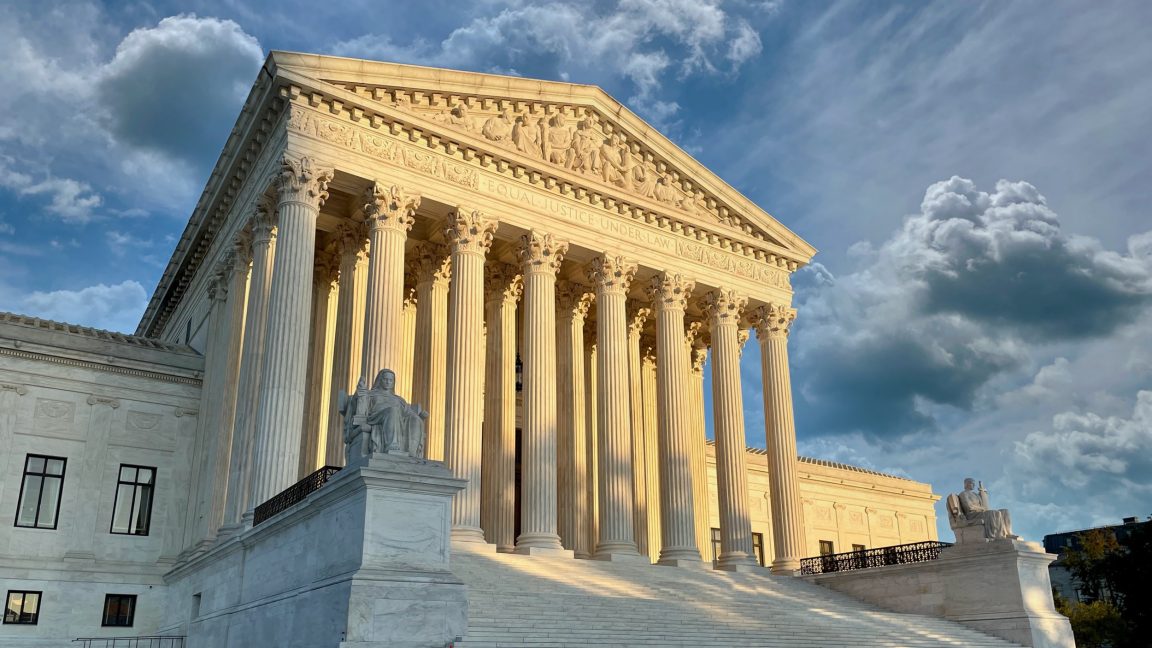
The US Supreme Court will hear appeals of a 5th Circuit ruling that called Universal Service fees on phone bills an illegal tax.

The US Court of Appeals for the 5th Circuit ruled in July that the Federal Communications Commission’s Universal Service Fund is unconstitutional and that the fees on phone bills are a “misbegotten tax.” The FCC and several non-government groups challenged the ruling, and the Supreme Court agreed to take up the case on Friday.

The Universal Service Fund is an $8 billion-a-year system that subsidizes the expansion of telecom networks with grants to Internet service providers and makes access more affordable through programs such as Lifeline discounts. The FCC program has faced several court challenges filed by Consumers’ Research, a nonprofit that fights “woke corporations,” and a mobile virtual network operator called Cause Based Commerce.

The conservative 5th Circuit’s ruling conflicted with decisions by the 5th and 11th Circuit appeals courts, which both rejected claims that the Universal Service Fund is unconstitutional. In a 9–7 ruling, the 5th Circuit objected to the FCC’s decision to let the Universal Service Fund be administered by a private organization called the Universal Service Administrative Company (USAC). The 5th Circuit said the FCC “subdelegated the taxing power to a private corporation,” and that “the combination of Congress’s sweeping delegation to FCC and FCC’s unauthorized subdelegation to USAC violates the Legislative Vesting Clause in Article I, § 1.”

FCC Chairwoman Jessica Rosenworcel said on Friday, “I am pleased that the Supreme Court will review the 5th Circuit’s misguided decision. For decades, there has been broad, bipartisan support for the Universal Service Fund and the FCC programs that help communications reach the most rural and least-connected households in the United States, as well as hospitals, schools, and libraries nationwide. I am hopeful that the Supreme Court will overturn the decision that put this vital system at risk.”

FCC challenge

The FCC and Department of Justice submitted a petition for Supreme Court review, saying the court should decide “whether the combination of Congress’s conferral of authority on the Commission and the Commission’s delegation of administrative responsibilities to the Administrator violates the nondelegation doctrine.”

The US petition said the USAC “performs administrative tasks on the FCC’s behalf” but “exercises no independent regulatory power.” The FCC calculates a contribution factor that determines what phone companies will have to pay, and the USAC “calculates each carrier’s contribution by applying the factor to that carrier’s ‘contribution base’ (generally, the carrier’s interstate and international telecommunications revenues),” the petition said.

https://arstechnica.com/tech-policy/2024/11/supreme-court-to-decide-whether-fcc-universal-service-fund-is-an-illegal-tax/


$300 billion pledge at COP29 climate summit a “paltry sum”

The world’s most important climate talks were pulled back from the brink of collapse after poorer countries reluctantly accepted a finance package of “at least” $300 billion a year from wealthy nations after bitter negotiations.

Fears about stretched budgets around the world and the election of Donald Trump as US president, who has described climate change as a “hoax,” drove the developing countries into acceptance of the slightly improved package after Sunday 2:30 am local time in Baku.

The UN COP29 climate summit almost collapsed twice throughout Saturday evening and into the early hours of Sunday morning, as vulnerable nations walked out of negotiations and India objected stridently.

As the gavel came down, India’s lead negotiator, Neelesh Shah, leapt to his feet to ask to take the floor, and when he was ignored made a furious timeout gesture above his head and led his team on to the stage in protest.

Speaking from the floor, Indian delegation member Chandni Raina said the country was “extremely disappointed” by the abrupt passage of the agreement, adding: “This was stage-managed.”

“It is a paltry sum,” she said. “I am sorry to say that we cannot accept it. We seek a much higher ambition from developed countries.” The agreement was “nothing more than an optical illusion,” she added.

The broadside was followed by objections from Bolivia, Chile, and Nigeria, who were told by COP29 President Mukhtar Babayev that their statements were noted. Smaller nations, such as Malawi, Fiji, and the Maldives, joined in the grievance.

Simon Stiell, head of the UN climate change arm, said the new goal was an “insurance policy for humanity, amid worsening climate impacts hitting every country” but added that it was “no time for victory laps.”

European Union climate commissioner Wopke Hoekstra tried to assure disappointed smaller nations, saying he was “confident we will reach the $1.3 trillion” economists say developing countries need to shift to green energy and cope with climate change.

https://arstechnica.com/science/2024/11/300-billion-pledge-at-cop29-climate-summit-a-paltry-sum/


Ted Cruz wants to overhaul $42B broadband program, nix low-cost requirement

The law also says the NTIA may not “regulate the rates charged for broadband service,” and Republicans claim the NTIA is violating this restriction. A July 23 letter sent by over 30 broadband industry trade groups also alleged that the administration is illegally regulating broadband prices. ISPs pointed to NTIA guidance that “strongly encouraged” states to set a fixed rate of $30 per month for the low-cost service option.

“The statute requires that there be a low-cost service option,” Davidson reportedly said at a congressional hearing in May. “We do not believe the states are regulating rates here. We believe that this is a condition to get a federal grant. Nobody’s requiring a service provider to follow these rates, people do not have to participate in the program.”

With Republicans gaining full control of Congress, they could amend the law to require changes. The Trump administration could also make changes on its own after new leadership at the NTIA is in place.

Cruz’s letter referenced plans to eliminate the “rate regulation” and other requirements set by the Biden administration. That includes what Cruz called “extreme technology bias” in reference to the NTIA’s preference for fiber broadband projects instead of other kinds of networks like cable, wireless, or satellite.

Cruz wrote:

Congress will review the BEAD program early next year, with specific attention to NTIA’s extreme technology bias in defining “priority broadband projects” and “reliable broadband service”; imposition of statutorily-prohibited rate regulation; unionized workforce and DEI labor requirements; climate change assessments; excessive per-location costs; and other central planning mandates. In turn, states will be able to expand connectivity on terms that meet the real needs of their communities, without irrelevant requirements that tie up resources, create confusion, and slow deployment.

Cruz alleges “race-based discrimination”

While the FCC is not administering the BEAD program, Carr took aim at it today in a post on X. “VP Harris led the $42 billion program for expanding Internet infrastructure into a thicket of red tape and saddled it with progressive policy goals that have nothing to do with quickly connecting Americans,” Carr wrote.

https://arstechnica.com/tech-policy/2024/11/ted-cruz-wants-to-overhaul-42b-broadband-program-nix-low-cost-requirement/