ABC refuses to capitulate to Trump admin, fights FCC probe into The View

Anna Gomez, the FCC’s only Democrat, said the public will remember “who complied in advance and who fought back. I’m glad Disney is choosing courage over capitulation.”

The filing for ABC was submitted by attorney Paul Clement, who served as US solicitor general under President George W. Bush; and Jennifer Tatel, who was an FCC lawyer during the Obama administration and for part of Trump’s first term. Tatel was promoted to acting general counsel in 2017 by then-FCC Chairman Ajit Pai, who said she “is known for her legal acumen, FCC expertise, and careful judgment.”

ABC’s filing said that The View still meets all of the qualifications for a bona fide news program and that there is no basis for overturning the 2002 order.

“Nevertheless, at the end of March, the Media Bureau ordered KTRK Television [a Houston-based ABC station] to file another Petition for Declaratory Ruling regarding The View’s status as a bona fide news interview program,” ABC said. “In parallel, on April 28, 2026, the Media Bureau issued an extraordinary order demanding the early filing of all of ABC’s license renewal applications, including for KTRK-TV.”

Although the license review has been widely seen as retaliation against ABC for employing Kimmel, the FCC says it is related to a yearlong investigation into ABC potentially violating anti-discrimination rules with diversity, equity, and inclusion (DEI) practices. ABC’s filing said the company has provided over 11,000 pages of documents and extensive answers to questions for the FCC probe. The FCC called ABC’s response inadequate in an order instructing Disney to file early license renewal applications for all of its licensed TV stations by May 28.

“Viewpoint discrimination and retaliatory targeting”

Citing comments that Carr made to Fox about The View, ABC said the FCC publicly announced its investigation into the program “and presag[ed] an outcome.” Carr said in the TV appearance that “when you look at the lineup of guests that have typically been on The View, I think it’s an uphill climb for Disney to make the case that they’re just a straight news program.”

https://arstechnica.com/tech-policy/2026/05/abc-fights-trump-fccs-attempt-to-control-content-of-broadcast-tv-shows/


Court rules Trump’s 10% tariff is just as illegal as the tariff it replaced

Trump has made it clear that he is not happy about court-ordered refunds, which some businesses should start receiving next week, Reuters reported. Last month, he cheered news that Apple and Amazon had yet to request refunds, which CNBC reported was due to fears of “offending” Trump. Deeming that response a sign that those companies understood the way Trump operates, he said, “I’ll remember” any companies that “honor” him by letting the US keep the unlawfully collected IEEPA tariffs.

Ars could not reach Apple or Amazon to clarify their positions on IEEPA tariff refunds.

Most likely, Trump is relieved that the international trade court did not require a similar universal injunction or widespread refunds on Section 122 tariffs. Notably, the president had griped that the Supreme Court failed in its opinion to include a line that said, “you don’t have to pay back tariffs that have already been received,” CNBC reported, suggesting that one part of his tariff strategy was to seize as many duties as he could and hope the courts would not order refunds.

No matter what happens with Section 122 refunds, Trump will probably prioritize concluding “two trade investigations under a legal provision known as Section 301” now that future Section 122 tariffs are unavailable, the NYT reported.

Currently, the United States trade representative is holding stakeholder hearings on those investigations, with the last hearing scheduled Friday and new tariffs expected to be announced as soon as this July.

Advocating for narrow tariffs are groups representing tech stakeholders, including the trade group the Consumer Technology Association and the think tank the Information Technology and Innovation Foundation (which Apple “supports”), Politico reported. They’ve urged USTR to narrowly focus on China—rather than all of the US trading partners—when imposing Section 301 tariffs. Otherwise, Trump’s goal of forcing more manufacturing into the US will face impediments, as tech companies will once again be rocked with high costs and supply chain uncertainties, they warned.

“Broad, economy-wide tariffs raise costs for US manufacturers, retailers and consumers while delivering limited enforcement benefits,” CTA’s vice president of international trade, Ed Brzytwa, reportedly testified. “Restricting access or increasing the cost of inputs that aren’t manufactured in sufficient quantities in the United States—or aren’t made here at all—can increase costs, reduce competitiveness and discourage investment in US manufacturing.”

https://arstechnica.com/tech-policy/2026/05/trumps-10-global-tariff-is-illegal-court-rules/


Elon Musk faces criminal probe in France after ignoring summons in X case

French prosecutors yesterday opened a criminal investigation into Elon Musk and X, escalating a probe into sexual images of minors and other alleged illegal content on Musk’s social network.

The action came three months after French law enforcement authorities raided X’s Paris office and summoned Musk for questioning. Prosecutors wanted to interview Musk and former X CEO Linda Yaccarino in April, but they did not appear.

The earlier request to interview Musk and Yaccarino was described as voluntary. Authorities are now seeking to compel them to appear for questioning with the threat of criminal charges. In addition to sexual images of minors, the investigation involves Grok’s dissemination of Holocaust-denial claims and sexually explicit deepfakes.

“Prosecutors said Thursday that the probe was now an official criminal investigation,” The Wall Street Journal wrote. Musk and Yaccarino were invited “to respond to preliminary charges against them. If either Musk or Yaccarino fails to appear, they can be slapped with the preliminary criminal charges in their absence, the prosecutors said.”

The office of Paris public prosecutor Laure Beccuau announced the move in a press release yesterday. The office said it asked investigating judges to charge X Corp., xAI, Musk, and Yaccarino “by summoning them for this purpose and to gather their comments, or, in the event of non-compliance, by issuing a warrant equivalent to an indictment,” Le Monde reported.

The investigation “aims to uphold the law and to protect individuals who have been victims of criminal offenses, both online and in real life,” the prosecutor’s office said. X previously “refused to comply with a court order to hand over its algorithm,” according to Le Monde.

https://arstechnica.com/tech-policy/2026/05/elon-musk-faces-criminal-probe-in-france-after-ignoring-summons-in-x-case/


Palantir employees are talking about company’s “descent into fascism”

It took just a few months of President Donald Trump’s second term for Palantir employees to question their company’s commitments to civil liberties. Last fall, Palantir seemed to become the technological backbone of Trump’s immigration enforcement machinery, providing software identifying, tracking, and helping deport immigrants on behalf of the Department of Homeland Security, when current and former employees started ringing the alarm.

Around that time, two former employees reconnected by phone. Right as they picked up the call, one of them asked, “Are you tracking Palantir’s descent into fascism?”

“That was their greeting,” the other former employee says. “There’s this feeling not of ‘Oh, this is unpopular and hard,’ but ‘This feels wrong.’”

Palantir was founded—with initial venture capital investment from the CIA—at a moment of national consensus following the September 11, 2001, attacks, when many saw fighting terrorism abroad as the most critical mission facing the US. The company, which was cofounded by tech billionaire Peter Thiel, sells software that acts as a high-powered data aggregation and analysis tool powering everything from private businesses to the US military’s targeting systems.

For the past 20 years, employees could accept the intense external criticism and awkward conversations with family and friends about working for a company named after J. R. R. Tolkien’s corrupting all-seeing orb. But a year into Trump’s second term, as Palantir deepens its relationship with an administration that many workers fear is wreaking havoc at home, employees are finally raising these concerns internally, as the US’s war on immigrants, war in Iran, and even company-released manifestos has forced them to rethink the role they play in it all.

“We hire the best and brightest talent to help defend America and its allies and to build and deploy our software to help governments and businesses around the world. Palantir is no monolith of belief, nor should we be,” a Palantir spokesperson said in a statement. “We all pride ourselves on a culture of fierce internal dialogue and even disagreement over the complex areas we work on. That has been true from our founding and remains true today.”

https://arstechnica.com/tech-policy/2026/04/palantir-employees-are-talking-about-companys-descent-into-fascism/


FCC: Router ban includes portable hotspots, but not phones with hotspot features

The Federal Communications Commission clarified this week that its sweeping ban on foreign-made consumer routers also affects portable hotspot devices.

The FCC added a new section to an FAQ titled, “Is my device a consumer-grade router under the National Security Determination?” The new FAQ section says this category includes “consumer-grade portable or mobile MiFi Wi-Fi or hotspot devices for residential use.” The ban does not cover “mobile phones with hotspot features,” the FAQ says.

This means that companies making consumer hotspots need an exemption from the government to import and sell any future hotspots that haven’t previously been approved by the FCC. As with routers, devices previously approved for sale in the US can continue to be imported and sold without obtaining a special exemption.

The FCC defines routers broadly, giving the agency plenty of flexibility to include various types of consumer networking devices in the ban. When the FCC announced the ban last month, it defined routers as “consumer-grade networking devices that are primarily intended for residential use and can be installed by the customer,” and which “forward data packets, most commonly Internet Protocol (IP) packets, between networked systems.”

But while an earlier version of the FAQ stated that cellphones with mobile hotspot features were exempt, it did not specifically say that portable hotspot devices were covered by the ban. In addition to hotspot devices, the new FAQ section says the router ban applies to “consumer or small and medium-sized business routers sold or rented through retail and self-installable by end users”; “LTE/5G CPE [customer premises equipment] devices for residential use”; “residential routers installed by a professional or ISP”; and “residential gateways that combine modem and router functions.”

https://arstechnica.com/tech-policy/2026/04/fcc-says-ban-on-foreign-made-routers-includes-portable-wi-fi-hotspots/


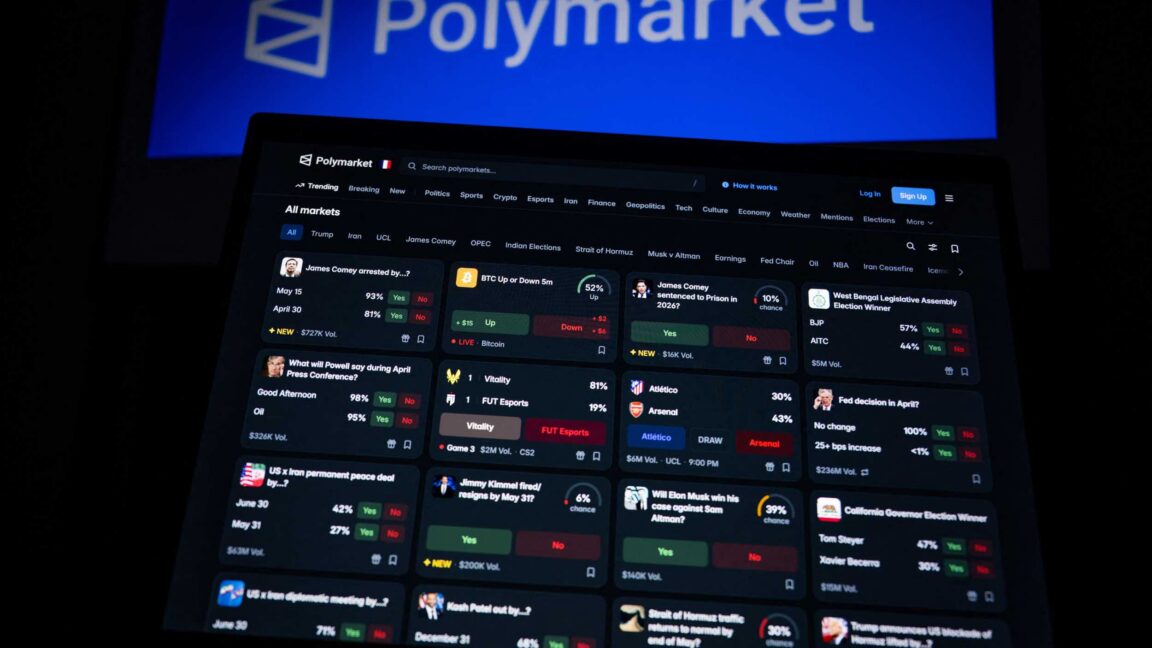
Soldier won $410K in Polymarket bets on timing of Maduro capture, US alleges

A US Army soldier was arrested for insider trading after being accused of making prediction-market wagers on the timing of the military’s capture of Venezuelan President Nicolás Maduro.

Army soldier Gannon Ken Van Dyke made a profit of nearly $410,000 by making bets on Polymarket, and he was indicted on charges of unlawful use of confidential government information for personal gain, theft of nonpublic government information, commodities fraud, wire fraud, and making an unlawful monetary transaction, the Department of Justice announced yesterday.

“As alleged in the indictment, Van Dyke participated in the planning and execution of the US military operation to capture Nicolás Maduro, called ‘Operation Absolute Resolve,’ and Van Dyke used his access to classified information about that operation to personally profit,” the DOJ said.

Van Dyke, a 38-year-old North Carolina resident stationed at Fort Bragg in Fayetteville, has been an active-duty soldier since 2008 and a master sergeant with US Army Special Forces since 2023, according to the indictment. He was bound by nondisclosure agreements forbidding him from revealing classified or sensitive military information.

Van Dyke allegedly started making bets about a week before the January 3 capture of Maduro. He was charged in US District Court for the Southern District of New York.

“Van Dyke won his wagers on those contracts,” and “profited approximately $409,881,” the DOJ said. He later “sent most of his proceeds to a foreign cryptocurrency vault before depositing them into a newly created online brokerage account,” and “took steps to conceal his identity as the trader in the Maduro- and Venezuela-related markets,” the DOJ said.

Trump: It’s like “Pete Rose betting on his own team”

The DOJ described the bets as follows:

As alleged, on or about Dec. 26, 2025, Van Dyke created a Polymarket account, funded it, and began trading on Maduro- and Venezuela-related markets. In total, Van Dyke made approximately 13 bets from Dec. 27, 2025, through the evening of Jan. 26. Those bets all took the “YES” position on “US Forces in Venezuela… by January 31, 2026”; “Maduro out by… January 31, 2026”; “Will the US invade Venezuela by… January 31,”; or “Trump invokes War Powers against Venezuela by… January 31.” Van Dyke bet a total of approximately $33,034 on those outcomes while in possession of classified nonpublic information about Operation Absolute Resolve.

President Trump was asked about Van Dyke at the White House on Thursday, and responded by comparing the wagers to “Pete Rose betting on his own team,” according to CNBC. “Pete Rose, they kept him out of the Hall of Fame because he bet on his own team,” Trump was quoted as saying. “Now, if he bet against his team, that would be no good, but he bet on his own team. I’ll look into it.”

https://arstechnica.com/tech-policy/2026/04/soldier-won-410k-in-polymarket-bets-on-timing-of-maduro-capture-us-alleges/


Man faces 5 years in prison for using AI to fake sighting of runaway wolf

Fans used AI to celebrate safe return

After nine days of searching, Neukgu was finally returned to the zoo, where he is now recovering outside the social media spotlight.

But his Internet fame lives on as a memecoin launched shortly after his escape. On the memecoin website, Neukgu is described as a “brave wolf” in search of “freedom,” becoming a “symbol of independence” that the token supposedly represents. He’s “the wolf that wouldn’t stay caged,” the website says, while encouraging fans to buy tokens.

Early on, the wolf was nearly captured after drone footage detected him on a mountain, but he escaped the perimeter rescue workers set up, The Guardian reported. Cops also felt hot on the trail after a driver shared footage showing Neukgu trotting alongside a mountain road. Eventually, the wolf was “found and tranquilized on a hill near an expressway,” The Guardian reported. The only sign he’d left the zoo was a small fishing hook that veterinarians removed from his stomach.

You can still review Neukgu’s entire journey, however, thanks to an adorable fan-created map that tracked reported sightings. The fake AI sighting seemingly isn’t included on the map, which, translated, is titled “where you going wolf.”

Fans mapped the runaway wolf’s movements.

An opinion piece in ChoSun.com, a local South Korean outlet, suggested that although an elementary school was briefly shut down, communities never considered Neukgu to be a threat. Rather, the wolf seemed like “a lost puppy.” One X post with 2.4 million views showed the wolf as a young pup and urged, “Look at this wolf’s face… What the hell is this guy gonna do with a face like that…”

And although police have arrested one man for making an AI image that allegedly hindered their search, many other Neukgu fans have turned to AI to make celebratory posts like the “where you going wolf” map, ChoSun.com reported. AI-generated images of “Neukgu’s Daejeon Marathon,” “Neukgu City Tour,” and “Neukgu Escape Route Tracking” have reportedly been widely shared.

https://arstechnica.com/tech-policy/2026/04/after-wolf-escaped-zoo-man-arrested-for-creating-fake-ai-sighting-for-fun/


Trump administration attempt to gut Endangered Species Act hits roadblock

“It’s a complete rewrite of the Endangered Species Act, and there’s not one provision in the bill that would make it more likely that species would recover. In fact, it would most likely make it more likely that species would continue to decline,” she said. “This bill should just die of its own weight.”

Patrick Parenteau, an emeritus law professor at the Vermont Law and Graduate School, said the Republican representatives may have jumped ship for one specific reason.

“I can’t tell how much of the opposition is about defending the Endangered Species Act, as opposed to preventing oil and gas drilling off the coast of Florida,” Parenteau said.

The Florida Everglades ecosystem alone hosts dozens of endangered and threatened species, including manatees, Florida panthers and many birds. It also contributes more than $30 billion annually to real estate, tourism and other parts of the local economy, a recent report estimated. But that ecosystem and others in the state are threatened by fossil fuel production, experts say.

US Rep. Kat Cammack (R-Fla.) told E&E News that she is concerned about “opening up any potential avenues for drilling in the Gulf,” given how much the state relies on ecotourism, and that she wants to “see some improvements made before we’re willing to support the bill.”

Dozens of Floridians, including businesspeople, environmentalists and scientists, signed on to a letter opposing the legislation.

“Without protections for habitats and wildlife, the economic value of our natural resources to visitors will be greatly diminished,” the letter read. “Weakening the ESA would harm Florida’s wildlife and environment, as well as our communities and economy.”

https://arstechnica.com/tech-policy/2026/04/trump-administration-attempt-to-gut-endangered-species-act-hits-roadblock/


US accuses China of “industrial-scale” AI theft. China says it’s “slander.”

Specifically, the committee recommended that the State Department assess whether the distillation attacks violate laws like the Economic Espionage Act and the Computer Fraud and Abuse Act. They also want “adversarial distillation” clearly defined and officially categorized as a controlled technology transfer, which would make it easier to restrict fraudulent Chinese access to models.

If such steps were taken, the US could prosecute bad actors and impose heavy financial penalties that might dissuade Chinese firms from treating “serious violations as a tolerable cost of doing business,” the committee’s report said.

China slams accusations as “pure slander”

Kratsios’ memo threatening a crackdown comes ahead of Donald Trump’s highly anticipated meeting with China’s president Xi Jinping next month.

Trump has claimed that the meeting will be “special” and “much will be accomplished.” However, at least one analyst told the South China Morning Post that the war in Iran means that Trump has “lost almost all his bargaining chips” at a time when the US and China are seeking to stabilize a trade relationship that has been tense since Trump took office.

China seems unlikely to tolerate Kratsios’ allegations. Liu Pengyu, a spokesperson for the Chinese embassy in Washington, DC, told FT that the White House accusations were “pure slander.”

“China has always been committed to promoting scientific and technological progress through cooperation and healthy competition,” Pengyu said. “China attaches great importance to the protection of intellectual property rights.”

Whether Trump will side with AI firms that want to see China cut off from their models and sanctioned for distillation attacks has yet to be seen. Trump has, in the past, been accused of making big concessions to China on export control matters that experts have claimed threaten US national security and the economy, as US firms claim the distillation attacks do.

Some of Trump’s concessions may need to be reversed to fight the alleged “industrial espionage.”

Chris McGuire, a technology security expert at the Council on Foreign Relations, told FT that “Chinese AI firms are relying on distillation attacks to offset deficits in AI computing power and illicitly reproduce the core capabilities of US models.” To stop them, the US may need to tighten export controls that Trump loosened, such as allowing Nvidia chip sales to China so long as the US gets a 25 percent cut. That bizarre deal made “no sense” to experts who warned that Trump’s odd move could have opened the door for China to demand access to America’s most advanced AI chips.

https://arstechnica.com/tech-policy/2026/04/us-accuses-china-of-industrial-scale-ai-theft-china-says-its-slander/


Apple stops weirdly storing data that let cops spy on Signal chats

“Once you install the patch, all inadvertently-preserved notifications will be deleted and no forthcoming notifications will be preserved for deleted applications,” Signal said.

Ars could not immediately reach Apple or Signal for additional comments.

User panic remains

On Signal’s thread, however, users debated whether the update was sufficient, with some urging that best practice is likely still to disable message previews entirely to limit device access to sensitive chats. Previously, Signal president Meredith Whittaker had posted on Bluesky to remind users that they can update Signal settings to “Show ‘No Name or Content’” in push notifications and avoid privacy concerns. Some users agreed that enabling message previews on any kind of device—not just Apple’s—seemed unwise in light of 404 Media’s reporting.

“By having message previews in notifications, you’re giv[ing] the OS access to that content without being sure how it will handle those messages,” a Bluesky user “LofiTurtle” wrote. “This patch removes one known method, but for full assurance you should just turn off previews so the OS never sees it in the first place.”

Another Bluesky user, “Alexndr,” speculated that Apple’s update suggested there may be other concerning content stored in ways that might frustrate other app users.

“The notification content surviving app deletion is the wild part,” Alexndr wrote. “Glad it’s patched but makes you wonder what else is sitting in iOS notification caches.”

Somewhat defending Apple, a Bluesky user, “Coyote,” emphasized that Apple’s blog made it clear that it wasn’t a caching issue, but a logging issue.

“Notification content wasn’t supposed to make it into diagnostic logs but sometimes did,” Coyote suggested. “Specifically happened when you get a notification the phone can’t handle, like when the app it is for has been deleted.”

For Apple users, questions likely remain since governments seem keen to access encrypted chats however they can. Apple made headlines last year for pulling end-to-end encryption in the United Kingdom to avoid complying with a law that made it easier for government officials to spy on encrypted chats. 404 Media noted that globally, law enforcement has increasingly relied on “push notifications more broadly as an investigative strategy.” Last year, Apple caved to legal demands that “gave governments data on thousands of push notifications,” 404 Media reported.

https://arstechnica.com/tech-policy/2026/04/apple-stops-weirdly-storing-data-that-let-cops-spy-on-signal-chats/