FCC Republican opposes regulation of data caps with analogy to coffee refills

Simington argued that regulating data caps would harm customers, using an analogy about the hypothetical regulation of coffee refills:

Suppose we were a different FCC, the Federal Coffee Commission, and rather than regulating the price of coffee (which we have vowed not to do), we instead implement a regulation whereby consumers are entitled to free refills on their coffees. What effects might follow? Well, I predict three things could happen: either cafés stop serving small coffees, or cafés charge a lot more for small coffees, or cafés charge a little more for all coffees.

Simington went on to compare the capacity of broadband networks to the coffee-serving capacity of coffee shops. He said that tiered coffee prices “can increase overall revenue for the café,” which can be invested “in more seats, more cafés, and faster coffee brewing.”

Simington is against rate regulation in general and said that regulation of usage-based plans (aka data caps) is just rate regulation with a different name. “Though only a Notice of Inquiry, because it is the first step down a path toward further rate regulation, I can’t support the item we’ve brewed up here. I dissent,” Simington wrote.

Carr: Data-capped plans “more affordable”

Carr’s statement said, “I dissent from today’s NOI because I cannot support the Biden-Harris Administration’s inexorable march towards rate regulation and because the FCC plainly does not have the legal authority to do so.”

Carr pointed to the recent 6th Circuit appeals court ruling that blocked the Rosenworcel FCC’s attempt to reinstate net neutrality rules under Title II of the Communications Act. Judges blocked enforcement of the net neutrality rules until the court makes a final ruling, saying that broadband providers are likely to win the case on the merits.

Carr said the FCC is “start[ing] down the path of directly regulating rates… by seeking comment on controlling the price of broadband capacity (‘data caps’). Prohibiting customers from choosing to purchase plans with data caps—which are more affordable than unlimited ones—necessarily regulates the service rates they are paying for.”

https://arstechnica.com/tech-policy/2024/10/fcc-republican-opposes-regulation-of-data-caps-with-analogy-to-coffee-refills/




SpaceX tells FCC it has a plan to make Starlink about 10 times faster

As for actual speeds in 2024, Starlink’s website says “users typically experience download speeds between 25 and 220Mbps, with a majority of users experiencing speeds over 100Mbps. Upload speeds are typically between 5 and 20Mbps. Latency ranges between 25 and 60 ms on land, and 100+ ms in certain remote locations.”

Changing satellite elevation angles

Another request would change the elevation angles of satellites to improve network performance, SpaceX said. “SpaceX seeks to lower its minimum elevation angle from 25 degrees to 20 degrees for satellites operating between 400 and 500 km altitude,” SpaceX told the FCC. “Reducing the minimum elevation angle in this way will enhance customer connectivity by allowing satellites to connect to more earth stations directly and to maintain connections with earth stations for a longer period of time while flying overhead.”

Meanwhile, upgrades to Starlink’s Gen2 satellites “will feature enhanced hardware that can use higher gain and more advanced beamforming and digital processing technologies and provide more targeted and robust coverage for American consumers,” SpaceX said.

SpaceX is also seeking more flexible use of spectrum licenses to support its planned mobile service and the current home Internet service. The company asked for permission “to use Ka-, V-, and E-band frequencies for either mobile- or fixed-satellite use cases where the US or International Table of Frequency Allocations permits such dual use and where the antenna parameters would be indistinguishable.”

“These small modifications, which align with Commission precedent, do not involve any changes to the technical parameters of SpaceX’s authorization, but would permit significant additional flexibility to meet the diverse connectivity and capacity needs of consumer, enterprise, industrial, and government users,” the application said.

https://arstechnica.com/tech-policy/2024/10/spacex-claims-starlink-can-offer-gigabit-speeds-if-fcc-approves-new-plan/


Spotify criticized for letting fake albums appear on real artist pages

These junk albums don’t appear to be specifically targeting popular artists, McDonald told Ars. Rather, generic music is uploaded under a wide range of one-word artist names. However, by using that tactic, some of these fake albums appeared on real artist pages, such as Gong, experimental rock band Swans, and English rock bands Asia and Yes. And that oversight is on Spotify, McDonald suggested.

“Given the scale of output and the randomness of the names, my guess is that the owners of this stuff might not even have intended it to end up on existing artist profiles,” McDonald told Ars. “If they just submitted stuff with artist names, not IDs, then it’s the streaming service’s problem to match those names to profiles, and thus the streaming service’s fault for not figuring out that these are not by the real Yes, Asia, Gong, Swans, etc.”

McDonald told Ars that “the labels should have been a pretty obvious clue in this case” that the album uploads weren’t genuine releases.

“If I still worked there, I would also have immediately scoured the input databases for more releases with the same patterns,” McDonald told Ars. “The stuff I found from those few labels might be only a tiny fraction of the crap.”

A spokesperson told Ars that Spotify is investigating the junk albums that McDonald flagged. It may take time for all albums to be removed from artists’ pages.

“We are aware of the issue, have relocated the content in question, and are considering our further options against the providing licensor,” Spotify’s spokesperson said. “When we identify or are alerted to attempts by bad actors to game the system, we take action that may include removing stream counts and withholding royalties. Spotify invests heavily in automated and manual reviews to prevent, detect, and mitigate the impact of bad actors attempting to collect unearned royalties.”

https://arstechnica.com/tech-policy/2024/10/spotify-criticized-for-letting-fake-albums-appear-on-real-artist-pages/


Expert witness used Copilot to make up fake damages, irking judge

“The use of artificial intelligence is a rapidly growing reality across many industries,” Schopf wrote. “The mere fact that artificial intelligence has played a role, which continues to expand in our everyday lives, does not make the results generated by artificial intelligence admissible in Court.”

Ultimately, Schopf found that there was no breach of fiduciary duty, negating the need for Ranson’s Copilot-cribbed testimony on damages in the Bahamas property case. Schopf denied all of the son’s objections in their entirety (as well as any future claims) after calling out Ranson’s misuse of the chatbot at length.

But in his order, the judge suggested that Ranson seemed to get it all wrong before involving the chatbot.

“Whether or not he was retained and/ or qualified as a damages expert in areas other than fiduciary duties, his testimony shows that he admittedly did not perform a full analysis of the problem, utilized an incorrect time period for damages, and failed to consider obvious elements into his calculations, all of which go against the weight and credibility of his opinion,” Schopf wrote.

Schopf noted that the evidence showed that rather than the son losing money from his aunt’s management of the trust—which Ranson’s cited chatbot’s outputs supposedly supported—the sale of the property in 2022 led to “no attributable loss of capital” and “in fact, it generated an overall profit to the Trust.”

Goldman suggested that Ranson did not seemingly spare much effort by employing Copilot in a way that seemed to damage his credibility in court.

“It would not have been difficult for the expert to pull the necessary data directly from primary sources, so the process didn’t even save much time—but that shortcut came at the cost of the expert’s credibility,” Goldman told Ars.

https://arstechnica.com/tech-policy/2024/10/judge-confronts-expert-witness-who-used-copilot-to-fake-expertise/


The Internet Archive and its 916 billion saved web pages are back online

Last week, hackers defaced the Internet Archive website with a message that said, “Have you ever felt like the Internet Archive runs on sticks and is constantly on the verge of suffering a catastrophic security breach? It just happened. See 31 million of you on HIBP!”

HIBP is a reference to Have I Been Pwned, which was created by security researcher Troy Hunt and provides information and notifications on data breaches. The hacked Internet Archive data was sent to Have I Been Pwned and “contains authentication information for registered members, including their email addresses, screen names, password change timestamps, Bcrypt-hashed passwords, and other internal data,” BleepingComputer wrote.

Kahle said on October 9 that the Internet Archive fended off a DDoS attack and was working on upgrading security in light of the data breach and website defacement. The next day, he reported that the “DDoS folks are back” and had knocked the site offline. The Internet Archive “is being cautious and prioritizing keeping data safe at the expense of service availability,” he added.

“Services are offline as we examine and strengthen them… Estimated Timeline: days, not weeks,” he wrote on October 11. “Thank you for the offers of pizza (we are set).”

https://arstechnica.com/tech-policy/2024/10/the-internet-archive-and-its-916-billion-saved-webpages-are-back-online/


Ex-Twitter execs push for $200M severance as Elon Musk runs X into ground

“Discovery on those topics is inevitable, and there is no reason to further delay,” the executives argued.

The executives have requested that the court open discovery at a hearing scheduled for November 15 to prevent further delays that they fear could harm their severance claims.

Neither X nor a lawyer for the former Twitter executives, David Anderson, could immediately be reached for comment.

X’s fight to avoid severance payments

In their complaint, the former Twitter executives—including Agrawal as well as former Chief Financial Officer Ned Segal, former Chief Legal Officer Vijaya Gadde, and former general counsel Sean Edgett—alleged that Musk planned to deny their severance to make them pay for extra costs that they approved that clinched the Twitter deal.

They claimed that Musk told his official biographer, Walter Isaacson, that he would “hunt every single one of” them “till the day they die,” vowing “a lifetime of revenge.” Musk supposedly even “bragged” to Isaacson about “specifically how he planned to cheat Twitter’s executives out of their severance benefits in order to save himself $200 million.”

Under their severance agreements, the executives could only be denied benefits if terminated for “cause” under specific conditions, they said, none of which allegedly applied to their abrupt firings the second the merger agreement was signed.

“‘Cause’ under the severance plans is limited to extremely narrow circumstances, such as being convicted of a felony or committing ‘gross negligence’ or ‘willful misconduct,'” their complaint noted.

Musk attempted to “manufacture” “ever-changing theories of cause,” they claimed, partly by claiming that “success” fees paid to the law firm that defeated Musk’s suit attempting to go back on the deal constituted “gross negligence” or “willful misconduct.”

According to Musk’s motion to dismiss, the former executives tried to “saddle Twitter, and by extension the many investors who acquired it, with exorbitant legal expenses by forcing approximately $100 million in gratuitous payments to certain law firms in the final hours before the Twitter acquisition closed.” Musk had a huge problem with this, the motion to dismiss said, because the fees were paid despite his objections.

https://arstechnica.com/tech-policy/2024/10/ex-twitter-execs-push-for-200m-severance-as-elon-musk-runs-x-into-ground/


5th Circuit rules ISP should have terminated Internet users accused of piracy

Music publishing companies notched another court victory against a broadband provider that refused to terminate the accounts of Internet users accused of piracy. In a ruling on Wednesday, the conservative-leaning US Court of Appeals for the 5th Circuit sided with the big three record labels against Grande Communications, a subsidiary of Astound Broadband.

The appeals court ordered a new trial on damages because it said the $46.8 million award was too high, but affirmed the lower court’s finding that Grande is liable for contributory copyright infringement.

“Here, Plaintiffs [Universal, Warner, and Sony] proved at trial that Grande knew (or was willfully blind to) the identities of its infringing subscribers based on Rightscorp’s notices, which informed Grande of specific IP addresses of subscribers engaging in infringing conduct. But Grande made the choice to continue providing services to them anyway, rather than taking simple measures to prevent infringement,” said the unanimous ruling by three judges.

Rightscorp is a copyright-enforcement company used by the music labels to detect copyright infringement. The company monitors torrent downloads to find users’ IP addresses and sends infringement notices to Internet providers that serve subscribers using those IP addresses.

“The evidence at trial demonstrated that Grande had a simple measure available to it to prevent further damages to copyrighted works (i.e., terminating repeat infringing subscribers), but that Grande never took it,” the 5th Circuit ruling said. “On appeal, Grande and its amici make a policy argument—that terminating Internet services is not a simple measure, but instead a ‘draconian overreaction’ that is a ‘drastic and overbroad remedy’—but a reasonable jury could, and did, find that Grande had basic measures, including termination, available to it. And because Grande does not dispute any of the evidence on which Plaintiffs relied to prove material contribution, there is no basis to conclude a reasonable jury lacked sufficient evidence to reach that conclusion.”

https://arstechnica.com/tech-policy/2024/10/record-labels-win-again-court-says-isp-must-terminate-users-accused-of-piracy/


Trump wants CBS license revoked; FCC chair explains that isn’t going to happen

“The First Amendment and the Communications Act expressly prohibit the Commission from censoring broadcast matter,” the FCC website says. “Our role in overseeing program content is very limited. We license only individual broadcast stations. We do not license TV or radio networks (such as CBS, NBC, ABC or Fox) or other organizations that stations have relationships with, such as PBS or NPR, except if those entities are also station licensees.”

Trump’s call to punish CBS came about a month after he expressed anger at ABC News debate moderators by saying that ABC should have its license taken away. Rosenworcel criticized Trump in that instance as well.

Rerun from 2017

In October 2017, when Trump was president, he criticized NBC and wrote that “network news has become so partisan, distorted and fake that licenses must be challenged and, if appropriate, revoked.” Democrats on the FCC and in Congress immediately rebuked Trump.

Then-FCC Chairman Ajit Pai, a Republican who was Trump’s selection to chair the agency, weighed in six days later. Pai didn’t make any direct reference to Trump, but said, “I believe in the First Amendment. The FCC under my leadership will stand for the First Amendment. And under the law, the FCC does not have the authority to revoke a license of a broadcast station based on the content of a particular newscast.”

Earlier this week, Rosenworcel criticized a legal threat that Florida state government officials issued to broadcast TV stations over the airing of a political ad that criticized abortion restrictions in Florida’s Heartbeat Protection Act.

“The right of broadcasters to speak freely is rooted in the First Amendment,” Rosenworcel said. “Threats against broadcast stations for airing content that conflicts with the government’s views are dangerous and undermine the fundamental principle of free speech.”

https://arstechnica.com/tech-policy/2024/10/fcc-chair-slams-trumps-call-to-revoke-cbs-and-abc-broadcast-licenses/


Using inside info, iPhone thieves arrive at your house right after FedEx

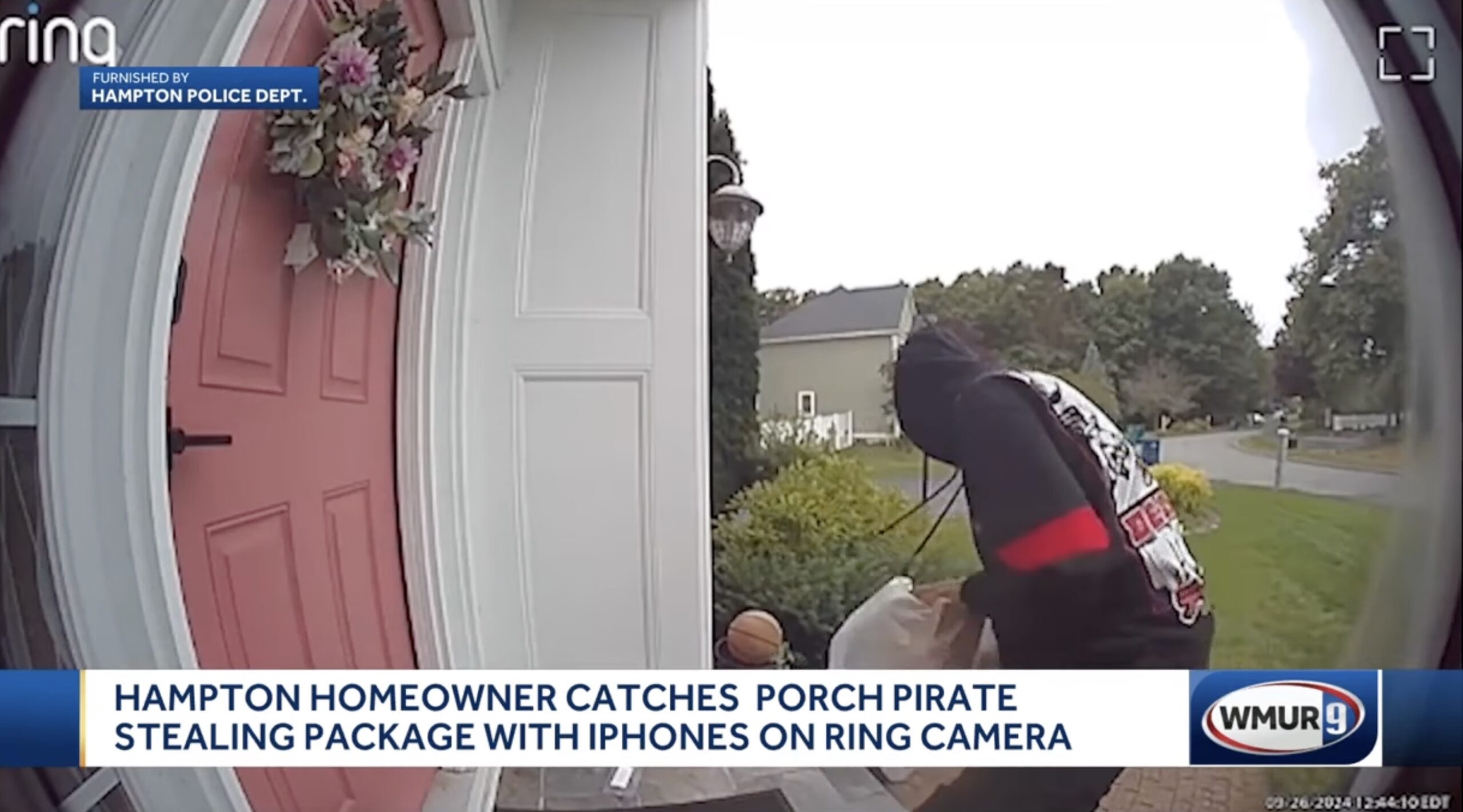
There has been a rash of iPhone thefts around the US the past few months, conducted by “porch pirates” often seen on doorbell camera videos scooping up boxes right after they are delivered. Phones shipped by AT&T are being targeted more than those of Verizon and T-Mobile, according to a Wall Street Journal article published yesterday.

“The key to these swift crimes, investigators say: The thieves are armed with tracking numbers. Another factor that makes packages from AT&T particularly vulnerable is that AT&T typically doesn’t require signature on delivery… Verizon and T-Mobile require a signature on delivery for smartphones; AT&T generally doesn’t,” the article said.

The WSJ talked to Chris Brown, a police lieutenant in Deer Park, Texas, who “said the suspects were armed with inside information: AT&T parcel tracking numbers. Deer Park police are working with AT&T to investigate how the suspects got that information, he said.”

When contacted by Ars today, an AT&T spokesperson said the phone carrier uses multiple delivery companies and “ship[s] tens of thousands of packages a day without incident.” AT&T said it “require[s] signatures in several markets where we have experienced theft issues,” and that “we regularly make changes to our processes, whether it is [the] type of delivery or even type of packaging, to reduce instances of these thefts.”

AT&T also said it works “with law enforcement agencies and parcel carriers to protect our deliveries,” and that these crimes are “committed by sophisticated criminals that are being investigated by both federal and state law enforcement agencies.” We asked both AT&T and FedEx how many thefts there have been but did not receive an answer.

Here is a WMUR-TV report about such thefts occurring in New Hampshire, complete with footage from a doorbell camera:

[embedded content]

Hampton camera catches porch pirate stealing package with iPhones.

AT&T: No evidence of hack

The WSJ quoted AT&T as saying that it has “no evidence of any breach of our systems, and this was not a hack.” If there was no hack, it’s possible the tracking numbers were obtained directly from an employee or contractor. AT&T told Ars that it still has no evidence of a breach or hack.

https://arstechnica.com/tech-policy/2024/10/using-inside-info-iphone-thieves-arrive-at-your-house-right-after-fedex/


DOJ proposes breakup and other big changes to end Google search monopoly

“Hampering Google’s AI tools risks holding back American innovation at a critical moment,” Mulholland warned, claiming that AI is still new and “competition globally is fierce.”

“There are enormous risks to the government putting its thumb on the scale of this vital industry—skewing investment, distorting incentives, hobbling emerging business models—all at precisely the moment that we need to encourage investment, new business models, and American technological leadership,” Mulholland wrote.

Hepner told Ars that he thinks that the DOJ’s proposed remedies framework actually “meets the moment and matches the imperative to deprive Google of its monopoly hold on the search market, on search advertising, and potentially on future related markets.”

To ensure compliance with any remedies pursued, the DOJ also recommended “protections against circumvention and retaliation, including through novel paths to preserving dominance in the monopolized markets.”

That means Google might be required to “finance and report to a Court-appointed technical committee” charged with monitoring any Google missteps. The company may also have to agree to retain more records for longer—including chat messages that the company has been heavily criticized for deleting. And through this compliance monitoring, Google may also be prohibited from owning a large stake in any rivals.

If Google were ever found willfully non-compliant, the DOJ is considering a “range of provisions,” including risking more extreme structural or behavioral remedies or enduring extensions of compliance periods.

As the remedies stage continues through the spring, followed by Google’s prompt appeal, Hepner suggested that the DOJ could fight to start imposing remedies before the appeal concludes. Likely Google would just as strongly fight for any remedies to be delayed.

While the trial drags on, Hepner noted that Google already appears to be trying to strike another default deal with Apple that appears pretty similar to the controversial distribution deals at the heart of the search monopoly trial. In March, Apple started mulling using Google’s Gemini to exclusively power new AI features for the iPhone.

“This is basically the exact same anticompetitive behavior that they were found liable for,” Hepner told Ars, suggesting this could “weaken” Apple’s defense both against the DOJ’s broad framework of proposed remedies and during the appeal.

“If Google is actually engaging in the same anti-competitive conduct and artificial intelligence markets that they were found liable for in the search market, the court’s not going to look kindly on that relative to an appeal,” Hepner said.

https://arstechnica.com/tech-policy/2024/10/googles-ai-deals-could-hurt-its-search-monopoly-appeal-expert-says/