“Not a good look”: Google’s ad tech monopoly defense widely criticized

“Not a good look”: Google’s ad tech monopoly defense widely criticized

Google wound down its defense in the US Department of Justice’s ad tech monopoly trial this week, following a week of testimony from witnesses that experts said seemed to lack credibility.

The tech giant started its defense by showing a widely mocked chart that Google executive Scott Sheffer called a “spaghetti football,” supposedly showing a fluid industry thriving thanks to Google’s ad tech platform but mostly just “confusing” everyone and possibly even helping to debunk its case, Open Markets Institute policy analyst Karina Montoya reported.

“The effect of this image might have backfired as it also made it evident that Google is ubiquitous in digital advertising,” Montoya reported. “During DOJ’s cross-examination, the spaghetti football was untangled to show only the ad tech products used specifically by publishers and advertisers on the open web.”

One witness, Marco Hardie, Google’s current head of industry, was even removed from the stand, his testimony deemed irrelevant by US District Judge Leonie Brinkema, Big Tech On Trial reported. Another, Google executive Scott Sheffer, gave testimony Brinkema considered “tainted,” Montoya reported. But perhaps the most heated exchange about a witness’ credibility came during the DOJ’s cross-examination of Mark Israel, the key expert that Google is relying on to challenge the DOJ’s market definition.

Google’s case depends largely on Brinkema agreeing that the DOJ’s market definition is too narrow, with an allegedly outdated focus on display ads on the open web, as opposed to a broader market including display ads appearing in apps or on social media. But experts monitoring the trial suggested that Brinkema may end up questioning Israel’s credibility after DOJ lawyer Aaron Teitelbaum’s aggressive cross-examination.

According to Big Tech on Trial, which posted the exchange on X (formerly Twitter), Teitelbaum’s line of questioning came across as a “striking and effective impeachment of Mark Israel’s credibility as a witness.”

During his testimony, Israel told Brinkema that Google’s share of the US display ads market is only 25 percent, minimizing Google’s alleged dominance while emphasizing that Google faced “intense competition” from other Big Tech companies like Amazon, Meta, and TikTok in this broader market, Open Markets Institute policy analyst Karina Montoya reported.

On cross-examination, Teitelbaum called Israel out as a “serial ‘expert’ for companies facing antitrust challenges” who “always finds that the companies ‘explained away’ market definition,” Big Tech on Trial posted on X. Teitelbaum even read out quotes from past cases “in which judges described” Israel’s “expert testimony as ‘not credible’ and having ‘misunderstood antitrust law.'”

Israel was also accused by past judges of rendering his opinions “based on false assumptions,” according to USvGoogleAds, a site run by the digital advertising watchdog Check My Ads with ad industry partners. And specifically for the Google ad tech case, Teitelbaum noted that Israel omitted ad spend data to seemingly manipulate one of his charts.

“Not a good look,” the watchdog’s site opined.

Perhaps most damaging, Teitelbaum asked Israel to confirm that “80 percent of his income comes from doing this sort of expert testimony,” suggesting that Israel seemingly depended on being paid by companies like Jet Blue and Kroger-Albertsons—and even previously by Google during the search monopoly trial—to muddy the waters on market definition. Lee Hepner, an antitrust lawyer with the American Economic Liberties Project, posted on X that the DOJ’s antitrust chief, Jonathan Kanter, has grown wary of serial experts supposedly sowing distrust in the court system.

“Let me say this clearly—this will not end well,” Kanter said during a speech at a competition law conference this month. “Already we see a seeping distrust of expertise by the courts and by law enforcers.”

“Best witnesses money can buy”

In addition to experts and Google staffers backing up Google’s proposed findings of fact and conclusions of law, Google brought in Courtney Caldwell—the CEO of a small business that once received a grant from Google and appears in Google’s marketing materials—to back up claims that a DOJ win could harm small businesses, Big Tech on Trial reported.

Google’s direct examination of Caldwell was “basically just a Google ad,” Big Tech on Trial said, while Check My Ads’ site suggested that Google mostly just called upon “the best witnesses their money can buy, and it still did not get them very far.”

According to Big Tech on Trial, Google is using a “light touch” in its defense, refusing to go “pound for pound” to refute the DOJ’s case. Using this approach, Google can seemingly ignore any argument the DOJ raises that doesn’t fit into the picture Google wants Brinkema to accept of Google’s ad empire growing organically, rather than anti-competitively constructed with the intent to shut out rivals through mergers and acquisitions.

Where the DOJ wants the judge to see “a Google-only pipeline through the heart of the ad tech stack, denying non-Google rivals the same access,” Google argues that it has only “designed a set of products that work efficiently with each other and attract a valuable customer base.”

The main problem with Google’s defense appears to be the evidence emerging from its own internal documents. AdExchanger’s Allison Schiff, who has been monitoring the trial, pulled out the spiciest quotes from the courtroom, where Google’s own employees seem to show intent to monopolize the ad tech industry.

Evidence that Brinkeman might find hard to ignore include a 2008 statement from Google’s former president of display advertising, David Rosenblatt, confirming that it would “take an act of god” to get people to switch ad platforms because of extremely high switching costs. Rosenblatt also suggested in a 2009 presentation that Google acquiring DoubleClick for Publishers would make Google’s ad tech like the New York Stock Exchange, putting Google in a position to monitor every ad sale and doing for display ads “what Google did to search.” There’s also a 2010 email where now-YouTube CEO Neal Mohan recommended getting Google ahead in the display ad market by “parking” a rival with “the most traction.”

On Friday, testimony concluded abruptly after the DOJ only called one rebuttal witness, Big Tech on Trial posted on X. Brinkema is expected to hear closing arguments on November 25, Big Tech on Trial reported, and rule in December, Montoya reported.

https://arstechnica.com/?p=2053142


Dell sales team told to return to office 5 days a week, starting Monday

The exterior of a Dell Technologies office building is seen on January 04, 2023 in Round Rock, Texas. (

Most members of Dell’s sales team will no longer have the option to work remotely, starting on Monday, Reuters reported this week, citing an internal memo. The policy applies to salespeople worldwide and is aimed at helping “grow skills,” per the note.

Like the rest of Dell’s workforce, Dell’s salespeople have previously been allowed to work remotely two days per week. A memo, which a Reddit user claims to have posted online (The Register reported that the post “mirrors” one that it viewed separately), says that field sellers aren’t required to go into an office but “should prioritize time spent in person with customers and partners.” The policy doesn’t apply to “remote sales team members,” but Dell said to expect additional unspecified communications regarding remote workers “in the coming weeks.” Bloomberg reported that top sales executives Bill Scannell, Dell’s president of global sales and customer operations, and John Byrne, president of sales and global regions at Dell Tech Select, signed the memo, saying:

… our data showed that sales teams are more productive when onsite.

Dell is viewing mandatory on-site work as a way to maintain its sales team’s culture and drive growth, according to the memo, which mentions things like “real-time feedback” and “dynamic” office energy. Moving forward, remote work will be permitted as an exception, Dell said.

Notably, the letter, which was reportedly sent to workers on Thursday, doesn’t give employees much time for adjustments. The memo acknowledges that workers have built schedules around working from home regularly but doesn’t offer immediate solutions.

In a statement to The Register, a Dell spokesperson confirmed the policy change.

“We continually evolve our business so we’re set up to deliver the best innovation, value and service to our customers and partners,” they said. “That includes more in-person connection to drive market leadership.”

Dell’s RTO push

After permitting full-time remote work in response to the COVID-19 pandemic, in February, Dell started requiring workers to go into the office 39 days per quarter (or about three days per week) or be totally remote. The latter, however, seemed discouraged, as Dell reportedly told remote workers they were ineligible for promotions in March. Still, nearly 50 percent of Dell workers chose to stay remote, Business Insider reported in June, citing internal Dell Data.

Dell’s return-to-office (RTO) mandates have reportedly been enforced with VPN and badge tracking. Some employees have accused Dell of trying to reduce headcount with RTO policies. Other companies pushing workers back into offices have also been accused of this; there’s research showing that at least some companies have used RTO policies to lower headcount while avoiding layoffs. Dell laid off 13,000 people in 2023 and plans more layoffs. In August, it announced plans to lay off an undisclosed additional number of people. The company is expected to have 120,000 employees.

Dell’s RTO change follows an announcement this week requiring Amazon employees to work on-site five days a week starting next year. Following the announcement, a survey of 2,585 US Amazon employees found that 73 percent of Amazon workers are “considering looking for an another job” in response.

“Yes, this is a shift…”

The memo, according to Reddit, acknowledges to workers, “Yes, this is a shift from current expectations.” Dell’s RTO push represents an about-face from previously stated positions on remote work from the company. In 2022, for example, CEO and founder Michael Dell wrote a blog that said Dell “found no meaningful differences” between remote and on-site workers, including before the pandemic. Dell COO Jeff Clarke made similar arguments in 2020.

The idea that remote work hinders productivity has been a hot topic of debate, especially as companies grapple with their remote work policies following pandemic restrictions. Dell says that its decision to force sales workers back into offices is backed by data, and its claims of boosted productivity could potentially be true when it comes to this specific Dell division. However, there have also been studies suggesting that return-to-office mandates hurt productivity. For example, a Great Place to Work survey conducted in July 2023 of 4,400 employees concluded that “productivity was lower for both on-site and remote employees when their employer mandated where they work.” Workers with companies allowing employees to choose between remote and on-site work were more likely to give “extra effort,” the survey found.

https://arstechnica.com/?p=2053090


Musk’s X blocks links to JD Vance dossier and suspends journalist who posted it

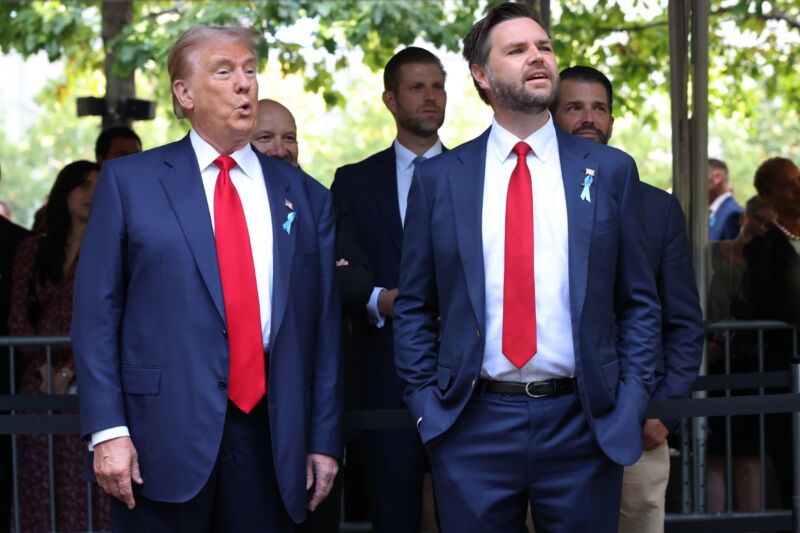
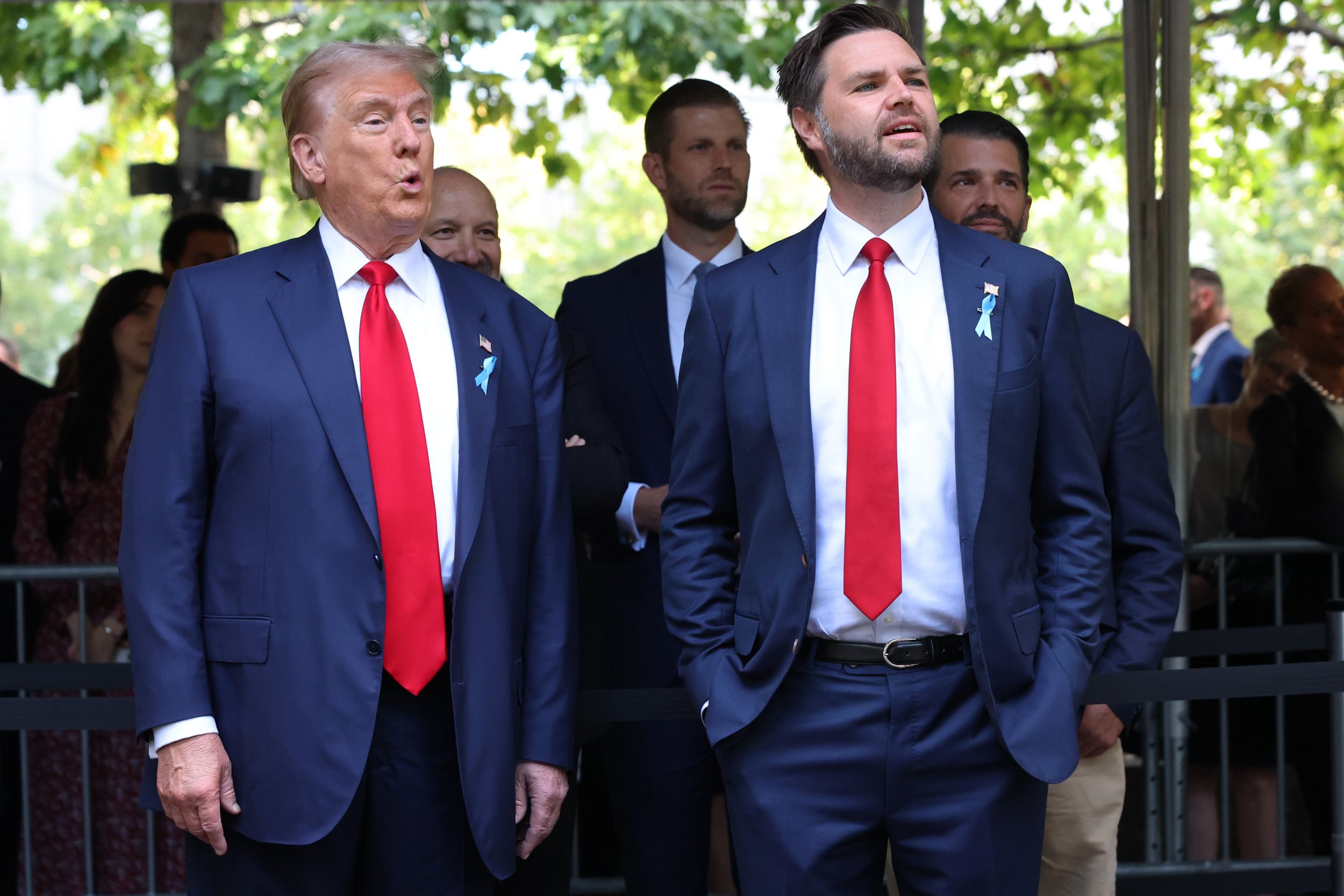
Former US President Donald Trump and Republican vice presidential nominee JD Vance stand next to each other at an outdoors event.
Enlarge / Former US President Donald Trump and Republican vice presidential nominee JD Vance at the National 9/11 Memorial and Museum on September 11, 2024, in New York City.
Getty Images | Michael M. Santiago

Elon Musk’s X is blocking links to the JD Vance “dossier” containing the Trump campaign’s research on the vice presidential nominee. X also suspended Ken Klippenstein, the journalist who published the dossier that apparently comes from an Iranian hack of the Trump campaign.

“Ken Klippenstein was temporarily suspended for violating our rules on posting unredacted private personal information, specifically Sen. Vance’s physical addresses and the majority of his Social Security number,” X’s safety account wrote yesterday. Klippenstein’s account was still suspended as of this writing.

X is blocking attempts to post links to the Klippenstein article in which he explained why he published the leaked dossier. An error message says, “We can’t complete this request because the link has been identified by X or our partners as being potentially harmful.”

Klippenstein’s article explains that the “dossier has been offered to me and I’ve decided to publish it because it’s of keen public interest in an election season. It’s a 271-page research paper the Trump campaign prepared to vet now vice presidential candidate JD Vance.”

The article doesn’t contain Vance’s address or Social Security number, but it provides a download link for the dossier. Klippenstein published another article yesterday after his X suspension, writing that he stands by his decision not to redact Vance’s private information. But the version of the Vance dossier available on Klippenstein’s website today has redactions of addresses and his Social Security number.

“I never published any private information on X”

“Self-styled free speech warrior Elon Musk’s X (Twitter) banned me after I published a copy of the Donald Trump campaign’s JD Vance research dossier,” Klippenstein wrote. “X says that I’ve been suspended for ‘violating our rules against posting private information,’ citing a tweet linking to my story about the JD Vance dossier. First, I never published any private information on X. I linked to an article I wrote here, linking to a document of controversial provenance, one that I didn’t want to alter for that very reason.”

Klippenstein also wrote, “We should be honest about so-called private information contained in the dossier and ‘private’ information in general. It is readily available to anyone who can buy it. The campaign purchased this information from commercial information brokers.”

US intelligence agencies said last week that “Iranian malicious cyber actors” have been sending “stolen, non-public material associated with former President Trump’s campaign to US media organizations.” This is part of a strategy “to stoke discord and undermine confidence in our electoral process,” US agencies said. Most media outlets decided not to publish the materials.

Musk slammed Twitter’s Hunter Biden decision

Elon Musk claimed that he bought Twitter in order to protect free speech, and he criticized the social network for an October 2020 incident in which Twitter blocked a New York Post story about Hunter Biden’s emails for allegedly violating a policy against posting hacked materials.

“Suspending the Twitter account of a major news organization for publishing a truthful story was obviously incredibly inappropriate,” Musk wrote in April 2022, one day after he struck a deal to buy Twitter for $44 billion. After completing the purchase, Musk leaked so-called “Twitter Files” containing the company’s internal deliberations about the Hunter Biden laptop story and other matters.

Twitter’s Hunter Biden decision drew immediate criticism when it happened, and the company changed its hacked materials policy just one day later. Under the October 2020 policy change, Twitter said it would stop removing hacked content unless it was directly shared by hackers or those acting in concert with them and that it would label tweets to provide context instead of blocking links from being shared on Twitter.

“Straight blocking of URLs was wrong, and we updated our policy and enforcement to fix,” Jack Dorsey, Twitter’s former CEO, wrote at the time. “Our goal is to attempt to add context, and now we have capabilities to do that.”

The hacked materials policy was still active as of January 2024, but the policy page no longer exists.

Meanwhile, The New York Times examined five days’ worth of Musk’s X posts in an article published today. “In 171 posts and reposts during that frenetic five-day period, the tech mogul railed against illegal immigration, boosted election fraud conspiracy theories and attacked Democratic candidates, according to a New York Times analysis… Nearly a third of his posts last week were false, misleading or missing vital context. They included misleading posts claiming Democrats were making memes ‘illegal’ and falsehoods that they want to ‘open the border’ to gain votes from illegal immigrants,” the article said.

https://arstechnica.com/?p=2053037


Most Amazon workers considering job hunting due to 5-day in-office policy: Poll

Amazon corporate office building in Sunnyvale, California.
Getty Images

An overwhelming majority of Amazon employees are “dissatisfied” with Amazon killing remote work and requiring them to be in the office five days a week next year. That’s according to a survey of 2,585 employees by Blind, an online community where verified employees can discuss their work culture anonymously.

Since May, Amazon employees have been able to work remotely up to twice per week—a policy that Amazon has reportedly enforced by keeping track of badge swipes and how many hours workers spend in offices.

On September 16, Amazon CEO Andy Jassy sent a memo to employees stating that Amazon would require most workers to come into the office five days a week at the start of 2025. “We’ve observed that it’s easier for our teammates to learn, model, practice, and strengthen our culture; collaborating, brainstorming, and inventing are simpler and more effective,” the memo said.

From September 17 to 19, Blind surveyed 2,585 “verified Amazon professionals” (Blind says that it verifies employees via email addresses) in the US with yes or no questions about the policy and found widespread disapproval.

Almost every person Blind surveyed isn't pleased.
Enlarge / Almost every person Blind surveyed isn’t pleased.

In a blog post this week, Blind underscored some notable comments posted on its platform about the return-to-office (RTO) policy. One Amazon employee wrote on Blind, “My morale for this job is gone, gonna totally check out …”

There are similar discussions elsewhere on the web, with some saying that the policy is unjust because they were hired as a remote worker during the COVID-19 pandemic. Others have called for—or skeptically hoped for—mass resignations.

Per Blind, 73 percent of Amazon workers surveyed said they are “considering looking for another job” due to the RTO policy.

Further, 80 percent of workers said that they know someone at Amazon who’s considering job hunting due to the policy. Interestingly, 32 percent of employees reported that they already know someone who quit in response to the impending five-day, in-office work week.

Blind also noted that some of its users pointed to people dropping out of job interviews because Amazon won’t allow remote work.

Some reported employees have taken to online communities, like Reddit, responding to the RTO policy with fear that Amazon is looking to reduce headcount. Notably, a March survey of 1,504 full-time US employees, including 504 human resources (HR) workers, by BambooHR found that some companies enacted RTO policies to make people quit. This was affirmed by 25 percent of VP and C-suite executives and 18 percent of HR pros surveyed.

“Dejected”

Others online are showing frustration with what they say feels like limited options from Amazon. For example, Reddit user OhNolBoffedIt wrote:

My team is already decentralized and spread across the globe, but sure, making me drive into an office none of my coworkers sit in 5 days a week is not only a good use of my time, but it’s great for the environment. Woo Climate Pledge.

As some might have expected, Amazon’s HR announcement is forcing some workers to make big decisions, like whether they’ll move or alter their family dynamics and schedules. One worker who Blind’s blog post highlighted said they “feel dejected about this 5 day RTO,” adding:

Decisions like the one from Jassy are a big reason why I don’t want kids. I don’t need others to impose rules that ruin my quality of life.

Amazon has 1.5 million full and part-time workers, per regulatory filings from the end of 2023. The shift in policy comes as Amazon is also facing pressure from workers for higher wages. The conglomerate said that it would make exceptions to its RTO policy for family emergencies, workers with sick children, and coding assignments requiring isolation.

“The advantages of being together in the office are significant,” Jassy wrote in the memo. “If anything, the last 15 months … has strengthened our conviction about the benefits.”

Jassy’s memo said that part of the reason for shifting to fully in-person work is to “operate like the world’s largest startup.” However, there have been recent studies suggesting that RTO mandates hurt employee productivity and retention and hurt employee morale while failing to drive company value. Big names like Apple, Microsoft, and SpaceX reportedly lost senior talent due to RTO policies.

https://arstechnica.com/?p=2052484


Caroline Ellison gets 2 years for covering up Sam Bankman-Fried’s FTX fraud

Caroline Ellison, former chief executive officer of Alameda Research LLC, was sentenced Tuesday for helping Sam Bankman-Fried cover up FTX's fraudulent misuse of customer funds.
Enlarge / Caroline Ellison, former chief executive officer of Alameda Research LLC, was sentenced Tuesday for helping Sam Bankman-Fried cover up FTX’s fraudulent misuse of customer funds.

Caroline Ellison was sentenced Tuesday to 24 months for her role in covering up Sam Bankman-Fried’s rampant fraud at FTX—which caused billions in customer losses.

Addressing the judge at sentencing, Ellison started out by explaining “how sorry I am” for concealing FTX’s lies, Bloomberg reported live from the hearing.

“I participated in a criminal conspiracy that ultimately stole billions of dollars from people who entrusted their money with us,” Ellison reportedly said while sniffling. “The human brain is truly bad at understanding big numbers,” she added, and “not a day goes by” that she doesn’t “think about all of the people I hurt.”

Assistant US Attorney Danielle Sassoon followed Ellison, remarking that the government recommended a lighter sentence because it was important for the court to “distinguish between the mastermind and the willing accomplice.” (Bankman-Fried got 25 years.)

US District Judge Lewis Kaplan noted that he is allowed to show Ellison leniency for providing “substantial assistance to the government.” He then confirmed that he always considered the maximum sentence she faced of 110 years to be “absurd,” considering that Ellison had no inconsistencies in her testimony and fully cooperated with the government throughout their FTX probe.

“I’ve seen a lot of cooperators in 30 years,” Kaplan said. “I’ve never seen one quite like Ms. Ellison.”

However, although Ellison was brave to tell the truth about her crimes, Ellison is “by no means free of culpability,” Kaplan said. He called Bankman-Fried her “Kryptonite” because the FTX co-founder so easily exploited such a “very strong person.” Noting that nobody gets a “get out of jail free card,” he sentenced Ellison to two years and required her to forfeit about $11 billion, Bloomberg reported.

The judge said that Ellison “can serve the sentence at a minimum-security facility,” Bloomberg reported.

Ellison was key to SBF’s quick conviction

Ellison could have faced a maximum sentence of 110 years, for misleading customers and investors as the former CEO of the cryptocurrency trading firm linked to the FTX exchange, Alameda Research. But after delivering devastatingly detailed testimony key to exposing Bankman-Fried’s many lies, the probation office had recommended a sentence of time served with three years of supervised release.

Kaplan’s sentence went further, making it likely that other co-conspirators who cooperated with the government probe will also face jail time.

Both Ellison and the US government had requested substantial leniency due to her “critical” cooperation that allowed the US to convict Bankman-Fried in record time for such a complex criminal case.

Partly because Ellison was romantically involved with Bankman-Fried and partly because she “drafted some of the most incriminating documents in the case,” US attorney Damian Williams wrote in a letter to Kaplan, she was considered “crucial to the Government’s successful prosecution of Samuel Bankman-Fried for one of the largest financial frauds in history,” Williams wrote.

Williams explained that Ellison went above and beyond to help the government probe Bankman-Fried’s fraud. Starting about a month after FTX declared bankruptcy, Ellison began cooperating with the US government’s investigation. She met about 20 times with prosecutors, digging through thousands of documents to identify and interpret key evidence that convicted her former boss and boyfriend.

“Parsing Alameda Research’s poor internal records was complicated by vague titles and unlabeled calculations on any documents reflecting misuse of customer funds,” Ellison’s sentencing memo said. Without her three-day testimony at trial, the jury would likely not have understood “Alameda’s intentionally cryptic records,” Williams wrote. Additionally, because Bankman-Fried systematically destroyed evidence, she was one of the few witnesses able to contradict Bankman-Fried’s lies by providing a timeline for how Bankman-Fried’s scheme unfolded—and she was willing to find the receipts to back it all up.

“As Alameda’s nominal CEO and Bankman-Fried’s former girlfriend, Ellison was uniquely positioned to explain not only the what and how of Bankman-Fried’s crimes, but also the why,” Williams wrote. “Ellison’s testimony was critical to indict and convict Bankman-Fried, and to understanding both the timeline of the fraud schemes, and the various layers of wrongdoing.”

Further, where Bankman-Fried tried to claim that he was “well-meaning but hapless” in causing FTX’s collapse, Ellison admitted her guilt before law enforcement ever got involved, then continually “expressed genuine shame and remorse” for the harms she caused, Williams wrote.

A lighter sentence, Ellison’s sentencing memo suggested, “would incentivize people involved in a fraud to do what Caroline did: publicly disclose a fraud, immediately accept responsibility, and cooperate immediately with civil and criminal authorities.”

Williams praised Ellison as exceptionally forthcoming, even alerting the government to criminal activity that they didn’t even know about yet. He also credited her for persevering as a truth-teller “despite harsh media and public scrutiny and Bankman-Fried’s efforts to publicly weaponize her personal writings to discredit and intimidate her.”

“The Government cannot think of another cooperating witness in recent history who has received a greater level of attention and harassment,” Williams wrote.

In her sentencing memo, Ellison’s lawyers asked for no prison time, insisting that Ellison had been punished enough. Not only will she recover “nothing” from the FTX bankruptcy proceedings that she’s helping to settle, but she also is banned from working in the only industries she’s ever worked in, unlikely to ever repeat her crimes in finance and cryptocurrency sectors. She also is banned from running any public company and “has been rendered effectively unemployable in the near term by the notoriety arising from this case.”

“The reputational harm is not likely to abate any time soon,” Ellison’s sentencing memo said. “These personal, financial, and career consequences constitute substantial forms of punishment that reduce the need for the Court to order her incarceration.”

Kaplan clearly disagreed, ordering her to serve 24 months and forfeit $11 billion.

https://arstechnica.com/?p=2052068


Calif. Governor vetoes bill requiring opt-out signals for sale of user data

A closeup photo of California Governor Gavin Newsom's face
Enlarge / California Governor Gavin Newsom at a press conference in San Francisco on September 19, 2024.
Getty Images | Anadolu

California Gov. Gavin Newsom vetoed a bill that would have required makers of web browsers and mobile operating systems to let consumers send opt-out preference signals that could limit businesses’ use of personal information.

The bill approved by the State Legislature last month would have required an opt-out signal “that communicates the consumer’s choice to opt out of the sale and sharing of the consumer’s personal information or to limit the use of the consumer’s sensitive personal information.” It would have made it illegal for a business to offer a web browser or mobile operating system without a setting that lets consumers “send an opt-out preference signal to businesses with which the consumer interacts.”

In a veto message sent to the Legislature Friday, Newsom said he would not sign the bill. Newsom wrote that he shares the “desire to enhance consumer privacy,” noting that he previously signed a bill “requir[ing] the California Privacy Protection Agency to establish an accessible deletion mechanism allowing consumers to request that data brokers delete all of their personal information.”

But Newsom said he is opposed to the new bill’s mandate on operating systems. “I am concerned, however, about placing a mandate on operating system (OS) developers at this time,” the governor wrote. “No major mobile OS incorporates an option for an opt-out signal. By contrast, most Internet browsers either include such an option or, if users choose, they can download a plug-in with the same functionality. To ensure the ongoing usability of mobile devices, it’s best if design questions are first addressed by developers, rather than by regulators. For this reason, I cannot sign this bill.”

Vetoes can be overridden with a two-thirds vote in each chamber. The bill was approved 59–12 in the Assembly and 31–7 in the Senate. But the State Legislature hasn’t overridden a veto in decades.

“Industry worked overtime to squash bill”

The opt-out bill would have built on the California Consumer Privacy Act (CCPA) of 2018 and California Privacy Rights Act of 2020. Google, which recently nixed a plan to turn off tracking cookies by default in Chrome, urged Newsom to veto the bill, reports by Bloomberg and Politico said.

“It’s troubling the power that companies such as Google appear to have over the governor’s office,” said Justin Kloczko, tech and privacy advocate for Consumer Watchdog, a nonprofit group in California. “What the governor didn’t mention is that Google Chrome, Apple Safari and Microsoft Edge don’t offer a global opt-out and they make up for nearly 90 percent of the browser market share. That’s what matters. And people don’t want to install plug-ins. Safari, which is the default browsers on iPhones, doesn’t even accept a plug-in.”

Consumer Reports Policy Analyst Matt Schwartz said that “industry worked overtime to squash this bill, as it empowered Californians to better protect their privacy, undermining the commercial surveillance business model of these tech companies. We strongly disagree with the idea expressed in the governor’s veto statement that it should be left to operating systems to provide privacy choices for consumers. They’ve shown time and again they won’t meaningfully do so until forced.”

Consumer Reports is one of the groups behind Global Privacy Control (GPC), an opt-out signal that creators hope will become legally binding under the CCPA or other privacy laws. Makers of Global Privacy Control say it is superior to the older Do Not Track (DNT) signal because the California attorney general “determined that the AG could not require businesses to comply with DNT requests because the requests do not clearly convey users’ intent to opt out of the sale of their data.”

“The California AG has determined that businesses must honor two methods of submitting opt-outs. GPC is meant to provide users with an additional option for objecting to the sale of their data, and it functions identically to clicking a ‘Do Not Sell My Personal Information’ link provided by a business,” the GPC website says.

GPC is available on Firefox, Brave, DuckDuckGo, and several other browsers, but not Google’s Chrome, Microsoft’s Edge, and Apple’s Safari. The Do Not Track signal is still an option in Chrome and Edge. Chrome, Edge, and Safari also each have features that limit websites’ ability to track users.

https://arstechnica.com/?p=2052064


Cloudflare moves to end free, endless AI scraping with one-click blocking

Cloudflare moves to end free, endless AI scraping with one-click blocking

Cloudflare announced new tools Monday that it claims will help end the era of endless AI scraping by giving all sites on its network the power to block bots in one click.

That will help stop the firehose of unrestricted AI scraping, but, perhaps even more intriguing to content creators everywhere, Cloudflare says it will also make it easier to identify which content that bots scan most, so that sites can eventually wall off access and charge bots to scrape their most valuable content. To pave the way for that future, Cloudflare is also creating a marketplace for all sites to negotiate content deals based on more granular AI audits of their sites.

These tools, Cloudflare’s blog said, give content creators “for the first time” ways “to quickly and easily understand how AI model providers are using their content, and then take control of whether and how the models are able to access it.”

That’s necessary for content creators because the rise of generative AI has made it harder to value their content, Cloudflare suggested in a longer blog explaining the tools.

Previously, sites could distinguish between approving access to helpful bots that drive traffic, like search engine crawlers, and denying access to bad bots that try to take down sites or scrape sensitive or competitive data.

But now, “Large Language Models (LLMs) and other generative tools created a murkier third category” of bots, Cloudflare said, that don’t perfectly fit in either category. They don’t “necessarily drive traffic” like a good bot, but they also don’t try to steal sensitive data like a bad bot, so many site operators don’t have a clear way to think about the “value exchange” of allowing AI scraping, Cloudflare said.

That’s a problem because enabling all scraping could hurt content creators in the long run, Cloudflare predicted.

“Many sites allowed these AI crawlers to scan their content because these crawlers, for the most part, looked like ‘good’ bots—only for the result to mean less traffic to their site as their content is repackaged in AI-written answers,” Cloudflare said.

All this unrestricted AI scraping “poses a risk to an open Internet,” Cloudflare warned, proposing that its tools could set a new industry standard for how content is scraped online.

How to block bots in one click

Increasingly, creators fighting to control what happens with their content have been pushed to either sue AI companies to block unwanted scraping, as The New York Times has, or put content behind paywalls, decreasing public access to information.

While some big publishers have been striking content deals with AI companies to license content, Cloudflare is hoping new tools will help to level the playing field for everyone. That way, “there can be a transparent exchange between the websites that want greater control over their content, and the AI model providers that require fresh data sources, so that everyone benefits,” Cloudflare said.

Today, Cloudflare site operators can stop manually blocking each AI bot one by one and instead choose to “block all AI bots in one click,” Cloudflare said.

They can do this by visiting the Bots section under the Security tab of the Cloudflare dashboard, then clicking a blue link in the top-right corner “to configure how Cloudflare’s proxy handles bot traffic,” Cloudflare said. On that screen, operators can easily “toggle the button in the ‘Block AI Scrapers and Crawlers’ card to the ‘On’ position,” blocking everything and giving content creators time to strategize what access they want to re-enable, if any.

Beyond just blocking bots, operators can also conduct AI audits, quickly analyzing which sections of their sites are scanned most by which bots. From there, operators can decide which scraping is allowed and use sophisticated controls to decide which bots can scrape which parts of their sites.

“For some teams, the decision will be to allow the bots associated with AI search engines to scan their Internet properties because those tools can still drive traffic to the site,” Cloudflare’s blog explained. “Other organizations might sign deals with a specific model provider, and they want to allow any type of bot from that provider to access their content.”

For publishers already playing whack-a-mole with bots, a key perk would be if Cloudflare’s tools allowed them to write rules to restrict certain bots that scrape sites for both “good” and “bad” purposes to keep the good and throw away the bad.

Perhaps the most frustrating bot for publishers today is the Googlebot, which scrapes sites to populate search results as well as to train AI to generate Google search AI overviews that could negatively impact traffic to source sites by summarizing content. Publishers currently have no way of opting out of training models fueling Google’s AI overviews without losing visibility in search results, and Cloudflare’s tools won’t be able to get publishers out of that uncomfortable position, Cloudflare CEO Matthew Prince confirmed to Ars.

For any site operators tempted to toggle off all AI scraping, blocking the Googlebot from scraping and inadvertently causing dips in traffic may be a compelling reason not to use Cloudflare’s one-click solution.

However, Prince expects “that Google’s practices over the long term won’t be sustainable” and “that Cloudflare will be a part of getting Google and other folks that are like Google” to give creators “much more granular control over” how bots like the Googlebot scrape the web to train AI.

Prince told Ars that while Google solves its “philosophical” internal question of whether the Googlebot’s scraping is for search or for AI, a technical solution to block one bot from certain kinds of scraping will likely soon emerge. And in the meantime, “there can also be a legal solution” that “can rely on contract law” based on improving sites’ terms of service.

Not every site would, of course, be able to afford a lawsuit to challenge AI scraping, but to help creators better defend themselves, Cloudflare drafted “model terms of use that every content creator can add to their sites to legally protect their rights as sites gain more control over AI scraping.” With these terms, sites could perhaps more easily dispute any restricted scraping discovered through Cloudflare’s analytics tools.

“One way or another, Google is going to get forced to be more fine-grained here,” Prince predicted.

https://arstechnica.com/?p=2051732


European leadership change means new adversaries for Big Tech

European leadership change means new adversaries for Big Tech

If the past five years of EU tech rules could take human form, they would embody Thierry Breton. The bombastic commissioner, with his swoop of white hair, became the public face of Brussels’ irritation with American tech giants, touring Silicon Valley last summer to personally remind the industry of looming regulatory deadlines.

Combative and outspoken, Breton warned that Apple had spent too long “squeezing” other companies out of the market. In a case against TikTok, he emphasized, “our children are not guinea pigs for social media.”  

His confrontational attitude to the CEOs themselves was visible in his posts on X. In the lead-up to Musk’s interview with Donald Trump, Breton posted a vague but threatening letter on his account reminding Musk there would be consequences if he used his platform to amplify “harmful content.” Last year, he published a photo with Mark Zuckerberg, declaring a new EU motto of “move fast to fix things”—a jibe at the notorious early Facebook slogan. And in a 2023 meeting with Google CEO Sundar Pichai, Breton reportedly got him to agree to an “AI pact” on the spot, before tweeting the agreement, making it difficult for Pichai to back out.

Yet in this week’s reshuffle of top EU jobs, Breton resigned—a decision he alleged was due to backroom dealing between EU Commission president Ursula von der Leyen and French president Emmanuel Macron.

“I’m sure [the tech giants are] happy Mr. Breton will go, because he understood you have to hit shareholders’ pockets when it comes to fines,” says Umberto Gambini, a former adviser at the EU Parliament and now a partner at consultancy Forward Global.

Breton is to be effectively replaced by the Finnish politician Henna Virkkunen, from the center-right EPP Group, who has previously worked on the Digital Services Act.

“Her style will surely be less brutal and maybe less visible on X than Breton,” says Gambini. “It could be an opportunity to restart and reboot the relations.”

Little is known about Virkkunen’s attitude to Big Tech’s role in Europe’s economy. But her role has been reshaped to fit von der Leyen’s priorities for her next five-year term. While Breton was the commissioner for the internal market, Virkkunen will work with the same team but operate under the upgraded title of executive vice president for tech sovereignty, security and democracy, meaning she reports directly to von der Leyen.

The 27 commissioners, who form von der Leyen’s new team and are each tasked with a different area of focus, still have to be approved by the European Parliament—a process that could take weeks.

“[Previously], it was very, very clear that the commission was ambitious when it came to thinking about and proposing new legislation to counter all these different threats that they had perceived, especially those posed by big technology platforms,” says Mathias Vermeulen, public policy director at Brussels-based consultancy AWO. “That is not a political priority anymore, in the sense that legislation has been adopted and now has to be enforced.”

Instead Virkkunen’s title implies the focus has shifted to technology’s role in European security and the bloc’s dependency on other countries for critical technologies like chips. “There’s this realization that you now need somebody who can really connect the dots between geopolitics, security policy, industrial policy, and then the enforcement of all the digital laws,” he adds. Earlier in September, a much anticipated report by economist and former Italian prime minister Mario Draghi warned that Europe would risk becoming “vulnerable to coercion” on the world stage if it did not jump-start growth. “We must have more secure supply chains for critical raw materials and technologies,” he said.

Breton is not the only prolific Big Tech adversary to be replaced this week—in a planned exit. Gone, too, is Margrethe Vestager, who had garnered a reputation as one of the world’s most powerful antitrust regulators after 10 years in the post. Last week, Vestager celebrated a victory in a case forcing Apple to pay $14.4 billion in back taxes to Ireland, a case once referred to by Apple CEO Tim Cook as “total political crap”.

Vestager—who vied with Breton for the reputation of lead digital enforcer (technically she was his superior)—will now be replaced by the Spanish socialist Teresa Ribera, whose role will encompass competition as well as Europe’s green transition. Her official title will be executive vice-president-designate for a clean, just and competitive transition, making it likely Big Tech will slip down the list of priorities. “[Ribera’s] most immediate political priority is really about setting up this clean industrial deal,” says Vermuelen.

Political priorities might be shifting, but the frenzy of new rules introduced over the past five years will still need to be enforced. There is an ongoing legal battle over Google’s $1.7 billion antitrust fine. Apple, Google, and Meta are under investigation for breaches of the Digital Markets Act. Under the Digital Services Act, TikTok, Meta, AliExpress, as well as Elon Musk’s X are also subject to probes. “It is too soon for Elon Musk to breathe a sigh of relief,” says J. Scott Marcus, senior fellow at think tank Bruegel. He claims that Musk’s alleged practices at X are likely to run afoul of the Digital Services Act (DSA) no matter who the commissioner is.

“The tone of the confrontation might become a bit more civil, but the issues are unlikely to go away.”

This story originally appeared on wired.com.

https://arstechnica.com/?p=2051513


How breaking up Google could lower your online shopping bill

How breaking up Google could lower your online shopping bill
Aurich Lawson

As the US Department of Justice aims to break up Google’s alleged ad tech monopoly, experts say that remedies sought in the antitrust trial could potentially benefit not just advertisers and publishers but also everyone targeted by ads online.

So far, the DOJ has argued that through acquisitions, Google allegedly monopolizes the ad server market, taking a substantial cut of every online ad sale by tying together products on the buyer and seller sides. Locking publishers into using its seller-side platform to access its large advertiser demand, Google also allegedly shut out rivals by pushing advertisers into a corner, then making it hard for publishers to switch platforms.

This scheme also allegedly set Google up to charge higher “monopoly” fees, the DOJ argued, allegedly putting some publishers out of business and raising costs for advertisers.

But while the harms to publishers and advertisers have been outlined at length, there’s been less talk about the seemingly major consequences for consumers perhaps harmed by the alleged monopoly. Those harms include higher costs of goods, less privacy, and increasingly lower-quality ads that frequently bombard their screens with products nobody wants.

By overcharging by as much as 5 or 10 percent for online ads, Google allegedly placed a “Google tax” on the price of “everyday goods we buy,” Tech Oversight’s Sacha Haworth explained during a press briefing Thursday, where experts closely monitoring the trial shared insights.

“When it comes to lowering costs on families,” Haworth said, “Google has overcharged advertisers and publishers by nearly $2 billion. That’s just over the last four years. That has inflated the price of ads, it’s increased the cost of doing business, and, of course, these costs get passed down to us when we buy things online.”

But while it’s unclear if destroying Google’s alleged monopoly would pass on any savings to consumers, Elise Phillips, policy counsel focused on competition and privacy for Public Knowledge, outlined other benefits in the event of a DOJ win.

She suggested that Google’s conduct has diminished innovation, which has “negatively” affected “the quality diversity and even relevancy of the advertisements that consumers tend to see.”

Were Google’s ad tech to be broken up and behavioral remedies sought, more competition might mean that consumers have more control over how their personal data is used in targeted advertising, Phillips suggested, and ultimately, lead to a future where everyone gets fed higher-quality ads.

That could happen if, instead of Google’s ad model dominating the Internet, less invasive ad targeting models could become more widely adopted, experts suggested. That could enhance privacy and make online ads less terrible after The New York Times declared a “junk ad epidemic” last year.

The thinking goes that if small businesses and publishers benefited from potentially reduced costs, increased revenues, and more options, consumers might start seeing a wider, higher-quality range of ads online, experts suggested.

Better ad models “are already out there,” Open Markets Institute policy analyst Karina Montoya said, such as “conceptual advertising” that uses signals that, unlike Google’s targeting, don’t rely on “gigantic, massive data sets that collect every single thing that we do in all of our devices and that don’t ask for our consent.”

But any emerging ad models are seemingly “crushed and flattened by this current dominant business model that’s really arising” from Google’s tight grip on the ad tech markets that the DOJ is targeting, Montoya said. Those include markets “for publisher ad servers, advertiser ad networks, and the ad exchanges that connect the two,” Reuters reported.

At the furthest extreme, loosening Google’s grip on the online ad industry could even “revolutionize the Internet,” Haworth suggested.

One theory posits that if publishers’ revenues increased, consumers would also benefit from more information potentially becoming available on the open web—as less content potentially gets stuck behind paywalls as desperate publishers seek ways to make up for lost ad revenue.

Montoya—who also is a reporter for the Center for Journalism & Liberty, which monitors how media outlets can thrive in today’s digital economy—noted that publishers depending on reader funding through subscriptions or donations is not sustainable if society wants to “have an open in free market where everybody can access information that they deserve and have a right to access.” By reducing Google’s control, the DOJ argues that publishers would be more financially stable, and Montoya hopes the public is starting to understand how that could benefit the open web.

“The trial is really allowing the public to see a full display of Google’s pattern of retaliatory behavior, really just to protect its monopoly power,” Montoya sad. “This idea that innovation and ways to monetize journalistic content has to come only from Google is wrong and this is really their defense.”

https://arstechnica.com/?p=2051545


Cards Against Humanity sues SpaceX, alleges “invasion” of land on US/Mexico border

A mockup of two cards in the style of the Cards Against Humanity game. One card says
Aurich Lawson | Cards Against Humanity

Cards Against Humanity sued SpaceX yesterday, alleging that Elon Musk’s firm illegally took over a plot of land on the US/Mexico border that the party-game company bought in 2017 in an attempt to stymie then-President Trump’s attempt to build a wall.

“As part of CAH’s 2017 holiday campaign, while Donald Trump was President, CAH created a supporter-funded campaign to take a stand against the building of a Border Wall,” said the lawsuit filed in Cameron County District Court in Texas. Cards Against Humanity says it received $15 donations from 150,000 people and used part of that money to buy “a plot of vacant land in Cameron County based upon CAH’s promise to ‘make it as time-consuming and expensive as possible for Trump to build his wall.'”

Cards Against Humanity says it mowed the land “and maintained it in its natural state, marking the edge of the lot with a fence and a ‘No Trespassing’ sign.” But instead of Trump taking over the land, Cards Against Humanity says the parcel was “interfered with and invaded” by Musk’s space company. The lawsuit includes pictures that, according to Cards Against Humanity, show the land when it was first purchased and after SpaceX construction equipment and materials were placed on the land.

This picture was taken in 2017, according to Cards Against Humanity:

Cards Against Humanity

Cards Against Humanity says this picture of SpaceX equipment and materials on the same land was taken in 2024:

Cards Against Humanity

The lawsuit seeks up to $15 million to cover “the cost to restore and repair the Property, the diminution in the Property’s fair market value, the reasonable value of SpaceX’s use of the Property, the loss of goodwill, damages to CAH’s reputation, and other pecuniary loss and actual damages suffered by CAH.” The suit also seeks punitive damages.

Lawsuit: SpaceX “never asked for permission”

The lawsuit said that SpaceX “acquired many of the vacant lots along the road on which the Property is situated,” and started using the Cards Against Humanity property as its own:

SpaceX and/or its contractors entered the Property and, after erecting posts to mark the property line, proceeded to ignore any distinction based upon property ownership. The site was cleared of vegetation, and the soil was compacted with gravel or other substance to allow SpaceX and its contractors to run and park its vehicles all over the Property. Generators were brought in to run equipment and lights while work was being performed before and after daylight. An enormous mound of gravel was unloaded onto the Property; the gravel is being stored and used for the construction of buildings by SpaceX’s contractors along the road.

Large pieces of construction equipment and numerous construction-related vehicles are utilized and stored on the Property continuously. And, of course, workers are present performing construction work and staging materials and vehicles for work to be performed on other tracts. In short, SpaceX has treated the Property as its own for at least six (6) months without regard for CAH’s property rights nor the safety of anyone entering what has become a worksite that is presumably governed by OSHA safety requirements.

The lawsuit said that “SpaceX has never asked for permission to use the Property, much less for the egregious appropriation of the Property for its own profit-making purposes,” and “never reached out to CAH to explain or apologize for the damage caused to the Property and CAH’s ownership interest therein.”

We contacted SpaceX about the lawsuit and will update this article if it provides a response.

https://arstechnica.com/?p=2051417