Senate panel votes 20–0 for holding CEO of “health care terrorists” in contempt
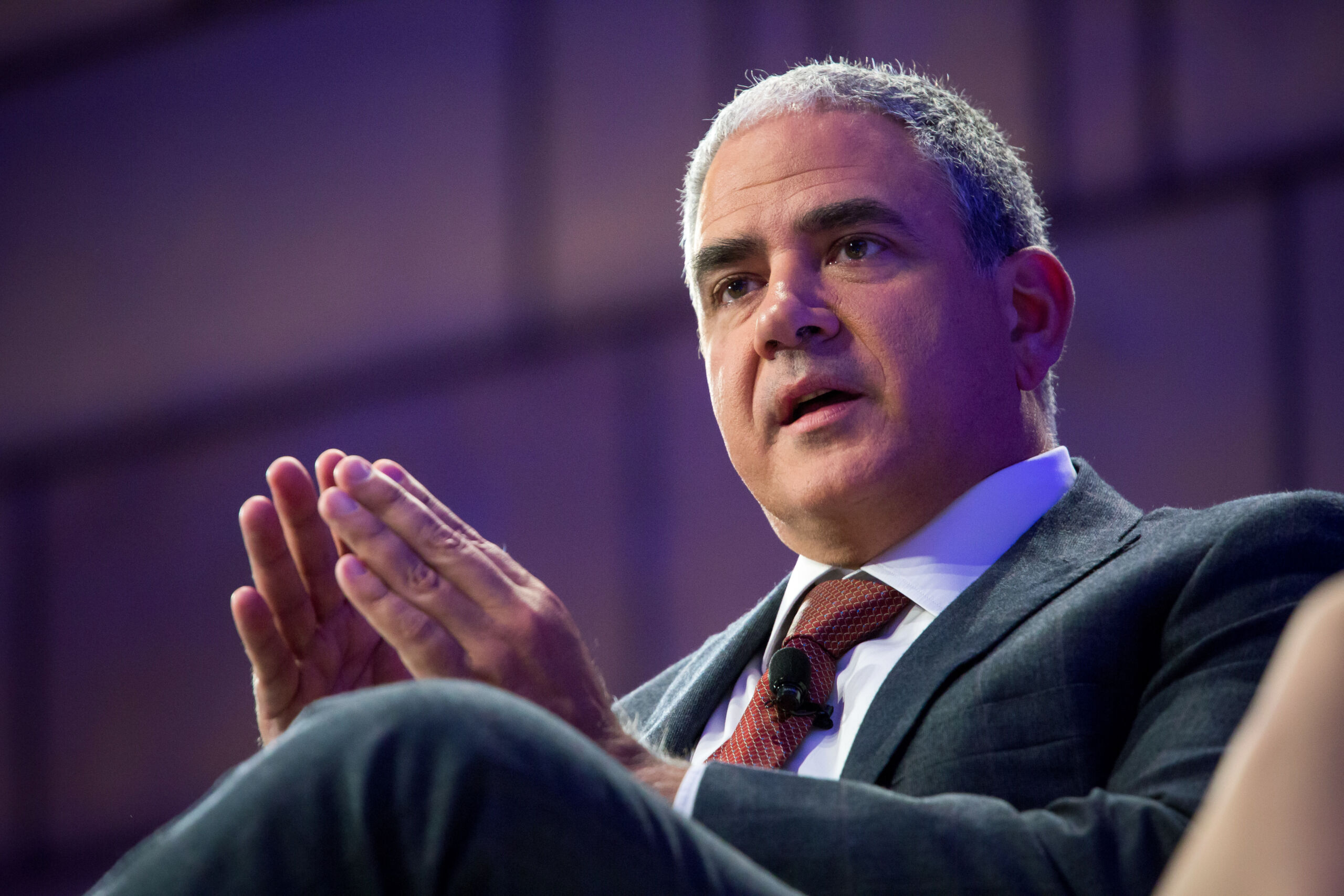
Enlarge/ Ralph de la Torre, founder and chief executive officer of Steward Health Care System LLC, speaks during a summit in New York on Tuesday, Oct. 25, 2016.
A Senate committee on Thursday voted overwhelmingly to hold the wealthy CEO of a failed hospital chain in civil and criminal contempt for rejecting a rare subpoena from the lawmakers.
In July, the Senate Committee on Health, Education, Labor, and Pensions (HELP) subpoenaed Steward Health Care CEO Ralph de la Torre to testify before the lawmakers on the deterioration and eventual bankruptcy of the system, which included more than 30 hospitals across eight states. The resulting dire conditions in the hospitals, described as providing “third-world medicine,” allegedly led to the deaths of at least 15 patients and imperiled more than 2,000 others.
The committee, chaired by Senator Bernie Sanders (I-Vt.), highlighted that amid the system’s collapse, de la Torre was paid at least $250 million, bought a $40 million yacht, and owned a $15 million luxury fishing boat. Meanwhile, Steward executives jetted around on two private jets collectively worth $95 million.
De la Torre initially agreed to appear at the September 12 hearing but backed out the week beforehand. He claimed, through his lawyers, that a federal order stemming from Steward’s bankruptcy case prohibited him from discussing the hospital system’s situation amid reorganization and settlement efforts. The HELP committee rejected that explanation, but de la Torre was nevertheless a no-show at the hearing.
In a 20–0 bipartisan vote Thursday, the HELP committee held de la Torre in civil and criminal contempt, with only Sen. Rand Paul (R-Ky.) abstaining. It is the first time in modern history the committee has issued civil and criminal contempt resolutions. The charges will now go before the full Senate for a vote.
If upheld by the full Senate, the civil enforcement will direct the Senate’s legal counsel to bring a federal civil suit against de la Torre in order to force him to comply with the subpoena and testify before the HELP Committee. The criminal contempt charge would refer the case to the US Attorney for the District of Columbia to criminally prosecute de la Torre for failing to comply with the subpoena. If the trial proceeds and de la Torre is convicted, the tarnished CEO could face a fine of up to $100,000 and a prison sentence of up to 12 months.
On Wednesday, the day before the committee voted on the contempt charges, a lawyer for de la Torre blasted the senators and claimed that testifying at the hearing would have violated his Fifth Amendment rights, according to the Boston Globe.
In a statement Thursday, Sanders slammed de la Torre, saying that his wealth and expensive lawyers did not make him above the law. “If you defy a Congressional subpoena, you will be held accountable no matter who you are or how well-connected you may be,” he said.
https://arstechnica.com/?p=2051400
Starlink imposes $100 “congestion charge” on new users in parts of US
New Starlink customers have to pay a $100 “congestion charge” in areas where the satellite broadband network has limited capacity.
“In areas with network congestion, there is an additional one-time charge to purchase Starlink Residential services,” a Starlink FAQ says. “This fee will only apply if you are purchasing or activating a new service plan. If you change your Service address or Service Plan at a later date, you may be charged the congestion fee.”
The charge is unwelcome for anyone wanting Starlink service in a congested area, but it could help prevent the capacity crunch from getting worse by making people think twice about signing up. The SpaceX-owned Internet service provider also seems to anticipate that people who sign up for service in congested areas may change their minds after trying it out for a few weeks.
“Our intention is to no longer charge this fee to new customers as soon as network capacity improves. If you’re not satisfied with Starlink and return it within the 30-day return window, the charge will be refunded,” the company said.
There is some corresponding good news for people in areas with more Starlink capacity. Starlink “regional savings,” introduced a few months ago, provides a $100 service credit in parts of the US “where Starlink has abundant network availability.” The credit is $200 in parts of Canada with abundant network availability.
Starlink speeds
The congestion charge was reported by PCMag on September 13, after being noticed by users of the Starlink subreddit. “The added fee appears to pop up in numerous states, particularly in the south and eastern US, such as Texas, Florida, Kansas, Ohio and Virginia, among others, which have slower Starlink speeds due to the limited network capacity,” PCMag noted.
This isn’t the first time Starlink has varied pricing based on regional congestion. In February 2023, Starlink decided that people in limited-capacity areas would pay $120 a month, and people in excess-capacity areas would pay $90 a month.
Despite the new $100 charge, this isn’t necessarily a bad time to order Starlink service. The ISP is currently offering the standard dish for $299 instead of the usual $499. People in excess-capacity areas of the US also get the $100 regional savings credit and a $90 monthly service rate.
https://arstechnica.com/?p=2051360
Mistrial declared for ex-AT&T exec accused of bribing government official
A mistrial was declared today in the trial of former AT&T Illinois President Paul La Schiazza, who was accused of bribing a powerful state lawmaker’s ally in order to obtain legislation favorable to AT&T’s business.
“The jury report they have reached an impasse and cannot reach a unanimous verdict. For the reasons stated on the record, the court declares a mistrial,” US District Judge Robert Gettleman wrote in an order today after the trial in the Northern District of Illinois.
La Schiazza could be tried again. AT&T itself agreed to pay a $23 million fine in 2022 to resolve a federal criminal investigation into alleged misconduct involving efforts to influence former Illinois Speaker of the House Michael Madigan. AT&T “admitted that in 2017 it arranged for an ally of Madigan to indirectly receive $22,500 in payments from the company,” the Justice Department said in October 2022.
The payment to former state Rep. Edward Acevedo was designed to influence a 2017 vote on Carrier of Last Resort (COLR) legislation that “terminate[d] AT&T Illinois’ costly obligation to provide landline telephone services to all Illinois residents,” AT&T’s deferred prosecution agreement said.
“Intent” required
Madigan was indicted on federal racketeering and bribery charges in 2022 and is scheduled to go on trial in October. After La Schiazza’s mistrial was declared, “Gettleman told the lawyers in the case to return to his courtroom Tuesday to discuss next steps. Any retrial would almost certainly take place after Madigan himself goes on trial beginning early next month,” the Chicago Tribune wrote.
On Wednesday, the jury reportedly sent the judge a note that said, “The government indicates that for a bribe there only needs to be ‘intent’ and no exchange. Is this consistent with the law?”
As the Tribune article stated, “This question seemed to hit at the heart of the case. Gettleman called the jury back out and reread several pages of the jury instructions dealing with the elements of the bribery counts, then urged them to read it again back in the jury room.”
The 46-page jury instructions said that bribery is committed when a person gives, offers, or agrees to give things of value to another person and does so corruptly with the intent to influence or reward an agent of state government in exchange for an official act related to some business or transaction.
La Schiazza faced a bribery charge and a conspiracy to commit bribery charge. He also faced three charges of using an interstate facility in aid of unlawful activity. The interstate facility was email.
US: Defendant “paid for the result he wanted”
In one internal email sent to an AT&T employee, La Schiazza allegedly described the company’s arrangement with Madigan as “the friends and family plan.” La Schiazza and other AT&T employees also discussed in emails their desire to “get credit” for the bribe payment, the government said. Acevedo was paid “for supposed consulting services” but in reality “did no work in return for the payments,” the government said.
La Schiazza did not testify. In closing arguments on Tuesday, Assistant US Attorney Sushma Raju said that instead of “a fair, transparent and honest legislative process,” the people of Illinois received “a legislative process that was tainted by this defendant, who paid for the result he wanted. It was not lobbying… it was a crime and Paul La Schiazza knew it,” according to the Tribune.
Defense attorney Tinos Diamantatos reportedly told the jury that the COLR legislation “took years of legitimate, tireless hard work,” and “It was a team effort by AT&T to get something done lawfully and appropriately as the law allows them to do. This was no bribe… The government failed to meet its burden. It wasn’t even close.”
La Schiazza argued before trial that the charges should be dismissed because the “government has not alleged AT&T hired Acevedo in exchange for a specific official act, i.e., that Mr. La Schiazza bribed Madigan.” There were no “factual allegations supporting the existence of a quid pro quo or that Mr. La Schiazza understood that he was acting unlawfully in offering an exchange to Madigan,” the motion to dismiss said.
The US response said the law “does not require a meeting of the minds between the bribe payor or bribe payee; at trial, the government is only required [to] prove that defendant intended to engage in a quid pro quo.” Judge Gettleman sided with the US, denying the motion to dismiss.
https://arstechnica.com/?p=2051200
How to stop LinkedIn from training AI on your data
LinkedIn admitted Wednesday that it has been training its own AI on many users’ data without seeking consent. Now there’s no way for users to opt out of training that has already occurred, as LinkedIn limits opt-out to only future AI training.
In a blog detailing updates coming on November 20, LinkedIn general counsel Blake Lawit confirmed that LinkedIn’s user agreement and privacy policy will be changed to better explain how users’ personal data powers AI on the platform.
Under the new privacy policy, LinkedIn now informs users that “we may use your personal data… [to] develop and train artificial intelligence (AI) models, develop, provide, and personalize our Services, and gain insights with the help of AI, automated systems, and inferences, so that our Services can be more relevant and useful to you and others.”
An FAQ explained that the personal data could be collected any time a user interacts with generative AI or other AI features, as well as when a user composes a post, changes their preferences, provides feedback to LinkedIn, or uses the platform for any amount of time.
That data is then stored until the user deletes the AI-generated content. LinkedIn recommends that users use its data access tool if they want to delete or request to delete data collected about past LinkedIn activities.
LinkedIn’s AI models powering generative AI features “may be trained by LinkedIn or another provider,” such as Microsoft, which provides some AI models through its Azure OpenAI service, the FAQ said.
A potentially major privacy risk for users, LinkedIn’s FAQ noted, is that users who “provide personal data as an input to a generative AI powered feature” could end up seeing their “personal data being provided as an output.”
LinkedIn claims that it “seeks to minimize personal data in the data sets used to train the models,” relying on “privacy enhancing technologies to redact or remove personal data from the training dataset.”
While Lawit’s blog avoids clarifying if data already collected can be removed from AI training data sets, the FAQ affirmed that users who automatically opted in to sharing personal data for AI training can only opt out of the invasive data collection “going forward.”
Opting out “does not affect training that has already taken place,” the FAQ said.
A LinkedIn spokesperson told Ars that it “benefits all members” to be opted in to AI training “by default.”
“People can choose to opt out, but they come to LinkedIn to be found for jobs and networking and generative AI is part of how we are helping professionals with that change,” LinkedIn’s spokesperson said.
By allowing opt-outs of future AI training, LinkedIn’s spokesperson additionally claimed that the platform is giving “people using LinkedIn even more choice and control when it comes to how we use data to train our generative AI technology.”
How to opt out of AI training on LinkedIn
Users can opt out of AI training by navigating to the “Data privacy” section in their account settings, then turning off the option allowing collection of “data for generative AI improvement” that LinkedIn otherwise automatically turns on for most users.
The only exception is for users in the European Economic Area or Switzerland, who are protected by stricter privacy laws that either require consent from platforms to collect personal data or for platforms to justify the data collection as a legitimate interest. Those users will not see an option to opt out, because they were never opted in, LinkedIn repeatedly confirmed.
Additionally, users can “object to the use of their personal data for training” generative AI models not used to generate LinkedIn content—such as models used for personalization or content moderation purposes, The Verge noted—by submitting the LinkedIn Data Processing Objection Form.
Last year, LinkedIn shared AI principles, promising to take “meaningful steps to reduce the potential risks of AI.”
One risk that the updated user agreement specified is that using LinkedIn’s generative features to help populate a profile or generate suggestions when writing a post could generate content that “might be inaccurate, incomplete, delayed, misleading or not suitable for your purposes.”
Users are advised that they are responsible for avoiding sharing misleading information or otherwise spreading AI-generated content that may violate LinkedIn’s community guidelines. And users are additionally warned to be cautious when relying on any information shared on the platform.
“Like all content and other information on our Services, regardless of whether it’s labeled as created by ‘AI,’ be sure to carefully review before relying on it,” LinkedIn’s user agreement says.
In 2023, LinkedIn claimed that it would always “seek to explain in clear and simple ways how our use of AI impacts people,” because users’ “understanding of AI starts with transparency.”
Legislation like the European Union’s AI Act and the GDPR—especially with its strong privacy protections—if enacted elsewhere, would lead to fewer shocks to unsuspecting users. That would put all companies and their users on equal footing when it comes to training AI models and result in fewer nasty surprises and angry customers.
https://arstechnica.com/?p=2050953
Patents for software and genetic code could be revived by two bills in Congress
Enlarge/ An image from the U.S. Patent and Trademark Office, where in 1874, the newest thing was not software or genetic compositions, but shutter fastenings from H.L. Norton.
Andrew Harrer/Bloomberg via Getty Images
The Senate Judiciary Committee is scheduled to consider two bills Thursday that would effectively nullify the Supreme Court’s rulings against patents on broad software processes and human genes. Open source and Internet freedom advocates are mobilizing and pushing back.
The Patent Eligibility Restoration Act (or PERA, S. 2140), sponsored by Sens. Thom Tillis (R-NC) and Chris Coons (D-Del.), would amend US Code such that “all judicial exceptions to patent eligibility are eliminated.” That would include the 2014 ruling in which the Supreme Court held, with Justice Clarence Thomas writing, that simply performing an existing process on a computer does not make it a new, patentable invention. “The relevant question is whether the claims here do more than simply instruct the practitioner to implement the abstract idea of intermediated settlement on a generic computer,” Thomas wrote. “They do not.”
That case also drew on Bilski v. Kappos, a case in which a patent was proposed based solely on the concept of hedging against price fluctuations in commodity markets.
Open source groups hunker down
Software and Internet advocates have taken notice. This week, the Linux Foundation, working with the Cloud Native Computing Foundation (CNCF), announced an expanded partnership with Unified Patents, intended to defend open source software against what it gamely calls “non-practicing entities” (NPEs), but most people would term patent trolls. “As the risk and volume of frivolous litigation against open source projects grows, the need to provide accessible protection from NPEs has become crucial,” the Linux Foundation writes.
In interviews with The Register, leaders at CNCF and Unified Patents described patent trolls as actively chasing any widespread technology, aiming for settlements over the cost of trials. Nearly 98 percent of NPE claims are settled, according to Unified Patents, but NPE claims challenged at the US Patent and Trademark Appeals Board lose 67 percent of the time.
Challenging patent claims, however valid, could get tougher under the PREVAIL Act, the other bill being considered by the Senate Judiciary Committee this week. PREVAIL would, among other changes, limit patent challenge petitions to 14,000 words, hampering attempts to debunk complex patents. The Act would also eliminate clearance patents, which companies can use to clear any infringement claims prior to their own products’ release.
Clearing the way for genome patents
Another wrinkle in the PERA bill involves genetic patents. The Supreme Court ruled in June 2013 that pieces of DNA that occur naturally in the genomes of humans or other organisms cannot, themselves, be patented. Myriad Genetics had previously been granted patents on genes associated with breast and ovarian cancer, BRCA1 and BRCA2, which were targeted in a lawsuit led by the American Civil Liberties Union (ACLU). The resulting Supreme Court decision—this one also written by Thomas—found that information that naturally occurs in the human genome could not be the subject to a patent, even if the patent covered the process of isolating that information from the rest of the genome. As with broad software patents, PERA would seemingly allow for the patenting of isolated human genes and connections between those genes and diseases like cancer.
The Electronic Frontier Foundation (EFF) describes PERA and PREVAIL as “a huge gift to patent trolls, a few tech firms that aggressively license patents, and patent lawyers. For everyone else, it will be a huge loss.” The EFF maintains a collection of stories of people claiming their jobs or avocations were “Saved by Alice” (the Supreme Court ruling).
The Judiciary Committee is set to debate and potentially amend or rewrite PREVAIL and PERA (i.e. mark up) on Thursday. Tillis told Axios that the bills are necessary for “Biotech, a number of emerging sectors [needing] relief, or we’re just going to stifle innovation.” Most Judiciary Committee members have not indicated their votes on the bills. Pharmaceutical trade group PhRMA supports the bills, while numerous advocates for lower-cost drugs and biosimilars oppose them.
https://arstechnica.com/?p=2050585
ISPs tell Supreme Court they don’t want to disconnect users accused of piracy
Enlarge/ The Supreme Court of the United States in Washington, DC, in May 2023.
Getty Images | NurPhoto
Four more large Internet service providers told the US Supreme Court this week that ISPs shouldn’t be forced to aggressively police copyright infringement on broadband networks.
While the ISPs worry about financial liability from lawsuits filed by major record labels and other copyright holders, they also argue that mass terminations of Internet users accused of piracy “would harm innocent people by depriving households, schools, hospitals, and businesses of Internet access.” The legal question presented by the case “is exceptionally important to the future of the Internet,” they wrote in a brief filed with the Supreme Court on Monday.
The amici curiae brief was filed by Altice USA (operator of the Optimum brand), Frontier Communications, Lumen (aka CenturyLink), and Verizon. The brief supports cable firm Cox Communications’ attempt to overturn its loss in a copyright infringement lawsuit brought by Sony. Cox petitioned the Supreme Court to take up the case last month.
Sony and other music copyright holders sued Cox in 2018, claiming it didn’t adequately fight piracy on its network and failed to terminate repeat infringers. A US District Court jury in the Eastern District of Virginia ruled in December 2019 that Cox must pay $1 billion in damages to the major record labels.
Cox won a partial victory when the US Court of Appeals for the 4th Circuit vacated the $1 billion verdict, finding that Cox wasn’t guilty of vicarious infringement because it did not profit directly from infringement committed by users of its cable broadband network. But the appeals court affirmed the jury’s finding of willful contributory infringement and ordered a new damages trial.
Future of Internet at stake, ISPs say
The Altice/Frontier/Lumen/Verizon brief said the 4th Circuit ruling “imperils the future of the Internet” by “expos[ing] Internet service providers to massive liability if they do not carry out mass Internet evictions.” Cutting off a subscriber’s service would hurt other residents in a home “who did not infringe and may have no connection to the infringer,” they wrote.
The automated processes used by copyright holders to find infringement on peer-to-peer networks are “famously flawed,” ISPs wrote. Despite that, the appeals court’s “view of contributory infringement would force Internet service providers to cut off any subscriber after receiving allegations that some unknown person used the subscriber’s connection for copyright infringement,” the brief said.
Under the 4th Circuit’s theory, “an Internet service provider acts culpably whenever it knowingly fails to stop some bad actor from exploiting its service,” the brief said. According to the ISPs, this “would compel Internet service providers to engage in wide-scale terminations to avoid facing crippling damages, like the $1 billion judgment entered against Cox here, the $2.6 billion damages figure touted by these same plaintiffs in a recent suit against Verizon, or the similarly immense figures sought from Frontier and Altice USA.”
Potential liability for ISPs is up to $150,000 in statutory damages for each work that is infringed, the brief said. “Enterprising plaintiffs’ lawyers could seek to hold Internet service providers liable for every bad act that occurs online,” they wrote. This threat of financial liability detracts from the ISPs’ attempts “to fulfill Congress’s goal of connecting all Americans to the Internet,” the ISPs said.
https://arstechnica.com/?p=2050677
Backlash over Amazon’s return to office comes as workers demand higher wages
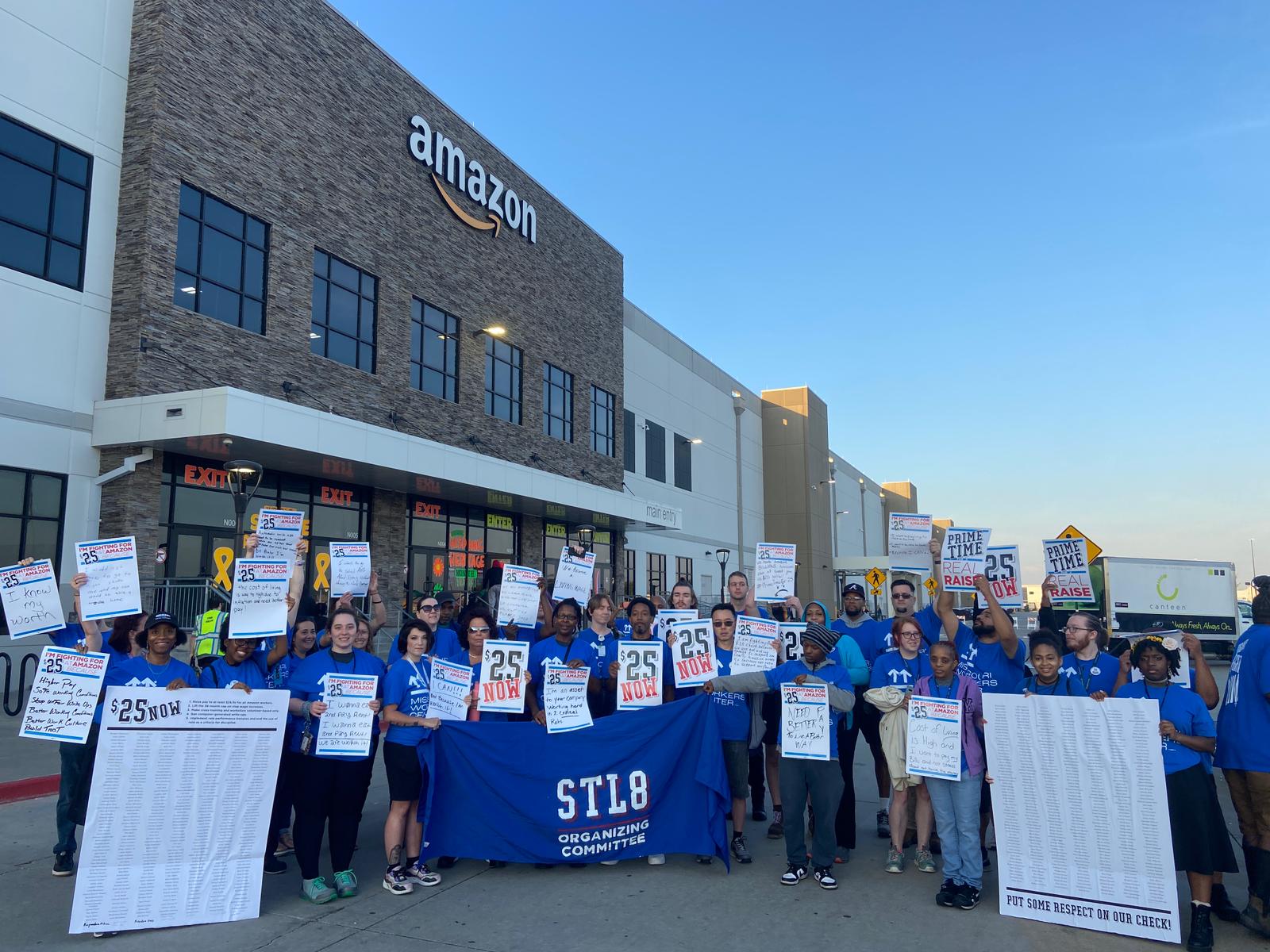
Enlarge/ Warehouse workers at the STL8 Amazon Fulfillment Center marched on the boss Wednesday to demand a $25 an hour minimum wage for all workers.
via Justice Speaks
Amazon currently faces disgruntled workers in every direction.
Office workers are raging against CEO Andy Jassy’s return to office mandate, Fortune reported—which came just as a leaked document reportedly showed that Amazon is also planning to gut management, Business Insider reported. Drivers by the hundreds are flocking to join a union to negotiate even better work conditions, CNBC reported, despite some of the biggest concessions in Amazon’s history. And hundreds more unionized warehouse workers are increasingly banding together nationwide to demand a $25 an hour minimum wage. On Wednesday, workers everywhere were encouraged to leave Jassy a voicemail elevating workers’ demands for a $25 minimum wage.
Putting on the pressure
This momentum has been building for years after drivers unionized in 2021. And all this collective fury increasingly appears to be finally pressuring Amazon into negotiating better conditions for some workers.
Just last week, Amazon ponied up $2.1 billion—its “biggest investment yet”—to improve driver safety and increase drivers’ wages.
Unionizing warehouse workers told Ars that they’re seeking a similar investment from Amazon, which currently pays on average a $20.50 minimum wage.
“We work at a breakneck pace,” Christine Manno, an Amazon Fulfillment Center worker at Amazon site STL8 in St. Louis, Missouri, who was injured and never expects to work again, told Ars. “We put smiles on the billionaire’s faces, and we feel it’s prime time for a real raise for the employees. There’s too many of us struggling with food and housing, yet Andy Jassy took home over $14,000 an hour last year and Amazon is making billions in profit.”
On Wednesday, Amazon seemed to finally bend to the warehouse workers’ pressure, announcing a compromise on wage increases. The company said it was investing $2.2 billion to raise the base salaries of hourly fulfillment workers to “more than $22 an hour, and more than $29 an hour including benefits,” Reuters reported. Amazon’s spokesperson told Ars that STL8 workers’ starting wage “increased to $19 per hour coupled with our industry-leading benefits” and claimed that the company’s “biggest ever investment” in fulfillment workers was simply “part of an annual process where we review wages and benefits to ensure they stay competitive—and in many cases industry-leading.”
But while workers claimed the victory, they’re not going to sit back and take the pay bump. An STL8 worker on the organizing committee with Manno, Ash Judd, told Ars that workers “made this $1.50 raise happen through our tireless organizing, and we’ll keep fighting until we reach $25.”
Because of recent gains and the increasingly dire economic plight of workers, Amazon workers likely won’t be easing off the e-commerce giant any time soon. Some office workers told Fortune they are seeking other remote work to avoid returning to the office, threatening to “soft quit” and claiming that Amazon is going “backwards” with a stricter office policy than pre-COVID times. “This is a layoff in disguise,” one apparent worker complained on Reddit. “Return to the office or you’re fired and we don’t have to pay any severance or unemployment.”
With so many workers upset, it could now be a question of when Amazon will cave to their growing demands—not if—according to Beth Gutelius, the research director of the University of Illinois Chicago’s Center for Urban Economic Development.
“Research shows that the presence of collective bargaining agreements creates upward pressure on wages and working conditions, both in facilities that are unionized and those that are not,” Gutelius told Ars. “Based on that evidence, I would expect working conditions at Amazon to improve.”
Gutelius co-authored a May report documenting the financial insecurity of Amazon warehouse workers by surveying more than 1,400 across 42 states.
https://arstechnica.com/?p=2050684
AT&T fined $13M for data breach after giving customer bill info to vendor
AT&T agreed to pay a $13 million fine because it gave customer bill information to a vendor in order to create personalized videos, then allegedly failed to ensure that the vendor destroyed the data when it was no longer needed. In addition to the fine, AT&T agreed to stricter controls on sharing data with vendors in a consent decree announced today by the Federal Communications Commission.
In January 2023, years after the data was supposed to be destroyed, the vendor suffered a breach “when threat actors accessed the vendor’s cloud environment and ultimately exfiltrated AT&T customer information,” the FCC said. Information related to 8.9 million AT&T wireless customers was exposed.
Phone companies are required by law to protect customer information, and AT&T should not have merely relied on third-party firms’ assurances that they destroyed data when it was no longer needed, the FCC said.
“AT&T used the vendor to generate and host personalized video content, including billing and marketing videos, for AT&T customers,” an FCC press release said. “Under AT&T’s contracts, the vendor should have destroyed or returned AT&T customer information when no longer necessary to fulfill contractual obligations, which ended years before the breach occurred. AT&T failed to ensure the vendor: (1) adequately protected the customer information, and (2) returned or destroyed it as required by contract.”
The data “remained in the vendor’s cloud environment for many years after it should have been deleted or returned to AT&T and was ultimately exposed” in the January 2023 breach, an FCC Enforcement Bureau order said.
Data should have been deleted in 2018
AT&T told the FCC that it shared customer data with the vendor between 2015 and 2017, and that data was supposed to be “securely destroyed or deleted” by 2018. The exposed data included “line count for all impacted customers, and bill balance and payment information and rate plan name and features for approximately one percent of impacted customers,” the FCC said.
AT&T told Ars today that the data “did not contain credit card information, Social Security Numbers, account passwords or other sensitive personal information.” AT&T said it notified customers of the breach in March 2023.
“AT&T stated that it monitored impacted customer accounts following the incident and identified no evidence of AT&T account-related fraud or other unlawful or unauthorized activity tied to the Breach,” the consent decree said. “According to AT&T, porting, SIM swap, and equipment fraud rates for impacted customers following the incident were consistently less than the rates for the general population of AT&T Mobility customers across all account types.”
When contacted by Ars, AT&T did not respond directly to the FCC’s allegation that it failed to ensure the vendor protected customer information. AT&T provided us with a statement saying, “A vendor we previously used experienced a security incident last year that exposed data pertaining to some of our wireless customers. Though our systems were not compromised in this incident, we’re making enhancements to how we manage customer information internally, as well as implementing new requirements on our vendors’ data management practices.”
https://arstechnica.com/?p=2050523
Zynga owes IBM $45M after using 1980s patented technology for hit games
Zynga must pay IBM nearly $45 million in damages after a jury ruled that popular games in its FarmVille series, as well as individual hits like Harry Potter: Puzzles and Spells, infringed on two early IBM patents.
In an SEC filing, Zynga reassured investors that “the patents at issue have expired and Zynga will not have to modify or stop operating any of the games at issue” as a result of the loss. But the substantial damages owed will likely have financial implications for Zynga parent company Take-Two Interactive Software, analysts said, unless Zynga is successful in its plans to overturn the verdict.
A Take-Two spokesperson told Ars: “We are disappointed in the verdict; however, believe we will prevail on appeal.”
For IBM, the win comes after a decade of failed attempts to stop what it claimed was Zynga’s willful infringement of its patents.
In court filings, IBM told the court that it first alerted Zynga to alleged infringement in 2014, detailing how its games leveraged patented technology from the 1980s that came about when IBM launched Prodigy.
But rather than negotiate with IBM, like tech giants Amazon, Apple, Google, and Facebook have, Zynga allegedly dodged accountability, delaying negotiations and making excuses to postpone meetings for years. In that time, IBM alleged that rather than end its infringement or license IBM’s technologies, Zynga “expanded its infringing activity” after “openly” admitting to IBM that “litigation would be the only remaining path” to end it.
This left IBM “no choice but to seek judicial assistance,” IBM told the court.
IBM argued that its patent, initially used to launch Prodigy, remains “fundamental to the efficient communication of Internet content.” Known as patent ‘849, that patent introduced “novel methods for presenting applications and advertisements in an interactive service that would take advantage of the computing power of each user’s personal computer (PC) and thereby reduce demand on host servers, such as those used by Prodigy,” which made it “more efficient than conventional systems.”
According to IBM’s complaint, “By harnessing the processing and storage capabilities of the user’s PC, applications could then be composed on the fly from objects stored locally on the PC, reducing reliance on Prodigy’s server and network resources.”
The jury found that Zynga infringed that patent, as well as a ‘719 patent designed to “improve the performance” of Internet apps by “reducing network communication delays.” That patent describes technology that improves an app’s performance by “reducing the number of required interactions between client and server,” IBM’s complaint said, and also makes it easier to develop and update apps.
The company told the court that licensing these early technologies helps sustain the company’s innovations today.
As of 2022, IBM confirmed that it has spent “billions of dollars on research and development” and that the company vigilantly protects those investments when it discovers newcomers like Zynga seemingly seeking to avoid those steep R&D costs by leveraging IBM innovations to fuel billions of dollars in revenue without paying IBM licensing fees.
“IBM’s technology is a key driver of Zynga’s success,” IBM argued back in 2022, and on Friday, the jury agreed.
“IBM is pleased with the jury verdict that recognizes Zynga’s infringement of IBM’s patents,” IBM’s spokesperson told Ars.
Cost of pre-Internet IBM licenses
In its defense, Zynga tried and failed to argue that the patents were invalid, including contesting the validity of the 1980s patent—which Zynga claimed never should have been issued, alleging it was due to “intent to deceive” the patent office by withholding information.
It’s currently unclear what licensing deal IBM offered to Zynga initially or how much Zynga could have paid to avoid damages awarded this week. IBM did not respond to Ars’ request to further detail terms of the failed deal.
But the 1980s patent in particular has been at the center of several lawsuits that IBM has raised to protect its early intellectual property from alleged exploitation by Internet companies. Back in 2006, when IBM sued Amazon, IBM executive John Kelly vowed to protect the company’s patents “through every means available.” IBM followed through on that promise throughout the 2010s, securing notable settlements from various companies, like Priceline and Twitter, where terms of the subsequent licensing deals were not disclosed.
However, IBM’s aggressive defense of its pre-Internet patents hasn’t dinged every Internet company. When Chewy pushed back on IBM’s patent infringement claims in 2021, the pet supplier managed to beat IBM’s claims by proving in 2022 that its platform was non-infringing, Reuters reported.
Through that lawsuit, the public got a rare look into how IBM values its patents, attempting to get Chewy to agree to pay $36 million to license its technologies before suing to demand at least $83 million in damages for alleged infringement. In the end, Chewy was right to refuse to license the tech just to avoid a court battle.
Now that some of IBM’s early patents have become invalid, IBM’s patent-licensing machine may start slowing down.
For Zynga, the cost of fighting IBM so far has not restricted access to its games or forced Zynga to redesign its platforms to be non-infringing, which were remedies sought in IBM’s initial prayer for relief in the lawsuit. But overturning the jury’s verdict to avoid paying millions in damages may be a harder hurdle to clear, as a jury has rejected what may be Zynga’s best defense, and the jury’s notes and unredacted verdict remain sealed.
According to Take-Two’s SEC filing, the jury got it wrong, and Take-Two plans to prove it: “Zynga believes this result is not supported by the facts and the law and intends to seek to overturn the verdict and reduce or eliminate the damages award through post-trial motions and appeal.”
https://arstechnica.com/?p=2050361
Russian state media outlet RT banned by Facebook “for foreign interference”
Enlarge/ Russia President Vladimir Putin presents flowers to editor-in-chief of Russian broadcaster RT Margarita Simonyan after awarding her with the “Order of Alexander Nevsky” during a ceremony at the Kremlin in Moscow on May 23, 2019.
Getty Images | Evgenia Novozhenina
Meta yesterday announced a ban on Russian state media outlets RT (formerly Russia Today) and Rossiya Segodnya, taking action three days after the US government imposed sanctions on the outlets for covert influence activities.
“After careful consideration, we expanded our ongoing enforcement against Russian state media outlets: Rossiya Segodnya, RT and other related entities are now banned from our apps globally for foreign interference activity,” Meta said in a statement provided to Ars. Meta is the owner of Facebook, Instagram, WhatsApp, and Threads.
Meta already blocked RT and Rossiya Segodnya’s Sputnik network across Europe in March 2022, following a ban imposed by European Union government officials. YouTube blocked the channels worldwide. At the time, Vladimir Putin’s government was telling Russian media outlets not to call the invasion of Ukraine “an attack,” “invasion,” or “declaration of war.”
Although Meta didn’t block RT worldwide in 2022, it did impose worldwide restrictions on Russian state media. Meta said today that those restrictions prevented Russian state media from running ads, placed the state media content lower in people’s feeds, and added “nudges” asking users to confirm that they want to share or navigate to content from those outlets.
US says RT worked with Kremlin to foment unrest
Meta’s new worldwide ban comes after the US State Department said on Friday that it was designating Russian state media outlets “for their connection to Russia’s destabilizing actions abroad.” The US said it obtained new information from employees of RT and other sources showing that RT has “engaged in information operations, covert influence, and military procurement. These operations are targeting countries around the world, including in Europe, Africa, and North and South America.”
The US State Department said the government is “not taking action against these entities and individuals for the content of their reporting, or even the disinformation they create and spread publicly. We are taking action against them for their covert influence activities. Covert influence activities are not journalism.”
The US alleged that “RT and employees, including Editor-in-Chief Margarita Simonyan, have directly coordinated with the Kremlin to support Russian government efforts to influence the October 2024 Moldovan election. Specifically, in coordination with the Kremlin, Simonyan leverages the state-funded platforms for which she serves in leadership positions… to attempt to foment unrest in Moldova, likely with the specific aim of causing protests to turn violent. RT is aware of and prepared to assist Russia’s plans to incite protests should the election not result in a Russia-preferred candidate winning the presidency.”
The US also said that people “affiliated with Rossiya Segodnya coordinated with the Kremlin to attempt to foment unrest in Moldova, likely with the specific aim of causing protests to turn violent.” While RT is funded by Russia, Rossiya Segodnya is both state-owned and state-funded, the US said.
The US action blocks most transactions involving the designated entities, and “all property and interests in property of the designated persons described above that are in the United States or in possession or control of US persons are blocked and must be reported to the Department of Treasury’s Office of Foreign Assets Control,” the US said. The designation applies to Rossiya Segodnya and TV-Novosti, the latter of which is a federally funded organization that is “associated with Rossiya Segodnya and controls the RT media channel,” the US said. The US also designated Dmitry Konstantinovich Kiselev, the director general of Rossiya Segodnya.
RT: “We’ve been broadcasting straight out of the KGB”
RT has issued sarcastic responses to the US government and Meta actions. “RT Editor-in-Chief Margarita Simonyan joked that RT had learned from the Americans, rather than from Russian intelligence officers,” an RT article on the Meta ban said today.
When contacted by Ars today, RT’s press office gave us a statement saying the organization will “find the cracks to crawl through” despite the Meta ban. RT’s statement read in full:
It’s cute how there’s a competition in the West—who can try to spank RT the hardest, in order to make themselves look better. Meta/Facebook already blocked RT in Europe two years ago, now they’re censoring information flow to the rest of the world. Don’t worry, where they close a door, and then a window, our ‘partisans’ (or in your parlance, guerrilla fighters) will find the cracks to crawl through—as by Biden administration’s admission we are apt at doing.
After the State Department action last week, “RT responded with a mocking email that read in part: ‘We’ve been broadcasting straight out of the KGB headquarters all this time,'” according to CNN.
RT is still active on X, formerly Twitter. “On behalf of our team: Silence us all you want, but there’s no way to silence the truth,” the organization said.
We contacted Rossiya Segodnya today and will update this article if it provides comment.