ISP to Supreme Court: We shouldn’t have to disconnect users accused of piracy

A pair of scissors cutting an Ethernet cable.

A large Internet service provider wants the Supreme Court to rule that ISPs shouldn’t have to disconnect broadband users who have been accused of piracy. Cable firm Cox Communications, which is trying to overturn a ruling in a copyright infringement lawsuit brought by Sony, petitioned the Supreme Court to take up the case yesterday.

Cox said in a press release that a recent appeals court ruling “would force ISPs to terminate Internet service to households or businesses based on unproven allegations of infringing activity, and put them in a position of having to police their networks—contrary to customer expectations… Terminating Internet service would not just impact the individual accused of unlawfully downloading content, it would kick an entire household off the Internet.”

The case began in 2018 when Sony and other music copyright holders sued Cox, claiming that it didn’t adequately fight piracy on its network and failed to terminate repeat infringers. A US District Court jury in the Eastern District of Virginia ruled in December 2019 that Cox must pay $1 billion in damages to the major record labels.

Digital rights groups such as the Electronic Frontier Foundation (EFF) objected to the ruling, saying it “would result in innocent and vulnerable users losing essential Internet access.” The case went to the US Court of Appeals for the 4th Circuit, which vacated the $1 billion damages award in February 2024 but upheld one of the major copyright infringement verdicts.

Specifically, the appeals court affirmed the jury’s finding that Cox was guilty of willful contributory infringement and reversed a verdict on vicarious infringement. The vicarious liability verdict was scrapped “because Cox did not profit from its subscribers’ acts of infringement.”

Cox wants ruling on contributory infringement

On the contributory infringement charge, appeals court judges indicated that their hands were tied in part by Cox’s failure to make a key argument to the District Court. Proving “contributory infringement by an Internet service provider based on its subscribers’ direct infringement” can be achieved by showing “willful blindness,” the court said.

“Cox did not argue to the district court, as it does now on appeal, that notices of past infringement failed to establish its knowledge that the same subscriber was substantially certain to infringe again… Because Cox did not press this argument in the district court, it is forfeited for appeal,” the appeals court said. In District Court, Cox argued that copyright infringement notices sent to the ISP were too vague.

The Supreme Court held in MGM v. Grokster, in 2005, that “One who distributes a device with the object of promoting its use to infringe copyright, as shown by clear expression or other affirmative steps taken to foster infringement, going beyond mere distribution with knowledge of third-party action, is liable for the resulting acts of infringement by third parties using the device, regardless of the device’s lawful uses.”

In its Supreme Court petition yesterday, Cox said that circuit appeals courts “have split three ways over the scope of that ruling, developing differing standards for when it is appropriate to hold an online service provider secondarily liable for copyright infringement committed by users.”

Cox asked justices to decide whether the 4th Circuit “err[ed] in holding that a service provider can be held liable for ‘materially contributing’ to copyright infringement merely because it knew that people were using certain accounts to infringe and did not terminate access, without proof that the service provider affirmatively fostered infringement or otherwise intended to promote it.”

The case raises one other major question, Cox told SCOTUS:

Generally, a defendant cannot be held liable as a willful violator of the law—and subject to increased penalties—without proof that it knew or recklessly disregarded a high risk that its own conduct was illegal. In conflict with the Eighth Circuit, the Fourth Circuit upheld an instruction allowing the jury to find willfulness if Cox knew its subscribers’ conduct was illegal—without proof Cox knew its own conduct in not terminating them was illegal.

Justices should rule on whether the 4th Circuit “err[ed] in holding that mere knowledge of another’s direct infringement suffices to find willfulness,” Cox said.

https://arstechnica.com/?p=2043862


New Zealand official signs extradition order to send Kim Dotcom to US

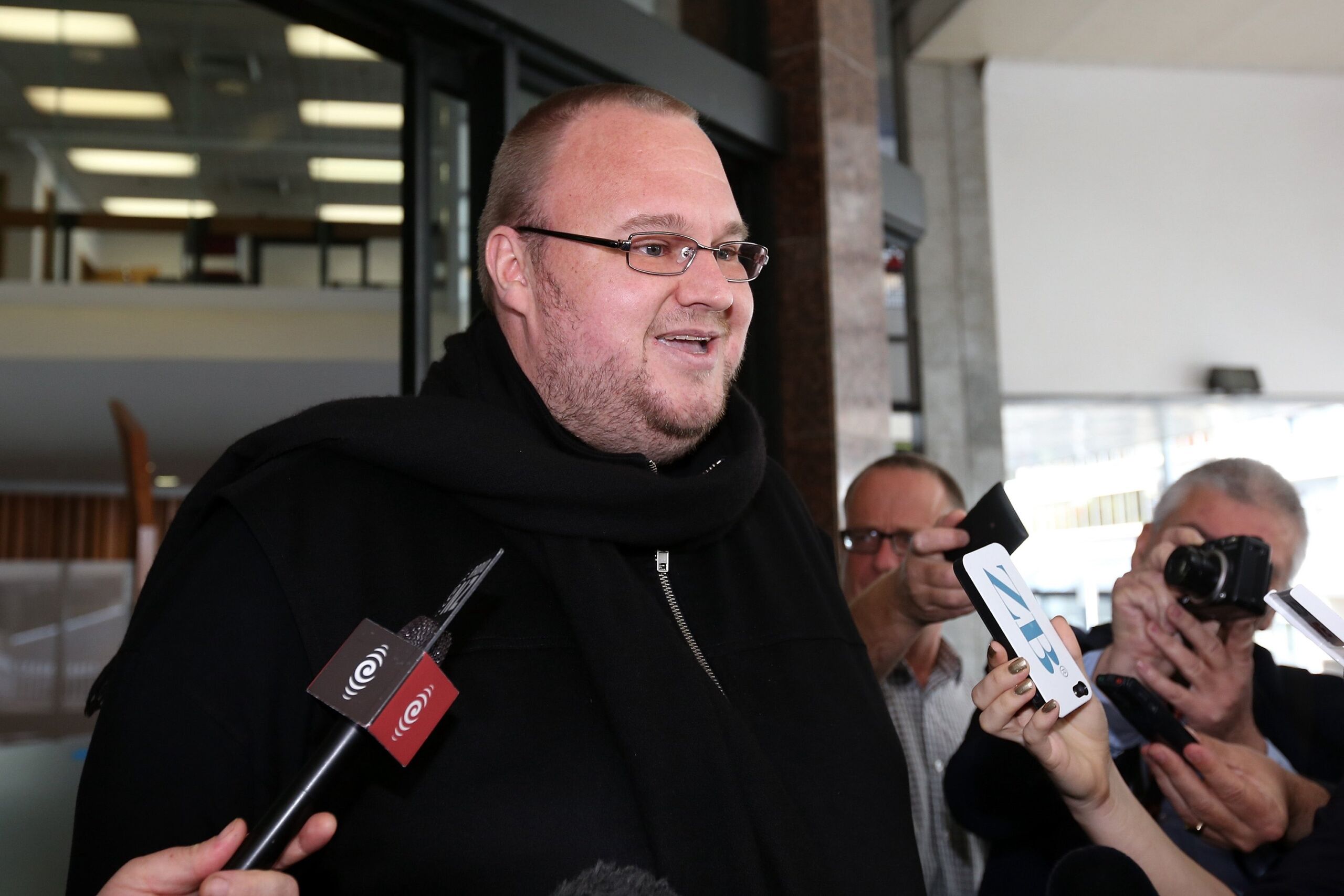
Kim Dotcom smiling and speaking to reporters outside a courthouse
Enlarge / Kim Dotcom speaks to the media after a bail hearing at Auckland District Court on December 1, 2014, in Auckland, New Zealand.
Getty Images | Fiona Goodall

Kim Dotcom has lost yet another ruling in his attempt to avoid extradition from New Zealand to the United States, over a dozen years after the file-sharing site Megaupload was shut down. But he hasn’t run out of appeal options yet.

On Thursday, a government spokesperson confirmed that New Zealand Justice Minister Paul Goldsmith signed an extradition order for Dotcom, according to Reuters.

“I have received extensive advice from the Ministry of Justice on this matter,” Goldsmith said in a statement quoted by numerous news organizations. “I considered all of the information carefully and have decided that Mr. Dotcom should be surrendered to the US to face trial. As is common practice, I have allowed Mr. Dotcom a short period of time to consider and take advice on my decision. I will not, therefore, be commenting further at this stage.”

The latest extradition decision, like previous ones, is not final. Dotcom said this week that he will appeal. “By the time the appeals are done, if ever, the world will be a very different place,” he wrote.

“I love New Zealand. I’m not leaving,” he also posted today.

A New Zealand Herald article today said that Dotcom’s expected appeal could drag the case out another few years. “If extradition goes ahead, it could be years from now,” the newspaper wrote.

Dotcom blasts “obedient US colony”

Dotcom blasted the New Zealand government, writing that “the obedient US colony in the South Pacific just decided to extradite me for what users uploaded to Megaupload, unsolicited, and what copyright holders were able to remove with direct delete access instantly and without question.”

Megaupload was shut down by US authorities in January 2012. Dotcom and others were indicted on charges of conspiracy to commit racketeering, conspiracy to commit money laundering, conspiracy to commit copyright infringement, criminal copyright infringement, aiding and abetting of criminal copyright infringement, and wire fraud.

Dotcom has been able to delay extradition despite numerous rulings against him. One New Zealand judge ordered Dotcom’s extradition in December 2015. The extradition order was upheld in 2017 by one appeals court and again in 2018 by another appeals court.

The New Zealand Supreme Court ruled against Dotcom and two other defendants, Mathias Ortmann and Bram van der Kolk, in December 2021. Ortmann and van der Kolk reached a deal that let them “avoid being extradited to the US in exchange for facing charges in New Zealand,” an Associated Press article in May 2022 said.

The AP article said that despite the Supreme Court ruling against the three Megaupload defendants, extradition still required approval from the justice minister. “And even that decision could be appealed,” the AP wrote.

After the 2021 Supreme Court ruling, Stuff quoted Victoria University law professor Geoff McLay as saying that judicial review of an extradition decision by the justice minister would likely involve hearings before the New Zealand High Court, Court of Appeal and Supreme Court. If the justice minister “makes a decision they should be extradited, I would imagine they would immediately judicially review his decision which will then kick off the whole shebang again,” McLay said at the time.

In a May 2022 podcast, New Zealand Herald investigative reporter David Fisher said, “I think there’s a good possibility that we have another three or five years in court wrangles through this case. You might have the justice minister sign the extradition warrant, but then that will get appealed to the High Court through judicial review, then it will go to the Court of Appeal and on to the Supreme Court. And when you get to a point three or five years down the track where Dotcom’s health may not be something the US system is able to deal with—and that could be good, fresh grounds for bouncing extradition.”

https://arstechnica.com/?p=2043563


Florida’s ban on lab-grown meat challenged as unconstitutional

lab-grown meat
Upside Foods

Florida’s ban on cultivated meat is being challenged in federal court in a lawsuit that was filed yesterday. The case is being brought by the cultivated meat firm Upside Foods and the Institute of Justice (IJ), a nonprofit public interest law firm.

Florida Governor Ron DeSantis signed the legislation making the sale of cultivated meat illegal in Florida on May 1, and the bill came into effect on July 1. Alabama passed a similar bill banning cultivated meat that will come into effect from October 1.

The case brought by Upside Foods and the IJ argues that Florida’s ban is unconstitutional in three different ways. First, they argue, the ban violates the Supremacy Clause that gives federal law priority over state law in certain instances. The court case argues that the Florida ban violates two different provisions in the Federal Meat Inspection Act and Poultry Products Inspection Act.

The legal complaint also alleges that the ban violates the Commerce Clause, which gives the US Congress exclusive power to regulate interstate commerce. The IJ argues that the Commerce Clause restricts states from enacting laws that unduly restrict interstate commerce, and that Florida’s ban in its current form has the effect of discriminating against it.

“Florida’s law has nothing to do with protecting health and safety,” said IJ senior attorney Paul Sherman in a press conference today. “It is a transparent example of economic protectionism.”

Sherman said that Upside Foods and the IJ would also apply for a preliminary injunction that would allow the company to sell cultivated meat in Florida while the legal challenge is still ongoing. The complaint says that Upside had planned to distribute its cultivated chicken at Art Basel in Miami in early December 2024. The company protested the Florida ban by holding a tasting of its chicken on June 27 in Miami, shortly before the ban came into effect.

Sherman said that the Alabama ban was also “in our sights” but that the IJ had targeted the Florida law as it came into effect before the Alabama ban. “We’re hoping we’ll be able to get a quick ruling [in Florida] on a preliminary injunction there,” and use that as a precedent to challenge the Alabama ban, he said.

The lawsuit was welcomed by the Good Food Institute (GFI), a nonprofit focused on advancing alternative proteins and which is serving as a consulting consul in this case. “Consumers should decide what kind of meat they want to buy and feed their families—not politicians. This lawsuit seeks to protect these consumer rights, along with the rights of companies to compete in a fair and open marketplace,” said GFI’s director of regulatory affairs Laura Braden in an emailed statement.

Florida Agricultural Commissioner Wilton Simpson praised the bill banning cultivated meat for protecting the state’s agricultural industry against new ways of making meat. “We must protect our incredible farmers and the integrity of American agriculture. Lab-grown meat is a disgraceful attempt to undermine our proud traditions and prosperity, and is in direct opposition to authentic agriculture,” he said when the bill was signed.

But in the press conference, Upside Foods CEO Uma Valeti argued that cultivated meat should be seen as a complement, not a replacement, to conventional animal agriculture. He said that watching the Florida Legislature pass the bill banning his chicken “felt like watching an old boys’ club” of legislatures protecting an incumbent industry against a new technology.

This story originally appeared on wired.com.

https://arstechnica.com/?p=2043089


EU warned Elon Musk about “disinformation” before Trump interview on X

A smartphone displays Elon Musk's profile on X, the app formerly known as Twitter.
Getty Images | Dan Kitwood

Elon Musk clashed with the EU ahead of a planned interview with Donald Trump on X as a war of words broke out between Brussels and the technology billionaire’s social media platform over content related to the US election.

The dispute erupted as Trump, the Republican US presidential nominee, returned to X on Monday with a number of posts on a social media platform that had once banned him, just hours before the interview with Musk.

The billionaire’s planned event with Trump triggered a strident warning to X from Thierry Breton, the EU commissioner for the internal market, about the dissemination of “content that promotes hatred, disorder, incitement to violence, or certain instances of disinformation.”

Breton said in a letter addressed to Musk that he was “compelled to remind” the tech entrepreneur of the “due diligence obligations” set out in the EU’s Digital Services Act, which is designed to police online hate speech and disinformation.

Breton said he was writing to Musk “in relation to” the planned live X broadcast with Trump on Monday, and after recent violence in the UK, where social media platforms have been criticized for inciting race riots across the country.

Musk responded to Breton with a meme from the 2008 movie Tropic Thunder, in which an actor yells: “Take a big step back and literally fuck your own face.”

X chief executive Linda Yaccarino wrote of Breton’s letter: “This is an unprecedented attempt to stretch a law intended to apply in Europe to political activities in the US. It also patronizes European citizens, suggesting they are incapable of listening to a conversation and drawing their own conclusions.”

The Trump campaign blasted the EU as an “enemy of free speech” in response to Breton’s letter. “The European Union should mind their own business instead of trying to meddle in the US presidential election,” said a Trump campaign spokesperson.

The campaign also suggested that the bloc was trying to prevent Trump’s return to the presidency because of trade policy.

“They know that a President Trump victory means America will no longer be ripped off because he will smartly utilize tariffs and renegotiated trade deals that puts America First,” it said.

Musk, a self-declared “free-speech absolutist,” endorsed Trump’s re-election bid last month just after the failed assassination attempt against him, and recently launched a campaign funding group to support the former president’s White House bid.

Trump said the interview with Musk on Monday on X would be the “interview of the century,” and marked the event with posts on the platform that was crucial to his electoral success in 2016.

Among the posts was a campaign video that reminded viewers of the federal indictments against him for allegedly mishandling classified documents and conspiring to overturn the 2020 election. “They want to silence me because I will never let them silence you,” says Trump in the video. He also vows to “totally obliterate the Deep State.”

The post had more than 19 million views four hours after it was posted, according to X.

Another video criticized Kamala Harris, his Democratic rival in this year’s presidential election.

Trump’s sudden reappearance on X comes as this year’s race for the White House tightens, with Harris now level or even ahead in some swing states, according to surveys conducted since she replaced President Joe Biden as the Democratic candidate.

X, formerly Twitter, banned Trump from the platform for life in 2021 shortly after a mob of his supporters stormed the US Capitol on January 6. He had repeatedly violated the platform’s rules against inciting or glorifying violence.

Musk, who bought Twitter in 2022, reinstated Trump’s account later that year and loosened the platform’s moderation policies, allowing suspended and controversial figures to return.

Before Monday, Trump had only posted once since Musk reinstated his account—on August 24, 2023, when he surrendered to authorities in Georgia on felony charges relating to his efforts to overturn his 2020 election defeat in the state. The post sparked a surge in donations to his campaign.

Trump launched his own social media platform, Truth Social, in 2022, in an attempt to compete with Twitter.

A clause between Truth Social and Trump requiring him to post on the platform six hours before doing so elsewhere expired last year. Trump’s audience on X, where he has 88 million followers, is far greater than on Truth Social, where he has 7.5 million followers.

In quarterly earnings released on Friday, sales at Trump Media & Technology Group, the company behind Truth Social, fell from $1.19 million to $837,000 in the three months to June, with it reporting a net loss of $16.4 million. Shares in TMTG closed down 5.1 percent on Monday in New York.

© 2022 The Financial Times Ltd. All rights reserved Not to be redistributed, copied, or modified in any way.

https://arstechnica.com/?p=2042731


Google abruptly shuts down AdSense in Russia as tensions with Kremlin escalate

Google abruptly shuts down AdSense in Russia as tensions with Kremlin escalate

Google announced Monday that it’s shutting down all AdSense accounts in Russia due to “ongoing developments in Russia.”

This effectively ends Russian content creators’ ability to monetize their posts, including YouTube videos. The change impacts accounts monetizing content through AdSense, AdMob, and Ad Manager, the support page said.

While Google has declined requests to provide details on what prompted the change, it’s the latest escalation of Google’s ongoing battle with Russian officials working to control the narrative on Russia’s war with Ukraine.

In February 2022, Google paused monetization of all state-funded media in Russia, then temporarily paused all ads in the country the very next month. That March, Google paused the creation of new Russia-based AdSense accounts and blocked ads globally that originated from Russia. In March 2022, Google also paused monetization of any content exploiting, condoning, or dismissing Russia’s war with Ukraine. Seemingly as retaliation, Russia seized Google’s bank account, causing Google Russia to shut down in May 2022.

Since then, Google has “blocked more than 1,000 YouTube channels, including state-sponsored news, and over 5.5 million videos,” Reuters reported.

For Russian creators who have still found ways to monetize their content amid the chaos, Google’s decision to abruptly shut down AdSense accounts comes as “a serious blow to their income,” Bleeping Computer reported. Russia is second only to the US in terms of YouTube web traffic, Similarweb data shows, making it likely that Russia-based YouTubers earned “significant” revenues that will now be suddenly lost, Bleeping Computer reported.

Russia-based creators—including YouTubers, as well as bloggers and website owners—will receive their final payout this month, according to a message from Google to users reviewed by Reuters.

“Assuming you have no active payment holds and meet the minimum payment thresholds,” payments will be disbursed between August 21 and 26, Google’s message said.

Google’s spokesperson offered little clarification to Reuters and Bleeping Computer, saying only that “we will no longer be able to make payments to Russia-based AdSense accounts that have been able to continue monetizing traffic outside of Russia. As a result, we will be deactivating these accounts effective August 2024.”

It seems likely, though, that Russia passing a law in March—banning advertising on websites, blogs, social networks, or any other online sources published by a “foreign agent,” as Reuters reported in February—perhaps influenced Google’s update. The law also prohibited foreign agents from placing ads on sites, and under the law, foreign agents could include anti-Kremlin politicians, activists, and media. With new authority, Russia may have further retaliated against Google, potentially forcing Google to give up the last bit of monetization available to Russia-based creators increasingly censored online.

State assembly member and Putin ally Vyacheslav Volodin said that the law was needed to stop financing “scoundrels” allegedly “killing our soldiers, officers, and civilians,” Reuters reported.

One Russian YouTuber with 11.4 million subscribers, Valentin Petukhov, suggested on Telegram that Google shut down AdSense because people had managed to “bypass payment blocks imposed by Western sanctions on Russian banks,” Bleeping Computer reported.

According to Petukhov, the wording in Google’s message to users was “kind of strange,” making it unclear what account holders should do next.

“Even though the income from monetization has fallen tenfold, it hasn’t disappeared completely,” Petukhov said.

YouTube still spotty in Russia

Google’s decision to end AdSense in Russia follows reports of a mass YouTube outage that Russian Internet monitoring service Sboi.rf reported is still impacting users today.

Officials in Russia claim that YouTube has been operating at slower speeds because Google stopped updating its equipment in the region after the invasion of Ukraine, Reuters reported.

This outage and the slower speeds led “subscribers of over 135 regional communication operators in Russia” to terminate “agreements with companies due to problems with the operation of YouTube and other Google services,” the Russian tech blog Habr reported.

As Google has tried to resist pressure from Russian lawmakers to censor content that officials deem illegal, such as content supporting Ukraine or condemning Russia, YouTube had become one of the last bastions of online free speech, Reuters reported. It’s unclear how ending monetization in the region will impact access to anti-Kremlin reporting on YouTube or more broadly online in Russia. Last February, a popular journalist with 1.64 million subscribers on YouTube, Katerina Gordeeva, wrote on Telegram that “she was suspending her work due to the law,” Reuters reported.

“We will no longer be able to work as before,” Gordeeva said. “Of course, we will look for a way out.”

https://arstechnica.com/?p=2042637


RFK Jr’s anti-vaccine group can’t sue Meta for agreeing with CDC, judge rules

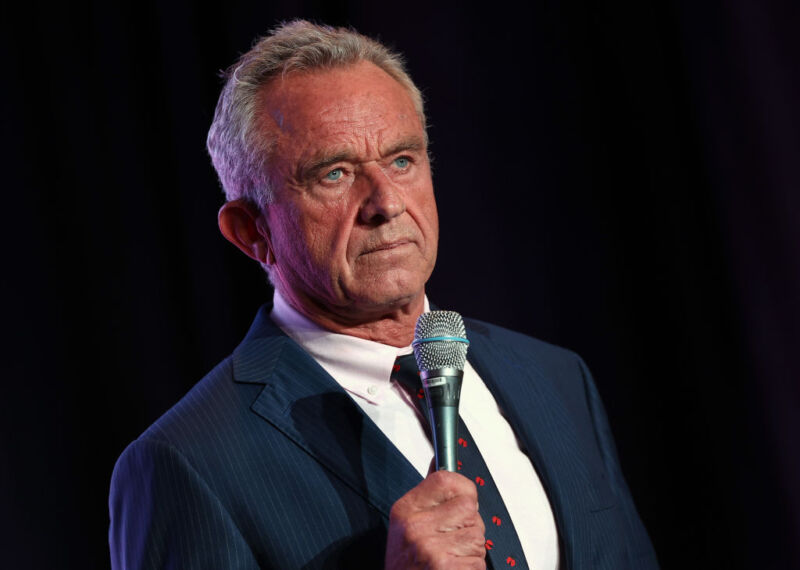
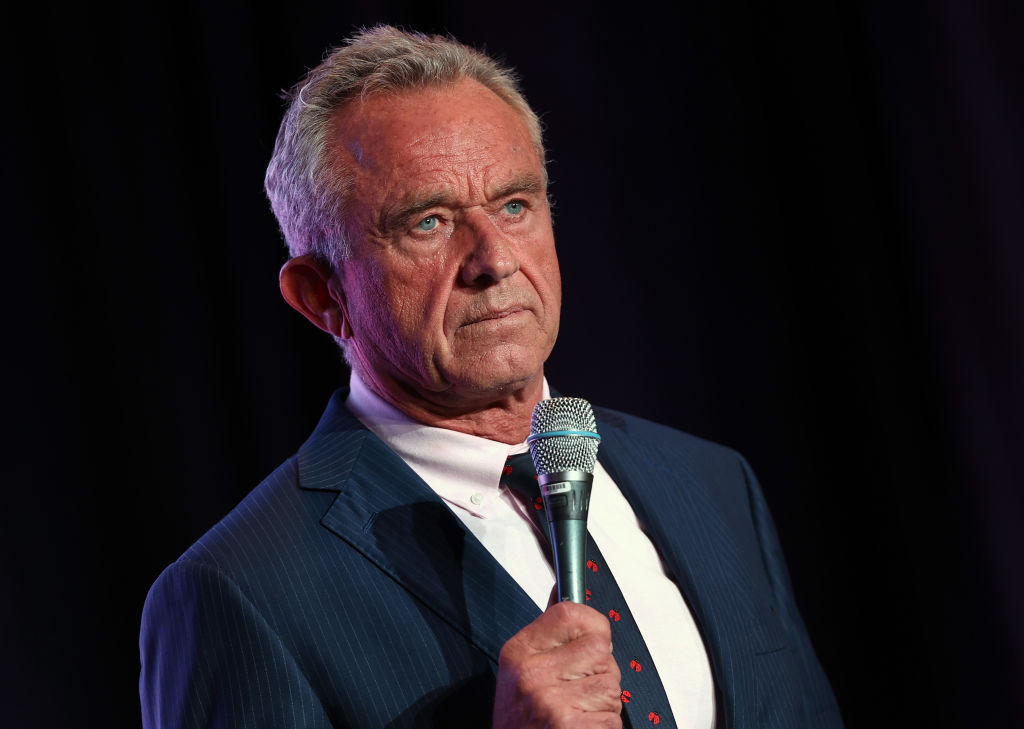
Independent presidential candidate Robert F. Kennedy Jr.
Enlarge / Independent presidential candidate Robert F. Kennedy Jr.

The Children’s Health Defense (CHD), an anti-vaccine group founded by Robert F. Kennedy Jr, has once again failed to convince a court that Meta acted as a state agent when censoring the group’s posts and ads on Facebook and Instagram.

In his opinion affirming a lower court’s dismissal, US Ninth Circuit Court of Appeals Judge Eric Miller wrote that CHD failed to prove that Meta acted as an arm of the government in censoring posts. Concluding that Meta’s right to censor views that the platforms find “distasteful” is protected by the First Amendment, Miller denied CHD’s requested relief, which had included an injunction and civil monetary damages.

“Meta evidently believes that vaccines are safe and effective and that their use should be encouraged,” Miller wrote. “It does not lose the right to promote those views simply because they happen to be shared by the government.”

CHD told Reuters that the group “was disappointed with the decision and considering its legal options.”

The group first filed the complaint in 2020, arguing that Meta colluded with government officials to censor protected speech by labeling anti-vaccine posts as misleading or removing and shadowbanning CHD posts. This caused CHD’s traffic on the platforms to plummet, CHD claimed, and ultimately, its pages were removed from both platforms.

However, critically, Miller wrote, CHD did not allege that “the government was actually involved in the decisions to label CHD’s posts as ‘false’ or ‘misleading,’ the decision to put the warning label on CHD’s Facebook page, or the decisions to ‘demonetize’ or ‘shadow-ban.'”

“CHD has not alleged facts that allow us to infer that the government coerced Meta into implementing a specific policy,” Miller wrote.

Instead, Meta “was entitled to encourage” various “input from the government,” justifiably seeking vaccine-related information provided by the World Health Organization (WHO) and the US Centers for Disease Control and Prevention (CDC) as it navigated complex content moderation decisions throughout the pandemic, Miller wrote.

Therefore, Meta’s actions against CHD were due to “Meta’s own ‘policy of censoring,’ not any provision of federal law,” Miller concluded. “The evidence suggested that Meta had independent incentives to moderate content and exercised its own judgment in so doing.”

None of CHD’s theories that Meta coordinated with officials to deprive “CHD of its constitutional rights” were plausible, Miller wrote, whereas the “innocent alternative”—”that Meta adopted the policy it did simply because” CEO Mark Zuckerberg and Meta “share the government’s view that vaccines are safe and effective”—appeared “more plausible.”

Meta “does not become an agent of the government just because it decides that the CDC sometimes has a point,” Miller wrote.

Equally not persuasive were CHD’s notions that Section 230 immunity—which shields platforms from liability for third-party content—”‘removed all legal barriers’ to the censorship of vaccine-related speech,” such that “Meta’s restriction of that content should be considered state action.”

“That Section 230 operates in the background to immunize Meta if it chooses to suppress vaccine misinformation—whether because it shares the government’s health concerns or for independent commercial reasons—does not transform Meta’s choice into state action,” Miller wrote.

One judge dissented over Section 230 concerns

In his dissenting opinion, Judge Daniel Collins defended CHD’s Section 230 claim, however, suggesting that the appeals court erred and should have granted CHD injunctive and declaratory relief from alleged censorship. CHD CEO Mary Holland told The Defender that the group was pleased the decision was not unanimous.

According to Collins, who like Miller is a Trump appointee, Meta could never have built its massive social platforms without Section 230 immunity, which grants platforms the ability to broadly censor viewpoints they disfavor.

It was “important to keep in mind” that “the vast practical power that Meta exercises over the speech of millions of others ultimately rests on a government-granted privilege to which Meta is not constitutionally entitled,” Collins wrote. And this power “makes a crucial difference in the state-action analysis.”

As Collins sees it, CHD could plausibly allege that Meta’s communications with government officials about vaccine-related misinformation targeted specific users, like the “disinformation dozen” that includes both CHD and Kennedy. In that case, it appears possible to Collins that Section 230 provides a potential opportunity for government to target speech that it disfavors through mechanisms provided by the platforms.

“Having specifically and purposefully created an immunized power for mega-platform operators to freely censor the speech of millions of persons on those platforms, the Government is perhaps unsurprisingly tempted to then try to influence particular uses of such dangerous levers against protected speech expressing viewpoints the Government does not like,” Collins warned.

He further argued that “Meta’s relevant First Amendment rights” do not “give Meta an unbounded freedom to work with the Government in suppressing speech on its platforms.” Disagreeing with the majority, he wrote that “in this distinctive scenario, applying the state-action doctrine promotes individual liberty by keeping the Government’s hands away from the tempting levers of censorship on these vast platforms.”

The majority agreed, however, that while Section 230 immunity “is undoubtedly a significant benefit to companies like Meta,” lawmakers’ threats to weaken Section 230 did not suggest that Meta’s anti-vaccine policy was coerced state action.

“Many companies rely, in one way or another, on a favorable regulatory environment or the goodwill of the government,” Miller wrote. “If that were enough for state action, every large government contractor would be a state actor. But that is not the law.”

https://arstechnica.com/?p=2042567


Push alerts from TikTok include fake news, expired tsunami warning

illustration showing a phone with TikTok logo
FT montage/Getty Images

TikTok has been sending inaccurate and misleading news-style alerts to users’ phones, including a false claim about Taylor Swift and a weeks-old disaster warning, intensifying fears about the spread of misinformation on the popular video-sharing platform.

Among alerts seen by the Financial Times was a warning about a tsunami in Japan, labeled “BREAKING,” that was posted in late January, three weeks after an earthquake had struck.

Other notifications falsely stated that “Taylor Swift Canceled All Tour Dates in What She Called ‘Racist Florida’” and highlighted a five-year “ban” for a US baseball player that originated as an April Fool’s day prank.

The notifications, which sometimes contain summaries from user-generated posts, pop up on screen in the style of a news alert. Researchers say that format, adopted widely to boost engagement through personalized video recommendations, may make users less critical of the veracity of the content and open them up to misinformation.

“Notifications have this additional stamp of authority,” said Laura Edelson, a researcher at Northeastern University, in Boston. “When you get a notification about something, it’s often assumed to be something that has been curated by the platform and not just a random thing from your feed.”

Social media groups such as TikTok, X, and Meta are facing greater scrutiny to police their platforms, particularly in a year of major national elections, including November’s vote in the US. The rise of artificial intelligence adds to the pressure given that the fast-evolving technology makes it quicker and easier to spread misinformation, including through synthetic media, known as deepfakes.

TikTok, which has more than 1 billion global users, has repeatedly promised to step up its efforts to counter misinformation in response to pressure from governments around the world, including the UK and EU. In May, the video-sharing platform committed to becoming the first major social media network to label some AI-generated content automatically.

The false claim about Swift canceling her tour in Florida, which also circulated on X, mirrored an article published in May in the satirical newspaper The Dunning-Kruger Times, although this article was not linked or directly referred to in the TikTok post.

At least 20 people said on a comment thread that they had clicked on the notification and were directed to a video on TikTok repeating the claim, even though they did not follow the account. At least one person in the thread said they initially thought the notification “was a news article.”

Swift is still scheduled to perform three concerts in Miami in October and has not publicly called Florida “racist.”

Another push notification inaccurately stated that a Japanese pitcher who plays for the Los Angeles Dodgers faced a ban from Major League Baseball: “Shohei Ohtani has been BANNED from the MLB for 5 years following his gambling investigation… ”

The words directly matched the description of a post uploaded as an April Fools’ day prank. Tens of commenters on the original video, however, reported receiving alerts in mid-April. Several said they had initially believed it before they checked other sources.

Users have also reported notifications that appeared to contain news updates but were generated weeks after the event.

One user received an alert on January 23 that read: “BREAKING: A tsunami alert has been issued in Japan after a major earthquake.” The notification appeared to refer to a natural disaster warning issued more than three weeks earlier after an earthquake struck Japan’s Noto peninsula on New Year’s Day.

TikTok said it had removed the specific notifications flagged by the FT.

The alerts appear automatically to scrape the descriptions of posts that are receiving, or are likely to receive, high levels of engagement on the viral video app, owned by China’s ByteDance, researchers said. They seem to be tailored to users’ interests, which means that each one is likely to be limited to a small pool of people.

“The way in which those alerts are positioned, it can feel like the platform is speaking directly to [users] and not just a poster,” said Kaitlyn Regehr, an associate professor of digital humanities at University College London.

TikTok declined to reveal how the app determined which videos to promote through notifications, but the sheer volume of personalized content recommendations must be “algorithmically generated,” said Dani Madrid-Morales, co-lead of the University of Sheffield’s Disinformation Research Cluster.

Edelson, who is also co-director of the Cybersecurity for Democracy group, suggested that a responsible push notification algorithm could be weighted towards trusted sources, such as verified publishers or officials. “The question is: Are they choosing a high-traffic thing from an authoritative source?” she said. “Or is this just a high-traffic thing?”

Additional reporting by Hannah Murphy in San Francisco and Cristina Criddle in London.

© 2024 The Financial Times Ltd. All rights reserved. Not to be redistributed, copied, or modified in any way.

https://arstechnica.com/?p=2042447


AT&T rebuked over misleading ad for nonexistent satellite phone calling

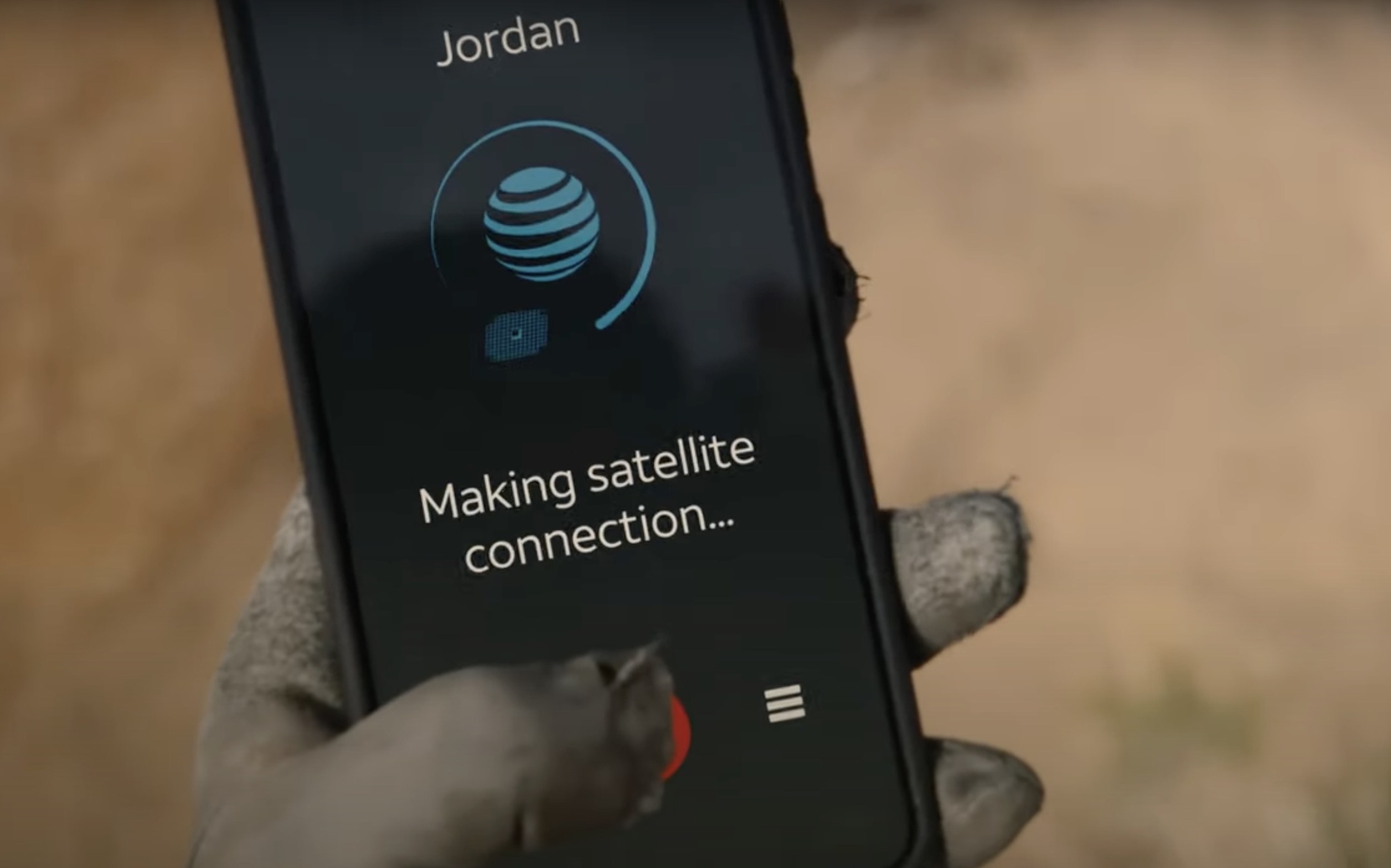
A gloved hand holds a phone while making a call. The screen shows an AT&T logo and the text,
Enlarge / Screenshot from AT&T commercial featuring Ben Stiller making a satellite call to Jordan Spieth.

AT&T has been told to stop running ads that claim the carrier is already offering cellular coverage from space.

AT&T intends to offer Supplemental Coverage from Space (SCS) and has a deal with AST SpaceMobile, a Starlink competitor that plans a smartphone service from low-Earth-orbit satellites. But AST SpaceMobile’s first batch of five satellites isn’t scheduled to launch until September.

T-Mobile was annoyed by AT&T running an ad indicating that its satellite-to-cellular service was already available, and filed a challenge with the advertising industry’s self-regulatory system run by BBB National Programs. The BBB National Advertising Division (NAD) ruled against AT&T last month and the carrier appealed to the National Advertising Review Board (NARB), which has now also ruled against AT&T.

“It was not disputed that AT&T does not currently offer SCS coverage to its cellular customers… Therefore, the NARB panel recommended that AT&T discontinue the claim that SCS service is presently available to consumers or modify the claim to clearly and conspicuously communicate that SCS is not available at this time,” the NARB said in an announcement yesterday.

AT&T, which is also famous for renaming its 4G service “5GE,” reluctantly agreed to comply with the recommendation and released a new version of the satellite-calling commercial with more specific disclaimers. “AT&T supports NARB’s self-regulatory process and will comply with NARB’s decision… However, we respectfully disagree with NARB’s conclusion recommending that the commercial be discontinued or modified,” AT&T said in its statement on the decision.

The challenged advertisement, titled “Epic Bad Golf Day,” features actor Ben Stiller looking for a golf ball in various remote locations.

“The commercial near the end shows Mr. Stiller having finally caught up with his golf ball in a desert wasteland… He then places a cellular phone call to champion golfer Jordan Spieth, shown standing on a golf green, presumably so that Mr. Spieth can offer golfing advice,” the NARB ruling said. “An image in the commercial shows the call from Mr. Stiller to Mr. Spieth connecting through a satellite relay. Another visual shows Mr. Stiller’s phone stating that it is ‘Making satellite connection.'”

AT&T: Commercial shouldn’t be taken literally

AT&T’s appeal “points to a number of fanciful/ludicrous features of the commercial in Mr. Stiller’s golf ball odyssey to argue that reasonable consumers will not receive a message that satellite service is currently available, but will understand that AT&T is burnishing its brand by pointing to technological features currently under development,” the panel wrote.

T-Mobile countered “that the use of humor does not shield an advertiser from its obligation to ensure that claims are truthful and non-misleading,” and the NARB agreed.

“The panel views the humorous/fanciful nature of Mr. Stiller’s antics as a means of attracting the attention of viewers, but also as a means of emphasizing the utility of SCS technology—allowing for calls to be placed from remote locations not currently accessible to mobile service,” the industry self-regulatory group said. “The humor associated with Mr. Stiller’s golf misadventures does not cancel out the consumer communication that SCS service is currently available. In addition, the panel does not accept AT&T’s argument that the panel’s decision (or NAD’s decision being appealed) will interfere with the use of humor in advertising.”

The ad originally included small text that described the depicted satellite call as a “demonstration of evolving technology.” The text was changed this week to say that “satellite calling is not currently available.”

“Even assuming consumers will read [the disclaimer], one reasonable interpretation of ‘evolving technology’ is that the technology is currently available, albeit expected to improve in the future,” the NARB said.

The original version also had text that said, “the future of help is an AT&T satellite call away.” The NARB concluded that this “statement can be interpreted reasonably as stating that ‘future’ technology has now arrived. The next visual reinforces that message, as it shows Mr. Stiller communicating on a cell phone call while in a remote location, and the accompanying visual states ‘connecting changes everything,’ a message addressing the present, not the future.”

In the updated version of the ad, AT&T changed the text to say that “the future of help will be an AT&T satellite call away.”

https://arstechnica.com/?p=2042344


Dozens injured, pets killed in fires causing Samsung to recall 1.1M stoves

US Consumer Product Safety Commission announced a recall of 1.1 million Samsung Slide-in Electric Ranges due to hundreds of reported fires.
Enlarge / US Consumer Product Safety Commission announced a recall of 1.1 million Samsung Slide-in Electric Ranges due to hundreds of reported fires.

After hundreds of reports of fires causing dozens of injuries and several pet deaths, Samsung is recalling more than a million electric stoves sold in the US between 2013 and 2024.

In a press release, the US Consumer Product Safety Commission (CPSC) reported that the voluntary recall was due to “front-mounted knobs” on Samsung’s slide-in electric ranges. The faulty knobs “can be activated by accidental contact by humans or pets, posing a fire hazard”—particularly when people leave objects on the stove.

The stoves impacted by the recall were widely sold in Costco, Home Depot, Best Buy, Lowe’s, and other appliance stores nationwide. Their knobs can be easily triggered by accident, heating up the cooktop and increasing the risks of fires, the CPSC said. Since 2013, Samsung has received “over 300 reports of unintentional activation.” According to the CPSC:

“These ranges have been involved in approximately 250 fires. At least 18 fires caused extensive property damage. Approximately 40 injuries have been reported, eight of which required medical attention, and there have been reports of seven fires involving pet deaths.”

Luckily, there’s an easy solution recently devised that can prevent this safety hazard in homes across America, Samsung said. Customers concerned about unintentional activations can request free knob locks and covers that Samsung confirmed made it much harder to accidentally turn on the stove.

Whereas the problematic electric ranges’ knobs require users to push the knob and turn, “precision knobs” that Samsung rolled out in April introduce a new safety measure that requires users to pinch the knob before pushing and turning knobs to activate the stove.

“A simple pinching motion” releases a pin that otherwise would remain locked and prevent stoves from accidental activation when knobs are unintentionally bumped or perhaps twisted by a young child or knocked around by a pet, Samsung said.

Consumers who bought one of the 30 affected models listed here can contact Samsung online or by phone or email to receive free knob locks and covers and implement this new “pinching” safety measure, even if their warranty is expired. They can also check if their model has been affected here. If the serial number is no longer readable, customers should call or chat online with a Samsung agent.

Once Samsung receives a request for free knob locks and covers, repair kits “should arrive within five business days,” an FAQ said. And customers will receive tracking information once the knob locks and covers ship. Instructions to install will be provided and are also available online.

Until knob locks and covers are installed, customers can continue using their stoves, Samsung said. But the CPSC advised people to “keep children and pets away from the knobs,” “check the range knobs to ensure they are off before leaving the home or going to bed,” and avoid leaving “objects on the range when the range is not in use.”

Additionally, customers with Wi-Fi-enabled ranges can enable notifications in their Samsung SmartThings app to receive alerts when the stove is on.

Samsung noted that parents in particular seemed to appreciate the precision knobs, with one review calling it a “favorite feature,” because “we have two young girls in the house and not having to worry about one of them playing with the knobs and starting the stove… is a huge plus.”

Fire hazards go beyond Samsung—and can be fatal

Samsung’s recall is part of a worrying trend where front-mounted knobs on both gas and electric ranges from many different manufacturers have caused hundreds of fires in the US. In June, the CPSC’s Joint Gas and Electric Range Knob Working Group hosted a meeting with leading stove manufacturers and other stakeholders to confront the industry-wide problem.

During the meeting, the CPSC shared data showing that across 338 incidents between January 1, 2018, and May 30, 2024, stoves from “ten specific manufacturers” were involved in fires causing 31 injuries and two deaths. Additionally, the CPSC had recorded “two other fatal incidents where a range was accidentally turned on when a knob was bumped, but the manufacturer is unknown.”

According to the CPSC, manufacturers were “interested to learn the events that lead to the ranges accidentally activating, including whether pets were involved, unsupervised children were at fault, or there were unusual circumstances.” Companies said the CPSC data would help them “fully understand the issues” and “make sure that reasonable and foreseeable circumstances would be addressed” without impacting compliance with the Americans with Disabilities Act.

Samsung attended the meeting, saying that it joined other “major brands across the appliance industry” to “discuss how to revisit knob safety standards for all ranges to address inadvertent activation.”

The working group’s meetings are expected to continue, but a deadline to reconvene approximately a month after the June meeting has since passed without any further discussion.

A few months prior to the meeting, Samsung introduced the precision knobs as a novel solution in its ranges, as well as an additional safety feature now available in “its most premium Bespoke Slide-In electric and gas ranges,” which illuminates the knobs when they’re turned on. This provides a “visual cue when the knobs are activated,” Samsung said.

As manufacturers like Samsung continue to tweak knobs to improve safety, the CPSC this week issued a safety alert warning the public of fire hazards of gas and electric ranges.

The safety notice advises customers to use safety locks and covers to prevent accidental activation, keep kids and pets away from cooktops with front-mounted knobs, and take care when leaning over the stove to avoid bumping into knobs.

For anyone concerned about safety issues with a gas or electric range, the CPSC provides a database to search additional recalls or otherwise recommends contacting manufacturers directly.

“Consumers who have experienced or have concerns about accidental activation of the front-mounted control knobs on their cooktop should immediately contact the manufacturer of the range to ask if there is a solution or remedy available from the manufacturer,” the CPSC safety alert said.

https://arstechnica.com/?p=2042257


Elon Musk’s lawsuit over alleged X ad boycott “a very weak case,” professor says

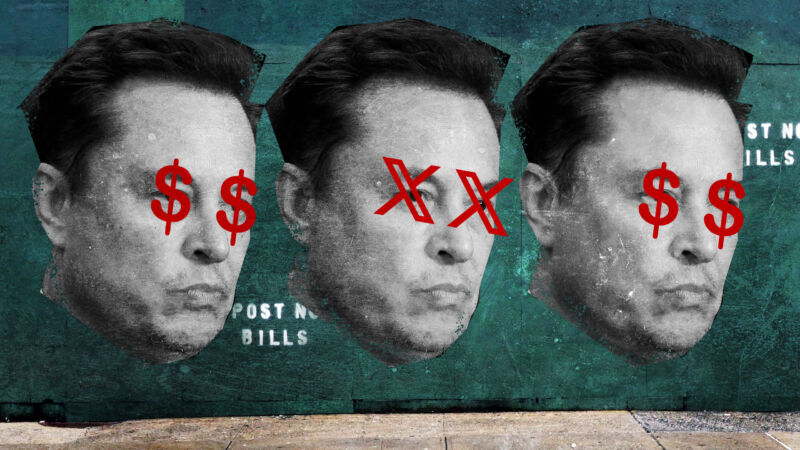
Illustration with three pictures of Elon Musk. In two of the photos there are dollar signs over Musk's eyes, in the other photo there are X logos instead.
Aurich Lawson | Getty Images

Antitrust law professors aren’t impressed by Elon Musk’s lawsuit alleging a supposed X advertising boycott amounts to an antitrust violation. Based on the initial complaint filed by Musk’s X Corp., it looks like “a very weak case,” Vanderbilt Law School Associate Dean for Research Rebecca Haw Allensworth told Ars.

“Given how difficult this will be to win, I would call it an unusual strategy,” she said.

The lawsuit against the World Federation of Advertisers (WFA) and several large corporations says that the alleged boycott is “a naked restraint of trade without countervailing benefits to competition or consumers.” The “collective action among competing advertisers to dictate brand safety standards to be applied by social media platforms shortcuts the competitive process and allows the collective views of a group of advertisers with market power to override the interests of consumers,” X claims.

Musk already won a victory of sorts as the WFA yesterday shut down the Global Alliance for Responsible Media (GARM) initiative that is the main subject of X’s allegations. “GARM is a small, not-for-profit initiative, and recent allegations that unfortunately misconstrue its purpose and activities have caused a distraction and significantly drained its resources and finances. GARM therefore is making the difficult decision to discontinue its activities,” the WFA said.

But the GARM shutdown won’t result in Musk’s company obtaining any financial damages unless X also wins in court. The company formerly named Twitter sued in a federal court in Texas, part of the conservative 5th Circuit, a venue that Musk likely believes will be more favorable to him than a court in another state. The District Court judge overseeing the lawsuit is also handling Musk’s case against Media Matters for America, a nonprofit that conducted research on ads being placed next to pro-Nazi content on X.

Texas is one of three states, along with Louisiana and Mississippi, where appeals go to the US Court of Appeals for the 5th Circuit. “The 5th Circuit is well known as the most conservative circuit in the country,” Professor Stephen Calkins of Wayne State University Law School told Ars.

“The law here is very unfavorable to X”

Despite the potentially friendly Texas court venue, Musk’s X faces a high legal bar in proving that it was the victim of an illegal boycott.

Allensworth said X must show “that the defendants did actually enter into an agreement—that they had a deal with each other to pull advertising spend from X as a group, not that each brand did it individually to protect their own brand status or make their own statement about Elon Musk. The law here is very unfavorable to X, but the complaint describes a lot of conduct that could support a jury or judge finding an agreement. But it’s a fact question, and we only have half the story.”

A bigger problem for Musk “is that X must show that the boycott harmed competition, not just that it harmed X,” Allensworth said. “The complaint is far from clear on what competition was harmed. A typical boycott will harm competition among the boycotters, but that doesn’t seem to be what the complaint is about. The complaint says the competition that was harmed was between platforms (like X/Twitter and Facebook, for example) but that’s a bit garbled. Again, we may know more as the suit develops.”

There’s one more problem that may be even bigger than the first two, according to Allensworth. Even if X proves there was an explicit agreement to pull advertising and that a boycott harmed competition, the advertisers would have a strong defense under the First Amendment’s right to speech.

“Concerted refusals to deal (boycotts) are not vulnerable to antitrust suit if they are undertaken to make a statement—essentially to engage in speech,” Allensworth explained. “It would seem here like that was the purpose of this boycott (akin to lunch counter boycotts in the ’60s, which were beyond the reach of the antitrust laws). Given that the Supreme Court has only increased First Amendment rights for corporations recently, I think this defense is very strong.”

All of those factors “add up, to me, to a very weak case,” Allensworth told Ars. But she cautions that at this early stage of litigation, “there’s a lot we don’t know; no one can judge a case based on the complaint alone—that’s the point of the adversarial system.”

An X court win wouldn’t force companies to advertise on the platform. But “if somehow they prevail, X could ask for treble damages—three times the revenue they lost because of the boycott,” Allensworth said.

https://arstechnica.com/?p=2042149