FTX to pay $12.7B to victims of Sam Bankman-Fried’s massive scheme

FTX to pay $12.7B to victims of Sam Bankman-Fried’s massive scheme

FTX, the bankrupt cryptocurrency exchange formerly helmed by fraudster Sam Bankman-Fried, has agreed to pay $12.7 billion to customers blindsided by Bankman-Fried’s deceptions covering up FTX’s flagrant misuse of customer funds.

In an order yesterday, US District Judge P. Kevin Castel said that FTX must pay $8.7 billion in restitution to victims of Bankman-Fried’s fraudulent scheme, as well as disgorge another $4 billion in “gains received in connection with the violations” to further compensate customers who suffered significant losses.

According to Ian McGinley, the division of enforcement director for the Commodity Futures Trading Commission (CFTC), “this multi-billion-dollar recovery for victims” is “the largest such recovery in CFTC history.” And the CFTC “achieved it with remarkable speed,” McGinley boasted.

“FTX’s massive fraud collapsed 21 months ago, and in that time, the CFTC investigated, filed a complaint, and achieved what many thought was impossible at the time of the collapse—a resolution to compensate victims for the losses they suffered,” McGinley said.

FTX could have owed more, but because the CFTC prioritized the speedy repayment of victims, the CTFC “agreed not to seek a civil monetary penalty against FTX” in a related settlement agreement approved by the Bankruptcy Court for the District of Delaware, the CFTC said in a press release celebrating the order.

Restitution comes after Castel found that FTX had violated the Commodity Exchange Act (CEA) and CFTC regulations. His order “imposes injunctions against further violations of the CEA and CFTC regulations, as well as trading and registration prohibitions, and requires FTX and Alameda to cooperate with the CFTC in its ongoing litigation,” the CFTC said.

Customers will be eligible for disgorgement through a supplemental remission fund if FTX’s plan is approved in ongoing bankruptcy proceedings, the CFTC said.

In his order, Castel noted that FTX had been touted as “the safest and easiest way to buy and sell crypto,” while FTX “commingled assets and freely used assets deposited by FTX customers as if they were Alameda’s assets”—which included using their assets to fund their promotions deceiving customers. Customer funds were also misappropriated to bail out “several digital asset companies with loans or acquisitions” and pay off FTX’s debts.

CFTC Chairman Rostin Behnam chastised FTX for using “age-old tactics to create an illusion that it was a safe and secure place to access crypto markets,” while taking advantage of the fact that “the basic regulatory tools, like governance, customer protections, and surveillance that exist to identify misconduct and ultimately prevent collapse, were simply not there.”

FTX fraudsters banned from trading crypto

The fraud didn’t come to light until the crypto market crash of May 2022, when “many FTX customers began requesting to withdraw assets from the exchange,” Castel wrote, and quickly found out their assets weren’t readily available.

Instead of being honest with customers, Bankman-Fried and others at FTX publicly pretended there was a liquidity problem while internally acknowledging that the real problem was misappropriating customer funds. Even once it became obvious that FTX did not have enough funds to cover withdrawals, the exchange falsely reassured customers that all “deposits were safe,” Castel said.

Because of these misleading statements and many others, Castel ordered a permanent injunction that seemingly applies to anyone involved with FTX’s fraud—including FTX, Alameda Research, Sam Bankman-Fried, Caroline Ellison, Gary Wang, and “any of their affiliates, agents, servants, employees, successors, assigns, attorneys, and persons in active concert or participation with them.”

The injunction blocks them from trading on any registered entity and from holding or entering into any transactions involving commodity interests or digital commodities, including bitcoin (BTC), ether (ETH), or tether (USDT). They also cannot control or direct trading of these commodities, among other restrictions on trading and registration.

Disbursement of restitution and disgorgements will be managed either by an administrator approved by the bankruptcy court or by FTX’s CEO, John J. Ray III, who condemned the FTX scheme as “a complete failure of corporate controls” thriving off “a complete absence of trustworthy financial information,” Castel’s order noted.

While the CFTC celebrated the speed of winning these repayments to FTX customers, it does not seem that disbursement will be immediate. In his order, Castel wrote that Ray would be responsible for sending annual progress reports “detailing the disbursement of funds or assets,” suggesting repayment may stretch on for years.

If FTX unduly delays payments once a plan is established, it may be required to repay whatever is owed at that time to customers to the CFTC immediately, the order said.

For victims wondering where to turn next to continue trading digital assets, more regulations might come as a comfort. But the cryptocurrency industry continues to lobby to evade regulations, OpenSecrets reported in May.

Until there’s more regulatory clarity, Behnam, the CFTC chairman, vowed to continue working to uncover schemes to stop the next FTX.

“This is just the tip of the iceberg,” Behnam said. “In the absence of digital asset legislation to fill regulatory gaps, entities will continue to operate in the shadows without these basic tools of sound regulation, sharpening their deceptive practices and continuing to dupe customers.”

https://arstechnica.com/?p=2041998



Google and Meta ignored their own rules in secret teen-targeting ad deals

Kids using cellphones

Google and Meta made a secret deal to target advertisements for Instagram to teenagers on YouTube, skirting the search company’s own rules for how minors are treated online.

According to documents seen by the Financial Times and people familiar with the matter, Google worked on a marketing project for Meta that was designed to target 13- to 17-year-old YouTube users with adverts that promoted its rival’s photo and video app.

The Instagram campaign deliberately targeted a group of users labeled as “unknown” in its advertising system, which Google knew skewed toward under-18s, these people said. Meanwhile, documents seen by the FT suggest steps were taken to ensure the true intent of the campaign was disguised.

The project disregarded Google’s rules that prohibit personalizing and targeting ads to under-18s, including serving ads based on demographics. It also has policies against the circumvention of its own guidelines, or “proxy targeting.”

Meta’s YouTube campaign to pull in younger users to Instagram was already in development when Mark Zuckerberg made a dramatic appearance before US Congress in January, where the Facebook co-founder apologized to the families of children who had been victims of sexual exploitation and abuse on his platforms.

The Silicon Valley-based pair, who are normally fierce competitors as the world’s two largest online advertising platforms, embarked on the effort late last year as Google sought to bolster its advertising earnings and as Meta scrambled to retain the attention of younger users against fast-growing rivals such as TikTok. Last week, Zuckerberg told investors that a recent push to engage more 18- to 29-year-olds had been bearing fruit.

The companies worked with Spark Foundry, a US subsidiary of French advertising giant Publicis, to launch the pilot marketing program in Canada between February and April this year, according to the people and documents seen by the Financial Times.

Due to its perceived success, it was then trialed in the US in May. The companies had planned to expand it further, to international markets and to promote other Meta apps such as Facebook, people familiar with the matter said.

While the pilot programs were small, Google saw them as an opportunity to grow into a more lucrative “full-funnel” relationship with Meta that would involve more splashy and expensive “brand” adverts on YouTube as well as its other platforms.

When contacted by the FT, Google initiated an investigation into the allegations. The project has now been canceled, a person familiar with the decision said.

Google said: “We prohibit ads being personalized to people under-18, period. These policies go well beyond what is required and are supported by technical safeguards. We’ve confirmed that these safeguards worked properly here” because no registered YouTube users known to be under 18 were directly targeted by the company.

However, Google did not deny using the “unknown” loophole, adding: “We’ll also be taking additional action to reinforce with sales representatives that they must not help advertisers or agencies run campaigns attempting to work around our policies.”

Meta said it disagreed that selecting the “unknown” audience constituted personalization or a circumvention of any rules, adding that it adhered to its own policies as well as those of its peers when advertising its services. It did not respond to questions about whether staff were aware that the “unknown” group skewed to younger users.

https://arstechnica.com/?p=2041783


All the possible ways to destroy Google’s monopoly in search

All the possible ways to destroy Google’s monopoly in search
Aurich Lawson

After US District Judge Amit Mehta ruled that Google has a monopoly in two markets—general search services and general text advertising—everybody is wondering how Google might be forced to change its search business.

Specifically, the judge ruled that Google’s exclusive deals with browser and device developers secured Google’s monopoly. These so-called default agreements funneled the majority of online searches to Google search engine result pages (SERPs), where results could be found among text ads that have long generated the bulk of Google’s revenue.

At trial, Mehta’s ruling noted, it was estimated that if Google lost its most important default deal with Apple, Google “would lose around 65 percent of its revenue, even assuming that it could retain some users without the Safari default.”

Experts told Ars that disrupting these default deals is the most obvious remedy that the US Department of Justice will seek to restore competition in online search. Other remedies that may be sought range from least painful for Google (mandating choice screens in browsers and devices) to most painful (requiring Google to divest from either Chrome or Android, where it was found to be self-preferencing).

But the remedies phase of litigation may have to wait until after Google’s appeal, which experts said could take years to litigate before any remedies are ever proposed in court. Whether Google could be successful in appealing the ruling is currently being debated, with anti-monopoly advocates backing Mehta’s ruling as “rock solid” and critics suggesting that the ruling’s fresh takes on antitrust law are open to attack.

Google declined Ars’ request to comment on appropriate remedies or its plan to appeal.

Previously, Google’s president of global affairs, Kent Walker, confirmed in a statement that the tech giant would be appealing the ruling because the court found that “Google is ‘the industry’s highest quality search engine, which has earned Google the trust of hundreds of millions of daily users,’ that Google ‘has long been the best search engine, particularly on mobile devices,’ ‘has continued to innovate in search,’ and that ‘Apple and Mozilla occasionally assess Google’s search quality relative to its rivals and find Google’s to be superior.'”

“Given this, and that people are increasingly looking for information in more and more ways, we plan to appeal,” Walker said. “As this process continues, we will remain focused on making products that people find helpful and easy to use.”

But Mehta found that Google was wielding its outsize influence in the search industry to block rivals from competing by locking browsers and devices into agreements ensuring that all searches went to Google SERPs. None of the pro-competitive benefits that Google claimed justified the exclusive deals persuaded Mehta, who ruled that “importantly,” Google “exercised its monopoly power by charging supra-competitive prices for general search text ads”—and thus earned “monopoly profits.”

While experts think the appeal process will delay litigation on remedies, Google seems to think that Mehta may rule on potential remedies before Google can proceed with its appeal. Walker told Google employees that a ruling on remedies may arrive in the next few months, The Wall Street Journal reported. Ars will continue monitoring for updates on this timeline.

As the DOJ’s case against Google’s search business has dragged on, reports have long suggested that a loss for Google could change the way that nearly the entire world searches the Internet.

Adam Epstein—the president and co-CEO of adMarketplace, which bills itself as “the largest consumer search technology company outside of Google and Bing”—told Ars that innovations in search could result in a broader landscape of more dynamic search experiences that draw from sources beyond Google and allow searchers to skip Google’s SERPs entirely. If that happens, the coming years could make Google’s ubiquitous search experience today a distant memory.

“By the end of this decade, going to a search engine results page will seem quaint,” Epstein predicted. “The court’s decision sets the stage for a remedy that will dramatically improve the search experience for everyone connected to the web. The era of innovation in search is just around the corner.”

The DOJ has not meaningfully discussed potential remedies it will seek, but Jonathan Kanter, assistant attorney general of the Justice Department’s antitrust division, celebrated the ruling.

“This landmark decision holds Google accountable,” Kanter said. “It paves the path for innovation for generations to come and protects access to information for all Americans.”

https://arstechnica.com/?p=2041575


Microsoft says Delta’s ancient IT explains long outage after CrowdStrike snafu

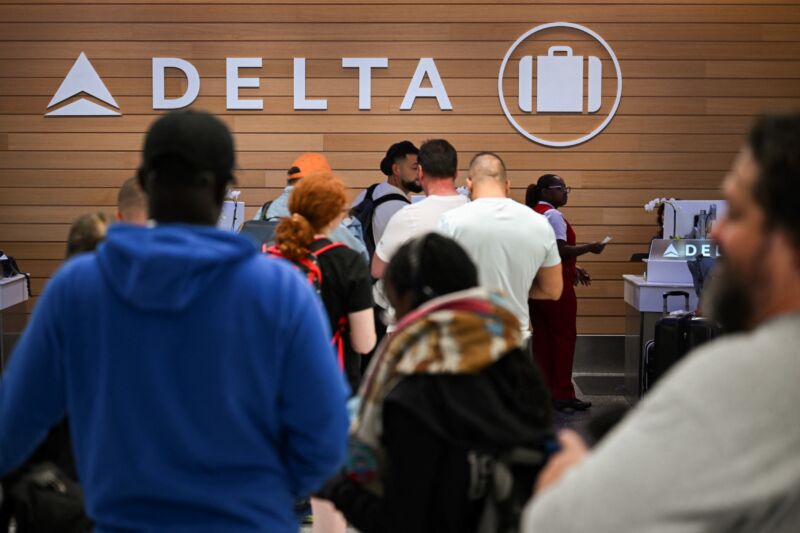
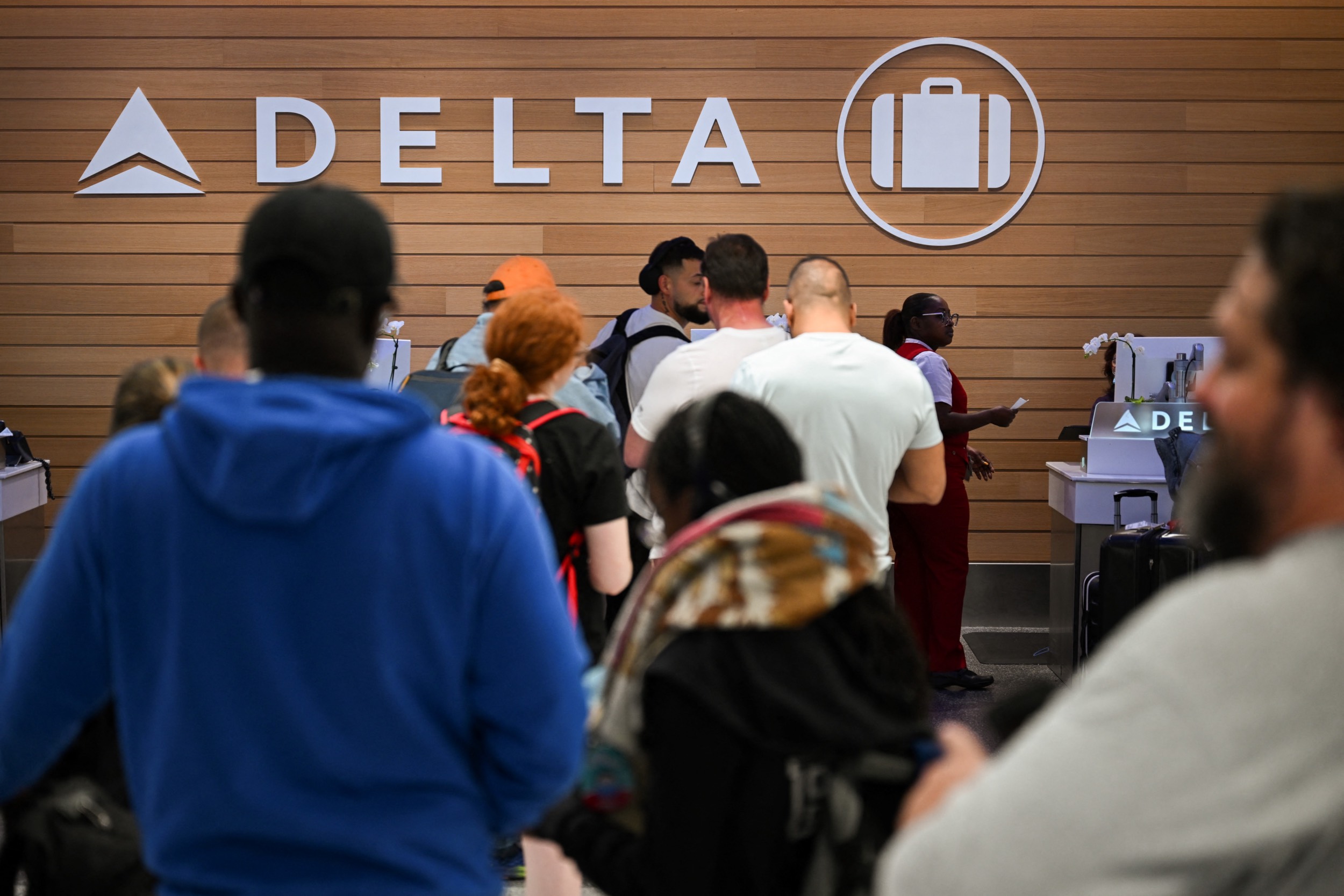
Delta Air Lines customers looking for missing bags wait in line in an airport baggage claim area.
Enlarge / Delta Air Lines customers looking for missing bags wait in line at Los Angeles International Airport (LAX) on July 24, 2024.
Getty Images | Patrick T. Fallon

Microsoft says that Delta Air Lines’ ancient IT infrastructure is to blame for the airline’s inability to quickly recover from last month’s CrowdStrike debacle.

With Delta threatening to sue Microsoft and CrowdStrike, both companies issued responses saying that Delta refused repeated calls for help. A Microsoft letter to Delta yesterday said the Windows maker is starting to figure out why Delta took longer than other airlines to recover.

“Microsoft continues to investigate the circumstances surrounding the CrowdStrike incident to understand why other airlines were able to fully restore business operations so much faster than Delta, including American Airlines and United Airlines,” the letter from Microsoft attorney Mark Cheffo said. “Our preliminary review suggests that Delta, unlike its competitors, apparently has not modernized its IT infrastructure, either for the benefit of its customers or for its pilots and flight attendants.”

On July 19, a faulty update from security firm CrowdStrike crashed millions of Windows PCs. In a July 29 letter, Delta attorney David Boies said the airline has “reason to believe Microsoft has failed to comply with contractual requirements and otherwise acted in a grossly negligent, indeed willful, manner in connection with the Faulty Update,” according to CNBC.

Cheffo’s response to Boies said that “Microsoft empathizes with Delta and its customers regarding the impact of the CrowdStrike incident.” But the Boies letter “and Delta’s public comments are incomplete, false, misleading, and damaging to Microsoft and its reputation,” Cheffo wrote.

“Given Delta’s false and damaging public statements, Microsoft will vigorously defend itself in any litigation if Delta chooses to pursue that path,” Cheffo wrote. The letter demanded that Delta preserve documents related to the outage.

Delta allegedly refused offers to help

CrowdStrike previously wrote to Delta on Sunday. “CrowdStrike’s CEO personally reached out to Delta’s CEO to offer onsite assistance, but received no response. CrowdStrike followed up with Delta on the offer for onsite support and was told that the onsite resources were not needed,” the letter said.

Microsoft’s letter on Tuesday provided a similar description. “Even though Microsoft’s software had not caused the CrowdStrike incident, Microsoft immediately jumped in and offered to assist Delta at no charge following the July 19 outage,” the letter said. “Each day that followed from July 19 through July 23, Microsoft employees repeated their offers to help Delta. Each time, Delta turned down Microsoft’s offers to help, even though Microsoft would not have charged Delta for this assistance.”

The letter said that after one Microsoft outreach on July 22, a “Delta employee replied, saying ‘all good. Cool will let you know and thank you.’ Despite this assessment that things were ‘all good,’ public reports indicate that Delta canceled more than 1,100 flights on July 22 and more than 500 flights on July 23.”

Senior executives repeatedly reached out to Delta executives “with similar results,” the letter said. Microsoft CEO Satya Nadella emailed Delta CEO Ed Bastian on July 24, but Bastian never replied, according to the letter.

Microsoft says it has a pretty good idea of why Delta refused its help. “In fact, it is rapidly becoming apparent that Delta likely refused Microsoft’s help because the IT system it was most having trouble restoring—its crew-tracking and scheduling system—was being serviced by other technology providers, such as IBM, because it runs on those providers’ systems, and not Microsoft Windows or Azure,” the letter said.

We contacted Delta today and will update this article if the company provides a response.

https://arstechnica.com/?p=2041521


Elon Musk declares “it is war” on ad industry as X sues over “illegal boycott”

Illustration of a shovel being used to bury the Twitter logo
Aurich Lawson | Getty Images

Elon Musk’s X Corp. today sued the World Federation of Advertisers and several large corporations, claiming they “conspired, along with dozens of non-defendant co-conspirators, to collectively withhold billions of dollars in advertising revenue” from the social network formerly known as Twitter.

“We tried peace for 2 years, now it is war,” Musk wrote today, a little over eight months after telling boycotting advertisers to “go fuck yourself.”

X’s lawsuit in US District Court for the Northern District of Texas targets a World Federation of Advertisers initiative called the Global Alliance for Responsible Media (GARM). The other defendants are Unilever PLC; Unilever United States; Mars, Incorporated; CVS Health Corporation; and Ørsted A/S. Those companies are all members of GARM. X itself is still listed as one of the group’s members.

“This is an antitrust action relating to a group boycott by competing advertisers of one of the most popular social media platforms in the United States… Concerned that Twitter might deviate from certain brand safety standards for advertising on social media platforms set through GARM, the conspirators collectively acted to enforce Twitter’s adherence to those standards through the boycott,” the lawsuit said.

The lawsuit seeks treble damages to be calculated based on the “actual damages in an amount to be determined at trial.” X also wants “a permanent injunction under Section 16 of the Clayton Act, enjoining Defendants from continuing to conspire with respect to the purchase of advertising from Plaintiff.”

The lawsuit came several weeks after Musk wrote that X “has no choice but to file suit against the perpetrators and collaborators in the advertising boycott racket,” and called for “criminal prosecution.” Musk’s complaints were buoyed by a House Judiciary Committee report claiming that “the extent to which GARM has organized its trade association and coordinates actions that rob consumers of choices is likely illegal under the antitrust laws and threatens fundamental American freedoms.”

Yaccarino claims “illegal boycott” is stain on industry

We contacted all of the organizations named as defendants in the lawsuit and will update this article if any provide a response.

An advertising industry watchdog group called the Check My Ads Institute, which is not involved in the lawsuit, said that Musk’s claims should fail under the First Amendment. “Advertisers have a First Amendment right to choose who and what they want to be associated with… Elon Musk and X executives have the right, protected by the First Amendment, to say what they want online, even when it’s inaccurate, and advertisers have the right to keep their ads away from it,” the group said.

X CEO Linda Yaccarino posted an open letter to advertisers claiming that the alleged “illegal boycott” is “a stain on a great industry, and cannot be allowed to continue.”

“The illegal behavior of these organizations and their executives cost X billions of dollars… To those who broke the law, we say enough is enough. We are compelled to seek justice for the harm that has been done by these and potentially additional defendants, depending what the legal process reveals,” Yaccarino wrote.

Yaccarino also sought to gain support from X users in a video message. “These organizations targeted our company and you, our users,” she said.

Musk followed up with a post encouraging other companies to sue advertisers and claimed that advertisers could face “criminal liability via the RICO Act.” X previously filed lawsuits against the Center for Countering Digital Hate (CCDH) and Media Matters for America, blaming both for advertising losses.

X doesn’t provide public earnings reports because Musk took the company private after buying Twitter. A recent New York Times article said that “in the second quarter of this year, X earned $114 million in revenue in the United States, a 25 percent decline from the first quarter and a 53 percent decline from the previous year.”

https://arstechnica.com/?p=2041383


Parody site ClownStrike refused to bow to CrowdStrike’s bogus DMCA takedown

Parody site ClownStrike refused to bow to CrowdStrike’s bogus DMCA takedown

Doesn’t CrowdStrike have more important things to do right now than try to take down a parody site?

That’s what IT consultant David Senk wondered when CrowdStrike sent a Digital Millennium Copyright Act (DMCA) takedown notice targeting his parody site ClownStrike.

Senk created ClownStrike in the aftermath of the largest IT outage the world has ever seen—which CrowdStrike blamed on a buggy security update that shut down systems and incited prolonged chaos in airports, hospitals, and businesses worldwide.

Although Senk wasn’t personally impacted by the outage, he told Ars he is “a proponent of decentralization.” He seized the opportunity to mock “CrowdStrike’s ability to cause literal billions of dollars of damage” because he viewed this as “collateral from the incredible amount of ‘centralization’ in the tech industry.”

Setting up the parody site at clownstrike.lol on July 24, Senk’s site design is simple. It shows the CrowdStrike logo fading into a cartoon clown, with circus music blasting throughout the transition. For the first 48 hours of its existence, the site used an unaltered version of CrowdStrike’s Falcon logo, which is used for its cybersecurity platform, but Senk later added a rainbow propeller hat to the falcon’s head.

“I put the site up initially just to be silly,” Senk told Ars, noting that he’s a bit “old-school” and has “always loved parody sites” (like this one).

It was all fun and games, but on July 31, Senk received a DMCA notice from Cloudflare’s trust and safety team, which was then hosting the parody site. The notice informed Senk that CSC Digital Brand Services’ global anti-fraud team, on behalf of CrowdStrike, was requesting the immediate removal of the CrowdStrike logo from the parody site, or else Senk risked Cloudflare taking down the whole site.

Senk immediately felt the takedown was bogus. His site was obviously parody, which he felt should have made his use of the CrowdStrike logos—altered or not—fair use. He immediately responded to Cloudflare to contest the notice, but Cloudflare did not respond to or even acknowledge receipt of his counter notice. Instead, Cloudflare sent a second email warning Senk of the alleged infringement, but once again, Cloudflare failed to respond to his counter notice.

This left Senk little choice but to relocate his parody site to “somewhere less-susceptible to DMCA takedown requests,” Senk told Ars, which ended up being a Hetzner server in Finland.

Currently on the ClownStrike site, when you click a CSC logo altered with a clown wig, you can find Senk venting about “corporate cyberbullies” taking down “content that they disagree with” and calling Cloudflare’s counter notice system “hilariously ineffective.”

“The DMCA requires service providers to ‘act expeditiously to remove or disable access to the infringing material,’ yet it gives those same ‘service providers’ 14 days to restore access in the event of a counternotice!” Senk complained. “The DMCA, like much American legislation, is heavily biased towards corporations instead of the actual living, breathing citizens of the country.”

Reached for comment, CrowdStrike confirmed that the takedown notice probably never should have been sent to Senk. His parody site got swept up in CrowdStrike’s anti-fraud efforts to stop bad actors attempting to take advantage of the global IT outage by deceptively using CrowdStrike’s logo on malicious sites.

“As part of our proactive fraud management activities, CrowdStrike’s anti-fraud partners have issued more than 500 takedown notices in the last two weeks to help prevent bad actors from exploiting current events,” CrowdStrike’s statement said. “These actions are taken to help protect customers and the industry from phishing sites and malicious activity. While parody sites are not the intended target of these efforts, it’s possible for such sites to be inadvertently impacted. We will review the process and, where appropriate, evolve ongoing anti-fraud activities.”

https://arstechnica.com/?p=2041249


Data centers demand a massive amount of energy. Here’s how some states are tackling the industry’s impact.

A Google data center in Douglas County, Georgia.

This article was produced for ProPublica’s Local Reporting Network in partnership with The Seattle Times. Sign up for Dispatches to get stories like this one as soon as they are published.

When lawmakers in Washington set out to expand a lucrative tax break for the state’s data center industry in 2022, they included what some considered an essential provision: a study of the energy-hungry industry’s impact on the state’s electrical grid.

Gov. Jay Inslee vetoed that provision but let the tax break expansion go forward. As The Seattle Times and ProPublica recently reported, the industry has continued to grow and now threatens Washington’s effort to eliminate carbon emissions from electricity generation.

Washington’s experience with addressing the power demand of data centers parallels the struggles playing out in other states around the country where the industry has rapidly grown and tax breaks are a factor.

Virginia, home to the nation’s largest data center market, once debated running data centers on carbon-emitting diesel generators during power shortages to keep the lights on in the area. (That plan faced significant public pushback from environmental groups, and an area utility is exploring other options.)

Dominion Energy, the utility that serves most of Virginia’s data centers, has said that it intends to meet state requirements to decarbonize the grid by 2045, but that the task would be more challenging with rising demands driven largely by data centers, Inside Climate News reported. The utility also has indicated that new natural gas plants will be needed.

Some Virginia lawmakers and the state’s Republican governor have proposed reversing or dramatically altering the clean energy goals.

A northern Virginia lawmaker instead proposed attaching strings to the state’s data center tax break. This year, he introduced legislation saying data centers would only qualify if they maximized energy efficiency and found renewable resources. The bill died in Virginia’s General Assembly. But the state authorized a study of the industry and how tax breaks impact the grid.

“If we’re going to have data centers, which we all know to be huge consumers of electricity, let’s require them to be as efficient as possible,” said state Delegate Richard “Rip” Sullivan Jr., the Democrat who sponsored the original bill. “Let’s require them to use as little energy as possible to do their job.”

Inslee’s 2022 veto of a study similar to Virginia’s cited the fact that Northwest power planners already include data centers in their estimates of regional demand. But supporters of the legislation said their goal was to obtain more precise answers about Washington-specific electricity needs.

Georgia lawmakers this year passed a bill to halt the state’s data center tax break until data center power use could be analyzed. In the meantime, according to media reports, the state’s largest utility said it would use fossil fuels to make up an energy shortfall caused in part by data centers. Georgia Gov. Brian Kemp then vetoed the tax break pause in May.

Lawmakers in Connecticut and South Carolina have also debated policies to tackle data center power usage in the past year.

“Maybe we want to entice more of them to come. I just want to make sure that we understand the pros and the cons of that before we do it,” South Carolina’s Senate Majority Leader Shane Massey said in May, according to the South Carolina Daily Gazette.

Countries such as Ireland, Singapore, and the Netherlands have at times forced data centers to halt construction to limit strains on the power grid, according to a report by the nonprofit Tony Blair Institute for Global Change. The report’s recommendations for addressing data center power usage include encouraging the private sector to invest directly in renewables.

Sajjad Moazeni, a University of Washington professor who studies artificial intelligence and data center power consumption, said states should consider electricity impacts when formulating data center legislation. Moazeni’s recent research found that in just one day, ChatGPT, a popular artificial intelligence tool, used roughly as much power as 33,000 U.S. households use in a year.

“A policy can help both push companies to make these data centers more efficient and preserve a cleaner, better environment for us,” Moazeni said. “Policymakers need to consider a larger set of metrics on power usage and efficiency.”

Eli Sanders contributed research while a student with the Technology, Law and Public Policy Clinic at the University of Washington School of Law.

https://arstechnica.com/?p=2040917


Memo to the Supreme Court: Clean Air Act targeted CO2 as climate pollutant, study says

The exterior of the US Supreme Court building during daytime.
Getty Images | Rudy Sulgan

This article originally appeared on Inside Climate News, a nonprofit, independent news organization that covers climate, energy, and the environment. It is republished with permission. Sign up for its newsletter here. 

Among the many obstacles to enacting federal limits on climate pollution, none has been more daunting than the Supreme Court. That is where the Obama administration’s efforts to regulate power plant emissions met their demise and where the Biden administration’s attempts will no doubt land.

A forthcoming study seeks to inform how courts consider challenges to these regulations by establishing once and for all that the lawmakers who shaped the Clean Air Act in 1970 knew scientists considered carbon dioxide an air pollutant, and that these elected officials were intent on limiting its emissions.

The research, expected to be published next week in the journal Ecology Law Quarterly, delves deep into congressional archives to uncover what it calls a “wide-ranging and largely forgotten conversation between leading scientists, high-level administrators at federal agencies, members of Congress” and senior staff under Presidents Lyndon Johnson and Richard Nixon. That conversation detailed what had become the widely accepted science showing that carbon dioxide pollution from fossil fuels was accumulating in the atmosphere and would eventually warm the global climate.

The findings could have important implications in light of a legal doctrine the Supreme Court established when it struck down the Obama administration’s power plant rules, said Naomi Oreskes, a history of science professor at Harvard University and the study’s lead author. That so-called “major questions” doctrine asserted that when courts hear challenges to regulations with broad economic and political implications, they ought to consider lawmakers’ original intent and the broader context in which legislation was passed.

“The Supreme Court has implied that there’s no way that the Clean Air Act could really have been intended to apply to carbon dioxide because Congress just didn’t really know about this issue at that time,” Oreskes said. “We think that our evidence shows that that is false.”

The work began in 2013 after Oreskes arrived at Harvard, she said, when a call from a colleague prompted the question of what Congress knew about climate science in the 1960s as it was developing Clean Air Act legislation. She had already co-authored the book Merchants of Doubt, about the efforts of industry-funded scientists to cast doubt about the risks of tobacco and global warming, and was familiar with the work of scientists studying climate change in the 1950s. “What I didn’t know,” she said, “was how much they had communicated that, particularly to Congress.”

Oreskes hired a researcher to start looking, and what they both found surprised her. The evidence they uncovered includes articles cataloged by the staff of the act’s chief architect, proceedings of scientific conferences attended by members of Congress, and correspondence with constituents and scientific advisers to Johnson and Nixon. The material included documents pertaining not only to environmental champions but also to other prominent members of Congress.

“These were people really at the center of power,” Oreskes said.

When Sen. Edmund Muskie, a Maine Democrat, introduced the Clean Air Act of 1970, he warned his colleagues that unchecked air pollution would continue to “threaten irreversible atmospheric and climatic changes.” The new research shows that his staff had collected reports establishing the science behind his statement. He and other senators had attended a 1966 conference featuring discussion of carbon dioxide as a pollutant. At that conference, Wisconsin Sen. Gaylord Nelson warned about carbon dioxide pollution from fossil fuel combustion, which he said “is believed to have drastic effects on climate.”

The paper also cites a 1969 letter to Sen. Henry “Scoop” Jackson of Washington from a constituent who had watched the poet Allen Ginsberg warning of melting polar ice caps and widespread global flooding on the Merv Griffin Show. The constituent was skeptical of the message, called Ginsberg “one of America’s premier kooks” and sought a correction of the record from the senator: “After all, quite a few million people watch this show, people of widely varying degrees of intelligence, and the possibility of this sort of charge—even from an Allen Ginsberg—being accepted even in part, is dangerous.”

https://arstechnica.com/?p=2040871


DOJ sues TikTok, alleging “massive-scale invasions of children’s privacy”

DOJ sues TikTok, alleging “massive-scale invasions of children’s privacy”

The US Department of Justice sued TikTok today, accusing the short-video platform of illegally collecting data on millions of kids and demanding a permanent injunction “to put an end to TikTok’s unlawful massive-scale invasions of children’s privacy.”

The DOJ said that TikTok had violated the Children’s Online Privacy Protection Act of 1998 (COPPA) and the Children’s Online Privacy Protection Rule (COPPA Rule), claiming that TikTok allowed kids “to create and access accounts without their parents’ knowledge or consent,” collected “data from those children,” and failed to “comply with parents’ requests to delete their children’s accounts and information.”

The COPPA Rule requires TikTok to prove that it does not target kids as its primary audience, the DOJ said, and TikTok claims to satisfy that “by requiring users creating accounts to report their birthdates.”

However, even if a child inputs their real birthdate, the DOJ said, TikTok does nothing to stop them from restarting the process and using a fake birthdate. Dodging TikTok’s age gate has been easy for millions of kids, the DOJ alleged, and TikTok knows that, collecting their information anyway and neglecting to delete information even when child users “identify themselves as children.”

“The precise magnitude” of TikTok’s violations “is difficult to determine,” the DOJ’s complaint said. But TikTok’s “internal analyses show that millions of TikTok’s US users are children under the age of 13.”

“For example, the number of US TikTok users that Defendants classified as age 14 or younger in 2020 was millions higher than the US Census Bureau’s estimate of the total number of 13- and 14-year-olds in the United States, suggesting that many of those users were children younger than 13,” the DOJ said.

TikTok seemingly risks huge fines if the DOJ proves its case. The DOJ has asked a jury to agree that damages are owed for each “collection, use, or disclosure of a child’s personal information” that violates the COPPA Rule, with likely multiple violations spanning millions of children’s accounts. And any recent violations could cost more, as the DOJ noted that the FTC Act authorizes civil penalties up to $51,744 “for each violation of the Rule assessed after January 10, 2024.”

A TikTok spokesperson told Ars that TikTok plans to fight the lawsuit, which is part of the US’s ongoing battle with the app. Currently, TikTok is fighting a nationwide ban that was passed this year, due to growing political tensions with its China-based owner and lawmakers’ concerns over TikTok’s data collection and alleged repeated spying on Americans.

“We disagree with these allegations, many of which relate to past events and practices that are factually inaccurate or have been addressed,” TikTok’s spokesperson told Ars. “We are proud of our efforts to protect children, and we will continue to update and improve the platform. To that end, we offer age-appropriate experiences with stringent safeguards, proactively remove suspected underage users, and have voluntarily launched features such as default screentime limits, Family Pairing, and additional privacy protections for minors.”

The DOJ seems to think damages are owed for past as well as possibly current violations. It claimed that TikTok already has more sophisticated ways to identify the ages of child users for ad-targeting but doesn’t use the same technology to block underage sign-ups because TikTok is allegedly unwilling to dedicate resources to widely police kids on its platform.

“By adhering to these deficient policies, Defendants actively avoid deleting the accounts of users they know to be children,” the DOJ alleged, claiming that “internal communications reveal that Defendants’ employees were aware of this issue.”

https://arstechnica.com/?p=2040944


Sam Altman accused of being shady about OpenAI’s safety efforts

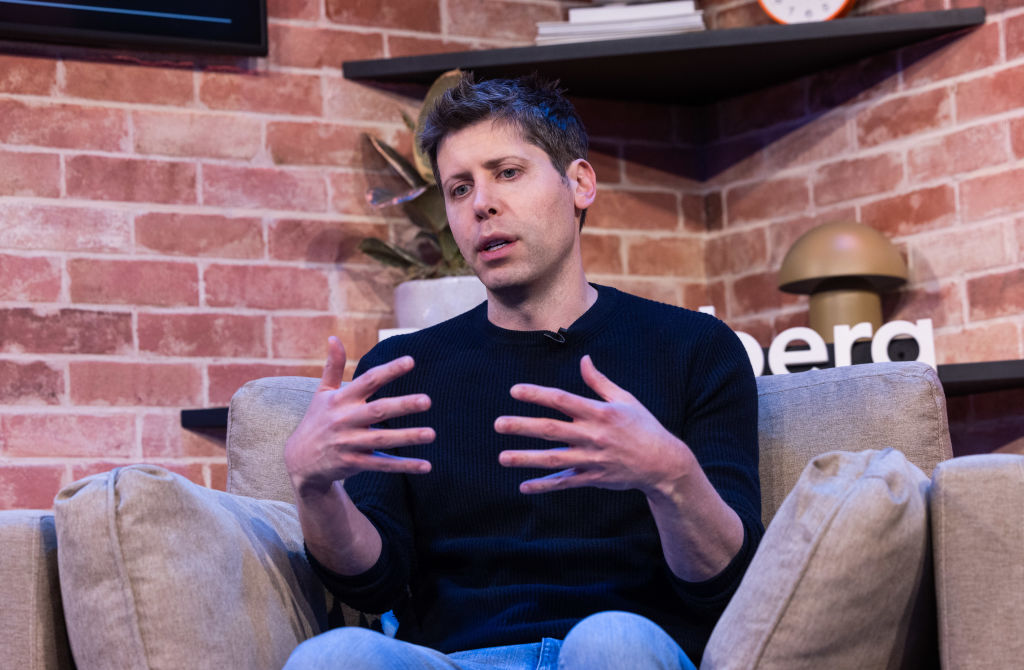
Sam Altman, chief executive officer of OpenAI, during an interview at Bloomberg House on the opening day of the World Economic Forum (WEF) in Davos, Switzerland, on Tuesday, Jan. 16, 2024.
Enlarge / Sam Altman, chief executive officer of OpenAI, during an interview at Bloomberg House on the opening day of the World Economic Forum (WEF) in Davos, Switzerland, on Tuesday, Jan. 16, 2024.

OpenAI is facing increasing pressure to prove it’s not hiding AI risks after whistleblowers alleged to the US Securities and Exchange Commission (SEC) that the AI company’s non-disclosure agreements had illegally silenced employees from disclosing major safety concerns to lawmakers.

In a letter to OpenAI yesterday, Senator Chuck Grassley (R-Iowa) demanded evidence that OpenAI is no longer requiring agreements that could be “stifling” its “employees from making protected disclosures to government regulators.”

Specifically, Grassley asked OpenAI to produce current employment, severance, non-disparagement, and non-disclosure agreements to reassure Congress that contracts don’t discourage disclosures. That’s critical, Grassley said, so that it will be possible to rely on whistleblowers exposing emerging threats to help shape effective AI policies safeguarding against existential AI risks as technologies advance.

Grassley has apparently twice requested these records without a response from OpenAI, his letter said. And so far, OpenAI has not responded to the most recent request to send documents, Grassley’s spokesperson, Clare Slattery, told The Washington Post.

“It’s not enough to simply claim you’ve made ‘updates,’” Grassley said in a statement provided to Ars. “The proof is in the pudding. Altman needs to provide records and responses to my oversight requests so Congress can accurately assess whether OpenAI is adequately protecting its employees and users.”

In addition to requesting OpenAI’s recently updated employee agreements, Grassley pushed OpenAI to be more transparent about the total number of requests it has received from employees seeking to make federal disclosures since 2023. The senator wants to know what information employees wanted to disclose to officials and whether OpenAI actually approved their requests.

Along the same lines, Grassley asked OpenAI to confirm how many investigations the SEC has opened into OpenAI since 2023.

Together, these documents would shed light on whether OpenAI employees are potentially still being silenced from making federal disclosures, what kinds of disclosures OpenAI denies, and how closely the SEC is monitoring OpenAI’s seeming efforts to hide safety risks.

“It is crucial OpenAI ensure its employees can provide protected disclosures without illegal restrictions,” Grassley wrote in his letter.

He has requested a response from OpenAI by August 15 so that “Congress may conduct objective and independent oversight on OpenAI’s safety protocols and NDAs.”

OpenAI did not immediately respond to Ars’ request for comment.

On X, Altman wrote that OpenAI has taken steps to increase transparency, including “working with the US AI Safety Institute on an agreement where we would provide early access to our next foundation model so that we can work together to push forward the science of AI evaluations.” He also confirmed that OpenAI wants “current and former employees to be able to raise concerns and feel comfortable doing so.”

“This is crucial for any company, but for us especially and an important part of our safety plan,” Altman wrote. “In May, we voided non-disparagement terms for current and former employees and provisions that gave OpenAI the right (although it was never used) to cancel vested equity. We’ve worked hard to make it right.”

In July, whistleblowers told the SEC that OpenAI should be required to produce not just current employee contracts, but all contracts that contained a non-disclosure agreement to ensure that OpenAI hasn’t been obscuring a history or current practice of obscuring AI safety risks. They want all current and former employees to be notified of any contract that included an illegal NDA and for OpenAI to be fined for every illegal contract.

https://arstechnica.com/?p=2040870