US probes Nvidia’s acquisition of Israeli AI startup
Getty Images
The US Department of Justice is investigating Nvidia’s acquisition of Run:ai, an Israeli artificial intelligence startup, for potential antitrust violations, said a person familiar with discussions the government agency has had with third parties.
The DoJ has asked market participants about the competitive impact of the transaction, which Nvidia announced in April. The price was not disclosed but a report from TechCrunch estimated it at $700 million.
The scope of the probe remains unclear, the person said. But the DoJ has inquired about matters including whether the deal could quash emerging competition in the up-and-coming sector and entrench Nvidia’s dominant market position.
Nvidia on Thursday said the company “wins on merit” and “scrupulously adher[es] to all laws.”
“We’ll continue to support aspiring innovators in every industry and market and are happy to provide any information regulators need,” it added.
Run:ai did not immediately respond to a request for comment. The DoJ declined to comment.
The investigation comes as US regulators and enforcers have heightened scrutiny of anti-competitive behavior in AI, particularly where it dovetails with big tech groups such as Nvidia.
Jonathan Kanter, head of the DoJ’s antitrust division, told the Financial Times in June that he was examining “monopoly choke points” in areas including the data used to train large language models as well as access to essential hardware such as graphics processing unit chips. He added that the GPUs needed to train LLMs had become a “scarce resource.”
Nvidia dominates sales of the most advanced GPUs. Run:ai, which had an existing collaboration with the tech giant, has developed a platform that optimizes the use of GPUs.
As part of the probe, which was first reported by Politico, the DoJ is seeking information on how Nvidia decides the allocation of its chips, the person said.
Government lawyers are also inquiring about Nvidia’s software platform, Cuda, which enables chips originally designed for graphics to speed up AI applications and is seen by industry figures as one of Nvidia’s most critical tools.
The DoJ and the US Federal Trade Commission, a competition regulator, in June reached an agreement that divided antitrust oversight of critical AI players. The DoJ will spearhead probes into Nvidia, while the FTC will oversee the assessment of Microsoft and OpenAI, the startup behind ChatGPT.
Because of “a concerning increase in generated images and videos that portray people in sexually explicit contexts, distributed on the web without their consent,” Google said that it consulted with “experts and victim-survivors” to make some “significant updates” to its widely used search engine to “further protect people.”
Specifically, Google made it easier for targets of fake explicit images—which experts have said are overwhelmingly women—to report and remove deepfakes that surface in search results. Additionally, Google took steps to downrank explicit deepfakes “to keep this type of content from appearing high up in Search results,” the world’s leading search engine said.
Victims of deepfake pornography have previously criticized Google for not being more proactive in its fight against deepfakes in search results. Surfacing images and reporting each one is a “time- and energy-draining process” and “constant battle,” Kaitlyn Siragusa, a Twitch gamer with an explicit OnlyFans frequently targeted by deepfakes, told Bloomberg last year.
In response, Google has worked to “make the process easier,” partly by “helping people address this issue at scale.” Now, when a victim submits a removal request, “Google’s systems will also aim to filter all explicit results on similar searches about them,” Google’s blog said. And once a deepfake is “successfully removed,” Google “will scan for—and remove—any duplicates of that image that we find,” the blog said.
Google’s efforts to downrank harmful fake content have also expanded, the tech giant said. To help individuals targeted by deepfakes, Google will now “lower explicit fake content for” searches that include people’s names. According to Google, this step alone has “reduced exposure to explicit image results on these types of queries by over 70 percent.”
However, Google still seems resistant to downranking general searches that might lead people to harmful content. A quick Google search confirms that general searches with keywords like “celebrity nude deepfake” point searchers to popular destinations where they can search for non-consensual intimate images of celebrities or request images of less famous people.
For victims, the bottom line is that problematic links will still appear in Google’s search results for anyone willing to keep scrolling or anyone intentionally searching for “deepfakes.” The only step Google has taken recently to downrank top deepfake sites like Fan-Topia or MrDeepFakes is a promise to demote “sites that have received a high volume of removals for fake explicit imagery.”
It’s currently unclear what Google considers a “high volume,” and Google declined Ars’ request to comment on whether these sites would be downranked eventually. Instead, a Google spokesperson told Ars that “if we receive a high volume of successful removal sites from a specific website under this policy, we will use that as a ranking signal and demote the site in question for queries where the site might surface.”
Currently, Google’s spokesperson said, Google is focused on downranking “queries that include the names of individuals,” which “have the highest potential for individual harm.” But more queries will be downranked in the coming months, Google’s spokesperson said, and Google continues to tackle the “technical challenge for search engines” of differentiating between “explicit content that’s real and consensual (like an actor’s nude scenes)” and “explicit fake content (like deepfakes featuring said actor),” Google’s blog said.
“This is an ongoing effort, and we have additional improvements coming over the next few months to address a broader range of queries,” Google’s spokesperson told Ars.
Deepfake trauma “never ends”
In its blog, Google said that “these efforts are designed to give people added peace of mind, especially if they’re concerned about similar content about them popping up in the future.”
But many deepfake victims have claimed that dedicating hours or even months to removing harmful content doesn’t provide any hope that the images won’t resurface. Most recently, one deepfake victim, Sabrina Javellana, told The New York Times that even after her home state Florida passed a law against deepfakes, that didn’t stop the fake images from spreading online.
She’s given up on trying to get the images removed anywhere, telling The Times, “It just never ends. I just have to accept it.”
According to US Representative Joseph Morelle (D-NY), it will take a federal law against deepfakes to deter more bad actors from harassing and terrorizing women with deepfake porn. He’s introduced one such law, the Preventing Deepfakes of Intimate Images Act, which would criminalize creating deepfakes. It currently has 59 sponsors in the House and bipartisan support in the Senate, Morelle said on a panel this week discussing harms of deepfakes, which Ars attended.
Morelle said he’d spoken to victims of deepfakes, including teenagers, and decided that “a national ban and a national set of both criminal and civil remedies makes the most sense” to combat the problem with “urgency.”
“A patchwork of different state and local jurisdictions with different rules” would be “really hard to follow” for both victims and perpetrators trying to understand what’s legal, Morelle said, whereas federal laws that impose a liability and criminal penalty would likely have “the greatest impact.”
Victims, Morelle said, every day suffer from mental, physical, emotional, and financial harms, and as a co-panelist, Andrea Powell, pointed out, there is no healing because there is currently no justice for survivors during a period of “prolific and catastrophic increase in this abuse,” Powell warned.
https://arstechnica.com/?p=2040372
Kids Online Safety Act passes Senate despite concerns it will harm kids
The Kids Online Safety Act (KOSA) easily passed the Senate today despite critics’ concerns that the bill may risk creating more harm than good for kids and perhaps censor speech for online users of all ages if it’s signed into law.
KOSA received broad bipartisan support in the Senate, passing with a 91–3 vote alongside the Children’s Online Privacy Protection Action (COPPA) 2.0. Both laws seek to control how much data can be collected from minors, as well as regulate the platform features that could harm children’s mental health.
Only Sens. Ron Wyden (D-Ore.), Rand Paul (R-Ky.), and Mike Lee (R-Utah) opposed the bills.
In an op-ed for The Courier-Journal, Paul argued that KOSA imposes a “duty of care” to mitigate harms to minors on their platforms that “will not only stifle free speech, but it will deprive Americans of the benefits of our technological advancements.”
“With the Internet, today’s children have the world at their fingertips,” Paul wrote, but if KOSA passes, even allegedly benign content like “pro-life messages” or discussion of a teen overcoming an eating disorder could be censored if platforms fear compliance issues.
“While doctors’ and therapists’ offices close at night and on weekends, support groups are available 24 hours a day, seven days a week for people who share similar concerns or have the same health problems. Any solution to protect kids online must ensure the positive aspects of the Internet are preserved,” Paul wrote.
During a KOSA critics’ press conference today, Dara Adkison—the executive director of a group providing resources for transgender youths called TransOhio—expressed concerns that lawmakers would target sites like TransOhio if the law also passed in the House, where the bill heads next.
“I’ve literally had legislators tell me to my face that they would love to see our website taken off the Internet because they don’t want people to have the kinds of vital community resources that we provide,” Adkison said.
Paul argued that what was considered harmful to kids was subjective, noting that a key flaw with KOSA was that “KOSA does not explicitly define the term ‘mental health disorder.'” Instead, platforms are to refer to the definition in “the fifth edition of the Diagnostic and Statistical Manual of Mental Health Disorders” or “the most current successor edition.”
“That means the scope of the bill could change overnight without any action from America’s elected representatives,” Paul warned, suggesting that “KOSA opens the door to nearly limitless content regulation because platforms will censor users rather than risk liability.”
Ahead of the vote, Sen. Richard Blumenthal (D-Conn.)—who co-sponsored KOSA—denied that the bill strove to regulate content, The Hill reported. To Blumenthal and other KOSA supporters, its aim instead is to ensure that social media is “safe by design” for young users.
According to The Washington Post, KOSA and COPPA 2.0 passing “represent the most significant restrictions on tech platforms to clear a chamber of Congress in decades.” However, while President Joe Biden has indicated he would be willing to sign the bill into law, most seem to agree that KOSA will struggle to pass in the House of Representatives.
A senior tech policy director for Chamber of Progress—a progressive tech industry policy coalition—Todd O’Boyle, has said that currently there is “substantial opposition” in the House. O’Boyle said that he expects that the political divide will be enough to block KOSA’s passage and prevent giving “the power” to the Federal Trade Commission (FTC) or “the next president” to “crack down on online speech” or otherwise pose “a massive threat to our constitutional rights.”
“If there’s one thing the far-left and far-right agree on, it’s that the next chair of the FTC shouldn’t get to decide what online posts are harmful,” O’Boyle said.
https://arstechnica.com/?p=2040074
ISPs seeking government handouts try to avoid offering low-cost broadband
Getty Images | Yuichiro Chino
Internet service providers are eager to get money from a $42.45 billion government fund, but are trying to convince the Biden administration to drop demands that Internet service providers offer broadband service for as little as $30 a month to people with low incomes.
The Broadband Equity, Access, and Deployment (BEAD) program was created by a US law that requires Internet providers receiving federal funds to offer at least one “low-cost broadband service option for eligible subscribers.” The Biden administration says it is merely enforcing that legal requirement, but a July 23 letter sent by over 30 broadband industry trade groups claims that the administration is illegally regulating broadband prices.
The fund is administered by the National Telecommunications and Information Administration (NTIA). The NTIA is distributing money to states, which will then distribute it to ISPs. Before obtaining money from the NTIA, each state must get approval for a plan that includes a low-cost option. Nearly half of US states have already gotten approvals.
Although the law requires ISPs receiving grants to offer a low-cost plan, it also says the US may not “regulate the rates charged for broadband service.” In the letter sent to US Secretary of Commerce Gina Raimondo, ISPs claim that the NTIA’s demands for specific prices violate the ban on rate regulation:
We have also heard from stakeholders of specific instances in which certain State broadband offices have faced the prospect of political pressure unless they acceded to a $30 rate for the low-cost service option. This contravenes the clear language of the Infrastructure Act, which states that “[n]othing in this title may be construed to authorize [NTIA] to regulate the rates charged for broadband service.”
ISPs want to upend approved state plans
Funds like BEAD are intended to help ISPs build broadband networks in areas where it would otherwise not be economically feasible. In other words, the government giving money to ISPs directly lets the telcos make a decent profit on network-construction projects in areas where subscriber fees alone wouldn’t be enough.
ISPs receiving funds don’t have to offer the low-cost broadband plan to everyone. They only have to offer it to eligible subscribers who meet low-income requirements, as detailed in the NTIA’s Notice of Funding Opportunity.
Despite that, ISPs claim that prices for the low-cost option should be calculated based on “the economic realities of deploying and operating networks in the highest cost, hardest-to-reach areas.” The letter said:
While NTIA purports to give States the flexibility to choose a low-cost program that meets their particular needs, the reality is much different. According to NTIA’s own program guidance, it has “strongly encouraged” States to set a fixed rate of $30 per month for the low-cost service option. For a broad cross-section of America’s rural broadband providers, the $30 rate is completely unmoored from the economic realities of deploying and operating networks in the highest cost, hardest-to-reach areas that BEAD funding is precisely designed to reach.
Groups signing the letter include USTelecom, which represents AT&T, Verizon, CenturyLink/Lumen, and many other telcos. It was also signed by lobby groups for small cable firms and rural telcos, and numerous lobby groups for ISPs in specific states. The state-specific lobby groups signing the letter are from Alaska, Alabama, North Dakota, Montana, North Carolina, Kansas, Georgia, Illinois, Indiana, Iowa, Michigan, Minnesota, Nebraska, Nevada, New York, Ohio, Oregon, Oklahoma, Pennsylvania, South Carolina, South Dakota, Texas, Utah, Washington, and Wisconsin.
Many states have already received approval for their grant plans, including plans for requiring low-cost options. The NTIA today announced approval of New Mexico and Virginia’s initial proposals, bringing the total count to 22 states plus the Northern Mariana Islands, the District of Columbia, Puerto Rico, and the US Virgin Islands. Another 30 states and territories are waiting for approval after having submitted initial proposals by December 2023.
The lobby groups want the NTIA to reverse approvals for existing states’ plans. Their letter said the agency should “require each State to revise the low-cost service option rate proposed or approved in its Initial Proposal so that the rate is more reasonably tied to providers’ realistic costs, such as by using the FCC’s Urban Rate Survey benchmark.”
https://arstechnica.com/?p=2039582
North Korean hacker got hired by US security vendor, immediately loaded malware
Enlarge/ On the left, a stock photo. On the right, an AI-enhanced image based on the stock photo. The AI-enhanced image was submitted to KnowBe4 by a job applicant.
KnowBe4, a US-based security vendor, revealed that it unwittingly hired a North Korean hacker who attempted to load malware into the company’s network. KnowBe4 CEO and founder Stu Sjouwerman described the incident in a blog post yesterday, calling it a cautionary tale that was fortunately detected before causing any major problems.
“First of all: No illegal access was gained, and no data was lost, compromised, or exfiltrated on any KnowBe4 systems,” Sjouwerman wrote. “This is not a data breach notification, there was none. See it as an organizational learning moment I am sharing with you. If it can happen to us, it can happen to almost anyone. Don’t let it happen to you.”
KnowBe4 said it was looking for a software engineer for its internal IT AI team. The firm hired a person who, it turns out, was from North Korea and was “using a valid but stolen US-based identity” and a photo that was “enhanced” by artificial intelligence. There is now an active FBI investigation amid suspicion that the worker is what KnowBe4’s blog post called “an Insider Threat/Nation State Actor.”
KnowBe4 operates in 11 countries and is headquartered in Florida. It provides security awareness training, including phishing security tests, to corporate customers. If you occasionally receive a fake phishing email from your employer, you might be working for a company that uses the KnowBe4 service to test its employees’ ability to spot scams.
Person passed background check and video interviews
KnowBe4 hired the North Korean hacker through its usual process. “We posted the job, received resumes, conducted interviews, performed background checks, verified references, and hired the person. We sent them their Mac workstation, and the moment it was received, it immediately started to load malware,” the company said.
Even though the photo provided to HR was fake, the person who was interviewed for the job apparently looked enough like it to pass. KnowBe4’s HR team “conducted four video conference based interviews on separate occasions, confirming the individual matched the photo provided on their application,” the post said. “Additionally, a background check and all other standard pre-hiring checks were performed and came back clear due to the stolen identity being used. This was a real person using a valid but stolen US-based identity. The picture was AI ‘enhanced.'”
The two images at the top of this story are a stock photo and what KnowBe4 says is the AI fake based on the stock photo. The stock photo is on the left, and the AI fake is on the right.
The employee, referred to as “XXXX” in the blog post, was hired as a principal software engineer. The new hire’s suspicious activities were flagged by security software, leading KnowBe4’s Security Operations Center (SOC) to investigate:
On July 15, 2024, a series of suspicious activities were detected on the user beginning at 9:55 pm EST. When these alerts came in KnowBe4’s SOC team reached out to the user to inquire about the anomalous activity and possible cause. XXXX responded to SOC that he was following steps on his router guide to troubleshoot a speed issue and that it may have caused a compromise.
The attacker performed various actions to manipulate session history files, transfer potentially harmful files, and execute unauthorized software. He used a Raspberry Pi to download the malware. SOC attempted to get more details from XXXX including getting him on a call. XXXX stated he was unavailable for a call and later became unresponsive. At around 10:20 pm EST SOC contained XXXX’s device.
“Fake IT worker from North Korea”
The SOC analysis indicated that the loading of malware “may have been intentional by the user,” and the group “suspected he may be an Insider Threat/Nation State Actor,” the blog post said.
“We shared the collected data with our friends at Mandiant, a leading global cybersecurity expert, and the FBI, to corroborate our initial findings. It turns out this was a fake IT worker from North Korea,” Sjouwerman wrote.
KnowBe4 said it can’t provide much detail because of the active FBI investigation. But the person hired for the job may have logged into the company computer remotely from North Korea, Sjouwerman explained:
How this works is that the fake worker asks to get their workstation sent to an address that is basically an “IT mule laptop farm.” They then VPN in from where they really physically are (North Korea or over the border in China) and work the night shift so that they seem to be working in US daytime. The scam is that they are actually doing the work, getting paid well, and give a large amount to North Korea to fund their illegal programs. I don’t have to tell you about the severe risk of this. It’s good we have new employees in a highly restricted area when they start, and have no access to production systems. Our controls caught it, but that was sure a learning moment that I am happy to share with everyone.
https://arstechnica.com/?p=2039069
No judge with Tesla stock should handle Elon Musk cases, watchdog argues
Elon Musk’s fight against Media Matters for America (MMFA)—a watchdog organization that he largely blames for an ad boycott that tanked Twitter/X’s revenue—has raised an interesting question about whether any judge owning Tesla stock might reasonably be considered biased when weighing any lawsuit centered on the tech billionaire.
In a court filing Monday, MMFA lawyers argued that “undisputed facts—including statements from Musk and Tesla—lay bare the interest Tesla shareholders have in this case.” According to the watchdog, any outcome in the litigation will likely impact Tesla’s finances, and that’s a problem because there’s a possibility that the judge in the case, Reed O’Connor, owns Tesla stock.
“X cannot dispute the public association between Musk—his persona, business practices, and public remarks—and the Tesla brand,” MMFA argued. “That association would lead a reasonable observer to ‘harbor doubts’ about whether a judge with a financial interest in Musk could impartially adjudicate this case.”
It’s still unclear if Judge O’Connor actually owns Tesla stock. But after MMFA’s legal team uncovered disclosures showing that he did as of last year, they argued that fact can only be clarified if the court views Tesla as a party with a “financial interest in the outcome of the case” under Texas law—“no matter how small.”
To make those facts clear, MMFA is now arguing that X must be ordered to add Tesla as an interested person in the litigation, which a source familiar with the matter told Ars, would most likely lead to a recusal if O’Connor indeed still owned Tesla stock.
“At most, requiring X to disclose Tesla would suggest that judges owning stock in Tesla—the only publicly traded Musk entity—should recuse from future cases in which Musk himself is demonstrably central to the dispute,” MMFA argued.
Ars could not immediately reach X Corp’s lawyer for comment.
However, in X’s court filing opposing the motion to add Tesla as an interested person, X insisted that “Tesla is not a party to this case and has no interest in the subject matter of the litigation, as the business relationships at issue concern only X Corp.’s contracts with X’s advertisers.”
Calling MMFA’s motion “meritless,” X accused MMFA of strategizing to get Judge O’Connor disqualified in order to go “forum shopping” after MMFA received “adverse rulings” on motions to stay discovery and dismiss the case.
As to the question of whether any judge owning Tesla stock might be considered impartial in weighing Musk-centric cases, X argued that Judge O’Connor was just as duty-bound to reject an improper motion for recusal, should MMFA go that route, as he was to accept a proper motion.
“Courts are ‘reluctant to fashion a rule requiring judges to recuse themselves from all cases that might remotely affect nonparty companies in which they own stock,'” X argued.
Recently, judges have recused themselves from cases involving Musk without explaining why. In November, a prior judge in the very same Media Matters’ suit mysteriously recused himself, with The Hill reporting that it was likely that the judge’s “impartiality might reasonably be questioned” for reasons like a financial interest or personal bias. Then in June, another judge ruled he was disqualified to rule on a severance lawsuit raised by former Twitter executives without giving “a specific reason,” Bloomberg Law reported.
Should another recusal come in the MMFA lawsuit, it would be a rare example of a judge clearly disclosing a financial interest in a Musk case.
“The straightforward question is whether Musk’s statements and behavior relevant to this case affect Tesla’s stock price, not whether they are the only factor that affects it,” MMFA argued. ” At the very least, there is a serious question about whether Musk’s highly unusual management practices mean Tesla must be disclosed as an interested party.”
Parties expect a ruling on MMFA’s motion in the coming weeks.
https://arstechnica.com/?p=2038996
Lawsuit: T-Mobile must pay for breaking lifetime price guarantee
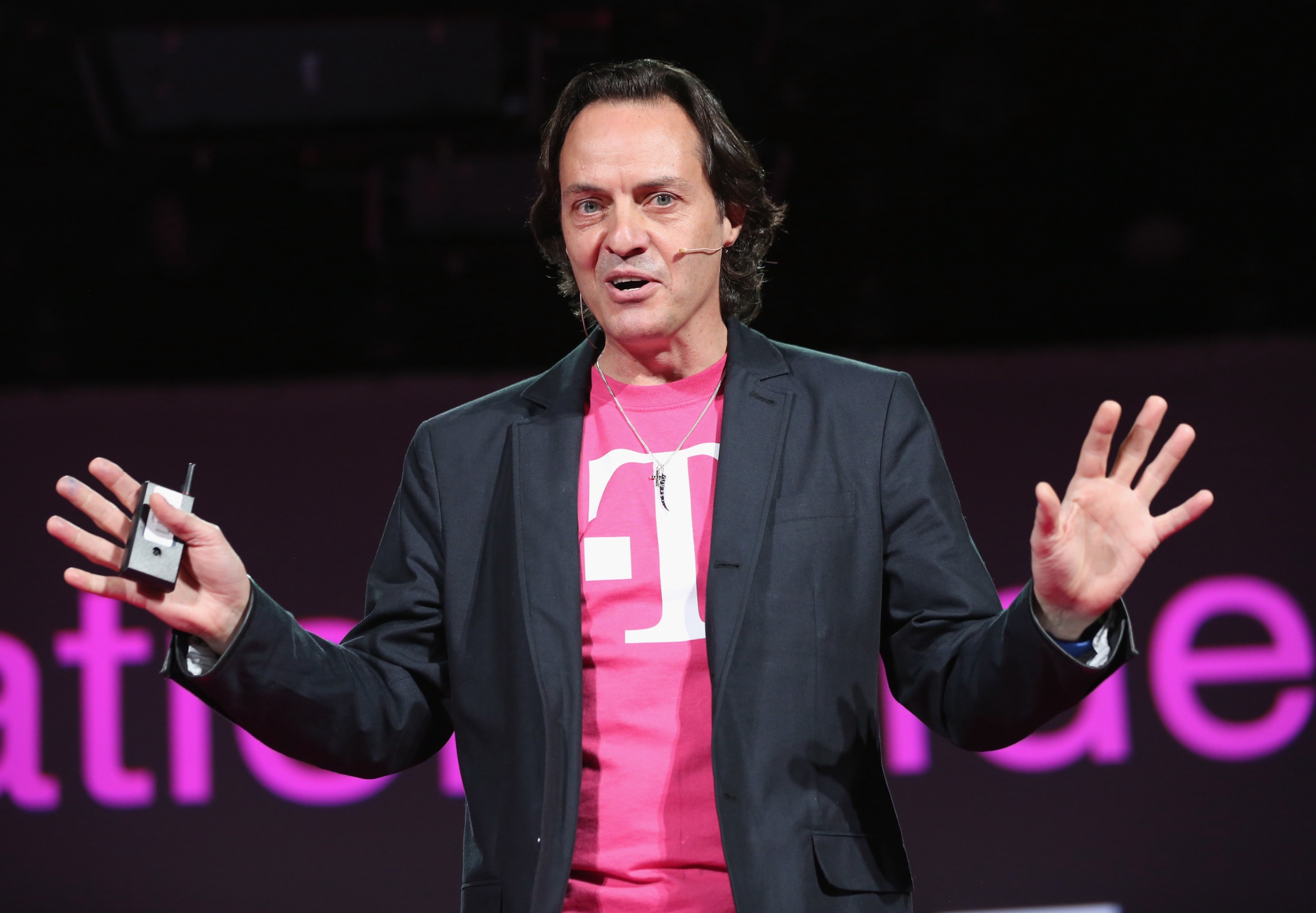
Enlarge/ John Legere, then-CEO of T-Mobile, at an event on March 26, 2013, in New York City.
Getty Images | John Moore
Angry T-Mobile customers have filed a class action lawsuit over the carrier’s decision to raise prices on plans that were advertised as having a lifetime price guarantee.
“Based upon T-Mobile’s representations that the rates offered with respect to certain plans were guaranteed to last for life or as long as the customer wanted to remain with that plan, each Plaintiff and the Class Members agreed to these plans for wireless cellphone service from T-Mobile,” said the complaint filed in US District Court for the District of New Jersey. “However, in May 2024, T-Mobile unilaterally did away with these legacy phone plans and switched Plaintiffs and the Class to more expensive plans without their consent.”
The complaint, filed on July 12, has four named plaintiffs who live in New Jersey, Georgia, Nevada, and Pennsylvania. They are seeking to represent a class of all US residents “who entered into a T-Mobile One Plan, Simple Choice plan, Magenta, Magenta Max, Magenta 55+, Magenta Amplified or Magenta Military Plan with T-Mobile which included a promised lifetime price guarantee but had their price increased without their consent and in violation of the promises made by T-Mobile and relied upon by Plaintiffs and the proposed class.”
The complaint seeks “restitution of all amounts obtained by Defendant as a result of its violation,” plus interest. It also seeks statutory and punitive damages, and an injunction to prevent further “wrongful, unlawful, fraudulent, deceptive, and unfair conduct.”
“T-Mobile will never change the price you pay”
The lawsuit’s allegations will be familiar to those who read our previous articles on the recent price hikes of up to $5 per line. In January 2017, T-Mobile issued a press release announcing the “Un-contract” promise for T-Mobile One plans. “Now, T-Mobile One customers keep their price until THEY decide to change it. T-Mobile will never change the price you pay for your T-Mobile One plan,” the company said at the time.
The price guarantee was also hyped by then-CEO John Legere at a press event in Las Vegas. But separately from the announcement, T-Mobile revealed a significant caveat that essentially nullified the promise. T-Mobile said in a FAQ on its website that the only guarantee was T-Mobile would pay your final month’s bill if the carrier raised the price and you decided to cancel.
Many customers saw the prominent lifetime price guarantee but not T-Mobile’s contradiction of that promise and signed up for plans thinking their prices would never be raised. The “Un-contract promise” was offered on certain plans between January 5, 2017, and April 27, 2022.
T-Mobile started offering a different guarantee called Price Lock on April 28, 2022. This was originally more ironclad than the Un-contract, and customers who snagged it were apparently not impacted by this year’s price increases.
But T-Mobile then created a confusing situation with Price Lock. The stronger version of Price Lock was offered from April 28, 2022, to January 17, 2024. It was replaced by a weaker version that is still called Price Lock but is basically the same as the Un-contract. Customers who signed up for Price Lock on or after January 18, 2024, don’t actually have a price lock—but they can get their final month’s bill covered if T-Mobile raises the price and they decide to cancel.
After the price hikes, several T-Mobile customers contacted Ars to express their displeasure. One of those customers said that he canceled and tried to get his final month’s bill covered, but T-Mobile refused to provide the refund. The Federal Communications Commission told us it had received about 1,600 consumer complaints about the price hikes as of late June.
https://arstechnica.com/?p=2038978
Appeals Court denies stay to states trying to block EPA’s carbon limits
On Friday, the US Court of Appeals for the DC Circuit denied a request to put a hold on recently formulated rules that would limit carbon emissions made by fossil fuel power plants. The request, made as part of a case that sees 25 states squaring off against the EPA, would have put the federal government’s plan on hold while the case continued. Instead, the EPA will be allowed to continue the process of putting its rules into effect, and the larger case will be heard under an accelerated schedule.
Here we go again
The EPA’s efforts to regulate carbon emissions from power plants go back all the way to the second Bush administration, when a group of states successfully sued the EPA to force it to regulate greenhouse gas emissions. This led to a formal endangerment finding regarding greenhouse gases during the Obama administration, something that remained unchallenged even during Donald Trump’s term in office.
Obama tried to regulate emissions through the Clean Power Plan, but his second term came to an end before this plan had cleared court hurdles, allowing the Trump administration to formulate a replacement that did far less than the Clean Power Plan. This took place against a backdrop of accelerated displacement of coal by natural gas and renewables that had already surpassed the changes envisioned under the Clean Power Plan.
In any case, the Trump plan was thrown out by the courts on the day before Biden’s administration, allowing his EPA to start with a clean slate. Biden’s original plan, which would have had states regulate emissions from their electric grids by regulating them as a single system, was thrown out by the Supreme Court, which ruled that emissions would need to be regulated on a per-plant basis in a decision termed West Virginia v. EPA.
So, that’s what the agency is now trying to do. Its plan, issued last year, would allow fossil-fuel-burning plants that are being shut down in the early 2030s to continue operating without restrictions. Others will need to either install carbon capture equipment, or natural gas plants could swap in green hydrogen as their primary fuel.
And again
In response, 25 states have sued to block the rule (you can check out this filing to see if yours is among them). The states also sought a stay that would prevent the rule from being implemented while the case went forward. In it, they argue that carbon capture technology isn’t mature enough to form the basis of these regulations (something we predicted was likely to be a point of contention). The suit also suggests that the rules would effectively put coal out of business, something that’s beyond the EPA’s remit.
The DC Court of Appeals, however, was not impressed, ruling that the states’ arguments regarding carbon capture are insufficient: “Petitioners have not shown they are likely to succeed on those claims given the record in this case.” And that’s the key hurdle for determining whether a stay is justified. And the regulations don’t pose a likelihood of irreparable harm, as the court notes that states aren’t even expected to submit a plan for at least two years, and the regulations won’t kick in until 2030 at the earliest.
Meanwhile, the states cited the Supreme Court’s West Virginia v. EPA decision to argue against these rules, suggesting they represent a “major question” that requires input from Congress. The Court was also not impressed, writing that “EPA has claimed only the power to ‘set emissions limits under Section 111 based on the application of measures that would reduce pollution by causing the regulated source to operate more cleanly,’ a type of conduct that falls well within EPA’s bailiwick.”
To respond to the states’ concerns about the potential for irreparable harm, the court plans to consider them during the 2024 term and has given the parties just two weeks to submit proposed schedules for briefings on the case.
https://arstechnica.com/?p=2038751
AT&T failed to test disastrous update that kicked all devices off network
A government investigation has revealed more detail on the impact and causes of a recent AT&T outage that happened immediately after a botched network update. The nationwide outage on February 22, 2024, blocked over 92 million phone calls, including over 25,000 attempts to reach 911.
As described in more detail later in this article, the FCC criticized AT&T for not following best practices, which dictate “that network changes must be thoroughly tested, reviewed, and approved” before implementation. It took over 12 hours for AT&T to fully restore service.
“All voice and 5G data services for AT&T wireless customers were unavailable, affecting more than 125 million devices, blocking more than 92 million voice calls, and preventing more than 25,000 calls to 911 call centers,” the Federal Communications Commission said yesterday. The outage affected all 50 states as well as Washington, DC, Puerto Rico, and the US Virgin Islands.
The outage also cut off service to public safety users on the First Responder Network Authority (FirstNet), the FCC report said. “Voice and 5G data services were also unavailable to users from mobile virtual network operators (MVNOs) and other wireless customers who were roaming on AT&T Mobility’s network,” the FCC said.
An incorrect process
AT&T previously acknowledged that the mobile outage was caused by a botched update related to a network expansion. The “outage was caused by the application and execution of an incorrect process used as we were expanding our network, not a cyber attack,” AT&T said.
The FCC report said the nationwide outage began three minutes after “AT&T Mobility implemented a network change with an equipment configuration error.” This configuration error caused the AT&T network “to enter ‘protect mode’ to prevent impact to other services, disconnecting all devices from the network, and prompting a loss of voice and 5G data service for all wireless users.”
While the network change was rolled back within two hours, full service restoration “took at least 12 hours because AT&T Mobility’s device registration systems were overwhelmed with the high volume of requests for re-registration onto the network,” the FCC found.
Outage reveals deeper problems at AT&T
Although a configuration error was the immediate cause of the outage, the FCC investigation revealed various problems in AT&T’s processes that increased the likelihood of an outage and made recovery more difficult than it should have been. The FCC Public Safety and Homeland Security Bureau analyzed network outage reports and written responses submitted by AT&T and interviewed AT&T employees. The bureau’s report said:
The Bureau finds that the extensive scope and duration of this outage was the result of several factors, all attributable to AT&T Mobility, including a configuration error, a lack of adherence to AT&T Mobility’s internal procedures, a lack of peer review, a failure to adequately test after installation, inadequate laboratory testing, insufficient safeguards and controls to ensure approval of changes affecting the core network, a lack of controls to mitigate the effects of the outage once it began, and a variety of system issues that prolonged the outage once the configuration error had been remedied.
At 2:42 am CST on February 22, an AT&T “employee placed a new network element into its production network during a routine night maintenance window in order to expand network functionality and capacity,” the FCC said. The configuration “did not conform to AT&T’s established network element design and installment procedures, which require peer review.”
An adequate peer review should have prevented the network change from being approved and from being loaded onto the network, but this peer review did not take place, the FCC said. The configuration error was made by one employee, and the misconfigured network element was loaded onto the network by a second employee.
“The fact that the network change was loaded onto the AT&T Mobility network indicates that AT&T Mobility had insufficient oversight and controls in place to ensure that approval had occurred prior to loading,” the FCC said.
AT&T faces possible punishment
AT&T issued a statement saying it has “implemented changes to prevent what happened in February from occurring again. We fell short of the standards that we hold ourselves to, and we regret that we failed to meet the expectations of our customers and the public safety community.”
AT&T could eventually face some kind of punishment. The Public Safety and Homeland Security Bureau referred the matter to the FCC Enforcement Bureau for potential violations of FCC rules.
Verizon Wireless last month agreed to pay a $1,050,000 fine and implement a compliance plan because of a December 2022 outage in six states that lasted one hour and 44 minutes. The Verizon outage was similarly caused by a botched update, and the FCC investigation revealed systemic problems that made the company prone to such outages.
https://arstechnica.com/?p=2038708
Meta risks sanctions over “sneaky” ad-free plans confusing users, EU says
Surprisingly, this step wasn’t taken under laws like the Digital Services Act (DSA), the Digital Markets Act (DMA), or the General Data Protection Regulation (GDPR).
Instead, the EC announced Monday that Meta risked sanctions under EU consumer laws if it could not resolve key concerns about Meta’s so-called “pay or consent” model.
Meta’s model is seemingly problematic, the commission said, because Meta “requested consumers overnight to either subscribe to use Facebook and Instagram against a fee or to consent to Meta’s use of their personal data to be shown personalized ads, allowing Meta to make revenue out of it.”
Because users were given such short notice, they may have been “exposed to undue pressure to choose rapidly between the two models, fearing that they would instantly lose access to their accounts and their network of contacts,” the EC said.
To protect consumers, the EC joined national consumer protection authorities, sending a letter to Meta requiring the tech giant to propose solutions to resolve the commission’s biggest concerns by September 1.
That Meta’s “pay or consent” model may be “misleading” is a top concern because it uses the term “free” for ad-based plans, even though Meta “can make revenue from using their personal data to show them personalized ads.” It seems that while Meta does not consider giving away personal information to be a cost to users, the EC’s commissioner for justice, Didier Reynders, apparently does.
“Consumers must not be lured into believing that they would either pay and not be shown any ads anymore, or receive a service for free, when, instead, they would agree that the company used their personal data to make revenue with ads,” Reynders said. “EU consumer protection law is clear in this respect. Traders must inform consumers upfront and in a fully transparent manner on how they use their personal data. This is a fundamental right that we will protect.”
Additionally, the EC is concerned that Meta users might be confused about how “to navigate through different screens in the Facebook/Instagram app or web-version and to click on hyperlinks directing them to different parts of the Terms of Service or Privacy Policy to find out how their preferences, personal data, and user-generated data will be used by Meta to show them personalized ads.” They may also find Meta’s “imprecise terms and language” confusing, such as Meta referring to “your info” instead of clearly referring to consumers’ “personal data.”
To resolve the EC’s concerns, Meta may have to give EU users more time to decide if they want to pay to subscribe or consent to personal data collection for targeted ads. Or Meta may have to take more drastic steps by altering language and screens used when securing consent to collect data or potentially even scrapping its “pay or consent” model entirely, as pressure in the EU mounts.
“Subscriptions as an alternative to advertising are a well-established business model across many industries,” Meta’s spokesperson told Ars. “Subscription for no ads follows the direction of the highest court in Europe and we are confident it complies with European regulation.”
Meta’s model is “sneaky,” EC said
Since last year, the social media company has argued that its “subscription for no ads” model was “endorsed” by the highest court in Europe, the Court of Justice of the European Union (CJEU).
However, privacy advocates have noted that this alleged endorsement came following a CJEU case under the GDPR and was only presented as a hypothetical, rather than a formal part of the ruling, as Meta seems to interpret.
What the CJEU said was that “users must be free to refuse individually”—”in the context of” signing up for services—”to give their consent to particular data processing operations not necessary” for Meta to provide such services “without being obliged to refrain entirely from using the service.” That “means that those users are to be offered, if necessary for an appropriate fee, an equivalent alternative not accompanied by such data processing operations,” the CJEU said.
The nuance here may matter when it comes to Meta’s proposed solutions even if the EC accepts the CJEU’s suggestion of an acceptable alternative as setting some sort of legal precedent. Because the consumer protection authorities raised the action due to Meta suddenly changing the consent model for existing users—not “in the context of” signing up for services—Meta may struggle to persuade the EC that existing users weren’t misled and pressured into paying for a subscription or consenting to ads, given how fast Meta’s policy shifted.
Meta risks sanctions if a compromise can’t be reached, the EC said. Under the EU’s Unfair Contract Terms Directive, for example, Meta could be fined up to 4 percent of its annual turnover if consumer protection authorities are unsatisfied with Meta’s proposed solutions.
The EC’s vice president for values and transparency, Věra Jourová, provided a statement in the press release, calling Meta’s abrupt introduction of the “pay or consent” model “sneaky.”
“We are proud of our strong consumer protection laws which empower Europeans to have the right to be accurately informed about changes such as the one proposed by Meta,” Jourová said. “In the EU, consumers are able to make truly informed choices and we now take action to safeguard this right.”