Can the solar industry keep the lights on?

Image of solar panels on a green grassy field, with blue sky in the background.

Founded in Dresden in the early 1990s, Germany’s Solarwatt quickly became an emblem of Europe’s renewable energy ambitions and bold plan to build a solar power industry.

Its opening of a new solar panel plant in Dresden in late 2021 was hailed as a small victory in the battle to wrestle market share from the Chinese groups that have historically supplied the bulk of panels used in Europe.

Now, Solarwatt is preparing to halt production at the plant and shift that work to China.

“It is a big pity for our employees, but from an economic point of view we could not do otherwise,” said Peter Bachmann, the company’s chief product officer.

Solarwatt is not alone. A global supply glut has pummelled solar panel prices over the past two years, leaving swaths of Europe’s manufacturers unprofitable, threatening US President Joe Biden’s ambition to turn America into a renewable energy force and even ricocheting back on the Chinese companies that dominate the global market.

“We are in a crisis,” said Johan Lindahl, secretary-general of the European Solar Manufacturing Council, the European industry’s trade body.

Yet as companies in Europe, the US, and China cut jobs, delay projects, and mothball facilities, an abundance of cheap solar panels has delivered one significant upside—consumers and businesses are installing them in ever greater numbers.

Electricity generated from solar power is expected to surpass that of wind and nuclear by 2028, according to the International Energy Agency.

The picture underlines the quandary confronting governments that have pledged to decarbonise their economies, but will find doing so harder unless the historic shift from fossil fuels is both affordable for the public and creates new jobs.

Governments face a “delicate and difficult balancing act,” said Michael Parr, director of trade group Ultra Low Carbon Solar Alliance. They must “maximize renewables deployment and carbon reductions, bolster domestic manufacturing sectors, keep energy prices low, and ensure energy security.”

The industry, which spans wafer, cell, and panel manufacturers, as well as companies that install panels, employed more than 800,000 people in Europe at the end of last year, according to SolarPower Europe. In the US almost 265,000 work in the sector, figures from the Interstate Renewable Energy Council show.

“There is overcapacity in every segment, starting with polysilicon and finishing with the module,” said Yana Hryshko, head of global solar supply chain research at the consultancy Wood Mackenzie.

According to BloombergNEF, panel prices have plunged more than 60 percent since July 2022. The scale of the damage inflicted has sparked calls for Brussels to protect European companies from what the industry says are state-subsidized Chinese products.

Europe’s solar panel manufacturing capacity has collapsed by about half to 3 gigawatts since November as companies have failed, mothballed facilities, or shifted production abroad, the European Solar Manufacturing Council estimates. In rough terms, a gigawatt can potentially supply electricity for 1mn homes.

The hollowing out comes as the EU is banking on solar power playing a major role in the bloc meeting its target of generating 45 percent of its energy from renewable sources by 2030. In the US, the Biden administration has set a target of achieving a 100 percent carbon pollution-free electricity grid by 2035.

Climate change is a global challenge, but executives said the solar industry’s predicament exposed how attempts to address it can quickly fracture along national and regional lines.

“There’s trade policy and then there’s climate policy, and they aren’t in sync,” said Andres Gluski, chief executive of AES, one of the world’s biggest developers of clean energy. “That’s a problem.”

Brussels has so far resisted demands to impose tariffs. It first levied them in 2012 but reversed that in 2018, partly in what proved a successful attempt to quicken the uptake of solar. Chinese imports now account for the lion’s share of Europe’s solar panels.

In May, the European Commission introduced the Net Zero Industry Act, legislation aimed at bolstering the bloc’s clean energy industries by cutting red tape and promoting a regional supply chain.

But Gunter Erfurt, chief executive of Switzerland-based Meyer Burger, the country’s largest solar panel maker, is skeptical it will be enough.

“You need to create a level playing field,” he said. Meyer Burger would benefit if the EU imposed tariffs because it has operations in Germany.

https://arstechnica.com/?p=2038454


Apple “clearly underreporting” child sex abuse, watchdogs say

Apple “clearly underreporting” child sex abuse, watchdogs say

After years of controversies over plans to scan iCloud to find more child sexual abuse materials (CSAM), Apple abandoned those plans last year. Now, child safety experts have accused the tech giant of not only failing to flag CSAM exchanged and stored on its services—including iCloud, iMessage, and FaceTime—but also allegedly failing to report all the CSAM that is flagged.

The United Kingdom’s National Society for the Prevention of Cruelty to Children (NSPCC) shared UK police data with The Guardian showing that Apple is “vastly undercounting how often” CSAM is found globally on its services.

According to the NSPCC, police investigated more CSAM cases in just the UK alone in 2023 than Apple reported globally for the entire year. Between April 2022 and March 2023 in England and Wales, the NSPCC found, “Apple was implicated in 337 recorded offenses of child abuse images.” But in 2023, Apple only reported 267 instances of CSAM to the National Center for Missing & Exploited Children (NCMEC), supposedly representing all the CSAM on its platforms worldwide, The Guardian reported.

Large tech companies in the US must report CSAM to NCMEC when it’s found, but while Apple reports a couple hundred CSAM cases annually, its big tech peers like Meta and Google report millions, NCMEC’s report showed. Experts told The Guardian that there’s ongoing concern that Apple “clearly” undercounts CSAM on its platforms.

Richard Collard, the NSPCC’s head of child safety online policy, told The Guardian that he believes Apple’s child safety efforts need major improvements.

“There is a concerning discrepancy between the number of UK child abuse image crimes taking place on Apple’s services and the almost negligible number of global reports of abuse content they make to authorities,” Collard told The Guardian. “Apple is clearly behind many of their peers in tackling child sexual abuse when all tech firms should be investing in safety and preparing for the rollout of the Online Safety Act in the UK.”

Outside the UK, other child safety experts shared Collard’s concerns. Sarah Gardner, the CEO of a Los Angeles-based child protection organization called the Heat Initiative, told The Guardian that she considers Apple’s platforms a “black hole” obscuring CSAM. And she expects that Apple’s efforts to bring AI to its platforms will intensify the problem, potentially making it easier to spread AI-generated CSAM in an environment where sexual predators may expect less enforcement.

“Apple does not detect CSAM in the majority of its environments at scale, at all,” Gardner told The Guardian.

Gardner agreed with Collard that Apple is “clearly underreporting” and has “not invested in trust and safety teams to be able to handle this” as it rushes to bring sophisticated AI features to its platforms. Last month, Apple integrated ChatGPT into Siri, iOS and Mac OS, perhaps setting expectations for continually enhanced generative AI features to be touted in future Apple gear.

“The company is moving ahead to a territory that we know could be incredibly detrimental and dangerous to children without the track record of being able to handle it,” Gardner told The Guardian.

So far, Apple has not commented on the NSPCC’s report. Last September, Apple did respond to the Heat Initiative’s demands to detect more CSAM, saying that rather than focusing on scanning for illegal content, its focus is on connecting vulnerable or victimized users directly with local resources and law enforcement that can assist them in their communities.

https://arstechnica.com/?p=2038409


FCC blasts T-Mobile’s 365-day phone locking, proposes 60-day unlock rule

T-Mobile logo displayed in front of a stock market chart.
Getty Images | SOPA Images

Citing frustration with mobile carriers enforcing different phone-unlocking policies that are bad for consumers, the Federal Communications Commission is proposing a 60-day unlocking requirement that would apply to all wireless providers.

The industry’s “confusing and disparate cell phone unlocking policies” mean that “some consumers can unlock their phones with relative ease, while others face significant barriers,” Commissioner Geoffrey Starks said at yesterday’s FCC meeting. “It also means certain carriers are subject to mandatory unlocking requirements while others are free to dictate their own. This asymmetry is bad for both consumers and competition.”

The FCC is “proposing a uniform 60-day unlocking policy” so that “consumers can choose the carrier that offers them the best value,” Starks said. Unlocking a phone allows it to be used on a different carrier’s network as long as the phone is compatible.

The FCC approved the Notice of Proposed Rulemaking (NPRM) in a 5-0 vote. That begins a public comment period that could lead to a final rulemaking. A draft of the NPRM said the FCC “propose[s] to require all mobile wireless service providers to unlock handsets 60 days after a consumer’s handset is activated with the provider, unless within the 60-day period the service provider determines the handset was purchased through fraud.”

T-Mobile prepaid imposes 365-day lock

FCC Chairwoman Jessica Rosenworcel said that unlocking requirements have been imposed by the FCC in spectrum auctions and by the Department of Justice as a merger condition, but “restrictions on consumers unlocking their phones have persisted.”

“You bought your phone, you should be able to take it to any provider you want,” Rosenworcel said. “Some providers already operate this way. Others do not. In fact, some have recently increased the time their customers must wait until they can unlock their device by as much as 100 percent.”

Rosenworcel apparently was referring to a prepaid brand offered by T-Mobile. The NPRM draft said that “T-Mobile recently increased its locking period for one of its brands, Metro by T-Mobile, from 180 days to 365 days.” The 365-day rule brought Metro into line with other T-Mobile prepaid phones that already came with the year-long lock. We reached out to T-Mobile and will update this article if it provides a comment.

A merger condition imposed on T-Mobile’s purchase of Sprint merely requires that it unlock prepaid phones within one year. T-Mobile imposes different unlocking policies on prepaid and postpaid phones. For postpaid devices, T-Mobile says it will unlock phones that have been active for at least 40 days, but only if any associated financing or leasing agreement has been paid in full.

Exactly how the FCC’s proposed rules will apply to phones that haven’t been paid off is to be determined. The FCC will “seek comment on how our proposal might affect the incentive and ability of wireless providers to continue offering discounts on handsets, particularly in connection with extended payment plans, and lower prices on plans with minimum term commitments.”

One question asked in the draft NPRM suggests the FCC could require unlocking once a consumer with a device payment plan has made the first payment. The FCC asked:

Alternatively, should we require service providers to unlock handsets after a period shorter or longer than 60 days? For example, should we require all handsets to be unlocked by default upon activation? Or, should we require all handsets to be unlocked after the end of the handset’s return period or after the first payment on the handset has been processed? Would a standardized time period of a certain number of days be easier to implement and enforce than non-standardized time periods based on return periods or billing cycles? What is the minimum amount of time service providers need to protect themselves from handset fraud? Rather than locking handsets, are there other ways service providers can protect themselves from handset fraud that would allow the Commission to prohibit the locking of handsets altogether?

https://arstechnica.com/?p=2038188


Elon Musk’s X tests letting users request Community Notes on bad posts

Elon Musk’s X tests letting users request Community Notes on bad posts

Continuing to evolve the fact-checking service that launched as Twitter’s Birdwatch, X has announced that Community Notes can now be requested to clarify problematic posts spreading on Elon Musk’s platform.

X’s Community Notes account confirmed late Thursday that, due to “popular demand,” X had launched a pilot test on the web-based version of the platform. The test is active now and the same functionality will be “coming soon” to Android and iOS, the Community Notes account said.

Through the current web-based pilot, if you’re an eligible user, you can click on the “•••” menu on any X post on the web and request fact-checking from one of Community Notes’ top contributors, X explained. If X receives five or more requests within 24 hours of the post going live, a Community Note will be added.

Only X users with verified phone numbers will be eligible to request Community Notes, X said, and to start, users will be limited to five requests a day.

“The limit may increase if requests successfully result in helpful notes, or may decrease if requests are on posts that people don’t agree need a note,” X’s website said. “This helps prevent spam and keep note writers focused on posts that could use helpful notes.”

Once X receives five or more requests for a Community Note within a single day, top contributors with diverse views will be alerted to respond. On X, top contributors are constantly changing, as their notes are voted as either helpful or not. If at least 4 percent of their notes are rated “helpful,” X explained on its site, and the impact of their notes meets X standards, they can be eligible to receive alerts.

“A contributor’s Top Writer status can always change as their notes are rated by others,” X’s website said.

Ultimately, X considers notes helpful if they “contain accurate, high-quality information” and “help inform people’s understanding of the subject matter in posts,” X said on another part of its site. To gauge the former, X said that the platform partners with “professional reviewers” from the Associated Press and Reuters. X also continually monitors whether notes marked helpful by top writers match what general X users marked as helpful.

“We don’t expect all notes to be perceived as helpful by all people all the time,” X’s website said. “Instead, the goal is to ensure that on average notes that earn the status of Helpful are likely to be seen as helpful by a wide range of people from different points of view, and not only be seen as helpful by people from one viewpoint.”

X will also be allowing half of the top contributors to request notes during the pilot phase, which X said will help the platform evaluate “whether it is beneficial for Community Notes contributors to have both the ability to write notes and request notes.”

According to X, the criteria for requesting a note have intentionally been designed to be simple during the pilot stage, but X expects “these criteria to evolve, with the goal that requests are frequently found valuable to contributors, and not noisy.”

It’s hard to tell from the outside looking in how helpful Community Notes are to X users. The most recent Community Notes survey data that X points to is from 2022 when the platform was still called Twitter and the fact-checking service was still called Birdwatch.

That data showed that “on average,” users were “20–40 percent less likely to agree with the substance of a potentially misleading Tweet than someone who sees the Tweet alone.” And based on Twitter’s “internal data” at that time, the platform also estimated that “people on Twitter who see notes are, on average, 15–35 percent less likely to Like or Retweet a Tweet than someone who sees the Tweet alone.”

https://arstechnica.com/?p=2038170


Record labels sue Verizon for not disconnecting pirates’ Internet service

A Verizon service truck with a FiOS logo printed on the side.
Getty Images | Smith Collection/Gado

Major record labels sued Verizon on Friday, alleging that the Internet service provider violated copyright law by continuing to serve customers accused of pirating music. Verizon “knowingly provides its high-speed service to a massive community of online pirates,” said the complaint filed in US District Court for the Southern District of New York.

Universal, Sony, and Warner say they have sent over 340,000 copyright infringement notices to Verizon since early 2020. “Those notices identify specific subscribers on Verizon’s network stealing Plaintiffs’ sound recordings through peer-to-peer (‘P2P’) file-sharing networks that are notorious hotbeds for copyright infringement,” the lawsuit said.

Record labels allege that “Verizon ignored Plaintiffs’ notices and buried its head in the sand” by “continu[ing] to provide its high-speed service to thousands of known repeat infringers so it could continue to collect millions of dollars from them.” They say that “Verizon has knowingly contributed to, and reaped substantial profits from, massive copyright infringement committed by tens of thousands of its subscribers.”

The firms allege that Verizon is guilty of contributory and vicarious copyright infringement and should have to pay damages of up to $150,000 for each work infringed. Plaintiffs filed what they call a “non-exhaustive” list of infringed works that includes 17,335 titles. That would imply requested damages of over $2.6 billion.

Numerous lawsuits against ISPs

Record labels and movie studios have filed numerous copyright lawsuits against Internet providers. Perhaps the most significant ongoing case involves Cox Communications, which has been fighting a $1 billion jury verdict since 2019.

Cox received support from groups such as the Electronic Frontier Foundation, which warned that the big money judgment could cause broadband providers to disconnect people from the Internet based only on accusations of copyright infringement. The US Court of Appeals for the 4th Circuit overturned the $1 billion verdict in February 2024, rejecting Sony’s claim that Cox profited directly from copyright infringement committed by users of Cox’s cable broadband network.

While judges in the Cox case reversed a vicarious liability verdict, they affirmed the jury’s additional finding of willful contributory infringement and ordered a new damages trial.

Cox recently said it is seeking a Supreme Court review on the questions of “whether an Internet service provider materially contributes to copyright infringement by declining to disconnect an Internet account knowing someone is likely to use it to infringe,” and “whether a secondary infringer can be adjudged willful based merely on knowledge of another’s direct infringement.” There is a circuit split on both questions, Cox said.

4,450 notices about one IP address

In the Verizon case, record labels claim that thousands of Verizon subscribers “were the subject of 20 or more notices from Plaintiffs, and more than 500 subscribers were the subject of 100 or more notices. One particularly egregious Verizon subscriber was single-handedly the subject of 4,450 infringement notices from Plaintiffs alone.”

That Verizon subscriber’s IP address was identified in 4,450 infringement notices between March 2021 and August 2023, the lawsuit said. Two other subscribers were allegedly the subject of 2,703 and 2,068 infringement notices, respectively.

“Verizon acknowledged that it received these notices of infringement sent by Plaintiffs’ representatives,” the lawsuit said. “Yet rather than taking any steps to address its customers’ illegal use of its network, Verizon deliberately chose to ignore Plaintiffs’ notices, willfully blinding itself to that information and prioritizing its own profits over its legal obligations.”

The plaintiffs claim that “Verizon has gone out of its way not to take action against subscribers engaging in repeated copyright infringement,” and “failed to terminate or otherwise take any meaningful action against the accounts of repeat infringers of which it was aware.”

“It is well-established law that if a party materially assists someone it knows is engaging in copyright infringement, that party is fully liable for the infringement as if it had infringed directly,” the lawsuit said.

Complaint system too onerous, suit claims

The lawsuit also complains that Verizon hasn’t made it easier for copyright owners to file complaints about Internet users:

Through one channel, Verizon claims to allow copyright holders to send P2P notices through a so-called “Anti-Piracy Cooperation Program,” but it has attached such onerous conditions to participation that the program is rendered a nullity. Not only has Verizon required participants to pay burdensome fees for simple, automated processes like Internet Protocol (“IP”) address lookups and notice forwarding, but participants have been required to waive their copyright claims, broadly indemnify Verizon, and, tellingly, keep the terms of the program confidential. Verizon has also limited the number of notices it will forward pursuant to the program.

The lawsuit said Verizon also allows copyright owners to send email notices of infringement instead of using the channel described above. The email method apparently doesn’t require copyright owners to waive their copyright claims or make payments, but the lawsuit alleges that “Verizon does not forward these notices to subscribers or track the number of email notices sent regarding repeat infringing subscribers. Verizon also arbitrarily caps the number of notices permitted per copyright holder at this address—ironic, to say the least, given that Verizon ignored hundreds of thousands of Plaintiffs’ notices to this email inbox.”

We contacted Verizon about the lawsuit and will update this article if it provides a response.

https://arstechnica.com/?p=2037197


Dirty diaper resold on Amazon ruined a family business, report says

Dirty diaper resold on Amazon ruined a family business, report says

Enlarge (credit: AlexBard | iStock / Getty Images Plus)

A feces-encrusted swim diaper tanked a family business after Amazon re-sold it as new, Bloomberg reported, triggering a bad review that quickly turned a million-dollar mom-and-pop shop into a $600,000 pile of debt.

Paul and Rachelle Baron, owners of Beau & Belle Littles, told Bloomberg that Amazon is supposed to inspect returned items before reselling them. But the company failed to detect the poop stains before reselling a damaged item that triggered a one-star review in 2020 that the couple says doomed their business after more than 100 buyers flagged it as “helpful.”

“The diaper arrived used and was covered in poop stains,” the review said, urging readers to “see pics.”

Read 31 remaining paragraphs | Comments

https://arstechnica.com/?p=2037115


Net neutrality rules temporarily stayed as judges weigh impact of SCOTUS ruling

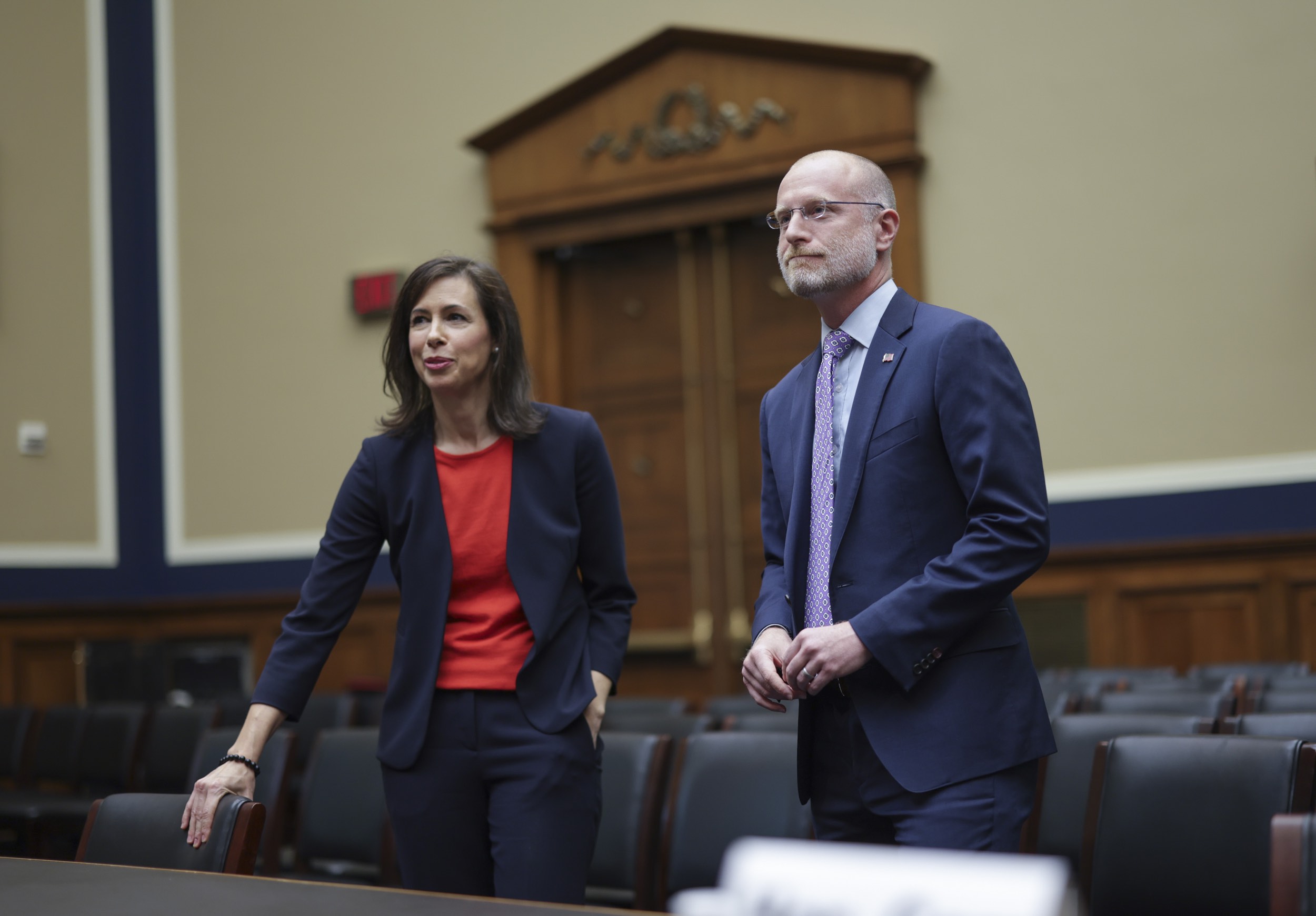
FCC Chairwoman Jessica Rosenworcel and FCC Commissioner Brendan Carr stand next to each other in a Congressional hearing room before a hearing.

Enlarge / FCC Chairwoman Jessica Rosenworcel and FCC Commissioner Brendan Carr arrive to testify during a House committee hearing on March 31, 2022, in Washington, DC. (credit: Getty Images | Kevin Dietsch )

A federal court on Friday temporarily stayed enforcement of net neutrality regulations but has not decided on the merits of a telecom-industry request to block the rules on a longer-term basis.

The Federal Communications Commission’s revived net neutrality rules were scheduled to take effect on July 22. But the US Court of Appeals for the 6th Circuit needs more time to consider the industry motion to block the rules and wants the parties to file supplemental briefs. As a result, the FCC can’t enforce the rules until at least August 5.

“To provide sufficient opportunity to consider the merits of the motion to stay the FCC’s order, we conclude that an administrative stay is warranted. The FCC’s order is hereby temporarily stayed until August 5, 2024,” the court said on Friday.

Read 12 remaining paragraphs | Comments

https://arstechnica.com/?p=2037120


Nearly all AT&T subscribers’ call records stolen in Snowflake cloud hack

AT&T logo displayed on a smartphone with a stock exchange index graph in the background.
Getty Images | SOPA Images

AT&T today said a breach on a third-party cloud platform exposed the call and text records of nearly all its cellular customers. The leaked data is said to include phone numbers that AT&T subscribers communicated with, but not names.

An AT&T spokesperson confirmed to Ars that the data was exposed in the recently reported attack on “AI data cloud” provider Snowflake, which also affected Ticketmaster and many other companies. As previously reported, Snowflake was compromised by a group that obtained login credentials through information-stealing malware.

“In April, AT&T learned that customer data was illegally downloaded from our workspace on a third-party cloud platform,” AT&T announced today. AT&T said it is working with law enforcement and “understands that at least one person has been apprehended.”

AT&T said it does not believe the stolen call data has been made publicly available. “The call and text records identify the phone numbers with which an AT&T number interacted during this period, including AT&T landline (home phone) customers. It also included counts of those calls or texts and total call durations for specific days or months,” AT&T said.

Records of “nearly all” AT&T customers

The data does not include the content of calls or text messages, AT&T said.

“Based on our investigation, the compromised data includes files containing AT&T records of calls and texts of nearly all of AT&T’s cellular customers, customers of mobile virtual network operators (MVNOs) using AT&T’s wireless network, as well as AT&T’s landline customers who interacted with those cellular numbers between May 1, 2022 – October 31, 2022. The compromised data also includes records from January 2, 2023, for a very small number of customers,” AT&T said.

The carrier said the breach does not include Social Security numbers, dates of birth, other personally identifiable information, or the time stamps for calls and texts. “While the data does not include customer names, there are often ways, using publicly available online tools, to find the name associated with a specific telephone number,” an AT&T filing with the Securities and Exchange Commission said.

AT&T’s SEC filing said the “records identify the telephone numbers with which an AT&T or MVNO wireless number interacted during these periods, including telephone numbers of AT&T wireline customers and customers of other carriers, counts of those interactions, and aggregate call duration for a day or month. For a subset of records, one or more cell site identification number(s) are also included.”

AT&T said it has “clos[ed] off the point of unlawful access” and is notifying current and former customers of the breach. AT&T’s current and former customers can obtain the data that was compromised, and details on how to make those data requests are available on this page.

FBI and FCC comment

The Federal Bureau of Investigation said AT&T and law enforcement agreed to delay public reporting of the incident when the investigation began in April. The FBI provided this statement to Ars:

Shortly after identifying a potential breach to customer data and before making its materiality decision, AT&T contacted the FBI to report the incident. In assessing the nature of the breach, all parties discussed a potential delay to public reporting under Item 1.05(c) of the SEC Rule, due to potential risks to national security and/or public safety. AT&T, FBI, and DOJ worked collaboratively through the first and second delay process, all while sharing key threat intelligence to bolster FBI investigative equities and to assist AT&T’s incident response work.

The FBI declined to provide any information on the person who was apprehended. The Federal Communications Commission said it has “an ongoing investigation into the AT&T breach and we’re coordinating with our law enforcement partners.”

An AT&T spokesperson told Ars that the Snowflake breach is unrelated to another recent leak involving the data of 73 million current and former subscribers.

https://arstechnica.com/?p=2036854


Elon Musk’s X faces big EU fines as paid checkmarks are ruled deceptive

Elon Musk's X account profile displayed on a phone screen
Getty Images | NurPhoto

Elon Musk’s overhaul of the Twitter verification system deceives users and violates the Digital Services Act, the European Commission said today in an announcement of preliminary findings that could lead to a big financial penalty.

The social media platform now called X “designs and operates its interface for the ‘verified accounts’ with the ‘Blue checkmark’ in a way that does not correspond to industry practice and deceives users,” the EU regulator said. “Since anyone can subscribe to obtain such a ‘verified’ status, it negatively affects users’ ability to make free and informed decisions about the authenticity of the accounts and the content they interact with. There is evidence of motivated malicious actors abusing the ‘verified account’ to deceive users.”

Blue checkmarks “used to mean trustworthy sources of information,” Commissioner for Internal Market Thierry Breton said. The EC said it “informed X of its preliminary view that it is in breach of the Digital Services Act (DSA) in areas linked to dark patterns, advertising transparency and data access for researchers.”

X will have an opportunity to respond in writing. If the preliminary finding is upheld, the EC said it would adopt a non-compliance decision that “could entail fines of up to 6 percent of the total worldwide annual turnover of the provider, and order the provider to take measures to address the breach.”

A non-compliance decision may also “trigger an enhanced supervision period to ensure compliance with the measures the provider intends to take to remedy the breach,” and “periodic penalty payments to compel a platform to comply.” X is allowed to “exercise its rights of defense by examining the documents in the Commission’s investigation file and by replying in writing to the Commission’s preliminary findings,” the announcement said.

We contacted X today and will update this article if the company provides a response to the EU findings.

Advertising and data access charges

As for the second alleged violation, the EC said that “X does not comply with the required transparency on advertising, as it does not provide a searchable and reliable advertisement repository, but instead put in place design features and access barriers that make the repository unfit for its transparency purpose towards users. In particular, the design does not allow for the required supervision and research into emerging risks brought about by the distribution of advertising online.”

Thirdly, the commission said it found that “X fails to provide access to its public data to researchers in line with the conditions set out in the DSA. In particular, X prohibits eligible researchers from independently accessing its public data, such as by scraping, as stated in its terms of service. In addition, X’s process to grant eligible researchers access to its application programming interface (API) appears to dissuade researchers from carrying out their research projects or leave them with no other choice than to pay disproportionately high fees.”

In December 2023, the EC announced that Musk’s X platform was subject to the first formal investigation into possible DSA violations. X said at the time that it “remains committed to complying with the Digital Services Act and is cooperating with the regulatory process. It is important that this process remains free of political influence and follows the law.”

With today’s announcement, X is the first company to face preliminary findings of DSA non-compliance.

“The DSA has transparency at its very core, and we are determined to ensure that all platforms, including X, comply with EU legislation,” said EC competition official Margrethe Vestager.

https://arstechnica.com/?p=2036765


Elon Musk calls for “criminal prosecution” of X ad boycott perpetrators

Elon Musk calls for “criminal prosecution” of X ad boycott perpetrators

After the House of Representatives Committee on the Judiciary released a report accusing the Global Alliance for Responsible Media (GARM) of colluding with companies to censor conservative voices online, Elon Musk chimed in. In a post on X (formerly Twitter), Musk wrote that X “has no choice but to file suit against the perpetrators and collaborators” behind an advertiser boycott on his platform.

“Hopefully, some states will consider criminal prosecution,” Musk wrote, leading several X users to suggest that Musk wants it to be illegal for brands to refuse to advertise on X.

Among other allegations, Congress’ report claimed that GARM—which is part of the World Federation of Advertisers (WFA), whose members “represent roughly 90 percent of global advertising spend, or almost one trillion dollars annually”—directed advertisers to boycott Twitter shortly after Musk took over the platform.

“GARM members colluded to cut Twitter’s revenue after Elon Musk’s acquisition,” the report said, further alleging that “colluding to suppress voices and views disfavored by the leading marketers at the world’s largest companies and advertising agencies is core to GARM’s founding principles.”

Twitter/X’s revenue tanked after Musk’s takeover, with Bloomberg reporting last month that X lost almost 40 percent of revenue in the first six months of 2023 compared to the same period in 2022. That’s worse than prior estimates last May, which put Twitter’s loss around one-third of its total valuation. Ars chronicled the worst impacts of the ad boycott, including sharp drop-offs in the US, where an internal Twitter presentation leaked to The New York Times showed Twitter’s ad revenue was down by as much as 59 percent “for the five weeks from April 1 to the first week of May” in 2023.

Last year, Musk sued other “collaborators” in the X boycott, including hate speech researchers, the Center for Countering Digital Hate (CCDH), and Media Matters for America (MMFA). However, his suit against the CCDH was dismissed this March, and Media Matters has claimed that Musk filing his MMFA lawsuit in Texas may be “fatal” because of a jurisdictional defect.

Now, it seems that Musk could be considering suing GARM next. Although his post does not mention GARM, it quotes a post sharing congressional testimony from The Daily Wire’s Ben Shapiro. As Shapiro sees it, GARM’s censorship standards are allegedly too high because “GARM doesn’t draw the line at what is criminal, abusive, or dangerous.” It also restricts “hate speech, harassment, misinformation,” and “insensitive, irresponsible, and harmful treatment of debated, sensitive social issues,” such as misgendering.

X had previously severed ties with GARM but just renewed its membership July 1. In a post on X, the platform’s Safety account said, “We’re excited to announce that X has reinstated our relationship [with GARM]. X is committed to the safety of our global town square and proud to be part of the GARM community!”

As of this writing, X is still listed as a GARM member, which was a move publicly supported by X CEO Linda Yaccarino, who reposted the Support team’s post on her X account. There is no telling yet if Yaccarino’s seeming support of GARM may strain her relationship with Musk, who has parted ways with several X executives during his reign over content moderation conflicts.

The Committee on the Judiciary reported that GARM may be violating the Sherman Act, which “makes unreasonable restraints of trade illegal,” including certain cases when “group boycotts and coordinated actions” harm consumers.

GARM allegedly harmed consumers by wielding its “tremendous market power in the advertising industry” and “eliminating a variety of content and viewpoints available to consumers.” This allegedly worked to “rob consumers of choices” and “is likely illegal under the antitrust laws,” in addition to threatening “fundamental American freedoms,” the committee’s report said.

According to the report, “the high market share of GARM and its members in advertising campaigns and spending, combined with the direct evidence of demonetizing certain viewpoints to limit consumer choice,” allegedly “meet the initial burden of demonstrating harm to consumers.”

“The information uncovered to date of WFA and GARM’s collusive conduct to demonetize disfavored content is alarming,” the committee concluded and vowed to “continue its investigation into the companies that participate in this conduct to inform potential legislative reforms.”

GARM’s response to Congress’ report

GARM told Ars that it “has continually demonstrated that it will cooperate with the House Judiciary Committee in good faith.”

The committee’s report “does not include the 168-page transcribed interview which effectively clarifies questions on GARM’s adherence to competition law policy and practices, that GARM is a voluntary organization, and that guidance from GARM is non-binding,” GARM said.

“We remain steadfast in the conviction that GARM enhances transparency in previously opaque practices relative to ad placements in digital social media,” GARM said. “GARM creates voluntary industry standards on brand safety and suitability which media sellers and ad tech companies can voluntarily adopt, adapt or reject. This in turn allows advertisers to make choices similar to the way they buy advertising in TV, print or radio. GARM’s work focuses on voluntary monetization standards while establishing voluntary steps to improve transparency on content moderation and platform design.”

GARM confirmed that it will continue to cooperate with the House committee as it continues its investigation but denied allegations of misconduct raised against GARM and WFA.

“In consultation with legal counsel, WFA maintains robust and effective compliance policies designed to enhance competition,” GARM told Ars. “These policies, along with other materials and information provided to the House Judiciary Committee corroborates that GARM has been diligent in always driving a voluntary and pro-competitive approach and that the allegations against GARM for anti-competitive behavior are baseless.”

https://arstechnica.com/?p=2036575