Court ordered penalties for 15 teens who created naked AI images of classmates

Court ordered penalties for 15 teens who created naked AI images of classmates

A Spanish youth court has sentenced 15 minors to one year of probation after spreading AI-generated nude images of female classmates in two WhatsApp groups.

The minors were charged with 20 counts of creating child sex abuse images and 20 counts of offenses against their victims’ moral integrity. In addition to probation, the teens will also be required to attend classes on gender and equality, as well as on the “responsible use of information and communication technologies,” a press release from the Juvenile Court of Badajoz said.

Many of the victims were too ashamed to speak up when the inappropriate fake images began spreading last year. Prior to the sentencing, a mother of one of the victims told The Guardian that girls like her daughter “were completely terrified and had tremendous anxiety attacks because they were suffering this in silence.”

The court confirmed that the teens used artificial intelligence to create images where female classmates “appear naked” by swiping photos from their social media profiles and superimposing their faces on “other naked female bodies.”

Teens using AI to sexualize and harass classmates has become an alarming global trend. Police have probed disturbing cases in both high schools and middle schools in the US, and earlier this year, the European Union proposed expanding its definition of child sex abuse to more effectively “prosecute the production and dissemination of deepfakes and AI-generated material.” Last year, US President Joe Biden issued an executive order urging lawmakers to pass more protections.

In addition to mental health impacts, victims have reported losing trust in classmates who targeted them and wanting to switch schools to avoid further contact with harassers. Others stopped posting photos online and remained fearful that the harmful AI images will resurface.

Minors targeting classmates may not realize exactly how far images can potentially spread when generating fake child sex abuse materials (CSAM); they could even end up on the dark web. An investigation by the United Kingdom-based Internet Watch Foundation (IWF) last year reported that “20,254 AI-generated images were found to have been posted to one dark web CSAM forum in a one-month period,” with more than half determined most likely to be criminal.

IWF warned that it has identified a growing market for AI-generated CSAM and concluded that “most AI CSAM found is now realistic enough to be treated as ‘real’ CSAM.” One “shocked” mother of a female classmate victimized in Spain agreed. She told The Guardian that “if I didn’t know my daughter’s body, I would have thought that image was real.”

More drastic steps to stop deepfakes

While lawmakers struggle to apply existing protections against CSAM to AI-generated images or to update laws to explicitly prosecute the offense, other more drastic solutions to prevent the harmful spread of deepfakes have been proposed.

In an op-ed for The Guardian today, journalist Lucia Osborne-Crowley advocated for laws restricting sites used to both generate and surface deepfake pornography, including regulating this harmful content when it appears on social media sites and search engines. And IWF suggested that, like jurisdictions that restrict sharing bomb-making information, lawmakers could also restrict guides instructing bad actors on how to use AI to generate CSAM.

The Malvaluna Association, which represented families of victims in Spain and broadly advocates for better sex education, told El Diario that beyond more regulations, more education is needed to stop teens motivated to use AI to attack classmates. Because the teens were ordered to attend classes, the association agreed to the sentencing measures.

“Beyond this particular trial, these facts should make us reflect on the need to educate people about equality between men and women,” the Malvaluna Association said. The group urged that today’s kids should not be learning about sex through pornography that “generates more sexism and violence.”

Teens sentenced in Spain were between the ages of 13 and 15. According to the Guardian, Spanish law prevented sentencing of minors under 14, but the youth court “can force them to take part in rehabilitation courses.”

Tech companies could also make it easier to report and remove harmful deepfakes. Ars could not immediately reach Meta for comment on efforts to combat the proliferation of AI-generated CSAM on WhatsApp, the private messaging app that was used to share fake images in Spain.

An FAQ said that “WhatsApp has zero tolerance for child sexual exploitation and abuse, and we ban users when we become aware they are sharing content that exploits or endangers children,” but it does not mention AI.

https://arstechnica.com/?p=2036279


Republicans angry that ISPs receiving US grants must offer low-cost plans

Illustration of ones and zeroes overlaid on a US map.
Getty Images | Matt Anderson Photography

Republican lawmakers are fighting a Biden administration attempt to bring cheap broadband service to low-income people, claiming it is an illegal form of rate regulation. GOP leaders of the House Energy and Commerce Committee announced an investigation into the National Telecommunications and Information Administration (NTIA), which is administering the $42.45 billion Broadband Equity, Access, and Deployment (BEAD) program that was approved by Congress in November 2021.

“States have reported that the NTIA is directing them to set rates and conditioning approval of initial proposals on doing so. This undoubtedly constitutes rate regulation by the NTIA,” states a letter to the NTIA from Committee Chair Cathy McMorris Rodgers (R-Wash.), Subcommittee on Communications and Technology Chair Bob Latta (R-Ohio), and Subcommittee on Oversight and Investigations Chair Morgan Griffith (R-Va.).

As evidence, the letter points to a statement by Virginia that described feedback received from the NTIA. The federal agency told Virginia that “the low-cost option must be established in the Initial proposal as an exact price or formula.”

The Republicans said anecdotal evidence suggests “the NTIA may be evaluating initial proposals counter to Congressional intent and in violation of the law.” They asked the agency for all communications about the grants between NTIA officials and state broadband offices.

The US law that ordered NTIA to distribute the money requires that Internet providers receiving federal funds offer at least one “low-cost broadband service option for eligible subscribers.” But the law also says the NTIA may not “regulate the rates charged for broadband service.”

We’re following the law, agency says

An NTIA spokesperson told Ars that the agency is working to implement the law’s requirement that grant recipients offer an affordable service tier to qualifying low-income households. “We’ve received the letter and will respond through the appropriate channels. NTIA is working to implement BEAD in a manner that is faithful to the statute,” the agency said.

NTIA Administrator Alan Davidson tried to deflect Republican criticism of the low-cost requirements at a hearing in May. He said that requiring a low-cost option, as the law demands, is not the same as regulating broadband rates.

“The statute requires that there be a low-cost service option,” Davidson told Latta at the hearing, according to Broadband Breakfast. “We do not believe the states are regulating rates here. We believe that this is a condition to get a federal grant. Nobody’s requiring a service provider to follow these rates, people do not have to participate in the program.”

The NTIA needs to evaluate specific proposals to determine whether plans are low-cost, he said. “You have to be able to understand what is affordable,” Davidson was quoted as saying. “Every state has to submit a low-cost option that we can understand is affordable. When states do that, we will approve their plans.”

https://arstechnica.com/?p=2036276


Drug middlemen inflate US prices, squeeze out competition, FTC says

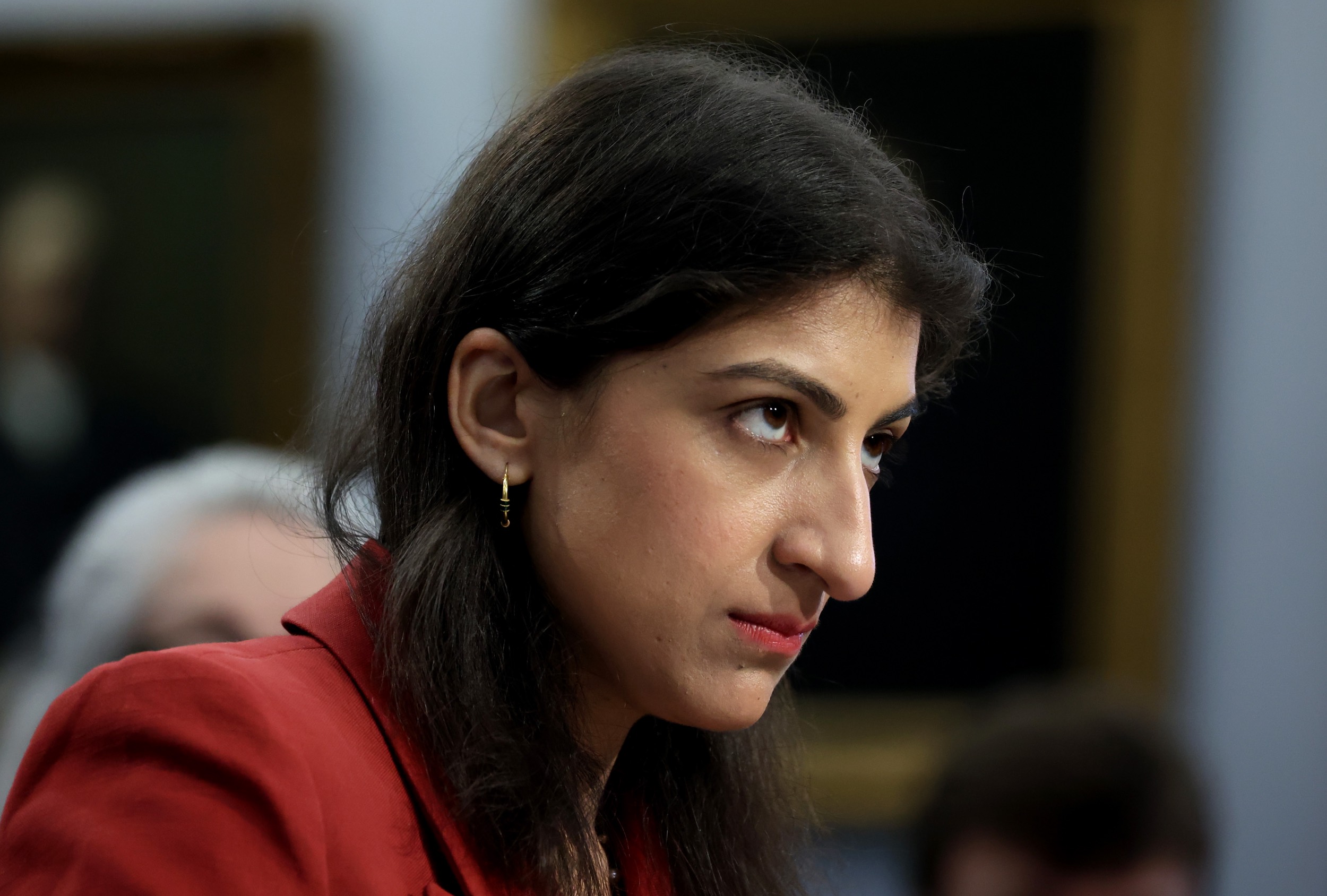
 Lina Khan, chair of the Federal Trade Commission (FTC), testifies before the House Appropriations Subcommittee at the Rayburn House Office Building on May 15, 2024, in Washington, DC.
Enlarge / Lina Khan, chair of the Federal Trade Commission (FTC), testifies before the House Appropriations Subcommittee at the Rayburn House Office Building on May 15, 2024, in Washington, DC.

Firms that serve as intermediaries to negotiate and control prescription drug access in the US “wield enormous power,” largely with “extraordinarily opaque” business practices, and may be “inflating drug costs and squeezing Main Street pharmacies” for profit, according to a searing interim report released Tuesday by the Federal Trade Commission.

Amid a national focus on America’s uniquely astronomical drug costs, the FTC is taking aim at firms that largely work deep in the bowels of the country’s labyrinthine health care system, well hidden from public understanding and scrutiny: pharmacy benefit managers (PBMs).

PBMs were initially hired by various payors—employers, health insurance companies, government health plans, and others—to manage prescription drug benefits through various plans. But PBMs have evolved over the years to also negotiate rebates from drugmakers, set reimbursements for dispensing pharmacies, and develop drug formularies (the list of drugs that a health plan covers.) While those functions alone grant PBMs a large amount of power, consolidation and integration over recent years has concentrated that power in troubling ways, according to the FTC report.

The top three PBMs in the country currently—CVS Caremark, Express Scripts, and Optum Rx—processed nearly 80 percent of the nearly 6.6 billion prescriptions dispensed in 2023. But these big PBMs aren’t standalone companies; they are integrated into massive corporate conglomerates that encompass some of the country’s largest health insurance providers and also pharmacies, including specialty pharmacies, mail-order pharmacies, and, in the case of Caremark, one of the country’s largest retail pharmacy chains. Most recently, these huge conglomerates have even moved into the business of private drug labeling, partnering with drugmakers to distribute drugs themselves under different trade names.

Gross revenue

In the FTC’s investigation so far, the commission found evidence that PBMs are steering people toward their affiliated pharmacies—hurting small, independent pharmacies—and allowing their affiliated pharmacies to rake in payments “grossly in excess” of average drug costs. For instance, for two generic cancer drugs (one for prostate cancer and the other for leukemia), pharmacies affiliated with the top three PBMs collectively raked in nearly $1.8 billion in revenue from 2020 to 2022. That represents an excess of revenue of $1.6 billion dollars over the national average cost for the drugs. In other words, pharmacies not affiliated with the top PBMs would have otherwise seen revenue of under $200 million for the same drug dispensing.

Further, the FTC found evidence that big PBMs and big brand pharmaceutical companies make agreements to exclude cheaper drugs made by a rival manufacturer from a PBM’s drug formulary in exchange for certain pricing and rebates.

“The FTC’s interim report lays out how dominant pharmacy benefit managers can hike the cost of drugs—including overcharging patients for cancer drugs,”  FTC Chair Lina Khan said in a statement. “The report also details how PBMs can squeeze independent pharmacies that many Americans—especially those in rural communities—depend on for essential care. The FTC will continue to use all our tools and authorities to scrutinize dominant players across healthcare markets and ensure that Americans can access affordable healthcare.”

The commission released the report in a 4-1 vote. The two Republican commissioners issued statements expressing concern that the interim report was based on limited data and evidence. The FTC report noted that some of the PBMs have not yet fully responded to orders from the commission two years ago. The FTC said, however, that if PBMs fail to comply or continue to delay, the commission will take them to court.

In a response to The New York Times, Justine Sessions, a spokesperson for the PBM Express Scripts, disputed the FTC’s report. “These biased conclusions will do nothing to address the rising prices of prescription medications driven by the pharmaceutical industry,” she said.

https://arstechnica.com/?p=2036032


Oregon county seeks to hold fossil fuel companies accountable for extreme heat

People and their pets rest at the Oregon Convention Center cooling station in Portland as the city is hit with extreme temperatures caused by a heat dome on June 28, 2021
Enlarge / People and their pets rest at the Oregon Convention Center cooling station in Portland as the city is hit with extreme temperatures caused by a heat dome on June 28, 2021

Northwest Oregon had never seen anything like it. Over the course of three days in June 2021, Multnomah County—the Emerald State’s most populous county, which rests in the swayback along Oregon’s northern border—recorded highs of 108°, 112°, and 116° Fahrenheit.

Temperatures were so hot that the metal on cable cars melted and the asphalt on roadways buckled. Nearly half the homes in the county lacked cooling systems because of Oregon’s typically gentle summers, where average highs top out at 81°. Sixty-nine people perished from heat stroke, most of them in their homes.

When scientific studies showed that the extreme temperatures were caused by heat domes, which experts say are influenced by climate change, county officials didn’t just chalk it up to a random weather occurrence. They started researching the large fossil fuel companies whose emissions are driving the climate crisis—including ExxonMobil, Shell, and Chevron—and sued them.

“This catastrophe was not caused by an act of God,” said Jeffrey B. Simon, a lawyer for the county, “but rather by several of the world’s largest energy companies playing God with the lives of innocent and vulnerable people by selling as much oil and gas as they could.”

Now, 11 months after the suit was filed, Multnomah County is preparing to move forward with the case in Oregon state court after a federal judge in June settled a monthslong debate over where the suit should be heard.

About three dozen lawsuits have been filed by states, counties, and cities seeking damages from oil and gas companies for harms caused by climate change. Legal experts said the Oregon case is one of the first focused on public health costs related to high temperatures during a specific occurrence of the “heat dome effect.” Most of the other lawsuits seek damages more generally from such ongoing climate-related impacts as sea level rise, increased precipitation, intensifying extreme weather events, and flooding.

Pat Parenteau, professor of law emeritus at Vermont Law and Graduate School, said that zeroing in on the heat and the heat dome effect are elements that might make the Multnomah case easier to prove.

“When it comes to the extreme heat events that affected Portland, the scientists concluded, in looking at that event and then looking at historical records of heat waves in the Pacific Northwest, it would not have happened, but for human-caused climate change,” Parenteau said.

“That’s actually the first time I’ve ever seen climate scientists state a conclusion like that in such absolute terms,” he added.

Korey Silverman-Roati, a fellow at Columbia University’s Sabin Center for Climate Change, also said the case was distinctive because it focused on a specific event. “A lot of these other suits are alleging more long-term impact harm from climate change, like sea level rise is something that happens over the course of decades,” Silverman-Roati said. “Whereas the Multnomah suit is this 2021 heat dome disaster that they had to deal with.”

The Multnomah County lawsuit says that Exxon, Shell, Chevron, and others engaged in a range of improper practices, including negligence, creating a public nuisance, fraud, and deceit.

The suit alleges that the companies were aware of the harms of fossil fuels and engaged in a “scheme to rapaciously sell fossil fuel products and deceptively promote them as harmless to the environment, while they knew that carbon pollution emitted by their products into the atmosphere would likely cause deadly extreme heat events like that which devastated Multnomah County.”

“We know that climate-induced weather events like the 2021 Heat Dome harm the residents of Multnomah County and cause real financial costs to our local government,” Multnomah County Chair Jessica Vega Pederson said in a statement. “The Court’s decision to hear this lawsuit in State Court validates our assertion that the case should be resolved here—it’s an important win for this community.”

A spokesperson for Exxon declined to comment on the case; representatives for Shell and Chevron did not respond to requests for comment.

A common defense for fossil fuel companies is arguing that existing environmental laws, such as the Clean Air Act, are already responsible for regulating air quality so legal actions should not be allowed under state law, Silverman-Roati noted.

https://arstechnica.com/?p=2035696


Elon Musk denies tweets misled Twitter investors ahead of purchase

Elon Musk denies tweets misled Twitter investors ahead of purchase

Just before the Fourth of July holiday, Elon Musk moved to dismiss a lawsuit alleging that he intentionally misled Twitter investors in 2022 by failing to disclose his growing stake in Twitter while tweeting about potentially starting his own social network in the weeks ahead of announcing his plan to buy Twitter.

Allegedly, Musk devised this fraudulent scheme to reduce the Twitter purchase price by $200 million, a proposed class action filed by an Oklahoma Firefighters pension fund on behalf of all Twitter investors allegedly harmed claimed. But in another court filing this week, Musk insisted that “all indications”—including those referenced in the firefighters’ complaint—”point to mistake,” not fraud.

According to Musk, evidence showed that he simply misunderstood the Securities Exchange Act when he delayed filing a Rule 13 disclosure of his nearly 10 percent ownership stake in Twitter in March 2022. Musk argued that he believed he was required to disclose this stake at the end of the year, rather than within 10 days after the month in which he amassed a 5 percent stake. He said that previously he’d only filed Rule 13 disclosures as the owner of a company—not as someone suddenly acquiring 5 percent stake.

Musk claimed that as soon as his understanding of the law was corrected—on April 1, when he’d already missed the deadline by about seven days—he promptly stopped trading and filed the disclosure on the next trading day.

“Such prompt and corrective disclosure—within seven trading days of the purported deadline—is not the stuff of a fraudulent scheme to manipulate the market,” Musk’s court filing said.

As Musk sees it, the firefighters’ suit “makes no sense” because it basically alleged that Musk always intended to disclose the supposedly fraudulent scheme, which in the context of his extraordinary wealth, barely saved him any meaningful amount of money when purchasing Twitter.

The idea that Musk “engaged in intentional securities fraud in order to save $200 million is illogical in light of Musk’s eventual $44 billion purchase of Twitter,” Musk’s court filing said. “It defies logic that Musk would commit fraud to save less than 0.5 percent of Twitter’s total purchase price, and 0.1 percent of his net worth, all while knowing that there would be ‘an inevitable day of reckoning’ when he would disclose the truth—which was always his intent.”

It’s much more likely, Musk argued, that “Musk’s acknowledgement of his tardiness is that he was expressly acknowledging a mistake, not publicly conceding a purportedly days-old fraudulent scheme.”

Arguing that all firefighters showed was “enough to adequately plead a material omission and misstatement”—which he said would not be an actionable claim under the Securities Exchange Act—Musk has asked for the lawsuit to be dismissed with prejudice. At most, Musk is guilty of neglect, his court filing said, not deception. Allegedly Musk never “had any intention of avoiding reporting requirements,” his court filing said.

The firefighters pension fund has until August 12 to defend its claims and keep the suit alive, Musk’s court filing noted. In their complaint, the fighterfighteres had asked the court to award damages covering losses, plus interest, for all Twitter shareholders determined to be “cheated out of the true value of their securities” by Musk’s alleged scheme.

Ars could not immediately reach lawyers for Musk or the firefighters pension fund for comment.

https://arstechnica.com/?p=2035344


The “Netflix of anime” piracy site abruptly shuts down, shocking users

<img src="https://rassegna.lbit-solution.it/wp-content/uploads/2024/07/the-netflix-of-anime-piracy-site-abruptly-shuts-down-shocking-users.jpg" alt="Disney+ promotional art for The Fable, an anime series that triggered Animeflix takedown notices.”>
Enlarge / Disney+ promotional art for The Fable, an anime series that triggered Animeflix takedown notices.

Thousands of anime fans were shocked Thursday when the popular piracy site Animeflix voluntarily shut down without explaining why, TorrentFreak reported.

“It is with a heavy heart that we announce the closure of Animeflix,” the site’s operators told users in a Discord with 35,000 members. “After careful consideration, we have decided to shut down our service effective immediately. We deeply appreciate your support and enthusiasm over the years.”

Prior to its shutdown, Animeflix attracted millions of monthly visits, TorrentFreak reported. It was preferred by some anime fans for its clean interface, with one fan on Reddit describing Animeflix as the “Netflix of anime.”

“Deadass this site was clean,” one Reddit user wrote. “The best I’ve ever seen. Sad to see it go.”

Although Animeflix operators did not connect the dots for users, TorrentFreak suggested that the piracy site chose to shut down after facing “considerable legal pressure in recent months.”

Back in December, an anti-piracy group, Alliance for Creativity and Entertainment (ACE), sought to shut down Animeflix. Then in mid-May, rightsholders—including Netflix, Disney, Universal, Paramount, and Warner Bros.—won an injunction through the High Court of India against several piracy sites, including Animeflix. This briefly caused Animeflix to be unavailable until Animeflix simply switched to another domain and continued serving users, TorrentFreak reported.

Although Animeflix is not telling users why it’s choosing to shut down now, TorrentFreak—which, as its name suggests, focuses much of its coverage on copyright issues impacting file sharing online—noted that “when a pirate site shuts down, voluntarily or not, copyright issues typically play a role.”

For anime fans, the abrupt closure was disappointing because of difficulty accessing the hottest new anime titles and delays as studios work to offer translations to various regions. The delays are so bad that some studios are considering combating piracy by using AI to push out translated versions more quickly. But fans fear this will only result in low-quality subtitles, CBR reported.

On Reddit, some fans also complained after relying exclusively on Animeflix to keep track of where they left off on anime shows that often span hundreds of episodes.

Others begged to be turned onto other anime piracy sites, while some speculated whether Animeflix might eventually pop up at a new domain. TorrentFreak noted that Animeflix shut down once previously several years ago but ultimately came back. One Redditor wrote, “another hero has passed away but the will, will be passed.” On another Reddit thread asking “will Animeflix be gone forever or maybe create a new site,” one commenter commiserated, writing, “We don’t know for sure. Only time will tell.”

It’s also possible that someone else may pick up the torch and operate a new piracy site under the same name. According to TorrentFreak, this is “likely.”

Animeflix did not reassure users that it may be back, instead urging them to find other sources for their favorite shows and movies.

“We hope the joy and excitement of anime continue to brighten your days through other wonderful platforms,” Animeflix’s Discord message said.

ACE did not immediately respond to Ars’ request for comment.

https://arstechnica.com/?p=2035247


Judge says FTC lacks authority to issue rule banning noncompete agreements

FTC Chair Lina Khan sitting at a Congressional hearing
Enlarge / FTC Chair Lina Khan testifies before the House Appropriations Subcommittee on May 15, 2024, in Washington, DC.
Getty Images | Kevin Dietsch

A US judge ruled against the Federal Trade Commission in a challenge to its rule banning noncompete agreements, saying the FTC lacks “substantive” rulemaking authority.

The preliminary ruling only blocks enforcement of the noncompete ban against the plaintiff and other groups that intervened in the case, but it signals that the judge believes the FTC cannot enforce the rule. The case is in US District Court for the Northern District of Texas, so appeals would be heard in the US Court of Appeals for the 5th Circuit—which is generally regarded as one of the most conservative appeals courts in the country.

In April, the FTC issued a rule that would render the vast majority of current noncompete clauses unenforceable and ban future ones. The agency said that noncompete clauses are “an unfair method of competition and therefore a violation of Section 5 of the FTC Act,” calling them “a widespread and often exploitative practice imposing contractual conditions that prevent workers from taking a new job or starting a new business.”

A tax services firm called Ryan, LLC sued the FTC in an attempt to block the rule. The lawsuit was joined by the US Chamber of Commerce, two Texas business groups, and a lobbyist association that represents chief executive officers at US businesses.

In a ruling on Wednesday, US District Judge Ada Brown granted a preliminary injunction and postponed the effective date of the rule as it applies to the plaintiffs. The rule is scheduled to take effect on September 4, 2024. As of now, the FTC’s ban on noncompetes is slated to apply to everyone except the entities involved in the lawsuit.

“FTC lacks substantive rulemaking authority”

“The issue presented is whether the FTC’s ability to promulgate rules concerning unfair methods of competition include the authority to create substantive rules regarding unfair methods of competition,” Brown, a Trump appointee, wrote.

Brown acknowledged that “the FTC has some authority to promulgate rules to preclude unfair methods of competition.” But “the text, structure, and history of the FTC Act reveal that the FTC lacks substantive rulemaking authority with respect to unfair methods of competition under Section 6(g),” she wrote.

The FTC has argued it can impose the rule using authority under sections 5 and 6(g) of the FTC Act. “Alongside section 5, Congress adopted section 6(g) of the Act, in which it authorized the Commission to ‘make rules and regulations for the purpose of carrying out the provisions of’ the FTC Act, which include the Act’s prohibition of unfair methods of competition,” the FTC said when it issued the rule.

“The FTC stands by our clear authority, supported by statute and precedent, to issue this rule,” an FTC spokesperson told Ars today. “We will keep fighting to free hardworking Americans from unlawful noncompetes, which reduce innovation, inhibit economic growth, trap workers, and undermine Americans’ economic liberty.”

Consumer advocacy group Public Knowledge called Brown’s ruling “the latest in a series of attacks on the administrative state, which only further embolden judges without subject matter expertise to seize power from federal agencies and prevent them from effectively serving the American people.”

The Supreme Court last week overturned the 40-year-old Chevron precedent, which gave agencies leeway to interpret ambiguous laws as long as the agency’s conclusion was reasonable. The SCOTUS ruling effectively gives courts more power to block federal rules.

FTC’s cited authority just a “housekeeping statute”

Brown concluded that section 6(g) is merely a “housekeeping statute,” authorizing “rules of agency organization procedure or practice” but not “substantive rules.”

“Plaintiffs next contend the lack of a statutory penalty for violating rules promulgated under Section 6(g) demonstrates its lack of substantive rulemaking power. The Court agrees,” Brown wrote. “When authorizing legislative rulemaking, Congress also historically prescribes sanctions for violations of the agency’s rules—confirming that those rules create substantive obligations for regulated parties.”

The judge said the plaintiffs are likely to succeed on the merits and would be harmed if the rule takes effect. Brown intends to issue a ruling on the merits by August 30.

The preliminary injunction does not apply nationwide, as Brown chose to limit “the scope of the injunctive relief herein to named Plaintiff Ryan, LLC and Plaintiff-Intervenors Chamber of Commerce of the United States of America; Business Roundtable; Texas Association of Business; and Longview Chamber of Commerce.”

The business trade groups wanted the injunction to apply to all of their member entities but could not convince Brown to extend the injunction that far. “Plaintiff-Intervenors have directed the Court to neither sufficient evidence of their respective associational member(s) for which they seek standing, nor any of the three elements that must be met regarding associational standing. Without such developed briefing, the Court declines to extend injunctive relief to members of Plaintiff-Intervenors,” Brown wrote.

https://arstechnica.com/?p=2035241


Tool preventing AI mimicry cracked; artists wonder what’s next

Tool preventing AI mimicry cracked; artists wonder what’s next
Aurich Lawson | Getty Images

For many artists, it’s a precarious time to post art online. AI image generators keep getting better at cheaply replicating a wider range of unique styles, and basically every popular platform is rushing to update user terms to seize permissions to scrape as much data as possible for AI training.

Defenses against AI training exist—like Glaze, a tool that adds a small amount of imperceptible-to-humans noise to images to stop image generators from copying artists’ styles. But they don’t provide a permanent solution at a time when tech companies appear determined to chase profits by building ever-more-sophisticated AI models that increasingly threaten to dilute artists’ brands and replace them in the market.

In one high-profile example just last month, the estate of Ansel Adams condemned Adobe for selling AI images stealing the famous photographer’s style, Smithsonian reported. Adobe quickly responded and removed the AI copycats. But it’s not just famous artists who risk being ripped off, and lesser-known artists may struggle to prove AI models are referencing their works. In this largely lawless world, every image uploaded risks contributing to an artist’s downfall, potentially watering down demand for their own work each time they promote new pieces online.

Unsurprisingly, artists have increasingly sought protections to diminish or dodge these AI risks. As tech companies update their products’ terms—like when Meta suddenly announced that it was training AI on a billion Facebook and Instagram user photos last December—artists frantically survey the landscape for new defenses. That’s why, counting among those offering scarce AI protections available today, The Glaze Project recently reported a dramatic surge in requests for its free tools.

Designed to help prevent style mimicry and even poison AI models to discourage data scraping without an artist’s consent or compensation, The Glaze Project’s tools are now in higher demand than ever. University of Chicago professor Ben Zhao, who created the tools, told Ars that the backlog for approving a “skyrocketing” number of requests for access is “bad.” And as he recently posted on X (formerly Twitter), an “explosion in demand” in June is only likely to be sustained as AI threats continue to evolve. For the foreseeable future, that means artists searching for protections against AI will have to wait.

Even if Zhao’s team did nothing but approve requests for WebGlaze, its invite-only web-based version of Glaze, “we probably still won’t keep up,” Zhao said. He’s warned artists on X to expect delays.

Compounding artists’ struggles, at the same time as demand for Glaze is spiking, the tool has come under attack by security researchers who claimed it was not only possible but easy to bypass Glaze’s protections. For security researchers and some artists, this attack calls into question whether Glaze can truly protect artists in these embattled times. But for thousands of artists joining the Glaze queue, the long-term future looks so bleak that any promise of protections against mimicry seems worth the wait.

Attack cracking Glaze sparks debate

Millions have downloaded Glaze already, and many artists are waiting weeks or even months for access to WebGlaze, mostly submitting requests for invites on social media. The Glaze Project vets every request to verify that each user is human and ensure bad actors don’t abuse the tools, so the process can take a while.

The team is currently struggling to approve hundreds of requests submitted daily through direct messages on Instagram and Twitter in the order they are received, and artists requesting access must be patient through prolonged delays. Because these platforms’ inboxes aren’t designed to sort messages easily, any artist who follows up on a request gets bumped to the back of the line—as their message bounces to the top of the inbox and Zhao’s team, largely volunteers, continues approving requests from the bottom up.

“This is obviously a problem,” Zhao wrote on X while discouraging artists from sending any follow-ups unless they’ve already gotten an invite. “We might have to change the way we do invites and rethink the future of WebGlaze to keep it sustainable enough to support a large and growing user base.”

Glaze interest is likely also spiking due to word of mouth. Reid Southen, a freelance concept artist for major movies, is advocating for all artists to use Glaze. Reid told Ars that WebGlaze is especially “nice” because it’s “available for free for people who don’t have the GPU power to run the program on their home machine.”

https://arstechnica.com/?p=2034684


“Everything’s frozen”: Ransomware locks credit union users out of bank accounts

An automated teller machine with a logo for Patelco Credit Union.
Enlarge / ATM at a Patelco Credit Union branch in Dublin, California, on July 23, 2018.
Getty Images | Smith Collection/Gado

A California-based credit union with over 450,000 members said it suffered a ransomware attack that is disrupting account services and could take weeks to recover from.

“The next few days—and coming weeks—may present challenges for our members, as we continue to navigate around the limited functionality we are experiencing due to this incident,” Patelco Credit Union CEO Erin Mendez told members in a July 1 message that said the security problem was caused by a ransomware attack. Online banking and several other services are unavailable, while several other services and types of transactions have limited functionality.

Patelco Credit Union was hit by the attack on June 29 and has been posting updates on this page, which says the credit union “proactively shut down some of our day-to-day banking systems to contain and remediate the issue… As a result of our proactive measures, transactions, transfers, payments, and deposits are unavailable at this time. Debit and credit cards are working with limited functionality.”

Patelco Credit Union is a nonprofit cooperative in Northern California with $9 billion in assets and 37 local branches. “Our priority is the safe and secure restoration of our banking systems,” a July 2 update said. “We continue to work alongside leading third-party cybersecurity experts in support of this effort. We have also been cooperating with regulators and law enforcement.”

“Everything’s frozen”

Patelco member Enrique Juarez said he was having trouble accessing his Social Security payment, according to the Mercury News. “I’ve never had a problem before,” Juarez told the news organization. “Everything’s frozen, I can’t even check my balance until this is resolved—and they don’t know [when that will happen].”

Patelco says that check and cash deposits should be working, but direct deposits have limited functionality.

Security expert Ahmed Banafa “said Tuesday that it looks likely that hackers infiltrated the bank’s internal databases via a phishing email and encrypted its contents, locking out the bank from its own systems,” the Mercury News reported. Banafa was paraphrased as saying that it is “likely the hackers will demand an amount of money from the credit union to restore its systems back to normal, and will continue to hold the bank’s accounts hostage until either the bank finds a way around the hack or until the hackers are paid.”

Change Healthcare, a health payment processing company hit by ransomware this year, told lawmakers that it paid a ransom of $22 million in bitcoin. Change Healthcare owner UnitedHealth failed to use multifactor authentication on critical systems.

Patelco hasn’t revealed details about how it will recover from the ransomware attack but acknowledged to customers that their personal information could be at risk. “The investigation into the nature and scope of the incident is ongoing,” the credit union said. “If the investigation determines that individuals’ information is involved as a result of this incident, we will of course notify those individuals and provide resources to help protect their information in accordance with applicable laws.”

Patelco waives fees, warns of more outages

Patelco said it is waiving overdraft, late payment, and ATM fees “until we are back up and running.” Members who need to access funds from direct deposits can do so by writing a check, using an ATM card to get cash, or by making a purchase, Patelco said.

As of yesterday, members could expect to “experience short, intermittent outages at Patelco ATMs,” the organization said. “This is normal and to be expected during our recovery process. Access to shared ATMs will not be interrupted as part of this process and they remain available for cash withdrawals and deposits.”

A chart on the security update page says the services that remain unavailable include online banking, the mobile app, outgoing wire transfers, monthly statements, Zelle, balance inquiries, and online bill payments.

Patelco branches, call center services, and live chats have “limited functionality,” as do debit card transactions, credit card transactions, and direct deposits, according to the chart. Services that are listed as available include check and cash deposits, ATM withdrawals, ACH transfers, ACH for bill payments, and in-branch loan payments.

https://arstechnica.com/?p=2035180


Japan wins 2-year “war on floppy disks,” kills regulations requiring old tech

floppy disks on white background

About two years after the country’s digital minister publicly declared a “war on floppy discs,” Japan reportedly stopped using floppy disks in governmental systems as of June 28.

Per a Reuters report on Wednesday, Japan’s government “eliminated the use of floppy disks in all its systems.” The report notes that by mid-June, Japan’s Digital Agency (a body set up during the COVID-19 pandemic and aimed at updating government technology) had “scrapped all 1,034 regulations governing their use, except for one environmental stricture related to vehicle recycling.” That suggests that there’s up to one government use that could still turn to floppy disks, though more details weren’t available.

Digital Minister Taro Kono, the politician behind the modernization of the Japanese government’s tech, has made his distaste for floppy disks and other old office tech, like fax machines, quite public. Kono, who’s reportedly considering a second presidential run, told Reuters in a statement today:

We have won the war on floppy disks on June 28!

Although Kono only announced plans to eradicate floppy disks from the government two years ago, it’s been 20 years since floppy disks were in their prime and 53 years since they debuted. It was only in January 2024 that the Japanese government stopped requiring physical media, like floppy disks and CD-ROMs, for 1,900 types of submissions to the government, such as business filings and submission forms for citizens.

The timeline may be surprising, considering that the last company to make floppy disks, Sony, stopped doing so in 2011. As a storage medium, of course, floppies can’t compete with today’s options since most floppies max out at 1.44MB (2.88MB floppies were also available). And you’ll be hard-pressed to find a modern system that can still read the disks. There are also basic concerns around the old storage format, such as Tokyo police reportedly losing a pair of floppy disks with information on dozens of public housing applicants in 2021.

But Japan isn’t the only government body with surprisingly recent ties to the technology. For example, San Francisco’s Muni Metro light rail uses a train control system that uses software that runs off floppy disks and plans to keep doing so until 2030. The US Air Force used using 8-inch floppies until 2019.

Outside of the public sector, floppy disks remain common in numerous industries, including embroidery, cargo airlines, and CNC machines. We reported on Chuck E. Cheese using floppy disks for its animatronics as recently as January 2023.

Modernization resistance

Now that the Japanese government considers its reliance on floppy disks over, eyes are on it to see what, if any, other modernization overhauls it will make.

Despite various technological achievements, the country has a reputation for holding on to dated technology. The Institute for Management Development’s (IMD) 2023 World Digital Competitiveness Ranking listed Japan as number 32 out of 64 economies. The IMD says its rankings measure the “capacity and readiness of 64 economies to adopt and explore digital technologies as a key driver for economic transformation in business, government, and wider society.”

It may be a while before the government is ready to let go of some older technologies. For example, government officials have reportedly resisted moving to the cloud for administrative systems. Kono urged government offices to quit requiring hanko personal stamps in 2020, but per The Japan Times, movement from the seal is occurring at a “glacial pace.”

Many workplaces in Japan also opt for fax machines over emails, and 2021 plans to remove fax machines from government offices have been tossed due to resistance.

Some believe Japan’s reliance on older technology stems from the comfort and efficiencies associated with analog tech as well as governmental bureaucracy.

https://arstechnica.com/?p=2035152