Tesla says Model 3 that burst into flames in fatal tree crash wasn’t defective

Tesla says Model 3 that burst into flames in fatal tree crash wasn’t defective

Tesla has denied that “any defect in the Autopilot system caused or contributed” to the 2022 death of a Tesla employee, Hans von Ohain, whose Tesla Model 3 burst into flames after the car suddenly veered off a road and crashed into a tree.

“Von Ohain fought to regain control of the vehicle, but, to his surprise and horror, his efforts were prevented by the vehicle’s Autopilot features, leaving him helpless and unable to steer back on course,” a wrongful death lawsuit filed in May by von Ohain’s wife, Nora Bass, alleged.

In Tesla’s response to the lawsuit filed Thursday, the carmaker also denied that the 2021 vehicle had any defects, contradicting Bass’ claims that Tesla knew that the car should have been recalled but chose to “prioritize profits over consumer safety.”

As detailed in her complaint, initially filed in a Colorado state court, Bass believes the Tesla Model 3 was defective in that it “did not perform as safely as an ordinary consumer would have expected it to perform” and “the benefits of the vehicle’s design did not outweigh the risks.”

Instead of acknowledging alleged defects and exploring alternative designs, Tesla marketed the car as being engineered “to be the safest” car “built to date,” Bass’ complaint said.

Von Ohain was particularly susceptible to this marketing, Bass has said, because he considered Tesla CEO Elon Musk to be a “brilliant man,” The Washington Post reported. “We knew the technology had to learn, and we were willing to be part of that,” Bass said, but the couple didn’t realize how allegedly dangerous it could be to help train “futuristic technology,” The Post reported.

In Tesla’s response, the carmaker defended its marketing of the Tesla Model 3, denying that the company “engaged in unfair and deceptive acts or practices.”

“The product in question was not defective or unreasonably dangerous,” Tesla’s filing said.

Insisting in its response that the vehicle was safe when it was sold, Tesla again disputed Bass’ complaint, which claimed that “at no time after the purchase of the 2021 Tesla Model 3 did any person alter, modify, or change any aspect or component of the vehicle’s design or manufacture.” Contradicting this, Tesla suggested that the car “may not have been in the same condition at the time of the crash as it was at the time when it left Tesla’s custody.”

The Washington Post broke the story about von Ohain’s fatal crash, reporting that it may be “the first documented fatality linked to the most advanced driver assistance technology offered” by Tesla. In response to Tesla’s filing, Bass’ attorney, Jonathan Michaels, told The Post that his team is “committed to advocating fiercely for the von Ohain family, ensuring they receive the justice they deserve.”

Michaels told The Post that perhaps as significant as alleged autonomous driving flaws, the Tesla Model 3 was also allegedly defective “because of the intensity of the fire that ensued after von Ohain hit the tree, which ultimately caused his death.” According to the Colorado police officer looking into the crash, Robert Madden, the vehicle fire was among “the most intense” he’d ever investigated, The Post reported.

Lawyers for Bass and Tesla did not immediately respond to Ars’ request for comment.

https://arstechnica.com/?p=2034362


Brussels explores antitrust probe into Microsoft’s partnership with OpenAI

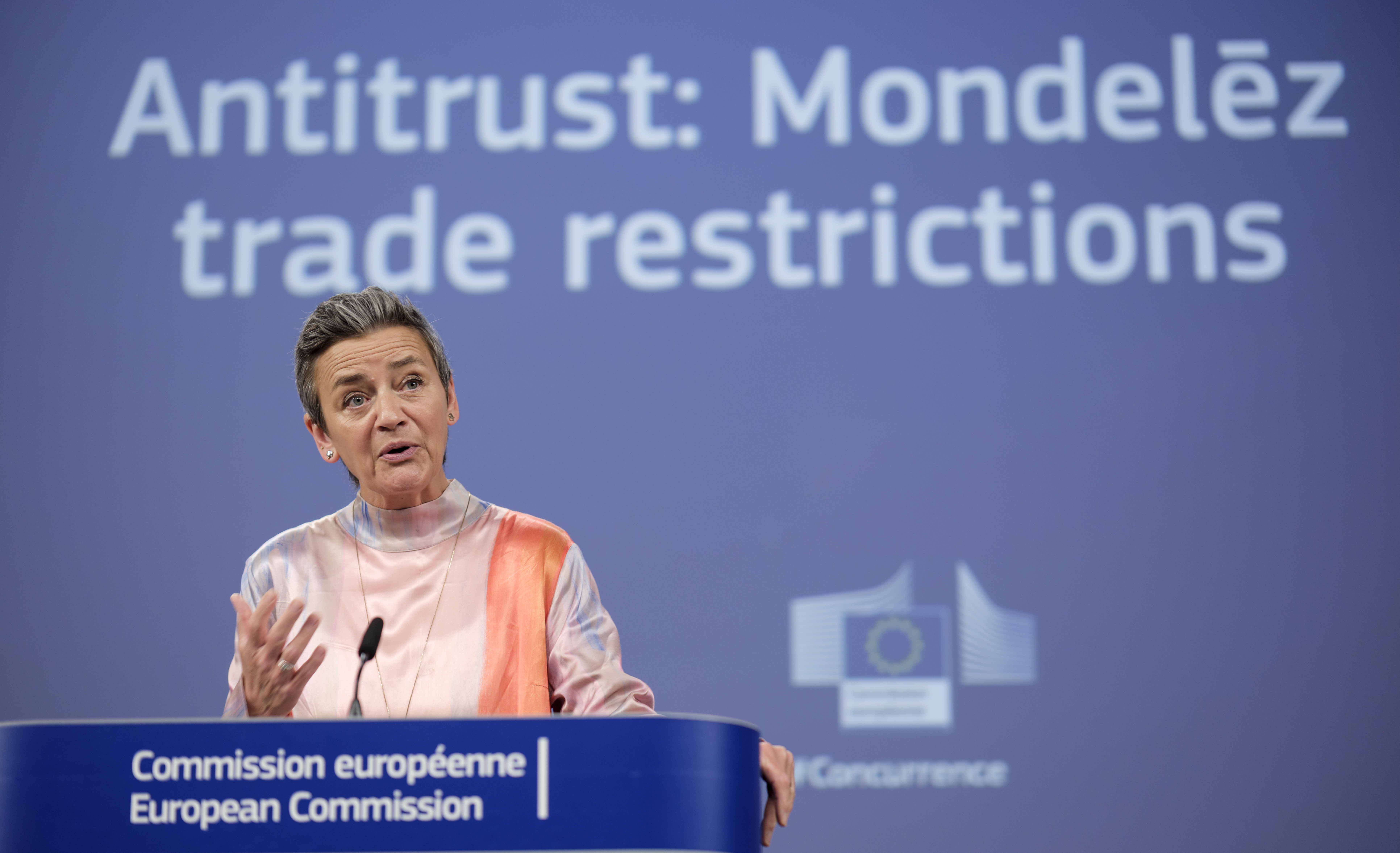
EU competition chief Margrethe Vestager said the bloc was looking into practices that could in effect lead to a company controlling a greater share of the AI market.
Enlarge / EU competition chief Margrethe Vestager said the bloc was looking into practices that could in effect lead to a company controlling a greater share of the AI market.

Brussels is preparing for an antitrust investigation into Microsoft’s $13 billion investment into OpenAI, after the European Union decided not to proceed with a merger review into the most powerful alliance in the artificial intelligence industry.

The European Commission, the EU’s executive arm, began to explore a review under merger control rules in January, but on Friday announced that it would not proceed due to a lack of evidence that Microsoft controls OpenAI.

However, the commission said it was now exploring the possibility of a traditional antitrust investigation into whether the tie-up between the world’s most valuable listed company and the best-funded AI start-up was harming competition in the fast-growing market.

The commission has also made inquiries about Google’s deal with Samsung to install a modified version of its Gemini AI system in the South Korean manufacturer’s smartphones, it revealed on Friday.

Margrethe Vestager, the bloc’s competition chief, said in a speech on Friday: “The key question was whether Microsoft had acquired control on a lasting basis over OpenAI. After a thorough review we concluded that such was not the case. So we are closing this chapter, but the story is not over.”

She said the EU had sent a new set of questions to understand whether “certain exclusivity clauses” in the agreement between Microsoft and OpenAI “could have a negative effect on competitors.” The move is seen as a key step toward a formal antitrust probe.

The bloc had already sent questions to Microsoft and other tech companies in March to determine whether market concentration in AI could potentially block new companies from entering the market, Vestager said.

Microsoft said: “We appreciate the European Commission’s thorough review and its conclusion that Microsoft’s investment and partnership with OpenAI does not give Microsoft control over the company.”

Brussels began examining Microsoft’s relationship with the ChatGPT maker after OpenAI’s board abruptly dismissed its chief executive Sam Altman in November 2023, only to be rehired a few days later. He briefly joined Microsoft as the head of a new AI research unit, highlighting the close relationship between the two companies.

Regulators in the US and UK are also scrutinizing the alliance. Microsoft is the biggest backer of OpenAI, although its investment of up to $13 billion, which was expanded in January 2023, does not involve acquiring conventional equity due to the startup’s unusual corporate structure. Microsoft has a minority interest in OpenAI’s commercial subsidiary, which is owned by a not-for-profit organization.

Antitrust investigations tend to last years, compared with a much shorter period for merger reviews, and they focus on conduct that could be undermining rivals. Companies that are eventually found to be breaking the law, for example by bundling products or blocking competitors from access to key technology, risk hefty fines and legal obligations to change their behavior.

Vestager said the EU was looking into practices that could in effect lead to a company controlling a greater share of the AI market. She pointed to a practice called “acqui-hires,” where a company buys another one mainly to get its talent. For example, Microsoft recently struck a deal to hire most of the top team from AI start-up Inflection, in which it had previously invested. Inflection remains an independent company, however, complicating any traditional merger investigation.

The EU’s competition chief said regulators were also looking into the way big tech companies may be preventing smaller AI models from reaching users.

“This is why we are also sending requests for information to better understand the effects of Google’s arrangement with Samsung to pre-install its small model ‘Gemini nano’ on certain Samsung devices,” said Vestager.

Jonathan Kanter, the top US antitrust enforcer, told the Financial Times earlier this month that he was also examining “monopoly choke points and the competitive landscape” in AI. The UK’s Competition and Markets Authority said in December that it had “decided to investigate” the Microsoft-OpenAI deal when it invited comments from customers and rivals.

© 2024 The Financial Times Ltd. All rights reserved. Please do not copy and paste FT articles and redistribute by email or post to the web.

https://arstechnica.com/?p=2034368


Supreme Court issues stay on EPA’s ozone plan, despite blistering dissent

Aerial view of Los Angeles, showing a layer of smog against the hills in the background.
Enlarge / Ozone-producing chemicals come from a variety of sources and don’t respect state borders.

On Tuesday, a slim majority of the US Supreme Court issued an emergency ruling that places a stay on rules developed by the Environmental Protection Agency, meant to limit the spread of ozone-generating pollutants across state lines. Because it was handled on an emergency basis, the decision was made without any evidence gathered during lower court proceedings. As a result, the justices don’t even agree on the nature of the regulations the EPA has proposed, leading to a blistering dissent from Justice Amy Coney Barrett, who was joined by the court’s three liberal justices.

Bad neighbors

The rule at issue arose from the EPA’s regular process of revisiting existing limits in light of changes in public health information and pollution-control technology. In this case, the focus was on ozone-producing chemicals; in 2015, the EPA chose to lower the limit on ozone from 75 to 70 parts per billion.

Once these standards are set, states are required to submit plans that fulfill two purposes. One is to limit pollution within the state itself; the second involves pollution controls that will limit the exposure in states that are downwind of the pollution sources. The EPA is required to evaluate these plans; if they are deemed insufficient, the EPA can require the states to follow a federal plan devised by the EPA.

In the case of the revised ozone rules, as noted in the dissent, two states refused to submit a plan for limiting pollution in other states under this “Good Neighbor Provision.” Twenty-one other states submitted plans that involved taking no action at all to handle pollution that crosses state lines. In response, the EPA formulated a single federal plan that would apply to all of these states.

A number of the states sued individually, and courts have placed the EPA’s federal plan on hold in those cases. As a result, several of the states asked the Supreme Court to issue an emergency ruling that put the federal plan on hold for all 23 states that were subjected to it. While that resulted in arguments before the court, it was not the product of earlier litigation. As a result, there is no record of testimony or documentary evidence generated in lower courts, or legal decisions that lay out the logic and precedent that apply to this case. These usually play a central role in informing Supreme Court decisions.

https://arstechnica.com/?p=2034143


SCOTUS nixes injunction that limited Biden admin contacts with social networks

SCOTUS nixes injunction that limited Biden admin contacts with social networks

On Wednesday, the Supreme Court tossed out claims that the Biden administration coerced social media platforms into censoring users by removing COVID-19 and election-related content.

Complaints alleging that high-ranking government officials were censoring conservatives had previously convinced a lower court to order an injunction limiting the Biden administration’s contacts with platforms. But now that injunction has been overturned, re-opening lines of communication just ahead of the 2024 elections—when officials will once again be closely monitoring the spread of misinformation online targeted at voters.

In a 6–3 vote, the majority ruled that none of the plaintiffs suing—including five social media users and Republican attorneys general in Louisiana and Missouri—had standing. They had alleged that the government had “pressured the platforms to censor their speech in violation of the First Amendment,” demanding an injunction to stop any future censorship.

Plaintiffs may have succeeded if they were instead seeking damages for past harms. But in her opinion, Justice Amy Coney Barrett wrote that partly because the Biden administration seemingly stopped influencing platforms’ content policies in 2022, none of the plaintiffs could show evidence of a “substantial risk that, in the near future, they will suffer an injury that is traceable” to any government official. Thus, they did not seem to face “a real and immediate threat of repeated injury,” Barrett wrote.

“Without proof of an ongoing pressure campaign, it is entirely speculative that the platforms’ future moderation decisions will be attributable, even in part,” to government officials, Barrett wrote, finding that an injunction would do little to prevent future censorship.

Instead, plaintiffs’ claims “depend on the platforms’ actions,” Barrett emphasized, “yet the plaintiffs do not seek to enjoin the platforms from restricting any posts or accounts.”

“It is a bedrock principle that a federal court cannot redress ‘injury that results from the independent action of some third party not before the court,'” Barrett wrote.

Barrett repeatedly noted “weak” arguments raised by plaintiffs, none of which could directly link their specific content removals with the Biden administration’s pressure campaign urging platforms to remove vaccine or election misinformation.

According to Barrett, the lower court initially granting the injunction “glossed over complexities in the evidence,” including the fact that “platforms began to suppress the plaintiffs’ COVID-19 content” before the government pressure campaign began. That’s an issue, Barrett said, because standing to sue “requires a threshold showing that a particular defendant pressured a particular platform to censor a particular topic before that platform suppressed a particular plaintiff’s speech on that topic.”

“While the record reflects that the Government defendants played a role in at least some of the platforms’ moderation choices, the evidence indicates that the platforms had independent incentives to moderate content and often exercised their own judgment,” Barrett wrote.

Barrett was similarly unconvinced by arguments that plaintiffs risk platforms removing future content based on stricter moderation policies that were previously coerced by officials.

“Without evidence of continued pressure from the defendants, the platforms remain free to enforce, or not to enforce, their policies—even those tainted by initial governmental coercion,” Barrett wrote.

Judge: SCOTUS “shirks duty” to defend free speech

Justices Clarence Thomas and Neil Gorsuch joined Samuel Alito in dissenting, arguing that “this is one of the most important free speech cases to reach this Court in years” and that the Supreme Court had an “obligation” to “tackle the free speech issue that the case presents.”

“The Court, however, shirks that duty and thus permits the successful campaign of coercion in this case to stand as an attractive model for future officials who want to control what the people say, hear, and think,” Alito wrote.

Alito argued that the evidence showed that while “downright dangerous” speech was suppressed, so was “valuable speech.” He agreed with the lower court that “a far-reaching and widespread censorship campaign” had been “conducted by high-ranking federal officials against Americans who expressed certain disfavored views about COVID-19 on social media.”

“For months, high-ranking Government officials placed unrelenting pressure on Facebook to suppress Americans’ free speech,” Alito wrote. “Because the Court unjustifiably refuses to address this serious threat to the First Amendment, I respectfully dissent.”

At least one plaintiff who opposed masking and vaccines, Jill Hines, was “indisputably injured,” Alito wrote, arguing that evidence showed that she was censored more frequently after officials pressured Facebook into changing their policies.

“Top federal officials continuously and persistently hectored Facebook to crack down on what the officials saw as unhelpful social media posts, including not only posts that they thought were false or misleading but also stories that they did not claim to be literally false but nevertheless wanted obscured,” Alito wrote.

While Barrett and the majority found that platforms were more likely responsible for injury, Alito disagreed, writing that with the threat of antitrust probes or Section 230 amendments, Facebook acted like “a subservient entity determined to stay in the good graces of a powerful taskmaster.”

Alito wrote that the majority was “applying a new and heightened standard” by requiring plaintiffs to “untangle Government-caused censorship from censorship that Facebook might have undertaken anyway.” In his view, it was enough that Hines showed that “one predictable effect of the officials’ action was that Facebook would modify its censorship policies in a way that affected her.”

“When the White House pressured Facebook to amend some of the policies related to speech in which Hines engaged, those amendments necessarily impacted some of Facebook’s censorship decisions,” Alito wrote. “Nothing more is needed. What the Court seems to want are a series of ironclad links.”

“That is regrettable,” Alito said.

https://arstechnica.com/?p=2033738


Tesla announces third and fourth Cybertruck recalls

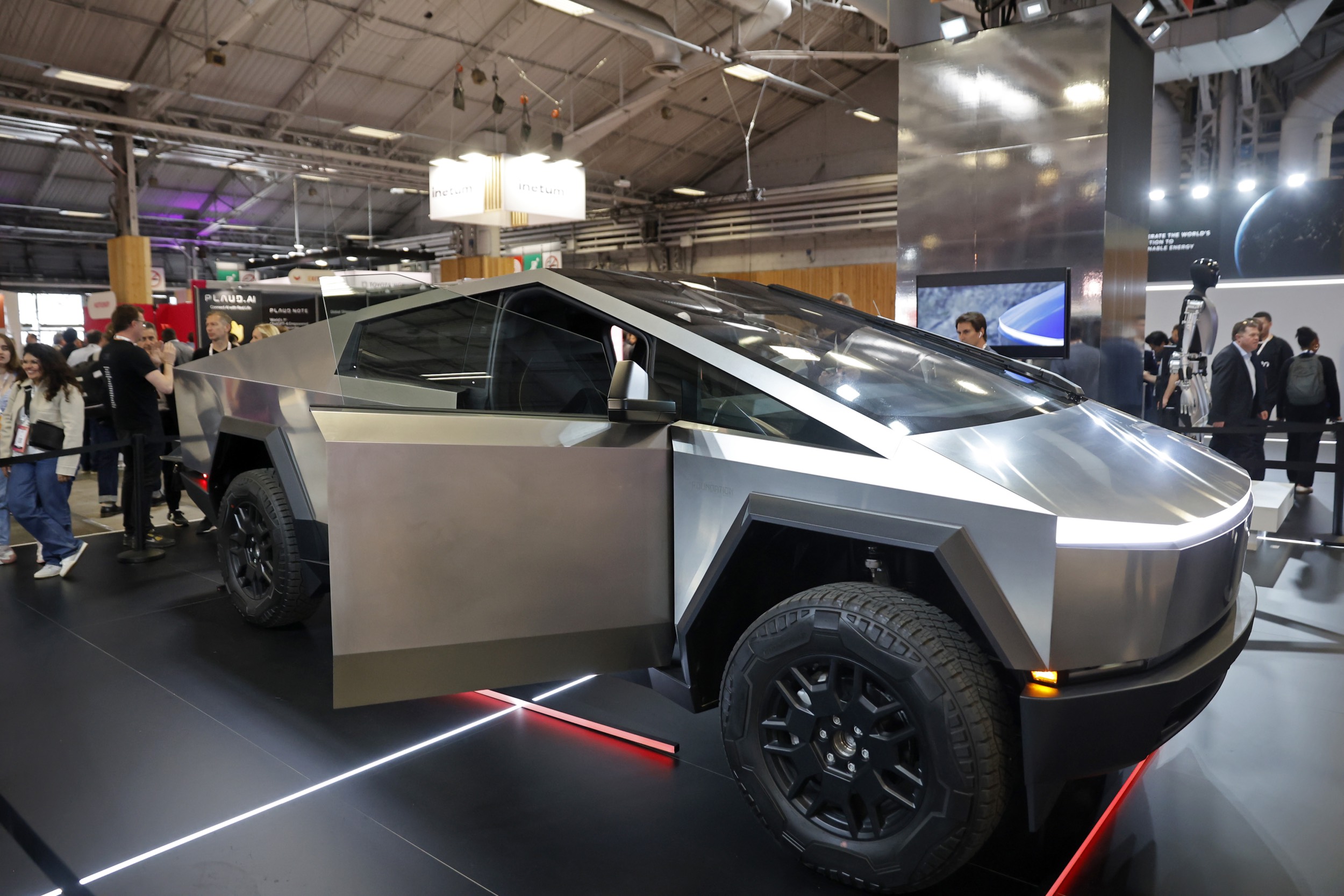
A Tesla Cybertruck with the passenger door open is displayed in a convention center.
Enlarge / A Tesla Cybertruck at the Viva Technology show at Parc des Expositions Porte de Versailles on May 24, 2024 in Paris, France.
Getty Images | Chesnot

Tesla has announced two more recalls of the Cybertruck, both of which affect over 11,000 vehicles produced since the car first became available late last year. Cybertruck owners will need to bring their cars in for service because of faulty windshield wiper motors and a cosmetic piece that could come off the vehicle while it’s being driven.

Tesla previously recalled the Cybertruck in April over a faulty accelerator pedal assembly and in January for a software problem in which the font size of brake, park, and antilock brake system visual warning indicators were too small. The January recall also affected Tesla Model 3, S, X, and Y.

A new recall notice says, “the front windshield wiper motor controller may stop functioning due to electrical overstress to the gate driver component. A non-functioning windshield wiper may reduce visibility in certain operating conditions, which may increase the risk of a collision.”

The wiper motors have a gate driver that “may have been damaged due to electrical overstress during functional testing,” the notice said. The fix is to “replace the windshield wiper motor with a wiper motor that has a properly functioning gate driver component.”

The wiper motor recall affects 11,688 cars. While it is estimated that 2 percent of cars have the defect, the notice said the “recall population includes all Model Year 2024 Cybertruck vehicles manufactured from November 13, 2023, to June 6, 2024.”

Tesla said it is not aware of any crashes, injuries, or deaths related to the wiper motor problem. Newly manufactured Cybertrucks shouldn’t have the problem because “the supplier introduced a functional test using a lower current to prevent damage and ensure integrity of the gate driver,” the notice said.

Cosmetic applique may not stay on the car

The other new recall notice describes a problem “with a cosmetic applique along the exterior of the trunk bed trim, known as the sail applique, which is affixed to the vehicle with adhesive.” The applique or adhesion was not installed correctly on some cars, “which may cause the sail applique to become loose or separate from the vehicle.”

“If the applique separates from the vehicle while in drive, it could create a road hazard for following motorists and increase their risk of injury or a collision,” the recall notice said. The fix is to “replace or rework the sail applique such that the assembly meets specifications and ensures sufficient adhesion between the applique and the vehicle’s deck rail.”

It’s estimated that 1 percent of vehicles have the applique defect, and the “recall population includes all Model Year 2024 Cybertruck vehicles manufactured from November 13, 2023, to May 26, 2024.” That amounts to 11,383 Cybertrucks. Customers will not be charged for the fixes to the wiper motor and applique.

The problem was discovered in December 2023 when “an undelivered Cybertruck with a single missing applique arrived at a Tesla delivery center after being transported on a vehicle hauler,” the notice said. The problem was found a second time in May 2024 on a customer vehicle, and then on more cars when “Tesla surveyed and assessed the retention of sail appliques on vehicles in the field.”

Tesla said it is not aware of any crashes, injuries, or deaths related to the applique problem. On newly manufactured Cybertrucks, “quality control improvements to the adhesive application” should keep the piece attached to the car.

Separately, one Cybertruck owner recently alleged that his car crashed into a neighbor’s house despite him holding down the brake pedal. The driver claimed that Tesla told him, “We have reviewed logs and due to the terrain the accelerator may or may not disengage when the brake is depressed.”

We contacted Tesla about the alleged braking problem today and will provide an update if the company responds. There is video of the accident, and the driver says the incident left skid marks for about 50 feet, “almost like one motor was accelerating while the other set of wheels locked.”

https://arstechnica.com/?p=2033707


Verizon screwup caused 911 outage in 6 states—carrier agrees to $1M fine

A Verizon logo on top of a black background.

Verizon Wireless agreed to pay a $1,050,000 penalty to the US Treasury and implement a compliance plan because of a 911 outage in December 2022 that was caused by a botched update, the Federal Communications Commission announced today.

A consent decree explains that the outage was caused by “the reapplication of a known flawed security policy update file.” During the outage, lasting one hour and 44 minutes, Verizon failed to deliver hundreds of 911 calls in Alabama, Florida, Georgia, North Carolina, South Carolina, and Tennessee, the FCC said.

“The [FCC] Enforcement Bureau takes any potential violations of the Commission’s 911 rules extremely seriously. Sunny day outages, as occurred here, can be especially troubling because they occur when the public and 911 call centers least expect it,” Bureau Chief Loyaan Egal said.

The flawed update file was involved in another outage that happened two months earlier, in October 2022. After the October incident, Verizon “implemented a wide range of audits and technical system updates designed to protect against future recurrences of configuration and one-way audio issues,” the consent decree said.

Even before the December outage, Verizon knew that the problematic update file “was related to the root cause of the outage that occurred in October,” the FCC said. “Due to insufficient naming convention protocols and a failure to follow then-current implementation protocols, the flawed security policy update file was reintroduced into the Verizon Wireless network. This resulted in the [December] outage, however without the one-way audio issues.”

Verizon failed to remove flawed update file

The December outage happened when the flawed update file was re-applied by a Verizon Wireless employee. But the fault lies with more than one person, the FCC said:

Despite this prior outage and Verizon Wireless’s understanding that the flawed security policy update file resulted in that prior outage, Verizon Wireless did not remove that security policy update file from the inventory of available security policies, which enabled personnel to select and reapply the flawed security policy update file to the Verizon Wireless network. Additionally, Verizon Wireless admits its employees failed to comply with its “business-as-usual” operating and implementation procedures, which procedures required additional oversight prior to the implementation of the type of security policy update that caused the December Outage.

Verizon admitted in the consent decree that the FCC’s description is “a true and accurate description of the facts underlying the Investigation.” The agreed-upon compliance plan includes processes to prevent the reoccurrence of firewall and one-way audio problems, enhanced processes for implementing security policy updates, testing before significant network changes, risk assessments, a compliance training program for employees, and more.

Verizon must file four compliance reports over the next three years and “report any material noncompliance” with 911 rules and the consent decree terms to the FCC. In a statement provided to Ars, Verizon said the December 2022 outage “was a highly unusual occurrence. We understand the critical importance of maintaining a robust and reliable 911 network, and we’re committed to ensuring that our customers can always rely on our services in times of need.”

Verizon has 30 days to pay the $1.05 million fine. Verizon’s wireless service revenue was $19.5 billion in the first quarter of 2024. The entire company’s quarterly operating revenue was $33 billion, and net income was $4.7 billion.

Verizon isn’t the only major carrier to have a big outage caused by a faulty update. In February 2024, a major AT&T wireless outage caused by a botched network update led to warnings that 911 access could be disrupted. The FCC was investigating that outage.

There was also a statewide 911 outage for two hours in Massachusetts this month, but that one was caused by a faulty firewall used by the state’s 911 vendor.

https://arstechnica.com/?p=2033451


Music industry giants allege mass copyright violation by AI firms

Michael Jackson in concert, 1986. Sony Music owns a large portion of publishing rights to Jackson's music.
Enlarge / Michael Jackson in concert, 1986. Sony Music owns a large portion of publishing rights to Jackson’s music.

Universal Music Group, Sony Music, and Warner Records have sued AI music-synthesis companies Udio and Suno for allegedly committing mass copyright infringement by using recordings owned by the labels to train music-generating AI models, reports Reuters. Udio and Suno can generate novel song recordings based on text-based descriptions of music (i.e., “a dubstep song about Linus Torvalds”).

The lawsuits, filed in federal courts in New York and Massachusetts, claim that the AI companies’ use of copyrighted material to train their systems could lead to AI-generated music that directly competes with and potentially devalues the work of human artists.

Like other generative AI models, both Udio and Suno (which we covered separately in April) rely on a broad selection of existing human-created artworks that teach a neural network the relationship between words in a written prompt and styles of music. The record labels correctly note that these companies have been deliberately vague about the sources of their training data.

Until generative AI models hit the mainstream in 2022, it was common practice in machine learning to scrape and use copyrighted information without seeking permission to do so. But now that the applications of those technologies have become commercial products themselves, rightsholders have come knocking to collect. In the case of Udio and Suno, the record labels are seeking statutory damages of up to $150,000 per song used in training.

In the lawsuit, the record labels cite specific examples of AI-generated content that allegedly re-creates elements of well-known songs, including The Temptations’ “My Girl,” Mariah Carey’s “All I Want for Christmas Is You,” and James Brown’s “I Got You (I Feel Good).” It also claims the music-synthesis models can produce vocals resembling those of famous artists, such as Michael Jackson and Bruce Springsteen.

Reuters claims it’s the first instance of lawsuits specifically targeting music-generating AI, but music companies and artists alike have been gearing up to deal with challenges the technology may pose for some time.

In May, Sony Music sent warning letters to over 700 AI companies (including OpenAI, Microsoft, Google, Suno, and Udio) and music-streaming services that prohibited any AI researchers from using its music to train AI models. In April, over 200 musical artists signed an open letter that called on AI companies to stop using AI to “devalue the rights of human artists.” And last November, Universal Music filed a copyright infringement lawsuit against Anthropic for allegedly including artists’ lyrics in its Claude LLM training data.

Similar to The New York Times’ lawsuit against OpenAI over the use of training data, the outcome of the record labels’ new suit could have deep implications for the future development of generative AI in creative fields, including requiring companies to license all musical training data used in creating music-synthesis models.

Compulsory licenses for AI training data could make AI model development economically impractical for small startups like Udio and Suno—and judging by the aforementioned open letter, many musical artists may applaud that potential outcome. But such a development would not preclude major labels from eventually developing their own AI music generators themselves, allowing only large corporations with deep pockets to control generative music tools for the foreseeable future.

https://arstechnica.com/?p=2033128


EU says Apple violated app developers’ rights, could be fined 10% of revenue

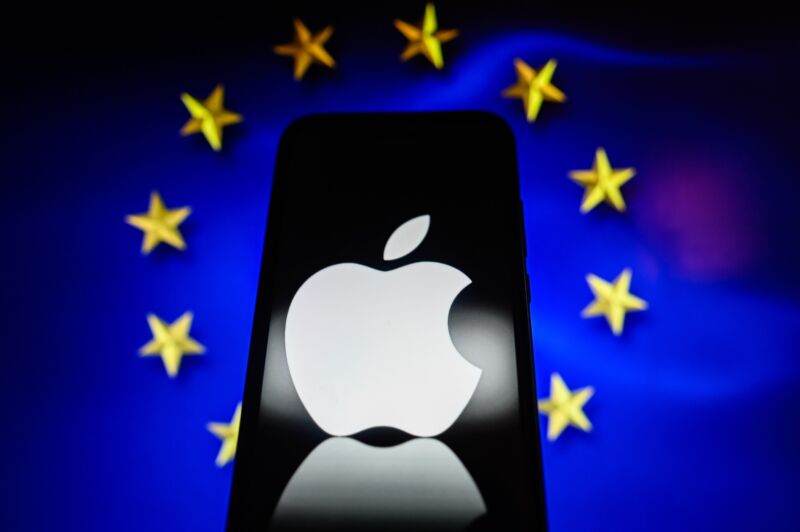
Apple logo is displayed on a smartphone with a European Union flag in the background.
Getty Images | SOPA Images

The European Commission today said it found that Apple is violating the Digital Markets Act (DMA) with App Store rules and fees that “prevent app developers from freely steering consumers to alternative channels for offers and content.” The commission “informed Apple of its preliminary view” that the company is violating the law, the regulator announced.

This starts a process in which Apple has the right to examine documents in the commission’s investigation file and reply in writing to the findings. There is a March 2025 deadline for the commission to make a final ruling.

The commission noted that it “can impose fines up to 10 percent of the gatekeeper’s total worldwide turnover,” or up to 20 percent for repeat infringements. For “systematic infringements,” the European regulator could respond by requiring “a gatekeeper to sell a business or parts of it, or banning the gatekeeper from acquisitions of additional services related to the systemic non-compliance.”

Under the DMA, developers must be free “to inform their customers of alternative cheaper purchasing possibilities, steer them to those offers and allow them to make purchases,” the commission said. But Apple’s business terms prevent that, the commission found.

Apple’s rules prevent developers from providing pricing information within their apps and from communicating “with their customers to promote offers available on alternative distribution channels,” the commission said. Apple lets developers include an in-app link that redirects users to a website, but this “link-out process is subject to several restrictions imposed by Apple that prevent app developers from communicating, promoting offers and concluding contracts through the distribution channel of their choice,” the commission said.

Excessive fees

Apple was further accused of charging excessive fees. The commission said that Apple is allowed to charge “a fee for facilitating via the App Store the initial acquisition of a new customer by developers,” but “the fees charged by Apple go beyond what is strictly necessary for such remuneration. For example, Apple charges developers a fee for every purchase of digital goods or services a user makes within seven days after a link-out from the app.”

Apple says it charges a commission of 27 percent on sales “to the user for digital goods or services on your website after a link out… provided that the sale was initiated within seven days and the digital goods or services can be used in an app.”

We contacted Apple today and are waiting for a response. In a statement quoted by the Associated Press, Apple said that during the past few months, it “made a number of changes to comply with the DMA in response to feedback from developers and the European Commission” and will “continue to listen and engage” with regulators.

“We are confident our plan complies with the law and estimate more than 99 percent of developers would pay the same or less in fees to Apple under the new business terms we created,” Apple was quoted as saying. “All developers doing business in the EU on the App Store have the opportunity to utilize the capabilities that we have introduced, including the ability to direct app users to the web to complete purchases at a very competitive rate.”

As reported on Friday, Apple is delaying its Apple Intelligence AI tools and other features in the EU because of what it called “regulatory uncertainties brought about by the Digital Markets Act.”

EU also probes Apple “Core Technology Fee”

The commission today also announced it is starting a separate investigation into Apple’s “contractual requirements for third-party app developers and app stores,” including its “Core Technology Fee.” Apple charges the Core Technology Fee for app installs, whether they are delivered from Apple’s own App Store, from an alternative app marketplace, or from a developer’s own website. The first million installs each year are free, but a per-install fee of €0.50 applies after that.

The commission said it would investigate whether the Core Technology Fee complies with the DMA. This investigation will also probe “Apple’s multi-step user journey to download and install alternative app stores or apps on iPhones,” and the eligibility requirements imposed on developers before they are allowed to offer alternative app stores or distribute apps from the web on iPhones.

The probe includes Apple’s requirement that developers have “membership of good standing” in the Apple Developer Program in order to benefit from the alternative distribution methods required by the DMA. The commission said it is also probing the “checks and reviews put in place by Apple to validate apps and alternative app stores to be sideloaded.”

https://arstechnica.com/?p=2033091


Internet Archive forced to remove 500,000 books after publishers’ court win

Internet Archive forced to remove 500,000 books after publishers’ court win

As a result of book publishers successfully suing the Internet Archive (IA) last year, the free online library that strives to keep growing online access to books recently shrank by about 500,000 titles.

IA reported in a blog post this month that publishers abruptly forcing these takedowns triggered a “devastating loss” for readers who depend on IA to access books that are otherwise impossible or difficult to access.

To restore access, IA is now appealing, hoping to reverse the prior court’s decision by convincing the US Court of Appeals in the Second Circuit that IA’s controlled digital lending of its physical books should be considered fair use under copyright law. An April court filing shows that IA intends to argue that the publishers have no evidence that the e-book market has been harmed by the open library’s lending, and copyright law is better served by allowing IA’s lending than by preventing it.

“We use industry-standard technology to prevent our books from being downloaded and redistributed—the same technology used by corporate publishers,” Chris Freeland, IA’s director of library services, wrote in the blog. “But the publishers suing our library say we shouldn’t be allowed to lend the books we own. They have forced us to remove more than half a million books from our library, and that’s why we are appealing.”

IA will have an opportunity to defend its practices when oral arguments start in its appeal on June 28.

“Our position is straightforward; we just want to let our library patrons borrow and read the books we own, like any other library,” Freeland wrote, while arguing that the “potential repercussions of this lawsuit extend far beyond the Internet Archive” and publishers should just “let readers read.”

“This is a fight for the preservation of all libraries and the fundamental right to access information, a cornerstone of any democratic society,” Freeland wrote. “We believe in the right of authors to benefit from their work; and we believe that libraries must be permitted to fulfill their mission of providing access to knowledge, regardless of whether it takes physical or digital form. Doing so upholds the principle that knowledge should be equally and equitably accessible to everyone, regardless of where they live or where they learn.”

Internet Archive fans beg publishers to end takedowns

After publishers won an injunction stopping IA’s digital lending, which “limits what we can do with our digitized books,” IA’s help page said, the open library started shrinking. While “removed books are still available to patrons with print disabilities,” everyone else has been cut off, causing many books in IA’s collection to show up as “Borrow Unavailable.”

Ever since, IA has been “inundated” with inquiries from readers all over the world searching for the removed books, Freeland said. And “we get tagged in social media every day where people are like, ‘why are there so many books gone from our library’?” Freeland told Ars.

In an open letter to publishers signed by nearly 19,000 supporters, IA fans begged publishers to reconsider forcing takedowns and quickly restore access to the lost books.

Among the “far-reaching implications” of the takedowns, IA fans counted the negative educational impact of academics, students, and educators—”particularly in underserved communities where access is limited—who were suddenly cut off from “research materials and literature that support their learning and academic growth.”

They also argued that the takedowns dealt “a serious blow to lower-income families, people with disabilities, rural communities, and LGBTQ+ people, among many others,” who may not have access to a local library or feel “safe accessing the information they need in public.”

“Your removal of these books impedes academic progress and innovation, as well as imperiling the preservation of our cultural and historical knowledge,” the letter said.

“This isn’t happening in the abstract,” Freeland told Ars. “This is real. People no longer have access to a half a million books.”

https://arstechnica.com/?p=2032890


AT&T can’t hang up on landline phone customers, California agency rules

AT&T can’t hang up on landline phone customers, California agency rules
Getty Images | Joe Raedle

The California Public Utilities Commission (CPUC) yesterday rejected AT&T’s request to end its landline phone obligations. The state agency also urged AT&T to upgrade copper facilities to fiber instead of trying to shut down the outdated portions of its network.

AT&T asked the state to eliminate its Carrier of Last Resort (COLR) obligation, which requires it to provide landline telephone service to any potential customer in its service territory. A CPUC administrative law judge recommended rejection of the application last month, and the commission voted to dismiss AT&T’s application with prejudice on Thursday.

“Our vote to dismiss AT&T’s application made clear that we will protect customer access to basic telephone service… Our rules were designed to provide that assurance, and AT&T’s application did not follow our rules,” Commissioner John Reynolds said in a CPUC announcement.

State rules require a replacement COLR in order to relieve AT&T of its duties, and AT&T argued that VoIP and mobile services could fill that gap. But residents “highlighted the unreliability of voice alternatives” at public hearings, the CPUC said.

“Despite AT&T’s contention that providers of voice alternatives to landline service—such as VoIP or mobile wireless services—can fill the gap, the CPUC found AT&T did not meet the requirements for COLR withdrawal,” the agency said. “Specifically, AT&T failed to demonstrate the availability of replacement providers willing and able to serve as COLR, nor did AT&T prove that alternative providers met the COLR definition.”

The administrative law judge’s proposed decision said AT&T falsely claimed that commission rules require it “to retain outdated copper-based landline facilities that are expensive to maintain.” The agency stressed that its rules do not prevent AT&T from upgrading to fiber.

“COLR rules are technology-neutral and do not distinguish between voice services offered… and do not prevent AT&T from retiring copper facilities or from investing in fiber or other facilities/technologies to improve its network,” the agency said yesterday.

AT&T seeks change to state law

In a statement provided to Ars, AT&T California President Marc Blakeman said the carrier is turning its focus to lobbying for changes to state law.

“No customer will be left without voice and 911 services. We are focused on the legislation introduced in California, which includes important protections, safeguards, and outreach for consumers and does not impact our customers in rural locations. We are fully committed to keeping our customers connected while we work with state leaders on policies that create a thoughtful transition that brings modern communications to all Californians,” Blakeman said.

AT&T said the legislation is “based on feedback we and legislators received over the last year” and “addresses concerns raised during the community outreach process and sets a clear path forward.”

The legislation pushed by AT&T “would create a way for AT&T to remain as COLR in rural regions, which the company estimates as being about 100,000 customers, while being released from COLR obligations everywhere else,” a Bay City News article said.

The Marin County Board of Supervisors opposed the bill, saying it “would simply accomplish the same aims as AT&T’s application to the CPUC for relief of its Carrier of Last Resort Obligations,” which would have “significant negative effects… [on] more than 580,000 customers in California that rely on Plain Old Telephone Service (POTS) under AT&T’s COLR obligations.”

The CPUC is separately moving ahead with a new rulemaking process that could result in changes to the COLR rules. The rulemaking says the commission believes “that the COLR construct remains necessary, at least for certain individuals or communities in California,” but it is seeking public comment on possible changes.

The rulemaking asks whether the commission should relax COLR requirements, for example by declaring that certain regions may no longer require a carrier of last resort. It also seeks comment on whether VoIP and wireless providers should be designated as carriers of last resort.

https://arstechnica.com/?p=2032816