Musk says he’s winning Tesla shareholder vote on pay plan by “wide margin”

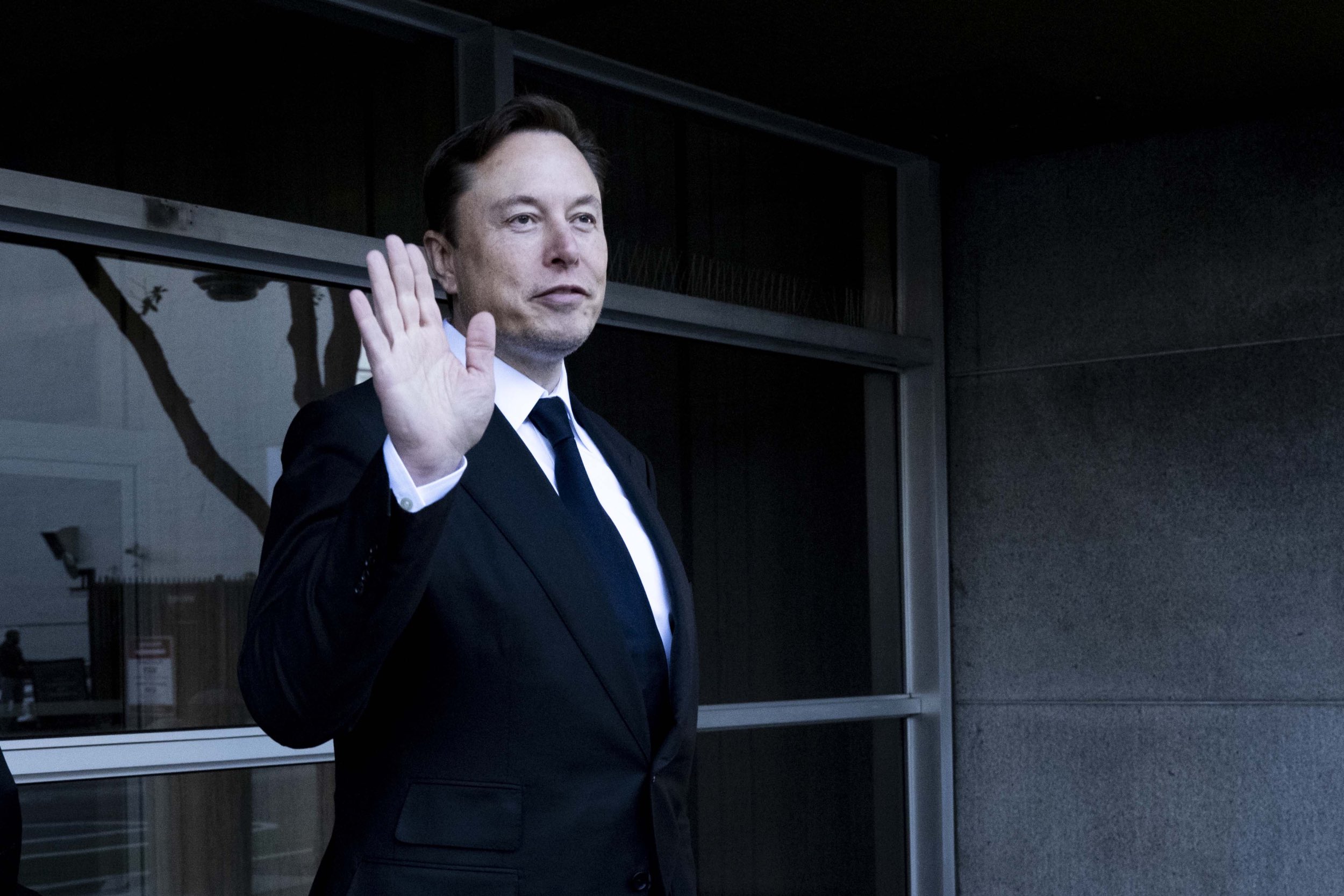
Elon Musk wearing a suit and waving with his hand as he walks away from a courthouse.
Enlarge / Elon Musk.
Getty Images | Bloomberg

Tesla shareholders have re-approved CEO Elon Musk’s $44.9 billion pay package, the company announced today. “Our stockholders have approved the ratification of the 100 percent performance-based stock option award to Elon Musk that was approved by stockholders in 2018,” Brandon Ehrhart, Tesla’s general counsel and corporate secretary, announced at Tesla’s annual shareholder meeting.

Ehrhart also said that shareholders approved a corporate move from Delaware to Texas, and the re-election of board members James Murdoch and Kimbal Musk (Elon Musk’s brother). While the official announcement was made at the shareholder meeting late in the day on Thursday, Musk revealed that the yes votes were winning in a social media post last night.

“Both Tesla shareholder resolutions are currently passing by wide margins!” Musk wrote, referring to the pay vote and the move from Delaware to Texas. His post included charts indicating that both shareholder resolutions had more than enough yes votes to surpass the “guaranteed win” threshold.

The results were preliminary at the time Musk announced them. Voters still had the option of changing their votes.

Under a settlement with the Securities and Exchange Commission, Musk is required to get pre-approval from a Tesla securities lawyer for social media posts that may contain information material to the company or its shareholders. Tesla today submitted an SEC filing containing a screenshot of Musk’s X post describing the preliminary results.

Legal uncertainty remains

Musk’s pay plan was previously nullified by a judge’s ruling. The vote isn’t the last word on the pay package that was once estimated to be worth $56 billion and more recently valued at $44.9 billion based on Tesla’s stock price. The pay plan was thrown out by a Delaware Court of Chancery ruling in January 2024 after a lawsuit filed by a shareholder.

Judge Kathaleen McCormick ruled that the pay plan was unfair to Tesla’s shareholders, saying the proxy information given to investors before 2018 was materially deficient. McCormick said that “the proxy statement inaccurately described key directors as independent and misleadingly omitted details about the process.”

As the Financial Times wrote, there is still legal uncertainty even after the shareholder vote:

In asking shareholders to approve of the same 2018 pay package that was nullified by the Delaware Court of Chancery in January, Tesla is relying on a legal principle known as “ratification,” in which the validity of a corporate action can be cemented by a shareholder vote. Ratification, the company told shareholders in a proxy note earlier this year, “will restore Tesla’s stockholder democracy.”

This instance, however, is the first time a company has tried to leverage that principle after its board was found to have breached its fiduciary duty to approve the deal in the first place.

Even Tesla admits it does not know what happens next. “The [Tesla board] special committee and its advisers noted that they could not predict with certainty how a stockholder vote to ratify the 2018 CEO performance award would be treated under Delaware law in these novel circumstances,” it said in a proxy statement sent to shareholders.

The BBC writes that “legal experts say it is not clear if a court that blocked the deal will accept the re-vote, which is not binding, and allow the company to restore the pay package.”

McCormick may have to make another ruling. “Legal experts say the issue of Musk’s pay will still be decided in Delaware, largely because Musk’s lawyers have assured McCormick that they won’t try to move the case to Texas,” the Associated Press wrote.

New lawsuit challenges re-vote

The re-vote was already being challenged in the same Delaware court that nullified the 2018 vote. Donald Ball, who owns 28,245 shares of Tesla stock, last week sued Musk and Tesla in a complaint that alleges the Tesla “Board has not disclosed a complete or fair picture” to shareholders of the impact of re-approving Musk’s pay plan.

That includes “radical tax implications for Tesla that will potentially wipe out Tesla’s pre-tax profits for the last two years,” the lawsuit said. The Ball lawsuit also alleged that “Musk has engaged in strong-arm, coercive tactics to obtain stockholder approval for both the Redomestication Vote and the Ratification Vote.”

Tesla Board Chairperson Robyn Denholm urged shareholders to re-approve the Musk pay plan, suggesting that Musk could leave Tesla or devote less time to the company if the resolution is voted down.

This article was updated with the final result of the shareholder vote.

https://arstechnica.com/?p=2031288



Starlink user terminal now costs just $300 in 28 states, $500 in rest of US

A rectangular satellite dish sitting on the ground outdoors.
Enlarge / The standard Starlink satellite dish.

You can now buy a Starlink satellite dish for $299 (plus shipping and tax) in 28 US states due to a discount for areas where SpaceX’s broadband network has excess capacity.

Starlink had raised its upfront hardware cost from $499 to $599 in March 2022 but cut the standard price back down to $499 this week. In the 28 states where the network has what SpaceX deems excess capacity, a $200 discount is being applied to bring the price down to $299. It’s unclear how long the deal will last, though we can assume the number of states eligible for $299 pricing will fall if a lot of people sign up.

“In the United States, new orders in certain regions are eligible for a one-time savings in areas where Starlink has abundant network availability,” a support page posted yesterday said. “$200 will be removed from your Starlink kit price when ordering on Starlink.com and if activated after purchasing from a retailer, a $200 credit will be applied. The savings are only available for Residential Standard service in these designated regional savings areas.”

The 28 states in the “regional savings areas” are Arizona, California, Colorado, Connecticut, Delaware, Florida, Hawaii, Idaho, Iowa, Kansas, Maine, Maryland, Massachusetts, Nebraska, Nevada, New Hampshire, New Jersey, New Mexico, New York, North Dakota, Oklahoma, Oregon, Pennsylvania, Rhode Island, South Dakota, Utah, Vermont, and Wyoming.

There’s one more significant price difference that applies based on location. Since early 2023, Starlink has charged $120 a month for service in areas with limited capacity and $90 a month in areas with excess capacity. So if you’re in an excess-capacity area, you can buy a $299 dish and get $90 monthly service.

Whether you pay $499 or $299 upfront, you’ll get a Wi-Fi router and the new version of Starlink’s standard residential user terminal. There is a drawback compared to the older version of the Starlink dish, which is now called “Starlink Actuated” and doesn’t seem to be available for residential orders on Starlink.com anymore.

The current standard satellite dish doesn’t have the old version’s ability to re-position itself. The new version must be positioned manually, but the Starlink app can help you find the best position.

“The ‘actuated’ part of Standard Actuated refers to the electric motors inside the antenna housing,” says an in-depth comparison of the models written by Starlink user Noah Clarke. “The motors, which are connected to the mast, can rotate and tilt the Standard Actuated dish, enabling it to self-align to the Starlink satellites. In contrast, the Standard dish has done away with the built-in mast and motors. The Standard dish must be manually rotated during the initial installation, with the help of the Starlink app.”

Starlink offers mounting hardware as optional accessories during the checkout process. There’s a pivot mount for $74, a wall mount for $67, a pipe adapter for $38, and a 45-meter cable for $115. The optional cable is three times longer than the one that comes with the standard terminal.

https://arstechnica.com/?p=2031158


AI trained on photos from kids’ entire childhood without their consent

AI trained on photos from kids’ entire childhood without their consent

Photos of Brazilian kids—sometimes spanning their entire childhood—have been used without their consent to power AI tools, including popular image generators like Stable Diffusion, Human Rights Watch (HRW) warned on Monday.

This act poses urgent privacy risks to kids and seems to increase risks of non-consensual AI-generated images bearing their likenesses, HRW’s report said.

An HRW researcher, Hye Jung Han, helped expose the problem. She analyzed “less than 0.0001 percent” of LAION-5B, a dataset built from Common Crawl snapshots of the public web. The dataset does not contain the actual photos but includes image-text pairs derived from 5.85 billion images and captions posted online since 2008.

Among those images linked in the dataset, Han found 170 photos of children from at least 10 Brazilian states. These were mostly family photos uploaded to personal and parenting blogs most Internet surfers wouldn’t easily stumble upon, “as well as stills from YouTube videos with small view counts, seemingly uploaded to be shared with family and friends,” Wired reported.

LAION, the German nonprofit that created the dataset, has worked with HRW to remove the links to the children’s images in the dataset.

That may not completely resolve the problem, though. HRW’s report warned that the removed links are “likely to be a significant undercount of the total amount of children’s personal data that exists in LAION-5B.” Han told Wired that she fears that the dataset may still be referencing personal photos of kids “from all over the world.”

Removing the links also does not remove the images from the public web, where they can still be referenced and used in other AI datasets, particularly those relying on Common Crawl, LAION’s spokesperson, Nate Tyler, told Ars.

“This is a larger and very concerning issue, and as a nonprofit, volunteer organization, we will do our part to help,” Tyler told Ars.

According to HRW’s analysis, many of the Brazilian children’s identities were “easily traceable,” due to children’s names and locations being included in image captions that were processed when building the dataset.

And at a time when middle and high school-aged students are at greater risk of being targeted by bullies or bad actors turning “innocuous photos” into explicit imagery, it’s possible that AI tools may be better equipped to generate AI clones of kids whose images are referenced in AI datasets, HRW suggested.

“The photos reviewed span the entirety of childhood,” HRW’s report said. “They capture intimate moments of babies being born into the gloved hands of doctors, young children blowing out candles on their birthday cake or dancing in their underwear at home, students giving a presentation at school, and teenagers posing for photos at their high school’s carnival.”

There is less risk that the Brazilian kids’ photos are currently powering AI tools since “all publicly available versions of LAION-5B were taken down” in December, Tyler told Ars. That decision came out of an “abundance of caution” after a Stanford University report “found links in the dataset pointing to illegal content on the public web,” Tyler said, including 3,226 suspected instances of child sexual abuse material. The dataset will not be available again until LAION determines that all flagged illegal content has been removed.

“LAION is currently working with the Internet Watch Foundation, the Canadian Centre for Child Protection, Stanford, and Human Rights Watch to remove all known references to illegal content from LAION-5B,” Tyler told Ars. “We are grateful for their support and hope to republish a revised LAION-5B soon.”

In Brazil, “at least 85 girls” have reported classmates harassing them by using AI tools to “create sexually explicit deepfakes of the girls based on photos taken from their social media profiles,” HRW reported. Once these explicit deepfakes are posted online, they can inflict “lasting harm,” HRW warned, potentially remaining online for their entire lives.

“Children should not have to live in fear that their photos might be stolen and weaponized against them,” Han said. “The government should urgently adopt policies to protect children’s data from AI-fueled misuse.”

Ars could not immediately reach Stable Diffusion maker Stability AI for comment.

https://arstechnica.com/?p=2030521


Google avoids jury trial by sending $2.3 million check to US government

At Google headquarters, the company's logo is seen on the glass exterior of a building.
Getty Images | Justin Sullivan

Google has achieved its goal of avoiding a jury trial in one antitrust case after sending a $2.3 million check to the US Department of Justice. Google will face a bench trial, a trial conducted by a judge without a jury, after a ruling today that the preemptive check is big enough to cover any damages that might have been awarded by a jury.

“I am satisfied that the cashier’s check satisfies any damages claim,” US District Judge Leonie Brinkema said after a hearing in the Eastern District of Virginia on Friday, according to Bloomberg. “A fair reading of the expert reports does not support” a higher amount, Brinkema said.

The check was reportedly for $2,289,751. “Because the damages are no longer part of the case, Brinkema ruled a jury is no longer needed and she will oversee the trial, set to begin in September,” according to Bloomberg.

The payment was unusual, but so was the US request for a jury trial because antitrust cases are typically heard by a judge without a jury. The US argued that a jury should rule on damages because US government agencies were overcharged for advertising.

The US opposed Google’s motion to strike the jury demand in a filing last week, arguing that “the check it delivered did not actually compensate the United States for the full extent of its claimed damages” and that “the unilateral offer of payment was improperly premised on Google’s insistence that such payment ‘not be construed’ as an admission of damages.”

The government’s damages expert calculated damages that were “much higher” than the amount cited by Google, the US filing said. In last week’s filing, the higher damages amount sought by the government was redacted.

Lawsuit targets Google advertising

The US and eight states sued Google in January 2023 in a lawsuit related to the company’s advertising technology business. There are now 17 states involved in the case.

Google’s objection to a jury trial said that similar antitrust cases have been tried by judges because of their technical and often abstract nature. “To secure this unusual posture, several weeks before filing the Complaint, on the eve of Christmas 2022, DOJ attorneys scrambled around looking for agencies on whose behalf they could seek damages,” Google said.

The US and states’ lawsuit claimed that Google “corrupted legitimate competition in the ad tech industry” in a plan to “neutralize or eliminate ad tech competitors, actual or potential, through a series of acquisitions” and “wield its dominance across digital advertising markets to force more publishers and advertisers to use its products while disrupting their ability to use competing products effectively.”

The US government lawsuit said that federal agencies bought over $100 million in advertising since 2019 and aimed to recover treble damages for Google’s alleged overcharges on those purchases. But the government narrowed its claims to the ad purchases of just eight agencies, lowering the potential damages amount.

Google sent the check in mid-May. While the amount wasn’t initially public, Google said it contained “every dollar the United States could conceivably hope to recover under the damages calculation of the United States’ own expert.” Google also said it “continues to dispute liability and welcomes a full resolution by this Court of all remaining claims in the Complaint.”

US: We want more

The US disagreed that $2.3 million was the maximum it could recover. “Under the law, Google must pay the United States the maximum amount it could possibly recover at trial, which Google has not done,” the US said. “And Google cannot condition acceptance of that payment on its assertion that the United States was not harmed in the first place. In doing so, Google attempts to seize the strategic upside of satisfying the United States’ damages claim (potentially allowing it to avoid judgment by a jury) while at the same time avoiding the strategic downside of the United States being free to argue the common-sense inference that Google’s payment, is, at minimum, an acknowledgment of the harm done to federal agency advertisers who used Google’s ad tech tools.”

In a filing on Wednesday, Google said the DOJ previously agreed that its claims amounted to less than $1 million before trebling and pre-judgment interest. The check sent by Google was for the exact amount after trebling and interest, the filing said. But the “DOJ now ignores this undisputed fact, offering up a brand new figure, previously uncalculated by any DOJ expert, unsupported by the record, and never disclosed,” Google told the court.

Siding with Google at today’s hearing, Brinkema “said the amount of Google’s check covered the highest possible amount the government had sought in its initial filings,” the Associated Press reported. “She likened receipt of the money, which was paid unconditionally to the government regardless of whether the tech giant prevailed in its arguments to strike a jury trial, as equivalent to ‘receiving a wheelbarrow of cash.'”

While the US lost its attempt to obtain more damages than Google offered, the lawsuit also seeks an order declaring that Google illegally monopolized the market. The complaint requests a breakup in which Google would have to divest “the Google Ad Manager suite, including both Google’s publisher ad server, DFP, and Google’s ad exchange, AdX.”

https://arstechnica.com/?p=2029910


FCC pushes ISPs to fix security flaws in Internet routing

Illustration of a padlock and circuit board to represent network security
Getty Images | Yuichiro Chino

The Federal Communications Commission wants to verify that Internet service providers are strengthening their networks against attacks that take advantage of vulnerabilities in Border Gateway Protocol (BGP).

The FCC today unanimously approved a Notice of Proposed Rulemaking that would require ISPs to prepare confidential reports “detail[ing] their progress and plans for implementing BGP security measures that utilize the Resource Public Key Infrastructure (RPKI), a critical component of BGP security.”

“Today, we begin a rulemaking to help make our Internet routing more secure,” FCC Chairwoman Jessica Rosenworcel said. “We propose that all providers of broadband Internet access service prepare and update confidential BGP security risk management plans. These plans would describe and attest to their efforts to follow existing best practices with respect to Route Origin Authorizations and Route Origin Validation using the Resource Public Key Infrastructure. In addition, we propose quarterly reporting for the largest providers to ensure we are making progress addressing this well-known vulnerability.”

The FCC said the initial design of BGP that remains widely deployed today “does not include intrinsic security features to ensure trust in the information that is relied upon to exchange traffic among independently managed networks on the Internet.” Hackers can “deliberately falsify BGP reachability information to redirect traffic” in BGP hijacks that “can expose Americans’ personal information; enable theft, extortion, and state-level espionage; and disrupt services upon which the public or critical infrastructure sectors rely,” the FCC said.

In a 2022 incident, hackers used BGP hijacking to seize control of over 250 IP addresses used by Amazon for its cloud service. The hackers reportedly stole $235,000 worth of cryptocurrency.

A draft of the proposal released before today’s meeting explains that “RPKI helps to create trust in reachability information by enabling cryptographically verifiable associations between specific IP address blocks, or autonomous system numbers (ASNs), and the ‘holders’ of those Internet number resources.”

Stricter rules for largest ISPs

The FCC will take public comments on its proposed rulemaking for 45 days after it is published in the Federal Register, and it could finalize the regulations in the coming months. Under the proposal, ISPs must “prepare and update confidential BGP security risk management plans at least annually,” the FCC said.

The nine largest broadband providers would also have to “file their BGP plans confidentially with the Commission as well as file quarterly data available to the public that would allow the Commission to measure progress in the implementation of RPKI-based security measures and assess the reasonableness of the BGP plans,” the FCC said. The quarterly reports would include data on ROA [Route Origin Authorization] registrations.

The draft said the stricter reporting requirements would apply to AT&T, Altice, Charter, Comcast, Cox, Lumen (aka CenturyLink), T-Mobile, TDS (including subsidiary US Cellular), and Verizon. “These significant providers are likely to originate routes covering a large proportion of the IP address space in the United States and will play critical roles ensuring effective implementation of ROV [Route Origin Validation] filtering,” the draft proposal said.

The large providers would be allowed to stop submitting annual plans once they “attest that they are maintaining ROAs covering at least 90 percent of originated routes for IP address prefixes under their control.” Smaller ISPs may be asked to submit their plans on a case-by-case basis. “Smaller broadband providers would not be required to file their plans with the Commission but rather make them available to the Commission upon request,” the FCC said.

Cable lobby group NCTA-The Internet & Television Association argued that “prescriptive rules are not needed in this area” but said it supports the FCC “proposal to eliminate an ISP’s annual RPKI reporting requirement once it attests to covering 90 percent of its originating Internet traffic routes with ROAs.” The NCTA urged the FCC to also eliminate the quarterly data submission requirement for ISPs that hit the 90 percent mark.

https://arstechnica.com/?p=2029635


Meta uses “dark patterns” to thwart AI opt-outs in EU, complaint says

Meta uses “dark patterns” to thwart AI opt-outs in EU, complaint says

The European Center for Digital Rights, known as Noyb, has filed complaints in 11 European countries to halt Meta’s plan to start training vague new AI technologies on European Union-based Facebook and Instagram users’ personal posts and pictures.

Meta’s AI training data will also be collected from third parties and from using Meta’s generative AI features and interacting with pages, the company has said. Additionally, Meta plans to collect information about people who aren’t on Facebook or Instagram but are featured in users’ posts or photos. The only exception from AI training is made for private messages sent between “friends and family,” which will not be processed, Meta’s blog said, but private messages sent to businesses and Meta are fair game. And any data collected for AI training could be shared with third parties.

“Unlike the already problematic situation of companies using certain (public) data to train a specific AI system (e.g. a chatbot), Meta’s new privacy policy basically says that the company wants to take all public and non-public user data that it has collected since 2007 and use it for any undefined type of current and future ‘artificial intelligence technology,'” Noyb alleged in a press release.

And “once their data [is] in the system,” Noyb said, “users seem to have no option of ever having it removed.”

As Meta has given EU users until June 26 to opt out of the data processing, Noyb has asked data processing authorities in the EU to intervene urgently. After that, “there will be no way back,” Noyb said, and personal data cannot be deleted from Meta’s AI models.

“We keep training data for as long as we need it on a case-by-case basis to ensure an AI model is operating appropriately, safely, and efficiently,” one Meta AI privacy page said. “We also may keep it to protect our or other’s interests or comply with legal obligations.”

More than 400 million EU users could be affected, Noyb argued, and many Facebook users who have abandoned their accounts likely aren’t aware their data will be processed for this purpose. Noyb also claimed that Meta has intentionally complicated the opt-out process using “dark patterns” to ensure that the fewest number of users block data processing.

Why Meta AI wants EU users’ data

Meta has said that collecting personal data is necessary to train AI services that reflect “the diverse cultures and languages of the European communities who will use them.” Participating will help Meta “provide and curate artificial intelligence technology in our Products, enabling the creation of content like text, audio, images, and videos, including by understanding and recognizing your use of content in the features,” an AI policy page said.

“This includes features not yet available in Europe, like allowing people to create customized stickers for chats and stories, as well as Meta AI, our virtual assistant you can access to answer questions, generate images, and more in our family of apps and on devices,” Meta’s blog said.

The AI initiative seems to be part of the social media company’s effort to appeal to younger users, according to a blog from head of Facebook, Tom Alison. He described “the future of Facebook” as being all about developing “the world’s best recommendation technology” and “building one of the world’s best collections of open models, tools, and resources for generative AI.”

https://arstechnica.com/?p=2029628


US agencies to probe AI dominance of Nvidia, Microsoft, and OpenAI

A large Nvidia logo at a conference hall
Getty Images | NurPhoto

The US Justice Department and Federal Trade Commission reportedly plan investigations into whether Nvidia, Microsoft, and OpenAI are snuffing out competition in artificial intelligence technology.

The agencies struck a deal on how to divide up the investigations, The New York Times reported yesterday. Under this deal, the Justice Department will take the lead role in investigating Nvidia’s behavior while the FTC will take the lead in investigating Microsoft and OpenAI.

The agencies’ agreement “allows them to proceed with antitrust investigations into the dominant roles that Microsoft, OpenAI, and Nvidia play in the artificial intelligence industry, in the strongest sign of how regulatory scrutiny into the powerful technology has escalated,” the NYT wrote.

One potential area of investigation is Nvidia’s chip dominance, “including how the company’s software locks customers into using its chips, as well as how Nvidia distributes those chips to customers,” the report said. An Nvidia spokesperson declined to comment when contacted by Ars today.

High-end GPUs are “scarce,” antitrust chief says

Jonathan Kanter, the assistant attorney general in charge of the DOJ’s antitrust division, discussed the agency’s plans in an interview with the Financial Times this week. Kanter said the DOJ is examining “monopoly choke points and the competitive landscape” in AI.

The DOJ’s examination of the sector encompasses “everything from computing power and the data used to train large language models, to cloud service providers, engineering talent and access to essential hardware such as graphics processing unit chips,” the FT wrote.

Kanter said regulators are worried that AI is “at the high-water mark of competition, not the floor” and want to take action before smaller competitors are shut out of the market. The GPUs needed to train large language models are a “scarce resource,” he was quoted as saying.

“Sometimes the most meaningful intervention is when the intervention is in real time,” Kanter told the Financial Times. “The beauty of that is you can be less invasive.”

Microsoft deal scrutinized

The FTC is scrutinizing Microsoft over a March 2024 move in which it hired the CEO of artificial intelligence startup Inflection and most of the company’s staff and paid Inflection $650 million as part of a licensing deal to resell its technology. The FTC is investigating whether Microsoft structured the deal “to avoid a government antitrust review of the transaction,” The Wall Street Journal reported today.

“Companies are required to report acquisitions valued at more than $119 million to federal antitrust-enforcement agencies, which have the option to investigate a deal’s impact on competition,” the WSJ wrote. The FTC reportedly sent subpoenas to Microsoft and Inflection in an attempt “to determine whether Microsoft crafted a deal that would give it control of Inflection but also dodge FTC review of the transaction.”

Inflection built a large language model and a chatbot called Pi. Former Inflection employees are now working on Microsoft’s Copilot chatbot.

“If the agency finds that Microsoft should have reported and sought government review of its deal with Inflection, the FTC could bring an enforcement action against Microsoft,” the WSJ report said. “Officials could ask a court to fine Microsoft and suspend the transaction while the FTC conducts a full-scale investigation of the deal’s impact on competition.”

Microsoft told the WSJ that it complied with antitrust laws, that Inflection continues to operate independently, and that the deals gave Microsoft “the opportunity to recruit individuals at Inflection AI and build a team capable of accelerating Microsoft Copilot.”

OpenAI

Microsoft’s investment in OpenAI has also faced regulatory scrutiny, particularly in Europe. Microsoft has a profit-sharing agreement with OpenAI.

Microsoft President Brad Smith defended the partnership in comments to the Financial Times this week. “The partnerships that we’re pursuing have demonstrably added competition to the marketplace,” Smith was quoted as saying. “I might argue that Microsoft’s partnership with OpenAI has created this new AI market,” and that OpenAI “would not have been able to train or deploy its models” without Microsoft’s help, he said.

We contacted OpenAI today and will update this article if it provides any comment.

In January 2024, the FTC launched an inquiry into AI-related investments and partnerships involving Alphabet, Amazon, Anthropic, Microsoft, and OpenAI.

The FTC also started a separate investigation into OpenAI last year. A civil investigative demand sent to OpenAI focused on potentially unfair or deceptive privacy and data security practices and “risks of harm to consumers, including reputational harm.” The probe focused partly on “generation of harmful or misleading content.”

https://arstechnica.com/?p=2029532


T-Mobile hopes you’ll buy $30 “Home Internet Backup” for when cable goes out

A large T-Mobile logo and a 5G poster hanging above a conference hall.
Enlarge / T-Mobile logo exhibited during Mobile World Congress on February 28, 2019 in Barcelona, Spain.
Getty Images | NurPhoto /

T-Mobile is hoping that home Internet customers who suffer from frequent service outages will pay $30 a month for a “backup” 5G plan. T-Mobile’s new “Home Internet Backup,” announced today, is intended to be used only when a user’s primary home Internet service goes down.

One big drawback is that T-Mobile clearly intends for customers to subscribe to the $30 monthly plan indefinitely, even though a user likely wouldn’t need it during some months and might need it for just a day or two in other months. The pricing terms make it so that canceling and resubscribing as needed is not feasible.

T-Mobile said the plan provides 130GB of 5G data each month, “enough to keep a typical household connected with Wi-Fi for up to seven days a month when their primary internet service goes down.” After 130GB, speeds will be reduced to “up to” 600kbps.

Many people already use their mobile phones as hotspots when their primary Internet service goes out. However, the T-Mobile backup plan is similar to the company’s standard wireless home Internet service in that it uses a 5G gateway device to create a Wi-Fi network.

T-Mobile says its 5G Home Internet plans are available to over 50 million homes nationwide. The US has about 131 million households. T-Mobile said customers can order Home Internet Backup starting on June 6 at this link, which hasn’t gone live yet.

T-Mobile’s pitch

T-Mobile’s pitch for the backup plan says that many home Internet users suffer from outages a few times a month. “It’s something nearly everyone has experienced—at the most inconvenient time, the Internet goes down and all productivity is lost,” the company announcement said. “With T-Mobile’s new Home Internet Backup plan, cable and fiber Internet customers can get peace of mind knowing they have a way to stay online during those unexpected outages.”

T-Mobile said the required 5G gateway is “included at no extra cost,” but there is a “$35 device connection charge due at sale.” There’s no annual contract, but there also isn’t the kind of flexibility that would make it convenient to cancel and re-subscribe as needed. T-Mobile confirmed to Ars today that if you cancel, you have to send the gateway back, and resubscribing would require paying the $35 connection charge again.

“Customers will need to return their gateway to T-Mobile if they cancel service, and if they decide to sign up again will need to pay the Device Connection Charge,” a T-Mobile spokesperson told us.

The $30 price requires enrolling in automatic payments, and it costs $35 if you’re not enrolled in autopay. T-Mobile said that wireless customers with “an eligible T-Mobile voice line” can subscribe to Home Internet Backup for $20 a month “for a limited time.”

Another drawback is that when the network is congested, T-Mobile Home Internet plans are on a lower prioritization level than other T-Mobile plans. “During congestion, customers on these plans may notice speeds lower than other customers,” T-Mobile said.

The backup plan is effectively another tier of T-Mobile’s 5G Home Internet, which is $60 a month with autopay as a standalone service or as low as $40 a month when bundled with mobile lines. The existing version that’s advertised as a primary home Internet service comes with 1.2TB of high-speed 5G data.

T-Mobile doesn’t limit the number of days the backup service can be used, so it would be possible to use it as a primary home Internet service if you stay under 130GB a month. “Home Internet Backup comes with 130GB of 5G data and is meant to be a backup service when people experience outages from their primary ISP. Customers can use the service every day of the month if needed, and once their 130GB of data is used their speeds will be reduced to 600kbps until the start of their next billing cycle,” T-Mobile told Ars.

T-Mobile Home Internet can be installed without a technician as the router-modem gateway just connects to the 5G network. T-Mobile sends the gateway to new customers with two-day shipping.

https://arstechnica.com/?p=2029297


Top news app caught sharing “entirely false” AI-generated news

Top news app caught sharing “entirely false” AI-generated news

After the most downloaded local news app in the US, NewsBreak, shared an AI-generated story about a fake New Jersey shooting last Christmas Eve, New Jersey police had to post a statement online to reassure troubled citizens that the story was “entirely false,” Reuters reported.

“Nothing even similar to this story occurred on or around Christmas, or even in recent memory for the area they described,” the cops’ Facebook post said. “It seems this ‘news’ outlet’s AI writes fiction they have no problem publishing to readers.”

It took NewsBreak—which attracts over 50 million monthly users—four days to remove the fake shooting story, and it apparently wasn’t an isolated incident. According to Reuters, NewsBreak’s AI tool, which scrapes the web and helps rewrite local news stories, has been used to publish at least 40 misleading or erroneous stories since 2021.

These misleading AI news stories have caused real harm in communities, seven former NewsBreak employees, speaking anonymously due to confidentiality agreements, told Reuters.

Sometimes, the AI gets the little details wrong. One Colorado food bank, Food to Power, had to turn people away after the app posted inaccurate food distribution times.

Other times, the AI wholly fabricates events. A Pennsylvania charity, Harvest912, told Reuters that it had to turn homeless people away when NewsBreak falsely advertised a 24-hour foot-care clinic.

“You are doing HARM by publishing this misinformation—homeless people will walk to these venues to attend a clinic that is not happening,” Harvest912 pleaded in an email requesting that NewsBreak take down the story.

NewsBreak told Reuters that all the erroneous articles affecting those two charities were removed but also blamed the charities for supposedly posting inaccurate information on their websites.

“When NewsBreak identifies any inaccurate content or any violation of our community standards, we take prompt action to remove that content,” the company told Reuters.

NewsBreak outed source of fake shooting story

Dodging accountability is not necessarily a good look, but it’s seemingly become a preferred tactic for defenders of AI tools. In defamation suits, OpenAI has repeatedly insisted that users are responsible for publishing harmful ChatGPT outputs, not the company, as one prominent example. According to Reuters, NewsBreak declined to explain why the app “added a disclaimer to its homepage in early March, warning that its content ‘may not always be error-free.'”

Reuters found that not only were NewsBreak’s articles “not always” error-free, but sometimes the app published local news stories “under fictitious bylines.” An Ars review suggests that it’s likely that the app is also scraping news stories, perhaps written by AI, that also seem to use fictitious bylines.

NewsBreak told Reuters that “the inaccurate information” in the fake shooting story “originated from” a “content source,” as opposed to being hallucinated by AI.

The content source identified by NewsBreak is an article on a news site called FindPlace.xyz. It was written by a journalist named Amelia Washington, who has contributed most of the site’s most recent content. There is no public profile for Amelia Washington outside of the news site, and a reverse image search of the photo used with her bio suggests a stock photo was used. The same photo appeared on a testimonial for a nutritional supplement on Amazon and on posts for foreign freelance sites where her name and background do not match her FindPlace.xyz bio.

FindPlace.xyz did not respond to Ars’ request to connect with Washington or provide comment.

https://arstechnica.com/?p=2029287


Canada demands 5% of revenue from Netflix, Spotify, and other streamers

Illustrative photo featuring Canadian 1-cent coins with the Canadian flag displayed on a computer screen in the background,
Getty Images | NurPhoto /

Canada has ordered large online streaming services to pay 5 percent of their Canadian revenue to the government in a program expected to raise $200 million per year to support local news and other home-grown content. The Canadian Radio-television and Telecommunications Commission (CRTC) announced its decision yesterday after a public comment period.

“Based on the public record, the CRTC is requiring online streaming services to contribute 5 percent of their Canadian revenues to support the Canadian broadcasting system. These obligations will start in the 2024–2025 broadcast year and will provide an estimated $200 million per year in new funding,” the regulator said.

The fees apply to both video and music streaming services. The CRTC imposed the rules despite opposition from Amazon, Apple, Disney, Google, Netflix, Paramount, and Spotify.

The new fees are scheduled to take effect in September and apply to online streaming services that make at least $25 million a year in Canada. The regulations exclude revenue from audiobooks, podcasts, video game services, and user-generated content. The exclusion of revenue from user-generated content is a win for Google’s YouTube.

Streaming companies have recently been raising prices charged to consumers, and the CBC notes that streamers might raise prices again to offset the fees charged in Canada.

Fees to support local news, Indigenous content

The CRTC said it is relying on authority from the Online Streaming Act, which was approved by Canada’s parliament in 2023. The new fees are similar to the ones already imposed on licensed broadcasters.

“The funding will be directed to areas of immediate need in the Canadian broadcasting system, such as local news on radio and television, French-language content, Indigenous content, and content created by and for equity-deserving communities, official language minority communities, and Canadians of diverse backgrounds,” the CRTC said.

CRTC Chairperson Vicky Eatrides said the agency’s “decision will help ensure that online streaming services make meaningful contributions to Canadian and Indigenous content.” The agency also said that streaming companies “will have some flexibility to direct parts of their contributions to support Canadian television content directly.”

Industry groups blast CRTC

The Motion Picture Association-Canada criticized the CRTC yesterday, saying the fee ruling “reinforces a decades-old regulatory approach designed for cable companies” and is “discriminatory.” The fees “will make it harder for global streamers to collaborate directly with Canadian creatives and invest in world-class storytelling made in Canada for audiences here and around the world,” the lobby group said.

The MPA-Canada said the CRTC didn’t fully consider “the significant contributions streamers make in working directly with Canada’s creative communities.” The group represents streamers including Netflix, Disney Plus, HAYU, Sony’s Crunchyroll, Paramount Plus, and PlutoTV.

“Global studios and streaming services have spent over $6.7 billion annually producing quality content in Canada for local and international audiences and invested more in the content made by Canadian production companies last year than the CBC, or the Canada Media Fund and Telefilm combined,” the group said.

The fees were also criticized by the Digital Media Association, which represents streaming music providers including Amazon Music, Apple Music, and Spotify. The “discriminatory tax on music streaming services… is effectively a protectionist subsidy for radio” and may worsen “Canada’s affordability crisis,” the group said.

The Canadian Media Producers Association praised the CRTC decision, saying the decision benefits independent producers and “tilts our industry toward a more level playing field.”

https://arstechnica.com/?p=2029192