Google tells court it shouldn’t have to distribute third-party app stores

The Google Play store application logo displayed on a smartphone screen.
Getty Images | Kirill Kudryavtsev

Google urged a federal court to reject Epic Games’ request for an injunction that would reduce Google’s control of the Android app distribution and in-app payment markets.

“Rather than a judicial injunction against alleged violations of law, Epic asks this Court to create a new global regulatory regime that would set prices, impose ongoing duties to deal, and require the Court to micromanage on an ongoing basis a highly complex and dynamic ecosystem that is used by billions of consumers and millions of app developers and that supports the business of hundreds of OEMs and carriers around the world,” stated Google’s objections filed yesterday in US District Court for the Northern District of California.

In December 2023, the maker of Fortnite won a jury ruling that found Google engaged in anticompetitive conduct in order to maintain monopolies in the Android app distribution market and the Android market for in-app billing. The jury sided with Epic on every question it was presented.

Following up on its trial win, Epic submitted a proposed injunction last month. Google yesterday said it objects to proposed provisions “requiring Google to distribute other app stores and make its entire app catalog available to every other app store, prohibiting Google from negotiating with OEMs for non-exclusive placement and with developers for differentiated content, and chilling Google’s business relationships by restricting conduct that ‘incentivizes’ or ‘disincentivizes’ third parties.”

Epic’s proposal would require Google to allow distribution of third-party app stores on the Google Play store for at least six years. Google would also have to provide third-party app stores access to the Google Play app catalog for at least six years.

Google: Settlement with states is enough

Google said there is no need for Epic’s proposed injunction because Google already agreed to remedies in a $700 million settlement with US states that had sued on similar grounds. Google’s settlement with states was announced about a week after Epic’s win.

“Those remedies—endorsed by all 50 States, the District of Columbia, and two territories—span nearly every topic covered by Epic’s proposed injunction and fully address the alleged anticompetitive conduct and effects that Epic presented to the jury at trial,” Google wrote in yesterday’s filing. “Those remedies would further promote competition among app stores, ensure that competing app stores can enter preload agreements with OEMs, simplify direct installation, and allow developers to choose among billing systems.”

“By contrast, Epic’s proposed injunction seeks to tilt competition in its favor to the detriment of other developers, OEMs, consumers, and Android users,” Google said. Google contends that Epic’s proposed injunction would harm other developers and OEMs “by depriving them of choices and reducing competition for their business and while undermining the security and privacy of Android users.”

According to Utah Attorney General Sean Reyes’ office, the settlement with states lets Google users “pay through in-app billing systems other than Google Play Billing for at least five years,” and lets developers “steer consumers toward alternative, non-Google billing systems by advertising lower prices within their apps for at least five years.”

The deal with states prohibits Google from “enter[ing] into contracts that require the Play Store to be the exclusive, pre-loaded app store on a device or home screen for at least five years,” and requires Google to “allow third-party apps on Android phones outside the Google Play Store for at least seven years.” Google also has to “revise and reduce the warnings on an Android device if a user attempts to download a third-party app from outside the Google Play Store for at least five years,” and “maintain Android system support for third-party app stores, including automatic updates, for four years.”

https://arstechnica.com/?p=2021743


Over 100 far-right militias are coordinating on Facebook

Far-right extremists

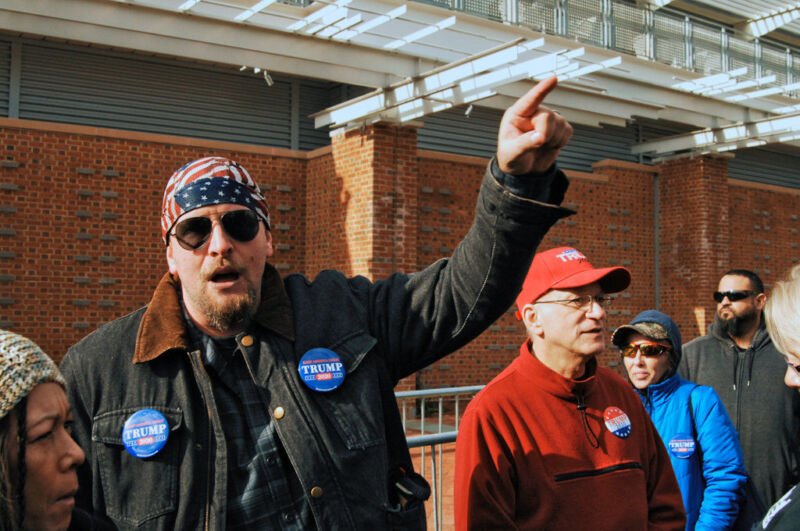
“Join Your Local Militia or III% Patriot Group,” a post urged the more than 650 members of a Facebook group called the Free American Army. Accompanied by the logo for the Three Percenters militia network and an image of a man in tactical gear holding a long rifle, the post continues: “Now more than ever. Support the American militia page.”

Other content and messaging in the group is similar. And despite the fact that Facebook bans paramilitary organizing and deemed the Three Percenters an “armed militia group” on its 2021 Dangerous Individuals and Organizations List, the post and group remained up until WIRED contacted Meta for comment about its existence.

Free American Army is just one of around 200 similar Facebook groups and profiles, most of which are still live, that anti-government and far-right extremists are using to coordinate local militia activity around the country.

After lying low for several years in the aftermath of the US Capitol riot on January 6, militia extremists have been quietly reorganizing, ramping up recruitment and rhetoric on Facebook—with apparently little concern that Meta will enforce its ban against them, according to new research by the Tech Transparency Project, shared exclusively with WIRED.

Individuals across the US with long-standing ties to militia groups are creating networks of Facebook pages, urging others to recruit “active patriots” and attend meetups, and openly associating themselves with known militia-related sub-ideologies like that of the anti-government Three Percenter movement. They’re also advertising combat training and telling their followers to be “prepared” for whatever lies ahead. These groups are trying to facilitate local organizing, state by state and county by county. Their goals are vague, but many of their posts convey a general sense of urgency about the need to prepare for “war” or to “stand up” against many supposed enemies, including drag queens, immigrants, pro-Palestine college students, communists—and the US government.

These groups are also rebuilding at a moment when anti-government rhetoric has continued to surge in mainstream political discourse ahead of a contentious, high-stakes presidential election. And by doing all of this on Facebook, they’re hoping to reach a broader pool of prospective recruits than they would on a comparatively fringe platform like Telegram.

“Many of these groups are no longer fractured sets of localized militia but coalitions formed between multiple militia groups, many with Three Percenters at the helm,” said Katie Paul, director of the Tech Transparency Project. “Facebook remains the largest gathering place for extremists and militia movements to cast a wide net and funnel users to more private chats, including on the platform, where they can plan and coordinate with impunity.”

Paul told WIRED that she’s been monitoring “hundreds” of militia-related groups and profiles since 2021 and has observed them growing “increasingly emboldened with more serious and coordinated organizing” in the past year.

One particularly influential account in this Facebook ecosystem belongs to Rodney Huffman, leader of the Confederate States III%, an Arkansas-based militia that, in 2020, sought to rally extremists at Georgia’s Stone Mountain, a popular site for Confederate and white supremacist groups. Huffman has created a network of Facebook groups and spreads the word about local meetups. His partner, Dabbi Demere, is equally active and on a mission to recruit “active” patriots into the groups. Huffman and Demere are also key players in the pro-Confederate movement known as “Heritage, not Hate.”

Before Meta shut it down, the pair ran Free American Army, which drew in individuals from several militias, including the Kentucky 3 Percenters, the Virginia Liberty Guard, and the Florida-based Guardians of Freedom, a group that was mentioned in the final January 6 report and whose members were among those arrested in connection with the Capitol attack. Free American Army also included a known activist in the far-right extremist Boogaloo movement. At least one user in the group claimed in their profile to be active-duty military; another claimed to work for the Bureau of Prisons.

https://arstechnica.com/?p=2021638


AT&T announces $7 monthly add-on fee for “Turbo” 5G speeds

A pedestrian walks past a large AT&T logo on the glass exterior of an AT&T store.
Getty Images | Bloomberg

AT&T is now charging mobile customers an extra $7 per month for faster wireless data speeds. AT&T says the Turbo add-on, available starting today, is “built to support high-performance mobile applications, like gaming, social video broadcasting and live video conferencing, with optimized data while customers are on the go.”

While Turbo “boosts all the high-speed and hotspot data on a user’s connection,” AT&T said the difference will be more noticeable for certain kinds of applications. For example, gaming applications using Turbo will experience “less freezing or stuttering and lower latency,” AT&T said.

The $7 charge is for each line. Adding Turbo to multiple lines on the same account requires paying the extra fee for each line. AT&T said that Turbo lets users “optimize their plan’s high-speed (premium) and hotspot data allotments” and provides better data performance “even during busy times on the network.”

Turbo is only available for 5G phones on certain “unlimited” plans. AT&T notes that “Turbo does not provide extra data” and that “if you exceed your existing allotments your normal network management applies.”

“On AT&T Unlimited Extra EL after 75GB, AT&T may temporarily slow data speeds if the network is busy,” the company says. “On each eligible plan, after you exceed your hotspot allotment, your hotspot speeds are slowed to a maximum of 128Kbps.”

People who pay extra for Turbo might want to look at their video settings. By default, AT&T limits video streaming to DVD quality, but customers can turn on high-definition video at the expense of using more data.

Quality of service

An article by The Mobile Report said that AT&T will differentiate between users who pay for Turbo and those who don’t with Quality of Service Class Identifiers, or QCIs. “We’re told that, basically, all eligible plans are now moved to QCI 8, and get the privilege of buying their way back into QCI 7,” the article said. QCI 6 is reportedly reserved for public safety professionals on the FirstNet service built by AT&T under a government contract.

AT&T confirmed to Ars today that Turbo “is assigned to a QCI to which some of our consumer traffic was previously assigned.” But AT&T said it has “materially modified it and increased network resources and relative weighting for AT&T Turbo traffic, thereby creating a higher level of performance than we’ve ever before offered to consumers.”

AT&T also said that QCIs “are simply a number assigned to a class of service,” and that the “treatment and performance of traffic in a particular class is affected by a range of variables that can be tuned to provide different experiences.” AT&T said that last summer, it “rationalized and streamlined how our plans are mapped to QCI levels” and that “these changes helped optimize network performance for our overall customer base.”

The current version of Turbo may be followed by other paid extras that enhance performance, as AT&T called it the “first step in modernizing and preparing our mobile network for future innovative use cases… Latency-sensitive applications will continue to need more enhanced network technologies to perform their best, so we plan to continue to advance and evolve AT&T Turbo.”

https://arstechnica.com/?p=2021487


Apple deal could have been “suicide” for Google, company lawyer says

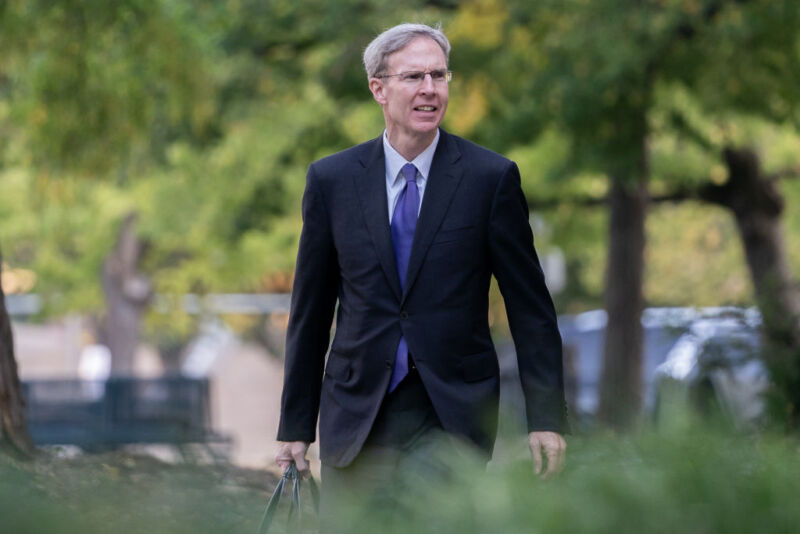
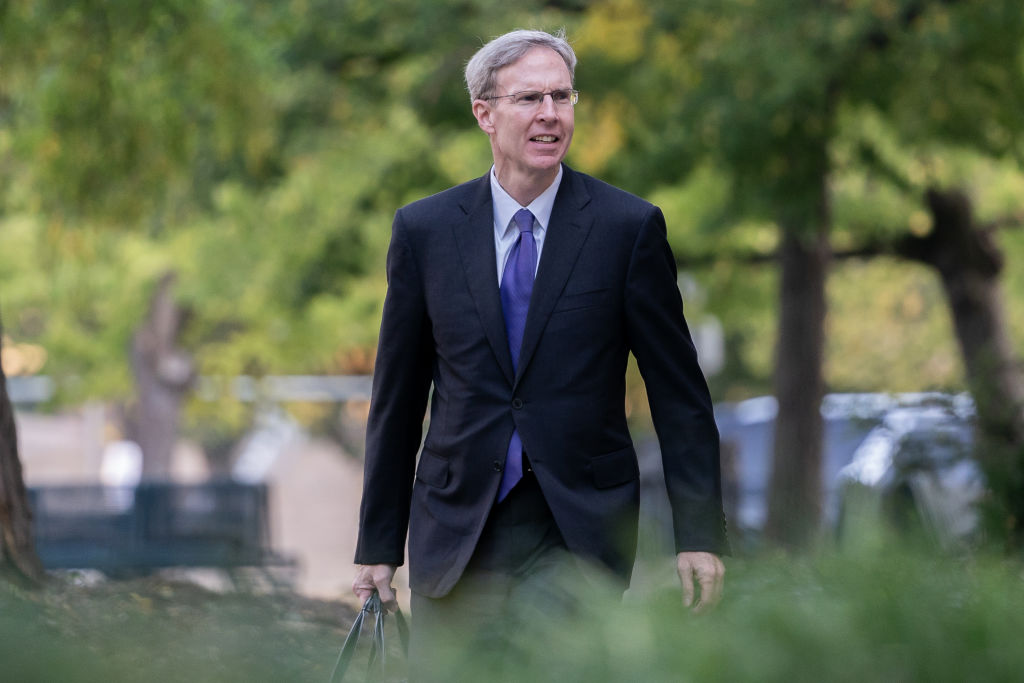
John Schmidtlein, partner at Williams & Connolly LLP and lead litigator for Alphabet Inc.'s Google, arrives to federal court in Washington, DC, US, on Monday, Oct. 2, 2023.
Enlarge / John Schmidtlein, partner at Williams & Connolly LLP and lead litigator for Alphabet Inc.’s Google, arrives to federal court in Washington, DC, US, on Monday, Oct. 2, 2023.

Halfway through the first day of closing arguments in the Department of Justice’s big antitrust trial against Google, US District Judge Amit Mehta posed the question that likely many Google users have pondered over years of DOJ claims that Google’s market dominance has harmed users.

“What should Google have done to remain outside the crosshairs of the DOJ?” Mehta asked plaintiffs halfway through the first of two full days of closing arguments.

According to the DOJ and state attorneys general suing, Google has diminished search quality everywhere online, primarily by locking rivals out of default positions on devices and in browsers. By paying billions for default placements that the government has argued allowed Google to hoard traffic and profits, Google allegedly made it nearly impossible for rivals to secure enough traffic to compete, ultimately decreasing competition and innovation in search by limiting the number of viable search engines in the market.

The DOJ’s lead litigator, Kenneth Dintzer, told Mehta that what Google should have done was acknowledge that the search giant had an enormous market share and consider its duties more carefully under antitrust law. Instead, Dintzer alleged, Google chose the route of “hiding” and “destroying documents” because it was aware of conflicts with antitrust law.

“What should Google have done?” Dintzer told Mehta. “They should have recognized that by demanding locking down every default that they were opening themselves up to a challenge on the conduct.”

The most controversial default agreement that Google has made is a 21-year deal with Apple that Mehta has described as the “heart” of the government’s case against Google. During the trial, a witness accidentally blurted out Google’s carefully guarded secret of just how highly it values the Apple deal, revealing that Google pays 36 percent of its search advertising revenue from Safari just to remain the default search tool in Apple’s browser. In 2022 alone, trial documents revealed that Google paid Apple $20 billion for the deal, Bloomberg reported.

That’s in stark contrast to the 12 percent of revenue that Android manufacturers get from their default deals with Google. The government wants the court to consider all these default deals to be anti-competitive, with Dintzer suggesting during closing arguments that they are the “centerpiece” of “a lot” of Google’s exclusionary behavior that ultimately allowed Google to become the best search engine today—by “capturing the default and preventing rivals from getting access to those defaults.”

Google’s lawyers have argued that Google succeeds on its merits. Today, lead litigator John Schmidtlein repeatedly pointed out that antitrust law is designed to protect the competitive process, not specific competitors who fail to invest and innovate—as Microsoft did by failing to recognize how crucial mobile search would become.

“Merely getting advantages by winning on quality, they may have an effect on a rival, but the question is, does it have an anti-competitive effect?” Schmidtlein argued, noting that the DOJ hadn’t “shown that absent the agreements, Microsoft would have toppled Google.”

But Dintzer argued that “a mistake by one rival doesn’t mean that Google gets to monopolize this market forever.” When asked to explain why everyone—including some of Google’s rivals—testified that Google won contracts purely because it was the best search engine, Dintzer warned Mehta that the fact that Google’s rivals “may be happy cashing Google’s checks doesn’t tell us anything.”

According to Schmidtlein, Google could have crossed the line with the Apple deal, but it didn’t.

“Google didn’t go on to say to Apple, if you don’t make us the default, no Google search on Apple devices at all,” Schmidtlein argued. “That would be suicide for Google.”

It’s still unclear how Mehta may be leaning in this case, interrogating both sides with care and making it clear that he expects all his biggest questions to be answered after closing arguments conclude Friday evening.

But Mehta did suggest at one point today that it seemed potentially “impossible” for anyone to compete with Google for default placements.

“How would anybody be able to spend billions and billions of dollars to possibly dislodge Google?” Mehta asked. “Is there any real competition for the default spot?”

According to Schmidtlein, that is precisely what “competition on the merits” looks like.

“Google is winning because it’s better, and Apple is deciding Google is better for users,” Schmidtlein argued. “The antitrust laws are not designed to ensure a competitive market. They’re designed to ensure a competitive process.”

Proving the potential anti-competitive effects of Google’s default agreements, particularly the Apple deal, has long been regarded as the most critical point in order to win the government’s case. So it’s no surprise that the attorney representing state attorneys general, Bill Cavanaugh, praised Mehta for asking, “What should Google have done?” According to Cavanaugh, that was the “right question” to pose in this trial.

“What should they have done 10 years ago when there was a recognition” that “we’re monopolists” and “we have substantial control in markets” is ask, “How should we proceed with our contracts?” Cavanaugh argued. “That’s the question that they answered, but they answered it in the wrong way.”

Seemingly if Google’s default contracts posed fewer exclusionary concerns, the government seems to be arguing, there would be more competition and therefore more investment and innovation in search. But as long as Google controls the general search market, the government alleged that users won’t be able to search the web the way that they want.

Google is hoping that Mehta will reject the government’s theories and instead rule that Google has done nothing to stop rivals from improving the search landscape. Early in the day, Mehta told the DOJ that he was “struggling to see” how Google has either stopped innovating or degraded its search engine as a result of lack of competition.

Closing arguments continue on Friday. Mehta is not expected to rule until late summer or early fall.

https://arstechnica.com/?p=2021429


Congress lets broadband funding run out, ending $30 low-income discounts

Illustration of fiber Internet cables
Getty Images | Yuichiro Chino

The Federal Communications Commission chair today made a final plea to Congress, asking for money to continue a broadband-affordability program that gave out its last round of $30 discounts to people with low incomes in April.

The Affordable Connectivity Program (ACP) has lowered monthly Internet bills for people who qualify for benefits, but Congress allowed funding to run out. People may receive up to $14 in May if their ISP opted in to offering a partial discount during the program’s final month. After that there will be no financial help for the 23 million households enrolled in the program.

“Additional funding from Congress is the only near-term solution for keeping the ACP going,” FCC Chairwoman Jessica Rosenworcel wrote in a letter to members of Congress today. “If additional funding is not promptly appropriated, the one in six households nationwide that rely on this program will face rising bills and increasing disconnection. In fact, according to our survey of ACP beneficiaries, 77 percent of participating households report that losing this benefit would disrupt their service by making them change their plan or lead to them dropping Internet service entirely.”

The ACP started with $14.2 billion allocated by Congress in late 2021. The $30 monthly ACP benefit replaced the previous $50 monthly subsidy from the Emergency Broadband Benefit Program.

Biden urges Republicans to support funding

Some Republican members of Congress have called the program “wasteful” and complained that most people using the discounts had broadband access before the subsidy was available. Rosenworcel’s letter today said the FCC survey found that “68 percent of ACP households stated they had inconsistent or zero connectivity prior to ACP.”

Senate Commerce Committee Chair Maria Cantwell (D-Wash.) included $7 billion for the program in a draft spectrum auction bill on Friday, but previous proposals from Democrats to extend funding have fizzled out. The White House today urged Congress to fund the program and blamed Republicans for not supporting funding proposals.

“President Biden is once again calling on Republicans in Congress to join their Democratic colleagues in support of extending funding for the Affordable Connectivity Program,” the White House said.

Some consumer advocates have called on the FCC to fund the ACP by increasing Universal Service Fund collections, which could involve raising fees on phone service or imposing Universal Service fees on broadband for the first time. Rosenworcel has instead looked to Congress to allocate funding for the ACP.

“Time is running out,” Rosenworcel’s letter said. “Additional funding is needed immediately to avoid the disruption millions of ACP households that rely on this program for essential connectivity are already starting to experience.”

https://arstechnica.com/?p=2021148


Email Microsoft didn’t want seen reveals rushed decision to invest in OpenAI

Email Microsoft didn’t want seen reveals rushed decision to invest in OpenAI

In mid-June 2019, Microsoft co-founder Bill Gates and CEO Satya Nadella received a rude awakening in an email warning that Google had officially gotten too far ahead on AI and that Microsoft may never catch up without investing in OpenAI.

With the subject line “Thoughts on OpenAI,” the email came from Microsoft’s chief technology officer, Kevin Scott, who is also the company’s executive vice president of AI. In it, Scott said that he was “very, very worried” that he had made “a mistake” by dismissing Google’s initial AI efforts as a “game-playing stunt.”

It turned out, Scott suggested, that instead of goofing around, Google had been building critical AI infrastructure that was already paying off, according to a competitive analysis of Google’s products that Scott said showed that Google was competing even more effectively in search. Scott realized that while Google was already moving on to production for “larger scale, more interesting” AI models, it might take Microsoft “multiple years” before it could even attempt to compete with Google.

As just one example, Scott warned, “their auto-complete in Gmail, which is especially useful in the mobile app, is getting scarily good.”

Microsoft had tried to keep this internal email hidden, but late Tuesday it was made public as part of the US Justice Department’s antitrust trial over Google’s alleged search monopoly. The email was initially sealed because Microsoft argued that it contained confidential business information, but The New York Times intervened to get it unsealed, arguing that Microsoft’s privacy interests did not outweigh the need for public disclosure.

In an order unsealing the email among other documents requested by The Times, US District Judge Amit Mehta allowed to be redacted some of the “sensitive statements in the email concerning Microsoft’s business strategies that weigh against disclosure”—which included basically all of Scott’s “thoughts on OpenAI.” But other statements “should be disclosed because they shed light on Google’s defense concerning relative investments by Google and Microsoft in search,” Mehta wrote.

At the trial, Google sought to convince Mehta that Microsoft, for example, had failed to significantly invest in mobile early on, giving Google a competitive advantage in mobile search that it still enjoys today. Scott’s email seems to suggest that Microsoft was similarly dragging its feet on investing in AI until Scott’s wakeup call.

Nadella’s response to the email was immediate. He promptly forwarded the email to Microsoft’s chief financial officer, Amy Hood, on the same day that he received it. Scott’s “very good email,” Nadella told Hood, explained “why I want us to do this.” By “this,” Nadella presumably meant exploring investment opportunities in OpenAI.

Mere weeks later, Microsoft had invested $1 billion into OpenAI, and there have been billions more invested since through an extended partnership agreement. In 2024, the two companies’ finances appeared so intertwined that the European Union suspected Microsoft was quietly controlling OpenAI and began investigating whether the companies still operate independently. Ultimately, the EU dismissed the probe, deciding that Microsoft’s $13 billion in investments did not amount to an acquisition, Reuters reported.

Officially, Microsoft has said that its OpenAI partnership was formed “to accelerate AI breakthroughs to ensure these benefits are broadly shared with the world”—not to keep up with Google.

But at the Google trial, Nadella testified about the email, saying that partnering with companies like OpenAI ensured that Microsoft could continue innovating in search, as well as in other Microsoft services.

On the stand, Nadella also admitted that he had overhyped AI-powered Bing as potentially shaking up the search market, backing up the DOJ by testifying that in Silicon Valley, Internet search is “the biggest no-fly zone.” Even after partnering with OpenAI, Nadella said that for Microsoft to compete with Google in search, there are “limits to how much artificial intelligence can reshape the market as it exists today.”

During the Google trial, the DOJ argued that Google’s alleged search market dominance had hindered OpenAI’s efforts to innovate, too. “OpenAI’s ChatGPT and other innovations may have been released years ago if Google hadn’t monopolized the search market,” the DOJ argued, according to a Bloomberg report.

Closing arguments in the Google trial start tomorrow, with two days of final remarks scheduled, during which Mehta will have ample opportunity to ask lawyers on both sides the rest of his biggest remaining questions.

It’s somewhat obvious what Google will argue. Google has spent years defending its search business as competing on the merits—essentially arguing that Google dominates search simply because it’s the best search engine.

Yesterday, the US district court also unsealed Google’s proposed legal conclusions, which suggest that Mehta should reject all of the DOJ’s monopoly claims, partly due to the government’s allegedly “fatally flawed” market definitions. Throughout the trial, Google has maintained that the US government has failed to show that Google has a monopoly in any market.

According to Google, even its allegedly anticompetitive default browser agreement with Apple—which Mehta deemed the “heart” of the DOJ’s monopoly case—is not proof of monopoly powers. Rather, Google insisted, default browser agreements benefit competition by providing another avenue through which its rivals can compete.

The DOJ hopes to prove Google wrong, arguing that Google has gone to great lengths to block rivals from default placements and hide evidence of its alleged monopoly—including training employees to avoid using words that monopolists use.

Mehta has not yet disclosed when to expect his ruling, but it could come late this summer or early fall, AP News reported.

If Google loses, the search giant may be forced to change its business practices or potentially even break up its business. Nobody knows what that would entail, but when the trial started, a coalition of 20 civil society and advocacy groups recommended some potentially drastic remedies, including the “separation of various Google products from parent company Alphabet, including breakouts of Google Chrome, Android, Waze, or Google’s artificial intelligence lab Deepmind.”

https://arstechnica.com/?p=2021108


CenturyLink left users with no service for two months, then billed them $239

Illustration of the CenturyLink logo over a piece of damaged network equipment
Aurich Lawson | Getty Images

Telecom provider CenturyLink left a couple in Oregon without landline phone service for two months, then sent a bill for $239.

CenturyLink customer Kirstin Appel and her husband live in Banks, a city with fewer than 2,000 residents in Oregon’s Tualatin Valley. They keep a landline for emergencies because their only Internet service is satellite, and cellular service in the area is poor. Appel said they pay $41 a month for CenturyLink phone service.

CenturyLink phone service became spotty and intermittent around January 20 when winter storms hit the area and then went out completely on January 27, Appel told us. She contacted Ars nearly two months after the outage began, desperate for a fix because her various chats with CenturyLink customer service led nowhere.

The service was only fixed after Ars contacted CenturyLink, and Appel had to spend hours chatting with the company’s support to get bill credits. The surprise $239 bill had to do with phantom 411 calls made from her number during the outage (more on that later in this article).

“I’ve chatted with them multiple times and had two canceled repair tickets since then,” Appel told us in late March when her service was still out. She said that customer service reps provided conflicting information on the status of the outage.

“I keep hearing different stories from representatives about how there is a widespread outage in my area—yet no outages are showing up on any outage map that I can find,” Appel told us at the time. “One representative even told me that the outage was fixed, scheduled a tech to come out, and then that ticket was canceled without my knowledge. I reached out to CenturyLink today via chat, and they informed me that the outage is still affecting my area.”

Not our first CenturyLink horror story

If this sounds familiar, you may have read our February 2024 article about CenturyLink leaving Oregon customers without Internet service for 39 days. In yet another case we wrote about last year, CenturyLink left 86-year-old Minnesota resident Helen Marie Plourde without home Internet and phone service for over a month. In both of those instances, CenturyLink only fixed the service after we emailed the company’s public relations department.

We contacted CenturyLink about Appel’s case on the afternoon of March 26, and the company fixed her phone service on March 27. CenturyLink told us at the time that it was “trying to get all customers back online as soon as possible.”

A CenturyLink technician who fixed the service left a message for Appel saying that a line serving her house had nearly been severed. It’s unclear why it took CenturyLink two months to fix the line or how much longer it would have taken if the company never received a message from a media outlet.

Repairs promised but not delivered

Appel provided us with transcripts of chats she had with CenturyLink customer support. On March 6, an agent told her the estimated time for a restoration was 8 pm on March 7.

In a subsequent chat on March 9, one company rep told her that “there is no outage reported.” She was transferred to another agent who informed her that there was an outage but that “the outage was restored early this morning.”

“I still have no dial tone,” Appel responded to the agent. The agent then wrote, “I understand, I have run a line analysis on your line and a dispatch is recommended to fix the issue.”

The agent scheduled an appointment for March 19, but that date passed without a repair. In another chat with customer support on March 20, Appel wrote, “I had a technician scheduled to come out yesterday. No one arrived and I got no notifications of an appointment change or cancellation. My phone line is dead—there is no dial tone.”

The agent replied, “I can see you are facing the issue with phone line. I will certainly check and help you.” About six minutes later, the agent confirmed that a “service outage is going on in your area” and said it would be fixed on March 22.

Of course, the fix didn’t happen until March 27. Before Ars got involved, CenturyLink seemed to have “no intent to restore my service, or at least were not in any great hurry,” Appel said.

https://arstechnica.com/?p=2020483


DEA to reclassify marijuana as a lower-risk drug, reports say

DEA to reclassify marijuana as a lower-risk drug, reports say

The US Drug Enforcement Administration is preparing to reclassify marijuana to a lower-risk drug category, a major federal policy change that is in line with recommendations from the US health department last year. The upcoming move was first reported by the Associated Press on Tuesday afternoon and has since been confirmed by several other outlets.

The DEA currently designates marijuana as a Schedule 1 drug, defined as drugs “with no currently accepted medical use and a high potential for abuse.” It puts marijuana in league with LSD and heroin. According to the reports today, the DEA is moving to reclassify it as a Schedule 3 drug, defined as having “a moderate to low potential for physical and psychological dependence.” The move would place marijuana in the ranks of ketamine, testosterone, and products containing less than 90 milligrams of codeine.

Marijuana’s rescheduling would be a nod to its potential medical benefits and would shift federal policy in line with many states. To date, 38 states have already legalized medical marijuana.

In August, the Department of Health and Human Services advised the DEA to move marijuana from Schedule 1 to Schedule 3 based on a review of data by the Food and Drug Administration. The recommendation came after the FDA, in August, granted the first approval of a marijuana-based drug. The drug, Epidiolex (cannabidiol), is approved to treat rare and severe forms of epilepsy. The approval was expected to spur the DEA to downgrade marijuana’s scheduling, though some had predicted it would have occurred earlier. Independent expert advisers for the FDA voted unanimously in favor of approval, convinced by data from three high-quality clinical trials that indicated benefits and a “negligible abuse potential.”

The shift may have a limited effect on consumers in states that have already eased access to marijuana. In addition to the 38 states with medical marijuana access, 24 states have legalized recreational use. But, as a Schedule 3 drug, marijuana would still be regulated by the DEA. The Associated Press notes that the rule change means that roughly 15,000 dispensaries would need to register with the DEA, much like pharmacies, and follow strict reporting requirements.

One area that will clearly benefit from the change is scientific research on marijuana’s effects. Many academic scientists are federally funded and, as such, they must follow federal regulations. Researching a Schedule 1 drug carries extensive restrictions and rules, even for researchers in states where marijuana is legalized. A lower scheduling will allow researchers better access to conduct long-awaited studies.

It’s unclear exactly when the move will be announced and finalized. The DEA must get sign-off from the White House Office of Management and Budget (OMB) before proceeding. A source for NBC News said Attorney General Merrick Garland may submit the rescheduling to the OMB as early as Tuesday afternoon. After that, the DEA will open a public comment period before it can finalize the rule.

The US Department of Justice told several outlets that it “continues to work on this rule. We have no further comment at this time.”

https://arstechnica.com/?p=2020872


Binance’s billionaire founder gets 4 months for violating money laundering law

Former Binance CEO Changpeng Zhao walking outside a court house.
Enlarge / Former Binance CEO Changpeng Zhao arrives at federal court in Seattle for sentencing on Tuesday, April 30, 2024.
Getty Images | Changpeng Zhao

Binance founder Changpeng Zhao was sentenced today to four months in prison after pleading guilty to failing to take effective measures against money laundering. The billionaire who formerly ran the world’s largest cryptocurrency exchange previously agreed to a plea deal that also required him to pay a $50 million fine.

The US government’s sentencing request asked for three years in prison. Zhao’s sentencing memorandum asked for probation without any prison time.

Forbes estimates Zhao’s net worth at $33 billion. He pleaded guilty to failure to maintain an effective anti-money laundering program.

Zhao’s cooperation with law enforcement was cited by US District Judge Richard Jones as a reason for imposing a significantly lower sentence than was requested by prosecutors, according to The Verge.

“Before handing down the sentence, Jones faulted Zhao for putting growth and profits before complying with US laws,” Reuters wrote. The sentencing hearing was in federal court in Seattle.

Jones was quoted as saying to Zhao that “you had the wherewithal, the finance capabilities, and the people power to make sure that every single regulation had to be complied with, and so you failed at that opportunity.”

US: Zhao willfully violated law

The government’s sentencing recommendation said that “Zhao’s willful violation of US law was no accident or oversight. He made a business decision that violating US law was the best way to attract users, build his company, and line his pockets.”

The US said Zhao bragged that if Binance complied with US law, it would not be “as big as we are today.”

“Despite knowing Binance was required to comply with US law, Zhao chose not to register the company with US regulators; he chose not to comply with fundamental US anti-money-laundering (AML) requirements; he chose not to implement and maintain an effective know-your-customer (KYC) system, which prevented effective transaction monitoring and allowed suspicious and criminal users to transact through Binance,” the US said.

Zhao also “directed Binance employees in a sophisticated scheme to disguise their customers’ locations in an effort to deceive regulators about Binance’s client base,” the US told the court.

Zhao’s sentencing memorandum denied criminal intent. “Generalized knowledge that the Company’s compliance program did not eliminate all risk of criminal activity does not mean that Mr. Zhao knew or intended for any funds to be criminally derived (he manifestly did not),” the filing said.

Zhao traveled to the US from his home in the United Arab Emirates to take responsibility, his legal team’s filing said. “He is a first-time, non-violent offender who committed an offense with no intention to harm anyone. He presents no risk of recidivism. He has appeared in this country voluntarily to accept responsibility,” the plea for lenience said.

https://arstechnica.com/?p=2020851


Critics question tech-heavy lineup of new Homeland Security AI safety board

A modified photo of a 1956 scientist carefully bottling

On Friday, the US Department of Homeland Security announced the formation of an Artificial Intelligence Safety and Security Board that consists of 22 members pulled from the tech industry, government, academia, and civil rights organizations. But given the nebulous nature of the term “AI,” which can apply to a broad spectrum of computer technology, it’s unclear if this group will even be able to agree on what exactly they are safeguarding us from.

President Biden directed DHS Secretary Alejandro Mayorkas to establish the board, which will meet for the first time in early May and subsequently on a quarterly basis.

The fundamental assumption posed by the board’s existence, and reflected in Biden’s AI executive order from October, is that AI is an inherently risky technology and that American citizens and businesses need to be protected from its misuse. Along those lines, the goal of the group is to help guard against foreign adversaries using AI to disrupt US infrastructure; develop recommendations to ensure the safe adoption of AI tech into transportation, energy, and Internet services; foster cross-sector collaboration between government and businesses; and create a forum where AI leaders to share information on AI security risks with the DHS.

It’s worth noting that the ill-defined nature of the term “Artificial Intelligence” does the new board no favors regarding scope and focus. AI can mean many different things: It can power a chatbot, fly an airplane, control the ghosts in Pac-Man, regulate the temperature of a nuclear reactor, or play a great game of chess. It can be all those things and more, and since many of those applications of AI work very differently, there’s no guarantee any two people on the board will be thinking about the same type of AI.

This confusion is reflected in the quotes provided by the DHS press release from new board members, some of whom are already talking about different types of AI. While OpenAI, Microsoft, and Anthropic are monetizing generative AI systems like ChatGPT based on large language models (LLMs), Ed Bastian, the CEO of Delta Air Lines, refers to entirely different classes of machine learning when he says, “By driving innovative tools like crew resourcing and turbulence prediction, AI is already making significant contributions to the reliability of our nation’s air travel system.”

So, defining the scope of what AI exactly means—and which applications of AI are new or dangerous—might be one of the key challenges for the new board.

A roundtable of Big Tech CEOs attracts criticism

For the inaugural meeting of the AI Safety and Security Board, the DHS selected a tech industry-heavy group, populated with CEOs of four major AI vendors (Sam Altman of OpenAI, Satya Nadella of Microsoft, Sundar Pichai of Alphabet, and Dario Amodei of Anthopic), CEO Jensen Huang of top AI chipmaker Nvidia, and representatives from other major tech companies like IBM, Adobe, Amazon, Cisco, and AMD. There are also reps from big aerospace and aviation: Northrop Grumman and Delta Air Lines.

Upon reading the announcement, some critics took issue with the board composition. On LinkedIn, founder of The Distributed AI Research Institute (DAIR) Timnit Gebru especially criticized OpenAI’s presence on the board and wrote, “I’ve now seen the full list and it is hilarious. Foxes guarding the hen house is an understatement.”

https://arstechnica.com/?p=2020418