Missouri AG sues Media Matters over its X research, demands donor names

A photo of Elon Musk next to the logo for X, the social network formerly known as Twitter,.
Getty Images | NurPhoto

Missouri Attorney General Andrew Bailey yesterday sued Media Matters in an attempt to protect Elon Musk and X from the nonprofit watchdog group’s investigations into hate speech on the social network. Bailey’s lawsuit claims that “Media Matters has used fraud to solicit donations from Missourians in order to trick advertisers into removing their advertisements from X, formerly Twitter, one of the last platforms dedicated to free speech in America.”

Bailey didn’t provide much detail on the alleged fraud but claimed that Media Matters is guilty of “fraudulent manipulation of data on X.com.” That’s apparently a reference to Media Matters reporting that X placed ads for major brands next to posts touting Hitler and Nazis. X has accused Media Matters of manipulating the site’s algorithm by endlessly scrolling and refreshing.

Bailey yesterday issued an investigative demand seeking names and addresses of all Media Matters donors who live in Missouri and a range of internal communications and documents regarding the group’s research on Musk and X. Bailey anticipates that Media Matters won’t provide the requested materials, so he filed the lawsuit asking Cole County Circuit Court for an order to enforce the investigative demand.

“Because Media Matters has refused such efforts in other states and made clear that it will refuse any such efforts, the Attorney General seeks an order… compelling Media Matters to comply with the CID [Civil Investigative Demand] within 20 days,” the lawsuit said.

Media Matters slams Musk and Missouri AG

Media Matters, which is separately fighting similar demands made by Texas, responded to Missouri’s legal action in a statement provided to Ars today.

“Far from the free speech advocate he claims to be, Elon Musk has actually intensified his efforts to undermine free speech by enlisting Republican attorneys general across the country to initiate meritless, expensive, and harassing investigations against Media Matters in an attempt to punish critics,” Media Matters President Angelo Carusone said. “This Missouri investigation is the latest in a transparent endeavor to squelch the First Amendment rights of researchers and reporters; it will have a chilling effect on news reporters.”

Musk thanked Bailey for filing the lawsuit in a post that said, “Media Matters is doing everything it can to undermine the First Amendment. Truly an evil organization.”

Bailey is seeking the names and addresses of all Media Matters donors from Missouri since January 1, 2023, and the amounts of each donation. He wants all promotional or marketing material sent to potential donors and documents showing how the donations were used.

Ads next to pro-Nazi content

Several of Bailey’s demands relate to the Media Matters article titled, “As Musk endorses antisemitic conspiracy theory, X has been placing ads for Apple, Bravo, IBM, Oracle, and Xfinity next to pro-Nazi content.” Bailey wants all “documents related to the article, or to the events described in the article.”

The Media Matters article displayed images of advertisements next to pro-Nazi posts. Musk previously sued Media Matters over the article, claiming the group “manipulated the algorithms governing the user experience on X to bypass safeguards and create images of X’s largest advertisers’ paid posts adjacent to racist, incendiary content.”

X said Media Matters did this by “endlessly scrolling and refreshing its unrepresentative, hand-selected feed, generating between 13 and 15 times more advertisements per hour than viewed by the average X user repeating this inauthentic activity until it finally received pages containing the result it wanted: controversial content next to X’s largest advertisers’ paid posts.”

X also sued the Center for Countering Digital Hate, but the lawsuit was thrown out by a federal judge yesterday.

https://arstechnica.com/?p=2012671


Florida braces for lawsuits over law banning kids from social media

Florida braces for lawsuits over law banning kids from social media

On Monday, Florida became the first state to ban kids under 14 from social media without parental permission. It appears likely that the law—considered one of the most restrictive in the US—will face significant legal challenges, however, before taking effect on January 1.

Under HB 3, apps like Instagram, Snapchat, or TikTok would need to verify the ages of users, then delete any accounts for users under 14 when parental consent is not granted. Companies that “knowingly or recklessly” fail to block underage users risk fines of up to $10,000 in damages to anyone suing on behalf of child users. They could also be liable for up to $50,000 per violation in civil penalties.

In a statement, Florida governor Ron DeSantis said the “landmark law” gives “parents a greater ability to protect their children” from a variety of social media harm. Florida House Speaker Paul Renner, who spearheaded the law, explained some of that harm, saying that passing HB 3 was critical because “the Internet has become a dark alley for our children where predators target them and dangerous social media leads to higher rates of depression, self-harm, and even suicide.”

But tech groups critical of the law have suggested that they are already considering suing to block it from taking effect.

In a statement provided to Ars, a nonprofit opposing the law, the Computer & Communications Industry Association (CCIA) said that while CCIA “supports enhanced privacy protections for younger users online,” it is concerned that “any commercially available age verification method that may be used by a covered platform carries serious privacy and security concerns for users while also infringing upon their First Amendment protections to speak anonymously.”

“This law could create substantial obstacles for young people seeking access to online information, a right afforded to all Americans regardless of age,” Khara Boender, CCIA’s state policy director, warned. “It’s foreseeable that this legislation may face legal opposition similar to challenges seen in other states.”

Carl Szabo, vice president and general counsel for Netchoice—a trade association with members including Meta, TikTok, and Snap—went even further, warning that Florida’s “unconstitutional law will protect exactly zero Floridians.”

Szabo suggested that there are “better ways to keep Floridians, their families, and their data safe and secure online without violating their freedoms.” Democratic state house representative Anna Eskamani opposed the bill, arguing that “instead of banning social media access, it would be better to ensure improved parental oversight tools, improved access to data to stop bad actors, alongside major investments in Florida’s mental health systems and programs.”

Netchoice expressed “disappointment” that DeSantis agreed to sign a law requiring an “ID for the Internet” after “his staunch opposition to this idea both on the campaign trail” and when vetoing a prior version of the bill.

“HB 3 in effect will impose an ‘ID for the Internet’ on any Floridian who wants to use an online service—no matter their age,” Szabo said, warning of invasive data collection needed to verify that a user is under 14 or a parent or guardian of a child under 14.

“This level of data collection will put Floridians’ privacy and security at risk, and it violates their constitutional rights,” Szabo said, noting that in court rulings in Arkansas, California, and Ohio over similar laws, “each of the judges noted the similar laws’ constitutional and privacy problems.”

https://arstechnica.com/?p=2012595


Justice Department indicts 7 accused in 14-year hack campaign by Chinese gov

Justice Department indicts 7 accused in 14-year hack campaign by Chinese gov
peterschreiber.media | Getty Images

The US Justice Department on Monday unsealed an indictment charging seven men with hacking or attempting to hack dozens of US companies in a 14-year campaign furthering an economic espionage and foreign intelligence gathering by the Chinese government.

All seven defendants, federal prosecutors alleged, were associated with Wuhan Xiaoruizhi Science & Technology Co., Ltd. a front company created by the Hubei State Security Department, an outpost of the Ministry of State Security located in Wuhan province. The MSS, in turn, has funded an advanced persistent threat group tracked under names including APT31, Zirconium Violet Typhoon, Judgment Panda, and Altaire.

Relentless 14-year campaign

“Since at least 2010, the defendants … engaged in computer network intrusion activity on behalf of the HSSD targeting numerous US government officials, various US economic and defense industries and a variety of private industry officials, foreign democracy activists, academics and parliamentarians in response to geopolitical events affecting the PRC,” federal prosecutors alleged. “These computer network intrusion activities resulted in the confirmed and potential compromise of work and personal email accounts, cloud storage accounts and telephone call records belonging to millions of Americans, including at least some information that could be released in support of malign influence targeting democratic processes and institutions, and economic plans, intellectual property, and trade secrets belonging to American businesses, and contributed to the estimated billions of dollars lost every year as a result of the PRC’s state-sponsored apparatus to transfer US technology to the PRC.”

The relentless, 14-year campaign targeted thousands of individuals and dozens of companies through the use of zero-day attacks, website vulnerability exploitation, and the targeting of home routers and personal devices of high-ranking US government officials and politicians and election campaign staff from both major US political parties.

“The targeted US government officials included individuals working in the White House, at the Departments of Justice, Commerce, Treasury and State, and US Senators and Representatives of both political parties,” Justice Department officials said. “The defendants and others in the APT31 Group targeted these individuals at both professional and personal email addresses. Additionally in some cases, the defendants also targeted victims’ spouses, including the spouses of a high-ranking Department of Justice official, high-ranking White House officials and multiple United States Senators. Targets also included election campaign staff from both major US political parties in advance of the 2020 election.”

One technique the defendants allegedly used was the sending of emails to journalists, political officials, and companies. The messages, which were made to appear as originating from news outlets or journalists, contained hidden tracking links, which, when activated, gave APT31 members information about the locations, IP addresses, network schematics, and specific devices of the targets for use in follow-on attacks. Some of the targets of these emails included foreign government officials who were part of the Inter-Parliamentary Alliance on China, a group formed after the 1989 Tiananmen Square massacre that’s critical of the Chinese government; every European Union member of that’s a member of that group; and 43 UK parliamentary accounts part of the group or critical of the People’s Republic of China.

APT31 used a variety of methods to infect networks of interest with custom malware such as RAWDOOR, Trochilus, EvilOSX, DropDoor/DropCa, and later the widely available Cobalt Strike Beacon security testing tool. In late 2016, the hacking group exploited what was then a zero-day vulnerability in unnamed software to gain access to an unidentified defense contractor. In their indictment, prosecutors wrote:

Using the zero-day privilege escalation exploit, the Conspirators first obtained administrator access to a subsidiary’s network before ultimately pivoting into the Defense Contractor’s core corporate network,” prosecutors wrote in the indictment. “The Conspirators used a SQL injection, in which they entered malicious code into a web form input box to gain access to information that was not intended to be displayed, to create an account on the subsidiary’s network with the username “testdew23.” The Conspirators used malicious software to grant administrator privileges to the “testdew23” user account. Next, the Conspirators uploaded a web shell, or a script that enables remote administration of the computer, named “Welcome to Chrome,” onto the subsidiary’s web server. Thereafter, the Conspirators used the web shell to upload and execute at least two malicious files on the web server, which were configured to open a connection between the victim’s network and computers outside that network that were controlled by the Conspirators. Through this method, the Conspirators successfully gained unauthorized access to the Defense Contractor’s network.

Other APT31 targets include military contractors and companies in the aerospace, IT services, software, telecommunications, manufacturing, and financial services industries. APT31 has long been known to target not only individuals and entities with information of primary interest but also companies or services that the primary targets rely on. Primary targets were dissidents and critics of the PRC and Western companies in possession of technical information of value to the PRC.

Prosecutors said targets successfully hacked by APT31 include:

  • a cleared defense contractor based in Oklahoma that designed and manufactured military flight simulators for the US military
  • a cleared aerospace and defense contractor based in Tennessee
  • an Alabama-based research corporation in the aerospace and defense industries
  • a Maryland-based professional support services company that serviced the Department of Defense and other government agencies
  • a leading American manufacturer of software and computer services based in California
  • a leading global provider of wireless technology based in Illinois; a technology company based in New York
  • a software company servicing the industrial controls industry based in California
  • an IT consulting company based in California; an IT services and spatial processing company based in Colorado
  • a multifactor authentication company; an American trade association
  • multiple information technology training and support companies
  • a leading provider of 5G network equipment in the United States
  • an IT solutions and 5G integration service company based in Idaho
  • a telecommunications company based in Illinois
  • a voice technology company headquartered in California;
  • a prominent trade organization with offices in New York and elsewhere
  • a manufacturing association based in Washington, DC
  • a steel company
  • an apparel company based in New York
  • an engineering company based in California
  • an energy company based in Texas
  • a finance company headquartered in New York
  • A US multi-national management consulting company with offices in Washington, DC, and elsewhere
  • a financial ratings company based in New York
  • an advertising agency based in New York
  • a consulting company based in Virginia;
  • multiple global law firms based in New York and throughout the United States
  • a law firm software provider
  • a machine learning laboratory based in Virginia
  • a university based in California
  • multiple research hospitals and institutes located in New York and Massachusetts
  • an international non-profit organization headquartered in Washington, DC.

The defendants are:

  • Ni Gaobin (倪高彬), age 38
  • Weng Ming (翁明), 37
  • Cheng Feng (程锋), 34
  • Peng Yaowen (彭耀文), 38
  • Sun Xiaohui (孙小辉), 38
  • Xiong Wang (熊旺), 35
  • Zhao Guangzong (赵光宗), 38

The men were charged with conspiracy to commit computer intrusions and conspiracy to commit wire fraud. While none of the men are in US custody or likely to face prosecution, the US Department of Treasury on Monday sanctioned Wuhan Xiaoruizhi Science and Technology Company, Limited. The department also designated Zhao Guangzong and Ni Gaobin for their roles in hacks targeting US critical infrastructure.

“As a result of today’s action, all property and interests in property of the designated persons and entity described above that are in the United States or in the possession or control of US persons are blocked and must be reported to OFAC,” Treasury officials wrote. “In addition, any entities that are owned, directly or indirectly, individually or in the aggregate, 50 percent or more by one or more blocked persons are also blocked. Unless authorized by a general or specific license issued by OFAC, or exempt, OFAC’s regulations generally prohibit all transactions by US persons or within (or transiting) the United States that involve any property or interests in property of designated or otherwise blocked persons.”

The US State Department is offering $10 million for information leading to the identification or location of any of the defendants or others associated with the campaign.

https://arstechnica.com/?p=2012482


Reddit faces new reality after cashing in on its IPO

Steve Huffman
Enlarge / Steve Huffman, u/spez on Reddit, sold 500,000 of his shares in Reddit’s IPO on Thursday
AFP via Getty Images

In an interview on the New York Stock Exchange trading floor ahead of Reddit’s market debut on Thursday, chief executive Steve Huffman acknowledged that the mischievous retail investors that congregate on the social media platform might deliberately drive down its share price.

“It’s a free market!” he said.

For Reddit, as for Huffman, the bet on a public offering for a site he described as a “fun and special, but sometimes crazy place” has appeared to pay off.

Shares of the social media company soared on its Big Board debut under the ticker RDDT, closing at $50.44, or 48 percent above its IPO price. This brought its fully diluted market capitalization to $9.5 billion, close to where the company was last valued privately at $10 billion in 2021.

Reddit’s journey to public markets marks a turning point for a fringe, free speech-oriented platform dominated by esoteric memes, sardonic humor, and gamers, as it transforms itself into a more mainstream discussion hub that enforces stricter moderation rules in order to attract advertising dollars.

The picture for its earlier investors was mixed. One big winner was the Newhouse family, who through Advance Magazine Publishers Inc own Condé Nast, which bought Reddit in 2006 for $10 million before spinning it out in 2011. Its shares are now worth about $2.1 billion, a handsome windfall to their publishing empire, which also includes Vanity Fair, the New Yorker, and Vogue. Entities affiliated with OpenAI chief executive Sam Altman now hold a stake worth $613 million.

But investors who put money in at the last financing round in 2021 at $61.79 a share, such as Fidelity, were looking at slightly less on that particular investment.

Founded in 2005, the self-proclaimed “front page of the internet” has battled through management upheaval and moderation scandals to grow to 73 million daily users across its 100,000 communities, or “subreddits,” per Reddit parlance. It is a social media minnow, however, relative to Meta or X, which have more than 2.1 billion and 245 million daily active users, respectively.

Still, its IPO attracted institutional interest. Demand was strong, and the top two dozen investors in the deal, who received the majority of its shares, were typically large asset managers who intend on owning the stock for the long term, one person familiar with the matter said.

Reddit’s surge on its first day of trading, a day after AI infrastructure group Astera Labs jumped 72 percent in its Nasdaq debut, also signals a validation of public investor demand for listings—even a company that is unprofitable, such as Reddit.

“Overall, this is a very positive development for IPO markets [and] should bode well for many of the pre-IPO companies sitting in the queue,” said Christian Munafo, chief investment officer of Liberty Street Advisors.

But, Munafo said, “while [Reddit] performed well out of the gate, the stock may come under pressure unless they are able to demonstrate better growth and monetization.”

Either way, the deal is a boon for Huffman. The chief executive sold 500,000 of his shares in the IPO, cashing out a plump $17 million, and is due to receive additional equity awards as a result of listing the company above a $5 billion valuation. He also received an estimated $193 million pay package last year, mostly made up of equity awards, according to filings.

Historically, Huffman’s style as a leader has reflected that of Reddit’s unruly user base. The self-confessed “internet troll” initially squirmed at the idea of policing the more extreme communities hosted on the platform, relying on these groups to create their own rules and self-moderate. He has defended and cheered on Reddit’s WallStreetBets trading forum that shot to mainstream fame when members collectively bought so-called meme stocks in a bid to squeeze hedge funds*.

But Huffman has recently been forced to tidy up the darker underbelly of the platform for advertisers, present a more professional front to Wall Street and hunt harder for profitability. As a result, Reddit has shifted its ambitions slightly to pin its fortunes to wider tech trends. When Reddit first filed for an IPO in 2021, AI was mentioned once in its prospectus. In the 2024 version, AI appeared more than 60 times.

Nevertheless, the approach has left Huffman and the company at odds with some Reddit communities, who have been resistant to any changes to the platform. Facing new pressures as it enters public markets, some analysts warn that Reddit’s character could be destroyed and users may seek out alternatives, in a drag to the company.

“Reddit, more so than many social media platforms, has been a very community-based, non-commercial space and people know and love it for [this],” said Samuel Woolley, a propaganda expert and assistant professor at the University of Texas at Austin.

“I think the big question that should be on everyone’s mind for Reddit is to what extent the IPO will change the very nature and fabric of the platform.”

Additional reporting by Nicholas Megaw in New York.

© 2024 The Financial Times Ltd. All rights reserved. Not to be redistributed, copied, or modified in any way.

https://arstechnica.com/?p=2012282


Cable ISP fined $10,000 for lying to FCC about where it offers broadband

Businessman secretly crossing fingers
Enlarge / “Yes, we offer Internet at your address.”

An Internet service provider that admitted lying to the Federal Communications Commission about where it offers broadband will pay a $10,000 fine and implement a compliance plan to prevent future violations.

Jefferson County Cable (JCC), a small ISP in Toronto, Ohio, admitted that it falsely claimed to offer fiber service in an area that it hadn’t expanded to yet. A company executive also admitted that the firm submitted false coverage data to prevent other ISPs from obtaining government grants to serve the area. Ars helped expose the incident in a February 2023 article.

The FCC announced the outcome of its investigation on March 15, saying that Jefferson County Cable violated the Broadband Data Collection program requirements and the Broadband DATA Act, a US law, “in connection with reporting inaccurate information or data with respect to the Company’s ability to provide broadband Internet access service.”

“To settle this matter, Jefferson County Cable agrees to pay a $10,000 civil penalty to the United States Treasury,” the FCC said. “Jefferson County Cable also agrees to implement enhanced compliance measures. This action will help further the Commission’s efforts to bridge the digital divide by having accurate data of locations where broadband service is available.”

We also published reports in February 2023 detailing false broadband claims made by Comcast, which initially insisted that the false data it submitted to the FCC was correct. It’s not clear yet whether Comcast will face any punishment.

Inaccurate claims for 1,500 addresses

Last week’s FCC order said that Jefferson County Cable initially reported serving 8,178 addresses for the commission’s June 30, 2022, data collection. It then reduced that number to 6,605 addresses in the FCC’s next round of data collection for December 31, 2022.

Even the second, lower number was higher than Jefferson County Cable’s actual coverage. After a letter from the FCC Enforcement Bureau in March 2023, “Jefferson County Cable corrected its inaccurate submissions for both data filings by removing these approximately 1,500 locations from each of the relevant data filings on May 19, 2023,” the FCC order said.

“At that time, the Company could not provide broadband service at or connect those locations within 10 business days of a request for service, as required by the Broadband Data Collection Rules,” the FCC said. “Jefferson County Cable acknowledged to the Bureau that it had not taken the necessary time and effort to review and understand the Commission’s guidance on Broadband Data Collection filings before it made these two filings.”

Jefferson County Cable’s false claim came to light thanks to Ryan Grewell, who runs a small wireless Internet service provider called Smart Way Communications. He heard about the false claims from his own customers and used the FCC’s map system to file challenges at specific addresses.

Damning email

One of Grewell’s challenges at an address in Bergholz, Ohio, led to the cable company admitting its false claims. Last week’s FCC order said this address was one of the 1,500 incorrectly claimed locations.

As we reported, Grewell got a response from a Jefferson County Cable executive who mistakenly thought Grewell was a potential customer instead of a competitor. The email said that Jefferson County Cable didn’t serve the area yet, but wanted to prevent potential competitors from getting deployment grants.

“You challenged that we do not have service at your residence and indeed we don’t today,” said the January 2023 email from Jefferson County Cable executive Bob Loveridge. “With our huge investment in upgrading our service to provide xgpon we reported to the BDC [Broadband Data Collection] that we have service at your residence so that they would not allocate addition [sic] broadband expansion money over [the] top of our private investment in our plant.”

https://arstechnica.com/?p=2012235


Users shocked to find Instagram limits political content by default

Users shocked to find Instagram limits political content by default

Instagram users have started complaining on X (formerly Twitter) after discovering that Meta has begun limiting recommended political content by default.

“Did [y’all] know Instagram was actively limiting the reach of political content like this?!” an X user named Olayemi Olurin wrote in an X post with more than 150,000 views as of this writing. “I had no idea ‘til I saw this comment and I checked my settings and sho nuff political content was limited.”

“Instagram quietly introducing a ‘political’ content preference and turning on ‘limit’ by default is insane?” wrote another X user named Matt in a post with nearly 40,000 views.

Instagram apparently did not notify users directly on the platform when this change happened.

Instead, Instagram rolled out the change in February, announcing in a blog that the platform doesn’t “want to proactively recommend political content from accounts you don’t follow.” That post confirmed that Meta “won’t proactively recommend content about politics on recommendation surfaces across Instagram and Threads,” so that those platforms can remain “a great experience for everyone.”

“This change does not impact posts from accounts people choose to follow; it impacts what the system recommends, and people can control if they want more,” Meta’s spokesperson Dani Lever told Ars. “We have been working for years to show people less political content based on what they told us they want, and what posts they told us are political.”

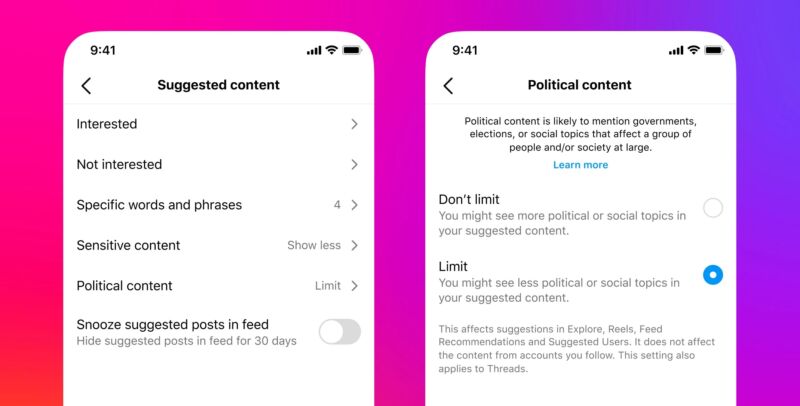
To change the setting, users can navigate to Instagram’s menu for “settings and activity” in their profiles, where they can update their “content preferences.” On this menu, “political content” is the last item under a list of “suggested content” controls that allow users to set preferences for what content is recommended in their feeds.

There are currently two options for controlling what political content users see. Choosing “don’t limit” means “you might see more political or social topics in your suggested content,” the app says. By default, all users are set to “limit,” which means “you might see less political or social topics.”

“This affects suggestions in Explore, Reels, Feed, Recommendations, and Suggested Users,” Instagram’s settings menu explains. “It does not affect content from accounts you follow. This setting also applies to Threads.”

For general Instagram and Threads users, this change primarily limits what content posted can be recommended, but for influencers using professional accounts, the stakes can be higher. The Washington Post reported that news creators were angered by the update, insisting that Meta’s update diminished the value of the platform for reaching users not actively seeking political content.

“The whole value-add for social media, for political people, is that you can reach normal people who might not otherwise hear a message that they need to hear, like, abortion is on the ballot in Florida, or voting is happening today,” Keith Edwards, a Democratic political strategist and content creator, told The Post.

Meta’s blog noted that “professional accounts on Instagram will be able to use Account Status to check their eligibility to be recommended based on whether they recently posted political content. From Account Status, they can edit or remove recent posts, request a review if they disagree with our decision, or stop posting this type of content for a period of time, in order to be eligible to be recommended again.”

Ahead of a major election year, Meta’s change could impact political outreach attempting to inform voters. The change also came amid speculation that Meta was “shadowbanning” users posting pro-Palestine content since the start of the Israel-Hamas war, The Markup reported.

“Our investigation found that Instagram heavily demoted nongraphic images of war, deleted captions and hid comments without notification, suppressed hashtags, and limited users’ ability to appeal moderation decisions,” The Markup reported.

Meta appears to be interested in shifting away from its reputation as a platform where users expect political content—and misinformation—to thrive. Last year, The Wall Street Journal reported that Meta wanted out of politics and planned to “scale back how much political content it showed users,” after criticism over how the platform handled content related to the January 6 Capitol riot.

The decision to limit recommended political content on Instagram and Threads, Meta’s blog said, extends Meta’s “existing approach to how we treat political content.”

“People have told us they want to see less political content, so we have spent the last few years refining our approach on Facebook to reduce the amount of political content—including from politicians’ accounts—you see in Feed, Reels, Watch, Groups You Should Join, and Pages You May Like,” Meta wrote in a February blog update.

“As part of this, we aim to avoid making recommendations that could be about politics or political issues, in line with our approach of not recommending certain types of content to those who don’t wish to see it,” Meta’s blog continued, while at the same time, “preserving your ability to find and interact with political content that’s meaningful to you if that’s what you’re interested in.”

While platforms typically update users directly on the platform when terms of services change, that wasn’t the case for this update, which simply added new controls for users. That’s why many users who prefer to be recommended political content—and apparently missed Meta’s announcement and subsequent media coverage—expressed shock to discover that Meta was limiting what they see.

On X, even Instagram users who don’t love seeing political content are currently rallying to raise awareness and share tips on how to update the setting.

“This is actually kinda wild that Instagram defaults everyone to this,” one user named Laura wrote. “Obviously political content is toxic but during an election season it’s a little weird to just hide it from everyone?”

https://arstechnica.com/?p=2012207


Michael Cohen loses court motion after lawyer cited AI-invented cases

Michael Cohen photographed outside while walking toward a courthouse.
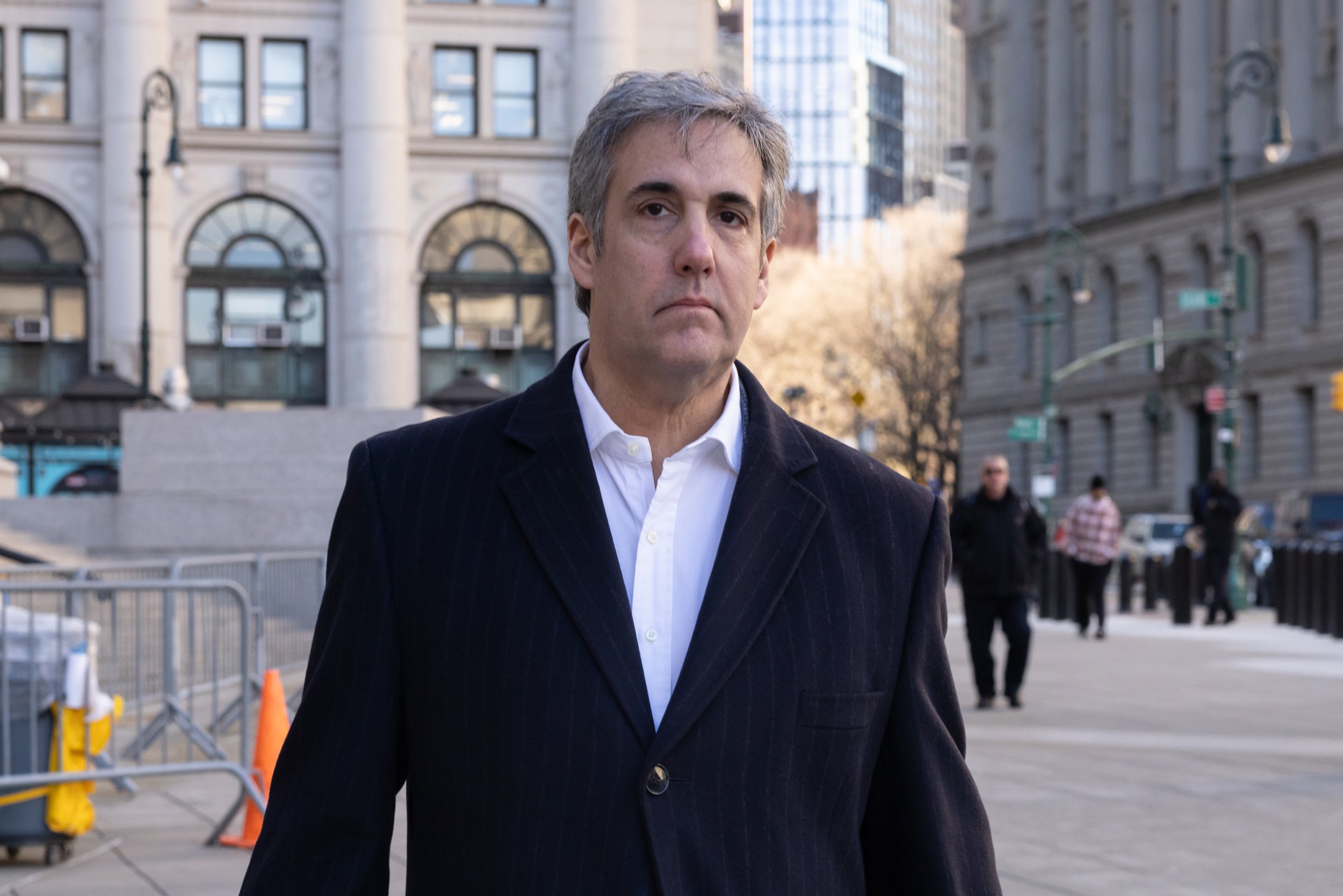
Enlarge / Michael Cohen, former personal lawyer to former US President Donald Trump, arrives at federal court in New York on December 14, 2023.
Getty Images | Bloomberg

A federal judge decided not to sanction Michael Cohen and his lawyer for a court filing that included three fake citations generated by the Google Bard AI tool.

Cohen’s lawyer, David M. Schwartz, late last year filed the court brief that cites three cases that do not exist. It turned out that Cohen passed the fake cases along to Schwartz, who didn’t do a fact-check before submitting them as part of a motion in US District Court for the Southern District of New York.

US District Judge Jesse Furman declined to impose sanctions on either Cohen or Schwartz in a ruling issued today. But there was bad news for Cohen because Furman denied a motion for early termination of his supervised release.

Cohen, Donald Trump’s former attorney, served time in prison after pleading guilty to five counts of evasion of personal income tax, making false statements to a bank, excessive campaign contribution, and causing an unlawful corporate contribution. Cohen was also disbarred five years ago. His supervised release is scheduled to expire in November this year.

The fake citations certainly didn’t help Cohen’s attempt to end his supervised release. The citations were intended to show previous instances in which defendants were allowed to end supervised release early. But two of them involved fictional cocaine distributors and the other involved an invented tax evader.

Cohen thought AI tool was a search engine

Furman previously ordered Schwartz to “show cause in writing why he should not be sanctioned.” No such order was issued to Cohen.

“The Court’s Order to Show Cause was limited to Schwartz and did not alert Cohen to the possibility of sanctions. But even if the Court had put Cohen on notice, sanctions would not be warranted,” Furman wrote today. “Cohen is a party to this case and, as a disbarred attorney, is not an officer of the Court like Schwartz. He was entitled to rely on his counsel and to trust his counsel’s professional judgment—as he did throughout this case.”

Cohen stated that he believed Google Bard to be a “super-charged search engine” rather than a “generative text service,” and the judge found “no basis to question Cohen’s representation that he believed the cases to be real.” Bard was recently renamed Gemini.

As for Schwartz, Furman said the attorney’s “citation to non-existent cases is embarrassing and certainly negligent, perhaps even grossly negligent.”

Schwartz apparently believed, incorrectly, that the citations were reviewed by E. Danya Perry, another lawyer representing Cohen. Perry had not reviewed the citations but did provide comments on an early draft of the filing.

“Perry’s comments on the initial draft that Cohen forwarded to Schwartz provided a good faith basis for Schwartz’s belief that Perry was the source… the Court credits Schwartz’s testimony that he genuinely, but mistakenly, believed that the cases had come from Perry; that he did not independently review the cases based on that belief; that he would have researched the cases had he known that Cohen was the source; and that he did not intend to deceive the Court,” Furman wrote.

The facts may support “a finding of extreme carelessness” but not intentional bad faith, according to Furman. “In sum, as embarrassing as this unfortunate episode was for Schwartz, if not Cohen, the record does not support the imposition of sanctions in this case,” the judge wrote.

Other lawyers were sanctioned in similar incident

A similar incident happened in the same court last year when lawyers admitted using ChatGPT to help write court filings that cited six nonexistent cases invented by the AI chatbot. In that case, a judge imposed a $5,000 fine on two lawyers and their law firm and ordered them to send letters to six real judges who were “falsely identified as the author of the fake” opinions cited in their legal filings.

Cohen’s motion for early termination of supervised release cited his October 2023 testimony in the State of New York v. Donald J. Trump. But Furman agreed with the US government that Cohen’s testimony provides reason to deny his motion rather than grant it.

“Specifically, Cohen repeatedly and unambiguously testified at the state court trial that he was not guilty of tax evasion and that he had lied under oath to Judge Pauley when he pleaded guilty to those crimes,” Furman wrote.

Furman’s ruling said that Cohen either committed perjury when he pleaded guilty in 2018 or committed perjury during his October 2023 testimony. “Either way, it is perverse to cite the testimony, as Schwartz did, as evidence of Cohen’s ‘commitment to upholding the law,'” Furman wrote.

https://arstechnica.com/?p=2011656


Users ditch Glassdoor, stunned by site adding real names without consent

Users ditch Glassdoor, stunned by site adding real names without consent

Glassdoor, where employees go to leave anonymous reviews of employers, has recently begun adding real names to user profiles without users’ consent, a Glassdoor user named Monica was shocked to discover last week.

“Time to delete your Glassdoor account and data,” Monica, a Midwest-based software professional, warned other Glassdoor users in a blog. (Ars will only refer to Monica by her first name so that she can speak freely about her experience using Glassdoor to review employers.)

Monica joined Glassdoor about 10 years ago, she said, leaving a few reviews for her employers, taking advantage of other employees’ reviews when considering new opportunities, and hoping to help others survey their job options. This month, though, she abruptly deleted her account after she contacted Glassdoor support to request help removing information from her account. She never expected that instead of removing information, Glassdoor’s support team would take the real name that she provided in her support email and add it to her Glassdoor profile—despite Monica repeatedly and explicitly not consenting to Glassdoor storing her real name.

Although it’s common for many online users to link services at sign-up to Facebook or Gmail accounts to verify identity and streamline logins, for years, Glassdoor has notably allowed users to sign up for its service anonymously. But in 2021, Glassdoor acquired Fishbowl, a professional networking app that integrated with Glassdoor last July. This acquisition meant that every Glassdoor user was automatically signed up for a Fishbowl account. And because Fishbowl requires users to verify their identities, Glassdoor’s terms of service changed to require all users to be verified.

While users can remain anonymous, this change raises some potential concerns about data privacy and anonymity, Aaron Mackey, a lawyer for the Electronic Frontier Foundation (EFF), told Ars.

The EFF regularly defends Glassdoor users from being unmasked by retaliating employers. Particularly for employees who fear retaliation for reviews, Mackey said that Glassdoor users could historically choose never to share their real names, and the company now storing names for all users makes it much more likely that users could be linked to their reviews should Glassdoor’s data ever be subpoenaed or leaked. That’s what had Monica so concerned, too.

“Glassdoor now requires your real name and will add it to older accounts without your consent if they learn it, and your only option is to delete your account,” Monica’s blog warned. “They do not care that this puts people at risk with their employers. They do not care that this seems to run counter to their own data-privacy policies.”

Monica soon discovered that deleting her Glassdoor account would not prevent them from storing her name, instead only deactivating her account. She decided to go through with a data erasure request, which Glassdoor estimated could take up to 30 days. In the meantime, her name remained on her profile, where it wasn’t publicly available to employers but it could be used to link her to job reviews if Glassdoor introduced a bug in an update or data was ever breached, she feared.

“Since we require all users to have their names on their profiles, we will need to update your profile to reflect this,” one Glassdoor employee wrote while reassuring her that “your anonymity will still be protected.”

“No one has the ability to see your user profile and the contents within it, meaning no one, including your employer, will be able to see your details,” Glassdoor’s employee wrote.

“I do not consent,” Monica responded. “I would delete my account before allowing that.”

https://arstechnica.com/?p=2011340


Supreme Court skeptical about restricting Biden contacts with social networks

Supreme Court Chief Justice John Roberts and Associate Justice Sonia Sotomayor wearing their robes as they arrive for the State of the Union address.
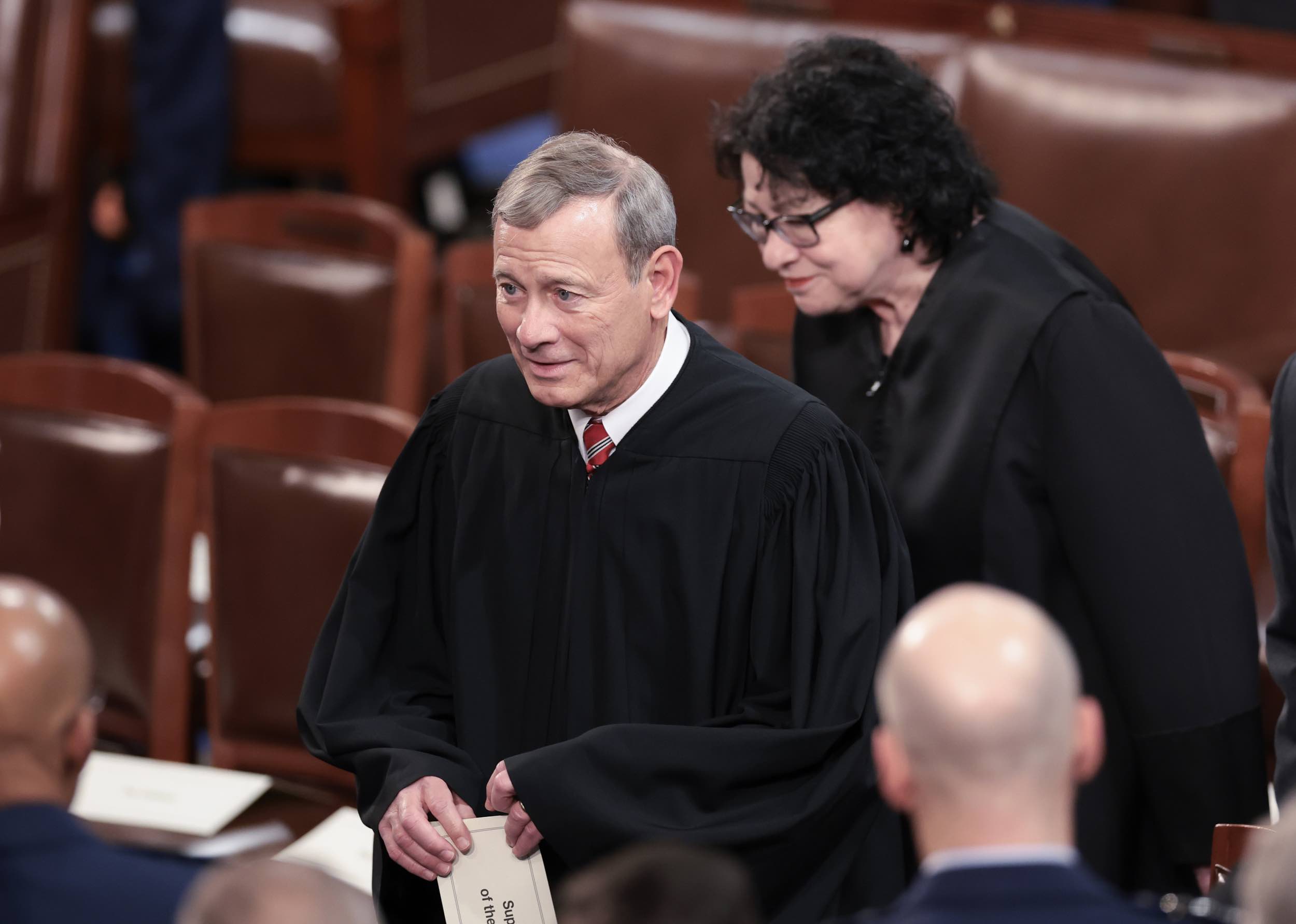
Enlarge / Supreme Court Chief Justice John Roberts and Associate Justice Sonia Sotomayor arrive for President Joe Biden’s State of the Union address on March 7, 2024, in Washington, DC.
Getty Images | Win McNamee

Supreme Court justices yesterday expressed skepticism about whether federal government officials should face limits on their communications with social media networks like Facebook.

The Supreme Court previously stayed a lower-court injunction that would prevent the Biden administration from pressuring social media firms to take down content and yesterday heard oral arguments in the case brought against the US government by the Missouri and Louisiana attorneys general.

Louisiana Solicitor General J. Benjamin Aguiñaga faced skepticism from both liberal and conservative justices. Justice Amy Coney Barrett raised a hypothetical in which Louisiana state officials are doxed and targeted by threats made on social media.

“The FBI sees these posts and calls the social media outlet, like X, Facebook, whatever, and says, ‘we really encourage you to take these down because these are significantly threatening and we see some people may be responding to them.’ That’s a problem?” Barrett asked.

Aguiñaga said that “the FBI absolutely can identify certain troubling situations like that for the platforms and let the platforms take action,” but said the specifics of each hypothetical “are very important.”

Barrett replied, “but that’s just kind of falling back on, ‘well, this case is different, this case is different, and so a different legal standard should apply.’ But, you know, what we say in this case matters for other cases, too.”

“Epidemic” of broad injunctions

In this case, an injunction against US officials said they “shall take no actions, formal or informal, directly or indirectly, to coerce or significantly encourage social-media companies to remove, delete, suppress, or reduce, including through altering their algorithms, posted social-media content containing protected free speech.”

Justice Neil Gorsuch said the Supreme Court has seen “an epidemic” of what he called “universal injunctions” that affect people who aren’t directly involved in the case at hand. “Normally, our remedies are tailored to those who are actually complaining before us and not to those who aren’t,” Gorsuch said.

Aguiñaga said he wouldn’t object to the injunction being narrowed to just the specific platforms and plaintiffs involved in the case as long as the Supreme Court says “something in our favor on the merits. The government can’t just run rampant pressuring the platforms to censor private speech.”

Missouri and Louisiana alleged that the US government violated the First Amendment by colluding with social networks “to suppress disfavored speakers, viewpoints, and content.” The content included posts about vaccine side effects, pandemic lockdowns, the COVID-19 lab-leak theory, allegations of election fraud, and the Hunter Biden laptop story. There were several individual plaintiffs in addition to the Missouri and Louisiana attorneys general.

The US Court of Appeals for the 5th Circuit ruled that the White House and FBI likely violated the First Amendment by coercing social media platforms into moderating content and changing their moderation policies. The case had gone to the 5th Circuit appeals after a US District judge issued a sweeping injunction ordering the administration to halt a wide range of communications with social media companies.

The 5th Circuit narrowed that injunction, throwing out most of it but maintaining the previously mentioned provision that says officials may not “coerce or significantly encourage social-media companies.”

Debate about terrorist speech

The Biden administration has argued that its attempts to influence content moderation were persuasion, not coercion. Government officials were “urging platforms to remove COVID-19 misinformation, highlighting the risk of disinformation from foreign actors, and responding to the platforms’ inquiries about matters of public health,” the Biden administration has stated.

Yesterday, Justice Sonia Sotomayor criticized a brief filed by Louisiana. “I have such a problem with your brief, counselor,” Sotomayor said. “You omit information that changes the context of some of your claims. You attribute things to people who it didn’t happen to. At least in one of the defendants, it was her brother that something happened to, not her. I don’t know what to make of all this because… I’m not sure how we get to prove direct injury in any way.”

Justice Elena Kagan discussed how law enforcement officials might contact a social media company about terrorists posting on their platform. A law enforcement agency might tell the platform, “you are hosting a lot of terrorist speech, which is going to increase the chances that there’s going to be some terrible harm that’s going to take place, and we want to give you this information, we want to try to persuade you to take it down,” Kagan said.

Aguiñaga responded, “the government can absolutely do that, Justice Kagan.” He said that terrorist activity and criminal activity “is not protected speech.”

Kagan countered, “Well, that might be protected speech. I mean, terrorists engage in, you know, things that come under the First Amendment. Let’s say they’re just recruiting people for their organizations.” Kagan also said that “decades ago, it happened all the time, which is somebody from the White House got in touch with somebody from The Washington Post and said, ‘this will just harm national security,’ and The Washington Post said, ‘okay, whatever you say.'”

https://arstechnica.com/?p=2011262


Dell tells remote workers that they won’t be eligible for promotion

A woman in a bright yellow jacket is sitting in front of a laptop in emotional tension.

Starting in May, Dell employees who are fully remote will not be eligible for promotion, Business Insider (BI) reported Saturday. The upcoming policy update represents a dramatic reversal from Dell’s prior stance on work from home (WFH), which included CEO Michael Dell saying: “If you are counting on forced hours spent in a traditional office to create collaboration and provide a feeling of belonging within your organization, you’re doing it wrong.”

Dell employees will mostly all be considered “remote” or “hybrid” starting in May, BI reported. Hybrid workers have to come into the office at least 39 days per quarter, Dell confirmed to Ars Technica, which equates to approximately three times a week. Those who would prefer to never commute to an office will not “be considered for promotion, or be able to change roles,” BI reported.

“For remote team members, it is important to understand the trade-offs: Career advancement, including applying to new roles in the company, will require a team member to reclassify as hybrid onsite,” Dell’s memo to workers said, per BI.

Dell didn’t respond to specific questions Ars Technica sent about the changes but sent a statement saying: “In today’s global technology revolution, we believe in-person connections paired with a flexible approach are critical to drive innovation and value differentiation.”

BI said it saw a promotion offer that a remote worker received that said that accepting the position would require coming into an “approved” office, which would mean that the employee would need to move out of their state.

Dell used to be pro-WFH

Dell’s history with remote workers started before the COVID-19 pandemic, over 10 years ago. Before 2020, 65 percent of Dell workers were already working remotely at least one day per week, per a blog that CEO Michael Dell penned via LinkedIn in September 2022. An anonymous Dell worker who reportedly has been remote for over 10 years and that BI spoke with estimated that 10 to 15 percent “of every team was remote” at Dell.

Michael Dell used to be a WFH advocate. In his 2022 blog post, he addressed the question of whether working in an office created “an advantage when it comes to promotion, performance, engagement or rewards,” determining:

At Dell, we found no meaningful differences for team members working remotely or office-based even before the pandemic forced everyone home. And when we asked our team members again this year, 90 percent of them said everyone has the opportunity to develop and learn new skills in our organization. The perception of unequal opportunity is just one of the myths of hybrid work …

At the time, Dell’s chief described the company as “committed to allow team members around the globe to choose the work style that best fits their lifestyle—whether that is remote or in an office or a blend of the two.” But the upcoming limitations for fully remote workers could be interpreted as Dell discouraging workers from working from home.

“We’re being forced into a position where either we’re going to be staying as the low man on the totem pole, first on the chopping block when it comes to workforce reduction, or we can be hybrid and go in multiple days a week, which really affects a lot of us,” an anonymous employee told BI.

Dell’s new WFH policy follows the February 2023 layoffs of about 6,650 workers, or around 5 percent of employees. Unnamed employees that BI spoke with showed concerns that the upcoming policy is an attempt to get people to quit so that Dell can save money on human resources without the severance costs of layoffs. Others are concerned that the rule changes will disproportionately affect women.

Meanwhile, the idea of return-to-office mandates helping businesses is being challenged. For example, a study by University of Pittsburgh researchers of some S&P 500 businesses found that return-to-office directives hurt employee morale and do not boost company finances.

https://arstechnica.com/?p=2010907