Tesla settles with Black worker after $3.2 million verdict in racism lawsuit

Aerial view of Tesla cars in a parking lot at a Tesla facility.
Enlarge / Tesla cars sit in a parking lot at the company’s factory in Fremont, California on October 19, 2022.
Getty Images | Justin Sullivan

Tesla has settled with a Black former factory worker who won a $3.2 million judgment in a racial discrimination case, a court filing on Friday said.

Both sides were challenging the $3.2 million verdict in a federal appeals court but agreed to dismiss the case in the Friday filing. The joint stipulation for dismissal said that “the Parties have executed a final, binding settlement agreement that fully resolves all claims.”

Tesla presumably agreed to pay Owen Diaz some amount less than $3.2 million, ending a case in which Diaz was once slated to receive $137 million. As we’ve previously written, a jury in US District Court for the Northern District of California ruled that Tesla should pay $137 million to Diaz in October 2021.

In April 2022, US District Judge William Orrick reduced the award to $15 million, saying that was the highest amount supported by the evidence and law. Diaz rejected the $15 million award and sought a new damages trial, but a new jury awarded him $3.2 million in April 2023.

Diaz’s attorney, Lawrence Organ of the California Civil Rights Law Group, told CNBC that the parties “reached an amicable resolution of their disputes.” The settlement terms are confidential, he said.

“It took immense courage for Owen Diaz to stand up to a company the size of Tesla,” Organ said. The California Civil Rights Law Group is separately representing thousands of Black workers in a class action alleging that they faced discrimination and harassment while working at Tesla’s factory in Fremont, California.

“Tesla factory was saturated with racism”

Diaz operated a freight elevator at Tesla’s Fremont factory for less than a year beginning in June 2015. “In May 2016, he was ‘separated’ from Tesla without prior warning,” Orrick wrote in the April 2022 ruling that awarded Diaz $1.5 million in compensatory damages and $13.5 million in punitive damages.

“The evidence was disturbing,” Orrick wrote. “The jury heard that the Tesla factory was saturated with racism. Diaz faced frequent racial abuse, including the N-word and other slurs. Other employees harassed him. His supervisors and Tesla’s broader management structure did little or nothing to respond. And supervisors even joined in on the abuse, one going so far as to threaten Diaz and draw a racist caricature near his workstation.”

A Tesla filing in March 2023 argued that “no reasonable jury, properly instructed, could award any punitive damages against Tesla on the record here.” Tesla said it “enforced a policy prohibiting racially hostile conduct,” that it “took concrete and significant steps to remedy each and every racial incident Mr. Diaz reported,” and “likewise took concrete and significant steps to remedy other racially inappropriate conduct of which it was aware.”

Tesla is also facing lawsuits from the California Civil Rights Department and the US Equal Employment Opportunity Commission over alleged discrimination and harassment.

https://arstechnica.com/?p=2010942


Security footage of Boeing repair before door-plug blowout was overwritten

NTSB Chair Jennifer Homendy sitting in front of a microphone while testifying at a Senate hearing.
Enlarge / National Transportation Safety Board Chair Jennifer Homendy testifies about the Boeing door-plug investigation before the Senate Commerce, Science, and Transportation Committee on March 6, 2024, in Washington, DC.
Getty Images | Kevin Dietsch

A government investigation into a Boeing 737 Max 9 plane’s door-plug blowout has been hampered by a lack of repair records and security camera footage, the National Transportation Safety Board’s chair told US senators. Boeing was “unable to find the records” and told the NTSB that the security camera footage was overwritten.

“To date, we still do not know who performed the work to open, reinstall, and close the door plug on the accident aircraft,” NTSB Chair Jennifer Homendy wrote Wednesday in a letter to leaders of the Senate Commerce, Science, and Transportation Committee. “Boeing has informed us that they are unable to find the records documenting this work. A verbal request was made by our investigators for security camera footage to help obtain this information; however, they were informed the footage was overwritten. The absence of those records will complicate the NTSB’s investigation moving forward.”

A Boeing spokesperson told Ars today that under the company’s standard practice, “video recordings are maintained on a rolling 30-day basis” before being overwritten. The NTSB’s preliminary report on the investigation said the airplane was delivered to Alaska Airlines on October 31, 2023, after a repair in a Boeing factory. On January 5, the plane was forced to return to Portland International Airport in Oregon when a passenger door plug blew off the aircraft during flight.

The NTSB’s preliminary report found that four bolts were missing from the door plug, which can be used instead of an emergency exit door. There was “no evidence” that the door plug “was opened after leaving Boeing’s facility,” indicating that the bolts were not re-installed at the factory. The plane was serviced at Boeing’s Renton, Washington, facility to replace five damaged rivets in a job that required opening the door plug.

“We will continue supporting this investigation in the transparent and proactive fashion we have supported all regulatory inquiries into this accident,” Boeing said in a statement provided to Ars. “We have worked hard to honor the rules about the release of investigative information in an environment of intense interest from our employees, customers, and other stakeholders, and we will continue our efforts to do so.”

Chair called Boeing CEO to seek employee names

Homendy’s letter to Senate Commerce Committee Chair Maria Cantwell (D-Wash.) and Ranking Member Ted Cruz (R-Texas) responded to questions raised at a committee hearing last week. The questions were related to “whether Boeing has provided documentation on the work to open, reinstall, and close the door plug,” and the identities of door crew employees, the letter noted.

“NTSB investigators first requested documents that would have contained this information from Boeing on January 9, 2024,” the letter said. “Shortly thereafter, we identified the door crew manager and were advised that he was out on medical leave. We requested status updates on February 15, 2024, and February 22, 2024, after which we were advised by his attorney that he would not be able to provide a statement or interview to NTSB due to medical issues.”

Boeing provided the names of some people who were familiar with the door-plug work, but the NTSB said it wanted a more exhaustive list to prepare for investigative interviews. On March 2, NTSB investigators asked Boeing for the names of all employees who reported to the door crew manager at the time of the repair in September 2023. Boeing provided the list but “did not identify which personnel conducted the door plug work,” the letter said.

“After NTSB received this list, I called Boeing Chief Executive Officer David Calhoun and asked for the names of the people who performed the work,” Homendy wrote. “He stated he was unable to provide that information and maintained that Boeing has no records of the work being performed.”

NTSB seeks info on Boeing quality-assurance and safety

Homendy told senators that the agency is not seeking the names for punitive purposes. “We want to speak with them to learn about Boeing’s quality-assurance processes and safety culture. Our only intent is to identify deficiencies and recommend safety improvements so accidents like this never happen again,” she wrote.

Homendy wrote that she is “increasingly concerned that the focus on the names of individual front-line workers will negatively impact our investigation and discourage such Boeing employees from providing NTSB with information relevant to this investigation.” To counter those fears, Homendy “instructed NTSB to utilize our authority to protect the identities of the door crew and other front-line employees who come forward with information relevant to the investigation.”

Homendy also sent a letter to Boeing on Wednesday reminding the company that until the investigation concludes, “only appropriate NTSB personnel are authorized to publicly disclose investigative information and, even then, the disclosure is limited to factual information verified during the course of the investigation.”

“For the public to perceive the investigation as credible, the investigation should speak with one voice—that being the voice of the independent agency conducting it,” Homendy told Boeing in the letter.

https://arstechnica.com/?p=2010609


Public officials can block haters—but only sometimes, SCOTUS rules

Public officials can block haters—but only sometimes, SCOTUS rules

There are some circumstances where government officials are allowed to block people from commenting on their social media pages, the Supreme Court ruled Friday.

According to the Supreme Court, the key question is whether officials are speaking as private individuals or on behalf of the state when posting online. Issuing two opinions, the Supreme Court declined to set a clear standard for when personal social media use constitutes state speech, leaving each unique case to be decided by lower courts.

Instead, SCOTUS provided a test for courts to decide first if someone is or isn’t speaking on behalf of the state on their social media pages, and then if they actually have authority to act on what they post online.

The ruling suggests that government officials can block people from commenting on personal social media pages where they discuss official business when that speech cannot be attributed to the state and merely reflects personal remarks. This means that blocking is acceptable when the official has no authority to speak for the state or exercise that authority when speaking on their page.

That authority empowering officials to speak for the state could be granted by a written law. It could also be granted informally if officials have long used social media to speak on behalf of the state to the point where their power to do so is considered “well-settled,” one SCOTUS ruling said.

SCOTUS broke it down like this: An official might be viewed as speaking for the state if the social media page is managed by the official’s office, if a city employee posts on their behalf to their personal page, or if the page is handed down from one official to another when terms in office end.

Posting on a personal page might also be considered speaking for the state if the information shared has not already been shared elsewhere.

Examples of officials clearly speaking on behalf of the state include a mayor holding a city council meeting online or an official using their personal page as an official channel for comments on proposed regulations.

Because SCOTUS did not set a clear standard, officials risk liability when blocking followers on so-called “mixed use” social media pages, SCOTUS cautioned. That liability could be diminished by keeping personal pages entirely separate or by posting a disclaimer stating that posts represent only officials’ personal views and not efforts to speak on behalf of the state. But any official using a personal page to make official comments could expose themselves to liability, even with a disclaimer.

SCOTUS test for when blocking is OK

These clarifications came in two SCOTUS opinions addressing conflicting outcomes in two separate complaints about officials in California and Michigan who blocked followers heavily criticizing them on Facebook and X. The lower courts’ decisions have been vacated, and courts must now apply the Supreme Court’s test to issue new decisions in each case.

One opinion was brief and unsigned, discussing a case where California parents sued school district board members who blocked them from commenting on public Twitter pages used for campaigning and discussing board issues. The board members claimed they blocked their followers after the parents left dozens and sometimes hundreds of the same exact comments on tweets.

In the second—which was unanimous, with no dissenting opinions—Justice Amy Coney Barrett responded at length to a case from a Facebook user named Kevin Lindke. This opinion provides varied guidance that courts can apply when considering whether blocking is appropriate or violating constituents’ First Amendment rights.

Lindke was blocked by a Michigan city manager, James Freed, after leaving comments criticizing the city’s response to COVID-19 on a page that Freed created as a college student sometime before 2008. Among these comments, Lindke called the city’s pandemic response “abysmal” and told Freed that “the city deserves better.” On a post showing Freed picking up a takeout order, Lindke complained that residents were “suffering,” while Freed ate at expensive restaurants.

After Freed hit 5,000 followers, he converted the page to reflect his public figure status. But while he primarily still used the page for personal posts about his family and always managed the page himself, the page went into murkier territory when he also shared updates about his job as city manager. Those updates included sharing updates on city efforts, posting screenshots of city press releases, and soliciting public feedback, like sharing links to city surveys.

https://arstechnica.com/?p=2010572


Pornhub blocks all of Texas to protest state law—Paxton says “good riddance”

Large signs that say
Enlarge / Signs displayed at the Pornhub booth at the 2024 AVN Adult Entertainment Expo at Resorts World Las Vegas on January 25, 2024 in Las Vegas, Nevada.
Getty Images | Ethan Miller /

Pornhub has disabled its website in Texas following a court ruling that upheld a state law requiring age-verification systems on porn websites. Visitors to pornhub.com in Texas are now greeted with a message calling the Texas law “ineffective, haphazard, and dangerous.”

“As you may know, your elected officials in Texas are requiring us to verify your age before allowing you access to our website. Not only does this impinge on the rights of adults to access protected speech, it fails strict scrutiny by employing the least effective and yet also most restrictive means of accomplishing Texas’s stated purpose of allegedly protecting minors,” Pornhub’s message said.

Pornhub said it has “made the difficult decision to completely disable access to our website in Texas. In doing so, we are complying with the law, as we always do, but hope that governments around the world will implement laws that actually protect the safety and security of users.”

The same message was posted on other sites owned by the same company, including RedTube, YouPorn, and Brazzers. Pornhub has also blocked its website in Arkansas, Mississippi, Montana, North Carolina, Utah, and Virginia in protest of similar laws. VPN services can be used to evade the blocks and to test out which states have been blocked by Pornhub.

Texas AG sued Pornhub, says “good riddance”

The US Court of Appeals for the 5th Circuit upheld the Texas law in a 2–1 decision last week. The 5th Circuit appeals court had previously issued a temporary stay that allowed the law to take effect in September 2023.

Texas Attorney General Ken Paxton last month sued Pornhub owner Aylo (formerly MindGeek) for violating the law. Paxton’s complaint in Travis County District Court sought civil penalties of up to $10,000 for each day since the law took effect on September 19, 2023.

“Sites like Pornhub are on the run because Texas has a law that aims to prevent them from showing harmful, obscene material to children,” Paxton wrote yesterday. “We recently secured a major victory against PornHub and other sites that sought to block this law from taking effect. In Texas, companies cannot get away with showing porn to children. If they don’t want to comply, good riddance.”

The 5th Circuit panel majority held that the Texas porn-site law should be reviewed on the “rational-basis” standard and not under strict scrutiny. In a dissent, Judge Patrick Higginbotham wrote that the law should face strict scrutiny because it “limits access to materials that may be denied to minors but remain constitutionally protected speech for adults.”

“[T]he Supreme Court has unswervingly applied strict scrutiny to content-based regulations that limit adults’ access to protected speech,” Higginbotham wrote.

Pornhub wants device-based age verification instead

Pornhub’s message to Texas users argued that “providing identification every time you want to visit an adult platform is not an effective solution for protecting users online, and in fact, will put minors and your privacy at risk.” Pornhub said that in other states with age-verification laws, “such bills have failed to protect minors, by driving users from those few websites which comply, to the thousands of websites, with far fewer safety measures in place, which do not comply.”

Pornhub’s message advocated for a device-based approach to age verification in which “personal information that is used to verify the user’s age is either shared in-person at an authorized retailer, inputted locally into the user’s device, or stored on a network controlled by the device manufacturer or the supplier of the device’s operating system.”

Pornhub says this could be used to prevent underage users from accessing age-restricted content without requiring websites to verify ages themselves. “To come to fruition, such an approach requires the cooperation of manufacturers and operating-system providers,” Pornhub wrote.

The age-verification question could eventually go to the Supreme Court. “This opinion will be appealed to the Supreme Court, alongside other cases over statutes imposing mandatory age authentication,” Santa Clara University law professor Eric Goldman wrote.

The 5th Circuit panel majority’s analysis relied on Ginsberg v. New York, a 1968 Supreme Court ruling about the sale of “girlie” magazines to a 16-year-old at a lunch counter. Goldman criticized the 5th Circuit for relying on Ginsburg “instead of the squarely on-point 1997 Reno v. ACLU and 2004 Ashcroft v. ACLU opinions, both of which dealt with the Internet.” Goldman argued that decisions upholding laws like the Texas one could open the door to “rampant government censorship.”

The Free Speech Coalition, an adult-industry lobby group that sued Texas over its law, said it “disagree[s] strenuously with the analysis of the Court majority. As the dissenting opinion by Judge Higginbotham makes clear, this ruling violates decades of precedent from the Supreme Court.” The group is considering its “next steps in regard to both this lawsuit and others.”

https://arstechnica.com/?p=2010517


US government agencies demand fixable ice cream machines

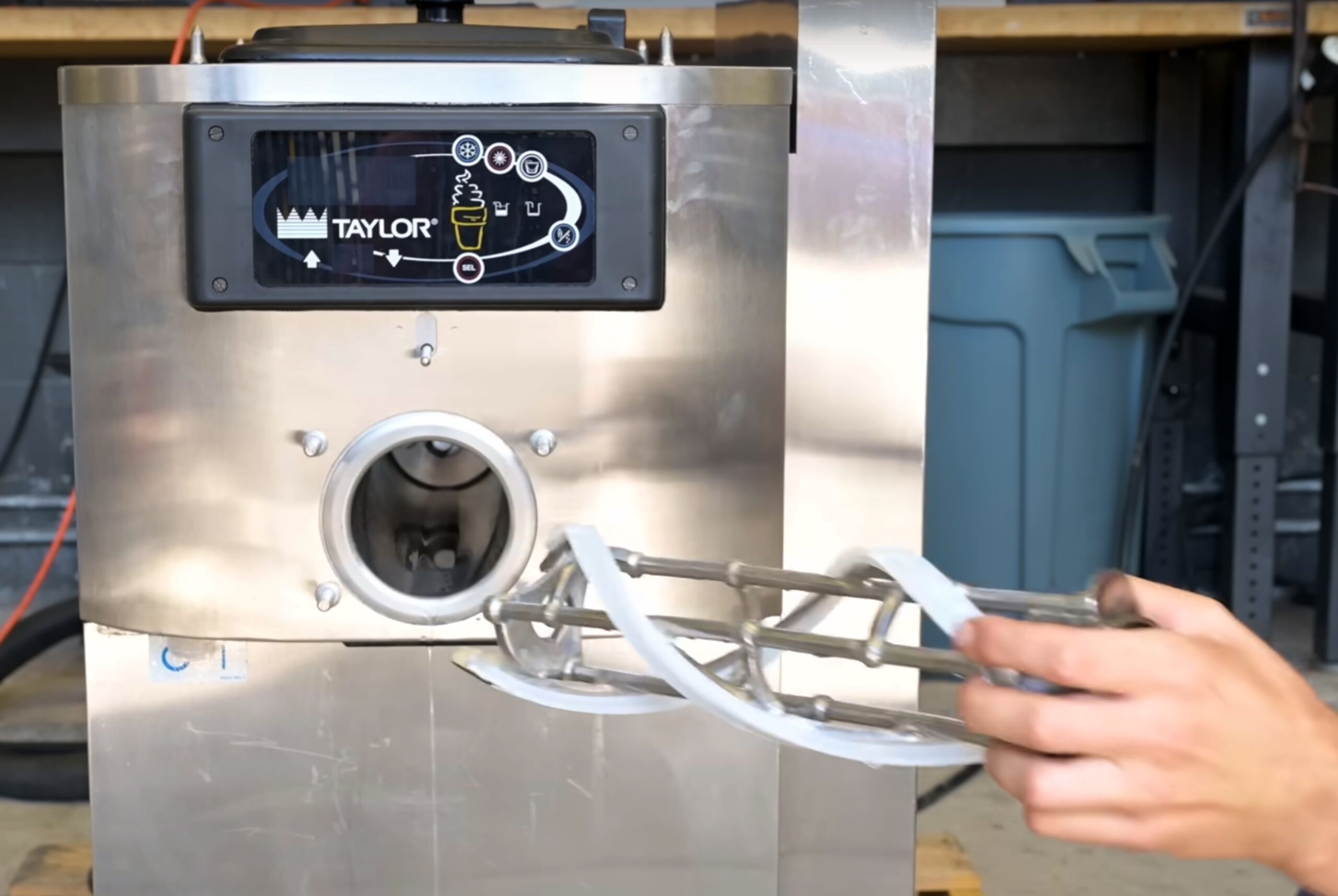
Taylor ice cream machine, with churning spindle removed by hand.
Enlarge / Taylor’s C709 Soft Serve Freezer isn’t so much mechanically complicated as it is a software and diagnostic trap for anyone without authorized access.

Many devices have been made difficult or financially nonviable to repair, whether by design or because of a lack of parts, manuals, or specialty tools. Machines that make ice cream, however, seem to have a special place in the hearts of lawmakers. Those machines are often broken and locked down for only the most profitable repairs.

The Federal Trade Commission and the antitrust division of the Department of Justice have asked the US Copyright Office (PDF) to exempt “commercial soft serve machines” from the anti-circumvention rules of Section 1201 of the Digital Millennium Copyright Act (DMCA). The governing bodies also submitted proprietary diagnostic kits, programmable logic controllers, and enterprise IT devices for DMCA exemptions.

“In each case, an exemption would give users more choices for third-party and self-repair and would likely lead to cost savings and a better return on investment in commercial and industrial equipment,” the joint comment states. Those markets would also see greater competition in the repair market, and companies would be prevented from using DMCA laws to enforce monopolies on repair, according to the comment.

The joint comment builds upon a petition filed by repair vendor and advocate iFixit and interest group Public Knowledge, which advocated for broad reforms while keeping a relatable, ingestible example at its center. McDonald’s soft serve ice cream machines, which are famously frequently broken, are supplied by industrial vendor Taylor. Taylor’s C709 Soft Serve Freezer requires lengthy, finicky warm-up and cleaning cycles, produces obtuse error codes, and, perhaps not coincidentally, costs $350 per 15 minutes of service for a Taylor technician to fix. iFixit tore down such a machine, confirming the lengthy process between plugging in and soft serving.

After one company built a Raspberry Pi-powered device, the Kytch, that could provide better diagnostics and insights, Taylor moved to ban franchisees from installing the device, then offered up its own competing product. Kytch has sued Taylor for $900 million in a case that is still pending.

Beyond ice cream, the petitions to the Copyright Office would provide more broad exemptions for industrial and commercial repairs that require some kind of workaround, decryption, or other software tinkering. Going past technological protection measures (TPMs) was made illegal by the 1998 DMCA, which was put in place largely because of the concerns of media firms facing what they considered rampant piracy.

Every three years, the Copyright Office allows for petitions to exempt certain exceptions to DMCA violations (and renew prior exemptions). Repair advocates have won exemptions for farm equipment repair, video game consoles, cars, and certain medical gear. The exemption is often granted for device fixing if a repair person can work past its locks, but not for the distribution of tools that would make such a repair far easier. The esoteric nature of such “release valve” offerings has led groups like the EFF to push for the DMCA’s abolishment.

DMCA exemptions occur on a parallel track to state right-to-repair bills and broader federal action. President Biden issued an executive order that included a push for repair reforms. The FTC has issued studies that call out unnecessary repair restrictions and has taken action against firms like Harley-Davidson, Westinghouse, and grill maker Weber for tying warranties to an authorized repair service.

Disclosure: Kevin Purdy previously worked for iFixit. He has no financial ties to the company.

https://arstechnica.com/?p=2010468


FCC scraps old speed benchmark, says broadband should be at least 100Mbps

FCC scraps old speed benchmark, says broadband should be at least 100Mbps
Getty Images | Yuichiro Chino

The Federal Communications Commission today voted to raise its Internet speed benchmark for the first time since January 2015, concluding that modern broadband service should provide at least 100Mbps download speeds and 20Mbps upload speeds.

An FCC press release after today’s 3-2 vote said the 100Mbps/20Mbps benchmark “is based on the standards now used in multiple federal and state programs,” such as those used to distribute funding to expand networks. The new benchmark also reflects “consumer usage patterns, and what is actually available from and marketed by Internet service providers,” the FCC said.

The previous standard of 25Mbps downstream and 3Mbps upstream lasted through the entire Trump era and most of President Biden’s term. There’s been a clear partisan divide on the speed standard, with Democrats pushing for a higher benchmark and Republicans arguing that it shouldn’t be raised.

The standard is partly symbolic but can indirectly impact potential FCC regulations. The FCC is required under US law to regularly evaluate whether “advanced telecommunications capability is being deployed to all Americans in a reasonable and timely fashion” and to “take immediate action to accelerate deployment” and promote competition if current deployment is not “reasonable and timely.”

With a higher speed standard, the FCC is more likely to conclude that broadband providers aren’t moving toward universal deployment fast enough and to take regulatory actions in response. During the Trump era, FCC Chairman Ajit Pai’s Republican majority ruled that 25Mbps download and 3Mbps upload speeds should still count as “advanced telecommunications capability,” and concluded that the telecom industry was doing enough to extend advanced telecom service to all Americans.

2-2 deadlock delayed benchmark increase

Democrat Jessica Rosenworcel has been the FCC chairwoman since 2021 and was calling for a speed increase even before being promoted to the commission’s top spot. Rosenworcel formally proposed the 100Mbps/20Mbps standard in July 2022, but the FCC had a 2-2 partisan deadlock at the time and the 25Mbps/3Mbps standard stayed in place a while longer.

Biden’s first nominee to fill an empty FCC seat was stonewalled by the Senate, but Democrats finally got a 3-2 majority when Biden’s second pick was confirmed in September 2023. Today’s 3-2 party-line vote approved the 100Mbps/20Mbps standard and a report concluding “that advanced telecommunications capability is not being deployed in a reasonable and timely fashion,” the FCC said in its press release.

That conclusion is “based on the total number of Americans, Americans in rural areas, and people living on Tribal lands who lack access to such capability, and the fact that these gaps in deployment are not closing rapidly enough,” the press release said. Based on data from December 2022, the FCC said that fixed broadband service (excluding satellite) “has not been physically deployed to approximately 24 million Americans, including almost 28 percent of Americans in rural areas, and more than 23 percent of people living on Tribal lands.”

A draft of the FCC report was released before the meeting. “Based on our evaluation of available data, we can no longer conclude that broadband at speeds of 25/3Mbps—the fixed benchmark established in 2015 and relied on in the last seven reports—supports ‘advanced’ functions,” the report said. “We find that having ‘advanced telecommunications capability’ for fixed broadband service requires access to download speeds of at least 100Mbps and upload speeds of at least 20Mbps. The record overwhelmingly supports increasing the fixed speed benchmark in this manner.”

The report also sets a “long-term speed goal” of 1Gbps download speeds paired with 500Mbps upload speeds. The FCC said it intends to use this speed goal “as a guidepost for evaluating our efforts to encourage deployment.”

https://arstechnica.com/?p=2010386


“Really bad timing”: Meta is killing misinformation analysis tool on August 14

The Facebook app logo is being displayed on a mobile phone in Colombo, Sri Lanka, on March 5, 2024.

Meta is discontinuing data analysis tool CrowdTangle on August 14. The closure will come three months ahead of the next US presidential election and three years after it was reported that the platform used for spotting misinformation on Facebook and Instagram was causing internal strife.

Meta acquired CrowdTangle in 2016. CrowdTangle has been used by researchers, reporters, and government officials to identify trends about conspiracies and other forms of misinformation spreading through Facebook. Meta is going to replace CrowdTangle with a technology currently under development called Meta Content Library, but it will only be available to academic and nonprofit researchers. For-profit organizations, like many news organizations, will lose access, as The Wall Street Journal points out.

Previously, CrowdTangle had some features available to the public, like Live Displays, which tracked how people discussed trending topics on certain social media channels like Facebook Pages. Journalists working at for-profit news outlets were able to apply for access to the full CrowdTangle service, as were publishers, including music labels, content creators, and public figures.

While announcing CrowdTangle’s closure date today, Nick Clegg, president of global affairs at Meta, claimed that five months’ notice “should give people time to complete any current projects they are using it for and, if eligible, to get up to speed with our new research tools, Meta Content Library and API, or others that serve their needs.”

However, in a conversation with WSJ, Cody Buntain, a researcher at the University of Maryland’s College of Information Studies who has used the beta version of Meta Content Library, told WSJ that CrowdTangle’s EOL date is “really bad timing,” pointing to researchers looking to draw data from Facebook and Instagram throughout the 2024 election campaigns.

Meta first announced it was shutting down CrowdTangle in 2022. At the time, Jesse Littlewood, VP of campaigns for voter advocacy group Common Cause, highlighted to Bloomberg the value of having CrowdTangle for insight into social media posts, noting, “We all know that the midterms are testing grounds for 2024, when the level of disinformation will be even higher.”

Meta is telling CrowdTangle users who don’t fit the criteria for Meta Content Library access to use third-party offerings or a Meta Business Suite feature called Insights. Insights, however, helps users “understand the results of your organic and paid social media efforts across Facebook and Instagram in one place,” per Meta, and therefore isn’t appropriate for all types of users who used CrowdTangle but won’t get access to Meta Content Library.

Users who had access to CrowdTangle will still have to apply for access to Meta Content Policy.

A thorn in Meta’s side

CrowdTangle helped create many headaches for Meta. For example, in 2020, New York Times journalist Kevin Roose started using CrowdTangle to share the “10 top-performing link posts by US Facebook pages every day, ranked by total interactions,” with some lists showing severe imbalance, such as 60 percent of the top 10 spots belonging to Ben Shapiro and 40 percent to Dan Bongino, both owners of far-right Facebook accounts.

A 2021 NYT report claimed that CrowdTangle was causing internal discord within Meta, with executives arguing over how much data Facebook should share with the public. Some executives were concerned that people were using CrowdTangle to uncover “unhelpful” trends, such as how much engagement Shapiro and Bongino received compared to news organizations, NYT reported.

Meta started pulling resources from CrowdTangle, including disassembling the team and no longer releasing new features, in 2021. Its former CEO, Brandon Silverman, left in October 2021.

With Meta battling a controversial reputation when it comes to the availability of misinformation and illegal activities on Facebook and Instagram, it is limiting the ability for whistleblowers to extrapolate information that could potentially be critical for reporting on dangerous trends.

According to Clegg, Meta’s Content Library and API tools “provide access to near real-time public content from Pages, Posts, Groups, and Events on Facebook, as well as from creator and business accounts on Instagram. Details about the content, such as the number of reactions, shares, comments and, for the first time, post view counts are also available.”

Speaking to WSJ, Meta noted that its new tool will still offer more insight than what TikTok and YouTube offer to non-academics.

However, beta testers told WSJ that Meta Content Library’s flaws currently include lacking geographic-specific data, having limits on the amount of data a search result can yield, and privacy restrictions preventing seemingly reasonable tasks, like downloading data on elected officials’ public posts. It’s possible that Meta will update these flaws and/or make improvements to the tool before and after August. Some beta testers are optimistic about Meta Content Policy’s potential, but there’s also skepticism around Meta’s commitment.

Rebekah Tromble, director of the Institute for Data, Democracy, and Politics at George Washington University and a Meta Content Library beta tester, told WSJ: “Meta has a track record of making big promises to researchers, getting positive press coverage, and then backtracking.”

https://arstechnica.com/?p=2010235


Bitcoin Fog operator convicted of laundering $400M in bitcoins on darknet

Bitcoin Fog operator convicted of laundering $400M in bitcoins on darknet

A US federal jury has convicted a dual Russian-Swedish national, Roman Sterlingov, for operating Bitcoin Fog, “the longest-running bitcoin money laundering service on the darknet,” the Department of Justice announced yesterday.

Sterlingov ran Bitcoin Fog from 2011 to 2021, moving over 1.2 million bitcoin (approximately $400 million) before he was arrested, the DOJ said. In the press release, Deputy Attorney General Lisa Monaco said that the DOJ was “relentless” in efforts to “painstakingly” trace bitcoin “through the blockchain to hold Sterlingov and his Bitcoin Fog enterprise to account.”

“Roman Sterlingov thought he could use the shadows of the Internet to launder hundreds of millions of dollars in bitcoin without getting caught,” Monaco said. “But he was wrong.”

Sterlingov faces a maximum penalty of 20 years in prison each for counts of money laundering conspiracy and sting money laundering. He was also convicted of “operating an unlicensed money transmitting business and money transmission without a license in the District of Columbia, which each carry a maximum penalty of five years in prison,” the DOJ said. Sentencing is scheduled for July.

Throughout the trial, Sterlingov maintained his innocence, accusing the US of relying on “junk science” to trace bitcoin using faulty blockchain analysis techniques, Wired reported.

“I did not create Bitcoin Fog,” Sterlingov told Wired in an interview from a Northern Virginia jail, likening his trial to “a Kafkaesque nightmare.”

But the DOJ “produced more than three terabytes of data related to the case,” Wired reported, showing “a trail of financial transactions from 2011 allegedly linking Sterlingov to payments made to register the Bitcoinfog.com domain.” From there, investigators used blockchain analysis to trace bitcoin payments that appeared to be Bitcoin Fog “test transations” ahead of the money laundering service’s launch.

Sterlingov told Wired that he was simply a Bitcoin Fog user but never served as the service’s operator and never used bitcoins for illegal activity.

Ultimately, “court documents and evidence presented at trial” proved that Sterlingov was Bitcoin Fog’s operator, the DOJ said, helming “the longest-running cryptocurrency ‘mixer,'” which gained “notoriety as a go-to money laundering service for criminals seeking to hide their illicit proceeds from law enforcement.” Investigators found that the bulk of cryptocurrency mixed through Bitcoin Fog” came from darknet marketplaces and was tied to illegal narcotics, computer crimes, identity theft, and child sexual abuse material.”

Bitcoin Fog launders money by charging a fee to mix bitcoins in a pool, redistributing the bitcoins in a way that supposedly makes it harder to trace and link bitcoins to the original source or associate bitcoins with illegal activity, Bleeping Computer explained.

In the DOJ’s announcement, Acting Assistant Attorney General Nicole M. Argentieri said that Sterlingov and his customers “believed they could use Bitcoin Fog to conceal these illicit transactions,” but the jury’s guilty verdict shows “that belief was mistaken.”

Sterlingov’s attorney, Tor Ekeland, told Ars that Sterlingov is “disappointed” and will be appealing, questioning both the choice of venue—which Ekeland thinks might be unconstitutional because the US Constitution requires that all federal criminal trials occur in the district where the crime occurred—and the DOJ’s tracing techniques.

“I think there’s significant issues here just involved in the tracing and the sufficiency of the evidence,” Ekeland told Ars.

Ekeland said that the government’s 2011 traces found what they identified as the first deposit into Bitcoin Fog, but there were many different addresses involved with that, and “the only reason” why Sterlingov got named is because he was the only one using Know Your Customer identification verification back then. Government witnesses, Ekeland said, admitted that this was consistent with him either selling bitcoin or hanging out with Bitcoin Fog founders, but not evidence of operating the service.

“Where’s the shred of evidence of him actually operating the site? Because that I still haven’t seen,” Ekeland said.

J.W. Verret, an associate professor at George Mason University’s law school who testified at the trial, was “sitting at the counsel table” when the verdict was read, Verret wrote for CoinTelegraph.

“It felt like I was punched in the stomach,” Verret wrote. “The only way my brain can process it is to focus on strategies for appeal.”

Verret had testified on how investigators’ techniques linking Sterlingov to Bitcoin Fog were flawed, briefly summarizing his views for CoinTelegraph before concluding that Sterlingov was “an easy mark to pin the operation of Fog onto.”

If techniques are flawed, that could complicate investigations happening globally. Bleeping Computer noted that worldwide, law enforcement is increasingly cracking down on cryptocurrency mixers, including Tornado Cash, ChipMixer, and Blender.io. Because of the links to criminal activity, law enforcement also has seemingly been collaborating more internationally. To arrest and convict Sterlingov, US law enforcement coordinated with Europol and Swedish and Romanian police.

In the DOJ’s press release, the IRS’ Criminal Investigation chief, Jim Lee, said that the IRS’ “special agents are specially equipped to follow the complex financial trail left by criminals, and we are dedicated to holding those accountable for crimes committed.” And US Attorney for the District of Columbia, Matthew Graves, issued a warning for anyone attempting to launder cryptocurrencies through mixers like Bitcoin Fog.

“Darknet criminals should know by now that operations like Bitcoin Fog cannot provide the anonymity for cryptocurrency transactions that they claim they can,” Graves said.

https://arstechnica.com/?p=2010017


Meta sues “brazenly disloyal” former exec over stolen confidential docs

Meta sues “brazenly disloyal” former exec over stolen confidential docs

A recently unsealed court filing has revealed that Meta has sued a former senior employee for “brazenly disloyal and dishonest conduct” while leaving Meta for an AI data startup called Omniva that The Information has described as “mysterious.”

According to Meta, its former vice president of infrastructure, Dipinder Singh Khurana (also known as T.S.), allegedly used his access to “confidential, non-public, and highly sensitive” information to steal more than 100 internal documents in a rushed scheme to poach Meta employees and borrow Meta’s business plans to speed up Omniva’s negotiations with key Meta suppliers.

Meta believes that Omniva—which Data Center Dynamics (DCD) reported recently “pivoted from crypto to AI cloud”—is “seeking to provide AI cloud computing services at scale, including by designing and constructing data centers.” But it was held back by a “lack of data center expertise at the top,” DCD reported.

The Information reported that Omniva began hiring Meta employees to fill the gaps in this expertise, including wooing Khurana away from Meta.

Last year, Khurana notified Meta that he was leaving on May 15, and that’s when Meta first observed Khurana’s allegedly “utter disregard for his contractual and legal obligations to Meta—including his confidentiality obligations to Meta set forth in the Confidential Information and Invention Assignment Agreement that Khurana signed when joining Meta.”

A Meta investigation found that during Khurana’s last two weeks at the company, he allegedly uploaded confidential Meta documents—including “information about Meta’s ‘Top Talent,’ performance information for hundreds of Meta employees, and detailed employee compensation information”—on Meta’s network to a Dropbox folder labeled with his new employer’s name.

“Khurana also uploaded several of Meta’s proprietary, highly sensitive, confidential, and non-public contracts with business partners who supply Meta with crucial components for its data centers,” Meta alleged. “And other documents followed.”

In addition to pulling documents, Khurana also allegedly sent “urgent” requests to subordinates for confidential information on a key supplier, including Meta’s pricing agreement “for certain computing hardware.”

“Unaware of Khurana’s plans, the employee provided Khurana with, among other things, Meta’s pricing-form agreement with that supplier for the computing hardware and the supplier’s Meta-specific preliminary pricing for a particular chip,” Meta alleged.

Some of these documents were “expressly marked confidential,” Meta alleged. Those include a three-year business plan and PowerPoints regarding “Meta’s future ‘roadmap’ with a key supplier” and “Meta’s 2022 redesign of its global-supply-chain group” that Meta alleged “would directly aid Khurana in building his own efficient and effective supply-chain organization” and afford a path for Omniva to bypass “years of investment.” Khurana also allegedly “uploaded a PowerPoint discussing Meta’s use of GPUs for artificial intelligence.”

Meta was apparently tipped off to this alleged betrayal when Khurana used his Meta email and network access to complete a writing assignment for Omniva as part of his hiring process. For this writing assignment, Khurana “disclosed non-public information about Meta’s relationship with certain suppliers that it uses for its data centers” when asked to “explain how he would help his potential new employer develop the supply chain for a company building data centers using specific technologies.”

In a seeming attempt to cover up the alleged theft of Meta documents, Khurana apparently “attempted to scrub” one document “of its references to Meta,” as well as removing a label marking it “CONFIDENTIAL—FOR INTERNAL USE ONLY.” But when replacing “Meta” with “X,” Khurana allegedly missed the term “Meta” in “at least five locations.”

“Khurana took such action to try and benefit himself or his new employer, including to help ensure that Khurana would continue to work at his new employer, continue to receive significant compensation from his new employer, and/or to enable Khurana to take shortcuts in building his supply-chain team at his new employer and/or helping to build his new employer’s business,” Meta alleged.

Ars could not immediately reach Khurana for comment. Meta noted that he has repeatedly denied breaching his contract or initiating contact with Meta employees who later joined Omniva. He also allegedly refused to sign a termination agreement that reiterates his confidentiality obligations.

https://arstechnica.com/?p=2009959


EU votes to ban riskiest forms of AI and impose restrictions on others

Illustration of a European flag composed of computer code
Getty Images | BeeBright

The European Parliament today voted to approve the Artificial Intelligence Act, which will ban uses of AI “that pose unacceptable risks” and impose regulations on less risky types of AI.

“The new rules ban certain AI applications that threaten citizens’ rights, including biometric categorisation systems based on sensitive characteristics and untargeted scraping of facial images from the Internet or CCTV footage to create facial recognition databases,” a European Parliament announcement today said. “Emotion recognition in the workplace and schools, social scoring, predictive policing (when it is based solely on profiling a person or assessing their characteristics), and AI that manipulates human behavior or exploits people’s vulnerabilities will also be forbidden.”

The ban on certain AI applications provides for penalties of up to 35 million euros or 7 percent of a firm’s “total worldwide annual turnover for the preceding financial year, whichever is higher.” Violations of other provisions have lower penalties.

There are exemptions to allow law enforcement use of remote biometric identification systems in certain cases. A European Commission summary of the legislation said:

All remote biometric identification systems are considered high-risk and subject to strict requirements. The use of remote biometric identification in publicly accessible spaces for law enforcement purposes is, in principle, prohibited.

Narrow exceptions are strictly defined and regulated, such as when necessary to search for a missing child, to prevent a specific and imminent terrorist threat or to detect, locate, identify or prosecute a perpetrator or suspect of a serious criminal offence.

“Strict obligations” for high-risk AI

The AI Act was supported by 523 members of the European Parliament (MEPs), while 46 voted against and 49 abstained. The legislation classifies AI into four categories of risk: unacceptable risk, high risk, limited risk, and minimal or no risk.

“High-risk AI systems will be subject to strict obligations before they can be put on the market,” the legislation summary said. Obligations include “adequate risk assessment and mitigation systems,” “logging of activity to ensure traceability of results,” “appropriate human oversight measures to minimise risk,” and other requirements.

The law drew opposition from the Computer & Communications Industry Association, a tech-industry lobby group.

“The agreed AI Act imposes stringent obligations on developers of cutting-edge technologies that underpin many downstream systems, and is therefore likely to slow down innovation in Europe,” the group said when a deal on the law was agreed to in December 2023. “Furthermore, certain low-risk AI systems will now be subjected to strict requirements without further justification, while others will be banned altogether. This could lead to an exodus of European AI companies and talent seeking growth elsewhere.”

The law will officially be on the books 20 days after its publication in the official Journal, the European Parliament announcement said. The law’s ban on prohibited practices will apply six months after that, but other regulations won’t take effect until later. The “obligations for high-risk systems” will only take effect after 36 months, the announcement said.

“We finally have the world’s first binding law on artificial intelligence, to reduce risks, create opportunities, combat discrimination, and bring transparency,” said MEP Brando Benifei, the Internal Market Committee co-rapporteur. An AI office will be formed “to support companies to start complying with the rules before they enter into force,” he said.

Risky AI categories

Examples of high-risk AI include AI used in robot-assisted surgery; credit scoring systems that can deny loans; law enforcement that may interfere with fundamental rights, such as evaluation of the reliability of evidence; and automated examination of visa applications.

The limited-risk category has to do with applications that aren’t transparent about AI usage. “The AI Act introduces specific transparency obligations to ensure that humans are informed when necessary, fostering trust,” the European Commission said. “For instance, when using AI systems such as chatbots, humans should be made aware that they are interacting with a machine so they can take an informed decision to continue or step back. Providers will also have to ensure that AI-generated content is identifiable.”

AI-generated text that is “published with the purpose to inform the public on matters of public interest must be labelled as artificially generated,” and this requirement “also applies to audio and video content constituting deep fakes.”

AI with minimal or no risk “includes applications such as AI-enabled video games or spam filters. The vast majority of AI systems currently used in the EU fall into this category,” the commission said. There would be no restrictions on this category.

https://arstechnica.com/?p=2009907