Microsoft on the future of advertising and conversational AI

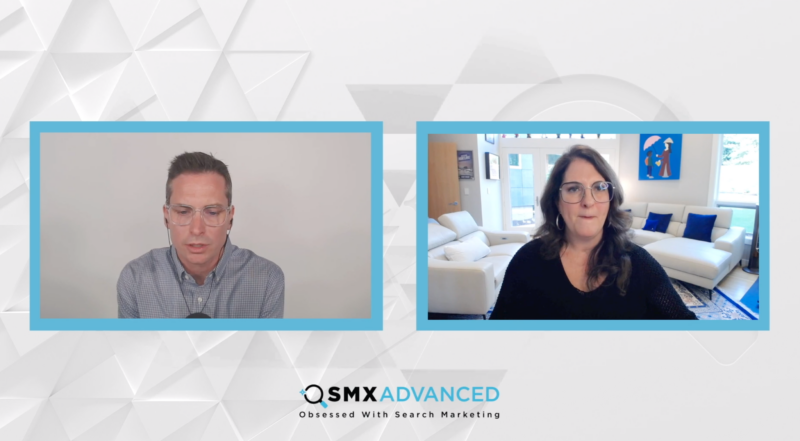
Microsoft is reviewing different ways to implement conversational AI within the Microsoft advertising platform, Kya Sainsbury-Carter, corporate vice president of Microsoft advertising, told Greg Finn yesterday at SMX Advanced.

That’s one thing we learned yesterday from the keynote, which explored how conversational AI might radically change search marketing.

From higher CTRs to increased ROIs to conversational AI making an appearance in ads for the first time, Bing Chat has been specifically designed to tackle universal problems experienced with traditional search, according to Sainsbury-Carter.

Here’s a recap of the wide-ranging SMX Advanced keynote interview.

Tackling traditional search issues

The new Bing, unveiled in February, was designed to succeed where traditional search results can sometimes fail.

  • “The universal problem with traditional search is that billions of searches fall short of the mark. It can be hard at times to find the information that people are seeking, and so we launched Bing Chat to bring better search results and answers to complex questions,” Sainsbury-Carter said.

Microsoft has worked on solving historic search issues by combining the power of large language models like open AIs with its own search index.

  • “This is to ensure we’re delivering results that are current, that are cited and, as I said, that are conversational,” Sainsbury-Carter said.

The new Bing for advertisers: ‘so far, so good’

While it may be early days, Microsoft has confirmed that there have already been more than half a billion Bing Chat conversations since its launch, with more than 70% thumbs up for the answers it serves.

In addition, people have created more than 200 million pictures with Bing Image Creator.

Early data indicates great news for advertisers too, as Microsoft’s conversational AI is driving a higher click-through rate than traditional search, which is subsequently leading to increased conversions.

  • “It’s because the user journey is shortened, so there is a faster path to conversions. So far, so good, would be the summary here,” Sainsbury-Carter said.

Sainsbury-Carter did not reveal any specific numbers. But she did reveal that increased CTR applies to both search results and ads, which is promising news for search marketers.

In more good news for advertisers: Microsoft is working on more opportunities for advertisers to further boost user engagement, which could again result in an uplift in conversions.

Conversational AI comes to Microsoft Ads

Sainsbury-Carter stressed that the company was committed to investing in integrating chat AI, noting that Bing Chat is “stronger than ever”. She added:

  • “We’re doing a lot of work to understand how we can use Chat to drive internal efficiencies to make sure our people are working on the highest valued, most complex work. So you know there’s the platform aspect of it and there’s the internal aspect of it – both of which we think are very meaningful.”

Get the daily newsletter search marketers rely on.


From keywords to topics

Microsoft has suggested that advertisers can expect traditional keyword targeting to shift towards a topic-centric approach with conversational AI. Explaining the change, Sainsbury-Carter said:

  • “If I’m trying to find a dress for a wedding in Chicago in July and I type in a traditional search query, I’m likely to get results for dresses for weddings – and for Chicago. But if I put that same query into Chat, Chat can put together something that says, OK, it’s hot and humid in July in that part of the country and therefore show me a sleeveless flowy dress and a lightweight fabric.
  • “What’s happening is we’re expanding our understanding of intent…rather than just matching answers to keywords and so it definitely turns the idea of keyword bids on its head. We think this offers a tremendous opportunity for ads to match the conversation better and will lead to better ROI.”

Rethinking traditional ads

Sainsbury-Carter explained that Microsoft is taking a new approach when it comes to ads, the user experience and ROI scenarios:

  • “We’re being more thoughtful about monetization within the experience. So, for example, in Chat mode, when you see sources cited, those citations will be a mix of algorithmic results, like you would see in traditional search, as well as some ad placements.”

Visual ads

Visual ads are another major newer feature that should be of interest to marketers, according to visual ads.

  • “The ads we’re running in the new Bing Chat experience include both text ads that appear upon hover, and then more visual ads served in line with the conversation, such as a multimedia vertical pr product ad.”

Microsoft is making visual ads a huge priority and has already been trialing this feature for hotel ads. Next, it’s planning to roll out this experience for travel and real estate verticals.

Although the spotlight is currently on conversational AI, Sainsbury-Carter said this isn’t the end of traditional search:

  • “Traditional search isn’t going away and there are good reasons to continue using it. That’s why we’re also focusing on delivering more visual and immersive experiences, as well as new vertical ad experience that you can’t find on any other platform.”

Ads quality over quantity

Bing Chat launched with ads and the plan is to ensure that they remain an integrated part of the chat experience – just as they are with traditional search. However, Microsoft is focusing on improving the ad experience by making sure that ads served are relevant and meet user intent.

  • “It’s less about how many people are seeing the ads and more about the questions people are asking the new Bing, and how we respond to those queries. That’s how we’re thinking about it – not so much about numbers but in terms of matching queries,” added Sainsbury-Carter.
Screenshot 2023 06 14 At 20.19.23 800x441

Huge opportunities for small businesses

Conversational AI is resulting in people running queries 3x the length seen on average in traditional search, meaning that they are giving more details. This extra information is helping bots to better understand user intent and so they are able to serve more detailed responses.

  • “We do see a big opportunity here for small businesses. They need that extra details because they’re not looking to cover the entire world…so that opportunity to get more detailed is key.”

Small local businesses looking to improve their SERP rankings have also been advised to ensure they have Bing maps on their website. “It’s not required for ads,” said Sainsbury-Carter. “But it does help!”

Driving traffic to news publishers

Microsoft has introduced a chat API, which is going to be made available to news publishers that want to implement chatbot technology in their websites.

Whether publishers source their AI chat experiences from Microsoft or not, Microsoft Advertising can help them to monetize their services by serving relevant ads designed specifically for the chat experience.

  • “This solution gives publishers and app companies flexibility and control over the user experience – because nobody knows their audience better than they do,” added Sainsbury-Carter. “They can choose the ad formats they believe are best for their audience and integrate that in a way that feels most natural to their native experience. We’re super excited about bringing that out into the market more broadly.”

Dig deeper: Microsoft’s vision for a prosperous content ecosystem in a generative AI world

Bing Chat isn’t perfect – but Microsoft is learning ‘very quickly’

Sainsbury-Carter acknowledged that safety and privacy concerns have been a huge talking point for search marketers. She stressed that addressing these issues has been a priority for Microsoft.

She pointed out that Bing Chat has been designed in partnership with AI experts and is in line with Microsoft’s Responsible AI Principles.

  • “We made sure we were leveraging the expertise of Microsoft to ensure that we weren’t reinventing the wheel with this. And we are continuing to learn lessons from real world experiences and real world testing,” Sainsbury-Carter said.

Microsoft has taken many steps to prevent the abuse of its technology, such as limiting the number of sequential chats per session and limiting the total number of chats per day.

However, while Bing Chat has been developed to Microsoft’s highest standards, Carter admitted that they are expecting teething issues.

  • “We didn’t bring the product out and say it’s perfect or that you should use it in every instantiation of every interaction and it is going to be perfect. We are learning, but we’re learning very quickly so that we can continue to evolve our approach.”

Related stories

New on Search Engine Land

@media screen and (min-width: 800px) { #div-gpt-ad-3191538-7 { display: flex !important; justify-content: center !important; align-items: center !important; min-width:770px; min-height:260px; } } @media screen and (min-width: 1279px) { #div-gpt-ad-3191538-7 { display: flex !important; justify-content: center !important; align-items: center !important; min-width:800px!important; min-height:440px!important; } }

About the author

Nicola Agius

Nicola Agius is Paid Media Editor of Search Engine Land after joining in 2023. She covers paid search, paid social, retail media and more. Prior to this, she was SEO Director at Jungle Creations (2020-2023), overseeing the company’s editorial strategy for multiple websites. She has over 15 years of experience in journalism and has previously worked at OK! Magazine (2010-2014), Mail Online (2014-2015), Mirror (2015-2017), Digital Spy (2017-2018) and The Sun (2018-2020). She also previously teamed up with SEO agency Blue Array to co-author Amazon bestselling book ‘Mastering In-House SEO’.

https://searchengineland.com/microsoft-conversational-ai-advertising-428289



Twitter will start paying verified content creators in coming weeks, says Elon Musk

Twitter is going to start paying its verified content creators for adverts served in their replies over the next few weeks. Elon Musk, who has owned the social networking site since October 2022, announced that the first block payment totals $5 million – however, he has set some conditions.

What’s new: Under Musk’s new rules, content creators will receive cash for ads in their replies, but only if they are verified. In addition, the billionaire added “only ads served to verified users count”.

Why we care: This news means that advertisers will have another potential stream of revenue on Twitter.

Why now? Musk’s announcement comes as advertising guru Linda Yaccarino prepares to join Twitter as its new CEO. It is hoped that her leadership will help restore trust in the platform after ad revenue plummeted following some of Musk’s restructuring decisions – including laying off almost half of Twitter’s 7,50-strong workforce.

Prompting concern around ad placement, ad spend took a huge hit and was down roughly 20% year on year, according to research from Sensor Tower and Insider Intelligence.


Get the daily newsletter search marketers rely on.


What has Twitter said? Musk wrote on Twitter:

  • “In a few weeks, X/Twitter will start paying creators for ads served in their replies. First block payment totals $5M. Note, the creator must be verified and only ads served to verified users count.”

In March, Musk opened up about his high hopes for the future of Twitter’s ad sales despite its recent challenges. Taking to Twitter, he revealed his target of increasing the platform’s current 5 to 6 cents per hour of user attention to 15 or more cents. The billionaire explained he aims to achieve this through more relevant and timely ads.

Further details are expected to follow shortly.

Timeline:

  • October 2022 – Musk buys Twitter for approximately $44 billion after months of negotiations.
  • October 2022 – A number of Twitter’s top bosses are reportedly laid off, including CEO Parag Agrawal, chief financial officer Ned Segal, chief legal officer Vijaya Gadde and general counsel Sam Edgett.
  • November 2022 – Musk begins the biggest lay-off of staff in Twitter’s history by initiating talks to axe almost half of its staff around the globe.
  • November 2022 – Twitter turns it blue tick verification system into a paid for service at a cost of $8 per month. Public figures from Beyonce to Cristian Ronaldo lose their blue ticks over night, resulting in a surge of fake profiles impersonating public figures.
  • February 2023 – Post frequency dives by 20% on Twitter.
  • April 2023 – Twitter is dropped from Microsoft’s Ad platform.
  • April 2023 – Musk enforces mandatory verification on advertisers.
  • May 2023 – Linda Yaccarino is announced as the new CEO of Twitter.
  • June 2023 – Twitter’s US ad revenue drop 59%.
  • June 2023 – Musk announced Twitter will begin paying verified content creators for ads served in their replies.

Related stories

New on Search Engine Land

@media screen and (min-width: 800px) { #div-gpt-ad-3191538-7 { display: flex !important; justify-content: center !important; align-items: center !important; min-width:770px; min-height:260px; } } @media screen and (min-width: 1279px) { #div-gpt-ad-3191538-7 { display: flex !important; justify-content: center !important; align-items: center !important; min-width:800px!important; min-height:440px!important; } }

About the author

Nicola Agius

Nicola Agius is Paid Media Editor of Search Engine Land after joining in 2023. She covers paid search, paid social, retail media and more. Prior to this, she was SEO Director at Jungle Creations (2020-2023), overseeing the company’s editorial strategy for multiple websites. She has over 15 years of experience in journalism and has previously worked at OK! Magazine (2010-2014), Mail Online (2014-2015), Mirror (2015-2017), Digital Spy (2017-2018) and The Sun (2018-2020). She also previously teamed up with SEO agency Blue Array to co-author Amazon bestselling book ‘Mastering In-House SEO’.

https://searchengineland.com/twitter-pay-verified-content-creators-elon-musk-428170


Google Marketing Live 2023: Reactions from the experts

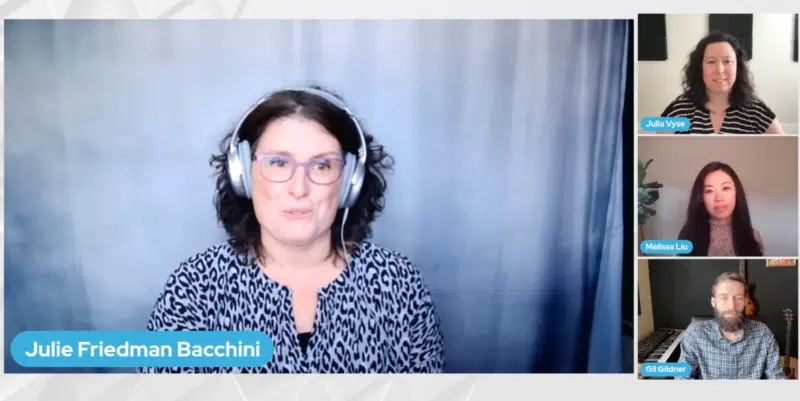
Google Marketing Live 2023 made it clear that AI is going to change the role of digital marketing in a big way. At SMX Advanced, Julia Friedman, owner of PPC consultancy Neptune Moon, discussed how advertisers can both prepare for and thrive in the AI revolution, with fellow industry experts:

  • Gil Gildner, co-founder of PPC agency Disco Sloth
  • Julia Vyse, West Coast digital director for iProspect Canada
  • Melissa Liu, associate director of California ad agency RPA.

The AI revolution has arrived – with huge perks!

The SMX panel was in agreement that AI is going to make life easier for digital marketers in many ways. Gill noted that smaller businesses in particular that perhaps do not have the budget to hire human contractors would benefit from using AI tools.

Liu also pointed out that AI will relieve advertisers from time-consuming tasks such as generating ad copy. However, she stressed that it was important for marketers to not become complacent: “As a search marketers, I now need to think about how I can shift my role to be more strategic. I also need to think about what new skills I need to learn to better myself.”

The role of digital marketers is changing

All three guest speakers as well as the panel’s host were in agreement that the role of PPC advertisers is evolving – and that it is a “concern” for the industry. Explaining how his agency is going to adapt to the AI revolution, Gill said:

  • “We’re going to go super strategic. It’s inevitable that it soon wont matter as much what buttons we’re clicking. There will be a lot of strategy and tactics and, honestly, client education and shepherding that we’re going to have to do. It’s inevitable that our roles are going to change and it will be important to stay on top of that.”

Get the daily newsletter search marketers rely on.


Should marketers question their optimism around AI?

Vyse was hugely excited about the changes Google discussed for digital marketers. She also spoke about her appreciation for being told in advance about how the industry would be evolving.

  • “It’s nice to get a bit of a head up as opposed to have something dropped on us in the middle of the year,” she joked.

However, Vyse added that while AI is going to help advertisers, the industry should also prepare itself for unexpected issues.

  • “There’s a lot of optimism around AI, but perhaps that’s something we should question,” she added.

Google Marketing Live unveiled a number of new tools for digital marketers, such as Product Studio, which Gill noted would be hugely beneficial for small and medium-sized businesses:

  • “Some smaller brands don’t have the budget to do professional photoshoots for every single product – even though it’s massively valuable. We see an uplift every time we have good media for a client whether it’s a TV commercial or product listing.
  • “So Product Studio is huge for e-commerce agencies. It will allow smaller brands to have better creative control. I don’t think it’ll help bigger brands that much but definitely mid size to smaller brands.”

Concerns around AI generated content

After Google unveiled new tools to help marketers write ad copy, Liu admitted she was excited but keen to learn what the editorial quality would be.

  • “Writing ad copy require a deep understanding of your customer and what your unique selling position is. I’m curious to see if AI will give me and my competitors similar copy or will AI copy be tailored to my unique brand?” she said.

Liu voiced her concerns over the loss of originality and a brand’s tone of voice if the industry relies too heavily on AI-generated copy. However, she stressed that it will fall on the shoulders of digital advertisers to to ensure this problem doesn’t impact their brands. Explaining how she intends to address this issue, she said:

  • “One idea that resonates is quality of input and how I, as a search marketer, can better input into the system to differentiate myself against my competitors. Yes, our roles are changing, but how do we put that human touch to best guide AI to perform better for us?”
Screenshot 2023 06 13 At 17.19.16 800x401

Issues around AI imagery

Liu was also excited about Google’s launch of AI tools that can create unique images. However, when she was watching the demonstration of the search engine’s new tools, she had some concerns:

  • “There were automatically generated images using pictures taken from your website as well as stock photos. One concern I have is that if me and my competitor have very similar product offerings and want to communicate the same benefits, will AI give us similar stock images? Because that will pose a problem,” Liu said.

Exciting news for retail – not so much for finance

For digital marketers working on retail campaigns, Vyse pointed out that the AI generative properties and front-end user experience changes unveiled by Google are exciting news. She said:

  • “I work with a lot of retail businesses and restaurants, so I’m interested in footfall traffic, and how people interact with their map. When you’re experiencing what is to get directions and go somewhere, such as a retailer who I support, I’m really interested in what that’s going to look like for customers.”

Discussing the new backend generative features, Vyse added:

  • “All the stuff they’re doing to change how we build and measure campaigns is going to be great and not so great. For my retailers and restaurant clients, it’s going to be fantastic. Everything is going to be much simpler with a lot more thought leadership and strategy from us as opposed to button pressing. But on the other hand, for anyone who works in a highly regulated industry like finance, there might be some challenges.”

Searchers are changing their behaviours

After watching the Google Marketing Live discussion, Liu noted how the way searches are conducted online have also changed dramatically.

In 2011, she noted that consumers consulted 10 or more sources before making a purchases. Fast-forward to 2023, and people tend to consult just five sources online.

  • “In a culture where we’re research obsessed, I’m surprised it’s dropped so much. I wonder if it’s because people are getting information fatigue of if we’re just getting much better at researching and so less sources are needed to make that decision. With AI becoming an integral part of our lives, I’m curious to see if that number will change in the next couple of years,” Liu said.

What’s next for Google Ads?

Gil said he expects the industry to change significantly in the near future:

  • “I wouldn’t be surprised if Google Ads is entirely different in a year or two. There are always trends, but I was surprised at seeing all the tools Google is launching. I think it may actually be changing this time.”

Although he is anticipating huge changes to the industry, Gill stressed that as long as the experience is still good for both the searcher and the client, then the AI revolution will be positive. But there will undoubtedly be teething issues and the industry will simply need to adapt.


Related stories

New on Search Engine Land

@media screen and (min-width: 800px) { #div-gpt-ad-3191538-7 { display: flex !important; justify-content: center !important; align-items: center !important; min-width:770px; min-height:260px; } } @media screen and (min-width: 1279px) { #div-gpt-ad-3191538-7 { display: flex !important; justify-content: center !important; align-items: center !important; min-width:800px!important; min-height:440px!important; } }

About the author

Nicola Agius

Nicola Agius is Paid Media Editor of Search Engine Land after joining in 2023. She covers paid search, paid social, retail media and more. Prior to this, she was SEO Director at Jungle Creations (2020-2023), overseeing the company’s editorial strategy for multiple websites. She has over 15 years of experience in journalism and has previously worked at OK! Magazine (2010-2014), Mail Online (2014-2015), Mirror (2015-2017), Digital Spy (2017-2018) and The Sun (2018-2020). She also previously teamed up with SEO agency Blue Array to co-author Amazon bestselling book ‘Mastering In-House SEO’.

https://searchengineland.com/google-marketing-live-smx-expert-reactions-428197


Google Ad business faces breakup after being charged with EU antitrust violations

Google may be forced to sell part of its ad business after being charged with violating the European Union’s antitrust laws. Following a lengthy investigation, the European Commission suggested that “mandatory divestment” is the only way the search engine can resolve the issue.

Why we care: If Google does sell part of its ad business, it could mark the start of a new digital marketing era with a more competitive market and fairer pricing. This could potentially lead to more transparency, greater campaign control for advertisers and increased innovation, which could prompt the creation of new ad tools.

What’s happening: The European Commission conducted a report into the operation of Google Ads and found that the search engine typically tends to favor its own ads, causing difficulties for competing providers.

When discussing potential solutions, the commission said that behavioral improvements would not be enough to rectify the matter. Instead, it has recommended that the search giant sells off part of its business.

What has Google said? Google released a statement today criticizing the commission’s findings. Dan Taylor, Vice President of Google Ads, wrote:

“The Statement of Objections from the European Commission sets out claims that are not new and relate to a narrow part of our advertising business. It fails to recognize how advanced advertising technology helps merchants reach customers and grow their businesses — while lowering costs and expanding choices for consumers.

“Ad tech is fiercely competitive and constantly evolving. We compete with hundreds of companies in this space, including household names like Amazon, Microsoft, and Meta as well as specialized advertising technology companies like Criteo, The Trade Desk, and many others. Even media companies and retailers now offer competing advertising technologies.

“The digital advertising market enjoys competitive pricing, lively innovation, and robust competition — helping advertisers, publishers, and consumers. We look forward to showing how our ad tech tools help make the internet open, and accessible — and how breaking them would diminish the availability of free, ad-supported content that benefits everyone.”

Has this happened before? Earlier this year, nine U.S. states (Michigan, Nebraska, Arizona, Illinois, Minnesota, New Hampshire, North Carolina, Washington, and West Virginia), joined forces to bring a similar lawsuit against Google.

The states accused the search engine’s ad business of violating antitrust regulations. To rectify the matter, they urged Google to break up its Ad Manager suite, claiming it was exploiting its online advertising dominance. Google denied the claims and asked for the case to be dismissed.

In 2020, Google was also accused of breaching antitrust laws again in order to sustain its position as the leading search engine. This case is set for trial in September.

Deeper dive: You can read Google’s full response to the European Commission announcement about its advertising technology.


Related stories

New on Search Engine Land

@media screen and (min-width: 800px) { #div-gpt-ad-3191538-7 { display: flex !important; justify-content: center !important; align-items: center !important; min-width:770px; min-height:260px; } } @media screen and (min-width: 1279px) { #div-gpt-ad-3191538-7 { display: flex !important; justify-content: center !important; align-items: center !important; min-width:800px!important; min-height:440px!important; } }

About the author

Nicola Agius

Nicola Agius is Paid Media Editor of Search Engine Land after joining in 2023. She covers paid search, paid social, retail media and more. Prior to this, she was SEO Director at Jungle Creations (2020-2023), overseeing the company’s editorial strategy for multiple websites. She has over 15 years of experience in journalism and has previously worked at OK! Magazine (2010-2014), Mail Online (2014-2015), Mirror (2015-2017), Digital Spy (2017-2018) and The Sun (2018-2020). She also previously teamed up with SEO agency Blue Array to co-author Amazon bestselling book ‘Mastering In-House SEO’.

https://searchengineland.com/google-ads-breakup-eu-antitrust-428262


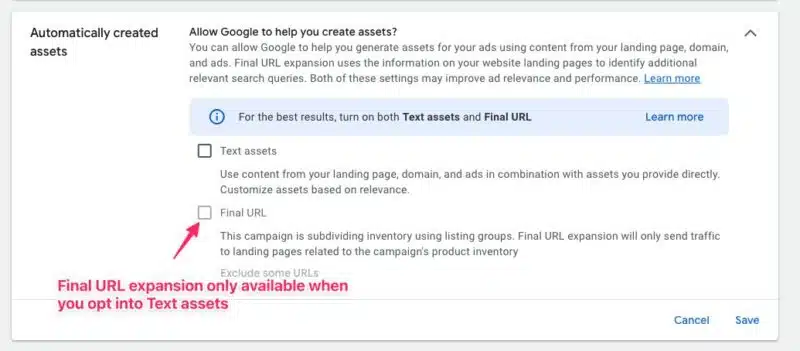
Google trials automatically created assets for Performance Max

Google has started testing its automatically created assets feature on Performance Max campaigns after announcing plans to do so at Google Marketing Live last month. Advertisers have reported seeing the scheme, which is available to all marketers as an open beta on Google Ads, replace the ‘Final URL expansion’ tab.

Why we care: Advertisers struggling to write engaging ad assets for Performance Max campaigns no longer need to worry about creative fatigue because Google can help do this job for them, saving marketers some time and effort.

How it works: Google can generate copy for Performance Max listings by analysing the content on a brand’s landing pages, domain and ads.

What have digital marketers said? While the thought of never having to write ad assets again will appeal to many advertisers, some industry insiders have warned that there are potential risks.

  • “Had mixed results with automatically created assets, callouts tend to work alright, but ad copy definitely needs to be checked,” PPC consultant Paul Rooney tweeted.

Get the daily newsletter search marketers rely on.


What has Google said? Brands that have opted to use its automatically created assets feature for headlines and descriptions have seen enhanced performance with on average a 2% increase in conversions, Google said. Other benefits, according to Google, include:

  • Improved relevance – Automatically created assets can provide a consistent user experience across query, ad copy and landing pages.
  • Better productivity – Automatically created assets can reduce the amount of manual work to create relevant ad copy.

A Google spokesperson told Search Engine Land:

  • “[Advertisers can] expand the reach of your brand campaigns with new brand restrictions for broad match. Broad match gives you the most relevant reach and conversions within your performance goals.”
  • “In the past, it may have been difficult to use broad match in campaigns with specific brand needs. That’s why we’re rolling out brand restrictions. This new feature will help you get the additional reach of broad match, while ensuring it is only matching to relevant brand traffic that you’ve specified.”
1 800x351

Is there a catch? The main concern raised by advertisers around automatically generated assets is a reduction in creative control. Sometimes, the content created by Google doesn’t accurately fit a product’s brand, can be inaccurate or doesn’t make sense. These issues have deterred some marketers from using the feature.

Go deeper: You can read more about Automatically Created Assets here and more Performance Max here.


Related stories

New on Search Engine Land

@media screen and (min-width: 800px) { #div-gpt-ad-3191538-7 { display: flex !important; justify-content: center !important; align-items: center !important; min-width:770px; min-height:260px; } } @media screen and (min-width: 1279px) { #div-gpt-ad-3191538-7 { display: flex !important; justify-content: center !important; align-items: center !important; min-width:800px!important; min-height:440px!important; } }

About the author

Nicola Agius

Nicola Agius is Paid Media Editor of Search Engine Land after joining in 2023. She covers paid search, paid social, retail media and more. Prior to this, she was SEO Director at Jungle Creations (2020-2023), overseeing the company’s editorial strategy for multiple websites. She has over 15 years of experience in journalism and has previously worked at OK! Magazine (2010-2014), Mail Online (2014-2015), Mirror (2015-2017), Digital Spy (2017-2018) and The Sun (2018-2020). She also previously teamed up with SEO agency Blue Array to co-author Amazon bestselling book ‘Mastering In-House SEO’.

https://searchengineland.com/google-automatically-created-assets-performance-max-428226


Google releasing new data around ads it serves the EU and Turkey

Google has confirmed it’s going to provide more information about the ads it serves the EU and Turkey. In the next few months, the search engine will share insights like targeting information and ad subject matters within its Ads Transparency Center for the first time.

Why we care: Transparency is a good thing for Google users and advertisers, as it can help increase trust in Google, as well as the advertisers behind the ads shown in the EU and Turkey.

What’s new? Google is planning to release more data about the digital marketers they work with and the ads they serve in order to boost consumer confidence in Google’s products. This will include:

  • Advertisement Topic 
  • Targeting information 
  • Total number of recipients for each ad 
  • Subject matter of the ad
  • Ad serving time period available

Get the daily newsletter search marketers rely on.


What has Google said: “Building on our efforts to be transparent about the ads we serve and the advertisers behind them, we will be disclosing additional information in the Ads Transparency Center for ads serving in the EU and Turkey as part of our effort to comply with local regulations,” a Google spokesperson told Search Engine Land.

“Trust in advertisers on our platforms helps us deliver a smart and useful web experience for everyone. This means providing greater transparency about who our advertisers are, where they are located and which creatives they have served through Google.”

Deeper dive: For more information about Google advertisers as well as the ads they have ran on Google, check out the Ads Transparency Center, which was launched earlier this year.


Related stories

New on Search Engine Land

@media screen and (min-width: 800px) { #div-gpt-ad-3191538-7 { display: flex !important; justify-content: center !important; align-items: center !important; min-width:770px; min-height:260px; } } @media screen and (min-width: 1279px) { #div-gpt-ad-3191538-7 { display: flex !important; justify-content: center !important; align-items: center !important; min-width:800px!important; min-height:440px!important; } }

About the author

Nicola Agius

Nicola Agius is Paid Media Editor of Search Engine Land after joining in 2023. She covers paid search, paid social, retail media and more. Prior to this, she was SEO Director at Jungle Creations (2020-2023), overseeing the company’s editorial strategy for multiple websites. She has over 15 years of experience in journalism and has previously worked at OK! Magazine (2010-2014), Mail Online (2014-2015), Mirror (2015-2017), Digital Spy (2017-2018) and The Sun (2018-2020). She also previously teamed up with SEO agency Blue Array to co-author Amazon bestselling book ‘Mastering In-House SEO’.

https://searchengineland.com/google-data-ads-eu-turkey-428231


Google Ads unveils new design

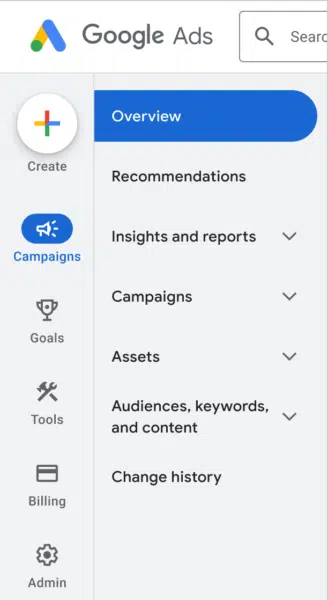
Google Ads started rolling out its new look after months of trialing two different designs. The new format features a main menu on the left of the screen and has pages organized into high-level categories to make navigation easier for new and experienced advertisers.

Why we care: All Google Ad users will be moved over to the new design by the end of the year, so it’s important digital marketers feel confident in using it.

What’s new? Based on user feedback, Google has opted to divide its content into the following five high-level categories:

  • Campaigns: This page will enable marketers to analyze, optimize, and manage campaigns.
  • Goals: Here, advertisers can define, monitor, and update conversion goals.
  • Tools: Users can access tools here for planning, bidding and budgets, troubleshooting, and more.
  • Billing: Where advertisers can monitor their spend and payments.
  • Admin: Marketers can manage their team, security, and account settings here.

Rollout timeline. The new Google Ads design has started rolling out to users who took part in its trial that started on March 2.

Everyone else will be gradually moved over to the new interface by December – however, you will have the option to revert back to the old design – but only until 2024.

New Google Ads design

What has Google said? Digital marketers have been told by Google to stay tuned for notifications as the new design is implemented over the next six months:

  • “We’ll be updating Help Center documentation and creating additional resources to help you get comfortable with — and even more efficient in — the new design. In the meantime, our quick reference map in the Help Center can help you find key pages,” a spokesperson said
  • “And don’t forget to keep sharing your feedback from the ‘Leave feedback’ option in the Help menu, or when you switch between designs. Your input is the best tool we have to build a better Google Ads for you.”

Deeper dive: For more information on the new Google Ads design, read the Google Ads Help announcement.


Related stories

New on Search Engine Land

@media screen and (min-width: 800px) { #div-gpt-ad-3191538-7 { display: flex !important; justify-content: center !important; align-items: center !important; min-width:770px; min-height:260px; } } @media screen and (min-width: 1279px) { #div-gpt-ad-3191538-7 { display: flex !important; justify-content: center !important; align-items: center !important; min-width:800px!important; min-height:440px!important; } }

About the author

Nicola Agius

Nicola Agius is Paid Media Editor of Search Engine Land after joining in 2023. She covers paid search, paid social, retail media and more. Prior to this, she was SEO Director at Jungle Creations (2020-2023), overseeing the company’s editorial strategy for multiple websites. She has over 15 years of experience in journalism and has previously worked at OK! Magazine (2010-2014), Mail Online (2014-2015), Mirror (2015-2017), Digital Spy (2017-2018) and The Sun (2018-2020). She also previously teamed up with SEO agency Blue Array to co-author Amazon bestselling book ‘Mastering In-House SEO’.

https://searchengineland.com/google-ads-unveils-new-design-428240


Google trials new CTA that takes customers directly to your website

Google Merchant Center is testing a ‘checkout’ pilot that could give you an extra opportunity to bring customers to your website.

The Google Merchant Center team has sent out an email alerting merchants about this pilot and described it:

  • “Give ready-to-buy customers the option to land directly in your checkout. A. new pilot from Google has helped increase conversions and sales for participating merchants.”

To get into the trial, you have to complete a form.

Once you’re in the pilot, the ‘checkout’ CTA will appear next to the ‘visit site’ link on free product listings.

Why we care: This new feature could help create a more seamless shopping experience for customers and potentially bring more traffic to brand websites.

How does it work? To take part in the checkout pilot for your free listing, simply log into Merchant Center, click on Settings and add your checkout landing page link where you want shoppers to land. You will have the option to either add one dynamic URL template for their entire brand, or they will be able to add a unique checkout link for every individual product in the feed.

How to set up your URL template: Advertisers must ensure that the URL template they wish to use has placeholder product data parameters for specifying the product ID as well as any other parameters. This is to make sure that customers are taken to the right checkout page. Currently, Google can support a maximum of five parameters within a URL template.

Essential placeholder parameter requirements by Google:

  • ID – The ID attribute associated with the offer. This will be substituted with the [id] attribute given in the feed for the offer.

Optional placeholder parameter requirements by Google:

  • Size – The size attribute associated with the offer. This will be substituted with the [size] attribute provided in the feed for the offer.
  • Color – The color attribute associated with the offer. This will be substituted with the [color] attribute provided in the feed for the offer.

Get the daily newsletter search marketers rely on.


What has Google said? The search engine is encouraging advertisers to ensure that customers being taken to their website from Google are given the best possible user experience. Although it isn’t essential, Google is recommending you consider:

  • Supporting a smooth transition for checkout with purchase flows designed for customers coming directly from Google.
  • Communicating clearly so that customers can easily verify who they’re purchasing from, as well as what they’re buying and how much it’s going to cost them.

Related stories

New on Search Engine Land

@media screen and (min-width: 800px) { #div-gpt-ad-3191538-7 { display: flex !important; justify-content: center !important; align-items: center !important; min-width:770px; min-height:260px; } } @media screen and (min-width: 1279px) { #div-gpt-ad-3191538-7 { display: flex !important; justify-content: center !important; align-items: center !important; min-width:800px!important; min-height:440px!important; } }

About the author

Nicola Agius

Nicola Agius is Paid Media Editor of Search Engine Land after joining in 2023. She covers paid search, paid social, retail media and more. Prior to this, she was SEO Director at Jungle Creations (2020-2023), overseeing the company’s editorial strategy for multiple websites. She has over 15 years of experience in journalism and has previously worked at OK! Magazine (2010-2014), Mail Online (2014-2015), Mirror (2015-2017), Digital Spy (2017-2018) and The Sun (2018-2020). She also previously teamed up with SEO agency Blue Array to co-author Amazon bestselling book ‘Mastering In-House SEO’.

https://searchengineland.com/google-merchant-center-checkout-pilot-428178


YouTube Ads ecommerce guide: When, how and why

Several DTC ecommerce advertisers are doing admirably well with Facebook Ads.

But I don’t think any brand should depend on a single marketing platform.

I’ve written before about how to bring winning Facebook assets over to Google using a Performance Max campaign that replicates the social experience as best as possible.

Today, I want to make a case for when, how, and why to consider YouTube Ads.

What to know before you begin

YouTube is a unique platform – not truly search, not fully social. It’s part of Google, yet it stands on its own. As a result, it’s not easy to master.

I tackled this in 7 important YouTube Ads lessons every media buyer should know. If you don’t want to click through, here’s the gist.

  • Facebook and Instagram combined great targeting with a captive audience to shorten the conversion cycle, spoiling other platforms for many advertisers. On YouTube, users either watch content they enjoy or learn how to do something.
  • YouTube lets you target people based on something they searched for, but they’re not actually searching for it at that moment. This intent lag, combined with the diversity of intent, means the “next step” after YouTube has to be particularly compelling.
  • A brand with a robust organic YouTube program will outdo one that’s using the platform solely for advertising. They have high-quality content waiting for people who end up on their channel from an ad.
  • For brand safety, you can opt out of sensitive categories at the campaign level. Paired with audience and interest targeting, you can effectively lock out people who shouldn’t see your ads.
  • Google leans heavily on automation, so you have to monitor your campaigns. Even with your targeting absolutely right, you still need to feed data back to Google to improve its decision-making.
  • The reporting for video action campaigns is more in-depth and robust than many other Google campaigns, including Performance Max. You can take advantage of this to optimize quickly and intelligently.
  • YouTube fits nicely into a wider marketing or media buying mix, whether you need a new platform to expand your audience or want to scale an existing campaign. But you can only succeed if you know and accept its limitations.

With that in mind, here’s why direct-to-consumer (DTC) ecommerce brands should consider YouTube Ads.

Why YouTube and DTC ecommerce pair well

Remember the frame of mind people are in when they’re browsing YouTube.

You’ve got folks in theater mode, looking for a solution or catching up on content. And you’ve got people scrolling through Shorts, similar to the endless scroll of social media.

But unlike Facebook, ads on YouTube are interruptive. Whether they appear at the start of a video or in the middle, you’re asking for attention when people would rather be doing something else.

But if there’s one thing DTC ecommerce advertisers are good at, it’s thumb-stopping hooks.

Think with YouTube

Ultimately, both platforms are about the retention graph. Like Facebook, YouTube shows you a chart of how many viewers stay on a video until the end. You’ll want to refer to that chart and tweak your creatives accordingly.

How do you get more people to stay to the end? Make your content more interesting.

With a strong hook and compelling storyline, your “ad” could be anything from a music video to a fix-it guide.

As long as it’s entertaining, people will watch videos several minutes in length because that’s what they came to YouTube for.

Another approach is to build around short-form, snackable content. Take your winning ads from Facebook, chop them up if they’re longer than 60 seconds, and populate your channel with several organic Shorts.

You can use these to start advertising (see below for how to set this up). Any content that does well organically should also do well in the ads platform and vice versa.

5 recommendations for new YouTube advertisers

It’s easy to get things wrong on YouTube, from unrealistic expectations to expecting crystal clear attribution. But with the right approach, an already strong brand will likely be elevated further.

Here are five things you should do to give your brand the best chance of achieving that.

1. Know what you’re getting into

YouTube has over 2.68 billion users, making it the second-largest search engine behind Google. So once you’ve tapped out other networks – Search, Shopping, Performance Max, Facebook, Instagram, TikTok and everything else – YouTube offers tremendous scale to diversify further.

Note: Google’s attribution is largely click-based, so you won’t see as many reported conversions. Both your ROAS and CPA will be lower than you’re accustomed to, while campaigns will need more time before you start seeing the results in post-purchase surveys.

2. Understand the platform

YouTube Shorts is particularly interesting, but Google doesn’t offer the ability to create a Shorts-only campaign. There are ways of getting past this – kind of. 

Create a new video action campaign that targets only mobile devices. This somewhat forces the system to go only to mobile devices, and in that format, it tends to lean towards Shorts. 

Be sure to only provide vertical video assets shorter than 60 seconds.

3. Adopt the right mindset

You won’t get the same ROAS you do on Facebook, at least not the same reported ROAS. But it can provide a similar level of incremental revenue and scale. 

Your approach must differ since YouTube is about creating awareness so other platforms can win more conversions. 

Whatever revenue is reported by Google, know that it’s just a drop in the bucket in terms of its incremental impact on your business.

4. Don’t try too much at once

If you go in heavy with YouTube, there’s a good chance you won’t get any results. Start with one campaign and see how things go. YouTube is budget-intensive. 

Without sufficient investment, there’s a good chance that you’ll go months without seeing any scale. Or worse, pull the plug on what could have been a high-potential campaign.

5. Use your own attribution

There’s a strong chance you already use post-purchase surveys to ask customers where they first heard about your brand. This is a good way to find people who discovered you on YouTube but converted elsewhere. 

But it’s self-identifying and not foolproof, so you may wish to consider tools like Northbeam or Triple Whale to measure impact. Just remember, no attribution is ever perfect.

YouTube is the next frontier for high-performing ecommerce brands

I like to think of YouTube Ads clicks as the beginning of a beautiful journey.

Some people go on to become website traffic and enter your remarketing campaigns. Some will join your email list. A few may not click or visit your site but think about you later and look for you by name, eventually entering your funnel via a branded ad.

Naturally, attribution and reporting aren’t robust enough to track all that. So you’ll need to be patient, trust in YouTube as well as your own creatives, and look for incremental correlation rather than causation. This means not testing out other platforms as you expand to YouTube.

Keep in mind what YouTube means to people. It’s a source of entertainment, an escape from reality. A place where people go to have their biases confirmed, problems are solved, and businesses and careers are made.

It’s only natural that users value their time there and have demanding attention spans.

But if you’re sitting on winning assets that offer and align with what they’re looking for, ignoring YouTube is as good as leaving money on the table.


Opinions expressed in this article are those of the guest author and not necessarily Search Engine Land. Staff authors are listed here.


Related stories

New on Search Engine Land

@media screen and (min-width: 800px) { #div-gpt-ad-3191538-7 { display: flex !important; justify-content: center !important; align-items: center !important; min-width:770px; min-height:260px; } } @media screen and (min-width: 1279px) { #div-gpt-ad-3191538-7 { display: flex !important; justify-content: center !important; align-items: center !important; min-width:800px!important; min-height:440px!important; } }

About the author

Menachem Ani

Menachem Ani, Founder of JXT Group, is a digital advertising expert with over a decade of success developing high-impact marketing strategies for online retailers and lead-generation clients.

https://searchengineland.com/youtube-ads-ecommerce-guide-428130


TikTok launches new AI ad script generator

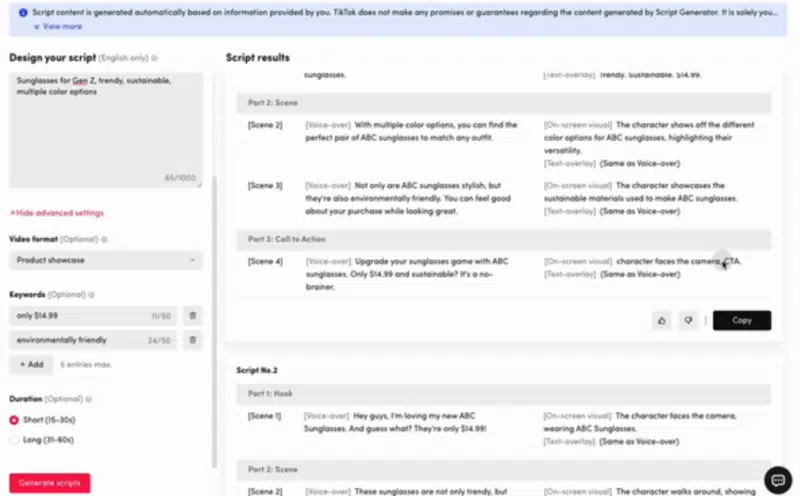
TikTok has launched a free AI tool that can create scripts in a matter of seconds. The feature, called Script Generator, is available to all TikTok Creative Center users with a desktop TikTok for Business account.

Why we care: The Script Generator will make life easier for advertisers by generating scripts for them. And the best part is, if digital marketers happen to hate the scripts generated, they have the option to run their enquiry again, as many times as they like, for no cost at all as the tool is completely free.

How it works: Advertisers will simply have to enter in some basic information about the services or products they’re offering (e.g., the product name, item description, relevant keywords) and then choose whether they would like a 15-30 second or 31-60 second clip.

After inputting all the information, you can simply click Generate scripts. This will produce various video scripts with hooks, scenes, calls to action and visual/audio cues.

Screenshot 2023 06 12 At 17.33.01 800x496

Is there a catch? As with all AI-generated content, there is a risk of inaccurate information being published. Advertisers who rely solely on this method may also find their content becomes generic with no originality as AI content is created using existing trends, which could be bad for branding. This could also potentially result in a drop in engagement.

What has TikTok said? The company has warned digital marketers that they shouldn’t rely solely on AI-generated scripts as there is a risk of inaccuracies. It explained in a statement:

“TikTok does not make any promises or guarantees regarding the content generated by Script Generator. It is solely your decision whether to utilize and/or publish content created using the Script Generator in any ad or other material. You are solely responsible for any content created using Script Generator, including ensuring that such content is accurate and complies with applicable laws and regulations, and this content is not endorsed, sponsored, or approved by TikTok.”

However, Anton Reyniers, Google’s Head of Creative Partnerships APAC, praised the new tool, stating:

  • “TikTok are streets ahead in their genuine understanding of creative’s importance.”

Get the daily newsletter search marketers rely on.


The big picture: While AI-generated content can be a great PPC tool (see: A Google Ads script that uses GPT to write RSAs), AI auto-generated content is not always accurate (as stressed by TikTok). So it could potentially be risky to rely solely on this method so humans remain a necessity in PPC.


Related stories

New on Search Engine Land

@media screen and (min-width: 800px) { #div-gpt-ad-3191538-7 { display: flex !important; justify-content: center !important; align-items: center !important; min-width:770px; min-height:260px; } } @media screen and (min-width: 1279px) { #div-gpt-ad-3191538-7 { display: flex !important; justify-content: center !important; align-items: center !important; min-width:800px!important; min-height:440px!important; } }

About the author

Nicola Agius

Nicola Agius is Paid Media Editor of Search Engine Land after joining in 2023. She covers paid search, paid social, retail media and more. Prior to this, she was SEO Director at Jungle Creations (2020-2023), overseeing the company’s editorial strategy for multiple websites. She has over 15 years of experience in journalism and has previously worked at OK! Magazine (2010-2014), Mail Online (2014-2015), Mirror (2015-2017), Digital Spy (2017-2018) and The Sun (2018-2020). She also previously teamed up with SEO agency Blue Array to co-author Amazon bestselling book ‘Mastering In-House SEO’.

https://searchengineland.com/tiktok-ad-script-generator-428151