This Google Ads script uses GPT to summarize account performance

Last month, I shared my first GPT-enabled Google Ads script. It identifies missing RSA headlines and suggests new variants.

This month, I wanted to push the limits of GPT a little harder and see if I could get it to write my next script for me. Spoiler alert: It worked! But it needed some handholding to get there. I’ll teach you how I engineered the prompt to get a successful result.

The script I am sharing uses OpenAI’s GPT to write an account performance summary along with some suggestions for how to improve the performance of a Google Ads account.

Making PPC reports more descriptive

PPC reporting can be a tedious task. By nature, it’s also repetitive because clients and stakeholders expect the latest report in their inbox regularly – be it weekly, monthly, or, heaven forbid, even daily.

There are plenty of great reporting tools (I work for one). While they can automate pulling in the data and visualizing it, making sense of and telling a story with the data usually still require a human’s touch. GPT excels at writing compelling stories, so it seemed like a good solution for my problem.

GPT and generative AI are adept at producing well-written text. Because large language models (LLMs) have read billions of words, they’re very good at predicting how to put words together in a way that makes for a compelling read.

But as compelling as they may be, they’re not always true, and that’s a big problem when the goal is to share trustworthy reports with clients.

So I set out to figure out if I could force GPT to be correct and a great storyteller about the data in an ads account.

GPT’s truth problem

A weakness of GPT is that its core strength is predicting the next word in a string. It’s much less reliable when it comes to fact-checking and ensuring what it says is correct.

Its training might have included dozens of blog posts about how to get more conversions in Google Ads.

Because those articles probably frequently mention tasks like checking budgets and managing CPA targets, GPT will likely include those things when it generates advice related to getting more conversions. 

But it may get the details slightly wrong, like whether an advertiser whose CPA is lower than the target CPA should increase or decrease their ad budget. GPT isn’t solving a problem analytically but rather predicting the words to include in its advice.

Another problem is that GPT remains bad at math despite openAI’s work to address this known problem.

For example, if provided with facts like how many clicks and impressions a campaign has, it’s not safe to assume that it will know how to determine the correct CTR from this information. We all know it’s a simple formula: clicks/impressions = CTR.

Sometimes GPT will get it right, but there’s no guarantee.

To avoid calculation errors, I decided it would be safer to do the math myself and provide the results in the prompt.

Rather than trusting GPT to calculate metrics like CTR, conversion rate, etc., correctly, I provided the values for those metrics in the prompt.

How to provide GPT with facts about your business

The specific task I wanted to automate was describing how an account’s performance changed last month compared to the month before and including some optimization suggestions.

When creating this automation, I couldn’t jump straight into the code. I had to manually create a process that worked before turning that process into an automation.

The first step was to experiment with GPT to determine what data it needed so it would stop making up facts and instead rely on the truth for crafting its stories. This required giving it Google Ads data with the facts I wanted it to describe. 

Fortunately, GPT can take a table as input and figure out how to interpret the various cells. So I created a table of campaign performance and exported it as a CSV text file which could be copied and pasted into a GPT prompt. 

Because I wanted GPT to comment on the changes in performance between two date ranges, I initially brought in two separate CSV strings, one for each period.

But two separate CSV strings use more tokens than the same data combined into a single CSV with separate columns for different date ranges.

So to make the automation slightly better at working with bigger accounts, I generated the combined CSV string.

With factual data ready to insert into a prompt, I could then move on to engineer the prompt to give me the best results possible.

Prompt engineering

With factual data to work with, I next needed to tell GPT what to do with those facts. The prompt could be as simple as:

  • “Write a summary of the campaigns’ performance comparing the two periods.”

GPT is smart and figures out what the different periods in the CSV data are.

If it tends to focus too much on certain metrics you’d like to deprioritize, add more detail to the prompt, like:

  • “Do not include Search Lost IS in the summary.”

Next, I wanted it to include some optimization tips. To make the suggestions more reliable and more in line with my own management style, I loaded the prompt with some additional facts like these:

  • The target CPA is $20. A cost higher is bad, and a cost lower is good.
  • If the Search lost IS (budget) > 10% and the CPA is below the target, the budget should be raised.
  • if the CPA is above the target, the bids should be adjusted.

Then when sending a very detailed prompt with CSV data, facts, and a request for what to do with this data, GPT started giving solid answers.

With all the puzzle pieces in place, it was time to ask GPT to write me the automation.


Get the daily newsletter search marketers rely on.


Getting GPT to write Ads scripts

The code for a Google Ads script to pull data from an account isn’t particularly complicated. It’s part of almost any script and very well documented.

So I crossed my fingers and asked GPT to write a script to pull the data for me with this prompt:

GPT prompt

The response looked like a good script, but one thing seemed a bit off. It was writing a GAQL query that included the two date ranges I wanted to compare in a single query. That is not supposed to work.

Incorrect output

So I asked GPT to try again, and while the implementation changed slightly, it once again messed up the date ranges in the GAQL query:

Incorrect output

At this point, I could have given up and fixed the code myself, but instead, I did some prompt engineering.

What if my prompt was confusing GPT?

I told it to:

  • “Get the clicks, impressions, cost, CTR, average CPC, conversions, conversion rate, and cost per conversion metrics for the previous month and the month before that.”

Could I be clearer and tell it this should be done in two separate queries that would be merged later?

So I changed the prompt to include this new text:

  • “Get the clicks, impressions, cost, CTR, average CPC, conversions, conversion rate, and cost per conversion metrics. Get the report for 2 date ranges: last month and the month before that. build a map where the key is the campaign name and it includes the stats from the 2 date ranges.”

This is much more precise, and the result came back as follows:

Google Ads script

Now GPT was writing the correct code. After installing it in my Google Ads account, it immediately worked as expected and generated the needed CSV data.

This was a good lesson in prompt engineering for me. If you hire a new team member who’s never done PPC, you probably need to be pretty precise in your instructions when you ask for help. It’s the same with GPT, precision matters!

Also, it still matters to be a subject matter expert. Someone who’s never worked with GAQL or API reports from Google Ads might not know that you can’t get data for two date ranges in a single call. Without that knowledge, finding the error in the GPT response could be very difficult.

Bottom line, when asking GPT to generate code, it’s helpful to write pseudo-code rather than being too general and only telling it what outputs you expect. The more you tell the system how to arrive at that output, the more likely it will write code that works. 

With the code to pull CSV data working, I now needed some code to send that data to GPT to ask for a summary.

Using GPT in Google Ads scripts

To use GPT in a script, you need API access and an API token. You can sign up for this on the OpenAI website. With that, you can write a simple function that calls the API with a prompt, gets the response, and prints it on the screen.

This code could be requested from GPT, but I already had it from last month’s RSA script so I just reused that.

Here’s the code snippet to use GPT in Google Ads scripts

Putting it together

Next, I put the two scripts above together. The first script gets the data I need for my prompt, and the second script sends that data as a prompt to GPT and captures the response, which is then rendered on screen.

Grab a copy of the complete code here and remember to add your own API key to start using it:

Then you should experiment with the facts and prompt. The line in the code where you enter facts should include details you want GPT to know, such as:

  • What your target is.
  • Whether a number higher or lower than the target is good or bad.
  • Facts about your account optimization methodology (i.e., what you would recommend doing if the CPA is too high and the impressions have decreased).

GPT will pull from the facts you provided rather than making stuff up when it summarizes the performance.

You can also engineer the prompt to do things the way you want.

For example, you could ask GPT to include or exclude particular metrics in its summary or tell it what style to write in, e.g., conversational or business-oriented.

Remember that this script uses the OpenAI API, which is not free. So every time you run this, it will cost money.

I recommend running this script as needed and not putting it on an automated schedule.

Summarizing PPC performance with GPT

GPT is excellent at writing but can have problems with factual correctness. That is why providing as many facts as possible in the prompts is helpful.

By using a Google Ads script, facts about account performance can automatically be prepared in a format that works with GPT.

Use this script to provide GPT with facts about your account and get a performance summary that can be shared with clients and stakeholders.

I encourage you to check it out and let me know what you think.


Opinions expressed in this article are those of the guest author and not necessarily Search Engine Land. Staff authors are listed here.


Related stories

New on Search Engine Land

@media screen and (min-width: 800px) { #div-gpt-ad-3191538-7 { display: flex !important; justify-content: center !important; align-items: center !important; min-width:770px; min-height:260px; } } @media screen and (min-width: 1279px) { #div-gpt-ad-3191538-7 { display: flex !important; justify-content: center !important; align-items: center !important; min-width:800px!important; min-height:440px!important; } }

About the author

Frederick Vallaeys

Frederick (“Fred”) Vallaeys was one of the first 500 employees at Google where he spent 10 years building AdWords and teaching advertisers how to get the most out of it as the Google AdWords Evangelist.
Today he is the Cofounder of Optmyzr, an AdWords tool company focused on unique data insights, One-Click Optimizations™, advanced reporting to make account management more efficient, and Enhanced Scripts™ for AdWords. He stays up-to-speed with best practices through his work with SalesX, a search marketing agency focused on turning clicks into revenue. He is a frequent guest speaker at events where he inspires organizations to be more innovative and become better online marketers. His latest book, Digital Marketing in an AI World, was published in May 2019.

https://searchengineland.com/google-ads-script-gpt-summarize-account-performance-427822


Ask Instacart brings generative AI to Instacart’s search experience

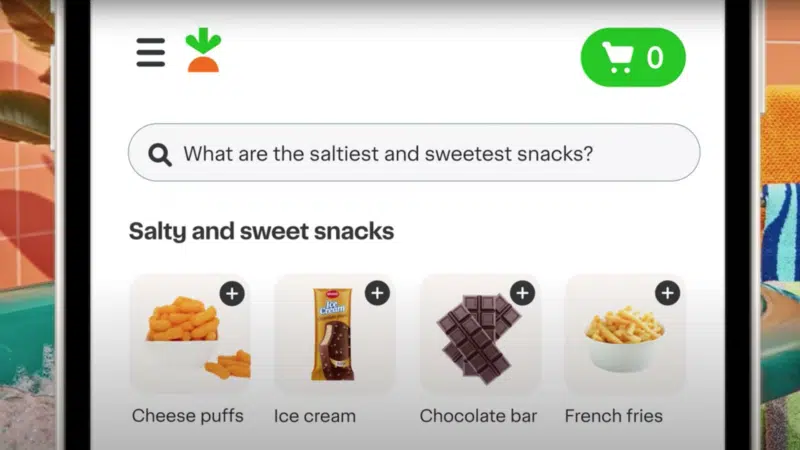
Instacart is adding generative AI to its search experience. Called Ask Instacart, the new search feature is designed to help answer shoppers’ grocery-related questions and give a boost to sponsored product campaigns.

How it works. Just like with Google and Microsoft Bing, Instacart users will be able to search via natural language queries and get personalized recommendations. For example:

  • “What kind of side dishes should I serve with lamb chops?”
  • “What are dairy-free snacks for kids?”
  • “What are the best veggies to roast?”

Ask Instacart is built using OpenAI’s ChatGPT plus Instacart’s own AI models. Instacart said this is “a highly specialized model designed to only respond to relevant food-related questions.”

What it looks like. Here’s a screenshot of Ask Instacart:

Ask Instacart

Search prompts. Instacart has also added “personalized question prompts” to the search bar. Instacart said these prompts “anticipate customer preferences, remind them of their needs based on their shopping history, and inspire them to discover new products.”

Why we care. For CPG brands and retailers, this AI-powered search offers a new way to potentially get your product campaign seen by more shoppers – aiding in discovery and driving more sales.

Rollout timeline. More than half of Instacart app users now have access to generative AI search. It will roll out to all U.S. customers “over the coming weeks.”

Intro video. Here’s the video introducing Ask Instacart:

[embedded content]

Related stories

New on Search Engine Land

@media screen and (min-width: 800px) { #div-gpt-ad-3191538-7 { display: flex !important; justify-content: center !important; align-items: center !important; min-width:770px; min-height:260px; } } @media screen and (min-width: 1279px) { #div-gpt-ad-3191538-7 { display: flex !important; justify-content: center !important; align-items: center !important; min-width:800px!important; min-height:440px!important; } }

About the author

Danny Goodwin

Danny Goodwin has been Managing Editor of Search Engine Land & Search Marketing Expo – SMX since 2022. He joined Search Engine Land in 2022 as Senior Editor. In addition to reporting on the latest search marketing news, he manages Search Engine Land’s SME (Subject Matter Expert) program. He also helps program U.S. SMX events. Goodwin has been editing and writing about the latest developments and trends in search and digital marketing since 2007. He previously was Executive Editor of Search Engine Journal (from 2017 to 2022), managing editor of Momentology (from 2014-2016) and editor of Search Engine Watch (from 2007 to 2014). He has spoken at many major search conferences and virtual events, and has been sourced for his expertise by a wide range of publications and podcasts.

https://searchengineland.com/ask-instacart-generative-ai-launch-427831


We turned Search Engine Land into a chatbot

Introducing the first generative AI chatbot for search marketers – the Search Engine Land ChatBot. Launched today in beta, we’re excited for you to test it out.

Search Engine Land chatbot

About the chatbot. Our bot has been trained on the Search Engine Land content, allowing you to explore, experiment and learn more about search marketing.

The chatbot that powers our ChatBot sits on top of OpenAI’s ChatGPT. It is based on more than 20,000 news articles, guides, tutorials and original and curated research pieces published on Search Engine Land – the publication of record for all things search and search marketing since 2006.

Our chatbot will be updated on a regular basis with newly published content.

How it works. Navigate to our ChatBot page and get ready to write prompts. We offer some best practices and sample prompts on that page.

For example, here’s what you’ll see on a prompt for “create a content marketing and SEO plan for a local bakery”.

Chatbot Seo Content Marketing Plan Bakery 800x497

You will probably come across some form of message about exceeding tokens. If this happens, try again. If it happens again, do your best to refine your prompt.

Again, we’re in BETA, so our chatbot is not perfect. But we’ll be working to continually make it better and more useful for you. We appreciate your patience (and helping us break this so we can improve it).

Why a chatbot? “Serving the marketing community is our reason for being, and the Search Engine Land ChatBot is an exciting way to provide that community with the information they need in a format that is complementary to our existing properties,” said Chris Elwell, CEO, Third Door Media.

Help us improve. We’re looking at ways to improve the bot and welcome your feedback. Give the Search Engine Land ChatBot a shot. We look forward to hearing from you!

MarTechBot. We also created the first generative AI experience for marketing professions with MarTechBot on our sibling publication, MarTech.org. You can dig deeper into the why and technology in these articles:


Related stories

New on Search Engine Land

@media screen and (min-width: 800px) { #div-gpt-ad-3191538-7 { display: flex !important; justify-content: center !important; align-items: center !important; min-width:770px; min-height:260px; } } @media screen and (min-width: 1279px) { #div-gpt-ad-3191538-7 { display: flex !important; justify-content: center !important; align-items: center !important; min-width:800px!important; min-height:440px!important; } }

About the author

Danny Goodwin

Danny Goodwin has been Managing Editor of Search Engine Land & Search Marketing Expo – SMX since 2022. He joined Search Engine Land in 2022 as Senior Editor. In addition to reporting on the latest search marketing news, he manages Search Engine Land’s SME (Subject Matter Expert) program. He also helps program U.S. SMX events. Goodwin has been editing and writing about the latest developments and trends in search and digital marketing since 2007. He previously was Executive Editor of Search Engine Journal (from 2017 to 2022), managing editor of Momentology (from 2014-2016) and editor of Search Engine Watch (from 2007 to 2014). He has spoken at many major search conferences and virtual events, and has been sourced for his expertise by a wide range of publications and podcasts.

https://searchengineland.com/search-engine-land-chatbot-introduction-427728


Google modifies shopping ads policies to enhance transparency

Google has updated its Shopping ads Policy Center and free listings Policy Center to improve transparency for advertisers and retailers. These updates provide clearer information about how Google enforces its policies.

What’s new. Google has clarified the YouTube Shopping ads requirements and Discovery product ads format requirements to help retailers understand why their ads may not be performing well and how to address any issues.

The policies. You can review the Google Shopping ads policy center here, as well as the free listings policies to get a better understanding of how the policies are enforced. 

Why we care. These updates are important for advertisers to improve their understanding of policy enforcement and optimize their advertising strategies for better return on investment (ROI).


Opinions expressed in this article are those of the guest author and not necessarily Search Engine Land. Staff authors are listed here.


Related stories

New on Search Engine Land

@media screen and (min-width: 800px) { #div-gpt-ad-3191538-7 { display: flex !important; justify-content: center !important; align-items: center !important; min-width:770px; min-height:260px; } } @media screen and (min-width: 1279px) { #div-gpt-ad-3191538-7 { display: flex !important; justify-content: center !important; align-items: center !important; min-width:800px!important; min-height:440px!important; } }

About the author

Nicole Farley

Nicole Farley is the founder of Web Sprout, an inbound marketing agency. She formerly was PPC Editor for Search Engine Land (from 2022-2023), covering paid search, paid social, Google Analytics and more. In addition to being a Marine Corps veteran, she has an extensive background in digital marketing, an MBA and a penchant for true crime, podcasts, travel, and snacks.

https://searchengineland.com/google-modifies-shopping-ads-policies-to-enhance-transparency-427714


Diversifying your B2B paid media portfolio: When does it make sense?

Today’s economic headwinds make it more tempting to test new ad platforms, explore “shiny” new products and revise your original B2B marketing strategy.

For risk-averse or conservative marketers, trying something new can be intimidating. Here are key considerations before expanding your B2B portfolio.

Assessing your readiness for change

B2B marketers tend to be conservative when testing new marketing tactics, and rightfully so. 

The vast majority of ad platforms are designed for B2C or DTC initiatives.

But with its unique target audience and complex sales cycles, B2B marketing requires different strategies and platforms explicitly tailored to its needs. 

Most B2B companies also spend more on traditional marketing (magazines, radio, broadcast TV, and street furniture, to name a few) than digital ad spending.

If you are in a very traditional, risk-averse business, you will struggle to get the company outside “true and tested” methods.

Here are two questions to ask when determining if your company needs to think about change and diversification:

  • Are you currently meeting our business goals?
    • If the existing approach is not effectively contributing to the desired outcomes, it signals the need for change and diversification in marketing tactics.
  • Is your sales team happy with the work of the marketing team?
    • This question indicates a misalignment or gap between the marketing activities and the expectations or requirements of the sales team. This misalignment can hinder the generation of quality leads and impact overall sales performance.

The third “question” to ask is a statement. 

Suppose sales says, “We need more leads,” and the only action indicated is, “Let’s increase the budget and keep doing the same.” 

In that case, the company needs to evaluate the effectiveness of current strategies and explore diversification opportunities to support sales objectives better.


Get the daily newsletter search marketers rely on.


Always start with your audience

After recognizing the need for change, marketers must analyze their target audience. This involves understanding:

  • Where they spend their time, both during and outside office hours.
  • The type of content that resonates with them.
  • Their position in the marketing funnel.

While tools and publications are available to provide insights into how specific users engage online, acknowledge that not everyone has access to such extensive resources. 

In such cases, a simple and cost-effective method to determine the presence of your target audience on platforms like Reddit or LinkedIn (you can do it with all major platforms today) is to upload an email list to the ad platforms. 

This allows for a comparison of match rates, indicating the overlap between your ideal persona and the users on those platforms.

Another approach is to install the advertising pixel of the ad platform you are considering (which is free) on your website and wait for the audiences to populate. 

By monitoring the traffic and engagement, you can gain insights into the quality and relevance of the audience.

In cases where you notice a significant amount of low-quality traffic on your site, implementing two different triggers can help assess the total website visitors versus lead forms. 

By placing one trigger across your entire site and another specifically on key confirmation pages, you can estimate the number of spammy or unqualified leads expected from each platform.

With these methods, you can gain valuable information about your target audience’s online presence, engagement, and potential lead quality, even with limited resources. 

This data can then inform the decision-making process and guide the allocation of marketing efforts toward the most effective platforms and channels.

Designing the right test and measurement plan

Designing the right test and measurement plan in B2B marketing involves a systematic approach to ensure accurate evaluation and actionable insights. 

First, define clear objectives for the test, identifying the specific outcomes or insights you aim to achieve. This could include:

  • Improving lead generation.
  • Optimizing conversion rates.
  • Assessing the effectiveness of a new marketing channel.

Next, identify key metrics that align with your objectives (i.e., click-through rates, conversion rates, cost per lead, or ROI) to serve as benchmarks for measuring the test’s success and providing actionable insights.

During the implementation phase, continuous monitoring and measurement is essential. Track the performance of the test in real time and collect relevant data. 

Tests are often stopped because they may not generate many leads. But not all platforms in ecommerce are designed to generate leads or sales. 

If the user you acquired is correct but not ready to engage with sales, that doesn’t mean it failed.

It just means that you must re-engage that user and move them to the next step of the B2B buyers’ journey.

Embracing a culture of innovation

This decade will be pivotal for B2B marketers, as success or failure will hinge on their ability to adapt to a rapidly changing environment. 

Many will succeed by challenging themselves and embracing innovation, while others may falter, especially if they resist this ongoing change.

A significant shift is expected as B2B mobile traffic is projected to surpass desktop traffic.

This raises an important question: Is your website – and funnel – prepared to handle the influx of mobile traffic? 

Privacy regulations are also shaping the use of customer data. It’s essential to have a contingency plan in case you need to cease using customer lists to comply with unexpected changes in compliance.

Another crucial consideration is whether you have a dedicated testing budget separate from your regular marketing campaigns. 

Are you actively utilizing this budget to experiment with different tactics, or do you use it repeatedly for the same marketing approach?

As the landscape evolves, B2B marketers must stay ahead of the curve. 

Adapting to mobile-first trends, addressing privacy concerns, and embracing a culture of testing and innovation are key factors that will determine success in this dynamic environment. 

By proactively addressing these challenges, marketers can position themselves for growth and capitalize on the opportunities.

“Diversification is a component and, in some cases, a very good initiation of value creation,” Pearl Zhu once said. 

The B2B space is changing more quickly than ever, and unless we diversify when it makes sense, we won’t be able to beat our competitors or reach our goals. 


Opinions expressed in this article are those of the guest author and not necessarily Search Engine Land. Staff authors are listed here.


Related stories

New on Search Engine Land

@media screen and (min-width: 800px) { #div-gpt-ad-3191538-7 { display: flex !important; justify-content: center !important; align-items: center !important; min-width:770px; min-height:260px; } } @media screen and (min-width: 1279px) { #div-gpt-ad-3191538-7 { display: flex !important; justify-content: center !important; align-items: center !important; min-width:800px!important; min-height:440px!important; } }

About the author

Andrea Cruz

Andrea Cruz is a Director of Client Strategy at Tinuiti. She has a decade of experience in driving and implementing SEM, Social Media, ABM, and content syndication campaigns on platforms including Google Ads, Microsoft Ads, Meta, LinkedIn, and more. Beyond paid search and social platforms, Cruz is proficient in Google Analytics, Google Tag Manager, various CRMs and has previous experience in operations and B2B purchasing.
Originally from Venezuela, Cruz earned a master’s degree in international business. She has spoken at numerous industry events, including SMX Advanced.

https://searchengineland.com/diversifying-b2b-paid-media-portfolio-427693


Microsoft Ads to launch UET Insights dashboard with new traffic data

Microsoft Ads will start collecting more website data through its Universal Event Tracking Tag to power UET Insights, a new dashboard for advertisers to launch in June.

The dashboard. Data will be available in near real-time and won’t be sampled on the new dashboard. It will include these metrics:

  • Session count.
  • Popular pages.
  • Device breakdown.
  • Country breakdown.
  • Quick backs (the number of sessions where a visitor navigated to a page, then quickly returned to the previous page during the selected time period).
  • Average active time.

Here’s a preview of what the UET Insights dashboard looks like:

UET Insights Dashboard Microsoft Ads

New data signals. Additional website performance signals captured by the UET Tag will include:

  • Page latencies (speed and load times).
  • Click and scroll interactions.
  • Purchase cart details.
  • Cart abandonment details.
  • Browser-based signals.
  • JavaScript browser errors.

Starting June 29. That’s the date when Microsoft will automatically enable UET Insights on all existing UET tags. UET Insights will be enabled by default on all newly created tags.

Opting out. Before UET Insights is enabled:

  • Complete an opt-out form by June 26 to disable the automatic upgrade.

After UET Insights is enabled:

  • Disable one tag: Navigate to Tools > UET tag, select your tag. Hover over UET Insights, select the pencil icon. You’ll get a pop-up, Edit your insights setting. Set the toggle to off.
  • Disable multiple tags: Go to the All Tags page, select all the tags you want and choose Disable Insights.
Microsoft Ads Edit Insights Setting

Why we care. Microsoft says the goal here is to help advertisers better understand user engagement and improve ad targeting. Hopefully this new data can help advertisers improve ROI and drive more traffic and conversions.

About UET Tags. Launched (then on Bing Ads) in 2014, a sitewide UET tag powers conversion tracking, remarketing and automated bidding strategies on Microsoft Ads.


Related stories

New on Search Engine Land

@media screen and (min-width: 800px) { #div-gpt-ad-3191538-7 { display: flex !important; justify-content: center !important; align-items: center !important; min-width:770px; min-height:260px; } } @media screen and (min-width: 1279px) { #div-gpt-ad-3191538-7 { display: flex !important; justify-content: center !important; align-items: center !important; min-width:800px!important; min-height:440px!important; } }

About the author

Danny Goodwin

Danny Goodwin has been Managing Editor of Search Engine Land & Search Marketing Expo – SMX since 2022. He joined Search Engine Land in 2022 as Senior Editor. In addition to reporting on the latest search marketing news, he manages Search Engine Land’s SME (Subject Matter Expert) program. He also helps program U.S. SMX events. Goodwin has been editing and writing about the latest developments and trends in search and digital marketing since 2007. He previously was Executive Editor of Search Engine Journal (from 2017 to 2022), managing editor of Momentology (from 2014-2016) and editor of Search Engine Watch (from 2007 to 2014). He has spoken at many major search conferences and virtual events, and has been sourced for his expertise by a wide range of publications and podcasts.

https://searchengineland.com/microsoft-uet-insights-dashboard-427658


Google Search of today won’t exist in 10 years, says DeepMind co-founder

Google will look much different in 2033 – where conversation is the interface rather than the search box.

That’s according to Mustafa Suleyman, cofounder of DeepMind (which Google bought in 2014), in an interview on the No Priors Podcast.

Why we care. ChatGPT, the new Bing and Google’s new Search Generative Experience are all huge signals of a major shift in search. Clearly, nothing will change immediately. But in the coming years these changes could potentially upend the way Google – as the dominant search engine – has shaped the web and, as a byproduct, SEO and PPC.

The search dialogue. Google is “an appallingly painful” conversation right now, where the answer comes in the form of 10 blue links (though Suleyman didn’t mention all the search features and ads that also act as “answers” on today’s SERPs).

Google learns from the results people click on, how long they spend on websites and whether they come back to the search box to refine their search or click on other results. He added:

  • “The problem is [Google’s] using 1980s Yellow Pages to have that conversation. And actually now we can do that conversation in fluent natural language.”

Google rewards engagement, not answers. Google has shaped content production in a way that favors optimizing for ads and rewards content creators for keeping people on pages longer, Suleyman said.

  • “You go on a webpage and all the text has been broken out into sub bullets and subheaders separated by ads. You spend five to seven or 10 seconds just scrolling through the page to find the snippet of the answer that you actually wanted. But most of the time you’re just looking for a quick snippet. … that looks like high-quality content to Google and it’s ‘engaging’.”

From ‘speaking Google’ to ‘speaking to AI.’ Suleyman believes we’re nearing a point where searchers will no longer have to think “How do I change my query and write this?”

  • “We’ve learned to speak Google. It’s a crazy environment. We’ve learned to Google, right? That’s just a weird lexicon that we’ve co-developed with Google over 20 years. No, now that has to stop. That’s over. That moment is done and we can now talk to computers in fluent natural language, and that is the new interface.”

Bottom line. Suleyman believes Google should be “pretty worried” that the Google search we know today won’t be the same in 10 years.

  • “It’s not going to happen overnight. There’s going to be a transition. But these kind of succinct, dynamic, personalized, interactive moments are clearly the future in my opinion.”

Google CEO on Search in 10 years. In a recent interview, Google CEO Sundar Pichai was asked whether we are nearing the end of link-based search and 10 blue links. Pichai said search will be “more ambiently available to users in radically different ways” compared to today, adding:

  • “I think the experience will evolve substantively over the next decade. We have to meet users in terms of what they are looking for.”

Watch the interview. The video is embedded below. Or, if you prefer, you can read the transcript.

[embedded content]

Related stories

New on Search Engine Land

@media screen and (min-width: 800px) { #div-gpt-ad-3191538-7 { display: flex !important; justify-content: center !important; align-items: center !important; min-width:770px; min-height:260px; } } @media screen and (min-width: 1279px) { #div-gpt-ad-3191538-7 { display: flex !important; justify-content: center !important; align-items: center !important; min-width:800px!important; min-height:440px!important; } }

About the author

Danny Goodwin

Danny Goodwin has been Managing Editor of Search Engine Land & Search Marketing Expo – SMX since 2022. He joined Search Engine Land in 2022 as Senior Editor. In addition to reporting on the latest search marketing news, he manages Search Engine Land’s SME (Subject Matter Expert) program. He also helps program U.S. SMX events. Goodwin has been editing and writing about the latest developments and trends in search and digital marketing since 2007. He previously was Executive Editor of Search Engine Journal (from 2017 to 2022), managing editor of Momentology (from 2014-2016) and editor of Search Engine Watch (from 2007 to 2014). He has spoken at many major search conferences and virtual events, and has been sourced for his expertise by a wide range of publications and podcasts.

https://searchengineland.com/google-search-of-today-wont-exist-in-10-years-says-deepmind-co-founder-427647


3 key trends impacting search marketing today

Marketers have relied on paid and organic search to deliver steady results time and again over the past decade. Changes occurred gradually, giving marketers ample time to adapt their strategies. 

But today, the pace of change in search marketing is accelerating, with more shifts expected in the next two years than in the past eight combined. 

Evolution in search has been a slow march toward automation and consolidation. To get ahead of the curve, we must stay current on what’s changing and learn the reason behind it.

Here’s a rundown of events that have a significant ripple effect on the search marketing industry. 

1. Privacy legislation and signal loss 

In May 2018, the General Data Protection Regulation (GDPR) was enforced across Europe. GDPR gave EU citizens many rights over personal data, including access to correct, delete, and port data.

Organizations that violate the GDPR can be fined up to €20 million or 4% of their global annual turnover, whichever is greater. 

Another important date for internet privacy is September 2020, when iOS14 launched on Apple devices. The update included a new feature called App Tracking Transparency (ATT), allowing users to opt out of being tracked by apps.

This change has made it more difficult for advertisers to track users across apps and websites, reducing the effectiveness of targeted advertising. This iOS update changed the landscape of digital advertising.

Another watershed event – albeit forthcoming – is on July 1, 2023, when CPRA (California Privacy Rights Act) becomes fully enacted. CPRA applies to businesses that collect personal information about California consumers, regardless of the company’s location.

The CPRA has the authority to investigate and prosecute violations of the law, and it can impose fines of up to $7,500 per violation. CPRA has some legislative teeth with heavy penalties for non-compliance.

Google has announced that it will phase out third-party cookies in Chrome by the second half of 2024. This change will significantly impact online advertising since third-party cookies are crucial for targeting ads. They enable advertisers to target specific audiences and track online advertising performance.

Google aims to improve privacy by phasing out third-party cookies, often used for tracking and advertising. By phasing third-party cookies, Google makes it harder for websites to track users across different sites. 

The browser market share in the United States looks is as follows: 

  • Chrome: 49%
  • Safari: 35%
  • Edge: 8.5%
  • Firefox: 3.5%

By the end of 2024, third-party cookies will be effectively retired, as Chrome, Safari and Firefox represent almost 90% market share of web traffic in the United States.  

Google Privacy Sandbox is developing alternative methods to target audiences and track ad performance without third-party cookies. These initiatives from Privacy Sandbox include:

  • FLoC (Federated Learning of Cohorts): FLoC proposes replacing third-party cookies with a more privacy-friendly way to group users based on their interests. FLoC would allow advertisers to target ads to groups of users with similar  53gb interests without being able to track individual users across different websites.
  • Topics API: The Topics API is a proposal to allow websites to request a list of topics a user is interested in. Advertisers can use this information to show the user more relevant ads.
  • Trust Token API: The Trust Token API is a proposal to allow websites to verify the identity of users without the need for third-party cookies. Trust Tokens can be used to prevent fraud and improve the security of online transactions.

Performance measurement and audience targeting have been the cornerstone of digital marketing.

The evolution of digital privacy has forced ad-serving platforms such as Google, Microsoft, Facebook, and others to develop new modes of targeting and measurement.

As the ad serving platforms change, marketers must also modernize their strategies to stay competitive.


Get the daily newsletter search marketers rely on.


2. Machine learning and automation 

Machine learning algorithms have advanced significantly in recent years in parallel with signal loss caused by advancing privacy legislation.

As a result of these two changes, advertising platforms such as Google, Facebook, and Microsoft are overhauling their ad platforms to rely on automation and artificial intelligence. 

Google is always playing the long game. Historically, they have known that marketers needed support with cross-campaign attribution.

In addition, Google has known for a long time that data is going to become restricted due to privacy advancement. Finally, this foreknowledge is coming to fruition with automation and consolidation. 

Google Ads introduced data-driven attribution (DDA) in September 2021.

DDA is a machine learning model that uses your account’s historical data to determine how people interact with your various ads and decide to become your customers.

DDA can help you improve your Google Ads campaigns’ performance by providing a more accurate view of how your ads contribute to conversions.

Bid algorithms aren’t exactly new in paid search advertising. Google introduced Smart Bidding in 2013 with the launch of target CPA (tCPA) bidding. The ability to bid to dynamic values such as revenue and ROAS was introduced in 2017. 

As with most changes, the adoption of these features was slow. Many advertisers did not want to relinquish control of bidding to the platforms.

Loss of control and expanded reliance on machine learning will be a continued theme for digital advertising. 

Over time, Smart Bidding algorithms have improved significantly, and they are now the preferred method of bid management. Manual bidding still occurs for some aspects of campaigns, but the usage continues to dwindle.  

As data and automation evolve, the core functionality of keywords is changing too. Google Ads changed the functionality of exact match in 2021. Previously, exact match keywords would only trigger ads for searches that matched the keyword exactly.

However, now exact match keywords can also trigger ads for searches that are close variants of the keyword. This change means ads may show for searches that include misspellings, synonyms, and other close variants of keywords.

It is no secret that Google and Microsoft have aggressively encouraged advertisers to expand into the broad match. However, many advertisers, including myself, had a negative perception of broad matches. The query matching was too general, and traffic quality was often subpar.

Over the past two years, we have expanded our broad match usage. Broad match can provide additional search coverage and revenue growth when paired with well-crafted bid algorithms. Consider testing it again if you have shied away from broad match. 

In July 2021, Google Ads retired broad match modified (BMM). Microsoft Ads followed suit by retiring their BMM offering in March 2023. This is the beginning of keyword match type consolidation.

(This is pure speculation, but Google/Microsoft will retire another match type within 12-18 months.) If I had to make a prediction, phrase match would be phased out in favor of exact (for control) and broad (for reach). 

These changes directly result from machine learning advancement within ad-serving platforms like Google Ads and Microsoft Ads. 

3. Campaign consolidation 

Data-driven attribution was an essential element for campaign consolidation within Google Ads. Google’s ad serving algorithm mastered user intent on their core search product.

The algorithms needed to understand how ads performed across channels within the Google ad ecosystem. 

Once the algorithm understood how to optimize across Google properties, that opened the door for further consolidation. Campaign consolidation first came as Smart Shopping on Google and Microsoft.

Google Smart Shopping was a campaign that allowed businesses to automatically show their product ads across Google’s search network, YouTube, Display Network, and Gmail. Smart Shopping campaigns used machine learning to optimize bids and placements. 

Throughout 2022, advertisers had to migrate Smart Shopping campaigns to Performance Max. As a result, performance Max (PMax) is the current peak of campaign consolidation.

PMax allows advertisers to access new inventory, ad formats, and audiences across all Google channels, including YouTube, Search, Gmail, Shopping, and Discovery.

Another consolidation point will include Dynamic Search Ads (DSA) into PMax. Google has not provided a specific date for this migration, but the company has said it is working on integrating the two features and expects to make the change soon.

Staying ahead of the curve

The last five years have felt like the slow incline of a roller coaster. And it feels like the next two years will be a screaming rush of the drop.

The drop will be driven by privacy legislation, machine learning, automation, and artificial intelligence. Buckle in, folks! 


Opinions expressed in this article are those of the guest author and not necessarily Search Engine Land. Staff authors are listed here.


Related stories

New on Search Engine Land

@media screen and (min-width: 800px) { #div-gpt-ad-3191538-7 { display: flex !important; justify-content: center !important; align-items: center !important; min-width:770px; min-height:260px; } } @media screen and (min-width: 1279px) { #div-gpt-ad-3191538-7 { display: flex !important; justify-content: center !important; align-items: center !important; min-width:800px!important; min-height:440px!important; } }

About the author

Joseph Kerschbaum

Joseph Kerschbaum is Senior Vice President of Search & Growth Labs for 3Q/DEPT. During his 20 years of experience in digital marketing, Joseph has worked with businesses of every size from SMBs to enterprise-scale. Joseph has been a regular speaker at digital marketing conferences for over a decade. Joseph is a regular contributor to Search Engine Land. He is co-author of the Wiley/Sybex book, “Pay-Per-Click SEM: One Hour a Day,” which was published long enough ago to be outdated but that is a good thing because SEM is such a dynamic industry.

https://searchengineland.com/key-trends-impacting-search-marketing-427505


Google Ads adds 2 new campaign types: Video views, demand gen

Two new campaign types are coming to Google Ads that help with very specific needs: video views and demand generation.

These campaigns have a specific goal and appear to be video-first campaigns, with all placements on Google-owned and operated properties.

Here’s what we know about the new campaigns announced at Google Marketing Live today.  

Video View 800x555

Video view Campaigns. This campaign type does precisely what it is named, maximize views. A study showed that with Video view campaigns, advertisers saw on average 40% more views than in-steam skippable CPV campaigns, according to Google.

Video view campaigns combine a variety of formats including skippable in-stream ads, in-feed ads, and Shorts ads to get the most out of a budget. The beta for Video view campaigns will launch globally, next month.

Demand Gen Live 800x355

Demand gen campaigns. New Demand Gen campaigns will leverage AI and help to engage and drive action with consumers. These campaigns will work across:

  • YouTube Shorts.
  • YouTube in-stream.
  • YouTube in-feed.
  • Discover.
  • Gmail placements.

The calls to action shown appear to simply send traffic to the site instead of leveraging lead form assets, it was qualified that conversions can be tracked.

Demand Gen Build 800x514

Within Demand gen campaigns advertisers will also be able to create Lookalike segments based on “seed lists” that can consist of first-party data and YouTube users.

Ookalike 800x446

The segments can be set to:

  • Narrow (2.5% reach).
  • Balanced (5% reach).
  • Broad (10% reach).

The creative will also be able to be tailored to the specific Lookalike segments

Why we care. These two new campaign types offer specific video-first options for advertisers with goals of more views, or more demand. These campaigns reach across a variety of Google inventory for more robust reach.

Lastly, the Lookalike segments will help advertisers find those like-minded customers through a custom-built Seed list. The ability to test from Narrow to Broad also gives advertisers the ability to restrain or expand reach.


Opinions expressed in this article are those of the guest author and not necessarily Search Engine Land. Staff authors are listed here.


Related stories

New on Search Engine Land

@media screen and (min-width: 800px) { #div-gpt-ad-3191538-7 { display: flex !important; justify-content: center !important; align-items: center !important; min-width:770px; min-height:260px; } } @media screen and (min-width: 1279px) { #div-gpt-ad-3191538-7 { display: flex !important; justify-content: center !important; align-items: center !important; min-width:800px!important; min-height:440px!important; } }

About the author

Greg Finn

Greg Finn is the Director of Marketing for Cypress North, a company that provides digital marketing and web development. He is a co-host of Marketing O’Clock and has been in the digital marketing industry for nearly 20 years. You can also find Greg on Twitter (@gregfinn) or LinkedIn.

https://searchengineland.com/google-ads-video-views-demand-gen-427496


Google Marketing Live 2023: Everything you need to know

The core component of this year’s Google Marketing Live (GML) event can be summed up with just two letters: AI.

There will soon be AI here, AI there and AI everywhere in your Google Ads account. 

GML2023 800x450

Following the trend of Google I/O, the majority of the announcements today featured some form of artificial intelligence. 

Here’s a recap of everything you need to know from Google Marketing Live, with links to our full coverage of each major announcement.

Google Ads lets you create campaigns using conversational AI

You can now create Google Ads campaigns with Google AI-driven chat directly within the Google Ads interface.

This new asset creation feature allows Google AI to do some of the heavy lifts (or at least get you part way there) with AI, all via chat.

Advertisers, have no fear! You’ll be able to edit the assets generated by AI before going live.

Google Search Generative Experience integrates Search, Shopping ads

We learned of Google’s Search Generative Experience (SGE) just two weeks ago at Google I/O.

In the demo, all ads were located outside of the conversational chat. That’s now changing. Google is working to directly integrate ads into Search Generative Experience.

This is still an experiment, but we can get a glimpse of what’s to come for the eventual monetization of SGE.

Google PMax adds generative AI to create text assets, images

Google’s newest campaign type will soon be offering an even more automated experience with Google AI baked into the campaign setup process.

Furthermore, image creation using generative AI will be included to help generate creative for these image and video-heavy campaigns.

An enhanced goal and a brand new goal will also aid you in steering PMax efforts toward your ideal customers.

Google Ads will create AI-powered assets that target search queries

Automatically created assets will soon gain more relevance thanks to Google AI.

Instead of building assets pre-auction, with these new features Google AI will be able to generate assets based on the user intent of an individual query.

Google Product Studio brings AI-generated images to advertisers

With Google’s new Product Studio tool, merchants will be able to manipulate product photos edit, enhance or sharpen photos via Google AI.

Product Studio will allow you to create dynamic backgrounds or remove old unappealing ones – and even sharpen low-resolution images.

Google: Merchant Center Next to replace Merchant Center

Google Merchant Center Next will replace Google Merchant Center by 2024.

This simplified home for product feeds can leverage your website data in the feed creation process to remove some of the harder, technical work for less savvy merchants.

Also, an improved UI as well as insights in the Performance tab look to enhance the experience within the platform.

7 new Google Ads features include Brand restrictions in broad match, AI in Smart Bidding

A handful of tactical elements are coming to your Google Ads account that features better insights, more tools to guide Google around brand restrictions as well as, you guessed it, AI and LLMs in Smart Bidding.

Google Ads adds 2 new campaign types: Video views, demand gen

If you are in the market for more YouTube views or a new twist on demand generation, you’re in luck as two brand-new campaign types were announced.

  • Video view campaigns will combine skippable in-stream ads, in-feed ads, and Shorts ads to get the most views for a video.
  • Demand gen campaigns will show across YouTube Shorts, YouTube in-stream, YouTube in-feed, Discover, and Gmail to drive conversions. A new lookalike segment builder will also help advertisers expand their reach.

Why we care. While this Google Marketing Live was heavy on AI, it isn’t forced. The AI is shown to be rolling out in a way that will help with the heavy lifting that advertisers face, rather than replacing all of the work. Overall, these changes should majorly help to save time and give better control with steering automated campaigns.

Reactions from the experts at SMX Advanced

We’ve already assembled a team of PPC experts (Julie Friedman Bacchini, President, Neptune Moon LLC; Gil Gildner, Co-founder, Discosloth; Melissa Liu, Associate Media Director, Search, RPA; and Julia Vyse, Digital Director, iProspect Canada) to break down what it all means for you at SMX Advanced. So register now for SMX Advanced and then join us on June 14!


Opinions expressed in this article are those of the guest author and not necessarily Search Engine Land. Staff authors are listed here.


Related stories

New on Search Engine Land

@media screen and (min-width: 800px) { #div-gpt-ad-3191538-7 { display: flex !important; justify-content: center !important; align-items: center !important; min-width:770px; min-height:260px; } } @media screen and (min-width: 1279px) { #div-gpt-ad-3191538-7 { display: flex !important; justify-content: center !important; align-items: center !important; min-width:800px!important; min-height:440px!important; } }

About the author

Greg Finn

Greg Finn is the Director of Marketing for Cypress North, a company that provides digital marketing and web development. He is a co-host of Marketing O’Clock and has been in the digital marketing industry for nearly 20 years. You can also find Greg on Twitter (@gregfinn) or LinkedIn.

https://searchengineland.com/google-marketing-live-2023-everything-you-need-to-know-427450