This day in search marketing history: March 8

Goodbye, Google Toolbar PageRank

In 2016, Google confirmed that it would be removing Toolbar PageRank.

Google would still continue using PageRank data internally within the ranking algorithm. Only the external PageRank values shown in the Toolbar would soon go away completely.

The end of Toolbar PageRank was inevitable by this point. Google hadn’t updated PageRank scores since 2013 and PageRank has been slowly vanishing from their toolbars and browsers.

Toolbar PageRank originally become a visible, public metric when Google released its first version of the Google Toolbar for Internet Explorer in 2000.

Dig deeper in RIP Google PageRank score: A retrospective on how it ruined the web.


Also on this day


Member of SEO community and her two children killed in Ukraine

2022: Tatiana Perebeinis, the chief accountant of SE Ranking, was one of four people killed in a Russian attack in Irpin, Ukraine.


Platforms that have suspended ads in Russia

2022: In addition to political and economic sanctions, the conflict in Ukraine prompted many crucial platforms to cut advertiser access to Russian audiences.


SEOPress WordPress plugin adds IndexNow support

2022: This gave another 200,000 sites that are using this plugin easy access to enable IndexNow on their WordPress sites.


Google brings Full Coverage news to search results

2021: Google announced it was bringing the “Full Coverage” feature you can find in Google News directly to Google Search.


Google Lens comes to Android devices through the side door — Google Photos

2018: Previously only available on the Pixel and Pixel XL, Google Lens became (indirectly) available on all Android phones through Google Photos.


Google amplifies musicians in Google search through the Google Posts platform

2018: Google launched Google Posts to all musicians who had Knowledge Panel details in search.


Google working to integrate AMP benefits into future open web standards

2018: Standardization would allow sites to implement, and benefit from, AMP features without adopting the framework.


Google rolls out AdWords account-level call extensions, among other call updates

2017: Business names in call-only ads, more detailed reporting and an expansion of automated call extensions were on the way.


Pinterest’s updated browser extension turns off-Pinterest images into search queries

2017: Pinterest’s extension would scan images on a webpage to show related pins. Those visual search results wouldn’t include ads.


Google Flights’ new search features let users filter searches by travel interests

2016: Travelers could perform Google Flight searches without entering a specific date or place.


Bing auto-tagging comes to Shopping Campaigns, Image Extensions

2016: Ad group tracking was also enabled via the utm_content tag.


Bing search for “periodic table” returns interactive periodic table directly in results

2016: Bing added a fully interactive, color-coded periodic table that shows up at the top of its results for a search on [periodic table].


Report: Google To Settle “WiSpy” Investigation With Attorneys General For Measly $7 Million

2013: And Google would admit no wrongdoing.


Search In Pics: Yahoo’s Mascot, Google+ Cake & Yahoo’s Birthday Party

2013: The latest images showing what people eat at the search engine companies, how they play, who they meet, where they speak, what toys they have, and more.


Santorum’s Changing “Google Problem” — & Search Engine Land — Make The Rachel Maddow Show

2012: Search Engine Land got one of several shout-outs in the piece, along with some on-screen visuals.


Bing And Google Gain Market Share While Yahoo Drops

2012: Yahoo’s decline since 2011 was significant.


Ask.com Launches New Visual Q&A App “Pollroll”

2011: Pollroll, according to Ask, was “designed to facilitate the creation, distribution and sharing of poll questions and results.”


Google Bans Itself Again By Banning BeatThatQuote.com

2010: Google acquired and then penalized BeatThatQuote within a single day.


Google Makes Mobile Instant Previews Official

2010: Google’s Instant Preview feature, which let users view thumbnails of webpages in results, was officially being rolled out to Android and iOS devices.


Google Ventures Backs Another Marketing Company, Hubspot

2010: Hubspot garnered a $32 million series D funding round from Google Ventures, along with Sequoia Capital and Salesforce.com.


Google Confronting Spain’s “Right To Be Forgotten”

2010: A Spanish court was asking Google to remove data about a private individual from its index.


Foursquare 3.0 Aims To “Redefine Loyalty”

2010: The company hoped to “redefine loyalty,” with a range of new offer types and tools for merchants.


Enchantment: Guy Kawasaki On Why Your Focus Should Be On Working Magic

2010: He suggested that the overall goal for anything you’re trying to accomplish is to enchant others.


Google Adds Public Data Search Tool To Labs

2010: It included data from five new providers: Organization for Economic Co-Operation and Development (OECD); California Department of Education; Eurostat; US Center for Disease Control; and US Bureau of Economic Analysis


Google Testing TV Search Service With Dish Network

2010: It allowed users to search content from Dish and web video (e.g., YouTube), and personalize a lineup of shows.


EU Privacy Push May Drive Google To Stop Updating Street View In Europe

2010: Google said it needed to retain an “unblurred” version of the photography for a year.


Microsoft To Launch Bing Ads In UK vs. “Goliath”

2010: Microsoft was about to roll out a “a multimillion-pound TV ad campaign” for Bing in the UK market, where it has less than a 5 percent share of searches. 


Google Local Business Center Adds Photos, Attributes, Maps Corrections & Stats

2007: You could adjust the marker for your business, add a photo to your listing, add custom attributes and see statistics on how your listing was performing.


Google Testing Showing Search Volume Numbers In AdWords Keyword Tool

2007: Google was showing actual numbers in search volume for the previous month for keywords.


Mark Cuban Subpoenas Google Over YouTube Videos

2007: Magnolia Pictures, Mark Cuban’s film studio, subpoenaed Google for the identities of those who uploaded his videos to YouTube.


5 Shiny Reasons Google Should Take Over Ford’s Twin Cities Auto Plant

2007: A fun and compelling pitch for Google to come to St. Paul, Minnesota.


Google Wins Google Earth Patent Case

2007: Google won the dispute dating back to 2002, when it was filed by Skyline Software Systems against Keyhole, which Google later acquired and whose software became Google Earth.


Microsoft’s “Third Era” Of Search Begins With Departure Of Search Chief Christopher Payne

2007: He oversaw Microsoft’s “second era” of search, when it developed a crawler-based search engine to take on Google.


Yahoo Adds Networking Features To Answers

2007: You could add Yahoo Answers users to your own personal collection of contacts, providing direct access to the questions they ask, answer, and star on Answers.


Ask City’s Shape Search Tool For Local Search Results

2007: You could go to Ask City, locate a location, draw a circle or square in a certain location and then search specifically within that location.


Baidu & Google Go Head To Head With Chinese Book Search

2007: Baidu and Google both wanted to be the largest and best book search service in China. 


From Search Marketing Expo (SMX)


Past contributions from Search Engine Land’s Subject Matter Experts (SMEs)

These columns are a snapshot in time and have not been updated since publishing, unless noted. Opinions expressed in these articles are those of the author and not necessarily Search Engine Land.


< March 7 | Search Marketing History | March 9 >


Related stories

New on Search Engine Land

@media screen and (min-width: 800px) { #div-gpt-ad-3191538-7 { display: flex !important; justify-content: center !important; align-items: center !important; min-width:770px; min-height:260px; } } @media screen and (min-width: 1279px) { #div-gpt-ad-3191538-7 { display: flex !important; justify-content: center !important; align-items: center !important; min-width:800px!important; min-height:440px!important; } }

About the author

Danny Goodwin

Danny Goodwin is Managing Editor of Search Engine Land & SMX. In addition to writing daily about SEO, PPC, and more for Search Engine Land, Goodwin also manages Search Engine Land’s roster of subject-matter experts. He also helps program our conference series, SMX – Search Marketing Expo. Prior to joining Search Engine Land, Goodwin was Executive Editor at Search Engine Journal, where he led editorial initiatives for the brand. He also was an editor at Search Engine Watch. He has spoken at many major search conferences and virtual events, and has been sourced for his expertise by a wide range of publications and podcasts.

https://searchengineland.com/search-marketing-history-march-8-393962


Google expands Local Service Ads to more than 70 new businesses

Google has added more than 70 different types of Local Services Ads (LSAs) to their network.

How LSAs work. Local Services Ads allow you to showcase your services prominently at the top of Google’s search results pages and attract high-quality phone calls, messages, and appointment bookings in your selected areas. You can efficiently monitor your leads’ performance, including listening to call recordings with potential customers, and manage your listings, such as updating your hours and service areas.

You can manage LSAs either on desktop or through the Local Services Ads mobile app, which is available on both Android and iOS platforms. Prospective customers can easily access your business information, read reviews, view photos, and directly contact you by calling, messaging, or booking an appointment, all within your ad.

GOOGLE 3P LSA GLS HowItWorks P24 R004

New businesses. The new business types include beauty schools, pet boarding facilities, flooring companies, and more.

14689 Lsa Blog Post R5 Verticals.width 1000.format Webp 800x289
14689 Lsa Blog Post R5 Verticals.width 1000.format Webp 1mppten 800x427

Dig deeper. read the announcement from Google here.

Why we care. LSAs provide an effective way to reach potential customers who are searching for their services on Google. By appearing at the top of search results pages, LSAs can help advertisers and brands increase their visibility and attract high-quality leads.


Related stories

New on Search Engine Land

@media screen and (min-width: 800px) { #div-gpt-ad-3191538-7 { display: flex !important; justify-content: center !important; align-items: center !important; min-width:770px; min-height:260px; } } @media screen and (min-width: 1279px) { #div-gpt-ad-3191538-7 { display: flex !important; justify-content: center !important; align-items: center !important; min-width:800px!important; min-height:440px!important; } }

About the author

Nicole Farley

Nicole Farley is an editor for Search Engine Land covering all things PPC. In addition to being a Marine Corps veteran, she has an extensive background in digital marketing, an MBA and a penchant for true crime, podcasts, travel, and snacks.

https://searchengineland.com/google-expands-local-service-ads-to-more-than-70-new-businesses-393971


What is SEM – Search Engine Marketing?

SEM stands for “search engine marketing.” It is the process of combining SEO and PPC strategies to create a holistic internet marketing strategy that drives traffic and visibility through search engines based on a user’s search query. 

Originally called “search engine marketing,” the shorter phrase “search marketing” is often used as the umbrella term for SEO and PPC.

But today, much of our industry defines SEM as digital advertising strategies where you pay to have your website featured on the search engine result pages (SERPs). 

SEO and PPC are both forms of marketing on search engines. Organic search marketing and paid search marketing are different channels, but the goals and platforms are ultimately the same.

To attract the right visitors to your website so they can purchase, sign up for a service, or find an answer they are looking for.

For those who want to learn more about either SEO or PPC, see our guides below:

Let’s talk about SEM more…

Why is SEM, search engine marketing, important?

SEM is important because it is a data-driven approach to targeting your audience across all online channels and touchpoints. 

Search marketing is an effort on any search engine. This means you should care about “other” search engines, from YouTube to TikTok to Amazon to Apple to Yelp. 

Anything that can be searched for can be optimized. If it’s a platform that lets users search, and there’s advertising on it – that’s SEM. 

When marketers combine SEO and PPC, it creates an all-inclusive integrated approach to internet marketing that drives results. 

Just let the data show you. 

Auberge Resorts saw over a 126% return on investment from PPC and an 86% increase in organic traffic when merging SEO and PPC into one strategy. 

An energy supplier increased website traffic by 71% and received 86% more leads in Google Ads when pairing SEO and PPC together.

Coney Island Picnic needed a new website with ecommerce capability. With a new website redesign, the website ranked for over 775 keywords and went from 0 organic traffic sessions to 2,500 organic sessions per month in the first six months. 

On the paid side, the highest ROAS of 22.68x came from branded search campaigns, sparking increased brand awareness. 

Overall, Coney Island Picnic launched a new brand and sold over 1,000 products in just 90 days by combining SEO and PPC. 

Combining SEO and PPC is like adding fuel to the fire of your SEM strategy. You gain better insights into conversion rates, keyword performance and estimated traffic. 

Seven types of SEM 

When SEM originated in the early 2000s, SEM = PPC + SEO. 

Today, SEO and PPC have matured and grown into subsets of strategies. 

Now, there are seven types of search engine marketing – organic, paid, local, voice, image, shop, and social search. 

And there are eight types of PPC ads – paid search, display, remarketing, video, social, shopping, Gmail, and Amazon advertising. 

SEO

SEO stands for search engine optimization. SEO is the method used to improve the overall quality of a web page to search engines. You’re earning traffic through unpaid or free search engine results. 

SEO is just limited to search engines like Bing and Google. SEO is for all search engines like YouTube, Pinterest, Amazon, TikTok, etc. 

PPC

PPC, pay-per-click, is when an advertiser pays each time a user clicks on their ad. You’re buying traffic through paid search listings. 

Search engines can range from Google and Bing to Amazon to TikTok or YouTube. 

What is the difference between SEM vs. SEO vs. PPC?

If we’re considering the original description of SEM, SEM is an internet marketing strategy combining both paid and organic tactics to increase your website’s visibility in search engines. 

SEO is the “organic” part of SEM. SEO is sometimes called “free” traffic driven by relevant content and healthy website performance. 

PPC is the “paid” part of SEM. 

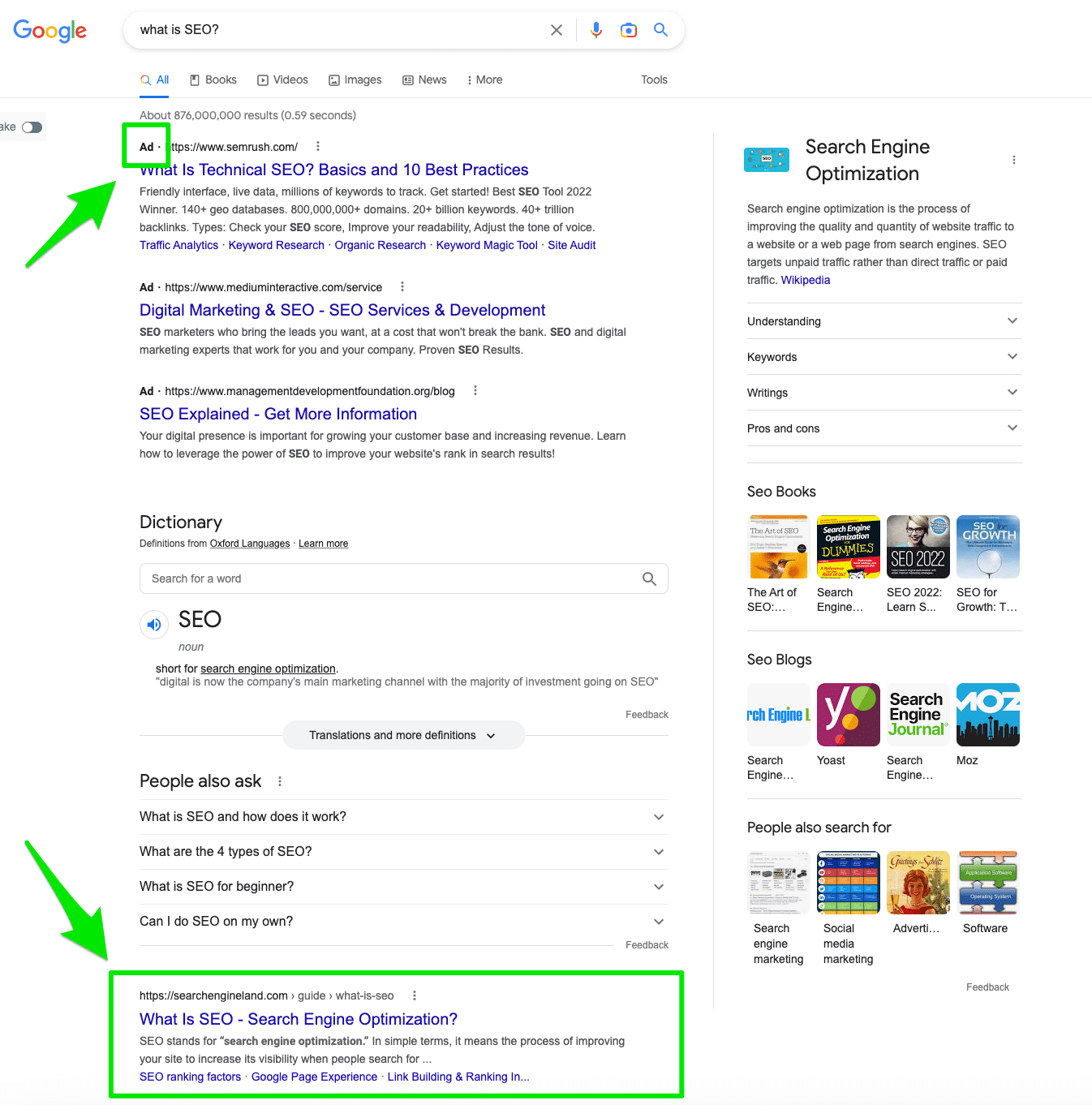
Screenshot of search engine results page for the term "What is SEO?" with arrows pointing to an example of a PPC ad and an organic listing.

The key differences between SEO and SEM are: 

  • SEM requires both SEO and PPC to be called SEM. PPC is transparent and must state it is paid advertising. PPC is shown displaying the word “Ad” at the top. 
  • PPC requires payment for every click (CPC, cost-per-click) or impression (CPM, cost-per-thousand impressions). 
  • PPC can immediately show ROI, whereas SEO is a long game. 
  • PPC is faster to test than SEO. 

Are there any similarities between SEM vs. SEO vs. PPC?

There is a lot of crossover between SEM, PPC, and SEO. 

Both SEO and PPC share these common similarities in creating an SEM strategy: 

  • Increase the visibility of your website across search engines by optimizing your target audience and search queries. 
  • Drive higher-quality traffic to your website by encouraging searchers to click on your website through paid ads or organic search results. 
  • Deep knowledge and expertise in keywords and target audience to better understand the intent behind the search query and how your competition looks at the search term. 
  • Requires A/B testing and experimentation to support a long-term strategy and ROI. 

PPC vs. SEO? Or PPC + SEO?

It depends on your business objective. PPC is better for quick, short-term gains and paired with SEO for a more extensive, long-term strategy. SEO is ideal for a more holistic, long-term approach encompassing UX, content, PR, etc. 

You need both SEO and PPC to succeed with an SEM strategy. PPC should be used to kickstart a campaign and experiment to understand your target audience better. It should complement your SEO strategy. SEO should be considered in all website and internet marketing tactics. 

OK, so now you’re probably even more confused. So, let’s back this up. 

SEM ≠ PPC? The confusing history

Let’s squash this here and now. SEM, search engine marketing = half SEO and half PPC. SEM is not the same as PPC, pay-per-click. You need both the paid and unpaid traffic to make up SEM. 

We’re bringing back the true definition of SEM. Let me walk you through this. 

SEM is about bringing both SEO and PPC together to promote your website or brand by increasing visibility on search engines through paid and organic traffic. 

So, why is there confusion about what SEM means?

That’s because Wikipedia and some top-ranked resources on the subject define SEM as an internet advertising model that drives paid traffic to your website from search engines like Google, Bing, YouTube, Pinterest, TikTok, etc. 

Sound familiar? 

That’s because it’s the exact same definition as PPC. 

Yes, we know that can be confusing – but that’s how things have evolved. Our article, Does SEM = SEO + CPC Still Add Up? explains the evolution in depth.

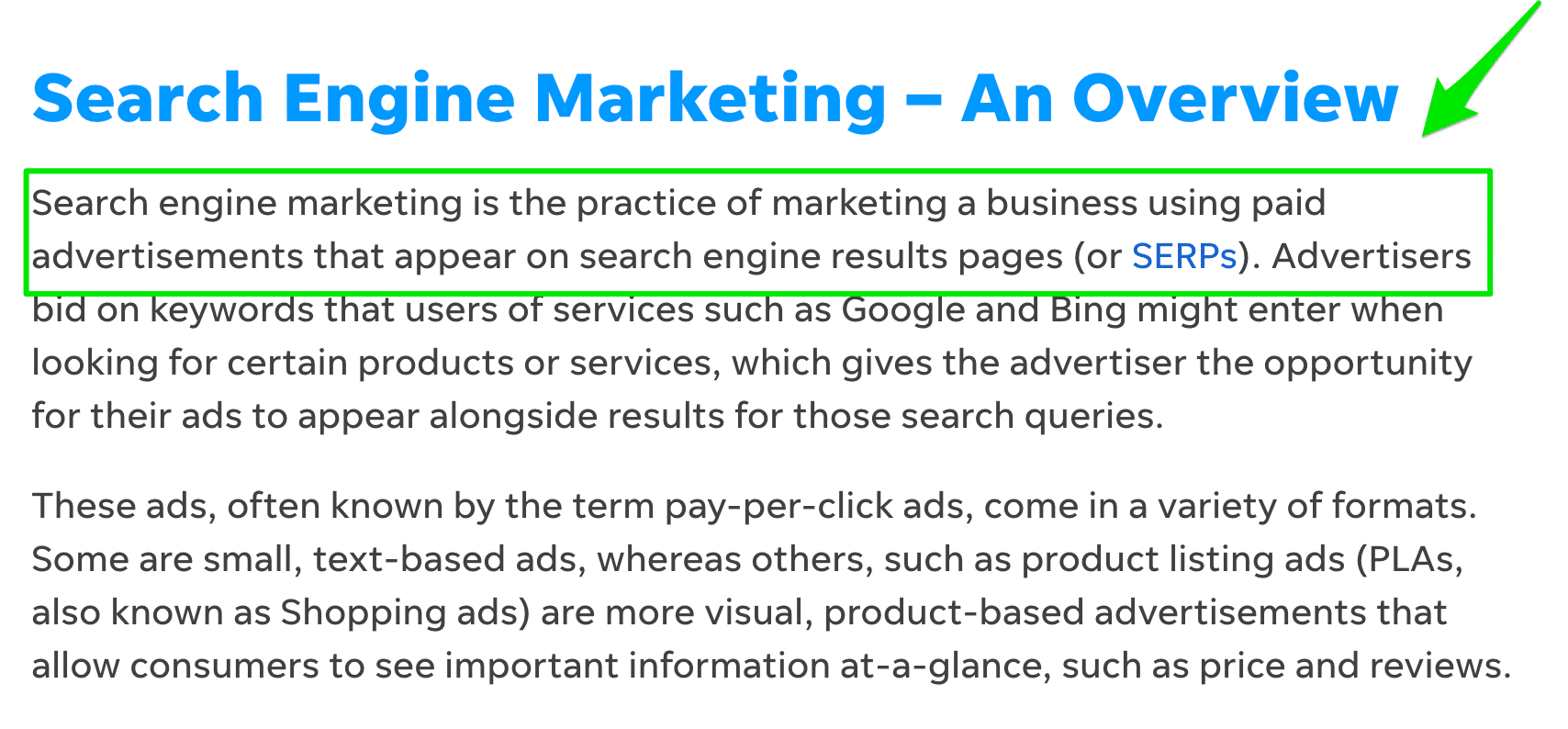
Our industry muddled the waters with articles like this describing SEM as pay-per-click. 

WordStream definition of SEM

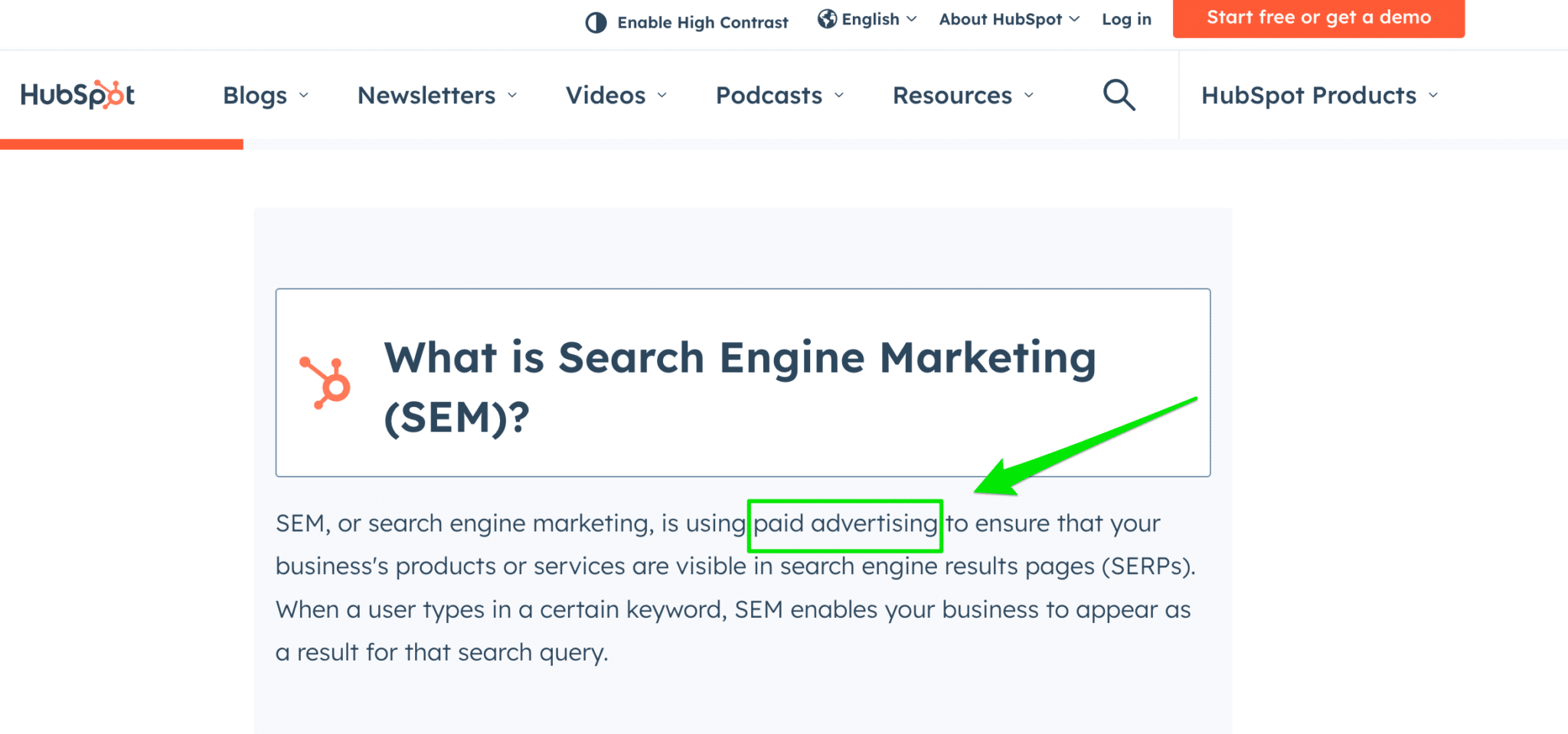
And again, articles like this describing SEM as paid advertising. 

HubSpot definition of SEM

In the early 2000s, search engine marketing, or SEM, was all about combining SEO and PPC into one strategy. SEM was understood as the playground where SEO and PPC play together to benefit all marketing humankind. 

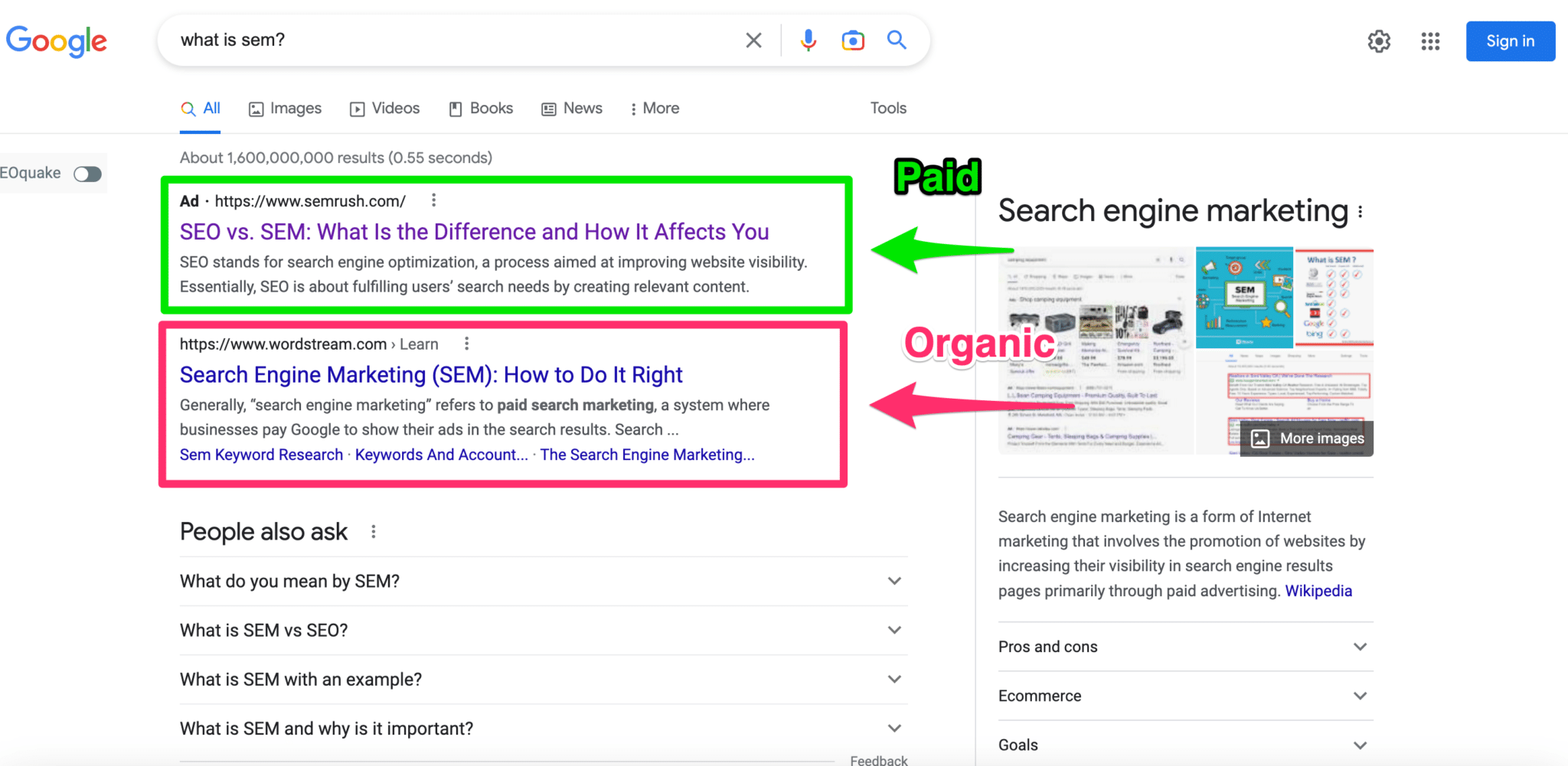
Example of paid and organic listing

Search Engine Land founder and now-Googler Danny Sullivan popularized the term “SEM” in 2001, stating:  

“My suggestion was that there should be an umbrella term, ‘search engine marketing,’ that covered both major activities: SEO + PPC.”

SEM worked to cover optimization for all activities in search engines, whether it be optimizing crawlers, managing paid listings or directories. It encompassed all marketing activity in search engines. 

When Sullivan popularized “search engine marketing” in 2001, marketing (and life) was much different back then. 

Think about it…

The first CAPTCHA was introduced and utilized by PayPal in 2001. 

Google introduced the Google Search Appliance in 2002. 

WordPress was released in 2003. 

Facebook launched in 2004. 

Google Maps was live in 2005. 

Marketing has changed. The last I heard the term “SEM,” Fubu was still popular. That’s why the true definition of SEM has been lost. 

It’s time to revitalize and bring back SEM. 

Let’s all collectively decide to stop calling SEM by its counterpart PPC. You need an SEM strategy to compete in today’s competitive marketing landscape. 

It’s kind of like the time some SEO professionals wanted to rebrand SEO “Search Engine Optimization” into “Search Everywhere Optimization” or “Search Experience Optimization.” But not. 

The reality is SEM, PPC, and SEO today are just marketing. 

Sullivan reiterated this point in 2014:

The person putting together an SEM strategy is likely the CMO or VP of Marketing putting together their overall marketing strategy. 


Get the daily newsletter search marketers rely on.


Two examples of SEM strategies in the wild

Example 1: Asana Rebel

First, I discovered a sponsored ad for Asana Rebel on Instagram. 

Instagram ad - Asana rebel

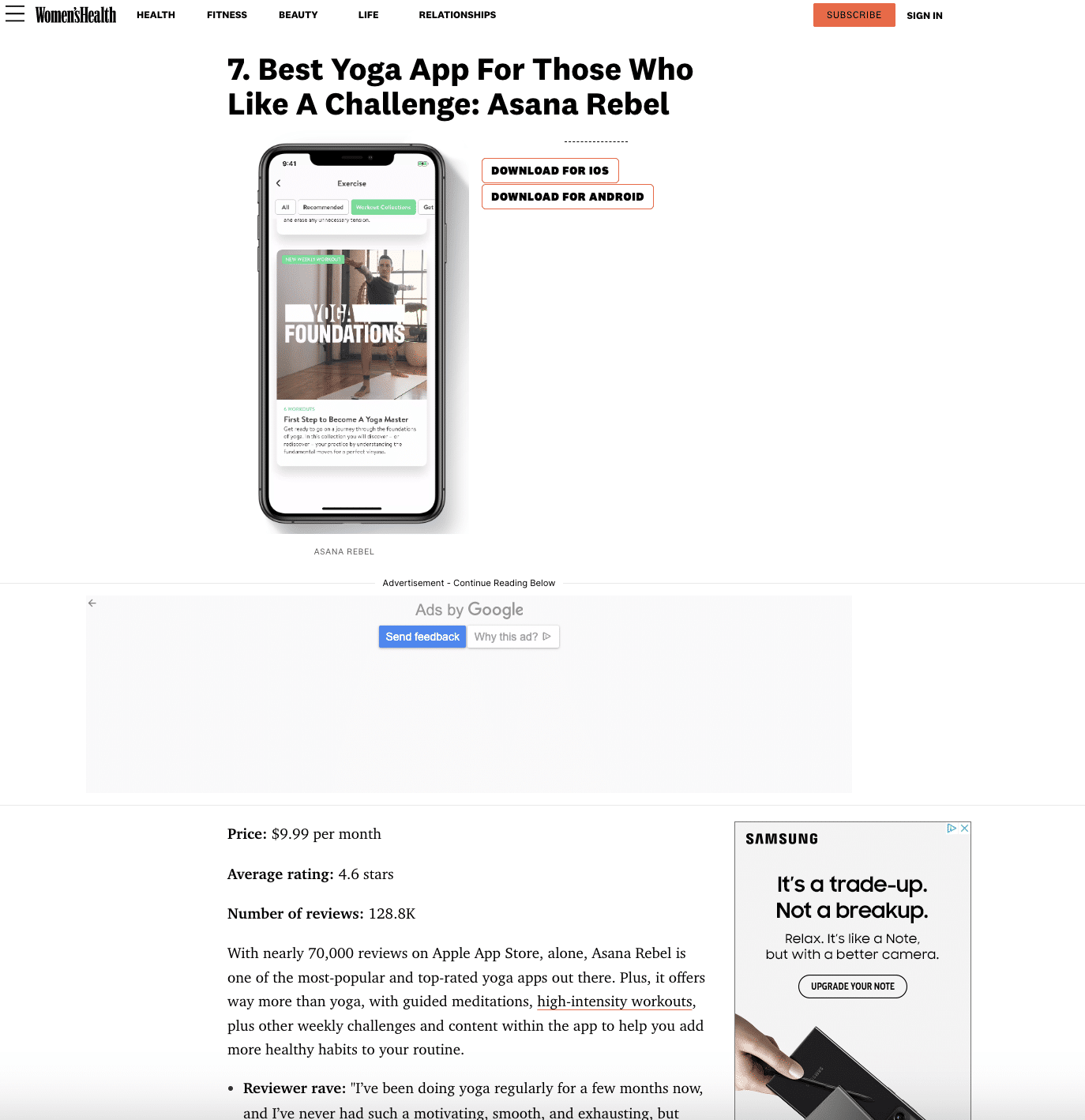
Then, I read a Women’s Health Magazine review about the best yoga apps. This is a naturally created review based on star ratings in the app stores. 

Women's Health review of the best yoga apps

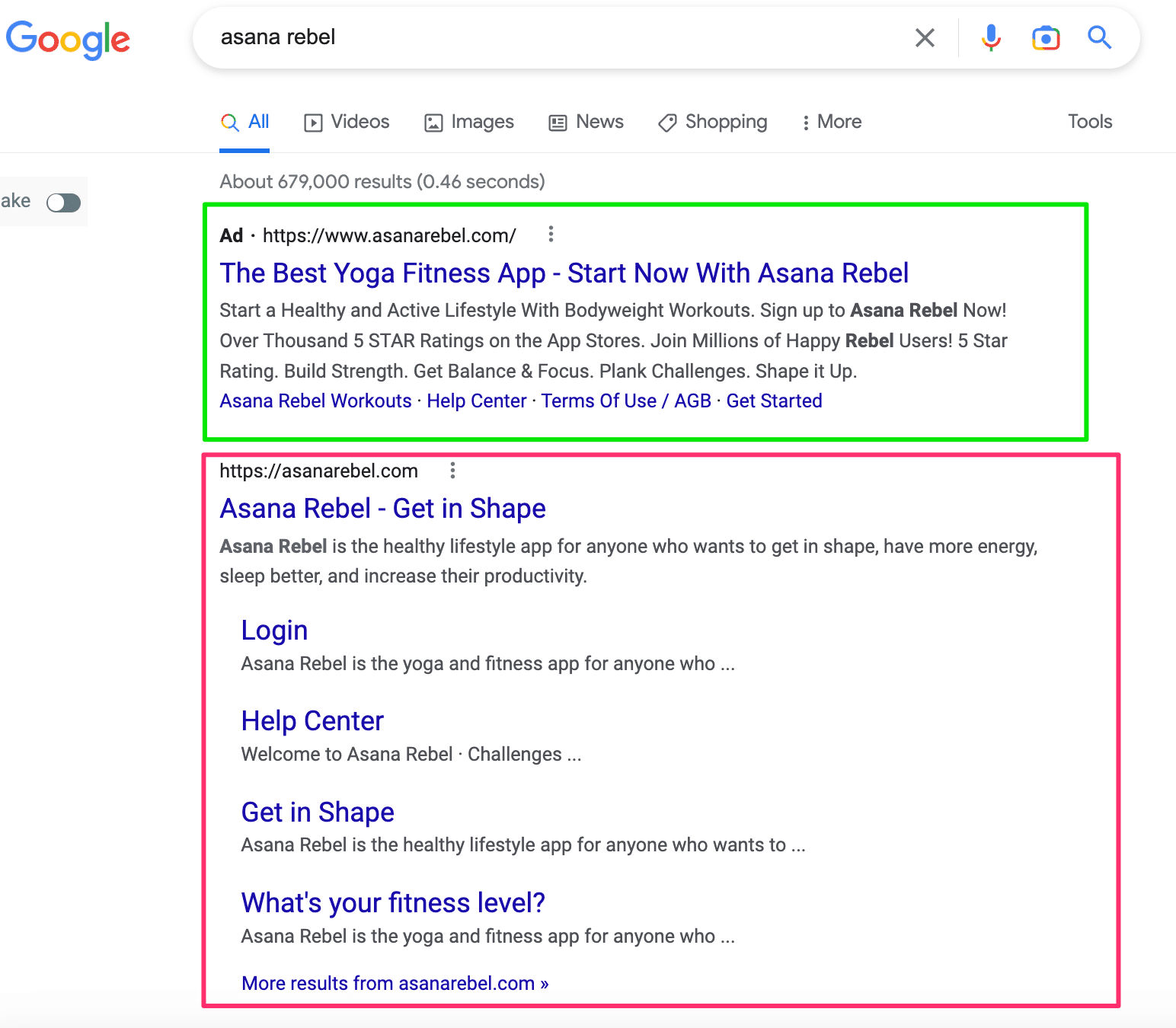
Finally, I decided to search for Asana Rebel to learn more, where we can see a paid ad at the top and the organic result at the bottom. 

Screenshot of search engine result page for the brand term "Asana Rebel"

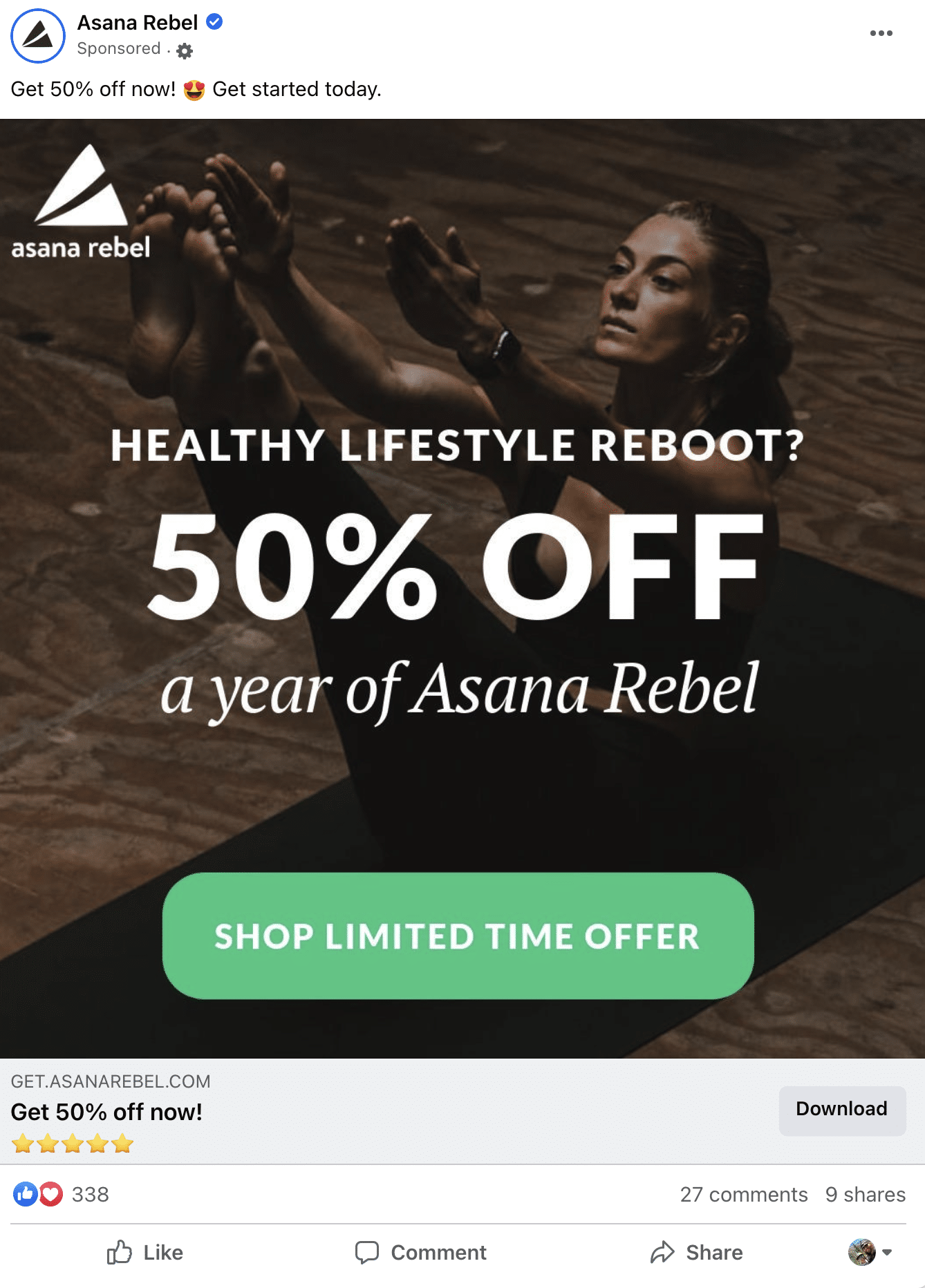
About three days later, I was served this remarketing ad on Facebook. 

Asana Rebel Facebook ad

Example 2: MindManager

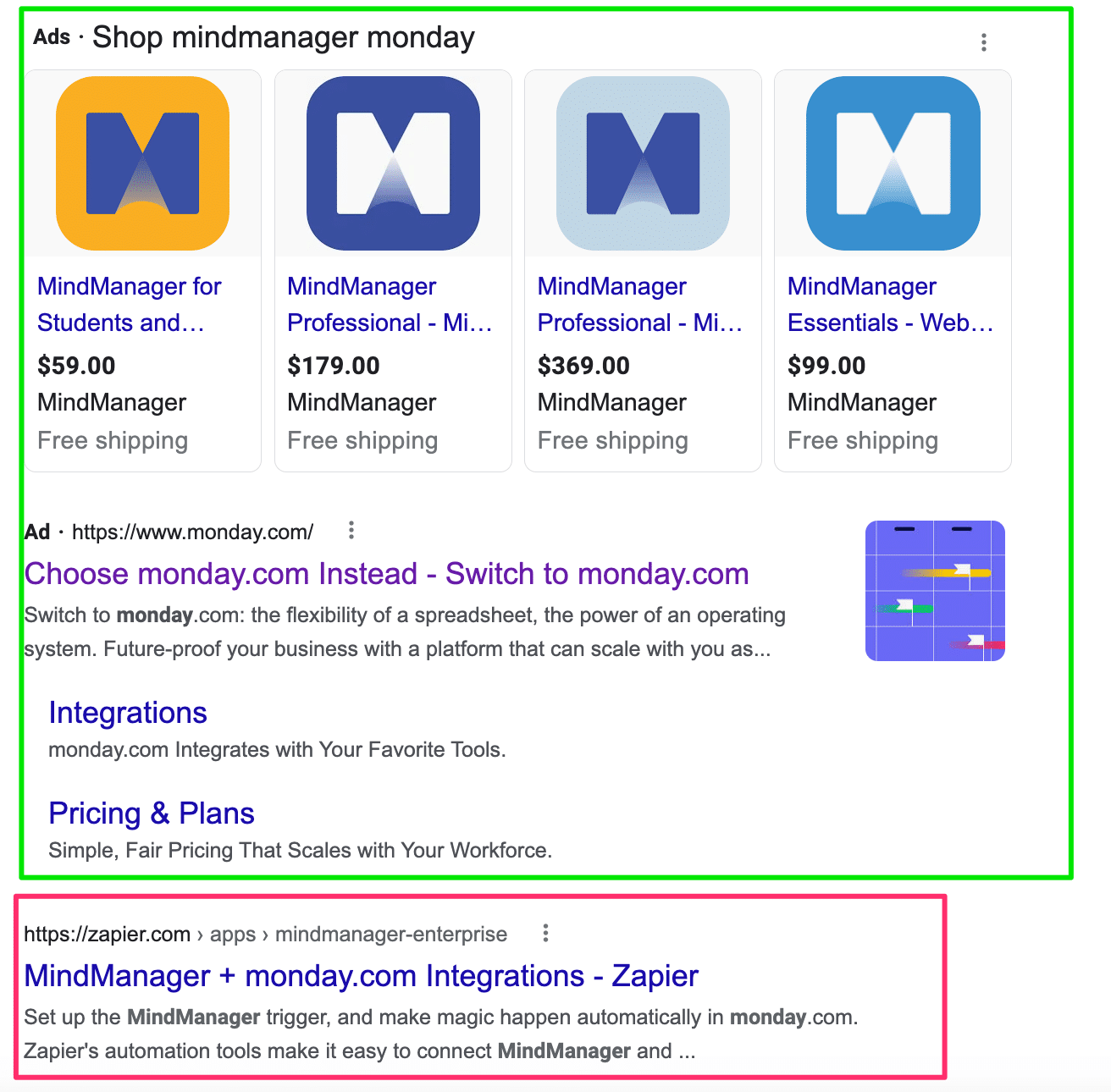
First, I started searching for MindManager on Google. 

MindManager search results on Google

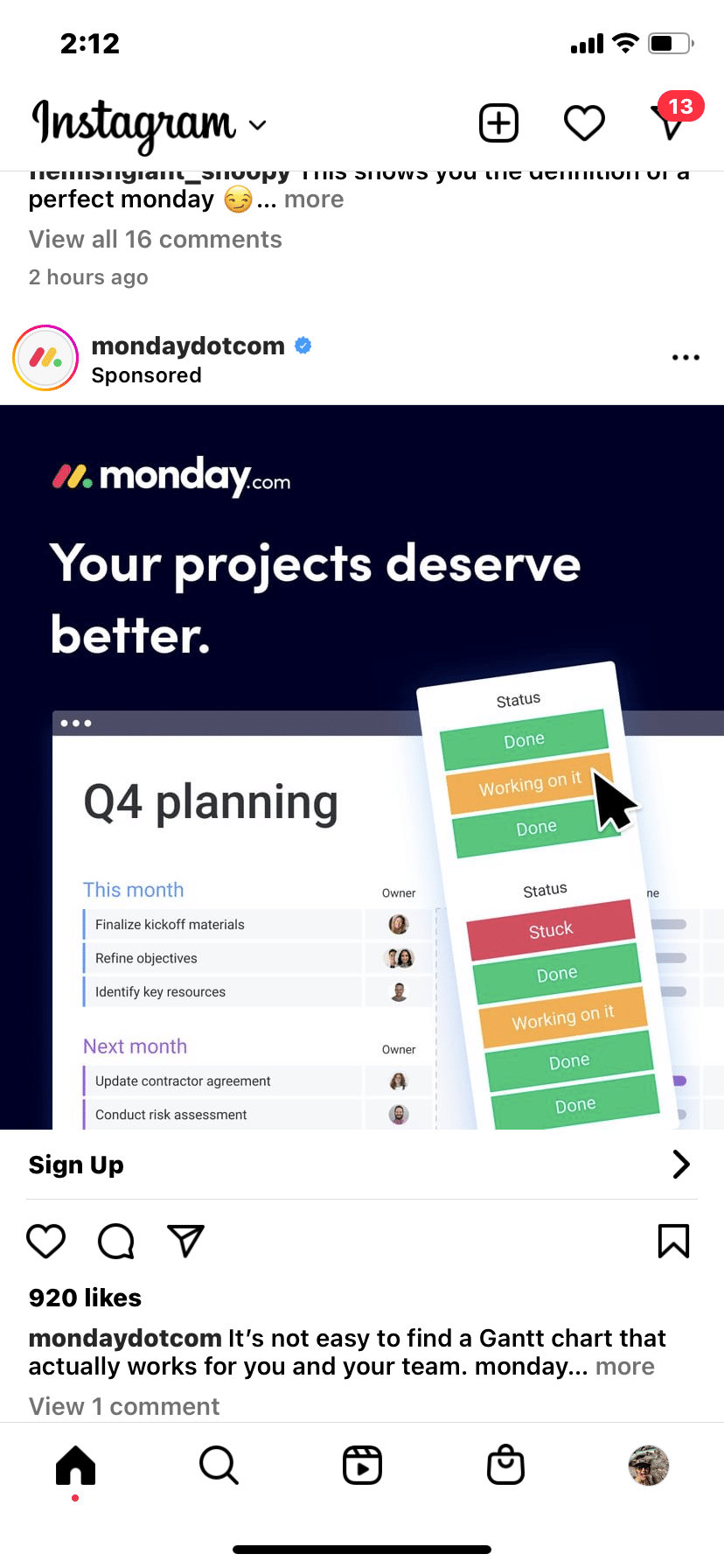
I clicked on the ad for Monday.com. And within 30 minutes, I was served a remarketing ad on Instagram. 

Monday.com Instagram retargeting ad

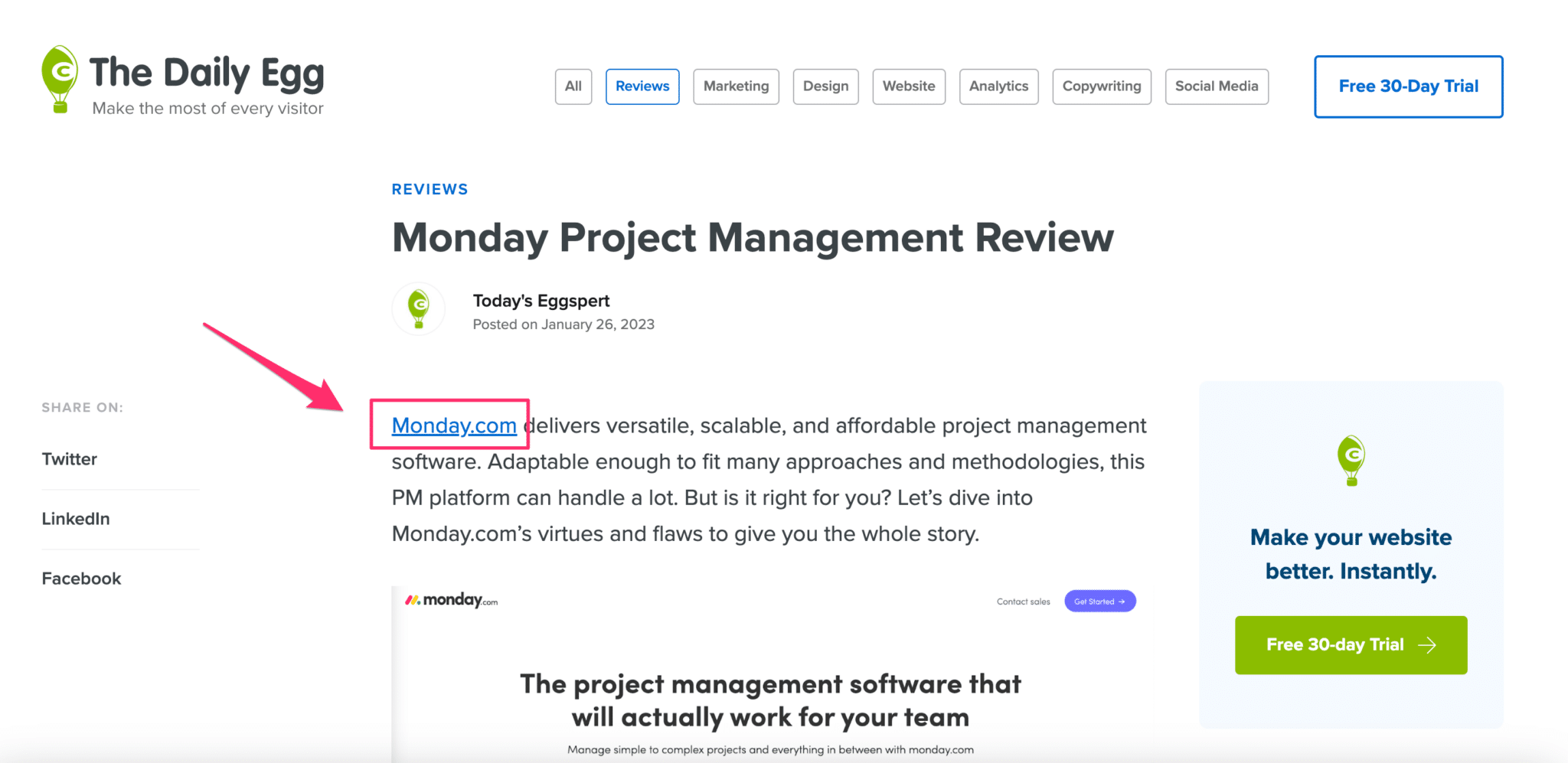
Then, I stumbled across a paid review for Monday.com by Crazy Egg. This is likely thanks to a paid partnership or affiliate marketing team. 

Monday.com project management review on The Daily Egg

These two examples are what a holistic SEM strategy should be by combing SEO, paid, social, affiliates, PR, etc.

Careers in SEM

It’s as rare to find an individual managing all SEM as it is to find a Spider-Gwen comic. 

However, marketers with a skillset in both SEO and PPC do exist. I was surprised to learn that 30% of SMX attendees reported doing both PPC and SEO. 

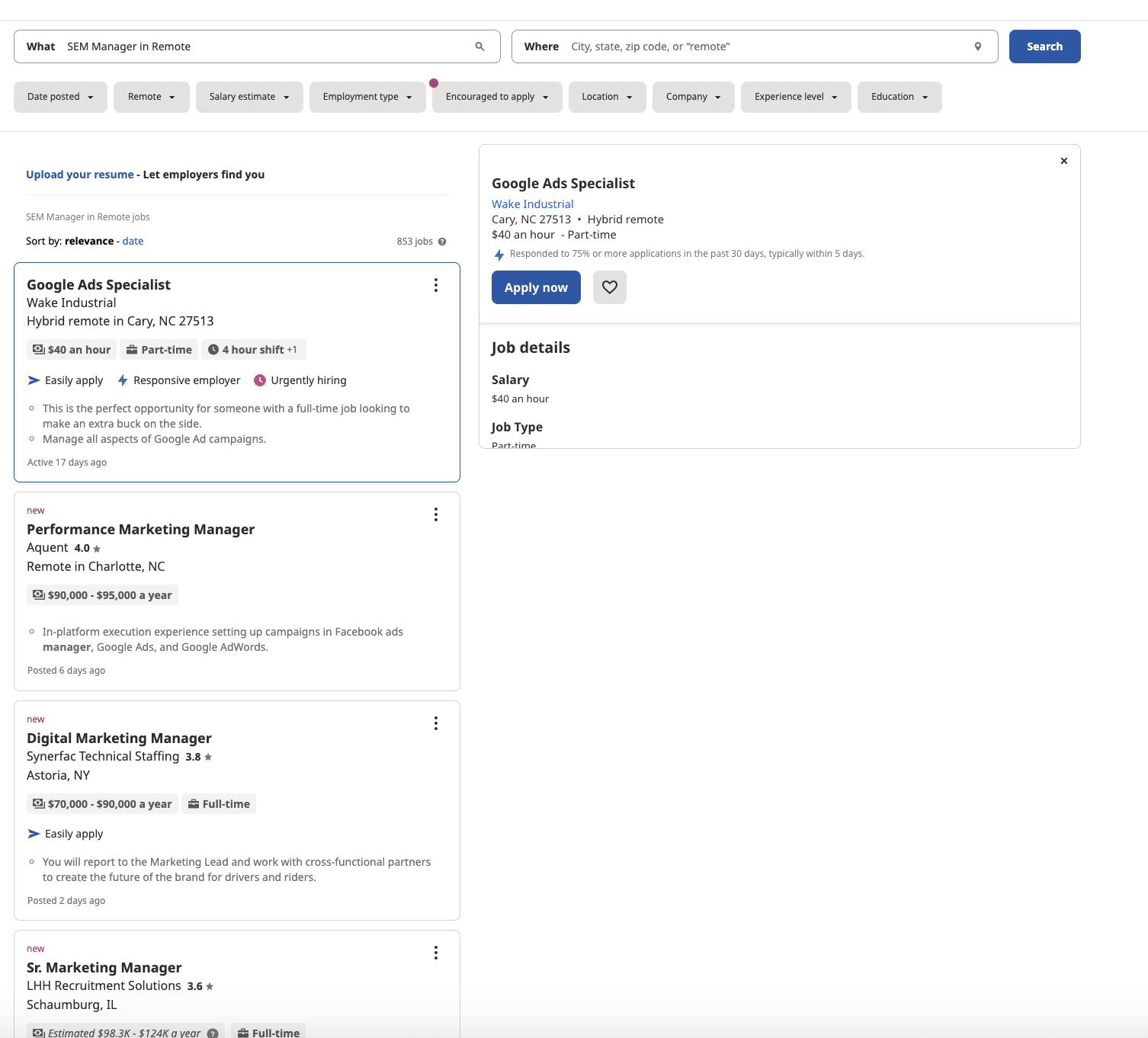
But, when you type in SEM in Indeed, there are no jobs with “SEM” in the title. 

Indeed search for "SEM"

SEM jobs are now “Directors of Marketing.”  SEM is in-demand. 

From 2021 to 2022, average salaries in PPC have grown by approximately 6.5% in the U.S., 5% in Canada, 6% in the U.K., and 11% in Europe. 

And the global SEO market is supposed to grow by $122.11 billion by 2028. That’s a big jump compared to the $65 billion in 2016.

As Sergey Alakov, SEO Manager for Catalyst Canada, put it perfectly:  

If you’re looking for a job in SEM, check out SEM career playbook: Overview of a growing industry and The latest jobs in search marketing here on Search Engine Land. 

The future of marketing is SEM

SEM can revolutionize every part of marketing. With AI and automation at the forefront of daily topics, PPC and SEO professionals will have fewer levers to pull to control where money is being spent. 

And with first-party data, SEM professionals will become less dependent on data to back up decisions. Now, companies will need to rely more on the individual’s expertise and the understanding of how SEM fits into the bigger picture. SEM is the future of marketing. 

Stay up to date on all things search marketing

Search Engine Land has been covering search marketing since 2006. In addition to covering the latest news, Search Engine Land publishes contributed articles from a diverse group of subject matter experts featuring helpful search marketing tips, tactics, trends and analysis.

You can sign up to receive Search Engine Land’s free email newsletter, featuring a roundup of the latest search marketing news and insights, every weekday.


Opinions expressed in this article are those of the guest author and not necessarily Search Engine Land. Staff authors are listed here.


Related stories

New on Search Engine Land

@media screen and (min-width: 800px) { #div-gpt-ad-3191538-7 { display: flex !important; justify-content: center !important; align-items: center !important; min-width:770px; min-height:260px; } } @media screen and (min-width: 1279px) { #div-gpt-ad-3191538-7 { display: flex !important; justify-content: center !important; align-items: center !important; min-width:800px!important; min-height:440px!important; } }

About the author

Anna Crowe

Anna Crowe is a Frank’s Hot Buffalo sauce advocate (leading with obvious priorities), writer, marketer and SEO nerd. Over the last 12+ years, Anna has successfully run SEO and content programs for brands like Dollar Thrifty Rental, Marriott, Hilton, Hearst Magazine, Mailboat Records, Philip Morris International, Bloomin’ Brands and Brother USA and many more. She enjoys burritos and puppies (in that order) when she’s not moonlighting as a soccer coach. https://annaleacrowe.com/

https://searchengineland.com/what-is-search-marketing-393902


Google announces Performance Max for travel goals

Performance Max for travel goals creates ads in multiple formats that will automatically serve across Google channels and inventory, including Maps, Search, YouTube and Hotel Ads (coming later this year).

What’s new. Here’s what you need to know:

  • Performance Max for travel goals can help hotels create ads in multiple formats and, in one campaign, reach more travelers across YouTube, Display, Search, Discover, Gmail and Maps.
  • Hotel ads will be added to Performance Max for travel goals later this year.
  • Advertisers select their hotel properties from a map using a hotel picker tool during campaign setup. A single campaign can support up to 100 hotel properties with different locations, images and messages. 
  • It tracks and shares campaign performance for each location separately, helping hotels figure out what’s working. Advertisers can also view traffic by hotel property to better understand demand across different locations.

Ads in multiple formats. Performance Max for travel enables the creation of ads in multiple formats for travel goals. The ads are automatically served across various Google channels and inventory, such as Google Maps, Search, YouTube, and Hotel Ads (coming later this year).

During campaign setup, users can choose their hotel properties from a map using the hotel picker tool provided by Performance Max. The platform then pre-populates ads for the hotel, which include creative elements like copy, images, and URLs in every format. Users can choose to edit any of these pre-populated assets or upload their own instead.

Property-level reporting. The Insights page can assist in improving your understanding of your business, customers, and performance. One of the features, search term insights, displays what guests are searching for when they view your ad.

Performance Max for travel goals enhances this by providing simplified property-level reporting and travel-specific campaign recommendations. With the ability to support up to 100 hotel properties, a single campaign pre-populates recommended creative assets such as images and messages for each location. Furthermore, the hotels tab measures and shares campaign performance for each property.

Early testing. An international hotel chain called Minor Hotels, headquartered in Bangkok, Thailand, manages a diverse range of over 500 hotels, resorts, and branded residences across six continents. Creating individual campaigns for each property was an intricate and time-consuming process. Therefore, they leveraged Performance Max for travel goals to accelerate their campaign creation process and enhance their outreach across Google. Additionally, the platform provided budget optimization recommendations per property, enabling them to reduce their cost per acquisition by 51%, elevate their return on ad spend by 76%, and increase their bookings by 86%.

Dig deeper. You can read the announcement from Google here.

Why we care. Performance Max for travel simplifies the process of creating hotel campaigns, allowing advertisers and brands to save time and streamline workflow. Secondly, they provide access to various Google channels and inventory, including Google Maps, Search, YouTube, and Hotel Ads, which can help increase their reach and improve their visibility.

The property-level reporting and travel-specific campaign recommendations cater specifically to the travel industry, and can provide budget optimization recommendations to help advertisers maximize their return on investment and reduce their cost per acquisition.


Related stories

New on Search Engine Land

@media screen and (min-width: 800px) { #div-gpt-ad-3191538-7 { display: flex !important; justify-content: center !important; align-items: center !important; min-width:770px; min-height:260px; } } @media screen and (min-width: 1279px) { #div-gpt-ad-3191538-7 { display: flex !important; justify-content: center !important; align-items: center !important; min-width:800px!important; min-height:440px!important; } }

About the author

Nicole Farley

Nicole Farley is an editor for Search Engine Land covering all things PPC. In addition to being a Marine Corps veteran, she has an extensive background in digital marketing, an MBA and a penchant for true crime, podcasts, travel, and snacks.

https://searchengineland.com/google-announces-performance-max-for-travel-goals-393939


How to dial in your ad messaging in an automated marketing world

Google and Microsoft have forced marketers away from manual controls in favor of automation.

Responsive search ads have replaced expanded text ads. Performance Max is the new way forward for ecommerce. Multi-platform is coming to a Bing account near you.

These days, experienced search marketers have fewer ways to differentiate themselves in performance marketing campaigns. But there’s a major one I’d like to dig into for this column: messaging.

Specifically:

  • Messaging’s unique power in today’s search campaigns.
  • Successful elements of great messaging.
  • The right way to think about testing and refining your messaging.
  • Resources for developing effective messaging.

We’ll also look at how – or whether – ChatGPT is changing our approach.

The power of good ad messaging in 2023 

Not so long ago, writing ad copy for PPC was somewhat formulaic: 

  • Do your keyword research.
  • Ensure alignment between the ad copy and the destination landing page.
  • Come up with a good CTA.
  • Squeeze them into character limits.

We don’t live in that world anymore. 

Now, you’re putting a cap on your effectiveness if you’re not considering many factors, such as:

  • Where the ad will live.
  • What might run next to it.
  • How it needs to stand apart from competing ads.

The rewards are higher for being creative than when messaging was one of many differentiators.

With much of the playing field being leveled, you need to apply some extra focus on what you’re saying and how you’re saying it.

What goes into great messaging?

The best messaging entices the right people to click and deters those outside your ideal customer profile from engaging. This applies more to B2B than B2C, but it’s true for both. 

In other words, great messaging acts as a qualifier. It’s a tricky balance, but it should always be on performance marketers’ minds: spend on the right clicks. 

Enterprise companies know all too well what I’m talking about – from clicks to leads, you’re wasting many resources in getting misaligned users in your funnel.

In my experience, the strongest messaging:

  • Succinctly highlights benefits (not features).
  • Validates its claims with social proof.
  • Spells out audience qualifiers.
  • Plays on user emotions to heighten the implied risk of ignoring the offer. 

We have a lot of SaaS clients, and in competitive, fast-moving tech industries, FOMO is always a good play. Nobody wants to fall behind the pace of business transformation.

Let’s look at a couple of examples of effective ads:

PPC ads - examples with clear CTA, social proof and clear benefit.

Unless you’re a solo practitioner, you need a good team of people to develop great messaging.

Folks who blend creativity with critical thinking can look at a space and conceive promising ideas to stand out. 

Combine that with a knack for brevity and a willingness to ask follow-up questions after the first request from a client or stakeholder, and you’ll have a potential messaging master on your hands.


Get the daily newsletter search marketers rely on.


How to approach messaging tests

I recommend taking one approach for social messaging and another for search messaging.

On Facebook, LinkedIn, TikTok, etc., start by isolating two very different testing themes to see which gets traction, then refine and test within that theme. 

Let the data dictate the next steps, but have a bunch of ideas at the ready. There’s a finite number of variables – determine which is most impactful and iterate.

You’re limited to three active RSA versions on Google, so develop three distinct messages and be clear about the elements you’re testing. 

If you use a different benefit for each ad, focus your analysis by keeping the social proof relatively similar across ads. (You can also test types of social proof by keeping the benefits static.) 

Ensure you’re labeling ads to track what exactly you’re assessing as part of the test.

One note on RSAs: We still have accounts running legacy ETAs outperforming their RSA counterparts. 

You can test ETA equivalents vs. RSAs by using pinning mechanisms that Google makes available in the UI for headlines and descriptions. 

Google will throw up quality flags to force you to adopt unpinned RSAs, but you may see better performance regardless. 

TL;DR: If you suspect unpinned RSAs are hurting account performance, test that workaround and see how they compare.

Resources for developing effective messaging

If you’re new to agency marketing, you’d be surprised what clients have for resources that aren’t public-facing. 

Ask for sales materials and any background information from the product marketing team.

You’re almost certain to find stats, pain points, benefits and use cases that you can and should use in your copy. 

Start with the landing pages and any downloadable materials, but ask your client contacts to help you access materials from other teams. 

If you’re an in-house marketer, set a regular reminder to check in with your teammates (at least quarterly). 

See what new insights they’ve produced and whether there’s messaging resonating particularly well with prospects and existing clients.

Is ChatGPT changing anything about messaging development?

I’ll echo an emerging theme with ChatGPT and similar tools. Use AI if it helps you efficiently establish a foundation, then bring in the human layer. 

For ad copy and messaging, it could give us a starting point with the right queries by pulling succinct copy from a landing page. 

But it won’t provide us with the assets of great messaging I’ve already covered: selling points, stats, etc. It won’t understand user pain points and emotions to play on.

If it reliably saves you time at the start of the process, add it to your SOP – but make sure its usage is confined to the limits of its effectiveness.

chatgpt ad

Is this usable as is? Nope. 

But it gives you a few elements to play with, mainly calling out Asana’s primary benefit in the headline. 

Use ChatGPT to get some ideas, but don’t count on it for much more than that at this point.

Level up creativity to make a difference

Even as science and AI get deeper footholds into performance marketing, there’s room left for art to make a difference, especially if you approach it empirically and make sure you’re digging up the right elements to put into play.


Opinions expressed in this article are those of the guest author and not necessarily Search Engine Land. Staff authors are listed here.


Related stories

New on Search Engine Land

@media screen and (min-width: 800px) { #div-gpt-ad-3191538-7 { display: flex !important; justify-content: center !important; align-items: center !important; min-width:770px; min-height:260px; } } @media screen and (min-width: 1279px) { #div-gpt-ad-3191538-7 { display: flex !important; justify-content: center !important; align-items: center !important; min-width:800px!important; min-height:440px!important; } }

About the author

Laura Schiele

Laura Schiele, Head of Paid Acquisition at Jordan Digital Marketing, has nearly a decade of experience in paid media strategy and execution in both agency and in-house accounts and uses advanced analytics skills to scale growth within efficiency goals across Google, LinkedIn, Facebook, and more. Laura manages a large team of paid media experts remotely from her home in Burlington, VT.

https://searchengineland.com/ad-messaging-power-393895


Code-free custom conversion, and 5 other new Microsoft Ads updates

Microsoft has just announced six new updates for March. Let’s dive in.

What’s new.

  • Code-free custom conversion setup wizard
  • UET tags with deletion option
  • Custom combinations
  • Multimedia Ads with logos
  • New shopping markets in North America
  • Local Search Ad extensions

Code-free custom conversion setup wizard. Microsoft has simplified the process of setting up custom conversion tracking. By enabling Microsoft Clarity insights through Universal Event Tracking (UET) tag setup, it is now possible to set up event-based conversion tracking without any coding.

Earlier, setting up a manual tag required website code updates. However, the new code-free process only takes a few clicks to set up. Interested individuals can view a demo of the process on the Microsoft blog.

UET tags with deletion option. A new option is being rolled out in the UET settings this month to delete unused tags as required. Users can now select the checkbox next to the undesired UET tag and delete it for various reasons such as a new website, cleaning up conversion data, or duplicate tags. However, it is important to note that the tags can only be deleted if they are not associated with a conversion goal, audience, or shared with another account.

Custom combinations. Updates to Custom combinations that were mentioned last month have now been fully released. Users are now able to create combined lists of various audience types including Customer Match, Custom Audiences, Remarketing, and Dynamic Remarketing. Earlier, it was only possible to combine Customer Match with other Customer Match lists or Custom Audiences with other Custom Audiences. Users can work with their Microsoft Account team to start using this feature.

Multimedia Ads with logos. Users can now add their company’s brand logo to their Multimedia Ads quickly and easily through Microsoft Advertising online.

Picture1

New shopping markets in North America. Later in March, shopping advertisers will be able to upload feeds in new markets in North America: French in Canada and Spanish in the United States. This feature will enable potential customers to view ads in their preferred query language in their country. Users can upload their new feeds using the existing file feed upload process once the feature is available. The uploaded ads will be displayed in the user’s query language in the associated countries.

Picture1 1 800x388

Local Search Ad extensions. Local Search Ads have been introduced to enhance location extensions, and they will run on the local results entity on Bing’s search engine results page as well as Bing Maps on PC. This feature will give businesses more prominent placement and increased visibility for their location and details, giving them an edge over their competitors. Local Search Ads are currently available in North America on PC.

Picture1 287x600

Dig deeper. You can review the official announcement on Microsoft’s blog.

Why we care. The ability to set up custom conversion tracking without any coding or deleting unused tags can save time and effort, making the process more efficient. Additionally. being able to create combined lists of various audience types can help advertisers better target their campaigns, resulting in more effective advertising.

Finally, the Local Search Ads feature can give businesses more prominent placement and increased visibility, giving them an edge over their competitors. These updates and new features can ultimately help advertisers reach their target audience more effectively and increase their return on investment (ROI).


Related stories

New on Search Engine Land

@media screen and (min-width: 800px) { #div-gpt-ad-3191538-7 { display: flex !important; justify-content: center !important; align-items: center !important; min-width:770px; min-height:260px; } } @media screen and (min-width: 1279px) { #div-gpt-ad-3191538-7 { display: flex !important; justify-content: center !important; align-items: center !important; min-width:800px!important; min-height:440px!important; } }

About the author

Nicole Farley

Nicole Farley is an editor for Search Engine Land covering all things PPC. In addition to being a Marine Corps veteran, she has an extensive background in digital marketing, an MBA and a penchant for true crime, podcasts, travel, and snacks.

https://searchengineland.com/code-free-custom-conversion-and-5-other-new-microsoft-ads-updates-393957


This day in search marketing history: March 7

Google adds landing page load time to Quality Score

In 2008, Google AdWords confirmed a new addition to Quality Score: landing page load time.

Google said they did this for two reasons:

First, users have the best experience when they don’t have to wait a long time for landing pages to load. Interstitial pages, multiple redirects, excessively slow servers, and other things that can increase load times only keep users from getting what they want: information about your business. Second, users are more likely to abandon landing pages that load slowly, which can hurt your conversion rate.

– Inside AdWords, Landing page load time will soon be incorporated into Quality Score

And what did Google consider to be too slow? Google was typically vague, telling Search Engine Land:

  • “Our goal is to encourage advertisers with landing pages that are excessively slow to speed up their sites. It’s not possible to provide an exact number of seconds above which we would consider a site to load ‘slowly,’ since we adjust for regional and country differences in average load times.”

Read all about it in Load Time Confirmed As AdWords Quality Score & New Category Exclusion Feature.


Also on this day


Google Broad Core Algorithm Updates: Everything you need to know

2022: What is a broad core algorithm update? Learn the complete history of Google’s core updates, what they are, and what’s important for SEO.


Google’s ‘Russian invasion of Ukraine’ results includes new search features

2022: The new features included sections for background information, estimated casualties and photos of the conflict.


Microsoft Advertising announces new ad type for service providers

2022: Professional service ads could also be used to promote regional offices, branches or even national brands that provide relevant services.


SEOs beware: Link builders are back with bogus Domain Authority pitches

2019: In dozens of emails and countless social media posts, SEOs expressed concerns over DA score changes and the impact on their Google rankings.


Google AMP team launches ‘Render on Idle’ to load ads faster when browsers sit idle

2018: The feature worked automatically with DoubleClick AMP ad tag and for ad networks using Fast Fetch.


AMP rolling out to 1 billion more people in Asia

2017: Baidu, Sogou and Yahoo Japan were adopting the mobile framework.


Flickr’s new ‘similarity search’ feature makes it easier to find visually similar photos

2017: Flickr said its new search option used advanced technology to surface similar photos without much work on the user’s end.


Google tests clickable phone numbers in organic search results

2016: Google was experimenting with click-to-call on the organic side, which they had done with ads and local before.


App marketers can now upload customer IDs to AdWords for targeting on Google Display Network

2016: The new bulk IDFA/advertising ID upload feature helped developers try to re-engage users on iOS and Android devices.


AdWords API For New Google Shopping Campaigns Now Available

2014: The API was available to agencies and third-party platforms to facilitate large-scale implementations.


Google Stepping Up Merchant Feed Enforcement

2014: Google would begin to disapprove products with incorrect GTIN, MPN and brand identifiers and globally demote products with incorrect identifier_exists attribute


Search In Pics: Bing Street View Car, Google Toy Helicopter & Special Key

2014: The latest images showing what people eat at the search engine companies, how they play, who they meet, where they speak, what toys they have, and more.


Did Google Just Penalize Another Link Network? SAPE Links

2013: Webmasters who had used the SAPE link network reported that their sites took hard penalties within Google, resulting in a huge downgrade in ranking.


Blind Study Finds YP Local Results Beat Google, Bing, Yahoo

2013: Thousands of queries were compared over a year.


Google Maps Might Be Banned In Germany Over Patent Infringement

2013: The judge reportedly called the patent, which describes how map data and local search results can be combined, a “big idea.”


Facebook Updates News Feed, No Impact On Graph Search (Today)

2013: Though some of the News Feed changes could eventually have impacted Graph Search.


Google Meets Miss Manners, Encourages Searchers To Thank Those Who +1’d Content

2012: If a searcher did choose to thank someone for the +1, they were prompted to thank directly on Google+.


Microsoft adCenter Launches Location Extensions In Ads

2012: Location Extensions allowed local business advertisers to display their addresses and phone numbers within the ads on Bing and Yahoo.


Google To Acquire BeatThatQuote.com

2011: BeatThatQuote.com was a price comparison website for loans and financial products. 


Google Controls 97 Percent Of Mobile Paid Search: Report

2011: The report also stated that mobile searches had a CTR that was 30% lower than desktop CTR.


Report: Expect More Aggressive Acquisitions From Google

2011: Having made a record 48 purchases in 2010, Google was “going to continue to be aggressive.”


Google Navigation Now Avoids Traffic

2011: Real-time traffic conditions and historical traffic patterns were factored into the routing.


Bing Tests New Top Bar Navigation & HTML5 Preview Coming Soon

2011: The new bar was larger, incorporating more of the Bing home page theme from that day. 


First Angry Birds Product Integration To Tout Bing

2011: Rovio and Microsoft struck a deal to integrate Bing search into the game.


Google Tests More TV Ads With AdWords Integration

2008: Google sent out more invitations for advertisers to test out TV ads within the Google AdWords system.


U.S. Pentagon Bans Google From Military Bases

2008: The ban came after StreetView photographs of Fort Sam Houston in San Antonio were found on Google Maps.


Microsoft’s Google Obsession, MicroHoo’s Asian Outlook, And Competing For Digg

2008: “So it may be my last breath at Microsoft, but we’re going to be there, working away, building share.”


Utah Neuters Search Ad Trademark Keyword Law

2008: In short, you could now legally bid on trademarked terms in Utah, assuming you complied with the search engine’s trademark policy in your country.


Friendster Partners With Google & Drops Yahoo

2007: Social networking site Friendster selected Google to power search and ads on its site.


Link Count Updates At Google & Yahoo Search

2007: Yahoo and Google were updating the number of links they account for each site.


Version 5 Of Google Desktop Released

2007: Improvements to desktop search included the addition of “preview search results.”


Send Destination Points From Google Maps To Your GPS Device

2007: BMW in Germany started supporting integration with Google Maps.


YouTube Blocked In Turkey

2007: Because a video was found that insulted Mustafa Kemal Ataturk, the founder of modern Turkey.


Ask.com’s CEO, Jim Lanzone, Calls Yahoo Paid Inclusion “Hypocritical”

2007: He found it “hypocritical to charge for something we need to do anyway” (i.e., crawl the web to find quality pages to present to the searcher).


Yahoo China Sued For Linking To Unlicensed Music

2007: The case was filed in early January by “11 companies and seeks damages of 5.5 million yuan ($710,686).”


SuperPages Upgrades Mapping With Virtual Earth

2007: It added a range of sharing and personalization features built on top of the Microsoft Virtual Earth platform.


From Search Marketing Expo (SMX)


Past contributions from Search Engine Land’s Subject Matter Experts (SMEs)

These columns are a snapshot in time and have not been updated since publishing, unless noted. Opinions expressed in these articles are those of the author and not necessarily Search Engine Land.


< March 6 | Search Marketing History | March 8 >


Related stories

New on Search Engine Land

@media screen and (min-width: 800px) { #div-gpt-ad-3191538-7 { display: flex !important; justify-content: center !important; align-items: center !important; min-width:770px; min-height:260px; } } @media screen and (min-width: 1279px) { #div-gpt-ad-3191538-7 { display: flex !important; justify-content: center !important; align-items: center !important; min-width:800px!important; min-height:440px!important; } }

About the author

Danny Goodwin

Danny Goodwin is Managing Editor of Search Engine Land & SMX. In addition to writing daily about SEO, PPC, and more for Search Engine Land, Goodwin also manages Search Engine Land’s roster of subject-matter experts. He also helps program our conference series, SMX – Search Marketing Expo. Prior to joining Search Engine Land, Goodwin was Executive Editor at Search Engine Journal, where he led editorial initiatives for the brand. He also was an editor at Search Engine Watch. He has spoken at many major search conferences and virtual events, and has been sourced for his expertise by a wide range of publications and podcasts.

https://searchengineland.com/search-marketing-history-march-7-393891


This day in search marketing history: March 6

Google Webmaster Tools adds user administration

In 2012, Google Webmaster Tools added a much-wanted feature: user administration.

Site owners could finally give people access to their Google Webmaster Tools account without having to share their own usernames and passwords or make them go through the verification process.

Site owners could grant three types of access: Owner, Full or Restricted.

Read all about it in Google Webmaster Tools Finally Adds User Administration.


Also on this day


Analysis of 250 million SERPs finds no-click story more complex than it appears

2020: Overall, the study found a blended desktop and mobile zero-click percentage of about 44%.


Majority of consumers want standards and tougher action against review fraud

2020: Survey found that U.S. consumers wanted severe financial penalties for retailers that didn’t protect review integrity.


Duplex-powered Google Assistant restaurant booking expanding to more states and users

2019: Google announced that Pixel phone users could use Duplex via the Google Assistant to book restaurant reservations over the phone in 43 U.S. states.


Moz on Domain Authority 2.0: How SEOs should (and shouldn’t) use it

2019: A conversation with Moz’s Russ Jones about what had changed.


Google’s Gboard for Android keyboard now supports 300+ languages

2018: Google said Gboard for Android covered 74% of the world’s population.


Disney theme parks now on Google Street View

2018: Users could now virtually tour almost every inch of Disney’s many theme parks.


Conductor will help WeWork offer ‘holistic’ proposition to enterprise customers

2018: It would now be able to manage customers’ physical and digital presence.


Google is shrinking AdWords’ view-through conversion window default

2017: The conversion window would default to one day at the end of March.


Google to shutter Trusted Stores program in favor of new reviews program

2017: The new program would be integrated with Google Merchant Center.


Google ‘related picks’ now showing under some top stories carousels

2017: Google looked to show you more AMP top stories by adding a query expansion feature in the mobile search results.


FAQ: How to get Google Assistant on your Android phone

2017: Google Assistant was officially available for many Android phones, but the rollout would take time.


Google Mobile Friendly Update Currently Doesn’t Differentiate Some Desktop Ranking Signals

2015: Google was experimenting with breaking out certain ranking signals on a mobile versus desktop basis.


Google Debuts AdWords Dynamic Structured Snippets

2015: Automated extensions displayed content from ad landing pages.


Google Says It Is Working On Improving App Discovery Within Web Search

2015: Google was looking into ways to improve app discovery through App Indexing in web search, as a way to help searchers discover helpful content within apps that they didn’t yet have installed.


Google Changes Car Insurance Links After SEOs Complain

2015: Google quickly changed its keyword-rich anchor text in a recent blog post to avoid controversy around link spam and link schemes.


Search In Pics: Google & Muppets, Yahoo Yodeling & Google Hamentashen

2015: The latest images showing what people eat at the search engine companies, how they play, who they meet, where they speak, what toys they have, and more.


As Google Upgrades Google Maps Business Listings, Conflicts Happen Including Duplicate Listing Issues

2014: Google was sending out notices of the duplicate place listings conflict via email to those impacted.


Yahoo Rolling Out Indoor Maps (via Nokia)

2014: Improved maps were part of Yahoo CEO Marissa Mayer’s overall effort to boost search usage.


Google Demotes The Pirate Bay UK Search Ranking

2013: Google was demoting the rank of the search result for the phrase [Pirate Bay], the well-known BitTorrent tracker, on the UK version of Google.


Enhanced Campaigns: Offer Extensions & Location Targeting Explained

2013: A new reporting tool made it easier to see what location targets triggered your ads and where your users were when they saw your ads.


Microsoft’s ViralSearch: Search Engine For Measuring Tweets & Viral Content

2013: ViralSearch analyzed news, videos, and photos shared within Twitter to see how many shares there were throughout the user base, over time and over generations of users.


Twitter Improves Mobile Search: Top Tweets, Autocomplete & Web Browser

2013: Upgrades to the Twitter mobile app included an improved relevancy engine for top tweets, improved auto-completion for search and an easier web browser for results.


Associated Press To Use Google Maps For Super Tuesday Results

2012: AP would supply the feed of vote results and subscribers would be able to use Google Maps to display on their websites or on other platforms.


Israel: Google Street View Will Be “Good For Tourism & Image”

2011: Despite the Israeli government’s apparent enthusiasm for the service, there were reports that Google would move slowly in Israel.


Google Maps Allows Third Parties To “Close” Local Businesses

2009: Anyone could go in and request that a business listing be permanently removed because the location was, allegedly, permanently closed.


AdSense Publisher Sues Google And Wins

2009: The judge said, “I don’t think I have the power here in Palo Alto small claims court to make you reinstate his account, but I think you owe this young man $721.”


Microsoft Cashback Comes to the MSN Toolbar

2009: If the users wouldn’t go to Live Search for Cashback, Cashback would go to users. At least their toolbars.


Search and Trends On Twitter Begins Showing Up

2009: Many Twitter users were noticing the new search bar and trends tab.


Importance Of SEO Makes Front Page Of Los Angeles Times

2009: As part of her new job, a woman discovered that how people search — and maintaining a search friendly website — was an essential part of the content process. 


Search In Pictures: Yahoo Birthday Cake, Ask.com Bus & Google Ski Hat

2009: The latest images showing what people eat at the search engine companies, how they play, who they meet, where they speak, what toys they have and more.


Yahoo Maps Adds More Data, Other Improvements

2008: Improvements included more “granular” U.S. neighborhood data for 300 cities and 12,000 neighborhoods.


Google & Yahoo Execs Stay On $1 Salary

2007: Meanwhile, four top Google executives each received a $250,000 raise.


Google’s Schmidt At Tech Conference Talks On Mergers, Ads, Apple & Arrogance

2007: Google said they were “just at the beginning of our ability to target ads. There are many new technologies coming.”


Dissecting Microsoft Slams At Google As Copyright Infringer

2007: The more Microsoft painted itself as some type of pure protector of copyright, the harder it would fall as people found examples where it failed to meet expectations.


Report: Google Gaining, But Baidu Still Dominates In China

2007: Apparently Google’s increased investments in China were paying off. 


More Google Phone Rumors

2007: Google acquisitions and partnerships, plus the Google & Orange talks and Google & Samsung partnership, with some insider information, led many to believe Google was working on a mobile phone.


Past contributions from Search Engine Land’s Subject Matter Experts (SMEs)

These columns are a snapshot in time and have not been updated since publishing, unless noted. Opinions expressed in these articles are those of the author and not necessarily Search Engine Land.


< March 5 | Search Marketing History | March 7 >


Related stories

New on Search Engine Land

@media screen and (min-width: 800px) { #div-gpt-ad-3191538-7 { display: flex !important; justify-content: center !important; align-items: center !important; min-width:770px; min-height:260px; } } @media screen and (min-width: 1279px) { #div-gpt-ad-3191538-7 { display: flex !important; justify-content: center !important; align-items: center !important; min-width:800px!important; min-height:440px!important; } }

About the author

Danny Goodwin

Danny Goodwin is Managing Editor of Search Engine Land & SMX. In addition to writing daily about SEO, PPC, and more for Search Engine Land, Goodwin also manages Search Engine Land’s roster of subject-matter experts. He also helps program our conference series, SMX – Search Marketing Expo. Prior to joining Search Engine Land, Goodwin was Executive Editor at Search Engine Journal, where he led editorial initiatives for the brand. He also was an editor at Search Engine Watch. He has spoken at many major search conferences and virtual events, and has been sourced for his expertise by a wide range of publications and podcasts.

https://searchengineland.com/search-marketing-history-march-6-393890


This day in search marketing history: March 5

Matt Cutts confirms Vince, calls it a ‘minor change’

In 2009, Google’s Matt Cutts created a video to answer many questions about a recent “brand push” in the search results that SEOs and webmasters had noticed, starting in late February.

Cutts confirmed the “minor change,” adding that Google’s ranking algorithm may be factoring trust, quality, PageRank, and other metrics for more generic queries. Cutts said it did not impact long-tail queries.

A Googler named Vince created this change, which is how the Vince Update got its name.

Read all about it in Google’s Vince Update Produces Big Brand Rankings; Google Calls It A Trust “Change”


Also on this day


Google to switch completely over to mobile-first indexing by September 2020

2020: Google said 70% of sites shown in search had already been switched over.


Google Ads significantly streamlines attribution reporting

2020: It was also dropping “Search” from the name.


Several WordPress SEO plugins are on the fritz

2020: Google Analytics Dashboard for WP, Yoast SEO and Rank Math all had issues.


SEOs on Google e-commerce category recommendation: ‘I’ll stop doing it when it stops working.’

2019: Though Google’s John Mueller suggested webmasters not put content in e-commerce category page footers, SEOs valued performance more highly.


More ‘shoppable ads’ coming to Google Images

2019: The sponsored images highlighted products that, when moused over, revealed brand, price and other details.


Maximize Clicks in Bing Ads now available globally

2019: The strategy automatically set bids to increase click volume. There were some manual control options.


Report: 51% of website hacks related to SEO spam

2019: These hacks target websites in order to try to manipulate the success of a site’s SEO campaign and boost its rankings in Google and other search engines.


Voice gaining on mobile browser as top choice for smartphone-based search

2019: Since 2018, voice had become more users’ first choice for mobile search.


Yelp adds ‘Verified Licenses’ for local providers to lineup of paid products

2019: Yelp manually checks that the business has a license and is in good standing.


Google selling Zagat to restaurant recommendations site The Infatuation

2018: Google no longer needed Zagat.


Google is extending Search capabilities to iMessage and other browser apps on iOS

2018: New extensions brought the search engine into more apps on iOS.


Bing has confirmed support for JSON-LD formatted Schema.org markup

2018: Though not yet available in the toolset, buildout of verification support within Bing Webmaster Tools was in progress.


Google’s “One True Answer” problem — when featured snippets go bad

2017: It was a problem because sometimes these answers were terribly wrong.


Google: The Mobile Friendly Update Ranking Factor Will Be Real Time & On A Page-By-Page Basis

2015: Google’s Gary Illyes answered some questions around this new ranking factor at SMX West.


Google May Discontinue Its AJAX Crawlable Guidelines

2015: Gary Illyes indicated Google would be decommissioning its guidelines.


Official: Google Compare For Auto Insurance Launches

2015: Rolling out in California to start, Google was getting into the car insurance business with lead generation.


What’s The Most Searched Thing On Google? Turns Out It’s “Google”

2015: Webmaster Trends Analyst Gary Illyes said the most searched term on Google is “Google” itself during an SMX West session.


Google Search Now Serving Up Cocktail Recipes With Drink Ingredients & Directions

2015: The new cocktail recipe search feature worked on both desktop and mobile for a number of cocktails.


Bing Listens: New Site Serves As A Suggestion Box For Bing Users

2015: Bing was looking for feedback from its users, launching a virtual suggestion box.


Spotted: Google Knowledge Graph Ad Tests New Google Shopping PLA Display

2014: This appeared to be the first instance of Google Shopping powering Knowledge Graph ads.


Go Deep: Product Listing Ad Campaigns That Just Focus On Top Sellers Get Short Changed [Study]

2014: A significant amount of PLA revenue came from single-conversion SKUs and those conversions had a higher return on ad spend.


Xbox One Gets Bing Web Search

2014: When you searched with “Xbox Bing,” you would receive results from the Bing marketplace as well as relevant items from the web.


BrightEdge Uses SEO Patents As “Sword,” Sues Searchmetrics

2014: BrightEdge sued rival Searchmetrics using multiple SEO patents that were granted last year.


Google’s Cutts: We Don’t Ban Sites Critical Of Google, But Here Is Why We Do Penalize Sites…

2013: Matt Cutts answers “Does Google use a set standard for manually removing webspam?”


Google’s Matt Cutts Awarded Patent On Detecting Hidden Text & Hidden Links

2013: A new Google patent was awarded, named Systems and methods for detecting hidden text and hidden links.


Google Maps App For iPhone Upgrade Adds Local Icons, Google Contacts & More Countries

2013: The changes included improved search for local venues, integration with your contacts and the addition of new countries. 


Web Spam Archive Tool Saves Google’s Live Spam For More Than Just Recent Results

2013: This tool allowed users to flip through more than 2,000 examples.


Flush With New Cash, Structured Data Engine FindTheBest Ready To Make Its Move

2013: Company created a “data platform” that could manage enormous amounts of data, synthesize and present that information in a user-friendly way.


Google “Search Plus Your World” To Launch Beyond US? Likely, As Secure Search Set To Expand

2012: It also meant that search marketers could expect the percentage of “(not provided)” data to greatly increase.


Google Sent Over 700,000 Messages Via Webmaster Tools In Past Two Months

2012: That was more than the total number of messages Google sent in 2011 and almost more than what Google had sent since launching Google Webmaster Tools message center.


Keeping Up With Google: Bing Launches New “Search Quality Insights” Series

2012: Bing announced its “Search Quality Insights” series to provide a more behind-the-scenes look at its search engine. 


Google Enables Cross-Platform Local Search (As Carrot To Relinquish Your Privacy)

2012: Google was enabling people to gain access to PC search histories on their mobile browsers (Android, iPhone). 


Google Faces “Innovator’s Dilemma” As It Prepares Response To Siri

2012: Google delivered a mobile-optimized version of its PC experience. Siri is more task oriented and “transactional” than Google Voice Actions.


Bing & Yahoo Soon To Support Canonical Tag

2010: Bing said canonical tag support should be in place by the end of March or early April. Yahoo said they were rolling out support of the tag, but cautioned that Yahoo will only use it “as a hint”.


Bing, Yahoo Discussing Future Of Yahoo Site Explorer

2010: Yahoo and Bing were in the midst of discussions to decide the future of Yahoo’s popular Site Explorer SEO tool.


Bing Maps Rolls Out Its Largest Image Update

2010: New aerial and Bird’s Eye imagery across many countries on several continents.


Yahoo Updates Desktop Search Marketing Tool

2010: Upgrades to bulk editing, campaign transfer, keyword research and more.


Yahoo Gains AT&T, Loses T-Mobile Search Deal

2010: T-Mobile swapped Yahoo for Google as the default search engine on the T-Mobile portal.


Google Touts Wisdom Of Crowds For Financial Help

2009: Google announced TipJar, a place where people could submit answers to the question, “How can I save money?”


Inquisitor Debuts On iPhone

2009: A very nifty search tool from Yahoo for the iPhone.


Why Do Lawyers From Utah Hate Search Ads?

2009: Utah, for the third time, was trying to regulate keyword advertising by proposing new law.


Google Adds Page Load Time To Quality Score Algorithm

2008: If your destination URL was a very slow loading page, then Google would give you a poor “load time grade.”


Oops! Google’s SSL Certificate Throwing Out Scary Warnings

2008: Google: “some web pages containing the AdWords Conversion Tracking code snippet presented visitors with a browser message indicating a Google server certificate had expired.”


Google Debuts “Search Within A Site” Search Box Feature

2008: Google: “This feature will now occur when we detect a high probability that a user wants more refined search results within a specific site.”


Matt Cutts & The Search Community Interview

2008: Questions included how Cutts became the face of Google for webmasters, how other Googlers were aiding him, and the struggle in demonstrating that he was not the final answer at Google for SEOs.


Google Analytics Benchmarking Feature, Data Sharing & Audio Ad Charting

2008: Users could now compare their site’s performance to industry benchmarks, though only if they agreed to share their data to help produce such aggregate benchmarks.


Yahoo Celebrates Its 13th Birthday; Will There Be A 14th?

2008: Spoiler alert: yes.


Obit: A West Coast Digerati Deadpools Ask.com

2008: Goodbye, Ask.com.


Pew: Cellphones More Important To Users Than Internet, TV, Email

2008: And an increasing number of consumers were using their mobile phones for things other than voice communications, including accessing mobile internet content.


Google Testing Yellow Background Color Behind AdWords Ads?

2007: Those ads typically had a light blue background color.


Google Rises To UK’s 2nd Biggest Ad Earner

2007: Google UK had earned $1.6 billion (£825 million) in 2006, putting them ahead of Channel 4 but behind ITV


Local Shopping Search Stalks E-Commerce

2007: A number of companies were seeking to make the online-offline shopping connection.


Pandia Offers Custom Search For Search Information

2007: Pandia offered a free custom search called the Search Engine Detective, a meta search engine which let you do specialized searches for anything search engine related.


From Search Marketing Expo (SMX)


Past contributions from Search Engine Land’s Subject Matter Experts (SMEs)

These columns are a snapshot in time and have not been updated since publishing, unless noted. Opinions expressed in these articles are those of the author and not necessarily Search Engine Land.


< March 4 | Search Marketing History | March 6 >


Related stories

New on Search Engine Land

@media screen and (min-width: 800px) { #div-gpt-ad-3191538-7 { display: flex !important; justify-content: center !important; align-items: center !important; min-width:770px; min-height:260px; } } @media screen and (min-width: 1279px) { #div-gpt-ad-3191538-7 { display: flex !important; justify-content: center !important; align-items: center !important; min-width:800px!important; min-height:440px!important; } }

About the author

Danny Goodwin

Danny Goodwin is Managing Editor of Search Engine Land & SMX. In addition to writing daily about SEO, PPC, and more for Search Engine Land, Goodwin also manages Search Engine Land’s roster of subject-matter experts. He also helps program our conference series, SMX – Search Marketing Expo. Prior to joining Search Engine Land, Goodwin was Executive Editor at Search Engine Journal, where he led editorial initiatives for the brand. He also was an editor at Search Engine Watch. He has spoken at many major search conferences and virtual events, and has been sourced for his expertise by a wide range of publications and podcasts.

https://searchengineland.com/search-marketing-history-march-5-393889


This day in search marketing history: March 4

Sheryl Sandberg named Facebook Chief Operating Officer

In 2008, Facebook announced Sheryl Sandberg as its new Chief Operating Officer.

At the time, Sandberg was Google’s vice president of global online sales and operations, responsible for online sales of its advertising and publishing products. Sandberg joined Google in 2001.

Sandberg would join Facebook on March 24, 2008 and be responsible for helping the company scale its operations and expand its presence globally.

Why the change?

“For me that is part of the excitement,” Sandberg said. “I’ve loved being part of the process of helping to build Google. The opportunity to help another young company to grow into a global leader is the opportunity of a lifetime.”

Sandberg would remain COO of Facebook, later Meta, for 14 years. She announced her departure in June 2022 and officially transitioned out of her COO role by August.

Read all about it in Facebook’s New Chief Operating Officer, Ex-Google VP, Sandberg.


Also on this day


Google launches new Google Analytics 4 home page

2022: Google said “the Home page surfaces information that’s relevant to you based on your behavior in Analytics.” 


Google and Bing halt all ad sales in Russia

2022: The platforms already had suspended ads from Russian state media. As the conflict in Ukraine intensified, they were stopping all ads from serving to Russia-based users.


Microsoft Advertising’s Ad Creator extracts site images for use in ads

2022: Ad Creator and its built-in photo editor could help advertisers that didn’t have access to a design team save time.


Google My Business report shows how people found your business

2021: You could now see device and platform breakdown in your Google My Business performance reports.


Google Ads mobile app adds custom and performance insights notifications

2021: The updates could help advertisers keep tabs on the metrics that are important to them and notify them of significant performance changes.


Microsoft Bing updates search results interface to make it more visually immersive

2021: Microsoft Bing updated recipe results, similar-looking items, expandable carousels, infographic panels and local answers design.


Most local SEOs making at least $60,000

2020: Half of those responding to a survey said they had been working in the industry for more than a decade and 11% had been working in local SEO for 20 years or more.


Video: Ginny Marvin, our Editor-in-Chief, on the Periodic Tables of PPC

2020: Marvin also discussed her career, PPC versus SEO, natural language in search and some controversial topics in Google Ads.


Google My Business boosts visibility of business offers in Google Posts

2019: Google allowed up to 10 unique offers in the local listing carousel.


Google Ads API now out of beta, v0 will sunset April 30

2019: The production-ready v1 of the Google Ads API was available and ready for use.  


Google lobs invective at EU Copyright Directive

2019: Google’s SVP of Global Affairs Kent Walker urged changes in language ahead of ratification.


Google Agrees To Complicated Worldwide “Right To Be Forgotten” Censorship Plan

2016: Google would ensure those within a country where a RTBF request was granted could not find censored content, regardless of what Google edition they used.


Google Posts is now experimenting with Business Cards in search results

2016: Experimental feature allowed local businesses to promote specific content, which could be shared directly from the “card carousel.”


Google Adds 19 Animal Sounds To Search

2016: Searching for [animal noises] would bring up a carousel of animals with a speaker icon next to each one to listen to the sounds/noises that specific animal makes.


Google’s Candidate Cards Being Tested For Businesses?

2016: A local business was spotted using the equivalent of Candidate Cards to add content directly into Google’s search results.


Search In Pics: Google AMP, SMX & Androidify Station

2016: The latest images showing what people eat at the search engine companies, how they play, who they meet, where they speak, what toys they have and more.


How Google Made It A Little Harder To Reach Google.com From Outside The US

2015: Google said the change was meant to help local searchers, but did the Right To Be Forgotten play a role?


Google Tests Search Results Listings Without Descriptions

2015: Google tested how searchers would react to not seeing a snippet description in the search results.


Google Launches AdWords App For Android

2015: This was the first time Google had launched a native app for monitoring and managing AdWords campaigns.


YP Launches New Local Search Marketplace For National Advertisers

2015: YP built ypSearch Marketplace, a paid-search, bidded marketplace that tapped into the company’s 80 million monthly users.


Bing Saves, Search Bookmarking Feature, Now Public Beta

2014: The feature let searchers save URLs and searches to their personal Bing/Microsoft account, in order to build an index of their own saved searches.


New Video Shows Microsoft “Assistant” Cortana In Action

2014: Cortana was intended to help users discover and search for information as well as providing Google Now like personalization and “predictive search” capabilities.


Microsoft Says Goodbye To “Scroogled” Ad Campaign

2013: Microsoft’s “Scroogled” ad campaign, which attacked Google over paid inclusion in shopping and Gmail over privacy, was coming to an end.


Google Test: Auto-Completing Search Queries

2011: This auto-completion was happening on long-tail terms where Google Suggest had stopped giving suggestions.


PPC Data On “Farmer” Shows Traffic Quality Improvement

2011:  Revenue-per-click was showing a modest improvement.


Google Shows Your Latest Tweet As Search Snippet … In 10 Seconds

2011: Google was showing a user’s latest tweet as the snippet. It was even keeping links from the tweet active in the snippet.


Google Hotpot Places A Bet On Las Vegas

2011:  The company announced a local marketing campaign aimed at upping usage of Google Places and Hotpot. Google gave away 10,000 free Las Vegas Monorail tickets.


Google Releases First AdWords API Upgrade Of 2011

2011: Features included the ability to run reports across clients, better filtering, improved geo-targeting, and the ability to deploy and measure “experiments,” or A/B split testing.


Google, Microsoft Cooperate To Invalidate Broad Online Mapping Patent

2011: Google and Microsoft joined forces to fight a common foe: a small company in Texas that held a potentially sweeping mapping patent.


Bing Travel & Kayak Announce Partnership

2011: The two travel search engines announced a formal partnership to provide searchers with more comprehensive results.


Blekko Offers New Linkroll Widget & More Publisher Tools

2011: The Live Link Roll was a widget that displayed a site’s most recent inbound links “as they happen in realtime.”


CBS Buys Clicker Video Search Guide; Lanzone Becomes CBS Interactive Prez

2011: Clicker raised roughly $19 million from investors.


Big Trends (Hint: Mobile) Emerging In Online Advertising’s Next Frontiers

2011: The concept of “local” as a meaningful way to segment audiences was gradually becoming obsolete.


Google Wants Feedback On Buzz

2010: Google was asking for user feedback and ideas for its Google Buzz product, and had set up an ideas forum using Google Moderator.


How Wikipedia Turned PPC / Paid Search Into SEM

2010: How small changes snowballed into an entirely new meaning. Related: Does SEM = SEO + CPC Still Add Up?


Eye Tracking Study: Users Largely Blind To Real-Time Results In Search

2010: 73% had never heard of real-time results before participating this study.


Google Testing (Annoying) Expandable Ads

2009: Expandable ads are those annoying banners/graphics that expand and cover up the actual page content.


Google Spending Millions On Newspaper Ads To Notify Authors And Publishers Of Book Lawsuit Settlement

2009: Google planned to spend up to $8 million on newspaper and print magazine advertising to alert copyright holders about the settlement.


Google Health Makes It Easier To Share Medical Records

2009: Two new tools would help users share their medical information with trusted friends, family members, or medical providers.


Google Shakes Things Up By Adding Earthquake OneBox

2009: Google added an Earthquake OneBox result for a search on [earthquake].


New Coupon & Deals Search Engine Launches

2009: Offers.com entered an already crowded space of coupons/deals sites.


Google Tests Additional Search Box Within Search Results

2008: Google’s “Search Within A Site” search box feature.


Google: Not American’s Most Admired Company (But Almost)

2008: Google ranked at number four while Microsoft ranked at 16. Yahoo did not make the list.


Yahoo onePlace: Think Of It As MyYahoo For Mobile

2008: Yahoo announced a new mobile application called “onePlace” that appeared to be an elegant, highly customizable mobile bookmarking system and RSS reader.


IAC Cuts 8% Of Ask.com & Kills Search Engine

2008: Ask.com was being refocused to build out an engine that answered questions tailored to women searching on health and entertainment.


YADAC: Yet Another Debate About Cloaking Happens Again

2008: Some cloaking history plus an honest plea to get past this stupid, stupid issue.


From Search Marketing Expo (SMX)


Past contributions from Search Engine Land’s Subject Matter Experts (SMEs)

These columns are a snapshot in time and have not been updated since publishing, unless noted. Opinions expressed in these articles are those of the author and not necessarily Search Engine Land.


< March 3 | Search Marketing History | March 5 >


Related stories

New on Search Engine Land

@media screen and (min-width: 800px) { #div-gpt-ad-3191538-7 { display: flex !important; justify-content: center !important; align-items: center !important; min-width:770px; min-height:260px; } } @media screen and (min-width: 1279px) { #div-gpt-ad-3191538-7 { display: flex !important; justify-content: center !important; align-items: center !important; min-width:800px!important; min-height:440px!important; } }

About the author

Danny Goodwin

Danny Goodwin is Managing Editor of Search Engine Land & SMX. In addition to writing daily about SEO, PPC, and more for Search Engine Land, Goodwin also manages Search Engine Land’s roster of subject-matter experts. He also helps program our conference series, SMX – Search Marketing Expo. Prior to joining Search Engine Land, Goodwin was Executive Editor at Search Engine Journal, where he led editorial initiatives for the brand. He also was an editor at Search Engine Watch. He has spoken at many major search conferences and virtual events, and has been sourced for his expertise by a wide range of publications and podcasts.

https://searchengineland.com/search-marketing-history-march-4-393842