This day in search marketing history: March 1

Google publishes Search quality rating guidelines

In 2013, Google published Its Search Quality Rating Guidelines.

Previous versions of the document had been leaked many times prior to this. But this was the first time Google went public with its document.

It detailed how Google’s search quality raters – people hired through a third-party agency to rate the search results – graded Google’s search results.

This document actually just a heavily edited version of an older leaked version. It went from 161 pages to 43.

What was missing? Of note, The Page Quality Rating Guidelines and Rating Examples. We detailed what else changed in Google Gutted Its Search Quality Rating Guidelines For Public Release.

This was released as part of Google’s larger How Search Works interactive resource, which provided a high level overview of how crawling, indexing and algorithms worked. Google also


Also on this day


Google URL inspection tool bug leading to errors for some

2022: Google confirmed there was an “increase in errors when inspecting URLs” and was working on fixing the issue.


Google removed App campaign placement data from Ads and AdWords API reports

2022: Google: “We made this change because the data provided didn’t fully represent the complete view of the placements that help developers monitor brand safety for their advertisers.”


Microsoft Advertising extends Shopping campaigns to more markets

2022: The company also announced the global availability of its Marketing with Purpose attributes, a pilot for multi-asset Audience Ads and greater support for Google Import.


TikTok videos can now be 10 minutes

2022: The maximum video length on TikTok increased to 10 minutes following months of testing.


Ginny Marvin joins Google as its new Ads Product Liaison

2021: In her new role, the veteran PPC journalist and former Third Door Media editor-in-chief would be helping marketers learn about Google Ads’ products and policies.


Video: Steve Marin on content, SEO and using data as backup

2021: Also discussed: ego ranking, how to help your clients write content and much more.


Botify founder: Half of enterprise pages not being crawled by search engines

2019: The company hoped the $20 million it picked up in series B would bolster its platform to tackle the “complex” SEO climate.


AMP user experience updates include video, lists, more

2019: A recap of some new capabilities rolled out by The Accelerated Mobile Project.


Google’s antitrust infringement continues ‘unabated’, Google Shopping competitors tell European Commission

2018: Four months in, 19 rivals said too little had changed.


Bing Ads launches ‘fan’ community program for its most dedicated advertisers

2018: Users could apply to join the new advisory program to help advance the platform.


AdWords Price Extensions now live on all devices

2017: Advertisers could show prices for types of products and services in text ad extensions on desktop as well as mobile.


Bing Ads Editor for Mac is now available to everyone

2017: The highly requested desktop tool is now out of beta.


Latest AdWords Editor Update Supports Callout Extensions, Video Campaigns, HTML5 Ads

2016: Version 11.3 of AdWords Editor was now available.


Google Takes Action On 65% Of User-Generated Spam Reports

2016: Google took action on 65% of the 35,000 user-generated spam reports submitted to Google monthly, according to Juan Felipe Rincon from Google speaking at SMX West.


The Associated Press Partners With Google & Twitter To Track 2016 Election Trends

2016: The AP Election Buzz tool tracked 2016 election-related search volume and tweets.


Bing Adds Interactive Solar System To Search Results

2016: Searching for [Solar System] on Bing would return a cool interactive solar system map.


Google Avoids Link Tax But Vague “Ancillary Copyright” Law Sets Up Future Legal Battle

2013: There remains ambiguity about exactly how much can be excerpted without a content license.


Yahoo Clues, App Search & Other Products To Shut Down April 1

2013: Yahoo Clues provided a snapshot of keyword searches over time, plus great demographic information about keyword preferences between male and female, different age groups and by location.


Search In Pics: Google Cubatron, Sleeping Dog & Robbie The Robot

2013: The latest images showing what people eat at the search engine companies, how they play, who they meet, where they speak, what toys they have, and more.


Google Is Watching You (Or Not): New Privacy Policy Takes Effect Today

2012: Google said the new policy would simplify privacy across Google’s many properties and make it possible for the company to build a range of new products and services for consumers.


Bing Testing New, Google-y Local Search Results

2012: A new display for local search results looked quite a bit like what Google often showed.


Google Adds More Trike Views To Google Maps Street Views

2011: Google Bikes pedaled around the world capturing pictures of streets where cars could not venture. 


Google Doesn’t Sign Up As Facebook Ad Provider

2011: Facebook developers weren’t allowed to monetize their apps with ads from Google AdWords.


Bing Shopping Incorporates Natural Language Search

2011: Microsoft announced the ability to recognize price constraints, describing the innovation as “a small step in our journey to make search friendlier to natural language queries.”


Comments Made On Facebook To Appear On Sites

2011: Facebook announced changes to its Comment Box widget to keep at least some of the comments next to the original content.


On Twitter, Oscar Comes Up Short Against Super Bowl

2011: Twitter said its users sent a total of 36.4 million tweets in a five-hour span beginning with the Oscars pre-show and continuing through the end of the show.


DuckDuckGo Adds Yelp, The Free Dictionary To Search Results

2011: DuckDuckGo added two new content providers to its “zero-click” search results: local business listings from Yelp and definitions from The Free Dictionary.


Yelp: Google Told Us “Our Way Or The Highway”

2011: Yelp CEO Jeremy Stoppelman: “Google’s position is that we can take ourselves out of its search index if we don’t want them to use our reviews on Places…. But that is not an option for us.”


Hello Chomp, Goodbye Android Market

2011: iPhone “app search engine” Chomp introduced a version for Android to help address the “problem of app discovery.”


Google To Increase Abuse Alerts To Webmasters

2010: With website hacking and other forms of abuse on the rise, Google announced plans to step up the notifications it sent to webmasters when the company found these problems.


Google Adds Flickr, Picasa Photos To Street View

2010: The integration worked the same way it had since February 2009. When images were available, a small box labeled “User Photos” would appear in the upper right of the Street View interface.


Is Google’s Street View Trike Headed Your Way?

2010: Google announced the winners of its Street View Trike suggestions contest.


Bing Adds Search History To Auto-Suggest

2010: Bing said that “44% of non-navigational search sessions last longer than 1 week.”


Happy Birthday, Yahoo: 15 Years Old Today

2010: Yahoo celebrated its 15th birthday, in honor of the company’s incorporation.


Pew: Portals Most Commonly Used News Sites

2010: “Portal websites like Google News, AOL and Topix are the most commonly used online news sources, visited by over half of online news users on a typical day.”


My Friendly Meet Up With Google Israel

2009: Barry Schwartz recaps his meeting with the Google Israel team in their Tel Aviv office.


What France Can Teach Us About Search Success

2009: Ville d’Eu (more commonly known as simply “EU”) was thinking of changing its name in order to rank more easily in Google.


Microsoft Live Search Tests: Best Match And Categorized Listings

2009: Microsoft Live Search appeared to be flighting a new instant answer called “Best Match” that highlighted what presumably Microsoft found to be ideal result for the query.


Google: Click Fraud Is 0.02% Of Clicks

2007: How Google came up with the figure plus some click fraud fighting initiatives it planned to implement.


Google Releases 2006 Annual Report & Google Subsidiaries

2007: With financials for the year, a list of all of the company’s subsidiaries, as well as details of Google’s merger agreement with radio advertising placement firm dMarc.


Hard Data On Yahoo Panama From Avenue A | Razorfish

2007: Search Impressions were up an average of 5%; Cost Per Click was down an average of 6%.


Citysearch Buys InsiderPages

2007: Insider Pages was a reviews-based local search company.


Outside.in: Building The ‘Hyper-Local’ Internet

2007: It appeared Outside.in was automating the process of collecting content from various sources. It also relied on tagging and user submission for content discovery and organization.


Danny Sullivan’s Ad Age Column & Fast Company Debate

2007: On what makes search magical, why a new Google isn’t likely and debating whether Google is overrated.


From Search Marketing Expo (SMX)


Past contributions from Search Engine Land’s Subject Matter Experts (SMEs)

These columns are a snapshot in time and have not been updated since publishing, unless noted. Opinions expressed in these articles are those of the author and not necessarily Search Engine Land.


< February 29 | Search Marketing History | March 2 >


Related stories

New on Search Engine Land

@media screen and (min-width: 800px) { #div-gpt-ad-3191538-7 { display: flex !important; justify-content: center !important; align-items: center !important; min-width:770px; min-height:260px; } } @media screen and (min-width: 1279px) { #div-gpt-ad-3191538-7 { display: flex !important; justify-content: center !important; align-items: center !important; min-width:800px!important; min-height:440px!important; } }

About the author

Danny Goodwin

Danny Goodwin is Managing Editor of Search Engine Land & SMX. In addition to writing daily about SEO, PPC, and more for Search Engine Land, Goodwin also manages Search Engine Land’s roster of subject-matter experts. He also helps program our conference series, SMX – Search Marketing Expo. Prior to joining Search Engine Land, Goodwin was Executive Editor at Search Engine Journal, where he led editorial initiatives for the brand. He also was an editor at Search Engine Watch. He has spoken at many major search conferences and virtual events, and has been sourced for his expertise by a wide range of publications and podcasts.

https://searchengineland.com/search-marketing-history-march-1-393679
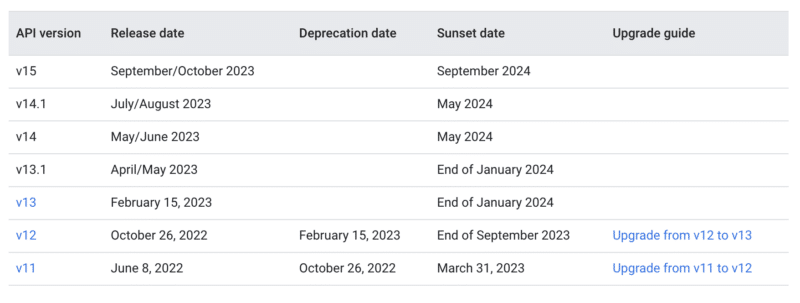


Last call for Google Ads API v11

Starting from March 29, 2023, the Google Ads API v11 will no longer be available. Developers still using v11 after this date will notice API requests failing.

Depreciation and sunset timetable. Typically, major versions are supported for approximately 12 months, while minor versions have a support lifespan of 10 months.

Screen Shot 2023 02 28 At 10.18.36 AM 800x303

Migrate asap. To migrate to the newest version, visit the Google Ads API documentation here.

Dig deeper. Read the announcement from Google here.

Why we care. New API updates directly affect the functionality and performance of advertising campaigns. Once a version is sunset, all API requests using that version will fail, potentially causing disruptions to campaign management and optimization. By staying up-to-date with the latest version of the API, advertisers and developers can access new features and improvements, ensuring your campaigns are running efficiently and effectively.


Related stories

New on Search Engine Land

@media screen and (min-width: 800px) { #div-gpt-ad-3191538-7 { display: flex !important; justify-content: center !important; align-items: center !important; min-width:770px; min-height:260px; } } @media screen and (min-width: 1279px) { #div-gpt-ad-3191538-7 { display: flex !important; justify-content: center !important; align-items: center !important; min-width:800px!important; min-height:440px!important; } }

About the author

Nicole Farley

Nicole Farley is an editor for Search Engine Land covering all things PPC. In addition to being a Marine Corps veteran, she has an extensive background in digital marketing, an MBA and a penchant for true crime, podcasts, travel, and snacks.

https://searchengineland.com/last-call-for-google-ads-api-v11-393690


3 ways Google ensures safe online shopping

As an advertiser or SEO professional, it’s essential to recognize that with the growing popularity of online shopping, customers’ safety and security have become a top priority for e-commerce platforms. In response to this, Google has implemented three ways to help customers shop safely and ensure that merchants’ stores meet these standards.

  1. Vetting stores through automation
  2. Store badges
  3. Automated and human merchant and listing reviews

Automatically vetting product merchants. Before a product or merchant can list on Google, they must undergo a thorough safety review to ensure they meet standards. With the help of the Shopping Graph, a vast database of products and sellers, the systems can quickly evaluate the legitimacy of a business, ensure that the product information is accurate, and verify that the content adheres to Google policies.

These policies cover all products displayed in shopping results, including those obtained from web crawling. By following these policies, Google will ensure that the products you see meet standards and that you won’t come across items that violate the rules, such as violent weapons, merchants misrepresenting their businesses, or hateful content.

In January alone, Google prevented about 100 million product offers from being displayed and rejected nearly 300,000 accounts for quality issues or policy violations.

Store badges. Google offers store badges to businesses that are known to provide a positive shopping experience. The badges are awarded to stores that meet criteria for fast shipping, easy returns, high-quality websites, and excellent user ratings.

Google also displays ratings for both products and their various sellers, allowing you to learn from other shoppers’ experiences with those products and businesses. Additionally, the product listings link you directly to the merchant’s website, providing you with the opportunity to conduct further research about the store and its policies. This is so you can make informed decisions about your purchases and ensures that you are shopping with confidence.

Automated and human reviews for merchants and listings.

“Our automated systems are always monitoring for violating activity, and our team of human reviewers is on standby to review issues that might need a more nuanced perspective.” 

Google

Once merchants have been onboarded, Google will continue to monitor listings to ensure that nothing has changed in a suspicious or problematic manner since their initial inclusion on Google. For example, if a merchant met country-specific requirements for selling alcohol during onboarding, they periodically verify that those qualifications are still being met.

Google will also take various actions when they detect suspicious behavior, including removing suspicious listings that violate policies or banning a merchant from listing on Google.

Dig deeper. You can read the announcement from Google here.

Why we care. These efforts can directly impact advertisers ability to reach potential customers through Google’s advertising platforms and search results.

When customers feel secure shopping on Google, they are more likely to make purchases and interact with the merchants and products advertised on the platform. Advertisers and SEOs can take advantage of this trust by ensuring that their advertising and product listings meet Google’s policies and requirements. By adhering to these standards, they can earn store badges, improve their visibility, and increase the chances of attracting new customers.

By complying with Google’s policies and guidelines, advertisers and SEOs can avoid having their products or listings removed or being banned from the platform altogether. This would undoubtedly harm their ability to reach customers and affect their overall business goals. Therefore, it is essential for advertisers and SEOs to stay up-to-date with Google’s policies and make sure that their advertising and listings adhere to these standards.


Related stories

New on Search Engine Land

@media screen and (min-width: 800px) { #div-gpt-ad-3191538-7 { display: flex !important; justify-content: center !important; align-items: center !important; min-width:770px; min-height:260px; } } @media screen and (min-width: 1279px) { #div-gpt-ad-3191538-7 { display: flex !important; justify-content: center !important; align-items: center !important; min-width:800px!important; min-height:440px!important; } }

About the author

Nicole Farley

Nicole Farley is an editor for Search Engine Land covering all things PPC. In addition to being a Marine Corps veteran, she has an extensive background in digital marketing, an MBA and a penchant for true crime, podcasts, travel, and snacks.

https://searchengineland.com/3-ways-google-ensures-safe-online-shopping-393676


5 tips for capturing more enterprise-level leads with B2B search

B2B marketing leaders voice similar concerns around paid search:

  • “We’re not reaching the right people.” 
  • “We need to attract more decision-makers.” 
  • “We want to go up-market and target larger companies.” 
  • “We need to close larger deals.” 

These are just a few pain points keeping marketers up at night.

Targeting the ideal customer is challenging and can lead to budget waste and a high cost per qualified lead. Follow these best practices when running enterprise PPC campaigns for B2B brands.

1. Create the right content

Decision makers at large companies think differently than those at an SMB. They have different needs and concerns, requiring specific messaging.

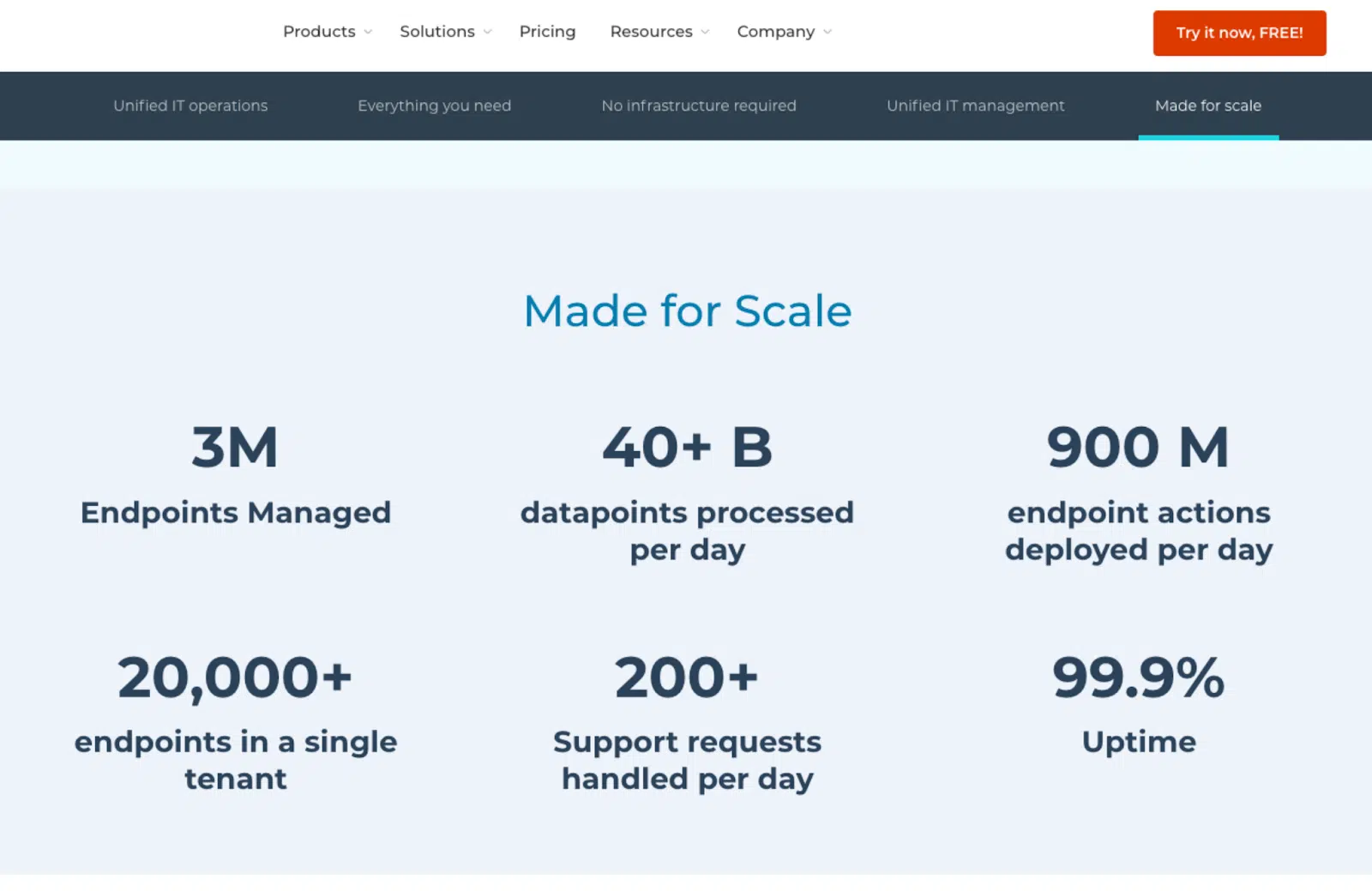
Enterprise companies stress about security protocols and require social proof. They need to know that other significant brands trust your brand and that you have the security measures to keep their data safe. 

Emphasizing your operational uptime and customer support procedures builds trust. Building trust with the buying committee is critical when decision-makers have several options. 

Create the right messaging for PPC

Larger customers often equal larger budgets. They tend to shop more for the product or service that will provide their customers or employees with the best experience. 

Remember that large companies have longer sales cycles and have more decision-makers in their buying committees. This cycle requires more touchpoints and relevant content for users. 

Sometimes, buying committee members enter the buying process very late and must be quickly brought up to speed. 

It’s essential to have content ready for all departments, including finance, procurement, IT and more, to keep the deal moving and prevent any slowdowns.

Ad copy should address customer pain points and speak directly to the persona you’re trying to reach. For example:

  • Trusted by over 250 Fortune 500 Companies
  • 99.99% SLA Uptime
  • Named G2 Top 50 Enterprise Products
  • Enterprise-Grade Data Protection

Landing pages should be relevant to your search keywords and speak directly to your key persona. Consider creating landing pages for specific company sizes or job functions. 


Get the daily newsletter search marketers rely on.


2. Differentiate audiences with keywords

Enterprise-level searchers won’t always identify their company size in their queries. That said, bidding on mid-market or enterprise-intent keywords can be beneficial (i.e., “enterprise software” and “tools for large companies”).

To eliminate budget waste on small businesses, consider adding “small business” as a negative keyword.

Think about what other keywords your buyer might be searching for, knowing that larger companies have different needs and concerns.

  • Will they search for more security-focused terms?
  • Will they search for more big-picture industry trends?

Competitive conquesting is another option for capturing the right audience.

When competitors have large companies as their key demographic, bidding on their keywords can help you capture some of their traffic or at least gain brand recognition via the SERP.

3. Couple offline conversion tracking with value-based bidding

Offline conversion tracking (OCT) is ideal for any B2B Google Ads account. It pushes your CRM data into the platform and allows for bidding optimizations on back-end leads, not just front-end website conversions.

But without telling Google the conversion values, Google will treat each lead equally and bid on them evenly. There are two ways to tell Google to optimize toward larger companies with OCT.

The first is to use dynamic values with OCT. Larger companies should have a larger value assigned to them in CRM. When used with a value-based bidding strategy like maximize conversion value or tROAS, the algorithm will prioritize the largest value leads first.

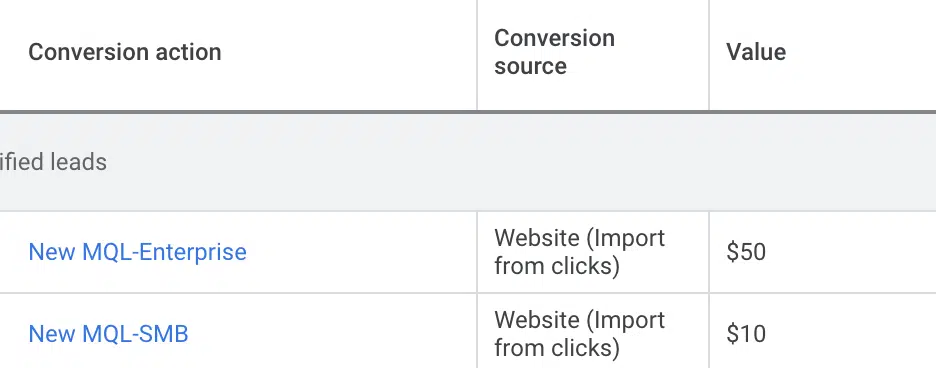
If you can’t get dynamic values with OCT, consider setting up separate conversion actions for each funnel stage by market segment. The setup might look like this:

Conversion actions setup

In the example above, a manual upload for OCT is used and knowing that the goal is to generate more enterprise-size leads, each lead is marked as either enterprise or SMB.

Enterprise MQLs get a value of $50, while SMB MQLs get a value of $10, telling the algorithm to prioritize enterprise MQLs.

4. Leverage first-party data

Your data is the most valuable data you can leverage in digital advertising as it is (hopefully) more reliable and accurate than third-party options.

Using first-party data to leverage conversion value rules with value-based bidding can take your campaigns to the next level.

According to Google:

“Conversion value rules allow you to provide additional value information that isn’t already reflected in your account (for example, different margins for different types of users, or lifetime value considerations) and optimize in real time to those values.”

Uploading a first-party list of prospects or customers within your ideal target can help you set a bidding adjustment for anyone on that list. The larger the list you provide, the better. 

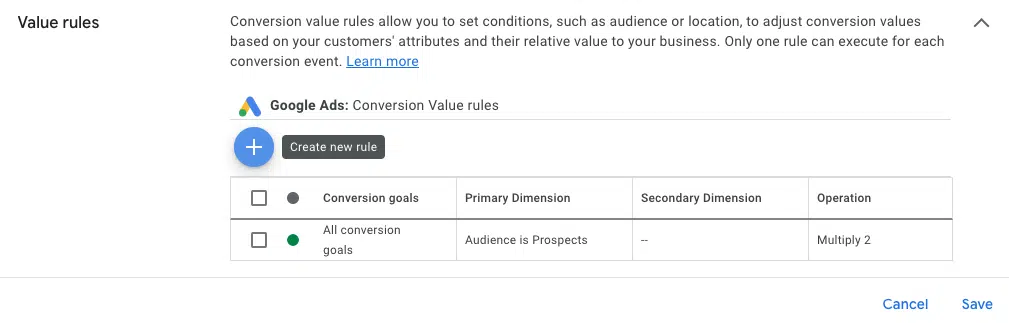
Conversion value rules

Conversion value rules, which can be set via campaign settings under “value rules,” can also be used with third-party data. If you know leads residing within a certain region or in-market for products/services are more valuable, you can also increase those audiences’ value.  

With Microsoft Ads, bidding increases are available on specific company names, industries or job functions within your search campaigns.

This is helpful if you have an ABM strategy and a list of specific companies you want to target.

While manual bid adjustments only work with manual bidding strategies, Microsoft will use bid adjustments to inform decisions when on automated bidding strategies. 

Microsoft bid adjustments

5. Assess the big picture

Leads aren’t everything. Sometimes it’s enough to know that you are reaching the right people and they’re clicking your ads, even if they need to warm up more to convert.

KPIs outside leads and cost per lead can help you understand if the needle is moving, especially with longer sales cycles and larger buying committees.

Look at LinkedIn demographics or Clearbit to know who’s visiting your site via ads.

In your LinkedIn ads account, build an audience based on specific website URL parameters that your audience would visit. For example, URL contains “google” and “paidsearch.”

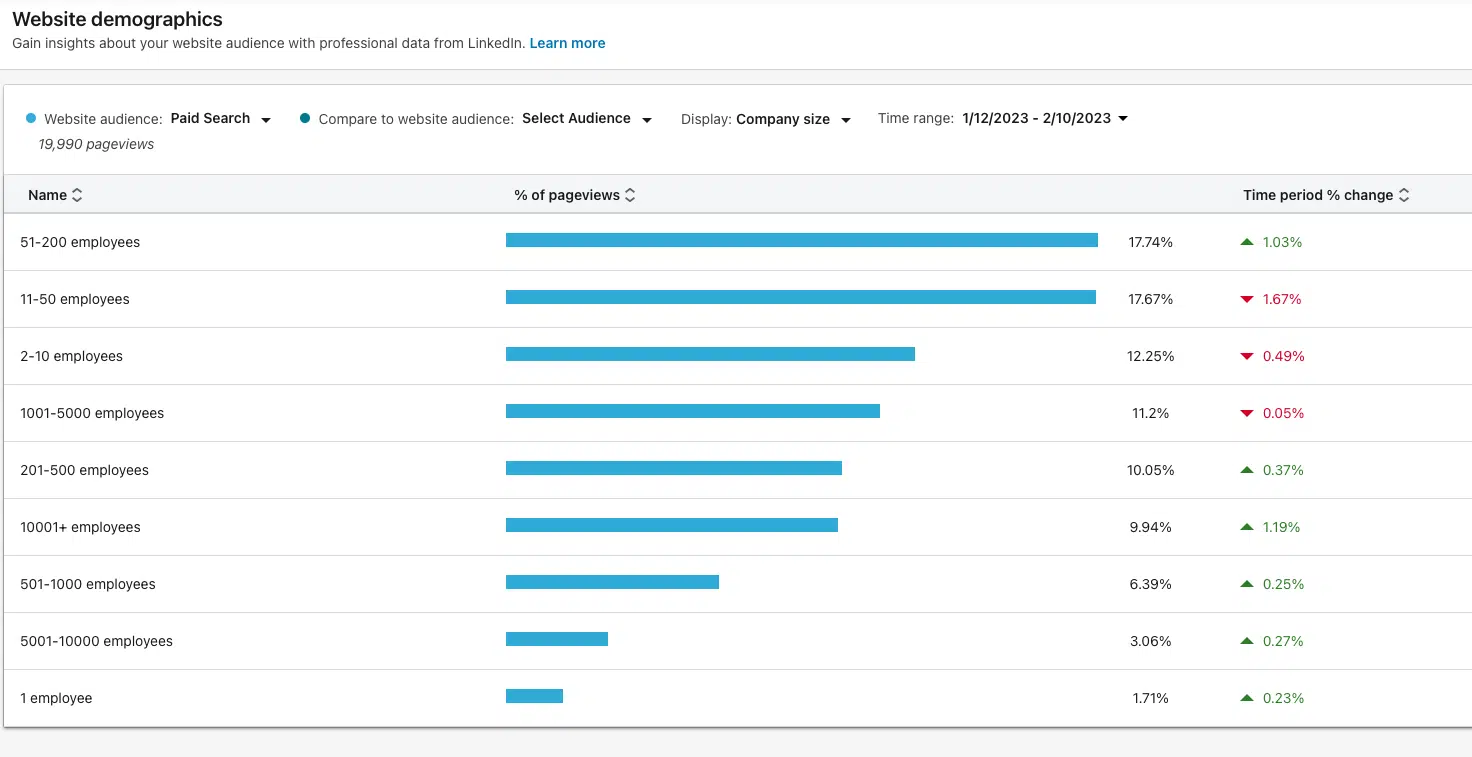
Using the LinkedIn Website Demographics tool, you can glean insights into the companies, job titles, job functions and more that have interacted with your ads.

LinkedIn Website Demographics tool

A tool like Clearbit integrates with Google Analytics to identify the companies, industries and job titles that visited your website. You can build audiences in GA with Clearbit data and push those audiences to Google Ads for targeting.

Consider building an audience of company sizes in your target range and launching a display, video or even RLSA campaign to those audiences. These audiences can also be used for conversion value rules to increase bids.

Reach your ideal B2B audience with better PPC ads

B2B search advertising can prove more challenging than B2C in some instances. But reaching the right audience is possible through content, tracking and measurement tactics.

A clear picture of your target persona and their pain points is crucial to eliminating budget waste. Step into your customer’s shoes and identify their job demographics, concerns, likes, dislikes and more to improve your messaging and nudge your strategy in the right direction.


Opinions expressed in this article are those of the guest author and not necessarily Search Engine Land. Staff authors are listed here.


Related stories

New on Search Engine Land

@media screen and (min-width: 800px) { #div-gpt-ad-3191538-7 { display: flex !important; justify-content: center !important; align-items: center !important; min-width:770px; min-height:260px; } } @media screen and (min-width: 1279px) { #div-gpt-ad-3191538-7 { display: flex !important; justify-content: center !important; align-items: center !important; min-width:800px!important; min-height:440px!important; } }

About the author

Kerri Amodio

Kerri Amodio is a Senior Digital Advertising Manager at Closed Loop. A specialist in B2B SaaS marketing, she became well-versed in executing digital advertising strategies across social, search and display while working in-house for B2B tech companies. Kerri has been on the agency side at Closed Loop for nearly four years, working with clients such as Slack, Netskope, Outreach, xMatters, Podium and Corporate Visions.

https://searchengineland.com/capture-enterprise-level-leads-b2b-search-393655


This day in search marketing history: February 28

R.I.P., DMOZ

In 2017, DMOZ – The Open Directory Project that used human editors to organize websites — announced it was closing as of March 14.

By this time, DMOZ had been mostly forgotten as a resource. Perhaps the biggest surprise was that it took so long.

DMOZ was born in June 1998 as “GnuHoo,” then quickly changed to “NewHoo,” a rival to the Yahoo Directory at the time. It was acquired by Netscape in November 1998 and renamed the Netscape Open Directory. Later that month, AOL acquired Netscape, giving AOL control of The Open Directory.

Read all about it in RIP DMOZ: The Open Directory Project is closing.


Also on this day


New business openings nearly match pre-pandemic levels, Yelp says

2022: However, most major cities actually experienced a decrease in openings.


Etsy sellers to pay 30% higher transaction fees beginning in April

2022: A “considerable portion” of the revenue from the fee increase would be reinvested into the marketplace.


New Google Lighthouse extension for Firefox goes live

2020: Firefox had not yet reviewed the extension, so it got automatically categorized as “not a Recommended Extension.” 


Optimization scores, recommendations and their impact on Google Partner agencies

2020: Google said Partner agencies would continue to have “control and autonomy” as it put more emphasis on auto-generated recommendations.


Google’s new treatment of nofollow links has arrived

2020: Google was about to begin treating the nofollow link attribute as a hint, rather than a directive, for crawling and indexing.


Google experiments with public search profile cards

2020: Limited to India, the Google+-like feature gave personal brands and individuals some control over their own search results.


In feature battle with Google, Yelp improves restaurant waitlist functionality

2020: Yelp was rolling out its Notify Me feature, which supported Yelp Waitlist.


Google’s CTR answer just what you’d expect, and this is why SEOs go bananas

2019: Would Google give us a clear statement that outright said it does not currently use CTR directly in their core search ranking algorithm? Of course not.


Google opens complaint form to crack down on fake info in Maps

2019: Google launched the Business Redressal Complaint Form to allow searchers and users to report fraudulent activity relating to businesses Google Maps.


Amazon extends Sponsored Products to AmazonFresh for CPG brands

2019: Consumer packaged goods brands could extend their campaigns to their products sold in the AmazonFresh delivery program.


Multifaceted featured snippets begin rolling out in Google search results

2018: Multifaceted featured snippets would be surfaced for queries that were sufficiently broad enough to allow for more than one interpretation of what was submitted. 


Rand Fishkin leaves Moz, announces a new start-up

2018: After 17 years of working at the company he co-founded, Fishkin was starting a new company around influencer and audience intelligence.


Study: 11 voice search ranking factors analyzed

2018: 63.6% of voice search results didn’t use Schema at all. 


Google gives SEO tips on how to handle day-long site closures

2017: Tips from Google’s John Mueller on what to do if you needed to turn off your website for a period of time and worried your Google rankings will drop. 


After rare Google confirmation of on-site penalty, Natural News is back in Google’s index

2017: HealthNews.com confirmed being reincluded in the Google index after being deindexed last week.


Now Official: Google Adds Restaurant Menus To Search Results

2014: Google announced that it’s now showing restaurant menus as a OneBox-style answer at the top of its U.S. search results.


AdWords Mobile App Download Campaigns Get Deeper Reporting In Google Analytics

2014: New reports on mobile app campaign performance included day parts, destination URLs and keyword positions.


Tweet Showing How Google Itself Is A “Scraper Site” Goes Massively Viral

2014: Dan Barker did a search for [what is a scraper site], which brought up Google’s own web definition at the top of the results, which technically outranked the original source of the content.


New Bing Ads Editor Version Now Available

2014: New features included the ability to rename campaigns and ad groups in the Browser pane.


Search In Pics: Yahoo’s 19th Birthday Cake, Google Jugglers & Canadian KitKat Android Statue

2014: The latest images showing what people eat at the search engine companies, how they play, who they meet, where they speak, what toys they have, and more.


Google Testing Android/Chromebook-Like Navigation Element For Web Site

2013: Google was testing another navigation method to find all the various Google services and products.


Facebook Shares How People Are Using Graph Search: Finding Friends Tops List

2013: Facebook suggested some ways to go beyond that, for those who had the new search feature.


Bing Maps Adds Variety Of Hi-Res Image Improvements

2013: The prime feature that Bing was touting involved what it calls “top of the world” imagery — those hi-res, top-down images. 


Majestic SEO Now Supports 9 Languages

2013: The languages they currently support included English, Chinese, German, Spanish, French, Italian, Polish, Brazilian Portuguese and Russian.


New German Law Will Allow Free “Snippets” By Search Engines, But Uncertainty Remains

2013: A proposed German copyright law wouldn’t require search engines like Google to pay to show short summaries of news content. But uncertainty remained about how much might be “too much” and require a license.


In Another “Right to Be Forgotten” Case, UK Officials Threaten Legal Action Against People Posting Pictures Of Convicted Killer

2013: UK Attorney General Dominic Grieve threatened legal action against anyone posting pictures of convicted killer Jon Venables online.


Bing Webmaster Tools API Now Available

2012: This feature allowed webmasters to easily use Bing WMT data in other locations.


Microsoft And Nokia Unify Maps On PC, Mobile

2012: Microsoft was relying heavily on the Nokia-Navteq mapping and data infrastructure. Nokia had made Ovi Maps much more Bing-like in appearance.


Google: Mobile Growth Occurring Faster Than Expected

2011: Google CEO Eric Schmidt said consumers’ adoption of the company’s mobile services has happened more quickly than executives expected.


Videos Of The First Googleplex

2011: Videos were posted of the old Google office from November 1999.


Search + Social Media Increases CTR By 94 Percent: Report

2011: Nearly 60% of cases that ended in a purchase begin with search – and social media played an increasingly important role during consideration and especially after a purchase is made.


Placecast and AT&T Launch Geo-fenced Mobile “ShopAlerts”

2011: This was opt-in “push” marketing via SMS or MMS tied to “geo-fences.”


Google Webmaster Tools: Now On Your iGoogle Homepage

2008: Rather than log into your Webmaster Tools account, you could add the Webmaster Tools gadget to your iGoogle page and access information from there.


Google Sites Launches: Replaces Jotspot With Team Sharing Software

2008: Google launched Google Sites, basically a relaunch of Jotspot but with many more features.


Google Health Formally Announced This Morning

2008: Google said it would not sell any personal consumer information. However, pages that weren’t part of the consumer health profile would potentially feature ads.


Google Maps Tailgates Yahoo, Microsoft With Real-Time Traffic Info

2007: Google Maps has caught up with Yahoo and Microsoft in adding live traffic reporting for the United States to their online mapping service.


Google Stepping Up Governmental Sales

2007: Google started a two-day sales event aimed at the U.S. government that reportedly brought in “200 federal contractors, engineers and uniformed military members.”


Google Buying TV Scatter Units

2007: Google was looking to hire a head of national TV sales in New York and dive into their TV ad play with “scatter inventory,” ads that weren’t sold well in advance.


Yahoo Provides NOYDIR Opt-Out Of Yahoo Directory Titles & Descriptions

2007: You could now tell Yahoo to not use Yahoo Directory information to make a title and/or description for your web page listings.


40% Frustrated With Video Search

2007: 32% said web video had too many commercials.


Is Voice And Mobile Search Company TellMe For Sale?

2007: Spoiler alert: It was. Microsoft acquired it March 14.


Monitoring Buries At Digg

2007: A new monitoring technique.


Keane, Head Of Advertising Sales Strategy At Google Goes To CBS Interactive

2007: At Google for four years, Patrick Keane was “responsible for developing and managing the strategic plans and relationships critical to growing Google’s advertising customer base.”


February 2007: Search Engine Land’s Most Popular Stories

2007: The 10 most popular stories from February 2007.


From Search Marketing Expo (SMX)


Past contributions from Search Engine Land’s Subject Matter Experts (SMEs)

These columns are a snapshot in time and have not been updated since publishing, unless noted. Opinions expressed in these articles are those of the author and not necessarily Search Engine Land.


< February 27 | Search Marketing History | February 29 >


Related stories

New on Search Engine Land

@media screen and (min-width: 800px) { #div-gpt-ad-3191538-7 { display: flex !important; justify-content: center !important; align-items: center !important; min-width:770px; min-height:260px; } } @media screen and (min-width: 1279px) { #div-gpt-ad-3191538-7 { display: flex !important; justify-content: center !important; align-items: center !important; min-width:800px!important; min-height:440px!important; } }

About the author

Danny Goodwin

Danny Goodwin is Managing Editor of Search Engine Land & SMX. In addition to writing daily about SEO, PPC, and more for Search Engine Land, Goodwin also manages Search Engine Land’s roster of subject-matter experts. He also helps program our conference series, SMX – Search Marketing Expo. Prior to joining Search Engine Land, Goodwin was Executive Editor at Search Engine Journal, where he led editorial initiatives for the brand. He also was an editor at Search Engine Watch. He has spoken at many major search conferences and virtual events, and has been sourced for his expertise by a wide range of publications and podcasts.

https://searchengineland.com/search-marketing-history-february-28-393622


Google launched 2 new asset creation and customer acquisition tools

Google’s Search Ads Week kicked off with two new tools to help advertisers deliver faster creatives and better performance.

  • Create new assets with Google’s AI 
  • New customer acquisition goals

Create new assets with Google’s AI. Google’s goal is to help advertisers deliver effective ads to their target audience by having a variety of relevant creative assets available. To achieve this, they now offer a setting called “automatically created assets” which generates new ad components based on an advertiser’s existing assets and landing page. This setting allows responsive search ads to show potential customers the best combination of assets.

Now, the open beta for automatically generated assets is available to all advertisers in English. Early adopters who have used this feature for headlines and descriptions have seen an average increase of 2% in conversions, with a similar cost per conversion, for ad groups that use responsive search ads.

4VuTCS0muhiYzdfMFGlpN3zFNjCj7m4QASAZ 800x429

New improvements coming to assets. As part of this update, the following improvements will roll out in the coming weeks:

  • Ad Strength will take into account both automatically created assets and your existing assets when determining your rating.
  • Automatically created assets will use inputs you’ve provided such as your keywords to customize your headlines and improve their relevance to the query when it’s predicted to improve performance.
  • You’ll also be able to remove any automatically created assets that you’d prefer not to include in your ads.

Additional languages for automatically created assets will be launched later this year.

Connect with new customers on Search. A new customer acquisition goal for Search campaigns has been launched globally. This goal utilizes Smart Bidding and first-party data to optimize campaigns and attract new customers during peak periods. By combining the new customer acquisition goal with bidding strategies like Maximize conversion value with a target ROAS, advertisers can prioritize and target high-value customers.

Early adopters. Numerous businesses have already utilized this goal to reach out to potential new customers. Baltic Born, a fashion retailer, is an example of one such business with an ambitious revenue growth target. To expand their customer base beyond repeat customers in a highly competitive market, Baltic Born implemented the new customer acquisition goal for Search along with a target ROAS value-based bid strategy. As a result, they were able to achieve a 73% increase in new customers and a 36% rise in revenue.

The new customer acquisition goal has two modes that help you to reach your campaign goals:

  • Value New Customer: Bid higher for new customers than for existing customers.
  • New Customers Only: Bid for new customers only.

Dig deeper. You can read more about the new tools on the Google Ads Help website. You can also register for Search Ads Week here.

Why we care. The new tools make it easier for advertisers to expand your customer base and grow your business by connecting with potential new customers. The goal utilizes Smart Bidding and first-party data to optimize campaigns during peak periods, making it easier for businesses to prioritize and find high-value customers.


Related stories

New on Search Engine Land

@media screen and (min-width: 800px) { #div-gpt-ad-3191538-7 { display: flex !important; justify-content: center !important; align-items: center !important; min-width:770px; min-height:260px; } } @media screen and (min-width: 1279px) { #div-gpt-ad-3191538-7 { display: flex !important; justify-content: center !important; align-items: center !important; min-width:800px!important; min-height:440px!important; } }

About the author

Nicole Farley

Nicole Farley is an editor for Search Engine Land covering all things PPC. In addition to being a Marine Corps veteran, she has an extensive background in digital marketing, an MBA and a penchant for true crime, podcasts, travel, and snacks.

https://searchengineland.com/google-launched-2-new-asset-creation-and-customer-acquisition-tools-393637


This day in search marketing history: February 27

Google Panda Update 3.3 and Venice

In 2012, Google confirmed the Panda Update 3.3 as well as a noteworthy change to local search rankings.

Panda 3.3 was a refresh of the Panda system, meaning none of the signals Panda looked at were new or had changed.

While Google Panda got the headlines at the time, there was some other noteworthy news about improvements to local search results, which Google referred to as “Venice”:

Improvements to ranking for local search results. [launch codename “Venice”] This improvement improves the triggering of Local Universal results by relying more on the ranking of our main search results as a signal. 

And also this:

Improved local results. We launched a new system to find results from a user’s city more reliably. Now we’re better able to detect when both queries and documents are local to the user.

This turned out to be a significant local search update.

Google’s algorithm would essentially localize a user’s search results on broad queries that had local intent. This was entirely different from pre-Venice. Put more simply:

Where in the past a search such as ‘seo’ or ‘jacket’ would have simply returned Google’s non-local result set, now Google will include results specific to your location (whether you have actively set your location or not: Google will locate you based on your IP address).

Chris Liversidge, Why Google’s Venice Update Fundamentally Changes Global SEO

Read all about it in Google Confirms Panda 3.3 Update, Plus Changes To How It Evaluates Links, Local Search Rankings & Much More


Also on this day


Google Search local pack’s map is now interactive

2022: The new map let you zoom, pan, hover and click to see more details on the map.


Google Rich Results testing tool adds support for ‘How To’ markup for Google Home displays

2020: You could test your pages in real time to see how Google displayed your how-to pages on smart displays.


Yotpo taps Bazaarvoice Network for review distribution to retailer sites

2020: The move was intended to expand the reach of Yotpo-managed reviews content for retailers.


Google Search Console gives us domain properties to replace property sets

2019: This consolidated your http, https, www, non-www, m-dot, etc into a single property to get an aggregate view of your site’s performance and errors/warnings in a single property.


FTC busts Amazon seller for buying reviews

2019: Diet supplements company was buying fake reviews from a vendor Amazon itself had previously sued in 2016.


Startup helps small retailers get local inventory data online at POS

2019: Pointy offered a way to gain more SEO visibility and compete with Amazon.


German court: Google has no ‘duty to inspect’ websites for illegal content before displaying

2018: Google couldn’t be held liable before being notified of a ‘clearly recognizable violation’ of individual rights.


Law and reputation firms generate 21% of Right to Be Forgotten delistings, says Google

2018: Google report dug into three years’ worth of data on removal requests and exposed the delisting criteria.


Google local finder tests cards with horizontal scroll for map search results

2017: Google was testing a new format for their local search results on mobile when bringing up the Google Maps local finder. 


Google Assistant to roll out across newer smartphones

2017: Google was rolling out the Google Assistant to more devices.


Bing UK now displaying National Health Service data for GP & hospital search queries

2017: Searching for nearby GPs and hospitals on Bing UK would surface information pulled from the country’s publicly-funded national healthcare system.


New Bing Ads Editor Version (10.7) Now Available

2015: Changes included some subtle but welcome usability updates and the ability to edit the text of keywords that already had been synced.


Search In Pics: Android Caveman, Google Ski Trip & Rope Logo

2015: The latest images showing what people eat at the search engine companies, how they play, who they meet, where they speak, what toys they have, and more.


Someone Outranking You With Your Own Content? Use The New Google Scraper Report

2014: Without promising a fix, the tool asked people to share their original content URL, the URL of the content taken from them and the search results that triggered the outranking.


Google AdWords Smart Annotations Test Continues To Roll Out

2014: Smart Annotations automatically pulled information from an advertiser’s landing page in an additional line of text in their ads.


Google Yanks Fake FBI Listing From Google Maps, Puts New Blocks In Place To Stop Further Abuse

2014: A user took advantage of Map Maker to create fake FBI and Secret Service office listings using his own phone number, and even managed to intercept calls to both agencies.


Marin & DoubleClick Search Partner With Boost Media To Scale Ad Optimization

2014: Boost aimed to help marketers scale the taxing process of creating, testing and reporting on search and social ad creative.


Gmail Search Field Trial Adds Calendar Results To Google Search

2013: The idea was that if you do a search, you’ll see matching information from your calendar showing within Google’s search results, when it was relevant.


Privacy Vs Censorship: Google, Spanish Government Face Off In European Courts

2013: Google got the liability treatment of a “publisher” without the corresponding freedom of expression protections accorded to newspapers.


Google: 1 Billion People Will Use Mobile As Primary Internet Access Point In 2012

2012: Mobile search usage had nearly 100 percent penetration among smartphone owners, most of whom searched at least once a week. 


Google Mobile Tests Large Black Menu Drop Down Bar

2012: Despite moving away from the large black navigation menu on the web, it seemed Google was testing that exact same version on mobile.


Google, Yahoo Both Fail At Moneyballing Oscar Predictions

2012: Overall, neither really got the winners right.


Admitting Role In Google Anti-Trust Complaints Microsoft Complains Of Google “Lock In”

2010: Microsoft essentially told Google “get over it.”


Google Still Working On Making Blog Search More Relevant

2009: Google said it would be conducting “visual experiments early next month” that would start with the link: queries and focus on “blogroll detectors” in the matching algorithm. 


The Big List Of Search Engines & Their Employees On Twitter

2009: A starting list of who’s out there from the search engine world.


Search Biz: Google News Courting Legal Trouble?, Bold Predictions About Behavioral Ad Targeting & More

2009: Would the introduction of paid ads on Google News lead to legal issues for Google? 


Search In Pictures: Google ViewMaster, Twitter & Yahoo Cake Spelling

2009: The latest images showing what people eat at the search engine companies, how they play, who they meet, where they speak, what toys they have, and more.


Sitemaps.org Update: You Can Now Store Your XML Sitemap Files Anywhere!

2008: The major search engines announced that site owners could store their XML Sitemap files in any location – even on a different domain than the one referenced in the Sitemap. 


EFF Sues DOJ Over Googler For Correspondence With Horvath

2008: The EFF wanted to know what was said between Google and Jane Horvath, a former US Justice Department privacy lawyer who now worked for Google.


Microsoft’s Chief Strategy Officer: “Google Owes Its Business To Us”

2008: “If we didn’t succeed at the PC, they wouldn’t have a business,” said Craig Mundie.


Yahoo’s Apex Preview: An Ambitious, Unified Ad Platform

2008: It attempted to knit all of Yahoo’s recent acquisitions and ad network properties together.


AdWords Editor 3.0 Available For Windows; Mac Version Coming In Weeks

2007: The AdWords Editor program was updated with extra features.


Search Engines Do Not Have To Display All Ads Says Court

2007: A complainer wanted to use search ads to air his gripes. 


Finding Search Engine Freshness & Crawl Dates

2007: How, when and where Google, Microsoft Live Search, Ask.com and Yahoo showed crawl dates for pages.


Microsoft’s Ozzie Talks Of Google “Wake-Up Call,” Vertical Search Hopes

2007: A reprise of the “it’s early days” and search is just past its “first generation” comments we’ve heard from Microsoft execs many time before


Google Ink Sends Ask.com New Google Pen

2007: “We noted your suboptimal experience with our Google pen and are thus pleased to send you — at no charge — a replacement set.”


Happy Birthday, Flickr: Web 2.0 Pioneer Turns Three

2007: Flickr was in many ways the company that helped define “Web 2.0” and was its poster child for quite some time.


From Search Marketing Expo (SMX)


Past contributions from Search Engine Land’s Subject Matter Experts (SMEs)

These columns are a snapshot in time and have not been updated since publishing, unless noted. Opinions expressed in these articles are those of the author and not necessarily Search Engine Land.


< February 26 | Search Marketing History | February 28 >


Related stories

New on Search Engine Land

@media screen and (min-width: 800px) { #div-gpt-ad-3191538-7 { display: flex !important; justify-content: center !important; align-items: center !important; min-width:770px; min-height:260px; } } @media screen and (min-width: 1279px) { #div-gpt-ad-3191538-7 { display: flex !important; justify-content: center !important; align-items: center !important; min-width:800px!important; min-height:440px!important; } }

About the author

Danny Goodwin

Danny Goodwin is Managing Editor of Search Engine Land & SMX. In addition to writing daily about SEO, PPC, and more for Search Engine Land, Goodwin also manages Search Engine Land’s roster of subject-matter experts. He also helps program our conference series, SMX – Search Marketing Expo. Prior to joining Search Engine Land, Goodwin was Executive Editor at Search Engine Journal, where he led editorial initiatives for the brand. He also was an editor at Search Engine Watch. He has spoken at many major search conferences and virtual events, and has been sourced for his expertise by a wide range of publications and podcasts.

https://searchengineland.com/search-marketing-history-february-27-393621


This day in search marketing history: February 26

Google expands mobile-friendliness as a ranking signal

In 2015, Google announced it would expand its use of mobile-friendliness as a ranking signal, beginning April 21.

This algorithmic change would have a “significant impact” in the mobile search results, impacting all languages worldwide, Google said.

However, when April came, the general consensus was that Mobilegeddon was fairly insignificant, for all the hype and panic their Feb. 26 announcement created.

Google also announced that apps indexed by Google through App Indexing would begin to rank better in mobile search. Google said this only will work for signed-in users who had the app installed on their mobile device.

Read all about it in Mobilegeddon Cometh: New Google “Mobile Friendly Update” To Reward Sites Beginning April 21.


Also on this day


How to identify your products for Google

2021: Google published a list of best practices to help ensure that its search engine understood the products that were being referenced. 


Google mobile-first indexing to be applied to all sites within a year

2020: Google was sending notices to sites that had mobile-first indexing issues. 


Create display network exclusion lists with this (free) tool

2020: A tool for those tired of manually weeding through placement reports to exclude inappropriate websites and apps from display campaigns.


Google Search Console now lets you export more data

2020: Search Console users could download complete information (instead of just specific table views) from almost all reports.


Google search view in 3D now live for e-commerce sites

2020: A Burberry bag was showing up with a “view in 3D” option in the Google search results.


Google to kill off property sets within Search Console

2019: Google said you could download the data from the interface or the API before they turned it off completely.


Google Ads to sunset average position reporting metric later this year

2019: Average position was one of the few constants for more than 15 years. But with the removal of right rail ads, in particular, its utility sharply declined.


Google call-only ads getting ‘expanded’ with more characters

2019: The other change was that name of the business would move to the description line.


Google releases Mobile Scorecard & Impact Calculator tools to illustrate importance of mobile page speed

2018: One tool showed how a site stacks up against the competition on mobile. The other aimed to drive home the impact mobile speed can have on the bottom line.


Google confirms bug with crawl stats in ‘time spent downloading a page’ Search Console report

2018: Google’s John Mueller confirmed a reporting glitch with the crawl stats “time spent downloading a page” report in the Google Search Console for on Feb. 20 and 21.


In response to EU antitrust ruling, Google Shopping now shows ads from competing shopping engines

2018: In a new structure, the Google Shopping business unit bid against other Comparison Shopping Engines in the ad auction to give the competing engines “equal treatment” as mandated in the ruling.


Google Word Coach, a fun word game in the search results

2018: Google added a new feature to help non-English speakers expand their English-language vocabulary. 


Google: AMP Not Yet A Search Ranking Signal

2016: Google’s John Mueller said you could use AMP to become mobile-friendly, but AMP itself was not a ranking signal.


Google Confirms Review Stars’ Mysterious Disappearance In Search Results Was A Bug

2016: Google review snippets returned after a bug caused them to drop out of much of the search results for about a week.


AdWords And Bing Ads Both Having Late-Week Reporting Troubles

2016: Google AdWords reports weren’t downloading or printing. Bing Ads had reporting delays that affected the Web UI, mobile and API.


Google App Updates Will Include New Animations & Ability To Change Google Logo Colors

2016: Users would be able to change the color of the Google logo using a “finger painting-like” feature.


Search In Pics: Coca Cola Google Cardboard, Googley Volvo & Animated Google Sign

2016: The latest images showing what people eat at the search engine companies, how they play, who they meet, where they speak, what toys they have and more.


Google’s Matt Cutts: While Scientific Content Is Great, Clarity & Focusing On The Searcher Is Important

2014: Cutts answers the question: “Should I focus on clarity or jargon when writing content?”


Movie Sites Ranking Better In Google, Now That “Transient Issue” Fixed

2014: Rankings were restored and most traffic was returning to the affected websites.


Hiding From That Google Penalty? It May Find You At Your New Home

2014: Even if you moved your penalized site to a new domain name and didn’t redirect the penalized site, Google might still find it and pass along the bad signals.


AdWords Flexible Conversion Counting Officially Launched, Welcome “Converted Clicks” and “Conversions”

2014: The company officially announced the launch of Flexible Conversion Counting, and advertisers would see new columns in AdWords.


Google Shares Performance Stats On Search Network With Display Select Campaigns

2014: Google released some case study performance results on the new campaign type.


FOX Partners With Google To Allow Voting For American Idol On Google’s Search Results

2014: All you had to do was go to Google, search for [american idol] or [idol] during the voting window, and select from your favorite finalists.


Google Brings Back Right-Click-For-Directions To Google Maps

2014: Users could also use the “What’s Here” option to quickly get lat-long coordinates for any spot on the map.


Baidu Posts 50 Pct. Revenue Growth But Shy Of Investor Hopes

2014: The company announced $1.573 billion in Q4 revenue, a 50.3% increase over 2013.


Welcome Martin Beck, Who Joins Third Door Media From The Los Angeles Times

2014: Beck was Third Door Media’s Social Media Reporter from March 2014 through December 2015.


Google Panda Two Years Later: 5 Questions With HubPages CEO Paul Edmondson

2013: Edmonson confirmed that Panda “caused a massive loss of traffic and revenue.” But HubPages wasn’t planning to change course; the planned was to improve quality.


The Hidden Google Search Box

2013: It seemed as if Google was testing hiding the search box completely from the Google search results page.


Number Crunchers: Who Lost In Google’s Panda Algorithm Change?

2011: The biggest “content farm” type brand that seemed to have suffered was Associated Content.


Yes, More Are Seeing A New Google Look-And-Feel

2010: Testing would continue until May, when it launched the new user interface.


Google Adds “Nearby” Local Search To Options Panel

2010: Google expanded the choices in its Search Options panel with the announcement of a tool to refine searches by location.


Google’s Street View Finds More Trouble In Europe

2010: Members of the European Union’s data protection group urged Google to make changes to its Street View mapping/photo service and warned that Google might be breaking EU laws.


Google News Officially Adds Advertisements

2009: After testing ads for the past few months, Google News officially rolled out ads on Google News search results to all US based searchers.


Google Gets On Twitter

2009: The first tweet was in binary and translated into “Feeling Lucky.” 


Google Maps Adds User Photos To Street View

2009: Google added geo-tagged Panoramio photos to StreetView images.


Report: Lack Of Buying Searchers Leading To Depressing Search Ad Market

2009: Rimm-Kaufman shared early first quarter PPC data showing the weak trends in retail for search advertisers.


Yahoo Search Updating: Weather Reports Go Away?

2009: Yahoo eventually did issue a weather report confirming that there are ongoing updates that would be “completed very soon.”


Yahoo Adds Facebook As A SearchMonkey Friend

2009: Yahoo announced that Facebook enhanced results were now turned on by default across search results.


Yahoo CEO Bartz: New Management To Make Yahoo “A Lot Faster On Its Feet”

2009: “For us working at Yahoo!, it means everything gets simpler. We’ll be able to make speedier decisions, the notorious silos are gone, and we have a renewed focus on the customer.”


Google AdWords Launches Limited Beta Test Named “Automatic Matching”

2008: Automatic Matching was a way for Google to help advertisers utilize their full budget towards keywords that they may have not been targeting.


Google Updates AdSense Terms & Conditions

2008: Google updated their AdSense terms and conditions to include better verbiage for new products and features, as well as an update to their privacy requirements.


Despite Takeover Turmoil, Yahoo Not Rolling Over & Playing Dead

2008: Yahoo CEO Jerry Yang said the Microsoft takeover bid had been “a galvanizing event for everyone at Yahoo.”


Minimum Bids In Yahoo About To Change

2008: Minimum bids could be lower or higher than $0.10.


Yahoo To Announce “Search Monkey” Enhanced, Annotated Results At SMX West

2008: Yahoo planned to unveil a project code-named “Search Monkey,” a set of open-source tools that allow users and publishers to annotate and enhance search results associated with specific websites.


Yahoo Buzz Launches: Votes, Searches, & Emails Used To Rank News

2008: Yahoo Buzz was a site where “buzz-worthy” news articles were highlighted based on user votes,
searching activity, and email sharing. 


Google Talk / Gmail Adds Live Chat & Invisible Mode Features

2008: The first feature was similar to a live chat box that you could add to any webpage and chat with anyone via your Google Talk or Gmail account.


Google Joins “Unity” Undersea Cable Consortium For More Transpacific Bandwidth

2008: Google joined a consortium of Asian companies to build an undersea transpacific fiber optic cable that would provide much greater bandwidth capacity between the United States and Japan.


Google AdWords To Show Advertisers Exactly Where Their Contextual Ads Are Displayed

2007: Google’s advertiser reports would begin listing the sites where each ad runs.


Google Steps Up Web Page Malware Notifications

2007: Google was giving more detailed reports on the malware issues with a specific site and they were also sending email notifications to webmasters about these malware warnings.


Google Video Plus Box Results

2007: Spotted in the wild.


Google Checkout Australia Coming Soon?

2007: It appeared that Google registered Google Payment Australia PTY. LTD. in Australia.


Google Ordered To Change AdSense Contract By South Korea’s Watchdog

2007: The Fair Trade Commission said the contract enabled Google to “one-sidedly cancel advertisement deals” with publishers.


Microsoft To Buy Health Search Engine Medstory Inc.

2007: Microsoft plans on building out a specialized search engine focused on delivering medical information to consumers.


Video Search Challenge Isn’t Speech Recognition, It’s Content Owner Management

2007: The real challenge was figuring out how to work with content owners, not speech recognition.


Pew Research: Wireless Internet Grows

2007: Pew asserted that roughly 13.5% of U.S. Internet users were accessing the Internet over mobile phones (or their equivalents).


From Search Marketing Expo (SMX)


Past contributions from Search Engine Land’s Subject Matter Experts (SMEs)

These columns are a snapshot in time and have not been updated since publishing, unless noted. Opinions expressed in these articles are those of the author and not necessarily Search Engine Land.


< February 25 | Search Marketing History | February 27 >


Related stories

New on Search Engine Land

@media screen and (min-width: 800px) { #div-gpt-ad-3191538-7 { display: flex !important; justify-content: center !important; align-items: center !important; min-width:770px; min-height:260px; } } @media screen and (min-width: 1279px) { #div-gpt-ad-3191538-7 { display: flex !important; justify-content: center !important; align-items: center !important; min-width:800px!important; min-height:440px!important; } }

About the author

Danny Goodwin

Danny Goodwin is Managing Editor of Search Engine Land & SMX. In addition to writing daily about SEO, PPC, and more for Search Engine Land, Goodwin also manages Search Engine Land’s roster of subject-matter experts. He also helps program our conference series, SMX – Search Marketing Expo. Prior to joining Search Engine Land, Goodwin was Executive Editor at Search Engine Journal, where he led editorial initiatives for the brand. He also was an editor at Search Engine Watch. He has spoken at many major search conferences and virtual events, and has been sourced for his expertise by a wide range of publications and podcasts.

https://searchengineland.com/search-marketing-history-february-26-393620


This day in search marketing history: February 25

SEOs upset over Google dropping attribution in featured snippets

In 2019, SEOs were not happy about a Google featured snippet format that didn’t immediately show the source of the content.

For the Found on the web card, searchers had to click to expand the featured snippet and then scroll through various sources to see the publisher.

Danny Sullivan, Google’s Search Liaison said Google’s support of the overall ecosystem (searchers, advertisers and publishers) is important. “We don’t thrive & users don’t thrive unless the ecosystem thrives.”

The future of Google search, indeed! Amazingly, you could write a very similar tweet in 2023.

Google’s recent preview of its generative AI search results featured answers to complex questions that were made possible after being trained on content created by third-party publishers, with a grand total of zero links to publishers. Déjà vu!

Read all about it in Controversy over Google Featured Snippets stealing publisher traffic reignites.


Also on this day


IndexNow integrations grow as Bing says ‘millions’ of sites are using it

2022: Duda, All in One WordPress SEO plugin and Rank Math SEO plugin gained IndexNow support.


LinkedIn launches podcast network aimed at professional audiences

2022: The pilot program included shows about topics such as technology, recruiting and mental health, from external experts as well as its own in-house news team.


Google Images to replace dimensions overlay on image thumbnails

2020: Google would instead show product, recipe, video, and soon, licensable labels in place of that dimensions information.


How to use the AMP status report to identify page errors, validate fixes

2020: Google posted an explainer for its AMP (accelerated mobile pages) status report.


‘Made in USA’ ad extensions spotted on Bing

2020: A “Made in USA” label accompanied by a flag icon appeared to be the latest automated ad extension test by Microsoft Advertising.


Google revamps Test My Site mobile site speed tool

2019: Test My Site (which launched in 2016) was rebuilt with more features details on a site’s mobile site speed.


Nearly half of users have a bad reaction to ‘not secure’ browser warning, survey finds

2019: Survey found the flag affected user behavior and brand perceptions.


Google Assistant everywhere: more dedicated buttons, expansion on lower-end phones

2019: The company also was adding local search suggestions in Messages.


Google Explains How Search Console Reports Work

2016: Google Webmaster Trends Analyst John Mueller explained how the Search Console reporting works and why it may seem delayed for some of the reports.


Google Testing A Red “Slow” Label In The Search Results For Slower Sites

2015: The slow label would indicate if a particular webpage was slow and warn the user before clicking over to the site that it may load slowly.


Yes, Google Is Testing Green Star Reviews In The Search Results

2015: Google said expect more experiments with the colors of the stars in the search results over the next few months.


Study: Google Now Displays Rich Answers For 19.45% Of Queries

2015: 19.45% of the 850,000 search queries looked at in the study triggered rich answers.


Yahoo Gains Share And Query Volume In Latest comScore Search Report

2015: Firefox deal powered the second straight month of growth for Yahoo search.


Ray Kurzweil’s Job At Google: Beat IBM’s Watson At Natural Language Search

2014: His sole job at Google was to make the company’s computers as smart as humans – smarter, actually – when it came to natural language understanding.


The Marquee HTML Google Easter Egg

2014: When you searched for [marquee html], the results count would scroll from right to left on the page.


Bing Improves Tax Related Search Results Before April 15th

2014: Bing showed smarter results when you searched for [tax forms], [IRS forms], or even specific forms like [irs form 1040].


Quixey Offering Deeper Search Results Inside Mobile Apps

2014: Quixey, which described itself as a search engine for apps rather than an alternative app store, announced deeper “functional search” within apps.


Google Panda Two Years Later: The Real Impact Beyond Rankings & SEO Visibility

2013: A look at what happened to some Panda’s losers.


Google: PageRank Dilution Through A 301 Redirect Is A Myth

2013: There was no more dilution of PageRank with a 301 redirect when compared to using a normal link.


Europeans Taking Sweet Time In Resolving Antitrust Case With Google

2013: Any possibility of swift action in Europe appeared to be fading.


YP: Our Mobile Ad Network Second Only To Google

2013: YP said it had “over $350 million in advertising revenue [in 2012] attributable to mobile, making it the number two company in the US mobile advertising industry.” 


WSJ Pulls Back On What Google Searchers Can Read For Free

2012: The Wall Street Journal has been keeping some stories out of First Click Free for over half-a-year.


Demand: Google Changes Have Produced “No Material Impact” Yet

2011: Demand Media said its properties were not negatively impacted by the newest Google algorithm change (which would eventually become known as the Panda Update).


Google’s Mobile Search Adds “Open Now” Filter

2011: After doing a Google search, the “Show only businesses open now” filter appeared above the search results.


Report: Google Negotiating With DOJ To Prevent Suit To Block ITA Deal

2011: Negotiations intensified in the waning days of the Justice Department’s investigation into the antitrust implications of Google’s potential acquisition of travel software company ITA.


OneRiot Brings Social Targeting to Mobile Devices

2011: Social ad network OneRiot introded the ability to target mobile audiences by interests, demographics and influence on its ad network of Twitter clients.


Google Caffeine May Be Months Away & You Can’t See It

2010: Google said Caffeine wasn’t live on Google.com, was only at one data center and you couldn’t easily see it for yourself. 


Google Advertises Chrome … On Bing!

2010: Google confirmed that they placed these ads and that they were always looking for ways to promote their products. 


Companies Ask Courts, Regulators To Restrain Google To Compensate For Own Competitive Failures

2010: A Foundem complaint/brief with the FCC argued that Google favored its own products and thus “search neutrality” was required to prevent Google from harming competitors.


Losing Google? Chinese Scientists Say It’s Like Going Blind, Life Without Electricity

2010: 84% of Chinese scientists surveyed said that losing Google would “somewhat or significantly” hamper their research; 78% said that international collaborations would be impacted in the same way.


Opera Says Google Dominating Search On Mobile Web

2010: Google had a lead comparable, almost exactly, to its market share on the PC in the U.S.


Yahoo Answers Gets A New Look

2010: Yahoo announced a fairly substantial overhaul of how Yahoo Answers looked and worked.


Google Toolbar 6 For IE Adds Search To Windows Task Bar

2009: This toolbar, when installed, added the Google Quick Search Box to the task bar of Windows computers.


Google Joins EU Anti-Trust Case Against Microsoft Browser

2009: Google’s move to some degree reflected how important it considered Chrome and its adoption to be in the long term for the company.


Microsoft’s TechFest 2009 Is A Search Playground

2009: Hundreds of Microsoft researchers from around the world gathered at company headquarters to share ideas and show off their latest creations.


Yahoo Mobile Head Boerries To Leave, How Will It Affect Yahoo Mobile?

2009: Yahoo had seen the mobile space as strategic and made a massive global business development effort with carriers and device makers to embed Yahoo services and search on millions of handsets.


Penn State Study: Paid + Organic Listing = 15% Clickthrough Rate

2009: Study also found that 35% of queries did not result in any ad clicks ad all.


SEOs Want The NOINDEX Tag To Not Show A Page In The Index

2008: When asked “How should Google treat the NOINDEX meta tag?” 240 chose “Don’t show a page at all.”


Survey Says: Google Top Brand In UK

2008: Microsoft was second in this survey.


Hackers Launch Goolag: A Google Vulnerability Scanner

2008: A group of hackers launched a search tool powered by Google to help see if your sites were vulnerable to a hacking attempt.


Pakistan YouTube Ban Propagates Worldwide, Causing Major YouTube Outage

2008: The Pakistan ban of YouTube not only caused Pakistan ISPs to block YouTube, but also spread worldwide and stopped users even in the U.S. from accessing YouTube.


Yahoo, You’re Not Off The Hook Over The Chinese Dissidents Case Says New Lawsuit

2008: Yahoo was being sued again for allegedly leaking personal information and aiding the Chinese Communist Party in Internet censorship and the persecution of dissidents.


Ask.com Adds More Sponsored Ads, Pushing Organic Results Below Fold

2008: Ask.com was displaying five sponsored results for many keyword searches.


Andy Beal Launches Trackur For Monitoring Online Reputation

2008: You coud set up monitoring across a variety of sites on a set of keywords at a much lower price than reputation management firms generally charged.


From Search Marketing Expo (SMX)


Past contributions from Search Engine Land’s Subject Matter Experts (SMEs)

These columns are a snapshot in time and have not been updated since publishing, unless noted. Opinions expressed in these articles are those of the author and not necessarily Search Engine Land.


< February 24 | Search Marketing History | February 26 >


Related stories

New on Search Engine Land

@media screen and (min-width: 800px) { #div-gpt-ad-3191538-7 { display: flex !important; justify-content: center !important; align-items: center !important; min-width:770px; min-height:260px; } } @media screen and (min-width: 1279px) { #div-gpt-ad-3191538-7 { display: flex !important; justify-content: center !important; align-items: center !important; min-width:800px!important; min-height:440px!important; } }

About the author

Danny Goodwin

Danny Goodwin is Managing Editor of Search Engine Land & SMX. In addition to writing daily about SEO, PPC, and more for Search Engine Land, Goodwin also manages Search Engine Land’s roster of subject-matter experts. He also helps program our conference series, SMX – Search Marketing Expo. Prior to joining Search Engine Land, Goodwin was Executive Editor at Search Engine Journal, where he led editorial initiatives for the brand. He also was an editor at Search Engine Watch. He has spoken at many major search conferences and virtual events, and has been sourced for his expertise by a wide range of publications and podcasts.

https://searchengineland.com/search-marketing-history-february-25-393578


This day in search marketing history: February 24

Google unleashes the Panda algorithm

In 2011, Google released an algorithm update that would eventually become known as the Google Panda Update.

Google had been facing mounting criticism over content farms earning top rankings in Google with “shallow” or “low-quality” content. The Panda algorithm was Google’s response.

The change impacted 11.8% of its search results in the U.S., which was a far higher impact on results than most of its algorithm changes.

This may have been one of the most memorable days in the history of SEO. And the impacts of Panda would continue to be felt for years to come.

Read all about it in Google Forecloses On Content Farms With “Panda” Algorithm Update and then dig deeper:


Also on this day


Google makes offline conversion tracking easier with Enhanced Conversions for Leads

2022: The new method could be configured entirely from your Google Ads account instead of your CRM. 


Buy on Google gets rid of order caps and automatic suspensions

2022: The changes removed potential bottlenecks for retailers.


Shoppers may soon be able to message merchants via Google Shopping

2022: Google was running a messaging pilot program that would enable customers to send messages to your customer service email.


Google Search may be showing featured snippets less often

2021: The tool providers noticed a decline in the number of featured snippets showing up in the Google search results.


Google set to deprecate Showcase Shopping ads on April 1

2021: Previous Showcase Shopping ad layouts would become part of Product Shopping ad groups. 


Google patent application reveals hints to E-A-T and categorizing health sites

2020: It seemed like Google could determine the category of a website and understand whether the site needed to have a level of authority (i.e., was the site written by experts and did it have an authority?).


Video: Dixon Jones on building tools for the SEO industry

2020: He helped grow one of the most popular SEO toolsets, Majestic, and was working on a new toolset called InLinks.


Search in Pics: Google cigar box guitar, branded airplane head covers & a skateboard

2017: The latest images showing what people eat at the search engine companies, how they play, who they meet, where they speak, what toys they have and more.


Google’s AMP Top Stories Now Live In Mobile Search Results

2016: The AMP news carousel launched for everyone, although some people started seeing these pages early.


Google “Send To Your Phone” Comes To Local Knowledge Graph Search Box

2016: Google added the “Send to your phone” feature, which was on the Google Maps interface, directly in the search results.


Google Now Warns You Before You Visit Sites That Contain Harmful Downloads

2015: Google released a new security measure to warn users before they visited sites containing nefarious downloads.


AdWords Spring Cleaning Coming: Detritus Be Gone, But You’ll Have to Think Before You Remove

2015: Unused ads, ad groups and campaigns would be deleted and “remove” would be a permanent move across the board.


Google Gives Businesses More Photo Control With My Business Upgrade

2015: New photo section included the ability to choose between profile, logo and cover images as display for maps and search.


Google Search Tests “Chat” Button In Local Business Box

2015: Google was testing showing a live chat button in the local search box within the web search results for some businesses.


No Whammies! Google To Test Social Casino Game Ads

2015: The ads would appear across Google ad networks including mobile apps, search, display and video.


Local Search Provider YP Offers All-Inclusive PPC Search Product For SMBs

2015: It combined YP’s own PPC-search inventory with paid-search ads on Google, Yahoo and Bing.


Google Targets Two Polish Link Networks While Continuing To Target German Link Networks

2014: Google’s Matt Cutts announced that Google had taken action on two link networks operated in Poland. 


Google’s Matt Cutts: We Reserve The Right To Use EXIF Data For Image Search Rankings

2014: Cutts answered: “Does Google use EXIF data from pictures as a ranking factor?”


Google To Look Into Movie Blogs Losing Traffic

2014: About eight different movie blog sites, including Slashfilm.com, had apparently lost traffic in Google.


DoubleClick Search Adds Integration With Channel Intelligence For Product Feed Management

2014: Google announced that Channel Intelligence’s feed management and optimization capabilities would integrate with the DoubleClick Search Commerce Suite.


The Blink HTML Google Easter Egg

2014: All you needed to do was search for [blink html] to activate it.


Bing Tags Hangs It Up & Shuts Down

2014: Bing Public Tags were no longer available and all existing tags were removed from Bing.


Bing Updates iPhone App With New Search Widget, Bookmarks Manager & Shake Feature

2014: Bing announced a series of updates for its iPhone app, including a search widget to help with navigation, new image tiles, and a shake feature to see what stories are trending.


AdGooroo Adds Mobile Paid Search Spend Insights, Releases List Of Top Mobile Search Advertisers

2014: Additional mobile insights included ad copy, impressions and clicks, click-through rates, costs-per-click at the campaign and keyword level.


Concert Rich Snippets: List Your Ticket Sale Site Under Band Web Sites

2012: The rich snippets would show upcoming concert tour dates in your area underneath a band’s website on Google’s SERPs.


In Chomp, Apple Gains A Social Search Engine For Apps

2012: Chomp, acquired for an unconfirmed $50 million, was dedicated to solving the problem of app discovery.


Search In Pics: Life-Size Google+ Circles, Google Tinfoil Office & Church Signs

2012: The latest images showing what people eat at the search engine companies, how they play, who they meet, where they speak, what toys they have, and more.


Google’s Action Against Paid Links Continues: Overstock & Forbes Latest Casualties; Conductor Exits Brokering Business

2011: Overstock created a program in which they provided discounts to products in exchange for links (with specific anchor text to specific URLs) from .edu sites.


Google Takes First Big Bite Into Rich Snippet Search With Recipes

2011: Google rolled out recipe search, taking advantage of the structured data to launch a whole category with the same prominence as image and video search.


AdWords Advertisers Can Now Optimize By Conversions

2011: Google let AdWords advertisers automatically optimize what ads displayed most based on conversion rates.


Google At Loggerheads With Swiss Over Street View Images

2011: Swiss privacy officials wanted Google to blur every face in Street View, even by hand if necessary. 


Bing Integrates Facebook Likes Further Into Its Search Results

2011: Bing integrated Facebook Likes within its regular search results, similar to a move that Google made with social “shares” from Twitter and other platforms.


Bing Tiles: Interactive Images In Search Results

2011: Tiles were interactive logos or images displayed next to a search result. 


A New Search Engine for Hotel Rooms: Room 77 Launches

2011: The site was creating and indexing data on hotels in the US and UK that qualify with three stars and above.


Google Real Time Search Now Shows Updates From Facebook Fan Pages

2010: Google’s Real Time Search gained a new data source, updates from Facebook fan pages.


Italian Court Finds Google Execs Guilty Of Violating Privacy Code

2010: Three Google executives were found guilty of criminal charges over a bullying video that appeared on the Google Video service. 


Class Action Lawsuit Filed Against Yelp Alleging “Extortion”

2010: Yelp had allegedly attempted to “extort” money from small businesses by offering to remove negative reviews in exchange for payment.


Yahoo To Offer Dayparting, Demographic Targeting & Display Ads Based On Searches

2009: New products included search retargeting, enhanced retargeting and enhanced targeting.


MapQuest Launches Mobile Personalization

2009: My Places for MapQuest4Mobile offered a rich user experience and the ability to save maps and directions.


Search Queries Are Getting Longer: Hitwise Report

2009: More than half of all search queries were at least three words long, and more than a third were four words or longer.


comScore: Search Behavior Is A Sign Of The Times

2009: Searches for terms related to the economic struggles rose dramatically during 2008.


Past contributions from Search Engine Land’s Subject Matter Experts (SMEs)

These columns are a snapshot in time and have not been updated since publishing, unless noted. Opinions expressed in these articles are those of the author and not necessarily Search Engine Land.


< February 23 | Search Marketing History | February 25 >


Related stories

New on Search Engine Land

@media screen and (min-width: 800px) { #div-gpt-ad-3191538-7 { display: flex !important; justify-content: center !important; align-items: center !important; min-width:770px; min-height:260px; } } @media screen and (min-width: 1279px) { #div-gpt-ad-3191538-7 { display: flex !important; justify-content: center !important; align-items: center !important; min-width:800px!important; min-height:440px!important; } }

About the author

Danny Goodwin

Danny Goodwin is Managing Editor of Search Engine Land & SMX. In addition to writing daily about SEO, PPC, and more for Search Engine Land, Goodwin also manages Search Engine Land’s roster of subject-matter experts. He also helps program our conference series, SMX – Search Marketing Expo. Prior to joining Search Engine Land, Goodwin was Executive Editor at Search Engine Journal, where he led editorial initiatives for the brand. He also was an editor at Search Engine Watch. He has spoken at many major search conferences and virtual events, and has been sourced for his expertise by a wide range of publications and podcasts.

https://searchengineland.com/search-marketing-history-february-24-393488