Ex-Googler: Ad revenue is hiding Google’s fundamental problems

Google made $224 billion from ad revenue in 2022, which has helped hide four major cultural problems within the company, according to former Google engineer Praveen Seshadri.

Why we care. Although Seshadri was not a member of the search team, he offers some interesting insights from within Google that may help us understand why Google has been lagging behind Microsoft and OpenAI in the ongoing AI wars – and why Google brought back co-founders Larry Page and Sergey Brin during its “code red” period.

Google’s four cultural problems. Seshadri, who worked at Google for three years, wrote that Google has four cultural problems:

  • No mission.
  • No urgency.
  • Delusions of exceptionalism.
  • Mismanagement.

Seshadri wrote these are all “natural consequences of having a money-printing machine called ‘Ads’ that has kept growing relentlessly every year, hiding all other sins.” He added:

“While two of Google’s core values are ‘respect the user’ and ‘respect the opportunity’, in practice the systems and processes are intentionally designed to ‘respect risk’. Risk mitigation trumps everything else. This makes sense if everything is going wonderfully and the most important thing is to avoid rocking the boat and keep sailing on the rising tide of ads revenue.”

Not the Google of 10 years ago. I was reminded of the 2013 Founders’ Letter, published by then-CEO Page in May 2013.

“It’s amazing what you can achieve with a small dedicated team when you start from first principles and aren’t encumbered by the established way of doing things.  Yet I’ve learned over time that it’s surprisingly difficult to get teams to be super ambitious because most people haven’t been educated in this kind of moonshot thinking.  They tend to assume that things are impossible, or get frightened of failure.  It’s why we’ve put so much energy into hiring independent thinkers at Google, and setting big goals.  Because if you hire the right people and have bold enough dreams, you’ll usually get there.   And even if you fail, you’ll probably learn something important.

It’s also true that over time many companies get comfortable doing what they have always done, with a few incremental changes.  This kind of incrementalism leads to irrelevance over time, especially in technology, because change tends to be revolutionary, not evolutionary.”

– Google CEO Larry Page, 2013 Founders’ Letter

Based on what Seshadri wrote (among others), it sounds like Google has drifted away from that 2013 vision Page laid out. Now Google seems to have become what it used to be against, where at least some of its teams are essentially “swimming in molasses.”

While Google is hardly irrelevant in 2023, Google is facing challenges on several fronts. Google’s rushed Bard announcement truly was the opposite of the risk mitigation Seshadri wrote about – and Google employees bashed CEO Sundar Pichai after the launch, calling it “botched”.

Read Seshadri’s article. The maze is in the mouse


Related stories

New on Search Engine Land

@media screen and (min-width: 800px) { #div-gpt-ad-3191538-7 { display: flex !important; justify-content: center !important; align-items: center !important; min-width:770px; min-height:260px; } } @media screen and (min-width: 1279px) { #div-gpt-ad-3191538-7 { display: flex !important; justify-content: center !important; align-items: center !important; min-width:800px!important; min-height:440px!important; } }

About the author

Danny Goodwin

Danny Goodwin is Managing Editor of Search Engine Land & SMX. In addition to writing daily about SEO, PPC, and more for Search Engine Land, Goodwin also manages Search Engine Land’s roster of subject-matter experts. He also helps program our conference series, SMX – Search Marketing Expo. Prior to joining Search Engine Land, Goodwin was Executive Editor at Search Engine Journal, where he led editorial initiatives for the brand. He also was an editor at Search Engine Watch. He has spoken at many major search conferences and virtual events, and has been sourced for his expertise by a wide range of publications and podcasts.

https://searchengineland.com/ex-googler-ad-revenue-is-hiding-googles-fundamental-problems-393157


3 new Google Analytics 4 updates

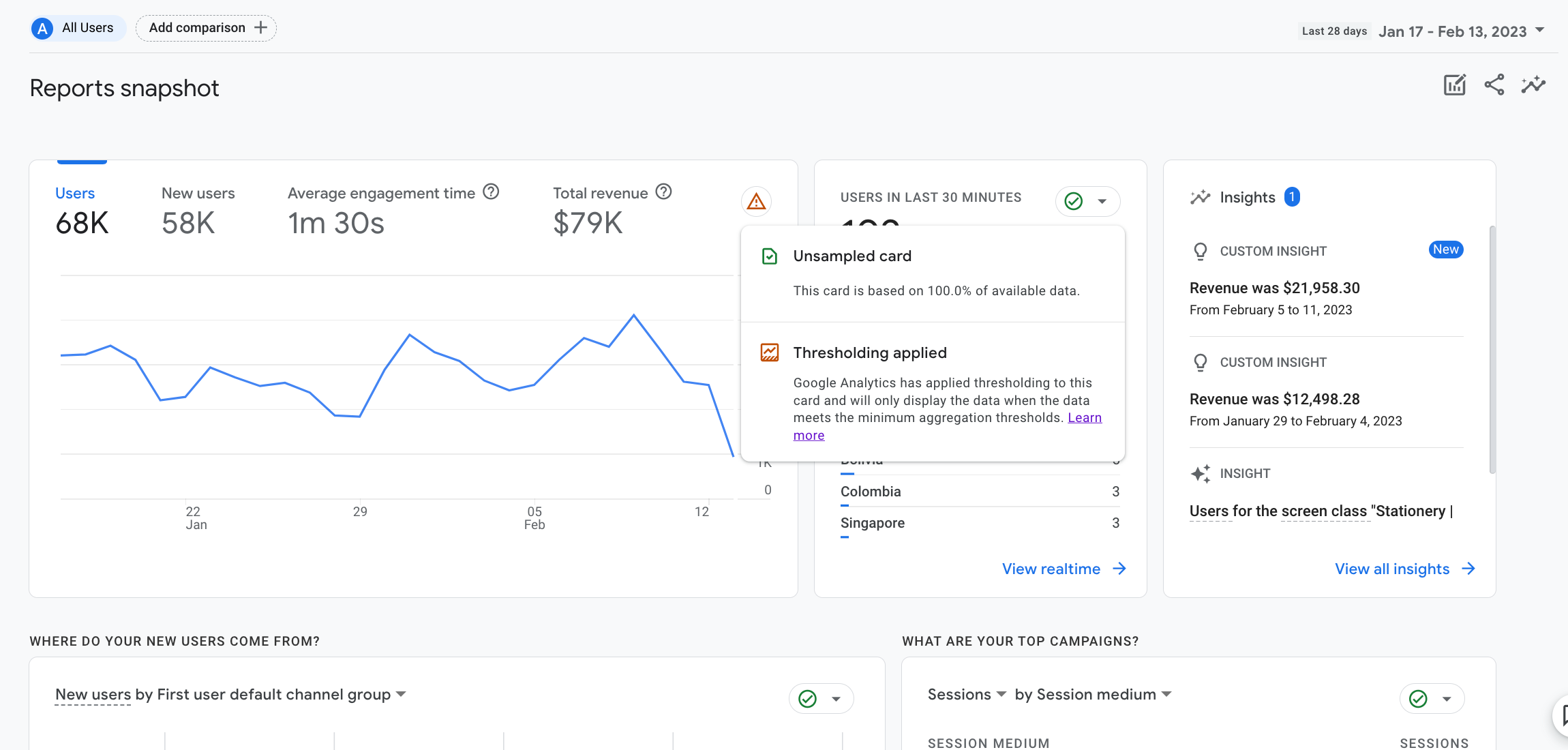
Google Analytics introduces the following new features that enhance the reporting experience, especially for properties with large and complex data:

Data quality icon at the individual card level. Previously, the Data quality icon appeared at the top of the Reporting snapshot report and the overview reports. However, different messages can apply to different cards. With this update, Google Analytics more precisely shows which messages apply to each card in a report.GVDaLHf8zsOe7phN0Tv57OHyksUVspJwsVnF

GVDaLHf8zsOe7phN0Tv57OHyksUVspJwsVnF

Why data quality is important. If a data quality icon appears on a particular card, it may indicate that the data for that card is incomplete, inaccurate, or not up-to-date. This could be due to a variety of factors, such as tracking issues, data processing errors, or user behavior changes. By identifying these issues early, you can take corrective action to improve their data quality and ensure that they are making accurate decisions based on their data.

In addition, the data quality icon can also help you identify areas where you need to focus your efforts to improve data quality. For instance, if multiple cards in a report have data quality issues related to a particular data source or tracking tag, you may need to address those issues and improve data accuracy and completeness for that source or tag.

A new “(other)” row message in the data quality icon. The “(other)” row appears when a report is affected by cardinality limits, which results in the less common data beyond the limits grouping into an “(other)” row. In this new message, you now have several ways to reduce or eliminate these cardinality limits.

All properties now have a one-click option to create the same report in Explore. The “(other)” row never appears in Explore because it uses raw, event-level data.

For 360 users. Google Analytics 360 properties also have access to expanded data sets, allowing you to flag up to 100 reports per property as high priority. Google Analytics permanently removes the “(other)” row from the reports you’ve flagged.QSWpoTK49898gsGB50P8BvowVECZ1mQ6KUfc

QSWpoTK49898gsGB50P8BvowVECZ1mQ6KUfc

The new message in the data quality icon provides several ways for you to reduce or eliminate the cardinality limits, allowing you to have more complete and accurate data. For example, all properties now have a one-click option to create the same report in Explore, which uses raw, event-level data and does not have the same cardinality limits as the regular reporting. This can help you get a more accurate view of your data and avoid the “(other)” row issue.

For 360 users. For Google Analytics 360 properties, there is also an option to flag up to 100 reports per property as high priority, which allows Google Analytics to permanently remove the “(other)” row from those reports. This can be particularly helpful for advertisers who need to have very accurate and complete data for specific reports.

New sampling controls for Google Analytics 360 properties. The following new sampling controls allow you to adjust the level of precision and speed in your explorations:

  • More detailed results: Uses the maximum sample size possible to provide results that are the most precise representation of the full data set
  • Faster results: Uses a smaller sampling size to give faster results (option selected by default)

Sampling is a process that Google Analytics uses to estimate data when the amount of data is too large to process. Sampling is useful for making data processing faster and more efficient, but it can also impact the accuracy and precision of the data.

With the new sampling controls, advertisers using Google Analytics 360 properties can adjust the level of precision and speed to best fit their needs. You can choose to use the maximum sample size possible, which provides the most precise representation of the full data set (this option is useful for advertisers who need very accurate and detailed data for their analyses and decision-making).

Alternatively, you can use a smaller sample size to get faster results. This option is selected by default and is helpful for advertisers who need to get results quickly and do not require the highest level of precision.

Learn more. Visit the Google Analytics Help center here.

Why we care. With the new updates, you should be able to quickly identify and address potential data quality issues, allowing you to make more informed decisions and improve the effectiveness of your campaigns.


Related stories

New on Search Engine Land

@media screen and (min-width: 800px) { #div-gpt-ad-3191538-7 { display: flex !important; justify-content: center !important; align-items: center !important; min-width:770px; min-height:260px; } } @media screen and (min-width: 1279px) { #div-gpt-ad-3191538-7 { display: flex !important; justify-content: center !important; align-items: center !important; min-width:800px!important; min-height:440px!important; } }

About the author

Nicole Farley

Nicole Farley is an editor for Search Engine Land covering all things PPC. In addition to being a Marine Corps veteran, she has an extensive background in digital marketing, an MBA and a penchant for true crime, podcasts, travel, and snacks.

https://searchengineland.com/3-new-google-analytics-4-updates-393143


This day in search marketing history: February 15

Google releases ‘How to hire an SEO’ video

In 2017, Google added a new 11-minute video about how to hire an SEO to its Do you need an SEO? help document page.

Google’s Maile Ohye outlined the SEO hiring process in three steps:

  • Conduct a two-way interview with your potential SEO. Check that they seem genuinely interested in you and your business.
  • Check their references.
  • Ask for a technical and search audit.

Read all about it in Google releases new video on how to hire an SEO consultant


Also on this day


Google denies mass search ad disapprovals or bugs with ad policy enforcement

2022: There were widespread reports of Google Ads disapproving ads and accounts, but Google said nothing was out of the ordinary.


Snapchat introduces attributable mid-roll ads for Snap Stories

2022: The ad product was in closed beta.


Google drops mobile app properties from GSC, reminds site owners to remove G+ integrations

2019: Google sent out notifications through Google Search Console telling them that mobile app properties and Google+ web integrations would no longer be supported.


Product card buttons pop up on desktop search

2019: Google Shopping product panel adds for “details”, “reviews” and “stores” options.


Bug with Ad Preview and Diagnosis Tool showing ad scores and more data

2019: The Google ad diagnosis tool was down after showing data it should not have been showing. Google was investigating the issue.


Google Image Search removes View Image button and Search by Image feature

2018: After making a deal with Getty Images, Google revamped some of its image search features and user experience.


Google Maps for iOS catches up with Android version, adds driving directions, transit info & explore nearby

2018: A year after bringing real-time information within Google Maps for Android, Google released it for iOS devices.


Google’s latest search feature serves up fun facts about animals, plants, fruits & vegetables

2017: Adding the words “fun facts” to queries for animals, plants, fruits or vegetables would surface a list of facts atop search results.


Google’s Classic Link Operator Showing Signs Of Being Turned Off For Good?

2016: Google said their link operator wasn’t dead but continued to tell webmasters to use Google Search Console for the best Google link data source.


Wikimedia Foundation Secures $250,000 Grant For Search Engine Development

2016: Knight Foundation money would be used for Knowledge Engine project that aimed to discover “reliable and trustworthy public information on the Internet.”


Marin Software Files For IPO

2013: Marin had been around for a little less than six years and said its software platform helped manage more than $4 billion in digital ad spending.


Dear Google Alerts: Why Aren’t You Working?

2013: For several weeks, it had become nearly useless.


Google Commerce Search Is On The Chopping Block

2013: Despite attracting several high-profile retailers, it seemed Google was quietly shuttering Commerce Search.


Bing Ads Sticks With Improved Reporting Interface

2013: Users would no longer see the option to switch to the old version.


Search In Pics: Brin’s Kiteboat, Al Gore @ Google, Google+ Circus & Scary Android Eyes

2013: The latest images showing what people eat at the search engine companies, how they play, who they meet, where they speak, what toys they have, and more.


Google: 62% Of Valentine’s Day Restaurant Searches Were Mobile

2012: Google also reported last-minute searches for flower-related terms grew 227% during the same week leading up to Valentine’s Day. 


DuckDuckGo Has Its First Million-Search Day

2012: Officially: 1,067,006 direct searches


If Google Is The New Microsoft, Facebook Is The New Google

2011: While Google in many ways had taken the place of Microsoft, Facebook had moved into the hot/feared space that Google occupied for a number of years.


Google Asks: Can Search Trends Predict The Oscars?

2011: “Black Swan” was the favorite for Best Picture based on Google search activity. (Spoiler: It didn’t win.)


Bing & Yahoo Align With Google’s Trademark Rules For Search Ads

2011: A policy change meant ads appearing on Bing and Yahoo could be triggered by trademarked keywords, though only authorized users could include trademarks in the text of their ads.


Blekko Partners With Stack Overflow To Improve Search Results

2011: 1-2 sentence teaser. 


Blekko Partners With Stack Overflow To Improve Search Results

2011: The agreement called for Stack Overflow’s community of programmers to “help improve and maintain programming-related slashtags,”


SearchReviews: A Search Engine For 40 Million Reviews (And Counting)

2011: Those 40 million reviews covered about 4 million products and came from more than 1,000 sites.


The State Of Online Marketing In Russia

2011: Yandex was the market leader, with a 64% market share, more than double Google’s 22% share.


Google Blurs The Line Between Paid & Unpaid Results Again

2010: Said Google: “Enhanced listings are labeled as advertisements via Google’s ‘Sponsored’ designation, and this experiment is intended to help us understand whether this is a useful experience for our users.”


Bing Gets Dedicated Button On New Windows (7) Phones

2010: Somewhat ironically, the largest source of Bing mobile queries at the time was the iPhone.


Google Is Testing SearchWiki As Way To Remove AdWords Ads

2009: Google confirmed it was running an experiment in which users could customize the ads that appeared in the “Sponsored Links” section of the search results page by deleting ad results.


Google Snubbed By Dow Jones

2008: Google wasn’t invited to join the Dow Jones Industrial Average (DJIA) when other, arguably less impressive companies were, in the first changes to the composition of the DJIA since 2004.


Porn Company Wants Google & Yahoo To Protect Kids From Pornography

2008: Co-founder of Vivid Entertainment wanted Google and Yahoo to do more in protecting children from accessing pornographic content.


Yahoo Video Gets An Upgrade

2008: Improvements included additional content including music, movies, TV, news, sports, and more.


Four Newspapers Join To Create Another Local Network For National Advertisers

2008: Gannett Co., Hearst Corp., the New York Times Co. and Tribune Co. formed a joint venture called quadrantOne.


Search in Pictures: Yahoo Hippies, Protesting Via Google, Vint Cerf With Ask

2008: The latest images showing what people eat at the search engine companies, how they play, who they meet, where they speak, what toys they have, and more.


Details On Yahoo’s Advertiser & Publisher Group Leaked

2007: Its demand channels would focus on the advertiser, the supply channels would focus on publishers and the marketing products division would match and bridge the two channels.


Yahoo Launches Suggestion Boards – Digg Community Upset

2007: The boards let you “browse suggestions from other site visitors or post your own. Digg-style voting means we can quickly discover what’s most important to users.” 


Baidu 4th Quarter Profits Quintupled

2007: Baidu’s fourth quarter profits “soared 400 percent.”


Electronic Frontier Foundation To Protect Some YouTube Users Over Viacom’s DMCA Claims

2007: The EFF was asking those who had been falsely accused of posting Viacom copyrighted content on YouTube to contact them.


Past contributions from Search Engine Land’s Subject Matter Experts (SMEs)

These columns are a snapshot in time and have not been updated since publishing, unless noted. Opinions expressed in these articles are those of the author and not necessarily Search Engine Land.


< February 14 | Search Marketing History | February 16 >


Related stories

New on Search Engine Land

@media screen and (min-width: 800px) { #div-gpt-ad-3191538-7 { display: flex !important; justify-content: center !important; align-items: center !important; min-width:770px; min-height:260px; } } @media screen and (min-width: 1279px) { #div-gpt-ad-3191538-7 { display: flex !important; justify-content: center !important; align-items: center !important; min-width:800px!important; min-height:440px!important; } }

About the author

Danny Goodwin

Danny Goodwin is Managing Editor of Search Engine Land & SMX. In addition to writing daily about SEO, PPC, and more for Search Engine Land, Goodwin also manages Search Engine Land’s roster of subject-matter experts. He also helps program our conference series, SMX – Search Marketing Expo. Prior to joining Search Engine Land, Goodwin was Executive Editor at Search Engine Journal, where he led editorial initiatives for the brand. He also was an editor at Search Engine Watch. He has spoken at many major search conferences and virtual events, and has been sourced for his expertise by a wide range of publications and podcasts.

https://searchengineland.com/search-marketing-history-february-15-393062


Instagram is ending its live shopping feature in March

Meta’s “year of efficiency” is kicking off with killing the livestream shopping business on Instagram. Effective March 16, 2023, users will no longer be able to tag products while live streaming.

The move reflects the challenges of making livestream shopping successful in the US market, in contrast to its popularity and profitability in Asian markets. Despite the early traction of businesses like TalkShopLive, NTWRK, and Brandlive, as well as adoption by big tech companies like Meta, Amazon, and YouTube, the difficulties persist.

The effects of the pandemic are still felt. During the pandemic, online retail surged, but after things returned to normal, analysts found that U.S. consumers had not fully embraced live shopping, which only made up 5% of total e-commerce sales in the country. Even TikTok scaled back its live commerce plans due to low sales. The cultural and digital differences between Western markets and China may explain why live commerce has not been as successful in the U.S.

No live commerce. Though Meta is ending its live shopping feature on Instagram, they say they remain invested in shopping as 90% of users follow at least one business on the site.

Rather than live shopping, Instagram will prioritize advertising as a main way for users to discover businesses and shop. This includes its automated Shop ads and Advantage+ shopping campaigns to improve ad performance, as well as continuing to invest in checkout. Instagram recently removed the Shop tab and relocated Reels, in response to user criticism over the overemphasis on video content. Despite the end of live shopping, Instagram will still allow creators to host Q&As and invite guests, and businesses can still set up and run a shop on the platform.

Why we care. Though Meta says they’re focusing more on Instagram ads, we don’t know yet what that means. But for now, advertisers may need to adjust their strategies to account for the removal of the Shop tab and consider new ways to capture users’ attention and drive conversions.


Related stories

New on Search Engine Land

@media screen and (min-width: 800px) { #div-gpt-ad-3191538-7 { display: flex !important; justify-content: center !important; align-items: center !important; min-width:770px; min-height:260px; } } @media screen and (min-width: 1279px) { #div-gpt-ad-3191538-7 { display: flex !important; justify-content: center !important; align-items: center !important; min-width:800px!important; min-height:440px!important; } }

About the author

Nicole Farley

Nicole Farley is an editor for Search Engine Land covering all things PPC. In addition to being a Marine Corps veteran, she has an extensive background in digital marketing, an MBA and a penchant for true crime, podcasts, travel, and snacks.

https://searchengineland.com/instagram-is-ending-its-live-shopping-feature-in-march-393101


Meta aims to increase transparency in ad targeting for Facebook and Instagram users

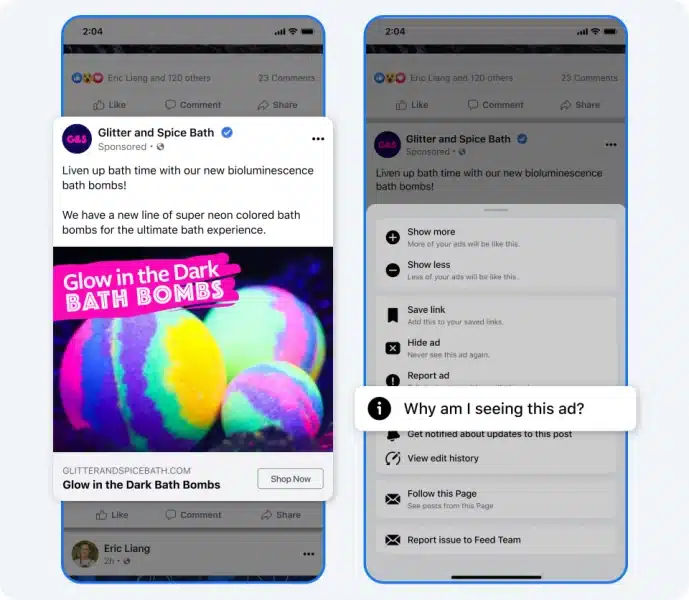
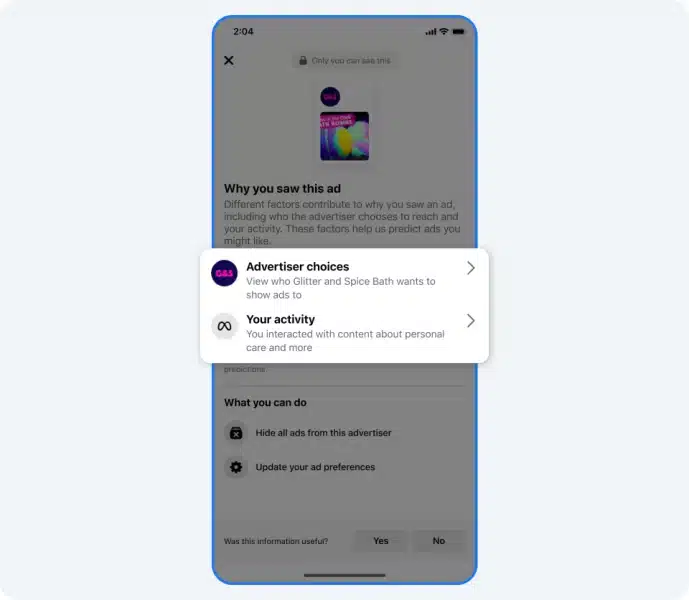
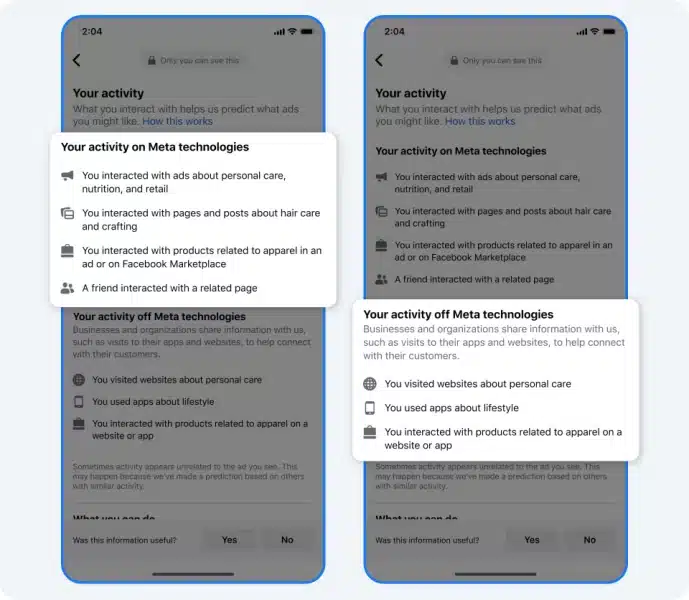
Facebook has just launched an updated version of its “Why am I seeing this ad?” tool which now includes information on how they use machine learning to deliver ads. The tool will provide information on how your activity on and off our platforms informs the machine learning models. It will also include new examples and illustrations to explain how these models connect various topics to show relevant ads.

Additionally, there are now more ways to access ads controls from different pages in the tool.

What’s new. From the Meta support site:

Beginning today, the “Why am I seeing this ad?” tool on Facebook will include:

  • Information summarized into topics about how your activity both on and off our technologies — such as liking a post on a friend’s Facebook page or interacting with your favorite sports website — may inform the machine learning models we use to shape and deliver the ads you see.
  • New examples and illustrations explaining how our machine learning models connect various topics to show you relevant ads.
  • More ways to find our ads controls. You will now be able to access Ads Preferences from additional pages in the “Why am I seeing this ad?” tool.”

Why Meta is making changes. Meta says they collaborated with privacy experts and stakeholders to gather feedback on increasing transparency in their ads system. One of the main suggestions was to be more transparent about how their machine learning models contribute to the ads people see.

Meta says they’re committed to using machine learning responsibly and being transparent about its use is vital to ensure people are aware of the technology involved and the data used.

“By enhancing transparency, we aim to increase accountability and help people feel more secure. The updates to “Why am I seeing this ad?” aim to provide clear information about machine learning models used to deliver ads. These are the latest developments in our continuous efforts to improve our ads transparency and provide better understanding of our data and technology use.”

01 WAIST 1 689x600
02 Why You Saw 1 689x600
03 Activity 1 689x600

Find the “Why am I seeing this ad?” feature. To access the “Why am I seeing this ad?” tool on Facebook, click on the three-dot menu in the upper-right corner of any ad in your feed. You can still hide ads from specific advertisers and access your ads preferences within the tool. The updated version is currently available on Facebook globally and will be expanded to Instagram in the future.

Dig deeper. You can read the full announcement from Meta here.

Why we care. This tool enhances transparency and provides users with clear information about the ads they see. By being transparent about the use of machine learning and the data used to deliver ads, users may feel more comfortable with the ads they see and may be more likely to engage with them.

Though this could be seen as a bad thing for advertisers, it forced brands to rethink their targeting. By doing so, it can potentially lead to higher engagement rates and better return on investment. Additionally, by understanding how the tool works, advertisers can improve their ad targeting and content to reach their desired audience more effectively.


Related stories

New on Search Engine Land

@media screen and (min-width: 800px) { #div-gpt-ad-3191538-7 { display: flex !important; justify-content: center !important; align-items: center !important; min-width:770px; min-height:260px; } } @media screen and (min-width: 1279px) { #div-gpt-ad-3191538-7 { display: flex !important; justify-content: center !important; align-items: center !important; min-width:800px!important; min-height:440px!important; } }

About the author

Nicole Farley

Nicole Farley is an editor for Search Engine Land covering all things PPC. In addition to being a Marine Corps veteran, she has an extensive background in digital marketing, an MBA and a penchant for true crime, podcasts, travel, and snacks.

https://searchengineland.com/meta-aims-to-increase-transparency-in-ad-targeting-for-facebook-and-instagram-users-393096


Why Performance Max for lead generation often fails and how to make it work

Many ecommerce advertisers are starting to better understand how to set up and optimize Performance Max, but it’s still a very difficult campaign type for lead gen accounts.

The funnel-driven nature of leads and the variance in quality are two of the biggest impediments.

Unlike ecommerce where a purchase signifies the “end” of the transaction, lead creation is the beginning of the sales process – and just because someone fills out a form doesn’t make them a quality lead.

With so much more left to play, it’s dangerous to allow Google to judge its contributions based on data from that limited window.

Few lead generation advertisers use Performance Max so there’s considerably less to say than there is for ecommerce.

These observations and recommendations come from my experience, and I’ve answered some common questions about optimizing Performance Max for lead gen.

So what makes this such a tough thing to get right?

Performance Max for lead gen needs offline conversion data

Getting Performance Max to work for lead generation programs without offline conversion data is very hard. Without it, Google’s systems are prone to bringing in a lot of spam.

So traffic bots fill out the form and Google thinks it got you a quality lead. It pats itself on the back – and even worse, starts to go after more of the same low-quality traffic.

I recall someone on Twitter calling this the feedback loop of doom, and it’s incredibly difficult to get out of it.

Restrict spam and bot form submissions with reCAPTCHA

That data piece of the puzzle is very hard to acquire and implement, but there are ways around it.

One example is installing a reCAPTCHA or honeypot that blocks the form from being submitted by spam bots so that it never gets triggered as a conversion in Google’s eyes.

Even if you do that and preempt the unwanted, you can still wind up with a pipeline full of irrelevant or unqualified leads. Let’s say you’re selling a commercial product – you might start getting residential leads that you can’t sell to.

In this example, Google’s systems won’t know that last bit of information unless you have offline conversion tracking that marks those leads as low-quality.


Get the daily newsletter search marketers rely on.


Teach Google what works for your business

Offline conversion imports – and any extra data over and above what Google already has – will help you teach Google what decisions are right for your account and business.

For most of our ecommerce clients, all they need is the revenue data that comes in and a clear understanding of who their most profitable customers are.

For lead gen, data is one place we lean in further and heavier.

For example, Performance Max can only measure how many phone calls or form submissions you get, but it doesn’t know how many led to good, great, or bad conversations.

Along with revenue data, customer email lists, audience signals, and data feeds, this is really what we need to make Performance Max work for ecommerce.

Because lead gen clients are usually split into marketing and sales functions, it’s a bit tougher to make this happen.

How to share data between your CRM and Performance Max

What helps most in our experience is implementing an integration with a customer relationship management (CRM) tool, such as Salesforce or HubSpot.

With this, we can see offline conversion data for leads generated through Google Ads.

Say we’re measuring form submissions, chats, phone calls – any type of contact – and the client gets 10 leads but only two were good. We want the system to know which two out of the 10.

And over time, Google starts to see that the good ones come from certain geos or share certain audience signals.

If you can upload offline conversions in the time it takes to go from lead to actual revenue, you want to feed that data into the system. But if you have a long sales cycle, we recommend scoring the lead (this is data you have right away).

You might set things up so that if a sales rep tags a lead as irrelevant, it sends that back to Google with a lower lead score/value. And if it’s a good lead, they assign it a higher category or value.

How to use HubSpot, Salesforce and Zapier with Google Ads

Salesforce and HubSpot have default integrations with Google Ads, as do certain other popular CRM tools.

If yours doesn’t have a pre-built integration, you can use a tool like Zapier to automate the transfer of data between products.

Zapier Offline Conversions In Google Ads 800x340

Screenshot from Track offline conversions in Google Ads by Zapier

You might set up an automated workflow that looks like this:

  • Google generates a lead via Performance Max.
  • A sales rep marks it as a qualified lead (score of 10).
  • Information is fed back to Google Ads.
  • The qualified lead progresses to the proposal stage (score of 20).
  • Information is fed back to Google Ads again.

By ensuring an automated step is triggered each time the lead score is updated, you’ll keep Google aware of which leads are good for business and which aren’t. The system sees the value increasing the further it gets in your sales cycle, and then it can go after more of those.

Google (and Performance Max) is smart enough to figure it out over time, but you have to provide regular and accurate inputs – and you’ve got to be willing to eat some of the upfront costs to help the system learn.

Bottom line: Connect the dots or walk away

PPC marketers can do every part of their job right, and a Performance Max campaign can still fail. Maybe the brand’s website isn’t set up the right way or the sales team isn’t actively feeding data back to Google on lead quality.

Lead gen for Performance Max cannot work without buy-in from other teams.

Yes, Performance Max is capable of acquiring leads at a greater scale than regular search campaigns, but I highly recommend connecting the dots of your system – or abandoning it entirely.

Frequently asked questions (FAQ): Performance Max for lead generation

How do I improve lead quality and relevance?

We like to start with a Search campaign using a manual bidding strategy and Phrase Match keywords.

Once we’ve negated irrelevant search terms, we then migrate to Smart Bidding and Broad Match while staying on Search.

As traffic volume increases, we’ll add remarketing on YouTube and Discovery.

But unless we have conversion values, we won’t migrate to Performance Max for lead gen because it generates too many spam leads.

However, if you can prevent the conversion tag from being fired on spam form submissions, you can and should test Performance Max.

You can accomplish this by using an invisible reCAPTCHA to block bots from submitting the form.

Many businesses that run lead gen campaigns have some type of buyer journey or funnel. If you have a multi-step form or registration process, assign incrementally greater values at each stage:

  • Step 1 = 10
  • Step 2 = 20
  • Step 3 = 30
  • Complete = 100

How do I use audience signals and asset groups?

Performance Max uses audience signals for targeting. These are different from audience lists, which are cohorts of specific users.

Even if you upload a customer list, Performance Max will only consider their audience signals – their shared behaviors or traits – when deciding who to show your assets to.

We structure Performance Max asset groups around product or service categories, not by audience signals. Since there is no true or uniform audience targeting, there will likely be overlap. Ad creative should match the specific service offering.

How do I send traffic to the right landing pages?

You may also want to disable URL Expansion in campaign settings or exclude specific URLs that don’t convert well, such as blog posts or resource pages.

Landing page reports are a great way to see which pages on your website are converting and which are wasting opportunities.

How do I track the right types of leads?

There are three ways to generate leads: chat, form submissions, and phone calls. Make sure you’re monitoring all of them.

Connect your CRM so that the lead-to-close pipeline and revenue data are captured. Use the HubSpot or Salesforce integration, or a tool like Zapier if you use a different CRM.

If form submissions aren’t of great quality, focus on calls that are only counted as a conversion if longer than 60 seconds.

Can I run Performance Max for a local business?

Local campaigns were deprecated and rolled into Performance Max, so if you want to advertise on Google Maps, you’ll need Performance Max.

Make sure to turn off Location Expansion in campaign settings. I typically recommend increasing target areas to within a 30- or 45-minute drive for local businesses.


Opinions expressed in this article are those of the guest author and not necessarily Search Engine Land. Staff authors are listed here.


Related stories

New on Search Engine Land

@media screen and (min-width: 800px) { #div-gpt-ad-3191538-7 { display: flex !important; justify-content: center !important; align-items: center !important; min-width:770px; min-height:260px; } } @media screen and (min-width: 1279px) { #div-gpt-ad-3191538-7 { display: flex !important; justify-content: center !important; align-items: center !important; min-width:800px!important; min-height:440px!important; } }

About the author

Menachem Ani

Menachem Ani, Founder of JXT Group, is a digital advertising expert with over a decade of success developing high-impact marketing strategies for online retailers and lead-generation clients.

https://searchengineland.com/why-performance-max-lead-generation-fails-make-it-work-393038


This day in search marketing history: February 14

Google Webmaster Tools comes out of beta

In 2007, Google Webmaster Tools officially came out of beta.

Launched in June 2005 as Google Sitemaps, its expansion led to a name change on Aug. 4, 2006.

Google also revealed that Webmaster Central had more than a million users.

Read all about it in Google Webmaster Central Leaves Beta; Its Blog Gains Comments.

Eventually, Google Webmaster Tools would be rebranded as Google Search Console, on May 20, 2015.


Also on this day


Google crawl stats report is missing a chunk of data

2022: This seemed to be a widespread reporting issue.


Google AdSense launches related search for content pages

2022: The feature was designed to drive incremental ad revenue while encouraging more engagement from visitors.


Microsoft Advertising nearly doubles available markets with 29 more countries

2022: This expansion would increase the platform’s reach by 41 million customers.


EU copyright directive poised to become law, includes licensing fees for search engines

2019: Controversial ‘link tax’ and content filtering provisions were part of the final language of the Directive.


Google announces AMP for Email – delivering Accelerated Mobile Pages experiences to your inbox

2018: The new spec was available through the Gmail Developer Preview, with support in Gmail slated for later that year.


Google featured snippets now often followed by the ‘people also ask’ box

2017: People also ask got more frequent and prominent placement in Google.


Open Letter: Why Search Engine Land Will & Won’t Cover Someone Being Penalized By Google

2014: Search Engine Land would only write about it if there was some exceptional news value.


Googling The Weather: From 20% Project To Sophisticated Query Analysis

2014: A look at the evolution of weather-related searches and how Google handled them.


Google Publishes Full Text Of EU Antitrust Agreement

2014: The document contained extensive examples of how search results would look in Europe under the new agreement.


New Bing Ads Editor Release Coming Soon, To Include Update To Campaign Conflicts Review

2014: The update gave users the option to override changes without having to review the conflicts first.


For Robocop, Bing Imagines The Future Of Search In 2028

2014: The Bing search folks shared a few screenshots showing a 3D, three-panel search display that they came up with for search circa 2028.


The Donkey Cutts SEO Game: Avoid Panda & Penguins

2014: The game worked like “Donkey Kong,” but replaced the objects based off of Google ranking signals.


Search In Pics: Google Boomerang, Google NYC In Snow & Susan Wojcicki’s Last Day

2014: The latest images showing what people eat at the search engine companies, how they play, who they meet, where they speak, what toys they have, and more.


Google Sends Hundreds Of Thousands Of Webmaster Notifications Each Month & 90% Are Black Hat Related

2013: Google’s Matt Cutts answers “How many types of messages does the webspam team send to Webmaster Tools?”


Google Now Adds Movies, College Sports, Homescreen Widget

2013: Google Now added movie ratings from Rotten Tomatoes and movie passes from Fandango.


The Google Movie — “The Internship” — Debuts Its Trailer

2013: A comedy about what it was like to work at Google as interns (Vince Vaughn and Owen Wilson).


Why The Wikipedia/Google Search Results Study Is Flawed

2012: Study was based on 1,000 unique one-word searches created by using a random noun generator on Google UK and conducted using Google Chrome on Incognito mode.


Google AdWords Sitelinks Now Uses Related Ads

2012: Google said they “incorporate text from ads in your account that are related to your sitelinks,” to make up the Enhanced Sitelinks.


Bing & Google: “Spreading Romney” Ranking Tops For “Romney” Is Normal

2012: Apparently it was business as usual.


Scroogle Says Google Is Blocking Their Privacy Search Engine

2012: Google said it wasn’t manually blocking Scroogle but they had automated systems in place that “deter scraping or excessive queries to Google.”


New: Block Sites From Google Results Using Chrome’s “Personal Blocklist”

2011: While Personal Blocklist was designed to allow individuals to build up their own unique blocklists, Google said it could use the data to influence the search results for others.


Google Image Search Adds SVG Filter & Google Displays Satellite & Terrain Maps

2011: Two updates for Google Search and Image Search.


Study Asks, Can You Trust Google’s Personalized Search Results?

2011: For most people, search quality had been declining, results were less personal, reflecting more of a standardized Google-centric view than ever before.


Google Wants You To “Map Your Valentine”

2011: It used Google Maps and enabled you to send an email card to a spouse/partner/lover/friend.


comScore Looks Back At Smartphone Growth In “Mobile Year In Review”

2011: Facebook, far and away, was the leader in total engagement with more than 3X the mobile time spent on Google.


One Mission Accomplished: Microsoft’s Deal With Nokia Injects Windows Into The Smartphone Conversation

2011: It helped create a perception that there were three mobile platforms that mattered and Windows was one of them.


Twitter As Utility, Like Running Water? That’s Goal, Says CEO

2011: “It needs to be water. It’s instantly useful. It’s simple. I don’t have to re-learn how to use water. It’s always present,” said Twitter CEO Dick Costolo.


deCarta Challenges Google With Free Mapping, Local Search Tools Aimed At Mobile Developers

2011: The set of free developer tools was intended to challenge Google Maps and Places.


ComScore To Report Google Maps Now Number 1

2009: MapQuest’s January monthly unique visitors were 41.5 million and Google’s were 42.2 million.


AdWords + Video: Video Ads Come To Google Search Results

2008: Advertisers paid once on a CPC basis where any click counted. So if a user clicked on the URL link that counted as a click or if a user clicked to play the video that also counted as a click.


Hitwise Illustrates How A Google Slap Can Hurt Hard

2008: One website saw a 87% decrease in traffic for the search term “car insurance”]” due to a Google penalty.


Microsoft Executive Shuffle Goes “Live”

2008: Who was in and out. Related coverage: Official: Microsoft Management Reorg Announced; Dueling Ad Groups?


Yang’s Letter: Dear YHOO Shareholders, Yahoo Will Be A “Must Buy” For Advertisers & Grow 15% Per Year

2008: He said Yahoo had a “unique combination of strengths,” including a strong brand and being a leader in display advertising, search advertising, mobile and online video.


Pew: Americans Increasingly Shop Online But Still Fear Identity Theft

2008: 43% of internet users have been frustrated by the lack of information they encounter while using the internet to find out about or buy goods or services.


Citysearch And AOL Announce Reciprocal Content And Ad Distribution Deal

2008: The two firms would share revenue from clicks or leads generated from AOL distribution.


Vertical Search Provider Healthline Beefs Up Content, Features

2008: More search, tools and content, plus a marketplace.


Google AdWords Adds Quality Score Column & To Improved Quality Algorithm

2007: The most significant change in the algorithm: they would better handle keywords that had little data.


Google Officially Opens Gmail To World

2007: Gmail restrictions were dropped.


Google News: Top Of Mind, Even If Not Top Of Traffic

2007: Google News came under far more criticism and attention than its apparent usage as a news resource.


Google Scores Higher On Forbes Tests

2007: Google Search got an A-.


Google Earth Adds KML Search Feature

2007: Enabled you to search for Keyhole Markup Language.


VSearch: Embedded Voice Mobile Local Search

2007: VSearch would be ad supported. 


From Search Marketing Expo (SMX)


Past contributions from Search Engine Land’s Subject Matter Experts (SMEs)

These columns are a snapshot in time and have not been updated since publishing, unless noted. Opinions expressed in these articles are those of the author and not necessarily Search Engine Land.


< February 13 | Search Marketing History | February 15 >


Related stories

New on Search Engine Land

@media screen and (min-width: 800px) { #div-gpt-ad-3191538-7 { display: flex !important; justify-content: center !important; align-items: center !important; min-width:770px; min-height:260px; } } @media screen and (min-width: 1279px) { #div-gpt-ad-3191538-7 { display: flex !important; justify-content: center !important; align-items: center !important; min-width:800px!important; min-height:440px!important; } }

About the author

Danny Goodwin

Danny Goodwin is Managing Editor of Search Engine Land & SMX. In addition to writing daily about SEO, PPC, and more for Search Engine Land, Goodwin also manages Search Engine Land’s roster of subject-matter experts. He also helps program our conference series, SMX – Search Marketing Expo. Prior to joining Search Engine Land, Goodwin was Executive Editor at Search Engine Journal, where he led editorial initiatives for the brand. He also was an editor at Search Engine Watch. He has spoken at many major search conferences and virtual events, and has been sourced for his expertise by a wide range of publications and podcasts.

https://searchengineland.com/search-marketing-history-february-14-393020


PPC prioritization: Knowing where to focus efforts to make the biggest impact

Maria Corcoran has been at Microsoft for about a year and a half. Before that, she was part of the in-house team at Adobe. In her SMX Next 2022 session, she discussed the evolution of paid search and what that means for advertisers and brands.

New tools and technology.

Technological advancements have led to the creation of third-party tools that have bidding algorithms and the ability to advertise on multiple search engines such as Google, Bing, Yandex, Baidu, etc. Those tools have replaced the manual processes of bidding and campaign optimization, allowing paid search managers to focus on more meaningful tasks.

However, the question arises on how to trust the bidding algorithms and the data being uploaded, as well as the automation being done by the tools. This has led to the need for paid search managers to find new ways to add value to the company and prove their worth.

High impact, high value

One area where paid search managers can add value is by spending their time on high-impact items and deeper analysis to drive insights that other channels cannot provide. This includes understanding the keywords and phrases people are searching for and using that analysis to help the business focus its efforts.

Testing is another area where paid search managers can add value by determining the impact of tests on the bottom line and prioritizing them among other channels.

Testing at Microsoft

A testing planning sheet was devised at Microsoft to prioritize tests based on their impact on the bottom line. The sheet included information about the quarter in which the test will be run, the channel it will run in, the test and learning categories, a description of the test, the type of approval needed, the reporting timing, the expected performance impact, an estimated budget, and a test theme.

Corcoran says this type of information was presented to stakeholders to ensure that the testing approach is well thought out and considers the impact on the bottom line. They developed a testing planning sheet that helps to find the right balance across all proposed tests and channels. The focus is on providing a comprehensive understanding of the test, including the business opportunity and the expected impact, rather than just a hypothesis.

Impact and outcome

In the session, Corcoran explains that the expected impact is a crucial aspect of testing. In this case, the expected impact of running a test for free in Excel is to drive users to test the free version, convert them to active monthly users, and eventually upsell them to the paid version.

The approach for the test involves laying out the keywords, ads, landing pages, and deployment strategies. The campaign information includes the exact campaigns that will be run, the flight dates, keyword themes, device types, markets, and landing page. It is important to be specific about the targeting and to consider regional holidays, promos, and localization when laying out the test approach.

Measurement

Finally, the measurement approach is crucial, as it outlines the primary KPI for success, the optimization metric, and the goals of the test. The optimization metric should align with the KPI goal and be something that can be ingested into the bidding algorithms. The primary KPI for success should be identified, but it is okay if it is not met, as this goes into the learning questions bucket.

Corcoran continues explaining that the success of the test needs to be defined and any potential roadblocks or considerations should be taken into account. The reporting cadence is also crucial and should be clearly communicated to stakeholders. The stakeholders should be provided with regular reports that include the KPIs, trending data, and historical data. 

Wrapping it up

At the end of the test, a wrap-up report should be provided to the stakeholders that include the primary goal and whether it was achieved. If not, why not, and what were the unexpected results? The report should also include insights, such as which engine outperformed the others, which device type performed better, and which keyword or product theme had better results.

In case of a test that did not meet its success goals, the team can evaluate the data and determine how to move forward, such as turning the test into an evergreen campaign or adjusting the KPI reporting to reduce delays. The team should also be provided with information about the ads, verbiage, and landing page being used in the test. The presentation will also touch upon various new ad types, including Performance Max.

Additional testing

Corcoran discusses various other strategies and considerations for ad testing in the digital marketing world.

  • Performance Max is a type of ad that can be run across multiple channels (e.g., YouTube, display, Gmail, maps) but raises questions about tracking and cross-channel implications.
  • Responsive Search Ads (RSA) and the importance of considering company branding and ad copy testing when creating campaigns.
  • Landing page testing: It’s important to make clear and significant changes to landing pages rather than just minor adjustments.

Key takeaways

It is also important to always take into account the performance of other channels. Has a landing page test already been conducted, and does this have any relevance to paid media? While it may be performing well on the web, paid traffic might only require one click to make a purchase. This is especially true for bottom funnel tactics.

In terms of campaign maintenance, it is important to ensure that messaging is aligned and there are opportunities for quarterly expansion. To do this, one should outline their business objectives, funding source, target audience, campaign types, keyword themes, messaging, landing pages, and KPIs. This will help to ensure that the strategy is clear and concise, and will aid in running the campaigns.

Consistency is key

It is also important to ensure that all campaigns are consistent and that the same bidding strategies, site links, and other elements are used globally. This can be done by creating a keyword matrix, which outlines the general brand keywords, messaging, landing pages, and KPIs.

In addition, teams should ensure that they are looking at the same data and that the data source is trustworthy. The data should also be reported and optimized correctly, and there should not be any delays between reporting and optimization.

When looking at data, it is important to consider the impact of:

  • Different markets
  • Product themes
  • Devices
  • Seasonality

This can be done by looking at sales funnel metrics such as demand generation, conversion, and post-sale, and by examining the impact of data slicing on these metrics.

For example, you can analyze the performance of different product themes year over year to identify growth and decline opportunities. The same can be done for funnel intent, such as conversion, consideration, and awareness, and this information can then be used to optimize and categorize different intentions.

Watch the session

[embedded content][embedded content]

Did you miss Maria Corcoran’s session at SMX Next 2022? You can still watch. Register here and watch free.


Related stories

New on Search Engine Land

@media screen and (min-width: 800px) { #div-gpt-ad-3191538-7 { display: flex !important; justify-content: center !important; align-items: center !important; min-width:770px; min-height:260px; } } @media screen and (min-width: 1279px) { #div-gpt-ad-3191538-7 { display: flex !important; justify-content: center !important; align-items: center !important; min-width:800px!important; min-height:440px!important; } }

About the author

Nicole Farley

Nicole Farley is an editor for Search Engine Land covering all things PPC. In addition to being a Marine Corps veteran, she has an extensive background in digital marketing, an MBA and a penchant for true crime, podcasts, travel, and snacks.

https://searchengineland.com/ppc-prioritization-knowing-where-to-focus-efforts-to-make-the-biggest-impact-393064


This day in search marketing history: February 11

Yahoo officially rejects Microsoft

In 2008, rumor became reality as Yahoo rejected Microsoft’s $45 billion bid to buy Yahoo.

The company concluded that the proposal substantially undervalued Yahoo and was not in the best interests of Yahoo and its stockholders.

Microsoft basically rejected Yahoo’s rejection, calling it “unfortunate” and pledging to “pursue all necessary steps” to get what it called its “full and fair” proposal to be accepted.

In other words, this wasn’t the end of the story.

Dig deeper:


Also on this day


Google Ads issue results in missing conversions from data-driven attribution

2022: The company was working on recovering the data.


Google ad label experiment makes it easier to distinguish paid results

2022: The design was a throwback to 2017’s green, boxed ad labels.


3 changes coming to Google Ads automated extensions

2022: Automated and manual extensions could be shown together, Google Ads added a report and they could be added at ad group, campaign, or account level.


Google passage ranking now live in US English search results

2021: Google said it could have a 7% impact on search queries.


Google Image Search update reduces duplicate image results

2021: Google wanted to display images that were relevant yet visually distinct.


Google My Business adds messaging to desktop interface

2021: Businesses could message customers through their web browser, not just the mobile app.


Google Search dark theme mode expands but search ads are hard to distinguish

2021: Light mode showed a black ad label on a white background but on dark mode, it showed a gray ad label on a black background.


A Google Ads setting allowed advertisers to exclude people of ‘unknown gender’

2021: Employers, landlords and credit providers could keep their ads from showing to people of “unknown gender,” enabling discrimination against nonbinary individuals.


The onus of diversity should not fall to Black marketers

2021: Keys to diversity and inclusion include mentorship and promotion of Black search marketers.


Unconfirmed Google Search ranking update feels big

2020: It seemed like Google had pushed out some ranking algorithm change over the weekend, resulting in a large shift in the rankings of many websites.


Google resolves rejected Posts problem

2020: New Posts would publish after the “fix” and rejected Posts would go live that week.


Conditional IF functions now available in all Microsoft Advertising accounts

2020: Scale expanded text ad messaging by device or audience – and it worked with Google import.


Yelp launches ‘Showcase Ads’ and store visits attribution

2020: The products were intended for national and multi-location brands.


Warner Bros. renamed the Harley Quinn movie for better SEO

2020: After a disappointing opening weekend, the film’s new title began showing up on movie ticket booking sites last night.


How Google will shift resources to media search and other tidbits from Gary Illyes’ AMA on Reddit

2019: The Google webmaster trends analyst also touched on topics like the possibility of an Indexing API, whether internal over-linking penalties exist and how the clustering of duplicate pages works.


Google Ads bringing click share to Search campaign competitive metrics

2019: The rollout of click share could be seen as a follow-up to the position metrics Google introduced the prior fall, as average position had become less useful.


Bing Ads multiple language targeting: What you need to know

2019: Bing Ads issued additional guidance for advertisers wanting to target multi-lingual users who may search in multiple languages.


Is Google Maps what augmented reality has been waiting for?

2019: Google was actively testing augmented walking directions with select Local Guides.


Retailers: GTINs Required By May 16 For Google Product Listing Ads

2016: GTINs would be required for brand name products sold by multiple merchants.


Google Says There’s No Whitelist To Save You From Panda Or Penguin

2015: Google’s John Mueller said there was no whitelist (or “exception lists”) for the Penguin and Panda algorithms.


Bing Ads Offers Search Insights For Mother’s Day Marketers

2015: A $20 billion holiday in the U.S., Mother’s Day-related searches started rising roughly a month in advance, though search habits varied by gift category.


Google Showing Restaurant Menus In Card-Style Search Result

2014: Google started showing complete restaurant menus in its search results when a query specifically looked for menu information. 


Google In Trouble Again Over Racist Search Suggestions In UK

2014: Google was suggesting racist terms when users searched for a number of UK cities, including Bradford, Leicester and Birmingham.


Bing Ads Updates Reporting Capabilities, Chiefly Conversion Performance Insights

2014: Bing Ads introduced the full set of conversion fields to all Performance reports.


Yelp Supersizes Its Local Profiles, Makes Them Less Busy

2014: Business profile pages were changed to emphasize images, featured user reviews and key pieces of local content.


Google’s Cutts On How To Locate Unnatural Links Pointing To Your Web Site

2013: Cutts answers: “How do I know which links to remove when I get an ‘unnatural links’ message?


Financial Analyst Affirms Google’s $1 Billion In “Default Search” Payments To Apple

2013: It was believed that Google paid Apple roughly $3.20 per iOS device, which would avoid the accounting issues arising from a revenue-sharing agreement.


Google Still World’s Most Popular Search Engine By Far, But Share Of Unique Searchers Dips Slightly

2013: Google led in the number of searches, but had seen a marked drop in unique searchers over the past few months.


Google Now (And Nexus 4) Featured In Grammy Show Commercial

2013: The Apple-like ad showed people around the world getting useful and “just in time” information from Google Now.


Bill Gates On Google: “Bing Is The Better Product”

2013: Although Gates never really said which search engine he used.


Google’s Recent Domain Registrations: Labs, Screenwise & AdWords

2012: Google registered 14 domains.


Bing Sees 13% Spike In Searches In January

2011: Google dropped from 66.6% to 65.6% share, still way in front of Bing, Yahoo, and their combined numbers.


US Lawmakers Voice Concerns Over Google-ITA Deal

2011: Critics argued that once Google became a participant in the travel services market, it might use its advertising dominance to steer consumers to its services, further limiting competition.


Google Promotes Hotpot, Places In Austin In Advance of SXSW

2011: Google representatives would meet with local businesses to talk up the benefits of promoting their goods and services through Places.


Nokia Is The New Yahoo: Microsoft OS, Bing To Power Its Smartphones

2011: Nokia would build and distribute Windows Phones as its primary competitive offering to go head-to-head with the iPhone and Android.


January 2011: Search Engine Land’s Most Popular Stories

2011: Search Engine Land’s 10 most popular stories from January 2011.


SEO Industry Cries Foul Over Google SEO ‘Services’

2010: A vocal contingent of SEOs were up in arms over Google “offering SEO consulting services.”


Aardvark Acquired By Google

2010: For $50 million.


Sergey Brin Might Do Google Buzz

2010: Brin and other Googlers either needed to be enabled to tap into the public version of Google Buzz or open new accounts.


Google AdSense Using Search History In Contextual Matching

2010: If you searched for something and clicked through to a site with AdSense ads on them, Google would store the query that led to that website and use it 2 or so hours later, when you visited another website with AdSense ads on them.


Bing Updates Webmaster FAQs

2010: The PDF download was 28 pages long, 82 questions and answers deep and broken out in 12 categories.


Bing Demos StreetSide With Flickr Photos, Live Video & “Bing Sky”

2010: Bing announced that in the near future, it would allow people using StreetSide to look “up” virtually and see what was in the sky.


Yahoo Search: This Is The “Dark Time” But We’ll Be Back

2010: Yahoo sought to dispel the “misconception” that Yahoo was no longer investing in search.


Google Penalizes Google Japan For Buying Links

2009: Cutts said Google.co.jp PageRank was ~5 instead of ~9 and he expected it to stay that way for a while. He also confirmed it was a paid link penalty.


Google Maps Nearly Catches MapQuest: Hitwise Report

2009: It showed the continuing ascent of Google Maps and the simultaneous decline of MapQuest traffic during 2008.


Gmail Labs Adds Location To Signatures

2009: You could append your current location to your email signature, when you used Gmail or Google Apps email within the Gmail interface.


Microsoft Beefs Up Enterprise Search

2009: Microsoft was starting to integrate FAST Search & Transfer’s capabilities into its other products and to market FAST more aggressively.


New Ask Datacenter Expands Search Capacity

2009: Ask made a bid to improve its search index and efficiency, having completed a move to a new datacenter.


Yahoo! BOSS Expands Feature Set; Adds Usage Fees

2009: In exchange for the introduction of fees, BOSS added several new features. Key among them was the ability to monetize results. 


How To Track Keyword-Based Tweets Within Your Twitter Stream

2009: Twhirl to the rescue.


Google Wins Upside Down Social Security Number Privacy Lawsuit

2008: Complainant claimed when you turned his social security number upside down, it spelled Google.


SEO Makes Oprah In Roundabout Way

2008: Rand Fishkin was slated to share how he popped the question to his fiancee.


The Googliest Place On Earth: Google Takes Over Disneyland

2008: Instead of going skiing, as they had traditionally done for their annual company trips, Google went to Disneyland.


Google: We Didn’t Censor Aboutrika’s Gaza T-Shirt Photo

2008: Google Images search team debunked a rumor that Google censored an image of an Egyptian football player stripping off his team jersey during the African Cup Of Nations to show a “Sympathize With Gaza” T-shirt underneath.


Microsoft Buys Danger

2008: Maker of the T-mobile “Sidekick” device and the Danger operating system and platform.


Chipmakers Demo Android Prototype Phones In Barcelona

2008: Would Android be the success Google was hoping for?


From Search Marketing Expo (SMX)


Past contributions from Search Engine Land’s Subject Matter Experts (SMEs)

These columns are a snapshot in time and have not been updated since publishing, unless noted. Opinions expressed in these articles are those of the author and not necessarily Search Engine Land.


< February 10 | Search Marketing History | February 12 >


Related stories

New on Search Engine Land

@media screen and (min-width: 800px) { #div-gpt-ad-3191538-7 { display: flex !important; justify-content: center !important; align-items: center !important; min-width:770px; min-height:260px; } } @media screen and (min-width: 1279px) { #div-gpt-ad-3191538-7 { display: flex !important; justify-content: center !important; align-items: center !important; min-width:800px!important; min-height:440px!important; } }

About the author

Danny Goodwin

Danny Goodwin is Managing Editor of Search Engine Land & SMX. In addition to writing daily about SEO, PPC, and more for Search Engine Land, Goodwin also manages Search Engine Land’s roster of subject-matter experts. He also helps program our conference series, SMX – Search Marketing Expo. Prior to joining Search Engine Land, Goodwin was Executive Editor at Search Engine Journal, where he led editorial initiatives for the brand. He also was an editor at Search Engine Watch. He has spoken at many major search conferences and virtual events, and has been sourced for his expertise by a wide range of publications and podcasts.

https://searchengineland.com/search-marketing-history-february-11-392779


New updates to Google’s gambling and games policy

Google will begin to accept and run ads for online horse racing in the following states:

  • Maryland
  • Pennsylvania
  • West Virginia
  • Virginia

The Google Ads Gambling and games policy for United States country-specifics will be updated in February 2023.

Advertisers must apply for certification. Application for certification will be open to advertisers who wish to promote online gambling content in the above states on February 22, 2023.

The Gambling and games policy page will be updated when the policy goes into effect.

Why we care. If you or your clients are involved in sports betting, or your brand is in this field, will soon have the opportunity to advertise on Google and target users in Maryland, Pennsylvania, Virginia, and West Virginia, thereby expanding your reach to potential customers.


Related stories

New on Search Engine Land

@media screen and (min-width: 800px) { #div-gpt-ad-3191538-7 { display: flex !important; justify-content: center !important; align-items: center !important; min-width:770px; min-height:260px; } } @media screen and (min-width: 1279px) { #div-gpt-ad-3191538-7 { display: flex !important; justify-content: center !important; align-items: center !important; min-width:800px!important; min-height:440px!important; } }

About the author

Nicole Farley

Nicole Farley is an editor for Search Engine Land covering all things PPC. In addition to being a Marine Corps veteran, she has an extensive background in digital marketing, an MBA and a penchant for true crime, podcasts, travel, and snacks.

https://searchengineland.com/new-updates-to-googles-gambling-and-games-policy-392998