How to make PPC automation work for lead gen

At SMX Next in November, I was honored to give a talk on making automation work for lead generation when it’s not designed for lead generation.

A huge thank you to all who attended – the overtime Q&A was a lively session with many questions!

Lead generation automation challenges

Many of us are dealing with the challenges of lead generation in an advertising system that’s built for ecommerce. B2B lead generation is totally different from ecommerce, with fewer overall conversions, no shopping carts, no “conversion value,” and a long sales cycle that mostly takes place offline.

For automation to work optimally, the machine needs lots of data – a minimum of 20 conversions in a month. Many B2B campaigns struggle to reach that number of conversions, making automation challenging.

In addition, bid strategies like tROAS work based on the value of a conversion:
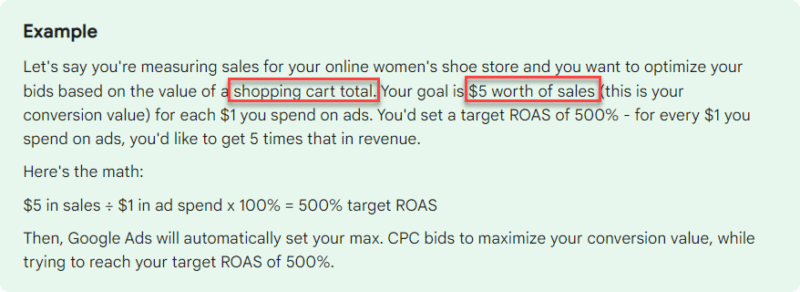
tROAS example

How do you value a B2B lead that won’t close for 18 months? 

Some obvious automation options for lead generation

One option for lead generation advertisers is Target CPA (tCPA). Target CPA is a smart bidding strategy that sets bids for you to get as many conversions (customer actions) as possible.

If you don’t have a target CPA in mind, you can use Maximize conversions, which will attempt to get as many conversions as possible with your budget without regard to CPA.

At first glance, tCPA and Max conversions seem ideal candidates for automating lead generation. And they are, but they’re not perfect.

For one thing, both bid strategies can result in CPCs going through the roof as the automation system tries to find conversions at your target CPA, or just the conversions period.

Luckily, advertisers can control their CPCs – as long as they’re using a portfolio bid strategy.

If you are using portfolio bidding in Google Ads, you can set a max CPC for the portfolio. This option is also available in Search Ads 360 (SA360), if you use that:
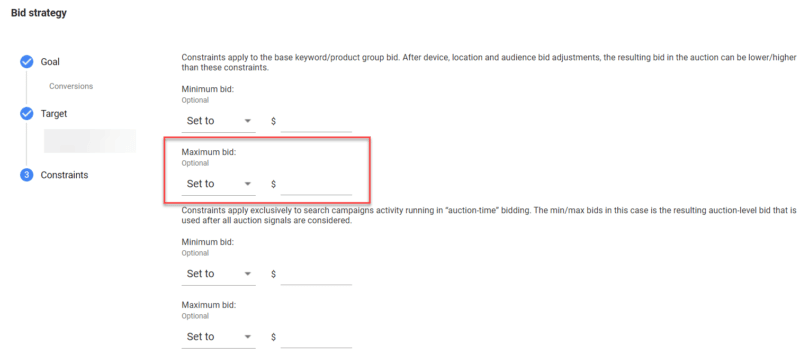
Portfolio bid strategy

The ability to set maximum bids is enough reason to use a portfolio bid strategy. It can save you from paying hundreds of dollars per click.

If you’re telling a machine to get you as many conversions as possible, you want to ensure you’re tracking conversions correctly!

I used an example of a client who was tracking page lands as a conversion:
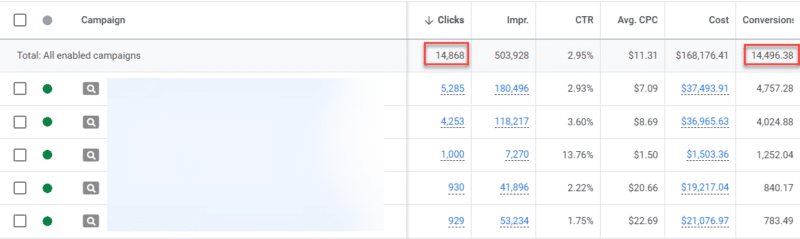
While page lands might be a business goal, especially for advertisers looking for branding or awareness, it’s not a good goal for automation.

If you’re trying to maximize conversions and you’re measuring page lands, you’ll just drive more traffic to your site. There’s no guarantee that the traffic will actually result in more leads or revenue for your business.

Build your funnel

As mentioned earlier, getting enough leads to feed the automation algorithm can be a challenge for B2B lead generation.

I shared a few ways for advertisers to use mid-funnel tactics that can drive traffic to retarget to later on, and even possibly drive leads at a low cost.

One of those options is Discovery Campaigns. 

Discovery campaigns can be an effective mid-funnel tactic for reaching audiences at scale. We’ve had success with Discovery ads for several of our B2B lead generation clients.

There were a lot of questions about Discovery during the session. Several questions focused on lead quality from Discovery campaigns.

We’ve found that the quality of leads our clients get from Discovery is similar to that of search campaigns.

Although Discovery ads reach users who are higher up the funnel compared to search, remember that the only bidding options for Discovery are Max conversions or tCPA. Therefore,  lead quality is generally good.

We’ve also found that Discovery campaigns outperform Performance Max campaigns – to the point that we rarely use Performance Max due to low lead quality.

Getting quality leads

Speaking of lead quality, generating leads that actually convert to sales is one of the biggest challenges for lead generation advertisers.

Anyone can fill out a form online. Many of those who filled out a form will never become qualified leads.

And only a small percentage of those who become qualified leads will eventually turn into sales.

One way to help gauge the quality of your leads is to use imported third-party data.

Google first launched the capability to import Salesforce lead data back in 2016. Since then, they’ve added thousands of data connectors that advertisers can use to pull in data from their CRM system.

By importing data from the same system your clients are using to gauge lead quality, you can go beyond just form fills to see how many of those form fills turned into leads.

And if you get enough third-party leads, you can use them for Smart Bidding:
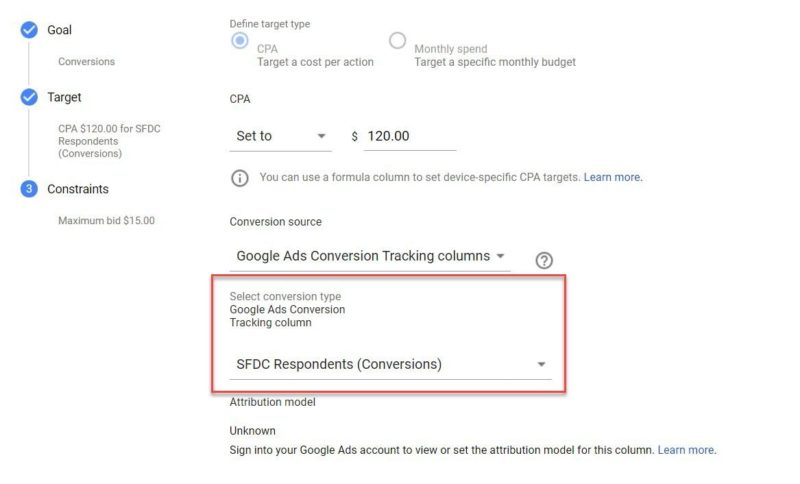
This screenshot is from SA360, but you can also use offline conversions for Google Ads bid strategies as long as you have them marked as Primary conversions.

You’ll need about 20 conversions per month for this to work, but if you have that many leads, it’s a great way to maximize actions that matter most to your clients.

Using a portfolio bid strategy is a good way to combine similar campaigns into a single bid strategy with enough conversion data to use third-party data for smart bidding.

Just make sure the campaigns have similar performance and objectives. Don’t combine brand and non-brand campaigns or campaigns with very different CPAs or goals.

And if you don’t get enough third-party conversions to use for smart bidding, at least use the data to gauge lead quality.

For example, we have a client whose primary goal is SQLs. However, they only get about 10 SQLs per month. 

We optimize for MQLs, which are one level up the funnel from SQLs. We also import SQL data to see whether a campaign drives leads that matter to the client. 

Some campaigns drive a lot of MQLs but no SQLs. We know to de-prioritize those campaigns in favor of others that drive more SQLs. 

Using lead value with tROAS bid strategies

Lead generation advertisers often look at ecommerce advertisers with envy, because ecommerce advertisers can use the tROAS bid strategy, maximizing not only the number of sales they drive but the value of those sales as well.

One of the struggles with lead generation is the time it takes for a lead to become a sale. Sales cycles of 18 months to 2 years are not uncommon in B2B. 

It’s challenging to determine the value of a lead before the lead goes through the whole buying cycle. This leads many B2B advertisers to write off tROAS as a strategy.

Not so fast!

Assigning a relative value to micro-conversions, such as white paper downloads or contact form fills, is an effective way to use the tROAS bid strategy.

Let’s say you have four actions you’re measuring: video views, asset downloads, form fills, and MQLs from a third-party import.

You can assign a relative value to each of these actions, like so:
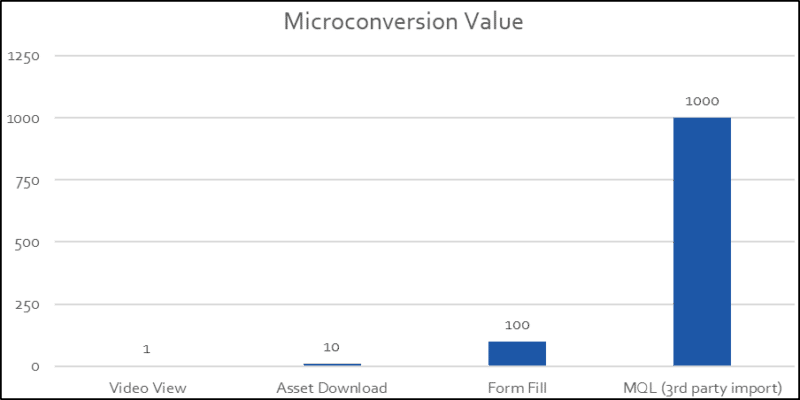
In this example, an MQL is worth 1,000 times what a video is worth.

The tROAS strategy will look to maximize the value of conversions, not just the number. So it will prioritize MQLs and form fills over video views and asset downloads – thereby improving the quality of the leads it’s driving.

We got some good questions in the SMX session on this strategy.

One attendee asked how to avoid the “loop of doom,” where the system starts driving high volumes of low-value leads that never turn into MQLs. This can certainly be a problem:
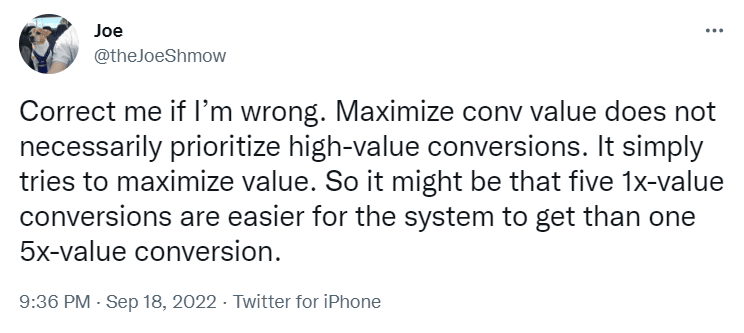
Maximize conv value tweet

The best way to avoid this is to assign low enough values to low-value actions and high enough values to high-value actions, so the system will work harder to drive the high-value actions. That’s why I set a value of 1,000 to MQLs in my example above.

Sometimes, even that’s not enough. Video views, for example, are so easy to generate that the system may well find it easier to drive thousands of video views than one MQL. 

In this case, removing video views as a primary conversion is your best bet. Force the system to look for higher-value actions such as asset downloads and form fills instead. 

On a related note, we got a great question about data-driven attribution:

“We have multiple primary conversion actions in our account based on different client goals (page views, form fills, calls, etc.). We’ve noticed the data-driven attribution model is impacting our lead gen actions because of the higher funnel actions. How would you recommend approaching data-driven attribution for lead gen, with multiple conversion actions in the account?”

If you find this is happening to you, I suggest changing some of your primary goals to secondary goals.

While this won’t keep data-driven attribution from looking at the secondary goals (since it looks at all interactions, including clicks, at least you’re telling the machine that these actions are not as important to you.

Using tROAS should also help tell the system which conversions are most meaningful to you in this case.

It’s all about signals

Remember, any automation is only as good as the signals it receives. It’s up to us as marketers to ensure we’re giving the best possible signals to the automation model so it can drive meaningful results for us.

Don’t forget about basics like audiences and negative keywords.

Advertisers often forget to add audiences for observation. Adding audiences is a great way to tell the system which users you’re interested in reaching – and in the case of negative audiences, which users you don’t want to reach.

Negative keywords are also important not only in preventing ads from showing on irrelevant queries but also in providing another signal to the machine.

Key takeaways

  • Accurate tracking is key. Be sure you’re measuring actions that lead to business value and that you’re assigning an accurate value to each action.
  • Build your funnel! Use Discovery and other higher funnel tactics like YouTube and Google Display to build audiences.
  • Assess lead quality, not just quantity. Use the tactics in this article to guide you.
  • Provide the right signals. Conversion value, along with audiences and negative keywords, all help the machine find high-value users.
  • Know when to pull the plug! Automation doesn’t always work. We’ve had several instances where tCPA or max conversions yield fewer leads at a higher cost than manual CPC. It’s ok to turn off automation if it’s not driving the results you want!

Using the right tools, you can make automation work for lead generation, even if it’s not designed for lead generation.

Watch: Making automation work for lead gen

Below is the complete video of my SMX Next presentation.

[embedded content][embedded content]

Opinions expressed in this article are those of the guest author and not necessarily Search Engine Land. Staff authors are listed here.


Related stories

New on Search Engine Land

@media screen and (min-width: 800px) { #div-gpt-ad-3191538-7 { display: flex !important; justify-content: center !important; align-items: center !important; min-width:770px; min-height:260px; } } @media screen and (min-width: 1279px) { #div-gpt-ad-3191538-7 { display: flex !important; justify-content: center !important; align-items: center !important; min-width:800px!important; min-height:440px!important; } }

About the author

Melissa Mackey

Melissa Mackey is associate director of paid search at MerkleB2B. A veteran PPC marketer, she helps clients achieve maximum ROI from paid search. Mackey contributes regularly to several industry publications, writing on PPC strategy. Mackey has spoken at industry conferences such as SMX Advanced, SMX Create and HeroConf.

https://searchengineland.com/ppc-automation-lead-gen-390968



This day in search marketing history: January 5

Google AdWords introduces click-to-call ads

In 2010, Google sent out notification to its AdWords advertisers that “your location-specific business phone number will display alongside your destination url in ads that appear on high-end mobile devices. Users will be able to click-to-call your business just as easily as they click to visit your website. You’ll be charged for clicks to call, same as you are for clicks to visit your website.”

What Google was saying, simply, was that it would allow phone numbers to display in ads and would charge advertisers when calls were initiated accordingly.

As we described it at the time, this was effectively a “pay-per-phone call” but the cost per call is the same as a click.

Read all about it in Google To Introduce Click-to-Call (Billing) in Ads on Mobile Devices

Google would later introduce click-to-call phone numbers Jan. 28 on the Inside Adwords blog.


Also on this day 


Google fixes user and permissions issue with Search Console

2022: The problem started in Google Search Console’s user interface in November 2021, when “Full Users” saw their status as “Delegated Owners” within the settings ownership verification section.


Microsoft releases IndexNow plugin for WordPress

2022: The WordPress IndexNow plugin enabled automated submission of URLs from WordPress sites to multiple search engines without the need to register and verify your site with them.


Best Buy to sell search ads under its own in-house media company

2022: Best Buy Ads started offering paid search ads and sponsored product listings on Best Buy’s website, among other ad offerings.


The AdWords 2x budget change: How’s it going?

2018: Search marketers weighed in on their experiences since the change took effect. Many had experienced no issues. But for others, the change wasn’t good. 


Google says Assistant now on more than 400 million devices

2018: And when Google said “devices,” that included Android smartphones, tablets, TVs, headphones and Google Home smart speakers.


Search in Pics: Google’s floppy sofa, rusty Android head & dancers

2018: The latest images culled from the web, showing what people eat at the search engine companies, how they play, who they meet, where they speak, what toys they have and more.


2017: Bing started delivering carousel-styled search results with images that link to a wide variety of exercise options on searches for [workouts], [exercises], [yoga] and [Pilates].


Bing Now Powers AOL Search: What Advertisers Need To Know

2016: Here’s what the move meant for those managing Bing Ads campaigns.


GM Turning Its Cars Into Rolling (Local) Search Engines

2015: GM announced a range of new OnStar 4G LTE services, including “AtYourService,” featuring partners like Dunkin’ Donuts and Priceline.com.


The Strange Explanation Of Why Windows Phone Users Lost Access To Google Maps

2013: Many people suddenly noticed a long-standing redirection that Google had in place for those not using Android or iOS devices.


Google Expands Test Of AdWords That Collect Email Addresses

2012: Google confirmed it had expanded the trial of the lead generation format to additional advertisers.


2012: Google revealed its latest overview of 30 search tweaks that happened in December 2011


Report: Social Media Spending Threatens To Overtake Paid Search Among SMBs

2012: The SMB-specific component of social media spending was roughly $1.14 billion


Trada Secures Additional $9M In Funding From Google Ventures & Foundry Group

2012: This additional seed of Series D financing brought the total money raised for Trada, the crowdsourced PPC marketplace, to $17 million. 


Google Can’t Seem to Quit China

2011: Despite a principled stand against censorship and the subsequent revelation that Chinese government surrogates were behind Gmail hacking, the company was contemplating a “return” to the Chinese market.


Obamacare AdWords: Partisan Outrage Or Public Education?

2011: An AdWords ad appearing for the query “obamacare” led to a landing page on the official government site HealthCare.gov.


Google Buzz Faces New Lawsuit In Canada

2011: Google was again sued over privacy issues related to the launch of Google Buzz.


Data: StumbleUpon Beats Facebook As Top Social Referrer

2011: StumbleUpon had a 43% share of social media referrals, while Facebook has 38%, according to StatCounter.


Ballmer At CES 2011: “Whatever Device You Use, Windows Will Be There”

2011: Live blogging Ballmer’s talk at CES in Las Vegas. (Bing was only mentioned in passing, briefly as part of Windows Phone 7.)


Facebook Funding Subject Of SEC Review: Report

2011: The SEC was in the early stages of an inquiry over rules concerning the dividing line between public and private companies.


Google Teases “Honeycomb” Android 3.0 Tablet OS At CES

2011: “Built entirely for tablet,” this was a different UI than previous versions of Android.


Internet-To-TV Players Compared: Roku, Apple TV, Boxee & Google TV

2011: An at-a-glance look at how Roku, Apple TV, Boxee Box and Google TV measured up against each other.


As AdWords Ads Get Images, What’s Deemed Family Safe?

2010: Google said: “Images in ads are only classified as non-family safe when they are found to contain adult content.”


With Mobile Ad Networks Being Snapped Up By Google And Apple Will Yahoo Or Microsoft Be The Next To Buy?

2010: The mobile market was real – and red hot.


Islam Is … Blocked By ‘Bug’ In Google Suggest

2010: Google said it was working to fix a bug in Google Suggest that was blocking search suggestions related to Islam.


Bellevue Building With Bing Lights

2010: The lights were spread across several stories and in green. It spelled out the name of Microsoft’s search engine, Bing. 


Liveblogging The Google Nexus One Phone Launch

2010: The Nexus One was a widely expected Google Phone that Google apparently closely developed with handset maker HTC, running the Android mobile operating system.


Top Googlers Donate $150,000 To Obama’s Inauguration

2009: Several of Google’s top executives (including CEO Eric Schmidt and co-founder Larry Page) donated significant amounts toward Obama’s inauguration galas, dinners and receptions.


Google & Baidu Fail China’s Pornography Test, May Lead To Penalties

2009: Both Google and Baidu have failed to take “efficient” actions to remove content from their results after being notified of issues.


Marissa Mayer Denies Rumor She’s Leaving Google, Comments On Search Being “90% Done”

2009: Mayer said that “while search is 90 per cent solved, the last 10 per cent will take decades to complete.” Mayer didn’t leave Google until 2012, to become Yahoo’s CEO.


Will Google Book Search Help Or Hurt Libraries And Book Sales?

2009: Some scholars were worried that Google users would be more likely to search for narrow information than to read at length. What a crazy idea. … Oh wait.


Google Docs Releases New Presentation Features

2008: Including the ability to embed presentations into a page of any site.


Marketers Answer, “Would You Hire Matt Cutts” Away From Google?

2007: Not surprisingly, they all would have loved to hire Cutts.


Google Hires NBC Video Executive, Michael Steib

2007: He joined Google to help work with advertisers to create effective, measurable video advertising.


New Features Added To Google’s Enterprise Search Appliance

2007: Clustering of the results, auto-generate a sitemap for Google.com’s crawler and more.


Yahoo Local Adds Quick Add / Edit Business Listing Feature

2007: Yahoo Local let you add your business within about 24 hours.


From Search Marketing Expo (SMX)


Past contributions from Search Engine Land’s Subject Matter Experts (SMEs)

These columns are a snapshot in time and have not been updated since publishing, unless noted. Opinions expressed in these articles are those of the author and not necessarily Search Engine Land.


< January 4 | Search Marketing History | January 6 >


Related stories

New on Search Engine Land

@media screen and (min-width: 800px) { #div-gpt-ad-3191538-7 { display: flex !important; justify-content: center !important; align-items: center !important; min-width:770px; min-height:260px; } } @media screen and (min-width: 1279px) { #div-gpt-ad-3191538-7 { display: flex !important; justify-content: center !important; align-items: center !important; min-width:800px!important; min-height:440px!important; } }

About the author

Danny Goodwin

Danny Goodwin is Managing Editor of Search Engine Land & SMX. In addition to writing daily about SEO, PPC, and more for Search Engine Land, Goodwin also manages Search Engine Land’s roster of subject-matter experts. He also helps program our conference series, SMX – Search Marketing Expo. Prior to joining Search Engine Land, Goodwin was Executive Editor at Search Engine Journal, where he led editorial initiatives for the brand. He also was an editor at Search Engine Watch. He has spoken at many major search conferences and virtual events, and has been sourced for his expertise by a wide range of publications and podcasts.

https://searchengineland.com/search-marketing-history-january-5-389864


EU rules that Meta’s ad practices are illegal

Meta has been fined 390 million euros ($414 million) after European Union (EU) regulators found it had illegally forced users to accept personalized ads.

What happened. According to the New York Times, Meta includes language in its terms of service agreement, the very lengthy statement that users must accept before accessing services like Facebook, Instagram and WhatsApp, which effectively means users must allow their data to be used for personalized ads or stop using Meta’s social media services altogether. Since you need to agree to the terms before using the service, users have no choice but to allow to have their data used for ads.

What happens now. Meta has three months to outline how it will comply with the ruling. The decision does not specify what the company must do, but it could result in Meta allowing users to choose whether they want their data used for such targeted promotions.

Having a large number of users opt-out of sharing their data would put Meta’s ad revenue at risk, since the judgment puts 5-7% of it at stake.

There are no such regulations in the US.

Why we care. EU advertisers could be affected, but any changes that Meta makes as a result of the ruling could affect users in the United States; many tech companies apply E.U. rules globally because that is easier to put in effect than limiting them to Europe.

Meta advertisers should be on the lookout, regardless, for any updates and changes to their targeting.


Related stories

New on Search Engine Land

@media screen and (min-width: 800px) { #div-gpt-ad-3191538-7 { display: flex !important; justify-content: center !important; align-items: center !important; min-width:770px; min-height:260px; } } @media screen and (min-width: 1279px) { #div-gpt-ad-3191538-7 { display: flex !important; justify-content: center !important; align-items: center !important; min-width:800px!important; min-height:440px!important; } }

About the author

Nicole Farley

Nicole Farley is an editor for Search Engine Land covering all things PPC. In addition to being a Marine Corps veteran, she has an extensive background in digital marketing, an MBA and a penchant for true crime, podcasts, travel, and snacks.

https://searchengineland.com/eu-rules-that-metas-ad-practices-are-illegal-390955


Twitter is lifting its ban on political, cause-based ads

An announcement by Twitter, on Twitter, says that the company is going to relax its ban on cause-based ads (such as those for climate change or women’s rights). They also plan on lifting their own restricitions on political advertising.

Political ad bans. In 2019, Twitter banned political ads. Last year they also banned political fundraising and started requiring that accounts belonging to government departments, politicians, and political parties be verified.

Cause-based bans. Their current policy surrounding cause-based ads restricts those that educate, raise awareness, and/or call for people to take action in connection with civic engagement, economic growth, environmental stewardship, or social equity causes. Their help documentation states:

  • Advertising should not be used to drive political, judicial, legislative, or regulatory outcomes; however, cause-based advertising can facilitate public conversation around important topics.
  • Advertising that uses micro-targeting presents entirely new challenges to civic discourse that are not yet fully understood.

So why the change? Unclear. It’s also unknown exactly what will change with the loosening of the policies outside of what’s mentioned in the tweet. But CEO Elon Musk is getting a reputation for shaking things up, implementing policies, then immediately removing them, and has a special penchant for getting the platform’s largest advertisers to jump ship.

Why we care. I’m not sure if lifting the bans will scare away the little remaining advertisers on the platform, bring any back, or draw in more from less-than-credible sources. But if you’re working for a cause-based organization, this can be good news for you- if you can navigate the platform, get verified, and stand out in a sea of would-be fraudsters, political opposition, and/or corrupt accounts.


Related stories

New on Search Engine Land

@media screen and (min-width: 800px) { #div-gpt-ad-3191538-7 { display: flex !important; justify-content: center !important; align-items: center !important; min-width:770px; min-height:260px; } } @media screen and (min-width: 1279px) { #div-gpt-ad-3191538-7 { display: flex !important; justify-content: center !important; align-items: center !important; min-width:800px!important; min-height:440px!important; } }

About the author

Nicole Farley

Nicole Farley is an editor for Search Engine Land covering all things PPC. In addition to being a Marine Corps veteran, she has an extensive background in digital marketing, an MBA and a penchant for true crime, podcasts, travel, and snacks.

https://searchengineland.com/twitter-is-lifting-its-ban-on-political-cause-based-ads-390942


Google’s “Remove redundant keywords” recommendations have changed

Advertisers running PPC ads on Google may have woken up to an email this morning outlining its new policy regarding redundant keywords.

What’s changed. The “Remove redundant keywords” recommendations suggest redundant keywords within the same ad groups. You may see the notification at the top right side of your ads dashboard. But starting January 19, the recommendation can include keywords across different match types. 

Now, Google will start removing redundant phrase and exact match keywords in favor of broad.

Robert Brady first noticed this and posted it on Twitter.

Why Google is making the change. In their email, Google said:

Redundant keywords are equivalent to higher-performing keywords or keywords in broader match types. Removing these redundant keywords and consolidating your keywords across match types will help you manage your account more easily. It doesn’t negatively impact your performance, and still allows your ads to appear on the same searches. 

Stop auto-apply. You can (and should, IMO) turn off auto-apply recommendations in both Editor and the Ads front end by clicking “disable” in your recommendations section.

Dig deeper. You can review Google’s recommendations guidelines here. If you haven’t received the email from Google, I’ll paste it below.

Why we care. This is another attempt by Google to shift accounts to broad-match keywords only. Advertisers and brands should only make the change if they have tested and determined if broad-match keywords work best for their accounts. If you’re unsure bout broad-match, turn off auto-apply and test.


Related stories

New on Search Engine Land

@media screen and (min-width: 800px) { #div-gpt-ad-3191538-7 { display: flex !important; justify-content: center !important; align-items: center !important; min-width:770px; min-height:260px; } } @media screen and (min-width: 1279px) { #div-gpt-ad-3191538-7 { display: flex !important; justify-content: center !important; align-items: center !important; min-width:800px!important; min-height:440px!important; } }

About the author

Nicole Farley

Nicole Farley is an editor for Search Engine Land covering all things PPC. In addition to being a Marine Corps veteran, she has an extensive background in digital marketing, an MBA and a penchant for true crime, podcasts, travel, and snacks.

https://searchengineland.com/googles-remove-redundant-keywords-recommendations-have-changed-390939


4 tips to build a data-centric culture in your agency

As we ring in a new year, among your 2023 goals as an agency may be to level up your data game, deliver excellence to your current clients and stand out to prospects. 

Using the following tips will help you start laying the groundwork to build a culture of data within your organization.

1. Hire expert personnel to guide your strategy

Developing a solid data foundation requires experienced leadership to steer the ship. This person should be responsible for:

  • Defining high-level agency data goals.
  • Laying out a detailed roadmap to accomplish them. 

Many companies are working off piecemeal data pipelines, siloed data and out-of-date infrastructure with no real central ownership. 

A seasoned data pro can come in and wrangle everything into a cohesive data blueprint and determine whether to keep or scrap existing infrastructure and processes moving forward.

Avoid putting these responsibilities on the plate of your ad managers and client service leaders as an afterthought.

When you have experts in the right roles and hand them the key, your agency and clients will see that you are prioritizing your data strategy. 

No matter the size of your company, having dedicated data personnel will result in more efficient processes.

This ultimately supports the work of your marketers, which brings us to the next point.

2. Bridge the gap between the data team and the client services team

While it’s important to have a designated data team, you should consider them as an extension of the client services team rather than a separate department.

The data team’s work should support the client service team’s goals. 

Developing synchronicity between these teams is the key to maximizing the potential of data and demystifying data processes for your whole agency. 

Data education should be an agency-wide initiative. The data team should:

  • Communicate to the client service team what is available and possible from a data standpoint.
  • Offer ongoing cross-training and education to the rest of the team. 

In turn, client services can think creatively about new ways to analyze and present findings to clients to unlock results. 

While ad managers aren’t also expected to be data engineers, understanding data flow and processes will help them think more creatively about how data optimize and deliver deeper insights to clients. 

On the other side, ensuring that your data team has proper marketing education enables them to think about solutions in the correct context.

This keeps them from churning out data pipelines and reports that don’t necessarily support the client or service team’s goals. 

In the same way, your client services team should be provided with ongoing data education, your data team should be proficient in marketing principles and platforms.


Get the daily newsletter search marketers rely on.


Data leadership should stay on top of the latest technology and constantly evaluate the best tools for your agency’s scope at least annually. 

Here are some questions that should be addressed:

  • Are your current tools scalable for projected growth? 
  • Do you have personnel spending extensive time on data-oriented tasks that can be automated with technology solutions? 
  • Do you have multiple tools or processes that could be replaced with one better, multifunctional solution? 

There is no one-size-fits-all approach to data practices or technology. What worked for you last year may not be compatible with your goals for the future. 

Avoid the sunk-cost fallacy if you are currently using solutions that don’t support the data culture you’re trying to build. Don’t be afraid to try new approaches! 

If you decide to integrate new tools and technologies, ensure you have the proper resources and personnel to become experts in:

  • Managing the tools.
  • Creating new processes.
  • Developing documentation.
  • Educating the entire team on the improvements. 

These resources will also still need the bandwidth to support day-to-day activities. 

Good data culture means not burning your team out or rushing through process creation for the sake of saving a few dollars. 

While it is not a directly billable part of your business, your data strategy is a long-term investment that will return to you tenfold when implemented properly. 

4. Get your clients on board

While we can’t force our clients to adopt a data-centric culture of their own, we must lead by example and present ourselves as marketing analytics experts. 

Positive client relationships will look to agencies for guidance and innovation. 

By having an established data culture within your agency, you can set the tone with your clients and impress the importance of data governance on them to optimize for exceptional results.  

Empower your team to push clients for feedback and help guide them in areas where they may have data-related shortcomings. 

Some ways we can support our clients’ data-related projects might include:

  • Helping to clean up tracking.
  • Providing insightful and efficient performance reporting.
  • Integrating down-funnel metrics into your reporting and strategies. 

If we become the de facto experts in these areas, it will make our jobs as marketers much easier and enable us to focus more time and energy on marketing activities. 


Opinions expressed in this article are those of the guest author and not necessarily Search Engine Land. Staff authors are listed here.


Related stories

New on Search Engine Land

@media screen and (min-width: 800px) { #div-gpt-ad-3191538-7 { display: flex !important; justify-content: center !important; align-items: center !important; min-width:770px; min-height:260px; } } @media screen and (min-width: 1279px) { #div-gpt-ad-3191538-7 { display: flex !important; justify-content: center !important; align-items: center !important; min-width:800px!important; min-height:440px!important; } }

About the author

Caille O'Leary

Caille O’Leary is the Business Intelligence Manager at Closed Loop, where she oversees client data collection and reporting across multiple verticals. She is also responsible for software development and business intelligence innovation. O’Leary enjoys calculating risks and reigning big ideas into reasonable, actionable plans based on data. By blending her technical skills, management experience and data-driven nature, she aims to achieve analytics success for our customers. Callie also hails a Master’s degree in Business Analytics from Arizona State University and a Tableau Professional certification. When she isn’t crunching numbers, you can find her exploring Roseville’s dining scene, attending a Sacramento Kings game, running a marathon or embarking on her next travel destination.

https://searchengineland.com/build-data-centric-culture-agency-390172


This day in search marketing history: January 4

In 2014, 10 days after being penalized for “unnatural links” that it helped create, lyrics site Rap Genius returned to Google’s search results.

On Dec. 24, 2013, Google confirmed it was looking into an “affiliate” program Rap Genius created in order to get unnatural links pointing to their website. By the next morning, Google officially penalized Rap Genius for link schemes.

Anyone searching Google for [rap genius] would not find rapgenius.com on Page 1. However, there were links to their Twitter account, Facebook page, Wikipedia profile and stories like this about them being penalized by Google.

The result of the penalty: a 92% drop in search visibility.

Said Rap Genius:

We effed up, other lyrics sites are almost definitely doing worse stuff, and we’ll stop. We’d love for Google to take a closer look at the whole lyrics search landscape and see whether it can make changes that would improve lyric search results.

– Rap Genius

Read all about it in Rap Genius Back In Google After 10 Day Penalty, Ranks For Its Name But What About Lyrics?


Also on this day 


Bing Webmaster Tools adds crawl requests, crawl errors & indexed pages to performance report

2021: The new crawling and indexing data, all of which really weren’t directly related to the performance of your search results in Microsoft Bing, became available directly in the search performance report.


Google launches Question Hub for U.S. publishers

2021: Google launched Question Hub in regions where the company found it did not have enough content in its search index to answer searchers’ questions. (On Dec. 15, 2022, Google announced it was closing down Question Hub.)


Video: Anthony Church on conversion tracking & SEO

2021: In this installment of Barry Schwartz’s vlog series, he chats with Church about about two primary topics: conversion tracking and what SEOs should focus on.


Google buys expert community and ‘answer engine’ Superpod for $60 million

2019: Superpod matched audience questions and expert answers across a broad range of topics. Early reports speculated that Superpod’s founders and assets would be deployed to improve the Google Assistant.


DuckDuckGo broke 9 billion searches in 2018, and it’s growing

2019: By comparison, in 2016 they did 4 billion searches. And as of October 2018, DuckDuckGo reported reaching 30 million queries per day.


Google My Business dashboard showing video upload section for some business owners

2018: Google seemed to be testing the ability of business owners to upload videos to their local listings within the Google My Business dashboard.


Search marketing to enjoy ‘late-stage renaissance,’ according to analyst firm

2018: Privacy, brand safety and other factors were going to make paid search even more attractive to marketers going forward, according to Forrester Research.


Google’s updated iOS app pulls in YouTube videos, menus & more

2017: The update let users watch YouTube videos right in their feed, see hotel rates and booking info in search results and instantly open menus from restaurant search results.


2016: Bing began powering AOL’s web, mobile, and tablet search, providing paid search ads and algorithmic organic search results to AOL’s properties worldwide.


DuckDuckGo Ends 2015 On A High Note, Reaches 12M Searches In A Single Day

2016: The privacy search engine averaged more than 10 million searches per day by the end of the year.


Authors Guild Appeals Lower Court Decision Backing Google’s Book Digitizing Project

2016: At issue was whether Google’s project violates the copyrights of some of the millions of scanned books, or whether it has a valid “fair use” exception.


Blekko Launches New Tablet Search Engine “izik”

2013: Izik was designed to deliver a tablet-friendly search experience. Compared to Google on a wide range of search queries and results, izik surfaced more information and made it more visually accessible.


It’s Official: PayPal President Scott Thompson The New Yahoo CEO

2012: Thompson was viewed initially as a positive hire despite concerns about his lack of experience with digital advertising. After a turbulent few months, Thompson “stepped down” as CEO in May 2012.


How Rick Santorum Is Making His “Google Problem” Worse

2012: One problem Santorum had in ranking tops for a search on just his last name was that he didn’t maintain his own dedicated website about himself, a place independent of his elected office where those who wanted to know about Rick Santorum could discover more.


Google’s Marrisa Mayer Talks New Role, LBS And Groupon

2011: No longer working on search, Mayer’s new responsibilities included Google Maps, local products and some of the company’s mobile products.


Google Working On NFC-Based Mobile Payment Service: Report

2011: Google had plans for a mobile payment service that would allow users to pay for common goods and services by waving or tapping their mobile phones. That turned out to be Google Wallet, which began rolling out in September 2011.


Bing Scores First In-Car Search Deal With Toyota

2011: Bing for Mobile (with Bing Maps) was one of Toyota Entune’s featured apps, giving drivers access to Bing search results via the dashboard’s touch screen or by using Bing for Mobile’s voice search capabilities.


Facebook’s Goldman Investment An IPO Delaying Tactic?

2011: Was Facebook’s IPO right around the corner? Or did this investment delay the IPO for a year or more? (Spoiler alert: Facebook’s IPO happened in 2012.)


On Nexus One Day Tomorrow, Will Google Surprise Us With An Android Tablet?

2010: Spoiler: no. From Jan. 5, 2010: Liveblogging The Google Nexus One Phone Launch.


2010: Google animated the Doodle, where the Apple falls off the Google logo and drops to under the search box.


Research: Fear Explains Irrational B2B Purchase Behavior

2010: B2B buying is not a rational process – it is a decision process driven by the emotions of the people involved.


Google Timeline Experiment Seen In Main Search Results

2009: Clicking the “More timeline results” in the main search results led to a page with much more historical data about the query, which Google said came from their News Archive search service:


Nathan Stoll, Long Time Google News Product Manager, Leaves Google

2008: He would go on to co-found “help engine” Aardvark, which was later acquired by Google in February 2010.


Google Takes NASA To Watch Meteor Shower

2008: That time when NASA scientists used a plane owned by Google’s founders to watch a meteor shower.


Google’s User Experience Expert, Kevin Fox, Joins New Start-up Company

2008: Fox, responsible for helping design Gmail, Google Calendar, and Google Reader 2.0, joined a very small startup called FriendFeed, which ended up being acquired by Facebook in August 2009.


What Time Is It? Don’t Check Google (At Least In Argentina)

2008: Denizens of the capital of Argentina set their clocks forward – but Google neglected to.


Truveo Index Hits 100 Million Videos

2008: The company also said that its search index grew in 2007 from a base of just 5 million videos at relaunch in August 2007


2007: It showed you how you were interacting with your feeds in Google Reader.


Google Calendar Set To Pass Yahoo Calendar

2007: Google Calendar increased its market share by a paltry 333% between June 2006 and December 2006. Wonder whatever happened to it?


Amazon Promotes Askville & LinkedIn Launches Answers Services

2007: These were timely efforts by Amazon and LinkedIn after Google dropped their Answers product


YouTube Forced To Shut Down In Brazil

2007: Why? Because YouTube failed to prevent a celebrity sex video from being posted time and time again


Google Removes “Tips” Feature After Recent Blog Controversy

2007: A search on [calendar] and [blog] no longer brought up the Google Tips at the top. Background: Fury Over Google’s Self Promotion & Wishing For Perspective.


From Search Marketing Expo (SMX)


Past contributions from Search Engine Land’s Subject Matter Experts (SMEs)

These columns are a snapshot in time and have not been updated since publishing, unless noted. Opinions expressed in these articles are those of the author and not necessarily Search Engine Land. 


< January 3 | Search Marketing History | January 5 >


Related stories

New on Search Engine Land

@media screen and (min-width: 800px) { #div-gpt-ad-3191538-7 { display: flex !important; justify-content: center !important; align-items: center !important; min-width:770px; min-height:260px; } } @media screen and (min-width: 1279px) { #div-gpt-ad-3191538-7 { display: flex !important; justify-content: center !important; align-items: center !important; min-width:800px!important; min-height:440px!important; } }

About the author

Danny Goodwin

Danny Goodwin is Managing Editor of Search Engine Land & SMX. In addition to writing daily about SEO, PPC, and more for Search Engine Land, Goodwin also manages Search Engine Land’s roster of subject-matter experts. He also helps program our conference series, SMX – Search Marketing Expo. Prior to joining Search Engine Land, Goodwin was Executive Editor at Search Engine Journal, where he led editorial initiatives for the brand. He also was an editor at Search Engine Watch. He has spoken at many major search conferences and virtual events, and has been sourced for his expertise by a wide range of publications and podcasts.

https://searchengineland.com/search-marketing-history-january-4-389510


Webinar: Paid search tactics for brand dominance in 2023 by Cynthia Ramsaran

In search, one of your most effective and profitable strategies is to leverage your most valuable asset – your brand. People searching for products by brand name are further along in their buyer journey than those that don’t – a fact often overlooked. Making the most of your brand in paid search can lead to a significantly shorter sales cycle.

Join this engaging webinar and learn how to protect your brand in a competitive search landscape.

Register today for “Paid Search Tactics That Will Give You Brand Dominance in 2023,” presented by Adthena.


Related stories

New on Search Engine Land

@media screen and (min-width: 800px) { #div-gpt-ad-3191538-7 { display: flex !important; justify-content: center !important; align-items: center !important; min-width:770px; min-height:260px; } } @media screen and (min-width: 1279px) { #div-gpt-ad-3191538-7 { display: flex !important; justify-content: center !important; align-items: center !important; min-width:800px!important; min-height:440px!important; } }

About the author

Cynthia Ramsaran

Cynthia Ramsaran is director of custom content at Third Door Media, publishers of Search Engine Land and MarTech. A multi-channel storyteller with over two decades of editorial/content marketing experience, Cynthia’s expertise spans the marketing, technology, finance, manufacturing and gaming industries. She was a writer/producer for CNBC.com and produced thought leadership for KPMG. Cynthia hails from Queens, NY and earned her Bachelor’s and MBA from St. John’s University.

https://searchengineland.com/webinar-paid-search-tactics-for-brand-dominance-in-2023-390920


Commerce Components by Shopify gives large retailers new ways to use the platform

Commerce Components by Shopify (CCS) is the latest innovation from Shopify that gives large ecommerce retailers direct access to its component infrastructure. CCS is Shopify’s composable stack for enterprise retail.

Why we care. Advertisers and retail brands could see higher conversion rates when they integrate with Shopify’s new features such as 99.99% checkout uptime, one-click checkout, flexible APIs, and agency partnerships.

What’s new. Featuring an all-new back-office management designed specifically for enterprise, Commerce Components by Shopify gives retailers the speed and flexibility needed to build for the future.  

Dig deeper. The following features, and the full list, can be found on the Shopify blog.

More component options

  • Flexible APIs, now with no rate limits, allow brands to integrate their existing services with Shopify’s modular components and build unparalleled customer experiences for any device. Enterprise retailers can take the components they need, and leave what they don’t, and developers are free to build with any front-end framework they choose.

Global scale

  • Trusted commerce foundations, like the world’s best-converting checkout, with 99.99% uptime, processing up to 40,000 checkouts per minute per store, and unlocking over 100 million existing Shop Pay customers, who have opted in for Shopify’s one-click checkout.
  • Shopify’s globally scaled infrastructure with over 275 network edge points of presence enables lightning-fast storefronts no matter where customers are in the world.

The largest commerce ecosystem

  • The largest commerce ecosystem in the world, including a dedicated account team with solutions architects, priority 24/7/365 specialized support, and a network of seasoned agency partners and system integrators like Deloitte, EY, and KPMG.

What Shopify says. “We’ve always approached innovation at Shopify by anticipating what retailers need, then providing those solutions,” said Harley Finkelstein, President of Shopify. “Commerce Components by Shopify opens our infrastructure so enterprise retailers don’t have to waste time, engineering power, and money building critical foundations Shopify has already perfected, and instead frees them up to customize, differentiate, and scale.”


Related stories

New on Search Engine Land

@media screen and (min-width: 800px) { #div-gpt-ad-3191538-7 { display: flex !important; justify-content: center !important; align-items: center !important; min-width:770px; min-height:260px; } } @media screen and (min-width: 1279px) { #div-gpt-ad-3191538-7 { display: flex !important; justify-content: center !important; align-items: center !important; min-width:800px!important; min-height:440px!important; } }

About the author

Nicole Farley

Nicole Farley is an editor for Search Engine Land covering all things PPC. In addition to being a Marine Corps veteran, she has an extensive background in digital marketing, an MBA and a penchant for true crime, podcasts, travel, and snacks.

https://searchengineland.com/commerce-components-by-shopify-gives-large-retailers-new-ways-to-use-the-platform-390923


This day in search marketing history: January 3

Google’s sponsored post campaign forces Google to penalize Google Chrome’s home page

In 2012, Google’s sponsored post campaign to promote its Chrome browser produced posts that violated its guidelines against “thin” content and potentially those against buying links.

A day later, we found out what happened, according to Google. In Google: Yes, Sponsored Post Campaign Was Ours But Not What We Signed-Up For, Google told Search Engine Land:

“Google never agreed to anything more than online ads. We have consistently avoided paid sponsorships, including paying bloggers to promote our products, because these kind of promotions are not transparent or in the best interests of users. We’re now looking at what changes we need to make to ensure that this never happens again.”

– Google

Google took manual action, demoting the Google Chrome home page. As a result, searches for [browser] no longer brought up the page.

Read all about it in Google’s Chrome Page No Longer Ranks For “Browser” After Sponsored Post Penalty.


Also on this day 

Meta will remove targeting options for sensitive topics on Jan. 19

2022:  “Health causes,” “sexual orientation,” “religious practices and groups,” and “political beliefs, social issues, causes, organizations and figures,” were among the examples of targeting options slated for deprecation.


Microsoft Advertising launches sweepstakes for advertisers

2020: To enter, advertisers had to complete the Microsoft Advertising Certified Professional (MACP) certification, add a new Microsoft Advertising account, or enroll in the Micorosft Advertising Partner Program.


Get the daily newsletter search marketers rely on.


Brands can now buy Walmart sponsored search ads via API partners

2020: Walmart Media Group named four initial advertising partners to support sponsored search campaigns.


Robots.txt tip from Bing: Include all relevant directives if you have a Bingbot section

2019: Frédéric Dubut, a senior program manager at Microsoft working on Bing Search, said when you create a specific section in your robots.txt file for its Bingbot crawler, you should make sure to list all the default directives in that section.


Report: Google exploring sale of Zagat reviews

2018: Google’s parent Alphabet was reportedly considering a sale of reviews publication Zagat. And by March, the deal was done, when The Infatuation bought Zagat.


Search In Pics: Glasshole Receipt, GDG Gingerbread Cookies & Penguin Popper

2014: What people eat at the search engine companies, how they play, who they meet, where they speak, what toys they have, and more.


FTC Closes Google Antitrust Case: “Law Protects Competition Not Competitors,” Not Enough Evidence To Prove “Search Bias”

2013: After 19 months of investigation, political maneuvering, lobbying and intense speculation the FTC has closed its antitrust investigation of Google, which came away largely unscathed from the process.


2013: Bing was changing four of the Deep Links (Bing’s name for what Google calls Sitelinks) under the Google search result and pointing them to completely different domains. See also: Strange Bug In Bing Deep Links Shows Facebook, Craigslist As Part Of Google


Baidu Testing Facial Recognition Search; Similar To Google’s “Search By Image”

2013: The new feature let searchers upload an image of a face and Baidu would then try to return other photos of the same person, with information on the name of the person. 


DuckDuckGo Challenges Google On Privacy With DontTrack.us

2011: The illustrated guide showed how Google tracked its users and how DuckDuckGo didn’t.


Italy To Regulate YouTube & Other Video Sites Like TV Stations

2011: YouTube, and parent Google, became considered TV broadcasters in Italy, according to new rules by the Italian Communications Authority (AGCOM). The rules applied equally to other websites providing video content, provided they also ran advertising.


Google Gaining Ground In Smartphone, Browser Markets

2011: Android OS achieved a 25.8% market share, putting it within striking distance of Apple’s iOS, while the Chrome browser reached a major milestone, capturing 10% of the market.


Last Call: Yahoo’s adCenter Transition Tool About To Close

2011: A final reminder for search marketers to move their Yahoo Search Marketing account over to Microsoft adCenter.


With So Much Money Is A Facebook Search Engine Inevitable?

2011: Once upon a time, Facebook was a private company and made only $2 billion a year in advertising.


A Tale Of Three Android Phones: Droid 2, Samsung Fascinate & Google Nexus S

2011: A look at how three different Android cousins performed and measured up against the iPhone.


Traffic Power’s CEO Jailed Over Alleged Foreclosure Scams

2008: Matt Marlon was arrested for allegedly conning homeowners faced with foreclosure to give the company their homes.


The Google Challengers: 2008 Edition

2008: A guide to stealth search start-ups of the time, including Blekko, Powerset, Hakia, Mahalo, Cuill and more.


Ask Sponsored Listings Gives Click Fraud Reimbursements

2008: IAC Search & Media and/or ASK Jeeves advertisers were entitled to a reimbursement for click fraud or other invalid or improper clicks.


Google AdSense Launches Newbie Central

2008: It was a location for new publishers to go and get started with AdSense.


Goodbye, Yahoo Picks

2008: The world said goodbye to Yahoo Picks Of The Week & Picks Of The Day after 12 years.


Ask Mobile Adds “Click To Speak” Directions

2008: The service sent a text link that opens a mobile page with a map and turn-by-turn directions. 


ChaCha Goes Mobile With TextChaCha

2008: Social search engine ChaCha introduced a new text-based mobile service called “textChaCha” to answer potentially any question from mobile users.


2007: In-car navigation provider Dash and Yahoo Local announced a deal to deliver Yahoo Local content via Dash’s portable “Dash Express” device and system.


Google Changes Hiring Process To Meet Job Opening Needs

2007: Google was looking to hire more people, quicker, and have less standards in terms of SAT score and GPA, but with more focus on how the applicant may fit within the company culture and work ethic.


2007: Google and Earthlink were finally near finalizing an agreement with San Francisco officials to provide free WiFi to the city.

Google Beta Testing Keyword Based AdSense Competitive Filter List?

2007: It appeared that Google was testing a feature that allowed AdSense publishers to block ads from showing via a keyword list.

Intertainer Sues Google For Patent Infringement On Online Video & Audio Distribution

2007: Google, Apple and Napster were all sued by Jonathan T. Taplin’s Intertainer for patent infringement of a 2005 patent that covers commercial distribution of audio and video over the Internet.

YouTube Hiring Advertising Sales Representatives

2007: Google’s YouTube was hiring six advertising sales representatives, all based in different parts of the U.S.

First Results Of Google’s Newspaper Ad Test Published

2007: About 1,000 visitors came from the ad, which generated 70% less page views than the PPC counterpart, 30% less time spent on the site than the PPC counterpart, but the registration rate (his goal) was about the same as the PPC counterpart. Background: Google Newspaper Ads Run Again

Microsoft’s Live.com Advertises On Google

2007: When Microsoft paid to advertise its search engine on a competitor.

Site Diagnostics Bug In Google AdSense Control Panel

2007: A robots.txt error was displaying errors based on Google’s cache URL, not publisher URLs.

Send A Greeting With Google Maps

2007: This fun and cool service let “geeks show they care.”


Best | top | most popular Search Engine Land stories of the year

Early January is a good time to take a final look back at the most popular stories from the past year. Check out what stories earned the most pageviews and social love in prior years:


4 ways data analysis can help you generate new ideas and optimize your content

2022: If your competitors outrank you, there’s probably a good reason for it. At SMX Next, Ashley Segura shared how she uses data analysis to discover those reasons, along with fresh content ideas that can help you close the gap.

Community experts on what successful marketers will do in 2020


Past contributions from Search Engine Land’s Subject Matter Experts (SMEs)

These columns are a snapshot in time and have not been updated since publishing, unless noted. Opinions expressed in these articles are those of the author and not necessarily Search Engine Land. 


< January 2 | Search Marketing History | January 4 >


Related stories

New on Search Engine Land

@media screen and (min-width: 800px) { #div-gpt-ad-3191538-7 { display: flex !important; justify-content: center !important; align-items: center !important; min-width:770px; min-height:260px; } } @media screen and (min-width: 1279px) { #div-gpt-ad-3191538-7 { display: flex !important; justify-content: center !important; align-items: center !important; min-width:800px!important; min-height:440px!important; } }

About the author

Danny Goodwin

Danny Goodwin is Managing Editor of Search Engine Land & SMX. In addition to writing daily about SEO, PPC, and more for Search Engine Land, Goodwin also manages Search Engine Land’s roster of subject-matter experts. He also helps program our conference series, SMX – Search Marketing Expo. Prior to joining Search Engine Land, Goodwin was Executive Editor at Search Engine Journal, where he led editorial initiatives for the brand. He also was an editor at Search Engine Watch. He has spoken at many major search conferences and virtual events, and has been sourced for his expertise by a wide range of publications and podcasts.

https://searchengineland.com/search-marketing-history-january-3-389509