Google’s jaw-dropping sponsored post campaign for Chrome
In 2012, Google – a search engine known for fighting against paid links and “thin” content – seemed to be behind a campaign that generated both on behalf of its Chrome browser.
A search for [This post is sponsored by Google] returned more than 400 pages, written apparently as part of a Google marketing campaign:
Google? Buying links? It sure looked like it:
It was also hypocritical because Google was paying to produce the same type of garbage that its Panda Update was designed to penalize.
What was Google thinking? This was just the beginning of the story. See Search Engine Land’s follow-up stories:
2020: The IRS revised its Free File agreement with online tax return software providers, requiring them to allow their Free File landing pages to be indexed by search engines and backing out of its pledge not to enter the e-file services marketplace.
2020: Did people click on a paid search ad because it answered a search query, mentioned a familiar brand, was listed above other search results, or had a compelling title, description, or image? Survey says…
2019: John Mueller, a Google webmaster trends analyst, spent a portion of his New Year’s break responding to concerns and questions around Google search-related issues. Here’s what kept him occupied.
2018: Advertisers didn’t have to do anything special or out of the ordinary to get Google’s algorithms to display their ads. It wouldn’t be until 2021 that Google prohibited advertisers from running ads or monetizing content that contradicted scientific consensus on climate change.
2018: Amazon was reportedly in talks with several large consumer product companies, such as Procter & Gamble, about advertising and sponsorship opportunities through Alexa and voice search. However, Amazon denied the story, saying it had no plans to introduce ads on Alexa.
2018: Similar to the web search quality guidelines, raters evaluated voice responses from Google Assistant for information satisfaction, length, formulation and elocution.
2012: Why? Because Page “reorganized the company’s management structure, redesigned the face of the company’s products and pushed forward with a multibillion-dollar deal to acquire a cellphone manufacturing outfit.
2012: It was similar to the Google News “Elections” section, but with different filtering options on news content and added data related to this year’s campaigns.
2009: An Android OS netbook by 2010? Could it be? Well, actually, it didn’t even take that long, as Acer-produced netbooks were shipped starting in Q3 of 2009. (Dell was also looking at Android for netbook OS.) Oh, what was a netbook? A smaller-than-typical laptop computer (R.I.P, 2007-2013).
2008: A Beijing appeals court upheld a decision that Baidu was not guilty of property rights infringement for displaying links to websites offering illegal music downloads.
2007: The question was: how many SMBs will sign up directly for paid search and how many must be acquired through a “push” channel (local sales force)? Some were convinced that a sales force is absolutely necessary for Google, Yahoo and Microsoft to acquire any meaningful penetration in the SMB market.
2008: Some key stats reveal how Search Engine Land had grown over the past calendar year.
Best | top | most popular Search Engine Land stories of the year
Early January is a good time to take a final look back at the most popular stories from the past year. Check out what stories earned the most pageviews and social love in prior years:
Past contributions from Search Engine Land’s Subject Matter Experts (SMEs)
These columns are a snapshot in time and have not been updated since publishing, unless noted. Opinions expressed in these articles are those of the author and not necessarily Search Engine Land.
@media screen and (min-width: 800px) { #div-gpt-ad-3191538-7 { display: flex !important; justify-content: center !important; align-items: center !important; min-width:770px; min-height:260px; }
}
@media screen and (min-width: 1279px) { #div-gpt-ad-3191538-7 { display: flex !important; justify-content: center !important; align-items: center !important; min-width:800px!important; min-height:440px!important; }
}
About the author
Danny Goodwin is Managing Editor of Search Engine Land & SMX. In addition to writing daily about SEO, PPC, and more for Search Engine Land, Goodwin also manages Search Engine Land’s roster of subject-matter experts. He also helps program our conference series, SMX – Search Marketing Expo. Prior to joining Search Engine Land, Goodwin was Executive Editor at Search Engine Journal, where he led editorial initiatives for the brand. He also was an editor at Search Engine Watch. He has spoken at many major search conferences and virtual events, and has been sourced for his expertise by a wide range of publications and podcasts.
Welcome to the first installment of what will be a daily, ongoing feature here on Search Engine Land in 2023 – This day in search marketing history.
Search Engine Land has been the publication of record for all things search and search marketing since launching in 2006. And the founders of that 2006 team had been reporting on and educating the industry for about a decade prior to that (at Search Engine Watch).
So join us every day, as we rediscover the headlines and history of SEO, PPC and digital marketing from years gone by.
Also on this day
Happy New Year Google Doodles!
On Jan. 1, every year since 2000, Google has consistently given us Doodles, in lieu of any significant news of note to report on. Hey, it is a holiday after all. The editorial team is getting some much-deserved rest (not counting Barry, who is almost always working) and traffic is pretty dismal on New Year’s Day.
It’s been years since we covered Google’s special logos. But once upon a time, Search Engine Land was competing with countless other publishers in the hopes of driving some insanely huge search traffic by covering these celebratory Google Doodles:
2007: A particular bad week for Google resulted in this look back at a number of “tipping points” that Google had survived in prior years, including the infamous Florida Update of 2003.
Best | top | most popular Search Engine Land stories of the year
Jan. 1 can be a good day to take a final look back at the most popular stories from the past year. Check out what stories earned the most pageviews in prior years:
Get the daily newsletter search marketers rely on.
@media screen and (min-width: 800px) { #div-gpt-ad-3191538-7 { display: flex !important; justify-content: center !important; align-items: center !important; min-width:770px; min-height:260px; }
}
@media screen and (min-width: 1279px) { #div-gpt-ad-3191538-7 { display: flex !important; justify-content: center !important; align-items: center !important; min-width:800px!important; min-height:440px!important; }
}
About the author
Danny Goodwin is Managing Editor of Search Engine Land & SMX. In addition to writing daily about SEO, PPC, and more for Search Engine Land, Goodwin also manages Search Engine Land’s roster of subject-matter experts. He also helps program our conference series, SMX – Search Marketing Expo. Prior to joining Search Engine Land, Goodwin was Executive Editor at Search Engine Journal, where he led editorial initiatives for the brand. He also was an editor at Search Engine Watch. He has spoken at many major search conferences and virtual events, and has been sourced for his expertise by a wide range of publications and podcasts.
Top 10 PPC expert columns of 2022 on Search Engine Land
Since Search Engine Land launched, we have given PPC experts a platform to share their in-depth knowledge and timely insights – with the goal of helping you solve problems, manage challenges and understand the constantly shifting landscape of paid search, paid social and display.
That’s why one of my top priorities this year was to help relaunch the Search Engine Land Subject Matter Expert program, which had been on pause for the past few years.
Below you’ll find links to the 10 most-read, must-read Search Engine Land PPC columns of 2022 that were contributed by our fantastic group of Subject Matter Experts.
Before that, I have to give some special recognition to PPC expert Melissa Mackey, who authored the most viewed column of the year, which published Nov. 9 – 10 things to eliminate from your life to be more productive at work. That article isn’t included on our top 10 list because the insights can apply to anyone really – not just search marketers. Regardless, the article did monster numbers – in large part thanks to Google Discover.
Also, congratulations to Anthony Tedesco for authoring three of the top 10 most-read articles this year on Search Engine Land. Amazing.
Onto the list:
Responsive Search Ads are a huge shift from the ETA format. Learn how RSAs work and get tips on how to get more out of them. (By Mona Elesseily. Published April 14.)
SEO and PPC are often at odds. Yet the things they “bicker over” are actually areas for improved workflow and channel optimization. (By Navah Hopkins. Published June 29.)
Learn the benefits of RSAs, how the transition from ETAs impacts you search strategy and how to write effective RSAs (By Jenny Mallory. Published May 3.)
Google Ads has clarified what identical keywords are. But does this tactic go against what Google has been preaching for years? (By Greg Finn. Published June 29.)
Learn how to use Excel pivot tables to QA bulk sheets, plus some tips and shortcuts to enhance your pivot table skills. (By Anthony Tedesco. Published Nov. 7.)
Get the daily newsletter search marketers rely on.
Investment in brand keywords is critical because it allows you to directly influence your brand’s presentation on the SERP. (By Anthony Tedesco. Published July 5.)
Getting data and insights from Performance Max can be frustrating. Here are some tips and tricks that will help. (By Menachem Ani. Published Aug. 19.)
Set yourself up for more success. Learn how to take your PPC dashboard from good to great using Google Looker Studio. (By Amy Hebdon. Originally published March 10, updated and republished Oct. 31.)
Maximize your performance with Google Ads Performance Max. Here’s everything you need to know to set up PMax for success. (By Menachem Ani. Published July 22.)
Use these tips to quickly analyze performance data and identify high-impact PPC optimizations that will move the needle. (By Anthony Tedesco. Published Aug. 24.)
@media screen and (min-width: 800px) { #div-gpt-ad-3191538-7 { display: flex !important; justify-content: center !important; align-items: center !important; min-width:770px; min-height:260px; }
}
@media screen and (min-width: 1279px) { #div-gpt-ad-3191538-7 { display: flex !important; justify-content: center !important; align-items: center !important; min-width:800px!important; min-height:440px!important; }
}
About the author
Danny Goodwin is Managing Editor of Search Engine Land & SMX. In addition to writing daily about SEO, PPC, and more for Search Engine Land, Goodwin also manages Search Engine Land’s roster of subject-matter experts. He also helps program our conference series, SMX – Search Marketing Expo. Prior to joining Search Engine Land, Goodwin was Executive Editor at Search Engine Journal, where he led editorial initiatives for the brand. He also was an editor at Search Engine Watch. He has spoken at many major search conferences and virtual events, and has been sourced for his expertise by a wide range of publications and podcasts.
PPC 2022 in review: Performance Max, Apple Search, chaos at Twitter, and more
2022 was a wild ride and we’re not just talking about NyQuil chicken or the slap heard ‘round the world at the Oscars. The digital marketing world was inundated with a new Chief twit, old platforms making comebacks (enter Microsoft), and more campaign automation features then we really care for.
As the year comes to a close, let’s take a look at some of the most headline-worthy, controversial, biggest-impacting changes that rocked the PPC world over the last 12 months.
The bigger picture
We asked and you answered. This year marketers told us that although the adoption of Google Ads automation is high, it’s their least favorite part of PPC. The gradual loss of control, as well as forcing automation and broad targeting on marketers, doesn’t give us that warm and fuzzy feeling after all. Who knew?
But automation and economic uncertainty aside, search advertising is thriving and spending in 2023 could hit $112 billion (nearly double the spend in 2019). Google dominates that spend, holding over 56% of ad revenue. Even Black Friday and Cyber Monday hit record numbers this year. So it’s no surprise that digital marketing ranks in the top 3 hottest skills Americans are learning in 2022.
Speaking of skills, our Search Engine Land PPC Award winners were announced. NP Digital was the big winner this year, taking home Agency of the Year along with 2 other awards. Streamline Results took Small Agency of the Year, and Workshop Digital blew us away with Best B2B Search Marketing Initiative. And who can forget Melissa Liu from RPA taking home Search Marketer of the Year. Congrats to all of our winners!
Security concerns and legal woes
Google had to tighten their policies surrounding explicit content after Reuters found illicit ads advertising liquor, sex toys, and high-risk investments. Large brands are even leaving Twitter after finding their ads next to adult, harmful, or violent content. More about Twitter later.
Google security remained in the spotlight when Senator Richard Blumenthal (D-Conn) wrote a letter to CEO Sundar Pichai claiming that Google wasn’t doing enough to crack down on deceptive ads originating from their platform. The claim was citing an investigation from last year claiming that Google advertisers are impersonating government websites and purchasing ads in an effort to scam consumers.
Location data concerns also plagued Google and they were sued by Washington D.C. attorney general Karl Racine. Lawsuits were also filed in additional states.
But Google users concerned about privacy and security may be happy to know that Google updated their My Ad Center features to allow for more control.
TikTok, though making aggressive moves toward a more secure and safe platform, isn’t a stranger to security flaws. The FCC even told (recommended?) that Google and Apple remove it from their app stores for breaching user data. The request claims that U.S. data had been accessed by China and that “TikTok poses an unacceptable national security risk due to its extensive data harvesting being combined with Beijing’s apparently unchecked access to that sensitive data.”
Speaking of TikTok, in an effort to play nice, the social media platform banned political fundraising and started requiring accounts that belong to U.S. government departments, politicians, and political parties to be verified.
We can’t talk about safety and security without talking about Meta. From 12:01 AM PT on Tuesday, November 1, 2022, through 11:59 PM PT on Tuesday, November 8, 2022, no new ads about social issues, elections, or politics were allowed to be published, and most edits will be prohibited. This policy runs every year and is likely in response to the 2016 presidential election.
Hot topics
Russia declared war in Ukraine. In response, Google and Microsoft Bing halted ad sales in Russia. A smart, necessary move to protest Russia’s actions in Ukraine, but they also help search engines avoid brand safety debacles like misinformation campaigns making it through their automated systems and showing to users.
In July Google eased ad restrictions for at-home abortion providers, making it easier for at-home abortion providers to distinguish themselves from other services that try to discourage the practice. Telemedicine providers who mail FDA-approved medications to people looking for at-home abortions previously weren’t allowed to label themselves as abortion providers. But in the aftermath of the Supreme Court overturn of Roe v. Wade, Google has amended its policies.
Gmail, YouTube, Smart Shopping updates; and is Google Search getting worse?
Freakonomics podcast asked us if Google Search was getting worse. What do you think? According to their research, maybe.
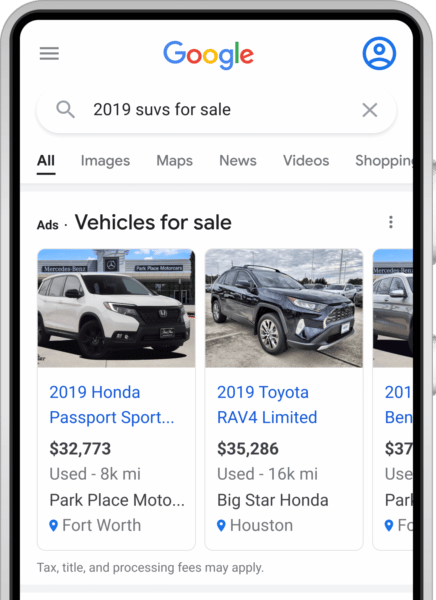
Google launches automated vehicle ads and are designed to allow auto advertisers to promote their entire vehicle inventory to potential customers on Google.com. This format includes an image of the vehicle, make, model, price, miles and the advertiser’s name.
Cookies will remain active on Chrome until 2024. In July, Google announced that their Sandbox initiative has been delayed and developers are aiming for a Q3 2023 launch. Google developers also predict that it will start phasing out third-party cookies in the second half of 2024 – not 2023 like originally planned.
Microsoft is making a giant comeback
Microsoft isn’t new to PPC. But over the years it’s become third, fourth, or even fifth string to Google, Meta, twitter, LinkedIn, and even TikTok. But 2022 impressed us with just the sheer volume of new, improved, and updated features that Microsoft released.
One of the biggest announcements this year was the acquisition of AT&T’s Xandr. By joining forces, Microsoft hopes to combine their audience intel and technology with Xandr’s powerful platform. This could allow Microsoft to leverage their audience network and provide additional inventory such as native video and digital TV.
Microsoft even announced plans to double the size of its ad business to $20 billion. I’d say they’re on the right track, since they also launched in 29 more countries in Europe and Africa.
As if this year couldn’t be any more busy, they also won the bid to partner with Netflix for their ad supported tier. The deal gives Microsoft access to a quality streaming video inventory – something they previously lacked.
New launches
Cruise Ads were launched and appear on the right-hand side of the Bing search results and appear alongside mainline text ads. They can trigger for queries such as cruise name, location, length, etc.
Multimedia Ads. The new video and image formats are “infographic-inspired,” meant to “innovate and disrupt web search.”
New ad type for service providers. Professional service ads can also be used to promote regional offices, branches or even national brands that provide relevant services.
Cash back incentives. This is a new ad offering that will incentivize shoppers via a rebate upon purchase. Microsoft will choose the “right amount of cashback for the right ad and right user” allowing for advertisers to gather the best possible return on ad spend.
Crypto exchange ads are now allowed on the platform, with pre-approval of course.
The dreaded auto-apply of recommendations has hit Microsoft, too. In February, auto-apply was out of beta and users started seeing recs being applied to their accounts.
Housekeeping
Meta takes a backseat
Meta stayed pretty quiet in 2022. With Zuck focusing so much time and resources on the Metaverse, they didn’t launch as many new products or features as Google or Microsoft. That said, there were still a few new developments.
Twitter – where do we even begin
Twitter has had an interesting year. It’s not even over and new Chief twit Elon Musk is still making headlines. As always, we try our best to keep you updated with the latest news, as it happens. But Twitter updates are happening faster than we can report, so thanks for sticking around while we try to navigate what’s post-worthy and what’s too ridiculous to even mention.
But the longer videos and descriptions wasn’t enough to keep creators happy. In July we reported that TikTok’s history of low Creator Fund payouts were forcing some influencers to leave the platform for good. Some creators claim they’re paid between $0.02 – $0.03 per one thousand video views. Yikes!
Shopping confusion
You would think that TikTok would be doing everything they could to get a leg up on other social and ad platforms. So it was surprising when Meta announced their plans to scale back on shopping, TikTik followed suit with its own announcement to abandon plans to bring shopping into the US. Though, understandably after a disastrous launch in the UK.
But just one month later, TikTok announced three new shopping ad features, including video, catalog, and LIVE ads. So what gives?
For their LIVE feature, they aimed at enhancing the experience and promoting greater brand safety, something that the app has been accused of neglecting in the past.
They did this by introducing:
The introduction of Multi-Guest
Increasing the LIVE minimum age from 16 to 18
Introducing safety reminders for all LIVE guests
I think they were hoping that brands that saw features being cut on Meta would abandon the platform and move to TikTok. But has that happened? We shall see.
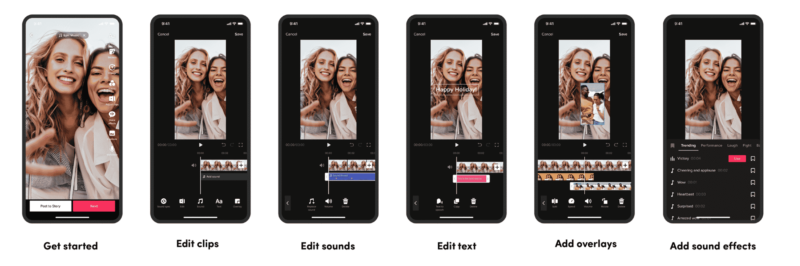
And to further compete with Meta, TikTok also launched Photo Mode as well as 7 other photo editing features including:
Edit clips: Stack, trim, and split video clips
Edit sounds: Cut, trim, and set the duration for sounds
Edit and position text: More easily edit, position, and set the duration for text
Add overlays: Add photo and video overlays for picture-in-picture (or video-in-video) stacking
Adjust video speed: Speed or slow the pace of video clips
Frame content: Rotate or zoom in and out of frame of individual clips
Add sound effects. Add musical soundtracks to videos and photo carousels
Look familiar?
Competing with Amazon, too?
But Meta isn’t the only media giant TikTok is going after. In November, they launched TikTok Shop, where users can now make purchases directly through the app. At the time of this publishing, TikTok is currently inviting select U.S. businesses to participate in the initiative. That means live streamers from places where the feature is not live will need to continue directing shoppers to third-party websites.
Apple
Apple is trying its hardest to join the ad game, but unless you’re a publisher or game developer, there aren’t a ton of options for you right now. But nevertheless, Apple made some noteworthy changes and updates this year. Let’s take a look.
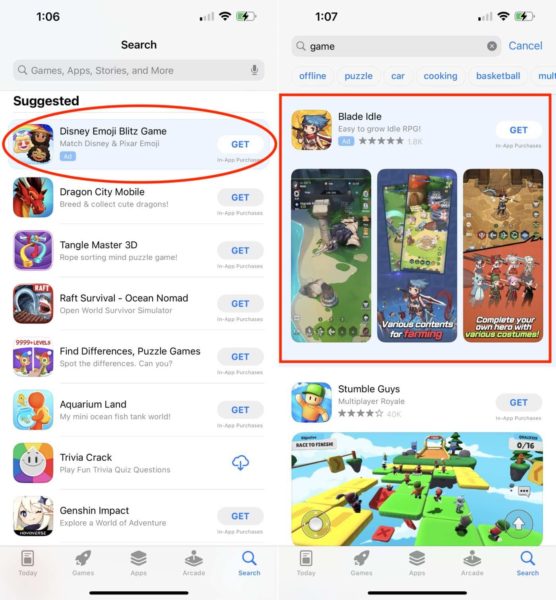
Apple is expanding ads on iPhone and iPad. Display ads are currently shown in the search tab. But soon Apple will expand the ads to the main Today tab as well as in third-party app download pages, according to Bloomberg. For search ads in the app store, developers can pay to have their apps featured in the results when users search terms related to the app.
Apple Search campaigns shifting to cost-per-tap (CPT) pricing model. Starting in June, Apple shifted their model to Cost-per-Tap, or CPT. CPT is Apple’s version of CPC, or cost per click. It is calculated by dividing your total spend by the number of taps your ad received.
Other platforms making headlines
We would be remiss if we didn’t mention that there are plenty of other platforms that made waves in 2022. Although these may not have been big enough to deserve their own category, they definitely deserve mentioning.
Walmart is expanding their self-service Marketplace platform. Search Brand Amplifier gives products listed in the Walmart marketplace higher visibility by boosting advertised products to the top of search results. Walmart says this benefits newer and smaller brands that haven’t achieved high organic listings within the Walmart platform.
Walmart is now selling ads on TikTok, Roku, and Snap. For the first time ever, Walmart has expanded its ad reach beyond its own ecommerce platform by powering ads on TikTok, Roku, and Snap. They’ll also have the capability to measure any sales that come from those ads.
LinkedIn
A podcast network aimed at professional audiences. The LinkedIn Podcast Network is a pilot program that will include shows about topics such as technology, recruiting and mental health, from external experts as well as its own in-house news team.
LinkedIn announces Business Manager. Finally! The new Business Manager will aim to simplify how marketers keep track of their accounts by offering their Campaign Manager and Pages options easily visible from a central location.
Uber ads are coming, and they’re already raising privacy concerns. Ubers’ new journey ads will be shown in the Uber app at least three times during the riders’ journey. The new feature will let brands place ads using data drawn from riders’ travel history and their precise geographic destinations, according to Uber.
SMX Advanced and SMX Next
We can’t wrap up our 2022 year in review without talking about SMX. We had 2 epic virtual conferences this year with expert speakers discussing topics such as how to leverage automated bidding to finding success with an audience-first strategy. Let’s take a look back.
SMX Advanced
SMX Next
Did you miss SMX Next, or wanna watch it again? You still can. Registration is free.
SMX Next PPC kicked off with an incredible keynote from Google’s own Ads Liaison (and former Search Engine Land Editor in Chief) Ginny Marvin.
Melissa Mackey taught us how to make automation work for lead gen.
Anthony Tedesco showed us how to level up our analytical skills using Excel.
Well that’s a wrap on 2022. What a year it’s been. Looking forward to 2023 I think we’re going to see more automation, a bigger push into GA4 as Universal Analytics gets sunsetted, big moves from Microsoft and other smaller platforms like Walmart and Instacart, and privacy-first strategies as third-party cookies finally retire.
@media screen and (min-width: 800px) { #div-gpt-ad-3191538-7 { display: flex !important; justify-content: center !important; align-items: center !important; min-width:770px; min-height:260px; }
}
@media screen and (min-width: 1279px) { #div-gpt-ad-3191538-7 { display: flex !important; justify-content: center !important; align-items: center !important; min-width:800px!important; min-height:440px!important; }
}
About the author
Nicole Farley is an editor for Search Engine Land covering all things PPC. In addition to being a Marine Corps veteran, she has an extensive background in digital marketing, an MBA and a penchant for true crime, podcasts, travel, and snacks.
Google updates ad policies to allow more CBD promotions
On January 20, 2023, Google will update its Dangerous Products and Services and Healthcare and Medicines ads policies to allow for the promotion of FDA-approved pharmaceuticals containing cannabidiol (CBD) and topical, hemp-derived CBD products with THC content of 0.3% or less in California, Colorado, and Puerto Rico.
Why we care. If you’re a brand or advertiser for CBD products in the three approved locations, the new policies will allow you to advertise if you are certified by Google. Advertisers can request certification with Google starting on January 20, 2023, when the form is published.
Certification from LegitScript. Google will only allow CBD products that have been certified by LegitScript to be promoted. The certification process will require that any product that is going to be advertised adhere to the following:
Provide samples of their product to test for compliance with legal THC limits
Provide LegitScript a third-party Certificate of Analysis
Still not allowed. Certain formats, including YouTube Masthead, will not be eligible for serving. CBD will be removed from the Unapproved Pharmaceuticals and Supplements list. All ads promoting other CBD-based products, including supplements, food additives, and inhalants, remain disallowed.
Dig deeper. Review the announcement from Google here.
@media screen and (min-width: 800px) { #div-gpt-ad-3191538-7 { display: flex !important; justify-content: center !important; align-items: center !important; min-width:770px; min-height:260px; }
}
@media screen and (min-width: 1279px) { #div-gpt-ad-3191538-7 { display: flex !important; justify-content: center !important; align-items: center !important; min-width:800px!important; min-height:440px!important; }
}
About the author
Nicole Farley is an editor for Search Engine Land covering all things PPC. In addition to being a Marine Corps veteran, she has an extensive background in digital marketing, an MBA and a penchant for true crime, podcasts, travel, and snacks.
GA4 now lets you recreate Universal Analytics audiences, and personalize the Home page
GA4, everyone’s favorite new Google Google Analytics product, will now let you use the Migrator for Google Analytics Google Sheets add-on tool to recreate many of your Universal Analytics properties into a GA4 property. You can also personalize the content on your home page to make what’s shown more relevant. Let’s take a look.
Why we care. First, these new tools attempt to make GA4 tolerable by allowing you to customize your dashboard and properties as close to UA as possible. Though not perfect, this should at least bring a little more familiarity into the mix. Advertisers who have been slow to implement or learn GA4 might find solace in these familiar features.
If you haven’t implemented GA4 yet, this is your sign.
Recreate Universal Analytics audiences in Google Analytics 4
Audiences based on dimensions and metrics that are the same in UA and GA4 can be recreated just as they are. When the audiences use dimensions or metrics that differ between UA and GA4, you can edit the audience definitions in the spreadsheet to use the relevant GA4 dimensions and metrics.
For each audience, the spreadsheet includes information about whether the audience is available for recreation; if it isn’t, the spreadsheet has information about why. Editable audience conditions are included so you can modify them before recreating them.
More information on the Migration tool can be found here.
Personalize the Home page
Keep in mind that when you personalize your homepage, the customization is only visible to you. Other users will not see your dashboard.
You can now change the metrics on the overview and realtime cards. On the overview card, hover over a metric to see a drop-down menu so you can change the metric.
On the realtime card, you can also choose from a number of dimensions (e.g., Audience, City) or let us choose a dimension for you (i.e., Choose for me).
Restore your choices
Whether you change the metric, dimension, or date on a card, we’ll restore your choices in future sessions. For example, we’ll populate a card with City the next time you visit Google Analytics when you choose the dimension in your current session.
Additionally, when you return to a report using the Recently accessed section, you’ll see all the changes you made to the report. For example, if you changed the primary dimension, you’ll see the dimension applied when you select the report from the Recently accessed section.
Try Suggested cards
When you’re new to a property and haven’t viewed a card frequently, a new Suggested for you section will appear. The section surfaces cards that are popular across all Google Analytics 4 properties to help you find useful information in your property.
Provide feedback
You can now give a thumbs up or thumbs down when hovering over the top right of a card in the Suggested for you, Because you view frequently, and Insights sections. The feedback options allow Google Analytics to provide you with more helpful information in the future.
@media screen and (min-width: 800px) { #div-gpt-ad-3191538-7 { display: flex !important; justify-content: center !important; align-items: center !important; min-width:770px; min-height:260px; }
}
@media screen and (min-width: 1279px) { #div-gpt-ad-3191538-7 { display: flex !important; justify-content: center !important; align-items: center !important; min-width:800px!important; min-height:440px!important; }
}
About the author
Nicole Farley is an editor for Search Engine Land covering all things PPC. In addition to being a Marine Corps veteran, she has an extensive background in digital marketing, an MBA and a penchant for true crime, podcasts, travel, and snacks.
Advertisers have a responsibility not to promote content or engage in behavior that risks harm to our users, employees, or the Ads ecosystem. If we see such content or behavior, we may take action, including but not limited to restricting or blocking your ads or suspending your account.
Why we care. All advertisers, even those for Display and Video 360 must adhere to the policies or risk their accounts being suspended. You can review the full policies here.
@media screen and (min-width: 800px) { #div-gpt-ad-3191538-7 { display: flex !important; justify-content: center !important; align-items: center !important; min-width:770px; min-height:260px; }
}
@media screen and (min-width: 1279px) { #div-gpt-ad-3191538-7 { display: flex !important; justify-content: center !important; align-items: center !important; min-width:800px!important; min-height:440px!important; }
}
About The Author
Nicole Farley is an editor for Search Engine Land covering all things PPC. In addition to being a Marine Corps veteran, she has an extensive background in digital marketing, an MBA and a penchant for true crime, podcasts, travel, and snacks.
Google is always testing new spots on the page for SERP components
In simple terms, the #1 position in organic or paid ads does not guarantee that your paid ad listing will be visible without scrolling
Organic position #1 reported by Google Search Console is not the actual position 1 on page
A lot of anomalies and assumptions impact your paid and organic clicks – is there a smart way to counter this problem?
Leading advisor and performance marketing expert, Prasanna Dhungel unravels four key insights marketers to maximize performance marketing initiatives in 2023
Over the last two decades, Google’s search engine results page (SERP) has evolved a lot. The Google SERP, which once only had organic listings now features dynamic paid ads and other organic SERP components as well.
Currently, Google SERP has many organic features like –
People also ask (PAA),
Popular products,
featured snippets,
Google MAP,
image packs,
videos,
Tweets, and many more that I believe we are just scratching the surface of
Paid features currently seen on Google SERP are –
Shopping ads,
text ads, and
MAP local search ads
These are some paid features advertisers should not ignore if they want to build better advertising and content strategies for maximum search marketing ROI.
Google varies the composition of SERP by keyword, geography, time of day, and device. Google is testing new spots on the page for SERP components. What does all this mean, you may ask? In simple terms, the #1 position in organic or paid ads does not guarantee that your listing will be visible without scrolling. It means that an organic position #1 reported by Google Search Console is not actual position 1 on the page. So, you have a much lower CTR than you expect, and all these impact your paid and organic clicks.
With this dynamic nature of SERP, search marketers must understand the SERP landscape and their brand’s true rank on Google vs competition. This view will enable search marketers to deploy the right paid and SEO tactics to maximize visibility and clicks.
Based on my experience and understanding of the dynamic SERP, here are four key insights marketers should focus on to maximize their performance marketing initiatives.
1. Analyze the composition of SERP for your keywords
Marketers must understand SERP features visible for their keywords. The graph below suggests that along with organic, SERP features like PAA and popular products are taking significant real estate for “apparel” and “accessories” keywords. Search marketers that are not targeting these components will miss acquiring customers in different stages of their buying journey that are clicking on People Also Ask.
2. Monitor emerging and contracting SERP features
Marketers must understand new SERP features that have appeared and are getting popular for their keyword traffic. This helps develop a long-term advertising and content plan that targets popular SERP features.
In the last quarter, we identified Map Local Search Ads and App Install (in mobile devices) SERP features appearing in the “apparel” and “accessories” keywords. We saw growth in the popularity of PAA and popular products across many keyword groups.
3. Keep track of above-the-fold SERP features
Understanding the SERP features visible above-the-fold real estate is critical. These insights will help marketers understand the dynamics of rising and falling SERP click-through rates. You may wonder why the clicks are declining even though your average position reported on Google Reports is improving. Such questions can be answered with true ad position in SERP.
As shown in the below graph, the usual organic component in this keyword landscape has lower above-the-fold coverage compared to SERP features like PAA and popular products.
Insights like these help marketers understand the fastest gateway to the first page above the fold position. Marketers can build a holistic search strategy to correctly allocate their search marketing budget across organic and paid SERP features.
4. Monitor competitor’s through SERP features
Google is an ultra-competitive channel. You have many domains appear on Google SERP from aggregators to publishers to actual competitors of your business model. To build the right marketing tactics -it is imperative to understand the top domains by SERP features, their competitive tactics, and the SERP landscape changes.
From planning link building to acquiring secondary traffic to improving authority score to crafting advertising and content strategies – SERP-driven insights like these help you maximize search advertising performance.
Additionally, monitoring your top emerging competitors’ tactics across SERP formats allows you to timely optimize your advertising campaigns. As shown in the graph below, Amazon has tremendously improved its Google Shopping Ads Share of Voice from May to July 2022.
When brands like this are heavily advertising in a category, marketers will need to advertise products in categories Amazon is not aggressively pushing and come back when Amazon advertising slows down.
Conclusion
Google is increasingly sharing less data. Google ad data doesn’t show advertisers which low impressions may be appearing and creeping up on your CPCs. Google search console data doesn’t show true rank, and the organic rank shared isn’t representative of the actual location on the page.
Going into 2023, it is imperative for search marketers to use SERP-driven insights to gain an edge in their performance marketing campaigns.
Prasanna Dhungel co-founded and runs GrowByData, which powers performance marketing for leading brands such as Crocs and top agencies like Merkle. GrowByData offers marketing intelligence for search, marketplace, and product management to win new revenue, boost marketing performance and manage brand compliance.
Prasanna also advises executives, board & investors on data strategy, growth, and product. He has advised leading firms such as Melinda & Bill Gates Foundation, Athena Health, and Apellis Pharma.
Subscribe to the Search Engine Watch newsletter for insights on SEO, the search landscape, search marketing, digital marketing, leadership, podcasts, and more.
Advertising on Google Ads is a no-brainer for many brands.
Between the mammoth market share, the proven ROI on time and monetary investment, and the innovations in creative/targeting – it’s never been a better time to scale Google Ads.
Getting started can be a bit more complex than it used to be. You’ll need to make some key decisions on what kind of account you want and make sure you have your verifications ready.
This article is a step-by-step guide to setting up your Google Ads account.
Note: While there will be some strategic advice, the goal is to keep it as universally applicable as possible. In addition, we will not be going over setting up Local Service Ads or Merchant Center.
Getting started with Google Ads
Setting up a Google Ads account requires an email (can be Google or not).
If you don’t already have an email you planned on using, you can create a quick account before the ad account is set up.
Once you designate the email account you want to be affiliated with your ad account, you’ll be prompted to use a Google Business Profile as a starting point.
However, if you do this, you’ll be locking your account into being a Smart Campaign account.
While Smart Campaigns can be useful for some brands, locking in the account to only support such campaigns is not ideal for most advertisers.
Be sure to select “Are you a professional marketer? Switch to Advanced Mode.”
Once you’ve transitioned to a normal ad account, you’ll be prompted to create your first campaign. If you’re not ready, you can proceed to create the account without a campaign.
Google will look for assets associated with your email address (like YouTube channels). You can connect them for additional audiences and placements or leave them off for now.
If you are promoting your app or using it as a landing page, you can also connect it during this step. You’ll also be allowed to connect your phone number.
Ideally, if you’re using call tracking, you’d have that number ready. However, you can always adjust it later.
Conversion tracking is a critical part of any Google Ads account. You can choose the marketing objective of your campaign (conversions or brand lift) and set up the conversion tracking after.
Note that you should not opt into multiple conversion goals in a single campaign.
Asking one campaign to be responsible for leads and sales will have too many variants in conversion values.
The next step is to decide if you will build a single-channel campaign or opt into Performance Max (PMax).
The campaign goals you select will influence which campaigns you are prompted to create. If you don’t select any, your options will be search and PMax.
PMax needs visual creative to succeed. If you do not have images and videos ready, it is best to start with a non-PMax campaign.
Opting for a search campaign will prompt you to begin filling in the following:
Keywords: You can either manually enter them or get suggestions based on your site or themes.
Search ad text: You’ll be prompted to enter headlines, descriptions, and the final URL for one responsive search ad.
Assets (formerly known as extensions): Site links, structured snippets, callouts, calls, price extensions, promotions, lead forms, apps.
Bidding strategy: During this stage of campaign setup, you will only be able to opt into Smart Bidding or automated bidding.
Campaign settings: Aside from naming conventions, you’ll be able to set location targets, ad schedules, audiences, ad networks, and languages.
PMax campaigns focus on all Google Ads channels, so the lion’s share of the setup revolves around supplying creative.
While you won’t be bidding on keywords, you can add a custom intent audience in the Audience signals.
Be sure you have video creative otherwise, Google will create a video on your behalf.
Budgets are critical to the success of your Google Ads account and campaign.
Setting one that’s too low will turn all spend into waste because there won’t be enough clicks to lead to conversions. Going too high might allow for budget misallocation.
When you set your daily budget, be sure you’re setting one that you’re OK with doubling daily. Google will attempt to make your monthly spend average out to your daily spend across 30.4 days.
It’s important to note that your billing profile does not need to be the same as your main ad account.
For agencies, you can set up the billing profile under your client or yourself. Google Ads will take most credit cards, PayPal, and direct deposits from bank accounts.
Get the daily newsletter search marketers rely on.
Follow-up steps
Congratulations, your Google Ads account is set up! However, you’re not completely done yet.
Once you finish the initial setup, you must verify your account and set up two-factor authentication.
Verifying your account means requesting and sending back a postcard confirming your business is real. If you do not complete this step, your ad account will be canceled.
Additionally, if you don’t incur charges in the first few days of the account, you risk suspension.
A great way to mitigate this is to link your Google Ads Console to Google Analytics.
Setting up conversion tracking doesn’t need to be a code-heavy experience. Codeless options include:
Connecting your conversion tracking with Google Tag Assistant.
Copying your conversion tracking code into your site’s analytics section.
You can also send conversion tracking setup to your developer.
Conversion actions will either be primary or secondary actions.
A primary action will factor into reporting and the Google Ads algorithm.
Secondary actions will just report the data and are not factored into cost per acquisition (CPA).
Setting up your Google Ads account
Campaign structure and ad creative choices can be part of account setup. However, if you’re not ready, do not force the first campaign.
Make sure you’re setting yourself up for success by having your linking accounts ready (Analytics and Search Console) and your creative on hand.
Opinions expressed in this article are those of the guest author and not necessarily Search Engine Land. Staff authors are listed here.
@media screen and (min-width: 800px) { #div-gpt-ad-3191538-7 { display: flex !important; justify-content: center !important; align-items: center !important; min-width:770px; min-height:260px; }
}
@media screen and (min-width: 1279px) { #div-gpt-ad-3191538-7 { display: flex !important; justify-content: center !important; align-items: center !important; min-width:800px!important; min-height:440px!important; }
}
About The Author
A veteran of the digital marketing industry and “Top 25 PPC Expert,” she began as an SEO in 2008, transitioning to PPC in 2012. She manages the strategy and execution of paid media campaigns, as well as helping brands build relationships with profitable partners and customers. Throughout her career, Navah makes a point to give back and loves sharing lessons learned on the international speaking circuit as well as local universities. She is a frequent contributor to several publications and in 2019, she became a founding member of the Paid Search Association.