Zuckerberg: Cambridge Analytica leak a “breach of trust” with users
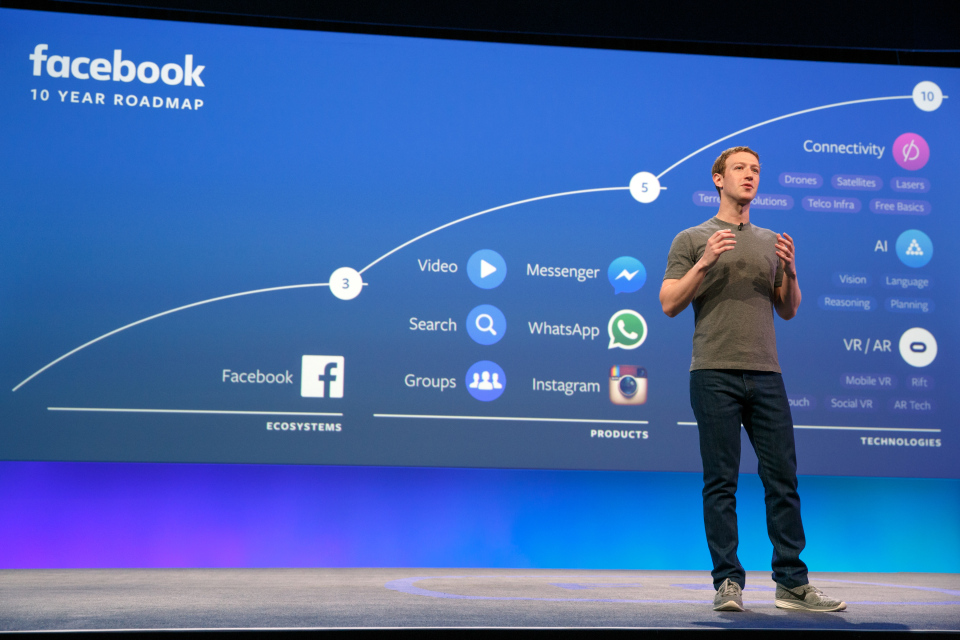
Enlarge/ CEO Mark Zuckerberg speaks at Facebook’s 2016 “F8” conference.
After days of silence, Facebook CEO Mark Zuckerberg has responded to the controversy over the 2014 leak of private Facebook user data to a firm that went on to do political consulting work for the Donald Trump campaign in 2016.
Cambridge Analytica got the data by paying a psychology professor, Aleksandr Kogan, to create a Facebook personality quiz that harvested data not only about its own users but also about users’ friends. Kogan amassed data from around 50 million users and turned it over to Cambridge.
Zuckerberg says that when Facebook learned about this transfer in 2015, it got Kogan and Cambridge to certify that they had deleted the data. But media reports this weekend suggested that Cambridge had lied and retained the data throughout the 2016 presidential campaign.
“This was a breach of trust between Kogan, Cambridge Analytica, and Facebook. But it was also a breach of trust between Facebook and the people who share their data with us and expect us to protect it,” Zuckerberg said.
Zuckerberg says Facebook changed its rules back in 2014 to prevent third parties from harvesting data the way Kogan did. But he says Facebook is now going to take additional steps to make sure data harvested four years ago isn’t being misused today.
“We will investigate all apps that had access to large amounts of information,” Zuckerberg wrote. He promised a “full audit of any app with suspicious activity” and said any developer who refused an audit would be banned from the platform.
Meanwhile, Facebook is tightening its rules for apps accessing user information. If an app goes unused for three months, it will lose access to user data. Apps will initially only get access to users’ name, profile photo, and email address.
Finally, Facebook is going to place a tool for managing privacy settings at the top of the news feed. These options are already available in privacy settings, but not everyone knows about the option. Zuckerberg hopes that putting the settings at the top of the news feed will make sure every Facebook user sees it.
https://arstechnica.com/?p=1279877
Growing Mistrust Threatens Facebook After Data Mining Scandal
As Facebook reels from the scandal over hijacked personal data, a movement to quit the social network gathered momentum Wednesday, portending threats to one of the most powerful internet firms.
In a sign of the mood, one of those calling it quits was a high-profile co-founder of the WhatsApp messaging service acquired by Facebook in 2014 for $19 billion.
“It is time. #deletefacebook,” Brian Acton said in a tweet, using the hashtag protesting the handling of the crisis by the world’s biggest social network.
The WhatsApp co-founder, who now works at the rival messaging application Signal, posted the comment amid a growing uproar over revelations that Facebook data was harvested by a British political consulting firm linked to Donald Trump’s presidential campaign.
“Delete and forget. It’s time to care about privacy,” he said.
The huge social network also faces investigations on both sides of the Atlantic over its data practices, and a handful of lawsuits which could turn into class actions that may prove a costly distraction for Facebook.
It remains to be seen whether the uproar would lead to any significant departures, but the topic was active on social media, including on Facebook itself.
Donella Cohen, a Weather Channel product manager, posted on her Facebook page that she would be off the network by midnight.
“The latest revelations are showing just how corrupt and detrimental to society this particular platform is,” she wrote.
“I hope that a new social network emerges. One that isn’t so greedy as to corrupt the political process in the name of the almighty dollar.”
– Fabric of internet –
Yet analysts noted Facebook is unlikely to fade quickly because of how it is woven into the fabric of the internet, with “like” buttons on websites, comments sections for news articles and an ad network that delivers messages to those who are not Facebook members.
The #deleteFacebook movement “is a social media feedback loop from the public — we saw the same thing with #deleteUber,” said Jennifer Grygiel, a communications professor at Syracuse University.
“Sure, some people will delete Facebook, but to truly delete Facebook would mean that users would need to delete Facebook, Instagram, WhatsApp, and Messenger. This is not realistic for most people given how social media has been integrated into everyday life.”
Sandra Proske, head of communications for the Finland-based security firm F-Secure, said it’s not easy to break up with Facebook.
“If this (scandal) makes you uncomfortable you can choose to not use the site, of course,” Proske wrote in a blog post.
“But given how intertwined in our lives Facebook and the sites it has acquired, including Instagram and WhatsApp, have become, you may not consider this an option. And for some people and even some countries, Facebook is the internet.”
Proske and others offer suggestions on how Facebook users can improve privacy by limiting what is shared and which apps have access to their data.
Several websites offered tips on how to quit Facebook, while noting that the process is more complicated than it appears.
Facebook offers users the option to “deactivate” an account for users who want to take a break and return later, or to “delete” the account and its data entirely.
But Facebook noted that some data such as posts on friends’ timelines might remain in the system even after an account is deleted.
And longtime Facebook users could face complications on dealing with log-ins and authorizations to other websites and apps through the social network.
The tech website The Verge published a guide to deletion, advising users to download a copy of all personal data including photos and posts before quitting.
The website noted that it could take up to 90 days to fully delete an account, and that data may be inaccessible during that period.
It was unclear how many users were following through on plans to quit Facebook, which has more than two billion users worldwide.
But Roger McNamee, an early investor in Facebook, said the social network was losing the trust of its users.
“The issue is a callous disregard for the privacy rights of users and a lack of care with respect to data that had been entrusted to Facebook,” McNamee told National Public Radio.
“I’m not sure exactly what’s going on here, but I’m afraid there is a systemic problem with the algorithms and the business model of Facebook that allow bad actors to cause harm to innocent users of Facebook.”
Facebook. In attesa di maxi-multe, la ‘sanzione’ reputazionale è già di 42 miliardi
Per lo scandalo Cambridge AnalyticaFacebook è sotto inchiesta dagli Usa a Uk fino all’Unione europea. E con molta probabilità la società sarà condannata con maxi-multe. In attesa dei verdetti della Federal Trade Commission (FTC), dell’autorità indipendente Uk Information Commissioner’s Officer (ICO) e della Commissione parlamentare britannica fino a quello del Parlamento europeo, vogliamo porre l’attenzione su una ‘sanzione’ che è stata già inflitta non da un’Autorità regolatoria, ma dalla Borsa e dagli utenti stessi del social network. È il danno reputazionale o d’immagine. Questo dovrebbe far più paura a società ed Enti rispetto alle sanzioni, spesso irrisorie, per la violazione della privacy degli utenti. Mark Zuckerberg l’ha capito solo in questi giorni sulla propria pelle, meglio sulle proprie azioni. In una settimana a Wall Street Facebook ha bruciato 42 miliardi di dollari. Il suo market cap è passato da 534.936 Billion $ (Key4biz ha fatto questo screenshot il 15 marzo la vigilia dell’uscita delle inchieste del New York Times e dal Guardian), a 492.604 Billion $, il valore di questa mattina.
Oltre al tracollo delle azioni scese di oltre il 9%, il social network sta vivendo anche il peggior momento di reputazione tra i suoi utenti. Cresce in modo virale su Twitter il movimento #DeleteFacebook, alimentato perfino da Brian Acton, il co-fondatore di WhatsApp, acquistato da Facebook nel 2014 per 19 miliardi di dollari.
Il caso dell’utilizzo illecito dei dati di 50 milioni di utenti per scopi elettorali ha fatto aprire gli occhi, finalmente, a migliaia di iscritti che ora hanno deciso di cancellarsi dal social network. Non si fidano più di Facebook. Questo è l’incalcolabile danno che la piattaforma sta subendo in questi giorni.
Se la fuga dal social network più popolato al mondo è iniziata dalla fine del 2017 (come abbiamo qui documentato) d’ora in poi il fuggifuggi da Facebook sarà un trend, perché la società in questa vicenda si è fatta sfruttare come un cavallo di Troia dimostrandosi incapace nella difesa dei dati degli utenti.
Quali sono le gravi colpe di Facebook, che non può dire ‘Siamo stati ingannati’
Se nel 2014 il professore di psicologia presso l’Università di Cambridge, Aleksandr Kogan, attraverso la sua app thisideourdigitallife, presente su Facebook e convalidata dalla piattaforma, è riuscito a rubare e poi trasmettere alla Cambridge Analytica i dati prima di 270mila utenti fino a raggiungere i 50 milioni di profili, la colpa è solo della società fondata e guidata da Mark Zuckerger (siamo in attesa di una sua dichiarazione).
Le policy sulla privacy troppo permissive fino al 2015
Facebook fino al 2015 permetteva ai gestori delle applicazioni di raccogliere dati dei singoli e della loro rete di amici. Quando ci si iscriveva a Facebook, le si dava il consenso di condividere alcuni dati anche con le applicazioni esterne che usavano Facebook Login (l’accesso diretto alle app tramite Facebook), concedendo anche il diritto di raccogliere informazioni sui propri amici, senza avvisarli. Questo è il meccanismo di cui ha beneficiato Cambridge Analytica.
L’ex manager di Facebook responsabile del dipartimento di controllo violazione dati, Sandy Parakilas, 38 anni, al Guardian ha risposto così su che tipo di controllo avesse la società su questi dati: “Zero. Assolutamente nessuno. Una volta che i dati lasciavano i server di Facebook a favore di app esterne non c’era alcun controllo, non c’era nessuna contezza di quello che stava succedendo”.
La responsabilità della società è in queste tre righe.
La FTC, l’ICO e la Commissione speciale del Parlamento europeo rivolgeranno questa domanda a Zuckerberg o al manager della società che realmente sarà ascoltato.
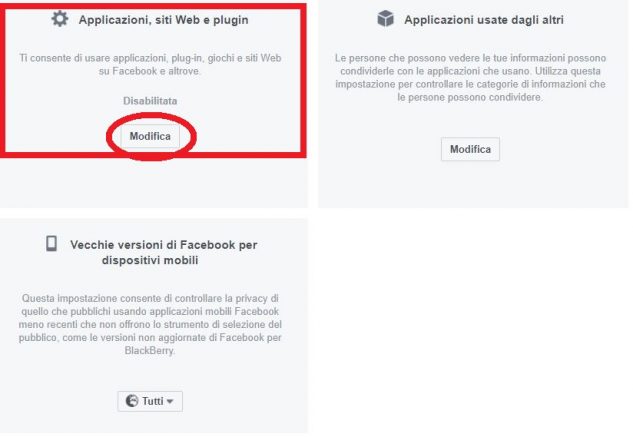
Come disabilitare la condivisione dei tuoi dati su Facebook ad app esterne?
Su Facebook se vuoi fermare la condivisione dei tuoi dati ad app esterne è possibile farlo, disabilitando queste applicazioni non sarà possibile accedere ai rispettivi siti utilizzando come login il proprio profilo Facebook.
Basta cliccare qui Settings Menu > Apps e poi selezionare “modifica” sotto la voce “Applicazioni, siti Web e plugin”. Nella nuova finestra che si visualizzerà cliccando sul tasto “Disabilita piattaforma”, viene impedito l’accesso dei nostri dati su Facebook a siti Web di terzi e alle applicazioni.
Cosa insegna lo scandalo Facebook-Cambridge Analytica?
Lo scoppio del caso Facebook-Cambridge Analytica ha fatto suonare, ovviamente, il campanello d’allarme sulla privacy di tutti noi. I social network e in generale le piattaforme dei giganti del web sanno tutto di noi. Dunque cosa ci insegna questo scandalo? Amministratori delegati, imprenditori, ecc… non devono aver paura delle sanzioni per la violazione delle norme di protezione dei dati e dei costi di gestione dei dati personali, ma devono temere il danno reputazionale, che è il cuore del Regolamento europeo sulla protezione dei dati personali. Il Gdpr, che entrerà pienamente in vigore dal 25 maggio prossimo, ha l’obiettivo di far aumentare la fiducia delle persone nella società digitale. Quindi anche verso i social network. Chi violerà il regolamento europeo sarà sanzionato con multe che possono arrivare fino al 4% del fatturato globale delle società.
Update: Cambridge Analytica has suspended CEO Alexander Nix. In addition to controversy over unauthorized access to private Facebook data, Nix is also facing a scandal over comments captured by hidden cameras. In those videos, Nix boasts about using dirty tricks—including staged bribery attempts and sending prostitutes to seduce political opponents—to win elections.
Facebook is reeling from a series of revelations about private user data being leaked to Cambridge Analytica, a shadowy political consulting firm that did work for the Donald Trump campaign.
Last Friday, reporters from The New York Times and The Observer of London told Facebook that Cambridge had retained copies of private data for about 50 million Facebook users. Facebook says Cambridge promised in 2015 that the data would be deleted. Facebook responded to the new revelations by banning Cambridge and several of its associates from Facebook.
But this week the controversy surrounding Facebook’s ties to Cambridge—and its handling of private user data more generally—has mushroomed. British members of Parliament accused Facebook of misleading them about the breach and asked CEO Mark Zuckerberg to come to the UK to clear up the issue personally. Facebook has scheduled a surprise all-hands meeting to answer employee questions about the controversy.
The scandal has attracted broad public interest because Cambridge did millions of dollars in political consulting work for Donald Trump’s presidential campaign. Some reports have portrayed the firm as the masterminds behind Trump’s election victory—and the stolen Facebook data as a key part of Trump’s digital strategy. But while the firm’s controversial psychographic techniques have attracted a lot of attention, there’s reason to doubt that they were actually used in the 2016 election.
The larger concern for Facebook is that the Cambridge leak could be seen as just one example of a broader pattern of lax handling of confidential user data. Facebook offers users privacy controls that are supposed to limit who has access to their data—and Facebook has promised the Federal Trade Commission that it will ensure those settings are honored.
But recent reports indicate that Facebook’s privacy measures haven’t been effective. That could damage users’ faith in Facebook’s privacy promises. And it is already attracting scrutiny from government regulators, both in the United States and Europe, who want to know why Facebook didn’t do a better job of protecting customers’ private information.
Cambridge probably didn’t use illicit Facebook data to help Trump
Before the 2016 election, Cambridge Analytica was an obscure consulting company funded by the family of conservative hedge fund mogul—and Republican political donor—Robert Mercer. But in the weeks after the 2016 election, rumors began to circulate that Cambridge had played a key role in Donald Trump’s victory.
Where conventional political advertising uses crude demographic factors like age and ZIP code to target advertising, Cambridge supposedly used a technique called psychographics, which involves building a detailed psychological profile of a user that will allow a campaign to predict exactly what kind of appeal will be most likely to convince any particular voter.
Nix shows how psychographically categorized voters can be differently addressed, based on the example of gun rights, the 2nd Amendment: “For a highly neurotic and conscientious audience the threat of a burglary—and the insurance policy of a gun.” An image on the left shows the hand of an intruder smashing a window. The right side shows a man and a child standing in a field at sunset, both holding guns, clearly shooting ducks: “Conversely, for a closed and agreeable audience. People who care about tradition, and habits, and family.”
Motherboard—and other reports circulating around the same time—portrayed Facebook-derived data as the key to this targeting effort. They pointed to work by researcher Michal Kosinski that found he could predict a lot about a person based on Facebook likes. Kosinski created an online personality quiz that required users to log in to Facebook to take it. Once users logged in, he collected data from the user’s Facebook profile, including the list of pages they have “liked.” The quiz was a hit, and Kosinski soon had a large database of people’s private Facebook data. And he found that Facebook data was a surprisingly good predictor of other demographic and personality traits.
“On the basis of an average of 68 Facebook ‘likes’ by a user, it was possible to predict their skin color (with 95-percent accuracy), their sexual orientation (88-percent accuracy), and their affiliation to the Democratic or Republican party (85 percent),” Motherboard reported.
A psychology professor named Aleksandr Kogan who was working with Cambridge Analytica asked to buy Kosinski’s data. When Kosinski declined, the Timesreports that Cambridge paid Kogan more than $800,000 to create his own personality app to harvest data from Facebook users.
Kogan attracted 270,000 Facebook users to take the online personality quiz. But Facebook’s APIs at the time allowed Kogan’s app to also collect a broad range of information about each authorized user’s friends. The average Facebook user has hundreds of friends, so Kogan was able to leverage his user base of 270,000 people to harvest data for about 50 million Facebook users.
Facebook says Kogan told them he was collecting the data only for academic purposes. But that wasn’t true. Kogan shared this data with Cambridge Analytica for use in its ad-targeting work.
Cambridge then won the Ted Cruz presidential campaign as a client. In December 2015, The Guardian revealed that Cambridge was using data harvested from Facebook in its work on the Cruz campaign. According to the Times, Facebook quietly verified the leak and took steps to secure the data—securing a promise from Cambridge that the data had been deleted. More recent reporting suggests that that wasn’t true.
While Cambridge got a lot of press coverage—both before the 2016 election and after it—post-election reporting has cast doubt on the effectiveness of Cambridge Analytica’s methods. The New York Timesreported last year that “Cambridge’s psychographic models proved unreliable in the Cruz presidential campaign, according to Rick Tyler, a former Cruz aide, and another consultant involved in the campaign. In one early test, more than half the Oklahoma voters whom Cambridge had identified as Cruz supporters actually favored other candidates. The campaign stopped using Cambridge’s data entirely after the South Carolina primary.”
“After the Cruz campaign flamed out, Mr. Nix persuaded Mr. Trump’s digital director, Brad Parscale, to try out the firm,” the Times added. “Its data products were considered for Mr. Trump’s critical get-out-the-vote operation. But tests showed Cambridge’s data and models were slightly less effective than the existing Republican National Committee system, according to three former Trump campaign aides.”
But the biggest problem for the theory that stolen Facebook data was the key to Trump’s election is this: according to a March 2017 Times story, “Cambridge executives now concede that the company never used psychographics in the Trump campaign.” Other reporting around the same time reached the same conclusion.
Indeed, this becomes clear if you read that 2017 Motherboard article carefully. As an example of Trump’s ad targeting techniques, Motherboard reported that “in the Miami district of Little Haiti, Trump’s campaign provided inhabitants with news about the failure of the Clinton Foundation following the earthquake in Haiti, in order to keep them from voting for Hillary Clinton.”
You can debate whether this amounts to a political dirty trick or legitimate campaign criticism. But it’s definitely not an example of cutting-edge psychographic profiling. Facebook offers every advertiser the ability to target ads based on conventional demographic criteria like race and ZIP code. This kind of message targeting didn’t require using purloined Facebook user data to build psychographic profiles of voters.
The Cambridge breach could be the tip of the iceberg
So the stolen Facebook data doesn’t seem to have played a significant role in getting Donald Trump elected president. Nevertheless, the controversy surrounding Cambridge has highlighted the fact that, at least until recently, Facebook has not done a good job of safeguarding private user data.
On Tuesday, TheGuardianpublished an interview with Sandy Parakilas, a “platform operations manager at Facebook responsible for policing data breaches by third-party software developers between 2011 and 2012.” According to Parakilas, Facebook required app developers to sign agreements promising to abide by privacy restrictions attached to user data they received through Facebook APIs, but enforcement of these requirements was extremely lax.
“My concerns were that all of the data that left Facebook servers to developers could not be monitored by Facebook, so we had no idea what developers were doing with the data,” Parakilas told The Guardian. “Once the data left Facebook servers, there was not any control, and there was no insight into what was going on.”
Parakilas said that “it has been painful watching” the unfolding scandal around Cambridge Analytica, because “I know that they could have prevented it.”
“In the time I was there, I didn’t see them conduct a single audit of a developer’s systems,” he said. Parakilas estimates that tens—possibly hundreds—of apps took advantage of this opportunity to harvest the data of the Facebook apps’ unwitting friends.
One of the most controversial features of Facebook’s APIs for third-party apps was known as “Friends Permission.” This feature gave developers—including Aleksandr Kogan, the professor whose personality quiz app harvested data for Cambridge—the ability to not only gather information about their own users but also to get data about their friends. Facebook’s lax approach to privacy in its early years aided its rapid growth, as it enabled the creation of viral hits like the Farmville game app.
Facebook put an end to the Friends Permission feature in 2014, according to The Guardian.
The mere fact that Facebook allowed so much nominally private data to leak to third parties would be embarrassing enough. The larger concern for Facebook is that the company signed a deal with the Federal Trade Commission in 2011 that was specifically focused on enforcing user privacy settings. Two former FTC officials told The Washington Post this week that allowing user data to be disclosed to third parties may have violated the terms of that 2011 agreement, which could potentially expose Facebook to large fines.
And Facebook is about to get a lot of unwelcome scrutiny from regulators in Europe, which generally has stricter privacy laws than the United States. British privacy regulators have raided the offices of Cambridge Analytica to determine whether the firm still has illicit Facebook user data. And European regulators say they are “following up” with Facebook to make sure the social media giant is complying with applicable EU regulations.
https://arstechnica.com/?p=1278035
Facebook-Cambridge Analytica, Soro ‘A rischio la libertà di scelta, compreso il voto’
Lo scoppio del caso Facebook-Cambridge Analytica e quindi dell’uso illecito dei dati degli utenti del social network per fini elettorali ha fatto suonare, ovviamente, il campanello d’allarme anche in Italia. Il primo a fare scudo sulla privacy degli italiani è stato il Garante per la protezione dei dati personali, Antonello Soro, che, nell’intervista pubblicata oggi dal Mattino, ha lanciato un allarme che riguarda le libertà dei cittadini, compresa la scelta del partito da votare. La vicenda è parte di “un processo ineluttabile: attraverso la sempre maggiore conoscenza delle nostre propensioni, questi soggetti sono in grado di consigliarci sia il prodotto da comprare sia il partito da votare”, ha detto Soro, che poi ha spiegato come gli Over the Top, volontariamente o involontariamente, possono essere determinanti nel falsare il risultato elettorale in un Paese. “Nel gioco democratico il voto dei cittadini traduce in una scelta elettorale lo stato di consapevolezza che si ha in quel momento, del mondo in cui vive. E se questa scelta è figlia di una lettura quotidiana e completa della realtà, allora possiamo parlare di libertà”, ha aggiunto il Garante. “Se invece”, ha continuato Soro, “è figlia di un meccanismo di conoscenza passiva, parziale, settoriale, con una spinta a farci sapere solo quello che è più vicino alle nostre aspettative, allora il percorso elettorale è diverso da quello che dovrebbe esprimere una democrazia compiuta”.
Il Garante Privacy è stato chiaro, in questo modo Facebook potrebbe esercitare un grande potere persuasivo nei confronti di tutto il mondo, a partire dagli elettori.
E i prossimi elettori potenzialmente vittime dell’influenza dei social network sono quelli dell’Unione europea che a maggio 2019 dovranno eleggere i nuovi europarlamentari: “queste elezioni sono un importante test per tutti noi. Non siamo qui per allarmarvi, ma il problema è reale e urgente”. È stato il Garante Ue per la privacy Giovanni Buttarelli ad indicare il nuovo bersaglio per le società che utilizzano illecitamente dati personali e big data a scopi politici. Buttarelli ha avvertito le altre istituzioni Ue, affermando che l’Europarlamento è cosciente dei rischi e che è “impegnato ad andare più in profondità” anche con una commissione speciale a cui “offriamo il nostro sostegno”.
La proposta di Deborah Bergamini: ‘Una Commissione Parlamentare sull’utilizzo dei big data in Italia’
La proposta di una commissione istituita presso il Parlamento italiano, invece, è giunta da Deborah Bergamini, rieletta deputata con Forza Italia: “Gli Over the top non possono essere al di sopra della democrazia: adesso istituire una Commissione di Inchiesta Parlamentare sull’utilizzo dei big data in Italia per tutelare la privacy dei cittadini nel ruolo di elettori e consumatori”.
Come arginare almeno in Italia e in Europa il potere sui dati dei giganti del web?
In attesa di commissioni speciali e d’inchiesta dal 25 maggio prossimo nell’Unione europea i giganti del web avranno meno potere e anarchia e contestualmente aumenterà la privacy dei cittadini. Infatti con l’entrata pienamente in vigore del Regolamento europeo sulla protezione dei dati personali (Gdpr), i Garanti avranno maggiori poteri effettivi e le sanzioni per chi vìola il regolamento possono arrivare fino al 4% del fatturato globale delle società. Più la ‘sanzione’ reputazionale.
Telegram Must Give FSB Encryption Keys: Russian Court
Moscow – Russia’s Supreme Court on Tuesday ruled the popular Telegram messenger app must provide the country’s security services with encryption keys to read users’ messaging data, agencies reported.
Media watchdog Roskomnadzor instructed Telegram to “provide the FSB with the necessary information to decode electronic messages received, transmitted, or being sent” within 15 days, it said on its website.
Telegram had appealed against an earlier ruling that it must share this information, but this appeal was rejected on Tuesday.
If it does not provide the keys it could be blocked in Russia.
The free instant messaging app, which lets people exchange messages, photos and videos in groups of up to 5,000 people, has attracted more than 100 million users since its launch in 2013.
Telegram’s self-exiled Russian founder Pavel Durov said in September 2017 the FSB had demanded backdoor access.
When Telegram did not provide the encryption keys, the FSB launched a formal complaint.
Durov wrote last year that the FSB’s demands are “technically impossible to carry out” and violate the Russian Constitution which entitles citizens to privacy of correspondence.
Tuesday’s ruling is the latest move in a dispute between Telegram and the Russian authorities as Moscow pushes to increase surveillance of internet activities.
Last June, Russia’s state communications watchdog threatened to ban the app for failing to provide registration documents. Although Telegram later registered, it stopped short of agreeing to its data storage demands.
Companies on the register must provide the FSB with information on user interactions.
From this year they must also store all the data of Russian users inside the country, according to controversial anti-terror legislation passed in 2016 which was decried by internet companies and the opposition.
Facebook Rocked by Data breach Scandal as Investigations Loom
[UPDATE] Facebook shares plunged Monday as the social media giant was pounded by criticism at home and abroad over revelations that a firm working for Donald Trump’s presidential campaign harvested and misused data on 50 million members.
Calls for investigations came on both sides of the Atlantic after Facebook responded to explosive reports of misuse of its data by suspending the account of Cambridge Analytica, a British firm hired by Trump’s 2016 campaign.
Democratic Senator Amy Klobuchar and Republican John Kennedy called for Facebook chief Mark Zuckerberg to appear before Congress, along with Google and Twitter’s CEOs.
The lawmakers said the companies “have amassed unprecedented amounts of personal data” and that the lack of oversight “raises concerns about the integrity of American elections as well as privacy rights.”
Facebook’s chief of security Alex Stamos said his role has shifted to focusing on emerging risks and election security at the global social network.
Stamos revealed the change after The New York Times reported that he was leaving Facebook in the wake of internal clashes over how to deal with the platform being used to spread misinformation.
“Despite the rumors, I’m still fully engaged with my work at Facebook,” Stamos said in a message posted on his verified Twitter account.
“It’s true that my role did change. I’m currently spending more time exploring emerging security risks and working on election security.”
Stamos advocated investigating and revealing manipulation of news at the social network by Russian entities, to the chagrin of other top executives, the Times reported, citing unnamed current and former employees.
– Profiles weaponized? –
Senator Ron Wyden asked Facebook to provide more information on what he called a “troubling” misuse of private data that could have been used to sway voters.
Wyden said he wants to know how Cambridge Analytica used Facebook tools “to weaponize detailed psychological profiles against tens of millions of Americans.”
In Europe, officials voiced similar outrage.
Vera Jourova, the European commissioner for justice, consumers and gender equality, called the revelations “horrifying, if confirmed,” and vowed to address concerns in the United States this week.
According to a joint investigation by The New York Times and Britain’s Observer, Cambridge Analytica was able to create psychological profiles on 50 million Facebook users through the use of a personality prediction app that was downloaded by 270,000 people, but also scooped up data from friends.
Cambridge Analytica denied misusing Facebook data for the Trump campaign.
Elizabeth Denham, Britain’s Information Commissioner who regulates the sector in the country, announced her office would seek a court warrant on Tuesday to search Cambridge Analytica’s computer servers.
She said the company had been “uncooperative” to requests for access to its records and missed a Monday deadline stipulated.
Meanwhile, Facebook said it has hired a digital forensics firm to examine how the data leak occurred and to ensure that any data collected had been destroyed.
Facebook shares skidded 6.8 percent by the close of the Nasdaq on concerns about pressure for new regulations that could hurt its business model.
Shares slipped another percent or so to $170 in after-market trades.
The sell-off spread to other technology giants on Wall Street including Apple, Google-parent Alphabet and Netflix. Asian markets extended the losses, with Tokyo-listed Sony down, Samsung falling in Seoul and Tencent retreating in Hong Kong.
‘Self-regulation not working’
Jennifer Grygiel, a Syracuse University professor who studies social media, said the disclosures will increase pressure to regulate Facebook and other social media firms, already under scrutiny for allowing disinformation from Russian-directed sources to propagate.
“Self-regulation is not working,” Grygiel said.
Daniel Kreiss, a professor of media and communications at the University of North Carolina, said Facebook failed to live up to its responsibilities on election ads.
“The fact that Facebook seems to make no distinction between selling sneakers and selling a presidential platform is a deep problem,” Kreiss said.
Brian Wieser at Pivotal Research maintained that the revelations highlight “systemic problems at Facebook,” but that they won’t immediately impact the social network’s revenues.
David Carroll, a media professor at the Parsons School of Design, said Facebook and others will soon be forced to live with new privacy rules such as those set to take effect in the European Union.
“Facebook and Google will have to ask users a lot more permission to track them,” Carroll said. “Most people are going to say no, so I think it’s going to have a huge impact on these companies.”
Carroll has filed a legal action in Britain calling on Cambridge Analytica to disclose what data was gathered and used on him.
An undercover investigation of Cambridge Analytica by Britain’s Channel 4 said executives boasted they could entrap politicians in compromising situations with bribes and Ukrainian sex workers, and spread misinformation online.
The executives claimed to have worked in more 200 elections across the world, including Argentina, the Czech Republic, India, Kenya and Nigeria.
The British firm said it “strongly denies” the claims from Channel 4 as well as reports on misuse of Facebook data.
“Facebook data was not used by Cambridge Analytica as part of the services it provided to the Donald Trump presidential campaign,” a statement read.
Facebook Suspends Trump Campaign Data Firm Cambridge Analytica
Facebook says it has suspended the account of Cambridge Analytica, the data analysis firm hired by Donald Trump’s 2016 presidential campaign, amid reports it harvested the profile information of millions of US voters without their permission.
According to the New York Times and Britain’s Observer, the company stole information from 50 million Facebook users’ profiles in the tech giant’s biggest-ever data breach, to help them design software to predict and influence voters’ choices at the ballot box.
Also suspended were the accounts of its parent organization, Strategic Communication Laboratories, as well as those of University of Cambridge psychologist Aleksandr Kogan and Christopher Wylie, a Canadian data analytics expert who worked with Kogan.
Cambridge Analytica was bankrolled to the tune of $15 million by US hedge fund billionaire Robert Mercer, a major Republican donor. The Observer said it was headed at the time by Steve Bannon, a top Trump adviser until he was fired last summer.
“In 2015, we learned that … Kogan lied to us and violated our Platform Policies by passing data from an app that was using Facebook Login to SCL/Cambridge Analytica, a firm that does political, government and military work around the globe,” Facebook said in a posting late Friday by its vice president and deputy general counsel Paul Grewal.
Kogan also improperly shared the data with Wylie, it said.
Kogan’s app, thisisyourdigitallife, offered a personality prediction test, describing itself on Facebook as “a research app used by psychologists.”
Some 270,000 people downloaded the app, allowing Kogan to access information such as the city listed on their profile, or content they had “liked.”
“However, the app also collected the information of the test-takers’ Facebook friends, leading to the accumulation of a data pool tens of millions-strong,” the Observer reported.
Facebook later pushed back against the claim of a data breach, issuing a fresh statement on Saturday that suggested the misused data was limited to those who voluntarily took the test.
“People knowingly provided their information, no systems were infiltrated, and no passwords or sensitive pieces of information were stolen or hacked,” Grewal said.
Cambridge Analytica meanwhile said it was in touch with Facebook “in order to resolve this matter as quickly as possible.”
It blamed the misuse of data on Kogan and said it has since deleted all the data it received from a company he founded, Global Science Research (GSR).
“No data from GSR was used by Cambridge Analytica as part of the services it provided to the Donald Trump 2016 presidential campaign,” it said.
– ‘Targeting their inner demons’ –
But Wylie, who later became a whistleblower, told the Observer: “We exploited Facebook to harvest millions of people’s profiles. And built models to exploit what we knew about them and target their inner demons. That was the basis that the entire company was built on.”
Kogan legitimately obtained the information but “violated platform policies” by passing information to SCL/Cambridge Analytica and Wylie, according to Facebook.
Facebook said it removed the app in 2015 when it learned of the violation, and was told by Kogan and everyone who received the data that it had since been destroyed.
“Several days ago, we received reports that, contrary to the certifications we were given, not all data was deleted,” Grewal wrote.
“We are moving aggressively to determine the accuracy of these claims. If true, this is another unacceptable violation of trust and the commitments they made.
“We are suspending SCL/Cambridge Analytica, Wylie and Kogan from Facebook, pending further information.”
– British investigation –
Cambridge Analytica, the US unit of British behavioral marketing firm SCL, rose to prominence as the firm that the pro-Brexit group Leave.EU hired for data-gathering and audience-targeting.
The company is facing an investigation by Britain’s parliament and regulators over its handling of information.
On Saturday, Britain’s information commissioner Elizabeth Denham said: “We are investigating the circumstances in which Facebook data may have been illegally acquired and used.
“It’s part of our ongoing investigation into the use of data analytics for political purposes which was launched to consider how political parties and campaigns, data analytics companies and social media platforms in the UK are using and analyzing people’s personal information to micro-target voters.”
The New York Times meanwhile reported that copies of the data harvested for Cambridge Analytica were still online and that its team had viewed some of the raw data.
Facebook sotto inchiesta per il caso ‘Cambridge Analytica’. Tutte le colpe di Zuckerberg (La storia in breve)
La vicenda è clamorosa e molto grave. Facebook è al centro di uno scandalo che vede l’utilizzo illecito dei dati di 50 milioni di utenti per scopi elettorali. I Paesi coinvolti sono gli Usa, Uk fino all’Italia. Prima di analizzare il caso proviamo a spiegare l’intricata la storia.
Nel 2014 il professore di psicologia presso l’Università di Cambridge, Aleksandr Kogan, attraverso una sua app thisideourdigitallife, presente su Facebook e convalidata dalla piattaforma con a capo Mark Zuckerberg, ha pagato a circa 270mila utenti piccole somme di denaro per rispondere a un quiz sulla personalità e per far scaricare un’applicazione, in grado di raccogliere alcune informazioni private dai loro profili e da quelli dei loro amici, l’attività era consentita da Facebook allora. In questo modo Kogan ha rubato centinaia di gigabyte di file di dati mentendo agli utenti sulla vera finalità della raccolta e dell’utilizzo “raccogliamo informazioni per scopi accademici”. Aleksandr Kogan ha poi trasmesso questi preziosi dati alla Cambridge Analytica società inglese di analisi di big data a scopi politici.
Due giorni fa, sabato 17 marzo 2018, grazie alle inchieste pubblicate, contemporaneamente, sul New York Time e sul Guardian si è venuto a sapere la reale finalità dell’attività illecita. A rivelarlo l’ex dipendente della Cambridge Analytica Christopher Wylie: “I dati sono stati utilizzati per influenzare 50 milioni di utenti… negli Usa a votare nel 2016 per Donald Trump presidente e in Uk a favore della Brexit nel referendum che si è svolto a giugno dello stesso anno”. La società Cambridge Analytica è stata presieduta dall’ex consigliere di Trump (e coordinatore della sua campagna elettorale) Steve Bannon.
Quali sono le sue gravi colpe di Facebook?
Sono almeno quattro.
Non ha fatto nulla per verificare l’attendibilità dell’applicazione scaricata dagli utenti vittime del tranello messo in atto da Aleksandr Kogan.
Non ha poi controllato il modo in cui le informazioni sono state realmente utilizzate né appurato se sono state cancellate dopo un tempo determinato. L’ex dipendente della società Christopher Wylie ha rivelato di recente di aver visto centinaia di gigabyte di file di dati non criptati sui server della Cambridge Analytica.
Facebook ha dichiarato solo tre giorni fa, con imperdonabile ritardo, la conoscenza della grave violazione: “nel 2015 abbiamo appreso che Aleksandr Kogan ci ha mentito e ha violato le nostre politiche della piattaforma passando i dati da un’app che utilizzava il Login di Facebook a Cambridge Analytica. Ha anche trasmesso tali dati a Christopher Wylie di Eunoia Technologies”.
Facebook ha svolto il ruolo di cavallo di Troia. Si è fatta sfruttare, consapevolmente o inconsapevolmente, da una società di analisi di dati a scopi politici dimostrando tutta la sua incapacità a proteggere i dati dei suoi utenti. Se si è dimostrata vulnerabile al più semplice espediente di ‘data breach’ come può garantire la sicurezza e la privacy dei suoi 2 miliardi di iscritti?
Qual è stata la replica di Facebook? (Il responsabile della sicurezza ha cancellato i suoi Tweet): ‘Cambridge Analytica ci ha mentito’
In questa grave vicenda Facebook sembra cadere dal pero o almeno questa è l’immagine che sta dando a livello globale. Il responsabile della sicurezza del social network, Alex Stamos, ha scritto i seguenti tweet per poi cancellarli:
“Le recenti inchieste su Cambridge Analytica del NY Times e del Guardian sono importanti e potenti, ma non è corretto parlare di ‘data breach’.
Il ricercatore in questione è venuto in possesso dei dati di diverse centinaia di migliaia di persone su Facebook attraverso il quiz sulla personalità somministrato nel 2014. Ha mentito a quegli utenti e ha mentito anche a Facebook sulla finalità della raccolta e uso dei dati.
Tuttavia Alexandr Kogan non ha violato alcun sistema… per cui non si può parlare retroattivamente di una “violazione”…
Dunque secondo il responsabile della sicurezza di Facebook la piattaforma è sicura, “ha retto bene”, per sintetizzare, e non è stata vittima di un data breach. La società ha poi rilasciato una versione ufficiale: “l’affermazione che si tratta di una violazione dei dati è completamente falsa. Aleksandr Kogan ha richiesto e ottenuto l’accesso alle informazioni dagli utenti che hanno scelto di iscriversi alla sua app e tutti i soggetti coinvolti hanno dato il loro consenso. Le persone hanno fornito consapevolmente le loro informazioni, nessun sistema è stato infiltrato e nessuna password o informazione sensibile è stata rubata o hackerata”.
Come si intuisce la storia è fosca. Facebook si sente in pace con la coscienza, ma se gli utenti hanno scaricato quell’app è perché si fidano della piattaforma. Ora non più. A fare chiarezza sarà solo chi ha deciso di mettere sotto inchiesta Facebook per questa vicenda. Maura Healey, il procuratore generale del Massachusetts, sabato scorso, subito dopo l’uscita delle inchieste, ha annunciato l’apertura dell’indagine con queste parole: “i residenti del Massachusetts hanno diritto di avere risposte immediate da Facebook e da Cambridge Analytica”. Ma anche Washington e Londra hanno puntato l’indice contro Mark Zuckerger. Infatti la senatrice democratica del Minnesota Amy Klobuchar ha chiesto che Zuckerberg venga ascoltato dalla Commissione Giustizia del Senato per spiegare da quando la società sapeva degli abusi che Cambridge Analytica avrebbe commesso mentre era il motore della vittoriosa campagna elettorale di Donald Trump nel 2016 (venerdì Facebook sospeso dalla piattaforma gli account della società di analisi dati e dei due scienziati responsabili della raccolta dei dati). Ma anche nel Regno Unito vogliono ascoltare Zuckerberg visto il presunto coinvolgimento di Cambridge Analityca e di una società canadese in qualche modo collegata nel referendum che ha portato alla Brexit. Il conservatore Damian Collins, presidente della Commissione digitale e mediache sta conducendo una indagine parlamentare sulle presunte influenze sul voto del giugno 2016, ha dichiarato che scriverà al fondatore e Ceo di Facebook chiedendogli di presentarsi davanti alla commissione d’inchiesta.
Anche l’Ue vuole vederci chiaro. Antonio Tajani, presidente dell’Europarlamento: ‘Indagheremo’
Non sta a guardare neanche l’Unione europea che indagherà sulla vicenda. A dichiararlo è stato Antonio Tajani, presidente dell’europarlamento: “Il Parlamento europeo indagherà appieno, chiamando le piattaforme digitali a darne conto”.
L’utilizzo illegale dei dati di milioni di utenti Facebook per condizionare risultati elettorali sarebbe una minaccia al funzionamento della democrazia. La politica deve tutelare la privacy dei cittadini dallo strapotere delle piattaforme digitali #CambridgeAnalytica
In attesa dei risultati delle indagini aperte e di quelle future al momento a punire Facebook a causa di questo scandalo è Wall Street, dove il titolo ha fatto registrare un sonoro tonfo fino al 7%.
Qual è il partito politico italiano per cui ha lavorato Cambridge Analytica?
Sul sito web tra le pratiche di successo in Europa c’è anche l’Italia. “Nel 2012 Cambridge Analytica ha portato a termine un progetto di ricerca per un partito italiano che stava rinascendo e che aveva avuto successo per l’ultima volta negli anni ‘80”… “I nostri consigli hanno permesso al partito di andare oltre le sue aspettative iniziali in un momento di turbolenza nella politica italiana”.
Garante Privacy e Lepida incontrano i Responsabili protezione dati a Bologna il 24 maggio
A poco più di due mesi dall’entrata in vigore del Regolamento europeo in materia di protezione dei dati personali (General data protection regulation, O Gdpr), il Garante per la protezione dei dati personali, in collaborazione con la Regione Emilia Romagna e Lepida, incontrerà a Bologna i Responsabili della protezione dei dati (Rpd).
Il prossimo 24 maggio, a Palazzo dei Congressi, si terrà la manifestazione “Il Garante incontra i Responsabili della protezione dati. Prime indicazioni per l’attuazione dei compiti e delle modalità di relazione con l’Autorità”.
L’obiettivo, si legge nel comunicato ufficiale, “è offrire a queste nuove figure le prime indicazioni utili per l’attuazione dei compiti e per la definizione delle modalità di relazione con l’Autorità”.
Responsabile della protezione dei dati (Rpd)
Questa nuova figura, “che il regolamento richiede sia individuata in funzione delle qualità professionali e della conoscenza specialistica della normativa e della prassi in materia di protezione dati”, costituisce il “fulcro del processo di attuazione del principio di responsabilizzazione“.
Così è scritto sul sito del Garante Privacy.
Il diretto coinvolgimento dell’Rpd in tutte le questioni che riguardano la protezione dei dati personali, sin dalla fase transitoria, è sicuramente “garanzia di qualità del risultato del processo di adeguamento in atto”. Per la figura dell’Rpd, sono da tenere in attenta considerazione i seguenti requisiti normativi: posizione (riferisce direttamente al vertice), indipendenza (non riceve istruzioni per quanto riguarda l’esecuzione dei compiti) e autonomia (attribuzione di risorse umane e finanziarie adeguate).
All’evento, che rientra in un più ampio progetto promosso dall’Autorità per favorire la conoscenza delle nuove norme e offrire supporto nell’attuazione degli adempimenti previsti dal Regolamento, sono invitati a partecipare proprio i Responsabili della protezione dei dati, sia pubblici, sia privati, considerati “attori centrali nel processo di attuazione del principio di “responsabilizzazione” (accountability)”.
Le informazioni su ulteriori appuntamenti e tutti i materiali informativi relativi agli eventi già svolti, sono disponibili nell’apposita sezione informativa sul Regolamento presente all’interno del sito web del Garante, dove sono disponibili anche una guida per l’applicazione del Regolamento e vari documenti utili, come le “Linee guida” che il Garante ha contribuito a definire in sinergia con le altre Autorità privacy europee per facilitare la comprensione e l’applicazione del nuovo quadro normativo.


 Tags:





 Tags:


 Tags:


 Tags: