Chrome 70 Updates Sign-In Options, Patches 23 Flaws

Google on Tuesday released Chrome 70 in the stable channel, with patches for nearly two dozen vulnerabilities, as well as with updated sign-in options.

read more

http://feedproxy.google.com/~r/Securityweek/~3/pzCS12obzdY/chrome-70-updates-sign-options-patches-23-flaws




Meet Helm, the startup taking on Gmail with a server that runs in your home

Meet Helm, the startup taking on Gmail with a server that runs in your home

Enlarge (credit: Helm)

There’s no doubt that Gmail has changed the way we consume email. It’s free, it gives most of us all the storage we’ll ever need, and it does a better job than most in weeding out spam and malware. But there’s a cost to all of this. The advertising model that makes this cost-free service possible means some of our most sensitive messages are being scanned for clues about who we are, what we care about, and what we do both online and offline. There’s also the possibility of Google either being hacked or legally compelled to turn over contents.

On Wednesday, a Seattle-based startup called Helm is launching a service designed to make it easy for people to securely take control of their email and other personal data. The company provides a small custom-built server that connects to a user’s home or small-office network and sends, receives, and manages email, contacts, and calendars. Helm plans to offer photo storage and other services later.

With a 120GB solid-state drive, a three-minute setup, and the ability to store encrypted disk images that can only be decrypted by customers, Helm says its service provides the ease and reliability of Gmail and its tightly coupled contacts and calendar services. The startup is betting that people will be willing to pay $500 to purchase the box and use it for one year to host some of their most precious assets in their own home. The service will cost $100 per year after that. Included in the fee is the registration and automatic renewal of a unique domain selected by the customer and a corresponding TLS certificate from Let’s Encrypt.

Read 12 remaining paragraphs | Comments

https://arstechnica.com/?p=1395757


New iPhone Passcode Bypass Method Found Days After Patch

A new method that can be used to bypass the iPhone lockscreen and access photos stored on the device was disclosed just days after Apple released a patch for a similar vulnerability.

read more

http://feedproxy.google.com/~r/Securityweek/~3/2ARSJa_ArSI/new-iphone-passcode-bypass-method-found-days-after-patch



Major Browsers to Kill TLS 1.0, 1.1

All major web browsers will deprecate support for the older Transport Layer Security (TLS) 1.0 and 1.1 traffic encryption protocols in the first half of 2020.

Apple, Google, Microsoft and Mozilla on Monday announced plans to kill the protocol in their browsers to provide users with better security.

read more

http://feedproxy.google.com/~r/Securityweek/~3/M14iuQdY9UA/major-browsers-kill-tls-10-11


Google Boosts Protection of Backups in Android

The latest Android iteration leverages Google Cloud’s Titan technology to better protect users’ backed-up application data, Google says.

read more

http://feedproxy.google.com/~r/Securityweek/~3/Whw7RfiMong/google-boosts-protection-backups-android



Tech Giants Concerned About Australia’s Encryption Laws

Cyber law changes proposed in Australia specifically state that companies will not be required to implement encryption backdoors, but tech giants are still concerned that the current form of the legislation is too vague and leaves a lot of room for interpretation.

read more

http://feedproxy.google.com/~r/Securityweek/~3/JJfY6gyjpNg/tech-giants-concerned-about-australias-encryption-laws




Here’s how to see if you’re among the 30 million compromised Facebook users

A Facebook logo and a phone running Facebook.

Enlarge (credit: Getty Images | NurPhoto )

The attackers who carried out the mass hack that Facebook disclosed two weeks ago obtained user account data belonging to as many as 30 million users, the social network said on Friday. Some of that data—including phone numbers, email addresses, birth dates, searches, location check-ins, and the types of devices used to access the site—came from private accounts or was supposed to be restricted only to friends.

The revelation is the latest black eye for Facebook as it tries to recover from the scandal that came to light earlier this year in which Cambridge Analytica funneled highly personal details of more than 80 million users to an organization supporting then-presidential candidate Donald Trump. When Facebook disclosed the latest breach two weeks ago, CEO Mark Zuckerberg said he didn’t know if it allowed attackers to steal users’ private data. Friday’s update made clear that it did, although the 30 million people affected was less than the 50 million estimate previously given. Readers can check this link to see what, if any, data was obtained by the attackers.

On a conference call with reporters, Vice President of Product Management Guy Rosen said that at the request of the FBI, which is investigating the hack, Facebook isn’t providing any information about who the attackers are or their motivations or intentions. That means that for now, affected users should be extra vigilant when reading emails, taking calls, and receiving other types of communications. The ability to know the search queries, location check-ins, phone numbers, email addresses, and other personal details of so many people gives the attackers the ability to send highly customized emails, texts, and voice calls that may try to trick people into turning over money, passwords, or other high-value information.

Read 7 remaining paragraphs | Comments

https://arstechnica.com/?p=1393525


Purging Long-Forgotten Online Accounts: Worth the Trouble?

The internet is riddled with long-forgotten accounts on social media, dating apps and various shopping sites used once or twice. Sure, you should delete all those unused logins and passwords. And eat your vegetables. And go to the gym.

But is it even possible to delete your zombie online footprints — or worth your time to do so?

read more

http://feedproxy.google.com/~r/Securityweek/~3/ms-bQKpJlXE/purging-long-forgotten-online-accounts-worth-trouble



Chances DNA can be used to find your family? Sixty percent and rising

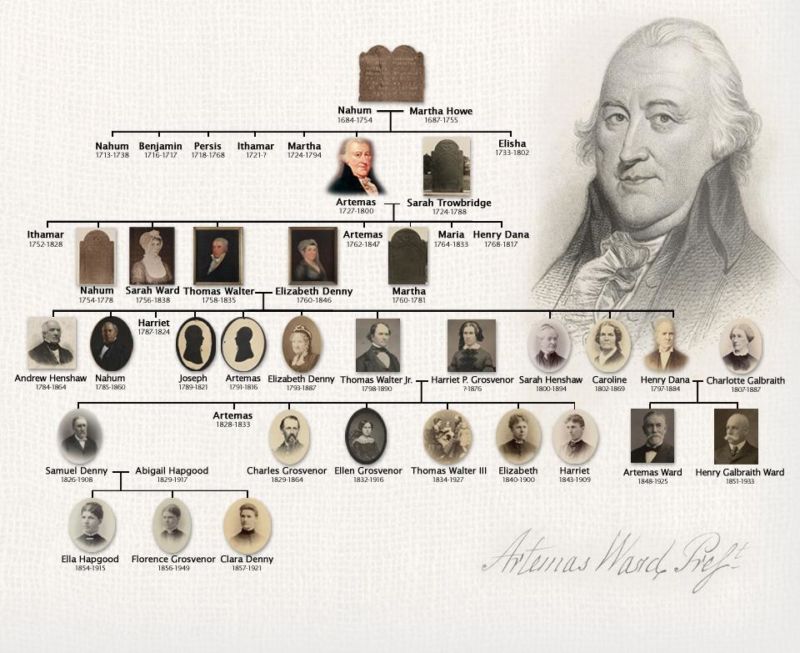
Image of a family tree.

Enlarge / Your family tree could be leaking personal information. (credit: Harvard University)

Earlier this year, news broke that police had devised an unexpected new method to crack cold cases. Rather than use a suspect’s DNA to identify them, data from the DNA was used to search public repositories and identify an alleged killer’s family members. From there, a bit of family tree building led to a limited number of suspects and the eventual identification of the person who was charged with the Golden State killings. In the months that followed, more than a dozen other cases were reported to have been solved in the same manner.

The potential for this sort of analysis had been identified by biologists as early as 2014, but they viewed it as a privacy risk—there was potential for personal information from research subjects to leak out to the public via their DNA sequences. Now, a US-Israeli team of researchers has gone through and quantified the chances of someone being identified through public genealogy data. If you live in the US and are of European descent, odds are 60 percent that you can be identified via information that your relatives have made public.

ID, the family plan

Any two humans share identical versions of the vast majority of their DNA. But there are enough differences commonly scattered across the three billion or so bases of our genomes that it’s now cheap and easy to determine which version of up to 700,000 differences people have. This screen forms the basis of personal DNA testing and genealogy services.

Read 13 remaining paragraphs | Comments

https://arstechnica.com/?p=1392743


Scontrini elettronici dal 2019 e lotteria per premiare i cittadini? Cosa si sa fino adesso

Addio al vecchio scontrino? Un articolo della bozza del decreto fiscale, collegato alla nota di aggiornamento del Def, prevede l’arrivo dello scontrino telematico dal primo luglio 2019: “riguarderà i soli contribuenti con un volume d’affari sopra i 400mila euro l’anno, mentre dal 2020 per tutti gli altri esercizi commerciali’. La novità in tema di fatturazione si affiancherebbe all’e-Fattura che sarà obbligatoria da gennaio 2019 per i privati residenti o con stabile organizzazione in Italia.(Leggi le prime semplificazioni dell’Agenzia delle Entrate per la fatturazione elettronica)


Scontrino elettronico da quando?

Secondo quanto previsto nella bozza del decreto fiscale, scatta l’obbligo generalizzato di memorizzazione e trasmissione telematica di scontrini e fatture all’Agenzia delle Entrate. L’entrata in vigore dell’obbligo sarà graduale: dal primo luglio 2019 per i contribuenti con un volume d’affari superiore a 400 mila euro (pari a circa 260.000 soggetti) e, dal primo gennaio 2020, per tutti gli altri. Per favorire l’adeguamento alle nuove modalità di fatturazioni, saranno previsti specifici esoneri legati al livello di connessione alla rete necessaria per la trasmissione dei dati e un’agevolazione finanziaria per l’acquisto di un registratore telematico da usufruire, per l’acquirente, sotto forma di sconto al momento dell’esecuzione dell’adeguamento o dell’acquisto del prodotto e da recuperare, per il venditore del prodotto, in compensazione attraverso il modello F24.

La lotteria degli scontrini a prova di privacy?

Lo scontrino telematico non è però l’unica novità. Arriva infatti anche la lotteria degli scontrini fiscali: stando all’ultima bozza del dl, dal primo gennaio 2020 partirà infatti una vera e propria lotteria nazionale collegata agli acquisti che si ripeterà ogni mese. Introdotta dalla legge di Bilancio 2017, ma sempre rimandata, la lotteria consentirà di abbinare ai corrispettivi elettronici un’estrazione di premi per incentivare la lotta all’evasione.

E la privacy dei cittadini?

La Legge di Bilancio 2017 ha infatti stabilito l’inserimento, previa richiesta del consumatore, del codice fiscale del cittadino nello scontrino fiscale e nella ricevuta d’acquisto, codice che servirà proprio per prendere parte alla lotteria. Solo così potrà partecipare all’estrazione di premi chi effettua acquisti di beni o servizi, purché non chieda la fattura con partita Iva. Lo scopo è quello di incentivare cittadini e negozianti a richiedere e ad emettere gli scontrini fiscali, per combattere l’evasione.

Vedremo se le misure che riguardano lo scontrino elettronico saranno approvate dal Parlamento entro l’anno insieme alla legge di Bilancio 2019.

The post Scontrini elettronici dal 2019 e lotteria per premiare i cittadini? Cosa si sa fino adesso appeared first on Key4biz.

https://www.key4biz.it/scontrini-elettronici-dal-2019-e-lotteria-per-premiare-i-cittadini-cosa-si-sa-fino-adesso/234161/