Google and Australia Are Fighting Over News. Here’s What You Need to Know
Google has threatened to pull its search business from Australia if regulators don’t modify a proposed law that would force tech giants to pay royalties to publishers.
‘Agility in Their DNA’: How Media Companies Will Lean Into Their Strengths
Where We Were
Last year started off with publishers in a quandary about how to maintain their programmatic advertising businesses beyond 2022, when Google would end its support of third-party cookies in its Chrome browser.
But by March, as a pandemic hit, publishers had to deal with the fallout, including a volatile ad market, adverse keyword blocking, shortened sales cycles, disappearing revenue lines, vendors defaulting on payment terms and challenged commerce supply chains. This list of existential threats only added to the ongoing pressures of increased privacy regulation and browsers tightly controlling media companies’ ability to effectively monetize their audiences.
But publishers’ knack for adapting proved invaluable. Under these turbulent conditions, media companies rolled out virtual events, dropped subscription paywalls and coaxed advertising budgets back through close ties with ad clients. The Wall Street Journal and The Washington Post, among others, launched ad products suited for markets where buyers had to make quick decisions on the fly.
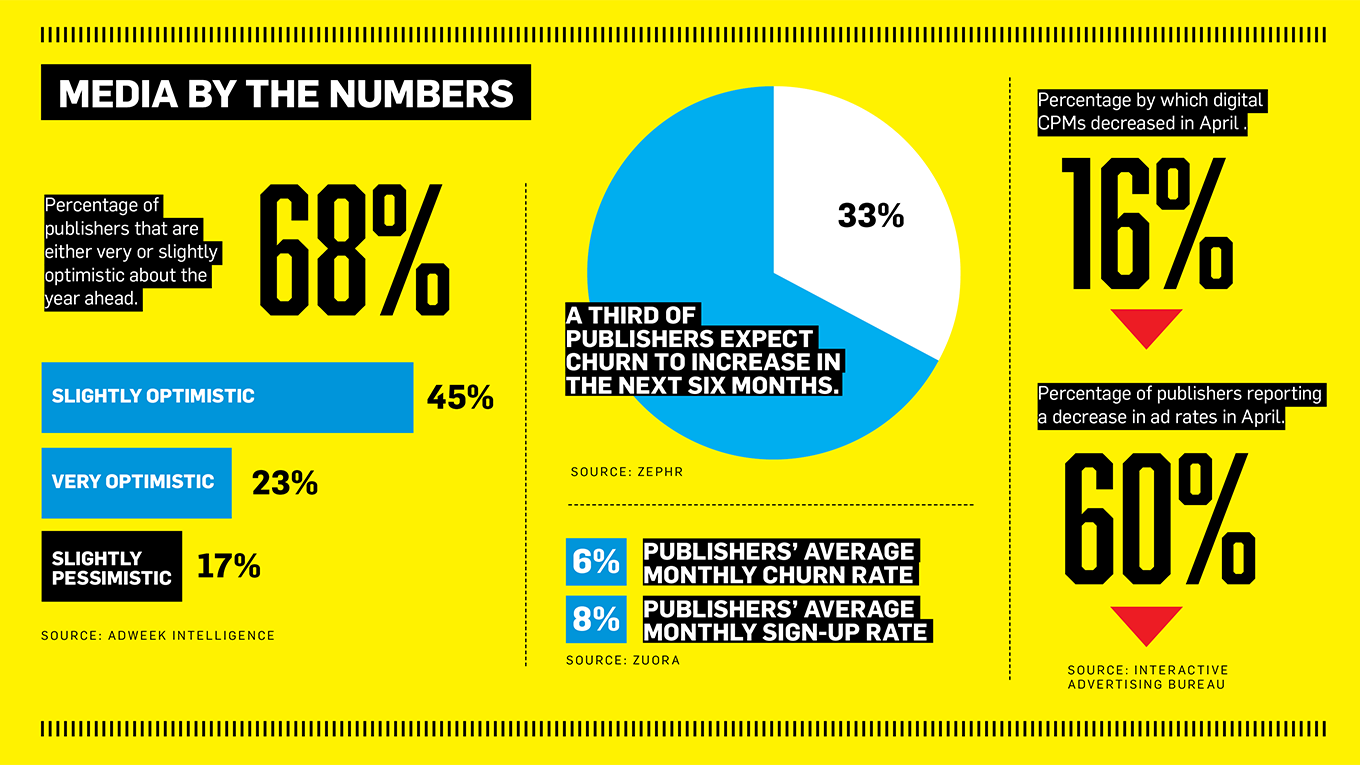
As budgets began flowing again (60% of publishers reported a decrease in ad rates in April, per IAB) those with close ties to clients were reaping the benefits in the second half of the year. Client retention equals success. NowThis publisher Group Nine launched 78 editorial and sponsored franchises and verticals since the start of the pandemic to cater to ad clients outside of stressed verticals like travel and hospitality. Feel-good series In This Together, launched in March, sold every episode since July to brand partners. In 2020, Group Nine had a 60% client retention rate, according to chief revenue officer Geoff Schiller.
“We win through retention. It’s one of our driving forces,” Schiller says. “It allows us to have long-standing relationships, deliver white-glove service and be quick and nimble.”
In a case where flat became the new “up,” a clutch of publishers, from Bloomberg Media to The Information and Group Nine, managed to make it through 2020 in relatively good shape.
Where We Are Now
The question now is how publishers will remain agile, especially since they are wrestling with the same predicament they’ve had since last March, namely how to forecast in an era of uncertainty.
Publishers anticipate positive growth, according to an Adweek Intelligence study. About 68% of respondents said they were either very or slightly optimistic about the year ahead. Across consumer and business-facing publishers, 71% foresee positive financial growth in 2021 thanks in large part to the prospect of Covid-19 vaccines on the horizon allowing for tentative meetings, in-person events and gradual returns to the office.
The pressure is finding where that revenue will come from, especially when the full impact of the pandemic has been veiled by stimulus packages. The multiple crises have forced the inequality gap to widen, and media companies are now having to show a real commitment to their diversity, equity and inclusion promises, both internally and externally.
The bifurcation of media companies has become pronounced. Larger, stronger companies with deeper data troves keep investing in digital transformation and adapting to the difficulties typical of economic downturns. Contenders like The New York Times are continuing to invest in journalists and high-profile editorial talent. Digital publishers like BuzzFeed and HuffPost have consolidated to capitalize on each other’s strengths.
Where We’re Going
Antitrust cases are piling up around Google and Facebook, from the former’s market dominance in search and ad tech to the latter’s purchase of Instagram and WhatsApp. These will rumble on through lengthy litigation proceedings that distract from the companies’ future innovation.
The Guardian Hires New Editor for Diversity, Equity and Inclusion
Susan Smith Richardson has been named deputy editor for diversity, equity and inclusion at the Guardian US, the latest publication to add DEI coverage to its masthead.
The position will involve developing coverage on “race and identity, power and inequality,” as well as bringing diversity and inclusion to editorial sourcing, audience and recruitment, according to a statement from the Guardian US.
The role is an increasingly common one for publishers; the Washington Post and the New York Times announced similar positions in June and October, respectively. Those roles, as well as the new position at the Guardian, were inspired by last summer’s Black Lives Matter protests following the death of George Floyd.
A time for introspection
“We had to look inward to see how we could address these issues within our own organization,” said John Mulholland, editor of the Guardian US, in an interview with Adweek.
In July, the Guardian US launched several initiatives to promote diversity, equity and inclusion. Those efforts included new senior editorial roles, reviews of newsroom practices and a hiring target of 50 percent of new roles to be filled by diverse candidates. Mulholland said the initiatives are ongoing.
“We know there is a huge amount of work to be done in terms of diversifying our journalism,” he said, adding, “we have to work in a place with a more equitable distribution of power.
Mulholland said Richardson will look to share that power by partnering with regional and nonprofit newsrooms, expanding the focus of the Guardian’s coverage and developing philanthropic projects about racial justice.
“She will help us find more inclusive ways of reporting all of our journalism,” he said.
A background in investigations
Smith Richardson comes to the Guardian from the Center for Public Integrity, an investigative journalism nonprofit.
“I’m excited to join the organization at this critical moment for democracy in the U.S. and the world, and look forward to helping create journalism that accurately reflects the diverse narratives that constitute America,” Richardson said in a statement.
Richardson is not the only new hire at Guardian Media Group. The firm announced today the appointment of Claire Blunt as chief advertising officer and CEO international. Blunt will be responsible for the Guardian’s global advertising business, Guardian US, Guardian Australia, and Guardian Jobs.
In a statement, Guardian Media Group chief executive Annette Thomas said, “Claire will play a vital role in leading our global advertising and jobs businesses to embed and execute their new strategies.”
Wyndham Destinations Bought Travel + Leisure for the Brand, Not the Product
On first look, it may seem odd that one of the largest timeshare operators in the country is now the owner of Travel + Leisure, a glossy tome dedicated to luxury travel.
But for Wyndham Destinations, which announced the $100 million purchase of the publication—the only monthly travel magazine still printing in the U.S.—this week, it’s the brand that holds value, not necessarily the magazine itself.
Wyndham Destinations, the Wyndham hotel empire’s timeshare arm that was spun off in 2018, will now become Travel + Leisure Co. That parent company will oversee a portfolio that includes the Wyndham Destinations timeshares (spanning 230 resorts globally) and 18 vacation clubs as well as two T+L vacation clubs, and will hold the licensing rights to the Travel + Leisure brand.
Crucially, Meredith, a media conglomerate best known as the publisher of magazines like People and Better Homes & Gardens (plus a bevy of local television stations), will retain editorial control and keep all profits from subscriptions and advertising as part of a 30-year licensing agreement.
Employees will still get their paycheck from Meredith, and there won’t be any staff cuts (or, for the time being, new hires). The magazine’s frequency also will not change.
“We saw a brand that had a lot of potential beyond just that small media slice,” said Noah Brodsky, chief brand officer for Wyndham Destinations, noting that there will be strict editorial walls between the two companies. “It’s our strengths as an operator and their strengths as a brand. We’ve purchased the world’s best travel content creator.”
Using a print magazine as way to build brand loyalty isn’t a new concept. Airbnb published a self-titled magazine before the pandemic shuttered it. Dollar Shave Club runs online publication Mel Magazine (although you’d never know it), and last December condiment brand Sir Kensington’s made a zine dedicated to sandwiches.
One of T+L’s competitors, the quarterly Departures, was once owned by American Express before being sold to Time Inc. and eventually Meredith in 2017, all while still being sent exclusively to American Express Platinum cardholders.
More relevant to travel, owned content has become king as brand marketers have slashed ad spend in favor of relying on their own social channels and platforms. Before the pandemic, Marriott was building its own media infrastructure. But in the case of Wyndham Destinations, the company won’t have a say in the magazine’s editorial decisions.
“That editorial independence has to be the bedrock of this brand,” Brodsky said. “We want consumers around the world to trust Travel + Leisure when they think about planning a vacation.”
Because Wyndham Destinations caters to leisure travelers, it hasn’t fared as poorly as other hospitality brands during the pandemic. In Q3 of 2020, it lost only 44% of revenue with a net income of $40 million. The strength of its drive-to destinations was the primary reason for this success.
Meredith hasn’t had the same luck: It laid off nearly 130 employees in September due to pandemic-related advertising cuts. But, buoyed by the presidential election, Meredith was only down 4% in Q1 of 2021, seeing revenue hit $694 million.
Talks between the two companies began last January, but negotiations took longer because of the pandemic. As noted, Wyndham won’t get a say in the content of Travel + Leisure, or the advertisers the publisher works with, but it will be able to create deals and vacation packages based around content. Notably, the brand will be “reactive,” and won’t get a look at the content until it’s published, according to Brodsky.
Why Vice Is Trying to Build a Community—on OnlyFans
In a first for publishers, Vice Media started an OnlyFans channel for Munchies, its food vertical, charging fans $4.99 monthly to access exclusive weekly videos.
Vice is no stranger to pushing boundaries. After all, its name is a gesture toward the edgy and uncouth aspects of life: sex, drugs, rock ’n’ roll and the rest. This latest act has something to do with sex, but a lot more to do with food.
OnlyFans is one of the biggest tech success stories from the pandemic. At its core, OnlyFans is a subscription platform not dissimilar to Patreon—hosting artists, musicians and fitness gurus alike. But it’s best known as the platform du jour for sex workers.
The publisher debuted on the platform on Dec. 16, posting 10 videos including recipes for fried avgolemono rice balls, chicken fricassee and cheesy orzo.
Adweek caught up with Clifford Endo Gulibert, Vice’s executive producer of digital video, who explained to us why the company is turning to OnlyFans and how he’s thinking about content and building a community for Munchies on the site.
Adweek: Munchies is now on OnlyFans. My first question is, why OnlyFans, a platform known for adult content?
Clifford Endo Gulibert: Any platform that is growing at a rocket-like pace, as is the case with OnlyFans, which gains 500,000 users per day, deserves a look from digital publishers. OnlyFans does have a history with adult content, which we all know, but there is a fairly sizable contingent of nonadult content on the platform, from personal trainers to chefs and celebrities. When OnlyFans put out a call for chefs and food creators to join the platform, it set our gears turning on how a brand like Munchies could enter the space. After exploring the platform and talking to other creators, we found that the opportunity to connect with fans on a more intimate level that comes with an OnlyFans page aligned with how we see our engagement strategy evolving.
The pandemic has created a crowded digital space where locked-down audiences can face screens that are overwhelming and noisy with an overload of content. With all of our publishing platforms, we account for fans as well as passive viewership, but we wanted to make something just for the people who love us. Instead of always going big, we’re taking advantage of this moment to get more targeted and create a sense of engagement that you don’t find elsewhere.
How will these videos be distinguished from ones Munchies might post on other platforms like YouTube or Facebook? Are Munchies’ OnlyFans videos going to be, well, more seductive? Are you taking the term “food porn” too literally here?
Our content on OnlyFans is a departure from anything we’ve done before and exclusive to our fans on the platform. Even though as a brand we always try to not take ourselves too seriously, we didn’t want to make this just a gimmick—we wanted to take the work seriously. We wanted to provide an actual experience that is worth a paid subscription and special. The recipes we’re sharing on OnlyFans have not been published anywhere else, with each going through our standard thoughtful development and testing in our test kitchen. While some of the content may be cheeky, we filmed it with an idea of stripping down what a standard food show typically looks like. This concept led us to create videos with no faces of chefs, no talking, no text on screen, and all close-up shots, that make sight and sound as the focal point.
‘To Inform and Not Troll’: The Information’s Kevin Delaney on Its New Opinion Page
With its new opinion section, business and tech publisher The Information is offering something else: perspective.
For this task, the company hired former Wall Street Journal reporter Kevin Delaney, better known as the co-founder and former editor of digital-first business publication Quartz.
Delaney is promising to use the new vertical—which published its debut opinions earlier this month and officially launches in January—to enhance the sense of community among The Information’s audience while avoiding some of the worst instincts of opinion pages.
Adweek caught up with Delaney to discuss what differentiates it and how opinion journalism fits into a subscription model.
This interview has been condensed and edited for clarity.
So, what’s unique about The Information’s approach to opinion journalism? The Information has always had a great community of readers among the decision makers in tech, media, finance, consulting—those kinds of industries—and they come for the exclusive reporting. There is a community of people who wind up interacting at events and the comments section of the reporting, and what was clear is there’s an opportunity to engage them in discussion about ideas that relate to the topics The Information covers. These are people who understand the value of ideas, and we could serve them by actually starting an opinion section.
The voices that we’re bringing to this—and you may have seen some of the names: Tracy Chou at Block Party; Joanna Coles, former chief content officer at Hearst; Nadia Eghbal, who is now at Substack; Arlan Hamilton, managing partner at Backstage Capital, a VC firm. It’s a diverse group of voices in areas that The Information covers, and we’re excited to start in January.
You mentioned community. The Information founder and editor in chief Jessica Lessin recently tweeted, “Too often [opinion journalism is] playing to its audience, and designed to troll, not inform.” What’s the difference between building community and playing to one’s audience? Our aim is to inform and not troll. Too often, opinion sections are so ideologically hidebound that they’re just predictable and ultimately kind of boring. You know what the people are going to say and they cease to be interesting. Or they’re so ideological that one of their chief purposes is to troll people who might not agree with them.
By the nature of what we’re writing about, it’s not a game of political alignment or loyalty; we’re just looking for the smartest people writing about issues this readership cares about.
[Our] readership is really interested in things that are really high-protein. Maybe they’re pieces that are a little more nerdy or intellectual than ones you might read elsewhere. They’re hungry for ideas developed with a deep level of sophistication, so that’s a different path than predictably reacting to whatever is happening in Washington in the given moment, which is a lot of what happens on other opinion pages.
We’re aiming to surprise and challenge the readership, to bring them ideas they might not have considered before.
What are the differences in launching a subscription-supported media business compared with an ad-supported one? We have a great community of subscribers, and we want to deliver more value to them with this opinion section. So we have no interest in trolling or clickbait or anything like that, which I imagine are some of the pressures you might feel with an ad-supported opinion section.
The biggest difference is The Information readership is a really engaged community. They’re there every day. They’re there for the journalism The Information is producing. They’re highly engaged. That’s actually a pretty unique and exciting opportunity to be publishing ideas into that community and getting a reaction, and what we’re seeing so far is they’re really receptive and interested in opinion pieces.
‘Generation Alpha’: Publishers Leaned Into Youth-Focused Media in 2020
Back in March, when Covid-19 was on the horizon but the lasting effects still unknown, current affairs publisher The Week went ahead with the U.S. launch of its title, The Week Junior, aimed at kids aged eight to 14-years-old.
“The key decision was ‘do we continue or do we stop?’” CEO of The Week Kerin O’Connor said. “We decided to proceed but it was tough for edit, they’ve never produced an issue in the office. It’s all by online co-working through a complex shift in working styles.”
Since then, the title has gained 75,000 paid subscribers, is now charging $49.95 for six months after hiking the price in August from $37.99. Its first six-month renewal rate is 85%, the publisher said. In the U.K., The Week Junior is five-years-old and has 100,000 paid subscribers. But the growth is in the U.S., said O’Connor, where acquisition and retention stats are outpacing the U.K.
Generation Alpha Rises—Along with Subscriptions
“This is ‘Generation Alpha,’ that was the global trend we were seeing,” O’Connor said. “There are issues that are important to them, like climate change, science, the world of nature. They are aware of their impact on the world. We want to be their companion. Every child is curious, we want to spark that creativity.”
Kids have had a strange year. Media brands in 2020 recognized that and, so, began catering more to to younger people. As parents doubled as educators, a flurry of youth-verticals from news publishers launched this year, including Time for Kids and NowThis Kids. For publishers, expanding to younger audiences works as a brand extension, a pipeline for growing subscriptions among older readers. Building the brand focused on the youngest readers has clear value. That’s particularly true in driving immediate business outcomes as existing older subscribers often gift the titles to the younger people in their life, O’Connor said.
As a separate vertical, Time for Kids is nearly profitable thanks to its rising subscription numbers, president Keith Grossman said. The title brought its classroom-based magazine online for free when kids took their learning home. Once the new semester began in September, it started charging for access after people had built up the habit. In four months it grew to 63,000 subscribers for its annual subscription starting at $19.99 a year.
Launching new verticals has been a way for publishers to cater to advertisers who are still spending, outside of core sectors that were stressed like travel.
New Verticals Capture New Revenue
NowThis News, one of the five core brands published by GroupNine, launched NowThis Kids in April aimed at kids aged six to 11. It started off with a dedicated YouTube channel and programming, along with a related podcast and newsletter. This was one of 78 franchises and verticals the publisher launched since the pandemic began. The vertical features family-first programming like how to tackle homelessness and trying to identify emotional health. The content is aimed at parents too.
For NowThis, the abundance of verticals was to help drive ad revenue, offering new inventory for ad clients—those outside of more distressed categories like travel—to partner with the publisher.
“We have leveraged existing relationships into open apertures for when we launched new brands,” said chief revenue officer Geoff Schiller. Cheerios, NowThis Kids’ launch partner, had worked with Group Nine on one of its other five core brands, PopSugar.
The Week Junior is mostly funded by subscriptions but also partners with a select number of brands, like non-profit Reading is Fundamental, (there’s a well-documented “decline at nine,” where children stop reading for pleasure after nine years old.) It viewed the first year as a year of “foundation and learning,” in terms of working with ad clients, having subscription revenue took the pressure off having to hit advertising numbers.
The Athletic’s Alex Mather on the Shutdown of Live Sports—the ‘Challenge of a Lifetime’
Almost five years ago now, The Athletic launched with the goal of disrupting the world of sports coverage. At that point, fans and experts alike had watched legacy sports publications fall into the trap of chasing digital ad revenue to account for the loss of print subscriptions as consumer habits changed. But as the magazines grew thinner and the digital experience more cluttered, sports journalism itself—despite a committed fanbase—was at a crossroads.
Enter The Athletic. The publication launched in Jan. 2016 with a subscription-first model that gave readers a completely ad-free experience. From there, it began investing heavily in talent. It drew some of the industry’s best writers and reporters, some straight from the fold of those struggling legacy publications.
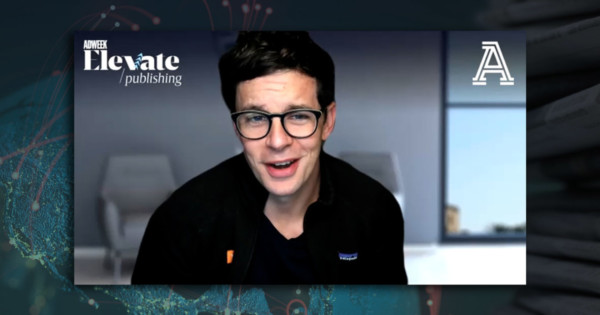
By spring 2020, co-founder and chief executive officer Alex Mather said The Athletic had around 500 journalists on staff. And then, the novel coronavirus pandemic led to an unprecedented and widespread halt of live sports. Speaking at Adweek’s Elevate: Publishing summit this week, Mather described that shutdown as the “challenge of a lifetime” for the sports media startup.
“Everyone [was] scared,” said Mather. “I think all of us as human beings were kind of scared or nervous about what the future held.”
For a team that’s used to traveling far and wide to cover countless of sporting events every year, they were suddenly confined to their homes—with no live sports to speak of. Their pivot was simple, explained Mather.
“We really simplified our jobs,” he said. The Athletic asked its writers to “just dig into your repertoire of stories that you’ve been thinking about writing, and that maybe you haven’t had a chance to write yet.”
They quickly discovered that while overall the shutdown was tough for the industry, there were a few upsides. Access to celebrities and athletes was suddenly much simpler, though different—after all, they didn’t have much to be doing either. With the entire world of sports sitting at home with lots of time to reflect, reporters found that there were a lot of opportunities for unique stories.
“We were able to get most folks that we wanted to talk to on the line, often talking about things they wouldn’t have otherwise talked about,” Mather said. “We had baseball players talking about anxiety attacks on the mound, that they might not have talked about before the pandemic.”
“We’ve weathered it by, you know, really simplifying the goals and mission and just telling great stories,” Mather said.
While The Athletic wasn’t immune to the effects of the Covid-related economic downturn this year—it laid off around 8% of its staff and imposed a staff-wide pay cut of around 10% in June—Mather is confident that the model will maintain its success in the long run.
Part of that is due to a strong focus on data and analytics, which journalists have constant access to in real time, Mather explained. It allows the company to be constantly informed regarding demand for different sports, teams or regions, and shift its coverage accordingly.
The pandemic has made a big impact on how, where and when people are accessing The Athletic’s content. “Everything shifted,” Mather said. “Folks were staying up a little bit later because maybe they didn’t have to get up early.” They also saw a big dip, initially, in listeners on their podcasts with the sudden loss of commuting time.
To address those behavior changes, The Athletic experimented with a lot of different things, from sending emails and different times of the week and day. The idea was to prompt folks to turn push notifications back on and constantly tweaking its paid social strategy. They had to work their way back into the routines of folks who’d had their day-to-day lives and media consumption habits completely upended.
Catherine Levene Named New President of Meredith’s National Media Group
Magazine publisher Meredith has appointed Catherine Levene as its new president, replacing Jon Werther who left the corporation in 2019.
In her new role, Levene will oversee all National Media Group activities from Meredith Magazines to Meredith Consumer Product, and report to CEO Tom Harty, who describes Levene as “relentless in pursuing the best experiences” for both consumers and advertisers.
Levene has a strong history with the company. Under her leadership as chief digital officer, Meredith launched a first-party data studio, optimized content performance and expanded digital advertising revenues. In addition, the National Media Group saw a 38% increase in total advertising revenue, published 30% more videos and introduced new multi-platform brands. Levene is also proud of the company’s diversity and inclusion efforts and is a sponsor of :BLACKPRINT, Meredith’s Black employee resource group.
“I am excited for the future of the National Media Group under her leadership, and I am proud and thrilled to see Catherine make history as Meredith’s first female corporate officer,” Harty said in a statement.
Levene has spent her entire career in the media industry, working for companies like The New York Times and Daily Candy before moving to the Meredith Corporation in January 2019. As Meredith’s National Media Group’s president, Levene is focused on maintaining the company’s history of serving American women of all ages. The media group reaches nearly 95% of U.S. women through brands like PEOPLE, Better Homes & Gardens and Allrecipes.
“I am extremely proud of what our Digital team has accomplished,” she said in a statement. “Together, we have powered through the Covid-19 pandemic to find more innovative ways to meet the demands of consumers and advertisers alike across our business. These examples prove Meredith’s commitment to serving women at every stage of their lives by creating the information and experiences they have grown to know and trust from our brands.”
“I am grateful to work for a company committed to becoming a more diverse and inclusive employer and ultimately to serving our audiences and customers in an even more rich and impactful way,” she added.
A Year After Launch, The Financial Times’ Consultancy Is Booming
The Financial Times is selling its subscription-building prowess to publishers and other companies. These efforts have turned into a multimillion-dollar business after its first year.
Called FT Strategies, the separate business division has autonomy from the Financial Times. Still, it has access to decades-worth of expertise in building reader-revenue, drawing on the experts who figure out the publisher’s propensity models that predict consumer behavior.
The consultancy has grown from three to 13 people, many from firms like Goldman Sachs, Boston Consulting Group and Accenture. But that talent base also includes former media and data specialists.
In its first year, FT Strategies has worked with 90 clients, 85 of which are Europen news publishers, including The Independent, El Mundo and Bonnier News. It has also partnered with organizations like the Google News Initiative and International News Media Association.
Thanks to companies’ demand to drive recurring audience revenue, FT Strategies has doubled its revenue target and quadrupled its profit target, although it wouldn’t share specific numbers.
“We can quickly move from theory to reality, we don’t just leave clients with a 100-page document,” said Tara Lajumoke, managing director at FT Strategies and former partner at McKinsey & Company. “Instead, we work with them to test and learn, form experiments, build experiences, methodology and improve capabilities.” This can be over a three-month period or a two-week intensive program that focuses on a specific question, like improving conversions with female readers, a problem the FT started tackling in 2017.
For several years, publishers have been getting into the consultancy business, mostly through creating content. Edging up the marketing food chain means getting closer to an ad client’s overall communications strategy rather than launching a single branded content campaign. Few have gone to the lengths of the FT and built a consultancy unit based on driving subscriptions.
Much has been shared about the FT’s north star strategy, where the entire company aligns with a metric that drives business growth. In most news publisher cases, this is a proxy for engagement. For the FT, this is a combination of recency and frequency of visits, and volume of articles read. If a reader’s metric drops below a certain level, their propensity to churn increases, so the publisher deploys different levers—like promotions or products—to save them.
For The Independent—current CEO Zach Leonard was former FT managing director until 2004—this metric combines the number of days in the past 30 the reader has been active, consumption of premium content and volume. Identifying the correlation between this metric and subscribing discovered the threshold that leads to a propensity to subscribe or churn.
News readership via digital platforms in the U.K. has increased by 20% year-on-year, according to Publishers Audience Measurement Company. That translated to subscriptions, tech company Zuora found digital news and media subscriptions grew by 110% during the first three months of the pandemic. As with most publishers, the FT has experienced a pandemic-induced subscription windfall. In the first six months of 2020, digital subscriptions increased by 12% compared with the same period the year prior. Reader engagement, measured through metrics like recency, frequency and volume, has grown by 27% during the same period.
While Covid-19 cohorts have led to peaks in most subs businesses, those able to tailor their products to each person can keep them when the busy news cycle wanes. The FT wouldn’t say what its churn rate is.
“The pandemic has focused news brands on the need to offset the inevitable drop in sales of print copies with an increase in the digital audience,” said Sarah Johnson, publishing business director at Havas Media Group. “The outbreak has delivered a captive audience, but even before it all started, indications were pointing in the right direction for subscription growth. I would anticipate this trend to continue into 2021.” However, she points to the fall in the FT’s print circulation by 35% and print subscriptions by 25%, countered by growth in digital editions by 75%, albeit from a low base, according to the Audit Bureau of Circulations.