Rocket Report: Rebuild begins at Blue Origin launch pad; Relativity targets Mars

New launch pad in the works at Cape Canaveral. Space Launch Delta 45, the military unit that runs Cape Canaveral Space Force Station, is exploring the potential creation of a new rocket launch complex for Naval Ordnance Test Unit and US Army missions, Florida Today reports. The new location, known as Launch Complex 51, would be located about 2 miles north of Port Canaveral, making it the spaceport’s closest pad to public areas. LC-51 would encompass about a 50-acre area.

Better real estate… The new pad would replace Launch Complex 46, which lies within the explosive clear zone of Blue Origin’s nearby Launch Complex 36. Blue Origin’s New Glenn rocket exploded on that launch pad during a preflight test last month. LC-46’s proximity to LC-36 means the two pads cannot operate simultaneously without disruption. LC-46 has hosted a handful of small satellite launches and hypersonic missile tests in recent years.

Changes in attitude at Latitude. French launch startup Latitude has removed all mentions of the Zephyr name from its website, now referring to its rocket simply as “Our Launcher,” European Spaceflight reports. The rocket, previously known as Zephyr, is a two-stage launch vehicle that will stand 19 meters (62 feet) tall and is designed to deliver up to 200 kilograms (440 pounds) to low-Earth orbit. The company is currently targeting the second half of 2027 for the rocket’s inaugural flight.

Due diligence… Latitude did not explain the reason for the change, but one plausible explanation is trademark risk. The Zephyr name is already trademarked within the aerospace sector by Airbus subsidiary AALTO, whose solar-powered High Altitude Platform Station aircraft bears the name. The Zephyr trademark filing, which was granted by the European Union Intellectual Property Office in 2005, covers unmanned aerial vehicles, satellites, parts and fittings, and “launching apparatus for the aforesaid goods.”

China’s Zhuque-2E breaks up in orbit. The upper stage from a commercial Chinese rocket that launched last week has broken apart in space, spreading debris in a heavily trafficked part of low-Earth orbit home to the International Space Station and a significant portion of SpaceX’s Starlink broadband network, Ars reports. The breakup occurred shortly after the Zhuque-2E rocket reached orbit on June 9 with two satellites providing direct-to-cell communications, perhaps around the time the upper stage was expected to perform a disposal burn. The US Space Force confirmed the breakup event in a post on space-track.org, a website used by the military to distribute orbit data to the public.

https://arstechnica.com/space/2026/06/rocket-report-rebuild-begins-at-blue-origin-launch-pad-relativity-targets-mars/
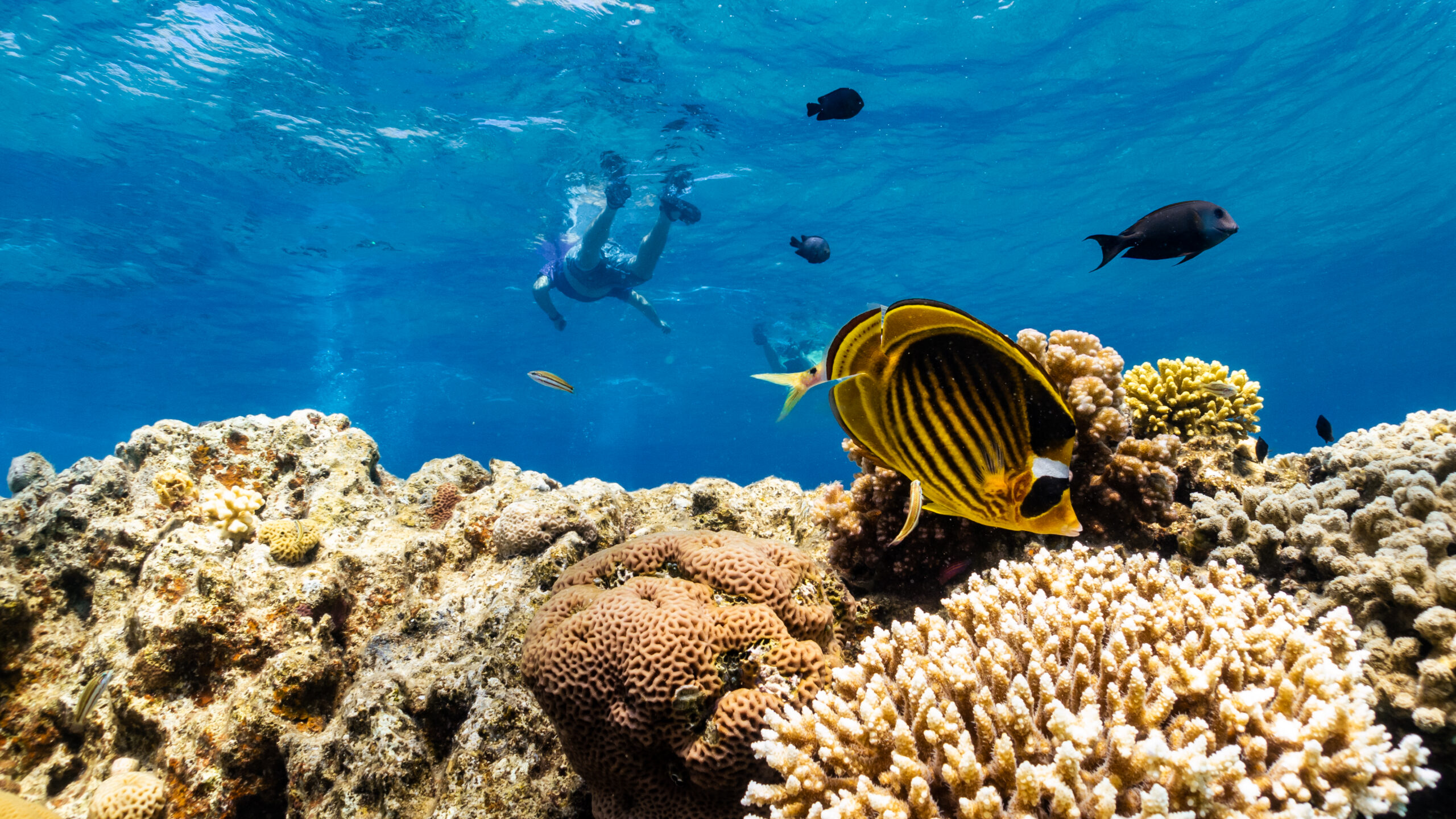

As global warming threatens corals, scientists search for reefs that can take the heat

Coral larvae can drift hundreds of miles from their parents before settling on a reef for the rest of their lives.

It was an ambitious idea, she said, that would require political support and significant financial backing—about $10 million by her estimate—as well as community buy-in. Not every super reef can be cordoned off to fishing and other activities, she said.

“People need to live. People need to eat. They need to fish.” It would be critical, she said, to consult with and co-design any protected areas in this corridor with communities that would be impacted, as is being done in Laura.

But overall, the idea seemed feasible, the Marshall Islands Marine Resources Authority’s Edwards said. “The idea of creating a multi-national network of marine-protected areas connecting resilient reefs across the Marshall Islands, Kiribati, and Tuvalu is a very promising concept,” she said.

Other experts agree. “Protecting source reefs and well-placed stepping stones between them can maintain dispersal networks that can share heat-tolerant adaptations and provide new coral larvae to help degraded reefs recover,” said Emily Darling, director of coral reefs at the Wildlife Conservation Society. “Accounting for connectivity between high-integrity, climate-resilient reefs multiplies their conservation value across an entire region.”

Once established, Cohen said, this first Super Reef corridor could serve as a proof of concept for creating similar protected networks around the globe.

Future corridors might be created between Indonesia, the Philippines, and Malaysia, she said, or India, the Maldives, and the Chagos Islands in the Indian Ocean.

Ultimately, she said, the success of these networks would depend on countries’ willingness to collaborate and select which reefs they would prioritize. Her role, as she sees it, is to deliver the scientific data to inform those choices. She wants to ensure that resources are directed where they can have the greatest impact—as quickly as possible.

“This is an urgent mission,” she said.

Forecasters recently warned that El Niño conditions have formed once again in the tropical Pacific and are expected to strengthen by this fall.

 In the coming months, Cohen said, “We have a pretty strong chance of having a heat wave in the Marshall Islands.” She was already having nightmares of it ravaging the vibrant reefs she’d just visited.

“It’s just a horrible feeling,” she said, gazing out toward a shallow reef offshore Bokanbotin.

But she wanted to be there when it hit. She had already started to plan her return trip to the Marshall Islands before she left.

“We want to be there in the peak of that heat wave to send Yellowfin out and see how the corals are doing,” she said. “I have a pretty good idea which corals will resist because we’ve seen them do it before. But we need to make sure.”

This article originally appeared on Inside Climate News, a nonprofit, non-partisan news organization that covers climate, energy, and the environment. Sign up for their newsletter here.

https://arstechnica.com/science/2026/06/as-global-warming-threatens-corals-scientists-search-for-reefs-that-can-take-the-heat/


After Senate vote, Trump admin backs off plans to kill ocean monitoring

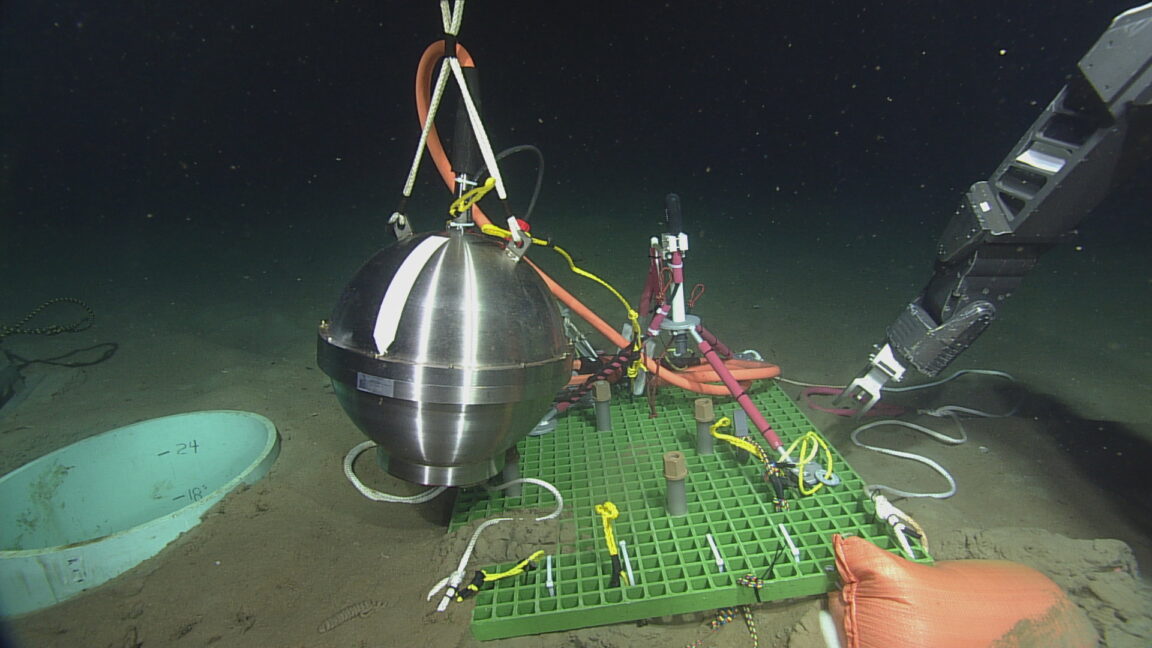
In May, the federal government announced without warning that it would take apart a network of ocean monitoring systems that it had spent over $350 million to build. No reason was given for the decision to shut down the Ocean Observatories Initiative (OOI), but suspicion immediately focused on the network’s role in tracking climate change.

But the OOI also provides data that’s useful for weather forecasting and fisheries management, leading to widespread opposition. Today, it appears that the opposition has won, as the government will announce that it’s reversing the decision. The big remaining question is how much damage the OOI took during the intervening month.

As of now, there is no formal statement available from the federal government. However, The New York Times reports that the decision will be announced later today, and Ars received a statement from Zoe Lofgren, the ranking Democrat on the House Science Committee, indicating that the decision has been made.

The OOI is a federally supported resource that provides ocean data for use by academic researchers, government planners, and private companies. It consists of arrays of monitoring systems in several locations in both the Atlantic and Pacific Oceans that can track things like currents, salinity, chemical levels, temperatures, and tectonic activity. (There are over 100 individual entries on the page that display the data gathered by the system.)

https://arstechnica.com/science/2026/06/after-senate-vote-trump-admin-backs-off-plans-to-kill-ocean-monitoring/


Hunter-gatherers in Siberia died of a plague outbreak 5,500 years ago

So much for that theory.

Welcome to the world’s first plague cemetery

The Angara River flows from the depths of Lake Baikal. The people who lived along it thousands of years ago survived by hunting, foraging, and fishing. They would have lived in relatively small groups, but they seem to have stayed connected across hundreds of kilometers through marriage and family ties. Although their lifestyle would have been one of constant movement, they buried their dead in cemeteries such as Ust’-Ida, interring them with offerings of clay pots, stone tools, and bone and antler points.

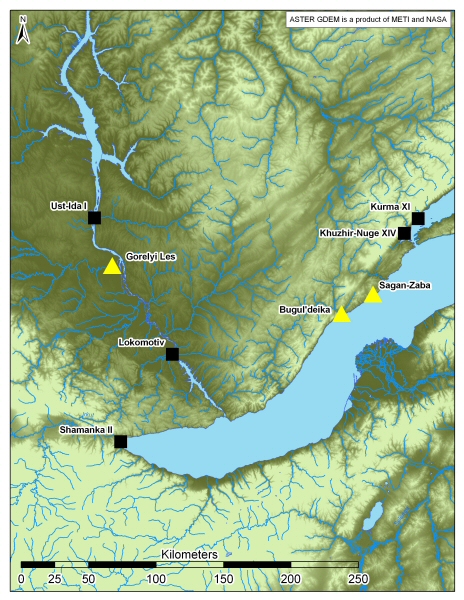
a map showing the location of archaeological sites near Lake Baikal

This map shows the location of Ust’-Ida I and Shumilikha cemeteries near Lake Baikal and the Angara River

Credit: By Tara Young, taray@ualberta.ca and NASA https://wist.echo.nasa.gov/api/ – NASA’s freely offered GDEM https://wist.echo.nasa.gov/api/, Public Domain, https://commons.wikimedia.org/w/index.php?curid=21156871

This map shows the location of Ust’-Ida I and Shumilikha cemeteries near Lake Baikal and the Angara River Credit: By Tara Young, taray@ualberta.ca and NASA https://wist.echo.nasa.gov/api/ – NASA’s freely offered GDEM https://wist.echo.nasa.gov/api/, Public Domain, https://commons.wikimedia.org/w/index.php?curid=21156871

At Ust’-Ida, archaeologists with the Baikal Archaeology Project unearthed a grim mystery: an unusually high number of dead children, a cluster of radiocarbon dates suggesting that many of the cemetery’s occupants died at around the same time, and no evidence of violence. Something tragic happened to this ancient hunter-gatherer community, but what? Archaeologists thought ancient DNA might shed some light on the mystery.

Macleod and his colleagues started with shotgun sequencing, a technique used to identify the DNA sequences in a sample when scientists don’t know exactly which organisms they’re looking for. They used samples from the roots of 46 ancient people’s teeth from four different cemeteries along the Angara River.

And to their complete surprise, they found plague.

Fun fact: Because dental roots are fed by lots of blood vessels, anything in your bloodstream is likely to pass through your teeth at some point, which means if you die with the plague, it may leave its DNA behind in your teeth. “This is really cool evidence that the plague was in the bloodstream, which is lethal,” said co-author Frederik Seersholm, a University of Copenhagen ancient DNA researcher who clearly knows a fun fact when he sees one, in a press conference.

About 11 of the 31 people Macleod and his colleagues tested at Ust’-Ida had Y. pestis DNA in their teeth, and Macleod says that’s “consistent with pretty much everybody [in the cemetery] having died of plague,” not just those 11. That’s because the detection rate for plague DNA in the remains at Ust’-Ida matches that at Smithfield’s, a known mass grave specifically for plague victims in London. It’s safe to assume everyone buried there had the plague.

https://arstechnica.com/science/2026/06/hunter-gatherers-in-siberia-died-of-a-plague-outbreak-5500-years-ago/


Cockroaches scurry around with thousands of pieces of bacterial genomes

Last week, we looked at a new study of the origin of complex cells, one that showed that our ancestors’ genomes were pieced together from bits and pieces of multiple species. It put a spotlight on a phenomenon called horizontal gene transfer, in which a gene from one species is incorporated into the genome of a distantly related species. The frequency of horizontal gene transfer means that, in addition to the neatly branching trees that relate species by common descent, there are small threads connecting distant branches of the tree of life.

It’s easy to see why horizontal gene transfer would be common among microbes. They often live in complex communities that are likely awash in the DNA of dead and damaged cells. Plus, bacteria and archaea lack a membrane between their DNA and the rest of the cell, making it easier for environmental DNA to find its way to the genome.

However, a new study this week shows that horizontal gene transfers are remarkably common even in multicellular animals. And it does so by examining the genomes of multiple cockroach species, which have had bits of bacterial DNA for millions of years.

Going horizontal

Neither bacteria nor archaea keep their DNA in a structure like the nucleus. As a result, any DNA that finds its way inside the cell has the potential to become intermingled with the genome and be incorporated permanently. That permanent incorporation is often aided by the DNA damage repair enzymes, which sometimes “fix” damage by inserting any DNA they come across in a cell.

Another reason horizontal gene transfer is a big factor among microbes is that they lack dedicated germ cells. If foreign DNA gets incorporated into the genome of any cell, it will be inherited by any descendants of that cell. In contrast, in multicellular animals, any foreign DNA incorporated into the genome of a liver cell will not be inherited by anything. So, you not only have to get the foreign DNA into the nucleus, but it also needs to get into the nucleus of the right cell.

https://arstechnica.com/science/2026/06/cockroaches-scurry-around-with-thousands-of-pieces-of-bacterial-genomes/


Did a medieval flying monk spot Halley’s comet, twice? It’s complicated

Early in the 11th century, a young Benedictine monk named Eilmer jumped from the 150-foot tower of his abbey in the small English town of Malmesbury, wearing a pair of crude wings he’d fashioned from willow wood and cloth. Eilmer managed to glide a good 600 feet, passing over the city wall before crash-landing in a small valley near the river Avon. The fall broke both his legs, crippling him. Malmesbury Abbey still boasts a stained-glass window in honor of Brother Eilmer.

This legendary experiment in medieval aviation comes to us via 12th-century historian William of Malmesbury in an account written circa 1125, although William neglected to provide future historians with an exact date for the feat. But William does mention another key episode in Eilmer’s life when the monk was “advanced in years”: Eilmer witnessed Halley’s comet in 1066, commenting, “It is long since I saw you.” Some historians have interpreted this to mean that Eilmer saw Halley’s comet on an earlier fly-by in 989, when he would have been a young boy.

Assuming Eilmer was at least five years would in 989, he would have been born no later than 984. This would make Eilmer in his 80s in 1066, with his attempt at flight—which occurred when he was “in his first youth”—likely falling between 1000 and 1010. However, it’s an estimate that is based on a lot of assumption, according to James Aitcheson of the University of Leicester, who argues in a paper published in the journal Notes and Queries that Eilmer may have seen a different comet altogether in his youth—the comet of 1018. If so, he would have been born much later and the date of his flight would have occurred between the 1020s and 1040s.

https://arstechnica.com/science/2026/06/did-a-medieval-flying-monk-spot-halleys-comet-twice-its-complicated/


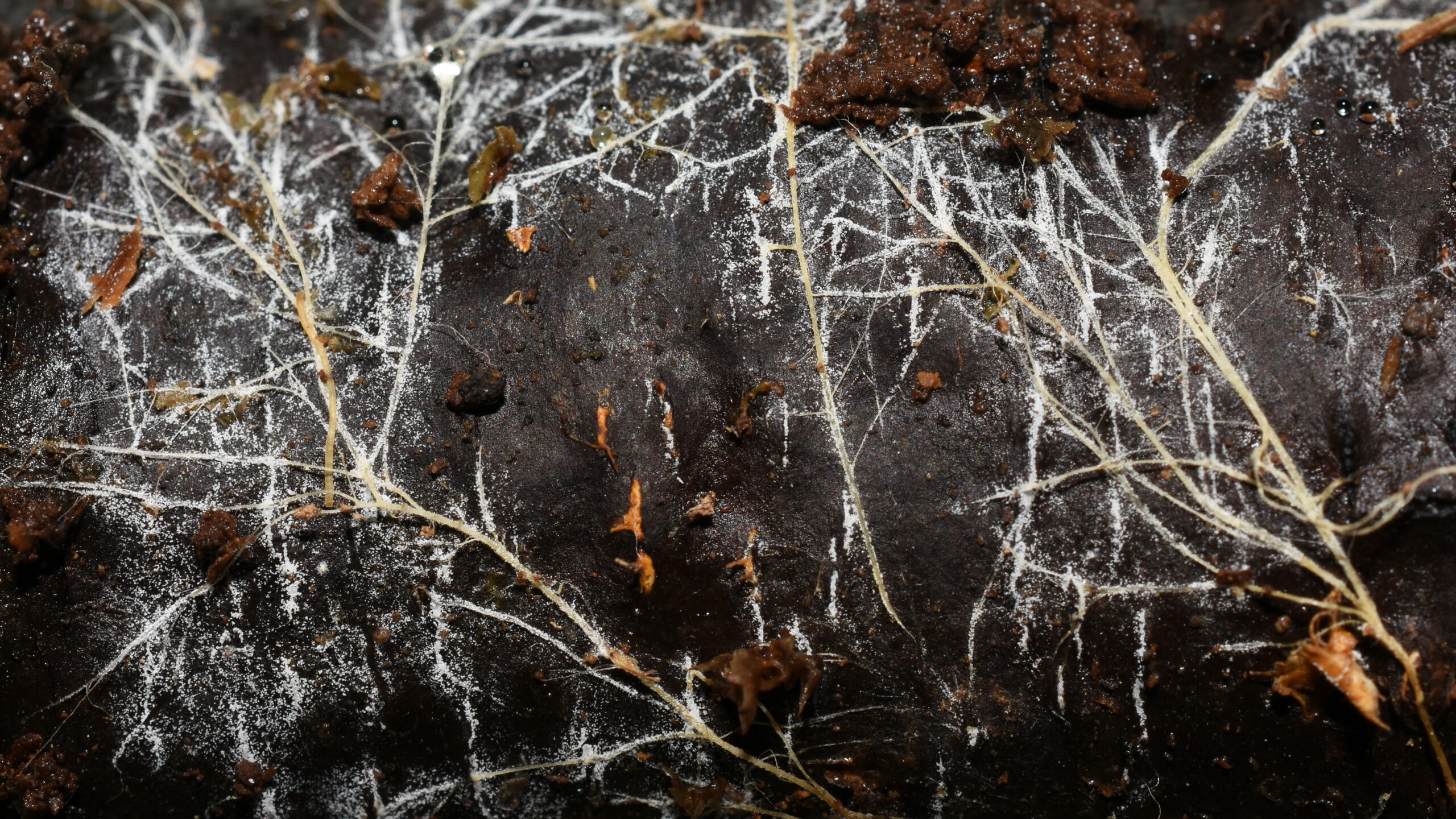
Threads of underground fungal networks are long enough to reach beyond the Solar System

The study only covers living arbuscular mycorrhizal fungal networks, Stewart said, and doesn’t include dead fungal networks, which also help to store carbon and add to the total biomass and influence of the networks on ecosystems. Research into dead fungal networks is still being explored.

The study also found where these networks are most threatened. Fungal network densities across croplands are about half of what they are in wild ecosystems. Meanwhile, wild grassland ecosystems hold about 40 percent of the world’s arbuscular mycorrhizal biomass. Yet those grasslands are among Earth’s least protected ecosystems, and they are converted into farmland at four times the rate of forests, posing a potential threat to these networks and the benefits they bring to plant life and carbon storage.

Previous research from SPUN has found 90 percent of fungal communities across the globe are unprotected, and many ecosystems, like the deserts of the American Southwest, are understudied.

What exactly is driving mycorrhizal fungi losses, and the consequences of that decline, need to be explored next, the researchers said, which is why the SPUN team will be at this year’s United Nations Climate Change Conference—COP31—to present to policymakers about the importance of the networks and the role they could play in protecting ecosystems and sequestering carbon.

Understanding mycorrhizal fungi more deeply at the ground level is key, said Corentin Bisot, an AMOLF biophysicist and co-author of the study.

“We’re still far from completely understanding how, if you have a grassland next door, and you want to [increase] microbes and fungi there,” Bisot said. “We don’t have the toolbox for you to do it.”

This study, Stewart said, is just the first map. And like the first maps the Spaniards drew of California—which presented the state as an island, he said, there will be new discoveries about the density of fungi networks around the globe to grow the public’s understanding of them.

This article originally appeared on Inside Climate News, a nonprofit, non-partisan news organization that covers climate, energy, and the environment. Sign up for their newsletter here.

https://arstechnica.com/science/2026/06/threads-of-underground-fungal-networks-are-long-enough-to-reach-beyond-the-solar-system/


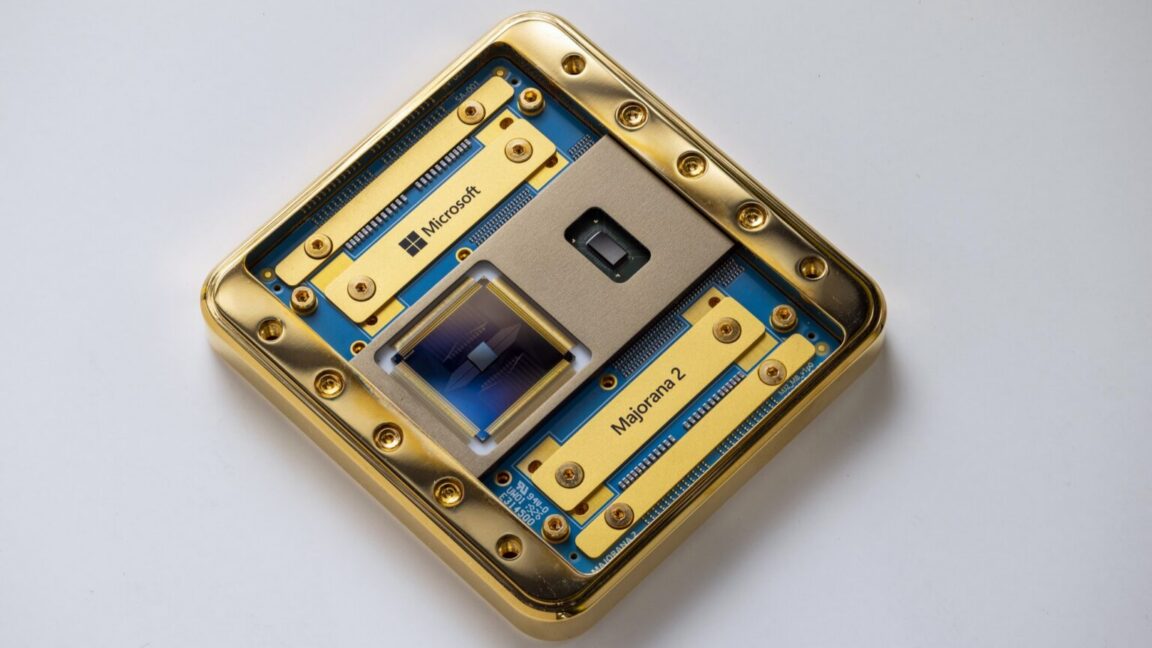
Microsoft, Atom Computing, EeroQ update their quantum computing progress

That doesn’t mean the error-corrected qubit was fully stable. Eventually, one of the errors that inevitably occurred couldn’t be recovered from because too many of its individual atoms changed state at once. But performing normal error correction could keep some of these logical qubits stable for up to 90 rounds.

Again, that’s not good enough for any sort of sophisticated calculation. But it’s a lot closer than the company was before working out this technique.

Resonating

EeroQ is a startup with a distinct approach to qubits. A number of companies are looking into using the spin of electrons as their qubits, typically because it’s easy to fabricate chips that can manipulate electrons held in quantum dots. EeroQ is making its chips with lots of tiny pools that can hold a drop of liquid helium. When an electron is placed on that drop, it has nowhere to go because helium hates to carry an extra electron. So, the lone electron just floats on the surface.

Which is great, but it was already well-established physics long before the company launched. The problem was that nobody had figured out a method to interact with the electron in useful ways.

Recently, the company released a manuscript describing a new version of its chip, one with a small resonator next to the helium-filled pool. They showed that this resonator could couple with the movement of the electron, which is kept from hitting the walls of the pool by an electrical field. Since the electron’s motional states are quantized, the resonator adopts one or two states during the experimental procedure, which is the potential building block of a qubit.

Again, that’s nowhere near having functional computing hardware. But again, it’s this sort of incremental work that’s needed if any of these technologies is going to live up to its promise.

https://arstechnica.com/science/2026/06/microsoft-atom-computing-eeroq-update-their-quantum-computing-progress/


Beans use an immune receptor to call in airstrikes on caterpillars

At the same time, the plants unable to detect the molecular signature of the caterpillar’s drool were largely ignored by the wasps. They weren’t completely defenseless, though. “There are other papers that show if you knock out all immune signaling, the caterpillars grow twice as big—they get enormous,” Steinbrenner says. This, he suggests, indicates the immune system had other pathways to deter herbivores like the caterpillars.

Crop defense systems

While the team connected the broken inceptin receptor to a muted distress call, the exact downstream immune signaling pathway isn’t fully understood. The authors suspect that the highly specific caterpillar detection they saw piggybacks on the plant’s general wound response, potentially triggering secondary internal alarms known as damage-associated molecular patterns, or DAMPs. Exactly how the initial receptor activation ultimately translates into the production of volatile organic compounds remains a puzzle.

Another caveat lies in the choice of the attacker. The Spodoptera exigua, known as the beet armyworm, is a generalist herbivore, meaning it feeds on a wide variety of plants and is rather susceptible to botanical defenses. Specialist herbivores that feed on specific plants likely evolve metabolic countermeasures to detoxify or otherwise bypass chemical defenses of their hosts. In the study, the researchers acknowledge that we’re not yet sure whether a functional inceptin receptor provides broad-spectrum resistance, or if specialized pests can fool this alarm system.

Finally, in the Oaxacan field test, the team showed that predatory wasps use the airborne distress signals to find their prey, but the relative importance of direct leaf defenses versus this indirect wasp recruitment isn’t clear. In their future research, the scientists want to investigate this in more detail. Still, the team hopes their work will help us better protect crops like bean plants from pests.

“Today, we do that with chemicals, with pesticides, but if we could use the best receptors and the best volatiles from lots of different plants, maybe we might be able to confer immunity to most problematic pests or pathogens in a sort of targeted way,” Steinbrenner says. “That’s the big picture, the goal of our lab in the long run. And I think doing that would mean understanding more of these types of receptors and volatiles.”

Science Advances, 2026. DOI: 10.1126/sciadv.aec3229

https://arstechnica.com/science/2026/06/beans-use-an-immune-receptor-to-call-in-airstrikes-on-caterpillars/


Male bowerbirds prefer to dazzle females with bright human-made items

When the team returned to the sites, they determined which decorations had been selected from the slush pile and moved to a bower, and whether it came from an urban or rural source. After recording the data, all the original decorations were returned to their bowers.

Green glass and red wire

A male great bowerbird in a rural environment displaying to a female great bowerbird. Credit: Caitlin Evans

The subsequent analysis revealed that rural bowerbirds most often used green glass and green leaves or seeds for decoration, while urban birds preferred green glass and red wire. Plastic items were also popular, although “we also found items including a pair of handcuffs, medicine jars at bowers near a hospital, and fluorescent mouth guards from a site near an Australian Rules football ground,” said University of Exeter co-author Caitlin Evans.

Urban bower decorations were more than 10 times more likely to be human-made than those of rural bowers, which had more natural items, such as fruit, seeds, leaves, and sticks. Urban bowers also had nearly five times as many decorations as rural ones, averaging 90 items per bower compared to 20 for the rural birds. One overachieving urban male gathered 300 items to decorate his bower. Both urban and rural male bowerbirds showed a strong preference for human items when given a choice of items sourced from each environment. And red decorations in urban bowers were more vivid, and the green items duller, than in rural bowers.

https://arstechnica.com/science/2026/06/male-bowerbirds-prefer-colorful-human-items-to-decorate-bowers/