Launch day has arrived for NASA’s Artemis II mission—here’s what to expect

KENNEDY SPACE CENTER, Florida—Launching to the Moon is an all-day undertaking, something the four astronauts waiting to climb aboard NASA’s Artemis II rocket know well.

“It is actually a very long day,” said Victor Glover, the pilot on Artemis II. “We wake up about eight hours before launch, and there’s a pretty tight schedule of things to get out there.”

Glover and his three crewmates have their schedules planned to the minute throughout the nine-day Artemis II mission. If all goes according to plan, their mission will carry them more than a quarter-million miles from Earth, farther from home than anyone has ventured in human history. After looping behind the Moon, the astronauts and their Orion capsule will fall back to Earth at some 25,000 mph (40,000 km/hr), setting another record for the fastest that humans have ever traveled.

Reid Wiseman, the mission commander, will join Glover at the controls inside the Orion spacecraft’s cockpit. Mission specialist Christina Koch and Canadian astronaut Jeremy Hansen round out the crew. All four have critical roles during the mission to test the Orion spaceship, which is flying with humans for the first time after 20 years in development.

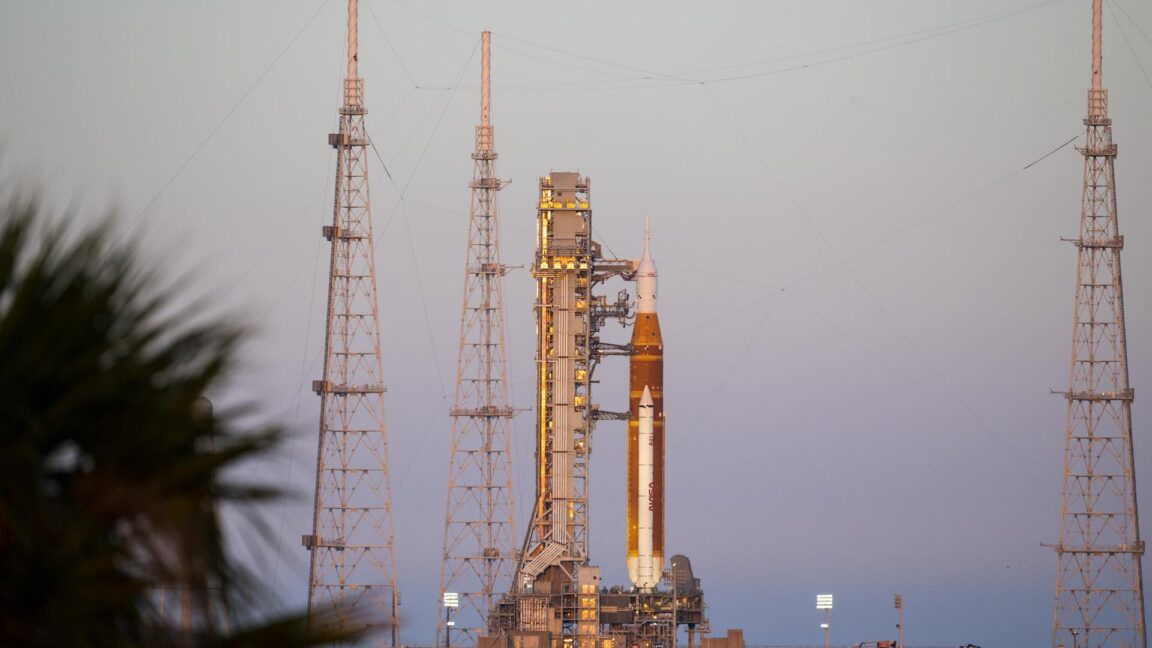
The journey could begin as soon as Wednesday at NASA’s Kennedy Space Center in Florida. The mission has a two-hour launch window opening at 6:24 pm EDT (22:24 UTC). You can watch NASA’s live coverage of the countdown and launch in the YouTube stream embedded below.

[embedded content]

The full Moon, Artemis II’s destination, will rise over the eastern horizon at the spaceport during the launch window.

Looking at the Moon has taken on a new meaning for the Artemis II astronauts since their selection for the mission three years ago. Artemis II is the first crew mission for NASA’s Artemis program. The long-term goal of Artemis is to build a sustained human presence at the Moon, with a lunar base at the Moon’s south pole, to set the stage for future expeditions to Mars.

https://arstechnica.com/space/2026/04/launch-day-has-arrived-for-nasas-artemis-ii-mission-heres-what-to-expect/

NASA is leading the way to the Moon, but the military won’t be far behind

But observing objects in cislunar space from the Earth is not easy. First, the Moon is a quarter-million miles away, so spacecraft or debris will appear vanishingly faint to sensors near the Earth. The Moon and the Sun far outshine these objects. Second, using a satellite stationed near the Moon to obtain a fix and vector for an object requires precise navigation, a capability not readily available without reliable GPS signals.

If anyone knows exactly where a satellite is around the Moon today, it is due to the generosity of its operator. If they choose to, spacecraft owners can provide detailed ephemeris data, revealing their location and movement, but there’s no way to force any operator to publish this information. Some operators may not want to share their location for competitive or strategic advantage.

There is also the risk of a satellite breakup in lunar orbit that could create a field of space debris. There is currently no way to track such small fragments at lunar distances, raising the risk of damaging or destructive collisions. If a lunar satellite disintegrated, it could “compromise international science missions and destabilize emerging lunar economic activity,” according to a 2025 report from the Mitre Corporation, a not-for-profit organization that manages several federally funded research centers.

Some generals bring the subject of lunar military operations back to Earth. In 2024, Ars asked Space Force Maj. Gen. Anthony Mastalir, then a one-star general, about the military’s view of the Moon. He identified a potential adversary’s use of the Moon or orbits around them as a launch point for an attack directed at US assets closer to the Earth.

“We’re not fighting over mineral deposits on an asteroid somewhere. We’re not, right now, shepherding convoys to Mars,” Mastalir said. “These are terrestrial conflicts that we hope we can deter. We also don’t want them to, although it’s more and more likely that they may, extend into space or even start in space.

“Someday in the future, that may change, but for now, I’d be more concerned just about what these new orbits present, what that does for potential attack vectors to our traditional operating [areas].”

https://arstechnica.com/space/2026/03/nasa-is-leading-the-way-to-the-moon-but-the-military-wont-be-far-behind/


What’s the best cabin layout for aircraft evacuation?

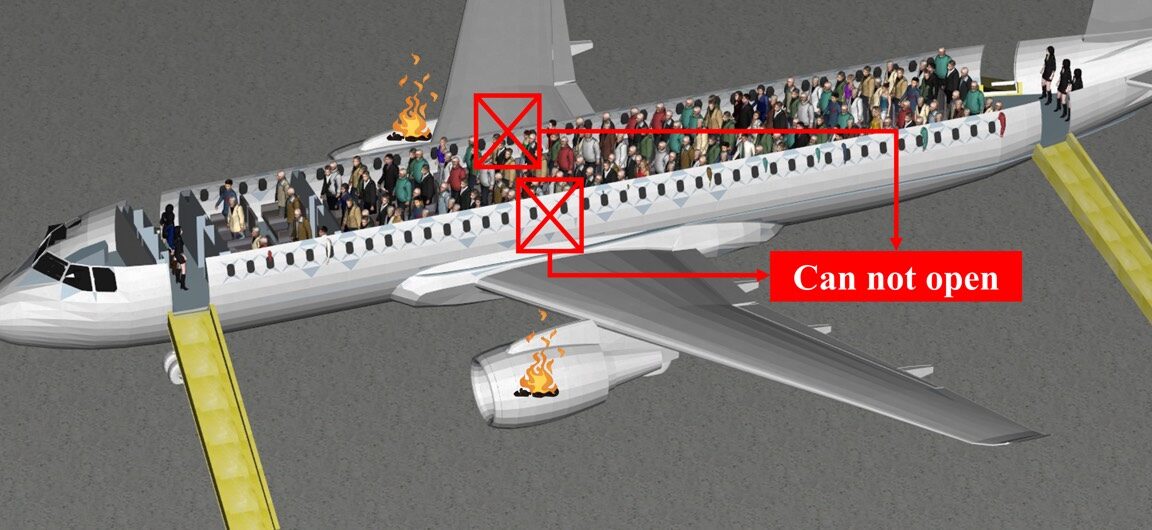
“While a dual-engine fire scenario is statistically rare, it falls under the broader category of dual-engine failures and critical emergencies in aviation. History has shown that dual-engine failures and emergencies, such as the famous ‘Miracle on the Hudson’ involving Captain Sullenberger, can happen and lead to severe consequences,” said co-author Chenyang (Luca) Zhang of the University of Calgary in Canada. “Our study focuses on these low-probability but high-impact events to ensure the highest safety standards.”

Zhang et al. created two passenger categories: elderly adults age 60 and older and those younger than 60 years. They modeled three different ratios of those two categories—youth-dominated, evenly balanced, and elderly dominated evacuation scenarios—to capture more realistic travel dynamics and exclude edge cases (e.g., all non-elderly or all-elderly scenarios). For each of those, the model looked at three distinct seating patterns: one where elderly passengers are evenly distributed in areas near the exits; one where the elderly were concentrated in the middle of the cabin, away from the exits; and one where elderly passengers were randomly distributed throughout the cabin.

None of the tested conditions resulted in evacuation times within the FAA-mandated 90 seconds. The shortest evacuation time—20 percent elderly passengers evenly distributed near the exits—was 141 seconds. The longest—involving 80 percent elderly passengers and the same near-exit seating distribution—was 218.5 seconds.

Zhang et al. acknowledge that their study has some limitations. For instance, not all elderly passengers are the same, and their models did not incorporate the need for crew assistance for decreased mobility or similar issues. And because they focused on just the dual-engine fire scenario, their findings might not be generalizable to other evacuation scenarios.

The authors suggest future simulations could be more accurate with the addition of empirical data from real aircraft environments under controlled conditions. Future research should also test the effectiveness of different behavioral interventions, such as providing extra safety briefings tailored to elderly passengers. Airbus and other aircraft manufacturers might also consider redesigning cabins with designated seating areas for elderly passengers, giving them easier access to exits, better visibility, wider aisles, or perhaps armrests to assist with mobility.

AIP Advances, 2026. DOI: 10.1063/5.0310405 (About DOIs).

https://arstechnica.com/science/2026/03/whats-the-best-cabin-layout-for-aircraft-evacuation/


After more than 53 years, humans may finally return to the Moon this week

The mission will last more than nine days from liftoff to splashdown. After separation from the SLS rocket, the Orion spacecraft will spend a little more than a day in an elliptical high-altitude orbit ranging more than 40,000 miles from Earth. The astronauts and mission controllers in Houston will spend this time activating and testing the spacecraft, with a particular focus on Orion’s environmental control and life support systems, which were not part of an unpiloted Orion test flight four years ago.

Glover and Wiseman will take manual control of the spacecraft to assess Orion’s handling characteristics, commanding thrusters to guide the capsule back toward the SLS rocket’s upper stage to practice for docking maneuvers on future Artemis missions. Assuming everything checks out, Orion will fire its main engine for a translunar injection, or TLI, burn about 25 hours into the mission. This is the event that will send the astronauts toward the Moon.

This mission will not land. That will come on a future Artemis mission—currently slated for Artemis IV—no earlier than 2028. NASA is working with SpaceX and Blue Origin to develop commercial human-rated landers to ferry astronauts from the Orion spacecraft in lunar orbit down to the Moon’s surface and back. Those landers, along with new lunar spacesuits, won’t be ready for a landing mission next year, as NASA officials hoped.

NASA Administrator Jared Isaacman announced a shakeup of the Artemis program last week, shifting focus from building a space station in orbit around the Moon to constructing a base on the lunar surface. The program changes also included replanning the next Artemis mission—Artemis III—from a landing mission to a flight to dock an Orion crew capsule with one or both commercial landers closer to Earth.

The change will increase the chances of launching Artemis III next year. Sending SpaceX or Blue Origin’s landers to the Moon will require a mastery of in-orbit refueling, and neither company has demonstrated the capability yet. Refueling is not required for a test mission in low-Earth orbit on Artemis III.

“Over the last 10 weeks, the agency has prepared a crewed lunar test vehicle and also restructured the program that it belongs to,” said Amit Kshatriya, NASA’s associate administrator. “This was done deliberately. A crew that understands that campaign flies with greater purpose, a workforce that sees the road ahead holds a higher standard. This flight and the future reinforce each other. This is how Apollo worked, and this is how we will work.

“Behind this flight stands a campaign, landings, a lunar base, nuclear propulsion into deep space. That begins, not ends, with what happens on Wednesday evening,” Kshatriya said.

https://arstechnica.com/space/2026/03/after-more-than-53-years-humans-may-finally-return-to-the-moon-this-week/


What happened to Amelia Earhart? New book takes on the case.

Three main theories

There are many theories about what happened to Earhart, including a 1970 book claiming that Earhart had not only survived the flight but also changed her name and remarried, becoming Irene Craigmile Bolam. Bolam vehemently denied this and sued the publisher, which pulled the book off the market and eventually reached a settlement. But three theories in particular have come to dominate among Earhart enthusiasts. First, she and Noonan lost their bearings, ran out of gas, and crashed in the ocean. Second, one or both of them ended up as castaways on Nikumaroro Island (formerly Gardner Island), eventually dying there of starvation or injury. Third, Japanese forces captured Earhart and Noonan and (most likely) executed them.

cover art showing a small airplane flying over vast ocean with the title, subtitle and author name superimposed

Disney Publishing

Portrait style author photo featuring young woman with long curly brown hair wearing a black sleeveless top

Disney Publishing

Hartigan takes on these three theories in turn in Lost, interweaving efforts to find evidence for each with an account of Earhart’s life. She admits that originally, she had been quite impressed with the case for the island castaway hypothesis, given that the 2017 expedition had found such telltale 1930s objects as a zipper pull and pocket knife, as well as a fire feature and water bottles. And trained cadaver dogs had identified the campsite as a place where there might be human remains.

“But none of that is actually tied specifically to Amelia Earhart or Fred Noonan,” said Hartigan. “It’s just confirmation that somebody died there, and we don’t know who it was. No bones have been found. So by the second trip, I was a little more skeptical. There’s so many things I like about the castaway theory. But if I’m thinking about the most likely thing to have happened, the simplest explanation that matches with most of what we know, it’s that she got lost, ran out of gas, and crashed.”

In some sense, there has never been a better time to hunt for Earhart, given all the new science and technology at our disposal, particularly for deep-sea exploration. In 2003 and 2006, for example, David Jourdan used deep-sea sonar devices to search a 1,200-square-mile area north and west of Howland Island. His company, Nauticos, even conducted an elaborate experiment using 1930s equipment to determine how far off course Earhart and Noonan might have been when she sent her various radio messages. Most recently, a 2024 expedition searched for Earhart’s plane around Howland Island, the original planned landing site, but found no evidence of it.

https://arstechnica.com/science/2026/03/what-happened-to-amelia-earhart-new-book-takes-on-the-case/


Polygraphs have major flaws. Are there better options?

To start, he built a neural predictor to tell whether someone was lying. It seemed to work. But in a second experiment, he and his research team used that neural lie detector to look at people who were telling the truth, but truths that were selfish. It threw a wrench in: “And then we show that brain decoder, that lie detector that we thought we had, can also predict when somebody’s just being selfish,” he said.

In the final stage of the experiment, though, the researchers wanted to see if they could subtract out the brain activity that represented selfishness and separate it from the lying part. They could. In the future, Lee said, they might find out that the remaining signal they thought was simply “lying” is still entangled with another mental state, like arousal. After finding and excising all entanglements, he said, what’s left must be straight lying. Theoretically, at least. “It could also be an empirical result that if we take enough of these compounded processes away, deception disintegrates,” he said. There might not be a straight-lying state, in other words; maybe lying is just the sum of many parts.

Scientists like Lee may be getting closer to an accurate lie detector, and improving on the traditional polygraph. But there’s currently no superhero solution. And the problem, as Lee’s research hints, may be ontological, not technological.

That’s definitely Maschke’s view. “It’s all pseudoscience,” he said. “There is no lie detector. So my thinking is that it’s better not to pretend that you can detect lies, because it’s a way of deceiving yourself.”

Maybe it’s true no one can know, for sure, if another person is lying. After all, humans are, famously, individuals. “Everybody’s so different in how they tell their lie,” said Denkinger. And, apparently, in how they tell their truths.

This article was originally published on Undark. Read the original article.

https://arstechnica.com/science/2026/03/polygraphs-have-major-flaws-are-there-better-options/


Explanation for why we don’t see two-foot-long dragonflies anymore fails

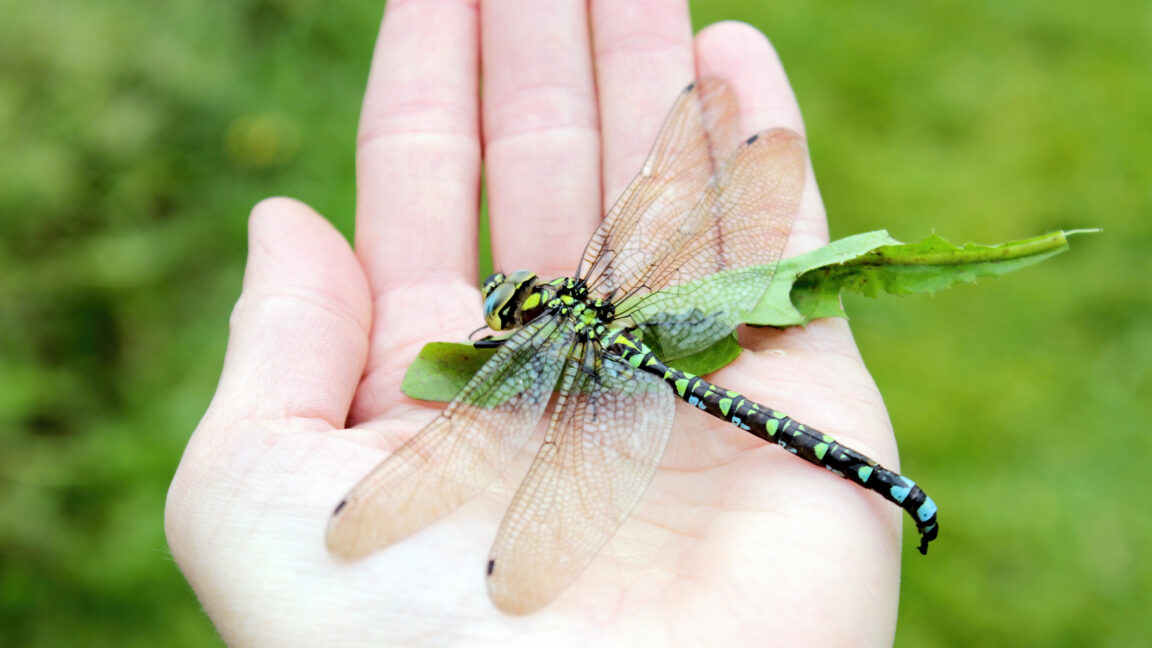
Three-hundred million years ago, the skies of the late Palaeozoic era were buzzing with giant insects. Meganeuropsis permiana, a predatory insect resembling a modern-day dragonfly, had a wingspan of over 70 centimeters and weighed 100 grams. Biologists looked at these ancient behemoths and asked why bugs aren’t this big anymore. Thirty years ago, they came up with an answer known as the “oxygen constrain hypothesis.”

For decades, we thought that any dragonflies the size of hawks needed highly oxygenated air to survive because insect breathing systems are less efficient than those of mammals, birds, or reptiles. As atmospheric oxygen levels dropped, there wasn’t enough to support giant bugs anymore. “It’s a simple, elegant explanation,” said Edward Snelling, a professor of veterinary science at the University of Pretoria. “But it’s wrong.”

Insect breathing

Unlike mammals, insects don’t have a centralized pair of lungs and a closed circulatory system that delivers oxygen-rich blood to their tissues. “They breathe through internalized tubing called the tracheal system,” Snelling explained.

Air enters the insect’s body through specialized portholes on their exoskeleton called spiracles. From there, it travels down larger tubes, the tracheae, which gradually branch into microscopically thin, blind-ending tubes known as tracheoles. These tracheoles are embedded deep within the insect’s tissues, and mitochondria in neighboring cells cluster next to them.

Insects can actively pump air in and out of the larger tracheae by flexing their bodies, but this active pumping stops at the very end of the line, in the tiny tracheoles. Here, oxygen delivery relies on passive diffusion to cross the final barrier into the tissue.

The problem with diffusion is that it’s notoriously slow. The oxygen constraint hypothesis argued that the larger the insect grows, the further the oxygen must travel to reach the deepest tissues.

“As the insects get bigger and bigger, the challenge of diffusion becomes greater,” Snelling said.

To prevent the muscles from suffocating, a bigger insect would need significantly wider or far more numerous tracheoles to maintain the supply of oxygen, which implied there had to be a structural tipping point. If an insect gets too big, the volume of breathing tubes required to supply its muscles with oxygen would take up too much physical space. The tracheoles would crowd the very muscle fibers they were trying to fuel, leaving the insect with severely impaired flight performance.

https://arstechnica.com/science/2026/03/leading-explanation-for-ancient-giant-flying-insects-gets-squashed/


Causality optional? Testing the “indefinite causal order” superposition

The results were 18 standard deviations away from what you’d expect based on Bell’s theorem, which is a strong indication that superposition of temporal order is a fundamental feature of quantum mechanics.

But the experiment remains where entanglement was a few decades ago: There are plenty of loopholes. For example, many photons are lost during the experiment (about 1 percent of those sent into it come out the other side to be measured). It remains technically possible that the losses were preferentially occurring among a subset of photons that would otherwise restore correlations that are compatible with hidden variables.

The team also hasn’t separated the hardware by far enough distances to rule out sub-light-speed influences, and there are a few potential oddities specific to indefinite causal-order experiments as well. But the work points the way toward experiments that could close these loopholes, and we already have a history of slamming the door shut on them.

Normally, when covering something weird like this, all we’re left with is the ability to gape at just how weird our world actually is compared to our expectations. But this is one of those cases where understanding the physics is already known to have many practical applications.

“The [device used in this work] may also be interesting for applications as it has been shown that it can outperform causally ordered processes at a wide variety of tasks such as channel discrimination, promise problems, communication complexity, noise mitigation, various thermodynamic applications, quantum metrology, quantum key distribution, entanglement generation, and distillation, among others,” the authors write.

In other words, getting confused about the time might actually be useful.

* I wouldn’t even be aware that this work was done if I hadn’t seen an excellent summary of it on the American Physical Society news site.

PRX Quantum, 2026. DOI: 10.1103/5t2y-ddmt  (About DOIs).

https://arstechnica.com/science/2026/03/getting-formal-about-quantum-mechanics-lack-of-causality/


How new fishing tech can reduce bycatch of turtles and other creatures

Our oceans are full of sophisticated, perfect traps: Nets, hooks, fishing lines. Designed to capture animals destined for our dinner tables, they often catch other wildlife too.

This accidental harvest is known as bycatch, and every year it causes the death of millions of marine animals, including whales, dolphins, sharks, turtles, and seabirds. Nets and gear can asphyxiate animals or cause fatal injuries; even when the animals are tossed back to sea, they frequently die. Bycatch is also a dilemma for fishermen—entangled creatures can destroy equipment, costing time, money, and fisheries’ reputations.

Over the decades, conservationists, researchers, and fishermen have developed ways to minimize various kinds of bycatch in different fishing stocks around the world. But putting these solutions to work is often a challenge, and many mitigation strategies are never widely implemented.

overhead photo of dolphin entangled in fishing gear

Fishing gear that entangles dolphins, porpoises, and whales is a major threat to the animals. Here, gear trails from the North Atlantic right whale called Snowcone (known individual #3560) who swims with her calf in waters off Georgia.

Credit: Georgia Dept. of Natural Resources NOAA permit #20556

Fishing gear that entangles dolphins, porpoises, and whales is a major threat to the animals. Here, gear trails from the North Atlantic right whale called Snowcone (known individual #3560) who swims with her calf in waters off Georgia. Credit: Georgia Dept. of Natural Resources NOAA permit #20556

Some approaches, however, now have a proven success rate—and more may be on the horizon. Recent research has explored nets equipped with lights; even low-tech tricks like kitting out gear with plastic water bottles show promise of reducing some kinds of bycatch while also being practical for fishermen to use.

Despite the challenges, researchers are hopeful. “There are not very many conservation issues that I’m aware of where industry and conservationists and consumers and the fishermen and the resource users all want the same thing,” says marine biologist Matthew Savoca, a research scientist at Stanford University’s Hopkins Marine Station. “Every stakeholder wants less bycatch.”

Keeping turtles out

The bycatch problem has always existed. “It’s a conflict that’s intrinsic to the whole idea of fishing,” says marine scientist Nancy Knowlton, marine biologist emerita at the Smithsonian’s National Museum of Natural History. “If you have something that’s designed to catch animals, you’re going to wind up, almost always, catching some things that you didn’t mean to catch.”

https://arstechnica.com/science/2026/03/how-new-fishing-tech-can-reduce-bycatch-of-turtles-and-other-creatures/


Rocket Report: Russia reopens gateway to ISS; Cape Canaveral hosts missile test

More to come?… Lt. Gen. Doug Schiess, the Space Force’s deputy chief of operations, told a House subcommittee Wednesday that the military was looking at moving more missions off of ULA’s Vulcan rocket to other providers. Currently, only ULA’s Vulcan and SpaceX’s Falcon 9 and Falcon Heavy rockets are certified for national security launches. The Vulcan rocket is expected to be grounded until at least this summer as engineers investigate a recurring problem with the vehicle’s solid rocket boosters.

NASA is blowing things up. A team of NASA engineers is intentionally blowing up models of methane-fueled rockets in Florida to see just how big of a bang they make when they explode, Ars reports. Methane is the launch industry’s chic new rocket fuel because it is better suited for reusable engines. Heavy- and super-heavy-lift rockets like Blue Origin’s New Glenn, ULA’s Vulcan, and SpaceX’s Starship now use it. But rockets sometimes blow up. The US Space Force and NASA, the agencies responsible for range safety at America’s federally owned spaceports, want to better understand how the hazards from an exploding methane-fueled rocket might differ from those of other launchers. This is important as launches become more routine, with companies foreseeing multiple flights per day from launch pads that are, in some cases, just 1 or 2 miles apart.

For good reason… Federal safety officials require the evacuation of blast danger areas around each launch pad as rockets are fueled for flight, and some companies have raised concerns that SpaceX, which has the largest of the methane-burning rockets, could disrupt their operations on neighboring launch pads. The ongoing explosive yield tests at Eglin Air Force Base, Florida, are meant to help officials fine-tune their hazard analyses to determine the proper size of the danger areas for methane-fueled rockets. Hopefully, the data will show the danger areas are too conservative, and the keep-out zones will shrink. The concept is simple. “We put fuel in a rocket, blow it up in a remote location, and measure how big the boom is,” said Jason Hopper, deputy manager for the methalox assessment project at NASA’s Stennis Space Center.

Next three launches

March 28: Electron | Daughter of the Stars | Māhia Peninsula, New Zealand | 09:14 UTC

March 28: Spectrum | Onward and Upward | Andøya Rocket Range, Norway | 20:00 UTC

March 29: Atlas V | Amazon Leo LA-05 | Cape Canaveral Space Force Station, Florida | 07:53 UTC

https://arstechnica.com/space/2026/03/rocket-report-russian-megaconstellation-takes-off-isar-preps-for-second-launch/