Figuring out why AIs get flummoxed by some games

In Nim, there is a limited number of optimal moves for a given board configuration. If you don’t play one of them, then you essentially cede control to your opponent, who can go on to win if they play nothing but optimal moves. And again, the optimal moves can be identified by evaluating a mathematical parity function.

So, there are reasons to think that the training process that worked for chess might not be effective for Nim. The surprise is just how bad it actually was. Zhou and Riis found that for a Nim board with five rows, the AI got good fairly quickly and was still improving after 500 training iterations. Adding just one more row, however, caused the rate of improvement to slow dramatically. And, for a seven-row board, gains in performance had essentially stopped by the time the AI had played itself 500 times.

To better illustrate the problem, the researchers swapped out the subsystem that suggested potential moves with one that operated randomly. On a seven-row Nim board, the performance of the trained and randomized versions was indistinguishable over 500 training gains. Essentially, once the board got large enough, the system was incapable of learning from observing game outcomes. The initial state of the seven-row configuration has three potential moves that are all consistent with an ultimate win. Yet when the trained move evaluator of their system was asked to check all potential moves, it evaluated every single one as roughly equivalent.

The researchers conclude that Nim requires players to learn the parity function to play effectively. And the training procedure that works so well for chess and Go is incapable of doing so.

Not just Nim

One way to view the conclusion is that Nim (and by extension, all impartial games) is just weird. But Zhou and Riis also found some signs that similar problems could also crop up in chess-playing AIs that were trained in this manner. They identified several “wrong” chess moves—ones that missed a mating attack or threw an end-game—that were initially rated highly by the AI’s board evaluator. It was only because the software took a number of additional branches out several moves into the future that it was able to avoid these gaffes.

https://arstechnica.com/ai/2026/03/figuring-out-why-ais-get-flummoxed-by-some-games/


Magnetars drag spacetime to power superluminous supernovae

The solution to the strange flickering problem came when the Liverpool Gravitational Wave Optical Transient Observer collaboration detected an object designated SN 2024afav on December 12, 2024. Initially, the object looked like a standard superluminous supernova. “It was as bright and it had bumps in the light curve like many other objects of this kind,” Farah says. But as the telescopes kept watching, it started doing something unprecedented: It started to chirp.

The chirping star

In physics, a chirp refers to a signal with a frequency that steadily increases over time. In the case of SN 2024afav, its emissions were bumping up and down, but the gap between these bumps was shrinking. After a second and third bump both appeared with the gaps between them reduced by roughly 35 percent, Farah and his team realized they could calculate how much the gap between the bumps would decrease next.

The team adjusted their observation schedule, pointed their instruments at SN 2024afav, and discovered the fourth bump appeared exactly when they expected it would. The fifth bump enabled the scientists to narrow down the period reduction to about 29 percent.

The fact that Farah and his colleagues could accurately predict the bumps delivered a massive blow to our existing magnetar models. While a few irregular bumps could be explained away by the supernova ejecta crashing into clouds of gas, it doesn’t explain perfectly timed, cleanly sinusoidal modulations with a steadily decaying period. Random space rubble just doesn’t work that way.

“So, we came up with the new model to describe this behavior,” Farah explains. They proposed a new physical mechanism that relied on the Lense-Thirring effect, otherwise known as frame-dragging. Frame-dragging is a prediction of General Relativity, where a massive spinning object slightly drags the spacetime around with it as it rotates. “We didn’t try this mechanism before because it had never been seen around a magnetar before,” Farah says. But when his team did try it, it turned out to perfectly match what was going on.

https://arstechnica.com/science/2026/03/magnetars-drag-spacetime-to-power-superluminous-supernovae/


Centuries before the Inca, Peru’s wealthy imported parrots from afar

Parrots’ colorful blue, green, and red feathers were the status symbol, “essential for communicating status, power, and cosmology,” as Olah and his colleagues put it. In the Andes highlands, the Wari—and later the Inca—imported bright-feathered rainforest birds in the millions over several centuries. On the coasts, the Moche and Nasca cultures did much the same.

Parrot feathers feature in headdresses and in tunics made from thousands of feathers sewn onto cotton cloth. The birds themselves show up in tombs and temples as mummified offerings, and they were sculpted and painted onto centuries’ worth of pottery.

The parrot feathers on a handful of funerary headdresses from one of the only unlooted, intact tombs left at Pachacamac recently indicated that the Ychsma were linked to a trade network that once connected huge swaths of two continents across hundreds of kilometers.

Based on parrots and their feathers alone, archaeologists knew there must have been connections that reached from the Amazon basin west to the coastal deserts of Chile and Peru and north to Mexico and the southwestern United States. But the details of that trade—including how live parrots ended up crossing one of the world’s most daunting mountain ranges—were unclear for the centuries before the rise of the Inca Empire and its imperial road networks.

Until recently, archaeologists and historians assumed that the period between the breakup of the Wari Empire and the rise of the Inca was mostly a time when smaller kingdoms and confederations, like Ychsma and its neighbors, squabbled with each other and had influence that didn’t reach much beyond their own region. But based on parrot feathers, these between-empires Andean cultures actually had complex, thriving, and very sophisticated trade relationships without needing to have a system imposed by a central imperial government.

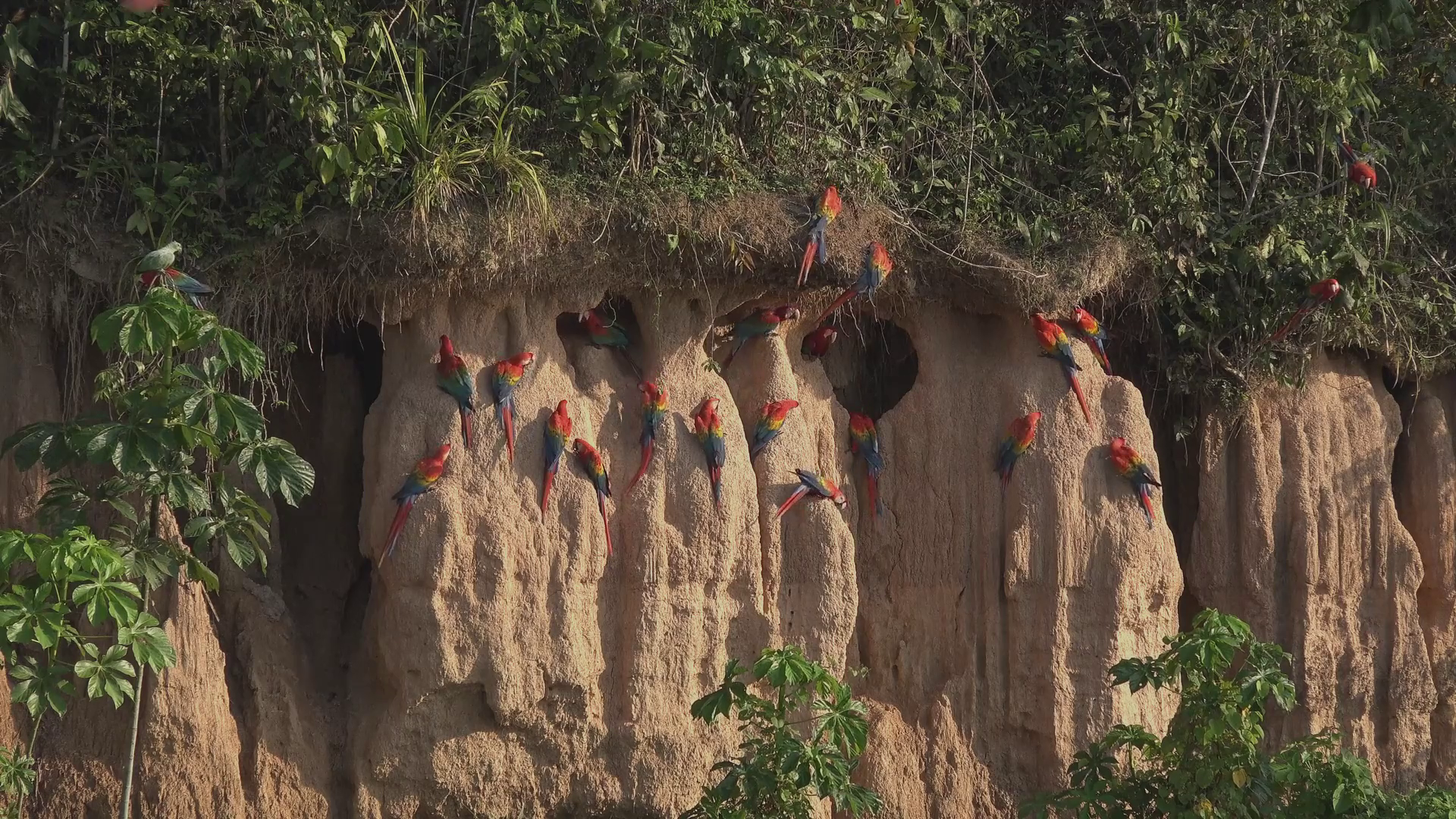
photo of roughly a dozen red and blue macaws on a cliffside

Macaws hang out in the Peruvian Amazon.

Credit: Balazs Tisza

Macaws hang out in the Peruvian Amazon. Credit: Balazs Tisza

Born in the rainforest, raised in the desert

The headdress feathers came from four parrot species: scarlet macaws, red-and-green macaws, blue-and-yellow macaws, and mealy amazons. (The last are cute little green dudes that really deserve a nicer name; “mealy” is apparently a reference to the dusty “powder down,” grains of keratin formed by the disintegrating tips of their down feathers.) All of them live in lowland tropical forests and palm swamps in the Amazon Basin; Peru’s coastal deserts are practically the opposite of their usual wet, lush habitat.

https://arstechnica.com/science/2026/03/centuries-before-the-inca-perus-wealthy-imported-parrots-from-afar/


Ig Nobels ceremony moves to Europe over security concerns

Traditionally, the awards ceremony and related Ig Nobel events have taken place in Boston at Harvard University, Massachusetts Institute of Technology, and Boston University. However, four of last year’s 10 winners opted to skip the ceremony rather than travel to the US, and the situation has not improved.

Nor is it just the Ig Nobels being affected by the hostile US environment for international travel. Many international gaming developers are choosing to skip this year’s weeklong Game Developers Conference in San Francisco, citing similar concerns. “I honestly don’t know anyone who is not from the US who is planning on going to the next GDC,” Godot Foundation Executive Director Emilio Coppola, who’s based in Spain, told Ars. “We never felt super safe, but now we are not willing to risk it.”

So this year, the Ig Nobel organizers are joining forces with the ETH Domain and the University of Zurich for hosting duties. “Switzerland has nurtured many unexpected good things—Albert Einstein’s physics, the world economy, and the cuckoo clock leap to mind—and is again helping the world appreciate improbable people and ideas,” Abraham said.

The Ig Nobels will not be returning to the US any time soon. Instead, the plan is for Zurich to host every second year; every odd-numbered year, the ceremony will be hosted by a different European city. Abraham likened the arrangement to the Eurovision Song Contest.

https://arstechnica.com/science/2026/03/ig-nobels-ceremony-moves-to-europe-over-security-concerns/


An unlikely set of clues helps reconstruct ancient Chinese disasters

A few wildly different clues point to the cause—or at least, one of the causes—of this upheaval: modern weather simulations, archaeological sites hundreds of miles from the Chinese coast, coastal sediments in Japan and South Korea that record the intensity of ancient typhoons, and even Shang Dynasty divination texts. All three of these lines of evidence converged on the same dates, telling a single horrifying story.

Reconstructing ancient storm seasons

We have a pretty good idea of how the size and intensity of a storm determines what kind of footprint it leaves on coastal sediments. Researchers look for similar traces in ancient sediments and use them to reconstruct what tropical storm seasons were like in the past (the field is called paleotempestology, which is your faithful correspondent’s new favorite word).

Based on paleotempestology records not only in China, but also along the coasts of South Korea and southwestern Japan, typhoons moving west across the Pacific Ocean tended to be more intense during the storm seasons around 2,800 years ago. Typhoons that curved northward had more intense seasons around 3,800 years ago and again around 3,300 years ago.

Those bouts of more intense typhoons may be related to something that happened off the coast of Peru around 3,000 years ago, when El Niño events suddenly got more frequent, more extreme, and longer-lasting. Paleoclimate researchers know this because around this time, shellfish species that live in cool water (but can’t take the heat) all but disappear from the Peruvian archaeological record, replaced by more heat-tolerant species. Around the same time, people living along the coast gave up building huge monumental temples, and villages shrank. You’re going to want to keep those dates in mind, because…

Ding and colleagues charted radiocarbon dates from sites across China’s Central Plains and Chengdu Plain, hoping to pinpoint changes in population and potential signs of a society in crisis. They noticed that the number of sites on the Central Plain, home to the Shang Dynasty, decreased sharply around 3,800 years ago and again about 3,300 years ago; at the sites that weren’t abandoned, changes suggested smaller populations overall. On the Chengdu Plain, something similar happened around 2,800 years ago. Villages, towns, and cities shifted toward higher ground; layers of mud left behind by flooding hint at the reason.

https://arstechnica.com/science/2026/03/an-unlikely-set-of-clues-helps-reconstruct-ancient-chinese-disasters/


Flexible feline spines shed light on “falling cat” problem

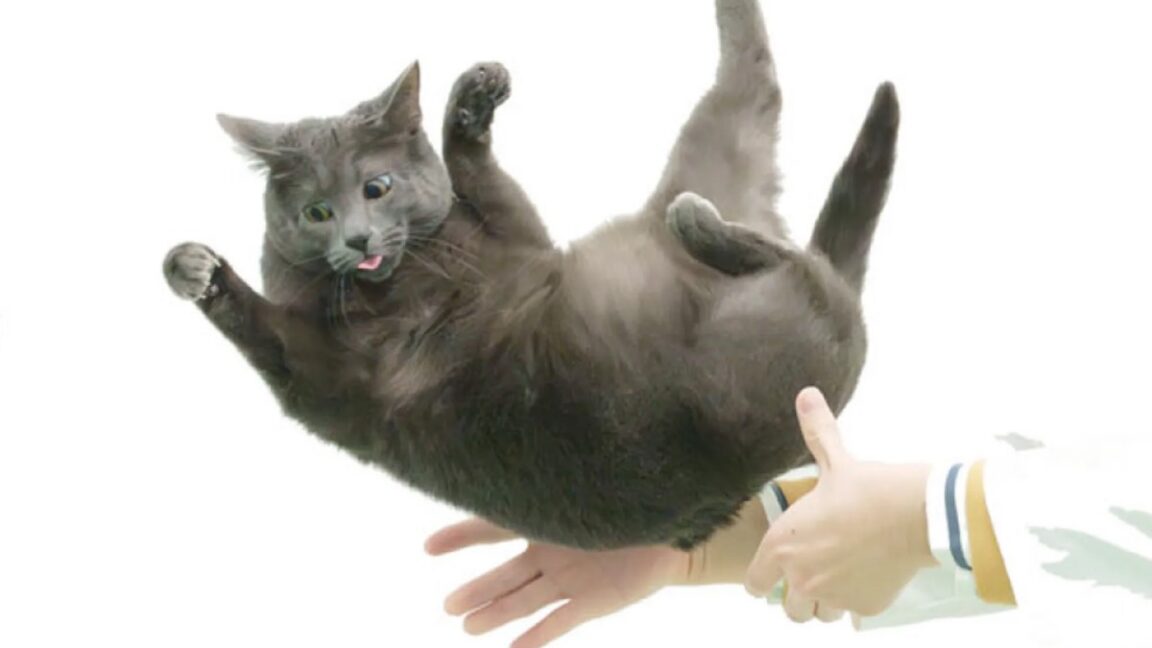
Why do falling cats always seem to land on their feet? Scientists have been arguing about the precise mechanism for a very long time—since at least 1700, in fact—conducting all manner of experiments to pin down what’s going on. The research continues, with a paper published in the journal The Anatomical Record reporting on new experiments to analyze the flexibility of feline spines.

We covered this topic in-depth in 2019, when University of North Carolina, Charlotte, physicist Greg Gbur published his book, Falling Felines and Fundamental Physics. For a long time, scientists believed that it would be impossible for a cat in free fall to turn over. That’s why French physiologist Etienne-Jules Marey’s 1894 high-speed photographs of a falling cat landing on its feet proved so shocking to Marey’s peers. But Gbur has emphasized that cats are living creatures, not idealized rigid bodies, so the motion is more complicated than one might think.

Over the centuries, scientists have offered four distinct hypotheses to explain the phenomenon. There is the original “tuck and turn” model, in which the cat pulls in one set of paws so it can rotate different sections of its body. Nineteenth-century physicist James Clerk Maxwell offered a “falling figure skater” explanation, whereby the cat tweaks its angular momentum by pulling in or extending its paws as needed. Then there is the “bend and twist,” in which the cat bends at the waist to counter-rotate the two segments of its body. Finally, there is the “propeller tail,” in which the cat can reverse its body’s rotation by rotating its tail in one direction like a propeller.

At the time, Gbur told Ars that, while all those different motions play a role, he thought that the bend-and-twist motion was the most important. “When one goes through the math, that seems to be the most fundamental aspect of how a cat turns over,” he said. “But there are all these little corrections on top of that: using the tail, or using the paws for additional leverage, also play a role.” This latest paper has Gbur rethinking that conclusion, according to his recent blog post, giving a bit more credence to the tuck-and-turn mechanism.

https://arstechnica.com/science/2026/03/tuck-and-turn-or-bend-and-twist-how-falling-cats-land-on-their-feet/


Tiny, long-armed dinosaur leads to rethink of dinosaur miniaturization

The real surprise, though, came when researchers realized that Alnashetri wasn’t a highly specialized, late-stage Alvarezsauroid. Instead, despite living in the Late Cretaceous, it occupied an early-branching position among earlier, basal members of the clade.

This combination of tiny size and early-branching status fundamentally breaks our previous model of how these animals evolved. If the miniaturization of Alvarezsauroids was strictly tied to their lifestyle as stubby-armed insect-eaters, an early-diverging species like Alnashetri should have some transitional features on a steady, clade-wide march toward that extreme endpoint. But it didn’t look that way.

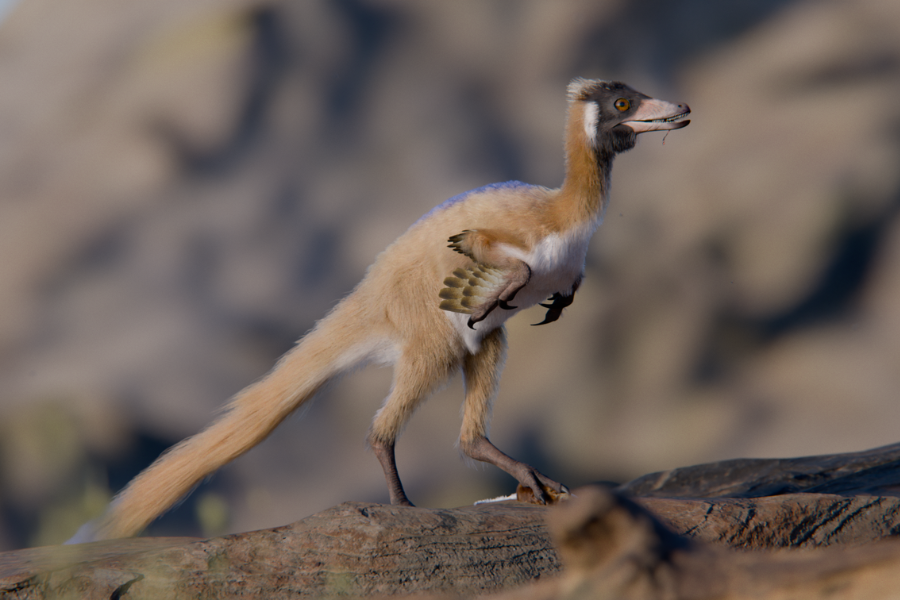
“It’s a very long-limbed animal, so it was probably fairly fast. My best analogy would be something like a roadrunner from the American West,” Makovicky said.

Arms and teeth

Late Alvarezsaurids had tiny, robust forelimbs that were less than half the length of their femurs. Alnashetri, though, sported comparatively long forelimbs that were 61 percent of the length of its entire hindlimb. While it had three-fingered hands with a robust first digit, a hallmark of its group, it still retained slender second and third digits, unlike its later cousins.

Other features that challenge the established evolutionary model of miniature dinosaurs are Alnashetri’s jaws and teeth. Its dentition features non-serrated teeth set into sockets, but importantly, these teeth are not extremely small, as they were in the late Alvarezsaurids like Shuvuuia or Jaculinykus. “This decoupled the evolution of small body size from anatomical specializations,” Makovicky explained.

The team concluded that extreme miniaturization in Alvarezsaurids did not necessarily co-evolve with either the evolution of smaller arms more suitable for digging or small teeth built for crushing ants and/or termites. Instead of a clade-wide trend where the entire lineage steadily shrank over time, a new evolutionary model that includes Alnashetri suggests that Alvarezsaurid body mass fluctuated repeatedly. Alnashetri, it turns out, achieved its 700-gram frame independently from the other, highly specialized alvarezsaurid species.

https://arstechnica.com/science/2026/03/tiny-long-armed-dinosaur-leads-to-rethink-of-dinosaur-miniaturization/


Hunting for elusive “ghost elephants”

[embedded content]

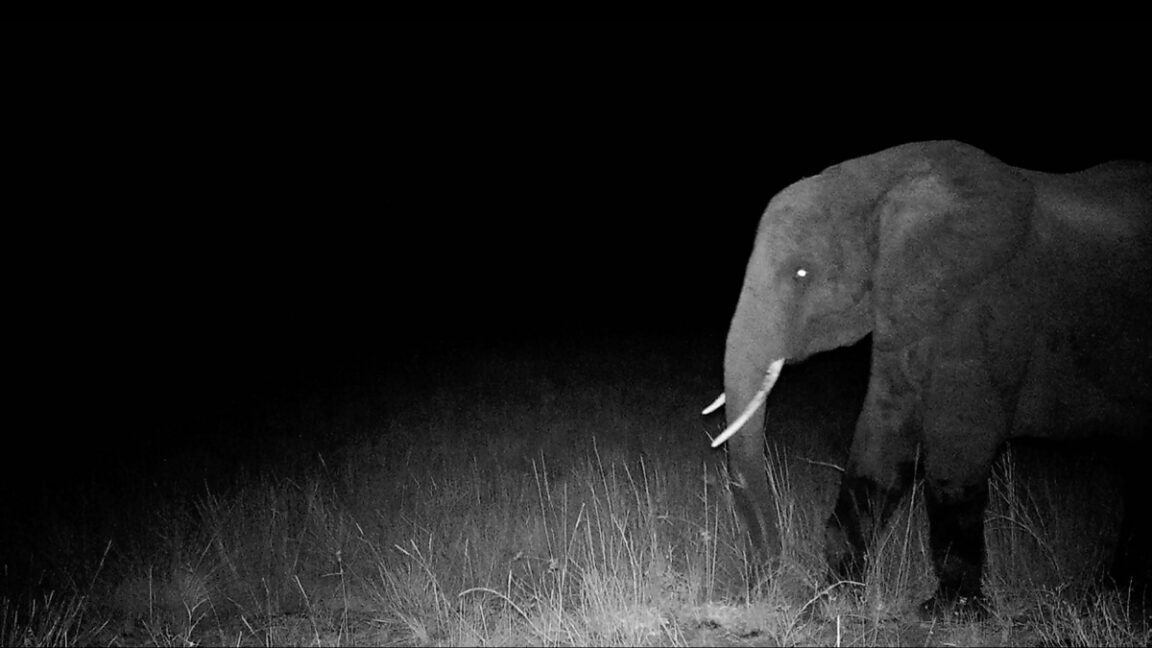
Deep in the Angolan Highlands lurks a rumored new species of elephant. Conservationist and ornithologist Steve Boyes has been searching for this elusive herd for years and the story of his journey is the focus of Ghost Elephants, a haunting, evocative documentary directed by Werner Herzog. The film debuted at the Venice International Film Festival last summer and is now coming to National Geographic and Disney+.

It might seem unusual for an ornithologist to embark on a quest to find remote pachyderms, but for Boyes the connection is perfectly natural.  He grew up in South Africa and wanted nothing more than to be an explorer, just like the people he read about every month in National Geographic magazine. “I grew up waiting for the magazine to arrive; I wanted the maps,” Boyes told Ars. “Those would become my garden, or the field beyond, or the river—wild places imagined and real.”

Boyes’ parents frequently took him and his brother out into the wild, including visits to Botswana and Tanzania. “We used to embed ourselves in baboon troops and walk with impalas,” said Boyes, and while his brother feared elephants, Boyes was walking with them from a young age. Ghost Elephants contains some gorgeous underwater footage of elephant feet plodding through the water, and elephants swimming on their sides, behavior that matches Boyes’ own experiences with the animals. Under the right circumstances, if they don’t feel threatened, elephants “will come and swim around you and with you and interact with you,” he said. “So elephants have always fascinated me.”

As an adult, Boyes conducted his PhD research on the Meyer’s parrot in the Okavango Delta, which has the single largest population of elephants in the world. They shared a symbiotic relationship of sorts with the parrots. “Every tree that the parrots were feeding on, the elephantss were feeding on,” he said. “The elephants were creating the nest cavities for the parrots by disturbing the trees.”

https://arstechnica.com/science/2026/03/hunting-for-elusive-ghost-elephants/


A unicorn-like Spinosaurus found in the Sahara

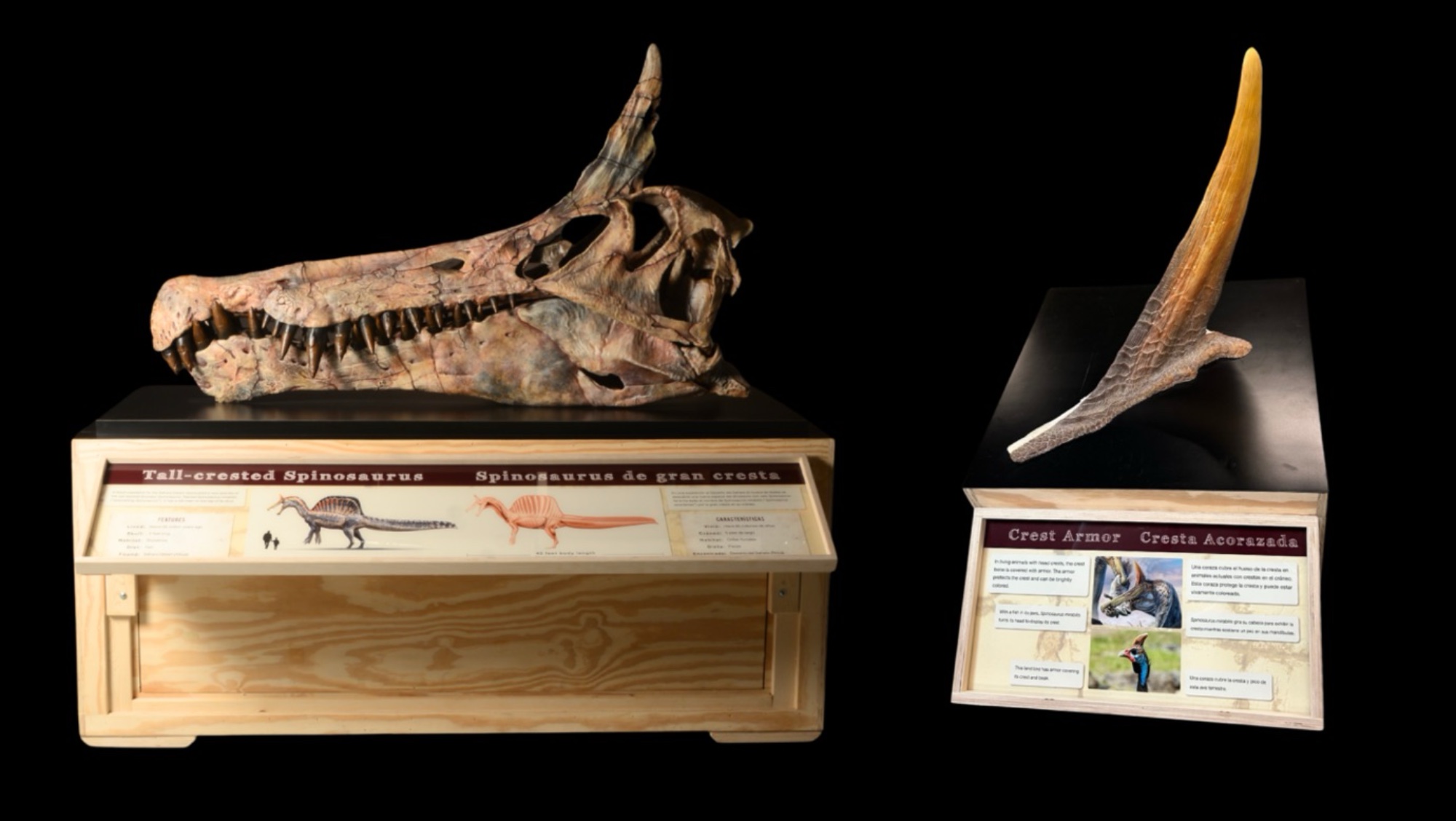
But there was one thing that made S. mirabilis different from S. aegyptiacus. The word “mirabilis” in the newly discovered Spinosaurus’ name translates to “astonishing” in Latin. What Sereno’s team found so astonishing was the prominent crest atop the animal’s head, one of the largest we’ve ever discovered.

The scimitar crown

Instead of the bumpy, fluted ridge seen on S. aegyptiacus, S. mirabilis sported a blade-shaped, scimitar-like bony crest that arched upward and backward from its snout, reaching an apex high over its eyes. This structure was composed of solid bone, unlike the highly porous, pneumatic casques found on some modern birds. However, the bone itself was etched with fine longitudinal striations and deep grooves, indicating that the bony core was just the foundation.

The newly discovered skull, along with a model of what its spike might have looked like on a living animal.

The newly discovered skull, along with a model of what its spike might have looked like on a living animal. Credit: UChicago Fossil Lab

In a living S. mirabilis, this crest would have been enveloped and substantially extended by a keratinous sheath, much like the vibrant growth developed by modern helmeted guinea fowls. If scaled up to a fully mature adult, the bony core alone would measure around 40 centimeters in length; with its keratinous sheath, it could have easily exceeded half a meter. For Sereno, the purpose of this “astonishing” scimitar crown was similar to crests worn today by cranes and herons. “It was asymmetrical. It varied between individuals. So, I think it was solely for display,” Sereno explains.

His team hypothesizes that visual signaling was the primary function of both the cranial crests and the massive trunk and tail sails that define spinosaurids. In the crowded shoreline and riverbank habitats, a towering, brightly colored crest or sail would be an excellent way to broadcast your size, maturity, and genetic fitness to rivals and potential mates without having to engage in a costly physical brawl.

Still, when it came down to it, S. mirabilis, weighing in at well over 7 tons, totally could brawl. “The Spinosaurus was enormous. I think it could have eaten anything it wanted even though its mainstay was fish,” Sereno says.

Crocodile jaw

The showpiece on its forehead aside, the S. mirabilis was a highly specialized killing machine. Its snout featured a low profile with parallel dorsal and ventral margins, terminating in a mushroom-shaped expansion at the tip. The upper and lower jaws allowed the teeth to interdigitate perfectly—there was a notable diastema, a gap in the upper row of teeth, that neatly accommodated the large teeth of the lower jaw. The S. mirabilis jaw structure appears similar to that of modern long-snouted crocodiles, optimized for snatching and snaring aquatic prey with a rapid, trap-like closure. Surprisingly, S. mirabilis showed greater spacing between the teeth in the posterior half of its snout compared to S. aegyptiacus despite being otherwise nearly identical.

https://arstechnica.com/science/2026/03/a-unicorn-like-spinosaurus-found-in-the-sahara/


Asteroid defense mission shifted the orbit of more than its target

Between October 2022 and March 2025, we captured 22 such stellar occultations of the Didymos system. Combined with a huge dataset publicly available at the Minor Planet Data Center that included nearly 6,000 ground-based astrometric measurements taken over 29 years, optical navigation data from the DART probe’s approach, and ground-based radar measurements, researchers finally had all they needed.

“Once we had enough measurements before and after the DART impact, we could discern how Didymos’ orbit has changed,” Makadia said.

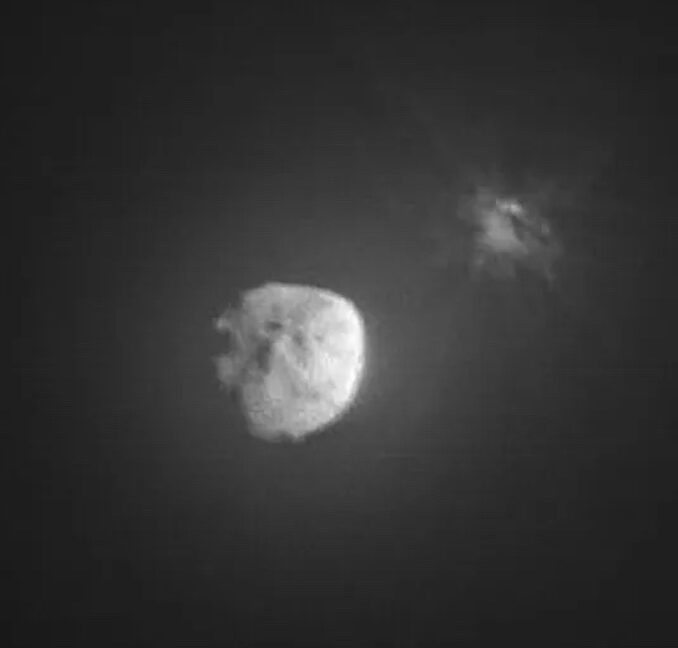
When the vending-machine-sized DART probe crashed into Dimorphos at over 22,000 kilometers per hour, it decreased the along-track velocity of the entire Didymos system by roughly 11.7 micrometers per second. But the team thinks it’s still significant. “When you do it early enough, even a small impulse can accumulate over years and cause a meaningful shift,” Makadia explained.

Also, the DART impact itself was not the only force that changed Didymos’ orbit.

The ejecta engine

The pure kinetic energy of a 500-kilogram spacecraft hitting at hypersonic speeds is impressive, but on its own, it would not slow a huge asteroid that much. When DART struck Dimorphos, it blasted pulverized rock and dust out into the void. “The material kicked up off an asteroid surface acts like an extra rocket plume,” Makadia said.

Scientists call this effect the momentum enhancement factor, denoted by the Greek letter beta. If the spacecraft impact transferred exactly its own momentum and no debris was kicked up, beta would be exactly one.

Because Dimorphos orbits Didymos, some of the ejecta remained trapped in the system, where it altered the mutual orbit between the two rocks. But a crucial fraction of the ejecta achieved escape velocity from the entire binary system. The momentum carried away by the system-escaping debris is what ultimately contributed to shoving the center of mass of the whole Didymos-Dimorphos pair. “In our case, we found that the beta parameter due to DART impact was around two,” Makadia explained.

https://arstechnica.com/science/2026/03/nasas-dart-mission-shifted-the-orbits-of-two-asteroids/