How moss helped convict grave robbers of a Chicago cemetery

The official records were a bit of a mess, to say the least, but the ensuing investigation revealed that while the cemetery had space for 130,000 graves, between 140,000 and 147,500 people were listed as buried there. And some areas had apparently never been used for burials. The cemetery’s then-director, Carolyn Towns, grounds foreman Keith Nicks, Nicks’ brother Terrence, and another employee, Maurice Dailey, were charged.

The only reason they were caught is because they became increasingly reckless about their grave-robbing, even using a backhoe to dig up old graves, smashing skeletons to bits as they did so. Some 1,500 bones were recovered and identified as belonging to at least 38 individuals, but between 200 and 400 graves had been desecrated, per official estimates. Emmett Till’s decaying casket was found covered by a tarp and surrounded by debris in a garage behind the cemetery. (The restored casket is now housed at the Smithsonian’s Museum of African American History.)

The evidence of the moss
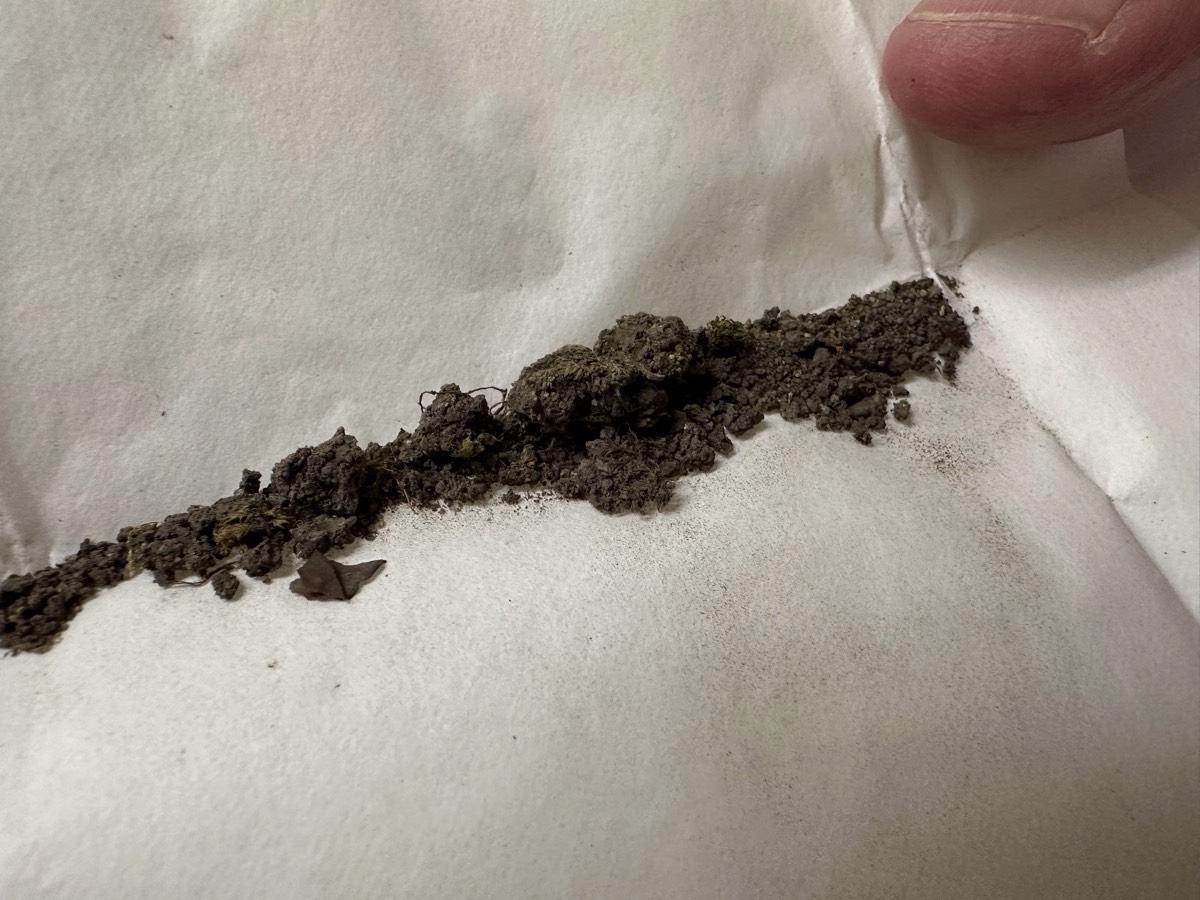
The tiny bits of dirt and moss collected in Burr Oak Cemetery in 2009, which were a key piece of evidence in the criminal case.

The tiny bits of dirt and moss collected in Burr Oak Cemetery in 2009, which were a key piece of evidence in the criminal case.

Credit: Field Museum

The tiny bits of dirt and moss collected in Burr Oak Cemetery in 2009, which were a key piece of evidence in the criminal case. Credit: Field Museum

Prosecutors still had to prove their case. In addition to the skeletal remains, the FBI had collected broken mulberry branches and buried grass fragments for expert analysis. Von Konrat was just going about his museum business in 2009 when the FBI called, seeking expert advice on pieces of moss their team had found, inexplicably buried eight inches below the topsoil with the reburied remains. They needed his help identifying the species as well as determining how long it had been buried. This would provide the FBI with a crucial timeline of when the remains had been reburied.

“Moss is a little bit freaky,” said von Konrat. “Mosses have an interesting physiology, where even if they’re dry and dead and preserved, they can still have an active metabolism, a few cells that are still active. The amount of metabolic activity deteriorates over time, and that can tell us how long ago a moss sample was collected.” The key was chlorophyll, a green pigment central to photosynthesis. Chlorophyll degrades as a decaying plant’s cells stop functioning, so the museum team could measure how much light was being absorbed by the chlorophyll in control specimens whose age was known (both fresh and dried). Then they could compare those measurements to the forensic sample.

https://arstechnica.com/science/2026/03/how-moss-helped-convict-grave-robbers-of-a-chicago-cemetery/



Why are vertebrate eyes so different from those of other animals?

“We think that in this early deuterostome, the median eye contained both ciliary and rhabdomeric cells,” Kafetzis explains. As a result, both cellular lineages were incorporated into a single, ancient, cyclopean eye, which later evolved into the vertebrate eyes.

The vertebrate third eye

A trace of this transformation may still survive in the pineal complex at the base of the brain—often referred to as a vertebrate “third eye.” Scientists have long recognized striking similarities between the retina and the pineal organ, leading many to suspect that the two evolved from a single ancestral structure, with the pineal representing a more rudimentary version.

Kafetzis and his colleagues see it differently.

Many researchers suspect that one class of neurons—the bipolar cells—is unique to the retina and represents a key evolutionary innovation of the vertebrate eye. Bipolar cells connect rods and cones to ganglion cells (hence the name “bipolar”). “We think that these bipolar-like cells already exist in the pineal,” says Kafetzis. “It’s just that they don’t look like the typical bipolar—they don’t have a cell before and a cell after.”

For this reason, Kafetzis and his colleagues argue that bipolar neurons are not a de novo evolutionary invention but instead have a chimeric origin, blending features of both rhabdomeric and ciliary cells and bridging the two photoreceptor lineages.

Though grounded in existing ideas and data, the new proposal offers a potentially far-reaching synthesis. Several aspects still require firmer evidence. The idea that the ancestral chordate adopted a burrowing lifestyle remains debated, and the claim that early bilaterians already possessed paired lateral eyes is still speculative.

The authors acknowledge that their model now needs testing. In the paper, they lay out several ways to do so—from molecular comparisons of pineal and retinal cells to developmental studies and broader sampling of eye development across other deuterostome species.

“We want to put forward some literature-based and inspired hypotheses that are testable, and now we can go out and test them,” concludes Kafetzis.

Cell, 2026.  DOI: 10.1016/j.cell.2025.12.056

Federica Sgorbissa is a science journalist; she writes about neuroscience and cognitive science for Italian and international outlets.

https://arstechnica.com/science/2026/03/the-vertebrate-eye-may-have-begun-as-a-cyclops/


TerraPower gets OK to start construction of its first nuclear plant

On Wednesday, the US Nuclear Regulatory Commission announced that it had issued its first construction approval in nearly a decade. The approval will allow work to begin on a site in Kemmerer, Wyoming, by a company called TerraPower. That company is most widely recognized as being financially backed by Bill Gates, but it’s attempting to build a radically new reactor, one that is sodium-cooled and incorporates energy storage as part of its design.

This doesn’t necessarily mean it will gain approval to operate the reactor, but it’s a critical step for the company.

The TerraPower design, which it calls Natrium and has been developed jointly with GE Hitachi, has several novel features. Probably the most notable of these is the use of liquid sodium for cooling and heat transfer. This allows the primary coolant to remain liquid, avoiding any of the challenges posed by the high-pressure steam used in water-cooled reactors. But it carries the risk that sodium is highly reactive when exposed to air or water. Natrium is also a fast-neutron reactor, which could allow it to consume some isotopes that would otherwise end up as radioactive waste in more traditional reactor designs.

The reactor is also relatively small compared to most current nuclear plants (345 megawatts versus roughly one gigawatt), and incorporates energy storage. Rather than using the heat extracted by the sodium to boil water, the plant will put the heat into a salt-based storage material that can either be used to generate electricity or stored for later use. This will allow the plant to operate around renewable power, which would otherwise undercut it on price. The storage system will also allow it to temporarily output up to 500 MW of electricity.

https://arstechnica.com/science/2026/03/terrapower-gets-ok-to-start-construction-of-its-first-nuclear-plant/


Space Command chief throws cold water on the question of UAPs in space

Judging from recent comments from Gen. Stephen Whiting, head of US Space Command, we shouldn’t expect anything like that in whatever the government might release in response to Trump’s pending order.

Gen. Stephen Whiting, commander of US Space Command.

Credit: US Air Force/Eric Dietrich

Gen. Stephen Whiting, commander of US Space Command. Credit: US Air Force/Eric Dietrich

“I can say, I, personally, was very interested in the president’s announcement,” Whiting told reporters last week at the Air and Space Forces Association’s Warfare Symposium in Colorado. “I look forward to seeing what data does come out. I can also tell you, as a space operator now of 36 years, having spent a lot of time with space domain awareness sensors, tracking things in space, I’ve never seen anything in space other than manmade objects, so I am not aware of anything that is extraterrestrial, other than comets and things like that.

“But I’m fascinated in the topic,” he continued. “And if something’s revealed, I’ll be interested as an American citizen.”

Space Command’s charge includes an area of responsibility (AOR) that extends from the top of Earth’s atmosphere to the Moon and beyond. One of its missions is to track, monitor, and catalog objects in space. Whiting suggested that everything he’s seen in orbit is attributable to a human-made or natural origin.

“We will respond to any presidential direction to go look at our files, but I think the term of art now is UAP, and the A is aerial, so these are things that are below the Kármán line (100 kilometers), that are in the atmosphere,” Whiting said. “I’ve seen some of the same videos and radar data that all of you have, and my guess is those relevant services and combatant commands will turn that data over. I’m very interested in the topic, but I have no personal experience with any of those phenomena.”

https://arstechnica.com/space/2026/03/space-command-chief-throws-cold-water-on-the-question-of-uaps-in-space/


Large genome model: Open source AI trained on trillions of bases

Late in 2025, we covered the development of an AI system called Evo that was trained on massive numbers of bacterial genomes. So many that, when prompted with sequences from a cluster of related genes, it could correctly identify the next one or suggest a completely novel protein.

That system worked because bacteria tend to cluster related genes together—something that’s not true in organisms with complex cells, which tend to have equally complex genome structures. Given that, our coverage noted, “It’s not clear that this approach will work with more complex genomes.”

Apparently, the team behind Evo viewed that as a challenge, because today it is describing Evo 2, an open source AI that has been trained on genomes from all three domains of life (bacteria, archaea, and eukaryotes). After training on trillions of base pairs of DNA, Evo 2 developed internal representations of key features in even complex genomes like ours, including things like regulatory DNA and splice sites, which can be challenging for humans to spot.

Genome features

Bacterial genomes are organized along relatively straightforward principles. Any genes that encode proteins or RNAs are contiguous, with no interruptions in the coding sequence. Genes that perform related functions, like metabolizing a sugar or producing an amino acid, tend to be clustered together, allowing them to be controlled by a single, compact regulatory system. It’s all straightforward and efficient.

Eukaryotes are not like that. The coding sections of genes are interrupted by introns, which don’t encode for anything. They’re regulated by a sequence that can be scattered across hundreds of thousands of base pairs. The sequences that define the edges of introns or the binding sites of regulatory proteins are all weakly defined—while they have a few bases that are absolutely required, there are a lot of bases that just have an above-average tendency to have a specific base (something like “45 percent of the time it’s a T”). Surrounding all of this in most eukaryotic genomes is a huge amount of DNA that has been termed junk: inactive viruses, terminally damaged genes, and so on.

https://arstechnica.com/science/2026/03/large-genome-model-open-source-ai-trained-on-trillions-of-bases/


Re-creating the complex cuisine of prehistoric Europeans

The results: The team found traces of wild grasses and legumes, fruits or berries, green vegetables, and roots and tubers native to the broader region. Shards recovered from sites in the Don River basin showed these people used the seeds of wild legumes (possibly clover) and grasses, as well as showing some evidence of bran and barley. By contrast, shards from the Upper Volga and Dnieper-Dvina region contained more traces of guelder rose berries and other fleshy fruits and smaller-seeded Amaranthaceae plants.

Shards from the Baltic region showed higher traces of freshwater fish, with some regions also including berries, sea beetroot, flowering rush, beets, and sea club-rush tubers. There were also traces of dairy products in shards from a site in Denmark, likely obtained from nearby farming communities.

For the cooking experiments, the authors explored different potential food mixtures focusing on two main plant species: guelder rose berries and species related to the Amaranthaceae family (beet, goosefoot, and saltbush specifically). The berries were gathered in the fall from the south of England and frozen right afterward. They boiled the berries with water in replica pottery vessels, combining some batches with freshwater fish like carp, and also varying the distance of the vessels from the open flames and active embers. They then sampled the cooking residues and compared those results to the samples taken from the prehistoric vessels.

“Our results show that there was a general tendency towards combining specific foods into distinct preparations and in particular regions,” the authors concluded, such as combining Viburnum berries with freshwater fish in the Upper Volga and Baltic regions. Fish accompanied by wild grasses and legumes were preferred in the Don River Basin, while other sites preferred their fish with green vegetables. So “hunter-gatherer-fishers were not living on fish alone,” the authors wrote. “They were actively processing and consuming a wide variety of plants.”

PLoS ONE, 2026. DOI: 10.1371/journal.pone.0342740 (About DOIs).

https://arstechnica.com/science/2026/03/recreating-the-complex-cuisine-of-prehistoric-europeans/


What we can learn from scientific analysis of Renaissance recipes

The proteomics results confirmed, among other things, the presence of many popular ingredients used in the recipes, such as beech, watercress, and rosemary traces found next to hair loss remedies—commonly attributed to an “overheated brain—along with cabbage and radish oil, chicory, lizards, and, um, human feces. (Just how badly do you want to grow back that thinning hair?) The manuscripts also include recipes for blonde hair dyes. The analysis revealed traces of plants with particularly striking yellow flowers on those pages. “That is a common theme in cosmetic and medical discourse at the time,” said Hanss. “The idea was to look for resemblances between the remedies and what you wish to achieve in terms of the treatment.”

One of the most remarkable results, per Hanss et al., was the recovery of collagen peptides from hippopotamus teeth or bone, pointing to the global circulation of more exotic ingredients in the 16th century. Hippo teeth were said to cure kidney stones and “take away toothache,” and were even used to make dentures.

Hanss et al. also found that several of the proteins they found had antimicrobial functions, such as dermcidin (derived from human sweat glands), which kills E. coli and yeast infections like thrush. The samples also yielded insight into how Renaissance people’s bodies responded to the remedies. Traces of immunoglobulin,  lipocalin, and lysozyme are indicators of an active immune response, for instance.

Hanss is so pleased with these initial results that he hopes to launch a large-scale project to extend this interdisciplinary approach to other collections of medical manuals. He also hopes to further improve the dating methodology. “The ingredients for success are there,” said Hanss. “It’s not only that we found new answers to old questions, but we are now in a position to ask completely new questions.”

The American Historical Review, 2025. DOI: 10.1093/ahr/rhaf405 (About DOIs).

https://arstechnica.com/science/2026/03/renaissance-diy-science-people-tested-tweaked-home-remedy-recipes/


Research roundup: Six cool science stories we almost missed

Small, 2026. DOI: 10.1002/smll.202507934 (About DOIs).

Vanishing star became a black hole

In 2014, NASA’s NEOWISE project picked up a gradual brightening of infrared light coming from a massive star in the Andromeda galaxy, an observation that was confirmed by several other ground- and space-based telescopes. Astronomers kept monitoring the star, so they also noticed when it quickly dimmed in 2016. Once one of the brightest stars in that galaxy, it effectively “vanished” from sight; it would be like Betelgeuse suddenly disappearing. It’s now only detectable in the mid-infrared range.

The obvious explanation was that the star was dying and had collapsed into a black hole, but if so, it didn’t go through the supernova phase that usually occurs with stars of this size. That makes it an intriguing object for further study. After analyzing archival data from NEOWISE, a team of astronomers concluded that this was indeed a case for direct collapse, according to a paper published in the journal Science.

Theoretical work from the 1970s provided a possible explanation. As gravity begins to collapse the star, and the core first forms a dense neutron star, the accompanying burst of neutrinos typically creates a powerful shock wave strong enough to rip apart the core and outer layers, leading to a supernova. But some theorists suggested that the shock wave might not always be powerful enough to expel all that stellar material, which instead falls inward, and the baby neutron star directly collapses into a black hole without ever going supernova.

Convection, it seems, is key. It occurs because the matter near the star’s center is hotter than the outer regions, so the gases move from hotter to cooler regions. The authors of this latest paper suggest that as the core collapses, gas in the outer layers is moving rapidly, which prevents them from falling into the core. The inner layers orbit outside the new black hole and eject the outer layers, which cool and form dust to hide the hot gas still orbiting the black hole. The dust warms in response into mid-infrared wavelengths, giving the object a slight glow that should last for decades.

https://arstechnica.com/science/2026/03/research-roundup-six-cool-science-stories-we-almost-missed/


The strange animals that control their body heat

Similarly, in response to an accidental flooding event in the lab, researchers observed a highly unusual period of multiday torpor in a golden spiny mouse, its temperature reaching a low of about 75°F (24°C).

This more flexible use of torpor can help heterotherms wait out a catastrophe, Geiser says. In contrast, homeothermic species can’t just dial back their need for food and water and may not be able to outlast challenging conditions.

“Maybe there’s no food, maybe no water, it may be really warm,” says ecophysiologist Julia Nowack of Liverpool John Moores University in England, a coauthor on the sugar glider study. Torpor, especially in the tropics, has “lots of different triggers.”

Threats of a different sort, such as the presence of predators, can also prompt hunkering down. The (perhaps perfectly named) edible dormouse, for example, sometimes enters long periods of torpor in early summer. At first, this behavior puzzled researchers—why snooze away the summer, when temperatures are comfortable and food abundant, especially if it meant forgoing the chance to reproduce?

After looking at years of data collected by various scientists, a pair of researchers concluded that because spring and early summer are especially active periods for owls, these small snackable critters were likely opting to spend their nights torpid, safely hidden in underground burrows, to avoid becoming dinner. In what is thought to be a similar strategy to avoid nocturnal predators, Fjelldal’s bats alter their torpor use slightly depending on the phase of the moon, spending more time torpid as the moon grows fuller and they become easier to spot.

The fat-tailed dunnart, a mouse-like carnivorous marsupial native to Australia, is a third species to lie low when it feels more at risk of being eaten. In one study, researchers placed dunnarts in two types of enclosures: Some had lots of ground cover in the form of plastic sheeting, simulating an environment protected from predators, while other enclosures had little cover, simulating a greater risk of predation. In the higher-risk settings, the animals foraged less and their body temperatures became more variable.

https://arstechnica.com/science/2026/03/the-strange-animals-that-control-their-body-heat/


Photons that aren’t actually there influence superconductivity

Despite the headline, this isn’t really a story about superconductivity—at least not the superconductivity that people care about, the stuff that doesn’t require exotic refrigeration to work. Instead, it’s a story about how superconductivity can be used as a test of some of the weirder consequences of quantum mechanics, one that involves non-existent particles of light that still act as if they exist.

Researchers have found a way to get these virtual photons to influence the behavior of a superconductor, ultimately making it worse. That may, in the end, tell us something useful about superconductivity, but it’ll probably take a little while.

Virtual reality

The story starts with quantum field theory, which is incredibly complex, but the simplified version is that even empty space is filled with fields that could govern the interactions of any quantum objects in or near that space. You can think of different particles as energetic excitements of these fields—so a photon is simply an energetic state of the quantum field.

Some of these particles have real existences we can track, like a photon emitted by a laser and absorbed by a detector some distance away. But the quantum field also allows for virtual photons, which simply act to transmit the electromagnetic force between particles. We can’t really directly detect these, but we can definitely track their effects.

One of the stranger consequences of this is that locations that have a strong electromagnetic field can be filled with virtual photons even when no real ones are present.

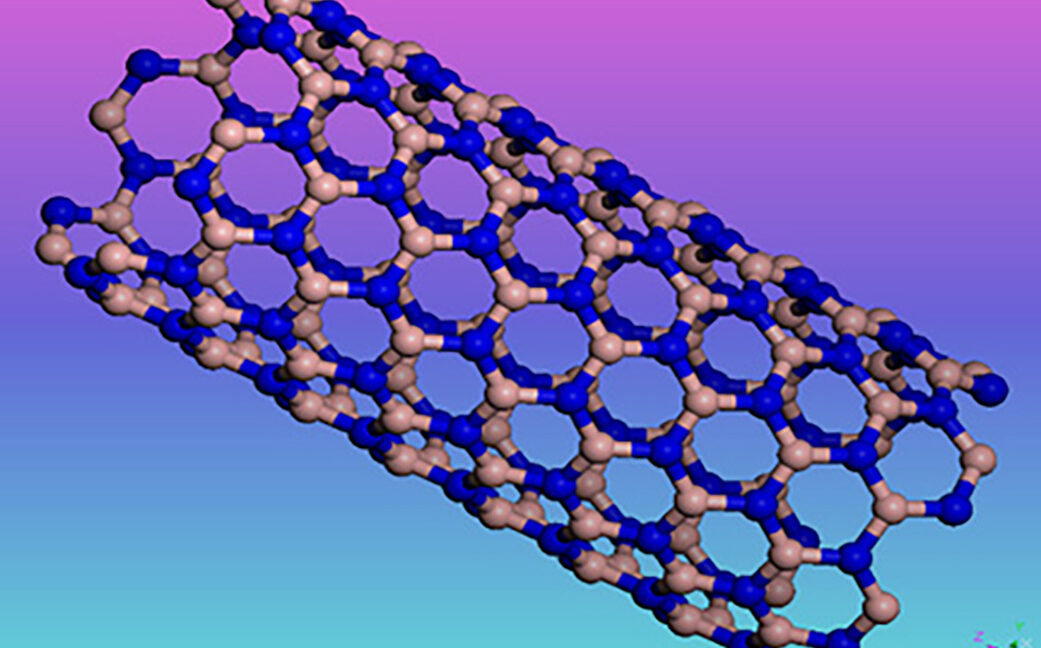
Which brings us to one of the materials central to the new work: boron nitride. Like the more famous graphene, boron nitride forms a series of interlinked hexagonal rings, extending out into macroscopic sheets. The bulk material is made of sheets layered onto sheets layered onto yet more sheets. This has an effect on light transiting through the material. In one direction, the light will simply slam into the material, getting absorbed or scattered. But if it’s oriented along the plane of the sheets, it’s possible for the light to travel in the space between the boron and nitrogen atoms.

https://arstechnica.com/science/2026/02/photons-that-arent-actually-there-influence-superconductivity/