“Million-year-old” fossil skulls from China are far older—and not Denisovans

We typically think of Homo erectus as the first of our hominin ancestors to expand beyond Africa, along routes that our own species would retread 1.5 million years later. More to the point, many paleoanthropologists think of them as the first hominin that could have adapted to so many different environments, each with its own challenges, along the way.

But we may need to give earlier members of our genus, like Homo habilis, a little more credit because stone tools from two other sites in China seem to be older than Homo erectus. At Shangchen, a site on the southern edge of China’s Loess Plateau, archaeologists unearthed stone tools from a 2.1-million-year-old layer of sediment. And at the Xihoudu site in northern China, stone tools date to 2.43 million years ago.

“If you have a site in China that’s 2.43 million years, and the origin of Homo erectus is 1.9 million years ago, either you need to push the origin of Homo erectus back to 2.5 or 2.6 million years or we need to accept that we need to be looking at other hominins that may have actually moved out of Africa,” University of Hawai’i at Manoa paleoanthropologist Christopher Bae, a coauthor of the new study, told Ars.

So who made those 2-million-year-old tools?

Archaeologists have unearthed stone tools but no hominin fossils at both sites, making it difficult to say for sure who the toolmakers were. But if they weren’t Homo erectus, the next most likely suspects would be older members of our genus, like Homo habilis or Homo rudolfensis. That would mean hominin expansion “out of Africa” actually happened several times during the history of our genus: once with early Homo, again with Homo erectus, and yet again with our species.

“There could have been an earlier wave that died out or interbred, so there’s all kinds of possibilities open there,” Purdue University paleoanthropologist Darryl Granger, also a coauthor of the recent study, told Ars.

In fact, there’s some debate about whether the Dmanisi fossils actually belonged to Homo erectus proper. One thing the two dueling reconstructions of the Yunxian skulls agree on is that those hominins had flattish faces, more like ours—and like the 1.63-million-year-old Homo erectus skull from Gongwangling. But the Dmanisi hominins’ lower faces project dramatically forward, like those of older hominins.

https://arstechnica.com/science/2026/02/new-dates-on-chinese-fossils-raise-question-of-how-many-times-we-left-africa/

From chickens to humans, animals think “bouba” sounds round

Does “bouba” sound round to you? How about “maluma”? Neither are real words, but we’ve known for decades that people who hear them tend to associate them with round objects. There have been plenty of ideas put forward about why that would be the case, and most of them have turned out to be wrong. Now, in perhaps the weirdest bit of evidence to date, researchers have found that even newly hatched chickens seem to associate “bouba” with round shapes.

The initial finding dates all the way back to 1947, when someone discovered that people associated some word-like sounds with rounded shapes, and others with spiky ones. In the years since, that association got formalized as the bouba/kiki effect, received a fair bit of experimental attention, and ended up with an extensive Wikipedia entry.

One of the initial ideas to explain it was similarity to actual words (either phonetically or via the characters used to spell them), but then studies with speakers of different languages and alphabets showed that it is likely a general human tendency. The association also showed up in infants as young as 4 months old, well before they master speaking or spelling. Attempts to find the bouba/kiki effects in other primates, however, came up empty. That led to some speculation that it might be evidence of a strictly human processing ability that underlies our capacity to learn sophisticated languages.

A team of Italian researchers—Maria Loconsole, Silvia Benavides-­Varela, and Lucia Regolin—now have evidence that that isn’t true either. They decided to look for the bouba/kiki effect well beyond primates, instead turning to newly hatched chickens, only one or three days old. That may sound a bit odd, but chickens have a key advantage beyond ready availability: unlike a 4-month-old human, newly hatched chicks are fully mobile and able to interact with the world.

https://arstechnica.com/science/2026/02/newly-hatched-chickens-form-the-same-sound-association-we-do/


Rare gifted word-learner dogs like to share their toys

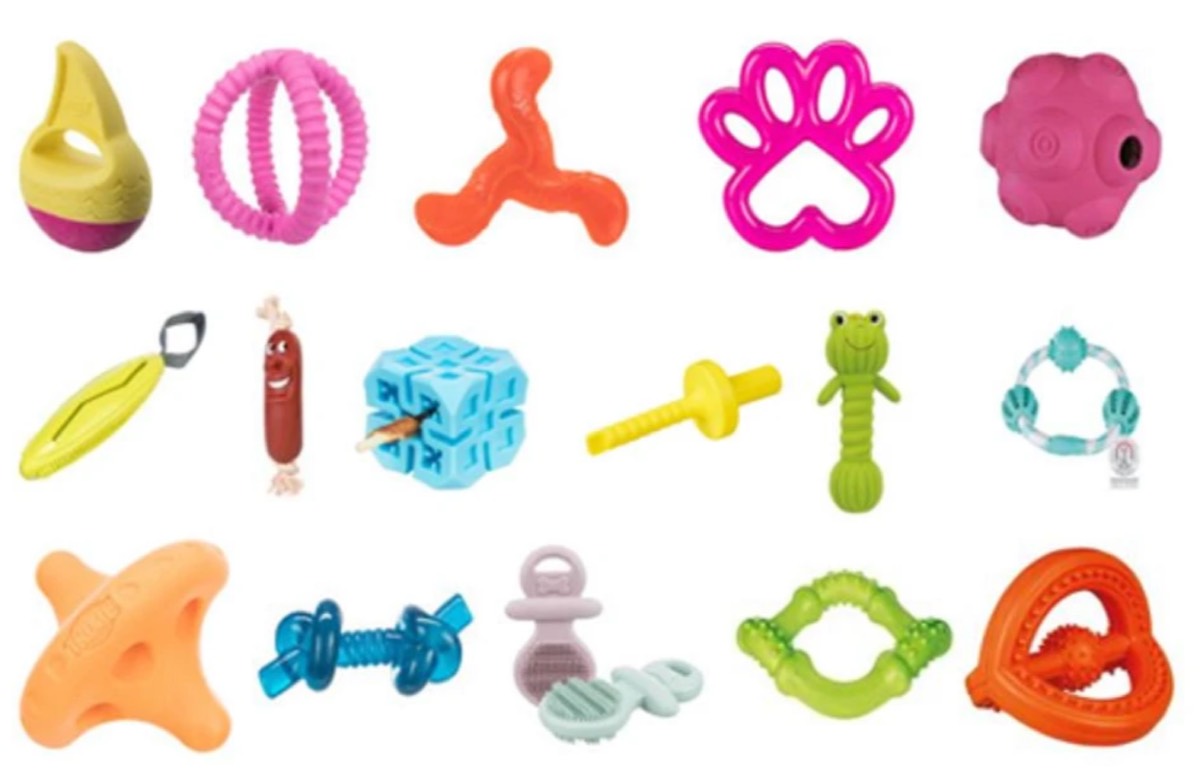
This time around, the group recruited 10 GWL dogs and 21 non-GWL dogs, all border collies, since this is the most common breed to fall into the GWL category. They compiled a list of eight toys: two labeled, two unlabeled, and four that were new to each dog.

What’s their motivation?

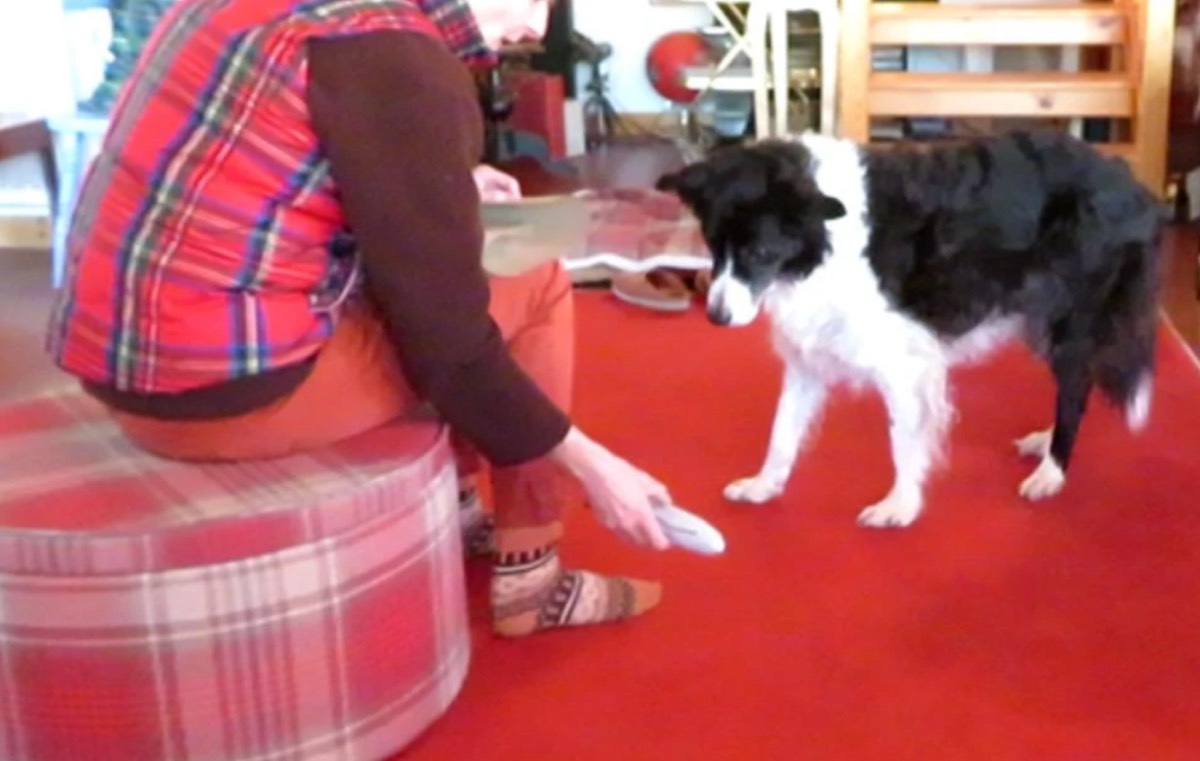
Roy is playing with his caretaker

Roy is playing with his caretaker.

A. Sommese et al., 2026

the different toys used during the experiment

The different toys used during the experiment.

A. Sommese et al., 2026

There was a two-week period during which owners familiarized the dogs with the toys once a day for at least 10 minutes. Each toy was presented separately. For the labeled toys, owners moved the toy while crouched on the floor, repeatedly naming the toy (“Look at the [toy name]! Here is the [toy name]”). They did not name the unlabeled toys. Owners devoted an equal amount of time to all the toys. Novel toys were excluded from the familiarization phase.

After that period, each dog participated in two 90-second trials. The dogs were provided free access to the toys (washed with soap to control for odor cues). In the first trial, owners entered first and placed the labeled and unlabeled toys, plus two of the novel ones, on the floor and stood at a distance, passive and ignoring the dogs as the latter explored the toys. After a five-minute break, the test was repeated with the other two novel toys. All tests were recorded remotely and the footage subsequently analyzed.

Human babies are known to pay more attention to named objects, and the authors thought the GWL dogs would show a similar response, but that’s not what happened. All the dogs, whether they were GWL dogs or not, strongly preferred the new toys, and there were no significant differences between the two groups of dogs in terms of how much time they spent playing with labeled versus unlabeled. So just hearing toy names does not automatically increase a dog’s attention.

https://arstechnica.com/science/2026/02/rare-gifted-word-learner-dogs-like-to-share-their-toys/


Microsoft’s new 10,000-year data storage medium: glass

To read the data back, there are several options. We’ve already had great success using lasers to read data from optical disks, albeit slowly. But anything that can pick up the small features etched into the glass could conceivably work.

With the above considerations in mind, everything was in place on a theoretical level for Project Silica. The big question is how to put them together into a functional system. Microsoft decided that, just to be cautious, it would answer that question twice.

A real-world system

The difference between these two answers comes down to how an individual unit of data (called a voxel) is written to the glass. One type of voxel they tried was based on birefringence, where refraction of photons depends on their polarization. It’s possible to etch voxels into glass to create birefringence using polarized laser light, producing features smaller than the diffraction limit. In practice, this involved using one laser pulse to create an oval-shaped void, followed by a second, polarized pulse to induce birefringence. The identity of a voxel is based on the orientation of the oval; since we can resolve multiple orientations, it’s possible to save more than one bit in each voxel.

The alternative approach involves changing the magnitude of refractive effects by varying the amount of energy in the laser pulse. Again, it’s possible to discern more than two states in these voxels, allowing multiple data bits to be stored in each voxel.

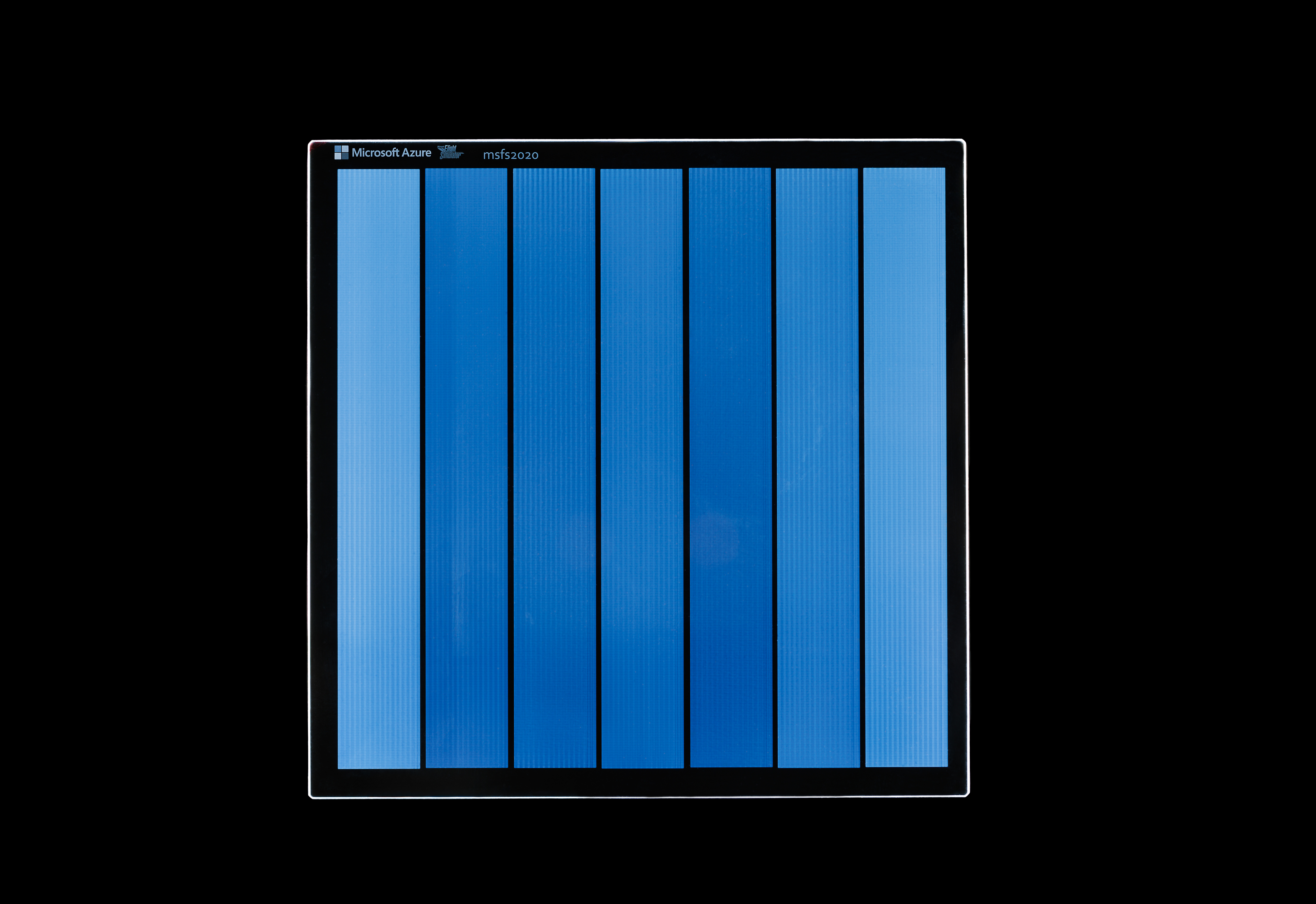
The map data from Microsoft Flight Simulator etched onto the Silica storage medium.

Credit: Microsoft Research

The map data from Microsoft Flight Simulator etched onto the Silica storage medium. Credit: Microsoft Research

Reading these in Silica involves using a microscope that can pick up differences in refractive index. (For microscopy geeks, this is a way of saying “they used phase contrast microscopy.”) The microscopy sets the limits on how many layers of voxels can be placed in a single piece of glass. During etching, the layers were separated by enough distance so only a single layer would be in the microscope’s plane of focus at a time. The etching process also incorporates symbols that allow the automated microscope system to position the lens above specific points on the glass. From there, the system slowly changes its focal plane, moving through the stack and capturing images that include different layers of voxels.

https://arstechnica.com/science/2026/02/microsofts-new-10000-year-data-storage-medium-glass/


X-rays reveal kingfisher feather structure in unprecedented detail

A spongy nanostructure

scanning a Qing dynasty screen with x-ray fluorescence spectroscopy

Scanning a Qing dynasty screen with X-ray fluorescence spectroscopy

Northwestern University

China​ Cap, Qing dynasty (1644–1912), 18th–19th century, Gold wire, kingfisher feathers, amber, coral, jadeite, ivory, glass and silk

China​ Cap, Qing dynasty (1644–1912), 18th–19th century, Gold wire, kingfisher feathers, amber, coral, jadeite, ivory, glass and silk

courtesy of The Art Institute of Chicago

A scanning electron microscopy image of Kingfisher feathers reveals the semi-ordered nanostructure

A scanning electron microscopy image of Kingfisher feathers reveals the semi-ordered nanostructure

Maria Kokkori/Northwestern University

By increasing the magnification of the scanning electron microscopy image, researchers discovered a nanoscale, spongey architecture.

By increasing the magnification of the scanning electron microscopy image, researchers discovered a nanoscale, spongey architecture.

Maria Kokkori/Northwestern University

The Northwestern team started looking at kingfisher feathers in tian-tsui objects via postdoc Madeline Meier, who has a background in chemistry and nanostructures and was interested in combining that expertise with studies of cultural heritage. The first step was to identify the bird species whose feathers were used in Qing dynasty screens and panels, as well as other materials used. Researchers carefully scraped away the topmost layers and imaged the feathers with scanning electron microscopy to get a better look at the underlying nanostructure. Hyperspectral imaging revealed how different areas of the screens absorbed and reflected light.

The team also made use of the center’s partnership with Chicago’s Field Museum, comparing the screen feathers with the museum’s vast collection of taxidermied bird species. The screens and panels contained feathers from common kingfishers and black-capped kingfishers, as well as mallard ducks (used to add green hues). Finally, X-ray fluorescence and Fourier-transform infrared spectroscopy enabled them to create a map of the various chemicals used in the gilding, pigments, glues, and other materials.

Most recently, the lab has partnered with Argonne National Laboratory and used synchrotron radiation to get an ever-better look at the nanostructure of kingfisher feathers. Synchrotron radiation differs from conventional X-rays in that it’s a thin beam of very high-intensity X-rays generated within a particle accelerator. Electrons are fired into a linear accelerator (linac), get a speed boost in a small synchrotron, and are injected into a storage ring, where they zoom along at near-light speed. A series of magnets bends and focuses the electrons, and in the process, they give off X-rays, which can then be focused down beam lines.

That makes it ideal for noninvasive imaging, since, in general, the shorter the wavelength used (and the higher the light’s energy), the finer the details one can image and/or analyze. It has become a popular technique for imaging fragile archaeological artifacts without damaging them—like Qing dynasty headdresses with inlays of kingfisher feathers. In this case, the imaging revealed that the feathers’ microscopic ridges have an underlying semi-ordered, porous, sponge-like shape that reflect and scatter light, thereby giving the feathers their gloriously brilliant hues.

“Long admired in Chinese poetry and art, kingfisher feathers have amazing optical properties,” co-author Maria Kokkori said. “Our discoveries not only enhance our understanding of historical materials but also reshape how we think about artistic and scientific innovation, and the future of sustainable materials.”

https://arstechnica.com/science/2026/02/what-the-chinese-art-of-tian-tsui-has-to-do-with-kingfishers/


There’s a lot of big talk about sovereign launch—who is doing something about it?

Many European nations have their own satellite projects. Historically, their preference for launching on European rockets has not been as strong as it is for pan-European programs managed by ESA and the EU. So it has never been unusual to see a British, German, Spanish, or Italian satellite launching on a foreign rocket.

This posture is starting to change. All four of these nations have invested in homegrown rockets in recent years. Germany made the biggest splash last year when the government announced $41 billion (35 billion euros) in space spending over the next five years. “Satellite networks today are an Achilles’ heel of modern societies. Whoever attacks them paralyzes entire nations,” said Boris Pistorius, Germany’s defense minister, during the announcement.

Every satellite network needs a launch pad and a rocket. In late 2024, the German federal government made more than $110 million (95 million euros) available to three German launch startups: Isar Aerospace, Rocket Factory Augsburg, and HyImpulse. All three are also backed by private funding, with Isar leading the pack with approximately $650 million (550 million euros) from investors. None have reached orbit yet. For comparison, Rocket Lab, the world’s most successful launch startup not founded by a billionaire, raised $148 million (approximately $200 million adjusted for inflation) before reaching orbit in 2018. Nearly all of it came from private sources.

Rocket Lab, which operates the Electron small satellite launcher seen in this image, is the most successful modern commercial launch startup not founded by a billionaire. Rocket Lab went public in 2021, three years after its first successful orbital launch.

Credit: Rocket Lab

Rocket Lab, which operates the Electron small satellite launcher seen in this image, is the most successful modern commercial launch startup not founded by a billionaire. Rocket Lab went public in 2021, three years after its first successful orbital launch. Credit: Rocket Lab

In 2023, the Italian government committed more than $300 million in support of Avio, the company that already builds and operates the Vega satellite launcher. Avio is based in Italy and is using the funds to develop methane propulsion, among other things.

With help from other ESA member states, Italy is one of the countries that already has a rocket made largely of domestic or European components. The United States, Russia, China, France, Japan, the United Kingdom, India, Israel, Iran, North Korea, South Korea, and New Zealand have also successfully launched satellites using their own rockets.

https://arstechnica.com/space/2026/02/which-countries-are-actually-serious-about-developing-their-own-rockets/


A fluid can store solar energy and then release it as heat months later

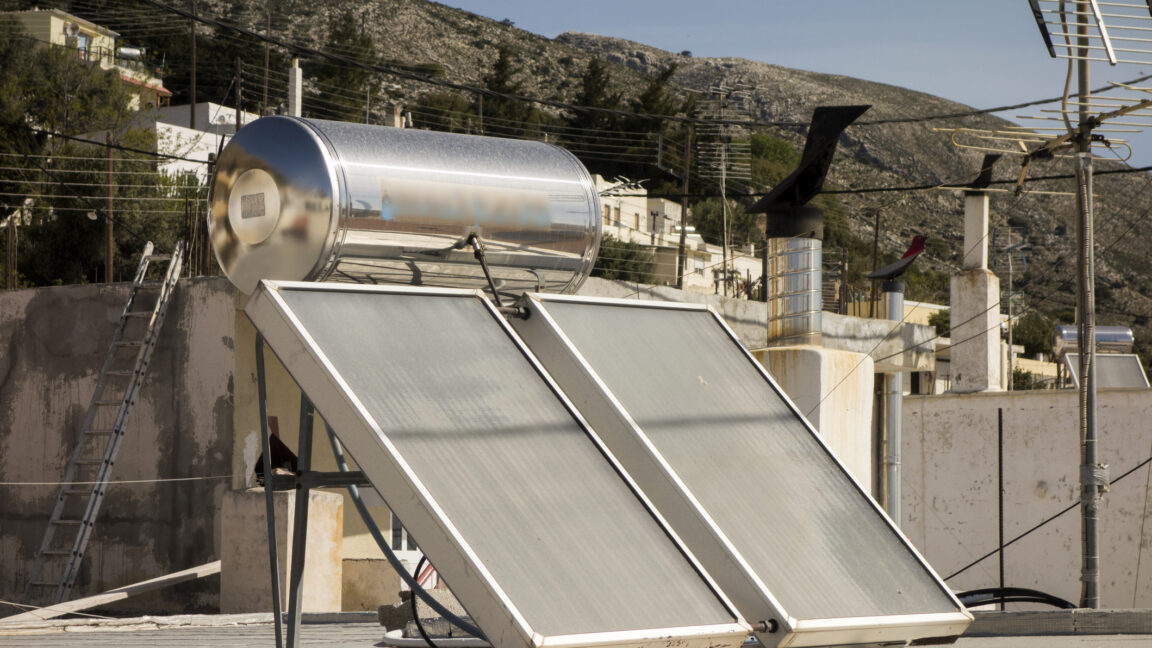
Heating accounts for nearly half of the global energy demand, and two-thirds of that is met by burning fossil fuels like natural gas, oil, and coal. Solar energy is a possible alternative, but while we have become reasonably good at storing solar electricity in lithium-ion batteries, we’re not nearly as good at storing heat.

To store heat for days, weeks, or months, you need to trap the energy in the bonds of a molecule that can later release heat on demand. The approach to this particular chemistry problem is called molecular solar thermal (MOST) energy storage. While it has been the next big thing for decades, it never really took off.

In a recent Science paper, a team of researchers from the University of California, Santa Barbara, and UCLA demonstrate a breakthrough that might finally make MOST energy storage effective.

The DNA connection

In the past, MOST energy storage solutions have been plagued by lackluster performance. The molecules either didn’t store enough energy, degraded too quickly, or required toxic solvents that made them impractical. To find a way around these issues, the team led by Han P. Nguyen, a chemist at the University of California, Santa Barbara, drew inspiration from the genetic damage caused by sunburn. The idea was to store energy using a reaction similar to the one that allows UV light to damage DNA.

When you stay out on the beach too long, high-energy ultraviolet light can cause adjacent bases in the DNA (thymine, the T in the genetic code) to link together. This forms a structure known as a (6-4) lesion. When that lesion is exposed to even more UV light, it twists into an even stranger shape called a “Dewar” isomer. In biology, this is rather bad news, as Dewar isomers cause kinks in the DNA’s double-helix spiral that disrupt copying the DNA and can lead to mutations or cancer.

To counter this effect, evolution shaped a specific enzyme called photolyase to hunt (6-4) lesions down and snap them back into their safe, stable forms.

https://arstechnica.com/science/2026/02/dna-inspired-molecule-breaks-records-for-storing-solar-heat/


Ancient Mars was warm and wet, not cold and icy

This is important because it means these rocks were less likely to have been altered in a hydrothermal environment, where scalding hot water was temporarily released by melting ice caused by volcanism or a meteorite impact.

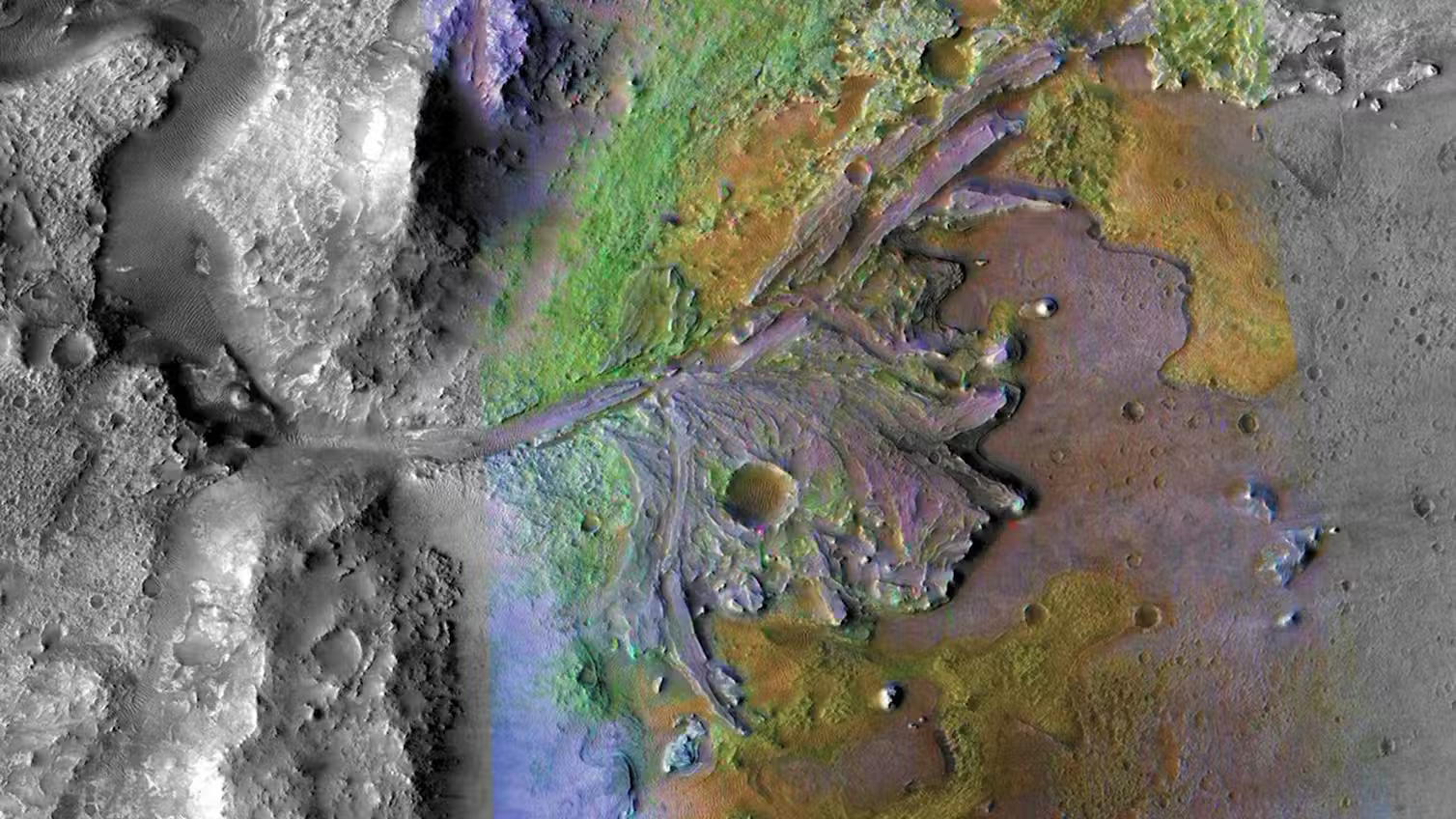
Instead, they appear to have been altered under modest temperatures and persistent heavy rainfall. The authors found distinct similarities between the chemical composition of these clay pebbles with similar clays found on Earth dating from periods in our planet’s history when the climate was much warmer and wetter.

False colour image of the dried up river delta in Jezero crater, which Perseverance is currently exploring.

Credit: NASA

False colour image of the dried up river delta in Jezero crater, which Perseverance is currently exploring. Credit: NASA

The paper concludes that these kaolinite pebbles were altered under high rainfall conditions comparable to “past greenhouse climates on Earth” and that they “likely represent some of the wettest intervals and possibly most habitable portions of Mars’ history”.

Furthermore, the paper concludes that these conditions may have persisted over time periods ranging from thousands to millions of years. Perseverance recently made headlines also for the discovery of possible biosignatures in samples it collected last year, also from within Jezero crater.

These precious samples have now been cached in special sealed containers on the rover for collection by a future Mars sample return mission. Unfortunately, the mission has recently been cancelled by Nasa and so what vital evidence they may or may not contain will probably not be examined in an Earth-based laboratory for many years.

Crucial to this future analysis is the so-called “Knoll criterion” – a concept formulated by astrobiologist Andrew Knoll, which states that for something to be evidence of life, an observation has to not just be explicable by biology; it has to be inexplicable without it. Whether these samples ever satisfy the Knoll criterion will only be known if they can be brought to Earth.

Either way, it is quite striking to imagine a time on Mars, billions of years before the first humans walked the Earth, that a tropical climate with – possibly – a living ecosystem once existed in the now desolate and wind-swept landscape of Jezero crater.

Gareth Dorrian is a Post Doctoral Research Fellow in Space Science at the University of Birmingham

This article is republished from The Conversation under a Creative Commons license. Read the original article.

https://arstechnica.com/science/2026/02/ancient-mars-was-warm-and-wet-not-cold-and-icy/


“It ain’t no unicorn”: These researchers have interviewed 130 Bigfoot hunters

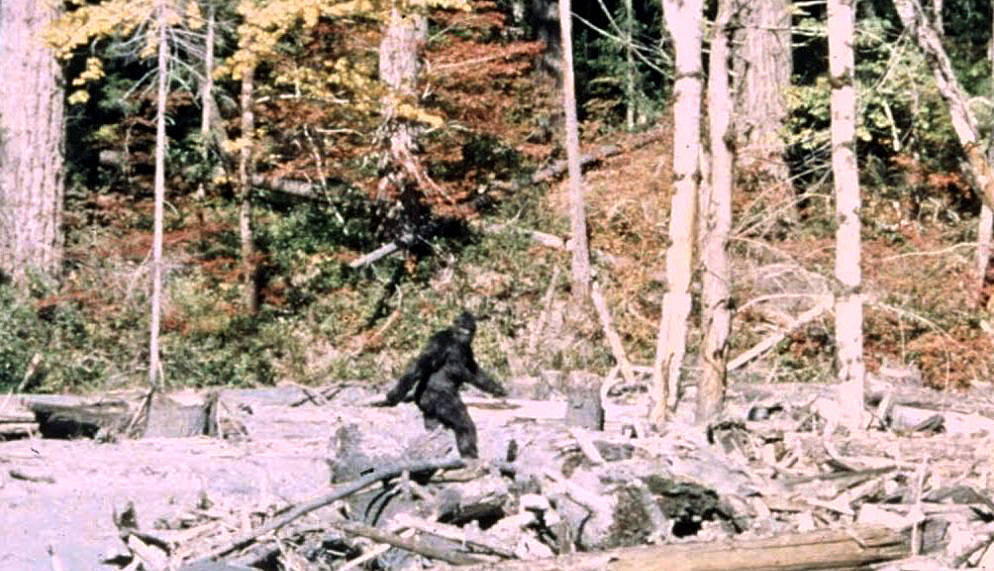
It was the image that launched a cultural icon. In 1967, in the Northern California woods, a 7-foot-tall, ape-like creature covered in black fur and walking upright was captured on camera, at one point turning around to look straight down the lens. The image is endlessly copied in popular culture—it’s even become an emoji. But what was it? A hoax? A bear? Or a real-life example of a mysterious species called the Bigfoot?

The film has been analysed and re-analysed countless times. Although most people believe it was some sort of hoax, there are some who argue that it’s never been definitively debunked. One group of people, dubbed Bigfooters, is so intrigued that they have taken to the forests of Washington, California, Oregon, Ohio, Florida, and beyond to look for evidence of the mythical creature.

But why? That’s what sociologists Jamie Lewis and Andrew Bartlett wanted to uncover. They were itching to understand what prompts this community to spend valuable time and resources looking for a beast that is highly unlikely to even exist. During lockdown, Lewis started interviewing more than 130 Bigfooters (and a few academics) about their views, experiences, and practices, culminating in the duo’s recent book “Bigfooters and Scientific Inquiry: On the Borderlands of Legitimate Science.”

Here, we talk to them about their academic investigation.

What was it about the Bigfoot community that you found so intriguing?

Lewis: It started when I was watching either the Discovery Channel or Animal Planet and a show called Finding Bigfoot was advertised. I was really keen to know why this program was being scheduled on what certainly at the time was a nominally serious and sober natural history channel. The initial plan was to do an analysis of these television programmes, but we felt that wasn’t enough. It was lockdown and my wife was pregnant and in bed a lot with sickness, so I needed to fill my time.

Bartlett: One of the things that I worked on when Jamie and I shared an office in Cardiff was a sociological study of fringe physicists. These are people mostly outside of academic institutions trying to do science. I was interviewing these people, going to their conferences. And that led relatively smoothly into Bigfoot, but it was Jamie’s interest in Bigfoot that brought me to this field.

How big is this community?

Lewis: It’s very hard to put a number on it. There is certainly a divide between what are known as “apers,” who believe that Bigfoot is just a primate unknown to science, and those that are perhaps more derogatorily called “woo-woos,” who believe that Bigfoot is some sort of interdimensional traveller, an alien of sort. We’re talking in the thousands of people. But there are a couple of hundred really serious people of which I probably interviewed at least half.

Many people back them. A YouGov survey conducted as recently as November 2025, suggested that as many as one quarter of Americans believe that Bigfoot either definitely or probably exists.

Were the interviewees suspicious of your intentions?

Lewis: I think there was definitely a worry that they would be caricatured. And I was often asked, “Do I believe in Bigfoot?” I had a standard answer that Andy and I agreed on, which was that mainstream, institutional science says there is absolutely no compelling evidence that Bigfoot exists. We have no reason to dissent with that consensus. But as sociologists what does exist is a community (or communities) of Bigfooting, and that’s what interests us.

https://arstechnica.com/science/2026/02/it-aint-no-unicorn-these-researchers-have-interviewed-130-bigfoot-hunters/


NASA has a new problem to fix before the next Artemis II countdown test

John Honeycutt, chair of NASA’s Artemis II mission management team, said the decision to relax the safety limit between Artemis I and Artemis II was grounded in test data.

“The SLS program, they came up with a test campaign that actually looked at that cavity, the characteristics of the cavity, the purge in the cavity … and they introduced hydrogen to see when you could actually get it to ignite, and at 16 percent, you could not,” said Honeycutt, who served as NASA’s SLS program manager before moving to his new job.

Hydrogen is explosive in high concentrations when mixed with air. This is what makes hydrogen a formidable rocket fuel. But it is also notoriously difficult to contain. Molecular hydrogen is the smallest molecule, meaning it can readily escape through leak paths, and poses a materials challenge for seals because liquified hydrogen is chilled to minus 423 degrees Fahrenheit (minus 253 degrees Celsius).

So, it turns out NASA used the three-year interim between Artemis I and Artemis II to get comfortable with a more significant hydrogen leak, instead of fixing the leaks themselves. Isaacman said that will change before Artemis III, which likewise is probably at least three years away.

“I will say near-conclusively for Artemis III, we will cryoproof the vehicle before it gets to the pad, and the propellant loading interfaces we are troubleshooting will be redesigned,” Isaacman wrote.

Isaacman took over as NASA’s administrator in December, and has criticized the SLS program’s high costestimated by NASA’s inspector general at more than $2 billion per rocket—along with the launch vehicle’s torpid flight rate.

NASA’s expenditures for the rocket’s ground systems at Kennedy Space Center are similarly enormous. NASA spent nearly $900 million on Artemis ground support infrastructure in 2024 alone. Much of the money went toward constructing a new launch platform for an upgraded version of the Space Launch System that may never fly.

All of this makes each SLS rocket a golden egg, a bespoke specimen that must be treated with care because it is too expensive to replace. NASA and Boeing, the prime contractor for the SLS core stage, never built a full-size test model of the core stage. There’s currently no way to completely test the cryogenic interplay between the core stage and ground equipment until the fully assembled rocket is on the launch pad.

Existing law requires NASA continue flying the SLS rocket through the Artemis V mission. Isaacman wrote that the Artemis architecture “will continue to evolve as we learn more and as industry capabilities mature.” In other words, NASA will incorporate newer, cheaper, reusable rockets into the Artemis program.

The next series of launch opportunities for the Artemis II mission begin March 3. If the mission doesn’t lift off in March, NASA will need to roll the rocket back to the Vehicle Assembly Building to refresh its flight termination system. There are more launch dates available in April and May.

“There is still a great deal of work ahead to prepare for this historic mission,” Isaacman wrote. “We will not launch unless we are ready and the safety of our astronauts will remain the highest priority. We will keep everyone informed as NASA prepares to return to the Moon.”

https://arstechnica.com/space/2026/02/nasa-chief-vows-to-solve-sls-rocket-fueling-issues-before-artemis-iii/