Trade wars muzzle allied talks on Trump’s Golden Dome missile shield

These 18 awards are focused on boost-phase SBIs, weapons that can take out a missile soon after it leaves its silo. From a physics perspective, this is one of the most difficult things to ask an interceptor to do, because the weapon must account for atmospheric disturbances and reentry heating to reach its target. In December, the Space Force issued a follow-up request for prototype proposals looking at space-based midcourse interceptors capable of destroying a ballistic missile while it is coasting through space.

The Pentagon has not said how many SBIs it will need for Golden Dome, or what they will look like. Essentially, an orbiting interceptor will be a flying fuel tank with a rocket and a sensor package to home in on its target. But the Space Force and its prospective Golden Dome contractors, which include industry giants Northrop Grumman and Lockheed Martin, have not disclosed the interceptors’ design specs or how many the shield will need.

A Standard Missile 3 Block IIA launches from the Aegis Ashore Missile Defense Test Complex at the Pacific Missile Range Facility in Kauai, Hawaii, on December 10, 2018, during a test to intercept an intermediate-range ballistic missile target in space.

Credit: Mark Wright/DOD

A Standard Missile 3 Block IIA launches from the Aegis Ashore Missile Defense Test Complex at the Pacific Missile Range Facility in Kauai, Hawaii, on December 10, 2018, during a test to intercept an intermediate-range ballistic missile target in space. Credit: Mark Wright/DOD

“I can move money around at will”

Guetlein said Pentagon leaders have empowered him with “unprecedented authorities” on the Golden Dome program. He said Friday his office has full authority over the program’s technical aspects, along with Golden Dome’s procurement, contracting, hiring, security, and budget.

President Trump directed the military to start the Golden Dome program in an executive order last January and nominated Guetlein to head the effort. The Senate confirmed him for the job in a voice vote last July. After the initial pomp of Golden Dome’s announcement, including multiple Oval Office photo ops, military officials went quiet. Guetlein cited security concerns for the Pentagon’s silence on one of Trump’s marquee defense programs.

“I was confirmed on the 18th of July. On the 19th of July, I popped No. 1 on the intel collect list for our adversaries,” Guetlein said. “On the 20th of July, they started hacking our defense industrial base, and the Secretary (of Defense) asked us to go silent. So, we have been quiet. I have not been talking to industry consortiums. I have not been talking to the press. I have not been talking to the think tanks. And it wasn’t until September that I was allowed to even start talking to the Hill (Congress).”

https://arstechnica.com/space/2026/01/trade-wars-muzzle-allied-talks-on-trumps-golden-dome-missile-shield/



Doctors face-palm as RFK Jr.’s top vaccine advisor questions need for polio shot

He then pondered out loud what would happen if people stopped getting vaccinated. “If we take away all of the herd immunity, then does that switch, does that teeter-totter switch in a different direction?” he asked.

Backlash

In a statement, AMA Trustee Sandra Adamson Fryhofer blasted the question. “This is not a theoretical debate—it is a dangerous step backward,” she said. “Vaccines have saved millions of lives and virtually eliminated devastating diseases like polio in the United States. There is no cure for polio. When vaccination rates fall, paralysis, lifelong disability, and death return. The science on this is settled.”

Fryhofer also took aim at Milhoan’s repeated argument that the focus of vaccination policy should move from population-level health to individual autonomy. Moving away from routine immunizations, which include discussions between clinicians and patients, “does not increase freedom—it increases suffering,” she said, adding that the weakening of recommendations “will cost lives.”

Overall, Milhoan’s comments only further erode the relevance of ACIP and federal vaccine policy among the medical community and states. According to a KFF policy brief, 27 states and Washington, DC, have already announced they will not follow current CDC vaccine recommendations, which Kennedy dramatically overhauled earlier this month without even consulting the ACIP. Instead, the majority of states are relying on previous recommendations or recommendations made within states or by medical organizations.

On Monday, the American Academy of Pediatrics announced the 2026 update to its childhood and adolescent vaccine schedule, which it has held up as an alternative to the CDC’s schedule and has been widely embraced by pediatricians. In the announcement, AAP noted that 12 other medical organizations have endorsed the schedule, including the AMA, the American Academy of Family Physicians, the American College of Obstetricians and Gynecologists, the Infectious Diseases Society of America, and the Pediatric Infectious Diseases Society.

The AAP’s updated recommendations are largely the same as the schedule from last year, but it is significantly different from the CDC’s recommendations, which “depart from longstanding medical evidence and no longer offer the optimal way to prevent illnesses in children,” the AAP said.

“The AAP will continue to provide recommendations for immunizations that are rooted in science and are in the best interest of the health of infants, children and adolescents of this country,” AAP President Andrew Racine said in the announcement.

https://arstechnica.com/science/2026/01/do-we-really-need-polio-shots-deep-thoughts-by-rfk-jr-advisor-get-dragged/


Former astronaut on lunar spacesuits: “I don’t think they’re great right now”

“The suits that we have are definitely much better than Apollo,” Rubins said in the interview. “They were just big bags of air. The joints aren’t in there, so it was harder to move. What they did have going for them was that they were much, much lighter than our current spacesuits. We have added a lot of the joints back, and that does get some mobility for us. But at the end of the day, the suits are still quite heavy.”

You can divide the weight of the suit by six to get an idea of how it might feel to carry it around on the lunar surface. While it won’t feel like 300 pounds, astronauts will still have to account for their mass and momentum.

Rubins explained:

Instead of kind of floating in microgravity and moving your mass around with your hands and your arms, now we’re ambulating. We’re walking with our legs. You’re going to have more strain on your knees and your hips. Your hamstrings, your calves, and your glutes are going to come more into play.

I think, overall, it may be a better fit for humans physically because if you ask somebody to do a task, I’m going to be much better at a task if I can use my legs and I’m ambulating. Then I have to pull myself along with my arms… We’re not really built to do that, but we are built to run and to go long distances. Our legs are just such a powerful force.

So I think there are a lot of things lining up that are going to make the physiology easier. Then there are things that are going to be different because we’re now in a partial gravity environment. We’re going to be bending, we’re going to be twisting, we’re going to be doing different things.

It’s an incredibly hard engineering challenge. You have to keep a human alive in absolute vacuum, warm at temperatures that you know in the polar regions could go as far down as 40 Kelvin (minus 388° Fahrenheit). We haven’t sent humans anywhere that cold before. They are also going to be very hot. They’re going to be baking in the sunshine. You’ve got radiation. If you put all that together, that’s a huge amount of suit material just to keep the human physiology and the human body intact.

Then our challenge is ‘how do you make that mobile?’ It’s very difficult to bend down and pick up a rock. You have to manage that center of gravity because you’re wearing that big life support system on your back, a big pack that has a lot of mass in it, so that brings your center of gravity higher than you’re used to on Earth and a little bit farther backward.

When you move around, it’s like wearing a really, really heavy backpack that has mass but no weight, so it’s going to kind of tip you back. You can do some things with putting weights on the front of the suit to try to move that center of gravity forward, but it’s still higher, and it’s not exactly at your center of mass that you’re used to on the Earth. On the Earth, we have a center of our mass related to gravity, and nobody ever thinks about it, and you don’t think about it until it moves somewhere else, and then it makes all of your natural motion seem very difficult.

Those are some of the challenges that we’re facing engineering-wise. I think the new suits, they’ve gone a long way toward addressing these, but it’s still a hard engineering challenge. And I’m not talking about any specific suit. I can’t talk about the details of the provider’s suits. This is the NASA xEMU and all the lunar suits I have tested over the years. That includes the Mark III suit, the Axiom suit. They have similar issues. So this isn’t really anything about a specific vendor. These are just the difficulties of designing a spacesuit for the lunar environment.

NASA trains astronauts for spacewalks in the Neutral Buoyancy Laboratory, an enormous pool in Houston used for simulating weightlessness. They also use a gravity-offloading device to rehearse the basics of spacewalking. The optimal test environment, short of the space environment itself, will be aboard parabolic flights, where suit developers and astronauts can get the best feel for the suit’s momentum, according to Rubins.

https://arstechnica.com/space/2026/01/former-astronaut-on-lunar-spacesuits-i-dont-think-theyre-great-right-now/


Did Edison accidentally make graphene in 1879?

Graphene is the thinnest material yet known, composed of a single layer of carbon atoms arranged in a hexagonal lattice. That structure gives it many unusual properties that hold great promise for real-world applications: batteries, super capacitors, antennas, water filters, transistors, solar cells, and touchscreens, just to name a few. The physicists who first synthesized graphene in the lab won the 2010 Nobel Prize in Physics. But 19th century inventor Thomas Edison may have unknowingly created graphene as a byproduct of his original experiments on incandescent bulbs over a century earlier, according to a new paper published in the journal ACS Nano.

“To reproduce what Thomas Edison did, with the tools and knowledge we have now, is very exciting,” said co-author James Tour, a chemist at Rice University. “Finding that he could have produced graphene inspires curiosity about what other information lies buried in historical experiments. What questions would our scientific forefathers ask if they could join us in the lab today? What questions can we answer when we revisit their work through a modern lens?”

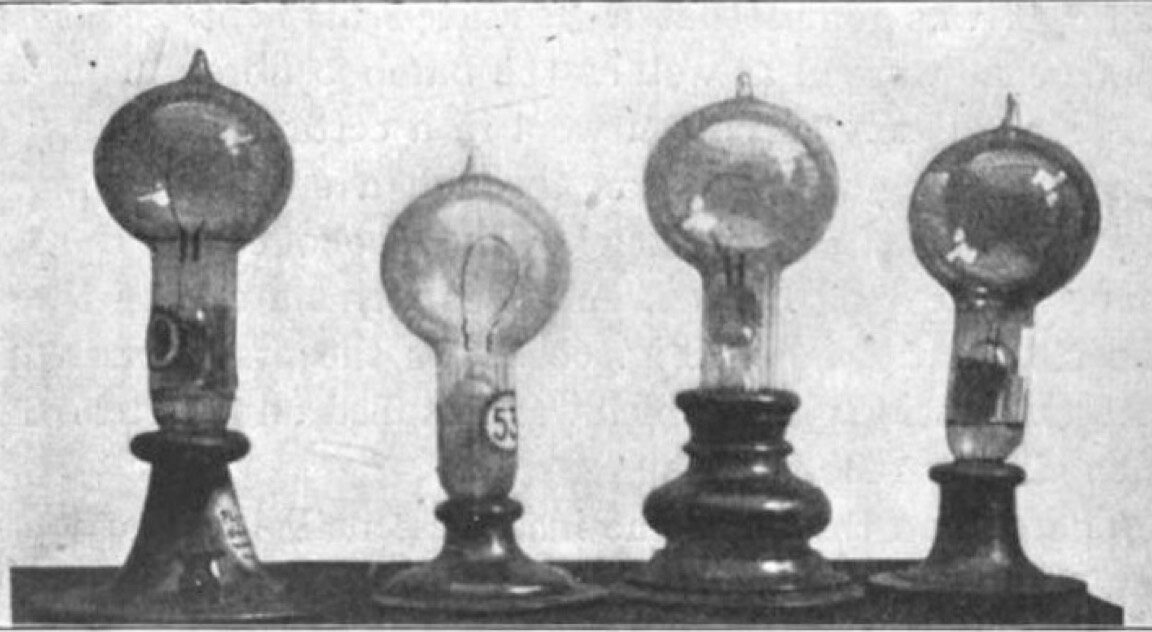
Edison didn’t invent the concept of incandescent lamps; there were several versions predating his efforts. However, they generally had a a very short life span and required high electric current, so they weren’t well suited to Edison’s vision of large-scale commercialization. He experimented with different filament materials starting with carbonized cardboard and compressed lampblack. This, too, quickly burnt out, as did filaments made with various grasses and canes, like hemp and palmetto. Eventually Edison discovered that carbonized bamboo made for the best filament, with life spans over 1200 hours using a 110 volt power source.

Lucas Eddy, Tour’s  grad student at Rice, was trying to figure out ways to mass produce graphene using the smallest, easiest equipment he could manage, with materials that were both affordable and readily available. He considered such options as arc welders and natural phenomena like lightning striking trees—both of which he admitted were “complete dead ends.” Edison’s light bulb, Eddy decided, would be ideal, since unlike other early light bulbs, Edison’s version was able to achieve the critical 2000 degree C temperatures required for flash Joule heating—the best method for making so-called turbostratic graphene.

https://arstechnica.com/science/2026/01/did-edison-accidentally-make-graphene-in-1879/


Rocket Report: Chinese rockets fail twice in 12 hours; Rocket Lab reports setback

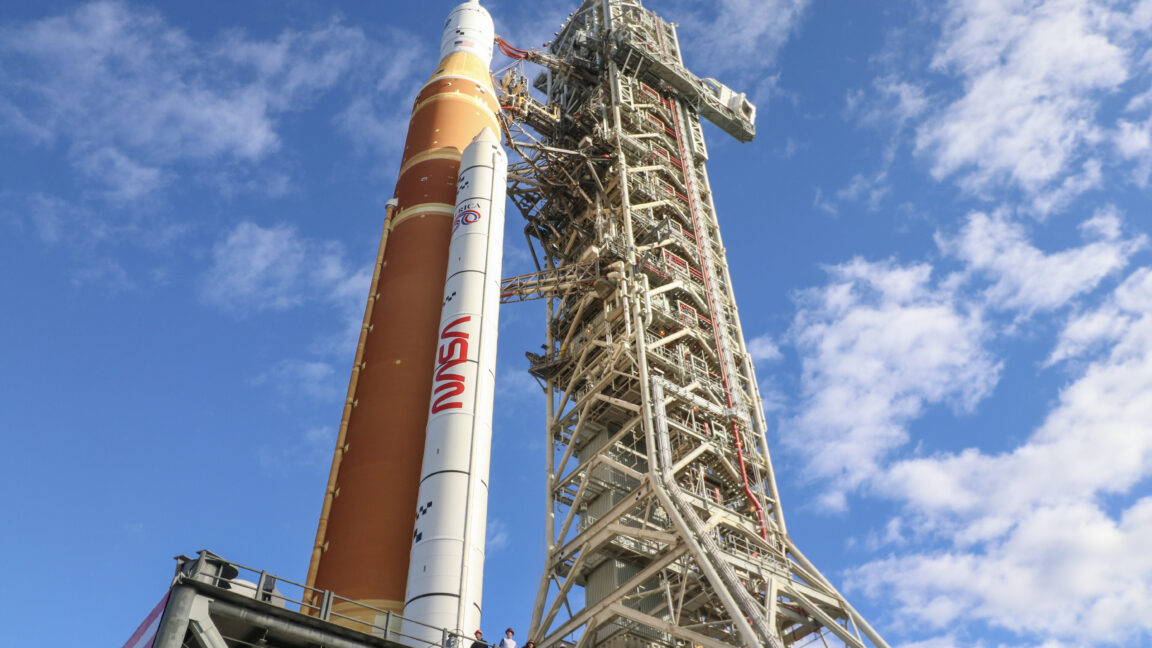
Welcome to Edition 8.26 of the Rocket Report! The past week has been one of advancements and setbacks in the rocket business. NASA rolled the massive rocket for the Artemis II mission to its launch pad in Florida, while Chinese launchers suffered back-to-back failures within a span of approximately 12 hours. Rocket Lab’s march toward a debut of its new Neutron launch vehicle in the coming months may have stalled after a failure during a key qualification test. We cover all this and more in this week’s Rocket Report.

As always, we welcome reader submissions. If you don’t want to miss an issue, please subscribe using the box below (the form will not appear on AMP-enabled versions of the site). Each report will include information on small-, medium-, and heavy-lift rockets, as well as a quick look ahead at the next three launches on the calendar.

Australia invests in sovereign launch. Six months after its first orbital rocket cleared the launch tower for just 14 seconds before crashing back to Earth, Gilmour Space Technologies has secured 217 million Australian dollars ($148 million) in funding that CEO Adam Gilmour says finally gives Australia a fighting chance in the global space race, the Sydney Morning Herald reports. The funding round, led by the federal government’s National Reconstruction Fund Corporation and superannuation giant Hostplus with $75 million each, makes the Queensland company Australia’s newest unicorna fast-growth start-up valued at more than $1 billionand one of the country’s most heavily backed private technology ventures.

Homegrown rocket… “We’re a rocket company that has never had access to the capital that our American competitors have,” Gilmour told the newspaper. “This is the first raise where I’ve actually raised a decent amount of capital compared to the rest of the world.” The investment reflects growing concern about Australia’s reliance on foreign launch providerspredominantly Elon Musk’s SpaceXto put government, defense, and commercial satellites into orbit. With US launch queues stretching beyond two years and geopolitical tensions reshaping access to space infrastructure, Canberra has identified sovereign launch capability as a strategic priority. Gilmour’s first Eris rocket lifted off from the Bowen Orbital Spaceport in North Queensland on July 30 last year. It achieved 14 seconds of flight before falling back to the ground, a result Gilmour framed as a partial success in an industry where first launches routinely fail.

https://arstechnica.com/space/2026/01/rocket-report-rocket-lab-reports-neutron-setback-australia-backs-launch-startup/


Tiny falcons are helping keep the food supply safe on cherry farms

Campylobacter is a common cause of food poisoning and is on the rise in Michigan and around the world. It spreads to humans through food products made from, or that come into contact with, infected animals, primarily chickens and other birds. So far, only one outbreak of campylobacteriosis has been definitively linked to feces from wild birds. Still, because it causes milder symptoms than some other types of bacteria, the Centers for Disease Control considers campylobacter a significantly underreported cause of food-borne illness that may be more common than current data indicates.

“Trying to get more birds of prey would be beneficial to farmers,” Smith said. “If you have one predator, versus a bunch of prey, you have fewer birds overall. If you have a lot fewer birds, even if the ones that are there are carrying bacteria, then you can reduce the transmission risk.”

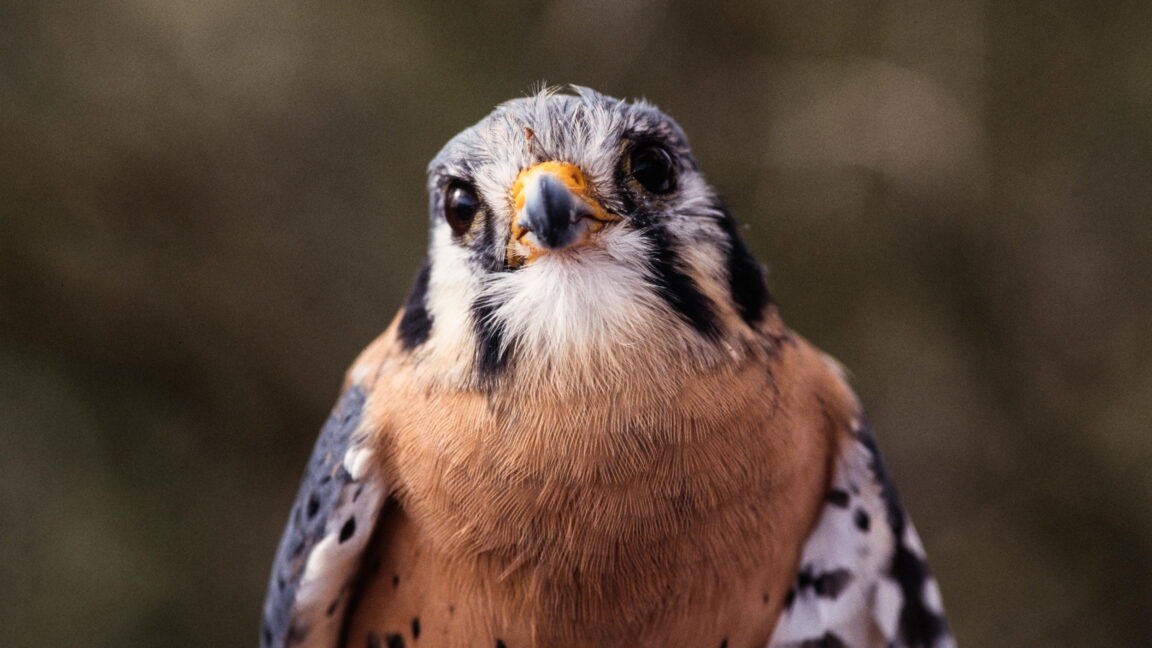
The study’s findings that kestrels significantly reduce physical damage and food safety risks on Michigan cherry farms demonstrate that managing crops and meeting conservation goals—by bolstering local kestrel populations and eliminating the need to clear wildlife habitat around agricultural areas—can be done in tandem, study authors say. They recommend farmers facing pest-management issues consider building kestrel boxes, which cost about $100 per box and require minimal maintenance.

Whether nesting boxes in a given region will be successfully inhabited by kestrels depends on whether there is an abundance of the birds there. In Michigan’s cherry-growing region, kestrels are so abundant that 80 percent to 100 percent of boxes become home for kestrels rather than other nesting birds, said Catherine Lindell, avian ecologist at Michigan State University and senior author of the study.

“It seems like this is just a great tool for farmers,” Lindell said, suggesting interested farmers “put up a couple boxes and see what happens.”

K.R. Callaway is a reporter and editor specializing in science, health, history, and policy stories. She is currently pursuing a master’s degree in journalism at New York University, where she is part of the Science, Health, and Environmental Reporting Program (SHERP). Her writing has appeared in Scientific American, Sky & Telescope, Fast Company and Audubon Magazine, among others.

This story originally appeared on Inside Climate News.

https://arstechnica.com/science/2026/01/tiny-falcons-are-helping-keep-the-food-supply-safe-on-cherry-farms/


This 67,800-year-old hand stencil is the world’s oldest human-made art

Really, really ancient mariners

The hand stencil on the wall of Liang Metanduno is, so far, the oldest evidence of our presence in Wallacea, the group of islands stretched between the continental shelves of Asia and Australia. Populating these islands is “widely considered to have involved the first planned, long-distance sea crossing undertaken by our species,” wrote Oktaviana and his colleagues.

Back when the long-lost artist laid their hand on the wall, sea levels were about 100 meters lower than they are today. Mainland Asia, Sumatra, and Borneo would have been high points in a single landmass, joined by wide swaths of lowlands that today lie beneath shallow ocean. The eastern shore of Borneo would have been a jumping-off point, beyond which lay several dozen kilometers of water and (out of view over the horizon) Sulawesi.

The first few people may have washed ashore on Sulawesi on some misadventure: lost fishermen or tsunami survivors, maybe. But at some point, people must have started making the crossing on purpose, which implies that they knew how to build rafts or boats, how to steer them, and that land awaited them on the other side.

Liang Metanduno pushes back the timing of that crossing by nearly 10,000 years. It also lends strong support to arguments that people arrived in Australia earlier than archaeologists had previously suspected. Archaeological evidence from a rock shelter called Madjedbebe, in northern Australia, suggests that people were living there by 65,000 years ago. But that evidence is still debated (such is the nature of archaeology), and some archaeologists argue that humans didn’t reach the continent until around 50,000 years ago.

“With the discovery of rock art dating to at least 67,800 years ago in Sulawesi, a large island on the most plausible colonization route to Australia, it is increasingly likely that the controversial date of 65,000 years for the initial peopling of Australia is correct,” Griffith University archaeologists Adam Brumm, a coauthor of the recent study, told Ars.

https://arstechnica.com/science/2026/01/this-67800-year-old-hand-stencil-is-the-worlds-oldest-human-made-art/


Watch a robot swarm “bloom” like a garden

Researchers at Princeton University have built a swarm of interconnected mini-robots that “bloom” like flowers in response to changing light levels in an office. According to their new paper published in the journal Science Robotics, such robotic swarms could one day be used as dynamic facades in architectural designs, enabling buildings to adapt to changing climate conditions as well as interact with humans in creative ways.

The authors drew inspiration from so-called “living architectures,” such as beehives. Fire ants provide a textbook example of this kind of collective behavior. A few ants spaced well apart behave like individual ants. But pack enough of them closely together, and they behave more like a single unit, exhibiting both solid and liquid properties. You can pour them from a teapot like ants, as Goldman’s lab demonstrated several years ago, or they can link together to build towers or floating rafts—a handy survival skill when, say, a hurricane floods Houston. They also excel at regulating their own traffic flow. You almost never see an ant traffic jam.

Naturally scientists are keen to mimic such systems. For instance, in 2018, Georgia Tech researchers built ant-like robots and programmed them to dig through 3D-printed magnetic plastic balls designed to simulate moist soil. Robot swarms capable of efficiently digging underground without jamming would be super beneficial for mining or disaster recovery efforts, where using human beings might not be feasible.

In 2019, scientists found that flocks of wild jackdaws will change their flying patterns depending on whether they are returning to roost or banding together to drive away predators. That work could one day lead to the development of autonomous robotic swarms capable of changing their interaction rules to perform different tasks in response to environmental cues.

The authors of this latest paper note that plants can optimize their shape to get enough sunlight or nutrients, thanks to individual cells that interact with each other via mechanical and other forms of signaling. By contrast, the architecture designed by human beings is largely static, composed of rigid fixed elements that hinder building occupants’ ability to adapt to daily, seasonal, or annual variations in climate conditions. There have only been a few examples of applying swarm intelligence algorithms inspired by plants, insects, and flocking birds to the design process to achieve more creative structural designs, or better energy optimization.

https://arstechnica.com/science/2026/01/watch-a-robot-swarm-bloom-like-a-garden/


Zillow removed climate risk scores. This climate expert is restoring them.

In this way, climate risk models today are better suited to characterize the “ broad environment of risk,” said Chris Field, director of the Stanford Woods Institute for the Environment. “ The more detailed you get to be either in space or in time, the less precise your projections are.”

Matouka’s California climate risk plugin is designed for communicating what he said is the “standing potential risks in the area,” not specific property risk.

While climate risk models often differ in their results,  achieving increased accuracy moving forward will be dependent on transparency, said Jesse Gourevitch, an economist at the Environmental Defense Fund. California is unique, since so much publicly available, state data is open to the public. Reproducing Matouka’s plugin for other states will likely be more difficult.

Private data companies present a specific challenge. They make money from their models and are reluctant to share their methods. “A lot of these private-sector models tend not to be very transparent and it can be difficult to understand what types of data or methodologies that they’re using,” said Gourevitch.

Matouka’s plugin includes publicly available data from the state of California and federal agencies, whose extensive methods are readily available online. Overall, experts tend to agree on the utility of both private and public data sources for climate risk data, even with needed improvements.

“People who are making decisions that involve risk benefit from exposure to as many credible estimates as possible, and exposure to independent credible estimates adds a lot of extra value,” Field said.

As for Matouka, his plugin is still undergoing beta testing. He said he welcomes feedback as he develops the tool and evaluates its readiness for widespread use. The beta version is available here.

Claire Barber is a fellow at Inside Climate News and masters in journalism student at Stanford University. She is an environmental and outdoor journalist, reporting primarily in the American Southwest and West. Her writing has appeared in The San Francisco Chronicle, Outside, Powder Magazine, Field & Stream, Trails Magazine, and more. She loves to get lost in the woods looking for a hot spring, backpacking to secluded campsites, and banana slugs.

This story originally appeared on Inside Climate News.

https://arstechnica.com/science/2026/01/zillow-removed-climate-risk-scores-this-climate-expert-is-restoring-them/


The fastest human spaceflight mission in history crawls closer to liftoff

The launch team repaired a leaky hydrogen seal and introduced a gentler hydrogen loading procedure to overcome the problem. Hydrogen is an extremely efficient fuel for rockets, but its super-cold temperature and the tiny size of hydrogen molecules make it prone to leakage. The hydrogen feeds the SLS rocket’s four core-stage engines and single upper-stage engine.

“Artemis I was a test flight, and we learned a lot during that campaign getting to launch,” said Charlie Blackwell-Thompson, NASA’s Artemis II launch director. “The things that we’ve learned relative to how to go load this vehicle, how to load LOX (liquid oxygen), how to load hydrogen, have all been rolled into the way in which we intend to load the Artemis II vehicle.”

NASA is hesitant to publicly set a target launch date until the agency gets through the dress rehearsal, but agency officials say a February launch remains feasible.

“We’ve held schedule pretty well getting to rollout today,” Isaacman said. “We have zero intention of communicating an actual launch date until we get through wet dress. But look, that’s our first window, and if everything is tracking accordingly, I know the teams are prepared, I know this crew is prepared, we’ll take it.”

“Wet dress is the driver to launch,” Blackwell-Thompson said. “With a wet dress that is without significant issues, if everything goes to plan, then certainly there are opportunities within February that could be achievable.”

One constraint that threw a wrench into NASA’s Artemis I launch campaign is no longer a significant factor for Artemis II. On Artemis I, NASA had to roll the rocket back to the Vehicle Assembly Building (VAB) after the wet dress rehearsal to complete final installation and testing on its flight termination system, which consists of a series of pyrotechnic charges designed to destroy the rocket if it flies off course and threatens populated areas after liftoff.

The US Space Force’s Eastern Range, responsible for public safety for all launches from Florida’s Space Coast, requires the flight termination system to be retested after 28 to 35 days, a clock that started ticking last week before rollout. During Artemis I, technicians could not access the parts of the rocket they needed to in order to perform the retest at the launch pad. NASA now has structural arms to give ground teams the ability to reach parts higher up the rocket for the retest without returning to the hangar.

With this new capability, Artemis II could remain at the pad for launch opportunities in February and March before officials need to bring it back to the VAB to replace the flight termination system’s batteries, which still can’t be accessed at the pad.

https://arstechnica.com/space/2026/01/nasas-artemis-ii-rocket-rolls-to-launch-pad-but-key-test-looms-ahead/