Managers on alert for “launch fever” as pressure builds for NASA’s Moon mission

“Putting crew on the rocket and taking the crew around the Moon, this is going be our first step toward a sustained lunar presence,” Honeycutt said. “It’s 10 days [and] four astronauts going farther from Earth than any other human has ever traveled. We’ll be validating the Orion spacecraft’s life support, navigation and crew systems in the really harsh environments of deep space, and that’s going to pave the way for future landings.”

NASA’s 322-foot-tall (98-meter) SLS rocket inside the Vehicle Assembly Building on the eve of rollout to Launch Complex 39B.

Credit: NASA/Joel Kowsky

NASA’s 322-foot-tall (98-meter) SLS rocket inside the Vehicle Assembly Building on the eve of rollout to Launch Complex 39B. Credit: NASA/Joel Kowsky

There is still much work ahead before NASA can clear Artemis II for launch. At the launch pad, technicians will complete final checkouts and closeouts before NASA’s launch team gathers in early February for a critical practice countdown. During this countdown, called a Wet Dress Rehearsal (WDR), Blackwell-Thompson and her team will oversee the loading of the SLS rocket’s core stage and upper stage with super-cold liquid hydrogen and liquid oxygen propellants.

The cryogenic fluids, particularly liquid hydrogen, gave fits to the Artemis launch team as NASA prepared to launch the Artemis I mission—without astronauts—on the SLS rocket’s first test flight in 2022. Engineers resolved the issues and successfully launched the Artemis I mission in November 2022, and officials will apply the lessons for the Artemis II countdown.

“Artemis I was a test flight, and we learned a lot during that campaign getting to launch,” Blackwell-Thompson said. “And the things that we’ve learned relative to how to go load this vehicle, how to load LOX (liquid oxygen), how to load hydrogen, have all been rolled in to the way in which we intend to do for the Artemis II vehicle.”

Finding the right time to fly

Assuming the countdown rehearsal goes according to plan, NASA could be in a position to launch the Artemis II mission as soon as February 6. But the schedule for February 6 is tight, with no margin for error. Officials typically have about five days per month when they can launch Artemis II, when the Moon is in the right position relative to Earth, and the Orion spacecraft can follow the proper trajectory toward reentry and splashdown to limit stress on the capsule’s heat shield.

In February, the available launch dates are February 6, 7, 8, 10, and 11, with launch windows in the overnight hours in Florida. If the mission isn’t off the ground by February 11, NASA will have to stand down until a new series of launch opportunities beginning March 6. The space agency has posted a document showing all available launch dates and times through the end of April.

John Honeycutt, chair NASA’s Mission Management Team for the Artemis II mission, speaks during a news conference at Kennedy Space Center in Florida on January 16, 2026.

Credit: Jim Watson/AFP via Getty Images

John Honeycutt, chair NASA’s Mission Management Team for the Artemis II mission, speaks during a news conference at Kennedy Space Center in Florida on January 16, 2026. Credit: Jim Watson/AFP via Getty Images

NASA’s leaders are eager for Artemis II to fly. NASA is not only racing China, a reality the agency’s former administrator acknowledged during the Biden administration. Now, the Trump administration is pushing NASA to accomplish a human landing on the Moon by the end of his presidential term on January 20, 2029.

One of Honeycutt’s jobs as chair of the Mission Management Team (MMT) is ensuring all the Is are dotted and Ts are crossed amid the frenzy of final launch preparations. While the hardware for Artemis II is on the move in Florida, the astronauts and flight controllers are wrapping up their final training and simulations at Johnson Space Center in Houston.

“I think I’ve got a good eye for launch fever,” he said Friday.

“As chair of the MMT, I’ve got one job, and it’s the safe return of Reid, Victor, Christina, and Jeremy. I consider that a duty and a trust, and it’s one I intend to see through.”

https://arstechnica.com/space/2026/01/managers-on-alert-for-launch-fever-as-pressure-builds-for-nasas-moon-mission/



Archaeologists find a supersized medieval shipwreck in Denmark

“It speaks of remarkable comfort and organization on board,” said Uldum. “Now sailors could have hot meals similar to those on land, instead of the dried and cold food that previously dominated life at sea.” Plenty of dried meat and cold biscuits still awaited sailors for the next several centuries, of course, but when weather and time permitted, at least the crew of Svaelget 2 could gather around a hot meal. The galley would have been a relatively new part of shipboard life for sailors in the early 1400s—and it quickly became a vital one.

Cargo? Go where?

One thing usually marks the site of a shipwreck, even when everything else has disintegrated into the ocean: ballast stones. When merchant ships were empty, they carried stones in their holds to help keep the ship stable; otherwise, the empty ship would be top-heavy and prone to tipping over, which is usually not ideal. (Modern merchant vessels use water, in special tanks, for ballast.) But Uldum and his colleagues didn’t find ballast stones on Svaelget 2, which means the cog was probably fully laden with cargo when it sank.

But the cargo is also conspicuously absent. Cogs were built to carry bulk goods—things like bricks, grain and other staple foods, fabric, salt, and timber. Those goods would have been stowed in an open hold amidships, secured by ropes and chains (some of which remain on the wreck). But barrels, boards, and bolts of fabric all float. As the ship sank and water washed into the hold, it would have carried away the cargo.

Some of it may have washed up on the shores or even more distant beaches, becoming a windfall for local residents. The rest probably sank to the bottom of the sea, far from the ship and its destination.

https://arstechnica.com/science/2026/01/archaeologists-find-a-supersized-medieval-shipwreck-in-denmark/


Scientists sequence a woolly rhino genome from a 14,400-year-old wolf’s stomach

That came as a surprise, since woolly rhinos disappear from the fossil record about 400 years later. Already, the species was making its last stand in northeastern Siberia; its range had been shrinking eastward since around 35,000 years ago. But apparently, on the cusp of extinction, the species was still doing pretty well in northeastern Siberia (except for this particular rhino, who got eaten by a wolf after what one can only assume was a bad day).

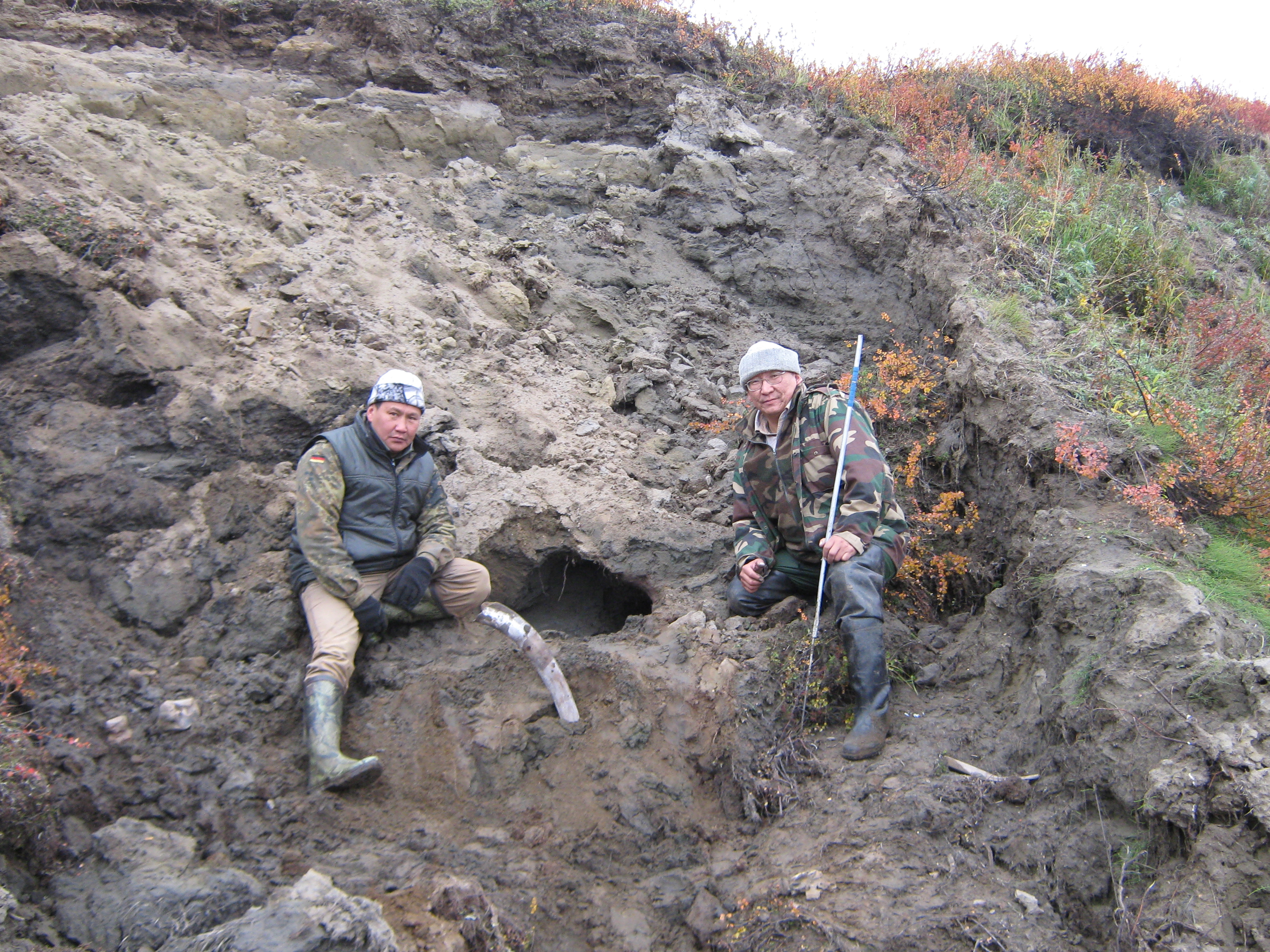
two men pose next to a hole in a muddy hillside

Two researchers pose next to the spot where the Tumat wolf puppy and her sister were found in the Siberian permafrost.

Guðjónsdóttir et al. 2026

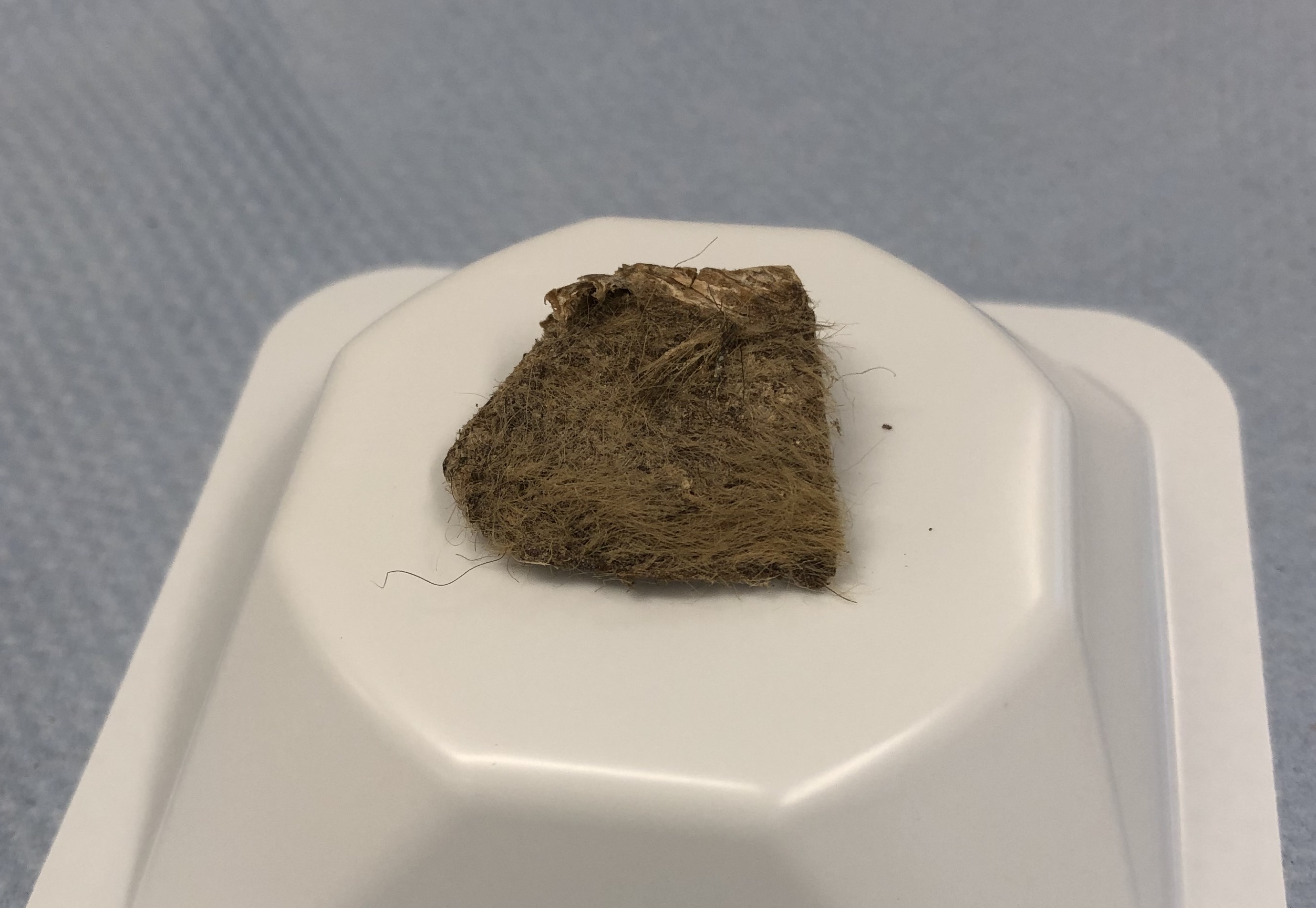
a scientist holds a woolly rhino horn up to his nose

Woolly rhino horn, with study co-author Love Dalén for scale.

Guðjónsdóttir et al. 2026

Woolly rhino population was small but healthy

So what counts as a stable population?

In the genome of a 49,000-year-old woolly rhino from a few hundred miles east in Rakvachan, Siberia, Guðjónsdóttir and her colleagues found clues about the species’ even more ancient history. Big changes in population size, among other events, can leave traces in the genome, and the researchers used those to estimate that between 114,000 and 63,000 years ago, the woolly rhino population dropped sharply, from about 15,600 to about 1,600.

Those numbers refer to what ecologists call the “effective population,” which means the number of rhinos breeding and contributing to the group’s gene pool (so there would have been more than 1,600 running around, but not all of them were reproducing). After 63,000 years ago, the woolly rhino population seems to have leveled out.

According to ecologists, an effective population of 1,600 rhinos would have been more than enough to keep the species thriving. Smaller populations, especially with shrinking ranges, are more vulnerable to being wiped out by events like environmental change, natural disasters, or disease outbreaks. And small populations are also more likely to face the genetic consequences of inbreeding, a loss of genetic diversity, and genetic drift (in which potentially harmful mutations can pile up), leaving the species even more vulnerable. The whole thing can turn into a vicious cycle.

For most species, the threshold for avoiding those genetic pitfalls is an effective population of around 1,000.

The end came suddenly for woolly rhinos

Researchers had expected to find woolly rhinos in dire straits by 14,400 years ago. Prior to discovering the Tumat genome inside a wolf’s stomach, the most recently sequenced woolly rhino genome dated to 18,400 years ago (and it was found just a few miles from the Rakvachan rhino). That genome showed all the signs of a healthy, stable population. But by 14,000 years ago, woolly rhinos disappeared from the fossil record—so it looked like their population must have started its death spiral shortly after 18,400 years ago.

https://arstechnica.com/science/2026/01/scientists-sequence-a-woolly-rhino-genome-from-a-14400-year-old-wolfs-stomach/


EPA makes it harder for states, tribes to block pipelines

Kramer, from the EPA, said the proposed rule is intended to curb what the agency views as misuse of Section 401 by some states to block projects for reasons unrelated to water quality.

Kramer said the changes would ensure that section 401 “is not weaponized by states to shut down projects for political purposes, as opposed to protecting water quality.”

State officials, particularly in Democrat-led states, have relied on Section 401 in recent years to deny or place conditions on permits for major projects they say would have harmed local waterways.

In 2017, Washington Gov. Jay Inslee and the state’s Department of Ecology relied on Section 401 to reject a critical water-quality certification for a proposed coal export terminal in Longview. State officials concluded the project would cause significant environmental harm that could not be mitigated. Courts later upheld the decision, and the ruling ultimately brought the project to an end.

In 2020, former New York Gov. Andrew Cuomo used section 401 to deny a permit for a natural gas pipeline proposed to bring fuel from Pennsylvania into the state, citing concerns that its construction would cause significant harm to water quality.

New York Gov. Kathy Hochul has since approved a permit for the same pipeline project Cuomo denied.

Last summer, EPA hosted two public webinars to solicit input on proposed changes to the law.

At least 14 of the speakers who joined these sessions pointed to the Clean Water Act’s long track record of improving water quality and said section 401 has been essential for protecting rivers and aquatic ecosystems from pollution, according to an EPA summary of the discussions.

The summary states: “Many of these speakers expressed concern that a new rule would weaken State and Tribal authority, arguing that such changes could undermine public health, environmental protection, and local economies.”

Soon, the agency plans to open a 30-day public comment period. After its review, Kramer said the agency would work toward issuing a final rule this spring.

This story originally appeared on Inside Climate News.

https://arstechnica.com/science/2026/01/epa-makes-it-harder-for-states-tribes-to-block-pipelines/


EPA moves to stop considering economic benefits of cleaner air

The move to exclude the estimated benefits relates specifically to fine particulate matter smaller than 2.5 micrometers (known as PM2.5) and ozone. This particulate matter, commonly produced by combustion, is small enough to make it through your respiratory system and into your bloodstream. For this reason, it is associated with a host of health impacts even beyond respiratory conditions. That has made research on those impacts the target of anti-regulation advocates who claim scientists exaggerate the harm.

Ozone is also a familiar enough pollutant in smoggy areas to be mentioned in weather forecasts as a warning for people with conditions like asthma. Ozone pollution in the lower atmosphere results from reactions between nitrogen oxides and volatile organic compounds emitted by various anthropogenic sources.

The new EPA language claims that past analyses have failed to adequately represent the scientific uncertainty of the economic value of reducing these pollutants. The new economic impact analysis for stationary combustion turbines, for example, says this “leads the public to believe the Agency has a better understanding of the monetized impacts of exposure to PM2.5 and ozone than in reality.” It continues, “Therefore, to rectify this error, the EPA is no longer monetizing benefits from PM2.5 and ozone but will continue to quantify the emissions until the Agency is confident enough in the modeling to properly monetize those impacts.”

A 2024 regulatory impact analysis for stationary combustion turbines had estimated those benefits at $27–$92 million per year for a tightening of emissions limits.

This is not the first time that these numbers have become political targets. Between 2004 and 2008, the Bush administration reduced the EPA’s value of a statistical life by around 11 percent. But instead of moving numbers to the lower end of scientific estimates, the Trump administration is more aggressively weaponizing scientific uncertainty. Functionally, the logic is that since estimates of benefits vary from large to extremely large, the EPA will default to a value of zero. Only the costs will be calculated, and those numbers are sure to be highlighted as justification for loosening pollution limits.

Currently, documentation for how the EPA previously calculated pollution regulation benefits based on research—including transparent assessments of scientific uncertainties—is still available on the EPA website.

https://arstechnica.com/science/2026/01/epa-axes-benefits-from-cost-benefit-analysis-for-air-pollution-limits/


These 60,000-year-old poison arrows are oldest yet found

Poisoned arrows or darts have long been used by cultures all over the world for hunting or warfare. For example, there are recipes for poisoning projective weapons, and deploying them in battle, in Greek and Roman historical documents, as well as references in Greek mythology and Homer’s Iliad and Odyssey. Chinese warriors over the ages did the same, as did the Gauls and Scythians, and some Native American populations.

Archaeologists have now found traces of a plant-based poison on several 60,000-year-old quartz Stone Age arrowheads found in South Africa, according to a new paper published in the journal Science Advances. That would make this the oldest direct evidence of using poisons on projectiles—a cognitively complex hunting strategy—and pushes the timeline for using poison arrows back into the Pleistocene.

The poisons commonly used could be derived from plants or animals (frogs, beetles, venomous lizards). Plant-based examples include curare, a muscle relaxant that paralyzes the victim’s respiratory system, causing death by asphyxiation. Oleander, milkweeds, or inee (onaye) contain cardiac glucosides. In Southeast Asia, the sap or juice of seeds from the ancar tree is smeared on arrowheads, which causes paralysis, convulsions, and cardiac arrest due to the presence of toxins like strychnine. Several species of aconite are known for their use as arrow poisons in Siberia and northern Japan.

According to the authors, up until now, the earliest direct evidence of poisoned arrows dates back to the mid-Holocene. For instance, scientists found traces of toxic glycoside residues on 4,000-year-old bone-tipped arrows recovered from an Egyptian tomb, as well as on bone arrow points from 6,700 years ago excavated from South Africa’s Kruger Cave. The only prior evidence of using poisons for hunting during the Pleistocene is a “poison applicator” found at Border Cave in South Africa, along with a lump of beeswax.

Milk of the poisonous onion

The authors sampled 10 quartz-backed arrowheads recovered from the Umhlatuzana Rock Shelter site in KwaZulu-Natal, South Africa. The results revealed that five of the 10 tested tips had traces of compounds found in Boophone disticha, aka gifbol (poisonous onion), sometimes called the century plant, which is common throughout South Africa. Various parts of the plant have been used as an analgesic (specifically a volatile oil called eugenol) as well as for poisonous hunting purposes. Its more toxic compounds include buphandrine, crinamidine, and buphanine; the latter is similar in effect to scopolamine and can cause hallucinations, coma, or death.

https://arstechnica.com/science/2026/01/these-60000-year-old-poison-arrows-are-oldest-yet-found/


NASA orders “controlled medical evacuation” from the International Space Station

NASA officials said Thursday they have decided to bring home four of the seven crew members on the International Space Station after one of them experienced a “medical situation” earlier this week.

The space agency has said little about the incident, and officials have not identified which crew member suffered the medical issue. James “JD” Polk, NASA’s chief health and medical officer, told reporters Thursday the crew member is “absolutely stable” but that the agency is “erring on the side of caution” with the decision to return the astronaut to Earth.

The ailing astronaut is part of the Crew-11 mission, which launched to the station August 1 and was slated to come back to Earth around February 20. Instead, the Crew-11 astronauts will depart the International Space Station (ISS) in the coming days and head for reentry and a parachute-assisted splashdown in the Pacific Ocean off the coast of California.

After discussions with our chief health and medical officer, Dr. JD Polk, and leadership across the agency, I’ve come to the decision that it’s in the best interests of our astronauts to return Crew-11 ahead of their planned departure,” NASA Administrator Jared Isaacman said Thursday.

The Crew-11 mission is led by commander Zena Cardman, 38, who is wrapping up her first mission to space. Second in command is pilot Mike Fincke, a 58-year-old astronaut on his fourth spaceflight. Japanese astronaut Kimiya Yui, 55, and Russian cosmonaut Oleg Platonov, 39, round out the crew.

Isaacman said NASA will release more information about the schedule for Crew-11’s undocking and reentry within the next 48 hours. The crew will come home aboard the same SpaceX Crew Dragon spacecraft they launched in more than five months ago. The entire crew must return to Earth together because they rely on the same Dragon spacecraft as a lifeboat.

“For over 60 years, NASA has set the standard for safety and security in crewed spaceflight,” Isaacman said. “In these endeavors, including the 25 years of continuous human presence onboard the International Space Station, the health and well-being of our astronauts is always and will be our highest priority.”

From left to right: Crew-11 mission specialist Oleg Platonov, pilot Mike Fincke, commander Zena Cardman, and mission specialist Kimiya Yui. This photo was taken during training at SpaceX’s facility in Hawthorne, California.

Credit: SpaceX

From left to right: Crew-11 mission specialist Oleg Platonov, pilot Mike Fincke, commander Zena Cardman, and mission specialist Kimiya Yui. This photo was taken during training at SpaceX’s facility in Hawthorne, California. Credit: SpaceX

Lingering risk

Polk, a physician who has served as NASA’s chief medical officer since 2016, said the agency is not ready to release details about the medical issue, citing privacy concerns. “I’m not going to speak about any particular astronaut or any particular specific diagnosis,” Polk said. “I’d ask that we still respect the privacy of the astronaut.”

https://arstechnica.com/space/2026/01/in-a-first-nasa-orders-astronauts-home-after-unspecified-medical-issue/


These dogs eavesdrop on their owners to learn new words

Next, the entire experiment was repeated with one key variation: This time, during the training protocol, rather than addressing the dogs directly when naming new toys, the dogs merely watched while their owners talked to another person while naming the toys, never directly addressing the dogs at all.

The result: 80 percent of the dogs correctly chose the toys in the direct address condition, and 100 percent did so in the overhearing condition. Taken together, the results demonstrate that GWL dogs can learn new object labels just by overhearing interactions, regardless of whether the dogs are active participants in the interactions or passive listeners—much like what has been observed in young children around a year-and-a-half old.

To learn whether temporal continuity (a nonsocial factor) or the lack thereof affects label learning in GWL dogs, the authors also devised a third experimental variation. The owner would show the dog a new toy, place it in a bucket, let the dog take the toy out of the bucket, and then place the toy back in. Then the owner would lift the bucket to prevent the dog from seeing what was inside and repeatedly use the toy name in a sentence while looking back and forth from the dog to the bucket. This was followed by the usual testing phase. The authors concluded that the dogs didn’t need temporal continuity to form object-label mappings. And when the same dogs were re-tested two weeks later, those mappings had not decayed; the dogs remembered.

But GWL dogs are extremely rare, and the findings don’t extend to typical dogs, as the group discovered when they ran both versions of the experiment using 10 non-GWL border collies. There was no evidence of actual learning in these typical dogs; the authors suggest their behavior reflects a doggy preference for novelty when it comes to toy selection, not the ability to learn object-label mappings.

“Our findings show that the socio-cognitive processes enabling word learning from overheard speech are not uniquely human,” said co-author Shany Dror of ELTE and VetMedUni universities. “Under the right conditions, some dogs present behaviors strikingly similar to those of young children. These dogs provide an exceptional model for exploring some of the cognitive abilities that enabled humans to develop language. But we do not suggest that all dogs learn in this way—far from it.”

[embedded content]

Science, 2025. DOI: 10.1126/science.adq5474 (About DOIs).

https://arstechnica.com/science/2026/01/these-dogs-eavesdrop-on-their-owners-to-learn-new-words/


Trump withdraws US from world’s most important climate treaty

The actual impact of the US withdrawal on many of the UN bodies singled out by Trump would depend on how aggressively his administration followed through on its announcement.

The head of one of the UN bodies named in the executive order said that the full effect of the move would become clear only during the UN’s annual budget allocation process.

“If they want to be difficult they could block the adoption of our budget. So it depends on how far they want to take it,” the person added.

Although the list caused anguish among environmental groups, it did not go as far as originally envisaged on trade and economic matters after the administration quietly dropped the World Trade Organization and the OECD from its list of potential targets last year.

In October, it emerged that Trump had authorized the payment of $25 million in overdue subscriptions to the WTO, despite the administration deriding the organization as “toothless” only a month previously.

The list also did not include the International Maritime Organization despite the Trump administration’s successful—and diplomatically bruising—move last year to block the IMO’s plan to introduce a net zero framework for shipping.

Sue Biniaz, the former US climate negotiator, said she hoped the retreat from the UNFCCC treaty was “a temporary one,” adding there were “multiple future pathways to rejoining the key climate agreements” in future.

Stiell of the UNFCCC agreed: “The doors remain open for the US to re-enter in the future, as it has in the past with the Paris Agreement. Meanwhile the size of the commercial opportunity in clean energy, climate resilience, and advanced electrotech remains too big for American investors and businesses to ignore.”

He added: “While all other nations are stepping forward together, this latest step back from global leadership, climate co-operation, and science can only harm the US economy, jobs, and living standards, as wildfires, floods, megastorms, and droughts get rapidly worse.”

© 2026 The Financial Times Ltd. All rights reserved Not to be redistributed, copied, or modified in any way.

https://arstechnica.com/science/2026/01/trump-withdraws-us-from-worlds-most-important-climate-treaty/


NASA considers evacuating ailing crew member from International Space Station

Someone on the International Space Station suffered an unspecified “medical situation” Wednesday, prompting the postponement of a planned spacewalk and raising the possibility of an early return for a portion of the lab’s seven-person crew, NASA said in a statement.

NASA has never ordered a medical evacuation from space before, but the option has always been available at the International Space Station with lifeboats ready for activation.

The space agency announced the spacewalk postponement Wednesday afternoon due to a “medical concern” with a member of the space station’s crew. NASA officials declined to identify the crew member or release further details about their condition, citing medical privacy restrictions.

A late-night update

It is rare, but not unprecedented, for NASA to postpone a spacewalk because of a medical issue. It last happened in 2021, when an astronaut was unable to perform a spacewalk due to a pinched nerve. NASA initially said managers would reschedule Thursday’s planned excursion for another date.

But the situation on the ISS appeared more serious after a second statement was released by NASA late Wednesday night. NASA confirmed the medical issue involved a single crew member and said the person was stable. Then, NASA said managers were considering bringing home the ailing crew member on a SpaceX Crew Dragon capsule.

The Dragon spacecraft docked at the ISS launched August 1 with NASA astronauts Zena Cardman and Mike Fincke, Japanese astronaut Kimiya Yui, and Russian cosmonaut Oleg Platonov. This mission, designated Crew-11, was slated to end with the crew’s undocking and return to Earth around February 20.

“Safely conducting our missions is our highest priority, and we are actively evaluating all options, including the possibility of an earlier end to Crew-11’s mission,” NASA said. “These are the situations NASA and our partners train for and prepare to execute safely. We will provide further updates within the next 24 hours.”

https://arstechnica.com/space/2026/01/nasa-postpones-space-station-spacewalk-due-to-crew-members-medical-concern/