NASA orders “controlled medical evacuation” from the International Space Station

NASA officials said Thursday they have decided to bring home four of the seven crew members on the International Space Station after one of them experienced a “medical situation” earlier this week.

The space agency has said little about the incident, and officials have not identified which crew member suffered the medical issue. James “JD” Polk, NASA’s chief health and medical officer, told reporters Thursday the crew member is “absolutely stable” but that the agency is “erring on the side of caution” with the decision to return the astronaut to Earth.

The ailing astronaut is part of the Crew-11 mission, which launched to the station August 1 and was slated to come back to Earth around February 20. Instead, the Crew-11 astronauts will depart the International Space Station (ISS) in the coming days and head for reentry and a parachute-assisted splashdown in the Pacific Ocean off the coast of California.

After discussions with our chief health and medical officer, Dr. JD Polk, and leadership across the agency, I’ve come to the decision that it’s in the best interests of our astronauts to return Crew-11 ahead of their planned departure,” NASA Administrator Jared Isaacman said Thursday.

The Crew-11 mission is led by commander Zena Cardman, 38, who is wrapping up her first mission to space. Second in command is pilot Mike Fincke, a 58-year-old astronaut on his fourth spaceflight. Japanese astronaut Kimiya Yui, 55, and Russian cosmonaut Oleg Platonov, 39, round out the crew.

Isaacman said NASA will release more information about the schedule for Crew-11’s undocking and reentry within the next 48 hours. The crew will come home aboard the same SpaceX Crew Dragon spacecraft they launched in more than five months ago. The entire crew must return to Earth together because they rely on the same Dragon spacecraft as a lifeboat.

“For over 60 years, NASA has set the standard for safety and security in crewed spaceflight,” Isaacman said. “In these endeavors, including the 25 years of continuous human presence onboard the International Space Station, the health and well-being of our astronauts is always and will be our highest priority.”

From left to right: Crew-11 mission specialist Oleg Platonov, pilot Mike Fincke, commander Zena Cardman, and mission specialist Kimiya Yui. This photo was taken during training at SpaceX’s facility in Hawthorne, California.

Credit: SpaceX

From left to right: Crew-11 mission specialist Oleg Platonov, pilot Mike Fincke, commander Zena Cardman, and mission specialist Kimiya Yui. This photo was taken during training at SpaceX’s facility in Hawthorne, California. Credit: SpaceX

Lingering risk

Polk, a physician who has served as NASA’s chief medical officer since 2016, said the agency is not ready to release details about the medical issue, citing privacy concerns. “I’m not going to speak about any particular astronaut or any particular specific diagnosis,” Polk said. “I’d ask that we still respect the privacy of the astronaut.”

https://arstechnica.com/space/2026/01/in-a-first-nasa-orders-astronauts-home-after-unspecified-medical-issue/



These dogs eavesdrop on their owners to learn new words

Next, the entire experiment was repeated with one key variation: This time, during the training protocol, rather than addressing the dogs directly when naming new toys, the dogs merely watched while their owners talked to another person while naming the toys, never directly addressing the dogs at all.

The result: 80 percent of the dogs correctly chose the toys in the direct address condition, and 100 percent did so in the overhearing condition. Taken together, the results demonstrate that GWL dogs can learn new object labels just by overhearing interactions, regardless of whether the dogs are active participants in the interactions or passive listeners—much like what has been observed in young children around a year-and-a-half old.

To learn whether temporal continuity (a nonsocial factor) or the lack thereof affects label learning in GWL dogs, the authors also devised a third experimental variation. The owner would show the dog a new toy, place it in a bucket, let the dog take the toy out of the bucket, and then place the toy back in. Then the owner would lift the bucket to prevent the dog from seeing what was inside and repeatedly use the toy name in a sentence while looking back and forth from the dog to the bucket. This was followed by the usual testing phase. The authors concluded that the dogs didn’t need temporal continuity to form object-label mappings. And when the same dogs were re-tested two weeks later, those mappings had not decayed; the dogs remembered.

But GWL dogs are extremely rare, and the findings don’t extend to typical dogs, as the group discovered when they ran both versions of the experiment using 10 non-GWL border collies. There was no evidence of actual learning in these typical dogs; the authors suggest their behavior reflects a doggy preference for novelty when it comes to toy selection, not the ability to learn object-label mappings.

“Our findings show that the socio-cognitive processes enabling word learning from overheard speech are not uniquely human,” said co-author Shany Dror of ELTE and VetMedUni universities. “Under the right conditions, some dogs present behaviors strikingly similar to those of young children. These dogs provide an exceptional model for exploring some of the cognitive abilities that enabled humans to develop language. But we do not suggest that all dogs learn in this way—far from it.”

[embedded content]

Science, 2025. DOI: 10.1126/science.adq5474 (About DOIs).

https://arstechnica.com/science/2026/01/these-dogs-eavesdrop-on-their-owners-to-learn-new-words/


Trump withdraws US from world’s most important climate treaty

The actual impact of the US withdrawal on many of the UN bodies singled out by Trump would depend on how aggressively his administration followed through on its announcement.

The head of one of the UN bodies named in the executive order said that the full effect of the move would become clear only during the UN’s annual budget allocation process.

“If they want to be difficult they could block the adoption of our budget. So it depends on how far they want to take it,” the person added.

Although the list caused anguish among environmental groups, it did not go as far as originally envisaged on trade and economic matters after the administration quietly dropped the World Trade Organization and the OECD from its list of potential targets last year.

In October, it emerged that Trump had authorized the payment of $25 million in overdue subscriptions to the WTO, despite the administration deriding the organization as “toothless” only a month previously.

The list also did not include the International Maritime Organization despite the Trump administration’s successful—and diplomatically bruising—move last year to block the IMO’s plan to introduce a net zero framework for shipping.

Sue Biniaz, the former US climate negotiator, said she hoped the retreat from the UNFCCC treaty was “a temporary one,” adding there were “multiple future pathways to rejoining the key climate agreements” in future.

Stiell of the UNFCCC agreed: “The doors remain open for the US to re-enter in the future, as it has in the past with the Paris Agreement. Meanwhile the size of the commercial opportunity in clean energy, climate resilience, and advanced electrotech remains too big for American investors and businesses to ignore.”

He added: “While all other nations are stepping forward together, this latest step back from global leadership, climate co-operation, and science can only harm the US economy, jobs, and living standards, as wildfires, floods, megastorms, and droughts get rapidly worse.”

© 2026 The Financial Times Ltd. All rights reserved Not to be redistributed, copied, or modified in any way.

https://arstechnica.com/science/2026/01/trump-withdraws-us-from-worlds-most-important-climate-treaty/


NASA considers evacuating ailing crew member from International Space Station

Someone on the International Space Station suffered an unspecified “medical situation” Wednesday, prompting the postponement of a planned spacewalk and raising the possibility of an early return for a portion of the lab’s seven-person crew, NASA said in a statement.

NASA has never ordered a medical evacuation from space before, but the option has always been available at the International Space Station with lifeboats ready for activation.

The space agency announced the spacewalk postponement Wednesday afternoon due to a “medical concern” with a member of the space station’s crew. NASA officials declined to identify the crew member or release further details about their condition, citing medical privacy restrictions.

A late-night update

It is rare, but not unprecedented, for NASA to postpone a spacewalk because of a medical issue. It last happened in 2021, when an astronaut was unable to perform a spacewalk due to a pinched nerve. NASA initially said managers would reschedule Thursday’s planned excursion for another date.

But the situation on the ISS appeared more serious after a second statement was released by NASA late Wednesday night. NASA confirmed the medical issue involved a single crew member and said the person was stable. Then, NASA said managers were considering bringing home the ailing crew member on a SpaceX Crew Dragon capsule.

The Dragon spacecraft docked at the ISS launched August 1 with NASA astronauts Zena Cardman and Mike Fincke, Japanese astronaut Kimiya Yui, and Russian cosmonaut Oleg Platonov. This mission, designated Crew-11, was slated to end with the crew’s undocking and return to Earth around February 20.

“Safely conducting our missions is our highest priority, and we are actively evaluating all options, including the possibility of an earlier end to Crew-11’s mission,” NASA said. “These are the situations NASA and our partners train for and prepare to execute safely. We will provide further updates within the next 24 hours.”

https://arstechnica.com/space/2026/01/nasa-postpones-space-station-spacewalk-due-to-crew-members-medical-concern/


New battery idea gets lots of power out of unusual sulfur chemistry

When the battery starts discharging, the sulfur at the cathode starts losing electrons and forming sulfur tetrachloride (SCl4), using chloride it stole from the electrolyte. As the electrons flow into the anode, they combine with the sodium, which plates onto the aluminum, forming a layer of sodium metal. Obviously, this wouldn’t work with an aqueous electrolyte, given how powerfully sodium reacts with water.

High capacity

To form a working battery, the researchers separated the two electrodes using a glass fiber material. They also added a porous carbon material to the cathode to keep the sulfur tetrachloride from diffusing into the electrolyte. They used various techniques to confirm that sodium was being deposited on the aluminum and that the reaction at the cathode was occurring via sulfur dichloride intermediates. They also determined that sodium chloride was a poor source of sodium ions, as it tended to precipitate out onto some of the solid materials in the battery.

The battery was also fairly stable, surviving 1,400 cycles before suffering significant capacity decay. Higher charging rates caused capacity to decay more quickly, but the battery does a great job of holding charge when not in use, maintaining over 95 percent of its charge, even when idled for 400 days.

While the researchers provide some capacity-per-weight measurements, they don’t do so for a complete battery, focusing instead on portions of the battery, such as the sulfur or the total electrode mass.

But with both electrodes considered, the energy density can reach over 2,000 Watt-hours per kilogram. While that will undoubtedly drop with the total mass of the battery, it’s difficult to imagine that it wouldn’t outperform existing sodium-sulfur or sodium-ion batteries.

Beyond the capacity, the big benefit of the proposed system appears to be its price. Given the raw materials, the researchers estimate that their cost is roughly $5 per kilowatt-hour of capacity, which is less than a tenth of the cost of current sodium batteries.

Again, there’s no guarantee that this work can be scaled up for manufacturing in a way that keeps it competitive with current technologies. Still, if materials used in existing battery technologies become expensive, it’s reassuring to have other options to explore.

Nature, 2026. DOI: 10.1038/s41586-025-09867-2  (About DOIs).

https://arstechnica.com/science/2026/01/new-battery-idea-gets-lots-of-power-out-of-unusual-sulfur-chemistry/


We have a fossil closer to our split with Neanderthals and Denisovans

The Casablanca fossils are about the same age as hominin fossils from Spain, which belong to a species called Homo antecessor. This species has been suggested to be a likely ancestor of Neanderthals and Denisovans. Overall, it looks like the fossils from Casablanca are a North African counterpart to Homo antecessor, with the Spanish hominins eventually leading to Neanderthals and the North African ones eventually leading to us.

Both groups share some features in their teeth and lower jaws, but they’re also different in some important ways. The teeth and chins in particular share some older features with Homo erectus. But the jaws have more newfangled features in the places where chewing muscles once attached to the bone—features that Neanderthals and our species share. On the other hand, the teeth are missing some other relatively recent features that would later help define Neanderthals (and were already beginning to show up in Homo antecessor).

Altogether, it looks like the Homo erectus populations and the Neanderthals and Denisovans had been separated for a while by the time the hominins at Grotte à Hominidés lived. But not that long. These hominins were probably part of a generation that was fairly close to that big split, near the base of our branch of the hominin family tree.

Here’s looking at you, hominin

Based on ancient DNA, it looks like Neanderthals and Denisovans started evolving into two separate species sometime between 470,000 and 430,000 years ago. Meanwhile, our branch would eventually become recognizable as us sometime around 300,000 years ago, or possibly earlier. At various times and places, all three species would eventually come back together to mingle and swap DNA, leaving traces of those interactions buried deep in each other’s genomes.

And 773,000 years after a predator dragged the remains of a few unfortunate hominins into its den in northern Africa, those hominins’ distant descendants would unearth the gnawed, broken bones and begin piecing together the story.

Nature, 2025 DOI: 10.1038/s41586-025-09914-y  (<a href="https://dx.doi.org/10.1038/s41586-025-09914-y;%20(About DOIs).

https://arstechnica.com/science/2026/01/weve-got-a-fossil-closer-to-our-split-with-neanderthals-and-denisovans/


Here are the launches and landings we’re most excited about in 2026

Last year delivered doses of drama and excitement in the space business, with a record number of launches, breathtaking vistas of other worlds, and a multitude of breakthroughs and setbacks. 2026 is shaping up to be another thrilling year in the cosmos.

For the first time in more than 54 years, astronauts are training to travel to the vicinity of the Moon, perhaps within the next couple of months. NASA, SpaceX, Blue Origin, and other companies are poised to take major steps toward actually landing humans on the Moon, perhaps within a few years.

New rockets are slated to debut in 2026, and scientists hope to open new windows on the Universe. Here, we list the most anticipated space missions scheduled for this year, ranked according to our own anticipation for them. We also assess the chances of these missions actually happening in the next 12 months. Unless specified, we don’t assess the chances of a successful outcome.

1. Artemis II

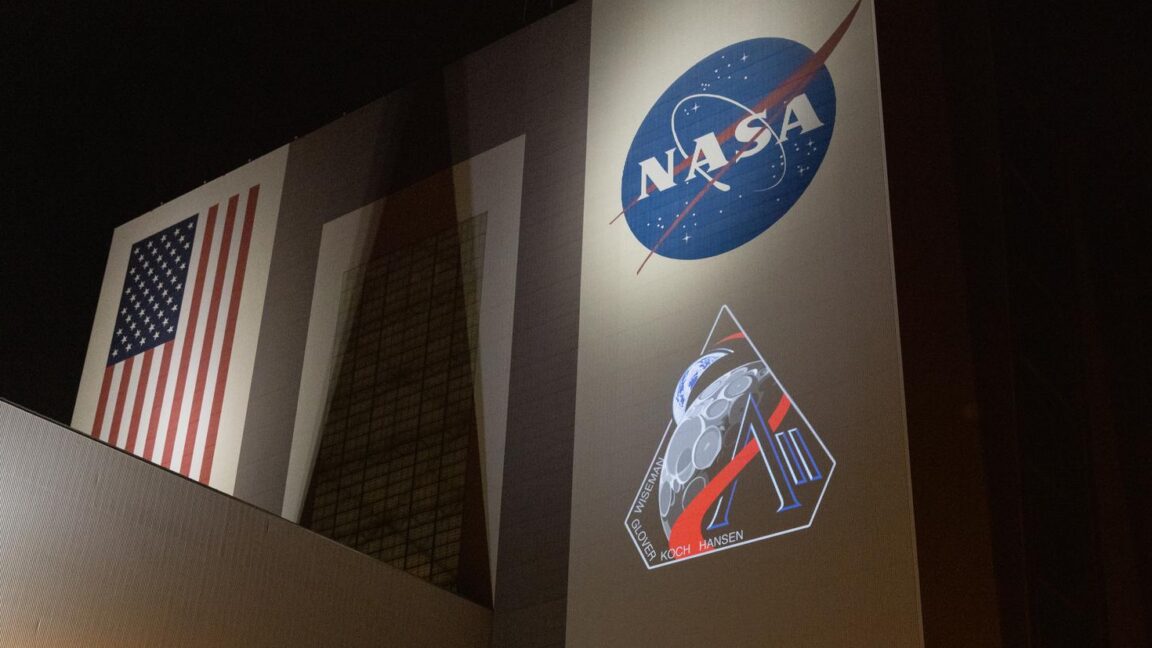
Final preparations for the Artemis II mission are well underway at NASA’s Kennedy Space Center in Florida, with the Space Launch System rocket and Orion spacecraft fully integrated inside the Vehicle Assembly Building. Within a couple of weeks, the SLS rocket could roll to Launch Complex 39B for a countdown dress rehearsal. Then, perhaps in February, the Artemis II mission is scheduled to depart Florida’s Space Coast on a 10-day flight that will carry astronauts Reid Wiseman, Victor Glover, Christina Koch, and Jeremy Hansen around the far side of the Moon and back to Earth. This will be the first crew flight on the SLS rocket and Orion capsule. Even if delays prevent a launch in February, Artemis II is well-positioned to fly by spring or summer. Chance of Artemis II happening in 2026: 90 percent.

https://arstechnica.com/space/2026/01/here-are-the-launches-and-landings-were-most-excited-about-in-2026/


Ørsted seeks injunction against US government over project freeze

Ørsted is seeking a court injunction against the Trump administration’s decision to suspend its work on a major wind farm project off the US northeast coast.

In the latest salvo between the US government and the offshore wind industry, the Danish company filed a legal challenge against the suspension in the US District Court for the District of Columbia on Thursday.

In a statement, Ørsted—the world’s largest offshore wind developer that is 50 percent owned by the Danish state—and its joint venture partner Skyborn Renewables, a unit of BlackRock’s Global Infrastructure Partners, said the US government’s order to suspend the lease on its Revolution Wind project was a violation of applicable law.

Read full article

Comments

https://arstechnica.com/tech-policy/2026/01/orsted-seeks-injunction-against-us-government-over-project-freeze/


NASA’s science budget won’t be a train wreck after all

In June, the White House released a budget proposal for fiscal year 2026 that slashed funding for NASA’s science programs by nearly 50 percent. Then, in July, the Trump administration began telling the leaders of dozens of space science missions to prepare “closeout” plans for their spacecraft.

Things looked pretty grim for a while, but then Congress stepped in. Congress, of course, sets the federal government’s budget. In many ways, Congress abdicated authority to the Trump administration last year. But not so, it turns out, with federal spending.

Throughout the summer and fall, as the White House and Congress wrangled over various issues, lawmakers made it clear they intended to fund most of NASA’s science portfolio. Preliminary efforts to shut down active missions were put on hold.

Read full article

Comments

https://arstechnica.com/space/2026/01/nasas-science-budget-wont-be-a-train-wreck-after-all/


Under anti-vaccine RFK Jr., CDC slashes childhood vaccine schedule

Under anti-vaccine Health Secretary Robert F. Kennedy Jr., federal health officials on Monday announced a sweeping and unprecedented overhaul of federal vaccine recommendations, abruptly paring down recommended immunizations for children from 17 to 11.

Officials claimed the rationale for the change was to align US vaccine recommendations more closely with those of other high-income countries, namely Denmark, a small, far less diverse country of around 6 million people (smaller than the population of New York City) that has universal health care. The officials also claim the change is necessary to address the decline in public trust in vaccinations, which has been driven by anti-vaccine activists, including Kennedy.

“This decision protects children, respects families, and rebuilds trust in public health,” Kennedy said in a statement.

Read full article

Comments

https://arstechnica.com/health/2026/01/under-anti-vaccine-rfk-jr-cdc-slashes-childhood-vaccine-schedule/