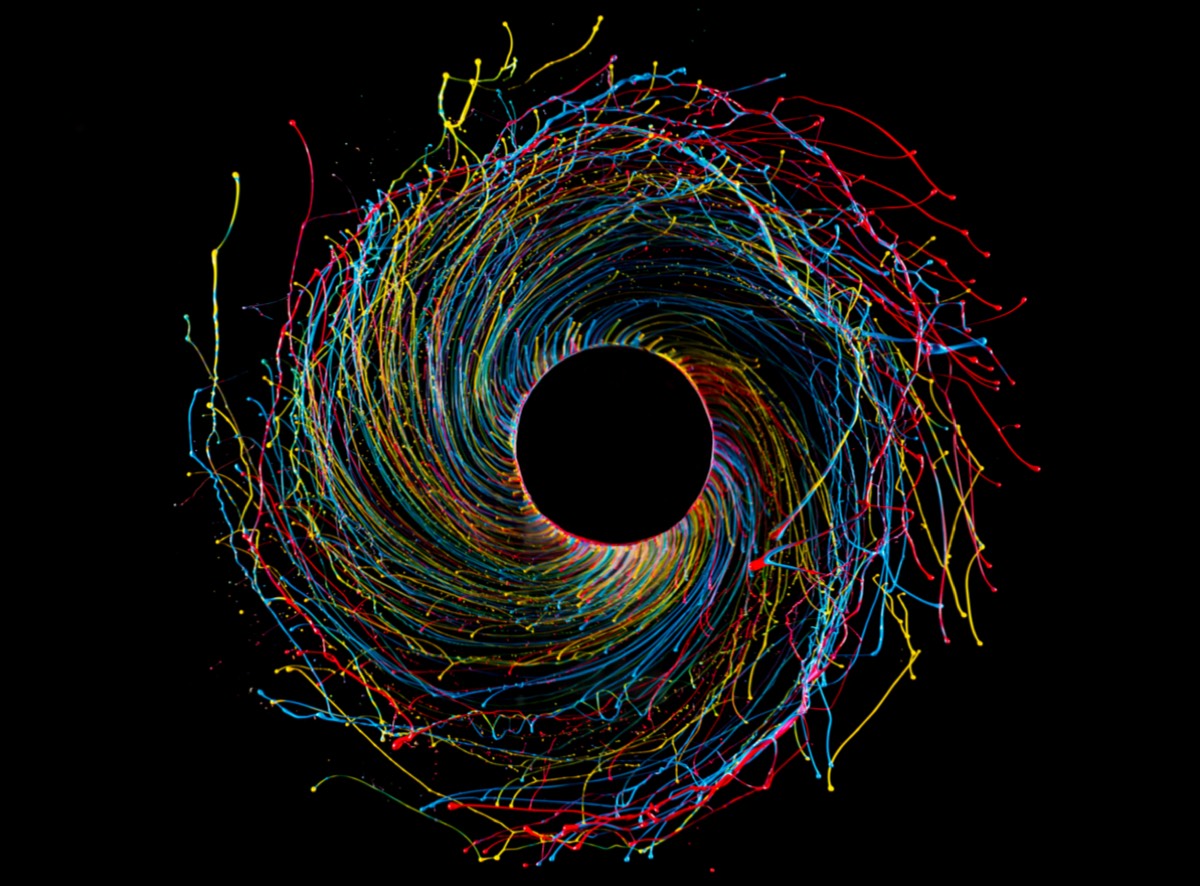
Researchers spot Saturn-sized planet in the “Einstein desert”

Most of the exoplanets we’ve discovered have been in relatively tight orbits around their host stars, allowing us to track them as they repeatedly loop around them. But we’ve also discovered a handful of planets through a phenomenon that’s called microlensing. This occurs when a planet passes between the line of sight between Earth and another star, creating a gravitational lens that distorts the star, causing it to briefly brighten.

The key thing about microlensing compared to other methods of finding planets is that the lensing planet can be nearly anywhere on the line between the star and Earth. So, in many cases, these events are driven by what are called rogue planets: those that aren’t part of any exosolar system at all, but they drift through interstellar space. Now, researchers have used microlensing and the fortuitous orientation of the Gaia space telescope to spot a Saturn-sized planet that’s the first found in what’s called the “Einstein desert,” which may be telling us something about the origin of rogue planets.

Going rogue

Most of the planets we’ve identified are in orbit around stars and formed from the disks of gas and dust that surrounded the star early in its history. We’ve imaged many of these disks and even seen some with evidence of planets forming within them. So how do you get a planet that’s not bound to any stars? There are two possible routes.

The first involves gravitational interactions, either among the planets of the system or due to an encounter between the exosolar system and a passing star. Under the right circumstances, these interactions can eject a planet from its orbit and send it hurtling through interstellar space. As such, we should expect them to be like any typical planet, ranging in mass from small, rocky bodies up to gas giants. An alternative method of making a rogue planet starts with the same process of gravitational collapse that builds a star—but in this case, the process literally runs out of gas. What’s left is likely to be a large gas giant, possibly somewhere between Jupiter and a brown dwarf star in mass.

https://arstechnica.com/science/2026/01/researchers-spot-saturn-sized-planet-in-the-einstein-desert/



Here we go again: Retiring coal plant forced to stay open by Trump Admin

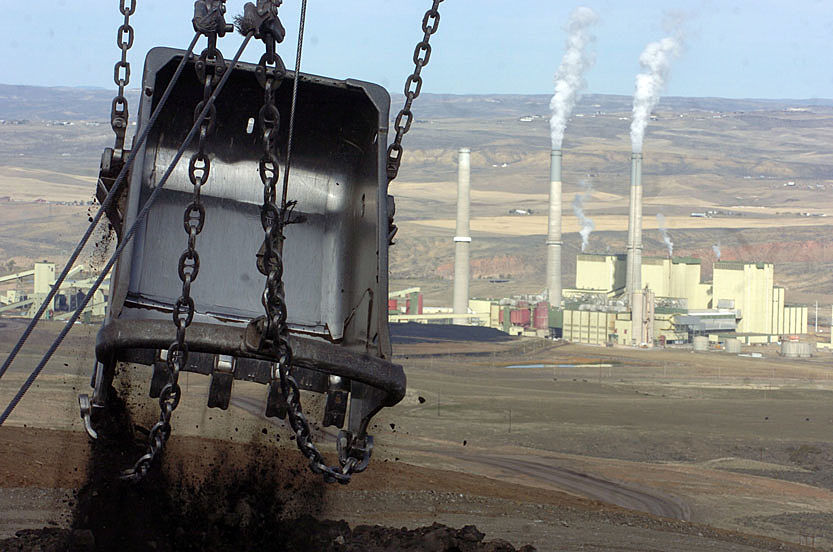
On Tuesday, US Secretary of Energy Chris Wright issued a now familiar order: because of a supposed energy emergency, a coal plant scheduled for closure would be forced to remain open. This time, the order targeted one of the three units present at Craig Station in Colorado, which was scheduled to close at the end of this year. The remaining two units were expected to shut in 2028.

The supposed reason for this order is an emergency caused by a shortage of generating capacity. “The reliable supply of power from the coal plant is essential for keeping the region’s electric grid stable,” according to a statement issued by the Department of Energy. Yet the Colorado Sun notes that Colorado’s Public Utilities Commission had already analyzed the impact of its potential closure, and determined, “Craig Unit 1 is not required for reliability or resource adequacy purposes.”

The order does not require the plant to actually produce electricity; instead, it is ordered to be available in case a shortfall in production occurs. As noted in the Colorado Sun article, actual operation of the plant would potentially violate Colorado laws, which regulate airborne pollution and set limits on greenhouse gas emissions. The cost of maintaining the plant is likely to fall on the local ratepayers, who had already adjusted to the closure plans.

The use of emergency powers by the DOE is authorized under the Federal Power Act, which allows it to order the temporary connection of generation or infrastructure when the US is at war or when “an emergency exists by reason of a sudden increase in the demand for electric energy, or a shortage of electric energy.” It is not at all clear whether “we expect demand to go up in the future,” the DOE’s current rationale, is consistent with that definition of emergency. It is also hard to see how using coal plants complies with other limits placed on the use of these emergency orders:

https://arstechnica.com/science/2025/12/trump-admin-orders-another-coal-plant-to-stay-open/


The science of how (and when) we decide to speak out—or self-censor

The US has adopted more of a middle ground approach, essentially letting private companies decide what they wanted to do. Daymude and his co-authors wanted to investigate these markedly different approaches. So they developed a computational agent-based simulation that modeled how individuals navigate between wanting to express dissent versus fear of punishment. The model also incorporates how an authority adjusts its surveillance and its policies to minimize dissent at the lowest possible cost of enforcement.

“It’s not some kind of learning theory thing,” said Daymude. “And it’s not rooted in empirical statistics. We didn’t go out and ask 1000 people, ‘What would you do if faced with this situation? Would you dissent or self-censor?’ and then build that data into the model. Our model allows us to embed some assumptions about how we think people behave broadly, but then lets us explore parameters. What happens if you’re more or less bold? What happens if punishments are more or less severe? An authority is more or less tolerant? And we can make predictions based on our fundamental assumptions about what’s going to happen.”

Let one hundred flowers bloom

According to their model, the most extreme case is an authoritarian government that adopts a draconian punishment strategy, which effectively represses all dissent in the general population. “Everyone’s best strategic choice is just to say nothing at this point,” said Daymude. “So why doesn’t every authoritarian government on the planet just do this?” That led them to look more closely at the dynamics. “Maybe authoritarians start out somewhat moderate,” he said. “Maybe the only way they’re allowed to get to that extreme endpoint is through small changes over time.”

Daymude points to China’s Hundred Flowers Campaign in the 1950s as an illustrative case. Here, Chairman Mao Zedong initially encouraged open critiques of his government before abruptly cracking down aggressively when dissent got out of hand. The model showed that in such a case, dissenters’ self-censorship gradually increased, culminating in near-total compliance over time.

But there’s a catch. “The opposite of the Hundred Flowers is if the population is sufficiently bold, this strategy doesn’t work,” said Daymude. “The authoritarian can’t find the pathway to become fully draconian. People just stubbornly keep dissenting. So every time it tries to ramp up severity, it’s on the hook for it every time because people are still out there, they’re still dissenting. They’re saying, ‘Catch us if you dare.’”

https://arstechnica.com/science/2025/12/the-science-of-how-and-when-we-decide-to-speak-out-or-self-censor/


Lawsuit over Trump rejecting medical research grants is settled

The case regarding cancelled grants moved relatively quickly. By June, a District Court judge declared that the federal policy “represents racial discrimination” and issued a preliminary order that would have seen all the cancelled grants restored. In his written opinion, Judge William Young noted that the government had issued its directives blocking DEI support without even bothering to define what DEI is, making the entire policy arbitrary and capricious, and thus in violation of the Administrative Procedure Act. He voided the policy, and ordered the funding restored.

His decision eventually ended up before the Supreme Court, which issued a ruling in which a fragmented majority agreed on only a single issue: Judge Young’s District Court was the wrong venue to hash out issues of government-provided money. Thus, restoring the money from the cancelled grants would have to be handled via a separate case filed in a different court.

Critically, however, this left the other portion of the decision intact. Young’s determination that the government’s anti-DEI, anti-climate, anti-etc. policy was illegal and thus void was upheld.

Restoring reviews

That has considerable consequences for the second part of the initial suit, involving grants that were not yet funded and blocked from any consideration by the Trump Administration policy. With that policy voided, there was no justification for the National Institutes of Health (NIH) failing to have considered the grants when they were submitted. But, in the meantime, deadlines had expired, pools of money had been spent, and in some cases the people who submitted the grants had aged out of the “new investigator” category they were applying under.

The proposed settlement essentially resets the clock on all of this; the blocked grants will be evaluated for funding as if it were still early 2025. “Defendants stipulate and agree that the end of Federal Fiscal Year 2025 does not prevent Defendants from considering and/or awarding any of the Applications,” it states. Even if the Notice of Funding Opportunity has since been withdrawn, the grant applications will be sent off for peer review.

https://arstechnica.com/science/2025/12/feds-researchers-settle-suit-over-grants-blocked-by-now-illegal-order/


Looking for friends, lobsters may stumble into an ecological trap

The authors, Mark Butler, Donald Behringer, and Jason Schratwieser, hypothesized that these solution holes represent an ecological trap. The older lobsters that find shelter in a solution hole would emit the chemicals that draw younger ones to congregate with them. But the youngsters would then fall prey to any groupers that inhabit the same solution hole. In other words, what is normally a cue for safety—the signal that there are lots of lobsters present—could lure smaller lobsters into what the authors call a “predatory death trap.”

Testing the hypothesis involved a lot of underwater surveys. First, the authors identified solution holes with a resident red grouper. They then found a series of sites that had equivalent amounts of shelter, but lacked the solution hole and attendant grouper. (The study lacked a control with a solution hole but no grouper, for what it’s worth.) At each site, the researchers started daily surveys of the lobsters present, registering how large they were and tagging any that hadn’t been found in any earlier surveys. This let them track the lobster population over time, as some lobsters may migrate in and out of sites.

To check predation, they linked lobsters (both large and small) via tethers that let them occupy sheltered places on the sea floor, but not leave a given site. And, after the lobster population dynamics were sorted, the researchers caught some of the groupers and checked their stomach contents. In a few cases, this revealed the presence of lobsters that had been previously tagged, allowing them to directly associate predation with the size of the lobster.

Lobster traps

So, what did they find? In sites where groupers were present, the average lobster was 32 percent larger than the control sites. That’s likely to be because over two-thirds of the small lobsters that were tethered to sites with a grouper were dead within 48 hours. At control sites, the mortality rate was about 40 percent. That’s similar to the mortality rates for larger lobsters at the same sites (44 percent) or at sites with groupers (48 percent).

https://arstechnica.com/science/2025/12/looking-for-friends-lobsters-may-stumble-into-an-ecological-trap/


Leonardo’s wood charring method predates Japanese practice

Yakisugi is a Japanese architectural technique  for charring the surface of wood. It has become quite popular in bioarchitecture because the carbonized layer protects the wood from water, fire, insects, and fungi, thereby prolonging the lifespan of the wood. Yakisugi techniques were first codified in written form in the 17th and 18th centuries. But it seems Italian Renaissance polymath Leonardo da Vinci wrote about the protective benefits of charring wood surfaces more than 100 years earlier, according to a paper published in Zenodo, an open repository for EU funded research.

Check the notes

As previously reported, Leonardo produced more than 13,000 pages in his notebooks (later gathered into codices), less than a third of which have survived. The notebooks contain all manner of inventions that foreshadow future technologies: flying machines, bicycles, cranes, missiles, machine guns, an “unsinkable” double-hulled ship, dredges for clearing harbors and canals, and floating footwear akin to snowshoes to enable a person to walk on water. Leonardo foresaw the possibility of constructing a telescope in his Codex Atlanticus (1490)—he wrote of “making glasses to see the moon enlarged” a century before the instrument’s invention.

In 2003, Alessandro Vezzosi, director of Italy’s Museo Ideale, came across some recipes for mysterious mixtures while flipping through Leonardo’s notes. Vezzosi experimented with the recipes, resulting in a mixture that would harden into a material eerily akin to Bakelite, a synthetic plastic widely used in the early 1900s. So Leonardo may well have invented the first manmade plastic.

The notebooks also contain Leonardo’s detailed notes on his extensive anatomical studies. Most notably, his drawings and descriptions of the human heart captured how heart valves can control blood flow 150 years before William Harvey worked out the basics of the human circulatory system. (In 2005, a British heart surgeon named Francis Wells pioneered a new procedure to repair damaged hearts based on Leonardo’s heart valve sketches and subsequently wrote the book The Heart of Leonardo.)

https://arstechnica.com/science/2025/12/did-one-line-in-a-leonardo-codex-anticipate-yakisugi/


Researchers make “neuromorphic” artificial skin for robots

The nervous system does an astonishing job of tracking sensory information, and does so using signals that would drive many computer scientists insane: a noisy stream of activity spikes that may be transmitted to hundreds of additional neurons, where they are integrated with similar spike trains coming from still other neurons.

Now, researchers have used spiking circuitry to build an artificial robotic skin, adopting some of the principles of how signals from our sensory neurons are transmitted and integrated. While the system relies on a few decidedly not-neural features, it has the advantage that we have chips that can run neural networks using spiking signals, which would allow this system to integrate smoothly with some energy-efficient hardware to run AI-based control software.

Location via spikes

The nervous system in our skin is remarkably complex. It has specialized sensors for different sensations: heat, cold, pressure, pain, and more. In most areas of the body, these feed into the spinal column, where some preliminary processing takes place, allowing reflex reactions to be triggered without even involving the brain. But signals do make their way along specialized neurons into the brain, allowing further processing and (potentially) conscious awareness.

The researchers behind the recent work, based in China, decided to implement something similar for an artificial skin that could be used to cover a robotic hand. They limited sensing to pressure, but implemented other things the nervous system does, including figuring out the location of input and injuries, and using multiple layers of processing.

All of this started out by making a flexible polymer skin with embedded pressure sensors that were linked up to the rest of the system via conductive polymers. The next layer of the system converted the inputs from the pressure sensors to a series of activity spikes—short pulses of electrical current.

There are four ways that these trains of spikes can convey information: the shape of an individual pulse, through their magnitude, through the length of the spike, and through the frequency of the spikes. Spike frequency is the most commonly used means of conveying information in biological systems, and the researchers use that to convey the pressure experienced by a sensor. The remaining forms of information are used to create something akin to a bar code that helps identify which sensor the reading came from.

https://arstechnica.com/science/2025/12/researchers-make-neuromorphic-artificial-skin-for-robots/


A quirky guide to myths and lore based in actual science

But the ones that are about nature,  about natural disasters, are based on very keen observations and repeated observations of the landscape. They also can contain details that are recognizable to scientists who study earthquakes or volcanoes. The scientists then realized that there had to be, in some cases, eyewitness accounts of these geomyths. Geomythology is actually enhancing our scientific understanding of the history of Earth over time. It can help people who study climate change figure out how far back certain climate changes have been happening. They can shed light on how and when great geological upheavals actually occurred and how humans responded to them.

Ars Technica: How long can an oral tradition about a natural disaster really persist? 

Adrienne Mayor: That was one of the provocative questions. Can it really persist over centuries, thousands of years, millennia? For a long time people thought that oral traditions could not persist for that long. But it turns out that with detailed studies of geomyths that can be related to datable events like volcanoes or earthquakes or tsunamis from geophysical evidence, we now know that the myths can last thousands of years.

For instance, the one that is told by the Klamath Indians about the creation of Crater Lake in Oregon that happened about 7,000 years ago—the details in their myth show that there were eyewitness accounts. Archaeologists have found a particular kind of woven sandal that was used by indigenous peoples 9,000 to 5,000 years ago. They found those sandals both above and below the ash from the volcano that exploded. So we have two ways of dating that. In Australia, people who study the geomyths of the Aborigines can relate their stories to events that happened 20,000 years ago.

Ars Technica: You mentioned that your interest in geomythology grew out of Greek and Roman interpretations of certain fossils that they found.

Adrienne Mayor: That really did trigger it, because it occurred to me that oral traditions and legends—rather than myths about gods and heroes—the ones that are about nature seem to have kernels of truth because it could be reaffirmed and confirmed and supported by evidence that people see over generations. I was in Greece and saw some fossils that had been plowed up by farmers on the island of Samos, thigh-bones from a mastodon or a mammoth or a giant rhinoceros. The museum curator said, “Yes, farmers bring us these all the time.” And I thought, why hasn’t it occurred to anyone that they were doing this in antiquity as well?

https://arstechnica.com/science/2025/12/a-quirky-guide-to-myths-and-lore-based-in-actual-science/


Embark on a visual voyage of art inspired by black holes

Gamwell sees echoes of Mitchell’s dark stars, for instance, in Edgar Allan Poe’s short story, “A Descent Into the Maelstrom,” particularly the evocative 1919 illustration by Harry Clarke. “This seemed to have been an early analogy to a black hole for many people when the concept was first proposed,” said Gamwell. “It’s a mathematical construct at that point and it’s very difficult to imagine a mathematical construct. Poe actually envisioned a dark star [elsewhere in his writings].”

The featured art spans nearly every medium: charcoal sketches, pen-and-ink drawings, oil or acrylic paintings, murals, sculptures, traditional and digital photography, and immersive room-sized multimedia installations, such as a 2021-2022 piece called Gravitational Arena by Chinese artist Xu Bing. “Xu Bing does most of his work about language,” said Gamwell. For Gravitational Arena, “He takes a quote about language from Wittgenstein and translates it into his own script, the English alphabet written to resemble Chinese characters. Then he applies gravity to it and makes a singularity. [The installation] is several stories high and he covered the gallery floor with a mirror. So you walk upstairs and you see it’s like a wormhole, which he turns into an analogy for translation.”

“Anything in the vicinity of a black hole is violently torn apart owing to its extreme gravity—the strongest in the universe,” Gamwell writes about the enduring appeal of black holes as artistic inspiration. “We see this violence in the works of artists like Cai Guo-­ Qiang and Takashi Murakami, who have used black holes to symbolize the brutality unleashed by the atomic bomb. The inescapable pull of a black hole is also a ready metaphor for depression in the work of artists such as Moonassi. Thus, on the one hand, the black hole provides artists with a symbol to express the devastations and anxieties of the modern world. On the other hand, however, a black hole’s extreme gravity is the source of stupendous energy, and artists such as Yambe Tam invite viewers to embrace darkness as a path to transformation, awe, and wonder.”

Fabian Oefner (Swiss, born 1984), Black Hole, no. 2, 2014. Inkjet print

Fabian Oefner, Black Hole, no. 2, 2014. Inkjet print

Courtesy of Fabian Oefner

Sangho Bang (Korean, born 1991), Spaceship, 2018. Digital print

Sangho Bang, Spaceship, 2018. Digital print

Courtesy of Sangho Bang

https://arstechnica.com/science/2025/12/embark-on-a-visual-voyage-of-art-inspired-by-black-holes/


Being Santa Claus is a year-round calling

Not just a seasonal gig

Frankly, what’s most interesting about the paper isn’t those three fundamental categories, but the personalized glimpses it gives of the people who choose to become professional Santas. While a few Santas might make six figures, most do not, and may even lose money being Santa—they do it anyway for the sheer love of it. Professional Santas usually don’t see the role as seasonal; many build their identities around it, whether they fit the stereotypical Kris Kringle image or not. “My feeling is, if you’re Santa all the time, you have to live as Santa and give up whoever you are,” said one subject. “I’m just striving to be a better person.”

They’ll wear red and green all year round, for instance, or maintain a full white beard.  One Santa trained himself to make “Ho, ho, ho!” his natural laugh. Another redecorated his house as “Santa’s house,” complete with Christmas trees and Santa figurines.

Sometimes it’s viewed as a role: a gay professional Santa, for instance, deliberately suppresses his sexual orientation when playing Santa, complete with partnering with a Mrs. Claus for public appearances. However, a female Santa who goes by Lynx (professional Santas typically take on pseudonyms) who is also a church leader, likens the job to a divine calling: “I can connect with people and remind them they’re loved,” she said. (She also binds her breasts when in costume because “Santa doesn’t have them double-Ds.”)

Perhaps that sense of a higher calling is why even non-prototypical Santas like Lynx persevere in the fact of occasional rejection. One Black Santa recalled being denied the position at a big box store once the interviewer found out his ethnicity, telling him the store didn’t hire Black or Hispanic Santas. “That hurt my heart so much,” he said. A disabled Santa who uses a scooter during parades recalled being criticized by other professional Santas for doing so—but stuck with it.

And while Bad Santa (2003) might be a fun holiday watch, actual “bad Santas” caught smoking, drinking, swearing, or otherwise behaving inappropriately are not popular figures within their community. “You’re never off,” one subject opined. “You lose a little bit of your identity because you can’t let your hair down and be yourself. You don’t know who’s watching you.”

“You’re Santa Claus 24 hours a day, seven days a week, 52 weeks a year,” another Santa said. “If you act out, you risk shattering the magic.”

DOI: Academy of Management Journal, 2025. 10.5465/amj.2023.1161  (About DOIs).

https://arstechnica.com/science/2025/12/being-santa-claus-is-a-year-round-calling/