Brazil weakens Amazon protections days after COP30

Under the law, deforested properties or land cleared without a license can be retroactively legalized without restoring the land or ecological conditions, which rewards illegal deforestation. Larger projects, like irrigation, dams, and sanitation works, as well as roads and energy infrastructure, can proceed with minimal environmental scrutiny, risking more forest fragmentation and habitat destruction. And the licensing changes narrow who must be recognized and consulted during reviews, which could exclude communities without formal land titles.

A human rights issue

It’s alarming that the legislature overrode the vetoes, said Astrid Puentes Riaño, the United Nations special rapporteur on the human right to a healthy environment. As it stands now, the law may violate Brazil’s international environmental commitments, she added.

“What is at stake is [whether] Brazil, as a country, is able to effectively protect the environment, including all their fundamental resources,” she said.

She noted that Brazil is not facing this problem alone.

“I think that we, unfortunately, are seeing a wave of regressions globally toward weakened environmental impact assessments, because they’re seen as obstacles for development and investment,” she said.

But cutting reviews when science clearly shows that the planet is facing a “triple crisis of climate change, biodiversity loss, and toxic contamination” is a huge step in the wrong direction.

“Environmental impact assessments are not a checklist in a supermarket,” she said. “They are an essential element for states to prevent environmental, climate, human rights, and social impacts.”

She emphasized that weakening environmental review isn’t a technocratic tweak or political win for one side. It undermines the foundations of public health, Indigenous rights, and climate safety.

“This is not about politics, it’s about survival,” she said. “Some of these impacts on water, on air, on biodiversity, on people’s health, are irreversible. These are not things you can fix later.”

Climate backlash is scientifically unfounded

The fight over Brazil’s environmental licensing law can be seen as a microcosm of global climate policy tensions, with governments performatively signaling climate ambition at international meetings, such as COP30, while doubling down on economic nationalism by claiming there is no money for climate action at home and instead financing measures to boost development and growth.

https://arstechnica.com/science/2025/12/days-after-cop30-brazil-weakened-amazon-safeguards/


Pompeii construction site confirms recipe for Roman concrete

Back in 2023, we reported on MIT scientists’ conclusion that the ancient Romans employed “hot mixing” with quicklime, among other strategies, to make their famous concrete, giving the material self-healing functionality. The only snag was that this didn’t match the recipe as described in historical texts. Now the same team is back with a fresh analysis of samples collected from a recently discovered site that confirms the Romans did indeed use hot mixing, according to a new paper published in the journal Nature Communications.

As we’ve reported previously, like today’s Portland cement (a basic ingredient of modern concrete), ancient Roman concrete was basically a mix of a semi-liquid mortar and aggregate. Portland cement is typically made by heating limestone and clay (as well as sandstone, ash, chalk, and iron) in a kiln. The resulting clinker is then ground into a fine powder with just a touch of added gypsum to achieve a smooth, flat surface. But the aggregate used to make Roman concrete was made up of fist-sized pieces of stone or bricks.

In his treatise De architectura (circa 30 CE), the Roman architect and engineer Vitruvius wrote about how to build concrete walls for funerary structures that could endure for a long time without falling into ruin. He recommended the walls be at least two feet thick, made of either “squared red stone or of brick or lava laid in courses.” The brick or volcanic rock aggregate should be bound with mortar composed of hydrated lime and porous fragments of glass and crystals from volcanic eruptions (known as volcanic tephra).

Admir Masic, an environmental engineer at MIT, has studied ancient Roman concrete for several years. For instance, in 2019, Masic helped pioneer a new set of tools for analyzing Roman concrete samples from Privernum at multiple length scales—notably, Raman spectroscopy for chemical profiling and multi-detector energy dispersive spectroscopy (EDS) for phase mapping the material. Masic was also a co-author of a 2021 study analyzing samples of the ancient concrete used to build a 2,000-year-old mausoleum along the Appian Way in Rome known as the Tomb of Caecilia Metella, a noblewoman who lived in the first century CE.

And in 2023, Masic’s group analyzed samples taken from the concrete walls of the Privernum, focusing on strange white mineral chunks known as “lime clasts,” which others had largely dismissed as resulting from subpar raw materials or poor mixing. Masic et al. concluded that was not the case. Rather, the Romans deliberately employed “hot mixing” with quicklime that gave the material self-healing functionality. When cracks begin to form in the concrete, they are more likely to move through the lime clasts. The clasts can then react with water, producing a solution saturated with calcium. That solution can either recrystallize as calcium carbonate to fill the cracks or react with the pozzolanic components to strengthen the composite material.

https://arstechnica.com/science/2025/12/study-confirms-romans-used-hot-mixing-to-make-concrete/


Reintroduced carnivores’ impacts on ecosystems are still coming into focus

He said he was surprised by how few studies show evidence of wolves, bears, and cougars having an effect on elk, moose, and deer populations. Instead, the biggest driver of changing elk population numbers across the West is humanity.

“In most mainland systems, it’s only when you combine wolves with grizzly bears and you take away human hunting as a substantial component that you see them suppressing prey numbers,” Wilmers said. “Outside of that, they’re mostly background noise against how humans are managing their prey populations.”

In some studies, ungulate populations actually increased slightly in the presence of wolves and grizzlies, Wilmers said, likely because human wildlife managers overestimated the effects of predators as they reduced hunting quotas.

“This is a much-needed review, as it is well executed, and highlights areas where more research is needed,” said Rae Wynn-Grant, a wildlife ecologist and cohost of the television show Mutual of Omaha’s Wild Kingdom Protecting the Wild, in an email to Inside Climate News. Wynn-Grant was not involved in the paper, and her work was not part of its survey.

In her view, the paper showed that an increase in predators on the landscape doesn’t automatically balance plant communities. “Our world would be much simpler if it did,” she said, “but the evidence suggests that so many variables factor into if and how ecosystems respond to increases in carnivore population in North America.”

Yellowstone, with its expansive valleys, relatively easy access, and status as an iconic, protected landscape, has become a hotspot for scientists trying to answer an existential question: Is it possible for an ecosystem that’s lost keystone large carnivores to be restored to a pre-extinction state upon their reintroduction?

Wilmers doesn’t think scientists have answered that question yet, except to show that it can take decades to untangle the web of factors driving ecological shifts in a place like Yellowstone. Any changes that do occur when a predator is driven to extinction may be impossible to reverse quickly, he said.

Yellowstone’s alternative stable state was a point echoed by researchers in both camps of the trophic cascade debate, and it is one Wilmers believes is vital to understand when evaluating the tradeoffs of large-carnivore reintroduction.

“You’d be better off avoiding the loss of beavers and wolves in the first place than you would be accepting that loss and trying to restore them later,” he said.

This story originally appeared on Inside Climate News

https://arstechnica.com/science/2025/11/reintroduced-carnivores-impacts-on-ecosystems-are-still-coming-into-focus/


ULA aimed to launch up to 10 Vulcan rockets this year—it will fly just once

Engineers traced the problem to a manufacturing defect in an insulator on the solid rocket motor, and telemetry data from all four boosters on the following flight in August exhibited “spot-on” performance, according to Bruno. But officials decided to recover the spent expendable motor casings from the Atlantic Ocean for inspections to confirm there were no other surprises or close calls.

The hangup delaying the next Vulcan launches isn’t in rocket production. ULA has hardware for multiple Vulcan rockets in storage at Cape Canaveral Space Force Station, Florida.

Instead, one key reason for Vulcan’s past delays has been the rocket’s performance, particularly its solid rocket boosters. It isn’t clear whether the latest delays are related to the readiness of the Space Force’s GSSAP satellites (the next GPS satellite to fly on Vulcan has been available for launch since 2022), the inspections of Vulcan’s solid rocket motors, or something else.

Vulcan booster cores in storage at Cape Canaveral Space Force Station, Florida. Credit: United Launch Alliance

A Space Systems Command spokesperson told Ars that “appropriate actions are being executed to ensure a successful USSF-87 mission … The teams analyze all hardware as well as available data from previous missions to evaluate space flight worthiness of future missions.”

The spokesperson did not provide a specific answer to a question from Ars about inspections on the solid rocket motors from the most recent Vulcan flight.

ULA’s outfitting of a new rocket assembly hangar and a second mobile launch platform for the Vulcan rocket at Cape Canaveral has also seen delays. With so many launches in its backlog, ULA needs capacity to stack and prepare at least two rockets in different buildings at the same time. Eventually, the company’s goal is to launch at an average clip of twice per month.

On Monday, ground crews at Cape Canaveral moved the second Vulcan launch platform to the company’s launch pad for fit checks and “initial technical testing.” This is a good sign that the company is moving closer to ramping up the Vulcan launch cadence, but it’s now clear it won’t happen this year.

Vulcan’s slow launch rate since its first flight in January 2024 is not unusual for new rockets. It took 28 months for SpaceX’s Falcon 9 and ULA’s Atlas V to reach their fourth flight, a timeline that the Vulcan vehicle will reach in May 2026.

The Delta IV rocket from ULA flew its fourth mission 25 months after debuting in 2002. Europe’s Ariane 6 rocket reached its fourth flight in 16 months, but it shares more in common with its predecessor than the others. SpaceX’s Starship also had a faster ramp-up, with its fourth test flight coming less than 14 months after the first.

https://arstechnica.com/space/2025/11/ula-aimed-to-launch-up-to-10-vulcan-rockets-this-year-it-will-fly-just-once/


Solar’s growth in US almost enough to offset rising energy use

If you add in nuclear, then the US has reached a grid that is 40 percent emissions-free over the first nine months of 2025. That’s up only 1 percent compared to the same period the year prior. And because coal emits more carbon than natural gas, it’s likely the US will see a net increase in electricity-related emissions this year.

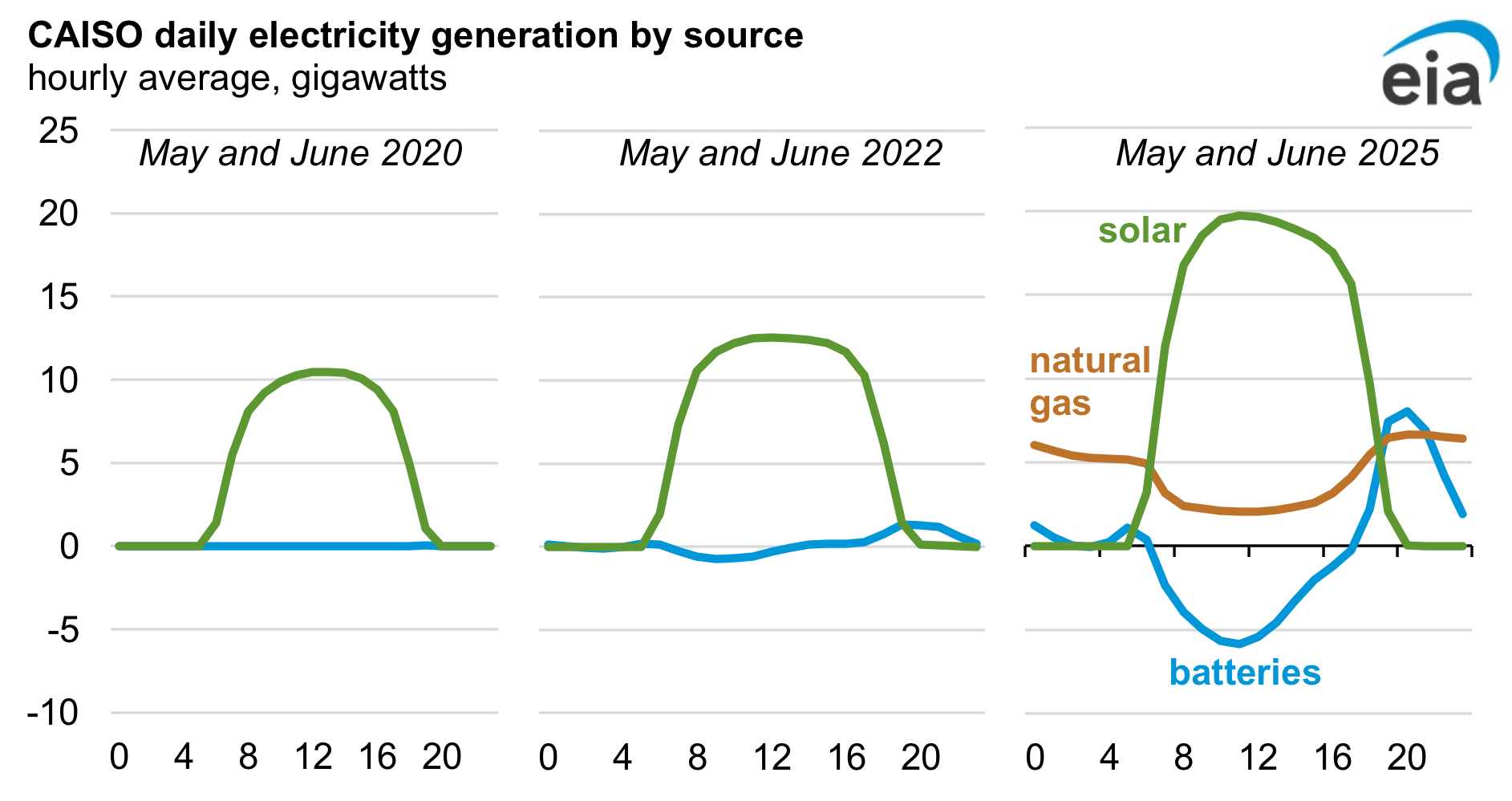
If you would like to have a reason to feel somewhat more optimistic, however, the EIA used the new data to release an analysis of the state of the grid in California, where the production from utility-scale solar has nearly doubled over the last five years, thanks in part to another 17 percent increase so far in 2024.

Through 2023, it was tough to discern any impact of that solar production on the rest of the grid, in part due to increased demand. But since then, natural gas use has dropped considerably (it’s down by 17 percent so far in 2025), placing it at risk of being displaced by solar as the largest source of electricity in California as early as next year. This displacement is happening even as California’s total consumption jumped by 8 percent so far in 2025 compared to the same period last year.

Image of three graphs representing spring electrical use over the last five years. All show a large green bump representing solar generation peaking at mid-day. A fblue line representing battery use is flat on the left, develops wiggles in the middle, then develops into a curve where energy is drawn in during the day and released in the evening.
Massive solar growth plus batteries means less natural gas on California’s grid. Credit: US EIA

The massive growth in solar has also led to overproduction of power in the spring and autumn, when heating/cooling demands are lowest. That, in turn, has led to a surge in battery construction to absorb the cheap power and sell it back after the Sun sets. The impact of batteries was nearly impossible to discern as recently as 2023, but data from May and June of 2025 shows batteries pulling in lots of power at mid-day, and using it in the early evening to completely offset what would otherwise be an enormous surge in the use of natural gas.

Not every state has the sorts of solar resources available to California. But the economics of solar power suggest that other states are likely to experience this sort of growth in the coming years. And, while the Trump administration has been openly hostile to solar power from the moment it took office, so far there is no sign of that hostility at the grid level.

https://arstechnica.com/science/2025/11/solars-growth-in-us-almost-enough-to-offset-rising-energy-use/


Many genes associated with dog behavior influence human personalities, too

Many dog breeds are noted for their personalities and behavioral traits, from the distinctive vocalizations of huskies to the herding of border collies. People have worked to identify the genes associated with many of these behaviors, taking advantage of the fact that dogs can interbreed. But that creates its own experimental challenges, as it can be difficult to separate some behaviors from physical traits distinctive to the breed—small dog breeds may seem more aggressive simply because they feel threatened more often.

To get around that, a team of researchers recently did the largest gene/behavior association study within a single dog breed. Taking advantage of a population of over 1,000 golden retrievers, they found a number of genes associated with behaviors within that breed. A high percentage of these genes turned out to correspond to regions of the human genome that have been associated with behavioral differences as well. But, in many cases, these associations have been with very different behaviors.

Gone to the dogs

The work, done by a team based largely at Cambridge University, utilized the Golden Retriever Lifetime Study, which involved over 3,000 owners of these dogs filling out annual surveys that included information on their dogs’ behavior. Over 1,000 of those owners also had blood samples obtained from their dogs and shipped in; the researchers used these samples to scan the dogs’ genomes for variants. Those were then compared to ratings of the dogs’ behavior on a range of issues, like fear or aggression directed toward strangers or other dogs.

Using the data, the researchers identified when different regions of the genome were frequently associated with specific variants. In total, 14 behavioral tendencies were examined, and 12 genomic regions were associated with specific behaviors, and another nine showed somewhat weaker associations. For many of these traits, it was difficult to find much because golden retrievers are notoriously friendly and mellow dogs, so they tended to score low on traits like aggression and fear.

That result was significant, as some of these same regions of the genome had been associated with very different behaviors in populations that were a mix of breeds. For example, two different regions associated with touch sensitivity in golden retrievers had been linked to a love of chasing and owner-directed aggression in a non-breed-specific study. That finding suggests that the studies were identifying genes that may be involved in setting the stage for behaviors, but were directed into specific outcomes by other genetic or environmental factors.

https://arstechnica.com/science/2025/11/many-genes-associated-with-dog-behavior-influence-human-personalities-too/


Why synthetic emerald-green pigments degrade over time

Perhaps most relevant to this current paper is a 2020 study in which scientists analyzed Munch’s The Scream, which was showing alarming signs of degradation. They concluded the damage was not the result of exposure to light, but humidity—specifically, from the breath of museum visitors, perhaps as they lean in to take a closer look at the master’s brushstrokes.

Let there be (X-ray) light

Annelies Rios Casier (University of Antwerp) performing a micro-sampling from a green area of The Intrigue (

Co-author Annelies Rios Casier (University of Antwerp) performing a micro-sampling from a green area of The Intrigue.

Lies Vanbiervliet

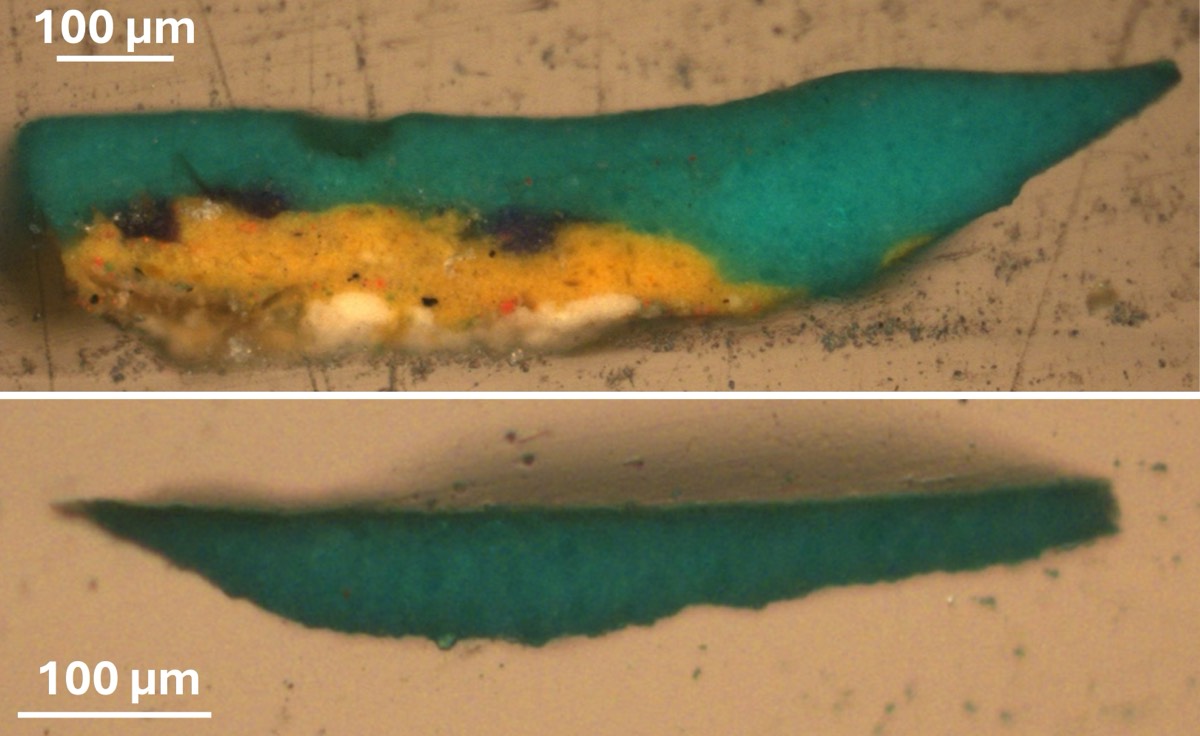
Photomicrographs of paint fragments taken from two altered emerald green areas of The Intrigue

Photomicrographs of paint fragments taken from two altered emerald-green areas of The Intrigue, analyzed using vibrational spectroscopy techniques and advanced synchrotron technique methods.

Miliani et al., 2025

Emerald-green pigments are particularly prone to degradation, so that’s the pigment the authors of this latest paper decided to analyze. “It was already known that emerald-green decays over time, but we wanted to understand exactly the role of light and humidity in this degradation,” said co-author Letizia Monico of the University of Perugia in Italy.

The first step was to collect emerald-green paint microsamples with a scalpel and stereomicroscope from an artwork of that period—in this case, The Intrigue (1890) by James Ensor, currently housed in the Royal Museum of Fine Arts, in Antwerp, Belgium. The team analyzed the untreated samples using Fourier transform infrared imaging, then embedded the samples in polyester resin for synchrotron radiation X-ray analysis. They conducted separate analyses on both commercial and historical samples of emerald-green pigment powders and paint tubes, including one from a museum collection of paint tubes used by Munch.

Next, the authors created their own paint mockups by mixing commercial emerald-green pigment powders and their lab-made powders with linseed oil, and then applied the concoctions to polycarbonate substrates. They also squeezed paint from the Munch paint tube onto a substrate. Once the mockups were dry, thin samples were sliced from each mockup and also analyzed with synchrotron radiation. Then the mockups were subjected to two aging protocols designed to determine the effects of UV light (to simulate indoor lighting) and humidity on the pigments.

The results: In the mockups, light and humidity trigger different degradation pathways in emerald-green paints. Humidity results in the formation of arsenolite, making the paint brittle and prone to flaking. Light dulls the color by causing trivalent arsenic already in the pigment to oxidize into pentavalent compounds, forming a thin white layer on the surface. Those findings are consistent with the analyzed samples taken from The Intrigue, confirming the degradation is due to photo-oxidation. Light, it turns out, is the greatest threat to that particular painting, and possibly other masterpieces from the same period.

Science Advances, 2025. DOI: 10.1126/sciadv.ady1807  (About DOIs).

https://arstechnica.com/science/2025/11/why-synthetic-emerald-green-pigments-degrade-over-time/


AI trained on bacterial genomes produces never-before-seen proteins

The researchers argue that this setup lets Evo “link nucleotide-level patterns to kilobase-scale genomic context.” In other words, if you prompt it with a large chunk of genomic DNA, Evo can interpret that as an LLM would interpret a query and produce an output that, in a genomic sense, is appropriate for that interpretation.

The researchers reasoned that, given the training on bacterial genomes, they could use a known gene as a prompt, and Evo should produce an output that includes regions that encode proteins with related functions. The key question is whether it would simply output the sequences for proteins we know about already, or whether it would come up with output that’s less predictable.

Novel proteins

To start testing the system, the researchers prompted it with fragments of the genes for known proteins and determined whether Evo could complete them. In one example, if given 30 percent of the sequence of a gene for a known protein, Evo was able to output 85 percent of the rest. When prompted with 80 percent of the sequence, it could return all of the missing sequence. When a single gene was deleted from a functional cluster, Evo could also correctly identify and restore the missing gene.

The large amount of training data also ensured that Evo correctly identified the most important regions of the protein. If it made changes to the sequence, they typically resided in the areas of the protein where variability is tolerated. In other words, its training had enabled the system to incorporate the rules of evolutionary limits on changes in known genes.

So, the researchers decided to test what happened when Evo was asked to output something new. To do so, they used bacterial toxins, which are typically encoded along with an anti-toxin that keeps the cell from killing itself whenever it activates the genes. There are a lot of examples of these out there, and they tend to evolve rapidly as part of an arms race between bacteria and their competitors. So, the team developed a toxin that was only mildly related to known ones, and had no known antitoxin, and fed its sequence to Evo as a prompt. And this time, they filtered out any responses that looked similar to known antitoxin genes.

https://arstechnica.com/science/2025/11/generative-ai-meets-the-genome/


Scientists found the key to accurate Maya eclipse tables

The Mayan calendars were maintained by specialists known as “daykeepers,” a cultural tradition that continues today. There is general consensus that eclipses were important to the Maya. “They were tracking them, they had rituals around [eclipses], and it was built into their system of belief, ” Lowry told Ars. “So we know the eclipse table is part of the cultural knowledge of the time. We were just trying to figure out how the table came to be in its current state.”

A predictive mechanism

Lowry and Justeson’s analysis involved mathematically modeling the eclipse predictions in the Dresden Codex table and comparing the results to a historical NASA database. They focused on 145 solar eclipses that would have been visible in the Maya geographical region between 350 and 1150 CE.

First publication in 1810 by Humboldt, who repainted five pages for his atlas

First publication in 1810 by Alexander von Humboldt, who repainted five pages for his atlas. Credit: Public domain

They concluded that the codex’s eclipse tables evolved from a more general table of successive lunar months. The length of a 405-month lunar cycle (11,960 days) aligned much better with a 260-day calendar (46 x 260 =11,960) than with solar or lunar eclipse cycles. This suggests that the Maya daykeepers figured out that 405 new moons almost always came out equivalent to 46 260-day periods, knowledge the Maya used to accurately predict the dates of full and new moons over 405 successive lunar dates.

The daykeepers also realized that solar eclipses seemed to recur on or near the same day in their 260-day calendar and, over time, figured out how to predict days on which a solar eclipse might occur locally. “An eclipse happens only on a new moon,” said Lowry. “The fact that it has to be a new moon means that if you can accurately predict a new moon, you can accurately predict a one-in-seven chance of an eclipse. That’s why it makes sense that the Maya are revising lunar predicting models to have an accurate eclipse, because they don’t have to predict where the moon is relative to the ecliptic.”

The Maya also understood that they had to adjust their tables occasionally to account for slippage over time. “When we talk about accuracy, sometimes we think about being able to predict something down to the microsecond,” said Lowry, pointing to NASA records. “The Maya have a very accurate calendar, but they’re predicting to the day, not down to the second.”

https://arstechnica.com/science/2025/11/study-how-the-maya-created-such-accurate-eclipse-tables/


Flying with whales: Drones are remaking marine mammal research

In 2010, the Deepwater Horizon oil rig exploded in the Gulf of Mexico, causing one of the largest marine oil spills ever. In the aftermath of the disaster, whale scientist Iain Kerr traveled to the area to study how the spill had affected sperm whales, aiming specialized darts at the animals to collect pencil eraser-sized tissue samples.

It wasn’t going well. Each time his boat approached a whale surfacing for air, the animal vanished beneath the waves before he could reach it. “I felt like I was playing Whac-A-Mole,” he says.

As darkness fell, a whale dove in front of Kerr and covered him in whale snot. That unpleasant experience gave Kerr, who works at the conservation group Ocean Alliance, an idea: What if he could collect that same snot by somehow flying over the whale? Researchers can glean much information from whale snot, including the animal’s DNA sequence, its sex, whether it is pregnant, and the makeup of its microbiome.

After many experiments, Kerr’s idea turned into what is today known as the SnotBot: a drone fitted with six petri dishes that collect a whale’s snot by flying over the animal as it surfaces and exhales through its blowhole. Today, drones like this are deployed to gather snot all over the world, and not just from sperm whales: They’re also collecting this scientifically valuable mucus from other species, such as blue whales and dolphins. “I would say drones have changed my life,” says Kerr.

[embedded content]

S’not just mucus

Gathering snot is one of many ways that drones are being used to study whales. In the past 10 to 15 years, drone technology has made great strides, becoming affordable and easy to use. This has been a boon for researchers. Scientists “are finding applications for drones in virtually every aspect of marine mammal research,” says Joshua Stewart, an ecologist at the Marine Mammal Institute at Oregon State University.

https://arstechnica.com/science/2025/11/flying-with-whales-drones-are-remaking-marine-mammal-research/